Showing posts with label Suez Canal. Show all posts

Thursday, 25 November 2021

Why Marib’s liberation will break the Saudis and shake West Asia

 November 12 2021

A Houthi fighter in front of the ancient throne of the Queen of Sheba, located in Marib, Yemen.Photo Credit: The Cradle

If Ansarallah controls Marib, it will control all of Yemen and some of the world’s most strategic waterways. No wonder its adversaries are shaken.

By Karim Shami

Marib, the ancient capital of Sheba, referred to in both the Bible and the Holy Quran as a wealthy and wise kingdom, once ruled across the entire southern Arabian peninsula.

Today, Marib has risen again, this time as the final stronghold of Yemen’s latest invaders, now in panicked retreat after a six-year battle that has depleted their coffers and exhausted their forces.

This war was announced from Washington on 26 March 2015 and led by Saudi Arabia in support of the overthrown government of Abdrabbuh Mansour Hadi, a regime that had already lost the capital city of Sanaa to Yemen’s Ansarallah (Houthis) movement a few months prior.

A coalition of 10 countries, including pack leaders Saudi Arabia and the UAE, was formed to force the return of his highly unpopular government. The name Operation Decisive Storm was chosen and the air strikes began.

Ansarallah were assessed as being weak and the operation was expected to last no more than a few weeks or months, at the most.

Instead, Ansarallah prevailed, forcing its Saudi and Emirati foes to insert ground troops into the expanding quagmire and divide their roles in Yemen.

Today, the UAE is present mainly in the country’s south controlling its strategic ports and islands, while the Saudis remain in the north, along their extensive northern border with Yemen, in the east, where the province of Marib and its rich oil and gas fields are located, and in the west, in the coastal city of Hodeidah.

For Yemenis, the importance of Marib is not limited to its oil and gas fields, but also for its ancient culture, its inclusion in the holy Quran, and its significant historical sites and water engineering feats, such as the ancient Marib dam built around the 8th century BC. A new dam, the country’s largest, was later built near the cherished ruins of the old one.

Saudi Arabia acknowledged Marib’s importance by making it the stronghold for its war operations, building military bases and bribing local tribes to fight alongside the coalition. Most of Riyadh’s military and intelligence operations – excluding air strikes – were launched from Marib against the northern Houthi-controlled Sanaa city and province.

Ansarallah endured these onslaughts for three years, then flipped the war on its adversaries in 2018 by going on the offensive. Since then, the group has expanded its territorial gains significantly, destabilized Saudi Arabia’s own borders, and exponentially advanced its military tactics and capabilities in drone and missile technology.

These startling gains forced the coalition to the negotiating table in 2018 to sign the Hodeidah Agreement. The agreement was a boon for Ansarallah from a military perspective, first and foremost. Hodeidah and its Red Sea port are west of Sanaa, and the negotiated ceasefire would help Ansarallah turn its focus on only two fronts now, the east (Marib) and the south.

But the agreement also had humanitarian benefits for a country besieged by land, sea, and air by coalition forces since the war’s onset. With goods now entering the port, fresh access to medicine, fuel and food reduced the crisis in territories controlled by Ansarallah.

In 2019, Ansarallah marched eastward, increasing their defence operations inside Saudi Arabia, and targeting the capital city of Riyadh, airports, and Aramco facilities in retaliation for Saudi airstrikes. The UAE was also threatened when drone activity caused a brief closure of Dubai airport.

The UAE’s very existence depends on the security of Abu Dhabi and Dubai. Understanding that they were one ballistic missile away from an existential disaster, the Emiratis withdrew from Marib leaving the Saudis to their own devices, and headed south. The ten-nation coalition had now dwindled to two, neither of whom were fighting alongside the other.

For Sanaa, access to oil is a higher priority than access to ports, hence Ansarallah’s decision to first push eastward, where Marib lies. Although the reverse would have been easier – at 17,000 km², Marib requires a huge military presence, while Hodeidah port and its surrounding areas are less than 1,000 km² – the Yemeni rebels chose the harder, more dangerous fight first.

Today, the complete liberation of Marib is imminent. Of its 14 districts, 13 are now back in Yemeni hands, with only Marib city and the oil fields remaining, alongside one major Saudi military base (Sahen Jin).

Marib’s liberation will be an unprecedented victory for Ansarallah that will place Sanaa back firmly on the world map. Aside from the huge morale boost for the Houthi rebels, Ansarallah will gain control of Yemen’s vital water and oil resources and bring relief for the capital’s civilians. Despite the fact that areas controlled by the group enjoy more financial stability ($1 = 600 Yemeni Rials versus 1,480 Rials in areas outside their control) the war has impoverished Sanaa.

Marib’s liberation will also mean that Ansarallah will govern around 80 percent of the Yemeni population of 30 million, secure its eastern front, and make a move on Hodeidah where remaining coalition forces are based.

After the liberation of Hodeidah and Marib, Saudi Arabia will lose its boots on the ground in Yemen, but will it retreat and accept defeat?

Will Saudi Crown Prince Mohammed Bin Salman – also his country’s minister of defense – who spearheaded the war against Yemen, accept this fait accompli? Will Saudi Arabia continue bombing Yemen for another six years?

With so many unexpected victories under its belt, Ansarallah is now in a position to direct these Saudi decisions. Already this year, the Yemeni rebels have bombed Aramco and Saudi airports in retaliation for airstrikes in Sanaa. Riyadh clearly understands the correlation – bombing Sanaa means Aramco will get hit – and so although the war is still fiercely being played out, important deterrences have been established.

In September, during the approach toward Marib, Ansarallah leader Abdul-Malik al-Houthi said: “We will liberate the entirety of our country and recover all regions occupied by the Saudi-led aggression.”

After the fall of Marib, Saudi Arabia will never be the same. Having expended all its chips and a vast fortune on bringing the Houthis to heel, Riyadh’s influence in the Arab and Muslim world are set to decline.

Through proxies and large financial donations, the Saudis have historically managed Muslim communities and dictated the policies of entire states. But in an actual direct war, led by one of the world’s wealthiest nations against one of its poorest, the Saudis lost resoundingly.

After the fall of Marib, the UAE’s position is less clear, but it will ultimately face one of two choices: either surrender to Ansarallah’s demands or face reprisals inside Dubai and Abu Dhabi.

Yemen has vast mineral reserves of zinc, silver, nickel, gold, copper and cobalt as well as oil and gas fields, resources that the Saudis have not allowed successive Yemeni rulers to exploit, develop or monetize since 1934.

Yemen was then (arguably still is) considered a Saudi backwater, and Riyadh’s policy toward its southern neighbor was entirely driven by the kingdom’s founder, Abdul Aziz Al Saud, who declared in an infamous quote:

the honor of Saudis is in the humiliation of Yemen, and their (Saudi) humiliation is in the glory of Yemen.”

These words had monumental significance: the guiding principle for all future Saudi monarchs would be to subjugate Yemen at all cost, or the price would be existential.

With Ansarallah in charge, reverberations will be felt across West Asia – not least because Yemenis still consider the Saudi provinces of Jizan and Najran to be part of Yemen.

Yemen is often referred to as the ‘birthplace of Arabs,’ with numerous tribes stretching across the Arabian peninsula to Iraq tracing their origins back to Yemen.

At the other end of the Arabian peninsula, Ansarallah will also be controlling the strait of Bab al Mandab which leads directly to the straits of Suez. This gives them geopolitical and geoeconomic clout over Egypt, historically the ‘mother’ of the Arab world, and a country which itself has launched a failed war against Yemen.

Ansarallah controlling access to the Suez Canal will be a nightmare for the Israelis – Tel Aviv and Zionism are the mortal enemy of the Houthis, and no ship heading for Israel will be allowed to cross this strait.

China and Iran will be big winners in the ensuing geopolitical shuffle. Iran will gain its first diehard ally in the Arabian Peninsula – one that has oil, produces its own weapons, and can defend itself without costing Tehran money, manpower or resources.

Yemen’s geography is of strategic importance to China too: its southwestern part faces the east coast of Africa, and with the Bab al Mandab strait, Yemen has more than 10 major ports on the Indian ocean, and through the Red Sea to the Mediterranean.

It is the closest West Asian nation to the Horn of Africa, where China has its only overseas military base in Djibouti, and where it has built roads and railways connecting the latter to Ethiopia.

With the US, UK and western countries in general having supported the aggression against the Yemeni people, Ansarallah is more likely to choose to align with China, Iran, and other unaligned nations.

Reports indicate that Saudi Arabia spent well over $300 billion on its war on Yemen. Six years later, it is on the verge of being soundly defeated, with only Marib blocking that path. Marib is the city that will soon dictate the terms that end this war, and perhaps the end of Saudi power projection as we know it.

The views expressed in this article do not necessarily reflect those of The Cradle.Author


River to Sea Uprooted Palestinian   
The views expressed in this article are the sole responsibility of the author and do not necessarily reflect those of the Blog!

Tuesday, 6 April 2021

The second coming of Ben-Gurion

April 5, 2021 – 17:44

The reasons behind capsizing the Taiwanese cargo ship “Ever Given”, on the 24th of March, have become clear.

The cargo ship capsized in the Suez Canal for more than 6 days. Failing to float the ship is not the news, or that the reasons behind the accident were a human failure. But the real news behind it is the reviving of the old-new plans that were and are still alive in the dreams of the Zionist entity which is enlivening the “Ben-Gurion Canal” project. Yes, Ben-Gurion Canal has surfaced once more.

The project aims to connect the Mediterranean Sea to the Red Sea through the Gulf of Aqaba to the Mediterranean through the Negev desert. The idea of digging a canal opposite the Suez Canal began in 1963. It is recommended in a memo submitted by Lawrence Livermore Patriot Laps in the United States of America. The memorandum was proposed as a response to the decision taken by President Gamal Abdel Nasser to nationalize the Suez Canal in 1956. 

The memorandum suggested: In order to ensure the flow of navigation in the Red Sea, an alternative canal should be opened in the Gulf of Aqaba. It will be drilled through the Negev desert, which was described as an empty area that can be dug using nuclear bombs: Firstly, the project was halted due to the radiation that nuclear bombs could cause; and secondly due to the opposition that the project would face by the Arab countries, led by Nasser.

Today, political alliances have changed the face of the region, particularly after the implementation of the Abraham Accords by several Arab countries. Therefore, a political atmosphere is compatible. Hence, serious deliberations of the project, after the Ever-Given capsizing, provide the idea that the accident was contrived. It was intended as a new window for the return of the talks over finding an alternative to the Suez Canal. 

In principle, that the accident was premeditated is a fair assumption. In an article I previously published on the Al-Ahed website, I talked about Israel’s attempt to control and expand access to the gates of the water routes to the Mediterranean through the Abraham Accords. It was not a peace agreement. Rather, it was actually an economic treaty with Morocco, the Emirates, and Sudan. Once Oman signs it, Israel will be able to control the water routes from the Strait of Gibraltar to the Persian Gulf, and finally control the Red Sea through the upcoming Ben-Gurion Canal, which will provide enormous income for Israel.

Firstly, Israel and the United States are in dire need of the project to compensate for the severe economic contraction due to the Coronavirus pandemic and unstable conditions. The treaties were signed between Israel and the Arab countries so as to guarantee Israel’s political and economic stability, and to maintain its presence in the region.  

And secondly, the project is driven by the need to restrain the rise of the economic power of China, and to hold back its ongoing project known as “One Road, One Belt”. The Chinese project aims to build a train line that starts from the provinces of China in the west towards West Asia and secure water routes around the world. It is a multi-billion-dollar investment project. For example, before the Corona pandemic, several parties in Lebanon hosted the Chinese ambassador, who explained the benefits of the project, which will employ tens of thousands of workers, employees, and specialists along the train line, which will be used mainly to transport goods between China and Europe. Therefore, the U.S. is trying to hamper the Chinese trade route by creating an alternative route to compete with. So, the new stage of struggle will witness an economic war aiming to control seaports and global trade routes.

This American-Israeli project has overlapped with joining several agreements and draft agreements. For example, the United States and the United Arab Emirates have joined the Eastern Mediterranean Gas Forum as observers. And starting Monday, March 29th, the Military Cooperation Agreement between Jordan and the United States will take effect, which probably aims to find an alternative place for the American forces outside Iraq and Syria.

Thirdly, preparations are underway for the implementation of the New Levant Project, which extends from Iraq to Jordan to Palestine across the Arabian Peninsula to the Sinai Desert. The project aims to create a new trade route that does not pass through Syria and Lebanon, but rather through the New Levant lands extending from the Persian Gulf in the south to the Mediterranean in the north, and through it will pass new oil and gas pipelines from Iraq to Jordan, which will replace the Tab line.

The New Levant project might forfeit Syria’s geostrategic importance for the Americans as one of the most important global and historical trade lines between the north and the south throughout history. However, the project lost its momentum at this stage because of Israel’s drive to be part of it, which forced the Iraqi government to cease working on it.

The secrecy of the canal project’s memorandum was revealed in 1994. It was waiting in the drawers for new conditions to revive it. It seems that the capsizing of the ship was the perfect plan. The capsizing oddly coincided with the signing of the 25-year comprehensive strategic partnership between Iran and China. The current events are evidence that the need to change alliances has become inevitable in the region. This explains the economic pressure on Syria and Lebanon and the continued decline in the price of lira in the sister countries. The Americans hoped that through sanctions they would impose conditions for reconciliations with “Israel”, impose the demarcation of borders between the Palestinian and Lebanese borders to the best interest of Israel, and prevent Hezbollah and its allies from participating in the coming government. Eventually, the U.S. would have the upper hand to prevent the Chinese route from reaching its ultimate destination to the Mediterranean Sea. However, the reasons behind Biden’s escalating tone towards China and Syria were revealed once Iran and China signed the document for cooperation. The protocol also revealed the hidden options Sayyed Hassan Nasrallah spoke of in his speech on the 18th of March.

The developments in the region may change the course of the Syrian crisis.  The “One Belt and One Road” project will not achieve its real success until it reaches the port of Latakia, or/and the port of Tripoli, if the Lebanese desire, in exchange for the ports of Haifa and Ashkelon in Palestine. However, this cannot be achieved as long as Syria is still fighting its new independence war against America and Turkey. Yet, the coming of the Chinese dragon to Iran may mark a new era. Syria constitutes one of the main disputes between China and the United States. It seems that the withdrawal of the latter to Jordan under the new military cooperation agreement has become imposed by the new coming reality. The Americans can manage from there any new conflicts in the region or prolong the life of the crisis and thus obstruct the Chinese project without any direct clashes.

The construction of the Ben-Gurion Canal may take several years. However, the project is now put into action. Thanks to “Ever Given” capsizing, the canal building is now scheduled around May 2021. It is clear now who is the main beneficiary of this calamity, which hit one of the most important global navigation points, namely the Suez Canal.

Normalization agreements were primarily aimed to expand Israeli influence over waterways. The disastrous consequences on the region are starting to be unwrapped.  The major target is going to be Egypt. Egypt’s revenue from the Suez Canal is estimated to be 8 billion dollars. Once Ben-Gurion is activated it will drop into 4 billion dollars. Egypt cannot economically tolerate the marginalization of the role of the Suez Canal as one of the most important sources of its national income, especially after the completion of the construction of the Renaissance Dam in Ethiopia. Confinement of the Nile water behind the water scarcity will cause the Egyptians to starve. It will have disastrous consequences on Egypt and Europe. Since the latter will receive most of the Egyptian immigrants; however, this is another story to be told.
 

RELATED NEWS


River to Sea Uprooted Palestinian   
The views expressed in this article are the sole responsibility of the author and do not necessarily reflect those of the Blog!

Monday, 5 April 2021

How Eurasia will be interconnected

How Eurasia will be interconnected

April 04, 2021

by Pepe Escobar posted with permission and first posted at Asia Times

The extraordinary confluence between the signing of the Iran-China strategic partnership deal and the Ever Given saga in the Suez Canal is bound to spawn a renewed drive to the Belt and Road Initiative (BRI) and all interconnected corridors of Eurasia integration.

This is the most important geo-economic development in Southwest Asia in ages – even more crucial than the geopolitical and military support to Damascus by Russia since 2015.

Multiple overland railway corridors across Eurasia featuring cargo trains crammed with freight – the most iconic of which is arguably Chongqin-Duisburg – are a key plank of BRI. In a few years, this will all be conducted on high-speed rail.

The key overland corridor is Xinjiang-Kazakhstan – and then onwards to Russia and beyond; the other one traverses Central Asia and Iran, all the way to Turkey, the Balkans, and Eastern Europe. It may take time – in terms of volume – to compete with maritime routes, but the substantial reduction in shipping time is already propelling a massive cargo surge.

The Iran-China strategic connection is bound to accelerate all interconnected corridors leading to and crisscrossing Southwest Asia.

Crucially, multiple BRI trade connectivity corridors are directly linked to establishing alternative routes to oil and gas transit, controlled or “supervised” by the Hegemon since 1945: Suez, Malacca, Hormuz, Bab al Mandeb.

Informal conversations with Persian Gulf traders have revealed huge skepticism about the foremost reason for the Ever Given saga. Merchant marine pilots agree that winds in a desert storm were not enough to harass a state of the art mega-container ship equipped with very complex navigation systems. The pilot error scenario – induced or not – is being seriously considered.

Then there’s the predominant shoptalk: stalled Ever Given was Japanese owned, leased from Taiwan, UK-insured, with an all-Indian crew, transporting Chinese merchandise to Europe. No wonder cynics, addressing the whole episode, are asking, Cui Bono?

Persian Gulf traders, in hush hush mode, also drop hints about the project for Haifa to eventually become the main port in the region, in close cooperation with the Emirates via a railway to be built between Jabal Ali in Dubai to Haifa, bypassing Suez.

Back to facts on the ground, the most interesting short-term development is how Iran’s oil and gas may be shipped to Xinjiang via the Caspian Sea and Kazakhstan – using a to-be-built Trans-Caspian pipeline.

That falls right into classic BRI territory. Actually more than that, because Kazakhstan is a partner not only of BRI but also the Russia-led Eurasia Economic Union (EAEU).

From Beijing’s point of view, Iran is also absolutely essential for the development of a land corridor from the Persian Gulf to the Black Sea and further to Europe via the Danube.

It’s obviously no accident that the Hegemon is on high alert in all points of this trade corridor. “Maximum pressure” sanctions and hybrid war against Iran; an attempt to manipulate the Armenia-Azerbaijan war; the post-color revolution environment in both Georgia and Ukraine – which border the Black Sea; NATO’s overarching shadow over the Balkans; it’s all part of the plot.

Now get me some Lapis Lazuli

Another fascinating chapter of Iran-China concerns Afghanistan. According to Tehran sources, part of the strategic agreement deals with Iran’s area of influence in Afghanistan and the evolution of still another connectivity corridor all the way to Xinjiang.

And here we go back to the always intriguing

Lapis Lazuli corridor – which was conceptualized in 2012, initially for increased connectivity between Afghanistan, Turkmenistan, Azerbaijan, Georgia and Turkey.

Lapis Lazuli, wonderfully evocative, harks back to the export of an array of semiprecious stones via the Ancient Silk Roads to the Caucasus, Russia, the Balkans and North Africa.

Now the Afghan government sees the ambitious 21st century remix as departing from Herat (a key area of Persian influence), continuing to the Caspian Sea port of Turkmenbashi in Turkmenistan, via a Trans-Caspian pipeline to Baku, onwards to Tblisi and the Georgian ports of Poti and Batumi in the Black Sea, and finally connected to Kars and Istanbul.

This is really serious business; a drive that may potentially link the

Eastern Mediterranean to the Indian Ocean.

Since Russia, Iran, Azerbaijan, Kazakhstan and Turkmenistan signed the Convention on the Legal Status of the Caspian Sea in 2018, in the Kazakh port of Aktau, what’s interesting is that their major issues are now discussed at the Shanghai Cooperation Organization (SCO), where Russia and Kazakhstan are full members; Iran will soon be; Azerbaijan is a dialogue partner; and Turkmenistan is a permanent guest.

One of the key connectivity problems to be addressed is the viability of building a canal from the Caspian Sea to Iran’s shores in the Persian Gulf. That would cost at least US$7 billion. Another issue is the imperative transition towards container cargo transport in the Caspian. In SCO terms, that will increase Russian trade with India via Iran as well as offering an extra corridor for China trade with Europe.

With Azerbaijan prevailing over Armenia in the Nagorno-Karabakh flare up, while finally sealing a deal with Turkmenistan over their respective status in the Caspian Sea, impetus for the western part of Lapis Lazuli is now in the cards.

The eastern part is a much more complicated affair, involving an absolutely crucial issue now on the table not only for Beijing but for the SCO: the integration of Afghanistan to the China-Pakistan Economic Corridor (CPEC).

In late 2020, Afghanistan, Pakistan and Uzbekistan agreed to build what analyst Andrew Korybko delightfully described as the PAKAFUZ railwayPAKAFUZ will be a key step to expand CPEC to Central Asia, via Afghanistan. Russia is more than interested.

This can become a classic case of the evolving BRI-EAEU melting pot. Crunch time – serious decisions included – will happen this summer, when Uzbekistan plans to host a conference called “Central and South Asia: Regional Interconnectedness. Challenges and Opportunities”.

So everything will be proceeding interconnected: a Trans-Caspian link; the expansion of CPEC; Af-Pak connected to Central Asia; an extra Pakistan-Iran corridor (via Balochistan, including the finally possible conclusion of the IP gas pipeline) all the way to Azerbaijan and Turkey; China deeply involved in all these projects.

Beijing will be building roads and pipelines in Iran, including one to ship Iranian natural gas to Turkey. Iran-China, in terms of projected investment, is nearly ten times more ambitious than CPEC. Call it CIEC (China-Iran Economic Corridor).

In a nutshell: the Chinese and Persian civilization-states are on the road to emulate the very close relationship they enjoyed during the Silk Road-era Yuan dynasty in the 13th century.

INSTC or bust

An extra piece of the puzzle concerns how the International North-South Transportation Corridor (INSTC) will mix with BRI and the EAEU. Crucially, INSTC also happens to be an alternative to Suez.

Iran, Russia and India have been discussing the intricacies of this 7,200 km-long ship/rail/road trade corridor since 2002. INSTC technically starts in Mumbai and goes all the way via the Indian Ocean to Iran, the Caspian Sea, and then to Moscow. As a measure of its appeal, Azerbaijan, Armenia, Belarus, Kazakhstan, Tajikistan, Kyrgyzstan, Ukraine, Oman, and Syria are all INSTC members.

Much to the delight of Indian analysts, INSTC reduces transit time from West India to Western Russia from 40 to 20 days, while cutting costs by as much as 60%. It’s already operational – but not as a continuous, free flow sea and rail link.

New Delhi already spent $500 million on a crucial project: the expansion of Chabahar port in Iran, which was supposed to become its entry point for a made in India Silk Road to Afghanistan and onward to Central Asia. But then it all got derailed by New Delhi’s flirting with the losing Quad proposition.

India also invested $1.6 billion in a railway between Zahedan, the key city in southeast Iran, and the Hajigak iron/steel mining in central Afghanistan. This all falls into a possible Iran-India free trade agreement which is being negotiated since 2019 (for the moment, on stand-by). Iran and Russia already clinched a similar agreement. And India wants the same with the EAEU as a whole.

Following the Iran-China strategic partnership, chairman of the Iranian Parliament’s National Security and Foreign Policy Committee, Mojtaba Zonnour, has already hinted that the next step should be an

Iran-Russia strategic cooperation deal, privileging “rail services, roads, refineries, petrochemicals, automobiles, oil, gas, environment and knowledge-based companies”.

What Moscow is already seriously considering is to build a canal between the Caspian and the Sea of Azov, north of the Black Sea. Meanwhile, the already built Caspian port of Lagan is a certified game-changer.

Lagan directly connects with multiple BRI nodes. There’s rail connectivity to the Trans-Siberian all the way to China. Across the Caspian, connectivity includes Turkmenbashi in Turkmenistan and Baku in Azerbaijan, which is the starting point of the BTK railway through to the Black Sea and then all the way from Turkey to Europe.

On the Iranian stretch of the Caspian, Amirabad port links to the INSTC, Chabahar port and further on to India. It’s not an accident that several Iranian companies, as well China’s Poly Group and China Energy Engineering Group International want to invest in Lagan.

What we see in play here is Iran at the center of a maze progressively interconnected with Russia, China and Central Asia. When the Caspian Sea is finally linked to international waters, we will see a de facto alternative trade/transport corridor to Suez.

Post-Iran-China, it’s not far-fetched anymore to even consider the possible emergence in a not too distant future of a Himalaya Silk Road uniting BRICS members China and India (think, for instance, of the power of Himalayan ice converging into a shared Hydropower Tunnel).

As it stands, Russia is very much focused on limitless possibilities in Southwest Asia, as Foreign Minister Sergey Lavrov made it clear in the 10th Middle East conference at the Valdai club. The Hegemon’s treats on multiple fronts – Ukraine, Belarus, Syria, Nord Stream 2 – pale in comparison.

The new architecture of 21st century geopolitics is already taking shape, with China providing multiple trade corridors for non-stop economic development while Russia is the reliable provider of energy and security goods, as well as the conceptualizer of a Greater Eurasia home, with “strategic partnership” Sino/Russian diplomacy playing the very long game.

Southwest Asia and Greater Eurasia have already seen which way the (desert) winds are blowing. And soon will the masters of international capital. Russia, China, Iran, India, Central Asia, Vietnam, Indonesia, the Korean Peninsula, everyone will experience a capital surge – financial vultures included. Following the Greed is Good gospel, Eurasia is about to become the ultimate Greed frontier.


River to Sea Uprooted Palestinian   
The views expressed in this article are the sole responsibility of the author and do not necessarily reflect those of the Blog!

Saturday, 3 April 2021

Rosatom Trolls and Advertises Northern Sea Route During Suez Traffic Jam (Ruslan Ostashko)

 April 03, 2021

Source

Translated by Sasha and subtitled by Leo.

A specimen of real, as opposed to false creativity has been once again demonstrated by one of the Russian state corporations – Rosatom. Its PR team used the jamming of the Suez canal by a container ship for advertising the Northern Sea Route and for trolling to the Western ‘partners’.

The situation in the Suez canal vividly demonstrated why Russia is strengthening its position in the Arctic. A huge container carrier that jammed the main transport artery of the planet has caused gigantic losses – $10 billion a day. That is if we don’t count all sorts of indirect consequences like a local oil shortage caused by its delivery delays.

Source – Izvestiya: “Tankers carrying $400 million worth of oil found themselves blocked by the ship ‘Ever Given’ which ran aground in the Suez Canal a few days ago. The magazine South China Morning Post reported this on March 26 from sources of the analytical agency Kpler.”

With this situation as the background, our Rosatom began quite creatively advertising our Northern Sea Route, aiming precisely at the foreign audience.

Rosatom: “Thread: reasons to consider Northern Sea Route as a viable alternative to the Suez Canal Route.

1. Way more space to draw peculiar pictures using your giant ships.

2. If you get icebound, we have icebreakers, well to break the ice.

3. You might get stuck in the Suez Canal for days.”

This is not only an advert but also a trolling addressed at the Anglo-Saxon russophobes who believe that they control the key transport arterials of the planet. In the past they did. However, as the climate is ch sanging and the Russian icebreaker fleet is growing, the Western control over the trade between the South-East Asia and the European Union is doomed to weaken. Such incidents as the blocking of the Suez Canal merely urge the product suppliers from China to EU to ponder whether it is worth a risk of getting stuck in a jam and ensuring losses or better to entrust the steering of the container ships to the Russian icebreakers.

The blocking of the canal also reminds the Europeans how important is the Northern Stream 2 for them. Because it is not only the oil tankers that were stuck in the canal. The carriers with the liquid gas from Qatar were there too. In the meantime, the pipeline deliveries from Russia are protected from such risk. Oil has already reacted to this. Spot prices of gas, particularly the liquid petroleum gas, may rise for a brief period. But something else is interesting here. The Head of the National Energy Security Foundation Konstantin Simonov says: “The accident vividly demonstrated the advantage of Russia as the gas supplier to Europe and that pipelines should not be written off,” the expert said.

Source – Russian Gazette: “Europe gets the bulk of its LPG from Qatar and the gas tankers sail via the Suez Canal. Taking into account the empty gas storages due to lower temperatures during the past winter, the blockage of this route leaves Europe with three options: either to buy more of Russian pipeline gas or again the Russian LPG, or to buy the LPG in the USA. Had the Northern Stream 2 been in operation now, as it was initially planned, Europe would not have had any problems with gas supply.”

Like that! The ‘sworn partners’ of Russia are used to thinking they have everything under control. However such incidents demonstrate how fragile is the Western civilization in reality, dependent on a mount of various factors that have a lot less influence on us. I already raised this topic when back in I discussed the frost in Texas. Now, looking at the fuss around the container carrier blocking the Suez, I am left with nothing else but the urge to join the question put forward by a spiteful Russian political writer, Viktor Marakhovsky:

Source – Telegram channel Marakhovskoye Vremya: “Dear respected friends, I do not understand the bureaucratic hubbub around the container carrier in the Suez Canal. I can name a few ways of clearing the ship straight away. First, to start a flashmob in the social networks, to colour the avatars and to share the #IyouContainerCarrier tag, to declare a sitting school strike. Second, to invite the Avengers, although I think Hulk and Vision can manage, if just two of them. Third, to ask the modern visionary who earlier dug the super speed tunnels, rescued the children from the cave and solved the electricity supply in Australia. He surely has something up his sleeve.”

“It is impossible that the leading civilization, presided by the architect of the universe, would turn out to be unable to easily and simply straighten some barge that got turned by the wind (!) And it can’t be that some lousy wind block 12% of global trade. …Or can it be that civilization thinks too much of itself?”

That is a rhetorical question. But the salvation, just like the anti-COVID vaccine, will come from Russia. Our icebreakers will escort all the ships to their intended destinations. Don’t doubt that. And a banal wind, may it be even the Arctic one, is no obstacle for the Russian technology. If someone doesn’t want it, well, let them spend additional exuberant sums on insurance due to being stuck in the Suez Cana


River to Sea Uprooted Palestinian   
The views expressed in this article are the sole responsibility of the author and do not necessarily reflect those of the Blog!

مصر وحالة اللامعقول… أمن قوميّ أم أمن الرئيس؟ Egypt and the state of the absurd … national security or the security of the president?

 **English Machine translation Please scroll down for the Arabic original version **

مصر وحالة اللامعقول… أمن قوميّ أم أمن الرئيس؟

سعادة مصطفى أرشيد

أثار حادث جنوح الباخرة «إيفر غيفن» منذ أيام وسدّها مجرى الملاحة في قناة السويس، تسونامي من الأخبار والتعليقات والتحليلات، اعتمد كثير منها على نظرية المؤامرة، التي وإنْ كانت غالباً على خطأ، إلا أنها قد تصيب أحياناً، ومما لا شك فيه، أنّ تأثيرات هذا الحدث ولا بد، استراتيجية بامتياز، وسوف تكون لها تداعيات مهمة في الزمن القريب، انه ليس حدثاً عابراً.

تتعطل الموانئ السورية، اللاذقية، بانياس وطرطوس، يتمّ تدمير ميناء بيروت بفعل فاعل، يتوقف ميناءا عدن والحديدة عن العمل بسبب الحرب والحصار، وأخيراً تجنح سفينة «إيفر غيفن» التي تحمل بضائع يقلّ وزنها قليلاً عن ربع مليار طن بسبب الرياح، والنتيجة أن تغلق قناة السويس أمام حركة الملاحة، فيما تعمل موانئ الخليج بنشاط، مثلها مثل موانئ حيفا وأسدود، ويتداول الجميع الحديث عن قناة بديلة، تصل بين البحر الأبيض المتوسط والبحر الأحمر، من عسقلان حتى أيله (ايلات)، وعلى شواطئها مدن صناعيّة وتجمّعات عمالية وفنادق ومراكز ترفيه.

فكرة قناة السويس في البداية، ارتبطت بالغرب وتوسّعه وحركة تجارته العالميّة وتنافسه الاستعماريّ، حفر المصريون القناة بجهدهم وعرقهم في منتصف القرن التاسع عشر، وفقدوا مئات ألوف الأرواح أثناء عملية الحفر، وذلك باستعمال الفأس والقفة، وحققوا خلال عشر سنوات، معجزة هندسيّة تفوق في روعتها وفوائدها وتأثيرها أهرامات الجيزة، لكن ورثتهم لم يحافظوا عليها، وحتى عملية تطويرها التي انتهت عام 2015 لم تكن ذات بال وأهميّة، وهنا يتضح أنّ المسألة ليست مسألة سفينة جانحة بحادث عرضي، أو رياح عاتية، وإنما فشل للنظام.

في عام 1888 وقعت اتفاقية القسطنطينية، لإدارة قناة السويس والتي حدّدت حقوق السفن العابرة للقناة، وكذلك الحقوق والواجبات المترتبة على مصر، ومع تقدّم الزمان، تطوّر القانون الدولي المتعلق بالمضايق والممرات وأضاف على اتفاقية القسطنطينية التي لا تزال معمولاً ومعترفاً بها، بنوداً عديدة تحكم وتنظم عمل القناة، وهي تشمل حرية الملاحة والمرور السريع البريء والآمن للجميع، ومن دون تمييز تجاه العلم الذي ترفعه السفينة الذي يمثل الدولة التي سجلت السفينة بها، ويحظر كلّ من الاتفاقية المذكورة والقانون الدولي إغلاقها، وفي حين تملك مصر حقوقاً في القناة باعتبارها جهداً مصرياً في أرض مصرية، إلا أنها في الوقت عينه ترتب عليها مسؤوليات، وذلك بأن تقوم بما يلزم من أجل سلامة المرور، وصيانة الممر، وتأمين وسائل تيسير الملاحة، وضمان سلامة السفن، وحيازة ما يلزم من آليات الطوارئ في حال تعطلت القناة. فالممرات المائيّة يحظر إغلاقها لما في ذلك من تأثير على السلم العالمي، وأمام خطورة هذا الحدث الذي أثبت أنّ الدولة الفاشلة غير قادرة على إدارة هذا الممر الحيوي، الأمر الذي قد يضع إمكانيّة وضع إدارة القناة تحت رعاية دوليّة أمراً ممكناً.

الفشل عند هذا النظام، لم يبدأ عند حادث السفينة، فالنظام أصلاً لم يستطع المحافظة لا على مكانته العربيّة والأفريقية والإسلامية فحسب، ولا على علاقاته بجواره غرباً في ليبيا التي عادت وستعود عليه بالكوارث، مقابل خدمته لأولياء النعمة ومصدر بقائه في الحكم، أو جنوباً في السودان، الذي تقسّم وأخذ ينحو بشطريه الجنوبي والشمالي بعيداً عن مصر وعن المحيط العربي، وفشل النظام في التعاطي مع سدّ النهضة، الذي أخذ يمتلئ بالماء وأصبح أمراً واقعاً، فيما رجال النظام وقططه السمان يموّلون السدّ المعادي ويقرضون الحكومة الإثيوبيّة، بشرائهم سندات تمويل السدّ، لإماتتهم وإماتة المصريين عطشاً، مقابل فوائد ربوية، فيما حلفاء النظام السعوديين والإماراتيين، الذين يحارب نظام عبد الفتاح السيسي من أجلهم، نراهم يقفون إلى جانب إثيوبيا.

لم يرَ نظام العسكر في مصر، من مخاطر على بلده من الحرب الأهلية وليبيا، ولا في جنوب السودان، وما يحضّر له من سدود ومشاريع مائية، بخبرة وشركات (إسرائيلية) وأموال خليجيّة تقضي على إمدادات المياه من بحيرة فكتوريا والنيل الأبيض، ولا أمام خطر العطش الذي سيصيب مصر بعد اكتمال المشاريع على جميع روافد النيل، ويتنازل عن جزر مهمة لأمنه القوميّ في مضائق البحر الأحمر – تيران وصنافير – والتي كانت السبب المباشر لحرب عام 1967، والتي ستكون متكآت ملاحيّة لمشروع القناة البديلة.

إنها هزيمة لنظام العسكر، لصورة الدولة الشرقيّة في أذهان العالم، أنهم مثال للهزيمة في الحرب، والفشل في الإدارة، والاستبداد بالحكم، وعلى سبيل المثال البسيط، نرى وزير النقل المصري وهو جنرال متقاعد لا يرى في حادث السفينة مسؤوليّة إلا مسؤولية الرياح، التي استطاعت إزاحة سفينة متطوّرة يصل وزنها مع حمولتها إلى ربع مليار طن، في حين يتمّ تداول روايات سخيفة حول سبب الحادث والمسؤولية عنه.

هذا انكشاف لعورات نظام متهافت، فشل في الحفاظ على البلد وعلى أمنها القوميّ، يخوض حروباً بالوكالة في ليبيا، وأخرى في جنوب جزيرة العرب، يتحالف مع «إسرائيل» واليونان في خطوط الغاز، ويفرّط بحقوقه المائيّة التي هي سرّ بقاء مصر المعروفة في التاريخ باسم هبة النيل، عاجز عن التعامل مع الأزمات الاقتصادية الخانقة والمتلاحقة وغير قادر على حلها، البطالة تتفاقم وتزداد بمعدلات مزعجة وترافقها انهيارات اجتماعيّة، فساد مستشرٍ في كافة قطاعات الإدارة القاصرة، أبراج سكنية تنهار فوق أجساد ساكنيها، فيما لا يرى من مهدّدات للأمن القومي إلا في المعارضة الداخليّة، وزجّ 60 ألف من مواطنيه في السجون، بتهمة الانتماء للإخوان المسلمين، فيما بعضهم من الأقباط…

إنه نظام العسكر، ومصر التي نامت نواطير أمنها القومي ومصالحها العليا، فيما عاثت بها الثعالب ضراً وفساداً، لكم تحتاج إلى حاكم بعقلية السلطان العثماني محمود الثاني، الذي أنهى سيطرة العسكر الانكشاريّ على الدولة، بعد أن أصبحوا عبئاً ثقيلاً عليها، ومصدراً من مصادر ضعفها وهوانها.

اليوم في أمّ الدنيا كما يحب أهل مصر تسميتها، نرى في نظام العسكر، انّ الحمار قد أكل الأمن القوميّ وأبقى على أمن الحاكم وضرورات بقائه.

*سياسي فلسطيني مقيم في جنين – فلسطين المحتلة

Tuesday, 30 March 2021

السفينة الانتحارية ومحاولة اغتيال قناة السويس .. الرومانسية الناصرية والحلم

نُشرت بتاريخ 2021/03/28 بواسطة naram.serjoonn

لن عرف الحكاية اذا عرفت بدايتها فقط او نهايتها او جزءا منها .. ومن يظن ان حكاية السفينة العالقة في قناة السويس عابرة فليعلم انه لايعلم .. فحكاية السفينة الانتحارية ايفرغرين التي انتحرت في وسط القناة – مثل اي انتحاري ارهابي يفجر حزامه الناسف لالحاق الاذى بخصومه – لتخريب فكرة قناة السويس .. يعود سرها الى عام 1956 عندما انتحرت سفينة استشهادية لغاية أخرى يقودها الاستشهادي ضابط البحرية السوري المسيحي جول جمال في بورسعيد .. ذلك العمل الاستشهادي كان دفاعا عن قناة السويس المصرية ابان العدوان الثلاثي على مصر .. وكان ذلك اعلانا لاغلاق قناة السويس الى اشعار آخر الى ان تصبح مصرية بالكامل ..


في تلك اللحظة عام 56 ظهرت أسرار القناة .. فالقناة تبين انها عزيزة على قلب بريطانيا وانها احدى اهم جواهر التاج البريطاني .. ولكن أخطر الأسرار ظهرت عندما تبين ان الجغرافيا هي التي تقرر ملكية الطرق الدولية .. في تلك اللحظة المصرية المصيرية الناصرية تنبه البريطانيون الى حقيقة الجغرافيا وهي ان هذه القناة ليست في انكلترة بل في مصر .. ومن يملك الجغرافيا يملك القرار على الجغرافيا .. ولذلك فان البريطانيين لم يمانعوا في ان تقفل او تقتل قناة السويس وتردم اذا لم تكن لبريطانيا او فلتخلق قناة سويس بديلة او استنساخ القناة في النقب الفلسطيني .. وهذا ماكان في صلب التخطيط الغربي .. لذلك ظهرت فجأة منذ الستينات مشاريع شق قناة بديلة من العقبة (ايلات) الى البحر المتوسط عبر النقب في فلسطين المحتلة تحت رعاية اسرائيل ..


العالم الغربي لايحب النوم في العسل كما بعض البسطاء من السياسيين في الشرق .. لأن قرار قتل قناة السويس ظهر ووضع أخرى تحت رعاية اسرائيل يعني ان القناة ستكون نقلت وكأنها صارت في بريطانيا .. لأن اسرائيل مربوطة بالسلاسل الى الغرب ولاتقدر الا ان تكون طوع بنان الغرب لحاجتها اليه .. فهي مخفر متقدم ونواطير من المستوطنين اليهود الذين يرتبط مصيرهم بجرة قلم من أوروبة .. واذا فكرت اسرائيل في التمرد فان الغرب سيتركها لمصيرها في هذا البحر العربي الهائل بل وسيوجهه لتحطيمها .. واذا كان الرئيس الامريكي يقول للملك السعودي انك لن تبقى اسبوعين اذا تخلينا عن دعمك فان نفس الكلام يقال لاسرائيل .. فهذه الاسرائيل ستقع في خمسة ايام اذا قرر الغرب تركها لمصيرها ..
هذه بداية الحكاية .. اي منذ لحظة تحرير القناة وظهور ضابط بحري انتحاري يحول سفينته الى سفينة انتحارية وتغلق القناة الى اشعار آخر .. ولكن مابعد هذه البداية نصل الى وسط الحكاية الذي يبدو مشطوبا وخفيا وجزءا لايراه أحد ولايلتفت اليه أحد بسبب زحمة الاحداث التي غطت بضجيجها على صوت الحكاية الحقيقية .. ففي وسط الحكاية حدثت بداية الانتقام من قناة السويس وبداية الجريمة لاغتيالها .. الى ان نصل الى نهاية القصة التي ظهرت منذ أشهر ..


مشكلة اي جريمة اغتيال انها تحتاج تحضيرا .. وجريمة اغتيال قناة السويس والانتقام منها كانت تحتاج تحضيرا جيدا لمسرح واسع .. وتحضير المسرح يعني تدمير السيطرة المصرية على منظومة الفكر الناصري والقومي التي صنعت ظاهرة جول جمال المواطن المشرقي الذي يستميت من اجل الدفاع عن كل الشرق وهي الظاهرة التي صنعها زمن الضباط الاحرار والرومانسية الناصرية .. وتم كسر الرومانسية الناصرية عام 1967 لاحلال الحلم الساداتي محلها والذي هو باختصار النوم في العسل .. الحلم الساداتي كان يحلم بالرفاه ودولة اللاحرب ولذلك كان عليه تفكيك المنظومة الفكرية الناصرية القومية المشاغبة بطموحها بكل رومانسيتها والتخلص من تلك التركة في مصر وحول مصر .. وبناء منظومة كامب ديفيد .. ونجح الحلم الساداتي في استئصال النزعة العسكرية من نفوس المصريين بمعاهدة كامب ديفيد التي كانت مخدرا قويا فيما يتم انجاز العمل بصمت لتجريد مصر من كل اسلحتها التي كانت تحمي قناة السويس .. وأهم أسلحتها كان القومية العربية التي جعلت ضابطا سوريا مسيحيا يفجر نفسه في سفينة فرنسية (مسيحية) والذي كان يعني ان قناة السويس صارت محمية ب 200 مليون عربي .. وهذا هو رعب الغرب الذي وجد نفسه ان الحلم الرومانسي المصري وضعه وجها لوجه مع كتلة 200 مليون عربي مستعدين للموت..


وبعد 12 سنة فقط من كامب ديفيد تم ضرب العراق حيث تدربت القوات الامريكية في الصحراء المصرية بتسهيلات كامب ديفيد عبر كثير من المناورات على حروب الصحراء في ماسمي بسلسلة (مناورات النجم الساطع) والتي كانت تحاكي حربا في الصحراء وفيها عرفت مشاكل الحروب الحديثة في الصحراء وتم تجنبها كلها في حرب عاصفة الصحراء التي كانت تدريباتها تتم في صحراء مصر .. والمصريون لايعرفون انهم يحضرون مسرحا لقتل العراق ومن ثم اضعاف مصر واغتيال قناة السويس ونهر النيل ..

وبعد عشر سنوات اخرى تم الاجهاز على العراق نهائيا في احتلال مباشر .. فيما محبو منظومة كامب ديفيد في مصر ينامون في العسل ويسمع شخيرهم الى المريخ وهم يحمدون الله ان السادات كان فطنا وذكيا انه جنبهم هذه الصراعات والحروب .. فرغم كل ماقيل عن أسباب حرب العراق فان هناك سببا لم يتم التركيز عليه وهو ان التجارة القادمة من الصين تفكر في طريق بري على طريق الحرير من ايران الى العراق الى سورية .. وهذه قد تكون قناة سويس برية ..

ولذلك وضع اميريكا داعش في وسط الطريق .. وكان المراد قطع الطريق البري .. ليس من أجل قناة السويس بل من أجل الا تموت القناة البديلة الاسرائيلية التي صارت تتحضر بمشروع مدينة نيوم السعودي .. الذي لايوجد اي سبب لبنائها الا انه ليخدم مشروعا اسرائيليا ما ..

بعد تدمير طريق الحرير بما يسمى (الثورة السورية) .. وميناء بيروت .. وتعطيل قناة السويس .. صار الحل الوحيد لتجارة أسيا والغرب في اسرائيل فقط .. فكل الطرق الدولية تمر من اسرائيل .. طريق حيفا – دبي البري .. وقناة ايلات -المتوسط .. وهذه الطرق كلها بيد الغرب طالما هي بيد اسرائيل حيث لايوجد ناصر ولارومانسية ناصرية .. والغرب موجود في الخليج المحتل والذي تم نشر جاليات غير عربية بشكل واسع فيه لاعلان هوية جديدة لاعلاقة لها بمنظومة الناصريين والقوميين العروبيين الذين قد يهددون الطرق الدولية ..


من جديد سيخرج علينا أصحاب النوم في العسل ويسخرون من نظرية المؤامرة لان وظيفتهم هي تطبيع المؤامرة .. اي جعل المنظر التآمري منظرا طبيعيا لا يد للانسان فيه .. فهم يرون ان داعش ليست مؤامرة امريكية لقطع التواصل الجغرافي وقاعدة التنف التي تجثم على الطريق الواصل من العراق الى سورية ليست الا بالصدفة .. والربيع العربي ليس مؤامرة بل بسبب توق الشعوب العربية الى الكرامة والحرية .. وليس لان الشعوب البسيطة صارت لها وظيفة تنفيذ المشاريع الغربية دون ان تدري .. والقذافي قتل بسبب غضب الجماهير وليس لأنه اراد تحقيق فكرة نكروما بالولايات المتحدة الافريقية وصك عملة ذهبية لها ..
واليوم وبعد مرور 130 سنة على افتتاح قناة السويس يتقرر ان باخرة عملاقة تنفذ عملية انتحارية في قناة السويس .. لأن السفن تحركها الامواج وليس الرياح .. فاين هي الامواج في قناة السويس كي تجنح بها سفينة .. ولايمكن ان تحرك الرياح هذا الجبل العملاق الذي طوله 400 متر ويحمل مايعادل 100 الف سيارة .. ليجنح بهذه الزاوية مالم تكن عملية انتحارية للسفينة التي ارتطمت بالضفة الشرقية للقناة .. فما هذه الصدفة في انها حدثت بعد تفجير ميناء بيروت وبعد تفعيل الاتفاق التجاري بين دبي وحيفا؟؟ وبعد تعطل طريق الحرير السوري؟؟
ماذا سيحل المصريون اليوم من مشاكل خلقها لهم الوهم الساداتي والحلم الساداتي الذي كان نوما في العسل؟؟ سد النهضة يسرق مياههم وقناة السويس تسرق منهم ..

النيل سرق في اثيوبية .. وقناة النيل كثرت سكاكينها .. بين حلمين تصارعا .. بين سفينتين انتحاريتين .. سفينة قادها جول جمال الضابط البحري السوري من أجل قناة السويس في الحلم الرومانسي الناصري .. وسفينة انتحارية صنعها زمن الحلم والنوم في عسل كامب ديفيد .. سفينة نعلم ان من أرسلها هو نفسه من أرسل الانتحاريين الى بغداد ودمشق والى ابراج نيويورك .. ونسف موكب الحريري .. ونسف ميناء بيروت .. ومن أراد ان يكسر الشرق .. ويقيد كل جرائمه ضد مجهول ..

=============================

يذكرني هذا الحدث بفيلم مصري لمحمود ياسين (بعنوان وقيدت ضد مجهول) كأنه نبوءة عن اليوم لنوستراداموس .. كان يلعب فيه دور شرطي بسيط للحراسة ولكن في كل حي يحرسه كانت تزداد السرقات فقرر رئيسه وضعه لحراسة الاهرامات .. فلاشيء يسرق هناك .. ولكن الهرم الاكبر يختفي ويسرق .. فيقرر رئيسه وضعه في مناوبة حراسة على كورنيش النيل .. فماذا سيسرق هناك ؟؟ ولكن ينتهي الفيلم بتلفون مفاجئ لرئيس الشرطة ليبلغه بأن نهر النيل سرق !! في رمزية عن سرقة رمزية مصر ..


River to Sea Uprooted Palestinian   
The views expressed in this article are the sole responsibility of the author and do not necessarily reflect those of the Blog!

Saturday, 27 March 2021

Suez Canal: Sisi is a danger not only to Egypt, but to the world


David Hearst is co-founder and editor-in-chief of Middle East Eye. He is a commentator and speaker on the region and analyst on Saudi Arabia. He was The Guardian’s foreign leader writer, and was correspondent in Russia, Europe, and Belfast. He joined the Guardian from The Scotsman, where he was education correspondent.

David Hearst

26 March 2021 18:16 UT

Egyptian government’s abject failure in responding to the Suez closure highlights the threat this regime poses to international trade and stability

Sisi
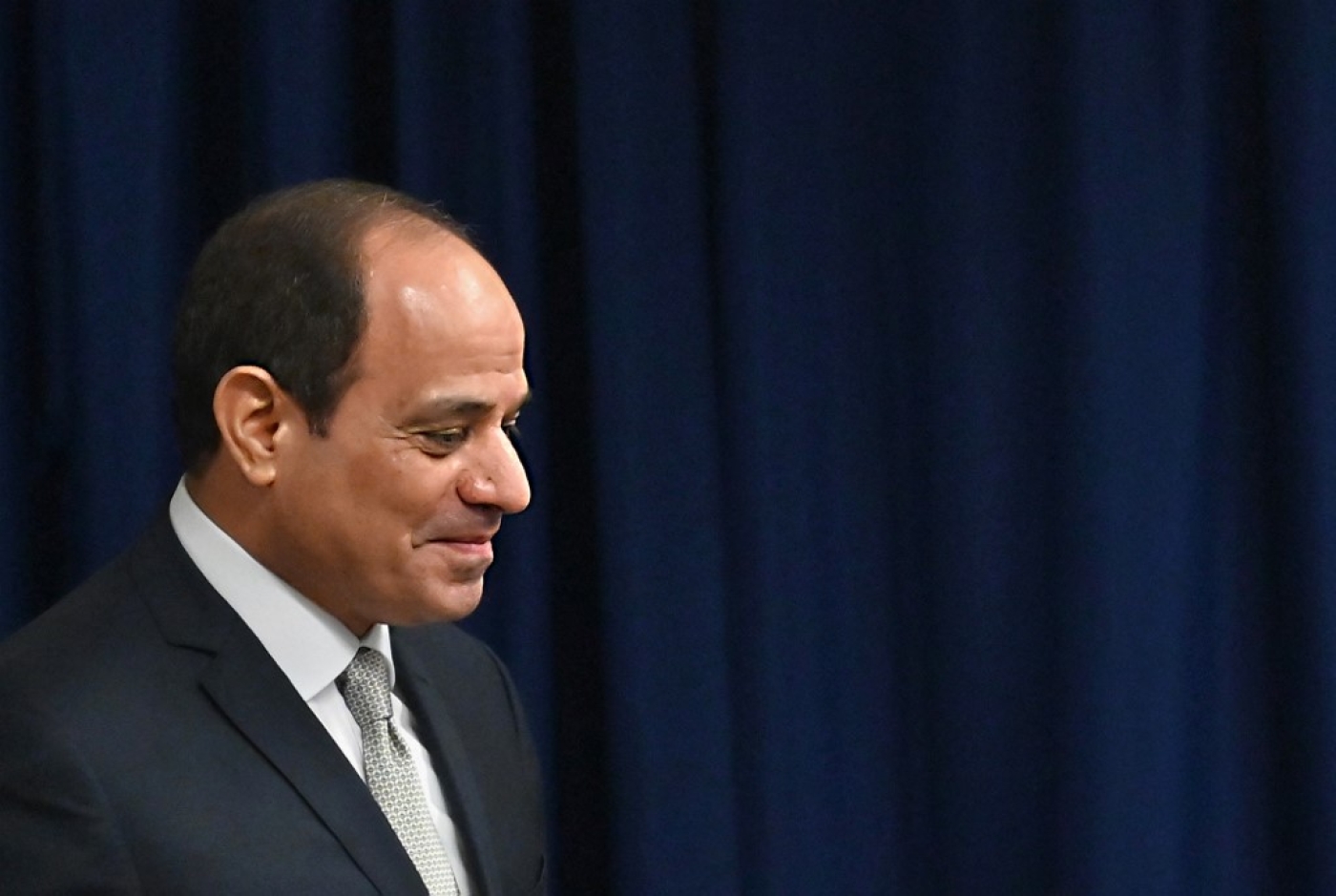
Egyptian President Abdel Fattah el-Sisi at the UN in New York in 2019 (AFP)

When a 35km expansion of the Suez Canal was opened six years ago, banners appeared on the streets of Cairo proclaiming it to be Egypt’s “gift to the world“.

Egyptian President Abdel Fattah el-Sisi welcomed foreign leaders on a yacht. Helicopters and jets performed a fly-by. The expansion was hailed as a national triumph and a turning point after years of instability.

The Egyptian government is a practised liar. It lies to its own people every day, but in times of crisis, it also lies to the international community

When the Suez Canal was closed unceremoniously by a 400-metre container ship hitting the bank in a dust storm on Tuesday, there was silence. For 26 hours, there was not a word about the closed canal, the shipping backing up in the Mediterranean and the Red Sea, or of the Ever Given itself.

Instead, the Suez Canal Authority (SCA) issued a media statement announcing the successful transit of an Italian cruise ship with 65 Covid-19 cases aboard.

There was a media blackout. It was only on Wednesday that the lying started in earnest, with the first official statement noting that efforts were “continuing to reopen the canal”. The SCA downplayed the impacts on navigation, sending a “message of assurance that the navigation will continue as usual”. As if to reinforce that message, the authority allowed a convoy of ships to enter from the northern end in Port Said on 24 March.

Feeding the propaganda mill

The authority warned journalists not to heed any news or rumours about the most serious incident to block the canal since the 1973 Arab-Israeli War, other than statements coming from them. Egyptian journalists did not need any encouragement to toe the line. They fed the propaganda mill, celebrating the SCA’s statement and claiming the ship had been refloated. They even tried to demonstrate this with satellite images, although the images themselves still showed the ship firmly wedged in place. 

The truth was even concealed from international shippers. The Gulf Agency Egypt shipping company quoted the SCA as saying that the container ship stranded in the canal for more than a day had been partially refloated and was standing alongside the bank, and that traffic would resume shortly.

The same story was fed to Lloyd’s List, which reported seeing an email from the Egyptian company sent to the China Shipowners’ Association: “We are still waiting confirmed information for the towing direction. Convoy and traffic will be back to normal within [a] very short time as soon as the vessel is towed to another position,” read the email, based on information provided directly by the SCA early on Wednesday.

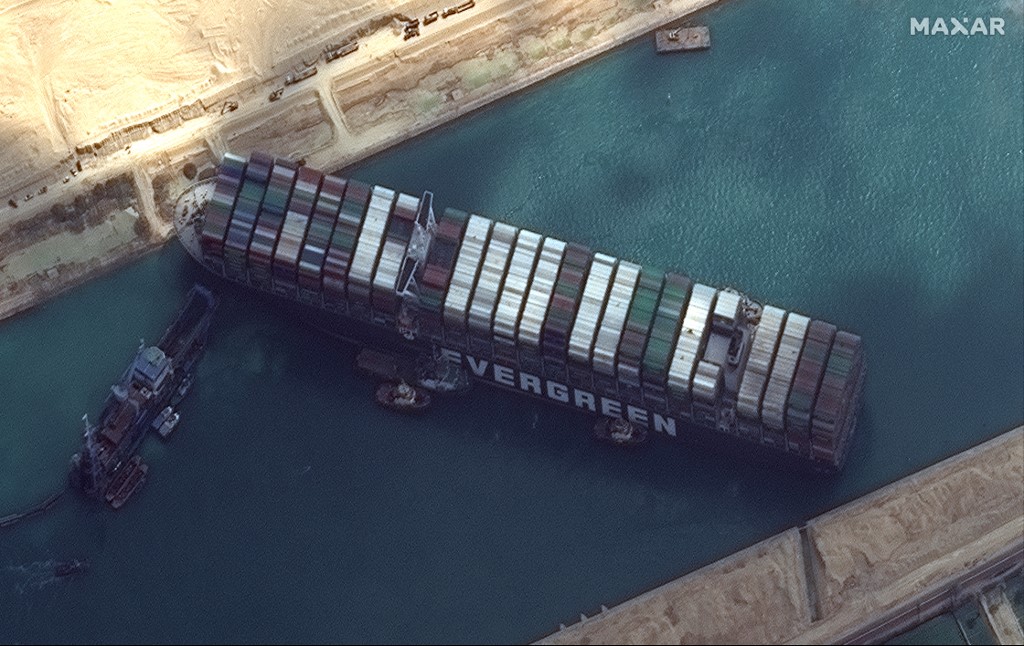
Satellite imagery shows tug boats and dredgers attempting to free a ship that ran aground in the Suez Canal on 26 March 2021 (Satellite image c.2021 Maxar Technologies/AFP)
Satellite imagery shows tug boats and dredgers attempting to free the ship that ran aground in the Suez Canal on 26 March 2021 (Satellite image c.2021 Maxar Technologies/AFP)

On Thursday, two days after the chaos had started, the SCA officially announced that navigation had been suspended.

The Egyptian government is a practised liar. It lies to its own people every day, but, in times of crisis, it also lies to the international community. 

When a Russian passenger jet was brought down in 2015 by an Islamic State (IS) missile 23 minutes into a flight from Sharm el-Sheikh to St Petersburg, Russia and the UK instantly cancelled all flights to the Red Sea resort.

Two harsh lessons

But it is difficult to keep maintaining that a ship the size of the Ever Given is floating, when it so evidently isn’t.

However the Suez Canal crisis is resolved, this incident has taught the world two harsh lessons: how important the canal and Egypt still are for international shipping, and how disastrously and incompetently both are being run.Egypt’s Suez Canal: Why does its closure matter?

The incompetence of Sisi’s dictatorship, in other words, is not just a matter of international concern on the issues of human rights and the rule of law. Sisi’s incompetence threatens a major international waterway.

In the immediate future, this week’s Suez crisis could not have happened at a worse moment. It reinforces the interest of oil-and-gas-producing Gulf states in exploring ways to bypass the canal by routing their product through Israel. The Emirati normalisation deal with Israel has led to a tidal wave of contracts and projects, each of which spells an existential threat to Egypt’s monopoly on this traffic.

Whether through a long-neglected pipeline built by the shah of Iran, new internet cable or a railway line, or even a canal through the Negev desert – no greater push could be given to finding ways of bypassing the Suez Canal and Egypt than by the Egyptian reaction to an incident of this magnitude.

Sisi’s disastrous rule

In the longer term, there is now a clear pattern of decline and disaster to Sisi’s rule. Above and beyond all the other issues in which he has embroiled his country – backing the wrong side in Libya, a witch hunt against the Muslim Brotherhood at home and abroad – Sisi really had two existential things to worry about. He has failed in both.

The first was the Suez Canal; the second was maintaining the water levels of the Nile. Sisi laughed and ridiculed his boss, former Egyptian president Mohamed Morsi, for raising concerns about the dam Ethiopia was building in 2012, and arranged for a leak of a private meeting to embarrass the president. 

The line from the Egyptian army was that the issue was too serious for a mere Muslim Brotherhood president to handle. So they shelved the issue, and Sisi then compounded his mistake by signing away Egypt’s claim in an agreement with Ethiopia and Sudan in 2015. Now, he is reportedly considering military action, just weeks before the dam – which has long been completed – gets its second crucial filling

Instead of concentrating his meagre resources on the two issues that really matter to his country, Sisi has spent all his time obsessed with his image

Instead of concentrating his meagre resources on the two issues that really matter to his country, Sisi has spent all his time obsessed with his image. 

A revealing window into Sisi’s real priorities in the years in which he has run Egypt into the ground can be seen in the official record of lobbyists working for the Egyptian government, filed with the US Department of Justice under the Foreign Agents Registration Act.

An investigation of these official records conducted by a group of Egyptian journalists at Sasapost reveals how the lobbying operation in Washington went into overdrive after the 2013 Rabaa massacre and the suspension of $260m in US military aid, a fraction of the total $1.3bn package.

Sisi’s government paid the Glover Park Group $250,000 a month to lobby senior members of Congress who opposed him, such as Senators Lindsey Graham and the late John McCain. Glover Park spent two years working on Graham until he reversed his position, Sasapost reported. Between 2013 and 2019, Sisi paid this company alone $13.25m – a huge price in the Washington lobby market.

Whitewashing the regime

What were Egypt’s concerns in Washington? Whitewashing Sisi’s image, targeting the American right and Israel’s supporters, and focusing on “religious rights,” with Joe Biden about to enter the White House. In other words, everything that Sisi has spent his money on has been about his image. None of it has had anything to do with what really matters to his country.

But these are Sisi’s priorities. He has not uttered one word about the crisis going on in the Suez Canal. 

It is now commonplace to hear that Egypt is a failing state – a state that fails its citizens, one with depleted resources, a weakened economy plundered by the Egyptian army, and growing levels of poverty affecting tens of millions of people. 

The international community, however, has yet to wake up to the fact that Sisi is a danger not only to his people and his country but also to international trade and stability. Perhaps a big ship jammed into a tight space will do that for them.

The views expressed in this article belong to the author and do not necessarily reflect the editorial policy of Middle East Eye.

timeline suez canal

River to Sea Uprooted Palestinian   
The views expressed in this article are the sole responsibility of the author and do not necessarily reflect those of the Blog!