Uprooted Palestinians are at the heart of the conflict in the M.E Palestinians uprooted by force of arms. Yet faced immense difficulties have survived, kept alive their history and culture, passed keys of family homes in occupied Palestine from one generation to the next.
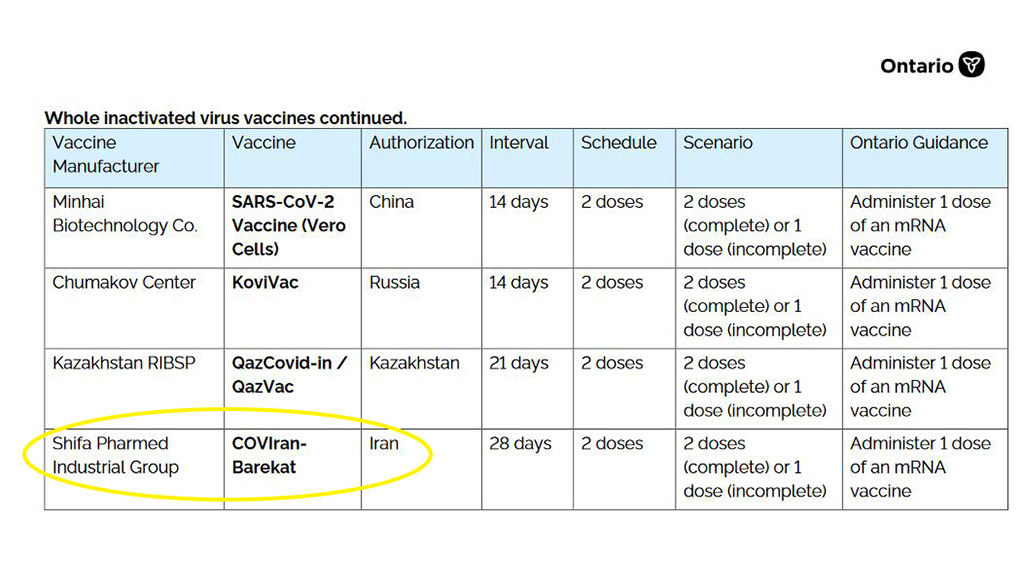
In a guidance document titled: “COVID-19 Guidance for Individuals Vaccinated Outside of Ontario/Canada”, Canada’s Ministry of Health [MOH] officially authorizes Iran’s Barekat COVID-19 vaccine – an indirect recognition of the Islamic Republic of Iran’s efforts in the medical field as well as in the global fight against the coronavirus pandemic.
The MOH document is intended to provide health care providers and Public Health Units [PHUs] with approaches for individuals who have received COVID-19 vaccination outside of Ontario or Canada.
In the document, Canada’s MOH adds a list of other COVID-19 vaccines which are now authorized for use by Health Canada in addition to the four already authorized: Pfizer-BioNTech [mRNA], Moderna [mRNA], AstraZeneca/COVISHIELD [viral vector] and Janssen/Johnson & Johnson [viral vector].
Ironically, by officially recognizing the Iranian COVID vaccine, Canada has broken the sanctions imposed on Iran which have resulted in severely limiting Iranian companies and hospitals from purchasing essential medicines and medical equipment from outside Iran that residents depend upon for critical medical care during the pandemic.
Various vaccines, biological and chemical products and medical devices – including medical supplies, instruments, equipment, equipped ambulances, institutional washing machines for sterilization and vehicles carrying medical testing equipment, have been blocked by the US from being exported to Iran.
This means blocking some of the equipment crucial to fighting the virus, such as decontamination equipment and full-mask respirators.
With the mounting of sanction and the former US administration’s so-called “maximum pressure”, Iran has proven its worth against all odds.
In a Financial Times op-ed, “Investors in Xi’s China face a rude awakening” (August 30, 2021), George Soros writes that Xi’s “crackdown on private enterprise shows he does not understand the market economy. … Xi Jinping, China’s leader, has collided with economic reality. His crackdown on private enterprise has been a significant drag on the economy.”
Translated out of Orwellian Doublethink, the “crackdown on private enterprise” means cutting back on what the classical economists called rent-seeking and unearned income. As for its supposed “drag on the economy,” Mr. Soros means the economy’s polarization concentrating wealth and income in the hands of the richest One Percent.
Soros lays out his plan for how U.S. retaliation may punish China by withholding U.S. funding of its companies (as if China cannot create its own credit) until China capitulates and imposes the kind of deregulation and de-taxation that Russia did after 1991. He warns that China will suffer depression by saving its economy along socialist lines and resisting U.S.-style privatization and its associated debt deflation.
Mr. Soros does recognize that China’s “most vulnerable sector is real estate, particularly housing. China has enjoyed an extended property boom over the past two decades, but that is now coming to an end. Evergrande, the largest real estate company, is over-indebted and in danger of default. This could cause a crash.” By that, he means a reduction of housing prices. That’s just what is needed in order to deter land becoming a speculative vehicle. I and others have urged a policy of land taxation in order to collect the land’s rising site value, so that it will not be pledged to banks for mortgage credit to further inflate china’s housing prices.
Warning about the economic consequences of China’s falling birth rate, Soros writes: “One of the reasons why middle-class families are unwilling to have more than one child is that they want to make sure that their children will have a bright future.” This is of course true of every advanced nation today. It is most extreme in the neoliberalized countries, e.g., the Baltics and Ukraine – Soros’s poster countries.
Soros gives his game away by stating that “Xi does not understand how markets operate.” What he means is that President Xi rejects rapacious rent-seeking, exploitative free-for-all, and shapes markets to serve overall prosperity for China’s 99 Percent. “As a consequence, the sell-off was allowed to go too far,” Soros continues. What he means is, too far to maintain the dominance of the One Percent. China is seeking to reverse economic polarization, not intensify it.
Soros claims that China’s socialist policies are hurting its objectives in the world. But what he really is complaining about is that it is hurting America’s neoliberal objectives for how it had hoped to make money for itself off China. This leads Soros to remind Western pension fund managers to “allocate their assets in ways that are closely aligned with the benchmarks against which their performance is measured.” But the tragedy of financializing pensions is that fund managers are rated on making money financially – in ways that hurt the industrial economy by promoting financial engineering instead of industrial engineering.
“Almost all of them claim that they factor environmental, social and corporate governance (ESG) standards into their investment decisions,” Soros writes. At least, that’s what their public relations advisors advertise. Exxon claims to be cleaning up the environment by expanding offshore oil drilling in Guyana, etc. As for “social standards,” the neoliberal mantra is trickle-down economics: by making our stock prices rise, by stock buybacks and higher dividend payouts, we are helping wage-earners earn a pension, even though we are offshoring and de-industrializing the economy, de-unionizing it and “freeing” the economy from consumer and workplace protection laws.
Soros has a radical solution, which he suggests “should obviously apply to the performance benchmarks selected by pensions and other retirement portfolios: … The US Congress should pass a bipartisan bill explicitly requiring that asset managers invest only in companies where actual governance structures are both transparent and aligned with stakeholders.”
Wow. Such a bill would block Americans from investing in many American companies whose behavior is not at all aligned with stakeholders. What proportion: 50%? 75? More?
“If Congress were to enact these measures,” Soros concludes, “it would give the Securities and Exchange Commission the tools it needs to protect American investors, including those who are unaware of owning Chinese stocks and Chinese shell companies. That would also serve the interests of the US and the wider international community of democracies.” So Mr. Soros wants to block the United States from investing in China. He seems not to see that this is President Xi’s objective also: China doesn’t need U.S. dollars, and is in fact de-dollarizing.
George Soros is obviously upset that President Xi is not Boris Yeltsin, and that China is not following the kleptocracy dependency that warped Russia’s economy. Soros thought the ending of the Cold War would simply let him buy up the most lucrative rent-yielding assets, as he has aimed to do in the Baltics and Ukraine. China said “No,” so it is not deemed to be a “market economy,” Soros-style. It has not made its social organization marketable, and has avoided the financial dependency that makes “markets” a vehicle for U.S. control via sanctions and foreign buyouts.
The virtual ink on a US intelligence report blaming Mohammed bin Salman for the murder of Jamal Khashoggi had not dried when the Biden administration ruled out imposing sanctions on the crown prince – a move that rights groups say would be fundamental for ensuring justice for the slain journalist.
US Secretary of State Antony Blinken confirmed on Friday that Washington will not take action against the crown prince himself.
The US State and Treasury departments had announced sanctions against dozens of Saudi individuals over their involvement in the Khashoggi murder and other rights violations without identifying them.
“What we’ve done by the actions that we’ve taken is really not to rupture the relationship but to recalibrate it to be more in line with our interests and our values,” Blinken told reporters.
Earlier on Friday, the State Department unveiled new visa restrictions dubbed the “Khashoggi Ban” that would allow Washington to target “individuals who, acting on behalf of a foreign government, are believed to have been directly engaged in serious, extraterritorial counter-dissident activities”.
For its part, the Treasury said it imposed sanctions on several Saudi officials, including Ahmed al-Asiri, former deputy head of military intelligence at the time of Khashoggi’s assassination, and members of the hit team that carried out the murder, known as the “Tiger Squad” or Rapid Intervention Force.
However, without sanctions against MBS, who the US government now publicly acknowledges was responsible for the killing, some advocates and lawmakers are saying the mastermind of the assassination is getting away with murder.
‘Unconscionable’
Andrea Prasow, deputy Washington director at Human Rights Watch, called failure to impose sanctions on MBS over the killing “unconscionable”.
“The fact that the US has sanctioned so many of MBS’s associates but not him sends a terrible message that the higher up in a government you are, the more likely it is you can commit crimes with impunity,” Prasow told MEE.
“It also undermines US credibility. It’s hard to see what incentive MBS has to alter his conduct, whether inside Saudi Arabia, in his conduct in the war in Yemen, or in other extraterritorial attacks on dissidents, when he knows he can literally get away with murder.”
Khashoggi, a former Saudi government insider and journalist who wrote for the Washington Post and Middle East Eye, resided in the United States before his death.Saudi Crown Prince Mohammed bin Salman approved Khashoggi murder, US report says
Saudi government agents murdered him and dismembered his body at the kingdom’s consulate in Istanbul, while he was trying to retrieve personal paperwork, in October 2018.
After initially insisting that Khashoggi left the building alive, Saudi officials acknowledged that the journalist was killed more than two weeks after the murder. But Riyadh insists that the assassination was a rogue operation that happened without the approval of top officials.
The murder sent shockwaves throughout Washington, amplifying criticism against the kingdom in Congress, but former President Donald Trump moved to shield Riyadh and particularly the crown prince from the fallout.
The Trump administration had refused a legally binding congressional request to release a report on the US intelligence community’s findings about the involvement of Saudi officials in the murder.
The administration of President Biden, who had called Saudi Arabia a “pariah” as a presidential candidate in 2019, made the report public on Friday, documenting what experts had been saying for years – that the murder, which involved the crown prince’s aides, could not have happened without his blessing.
Saudi Arabia was quick to reject the findings, calling the US assessment “negative, false and unacceptable”.
‘Free pass’
While rights groups hailed the release of the report as a step towards ensuring accountability for the murder, the administration’s failure to impose sanctions on the lead perpetrator left many disappointed.
“The Biden administration is trying to thread the needle. They want to continue to work with a partner that has committed a heinous act against a US resident, while taking some steps toward accountability,” Seth Binder, advocacy officer at the Project on Middle East Democracy (POMED), told MEE.
“But if human rights is really going to be at the center of US foreign policy, as the administration has repeatedly stated, then it can’t give murderers a free pass.”
Before taking office, Biden vowed to “reassess” US-Saudi relations. Since his inauguration, he has paused some arms sales to Riyadh and announced an end to Washington’s support for the kingdom’s “offensive operations” in Yemen.
Still, many rights advocates and lawmakers are demanding a more forceful approach to Riyadh and MBS from Washington.
‘We’re calling on the Biden administration to move ahead with accountability measures to sanction MBS personally’
– Raed Jarrar, DAWN
“We’re calling on the Biden administration to move ahead with accountability measures to sanction MBS personally, along with everyone else who is implicated in that killing,” said Raed Jarrar, advocacy director at Democracy for the Arab World Now (DAWN).
Established last year in Washington, DAWN, a rights group, was envisioned by Khashoggi before his murder.
Speaking at a news conference after the release of the report, Jarrar urged ending US weapons sales to the kingdom. “Transparency is meaningless without accountability,” he said.
Philippe Nassif, advocacy director for the Middle East and North Africa at Amnesty International USA, said many rights advocates are “disappointed” in Washington’s decision against sanctioning MBS.
He added that Congress and the Biden administration should halt offensive arms sales to Saudi Arabia, not only over the murder of Khashoggi, but also for the mistreatment of dissidents at home and war crimes in Yemen.
“And this goes for France. And this
Congress members call for sanctions
Leading Congress members from Biden’s own Democratic Party said on Friday that the president should impose sanctions on MBS.
Congresswoman Ilhan Omar announced on Friday that she will be introducing a bill to penalise the crown prince. She called the release of the report a “turning point” in US-Saudi relations.
“To this day, we continue to supply Saudi Arabia with US arms that are used to commit human rights abuses around the world,” the congresswoman said in a statement.
“To this day, we still cooperate with the Saudi regime on defensive war efforts – including intelligence sharing. These must end. And there must be direct consequences for Mohamed bin Salman and his functionaries.”Will the CIA report cost Mohammed bin Salman his throne?
Congressman Adam Schiff, chair of the House Intelligence Committee who has been pushing for making the report public, hailed releasing the assessment but said the administration should do more to hold MBS accountable.
He decried going after those who carried out the assassination, but not the leader who ordered it.
“The report itself is pretty remarkable in saying in no uncertain terms that the crown prince of Saudi Arabia ordered the capture or killing of an American resident and journalist, that essentially the crown prince has blood on his hands,” Schiff told CNN.
“I would like to see the administration go beyond what it is announced in terms of repercussions to make sure there are repercussions directly to the crown prince.”
Ron Wyden, a key Senate Democrat, also underscored the need to ensure that MBS is punished for the murder.
“By naming Mohammed bin Salman as the amoral murderer responsible for this heinous crime, the Biden-Harris administration is beginning to finally reassess America’s relationship with Saudi Arabia and make clear that oil won’t wash away blood,” he said in a statement.
“There is still far more to do to ensure that the Saudi government follows international laws. There should be personal consequences for MBS – he should suffer sanctions, including financial, travel and legal – and the Saudi government should suffer grave consequences as long as he remains in the government.”
On Friday, February 5, the last hurdle in the way of an international investigation into war crimes committed in occupied Palestine has been removed, as the International Criminal Court in the Hague has finally approved the Prosecutor’s request to open legal proceedings regarding war crimes in the occupied Palestinian territories, including Gaza.
“Pre-Trial Chamber I of the International Criminal Court .. decided, by majority, that the Court’s territorial jurisdiction in the Situation in Palestine, a State party to the ICC Rome Statute, extends to the territories occupied by Israel since 1967, namely Gaza and the West Bank, including East Jerusalem,” the ICC said in a press release that was made available to international media, including The Palestine Chronicle.
After years of haggling, the ICC had resolved in December 2019 that, “there is a reasonable basis to proceed with an investigation into the situation in Palestine, pursuant to Article 53(1) of the Statute.”
Article 53(1) merely describes the procedural steps that often lead, or do not lead, to an investigation by the Court.
That Article is satisfied when the amount of evidence provided to the Court is so convincing that it leaves the ICC with no other option but to move forward with an investigation.
Indeed, Bensouda had already declared late last year that she was,
“satisfied that (i) war crimes have been or are being committed in the West Bank, including East Jerusalem, and the Gaza Strip… (ii) potential cases arising from the situation would be admissible; and (iii) there are no substantial reasons to believe that an investigation would not serve the interests of justice.”
The Reactions
The decision, then, has angered Israel and its Western allies, who insisted that the ICC has no jurisdiction, since Palestine, they alleged, is not an independent state.
As soon as Bensouda made her decision, although, after much delay, the US administration swiftly moved to block the Court’s attempt at holding Israeli officials accountable. On June 11, US President Donald Trump signed an executive order slapping sanctions on members of the global judicial body, citing the ICC’s investigations of US war crimes in Afghanistan and Israeli war crimes in Palestine.
In an historic irony, Germany, which had to answer to numerous war crimes committed by the Nazi regime during World War II, stepped in to serve as the main defender of Israel at the ICC and to shield accused Israeli war criminals from legal and moral accountability.
Germany, among others, then argued that the ICC had no legal authority to discuss Israeli war crimes in the occupied territories. These efforts, however, eventually amounted to nil.
Dr. Triestino Mariniello, member of the legal team for Gaza victims at the ICC, told Palestine Chronicle TV:
“There are at least eight countries that are openly against an investigation of the Palestinian situation. Germany is one. Some of the others came as a surprise, to be honest, for at least four other countries, Uganda, Brazil, Czech Republic, and Hungary had explicitly recognized that Palestine is a State under international law, yet are now submitting statements before the ICC Pre-Trial Chamber saying that this is not true anymore.”
The Pre-Trial Chamber
Consequently, Bensouda referred the matter to the ICC Pre-Trial Chamber, requesting a “ruling on the scope of the Court’s territorial jurisdiction in the Situation in the State of Palestine”.
The pre-trial chamber consists of judges that authorize the opening of investigations. Customarily once the Prosecutor decides to consider an investigation, she has to inform the Pre-Trial Chamber of her decision.
According to the Rome Statute, Article 56(b),
“… the Pre-Trial Chamber may, upon request of the Prosecutor, take such measures as may be necessary to ensure the efficiency and integrity of the proceedings and, in particular, to protect the rights of the defence.”
According to Dr. Mariniello:
“This request to the Pre-Trial Chamber was not necessary, for a simple reason: because the situation is being referred by the State of Palestine. So, when a State party refers a situation to the Prosecutor, the Prosecutor does not need authorization by the Pre-Trial Chamber.”
The Court’s Jurisdiction
The State of Palestine became a signatory of the Rome Statute in January 2015. By accepting the jurisdiction of the Court, Palestine became a State Party.
The Pre-Trial Chamber 1 reiterated that Palestine is a State Party, therefore the Court has jurisdiction over its territory. Dr. Mariniello told The Palestine Chronicle: “The Pre-trial Chamber did not only recognize that Palestine is a State, they also stated that the Court’s jurisdiction extends to the West Bank, including East Jerusalem, and Gaza. What we feared was a further fragmentation of the Palestinian territory” but, according to the ruling, this was not the case.
A Victory
“It is a landmark decision since all the comments expressed by the legal team representing the Gaza victims have been approved. Therefore, they rejected all the arguments by civil society organizations or even states who were trying to persuade the Court that Palestine is not a State,” Dr. Mariniello added.
Professor Richard Falk, Former UN Special Rapporteur on Palestinian human rights, told Palestine Chronicle TV that the ICC investigation is a “breakthrough”.
“It’s a breakthrough even to consider the investigation, let alone the indictment and the prosecution of either Israelis or Americans that was put on the agenda of the ICC, which led to a pushback by these governments … Israel has denounced the Court as if it is improper to examine any State that claims the matter of geopolitical impunity. So you have a core denial of the rule of law.”
The Narrow Scope
Professor Falk elaborated,
“The scope of the investigation is something that is ill-defined, so it is a matter of political discretion,” Professor. Falk said, adding that “the Court takes a position that needs to be cautious about delimiting its jurisdiction and, therefore, it tries to narrow the scope of what it is prepared to investigate. I don’t agree with this view … but it does represent the fact that the ICC, like the UN itself, is subject to immense geopolitical pressure”.
The legal representatives of the ‘Palestinian Victims Residents of the Gaza Strip’ had expressed their concern on behalf of the victims regarding “the ostensibly narrow scope of the investigation into the crimes suffered by the Palestinian victims of this situation.”
The ‘narrow scope of the investigation’ has thus far excluded such serious crimes as Crimes Against Humanity. According to the Gaza legal team, the killing of hundreds and wounding of thousands of unarmed protesters participating in the ‘Great March of Return’ is a crime against humanity that must also be investigated.
The ICC’s jurisdiction, of course, goes beyond Bensouda’s decision to investigate ‘war crimes’ only.
Article 5 of the Rome Statute – the founding document of the ICC – extends the Court’s jurisdiction to investigate the following “serious crimes”:
(a) The Crime of Genocide
(b) Crimes Against Humanity
(c) War Crimes
(d) The Crime of Aggression
It should come as no surprise that Israel is qualified to be investigated on all four points and that the nature of Israeli crimes against Palestinians often tends to constitute a mixture of two or more of these points simultaneously.
That in mind, according to Mariniello,
“The scope of the investigation is not binding for the future. The Prosecutor can decide, at any moment, to include other crimes. We hope it will happen because, otherwise, many victims will never get justice.”
What Now
Mariniello told The Palestine Chronicle,
“Now, the hard work starts for the legal representatives of the ‘Palestinian Victims Residents of the Gaza Strip’, we cannot lower the guard. We need to work so that the ICC Prosecutor can identify the people responsible for international crimes and their criminal behavior as soon as possible.”
The Prosecutor
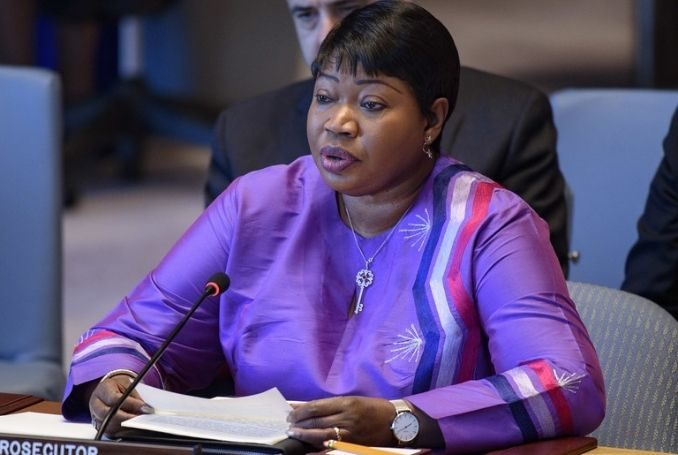
The decision that there were sufficient elements to investigate war crimes committed in the Occupied Palestinian Territories was taken by ICC Prosecutor, Fatou Bensouda, who is currently nearing the end of her term.
A new prosecutor should be elected soon.
(Managing Editor of The Palestine Chronicle, Romana Rubeo, composed this report)
On the face of it, an alliance between Turkey and Ukraine seems like a rather odd creation, yet one that may surprisingly durable simply because neither country has anywhere else to turn. What practically dooms them to a partnership if not an outright alliance is their unenviable geographic and geopolitical position of occupying the strange “no man’s land” between Russia, NATO, and the Middle East. It is, of course, largely a predicament of their own making. Ukraine, with considerable Western backing and encouragement but nevertheless mostly through efforts of a faction of its own oligarchy, opted out of the Russia-centered network of loose alliances, trade partnerships, and other forms of cooperation that were mutually beneficial to the two in the previous two decades. But that defection was not rewarded by the West in a way the likes of Poroshenko, Yatsenyuk, Avakov, Parubiy, and other architects of the Maidan coup expected. Merely being stridently anti-Russian did not prove enough to warrant a shower of US and European cash, only onerous IMF loans which moreover come with conditions Kiev elites are in no hurry to abide by. EU foreign policy chief Josef Borrel lecturing Kiev that the European Union is not an “ATM machine” delivered that point loud and clear: Kiev is supposed to privatize whatever crown jewels its economy still has (at this point, mainly agricultural land), fight corruption of its own elites and facilitate the corruption of Western elites. Joseph Robinette Biden Junior is hardly the only Western politician with a talentless son in need of a lucrative sinecure. There are entire Western companies eager to participate in the thinly disguised plunder that the privatization of Ukraine’s economy will inevitably turn into. A Kiev court’s recent decision to declare the country’s anti-corruption institutions that were painstakingly stood up with considerable aid and tutelage from Western governments, down to screening appropriately-minded individuals for the job, looks as if it were calculated to send a middle-finger gesture to Borrel in terms even dense EU bureaucratic hacks will comprehend. Pro-EU newspapers like Kiev Post were quick to label this a “death of democracy”, presumably with the intent of interesting EU and NATO in sponsoring yet another Maidan since last one seems not to be delivering the goods. The expected shower of Western weaponry has not materialized, probably because NATO is afraid to give Ukraine so much aid that it will risk a full-blown war with Russia.
Ankara’s Burning Hate
Erdogan’s Turkey, by contrast, is in process of de-facto opting out of NATO, though neither Turkey nor the alliance itself want to take the final step of severing ties completely. NATO membership is still beneficial to Turkey. While the procurement of Russian S-400 air defense systems angered NATO and US in particular, resulting in the expulsion of Turkey from the F-35 program and the cancellation of F-35 sale to the country, evidently Ankara hopes that by nominally remaining in the alliance it limits NATO and EU sanctions that would no doubt be far harsher if it were totally out of the alliance. The hope that Turkey, possibly post-Erdogan, will yet see the error of its ways and return to the fold, prevents NATO from adopting harsher stances that would definitely push Ankara away. Yet the drifting apart is unmistakable, and the animosity between Turkey’s leaders and their Western European counterparts is so intense as to beggar belief. While Germany’s Merkel is careful to tip-toe around the issue due to fear of another wave of refugees as well as unrest among the large Turkish diaspora in Germany, France’s Macron seems to have taken a personal affront to Erdogan’s suggestion he might need a mental evaluation and will press the issue of EU sanctions against Turkey at future Union summits.
But from Turkey’s perspective, getting a cold shoulder from the EU is par for the course. Its own migration to the geopolitical gray zone of Eurasia was motivated by EU’s failure to admit Turkey as a member after decades of leading it by the nose and promising neighborhood in some nebulously distant future right after Hell froze over. Like Ukraine, Turkey was not seeking EU membership because of some mythical “shared values”. It, too, saw EU as an ATM machine that would shower Turkey, one of the poorest countries on the continent, with development assistance and moreover allow Turks to freely travel and work throughout the Union. Needless to say, neither of these prospects appealed to pretty much any European country, no matter how close or distant it was geographically. So after decades of leading Turkey by the nose, EU politely put an end to the charade citing problems with Turkey’s democracy. Thus snubbed, Erdogan opted to chart an independent course and appears to be finding a similarly snubbed oligarch clique in Kiev looking for ways the two countries could extract mutual benefit from their isolated status.
Quid pro Quos
There are plenty of those to be had, as limited as Ukraine’s and Turkey’s resources are, compared to such patrons as EU, NATO, US. Faced with isolation and even a potential ban on arms exports, Turkey has a strong incentive to exploit the resources of the Ukrainian defense industry and engage in some export substitution in case vital supplies are no longer available from the West. Canada’s and Austria’s ban on exports of optronics and engines needed for the Bayraktar TB2 combat drones means Ukraine’s ability to provide substitutes would be most welcome. Ukraine, for its part, would not be against deploying a huge attack drone fleet of its own in the hopes of replicating Azerbaijan’s successful offensive against Nagorno-Karabakh on the Donbass, though there Ukraine’s drones would probably run afoul of Novorossiya’s air defenses in the same way Turkish drones were brought to heel over Idlib. Turkey’s Altay main battle tank is likewise little more than an assembly of components imported from other countries, particularly Germany. Since Germany has already placed a ban on export of powerpacks and transmissions for the Altay, Turkey has been casting about for replacements, looking as far as China. Whether Ukraine’s developments in this realm can be adopted to rescue the Altay project remain to be seen. However, the Oplot powerpacks and transmissions can probably be adapted to Altay use, resulting in Turkey realizing its goal of a home-grown MBT. Ultimately, the greater the contribution of Ukrainian defense industry to Turkey’s military modernization, the more freedom of action it would bestow on Turkey and make it less dependent on other foreign sources of military hardware who can exert influence over Turkey simply by withholding future technical support. If the United States were to follow up on the F-35 expulsion with a ban on servicing Turkish F-16s which form the mainstay of its airpower, the result would be crippling of the country’s air combat capabilities that drones cannot compensate for and which would be sorely missed in any confrontation with another comparable power like Greece. Turkey’s efforts to develop an indigenous fighter aircraft would benefit from Ukraine’s technological contributions and its own interest in indigenous aircraft designs. For Ukraine, the relationship would be an opportunity to acquire NATO-compatible weaponry with the caveat that it would have to pay in full for every last drone, either with cash or in kind. Turkey’s economic situation is not so strong as to allow largesse in the form of free military aid to anyone.
Match Made in Hell
Mitigating against the long-term development of what Zelensky referred to as “strategic partnership” with Turkey is the erratic behavior of Erdogan who seeks to dominate any and all partners and tries to see how far he can push before the partners push back. This practice has led to the confrontations in Syria, Libya, and eastern Mediterranean. Ukraine, in contrast to Russia, France, and even Greece, is hardly in a position to push back. The most dangerous aspect of Turkish politics, from Ukraine’s perspective, is the ideology of Pan-Turkism that just might transform Ukraine’s Tatar community into a proxy force for Turkey right inside Ukraine, adding yet another fissure to the already fractured political picture. On the plus side, Erdogan does not appear interested in “combating corruption” in Ukraine, though that does not preclude the possibility Turkey’s military collaboration with Ukraine might not cost Ukraine dearly, though not to the same extent as EU-promoted privatization efforts.
Thank you for the opportunity to address once again the members of the Association of European Businesses in the Russian Federation. First of all, I would like to congratulate you on the 25th anniversary of your association. We appreciate your efforts to promote our economic, investment and trade ties, laying a solid foundation for building good relations between us and the countries you represent.
Here at the Foreign Ministry we value opportunities for dialogue with European entrepreneurs aimed at pushing forward a pragmatic, politics-free and mutually beneficial agenda. At the end of the day, these efforts are designed to improve the wellbeing of the people in Russia and in your countries. Holding regular meetings in this format has become a good tradition, testifying to our mutual commitment to keeping this dialogue going.
Since our previous meeting last year, in fact more than a year ago, the overall global environment has not become any easier, seriously affecting business activity. For many years now, the problems of international terrorism, drug trafficking and organised crime have been escalating around the world. Regional conflicts continue unabated and their number is growing. Recently, the coronavirus infection emerged as a new and a very serious challenge for all of humanity. It would not be an exaggeration to say that it changed the lives of billions of people overnight. Today, no one can say with certainty when the pandemic will end. I will not elaborate here on how the interruption of global supply chains affects global trade. Unemployment is on the rise in many countries. All this weighs on the global economy, which will have to go through a lengthy and probably challenging recovery.
Speaking broadly, in the global context, the pandemic has yet again highlighted what we have long been talking about, that all countries without exception are interconnected, regardless of their geography, size and the level of economic development. All of them have been affected. This is how the pandemic has shown again that cross-border issues cannot be disregarded in this globalised world.
We believed that the conclusion was obvious, that the common tasks and challenges should bring all of us together based on the universally recognised norms of international law. Regrettably, this has not happened so far. Quite to the contrary, some of our Western colleagues led by the United States have tried to take advantage of the novel coronavirus crisis to promote their narrow interests even more energetically and to settle scores with their geopolitical rivals. The appeals by UN Secretary-General Antonio Guterres and High Commissioner for Human Rights Michelle Bachelet to suspend the illegitimate unilateral sanctions at least during the pandemic, primarily to allow the delivery of medicines and medical equipment as well as the necessary financial transactions, have fallen on deaf ears. Likewise, they have paid no heed to the initiative, put forth by President Vladimir Putin at the online G20 meeting, for setting up green corridors free from trade wars and sanctions to supply medications, food, equipment and technologies. This attitude to unifying initiatives is seriously poisoning the atmosphere of international cooperation and increasing the lack of mutual trust, damaging not only ordinary people, who have been affected first of all, but also the business circles. You know this better than anyone.
These alarming trends have also affected Russia-EU relations. There are hardly any positive achievements to speak about. Since 2014, when the European Union flagrantly violated its own pledge to guarantee the agreement between President Viktor Yanukovych and the opposition, it has not just accepted the coup but has actually been encouraging those who seized power in Ukraine illegally and in violation of the Constitution. In particular, the EU has turned a blind eye to the fact that the coup plotters’ policy is based on Russophobia, and that they threatened to oust Russians from Crimea and tried to browbeat the Russian-speaking regions which refused to recognise the coup and said they wanted to sort out the situation. They were denounced as terrorists, even though they had not attacked anyone, and the army and Ukrainian security forces were sent to fight them. As I said, they have been designated terrorists for refusing to recognise the coup.
Since then, the EU, probably becoming aware of its negative role in these processes but still trying to shift the blame onto someone else. Since 2014, it has ruined the multilevel architecture of interaction between Brussels and Moscow, from summit meetings to over two dozen sectoral dialogues. The programme of four common spaces has been abandoned. To this very day, the normalisation of our relations is being artificially conditioned on the implementation of the Minsk agreements. Moreover, they say openly that it is the Russian Federation that must do this. Meanwhile, our Ukrainian colleagues have announced once again through their leaders, as you probably know, that the Minsk agreements should be preserved as the basis of the EU and US sanctions against Russia. This is their logic.
Of course, we will insist on the implementation of the Minsk Package of Measures, which has been approved by the UN Security Council, but we will not do this because we want the EU to lift its sanctions. We will do this above all in the interests of the fraternal Ukrainian people, who are suffering from what has been recently going on in Kiev and other parts of their country.
Restrictions are still retained on Russian economic operators’ access to external financial markets. European producers, too, continue to sustain multi-billion losses. The other day, we became aware that Sweden has taken yet another discriminatory step. A Swedish company, Quintus Technologies AB, has refused to supply spare parts for GAZ Group’s industrial press, under an absolutely far-fetched pretext. Allegedly, the equipment is of a military nature and has a dual purpose. This is absolutely artificial logic. This press has been in use since 2009, and never before, including the entire period of crisis in our relations after the coup in Ukraine, have the Swedish regulators entertained any doubts. Judging by all appearances, this is by far not the last example, where the wish to curry favour with those who lay down the West’s geopolitical line prevails over commonsense and own interests. Of course, this will also affect Swedish businesses that cooperate with the GAZ Group and the company’s employees.
Regrettably, we have to state that the EU agencies continue their shortsighted policies. In particular, this refers to the EU member countries that have proclaimed themselves “frontline” states. Their mood is also “frontline” and they pursue “frontline” policies. Let me note that in July, the EU set into motion, under an absolutely far-fetched pretext, its 2019 framework for unilateral sanctions against violations of certain “rules” in the cyberspace, which rules have not yet been coordinated on a universal basis. Invented last year, this generic regime, as they decided, should be “test-driven” in practice over Russian citizens. Without providing any real evidence, they have accused them of launching a cyber attack against the headquarters of the Organisation for the Prohibition of Chemical Weapons (OPCW) in The Hague. Created in 2019, this regime is not the only one of its kind. The EU has spawned, also within its “inner circle,” yet another generic regime punishing violations in the field of employment of toxic chemicals, or, to put it in a nutshell, the use of prohibited types of chemicals that are chemical weapons. It is intended to be used in specific situations. I have no doubt that they will be attempting to apply this regime to the situation involving Alexey Navalny. Moreover, there is no need to “test-drive” or discuss the facts for this on a universal basis either.
Our French colleagues, again unilaterally, have established the so-called “partnership against impunity for the use of chemical weapons,” a structure outside of the UN or any universal and generally approved international legal framework. But a narrow circle of soul-mates will establish so called “facts,” whereupon a unilaterally created EU organisation intended to punish those who are allegedly guilty of violations will approve sanctions, based on these unilaterally established “facts.” All of this is sad and makes one think that our Western colleagues’ talk of the need for everyone to respect the rules-based order is not just a figure of speech or a synonym of the need to respect international law, but a conscious policy to substitute unilateral and illegitimate actions for the universal international legal framework that requires a consensus of all states in order to approve relevant conventions.
We are interested in establishing the truth regarding Alexey Navalny. That said, this is an outrageous situation that is unfolding following the exact same scenario as in the so-called Skripal case, when accusations were made without presenting any evidence. As you are aware, Russia’s Prosecutor-General’s Office sent requests under the 1959 European Convention for Mutual Assistance in Criminal Matters to the relevant agencies in Germany, France and Sweden, where the required tests were allegedly carried out. Under the protocols to this convention they were asked to share information on the results of these tests. We were told that no action will be taken under this convention, which in itself is a violation, and that the results were handed over to the OPCW. They told us to wait for this organisation to release the results of its tests. However, the OPCW informed us that they continue investigating this matter and the samples they collected (it is unclear who collected them and when). We were told that once they are finished, they will communicate the results to Germany, since the request came from there, leaving it to Germany to decide whether to share this information with us. This is a travesty of common sense, and I believe that everyone understands this, including our Western colleagues who deny our requests that are based on a binding international convention. It seems that their Russophobic fervour is so strong that it prevents them from exercising good judgement.
We regret that trade and economic cooperation is becoming increasingly politicised. I have just cited some examples. Trade and economy have always been viewed as a safety net in relations among nations. Nowadays though, things seem to have shifted into a somewhat different phase. I remember so well that in 2014 German businesses called on the European Union and its agencies not to place politics above the economy in its approach to Ukrainian affairs. At the time it was German Chancellor Angela Merkel who said that there are cases when politics must be above economics. This is regrettable.
We are now witnessing another example. The European Commission has drafted a report with a long title: Report on Significant Distortions in the Economy of the Russian Federation for the Purpose of Trade Defence Investigations. You probably understand what this is all about. The document is clearly biased and can lead to new restrictions on the access of Russian goods to the EU market. You know that this will definitely prompt us to reply. In particular, this report presents regulatory measures that are totally legitimate, including in energy, transport and labour resources, as distortions in the Russian economy. We also have questions regarding another EU initiative. I am referring to the key element of the European Green Deal, the so-called carbon border adjustment mechanism. Brussels said that it will be enacted not later than on January 1, 2023 in one form or another. For now, we are looking into what this initiative actually means. We do hope that this mechanism would not contradict the World Trade Organisation (WTO) norms and will not lead to “trade protectionism on climate issues.” We would like to avoid having to take retaliatory measures. I believe now is not the time for trade wars, even in the current politicised environment.
I will not elaborate too much on the games with Nord Stream 2. It all started quite a few years ago when the EU retrospectively amended the gas directive within its Third Energy Package just to make it harder to carry out this project. This ran counter to all legal norms and established practices approved by all countries. It was with great difficulty that compromises were found. This did not prevent things from going awry afterwards. When the end of the project was on the horizon, a new factor emerged in the form of the heavy hand of the United States that stated its open and unscrupulous intention to derail this project for Russia and the Europeans in order to force the US LNG on the Europeans. They are franticly creating LNG capabilities. Washington claims that these measures are designed to support US producers. This is a gloves-off approach free from any ethical boundaries. They do not seem to be concerned with the fact that higher costs for buying expensive gas will undermine the competitiveness of entire European manufacturing sectors. In fact, this suits the US.
Politicised energy cooperation is yet another blow at the foundations of what we call European security. Energy is the area of cooperation dating back over 50 years. We recently marked the anniversary with our Austrian colleagues. Energy was always left outside any forms of confrontation during the Cold War. Our joint energy programme and cooperation have survived the dissolution of some states and the formation of others; they have always served the long-term interests of all European nations, including the Russian Federation.
Protectionism and other barriers and restrictions will only aggravate the economic situation, which is already complicated. By the way, we noted that the BusinessEurope Confederation of European Business recently published recommendations aimed at protecting European businesses amidst sanctions-related restrictions. The document directly states that the weaponisation of the sanctions policy to pursue economic interests is unacceptable. It may seem obvious but as things go nowadays, it takes a lot of courage to say something as obvious as this.
Ladies and Gentlemen,
The Russian leadership is implementing measures to support the public and businesses in the face of COVID-19 related problems. We are doing everything we can, considering certain minimum requirements of the epidemiological authorities, to help return foreign workers to Russia, which you are well aware of. You have made respective requests and requests continue to come in. We will continue to process them promptly. We expect that, according to the forecasts made in Russia and foreign capitals (including multilateral institutions), the depth of the economic decline in our country will not be as significant as in many other countries, including the eurozone.
Our potential for countering infectious diseases is becoming increasingly more effective. We have learned a lot while taking practical measures to fight this challenge. Relying on our past experience in countering various pandemics, we managed to develop a series of test systems to diagnose the coronavirus and launch the production of drugs to treat it efficiently. As you know, we registered the Sputnik V vaccine. Registration of one or two more vaccines developed by the Vector Research Centre is being finalised. We support sharing experience in this area and cooperating with all interested countries because it is important for overcoming the consequences of our common emergency once and for all. As you know, speaking at the 75th session of the UN General Assembly via videoconference, President Vladimir Putin proposed an initiative of holding a high-level online conference involving the states interested in cooperation on developing coronavirus vaccines. We hope to receive a constructive response to this important proposal.
Before concluding my opening remarks, I would just like to say a few more words about the main subject on our agenda today: as we have already seen more than once, economic interdependence can be both a boon and a bane. I don’t really think that anything good will come out of this if the EU continues to see its partners as some “appendages” of the Eurocentric world. The world that was based on the central role of Europe has become history, not regrettably or happily but objectively. The drivers of economic growth and political influence are now in the East. The new polycentric reality calls for new approaches in politics and the economy. The “leader-follower” relationship is no longer tenable. What we need now is respect for the fundamental principle of equality.
Nowadays we must help the global economy through this difficult period and ensure its consistent post-COVID development. This goal should unite all of us, because this is about the welfare of all nations. We call for finding new growth points in order to overcome the global recession. It is crucial in this respect to combine the potentials of the various integration initiatives that are being implemented throughout Eurasia. This is the objective of President Putin’s initiative on the Greater Eurasian Partnership based on the universal principles of international law and transparency and open to all countries of our huge common continent without exception. You are aware that we are actively promoting dialogue on this subject within the framework of the Eurasian Economic Union (EAEU) and the Shanghai Cooperation Organisation (SCO), as well as in relations with ASEAN nations. While doing so, we point out that we would like all countries of our common continent to join this process, both members of regional associations and the unaligned countries. This means that the EU countries could also take a look at this initiative with regard to their own interests, the interests of European businesses, including the possibility of easy access to the rapidly growing markets and new transit routes within the framework of this project. We have a starting point for launching this work in earnest. I am referring to the contacts created at the technical level between the European Commission and the Eurasian Economic Commission. We would like these contacts to break out of the restrictions of technical and regulatory issues. We would like our discussions to move over to a political level and to acquire a political vision of the development of Eurasia, which will become a global economic driver – there is no doubt about this.
We firmly believe that it is in our common interests to prevent the appearance of undesirable dividing lines in the new economic spheres created by the new technological paradigm. Energy and industry are becoming ever greener and all spheres of human activity, including the work of economic operators, are being digitalised. It is our strong conviction that this calls for combining efforts rather than trying to play zero sum games again, as was the case in the past. We are ready for cooperation on the broadest possible basis.
Thank you. I am now ready for the interactive part of our meeting.
Question: There is a saying in my native German language that smart people give way in a dispute. What steps would Russia be ready to make in this regard? What opportunities do you see for giving an impetus to this process and putting it back on a more constructive trajectory? What mechanisms and measures do you see for shielding small islands of cooperation from the collateral damage caused by geopolitical rivalry?
Sergey Lavrov: As far as I can see, the way you used this German saying (smart people giving way in a dispute) suggests that you are certain that the West will never give way.
I also see this in the way many of the ongoing developments are unfolding. In particular, this refers to the complaints we hear. Russia invariably owes something regardless of the international matter, be it Syria, Libya or Belarus. The same goes for Alexey Navalny, any cyber affairs and poisonings. But no evidence is presented. Moreover, when we question their claims and findings, in this case I am referring to the Bundeswehr laboratory, or to the Porton Down laboratory in the Skripal case, they see this as an insult. But no evidence was presented. Our German colleagues are now telling us that this is our problem and that the poisoning took place on Russian territory, so they don’t know anything. Go ahead and open a criminal case, but we will not give you anything, they tell us.
By the way, I remember a rather gruesome episode in our relations with Germany when there was a problem in 2016 with Yelizaveta Fesenko, a Russian underage girl. She disappeared and the search continued for quite a long time. She later resurfaced and said that she had been raped. It turned out that she had not been raped but Germany still opened a criminal case on child sexual abuse charges. One of the defendants received a suspended sentence. But when we tried to become involved to help the girl (apart from a German citizenship she also is a citizen of the Russian Federation) and asked our German colleagues to explain what happened, we faced an outpouring of resentment, including a statement by then German Foreign Minister Frank-Walter Steinmeier, who said that Russia should not interfere in Germany’s domestic affairs or use this incident for propaganda purposes. This is a similar case. Something happened to a Russian national on German territory. When we asked to explain what had happened they told us that it’s not our business and asked us not to interfere in their domestic affairs. When now we asked our German colleagues to share their findings after analysing Alexey Navalny’s test samples, they referred us to the OPCW. The OPCW referred us to Germany, arguing that it was Germany that filed the request, while Russia should have had the same findings as Berlin. However, the doctors in Omsk passed on to the Germans the results of all the tests they ran and everything they did. When the Germans came to transport Alexey Navalny to Germany, they signed papers confirming that they received all the information. Moreover, Alexey Navalny’s spouse signed a document assuming responsibility for all the consequences of his transfer to Germany, since our doctors were not convinced that this was safe. It is true that they did not find any traces of weapon-grade toxic substances. They honestly said so. Let me draw your attention to the fact that the Charite clinic did not find any toxic agents from the so-called Novichok group in Navalny’s samples either. It was the Bundeswehr clinic that made these findings. We still do not know whether the French and the Swedes collected the samples themselves or the Germans simply passed on these samples to them. The fact that our partners are trying to keep this secret, muddying the waters, is a matter of serious concern for us. We want to get to the truth and will pursue this objective. I don’t know what to do with this. Now we are being accused of the developments in the Central African Republic, and they are trying to pin the blame for something that happened in Mozambique on us as well. We stand accused of everything no matter where it occurs.
When US Secretary of State Mike Pompeo, his deputies and other members of the US administration travel around the world, they openly call on their partners during news conferences in Africa, Greece or elsewhere to stop cooperating with Russia and China. These statements are being made officially and unceremoniously, for everyone to hear. It is difficult for me to say now what concessions we can make when it comes to this situation.
As your board chairman has already mentioned, it is good that the ties with the EU are being revived. Yes, they are indeed being revived, but only in specific areas, such as Syria, Libya and Africa – we have recently held such consultations. However, we do not see a systemic approach to our relations on the global and hugely important political plane.
High Representative of the European Union for Foreign Affairs and Security Policy Josep Borrell is a good friend of mine. We spoke with him earlier this year on the sidelines of the Munich Security Conference. In June, we talked for two hours via videoconference. We discussed all topics in great detail. There is a common understanding that we need to review the situation, at least so as to see if the EU policy based on sanctions is really effective. This is for the EU to do. In our opinion, it is a flawed policy. Sanctions damage both those against whom they are applied and those who apply them. You are aware that we are trying to abandon all forms of cooperation that can strengthen our dependence on Europe, including in the fields of technology and agricultural goods. I believe that we have achieved good results with this. We are probably doing this because we are no longer sure that our European partners will honour their commitments. I have cited the example of Nord Stream 2. It would seem that the EU’s Legal Service has long analysed this project and concluded that it is good and does not contradict any EU norms. Nevertheless, the question has been reopened and the rules have been changed. Is this how reliable partners act? Moreover, this is being done contrary to the fact that companies from the five respected “old” EU members were fully interested, and continue to be interested, in the Nord Stream 2 project. But politics has prevailed over business.
Of course, selective dialogue is underway on some specific matters, as you mentioned. We are not abandoning it. But we can see that the EU has been trying to preserve the five guiding principles and only to modernise them (and they are based on the fact that the normalisation of EU’s relations with Russia is conditioned by the implementation of the Minsk agreements by Russia, not by Ukraine). While these futile discussions are underway in the EU and the very aggressive and loud Russophobic minority is preventing any efforts to reassess relations with Russia, very serious analytical processes are gathering momentum in Germany. As far as we know (this information is based on German media reports), experts close to the German Government are developing what they describe as “a new Eastern policy,” which actually amounts to removing the remaining positive parts on our agenda. Their main arguments, as cited by the press, are that strategic partnership is a thing of the past; that the Partnership for Modernisation, which used to be a symbol of our cooperation with Germany and subsequently with the EU as a whole, has not materialised; and that Russia refused to become an ally for the EU and NATO and hence became their opponent when it comes to fundamental political and ideological aspects of the new international order. I have already said that our Western friends want the new international order to be based on rules rather than international law, and on rules invented in a narrow circle of confederates.
As for selective cooperation, the circles close to the Government who are formulating a new agenda say that such cooperation will be possible only after Russians mend their ways. Amid mental stagnation in Brussels, these processes are gathering momentum first of all in Germany. Geopolitical analysts have probably seen that Germany is becoming the lead player in ensuring a strong and lasting anti-Russia charge in all processes underway in the EU.
We have seen this before. The first sanctions were adopted after an absolutely transparent referendum was held in Crimea and nobody questioned their outcome – US representatives told me so immediately after the referendum. Nobody doubted then, and nobody doubts now, that it was a sincere desire of the Crimean residents. But as soon as this happened, we were told in a quite superior manner that Russia should know that there would be no “business as usual.” We replied that yes, there will be no “business as usual.” You yourself have ruined your standing and reputation when you were spit in the face – excuse my French – by those who terminated the agreement guaranteed by France, Germany and Poland. We know very well that there will be no “business as usual,” but we are nevertheless ready to look for spheres of constructive interaction. But take a look at the current situation. Just a small but telling example regarding Nord Stream 2: the Swedish authorities have cancelled their companies’ permit for cooperation with GAZ. There are more examples of this kind too. The question now is not that there will be no “business as usual,” but that there may be no reliable basis for doing business with Europe in the long term and we cannot be sure that our European partners will honour their commitments. I am not talking about companies. They want to do business, but it is the politicians who are ruling over business now. This is the problem. As I have already said, there is no lack of goodwill or desire to develop normal relations on our part. Just read President Putin’s message of greetings to Federal President Frank-Walter Steinmeier and Federal Chancellor Angela Merkel on Germany’s reunification. It clearly says everything. But goodwill cannot be unilateral. It is said that he who is smarter and stronger should take the first step. We probably have grounds to believe that our partners are strong and smart. I really do hope that they think about us in the same way. If there is goodwill on both sides, we can turn the tide. But we do not see any reciprocity so far.
Question: We have noticed these concerns regarding the recent trends that you mentioned, and the articles claiming that the partnership has come to an end. We share these concerns. As an association, we agree that it takes two to tango.
Sergey Lavrov: These days, some prefer breakdancing and you don’t need a partner.
Question: Let’s hope that partner dancing will not go out of style. As an association, we adhere to the principle of independence. We communicate both with Brussels, by voicing our concerns with the current situation, and with officials in Russia. I was very happy to hear your greetings on our anniversary. This year we marked 25 years. We planned to organise a conference using the motto “Russia and Europe in the world of tomorrow: looking back on the past to move towards the future.” How do you see Russia and Europe in the world of tomorrow? What are the most promising areas for continuing the cooperation that has not always been easy but has undoubtedly been productive over these 25 years? What are the key areas for you?
Sergey Lavrov: We spoke about this at length today. If we talk about specific areas, these include, of course, the digital economy, the green economy and everything related to the new types of energy (the Russian-Italian-French thermonuclear reactor project). We have many hi-tech projects with Germany. There is mutual interest. But, again, the political course pursued right now, mainly by the United States, is aimed at preventing any mutually beneficial, promising and competitive economic projects in Europe to be carried out without the American involvement – be it Russia or China. This has been stated openly. Politics is the art of the possible but perhaps, in the current circumstances, the economy is also the art of the possible. As long as the leaders of your countries are capable of protecting the core interests of European businesses, as long as they can protect your competitiveness and as long as they can withstand this pressure.
But, of course, besides the economy, we are deeply concerned about the military and political situation. It is not improving in Europe and, on the contrary, it is becoming more disturbing. By the way, there have been many reports, analysis pieces and articles recently marking the anniversary of the German reunification. Russian television filmed a two-hour documentary, The Wall, which came to a rather sad conclusion: the Berlin Wall was never destroyed; it simply became virtual and moved to the East very close to the Russian border, despite all the promises and assurances. I will not comment on this film right now. I hope you watched it. If you did not, I recommend it because you will understand a lot about the current conditions for the Russia-Europe relations, how the Russian leadership and Russian people remember the times when – and we all know this very well – Russia played the decisive role in the German reunification, by making a huge sacrifice. I am not exaggerating. The withdrawal of our troops was conducted in absolutely cruel and inhumane conditions. We know the real (financial) cost Germany paid for this. We also know that, not that our Western colleagues tried to persuade the Soviet leaders against it but they asked whether they [the Soviet leaders] had thought carefully and whether everybody needed a united Germany. You know the outcome. I find the manner used by some representatives of the German leadership in communication with the Russian Federation not only unacceptable but fully indicative of the fact that the era everybody considered a historic victory of Germans and Russians and eventually the victory of the entire Europe is now completely forgotten. This is unfortunate. I really hope that this anomaly goes away. It cannot reflect the Germans’ true attitude towards Russia. Speaking of which, in a recent public opinion poll, half of the German people across the Federal Republic of Germany, including Western Germany, expressed a positive attitude towards the Russian people. I think the number of people in our country supporting cooperation with Germans will not be less than that. Our historic victory is in overcoming all phobias and focusing on the constructive process in the interests of our nations. Of course, it would be a crime to lose it.
Question: I would like to get back to the issue of highly skilled professionals returning to Russia. We are very grateful for the help we received from the Government of the Russian Federation and, in particular, from the Foreign Ministry. We know that the rules currently in place, the Government Directive No. 635-r of March 16, 2020, is greatly appreciated by our members because it opens a channel for returning highly skilled professionals. However, on the other hand, this process is still complicated and there are many unresolved matters. What are the prospects of relaxing the border crossing regime, especially ahead of the New Year days off?
Sergey Lavrov: I have already spoken on this matter multiple times. The Foreign Ministry will play a secondary role there. Public health is the top priority. Therefore, the epidemiological and sanitary authorities are calling all the shots. We have an Emergency Response Centre headed by Deputy Prime Minister Tatyana Golikova, the Federal Supervision Service for Consumer Protection and Welfare, the Healthcare Ministry and the Federal Medical-Biological Agency. All these experts are working on the best measures to protect our citizens and our visitors from the danger of contracting the coronavirus.
It is in the interests of the Foreign Ministry to establish contacts as quickly as possible. As you are aware, the aviation authorities are also interested in this – as are the airline companies which are suffering losses and hoping to resume air services as quickly as possible. Once again, the decisions are up to the epidemiologists.
Question: I can see that Russia is trying to shut itself off from the rest of the world by demanding that production facilities be more localised. We invested about 2 billion and are one of the largest companies. Seventy percent of our products will not be considered Russia-made products in two years. I am urging you to do everything you can to make sure that Russia does not isolate itself from the rest of the world and cooperates with Western companies. Do not force us to resort to localisation which puts us at a disadvantage and which will seem rather strange after we invested 2 billion.
SergeyLavrov: I agree with the idea that we should not destroy the global forms of cooperation and build barriers. If we look at localisation as a barrier, this logic probably applies here. But again, we need to remember about the strategic goals set for our economy by President Vladimir Putin and the Government. To a great extent, they have to do with the events in our relations of the past six or seven years and with the fact whether the West demonstrated itself as reliable and capable of negotiating in relations with us.
When it comes to localisation, we are not alone. For example, India is rather actively pursuing its Make in India policy and I think it is much more demanding than the localisation policy in the Russian Federation. Overall, I understand your production-related concerns and assume that these issues should be raised with the Government Foreign Investment Advisory Council that is in charge of these matters.
Question: The Government of the Russian Federation adopted new rules that prevent us from investing for the next two years. We do not know whether we can invest in the future because in two years there will be no benefits in this for us.
Sergey Lavrov: The Foreign Ministry is interested in continuing pragmatic and mutually beneficial economic cooperation; therefore, let’s agree that following this meeting, following our discussion, your chairman, the Director General, will send me a proposal outlining the steps which, in your opinion, would allow our cooperation to continue on a mutually beneficial basis.
I know that you cooperate with the GAZ Group. I meant exactly the same thing that you are talking about when I said that some small European countries are trying to run before the American hounds because the seizures by the United States were once again extended. The Americans are thinking about themselves, too. Many American jobs depend on continuing this cooperation. Our Swedish neighbours decided that they will be more American than the Americans themselves.
Question: When we discuss relaxing the border crossing regime for highly skilled professionals, please do not forget about their family members because it is a major part of their lives here. I would like to ask you to consider this issue.
SergeyLavrov: Of course, their comfort is important. We will make sure to support requests concerning their family members as well.
Question: We are witnessing the US administration purposefully dismantling the international relations system that took shape after World War II. How much have they managed to accomplish in this regard? Is this an irreversible process? What can we expect from the upcoming election?
Sergey Lavrov: As I mentioned earlier, the current international relations system is collapsing under the banner of the “rules-based world order.” It became part of the political vocabulary, or narrative, in modern parlance, about three to four years ago. We took note of it immediately. When we began to talk about this term which was proposed to be included in the declarations of international forums, we were told that “this is the same as international law.” When we proposed replacing this term with “respect for international law,” we were told, by hook or by crook, that “we need to use some fresh language.” And then everything that I was talking about came to the surface.
Two parallel processes are underway that are directly related to the erosion of the system that was created after World War II, which suited everyone, made it possible to avoid another world war and, as we all hoped, would be ridding itself of confrontational components after the Cold War ended. We have already talked about the Berlin Wall and everything that followed and what we are witnessing now.
There are two obvious areas where this system is being eroded. The first is the privatisation of the existing international organisations’ secretariats. The Organisation for the Prohibition of Chemical Weapons (OPCW), which is based on the Chemical Weapons Convention (CWC), is a case in point. It was adopted unanimously (any convention can only be adopted unanimously) and is binding exclusively for the countries that have ratified this Convention, 193 in all. The OPCW is one of the most universal organisations. The Convention can only be amended by way of talks, and the language must be agreed upon by a consensus, after which the amendments are adopted and ratified. Under the convention, the OPCW Technical Secretariat (TC) has the competence to conduct a probe in response to an inquiry by any CWC member country. This should be done by an onsite visit by the experts to a location designated by the corresponding party to take samples that are then taken to certified labs. Then, a report is compiled which says whether a substance prohibited by the special lists attached to the CWC was found in these samples. That’s all there is to it. The OPCW Secretariat began to grossly violate the Convention. For example, in Syria, they were making decisions and compiling reports without onsite visits. They just said that they managed to get samples from, say, Great Britain or France (there was such an episode in Khan Shaykhun), since it was “unsafe” for them to go there. We insisted that, under the Convention, they must go there themselves. The answer was “it’s unsafe.” Then, we asked the British and the French, since they were able to obtain the samples in unsafe circumstances, to use their contacts to ensure the safety of the OPCW inspectors so that they comply with the convention. We were told there was nothing they could do, and it’s “classified.” The Syrian government was accused of airstrikes using bombs filled with toxic agents. This “classified” information was used to conclude that a poisonous agent was used in Khan Shaykhun. End of story. Nobody knows who took these samples, or who took them to which laboratory, because it’s “classified.”
There are many questions. When we started asking them and stopped accepting such reports in the UN Security Council (only the UNSC can decide who is right and who is wrong under international law and the UN Charter), our Western colleagues at the OPCW convened an extraordinary session of all parties to the Convention. They put to the vote a proposal that, in addition to what is allowed for the OPCW Technical Secretariat under the Convention (to determine whether a prohibited poisonous agent was used or not), it should also be authorised to identify the perpetrators and to carry out the attribution. Less than half of the countries members of the convention voted in favour of the proposal. The rest voted against it or abstained. However, according to the rules of procedure, the decision was declared adopted. Thus, instead of an international law instrument, which any universal convention is, we got an instrument of the “rules-based order.” Of course, we will not be paying for the portion of the Secretariat’s activities that focuses on these purposes. China and a number of other countries are doing the same, but that doesn’t make the problem disappear. This is an outright privatisation of the Secretariat, which can now be seen in the way the senior officials of this body (Western countries hold the posts of Director-General and his “right hand”) react to our inquiries on many issues (Syria, Navalny, etc.). Concurrently, privatisation is carried out in less aggressive forms, when the Western employees of the respective secretariats conduct blatantly one-sided policies at the UN organisations.
The second area is about the propensity to move “inconvenient” matters outside the UN system. In my opening remarks, I mentioned that our French colleagues had created the International Partnership against Impunity for the Use of Chemical Weapons. We asked why we can’t discuss this at the UN or the OPCW, which they are trying to manipulate. Why do this somewhere else? We were told that this is just a “group of like-minded people.” Today, I spoke on the phone with my French colleague, Minister for Europe and Foreign Affairs Jean-Yves Le Drian, and asked him why they were not responding to a request filed by the General Prosecutor’s Office of Russia regarding Alexey Navalny’s tests. Mr Le Drian told me they were waiting for the OPCW to respond. The OPCW has not yet responded (today is October 5). However, already on September 24, our French colleagues initiated the distribution, among their closest partners at the very same organisation in The Hague, of a draft statement by the countries participating in the International Partnership against Impunity for the Use of Chemical Weapons. The draft of this statement is already saying that, as confirmed by the OPCW Secretariat, Mr Navalny was poisoned with Novichok. The Secretariat has not confirmed or said anything. We have an official letter from the OPCW Director General Fernando Arias Gonzalez saying that the process is still underway.
This “privatisation,” as we call it, creates quite serious problems in other areas of the universal institutions’ work as well. Instead of once again provoking scandals at the conferences of the parties to the relevant universal conventions, they are now making decisions in a narrow circle of “like-minded people” and then present this as an example of multilateralism. This approach forms the basis of the Franco-German initiative for a new multilateralism, which they are promoting and which was proclaimed not so long ago. It was stated that the EU is an example of multilateralism. We asked again why multilateralism is being considered outside the framework of the UN multilateral organisation. There’s no answer, but we know it. There will be more cases like this. Along with this International Partnership against Impunity for the Use of Chemical Weapons, the French have created a similar partnership on the freedom of journalism and information in cyberspace.
Question: The impact of geopolitics on de-globalisation. Modern equipment has a very broad built-in functionality for data collection and transmission. At the same time, requirements for a mandatory local hosting are being tightened, in particular, with regard to data collection and transmission. Some forecasts say that by 2030, many countries will close their markets to each other. What do you think could promote the opening of a common economic space?
Sergey Lavrov: For 15 years, if not longer, we have been actively promoting the initiative (it has gained a large number of supporters now) to figure out how the internet should work so that everyone feels comfortable. This question was raised at the International Telecommunication Union (ITU), an organisation dealing with all forms of information and communication technologies, and in the UN, where it was proposed to agree on the rules of responsible behaviour in the information landscape. It is about international information security. At the same time, we are promoting initiatives at the UN to combat crime in cyberspace. There is one part that relates to processes affecting national security, and the other is crime proper – drug trafficking, paedophilia, pornography, and so on. But things are moving with difficulty at the ITU. All these years of discussions have led us nowhere. The Americans do not seem interested in making this topic the subject of agreements. The discussion continues, but you know how the internet is governed, how it all works. It suits them. The Americans are actually pushing forward the idea that there is no need for any anti-cybercrime conventions or rules of conduct to ensure security in the information landscape. There is international law and it is applicable. This also reflects our Western partners’ policy to declare cyberspace an arena of potential confrontation, including the possibility of hostilities (and the outer space for good measure).
As we have seen from hours of discussions with the Americans and other Westerners, they are reluctant to introduce new regulations and cite applicable international law because the West again wants to reserve some extra rights. I mentioned the partnership to protect freedom in cyberspace. If it is established that someone has violated “freedom in cyberspace,” they will not have to prove anything to anyone, because international law is already in place. The Americans are primarily interested in Article 51 of the UN Charter (the right to self-defence and the possible use of weapons). They do not hide this and want to reserve the right to strike. More precisely, not reserve, but actually obtain the right to use military force in response to what they might consider an encroachment in cyberspace that affects their national interest. You can implicate just about anything there.
President of Russia Vladimir Putin proposed reopening the existing channels on cybersecurity issues. On October 2, Secretary of the Russian Security Council Nikolai Patrushev met with US President Trump’s National Security Advisor Robert O’Brien, who said that so far, Washington has not seen any Russian interference attempts in the 2020 United States elections. Well, they kind of expected Moscow to interfere, but “Mr Patrushev assured them they won’t.” What the Russian Security Council Secretary proposed – we actually lived through all this many years ago with the Obama administration, and later it resumed with Donald Trump – was a proposal to sign a deal on non-interference in each other’s affairs, including in cyberspace, concerning elections or other processes. The US does not want to, because they really interfere in our internal affairs. After Kiev events in 2014, they passed the Ukraine Freedom Support Act, which explicitly ordered the State Department to spend $20 million a year to liaise with Russian civil society, to support certain “independent” and “non-governmental” organisations. You are certainly well aware of this. Indeed, a cutting-edge sphere like cyberspace and information and communication technologies in general, where progress is rapidly gaining momentum, is a field for competition. Look at what is happening with 5G networks now, how the Americans prohibit Europe and the rest of the world from cooperating with China; look at how these policies affect the atmosphere of international relations. Consider artificial intelligence. I think competition will continue, as we are seeing a new industrial revolution – or rather, not an industrial, but a technological one.
If we consider the US policy line they are pursuing today, it is difficult to predict how and when it will end, whether it will even come to a close in our lifetime, because anything’s possible. Who knows what will happen on this planet in 50-100 years. There are many people who believe the current US policy line is irrevocable, and from now on, they refuse to put up with it. The most interesting thing is that they actually achieve their goals in some cases. As we say, might is right. But it seems to me that the United States should and will try to pay more attention to its internal problems. I would say what we can see there now has very deep roots. There are many forecasts that any empire will reach a crisis at some point and become smaller and quieter. As Vladimir Vysotsky wrote, “it goes at random, all over the place, and downhill.”
I am not trying to make any predictions about the US elections now; I do not want to be blamed again for supporting someone or not supporting someone else. Vladimir Putin has said many times that we will work with anyone they elect. We are watching the squabbles between Democrats and Republicans. No silver lining, of course. Destabilisation in the United States is unlikely to do any good to any of us. We are actually all interested in the United States being a responsible player in the international arena; but for that, they should at least have some internal stability, which is now being tested. We want them to be a responsible player, which means they should follow the rules, not those invented by them, consistently rather than occasionally, and not change those rules at their whim or use loopholes (like we say, every law has a loophole). This is rules-based order. Unfortunately, the trend is quite steady – they have left the UNESCO, the UN Human Rights Council, and withdrawn from nearly all treaties; now the last one, the New START, is going to die. The conditions they set are absolutely unilateral and do not take into account either our interests or the experience of many decades, when arms control was enforced to everyone’s satisfaction and was welcomed by all countries. I cannot rule out that the World Trade Organisation will be next. They are also complaining about it, as I understand it, and continue blocking the dispute resolution body, preventing the appointment of the necessary participants for a quorum.
This question causes everyone’s concern, but I have no answer to give you. Some expound on how empires grow old and new ones emerge, like when you all play together as kids, and there is always the main bully in the sandbox who hits the younger ones. But later, when they grow up, they get even. This probably happens in different forms on a bigger scale, like centuries-long cycles.
Question: As you may be aware, Turkey and Libya have certain agreements regarding the Mediterranean Sea. We’re amid an abnormal situation, where Turkey, a NATO member, has a run-in with Europe, where most countries are NATO members as well. Clearly, in addition to the economic interests, there are geopolitical and military reasons as well. What’s your view about a potential increase in the number of clashes in this region and Russia’s role?
Sergey Lavrov: Here, too, we need to look through the lens of geopolitical interests. The situation in Libya, Syria and a number of other countries is far from being alright, but hydrocarbons are among the factors that clearly influence politics. At least what the Americans are doing with oil having illegally occupied the eastern coast of the Euphrates River in Syria and making a decision allowing their company to produce oil. Together with the Kurds, they are trying to “cobble up” a Kurdish autonomy, which will have quasi-state functions. It is well known that they are also trying to talk the Turks into not objecting to the idea of creating such autonomy, assuring them that the Americans will ensure the Kurds’ loyalty. Flirting with a country’s territorial integrity is a gross violation of international law. In this case, this applies not only to Syria, but also to the Kurdish problem, which can be so explosive that the current situation will appear much less serious. It affects a number of countries in the region. An invitation to separatism and its active promotion can end very badly. This is being done by a distant overseas country, but the countries of the region and Europe will have to deal with the consequences. We are not far away from there, either. So, we have come up with an initiative to develop a security concept in the Gulf with the participation of all Arab countries, Iran, the League of Arab States (LAS), the Organisation of Islamic Cooperation (OIC), the UN Security Council permanent members, and the European Union.
The time has come when too many problems have piled up in and around the Gulf, including the Middle East and North Africa. We need to sit down and talk.
The Americans are also departing from international law and moving to the rules on which they want to establish the world order, I mean a Middle East settlement. They are turning the Arab Peace Initiative upside down, which proclaimed the creation of the Palestinian state followed by the normalisation of relations between the Arab countries and Israel. Now, the process has reversed.
We welcome any agreements that normalise relations between the states, but we cannot agree to this being done to the detriment of the Palestinian people’ interests which are enshrined in numerous consensus resolutions adopted by the Security Council and the UN General Assembly.
Question: More than a year ago now, President of Russia Vladimir Putin met with President of France Emmanuel Macron in Bregancon. How would you assess the results of that meeting? I know that recently in Lithuania, President Macron said he would continue cooperating with Russia because it is crucial for Europe. What do you have to say on this score?
Sergey Lavrov: In August 2019, Russian President Vladimir Putin and French President Emmanuel Macron had a very good and productive meeting in Bregancon. France is the only state whose government responded to Vladimir Putin’s address circulated in autumn 2019, when it became known that the INF Treaty had finally “died.” That long letter went to all NATO members and a number of other states, in which Vladimir Putin spelled out the history of the issue, explained how important the INF Treaty was, how its termination would increase the risks and wipe out any control over such missiles, and proposed to declare a voluntary moratorium. He said that Russia has already announced it and will not build or deploy any such missiles until such US-made systems are deployed in some part of the world. The President of Russia asked his NATO partners to consider the possibility of a counter moratorium without concluding any agreement – just pure goodwill, similar to the previous nuclear test ban. Only a few of them even bothered to respond, usually “thank you and we’ll read it later.” Some just declined. French President Macron was the only one who actually wrote he was ready to discuss the proposal, and who noticed that we were not just proposing two counter-moratoriums in that letter – a Russia-NATO and a wider one – but we were ready to discuss specific ways to verify compliance. Western Europeans as well as our American colleagues said the “cunning” Russia was proposing a moratorium when it allegedly had such missiles in Kaliningrad. They believe our Iskander systems violate this Treaty, but never provided a single fact that proved it. If they say that an Iskander missile has been tested at a prohibited range, then obviously, they should have satellite images, but they never showed any, just as they have not shown any satellite images when it comes to the Malaysian Boeing shot down over Donbass. They have some pictures, but they just don’t show them to anyone. So Vladimir Putin proposed, if they have any such concerns, to discuss what verification measures we can agree upon to make everyone feel comfortable. The only one who responded to that was Emmanuel Macron.
Unlike our selective cooperation with EU’s Brussels on specific conflict matters, sporadically, from time to time, what we have with France is a stable dialogue, including the two-plus-two format with the foreign and defence ministers. In September 2019, our French colleagues were in Moscow. We also established cooperation in more than ten working groups on various strategic tracks. The working groups on combating terrorism and cybersecurity met recently – these topics should obviously be of interest to everyone, but the Americans and most other Westerners, including the Germans, have shown little interest in cooperating on them, to put it mildly.
Emmanuel Macron also makes critical statements. We can hear those. We also have some questions for France. I have just mentioned some of the steps they are taking that undermine the legitimacy of universal organisations, attempts to isolate some issues to be addressed by a narrow circle of participants they find comfortable. But we are having a dialogue, whatever disagreements we might have cannot be a reason to refuse to discuss serious matters, and limit interaction to some selective, elective topics, as the European Union does.
Question: The international community failed to prevent two global catastrophes in the 20th century: the Holocaust and the Armenian Genocide. Today we are witnessing the escalation of a conflict between Armenia and Azerbaijan in which Turkey has become involved. Do we have any mechanisms for preventing genocide in the 21st century?
Sergey Lavrov: We have the Convention on the Prevention and Punishment of the Crime of Genocide (Genocide Convention), which is effective. Genocide has been denounced as a crime against humanity. There are different types and forms of genocide. What is happening today to the Russian language and Russian education in the Baltic countries (in Latvia and Estonia), in Ukraine and several other places clearly amounts to infringement on the fundamental rights of a very large group of people.
One of the topics we discussed with Josep Borrell was discrimination against Russian speakers, in particular, in Ukraine. We regularly raise the question of the Baltics with the EU. They seem unable to do anything, and it even looks to me as if they are unwilling to do anything about it. They only speak in favour of naturalisation. The process is underway, they claim, adding that everything will be just fine, in time. Nothing good is taking place there though. And in Ukraine they adopted several laws on education and language, following which they have adopted amendments that stipulate exemptions for EU languages, which has placed the Russian language in conditions of double discrimination, even though the Ukrainian Constitution stipulates the protection of national minority rights. And it directly mentions Russians.
We have informed the EU that there are Hungarian, Bulgarian and Polish communities in Ukraine and called on them to join forces to protect the rights of the national minorities at the UN, the OSCE and the Council of Europe. We sense a trend in each of these countries to settle the problems of their national minorities in Ukraine unofficially, and they don’t care what happens after that. I asked Josep Borrell if Brussels would support this policy. Absolutely not, he replied, adding that they would equally protect all national minority languages and that the EU would never be content with exemptions for their minorities. But these exemptions have already been made. A law prohibiting primary school tuition in any language other than Ukrainian was to become effective as of September 1. A three-year exemption has been approved for the EU languages, but not for the Russian language. I asked Josep Borrell why this was so. He answered that they were working on this problem.
I don’t think a repetition of genocide in its classical form is possible today, but regrettably, discrimination trends will be gathering momentum. Speaking about Karabakh, we maintain contact with Armenia and Azerbaijan, as well as with Turkey and Iran as their neighbours. Today I had a telephone conversation with [French Minister for Europe and Foreign Affairs] Jean-Yves Le Drian, during which we also spoke about Karabakh. The presidents of the three co-chairs of the OSCE Minsk Group – Russia, France and the United States – have made a very strong statement. We are now preparing a statement of the three countries’ foreign ministers. However, what we need is not only statements but practical moves that can be made to end the bloodshed and resume negotiations.
You have mentioned that Emmanuel Macron said in Vilnius that cooperation with Russia was crucial for finding solutions to problems. We fully share this view. He also met with Svetlana Tikhanovskaya there; she has met with a number of high-ranking officials from EU countries.
This has jogged my memory regarding a situation, I think it was in 2017, when Jean-Marc Ayrault held the post of foreign minister. In March 2017, Marine Le Pen came to Russia at the invitation of our parliament. She met with President Putin. Mr Ayrault criticised that meeting between the President of Russia and the leader of a large French party. He interpreted it as “an attempt to interfere in the election process.” “We would like to understand if this is so. France is not interfering in Russia’s internal affairs, and we hope that Russia will not interfere in our affairs either,” he said. This is how he commented on President Putin’s meeting with the leader of a French political party who had been invited to visit Russia by our parliament. Now look at the [Western] reaction to what is taking place in Vilnius and other places. This is double standards.
Question: First of all, I would like to point out the importance of [foreign] professionals returning to Russia so that they can resume their operations here. As for our exports to Russia, we would like to say that we account for 25 percent of them, and we would like to continue to increase our share. We can see great potential here, in particular, when it comes to raw materials. We should start with renewable materials and discuss recycling. We also need to coordinate certification issues and think about improving the furniture industry in Russia so as to be able to export more IKEA products from Russia.
Sergey Lavrov: I hope your products will not be designated as military or dual-purpose items, as was the case with Sweden’s Quintus Technologies, and that you will continue to supply us with affordable, solid and reliable furniture.
Nouvelles du front ukrainien, par Thierry Meyssan
-
Les États-Unis et la Russie veulent conclure la paix le plus vite possible
en Ukraine. Le problème n'est pas où l'on croit : il semble que les
straussiens ...
The man bankrupting America
-
“Go F*** Yourself, Scott: A Full Background Check on The Man Bankrupting
America, Human Skin Tag, Scott Bessent.“ (Blundell).In the same week,
different US...
Occult Utopia Of Jewish Golden Age
-
Occult Utopia Of Jewish Golden Age September 6 2026
___________________________________ More Vids! +BN Vids Archive! HERE!
________________________________...
And You Remain Impossible to Erase
-
There you are, the inspiring Imam, forever present in the conscience of the
honorable and the hearts of the loyal.
Father Dave Smith, Pray For (Mufti) Dr. Hassoun
-
Abducted by the terrorist regime in Syria in 2025, Sheikh Hassoun has been
sentenced to life in prison I spoke with Father Dave Smith, an Australian
Anglic...
Report on Beth Israel vigil 08-15-26
-
*Charlie Kirk and JFK*
John F. Kennedy was assassinated under questionable circumstances on
November 22, 1963, and Charlie Kirk fell on September 10 of la...
On The Road To International Anarchy
-
ON THE ROAD TO INTERNATIONAL ANARCHY— An Analysis (14 August 2026) by
Lawrence Davidson Part I — The Turn Toward […]
-
Hello all,
It is with great sadness that I share with you the passing of our beloved
sister, Mother, and Grandmother, the individual that you all knew ...
Best Horror Podcast
-
Best Horror Podcast Introduction: Horror podcasts […]
The post Best Horror Podcast appeared first on Copper Shock Horror Podcast.
Ikhras Endorses Muntadhar Al-Zaidi
-
“Oh parties of banditry and sectarianism and corruption, we have come and
our goal is to destroy you.” Ikhras formally endorses Muntadhar al-Zaidi,
Iraqi j...
Prince Charles: Foreign Jews behind bloodshed in ME
-
In May, 2017, British Crown Prince Charles declined an invitation from
Zionist entity’s president Reuven Rivlin‘s to attend the 100th anniversary
of the no...
Palestinian Women – One for All, All for One
-
Honouring All Palestinian Women by Honouring Three: Hanin Zoabi, Ahed
Tamimi, Samah Sabawi Vacy Vlazna “Palestinian women have always stood side
by side ...
US’s Saudi Oil Deal from Win-Win to Mega-Lose
-
By F. William Engdahl Who would’ve thought it would come to this? Certainly
not the Obama Administration, and their brilliant geo-political think-tank
neo-...
-
*Mordechai Vanunu wins human rights prize of Brazilian Press Association *
* http://www.alternativenews.org/english/index.php/features/updates/7038-mordechai...
Abdul Aziz Rantissi:
"My ultimate wish, my God, is to attain martyrdom,"...God granted him his wish on April 17, 2004, at the hands of Israeli assassins.