Uprooted Palestinians are at the heart of the conflict in the M.E Palestinians uprooted by force of arms. Yet faced immense difficulties have survived, kept alive their history and culture, passed keys of family homes in occupied Palestine from one generation to the next.
Daily protests against tyrant Vučić continue unabated in front of Parliament in Belgrade and are nearing their twentieth consecutive day. The regime’s early hopes of dispersing them by using brutal police violence against the protesters have themselves been dispersed. Every evening several hundred citizens, “keepers of the flame” as they like to call themselves, gather on parliament plateau and hold their Agora. They disregard totally the authorities’ decrees, supposedly motivated by the public good and pandemic-related medical reasons, banning groups of more than ten individuals and requiring the keeping of “social distance”. Just as it did after the July 7 spontaneous protests that broke out following Vučić’s announcement of lockdown reintroduction, the regime again put its tail between its legs and backed down. It is clearly afraid of sparking another wave of outrage by enforcing its hastily improvised “public health” regulations, which in reality were intended to snuff out the protests.
But the real story is that the truth about the police violence on July 8 and 9 is finally emerging, as everything in Serbian ultimately does. Veteran journalist Danko Vasković has disclosed the details of the regime’s sleight-of-hand by which an initially peaceful gathering against the announced second lockdown was transformed by organized regime thugs into a violent confrontation, arranged to portray peaceful and law-abiding citizens as destructive terrorists:
In true agent provocateur fashion, regime thugs (we did not err by comparing them to Duvalierist tontons macoutes in Haiti) initiated the violence by pelting the police with stones and leading a charge to break into parliament. That gave Vučić’s police and gendarmerie the necessary pretext to attack the peaceful crowd and start breaking skulls and bones. The thugs then moved back behind police lines and joined the police in beating and arresting protesters.
Regime propaganda was quick to misrepresent the disorders as an attempted coup, a Serbian Maidan, depicting Vučić as an innocent victim of foreign inspired plots. Absurdly, regime script writers could not get their story straight so they simultaneously laid the blame on both Western intelligence and Russia. Rumors were spread that Srdja Popović, head of the notorious Otpor color revolution adjunct of Western intelligence services was redeployed from his cushy university job in Scotland to Belgrade, to plot against Vučić. There was no logical explanation of why border control officials would allow such a character to enter the country, or why the regime would tolerate Otpor (now renamed Canvas) to maintain offices and to operate freely in Serbia. At the same time, the regime’s schizophrenic spin doctors were ramping up anti-Russian propaganda, accusing Kremlin agents of stirring up the protests. It was a direct outburst of fury at Putin for making it crystal clear that Russia will block Kosovo change of status regardless of the position official Belgrade takes in the matter. Law professor Dejan Mirović explained why the increasingly cornered regime is bound to soon drop its pretense of being Russia-friendly and will most likely follow in the footsteps of Djukanović by shifting to a radically anti-Russian position.
So now the main contours of what happened in Serbia this month are becoming clear. The regime tried to use the corona pandemic as a cover for finally settling its obligations to Western sponsors who brought it to power and whose impatience at Vučić’s years-long delay in delivering Kosovo was becoming palpable. But Vučić and his bumbling, incompetent crew botch everything, and this was no exception. Briefly, the plan was to lock the nation up while preparations for fraudulent June 21 elections were being conducted. Shortly before the elections, the lockdown was lifted and Serbia was proclaimed safe from the pandemic. It is important to understand why it was crucial for Vučić to stage these elections and to arrange for a better than 2/3 victory. The preamble to Serbia’s constitution specifically states that Kosovo is an inalienable part of Serbia and that no agreement separating it from Serbia would ever be lawful. This provision, if left unchanged, would nullify Vučić’s signature. That huge obstacle to the act of treason Vučić is committed to enact could only be overcome by a constitutional amendment, which parliament must pass, and for which at least 2/3 of the deputies must vote. That resolves the mystery of the magically concocted overwhelming, better than 2/3 victory Vučić’s vote-counters gave their boss. But just as everything was set to give Kosovo betrayal a veneer of legality, Vučić foolishly shot himself in the foot.
His desire to make sure the Serbian people were safely locked up while finishing touches were being put on the Kosovo handover, in Washington on June 27 (spoiled by the Thaci indictment in the Hague) and in Brussels on July 16, is perfectly understandable from his point of view and requires no elaboration. Vučić’s manner of execution was, however, characteristically clumsy. A nation that had just emerged from two and a half months of onerous mass confinement was not prepared to meekly re-enter its cage. As if the brazenly fraudulent elections had not already struck a raw nerve, the gibberish of regime medical charlatans composing the pandemic Crisis Staff was the straw that broke the camel’s back. The same regime witch-doctors (parallels with Haiti just keep coming up, don’t they?) who claimed to have gotten the better of corona virus just in time to enable Vučić to hold the “elections”, days later were saying the opposite, that their voodoo hexes were useless after all and that corona was back in full force. Who can blame a weary, frustrated, manipulated, and destitute nation for exploding with loathing and fury?
The prognosis for the Fall in Serbia (no pun intended) is dismal. Economist Branko Dragaš has cogently argued that by September or October the treasury will be empty and that by then pensions and various other benefits will have to be frozen and/or greatly reduced. Since pensioners are a significant segment of Serbia’s aging population, that should in itself be enough to provoke large-scale social turmoil. But according to Dragaš what the regime has to look forward to is a double whammy. Because of the precipitous decline of the shaky economy due to the corona-associated lockdown and resulting economic dislocation, up to a million unemployed are expected to be roaming Serbia’s streets by the Fall. As Dragaš picturesquely puts it, this month the protesting Serbs were being hit in the head with police batons; in just a few months they will be hit just as hard, but in the pocketbook.
Meanwhile, the social foundations of the regime are beginning to crumble. The July 7 protests have pierced the fear barrier in Serbia. One by one individuals from all walks of life, policemen, students, medical professionals, and even former paid internet bots who have become disgusted with lying for the regime, are publicly dissociating themselves from the system and its institutions. But more importantly, entire professional groups are in rebellion. In response to the regime’s catastrophic mishandling of the pandemic, a week ago medical doctors started a petition exposing collapsing conditions in Serbia’s public health system and demanding that the corona Crisis Staff hacks be fired and replaced with competent professionals. Initially the petition had 350 signatures, but by now, just a few days later, it has swelled to almost 3,000. The doctors’ protest is particularly brave because they are government employees. They were soon supported by 400 scientists, 300 artists, and 80 lawyers. The avalanche is gathering momentum. Nobody wants to remain aboard Vučić’s sinking ship.
To continue with the metaphor, presently the Vučić tyranny resembles a ship struck by a torpedo, which is listing badly. It may have enough momentum to keep afloat for a while, but when it is flooded with enough water it will inevitably capsize and sink to the bottom. Before that happens, the Serbian people must seize at least one high value target aboard and make sure that after a proper trial exposing his malfeasance he does not end up unpunished, on the bottom of the ocean, but here, where he belongs:
One of the graver risks for big-time criminals is that investigators will be able to identify them and their deeds by ‘following the money’. The criminals have to hide the proceeds of their crimes. This is done by depositing their monies into legitimate finance houses and businesses. It often requires some fancy book-keeping tricks and intricate transactions. This is called layering by the afficionados of this dark art. Once it is done, the criminals can draw on the accounts created and mix the ill-gotten gains with legally garnered capital. The term for this is ‘integration’ and it makes the investigators’ tasks much harder. The rotten fruit of crime will have been laundered.,
Extradition
For some time now, Hong Kong has seen massive street protests as many people want more of a say for themselves in governance and less of a say for Beijing. In the midst of the chaos, Hong Kong’s legislators proposed to ink an extradition agreement to which China would be the other signatory.
Extradition treaties are arrangements whereby a nation state agrees to return to its partner-nation to the treaty people alleged to have committed criminal acts against that other nation’s laws. It is meant to prevent alleged criminals from avoiding the consequences for their misconduct by escaping to another jurisdiction. When a request for extradition by a signatory to a treaty is received, a court there is to determine whether the application should succeed. It is not its task to question whether the person actually committed a crime. It merely has to determine whether it is the kind of crime which could lead to prosecution if the conduct had occurred in its jurisdiction. This gives the process its legitimacy because it gives effect to legal values shared by both parties to the extradition treaty. The court considering the request has no interest in whether the conduct actually amounted to a crime, either in the applicant nation or in its own. It assumes the facts as alleged by the applicant nation and then determines whether that conduct would amount to a violation of its own laws if it occurred in its jurisdiction.
It is, then, a judicial exercise which is purely formal. It does not make any findings about the issues between the applicant for extradition and the person resisting extradition.
Although this was the essential nature of the Hong Kong Bill, it met with fierce resistance: huge marches, physical fights in the legislature. The protests added fuel to the already widely burning fires of dissent and the Hong Kong government withdrew the Bill. In addition to the upheaval and violence in the streets, the government was likely somewhat influenced by the great show of support for the anti-Extradition Bill movement in countries such as the UK, the US and Canada. This anti-extradition stance by these nations seemed to sit uneasily alongside the fact that they had signed on to many similar extradition treaties themselves. But, they bought into the argument made by the Hong Kong dissidents. This was that, even though an extradition request made by China would be vetted by Hong Kong courts steeped in the principles and values of English common law, the proposed treaty would allow China to use extradition requests for crass political purposes, to help it chase down political opponents and agitators. It would lead to attacks on precious freedoms. Even though the proposed treaty ‘looked’ much like any other, it was likely to be used for unacceptable purposes. This sort of thing would never occur in the UK the US or Canada because, unlike China, they respected and lived by the Rule of Law.
The Lore and Lure of the Rule of Law
Canada’s legal system presents itself as embodying society’s shared values and norms. They are embodied in principles and the instrumental rules devised to give these fundamental principles life. This presupposes that the basic principles can be found and defined and that the rules will be appropriately fashioned and applied. The conventional view is that the judiciary is an independent institution and can be trusted to go about the finding of principles and the interpretation and application of rules in a non-partisan, in a non-political, manner.
Courts will treat all private individuals, whatever their social or economic circumstances, as legal equals whose disputes must be settled by the application of known, rational criteria. Rationality, of the legal kind, is to replace political and economic power, that is, irrational power.
The courts abide by generalizing principles and specific rules. The rules have to be spelled out clearly; citizens are to know of the existence of those rules; new rules should not apply retroactively. The principles and rules are to be applied even-handedly, regardless of status and class. The access to this justice system should be equally available to one and all. These are some of the ingredients of what is so often termed the Rule of Law. It is an attractive system because it suggests that everyone is subject to the same laws and requirements, that political or economic power is not allowed to deny anyone their entitlements or rights established in law. The UK, US and Canadian view is that it, or any equivalent, regime does not exist in China. But, while the idea of it certainly exists in our rather self-satisfied Anglo-American settings, its implementation may leave something to be desired.
While our courts are punctilious about following the procedural safeguards which make up the Rule of Law, they have an enormous amount of leeway when determining how substantive principles and rules are to be interpreted and applied. They are in a position to launder otherwise politically troubling, anti-liberal, anti-democratic, policies and decisions. What happens is a mixing of the adherence to procedural formalities which abjure bias and prejudice with the manipulation of substantive laws which incorporate bias and prejudice. The integrated outcome is analogous to the consequence of the criminals’ mixing suspect monies with legally acquired assets. It makes it hard to see whether there was a political wrong in the first place. It is a form of laundering, legalized laundering.1
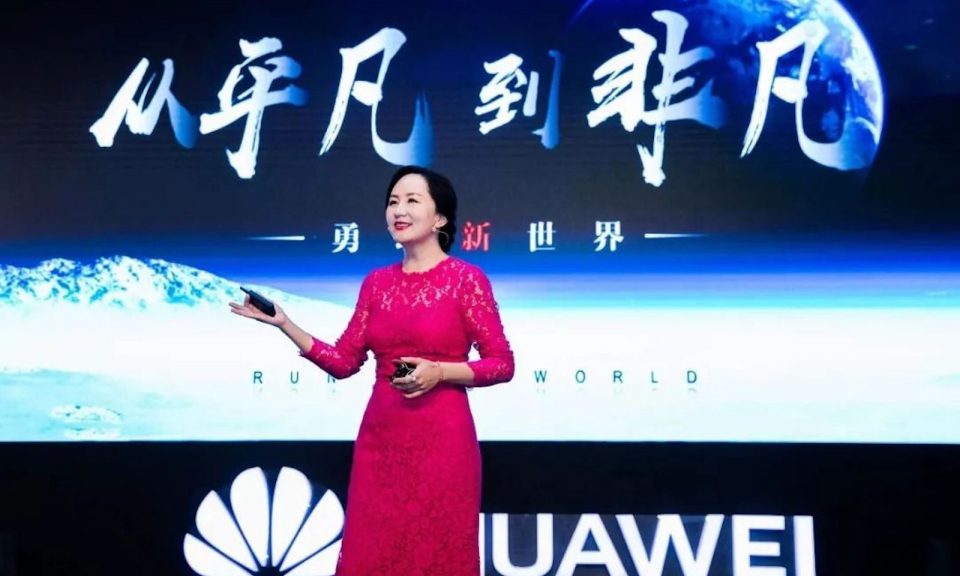
The recent proceedings in Canada dealing with the US demand that the Chief Financial officer of Huawei, Meng Wanzhou, be extradited to the US brings some of this into the open. The Supreme Court of British Columbia ruled that Meng’s argument that there was no legal basis for extradition was rejected. Canada’s talking heads and chattering class sighed with relief. The self-proclaimed liberal Toronto Star’s editors welcomed and characterized the virtue of the decision: “Beijing must understand: out courts don’t serve the government… It’s called ‘rule of law,’ a concept foreign to China’s Communist Party and its mouthpieces.” Apart from their evident cold war genre chauvinism, the editors undoubtedly were glad to have any doubts about the Trudeau government’s and Canada’s allegiance to the Rule of Law stilled.
The recent embarrassment caused by the tawdry behaviour of almost every cog in the ruling class’s legal engine room during the SNC-Lavalin scandal which involved the government forcing its own Minister of Justice to resign because she wanted to act independently and deny a flagrantly wrongdoing corporation any kind of soft landing, now could be pushed aside as an uncharacteristic violation of Canada’s basic principles. To them, the Meng ruling signified that, once again, Canada was entitled to be smug, to assert that it was to be envied because of its stout adherence to an unalloyed good, the Rule of Law.
The Ruling in the Meng Case
It all began with a warrant issued by a New York court for Meng Wanzhou’s arrest in August 2018. She was not there. On December 1, 2018, after an extradition request from the US, Meng was arrested by Canadian authorities when she landed in Vancouver. On 28 January 2019, formal charges were laid by the US Department of Justice, accusing Meng’s employer, Huawei, of misrepresentations about its corporate organization which had enabled it to circumvent laws that imposed economic sanctions on Iran. Huawei was also charged with stealing technology and trade secrets from T-Mobile USA. Meng, the Chief Financial Officer of Huawei, was charged with fraud and conspiracy to commit fraud. Huawei pled not guilty to the charges of violating the Iran sanction provisions in a New York court and not guilty to the stealing charges in a Seattle court. After a number of preliminary legal skirmishes, the extradition hearings against Meng began in 2020. Associate Justice Holmes issued her ruling on 27 May, 2020. Law takes its time.
Meng had told HSBC officials who met with her in the back of a Hong Kong restaurant in 2013 that, despite the allegations in a newspaper article, Huawei had not made improper use of a closely associated firm, named Skycom Tech, to supply US materiel to Iran. The reason she had made this statement to HSBC, it was alleged, was that Huawei used HSBC as a banker when transacting business. If Huawei, as alleged, was implicated in violations of the Iran sanction laws, HSBC might well be held to be complicit in such crimes. The US alleged that Meng’s representations to HSBC constituted fraud under its law.
Meng Wanzhou argued that, for a case of fraud to be made out, in both the US and Canada, it was necessary for the prosecution to prove that the fraud materially contributed to a tangible loss. This could not be made out here. For Meng’s deception of HSBC to cause it a tangible loss in the US, it was necessary for US prosecutors to invoke the impact of another law, the Iranian sanction law. Without it there would not be any harm and, therefore, no fraud in the US. As Canada did not have any such sanction provisions in place, Meng’s deception would not have led to any tangible loss in Canada and there would have been no fraud committed in Canada. This argument that the basic requirement for extradition – mirroring laws – had not been met, was rejected by Associate Chief Justice Holmes.
She deployed standard legal reasoning that is, she looked for previous holdings and used the imprecisions she found in them and in the wording of the legislation she was interpreting. Holmes found that previous decisions had held that, in order to determine whether the conduct in the applicant jurisdiction created an offence, it was necessary to assess the essential nature of that conduct. That meant evaluating the foreign conduct in its context, in its legal environment. Meng argued that looking at the legal environment required taking a foreign law, one distinct from the laws being compared, into account, something which should not be done under the Extradition Law.
The presiding judge responded that only some aspects of the legal environment, constituted by that other law, had to be taken into account, not all of it. It was her job to say which aspects could be so used. Holmes admitted that she was going out on a limb because the distinction between looking at some aspects of a foreign law and taking the actual law into consideration is fraught, both as a matter of logic and of established law. She wrote that “the issue is at what level of abstraction… the essence … of the conduct is to be described… there is little authority or precisely what may be included in ‘imported legal environment’.”
Undeterred by the lack of any known criteria (remember the Rule of Law!), she used what she likely calls her common sense and what Meng’s supporters probably think was her unconscious bias. Associate Justice Holmes decided that, in this case, it was appropriate, when looking for the essential nature of the foreign conduct, to look at the effects of that US law, the Iran sanction law. As its effects made Meng’s deceiving conduct fraudulent in the US, and as deception is the core of fraud in Canada, the essential/contextualized nature of Meng’s conduct satisfied the essence of fraud as defined under Canada’s Criminal Code. Lawyers call this sort of finessing good lawyering; in the wider community it is seen as legal chicanery. Holmes ruled that Canada was free to extradite Meng.
Laundered
All that effort to put Wanzhou Meng’s fraud into legal context and not a scintilla of regard for the political, social and economic context of the case!
Everyone, literally everyone, knew what had led the US to charge Huawei and its CFO. It was to obtain bargaining chips in its fight with China. It was to persuade its citizens that it was right for the government to deny them access to cheaper goods and a better 5G system because China would abuse its growing economic influence and enhance its spying potential. It was to make China more pliable when the US demanded better trade terms and more protection for its intellectual property, etc. There was no attempt to hide any of this.
Did the Canadian government understand this? Of course. Did it feel it had to allow the US to use Canada’s supposedly neutral legal machinery to further its political project? Of course. Could the Canadian government have said “no” and simply turned a blind eye when Wanzhou Meng landed in Vancouver? Of course.
Was Associate Justice Holmes, at the very least, in a position to guess all of this? Of course.
The Supreme Court of British Columbia had the timelines of the saga before it. All the events that led to the fraud charges occurred years before the tug-of-war between the US and China turned into a full blown version of a new cold war. Meng’s alleged misrepresentations to HSBC occurred in August 2013, several months after Reuters had published its report on the links between Huawei and Skycom Tech. that supposedly led to Iran being supplied with US materiel.
It took five years for the US to charge Huawei and Meng. It took five years for its righteous indignation about Huawei’s and Meng’s violations to reach fever pitch. It took five years for the US to decide that a deception of one set of private entrepreneurs by other private entrepreneurs ( a garden variety event in an aggressive competitive milieu), a deception which took place in a far away jurisdiction, presented a danger to the integrity of the US justice system. That integrity had not been seen as severely threatened when the masters of the universe deceived millions of people during the subprime mortgage scandals, at least not sufficiently to charge any of the more senior perpetrators. None of this was of any concern to the Supreme Court of British Columbia. The court was only concerned with the narrowest of decontextualized legal issues before it. Its certainty that its only responsibility was to the Rule of Law signified to it that it should not be troubled by the possibility that it might be used as a pawn, by either the US or the Canadian government or both.
Nor was this lack of concern shaken by President Trump’s highly publicized statement to Reuters (the outfit which had written the report which started the ball rolling), made just after Wanzhou Meng was released on bail. Trump said that he would certainly intervene in her case “if I thought it necessary” to help forge a trade deal with China. Undoubtedly some people (especially lawyers) might think it right and proper for a court to ignore a blatant admission by a craven politician that the supposedly independent system of law of both the US and Canada was being used for partisan political purposes. After all, the statement had been made extrajudicially and had not been put before the court. While the judge might have known about the Trump intervention, much as she knew that the US and China were having a political tug-of-war and that Canada had been drawn into it, the wilful blindness demanded by the Rule of Law demanded that she make no reference to any off this knowledge.
This reasoning makes no sense to anyone not held in rapture by the Rule of Law fantasy. Immediately after Trump made his provocative statement, Trudeau realized that the public might draw the inference that Canada was just bowing to its Big Brother ally and permitting it to abuse the Canadian justice system. It evoked the notion that the US and Canada were just one country with two systems. He was forced to respond.
Trudeau issued the following statement: “Regardless of what goes on in other countries, Canada is and will always remain a country of the rule of law.” The message was clear: we, the elected government and its executive have nothing to do with any of this; we rule an independent country; we have an independent legal system and it makes these kinds of decisions. We respect this and abide by the results. When it comes to the extradition of Meng, we, the politicians, like Pontius Pilate, wash our hands off the whole mess. It has nothing to do with us. It is not a political matter.
This is why the editors of the Toronto Star and all other opinion moulders greeted the ruling in the Meng case with such acclaim. By ignoring all the real facts underlying the dispute, the court had given support to the Canadian government’s pretence that the Meng case had not raised questions about its participation in a complex set of political, economic and ideological controversies. Their role had been laundered. If the outcome suited the US in its struggle with China, this was incidental; Canada’s government had not pushed for such an outcome because it believed in the Rule of Law. These cheerleaders pointed out that, if Canada had interfered with the judiciary’s operations, it would certainly have pushed for a different result.
As it was, the judicial ruling could only strain relations between Canada and China, a most undesirable state of affairs as Canada hoped to have China release two Canadians accused of committing serious offences in China; more Canada had no interest in imperilling important trade relations with China, as the judicial ruling might well do. That is, the result may be a political win for Trump, but a loss for Trudeau, two Canadian citizens and, likely, some farmers and manufacturers if China uses its economic clout to punish Canada.
So viewed, the judicial outcome gives the impression that the government had not played any part in the decision-making. It should, therefore, not be held politically responsible for the consequences. The government had acted righteously, it had been true to the Rule of Law. Its conduct had been sanitized, laundered.
Of course this argument is not as strong if the judicial outcome is not seen as inimical to the government. What did Canada actually want? We can only guess. But it is to be remembered that the government did detain Wanzhou Meng; if it had not done so, the worst that would have happened is that the US might have been annoyed. Assuming, as it makes sense to do, that Canadian officials understood full well what the US was up to, the detention suggests, although it does not prove, that the government was not opposed to the obvious political and economic goals of the US. More strongly, it indicated that it was willing to support those goals. After all, it knew the risks it was taking. The headline in the Ottawa Citizen on 15 December, 2018, read: “Abelev: In the Huawei case, Trump has enlisted in a game Canada can’t win.”
Another glimpse of the Canadian government’s thinking is provided by Prime Minister’s request that John McCallum resign from his post as Ambassador to China after he had made public statements which indicated that he thought the case against Meng was trumped up and, therefore, should lead the government to reject the extradition request. This would help Canada in its negotiations with China which, in apparent retaliation, had jailed two Canadian citizens.
Implicit in McCallum’s intervention was a reference to a legal power that Canada has reserved for itself over extradition processes. The Minister for Justice can, at any moment after a request for extradition is received, abort the process. In Trudeau’s angry reaction to McCallum, he made no reference to this, pretending political interference with the judicial system was to be eschewed.2 While to some people, then, Trudeau’s publicized disapproval of McCallum’s views (and of similar ones by former Prime Minister Jean Chretien a little later), did dovetail with the claim that the government should not take a position on matters to be determined by a judge, it also suggested that the government would not object too much if the ruling went against Meng, regardless of what it might mean for Huawei, Meng and the prisoners. After all, the justification for the hands-off the justice system proffered by Trudeau should not have been given too much credence.
At that time a full-blown scandal was raging over the SNC-Lavalin affair. Trudeau was brazenly trying to get rid of an independent Minister of Justice precisely because she was thwarting his enactment of a law which was to apply retroactively (remember the Rule of Law!) to save a serial wrongdoing corporation. A curious symmetry weirdly surfaces. The Trudeau government was trying to give its rogue actor, SNC-Lavalin, the kind of gentle treatment the US had given HSBC by giving it access to a deferred prosecution agreement of the kind that the US had given that deviant bank.
There were many polluting particles in the ambient air as the Meng case was processed in the supposedly politically unpolluted atmosphere of law. Undoubtedly, Associate Justice Holmes did her best to blow all these toxic particles out of her mind, as all judges claim to do. But this does not mean that they did not influence her mind-set. We will never know. That is how laundering works: if the dirt which soiled the cloth is rinsed out, all that one is left with is clean cloth. Just what the government needed.
Epilogue
The legal processes have not ended. Meng may appeal the ruling on double criminality handed down by the Supreme Court of British Columbia, arguing the Holmes’ reading of how the essential nature of conduct in a foreign state was to be found was erroneous. Her lawyers do have some plausible arguments to proffer on this issue. Before that will take place, a hearing will be held into Meng’s allegation that, when she was detained in Vancouver, prior to being turned over to the RCMP, the border official obtained Meng’s telephone numbers and passwords and then passed these on to the RCMP. She was detained and questioned for three hours before she was told of her arrest. She claims her constitutional rights were violated and that the RCMP and Canada’s Border Services Agency acted, improperly, as US agents.
This is a claim that procedural safeguards essential to the proper operation of the Rule of Law had been breached. If successful it would make the arrest wrongful and mean that the committal process which led to Holmes’ ruling should be voided. The result of the adjudication on this action by Meng can also be the basis for an appeal. If all of it, the denial of proper process and the Supreme Court of British Columbia’s ruling on double criminality, are settled in favour of Canada, the extradition process can continue, although, as seen, the Minister for Justice can always set the whole thing aside.
There are many other hurdles to clear. The Trump Administration may be replaced, the Trudeau government (in a minority position) may fall before all this is over. It is also difficult to know what steps China will take and how this will influence political minds in Washington and Ottawa. These unknowns highlight how artificial it is to pretend that a request for extradition is a legal, non-political, struggle based on rational aseptic criteria.
To underscore this point, note that, on 4 June, 2020, the US State Department issued a threat. It will reassess its sharing of intelligence with Canada (a member of the so-called Five Eye intelligence network) if Canada chooses to let Huawei market its 5G technology in Canada. This makes it clear that the extradition case was never about a fraudulent misrepresentation to a ‘vulnerable’ foreign bank, but about furthering US efforts to ward-off the danger of an economic and political threat posed by China.
Law and its Rule of Law are convenient tools, no more no less. They should not be granted too much respect. Certainly they should not permit our governments to present themselves as unsullied, as if they have come out of the washing machine, smelling fragrantly.
And, oh yes, after its agreement with the US Department of Justice, HSBC had made much of its new approach and had spent money on better systems to inhibit wrongdoing. On 8 April, 2020, it was reported that HSBC had admitted it had engaged in money laundering in Australia. Maybe it does not require Huawei or Meng to engage in fraud to get HSBC to participate in criminality.
*
Note to readers: please click the share buttons above or below. Forward this article to your email lists. Crosspost on your blog site, internet forums. etc.
‘The legalization of politics’ is the name given by Harry Glasbeek and Michael Mandel, “The Legalization of Politics in Advanced Capitalism: The Canadian Charter of Rights and Freedoms” (1984), Socialist Studies, 2:84, and by Michael Mandel, The Charter of Rights and the Legalization of Politics in Canada, rev. ed., Toronto; Thompson Educational, 1994, to a process which removes class and history from political discourse and consciousness.
As well, there is a rarely used law on the books, the Foreign Extra Territorial Measures Act, that the Attorney-General can deploy to repulse measures of a foreign state that are likely to significantly affect Canadian interests. This is the legislation used to allow Canada not to comply with the US sanctions on Cuba. Arguably, but not certainly, it could be used to block the extradition of Meng.
At least six people were killed in fresh clashes between Indian police forces and people protesting against a contentious citizenship law seen as anti-Muslim, making Friday the single deadliest day of the latest unrest.
Uttar Pradesh Police Chief O.P. Singh told Reuters that 32 other people were also wounded in clashes between police and demonstrators on Friday.
The latest killings bring the death toll to 15 in more than a week of protests.
Singh said none of the deaths on Friday were due to police shooting, adding that 144 people were detained.
However, chief medical officer of Meerut, Rajkumar, who goes by one name, told AFP earlier on Friday that four protesters – two from the district of Meerut and the others from the neighboring district of Muzaffarnagar – were brought to a hospital in Meerut, adding that they died of “gunshot wounds” in the northern state, where nearly 20 percent of India’s 200-million-strong population are Muslim.
A police spokesman also confirmed that one person had died and at least one other had been injured during protests in the city of Firozabad. But he said that the cause of death was not clear yet.
The new deaths came a day after three people lost their lives when police opened fire on protesters in the northern city of Lucknow and Mangalore City in the south of the country.
India has been engulfed by protests since last week, when the country’s parliament passed the citizenship act, which is seen as discriminatory toward Muslims.
Under the law, migrants from Bangladesh, Pakistan, and Afghanistan will be allowed to claim Indian citizenship — but not if they are Muslims.
The heart of India’s capital also witnessed street battles late Friday as police used water cannon and charged at protesters with batons.
Tehran – Subsidies have been in place in Iran for nearly four decades. During the Iran-Iraq War of 1980 to 1988, when Iraq’s Saddam Hussein launched an assault against Iran backed by almost all international players, the government began subsidizing basic consumer goods such as food, medicine, and utilities (water, sewage, and power) to support its struggling population. Power in this case includes the oil sector. Throughout the years, Iran has been trying to carry out reforms in this regard, but of course subsidy reform has not been without complications.
For instance, in November 2010, cash handouts were introduced in Iran when a previous administrative government decided to decrease subsidies paid for energy to raise the money needed for social welfare and economic development plans.
The handouts had been originally meant to reach lower classes but the government decided to go for an all-inclusive system after it failed to come up with a decisive list that could reflect the social stratification in Iran.
Recently over the summer of 2019, the Rouhani government announced that it would start economizing the list of recipients, saying payment to a total of 24 million people would be halted by late March 2020, when the current Iranian calendar year comes to an end. These 24 million people have been identified as middle-upper class citizens who are not suffering dire living conditions.
The government has not indicated whether people on the lower income deciles would receive more cash handouts as a result of the changes in the current system.
An estimated $40-100 billion is paid every year to keep Iranians, poor and rich, supplied with cheap energy, water, fuel and basic food.
Reforms to face challenges
Now in light of the US sanctions and ongoing economic war against Iran, traffic clogging the streets and roads of the country, the continuous smuggling crimes where billions of dollars of cheap fuel are wasted when trafficked across the borders to Iraq and Pakistan, inefficient fuel usage, air pollution and human health problems, the government had to take precautionary measures to avoid any future crisis.
According to people who are in-the-know, large subsidies that the Iranian government allocates to fuel creates a huge price difference prompts smugglers to ship it out of the country and into countries where prices are much higher. More than 150,000 liters of smuggled diesel are seized in this region annually.
Also, estimates suggest Iran, now a gasoline-exporting country, is consuming more than 100 million liters of the fuel each day.
Price hike for cash handouts, the wealthy ineligible
An essential part of Iran’s strategy from the beginning was the redistribution, via cash grants, of proceeds generated by the reforms to different elements in the economy rather than pay near-universal cash transfers.
The amount of cash subsidies had not changed over the past few years, with a monthly deposit of 455 thousand Rials, with nearly 78 million people getting paid on monthly basis before the decision was made this summer to halt subsidies to the rich.
The new reform stipulates that households of one person get 55 thousand rials extra handouts, two people get 103 thousand rials, three people 137 thousand rials, four people 172 thousand rials and five people or more 205 thousand rials to compensate the rise in price. The sums are paid per adult to the head of each household.
The Iranian government has said it would spend all of more than $2.5 billion earned from the gasoline price hike on cash handouts and other form of subsidies targeting more than 70 percent of the Iranian population.
Well-informed sources told Iranian Mehr news, “this new plan will also include subsidized goods for the middle and lower classes in order to prevent further economic inflation from happening. Most probably, the cash subsidies will be deposited in the cards of the people only to be used for direct purchase of goods and basic needs from stores and markets.”
The source added these reforms are aimed at improving the living conditions of the middle and upper classes in Iran, noting “In fact the rich and wealthy are ineligible to receive cash handouts and are considered as members of the three highest income deciles of the Iranian population. Just in case someone was mistakenly identified as “well-off”, a government website has been designed especially for people to lodge their protest and once the government endorses the complaint, they get their handouts back.
New Pricing Echelon
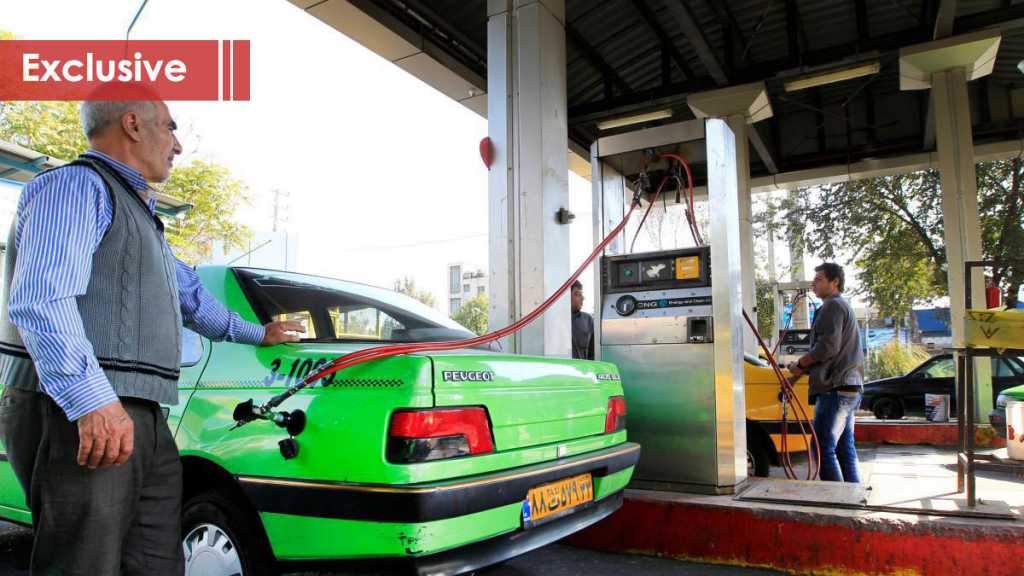
The National Iranian Oil Products Distribution Company (NIOPDC) explained the new pricing echelon in a statement it issued. The subsidized fee of 10 thousand rials (almost 8.3 cents) per liter is increased to 15 thousand rials (almost 12.5 cents) per liter, a rise of 50%, which is offered at a limited rate of 60 liters per month, a rationing that did not exist for the last 6 years, for private cars with a rationing card. The monthly rationing for hybrid vehicles is 30 liters.
Gas-fueled pickups used for carrying cargos will enjoy 200 liters of the rationed subsidized gas, while hybrid ones will have a 60 liter-per-month share.
However, gas fueled pickups used for carrying cargos will enjoy 300 liters of the rationed subsidized gas, while hybrids will have a 120 liter-per-month share.
Gas fueled taxis will have a monthly rationing of 400 liters and hybrids will have 200 liters. Motorbikes are offered a monthly rationing of 25 liters of subsidized fuel while ambulances receive a monthly 500-liter ration of gas.
However, the price for not-rationed supply of the gas is still subsidized and below the level of price offered in majority of the neighboring countries. The non-rationed price is set at 30 thousand rials (almost 25 cents) per liter and there is no limitation for buying non-rationed fuel.
The price for the compressed natural gas (CNG) and diesel gas will remain unchanged.
Leader of the Islamic Revolution in Iran Imam Sayyed Ali Khamenei on Sunday stressed that a decision to revise fuel prices in the Islamic Republic was fully considered, warning that sabotage acts have been planned by the country’s enemies.
“The three branches of the government (legislative, judiciary, administrative) took a fully-considered decision based on expert opinion and must be implemented,” Imam Khamenei was quoted as saying by Iranian media.
“Some people are no doubt worried and displeased by this decision … but sabotage and arson is done by hooligans not our people. The counter-revolution and Iran’s enemies have always supported sabotage and breaches of security and continue to do so,” the Leader said, according to state TV.
Meanwhile, the Leader called on the government to take every step possible to alleviate people’s economic concerns
“Authorities should use all their capacities to minimize people’s concerns over this [gasoline rationing] plan.”
His eminence also underlined the necessity of meeting people’s demands in this regard, saying that officials should be careful that the plan would not led to the jump in the prices of the other goods and commodities.
The National Iranian Oil Products Distribution Company (NIOPDC) said in a statement late Thursday that the price of a liter of regular gasoline had gone up to 15,000 rials (12.7 US cents) from 10,000 rials and the monthly ration for each private automobile was set at 60 liters per month. Additional purchases would cost 30,000 rials per liter.
الصراع في العراق وعليه ليس في الشارع وحسب بل بين أهل السلطة ايضاً. في الشارع، لم يكن للمتظاهرين قائد. في أروقة السلطة ثمة قادة كثر من دون ان يكون اولٌ بينهم. انها ظاهرة فريدة وغير مسبوقة.
المتظاهرون كان لهم دعاة لا قادة. كانت ثمة دعوة للتظاهر تداولتها وسائل التواصل الإجتماعي وفعلت فعلها بسرعة قياسية. الناشطون في الشارع اطلقوا شعاراً لافتاً: لا للسياسيين، لا للمعمَمين . مطلقو الشعار لم يحددوا هوية معيّنة للسياسيين والمعمَمين المطلوب إستبعادهم. ذلك سمح للمراقب الحصيف باستنتاج سريع: المتظاهرون يعارضون، وربما يعادون، كل المسؤولين الناشطين في المشهد السياسي منذ احتلال أميركا للعراق سنة 2003.
ثمة دليل على صحة هذا الإستنتاج: لم يَسْلَم من التخريب مقرّ ايّ حزب او تنظيم مشارك في السلطة في مناطق عدّة من البلاد. ربما لهذا السبب امتنعت المرجعية الدينية العليا ممثلةً بآية الله العظمى السيد علي السيستاني في الايام الثلاثة الاولى للحراك الشعبي عن التعليق على ما رافقه من حوادث واحداث.
الى ذلك ثمة ظاهرات اخرى استوقفت المراقبين:
أكثف التظاهرات كانت في مدن الجنوب الشيعي الكبرى: البصرة والنجف وكربلاء والناصرية، ناهيك عن الحلّة في الوسط.
امتناع التيار الصدري، بقيادة السيد مقتدى الصدر، عن المشاركة في التظاهرات. إلاّ ان الصدر طوّر قراره لاحقاً بإعلانه سحب كتلته، سائرون ، من البرلمان ومطالبته الحكومة بالإستقالة وإجراء انتخابات نيابية مبكرة.
معظم الاحزاب ايّد، بادئ الأمر، مطالب المتظاهرين إلاّ ان عمار الحكيم، زعيم تيار الحكمة، ورئيس الوزراء السابق حيدر العبادي حزب الدعوة سارعا لاحقاً الى تأييد مقتدى الصدر في دعوته الحكومة الى الاستقالة وإجراء انتخابات.
حتى رئيس الوزراء عادل عبد المهدي – ابن الناصرية – ايّد مطالب المتظاهرين، وحرص على القول بأنّ البلاد تقف امام خيارين: الدولة او اللادولة . في مفهومه، الدولةُ تعني الأمن والنظام كما تعني ايضاً الفئة الحاكمة التي تقبض على ناصية السلطة.
معظم المتظاهرين وضعوا اهل النظام كلهم في سلة واحدة وطالبوا بإسقاطهم. أقسى التهم الموجهة اليهم واكثرها رواجاً هي الفساد والسطو على المال العام. لعل احداً لا يجادلهم بأن الفساد في العراق سلطان. ثمة تقارير رسمية تكشف انه، منذ إسقاط نظام صدام حسين بفعل الإحتلال الأميركي، ابتلع الفساد نحو 450 مليار دولار من الأموال العامة، ايّ أربعة اضعاف ميزانية الدولة وأكثر من ضعفيّ الناتج المحلي الإجمالي للبلاد. مفكر وباحث عراقي يساري رصين من اهل النجف اكّد لي انّ دخل العراق من النفط منذ 2004 فصاعداً تجاوز مبلغ تريليون ألف مليون دولار، ومع ذلك لا اثر لمردود مجزٍ لهذا الدخل في ايٍّ من ميادين الصناعة او الزراعة او الخدمات العامة، اذ ما زالت مناطق عدّة في البلاد بلا كهرباء وبلا مياه نظيفة للشرب، وما زال اكثر من 30 في المئة من الشباب عاطلين عن العمل، واكثر من 25 في المئة من العراقيين تحت خط الفقر.
اذ يتضح عداء الشعب العراقي، في معظمه، لأميركا وما جرّته على البلاد منذ احتلالها من ويلات، استوقفت المراقبين فورة الغضب التي تبدّت في تظاهراتٍ عمّت مدن الجنوب الشيعية ما يحمل على التساؤل عمّا اذا كانت هذه الغضبة تطال ايضاً إيران والاحزاب التي تدعم انصارها في السلطة. في هذا السياق، أشار مراقبون الى أحزابٍ معادية لأميركا والسعودية اكدت ثبوت قيام موظفي السفارة الأميركية في بغداد بتحريض منظمات المجتمع المدني المدعومة من قبلها على المشاركة في التظاهرات وإطلاق شعارات ضد إيران وضد حكومة عبد المهدي.
الحقيقة ان ثمة اختلافاً وانزعاجاً متبادلين بين أميركا وعادل عبد المهدي سببهما خطوات خمسة اعتبرتها واشنطن استفزازية اتخذها الرجل وحكومته في الآونة الأخيرة تتمحور حول امورٍ خمسة:
اولاها، زيارته الصين منتصفَ الشهر الماضي وتوقيعه اتفاقات معها لبناء وتطوير بنى تحتية عراقية.
ثانيها، تنديده بـ صفقة القرن واتهامه إسرائيل بالوقوف وراء استهداف عدد من مقار الحشد الشعبي خلال شهريّ تموز/ يوليو وآب/ اغسطس الماضيين.
ثالثها، قيامه بتوقيع اتفاقيات مع شركة سيمنس الالمانية لتطوير قطاع الطاقة الكهربائية، مستبعداً بذلك شركة جنرال الكتريك الأميركية.
رابعها، توجهه الى روسيا لشراء منظومات دفاع جوي من طـراز أس 400 بعد اتهامه إسرائيل بإستهداف مقار الحشد الشعبي .
خامسها، قيامه بكسر اكبر المحظورات الأميركيـة وهو إفتتاح معبر القائم – البوكمال الحدودي مع سورية، معبّداً بذلك طريق طهران بغداد دمشق – بيروت ما يدعم لوجستياً قوى المقاومة العربية الناشطة ضد إسرائيل .
التطور الأهم تخلّي المرجعية الدينية العليا عن موقف الصمت. آية الله السيستاني أصدر بياناً أيّد فيه مطالب المتظاهرين المحقة ودعا الحكومة الى استجابتها بلا إبطاء، مؤكداً على وجوب تأليف لجنة خاصة من خبراء اختصاصيين من خارج الحكومة وخارج محيط الاحزاب المؤيدة لها مهمتها درس الاوضاع الإقتصادية والإجتماعية وتحديد مفاصل الاصلاح الشامل ومتطلبات مكافحة الفساد. عادل عبد المهدي سارع الى تأييد موقف السيستاني ومطالبه والإشادة بمرجعيته كصمام امان للبلاد.
إذ حدّد السيستاني لأهل السلطة طريق الخروج من الأزمة التي عصفت بالبلاد وهدّدت الدولة الهشة بالإنهيار، فإنّ عبد المهدي أدرك بلا شك أنّ ما حدث هو حصيلة سنوات طويلة من صراعات اهل السلطة أنفسهم الذين عاد معظمهم بمواكبة الأميركيين مع احتلال البلاد، وان تهافتهم على إحتلاب مواردها وتقاسم خيراتها أنهك بنيتها الاجتماعية ومؤسساتها الاقتصادية، وأغرى قوى خارجية متعددة بإبتزازها واتخاذها ساحة لتصفية حسابات اقليمية ودولية. ولا يفوت عبد المهدي ايضاً الإدراك بأنّ القوتيّن الابرز في الصراع داخل العراق وفي الاقليم هما الولايات المتحدة وإيران، وانّ تداعيات الصراع بينهما وتكالب أهل السلطة على المال والنفوذ وضع البلاد أمام خيارات متصادمة، وانّ شراسة ادارة ترامب، ومن ورائها إسرائيل ، في مواجهة إيران مداورةً بمحاصرتها اقتصادياً، ومباشرةً بالضرب في عمق حلفائها الأقربين سورية والمقاومات اللبنانية والفلسطينية والعراقية دفع الى واجهة الصراع خياراً إضافياً لعله الأكثر إلحاحاً وأهمية هو وجوب بناء عراق بلا أميركا بعدما تمكّن العراقيون الأحرار، او كادوا، من تحرير العراق من الإرهاب والإرهابيين.
اجل، المطلوب من أحرار العراق اعتماد خيارين متكاملين: الدولة القوية الديمقراطية، وعراق متحرر من أميركا المستبطنة دائماً عدوانية صهيونية فاجرة، ومتحرر من مخططات ومطامع اقليمية ماثلة.
Protestors run past a fire during clashes with riot police in Hong Kong on Sunday, September 15. Hong Kong riot police fired tear gas and water cannon at hardcore pro-democracy protesters who were hurling rocks and petrol bombs on September 15, tipping the violence-plagued city back into chaos after a brief lull in clashes. Photo: AFP / Anthony Wallace
What’s going on deep down in Hong Kong? For a former resident with deep cultural and emotional ties to the Fragrant Harbor, it’s quite hard to take it all in just within the framework of cold geopolitical logic. Master filmmaker Wong Kar-Wai once said that when he came up with the idea for Happy Together, he decided to shoot the story of his characters in Buenos Aires because that was as far away from Hong Kong as possible.
A few weeks ago I was walking the streets of far away Buenos Aires dreaming of Hong Kong. That Hong Kong that Wong Kar-Wai refers to in his masterpiece no longer exists. Unfortunately deprived of Christopher Doyle’s mesmerizing visuals, I ended up coming back to Hong Kong to find, eventually, that the city I knew also no longer exists.
I started my journey in my former ‘hood, Sai Ying Pun, where I lived in a studio in an average, slim, ultra-crowded Cantonese tower (I was the only foreigner) across the street from the beautiful, art deco St Louis school and not far from Hong Kong University. Although only a 20-minute walk over the hills to Central – the business and political heart of the city – Sai Ying Pun is mostly middle class with a few working-class pockets, only recently marching towards gentrification after a local MTR – subway – station was launched.
The busy streets of Hong Kong’s Sai Ying Pun district. Photo: Wikipedia Creative Commons
Mongkok, across the harbor in Kowloon, with an unfathomably large population density, is the haven of frenetic small business Hong Kong, always crammed with students in search of trendy bargains. In contrast, Sai Ying Pun is a sort of languid glimpse of Hong Kong in the 1950s: it could easily have been the set for a Wong Kar-Wai movie.
From retirees to Mrs Ling, the laundry lady – still there, but without her previous, sprawling cat population (“At home!”) – the refrain is unanimous: protests, yes, but they must be peaceful. In Kowloon the previous night I had heard harrowing stories of teachers brainwashing elementary school pupils into protest marches. Not at St Louis – they told me.
Hong Kong University is another story; a hotbed of protest, some of it enlightened, where the golden hit in humanities is to analyze China as a “perfect dictatorship” where the CCP did nothing but ratchet up crude nationalism, militarism and “aggression,” in propaganda and in dealing with the rest of Asia.
As we reach Central, the Hong Kong matrix of hyper turbo-capitalism, “protests” dissolve as an unwashed-masses, bad-for-business, dirty word, dismissed at the restaurants of the old, staid Mandarin and the glitzier Mandarin Oriental, the Norman Foster/IM Pei headquarters of HSBC and Bank of China, the headquarters of JP Morgan – with a swanky Armani outlet downstairs – or at the ultra-exclusive China Club, a favorite of old Shanghai money.
Prada meets class struggle
It’s on weekends, especially Sunday, that all of Hong Kong’s – and turbo-capitalism’s – internal contradictions explode in Central. Filipina maids for decades have been staging an impromptu sit-in, a sort of benign Occupy Central in Tagalog with English subtitles, every Sunday; after all they have no public park to gather in on their only day off, so they take over the vault of HSBC and merrily picnic on the pavement in front of Prada boutiques.
To talk to them about the protests amounts to a PhD on class struggle: “It’s we who should have the right to protest about our meager wages and the kind of disgusting treatment we get from these Cantonese madames,” says a mother of three from Luzon (70% of her pay goes for remittances home). “These kids, they are so spoiled, they are raised thinking they are little kings.”
Virtually everyone in Hong Kong has reasons to protest. Take the cleaning contingent – who must do the heavy lifting after all the tear gas, burnt-out bins, bricks and broken glass, like on Sunday. Their monthly salary is the equivalent of US$1,200 – compared with the average Hong Kong salary of roughly $2,200. Horrible working conditions are the norm: exploitation, discrimination (many are from ethnic minorities and don’t speak Cantonese or English) and no welfare whatsoever.
As for the ultra-slim fringe practicing wanton destruction for destruction’s sake, they surely have learned tactics from European black blocs. On Sunday they set fire to one of the entrances to ultra-congested Wanchai station and broke glass at Admiralty. The “strategy”: breaking off MTR nodes, because paralyzing Chek Lap Kok airport – one of the busiest on the planet – won’t work anymore after the August 12/13 shutdown that canceled nearly 1,000 flights and led to a quite steep drop in passengers coming from China, Southeast Asia and Taiwan.
Two years ago, in Hamburg, Special Forces were deployed against black bloc looters. In France, the government routinely unleashes the feared CRS even against relatively peaceful Gilets Jaunes/Yellow Vest protesters – complete with tear gas, water cannons and supported by helicopters, and nobody invokes human rights to complain about it. The CRS deploy flash ball strikes even against the media.
Not to mention that any occupation of Charles de Gaulle, Heathrow or JFK is simply unthinkable. Chek Lap Kok, on a weekday, is now eerily quiet. Police patrol all the entrances. Passengers arriving via the Airport Express fast train must now show passport and boarding pass before being allowed inside the terminal.
Western media accounts, predictably, focus on the radical fringe, as well as the substantial fifth-columnist contingent. This weekend a few hundred staged a mini-protest in front of the British consulate asking, essentially, to be given asylum. Some of them are holders of British National Overseas (BNO) passports, which are effectively useless, as the provide no working or residency rights in the UK.
Other fifth-columnists spent their weekend waving flags from Britain, Australia, Canada, France, Germany, Japan, Poland, South Korea, Ukraine, US, Taiwan, and last but not least, the Hong Kong colonial flag.
Meet homo Hong Kong
Who are these people? Well, that necessarily brings us to a crash course on homo Hong Kong.
Not many people in Hong Kong can point to ancestors in place before the Opium War of 1841 and the subsequent rule of imperial Britain. Most don’t know much about the People’s Republic of China, so essentially there’s no grudge. They own their own homes, which means, crucially, they are insulated from Hong Kong’s number one problem: the demented, speculative property market.
Then there are the old China elites – people who fled Mao’s victory in 1949. At first they were orphans of Chiang Kai-shek. Then they concentrated on hating the Communist Party with a vengeance. The same applies to their offspring. The ultra-wealthy gather at the China Club. The less wealthy at least can afford $5 million apartments at The Peak. Canada is a preferred destination – hence Hong-Couver as a substantial part of Vancouver. For them Hong Kong is essentially a transit stop, like a glitzy business lounge.
It’s this – large – contingent that is behind the protests.
The lower strata of the Escape from China elites are the economic refugees of 1949. Tough luck: still today they don’t own property and have no savings. A great many of the easily manipulated teenagers taking over the streets of Hong Kong dressed in black and singing “Glory to Hong Kong” and dreaming of “independence” are their sons and daughters. It’s certainly a cliché, but it does apply to their case: trapped between East and West, between an Americanized lifestyle on steroids and the pull of Chinese culture and history.
Hong Kong cinema, with all its pulsating dynamism and exhilarating creativity, may offer the perfect metaphor to understand the inner contradictions of the Fragrant Harbor. Take Tsui Hark’s 1992 masterpiece New Dragon Gate Inn, with Donnie Yen and gorgeous Maggie Cheung, based on what happened at a crucial pass in the Ancient Silk Road six centuries ago.
Here we may place Hong Kong as the inn between imperial despotism and the desert. Inside, we find fugitives imprisoned between their dream of escaping to the “West” and the cynically exploitative owners. That connects with the ghostly, Camus-infused existential terror for the modern homo Hong Kong: soon he may be liable to be “extradited” to evil China before he has a chance to be granted asylum by the benevolent West. A fabulous line by Donnie Yen’s character sums it all up: “Rain in the Dragon Gate mountains makes the Xue Yuan tiger come down.”
Good to be a tycoon
The drama played out in Hong Kong is actually a microcosm of the Big Picture: turbo-charged, neoliberal hyper-capitalism confronted to zero political representation. This “arrangement” that only suits the 0.1% simply can’t go on like before.
In fact what I reported about Hong Kong seven years ago for Asia Times could have been written this morning. And it got worse. Over 15% of Hong Kong’s population now lives in actual poverty. According to figures from last year, the total net worth of the wealthiest 21 Hong Kong tycoons, at $234 billion, was the equivalent of Hong Kong’s fiscal reserves. Most of these tycoons are property market speculators. Compare it to real wages for low-income workers increasing a meager 12.3% over the past decade.
Beijing, later rather than sooner, may have awakened to the number one issue in Hong Kong – the property market dementia, as reported by Asia Times. Yet even if the tycoons get the message, the underlying framework of life in Hong Kong is not bound to be altered: maximum profit crushing wages and any type of unionization.
So economic inequality will continue to boom – as an unrepresentative Hong Kong government “led” by a clueless civil servant keeps treating citizens as non-citizens. At Hong Kong University I heard some serious proposals: “We need a more realistic minimum wage. “We need real taxes on capital gains and on property.” “We need a decent property market.”
Will that be addressed before a crucial deadline – October 1st – when Beijing will be celebrating, with great fanfare, the 70th anniversary of the People’s Republic of China? Of course not. Trouble will continue to brew at the Dragon Inn – as those underpaid, over-exploited cleaners face the bleakest of futures.
Voltaire, actualité internationale, n°191
-
Outre ce site internet gratuit, nous publions une lettre confidentielle en
PDF, Voltaire, actualité internationale. Chaque jeudi soir ou vendredi
matin, vo...
A Jewish One World Government
-
A Jewish One World Government October 21 2026
___________________________________ More Vids! +BN Vids Archive! HERE!
___________________________________ Su...
The United States At A Crossroad
-
The United States At A Crossroad—An Analysis (16 Sept 2026) by Lawrence
Davidson Part I—Texas vs Minnesota Back in mid-May […]
Report on Beth Israel vigil 09-12-26
-
*Eat-a-Cheeseburger Day Approaches*
This year, EAC Day appears on Monday, September 21st. The date coincides
with the Jewish holiday called Yom Kippur. Cl...
-
Hello all,
It is with great sadness that I share with you the passing of our beloved
sister, Mother, and Grandmother, the individual that you all knew ...
Best Horror Podcast
-
Best Horror Podcast Introduction: Horror podcasts […]
The post Best Horror Podcast appeared first on Copper Shock Horror Podcast.
Ikhras Endorses Muntadhar Al-Zaidi
-
“Oh parties of banditry and sectarianism and corruption, we have come and
our goal is to destroy you.” Ikhras formally endorses Muntadhar al-Zaidi,
Iraqi j...
Prince Charles: Foreign Jews behind bloodshed in ME
-
In May, 2017, British Crown Prince Charles declined an invitation from
Zionist entity’s president Reuven Rivlin‘s to attend the 100th anniversary
of the no...
Palestinian Women – One for All, All for One
-
Honouring All Palestinian Women by Honouring Three: Hanin Zoabi, Ahed
Tamimi, Samah Sabawi Vacy Vlazna “Palestinian women have always stood side
by side ...
US’s Saudi Oil Deal from Win-Win to Mega-Lose
-
By F. William Engdahl Who would’ve thought it would come to this? Certainly
not the Obama Administration, and their brilliant geo-political think-tank
neo-...
-
*Mordechai Vanunu wins human rights prize of Brazilian Press Association *
* http://www.alternativenews.org/english/index.php/features/updates/7038-mordechai...
Abdul Aziz Rantissi:
"My ultimate wish, my God, is to attain martyrdom,"...God granted him his wish on April 17, 2004, at the hands of Israeli assassins.

 Uprooted Palestinian





 Pepe Escobar


