Uprooted Palestinians are at the heart of the conflict in the M.E Palestinians uprooted by force of arms. Yet faced immense difficulties have survived, kept alive their history and culture, passed keys of family homes in occupied Palestine from one generation to the next.
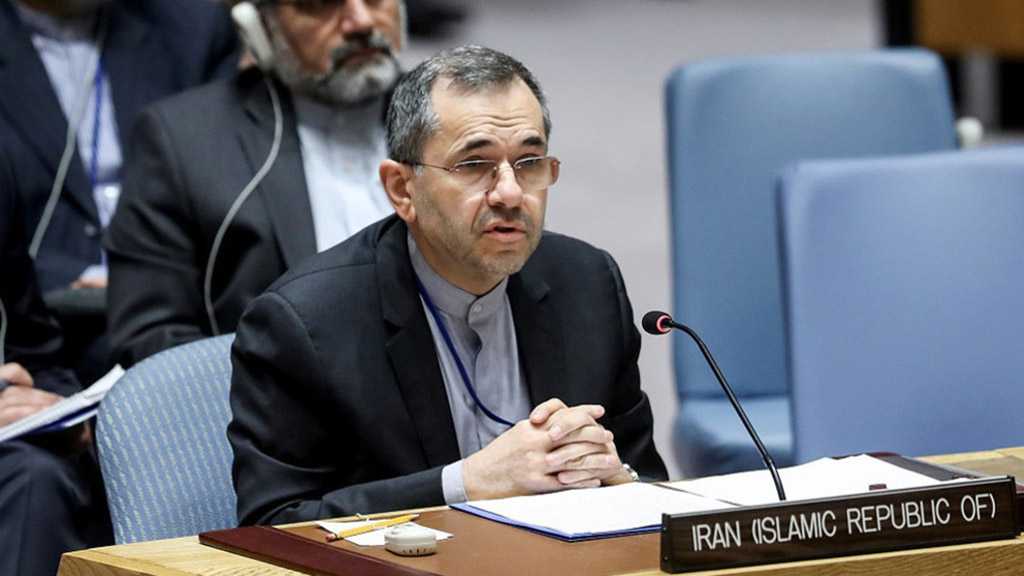
A senior Iranian diplomat has slammed the use of sanctions as “blunt and blind instruments” to exert pressure on world states, saying reforms are needed to prevent the United Nations’ Security Council [UNSC] from resorting to embargos that merely punish an entire nation but fail to contribute to international peace.
“The use of sanctions as blunt and blind instruments has raised fundamental ethical questions about whether sufferings inflicted on vulnerable groups is a legitimate means of exerting pressure on the targeted country,” Iran’s Ambassador and Permanent Representative to the United Nations Majid Takht Ravanchi said in an address to the UN General Assembly on Tuesday.
He said certain Security Council sanctions had been used in the past only to collectively punish an entire nation, without any actual positive impact on the maintenance of international peace and security, emphasizing that enforcement measures must be applied only as a last resort.
Sanctions, Takht-Ravanchi added, “must be applied very rarely, in an actually smart and targeted manner, with limited scope and duration, and only when all ‘measures not involving the use of armed force’ are exhausted and have truly ‘proven to be inadequate’ to ‘maintain or restore international peace and security’.”
The Iranian official said the Security Council’s increasing deficiencies had “resulted in its legitimacy and credibility crisis as well as its serious trust and confidence deficit, making its reform inevitable.”
“The ultimate goal of the Security Council’s reform must be to address all its current challenges and deficiencies and to evolve the Council into a truly representative, effective, transparent, accountable and above all, rules-based body,” the Iranian diplomat said.
He said the ongoing attempts focused on the Council’s enlargement, equating it with its reform and efficiency, but this cannot continue at the expense of neglecting or underestimating other issues.
Takht-Ravanchi stressed the importance of considering the Council’s enlargement as only one out of many objectives in reforming the body, saying, “Improving the Council’s working methods and accountability and ensuring that all its decisions are taken in full accordance with the purposes and principles of the United Nations and international law are in no way less important than the Council’s enlargement.”
“The Council’s reform must be considered as a comprehensive process, in which all five core issues under consideration must be treated equally, discussed thoroughly, and addressed in a package as they are interlinked and, as a whole, are greater than the sum of their parts. Therefore, any selective approach must be avoided,” the official added.
He said Iran attached great importance to ensuring “equitable representation” in an expanded council and strongly believed this could not be realized only through safeguarding “geographical representation.”
The Iranian ambassador criticized the West’s strong presence and influence in the Council, saying three members of the body have veto power, “while the main regions are poorly represented in terms of both the number as well as privileges, including veto power.”
“This means inequality ‘among the regions’… The existing inequalities must therefore be addressed both ‘among’ and ‘within’ the regions as they are both necessary and complementary,” he said.
The Iranian diplomat voiced Iran’s support for addressing historical injustice towards the developing world, particularly Africa, in ensuring equitable regional representation.
“We also fully support ensuring equal opportunities for each State within a given region, which, inter alia, can be done through limiting chances for those who have served more in the Council and, instead, provide more advantages to those who have never served in the Council or served lesser,” he said.
He said a combination of factors like population, economic power and regional position could play a role in achieving such a goal.
Takht-Ravanchi rejected as unacceptable any reform that serves the interests of only certain regions or a few states, stressing the need to seriously avoid any proposal that would “literally deepen the current imbalances or reduce the equal chance for states to become a Council member or contradict such intrinsic principles as sovereign equality and equal rights of states, transparency and accountability.”
Iran backs reforms to the Council’s working methods that would ensure that it acts “in full compliance with international law, particularly the UN Charter,” he said.
Takht-Ravanchi further pointed to the Council’s political and moral responsibility to act properly and responsibly and said its members must avoid taking decisions based on their own national interests or that of the geopolitical or geographical groups they belong to “but based on the common interests of the entire membership of the Organization.”
“The Council must never be used as a tool to pursue national political interests and agendas. The Council is responsible before the Member States on behalf of whom it acts and must therefore remain accountable to them,” the Iranian diplomat stated. “The Council shall also not consider issues which do not fall within its purview or are conferred by the Charter to other UN organs, and in particular it must stop encroaching upon the functions and powers of the General Assembly.”
He warned that making hasty decisions or setting artificial deadlines for its work will be counter-productive, saying any possible decision, procedural or substantive, at any stage must be adopted only by consensus.
“We also do not support text-based negotiations at this stage. Moreover, changing the rules or format of the process or its informal nature seems to be unconstructive and must therefore be avoided,” Takht-Ravanchi said.
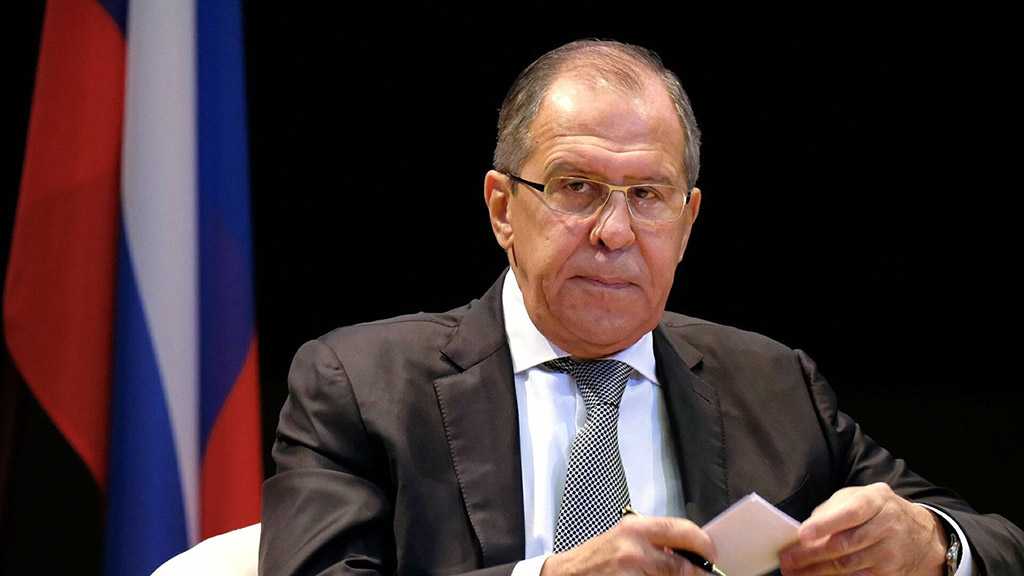
Russian Foreign Minister Sergey Lavrov says Moscow will advocate the lifting of sanctions on Iran and the full implementation of a nuclear deal – known as the Joint Comprehensive Plan of Action [JCPOA] – between Iran and a number of other countries in the upcoming talks slated to start in the Austrian capital Vienna at the end of this month.
The JCPOA was signed between Iran and the five permanent members of the United Nations Security Council [UNSC] – namely Russia, the United Kingdom, China, the United States and France – plus Germany in 2015.
Former American president Donald Trump, however, unilaterally withdrew the US from the JCPOA in May 2018 and reimposed the anti-Iran sanctions that the historic deal had lifted. He also unleashed additional sanctions on Iran under other pretexts not related to the nuclear case as part of his so-called “maximum pressure” campaign, which practically deprived the country of all of the deal’s economic benefits.
Following a year of strategic patience, Iran resorted to its legal rights stipulated in Article 26 of the JCPOA, which grants a party the right to suspend its contractual commitments in case of non-compliance by other signatories, and let go of some of the restrictions imposed on its nuclear energy program.
Iran and the remaining parties to the JCPOA have since April held six rounds of talks in Vienna, which began after the US administration of Joe Biden voiced willingness to rejoin the nuclear agreement, although Washington has shown an overriding propensity for maintaining the sanctions as a tool of pressure.
Envoys from Iran and the P4+1 are expected to hold the seventh round of discussions in Vienna on November 29.
“We will advocate that the agreements that were concluded within the framework of this document in 2015 be resumed in full. Of course, this implies the return of the United States to fulfill its obligations, including the lifting of all sanctions introduced in the context of the JCPOA,” Lavrov said on Friday.
The Russian foreign minister also said that the JCPOA had been among the topics discussed in Paris in the “2+2” format between Russian and French defense and foreign ministers. “Here, we have prospects for more constructive cooperation,” Lavrov added.
In recent weeks, there has been mounting pressure on Tehran to return to the negotiating table. The administration of Ebrahim Raisi has announced on several occasions that it will resume the talks only to remove all of the illegal US sanctions and that it will not take part in negotiations for the sake of negotiations.
Apart from breaching the JCPOA, the US’s departure and its re-introduction of the sanctions are in violation of UNSC Resolution 2231 that endorses the nuclear agreement.
Question: Not so long ago, you said that Russia would not use ideology-based rules in its international diplomatic practices. What examples can you give to explain this to a layman in matters of politics?
Sergey Lavrov: It’s simple. Ideally, any society should obey generally accepted rules that have proved their efficacy and sensibility. Speaking about international life, the United Nations Charter is a book of collectively and universally coordinated rules. Later, when new members joined the UN, they accepted these rules in their entirety, without any exemptions, because UN membership requires that the Charter be ratified without any reservations. These rules are universal and mandatory for all.
With the age of multipolarity now dawning – and its emergence is an objective fact – new centres of economic growth, financial power and political influence have come into being. The multitude of voices is louder at the UN. A consensus or a vote are required in a situation where new solutions or rules have to be developed based on the UN Charter. In both cases, this work involves conflicting opinions and the need to defend one’s position and prove it is correct. Truth springs from argument and this is what this collective work is all about.
Conscious of the fact that its arguments are increasingly vulnerable because its policy is aimed at slowing down the objective formation of a polycentric world fully in keeping with the UN Charter, the collective West thinks it more beneficial for itself to discuss current issues outside of universal organisations and make arrangements within its inner circle, where there is no one to argue with it. I am referring to the collective West itself and some “docile” countries it invites from time to time. The latter are needed as extras and create a semblance of a process that is wider than a purely Western affair. There are quite a few such examples.
Specifically, they are pushing the idea of a “summit for democracy.” This summit will take place in December at the invitation of US President Joe Biden. To be sure, we will not be invited. Neither are the Chinese on the list of invitees. The list itself is missing as well. Some of our partners are “whispering in our ear” that they have been told to get ready: supposedly an invitation is in the pipeline. Asked, what they would do there, they reply that theirs will be an online address, after which a final statement will be circulated. Can we see it? They promise to show it later. So we have here the “sovereign” and his “vassals.”
The Summit for Democracy seeks to divide people and countries into “democracies” and “non-democracies.” Furthermore, my colleagues from a respected country have told me that they could infer from the invitation they had received that the democratic countries that were invited to attend were also divided into “fully” and “conditionally” democratic. I think the Americans want to have the biggest possible crowd to show that the Washington-led movement has so many followers. Watching who specifically gets invited and in what capacity will be quite amusing. I am certain that there will be attempts to reach out to some of our strategic partners and allies, but I do hope that they will remain faithful to the obligations they have in other frameworks instead of taking part in artificially concocted, one-off unofficial summits.
The same applies to the initiative Germany and France proposed two or three years ago. I am referring to the idea of an Alliance of Multilateralists. Asked, why should it be formed – after all, the United Nations, where all sovereign states are represented, stands at the pinnacle of multilateralism – they gave rather an interesting answer. According to them, there are many conservatives at the United Nations, who hinder the genuine multilateral processes, while they are the “forerunners,” they want to lead the van and show others with their example how to promote multilateralism. But this prompts the question: Where is the “ideal” of multilateralism? Allegedly, it is personified by the European Union, a paragon of “effective multilateralism.” Once again, they understand multilateralism as the need for the rest to accept the Western world’s leadership along with the superiority of Western “values” and other things western. At the same time, multilateralism, as described on the US dollar (E pluribus unum) and as embodied in the United Nations, seems inconvenient, because there is too much diversity for those who want to impose their uniform values everywhere.
Question: Is this a constructive approach?
Sergey Lavrov: Of course, not! Let me reiterate that this is how they understand the serious processes that are unfolding across the world against the backdrop of the emerging multilateralism and multipolarity. The latter, by the way, were conceived by God, for He created all men equal. And this is what the US Constitution says, but they tend to forget its formulas, when it comes to geopolitics.
There are other examples. The Dutch and the British are pushing the idea of a Global Partnership on Artificial Intelligence. Why not do this at UNESCO? Why discuss this outside the organisation that was specifically created for dealing with new scientific achievements and making them available to mankind? There is no reply.
There are several competing partnerships, and the Media Freedom Coalition formed by Canada and Britain is one of them. The French, together with Reporters without Borders, promote the Information and Democracy Partnership. Once again, not everyone is invited to join it. Several years ago, Britain held the Global Conference for Media Freedom.
Question: Russia was not invited to attend, was it?
Sergey Lavrov: At first, there was no invitation, but then we reminded them that if this was a “global forum,” it was right to hear opposing points of views. But they did not invite us all the same.
Examples of this kind are not in short supply. Talking about these matters, there are mechanisms within UNESCO, which is fully legitimate and competent to deal with these issues. However, it gives a voice to others who may have a different view on media freedom compared to that of our Western colleagues. I think that this sets the international community on a path that is quite destructive, just like the attempts to “privatise” the secretariats of international organisations.
The Organisation for the Prohibition of Chemical Weapons (OPCW) is a case in point, since people from Western and NATO countries are fully in control of its Technical Secretariat. The Chemical Weapons Convention (CWC) states that everything must be done by consensus. However, the Technical Secretariat obediently tolerates gross violations of the Convention. The Western countries vote for their decisions, which is completely at odds with the CWC, and claim that executing these is the Secretariat’s duty. By arrogating the right to pinpoint who is to blame for using chemical weapons, the Technical Secretariat takes over the functions of the UN Security Council.
The West has now instructed the Technical Secretariat to crack down on Syria, where many shady things and outright provocations took place over the past years. We exposed them and held news conferences in The Hague, where the OPCW has its headquarters, as well as in New York. We showed that the Technical Secretariat was being manipulated with the help of destructive and extremist NGOs like the White Helmets. I would like to note that we are starting to hear statements along these lines from heads of certain respected organisations. For example, some senior executives of the UNESCO Secretariat have come forward with the initiative to promote “values-based multilateralism.”
Question: And they are the ones who define these values, aren’t they?
Sergey Lavrov: Probably. The UNESCO leadership also represents a Western country and NATO. There is no doubt about this.
We do know that at the end of the day, behind all this talk on building consensus and having regard for the opinion of all countries, the collective West will set the tone. This has already happened more than once. The way the West views “values-based multilateralism” will shape its negotiating position.
At the same time, there is an effort to promote a “human rights-based” approach. If we look at the challenges the world is currently facing, there is security, including food security, as well as ensuring livelihoods and healthcare. This is also related to human rights. The right to life is central to the Universal Declaration of Human Rights, but it is being trampled upon in the most blatant manner, just like the socioeconomic rights. The United States has yet to join the International Covenant on Economic, Social and Cultural Rights, and has only signed the International Covenant on Civil and Political Rights that the West is seeking to emphasise. Lately they have been focusing on the ugliest ways to interpret these rights, including on transgender issues and other abnormal ideas that go against human nature itself.
Question: You mentioned the humanitarian aspect, which is very important. The border crisis in Belarus. Refugees from Syria and other Middle Eastern countries trying to enter the EU are being deported peremptorily. It is a serious crisis, and the problem has grown in scale. It concerns the border with the EU, which claims to respect human rights and the humanitarian rules. Can Russia mediate the settlement of this conflict? Can we influence the situation at all? And would there be any point?
Sergey Lavrov: I don’t think that mediation is needed here. I do not see any violations of international law or obligations by Belarus. I have access to information about these developments, just as all the other stakeholders. According to this information, those who do not want to live in Belarus are trying to enter the EU from the territory of Belarus. Demanding that President Alexander Lukashenko and the Belarusian law enforcement agencies stop this would be contrary to international law, especially humanitarian law. The hysterical claims made in some EU countries that Belarus, supported by Russia, is deliberately encouraging these flows of refugees are unseemly for serious politicians. This means that they are aware of their helplessness, including in terms of international law, which is why they are growing hysterical.
Here is a simple example. You have said that the EU does not want refugees to enter its territory. I believe that it is not the EU but individual countries that do not want this. The situation is different across the EU in terms of the positions of individual countries and regions. There is no unity on this matter. Poland and Lithuania are pushing the refugees eager to enter their territory back to Belarus. I wonder how this is different from the recent developments in Italy. Former Interior Minister Matteo Salvini refused to allow refugees to disembark in Italy. He argued that there were several other EU countries along their route where they could request asylum. Salvini is likely to face trial for endangering the lives of those refugees, who had fled from the dire, catastrophic conditions in their home countries. What is the difference between the behaviour of the Baltic states and Poland and the decision for which the former minister is about to stand trial?
There are many other examples of double standards here, but just take a look at the identity of those refugees fleeing to Europe. They are Syrians, Iraqis and, recently, Afghans. People from the Sahel-Sahara region in Africa are trying to enter Europe via Libya. As we list the countries from which illegal migrants are exporting instability, we should not forget the reason behind the collapse of their home countries. This collapse has been brought about by Western adventurism. A case in point is the US adventure in Iraq, where tens of thousands of NATO troops and contingents of other countries eager to please Washington were later stationed in a cover-up ploy . Look at the aggression against Libya, and the failure of the 20-year-long war trumpeted as a mission to restore peace in Afghanistan. They attempted to do the same in Syria. As a result, several million people have been uprooted and are now trying to enter Europe from Lebanon, Jordan and Turkey. This is our Western partners’ style. They regard any situation from a historical and chronological angle that suits them best. They launched devastating bombing attacks on Libya and Iraq. But after both countries were reduced to ruins, they urged everyone to assume a shared responsibility for the fate of refugees. We asked, why this should be a “shared responsibility?”After all, it was them who created the problem in the first place. They replied: “Let bygones be bygones.” There is no point looking back, they have awakened to the problem, and now it rests with us. Ukraine is another remarkable example of the logic of forgetting historical embarrassments.
Question: I would be remiss not to ask you about Ukraine. The situation there is escalating. Not so long ago, an officer, a Russian citizen,from the Joint Centre for Control and Coordination (JCCC) on Ceasefire and Stabilisation in Southeastern Ukraine was detained (in fact, kidnapped) on the demarcation line. The Ukrainian military have become increasingly active in the grey zone. With that in mind, how much longer can the Normandy format dialogue continue? Is a ministerial meeting being planned? How productive will this dialogue be?
Sergey Lavrov: I would like to revisit the diplomatic tactics of cutting off inconvenient historical eras and periods. How did it all begin? In our exchanges with our German or French colleagues who co-founded the Normandy format and the February 2015 Minsk agreements, they unfailingly maintain a “constructive ambiguity” with regard to who must comply with the Minsk agreements. We keep telling them: What ambiguity is there? Here, it is clearly written: Kiev, Donetsk and Lugansk must enter into consultations and agree on a special status, an amnesty and elections under the auspices of the OSCE. This is clearly stated there. They say they know who plays the decisive role there. We reply that we do not know who else plays the decisive role there except the parties whom the UN Security Council has obliged to act upon what they signed. To their claims that we “annexed” Crimea, we say that, first, we did not annex Crimea, but rather responded to the request of the Crimean people, who had come under a direct threat of destruction. I remember very well the Right Sector leaders saying that Russians should be expelled from Crimea, because they would never speak, think, or write in Ukrainian. Everyone back then was telling me that it was a figure of speech. It was not. Recently, President of Ukraine Vladimir Zelensky confirmed this when he said: If you think you are Russian, go to Russia. This is exactly the ideology proclaimed by the Right Sector immediately after the EU-guaranteed settlement document had been trampled upon in the morning by the same people who had signed it on behalf of the opposition with President Viktor Yanukovych. When you remind them of Russophobia, which instantly manifested itself among the putschists who seized power as a result of the coup, they say no, it is a thing of the past. They propose starting the discussion with the fact that the sanctions were imposed on us. This is an unsavoury approach.
I am disappointed to see such a decline in the Western negotiating and diplomatic culture. Take any hot item on the international agenda and you will see that the West is either helpless or is cheating. Take, for example, the alleged poisoning of blogger Alexey Navalny. This is a separate matter.
Returning to Ukraine and the Normandy format, indeed, the situation has escalated. There are attempts to create a provocative situation, to provoke the militia into responding and to drag Russia into military actions.
The Bayraktar drone incident is nothing short of a mystery. The Commander of the Armed Forces of Ukraine said that this weapon was indeed used, while the Defence Minister claimed that nothing of the kind had happened. I think they are now pondering options to see which one will work better for them: either to show how tough they are having started bombing in direct and gross violation of the Minsk agreements, or to say that they are complying with the Minsk agreements and to propose to get together in the Normandy format. We do not need a meeting for the sake of holding a meeting. They are sending mixed messages through characters like Alexey Arestovich (he is some kind of a semi-official adviser), or head of the presidential executive office Andrey Yermak, or Denis Shmygal, or President Zelensky himself. But they follow the same logic: the Minsk agreements should not and must not be fulfilled, because this will destroy Ukraine. Nothing could be farther from the truth. The Minsk agreements were created as a result of 17-hour-long talks precisely in order to preserve Ukraine’s territorial integrity. Initially, having proclaimed their independence, the new republics were even unhappy with us for encouraging them to find common ground with Kiev. Whatever the new authorities may be, Ukraine is our neighbour and a fraternal nation. After signing the Package of Measures for the Implementation of the Minsk Agreements in Minsk, the Russian Federation convinced representatives of Donetsk and Lugansk to sign this document as well.
Accusing us of destroying Ukraine’s territorial integrity is unseemly and dishonest. It is being destroyed by those who are trying to make it a super-unitary state while reducing the languages of ethnic minorities, primarily Russian, to the status of token tools of communication, and making education in Russian and other languages nonexistent. This is a neo-Nazi approach to society building.
As you may be aware, in April 2014, immediately after the Crimea referendum, former US Secretary of State John Kerry, former EU High Representative for Foreign Affairs and Security Policy Catherine Ashton, Acting Foreign Minister of the new regime in Ukraine Andrey Deshchitsa and I met in Vienna. We agreed on one page of a “dense” text to the effect that the United States, the EU and Russia welcomed the Kiev authorities’ plan to hold a nationwide dialogue on federalisation with the participation of all regions of Ukraine. It was approved. Truth be told, this document did not go anywhere, but it remains open information. It was made available to the media. That is, back then, neither the United States nor the EU wanted to make a “monster” out of Ukraine. They wanted it to be a truly democratic state with all regions and, most importantly, all ethnic minorities feeling involved in common work. Up until now, the Ukrainian Constitution has the linguistic and educational rights of ethnic minorities, including the separately stated rights of Russian speakers, enshrined in it. Just look at the outrageous things they are doing with the laws on education, languages and the state language. There is a law recently submitted by the government titled On State Policy during the Transition Period. It does more than just cross out the Minsk agreements. It explicitly makes it illegal for Ukrainian political, diplomatic and other officials to fulfil them. The Venice Commission of the Council of Europe recently came up with a positive opinion about this law, which did not surprise us. This decision does not say a word about the fact that this law undermines Ukraine’s commitments under the Minsk agreements and, accordingly, Kiev’s obligations to comply with the UN Security Council resolution.
Question: If I understood you correctly, a ministerial meeting cannot even be prepared in this atmosphere.
Sergey Lavrov: Our German and French colleagues have been saying all the time: let’s preserve “constructive ambivalence” as regards who must observe the Minsk agreements. An EU-Ukraine summit took place literally two days after the telephone conversation of the President of Russia, the Chancellor of Germany and the President of France, when Vladimir Putin said such law-making was unacceptable, including the destructive draft law on a transitional period. Following the summit, President of the European Commission Ursula von der Leyen, President of the European Council Charles Michel and President of Ukraine Vladimir Zelensky signed a statement a good quarter of which is devoted to the crisis in southeastern Ukraine. The top-ranking EU officials and the Ukrainian President officially stated that Russia bears special responsibility for this crisis because it is a party to the conflict. We immediately asked Berlin and Paris: so which is it: constructive ambivalence or this position? We were told that we shouldn’t be surprised because from the very beginning of the crisis in 2014 they proceeded from the premise that we ought to do all this. If that is the case, what was the point of signing the Minsk agreements?
Now they are trying to draw us in, citing President Vladimir Putin, who promised to organise the Normandy format at least at the ministerial level. We are not avoiding meetings. But promising to instruct Russian officials to work on this process, President Putin said that first we must fulfil on what we agreed in Paris in December 2019. The Kiev authorities were supposed to do everything the sides agreed upon then. They did not move a finger to implement the Steinmeier formula, determine a special status for Donbass, fix it permanently in the Ukrainian legislation and settle security issues.
A draft of this document was prepared when the parties gathered for this summit in Paris in December 2019. Its first item was an appeal by the Normandy format leaders for the disengagement of troops and withdrawal of heavy artillery along the entire contact line. President Zelensky said he could not agree to do this along the entire contact line and suggested doing it in three points only. Even the German and French participants were a bit perplexed because the aides of the presidents and the Chancellor coordinated the text ahead of the summit. Eventually, they shook their heads and agreed to disengagement in three points. Ukraine has not carried out this provision so far. Its conduct was indicative: it did not want to adopt a radical measure that would considerably reduce the risks of armed clashes and threats to civilians.
With great difficulty, the parties agreed on special measures in the summer of 2020. They signed a Contact Group document stating that any fire must not immediately trigger reciprocal fire. Otherwise, there will be an escalation. After each shelling, a commander of a unit that was attacked was supposed to report to the supreme commander. Only after his approval, the commander of the unit could open reciprocal fire. The republics included this provision in their orders but Ukraine flatly refused to fulfil it. Then, several months ago, it was persuaded to accept it and went along with this, implementing what was agreed upon a year ago. However, recently the Commander-in-Chief of the Armed Forces of Ukraine said that none of this was required: if you hear a shot, even into the air, you can go ahead and bomb the civilian population.
Question: Let’s move on to Central Asia, if you don’t mind. The Taliban coming to power is a daunting challenge to Russia and the post-Soviet Central Asian countries, which are our former fraternal republics. Are we ready to take up this challenge and how can we help our neighbours in Central Asia?
Sergey Lavrov: We saw it coming one way or another all these years while the Americans were trying to “stimulate” agreements between the Afghans. This was done, I would say, not too skilfully. I’m not hiding my assessment. The agreement that was concluded with the Taliban in Doha without the involvement of then President Ashraf Ghani was the last “diplomatic victory” as it was portrayed by the previous US administration. On the one hand, it gave rise to a hope that the Taliban would now be amenable to talks. On the other hand, there were many skeptical assessments, because the Taliban agreed to create some kind of common government bodies in exchange for a complete withdrawal of all foreign troops by May 1, 2021. Former President Ghani was outright unhappy with this since he realised that if this agreement was fulfilled, he would have to share power. Under all scenarios, he was unlikely to remain the number one person in the new Afghan government. So, he did his best to slow down the process. As a result, the Americans stayed longer. According to a number of US political analysts, this happened because Washington failed to withdraw its troops by the agreed deadline. The Taliban then decided they were free from any commitment to form a government of national accord.
However, this is a thing of the past, and we believe that the United States and those who stayed there for 20 years promising to make a model country out of Afghanistan must now get directly involved, primarily financially, to avert a humanitarian disaster. In this sense, we want to preserve historical continuity with its causal relationship.
An event that we held recently in Moscow with the participation of Afghanistan’s neighbours and other leading countries of the region and the SCO and CSTO-sponsored events that took place not so long ago in Dushanbe were aimed at urging the Taliban to deliver on their promises and the obligations that they made and assumed when they came to power. First of all, this is to prevent the destabilisation of neighbouring countries and the spread of the terrorist and drug threat from Afghanistan and the need to suppress these threats in Afghanistan itself, to ensure the inclusive nature of government in terms of ethnopolitical diversity and to be sure to guarantee, as they said, Islam-based human rights. This can be interpreted fairly broadly, but, nevertheless, it provides at least some benchmarks in order to get the Taliban to make good on its promises.
Humanitarian aid must be provided now. I see the Western countries making their first contributions. The issue is about distributing this aid. Many are opposed to making it available directly to the government and prefer to act through international organisations. We see the point and are helping to reach an agreement with the current authorities in Kabul to allow international organisations, primarily humanitarian organisations, to carry out the relevant activities. Of course, we will do our fair share. We are supplying medicines and food there. The Central Asian countries are doing the same. Their stability is important to us, because we have no borders with our Central Asian allies, and we have visa-free travel arrangements with almost all of them. In this regard, President Putin told President Biden in Geneva in June that we are strongly opposed to the attempts to negotiate with the Central Asian countries on the deployment of the US military infrastructure on their territory in order to deliver over-the-horizon strikes on targets in Afghanistan, if necessary. They came up with similar proposals to Pakistan as well, but Pakistan said no. Uzbekistan has publicly stated that its Constitution does not provide for deployment of military bases on its territory. Kyrgyzstan has also publicly, through the mouth of the President, announced that they do not want this.
Knowing the pushy nature of the Americans, I do not rule out the possibility of them continuing to come up with the same proposal from different angles. I heard they are allegedly trying to persuade India to provide the Pentagon with certain capabilities on Indian territory.
Refugees are issue number two, which is now being seriously considered. Many of them simply came to Central Asia on their own. These countries have different policies towards them and try in every possible way to protect themselves against these incoming flows. In Uzbekistan, special premises for the refugees have been allocated right outside the airport, from where they are flown to other countries and they are not allowed to enter other parts of the Republic of Uzbekistan. Our Tajik neighbours are doing the same. They are also being pressured to accept refugees. They want to set up holding centres under strong guarantee that after some time the refugees will be relocated. The West rushed to beg the neighbouring countries to accept tens of thousands of refugees, each claiming that it was a temporary solution until the West gives them documents for immigration to Western countries.
Question: But it turned out it was for the long haul …
Sergey Lavrov: Thankfully, no one has agreed to that, at least not to the numbers the West was talking about. Of course, some refugees relocated there, and proper arrangements must be made with regard to them. The West said they needed “two to three months” to issue documents for these people and it was necessary to save them, since they collaborated with the coalition forces. But if you collaborated with these Afghans on the ground for a long time and employed them as translators and informants, you surely ran background checks on them. If, after they had worked for you for so long you were still unable to decide whether you could trust them or not, why are you then “dumping” them onto the Central Asian countries, which are our allies? This issue remains open.
As you may be aware, we have come up with a proposal for the UN to convene a conference to address the Afghan people’s pressing humanitarian needs. I think the message was taken, so we expect a more specific response will come.
Mahdi Al-Mashat says the UN Security Council’s positions in Yemen absolve the perpetrators of responsibility.
Head of the Supreme Political Council in Yemen Mahdi Al-Mashat
In a letter to UN Secretary-General Antonio Guterres, Yemen’s Supreme Political Council President, Mahdi Al-Mashat, stated that “the role of the United Nations in Yemen was negative via political cover for crimes of Saudi aggression.”
“We are surprised by the Security Council’s and the Secretary- General’s positions that hold accountable the victim and absolve the perpetrator of responsibility,” he added, noting that “the recent Security Council statement, which was accompanied by coalition raids on civilians, is clear evidence of the council’s bias.”
Al-Mashat emphasized that the UN’s continued adoption of a biased policy renders its role “worthless to the people of the world,” noting that the failure to renew the UN group of experts is evidence that proves the reality of a continued bias against Yemen.
The suffering of Yemen, according to Al-Mashat, comes from the rejection of international laws and covenants that consider the aggression from the coalition as “war crimes and genocide.”
Days ago, the head of the Sanaa negotiation delegation, Mohammed Abdulsalam, stated that the “blind bias” of the Security Council has contributed to the prolongation of the conflict in Yemen.
Abdulsalam stressed that Yemen, in a position of self-defense, “continues to repel the aggression with every possible defense.”
Last Wednesday, the UN Security Council denounced “the Yemeni Army and Popular Committees’ armed strikes on the Saudi-led coalition”, urging an end to the military escalation in the Marib Governorate in Yemen.
The members of the Security Council demanded an “immediate nationwide ceasefire” in Yemen, citing Resolution 2565.
Question: The day before yesterday, Moscow announced measures in response to NATO’s aggressive moves. Are these measures prompted by Russia’s belief that NATO has to take the first step towards improving relations with Moscow?
Sergey Lavrov: Yes, this is our approach. We have never been the first to start aggravating our relations with NATO, or the European Union, or any other country in the West or elsewhere. Everyone knows the following story: when in August 2008, Mikheil Saakashvili issued the criminal order to bomb the city of Tskhinval and the peacekeeper’s positions, including Russian peacekeepers, Russia insisted that the Russia-NATO Council meet to consider the situation. US Secretary of State at the time, Condoleezza Rice, refused flatly, although, according to the Founding Act, which was signed by Russia and NATO when they established the Council, it must be effective in any “weather,” particularly in the case of a crisis. This was one example [in a series of events] that led to the status quo of today in relations between our country and NATO.
Question: Turkish President Recep Tayyip Erdogan said that the UN Security Council had no right to decide the fate of the whole world, referring to the five countries that won WWII as a handful of victors. He added that he had a road map to drive the UN Security Council members into a corner. What do you think of this? Is it possible?
Sergey Lavrov: President Erdogan’s eloquence is well known. He feels free to air his views on different topics. I agree that the five countries which are the permanent members of the UN Security Council have no right to dictate the world’s fate. They do not, however, claim this role – they only have the authority provided for in the UN Charter, which reflects the collective will of all members of the world community. The five permanent member countries bear special responsibility for the situation in the world, primarily, for preventing a global conflict. Their efforts have proved successful in the course of more than 75 years. Hopefully, the situation will remain like this in the future.
But today, the UN and the Security Council need to adapt to a new reality. There are not 50 countries in the world, the way it was when the UN was established, and not 70 countries, like at the time the UN Security Council grew from 12 to 15 members, but many more: this world organisation has 193 member countries. The developing countries have every right to insist that their representation at the main UN body be increased. Today, of the 15 members on the UN Security Council, at least six are Western countries. When Japan is elected to the Security Council to represent Asia, it is counted as a seventh vote in favour of the policy that the West is pushing via the UN Security Council. No more seats at this body should be given to the West, while it is absolutely necessary to have more developing nations from Asia, Africa and Latin America represented in the UN Security Council.
Question: NATO officials said they regret Russia’s decision to suspend the NATO mission in Moscow. However, they were the ones that started this. Why do you think NATO continues to degrade our relations? Will the Russia-NATO Council continue?
President of Ukraine Vladimir Zelensky said again yesterday that he is ready to meet with President of Russia Vladimir Putin in any format. That said, the Press Secretary of the Russian President described such a meeting as unlikely. In what case will Ukraine succeed in “soliciting” a meeting with the Russian President? Is it true that Victoria Nuland came to Moscow to agree on US accession to the Normandy format (as reported by Kiev)?
Sergey Lavrov: As for NATO, I have talked about how this all began and how NATO itself has buried the main rules underlying the formation of the Russia-NATO Council – the need for urgent consultations in crises. This went on when the Americans provoked and supported the coup in Ukraine in February 2014, while the European Union swallowed the actions by the opposition even though on the eve of the coup Germany, France and Poland guaranteed by their signatures on an agreement between then president of Ukraine Viktor Yanukovich and the opposition. On the following morning, the opposition trampled underfoot these EU guarantees and had its own way. In response, the EU imposed sanctions on the Russian Federation. This is not about logic.
The same applies to statements made in NATO capitals as regards our forced response to three steps by NATO. Our mission was reduced three times. The main point is that the mission is simply not allowed to do its work. To get into NATO headquarters, our representatives, as distinct from all other NATO partners, have to apply in advance for a permit to enter the building and use only designated corridors. There have been no information exchanges with NATO headquarters in a long time.
The main thing is that all contact between the military personnel was cut off, and this was officially announced. So, what loss of an opportunity or talks are we talking about? Two years ago, Chief of the General Staff of the Russian Armed Forces Valery Gerasimov suggested coming to terms on withdrawing exercises to a certain distance from the Russia-NATO contact line and on the minimum distances not to be violated by combat aircraft and warships. There were many other proposals at that time as well. There was a wall of silence. The Foreign Minister of Germany said Russia’s actions showed that it was not ready for talks. I have just told you that we were fully ready for talks and NATO has simply been ignoring us for many years. Western officials understand that such statements are self-defeating. They want to put the blame at the wrong door and they lack diplomatic culture.
As for statements by President of Ukraine Vladimir Zelensky, they attracted many comments. They were made by the chief of his office, some advisor (I don’t remember his name) and President Zelensky himself just recently. A number of days before that, someone from his office said that President Putin seemed to be ready but his entourage did not advise him to meet one-to-one because such a meeting might produce a surprise. I will not even comment on this stream of consciousness. It is impossible to react to all public statements made in Ukraine as regards possible meetings at various levels or developments in Donbass and around Ukraine. One’s imagination is too limited for that, but they fantasise everywhere and every day.
When John Kerry was US Secretary of State, he came to Moscow on a regular visit. We were received by the President of Russia. Vladimir Putin said we saw how the Americans exerted influence on Ukraine. He mentioned a special US envoy to whom Pyotr Poroshenko listened. Maybe it is worth talking with Germany and France so you can join the Normandy format? I was at this meeting. John Kerry said that if they were invited they would probably consider it. Later, we asked the Germans and French about this but they bluntly rejected the idea: no, we need to work in the format that was created and in which the Minsk agreements were signed. This is the only option. It is not necessary to turn the Four into the Five or into Seven to facilitate a settlement. The Americans have a dominant influence on Zelensky and his team. Our dialogue resumed. Victoria Nuland met with Dmitry Kozak who is in charge of supervising issues of Ukraine, other near-abroad and CIS countries. They agreed to stay in touch. If the Americans are indeed willing to support the implementation of the Minsk agreements, it would be possible to resolve the problem very quickly.
Question: Unfortunately, the KP newspaper reporter in Belarus, Gennady Mozheyko, is still in prison. KP is banned in Belarus. Can anything be done in this regard?
Sergey Lavrov: I have already commented on this. We have posed this question to our Belarusian colleagues. We are working on it.
Question: Is Russia ready to become the first country to recognise the Taliban as the official authority in Afghanistan, and what are the conditions for this?
The United States will not be participating in the Moscow format meeting on Afghanistan. Will this influence the significance of the meeting in any way?
Sergey Lavrov: Russia has already stated its position on the Taliban. Like most other countries that have an influence in that region, we maintain contact with them and urge them to deliver on the promises they made when they came to power to ensure inclusiveness in the government not only in terms of ethnicity, but also in terms of political conviction so that the entire range of political allegiances in their society has a voice in the government. Official recognition has not yet been discussed; we have said this publicly.
The new US Representative for Afghanistan, Thomas West, called our representative Zamir Kabulov yesterday and expressed regret with that turn of events. He was appointed right before the Moscow format meeting and said that he definitely wanted to contact us and come to Russia. We will be delighted to have him.
Question: Which opportunities and risk factors does the new Taliban’s Islamic Emirate in Afghanistan present? Does Russia fear that the presence of Taliban could somehow feed Islamic extremism in the region? If so, what can be done?
Sergey Lavrov: Of course, Afghanistan is now on everyone’s mind. We believe, and we did believe from the outset, that what has happened there is a reality. Unfortunately, the hasty pull-out, let’s call it this way, by the United States and other NATO countries of their troops was carried out without any consideration of the consequences. As you are aware, many weapons were left behind in Afghanistan. We all need to see to it that these weapons do not serve any unconstructive purposes.
The reality on the ground is based on statements made by the Taliban who proclaimed their commitment to fighting extremism and terrorism, including ISIS and Al-Qaeda, not to project instability on their neighbours. They committed themselves to respecting women’s rights and to creating an inclusive government. You know all this. What matters the most at the moment is that they fulfil their promises.
The first step to form a transitory government structure fails to reflect the whole gamut of the Afghan society in its ethnic, religious and political diversity. We remain engaged with the Taliban, and these contacts have been continuing for several years now. We are doing this, inter alia, within the expanded troika of Russia, the United States, China and Pakistan. Only recently, Russian, Chinese and Pakistani representatives travelled to Doha, and after that they visited Kabul where they engaged with the Taliban, as well as with representatives of the secular authorities. I am referring to former President Hamid Karzai and former Head of the High Council for National Reconciliation Abdullah Abdullah. These contacts primarily focused on the need to form a genuinely representative government structure. The Taliban claim to be moving in this direction, and the current architecture is only temporary. What matters the most is to make sure that they keep the promises that they made in public. For us, the top priority is precisely what you just mentioned: it is unacceptable that extremism spills over into neighbouring countries, and the terrorist threat must not persist on Afghan soil. We will do everything we can to support the Taliban in their determination, as you have said, to fight ISIS and other terrorist groups, and to try to make sure that this determination paves the way to some practical progress.
Question: Does Russia consider easing or lifting its national sanctions against the Taliban members who become part of the new Afghan government in order to facilitate contacts with them? What position will Russia take during UN talks on easing or lifting sanctions against the Taliban?
Sergey Lavrov: As things stand at the moment, nothing is restraining or hindering our contacts with the Taliban. Moreover, the UN Security Council sanctions, as set forth in the corresponding resolutions, are not preventing us from engaging in such contacts. On the contrary, UN Security Council resolutions stipulate the need to advance a political process, and without working together with the Taliban this is impossible.
We have been engaged in contacts with this movement for some years now, and these contacts have been primarily geared towards ensuring the safety ofr Russian nationals, facilitating intra-Afghan reconciliation and political process. I have not heard any suggestions within the UN Security Council about the need to ease or lift international sanctions at one of the forthcoming meetings. There is no need for this for us to be able to engage with the Taliban movement at this stage.
We all expect the Taliban to honour all the good-minded promises they made. For this reason, we will see whether the terrorist and drug trafficking threats are actually eliminated.
Question: The UN Secretary-General has warned of disastrous consequences of a putative economic collapse in Afghanistan. What do you think about the idea to unfreeze Afghan assets held by international organisations?
It appears from your remarks that your policy is to judge the Taliban by their deeds. In what way does the Taliban ideology differ from that of other Islamic groups in other parts of the world, such as the groups in Syria, which you are opposing and showering with bombs?
Sergey Lavrov: Syria, as you may know, is where the seat of terrorism is located. Practically the entire Syrian territory has been liberated, but the so-called de-escalation zone in Idlib province is under the sway of Hayat Tahrir al-Sham, an offspring of Jabhat al-Nusra. All the UN Security Council resolutions point out the nature of these terrorist organisations. I see no problem here from the point of view of destroying the terrorists in Syria.
We are holding talks with our Turkish partners, who signed with us, a couple of years ago now, a special agreement whereby they undertook to fight terrorists in the Idlib de-escalation zone and to separate them from armed groups that are not terrorist ones and to cooperate with the Turkish military. In just a few days from now, President of Russia Vladimir Putin will have yet another meeting with President of Turkey Recep Tayyip Erdogan. The presidents will thoroughly analyse how this commitment is being implemented. It is being implemented at a rather slow pace. This is obvious.
As for the Taliban and comparisons between them and other groups, we cannot divide the terrorists into good guys and bad guys. There is a sufficient number of exemptions from sanctions imposed on the Taliban. This has been made on purpose to enable [the international community] to have a dialogue with them. It means that the UN Security Council recognises the Taliban as an inalienable part of Afghan society, which, for Syria, Jabhat al-Nusra and Hayat Tahrir al-Sham are not. This is what makes the difference.
We will induce those who have seized power in Kabul following the flight of the foreign contingents to behave in a civilised way.
We have mentioned the unfreezing of the assets. We think that this matter should be given a practical consideration from the positions you have mentioned in quoting the UN Secretary-General.
Question: The Taliban Government have decided on the candidacies for their ambassador to Russia. Will Russia be prepared to issue an agreement to people proposed by the Taliban?
Sergey Lavrov: We have no information of anyone applying to us for an agrement. Serving in Moscow today is the ambassador appointed by the previous government. No one is urging an international recognition of the Taliban. We will proceed precisely from this principle if and when we receive a request regarding the appointment of a new ambassador.
Question: We have heard US President Joe Biden’s statement. He said that the period of relentless war has ended, and that the era of relentless diplomacy has been ushered in. Do you believe this?
What about Russia’s diplomatic property? Has there been any progress?
Even some of the members of the delegation had problems with their visas, let alone the fact that there was a danger that the Russian delegation would not be allowed into the UN General Assembly because of the vaccination requirements, with vaccines that were approved in the United States. Are they just trying to annoy us whenever they can?
Sergey Lavrov: I do not think that this is an attempt to annoy us in any way. Most likely they are just a bit at a loss over the resumption of in-person UN General Assembly meetings. I cannot blame the New York authorities for being overly cautious. This is a serious event, and a lot of people come here from all around the world. There are quite a few different variants of the virus already, so safety measures do not hurt.
It is another question, as you have so rightly put it, that we do not accept any attempts to discriminate against vaccines that are not registered in the United States but have proven time and again to be effective. Sputnik V is a case in point. Several EU countries, for example, Hungary and Slovakia, have approved our vaccines, and this should serve as an example for other EU and NATO members.
As for visas for our delegation, apart from the epidemiological situation, the delay in the granting of visas was obviously caused by political considerations. We have seen through this. A number of our employees have yet to obtain their visas, including State Duma members who are part of the delegation. We will see to it that the UN Secretariat leadership fulfils its duties as to ensuring compliance with all the provisions of the agreement between the UN and the United States, the headquarters host country. Instances of flagrant violation of this agreement and repeated failures to comply with the UN headquarters host country commitments have been piling up, including the confiscation of diplomatic property, as you have just mentioned. The UN Committee on Relations with the Host Country has said that this is unacceptable and wrong. The Secretary-General should have launched arbitration proceedings against the actions by the United States several years ago. We had a meeting yesterday, and I reminded him of this fact. I was glad that his Legal Counsel, Miguel de Serpa Soares, was present at this meeting, since it is his duty to initiate these steps. They have been long overdue.
United States President Joe Biden said that the United States will no longer use force to change regimes abroad. “Never say never,” as the saying goes. We have seen how the Donald Trump administration pulled out of the Iranian nuclear deal that was concluded by the Barack Obama administration. Now that talks on fully restoring the JCPOA to settle the situation around the Iranian nuclear programme are underway, one of the questions the Iranians are asking the Americans is whether the agreement to restore this plan can include a clause binding future administrations to respect it? The Americans say that they cannot do this, since this is how their system works. International law is one thing, but their law is a nose of wax, and can be twisted about any way they so desire.
United States President Joe Biden said that an era of “relentless diplomacy” has been ushered in. This means that the Americans will seek to impose on other countries what they deem right for them by other means. This could include colour revolutions. They do not require any use of force, but are equally destructive. Just look at Libya, Iraq, Syria, and Ukraine, our neighbour.
We want the United States to make the next step and move beyond the commitment not to use force for reshaping other countries by actually refraining from doing this altogether. They must recognise that we are all different. We have different cultural, civilisational roots, but we share the same planet and must respect each other.
Question: According to our information, preparations for Under Secretary for Political Affairs Victoria’s Nuland’s visit to Moscow are underway. Where do these talks stand at this point? Can you give us a timeline for the visit? What does Moscow expect to receive in response to the temporary lifting of restrictions from someone who is on Russia’s black list?
Sergey Lavrov: If you have sources of information that let you know about this, I encourage you to ask them this question. The Foreign Ministry and the US State Department are working on a number of contacts. This is not the only matter under discussion.
When both parties decide on a date for contact to take place in order to discuss a specific issue, we will make a corresponding announcement.
Question: I have a question about the JCPOA. US Secretary of State Antony Blinken has said that swift action is needed, because we are running out of time. Iranian Foreign Minister Hossein Amir-Abdollahian said yesterday that they were ready for that. They appear to be receiving mixed signals from the United States, but they should come up with an agreement soon. You were involved in making this deal happen. As a negotiator, have you any idea what will happen if the United States does not return to the agreement and Iran continues its nuclear programme? What is the worst-case scenario?
Sergey Lavrov: Iran is not doing anything illegal, because it is complying with the Non-Proliferation Treaty and an additional protocol to a comprehensive safeguards agreement. Iran is not complying with most of its obligations included in the JCPOA which are now not binding, because the Americans have destroyed the agreement.
The issue is about restoring it in full so that Iran has no reason to make exceptions to its commitments. The IAEA, including in the person of its Director General, is in contact with the Iranians. They have a complete picture of what is happening there. They are not being denied access to the work that Iran is doing as part of its nuclear programme. The IAEA has no reason to believe that the 2015 findings to the effect that there were no signs of the nuclear programme being re-oriented towards military needs have become outdated. They have no reason to revise these findings. They speak about this explicitly.
Of course, we want the talks on the full restoration of the JCPOA to resume as soon as possible. But, first, the government in Iran has just been formed. They say they will need a week or two (hopefully not more) to put together their negotiating team. There have been personnel changes. Second, when the United States withdrew from the JCPOA, Iran, for over a year, had been conscientiously complying with its commitments under this document in hope that the United States would come to its senses and return to the deal. Of all people, our counterparts in Washington are not in a position to say that time is up. Indeed, it was carried out by the administration which is now gone, but this is the legacy of the current administration, especially since the JCPOA is its brainchild. It is only fair that it deliver bold action in addressing all related issues.
There are also sanctions that the US has illegally imposed on Iran, allegedly for violating the JCPOA. But the sanctions concern not just Iran. They have also imposed sanctions on everyone who carry out legal trade with Iran, including the supply of military products, which are no longer subject to a ban. These sanctions must be lifted as part of the reinstatement of the JCPOA. And Iran’s trading partners across all areas of commercial exchange must not be affected by America’s unilateral move.
Question: Will Iran’s economy collapse if the JCPOA is not restored?
Sergey Lavrov: We are not even considering scenarios like that. There is serious hope and cautious optimism that we will be able to achieve a result. At least everyone wants it, including the United States and Iran.
Question: The calm in the northwest of Syria has changed with Russia’s intense airstrikes in recent weeks, particularly ahead of the summit between President Erdogan and President Putin. Why is Russia stepping up its attacks just ahead of this summit?
And another question on Syria as well. Is there an agreement or consensus between Russia and the US following the meeting between the Russian Deputy Foreign Minister and US National Security Council Coordinator Brett McGurk, which took place in Geneva? Thank you.
Sergey Lavrov: We are using force in northwestern Syria in conformity with the requirements contained in UN Security Council Resolution 2254, which provides for an uncompromising struggle against terrorism in Syria.
I have mentioned that there was a special agreement on Idlib between President of Russia Vladimir Putin and President of Turkey Recep Tayyip Erdogan. Our Turkish colleagues have committed themselves to separating the normal and sensible opposition forces from the terrorists. This should have been done long ago. So far, this has not happened. There is slow progress, but the threats of terrorism from the militants in the Idlib de-escalation zone are constantly renewed. These people are attacking the positions of the Syrian army and have repeatedly tried to launch strike drones to attack the Russian Khmeimim Air Base.
Our Turkish friends are well aware that we will not put up with this behaviour and with these militants’ attitude to the role performed by the Turkish military in the Idlib de-escalation zone. We will have detailed discussions as part of preparations for the presidential meeting. The September 29 summit will focus on ways to achieve what we have agreed upon and prevent the terrorists from ruling the roost.
As for contacts with the US regarding the right bank of the Euphrates, they are held periodically. We draw their attention to the fact that the US presence in Syria is illegitimate, to the outrageous situation in the 55-kilometre zone called Al-Tanf, which they have occupied, and to the situation at the Rukban camp located in the US-controlled territory. This is a long story.
The contacts taking place between the foreign ministries and the security councils are mostly about the fact that the Americans are present [in Syria] illegally, illegitimately, but they are there. This is the reality. Given their tendency to fire all their guns with or without reason, we are negotiating the so-called deconflicting mechanism with them. It is working. Let me draw your attention to the fact that it is functioning despite the legal bans on contacts between the militaries imposed by the US Congress. Not so long ago, the heads of the US Joint Chiefs of Staff officially announced that this was unreasonable and that the bans on military contacts should be lifted. I think this will do good both to the deconflicting process in Syria and our further arms dialogue as a whole.
Question: Turkey has expressed concerns about the voting in Crimea in the recent State Duma elections. This is despite the fact that Russia has provided humanitarian assistance for COVID-19 to Turkey, as well as military cooperation. My question is: could you address the imbalance, what is your analysis of the imbalance in relations?
Sergey Lavrov: Turkey was not the only one to voice “concerns” or “denounce” the vote in Crimea. I can give you two explanations for this “commotion.” First, five years ago, when the previous State Duma elections were held, no one made any statements of this kind, at least not that strong. Had this been the case, I would have remembered it, but no such thing occurred.
However, now they are pouncing on this issue, including the hectic efforts to convene the so-called Crimea Platform in Kiev, and all the commotion around the election. I think that this is an attempt to divert attention from the fact that Kiev, under President Vladimir Zelensky’s leadership, has shamefully failed to honour its commitments under the Minsk Agreements on overcoming the intra-Ukrainian conflict in the east of the country. It is obvious. The adopted laws have been a de-facto obstacle to granting southeastern Ukraine the status required under the Minsk Agreements.
We drew the attention of our German and French colleagues, as well as the European Union to the fact that their “clients” are negating UN Security Council resolutions, because it was the Security Council that approved the Minsk Agreements. Unfortunately, they are all bashfully looking the other way, while President Vladimir Zelensky understood that all he needed to do was divert attention from his own failures and the fact that the Minsk Agreements were sabotaged. Therefore, they are now playing the Crimean card.
A lack of professionalism in foreign policy is the second reason why they are doing this. Professionals know all too well that the Crimea question is closed once and for all.
Question: My second question is regarding Mali. France has expressed concern about the presence of military contractors from Russia in Mali. They are now being joined by their European allies speaking about this concern. My question is: what is Russia’s position on this?
Sergey Lavrov: I have heard these questions. Foreign Minister of France Jean-Yves Le Drian, and EU’s High Representative for Foreign Affairs and Security Policy, Josep Borrell, have raised them with me.
Mali currently has a transitional government. Those authorities are undertaking efforts to restore the constitutional order, prepare elections and return to civilian rule. The elections are scheduled to take place in February under the auspices of the Economic Community of West African States (ECOWAS) and the African Union.
Mali’s transitional government has emphasised its commitment to international obligations and is combatting terrorism. It has called upon a private Russian military company because, to my understanding, France intends to substantially reduce its military presence there, and these troops were tasked with fighting terrorists entrenched in the north, in an area called Kidal. But they did not succeed, and terrorist are still in control there.
The Malian authorities considered their own capabilities insufficient without support from abroad, but those who had promised to eliminate terrorism in this country decided to draw down their presence. So they went to a Russian private military company. We have nothing to do with this. This activity is legal and consists of a relationship between the host country, which is a legitimate government recognised by everyone as a legitimate transitional structure, on the one hand, and those offering their services as foreign experts.
Let me emphasise that apart from private military companies, the Russian state has been making its own contribution to ensuring Mali’s defence capability and combat readiness for eliminating the terrorist threat and other threats. We do this by supplying military equipment as part of our assistance. We also work within the UN Security Council to devise the best approaches to further peacebuilding efforts.
I do not see any reason to question this. Yesterday I had a meeting with Mali’s Foreign Affairs and International Cooperation Minister, Abdoulaye Diop, who talked to the press on this matter. There are no questions here. In fact, the problem lies elsewhere. Our colleagues from the European Union, as Josep Borrell told me, are asking us to stop working in Africa altogether, because this is “their place.” It would be better for the EU and the Russian Federation to align their actions in fighting terrorism not only in Mali, but in the Sahara-Sahelian region in general. Claiming that “they were there first, so we must leave” is, first, an insult to the Bamako government that has invited its foreign partners, and second, it is not the way to treat anyone.
Question: Shortly before the Russian parliamentary elections, the European Parliament adopted a resolution calling on the European Commission to refuse to recognise the results of the vote. Did you discuss this with EU High Representative for Foreign Affairs and Security Policy Josep Borrell? Will the EU recognise the results of the Russian State Duma elections?
Sergey Lavrov: We have not heard any assessments from the European Union proper because the European Parliament is not a body that determines EU policy. I spoke about this with Josep Borrell; I quoted some of the assessments made during his remarks in the European Parliament, including the absolutely unacceptable statements that the European Union distinguishes between “the regime” in Moscow and the Russian people.
He made some rather awkward and vague excuses. It was quite obvious that he realised the phrasing was lame at the very least. I hope that was just a phrase, not the idea. This happens. Sometimes we let something slip only to regret it later.
We have no information about anyone officially rejecting the results of our elections, which have just been announced.
Question: France calls for a review of the recent nuclear submarine deal between the United States, Australia and the United Kingdom to verify its compliance with the Non-Proliferation Treaty (NPT). What is your opinion on this matter? What do you generally think of this new triple alliance, which has created such a stir and runs counter to the partnership agreements in NATO and beyond?
Sergey Lavrov: This deal, signed immediately after the flight from Afghanistan, inevitably raises questions from the parties to these alliances. Probably, in addition to a commercial grievance, France is also thinking how reliable these alliances are and how this has increased the relevance of Europe’s strategic autonomy? These are big questions for the Western camp, and they have to address them.
We are not going to interfere in these matters. Yet, we might feel the consequences of what is happening there. This may affect our relations with the European Union, may spur the EU’s interest in cooperating with us, in using the obvious geopolitical and geostrategic advantages of being on one huge continent, especially since the global growth centre is shifting towards Asia.
I have discussed this with many participants here who represent the European Union and who do not like what is happening. Especially when the EU says they should “push back against, constrain, and engage” with Russia. I asked Josep Borrell how they were going to “engage with us,” exactly. Do you know what he answered? “Get out of Mali.” That is all there is to this policy, to this triad. That’s what it is worth. I am being honest. I do not think there is a violation of any ethical norms here because they are also talking about this publicly. I am just giving examples to illustrate their way of thinking.
As regards the Non-Proliferation Treaty, this matter is being discussed a lot on the sidelines in Vienna. The IAEA is responsible for the non-proliferation regime and for ensuring that nuclear research is not diverted to military needs. For a submarine, uranium must be enriched to 90 percent. This is weapons-grade uranium. We will probably have to ask for an IAEA expert review.
A similar attempt to develop such submarines by a non-nuclear country was made a few decades ago. The project was eventually scrapped then, and that settled the whole matter. But now, this deal has been signed. If the IAEA confirms it is in line with nuclear safety and non-diversion to military needs, there will be a queue for such submarines.
Question: In the lead up to the high-level week, UN Secretary-General Antonio Guterres issued a warning that the world might be drawn into a new vastly more dangerous cold war if the US and China fail to mend their completely collapsed relations. He called for the avoidance of a new confrontation at any cost, and also warned that it would be more dangerous than the cold war between the Soviet Union and the United States and dealing with its aftereffects would be much more difficult. What does Russia have to say to these statements?
Sergey Lavrov: Make no mistake, we had this issue on our radar screen even before UN Secretary-General Antonio Guterres mentioned it. We see that tensions in China-US relations are escalating. We are aware of who is “playing the first violin” in this not too pleasant turn of events. This worries us. Confrontational schemes do not help the people of our planet to live a normal life: be it the recently announced Indo-Pacific Strategy, which explicitly proclaimed containing China, including in the South China Sea, one of its main goals, or QUAD that was formed as part of these strategies, or, by the same token, the purported AUKUS “triple alliance,” the purpose of which is to help Australia contain the “Chinese threat.”
Yesterday and today, I met with a number of ministers representing ASEAN member countries and asked them how things were going. Talks are underway between China and ASEAN to draft a legally binding code of conduct in the South China Sea. Things are not moving fast, but this is the most reliable way to ensure freedom of navigation and everything else that worries our Western partners to the extent that they keep holding provocative and non-provocative naval manoeuvres and creating anti-Chinese geopolitical schemes. We stand for mutually respectful relations between the great powers that never escalate into a nuclear war. The presidents of Russia and the United States, Vladimir Putin and Joseph Biden, confirmed the unacceptability of this at the Geneva summit. Any kind of war between nuclear powers is unacceptable, because the risks of it escalating into a nuclear conflict are enormous. Humanity has not come up with anything new in this regard. We must talk and strive to find a compromise and get along. As President Trump put it, we must “make a deal.” This is the right expression to use not only in business, but in politics as well. Politics is needed to create a proper environment for normal life, rather than for someone to promote their ambitions, so that everyone agrees that they are “the coolest guy on Earth.” This is obvious to normal people. Great powers must act responsibly with regard to their people and the rest of humanity.
President Putin proposed holding a UN Security Council permanent members’ summit. The pandemic has delayed this work. We have resumed it now. We aim to come to an agreement with our partners from China and the three Western permanent members of the UN Security Council on specific issues which will then be included in the agenda, and on the format of discussions (we may start out online). Talks are the only way to resolve the issues at hand. The five permanent members of the UN Security Council must set an example to other countries.
Question: In connection with the withdrawal of foreign contingents – official and informal mercenaries – from Libya, disputes arose about over whether it would be better to withdraw them only after the elections, upon receipt of an official request from a new government. Some say this should take place before December 24 to ensure fair and legitimate elections. The spokesman for the Presidential Council said today that you highlighted two points at a meeting with Mohammed al-Menfi: the need for a settlement between the Libyan parties and the withdrawal of foreign troops. Does Russia think it should be done before or after the elections?
Sergey Lavrov: Before or after the elections is not a critical matter. Most importantly, the final document of the second International Conference on Libya held in Berlin in June reads as follows: all foreign armed people must leave Libya. Our Turkish colleagues made a reservation saying they had been invited there by the legitimate leadership in the person of the Prime Minister of the Government of National Accord, Fayez al-Sarraj. However, the other part of Libyan society – the Tobruk Parliament – is no less legitimate. Both of these bodies were created under the Skhirat Agreement. The legitimate parliament along with the legitimate Libyan national army invited armed personnel, whom they have on their payroll, to come and join them from abroad. Concurrently, there were people who can be referred to as mercenaries. People are being transferred from Syria (to both sides), Chad and other African countries.
From the outset, the moment it came up in our discussions, we said that we were in favour of doing this. Considering that foreign military forces are on both sides of the Libyan confrontation, we must make sure that they move out in small groups and simultaneously, so as not to create a military advantage on one side at any point in time. A ceasefire has been observed in Libya for over a year now. No one should be tempted to think that they can return to military methods and try to use force to resolve that country’s problems.
Question: Is Russia facilitating the withdrawal of troops from Libya?
Sergey Lavrov: They should deal with this in their 5+5 commission. We are ready to help, but if they continue to address non-priority matters, there will be no elections on December 24, 2021. They have just adopted the legislative framework for the elections. Then the Parliament voted on the legitimacy of Abdul Hamid Dbeibeh’s Government of National Unity. They need to be pushed towards an earnest discussion about how to live on. There are already speculations about whether the current leaders can run for office (reportedly, there was an agreement that they would not participate, but they want to). Our colleagues in the Secretariat are trying to create artificial difficulties when it comes to the format of the UN presence in Libya. They had better concentrate on fulfilling what we agreed on a year ago now. Nobody expected this. They should not be trying to change this to promote someone’s interests or advance hidden agendas.
Question: At what stage are the US-Russia strategic stability talks at the moment? As for nuclear weapons, what is Russia’s reaction to the recent missile launches in North and South Korea? What could work as an incentive for Kim Jong-un to return back to the negotiating table?
Sergey Lavrov: I heard that Pyongyang is sending signals about North Korea’s interest in normalising relations with South Korea. We have always stood for a direct dialogue between the North and the South. However, it was not always supported by the previous US administration, which wanted to control the process. I hope that in the new situation, the Biden administration will be ready to make more constructive steps to encourage the resumption of normal contacts between North and South Korea.
Missile launches don’t help. We noticed that this time, Seoul tried not to over-dramatise. I think this is the right thing to do. Once we begin to resort to public condemnation and strong rhetoric, this significantly reduces our incentives for diplomatic, professional, and calm dialogue. The final agreement can only be reached through confidential and quiet negotiations, rather than mutual recriminations through loudspeakers.
As regards the strategic stability talks with the United States, the first round took place in July. The second is due next week.
Question: As the UN General Assembly is meeting in New York, the Southern District Court in New York has again denied Russian citizen Konstantin Yaroshenko’s appeal. He continues to be held in American dungeons, as does Viktor Bout. There have been occasional reports in the media about their possible exchange for Americans. Whose court is the ball in? How realistic is the exchange scenario?
Sergey Lavrov: It is difficult to make any predictions or promises on behalf of the United States. We have tried many times to change our citizens’ situation by invoking the Council of Europe Convention on Transfer of Sentenced Persons. The United States is a party to this Convention, just as we are. They categorically refuse to hear anything, including our arguments that both Yaroshenko and Bout (as well as a number of others) have been actually lured into a trap by provocations. They have been literally kidnapped, which is against the law. In Bout’s case, the Thai laws were violated – not all procedures were followed; with Yaroshenko, it was Liberia’s. There was also a case where they took Roman Seleznev in the Maldives in a gangster manner – they just put him on an aircraft and he was flown away. Nobody knew anything. Such methods of provoked attacks on our people are being used to achieve something. Either to persuade them to cooperate, or for some other reason. This is unacceptable.
About prisoner exchanges – Presidents Vladimir Putin and Joe Biden touched upon this matter in Geneva, among other things. They agreed that the respective Russian and US security services in charge of this matter will try to negotiate some mutually acceptable options. So far, we haven’t come to any agreement. The United States is only interested in getting its citizens back and does not seem to take our interests very seriously. They are interested in Paul Whelan, who is convicted of espionage. He was caught red-handed. This crime cannot be even compared with the reasons Yaroshenko and Bout got their sentences in excess of 20 years in prison. We are ready to talk. There are other American citizens as well. For some reason, they are not of interest to the administration in Washington. But talking is always better than not talking.
Question: On the JCPOA, the United States wants to discuss [inaudible] the Middle East. Will this be included into the JCPOA? And on Syria, why doesn’t Damascus allow the UN to have humanitarian trips there? I know that there is a compromise made in the UN Security Council, but it does not seem to make sense. Does Syria or Damascus think that UN workers are Trojan horses?
Sergey Lavrov: Regarding the JCPOA, all we want is for it to resume without any preconditions. Attempts to add them as a requirement to expand the talks to include the Iranian missile programme or to discuss Iran’s “behaviour” in the region, as our Western colleagues say, have no future. This is like comparing apples and oranges. The agreement on the nuclear programme is a separate subject. If there are any concerns as to someone’s behaviour, Iran’s regional partners are not the only ones to have such concerns. Teheran has its own misgivings regarding them, which is totally normal for any region of the world.
The Persian Gulf countries engage in far-reaching foreign policy activities far beyond their regions. This must be taken into consideration. In this connection, we noted that many years ago Russia drafted a Collective Security Concept for the Persian Gulf region suggesting a dialogue inspired to some degree by the Conference on Security and Cooperation in Europe. This included discussing confidence-building measures, military transparency and attending each other’s exercises, as well as engaging in positive joint projects. Political scientists from the region and other countries have already discussed this topic. In August 2021, we updated our collective security approach for the Persian Gulf region and released it as an official UN General Assembly and Security Council document. We believe that it is at a forum of this kind, and we hope that we will succeed in convening it, that we need to discuss concerns over the presence of missiles in this region, since Iran is not alone in this regard, and what kind of policies various parties follow. The conflict in Yemen is a case in point in terms of exposing the interests of Arab countries and Iran. There is a need to reach agreements. We believe that this forum should reach beyond the Gulf region. You cannot separate Iraq, Egypt and Jordan in terms of their engagement in shaping a new common platform for constructive dialogue. The Arab League, and the five permanent members of the UN Security must all be involved. Probably, the European Union will also be interested. We believe this approach to be concrete and realistic, at least I had the impression that our colleagues were interested in it. Yesterday, I met with the Gulf Cooperation Council (GCC), and they are interested in this topic. We agreed to make it a priority as we resume our ministerial contacts.
As for humanitarian aid to Syria, yesterday I had a lengthy conversation on this topic with Secretary-General Antonio Guterres. We cannot be satisfied with a situation where double standards are being used in the most flagrant and blatant manner. There are six million refugees in Lebanon, Jordan and Turkey, or maybe even more. In November 2020, Russia and 20 other countries helped Damascus hold a conference on refugees. It focused on creating conditions that would enable refugees to return home, which is what most of them want. The fact that the United States did everything to intimidate those who were expected to attend this conference in Damascus, and the fact that the UN did not take part in the conference was a real shock for us. In fact, the UN representative in Damascus was the only person representing the UN as an observer. At the time, I wrote a letter to UN Secretary-General Antonio Guterres saying that this amounted to a failure to comply with UN Security Council Resolution 2254 that provides a framework for the UN’s activity on the Syrian track. It clearly stipulates efforts to facilitate humanitarian deliveries and creating conditions that would enable refugees to return to Syria.
Early in 2021, the European Union held an annual conference on Syrian refugees in Brussels, without the Syrian Arab Republic, but co-chaired by the EU and the UN Secretary-General. How perplexing. Not only was Syria not present, which is already a flagrant violation of international humanitarian law, but the funds collected at the conference went towards paying for the accommodation of refugees in Jordan, Lebanon and Turkey, instead of being used to restore infrastructure in Syria. For this reason, I ask those of our friends from the media who worry about ordinary people in conflict zones, to note that initiatives of this kind make a mockery of international humanitarian law.
We adopted the compromise resolution in July. It is true that it extends the so-called cross-border humanitarian aid mechanism for another six months, with deliveries primarily coming from Turkey to the Idlib de-escalation zone. However, considering that the West clings to this mechanism that has not been agreed with Damascus and runs counter to the international humanitarian law, we have every reason to believe that there is some kind of hidden agenda there. We do not get any information on what is in the lorries heading to the Idlib de-escalation zone. The UN swears that they inspect every lorry, but there is no way this can be verified. Even more so, no one knows how this aid or whatever these boxes contain is distributed in the Idlib de-escalation zone, or whether terrorists from Hayat Tahrir al-Sham and other unacceptable structures benefit from this aid.
Unless specific measures are taken to unblock humanitarian aid deliveries through Damascus, as required under international humanitarian law, we will put an end to this untransparent cross-border activity. Moreover, since the adoption of the resolution requiring that aid be sent into Syria through Damascus as well, there was only one convoy, and even it was far from complete. About half of the supplies that had been waiting to be delivered for almost a year could not reach their destination. The convoy organised by the International Committee of the Red Cross together with the Syrian Arab Red Crescent back in April 2020 remained where it was. Those who care about the starving population must, first, appeal to the Western countries that can influence this situation, and second, reach out to the UN leadership so that it complies with the relevant resolution. Apart from purely the humanitarian aspects, on assisting Syria and humanitarian deliveries, this resolution calls for the so-called early recovery projects, including water supply, electricity, housing, schools and healthcare. This must be done, and the UN Secretariat knows this. Syrians currently face so much hardship. Throughout the Syrian crisis the UN Secretariat did little to create conditions facilitating the return of refugees. However, the UN Security Council Resolution is there. It has been adopted unanimously, and has to be carried out.
Question: Yesterday, Palestinian President Mahmoud Abbas declared that the Palestinians would withdraw their recognition of the State of Israel, if Israel did not cease its occupation within one year. This will lead to chaos in the Middle East. What can the Russian Federation as a friend of the Palestinians and a country maintaining good relations with Israel do to avoid this scenario? After the Palestinians lost faith in the efficacy of the peace process, do they have the right to defend themselves and resist the occupation?
Sergey Lavrov: All right, let’s talk about the Palestinian-Israeli problems. These problems are certainly grave ones. They were not helped by the “casting about” we observed during the previous US administration. I am referring to both their recognition of the Golan Heights and the attempts to promote what was actually an annexation inscribed in the context of the efforts to create a quasi Palestinian state. What is important here is that the Biden administration has confirmed its commitment to the two-state approach. But the Israeli prime minister is not confirming this commitment, although there are politicians in Israel and in the Israeli parliament, who have different views on how to ensure security of the Jewish State without living under constant strain and hitting targets threatening Israel. [According to them], the alternative is to come to an agreement and build a stable and peaceful life through a two-state safe and prosperous coexistence in keeping with the principles of a settlement endorsed by the UN Security Council and the UN General Assembly. The current Israeli leaders are maintaining contacts that mostly boil down to keeping security in the Palestinian territories.
We believe that it would be a major mistake if the processes in the region – Libya, Syria, Iraq, Yemen, etc. – make us forget about the Palestinian question. After all, it is the outgrowth of this planet’s longest-lasting modern conflict, a conflict that other powers sought to settle through the creation of two states. One state was established in no time, but the other state is still to be created.
I believe that the decision approved by the Arab League at the initiative of the King of Saudi Arabia almost 20 years ago now was a wise decision. I am referring to the Arab Peace Initiative, which said that the Arab countries would normalise their relations with Israel immediately after the creation of a viable Palestinian state conforming to all the UN-defined criteria. That was quite a specimen of statecraft. But the Trump administration attempted to turn everything upside down. The Abraham Accords promoted by a number of Arab countries were based on the logic that the first thing to do was to normalise relations between the Arabs and Israel, with the Palestinian problem to be considered afterwards. We welcome any kind of normalisation between any states. Not at the expense of Palestine in this case. It is gratifying that all the signatories of the Abraham Accords, including Bahrain, the UAE, the Sudan, and Morocco stressed that they were fully committed to the UN decisions on the Palestinian problem. This is where we should stand.
You asked whether they have the right to fight. They will not ask [for anyone’s permission]. The unregulated state of the Palestinian problem is the gravest factor feeding radical sentiments on the Arab “street.” The extremist preachers are saying that their people have been wronged, that they were promised a state of their own 80 years ago but it was a deception. Young people, particularly uneducated ones, are highly sensitive to this sort of propaganda. But my Israeli colleagues get offended when I explain to them this aspect of the Middle East situation and the impact of the lack of a settlement of the Palestinian problem is exerting on stability in the whole of the region. They say I am wrong and that the problem is not very serious. But this is a shortsighted approach.
This is the reason why we are supporting Palestine President Mahmoud Abbas’ proposal to convene an international conference. But we are confident that it must be thoroughly prepared, for which purpose we would like to resume the activities of the Quartet of international intermediaries consisting of Russia, the United States, the European Union and the United Nations and to recruit for joint work, for example, the foursome of Arab countries – Egypt, Jordan, the UAE, and Bahrain – that have relations with Israel. Probably Saudi Arabia, the author of the Arab Peace Initiative, should be invited as well. This makes 4+4+1+2 (Israel and Palestine). If some parties believe that it is still too early to meet in this format, we are ready to offer our territory as a venue and support any other invitation for Israel and Palestine to meet for direct talks. The important thing is to avoid procrastination. We will seek to support this approach in every way we can.
Most importantly, while what we have just discussed depends on many factors (some depend on Israel, some on other members of regional organisations), there is one matter that depends on no one but the Palestinians themselves. I am referring to Palestinian unity. Attempts were being made to restore it a couple of years ago now. Certain agreements seemed to be reached and a circle of elections was announced. But eventually nothing came of it. The lack of rapport between Ramallah and Gaza carries a negative charge. If the Palestinians restored their unity, it would be easier and more effective for them to talk to Israel at future negotiations.
Israeli Prime Minister Benjamin Netanyahu once said that he did not know who to hold talks with, when it was unclear whom Mr Abbas was representing. It looked like he had Ramallah alone, while Gaza was controlled by other people. These matters have a strong influence on any attempts to achieve major political results. The Palestinians are unwilling to restore unity. But we are actively working with all the Palestinian factions. I repeatedly invited them to Moscow. During the discussions they agree they should reunite, but later it all somehow goes amiss.
Question (retranslated from English): This week, the European Commission accused Russia of engaging in hacker attacks against European politicians and media representatives, in particular, German politicians and officials, in the run-up to tomorrow’s election in which they are participating. What is your response to these accusations? Do you have any expectations regarding the outcome of elections in Germany?
Trevor Reed’s family believes he was unjustly indicted and sentenced to an unreasonably long term. Could you comment on these statements as well?
Sergey Lavrov: I have already covered Trevor Reed and Paul Whelan, for that matter. Paul Whelan was arrested on espionage charges. He was caught red-handed. Trevor Reed was arrested for attacking and hitting a police officer several times. I am not sure how many years in prison people in the United States would get for violent attacks against a police officer. I think, many. Konstantin Yaroshenko and Viktor Bout were simply lured by deception into a deal where they used an aircraft for some purpose, which got them implicated into a case of arms and drug smuggling. They were sentenced to over 20 years in prison without having hurt anyone or having any intention to violate international rules for trading in particular types of goods. So, our US colleagues need to be consistent, if they are offended over someone being arrested here. The same standards should be applied to all situations. In the case of an attack on police officers, see what is happening at the trial on the “Capitol attack.”
With regard to the accusations advanced by the European Commission, we are willing to review the facts, but they simply will not give us any. We are being unfoundedly charged with the alleged poisoning of Alexander Litvinenko with polonium in London in 2007. They have not yet provided a single piece of evidence, but closed the process to the public and made it “official,” meaning that the judges can now consider secret materials behind closed doors. Now, they want to do the same with the process regarding the woman who died in Salisbury in the context of the Skripal case. They also want closed hearings on the causes of her death in order to avoid disclosing some secret documents. Nobody is making them available to us, but they blame us for everything. As with the Skripal case, they are also blaming us for the Malaysian Boeing case. The court in The Hague ruled that they had reason to believe the United States, which stated it had satellite images to prove that Russia had done it. But they did not show these images to anyone. The Dutch court considers this normal. They believe whatever the Americans say. Arnold Schwarzenegger famously said “trust me” in one of his films, and Ronald Reagan added “but verify.” So, we want to conduct verification. In the case of the MH17 flight, we provided the data from the radars and much more. The Ukrainians refused to share the data from their radars. Allegedly, they “went dead” during the crash. They refuse to provide the exchange between the air traffic controller and the pilots. This speaks volumes. And much more.
We’re being accused of interfering in the US elections. I discussed this matter with my colleagues on many occasions, in particular, with former US Secretary of State Rex Tillerson. He once said they had irrefutable evidence of Russia’s interference in the 2016 US elections, and I asked him to show it to me. He said they would not let us see it and that we should contact our special services for they would know what it was all about. That was all that was said. Is that okay?
The same goes for cyber attacks. The US authorities accused us (President Biden brought this issue up at a meeting with President Putin) or, rather our ransomware hackers, of attacking a meat processor and a fuel pipeline in the United States demanding them to pay ransom. Nobody showed us any evidence. President Biden, however, said their data show it is not the Russian Government that is doing this, but some people who are based in Russia.
We let them know that most (about half) of the hacker attacks on our resources over the past year were carried out from the United States. Some originated in Germany and other countries. We have sent 45 official inquiries to our US colleagues indicating concrete facts that needed investigation. We received nine replies. We have received about 10 official inquiries and answered every one of them. I am heartened to know that the Americans agreed to move away from sporadic accusations and complaints and to begin systematic work on this matter after President Putin discussed this issue with President Biden in Geneva. The services that deal with cyber security have established dedicated communication channels. We hope that things will get going now.
With regard to the election in Germany, we wish every success to all its participants.
Question: Last week, the preliminary results of an investigation conducted by Justice Department special counsel John Durham into “Russiagate” were made public in the United States. The indictment mentioned one of the probe’s initiators. It is not the first paradoxical situation reported in the United States. American officials are overturning the US accusations against Russia.
The paradox is that the sanctions adopted against Russia have not been lifted despite the refutation. What is Moscow’s position on this score and what are its American partners saying?
Sergey Lavrov: You have answered your own question. It was unreasonable to do this before pondering the matter or investigating the situation. And it is a pity that after the situation was clarified they have not retraced their steps so as not to harm our bilateral relations. This is what American manners are all about. We have become accustomed to this. We will never ask for the sanctions to be lifted. The “limit” has been exhausted by neighbouring Ukraine, which continues making requests, unable to get its bearings of what is happening. We are not going to act in this manner.
We do not have any other partners [in the US]. However, dialogue is gradually taking shape in some spheres, such as strategic stability and cybersecurity, which gives hope that we will bit by bit develop dialogue based on mutual respect at least in some spheres of international relations.
Question (retranslated from English): My question concerns Palestine. Many people say that Palestinian settlements are occupying too much land, that there are already half a million settlers. Do you think it’s time for the international community to settle the problem by creating one state for two peoples? Could you comment on this please?
As you are aware, WFP Executive Director David Beasley said just two days ago now that at least 50,000 Yemenis are starving and millions need humanitarian aid and food. Do you think that the international community, which includes Russia, has let the Yemeni people down by failing to put sufficient pressure on all the conflicting parties, including Saudi Arabia?
Sergey Lavrov: I would not say that the international community is not doing enough to convince the conflicting parties to sit down at the negotiating table not only to exchange accusations but also to come to some agreements. There are a number of factors involved here, which are, regrettably, absolutely subjective and have to do with the desire of certain individuals to remain in power as long as possible, which is having a negative effect on the negotiating process and the possibility of compromise. I will not go into any details right now, but Yemen is indeed a country with the world’s largest humanitarian disaster, which was pointed out long ago, when the conflict had only just started and was in the hot phase.
We are involved through our Embassy. Our ambassador to Yemen is currently working from Riyadh, where a group of ambassadors are acting together to support the process and the UN Secretary-General’s Special Envoy for Yemen. I hope that everyone will gradually come to see the futility of trying to put off the necessary agreements.
As for the [Palestinian] settlements, we have always condemned the settlement policy, saying, just as you have so rightly pointed out, that this would create facts on the ground that will prevent the establishment of a Palestinian state. I have heard about the one state solution where all people would have equal rights. I believe that this is unrealistic. Many academics say that this, if this should happen, will undermine the Jewish nature of the State of Israel. But if equal rights are not granted to everyone in Israel, it might become an apartheid state.
I am quite sure that the two-state solution is the only option. I would just like to point out that many people in the Israeli political elite share this same view and believe that this option must be promoted more actively.
Voltaire, actualité internationale, n°186
-
Outre ce site internet gratuit, nous publions une lettre confidentielle en
PDF, Voltaire, actualité internationale. Chaque jeudi soir ou vendredi
matin, vo...
The man bankrupting America
-
“Go F*** Yourself, Scott: A Full Background Check on The Man Bankrupting
America, Human Skin Tag, Scott Bessent.“ (Blundell).In the same week,
different US...
Occult Utopia Of Jewish Golden Age
-
Occult Utopia Of Jewish Golden Age September 6 2026
___________________________________ More Vids! +BN Vids Archive! HERE!
________________________________...
And You Remain Impossible to Erase
-
There you are, the inspiring Imam, forever present in the conscience of the
honorable and the hearts of the loyal.
Father Dave Smith, Pray For (Mufti) Dr. Hassoun
-
Abducted by the terrorist regime in Syria in 2025, Sheikh Hassoun has been
sentenced to life in prison I spoke with Father Dave Smith, an Australian
Anglic...
Report on Beth Israel vigil 08-15-26
-
*Charlie Kirk and JFK*
John F. Kennedy was assassinated under questionable circumstances on
November 22, 1963, and Charlie Kirk fell on September 10 of la...
On The Road To International Anarchy
-
ON THE ROAD TO INTERNATIONAL ANARCHY— An Analysis (14 August 2026) by
Lawrence Davidson Part I — The Turn Toward […]
-
Hello all,
It is with great sadness that I share with you the passing of our beloved
sister, Mother, and Grandmother, the individual that you all knew ...
Best Horror Podcast
-
Best Horror Podcast Introduction: Horror podcasts […]
The post Best Horror Podcast appeared first on Copper Shock Horror Podcast.
Ikhras Endorses Muntadhar Al-Zaidi
-
“Oh parties of banditry and sectarianism and corruption, we have come and
our goal is to destroy you.” Ikhras formally endorses Muntadhar al-Zaidi,
Iraqi j...
Prince Charles: Foreign Jews behind bloodshed in ME
-
In May, 2017, British Crown Prince Charles declined an invitation from
Zionist entity’s president Reuven Rivlin‘s to attend the 100th anniversary
of the no...
Palestinian Women – One for All, All for One
-
Honouring All Palestinian Women by Honouring Three: Hanin Zoabi, Ahed
Tamimi, Samah Sabawi Vacy Vlazna “Palestinian women have always stood side
by side ...
US’s Saudi Oil Deal from Win-Win to Mega-Lose
-
By F. William Engdahl Who would’ve thought it would come to this? Certainly
not the Obama Administration, and their brilliant geo-political think-tank
neo-...
-
*Mordechai Vanunu wins human rights prize of Brazilian Press Association *
* http://www.alternativenews.org/english/index.php/features/updates/7038-mordechai...
Abdul Aziz Rantissi:
"My ultimate wish, my God, is to attain martyrdom,"...God granted him his wish on April 17, 2004, at the hands of Israeli assassins.