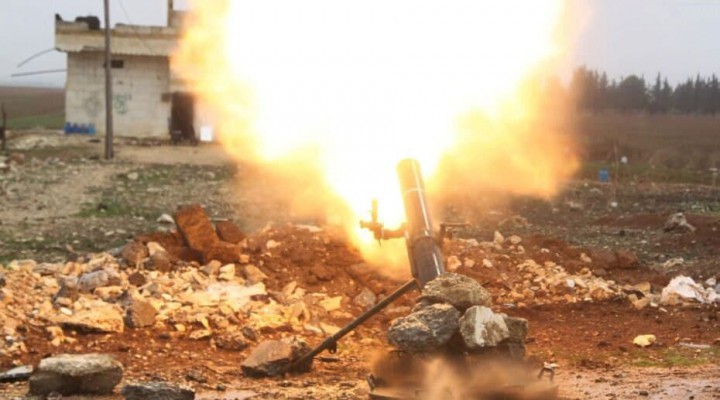
Uprooted Palestinians are at the heart of the conflict in the M.E Palestinians uprooted by force of arms. Yet faced immense difficulties have survived, kept alive their history and culture, passed keys of family homes in occupied Palestine from one generation to the next.
The Reagan administration constructed a network of outsourced private organizations that would do the dirty work of the U.S. empire, shielding the U.S. government from the prying eyes of investigators and journalists.
After organizing coups, overthrowing democratically-elected heads of state, and arming death squads all around the world in the 1960s and 1970s, it was clear that the CIA had an image problem. The Reagan administration, therefore, began constructing a network of outsourced private organizations that would do the dirty work of the U.S. empire, shielding the U.S. government from the prying eyes of investigators and journalists.
“A lot of what we do today was done covertly 25 years ago by the CIA,” Allen Weinstein, co-founder of the National Endowment for Democracy, told The Washington Post.
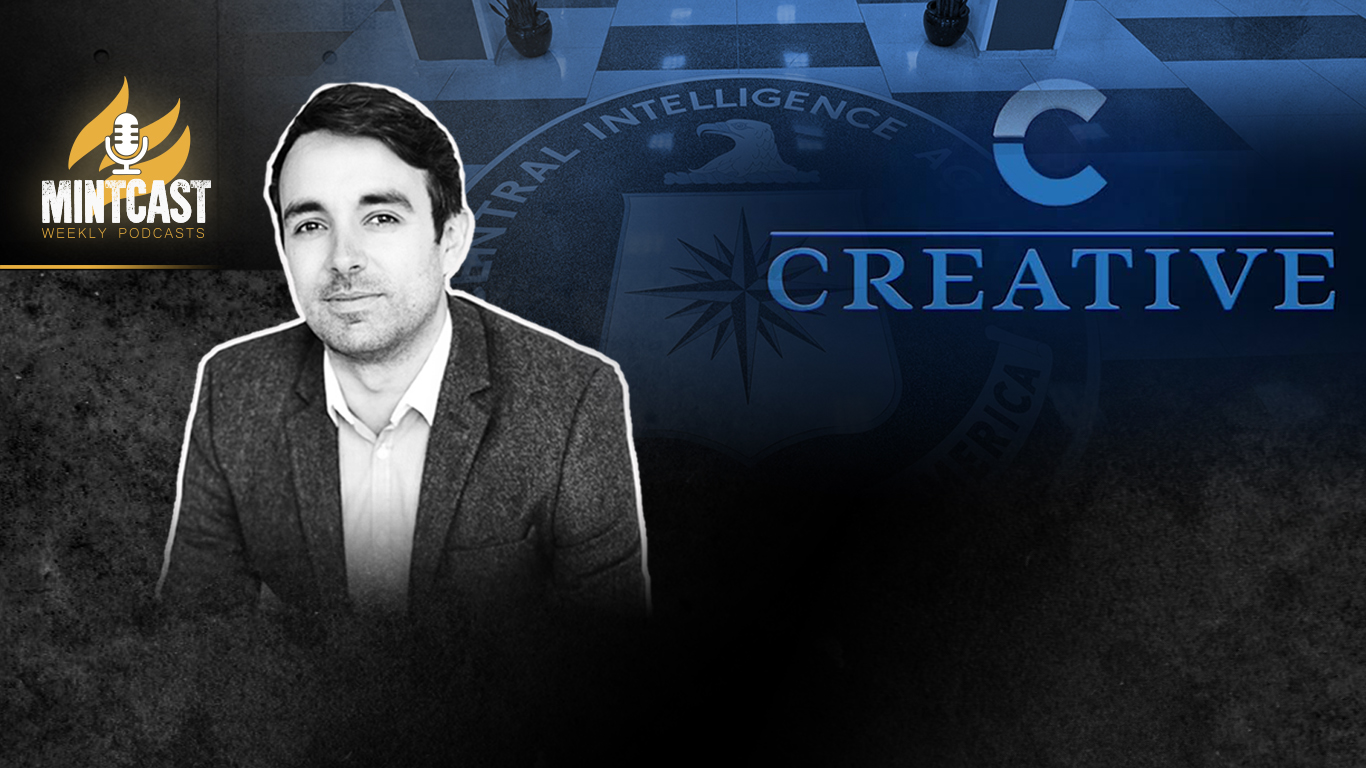
One of these groups is Creative Associates International, the subject of an in-depth MintPress News investigation by Senior Staff Writer Alan MacLeod. Alan joins MintCast host Mnar Muhawesh Adley today to discuss his findings.
Creative Associates International (CAI) was founded by Bolivian ex-pat M. Charito Kruvant in 1979. Visiting the organization’s website, viewers are met with images of smiling African children being taught how to read and write, happy Latino farmers, and pictures of Asian women going to school. The image CAI projects of itself is that it is a progressive charity helping many of the world’s poorest and most vulnerable groups. And it does indeed do education work in dozens of countries. But it also has a long history of being the shock troops for the U.S.’ regime-change agenda throughout the world.
CAI was involved in the 1991 Haitian coup d’etat that removed populist priest Jean Bertrand Arisitde from power; it has worked with Contra death squads in Nicaragua, helping to defeat the Sandinista revolution there; and it has also spearheaded a number of attempts to sow discord in Cuba, with the ultimate goal of removing the Communists from power.
CAI was hired to create a Twitter-like app for Cubans called ZunZuneo. The app would, at first, provide a great service and take over the market. Slowly, however, the plan was to drip-feed Cubans anti-Communist propaganda until the time came to organize a color revolution on the island through bombarding users with messages to take to the streets. CAI also recruited rappers to serve as anti-government figureheads who would push divisions and spread discord throughout the island.
With virtually all of its budget coming from the U.S. government and six of the seven members of its board former or current high U.S. officials, MacLeod describes Creative Associates as a government organization posing as a non-governmental organization.
Alan MacLeod is Senior Staff Writer and Podcast Producer with MintPress News. He completed his PhD at Glasgow University in 2017, where he studied the U.S. government’s attempts at regime change in Venezuela. Since then, he has published two books: Bad News From Venezuela: Twenty Years of Fake News and Misreporting and Propaganda in the Information Age: Still Manufacturing Consent. Joining MintPress News in 2019, he writes primarily on U.S. imperialism, Latin America, media and propaganda, and on cybersecurity issues.
In this frank discussion, we delve into the world of soft power and regime-change ops.
“The Western powers are like dogs with an old bone on the subject of alleged use of chemical weapons in Syria. There is no meat on it but they continue to gnaw away,” says former British ambassador to Syria in an interview with Finian Cunningham.
The United States, Britain, and other NATO powers failed in their covert military efforts for regime change in Syria, thanks in large part to the principled intervention by Russia to defend its historic Arab ally. However, Peter Ford, the former British ambassador to Syria, contends that regime change is still very much a top priority for Western powers and their criminal agenda of reshaping the Middle East according to their imperial objectives. In the following interview, Ford explains how the Western tactic has now shifted to intensifying economic warfare in order to buckle the Syrian government led by President Assad. Nevertheless, the former British envoy envisages that the presidential election on May 26 will see Assad being resoundingly re-elected by a nation defiant towards Western aggression.
Peter Ford is a former British ambassador to Syria (2003-2006) who has publicly denounced Britain’s proxy-terror war for regime change in the Arab nation, along with other NATO accomplices. He is a seasoned diplomat having graduated in Arabic Studies from Oxford University and serving as an envoy in several Middle East countries. Ford has incurred the wrath of the British establishment for his outspoken truth-telling about their nefarious agenda in Syria. On the other hand, he has won the admiration of many people around the world for his courage and integrity. He is a recipient of the Serena Shim Award for Uncompromising Integrity in Journalism.
Interview
Question: What do you make of the ruling last week by the Organization for the Prohibition of Chemical Weapons (OPCW) to strip Syria of its member rights based on allegations that the Syrian government military forces have repeatedly used chemical weapons during the 10-year war? It seems that the OPCW has become extremely politicized by the United States and its Western allies. Do you see a lot of arm-twisting of member states by Western powers to produce OPCW sanctions against Syria?
Peter Ford: The Western powers are like dogs with an old bone on the subject of alleged use of chemical weapons in Syria. There is no meat on it but they continue to gnaw away. Why? Because the trope that “Assad gasses his own people” has become a cornerstone of the whole Western propaganda narrative on Syria. Without it, justifying the cruel economic war on Syria, largely through sanctions, would be harder to justify. And with military efforts at regime change having failed, economic warfare is now the last hope for the Western powers of destabilizing Syria enough to topple the government. For this strategy to work the Western powers are more than ready to undermine the credibility of the OPCW by abusing their ability to manipulate it in the Syrian context.
Question: The OPCW’s executive has been exposed in distorting its own reports for the objective of incriminating the Syrian government over alleged chemical weapons attacks. Do you think the OPCW has been turned into a lever to enable Western powers to harass Syria because these powers have been blocked by Russia and China from using the United Nations Security Council as a mechanism for aggression against Syria?
Peter Ford: The United States and the United Kingdom have not hesitated to ventriloquize the OPCW executive to get their way on Syria, stifling whistleblowing even where the cases of misreporting have been flagrant. As a former United Nations official myself, I can say that international organizations are nearly all controlled and used by the U.S./UK, with the Security Council thankfully the one arena where they are unable always to get their own way. This irks them considerably, leading them to go even further in exploiting and debasing agencies like the OPCW.
Question: Three months into a new administration in the United States under President Joe Biden, is there any discernible change in Washington’s policy towards Syria? You have stated publicly before that the whole war in Syria was a regime-change operation orchestrated by the U.S., Britain, France, and others. Is regime change in Syria still on the Western powers’ agenda?
Peter Ford: Regime change is very much still on the agenda. It cannot be openly avowed, of course, but how else to describe a policy of seeking a “transition” under conditions that would guarantee removal of the present government? Those conditions include rigged elections and “justice” against “war criminals”. The economic warfare is as severe as anything that was waged against Iraq to bring Saddam down. It is blatant deceit to pretend this policy is not aimed at President Bashar al-Assad’s removal. Biden brings no change. If anything he is doubling down on the policy of his predecessor, without even the pretense of wanting out of Syria, holding on to sanctions, and deliberately hampering reconstruction.
Question: The United States still has troops illegally occupying parts of eastern Syria near the country’s oil fields, denying the Syrian state important resources for national reconstruction. You have described the American forces there as functioning like a “tripwire”. Could you expand on that concept?
Peter Ford: U.S. forces in occupied parts of Syria number around a thousand. The Syrian Arab Army could overrun these forces and their Kurdish allies in a matter of days. What stops them? The certain knowledge that any advance towards the American forces would trigger massive retaliation from the U.S. Air Force operating from its bases in the region. So the function of these U.S. forces is not to help “eradicate ISIS terror remnants” as implausibly claimed, but to serve as a tripwire and thereby deter Syrian forces from recovering territories that hold most of Syria’s oil and grain resources. Denial of these resources is key to bringing Syria to its knees via economic warfare.
Question: Could Biden step up the military intervention in Syria? Or is it more likely that the U.S. and its Western allies will pursue economic warfare through sanctions against Syria?
Peter Ford: It must be considered unlikely that the U.S. would put many more boots on the ground but many in the Pentagon are straining at the leash to bomb Syria at the slightest pretext. For the moment, the policy planners are counting on economic sanctions and are content to wait for the Syrian government to buckle.
Question: What are the strategic reasons for Western regime change in Syria?
Peter Ford: It’s a way of getting at Russia and Iran, essentially. A little thought experiment proves it. Imagine Assad suddenly said he was ready to get rid of the Russians and Iranians and complete America’s set of Arab powers in return for being left in power. Egypt’s Sadat did something similar in the late 1970s so it’s not unthinkable, and Assad was having tea with Britain’s Queen Elizabeth not so very long ago. Would the U.S. not then cast aside without a moment’s hesitation all the blather about democracy and human rights?
Question: How significant was Russia’s military intervention in the Syrian war in October 2015?
Peter Ford: It was a life-saver. Most people do not realize how close ISIS and other terrorist proxies were to grabbing control of Damascus. Naturally, the Western powers never like to acknowledge this awkward truth.
Question: France’s former Foreign Minister Roland Dumas remarked in a media interview back in 2013 how he was privately approached by British officials with a scheme for regime change in Syria two years before the war erupted in 2011. As a former British ambassador to Syria (2003-2006) can you recall noticing any such plot being considered?
Peter Ford: Planning for regime change in Syria only really began when the aftermath of the Iraq war went really sour and rather than blame themselves, the U.S./UK sought to deflect blame on to Syria. It accelerated after Britain’s Conservatives with their anti-Russian and anti-Iranian obsessions, and their support for Israel, came to power in 2010.
Question: Your principled and outspoken criticism of the British government’s involvement in the Syrian war has won you much respect around the world. Do you feel personally aggrieved by the malign conduct of Britain in Syria?
Peter Ford: I feel ashamed for my country’s actions. It really is quite shameful that we have been instrumental in causing suffering for millions of Syrians while hypocritically claiming we are doing it for their own good.
Question: Finally, Syria is holding presidential elections on May 26 in which incumbent Bashar al-Assad is running for re-election. The Western powers disparage Syria as an “undemocratic regime”. How do you view Syria’s polity? Is Assad likely to win re-election?
Peter Ford: Of course Assad will win and of course the Western powers will try to disparage his victory. But I can state with certainty that if you could offer the Conservative party in Britain a guarantee of achieving in the next general election anything anywhere near Assad’s genuine level of support, albeit some of it reluctant from a war-weary people, the Tories would bite your hand off for such an electoral gain. Much of the current Western propaganda effort against Syria is geared at trying to spoil Assad’s victory and deny it legitimacy. But inside Syria itself, the people will see the election as setting the seal on 10 years of struggle, and Assad will emerge strengthened as he faces the next phase in the Western war on Syria.
In his study Science of Coercion: Communication Research & Psychological Warfare, 1945–1960, Christopher Simpson writes:
“At heart modern psychological warfare has been a tool for managing empire, not for settling conflicts in any fundamental sense…In practice modern psychological warfare and propaganda have only rarely offered ‘alternatives’ to violence over the medium-to-long term. Instead, they have been an integral part of a strategy and culture whose premise is the rule of the strong at the expense of the weak, where coercion and manipulation pose as ‘communication’ and close off opportunity for other, more genuine, forms of understanding.”[1]
As we all know, psychological warfare is not only able to strike fear among the enemy and “deprive him of the support of his allies and neutrals,” but it also has the potential to “increase in our troops and allies the will to victory.” Moreover, in a psychological war, any weapon, including lies and fabrications, can be employed in order to influence the mass media. To put it in Christopher Simpson’s words, “In this light, overt (white), covert (black), and gray propaganda” is possible.[2]
In addition, “sabotage,” “special operations,” “guerilla warfare,” “espionage,” “political, cultural, economic, and racial pressure are all effective weapons. They are effective because they produce dissension, distrust, fear and hopelessness in the minds of the enemy.”9 White propaganda has a heavy emphasis on “repetition,” and “it is designed to be perceived by its audience as truthful, balanced, and factual.” Black propaganda, however, “stresses trouble, confusion…and terror. A variation of black propaganda tactics involves forging enemy documents and distributing them to target audiences as a means of discrediting rival powers.”[3]
If you don’t think that the New World Order hasn’t been waging a form of psychological and covert war against Russia, then think again. In his recent article, Max Blumenthal has shown why this can no longer be avoided.
he UK Foreign and Commonwealth Office (FCO) have sponsored Reuters and the BBC to conduct a series of covert programs aimed at promoting regime change inside Russia and undermining its government across Eastern Europe and Central Asia, according to a series of leaked documents.
The leaked materials show the Thomson Reuters Foundation and BBC Media Action participating in a covert information warfare campaign aimed at countering Russia. Working through a shadowy department within the UK FCO known as the Counter Disinformation & Media Development (CDMD), the media organizations operated alongside a collection of intelligence contractors in a secret entity known simply as “the Consortium.”
Through training programs of Russian journalists overseen by Reuters, the British Foreign Office sought to produce an “attitudinal change in the participants,” promoting a “positive impact” on their “perception of the UK.”
“These revelations show that when MPs were railing about Russia, British agents were using the BBC and Reuters to deploy precisely the same tactics that politicians and media commentators were accusing Russia of using,” Chris Williamson, a former UK Labour MP who attempted to apply public scrutiny to the CDMD’s covert activities and was stonewalled on national security grounds, told The Grayzone.
“The BBC and Reuters portray themselves as an unimpeachable, impartial, and authoritative source of world news,” Williamson continued, “but both are now hugely compromised by these disclosures. Double standards like this just bring establishment politicians and corporate media hacks into further disrepute.”
Thomson Reuters Foundation spokesperson Jenny Vereker implicitly confirmed the authenticity of the leaked documents in an emailed response to questions from The Grayzone. However, she contended, “The inference that the Thomson Reuters Foundation was engaged in ‘secret activities’ is inaccurate and misrepresents our work in the public interest. We have for decades openly supported a free press and have worked to help journalists globally to develop the skills needed to report with independence.”
The batch of leaked files closely resembles UK FCO-related documents released between 2018 and 2020 by a hacking collective calling itself Anonymous. The same source has claimed credit for obtaining the latest round of documents.
The new leaks illustrate in alarming detail how Reuters and the BBC – two of the largest and most distinguished news organizations in the world – attempted to answer the British foreign ministry’s call for help in improving its “ability to respond and to promote our message across Russia,” and to “counter the Russian government’s narrative.” Among the UK FCO’s stated goals, according to the director of the CDMD, was to “weaken the Russian State’s influence on its near neighbours.”
Reuters and the BBC solicited multimillion-dollar contracts to advance the British state’s interventionist aims, promising to cultivate Russian journalists through FCO-funded tours and training sessions, establish influence networks in and around Russia, and promote pro-NATO narratives in Russian-speaking regions.
In several proposals to the British Foreign Office, Reuters boasted of a global influence network of 15,000 journalists and staff, including 400 inside Russia.
The UK FCO projects were carried out covertly, and in partnership with purportedly independent, high-profile online media outfits including Bellingcat, Meduza, and the Pussy Riot-founded Mediazona. Bellingcat’s participation apparently included a UK FCO intervention in North Macedonia’s 2019 elections on behalf of the pro-NATO candidate.
The intelligence contractors that oversaw that operation, the Zinc Network, boasted of establishing “a network of YouTubers in Russia and Central Asia” while “supporting participants [to] make and receive international payments without being registered as external sources of funding.” The firm also touted its ability to “activate a range of content” to support anti-government protests inside Russia.
The new documents provide critical background on the role of NATO member states like the UK in influencing the color revolution-style protests waged in Belarus in 2020, and raise unsettling questions about the intrigue and unrest surrounding jailed Russian opposition figure Alexei Navalny.
Further, the materials cast serious doubt on the independence of two of the world’s largest and most prestigious media organizations, revealing Reuters and the BBC as apparent intelligence cut-outs feasting at the trough of a British national security state that their news operations are increasingly averse to scrutinizing.
Reuters solicits secret British Foreign Office contract to infiltrate Russian media
A series of official documents declassified in January 2020 revealed that Reuters was secretly funded by the British government throughout the 1960s and 1970s to assist an anti-Soviet propaganda organization run by the MI6 intelligence agency. The UK government used the BBC as a pass-through to conceal payments to the news group.
The revelation prompted a Reuters spokesman to declare that “the arrangement in 1969 [with the MI6] was not in keeping with our Trust Principles and we would not do this today.”
The Trust Principles outline a mission of “preserving [Reuters’] independence, integrity, and freedom from bias in the gathering and dissemination of information and news.”
In its own statement of values, the BBC proclaims, “Trust is the foundation of the BBC. We’re independent, impartial and honest.”
However, the newly leaked documents analyzed by The Grayzone appear to reveal that both Reuters and the BBC are engaged yet again in a non-transparent relationship with the UK’s foreign ministry to counter and undermine Russia.
In 2017, the non-profit arm of the Reuters media empire, the Thomson Reuters Foundation (TRF), delivered a formal tender offering to “enter into a Contract with the Secretary of State for Foreign Affairs, as represented by the British Embassy Moscow, for the provision of a project ‘Capacity Building in Russian Media.’” The letter was signed by Reuters CEO Monique Ville on July 31, 2017.
Reuters’ tender was a response to a call for bids by the FCO, which sought help in implementing “a programme of themed tours to the UK by Russian journalists and online influencers.”
Working through the British Embassy in Moscow, the FCO sought to produce an “attitudinal change in the participants,” promoting a “positive impact” on their “perception of the UK.”
In 2019, the FCO put forward a similar initiative, this time articulating a more aggressive plan to “counter the Russian government’s narrative and domination of the media and information space.” In effect, the British government was seeking to infiltrate Russian media and propagate its own narrative through an influence network of Russian journalists trained in the UK.
Reuters responded to both calls by the FCO with detailed tenders. In its first bid, the media giant boasted of establishing a global network of 15,000 journalists and bloggers through “capacity building interventions.” In Russia, it claimed at least 400 journalists had been cultivated through its training programs.
Reuters claimed to have performed 10 previous training tours for 80 Russian journalists on behalf of the British embassy in Moscow. It proposed eight more, promising to promote “UK cultural and political values” and “create a network of journalists across Russia” bonded together by a shared “interest in British affairs.”
Reuters’ tender highlighted the institutional prejudices and interventionist agenda that underlined its training programs. Detailing a series of UK FCO-funded programs dedicated to “countering Russian state-funded propaganda,” Reuters conflated Russian government narratives with extremism. Ironically, it referred to its own efforts at weakening them as “unbiased journalism.”
At the same time, Reuters appeared to recognize that its covert collaboration with the British Embassy in Moscow was highly provocative and potentially destructive to diplomatic relations. Recounting a UK FCO-funded tour it ran for Russian journalists in the midst of the Sergei Skripal affair, after the British government accused Moscow of poisoning a turncoat Russian intelligence officer who spied for Britain, the tender stated, “[Thomson Reuters Foundation] was in constant communication with the British Embassy in Moscow, to assess levels of risk, including reputational risk to the embassy.”
The mention by Reuters of the Belarusian TV Station Belsat, and its particular relevance “to the UK Government Strategy’s capacity to detect and counter the spread of Russian information” was notable. While describing itself as “the first independent television channel in Belarus,” Belsat is, as the Reuters tender makes clear, a vehicle of NATO influence.
Based in Poland and funded by the Polish Foreign Ministry and other EU governments, Belsat played an influential role in promoting the color revolution-style protests that erupted in May 2020 to demand the ouster of Belarusian President Alexander Lukashenko.
Ultimately, Reuters’ bid appears to have been successful, as it received a July 2019 contract with the FCO’s Conflict, Stability & Security Fund (CSSF). But neither entity seemed to want the public to know about their collaboration on a project designed to counter Russia. The contract was marked “Strictly Confidential.”
“Weaken the Russian state’s influence”
The programs exposed through the latest leak of documents operate under the auspices of a shadowy division of the Foreign and Commonwealth Development Office called Counter Disinformation & Media Development (CDMD). Led by an intelligence operative named Andy Pryce, the program has shrouded in secrecy.
Indeed, the British government has denied freedom of information requests about the division’s budget and stonewalled members of parliament like Chris Williamson who sought data about its budget and agenda, citing national security to block their demands for information.
“When I tried to probe further,” former MP Williamson told The Grayzone, “ministers refused to let me have access to any documents or correspondence relating to this organization’s activities. I was told that releasing this information could ‘disrupt and undermine the program’s effectiveness.’”
During a meeting convened in London on June 26, 2018, Pryce outlined a new FCO program “to weaken the Russian State’s influence on its near neighbors.” He solicited a consortium of firms to assist the British state in establishing new and seemingly independent media outlets to counter Russian government-backed media in Moscow’s immediate sphere of influence, and to amplify the messaging of NATO-aligned governments.
Justified on the basis of Russia’s supposed intention to “sow disunity and course[sic] disruption to democratic processes,” the campaign Pryce laid out was more aggressive and far-reaching than anything Russia has been caught doing in the West.
Pryce emphasized that secrecy was of the essence, warning that “some grantees will not wish to be linked to the FCO.”
A year later, the FCO’s CDMD division outlined a program to run through 2022 at a cost of $8.3 million to the British taxpayer. It aimed to establish new outlets and support preexisting media operations “to counter Russia’s efforts to sow disunity” and “increase resilience to hostile Kremlin messaging in the Baltic states.”
Thus the British government set out with an array of intelligence contractors to dominate Baltic media with pro-NATO messaging – and perhaps sow some disunity of its own.
As seen below, the BBC placed an apparently successful bid to participate in the covert Baltic program through its non-profit arm, known as BBC Media Action.
The BBC also proposed to participate in a separate UK FCO media propaganda program in Ukraine, Moldova, and Georgia. It named Reuters and a now-defunct intelligence contractor called Aktis Strategy, which participated in previous FCO CDMD programs, as key allies in its consortium.
The BBC identified local partners like Hromadske, a Kiev-based broadcast network born in the midst of the so-called Maidan “Revolution of Dignity” in 2014 that relied on ultra-nationalist muscle to remove an elected president and install a pro-NATO regime. Hromadske materialized almost overnight with seed money and logistical support from the US Agency for International Development (USAID) and billionaire media mogul Pierre Omidyar’s Network Fund.
BBC Media Action proposed working through Aktis to cultivate and grow pro-NATO media in conflict areas like the Donbas region of eastern Ukraine, where a proxy war has raged since 2014 between the Western-backed Ukrainian military and pro-Russian separatists. It was textbook information warfare, weaponizing broadcast media to turn the tide of battle in a protracted, grinding conflict.
The UK FCO propaganda campaign warned that “Kremlin-affiliated structures” could undermine the project if it was exposed. For a media organization that claims to place trust at the heart of its charter of values, the BBC was certainly operating under a high degree of secrecy.
The UK FCO’s meddling in Eastern Europe and the Baltics created a feeding frenzy among contractors seeking to provide “capacity building” and media development assistance on Russia’s periphery. Among the bidders were Reuters and veteran FCO contractors that had participated in an array of information warfare campaigns from Syria to the British home front.
The Consortium
Among the intelligence contractors bidding to participate in the UK FCO-funded Consortium were the Zinc Network and Albany Communications. As journalist Kit Klarenberg noted in a February 18 report on the recent FCO leaks, these firms “boast staff possessed of [security] clearances, individuals who previously served at the highest levels of government, the military and security services. They furthermore have extensive experience in conducting information warfare operations on London’s behalf the world over.”
Previously known as Breakthrough, Zinc has contracted for the UK Home Office to covertly implement media projects propagandizing British Muslims under the auspices of the Prevent de-radicalization initiative. In Australia, Zinc was caught running a clandestine program to promote support for government policies among Muslims.
Ben Norton reported for The Grayzone on Albany’s record of “secur[ing] the participation of an extensive local network of over 55 stringers, reporters and videographers” to influence media narratives and advance Western regime-change goals in Syria, while conducting public relations services on behalf of extremist Syrian militias funded by NATO member states and Gulf monarchies to destabilize the country.
In its bid for the UK FCO media program in the Baltic region, Albany proposed a series of satirical “interactive games” like “Putin Bingo” to encourage opposition to the Russian government and exploit “frustrations experienced by Russians in the EU.”
Albany pitched a Latvia-based outlet called Meduza as “a leading proponent of these games.” A top website among Russian opposition supporters, Meduza has received financial support from the Swedish government and several billionaire-backed pro-NATO foundations.
As a UK FCO contractor, the Zinc Network said it was “delivering audience segmentation and targeting support” not only to Meduza, but also to Mediazona, a supposedly independent media venture founded by two members of the anti-Kremlin performance art group Pussy Riot.
One of Mediazona’s founders, Nadya Tolokonnikova, shared a stage with former US President Bill Clinton at the Clinton Foundation’s 2015 conference. The following year, Tolokonnikova trashed now-imprisoned Wikileaks founder Julian Assange, claiming, “He’s connected with the Russian government, and I feel that he’s proud of it.”
Besides delivering “targeting support” for “independent” outlets pushing the right line against the Kremlin, Zinc proposed leveraging UK FCO funding into a program of direct payments and gaming Google search results in their favor. The intelligence cut-out was explicit about its desire to reduce the search visibility of the Russian government-backed broadcaster RT.com.
The UK covertly funded and managed a network of Russian YouTubers and “activated” anti-government protest content
In a document marked “private and confidential,” Zinc revealed the Consortium’s role in setting up a “YouTuber network” in Russia and Central Asia designed to propagate the message of the UK and its NATO allies.
According to Zinc, the Consortium was “supporting participants mak[ing] and receiv[ing] international payments without being registered as external sources of funding,” presumably to circumvent Russian registration requirements for foreign-funded media outfits.
Zinc also helped the YouTube influencers “develop editorial strategies to deliver key messages” while working “to keep their involvement confidential.” And it carried out its entire program of covert propaganda in the name of “promoting media integrity and democratic values.”
Perhaps the most prominent Russian YouTube influencer is Alexei Navalny, a previously marginal nationalist opposition figure who was nominated for a Nobel Prize after becoming the target of a high-profile poisoning incident that brought relations between Russia and the West to its post-Cold War nadir.
The Russian government’s sentencing of Navalny to a 2.5-year prison term for evading parole has inspired a new wave of anti-government protests. Back in 2018, Navalny personally co-sponsored national demonstrations against the banning of the encrypted messaging app Telegram.
In its bid for a UK FCO contract, Zinc revealed that it played a behind-the-scenes role “to activate a range of content within 12 hours of the recent telegram protests.” Whether those activities involved Navalny or his immediate network was unclear, but the private disclosure by Zinc appeared confirm that British intelligence played a role in amplifying the 2018 protests.
Russian intelligence services have released sting video footage showing Vladimir Ashurkov, the executive director of Navalny’s FBK anti-corruption organization, meeting in 2013 with a suspected British MI6 agent named James William Thomas Ford, who was operating out of the British embassy in Moscow. During the rendezvous, Ashurkov can be heard asking for 10 to 20 million dollars to generate “quite a different picture” of the political landscape.
In 2018, Ashurkov’s name appeared in leaked documents exposing a covert, UK FCO influence network called the Integrity Initiative. As The Grayzone reported, the Integrity Initiative operated behind the cover of a think tank called the Institute for Statecraft, which concealed its own location through a fake office in Scotland.
Run by a group of military intelligence officers, the secret propaganda group worked through clusters of media and political influencers to escalate tensions between the West and Russia. Listed among the London cluster of anti-Russian influencers was Ashurkov.
The Integrity Initiative’s military directors outlined their agenda in stark, unequivocal terms. As the leaked memo below illustrates, they aimed to exploit the media, think tanks and their influence network to stir up as much hysteria about Russia’s supposedly malign influence as possible. Since they embarked on their covert campaign, nearly all their wishes have come true.
Bellingcat joins the Zinc Network, allegedly meddles in North Macedonia’s elections
After Alexei Navalny’s poisoning, he collaborated with the UK-based “open source” journalism outfit Bellingcat to pin the crime on Russia’s FSB intelligence services. Though it is well established that Bellingcat is funded by the National Endowment for Democracy, a US government entity that supports regime-change operations around the globe, the fact has never appeared in the reams of fawning profiles that corporate media outlets, including Reuters, have published about the organization.
Bellingcat’s role as a partner in the Zinc Network’s UK FCO-funded EXPOSE Consortium may add an additional layer of suspicion about the outlet’s claim to independence.
Indeed, Bellingcat was listed in leaked 2018 documents as a key member of Zinc’s “Network of NGOs.” Among the members in the network was the Institute for Statecraft, the front for the Integrity Initiative.
Bellingcat founder Eliot Higgins has vehemently denied accepting funding from the UK FCO or collaborating with it. But after Zinc documents leaked in early 2019, Higgins disclosed that some version of the Zinc proposal had received the green light from the Foreign Office.
Christian Triebbert, a Bellingcat staff member who was named as a potential trainer by the Zinc documents, and who now heads the New York Times’ video investigations unit, claimed the program consisted of benign workshops on “digital research and verification skills.”
What he and Higgins did not mention, however, was that Bellingcat had apparently been dispatched by the Zinc Network to “respond” to the 2019 parliamentary elections in North Macedonia. Stakes were high as the elections were likely to determine whether the tiny country would enter NATO and join the EU. The pro-NATO candidate triumphed, and not without a little help from the British Foreign Office and its allies.
According to the Zinc proposal, Bellingcat provided training to the Most Network, a Macedonian media outlet. It was joined by DFR Lab, a project of the NATO- and US government-funded Atlantic Council in Washington, DC.
After apparently participating in the covert UK FCO-funded intervention in North Macedonia, Bellingcat published an article ahead of the country’s 2020 parliamentary elections entitled, “Russia’s interference in North Macedonia.”
Several Zinc Network documents list Reuters as a member of the UK FCO-funded Consortium media intervention in the Baltic states.
Asked by The Grayzone how Reuters’ participation in UK FCO-funded programs aimed at countering Russia conformed to the news organization’s Trust Principles, spokesperson Jenny Vereker stated, “This funding supports our independent work to assist journalists and journalism all over the world, as part of our mission to strengthen a free and vibrant global media ecosystem to support a plurality of voices and preserve the flow of accurate and independent information. This is because accurate and balanced news coverage is a crucial pillar of any free, fair and informed society.”
In recent years, the BBC and Reuters have played an increasingly aggressive part in demonizing the governments of countries where London and Washington are seeking regime change. Meanwhile, high-profile online investigative outlets like Bellingcat have sprouted up seemingly overnight to assist these efforts.
With the release of the UK FCO documents, questions must be raised about whether these esteemed news organizations are truly the independent and ethical journalistic entities they claim to be. While they hammer away at “authoritarian” states and malign Russian activities, they have little to say about the machinations of the powerful Western governments in their immediate midst. Perhaps they are reluctant to bite the hand that feeds them.
[1] Christopher Simpson, Science of Coercion: Communication Research & Psychological Warfare, 1945–1960 (New York: Oxford University Press, 1994), 8.
Jonas E. Alexis has degrees in mathematics and philosophy. He studied education at the graduate level. His main interests include U.S. foreign policy, history of Israel/Palestine conflict, and the history of ideas. He is the author of the new book Zionism vs. the West: How Talmudic Ideology is Undermining Western Culture. He is currently working on a book tentatively titled, Kevin MacDonald’s Abject Failure: A Philosophical and Moral Critique of Evolutionary Psychology, Sociobiology, and White Identity. He teaches mathematics in South Korea.
RT: A UK professor investigating a Western-funded group gathering evidence against Syrian officials was contacted by his target’s staff posing as a Russian agent. The communications were framed as potentially traitorous by the media.
The BBC wrote a lengthy piece blasting Edinburgh University Professor Paul McKeigue, a member of a group of academics called the Working Group on Syria, Propaganda and Media (WGSPM). The group seeks to expose Western efforts to shield from public scrutiny a long-term campaign to destabilize and topple the Syrian government.
One part of this media spin operation, as suspected by McKeigue and other dissenting figures, is the Commission for International Justice and Accountability (CIJA, formerly SCJA – the Syrian Commission for Justice and Accountability).
The organization has an archive of Syrian government documents, some of which were purchased from armed groups fighting against Damascus, which it says it collected to help prosecute criminals who worked for the Syrian government. Skeptics believe its primary goal is not justice but generating bad publicity against Damascus.
For three months, McKeigue was in contact about CIJA with a person calling themselves ‘Ivan’ and hinting that they were working for a well-informed organization with headquarters in Moscow. The fake Russian intelligence officer was actually people working for CIJA and its founder, William Wiley, the BBC reported.
Wiley, who McKeigue suspected of being a CIA agent, says he ran the sting operation to learn what McKeigue knew about his organization. He says he was worried that a former employee would leak to the WGSPM.
“This wasn’t some kind of revenge operation. It was driven entirely by concerns for our security, and ultimately our findings justified those concerns,” he told the BBC.
“Aside from protecting our sources, witnesses and our personnel, we need to protect our reputation. Because if our reputation is dragged through the mud, our funding will stop. And if the funding stops that will have a highly negative impact on justice.”
The ‘not-revenge’ expose goes to great lengths to paint McKeigue as a conspiracy theorist with a grudge against the ‘justice-seekers’ from the CIJA and no second thoughts about hurting people. If Ivan were indeed a Russian agent, who knows what harm would befall people who McKeigue identified as working on the West’s behalf, the BBC suggested, implying that Russian intelligence needed this type of direction from the professor.
Interestingly, one of the individuals discussed in the communications in this way was BBC journalist Chloe Hadjimatheou, the author of the expose. One can only compliment her for being held in such high regard by her employer that it doesn’t doubt her ability to cover in a balanced and fair manner a man who called her “a dim-witted person who has been flattered into taking on something beyond her competence,” according to her report.
The sting was described in fewer details but along the same lines by the Times. It cited a former UK military officer whose name popped up in the communications, as accusing McKeigue of “treacherous activity.” The newspaper previously called the WGSPM “apologists for [Syrian President Bashar] Assad.”
Despite its length, the BBC story does miss some details that would provide crucial context about the conflict between McKeigue and Wiley and their respective groups. For example, the BBC didn’t mention that the funding Wiley was worried about comes from Western governments, including the US, UK, Canada, Germany, Denmark, the Netherlands, Norway, and the EU.
The BBC only briefly mentions the alleged chemical weapons incident in Douma in 2018 to inform the readers that McKeigue said, “the Syrian regime might not have been responsible for” it, contrary to what “inspectors for the Organisation for the Prohibition of Chemical Weapons (OPCW) concluded.”
At least some OPCW inspectors who were at the scene of the incident actually suggested otherwise, but their opinions were allegedly silenced by the watchdog and didn’t make it into its final report. McKeigue’s WGSPM happens to be the publisher of a leaked engineering assessment by OPCW inspector Ian Henderson, which said evidence his team found in Douma pointed to a staging of the purported attack.
More whistleblower testimonies and documents have since emerged to back the allegation that the OPCW wrote its final report to justify the missile attacks which the US, UK, and France carried out in retaliation for the purported Syrian Army atrocity. The watchdog responded by describing the whistleblowers as rogue elements and refused to conduct an open review of the scientific evidence underlying its conclusions about the incident.
McKeigue himself acknowledged that Wiley ran “a clever deception operation” against him and suggested it was meant to distract him from looking into alleged financial irregularities in CIJA and Wiley’s businesses. The CIJA founder baited him by citing his alleged CIA affiliations, which may or may not be real, the professor said.
“The people on the other end of this sting managed to get me to reveal information provided by others that was not intended to be shared, along with other information that may have been embellished. This was a failure on my part for which I accept responsibility and have apologized to those concerned,” McKeigue wrote in a personal statement.
Commenting on his willingness to talk to a purported Russian spy, McKeigue said he had no access to British state secrets, so the possible affiliation wasn’t of much concern. “I cultivate contacts with all sorts of people who have relevant information, including anonymous sources and some identified sources whose activities I do not endorse,” he explained.
The WGSPM responded to the publications by saying they exemplified “smear campaigns and hatchet journalism” waged in the West to silence dissent on the Syrian war.
VT Editors is a General Posting account managed by Jim W. Dean and Gordon Duff. All content herein is owned and copyrighted by Jim W. Dean and Gordon Duff
يواصل الغرب حملات الضغط على دمشق عبر تحميلها المسؤولية عما آلت إليه البلاد حتى الآن، من دون مراجعة سلوك الجماعات المسلحة وداعميها الإقليميين والدوليين وممارساتهم في التدمير والتخريب.
دمشق قاتلت مع حلفائها وصمدت وخرجت من سنوات الحرب منتصرة متمسكة بقرارها وموقعها وموقفها
عشر سنوات من الحرب على سوريا، واجهت خلالها دمشق أشكال الحرب والإرهاب والحصار. وكان الإعلام الغربي شريكاً أساسياً في هذه الحرب، من خلال الدعاية والتشويه أو إخفاء الحقائق. واليوم تتجدد هذه الحملة على سوريا، عنوانها التركيز على الأزمة الإنسانية وتحميل الحكومة السورية مسؤوليتها.
وفي جردة الحسابات بين معطيات الميدان والسياسة، حقائق كثيرة الاتجاهات الجديدة لإدارة الرئيس الأميركي جو بايدن، وحلفائها الغربيين، توحي بمسارات تشدد وضغوط.
بعد مجيء بايدن رئيساً، أصبحت سوريا في دائرة الاهتمام بتكثيف الضغوط، وهو ما انعكس على المقاربة الغربية في إعطاء نفس جديد للحرب على سوريا لا ينفصل عن سياق إقليمي تريد واشنطن الإمساك بأوراقه التفاوضية.
وفي هذا السياق، وانسجاماً مع موقف الإدارة الأميركية الجديدة، فرضت بريطانيا عقوباتها الأخيرة على دمشق بعد أن فشلت كل سبل تغيير الحكم بالإرهاب وفوضى المجموعات المسلحة لا عبر صندوق الانتخابات.
حيث فرضت لندن عقوبات جديدة على سوريا شملت 6 مسؤولين بينهم وزير الخارجية فيصل المقداد. وقال وزير الخارجية البريطاني دومينيك راب، إن بلاده “تعاقب” هؤلاء المسؤولين بسبب ما وصفه “باعتدائهم الشامل على المواطنين الذين ينبغي أن يتولوا حمايتهم”.
أما بالنسبة لواشنطن، فلا اعتراف بما يخرج من صندوق الانتخابات، وتلك وسيلة ضغط أخرى للطعن في شرعية الرئيس بشار الأسد إن جرى انتخابه مجدداً. بل إن التهجم على الأسد عاد بشكل لافت أخيراً على لسان المسؤولين الأميركيين.
وزير الخارجية الأميركي أنتوني بلينكن، قال “غير ممكن إفلات النظام السوري من العقاب”، كاشفاً إحدى أوراق الضغط بـ”إثارة تهمة استخدام الكيميائي”.
من جهته، المتحدث باسم الوزارة نيد برايس، قال “ثمة مجموعة متنوعة من أدوات الضغط على دمشق”، مضيفاً أن “ذلك يندرج على ما يبدو ضمن استراتيجية الإدارة الجديدة”. وتريد واشنطن بالإبقاء على قواتها في سوريا توجيه رسالة مفادها أن بيدها ورقة ضغط، لتسوية تتجاوز الجغرافيا السورية بتفاوض أوسع وأشمل.
وفي هذا السياق، أشار الكاتب والباحث السياسي وليد شرارة، إلى أن “إدارة بايدن ماضية في سياسة ترامب بشأن سوريا في الحصار”، لافتاً إلى أن “إدارة ترامب كانت تسعى إلى خنق سوريا اقتصادياً وحتى صوملتها لكسر محور المقاومة”.
وقال شرارة للميادين، إن “التيار الغالب داخل الإدارة الأميركية الحالية يتماهى مع سياسة ترامب في مواجهة محور المقاومة”، معتبراً أن “هدف واشنطن هو دفع الوضع السوري إلى الانهيار لاستهداف محور المقاومة في حلقته المركزية”.
وأضاف شرارة أن “لندن أقرب إلى واشنطن في سياستها، وقرارها في العقوبات على سوريا يأتي في إطار تكثيف الضغط”، معتبراً أن “محور المقاومة نجح في خلق ميزان قوى جديد في مواجهة واشنطن وحلفائها
بدوره، قال محرر شؤون الأمن القومي في صحيفة “واشنطن تايمز” غاي تايلور، إن “الولايات المتحدة تدخلت في سوريا لمواجهة تنظيم داعش وليس من أجل صوملتها”، مشدداً على أنه “لدى تركيا وروسيا مصالح في سوريا ولا يمكن إلقاء اللوم على واشنطن فقط”.
تايلور أكد للميادين، أن “سوريا لم تكن قضية سهلة على الولايات المتحدة لجهة كيفية التعامل مع ملفها”، مشيراً إلى أن “محور المقاومة قرر ان يضرب بيد من حديد لمواجهة واشنطن وحلفائها وسياسات الحصار”.
الدبلوماسي الإيراني السابق أمير موسوي، أكد أن “الولايات المتحدة جيشت العالم لاسقاط دمشق ومحور المقاومة لكنها فشلت”.
موسوي أوضح للميادين، أن “صمود دمشق ومحور المقاومة هو انتصار كبير لأنه كسر الإرادة الغربية بتغيير النظام في سوريا”، منوهاً إلى أن “محور المقاومة تمكن بصموده كسر المحاولات الغربية والأميركية في تفتيته”.
وقال موسوي إن “إدارة بايدن أضعف إدارة أميركية مرتبكة بسبب أزمات داخلية واقتصادية والعلاقات مع روسيا والصين”، مؤكداً أن “محور المقاومة قرر أن يضرب بيد من حديد لمواجهة واشنطن وحلفائها وسياسات الحصار”.
Kabbalistic Balance
-
Kabbalistic Balance August 6 2026 ___________________________________ More
Vids! +BN Vids Archive! HERE! ___________________________________ Support
The Br...
Report on Beth Israel vigil 07-04-26
-
*1A Rights under combined attack from local government plus media*
Ann Arbor City Council is at it again. Right before the long 4th of July
weekend, they ...
-
Hello all,
It is with great sadness that I share with you the passing of our beloved
sister, Mother, and Grandmother, the individual that you all knew ...
Best Horror Podcast
-
Best Horror Podcast Introduction: Horror podcasts […]
The post Best Horror Podcast appeared first on Copper Shock Horror Podcast.
Ikhras Endorses Muntadhar Al-Zaidi
-
“Oh parties of banditry and sectarianism and corruption, we have come and
our goal is to destroy you.” Ikhras formally endorses Muntadhar al-Zaidi,
Iraqi j...
Prince Charles: Foreign Jews behind bloodshed in ME
-
In May, 2017, British Crown Prince Charles declined an invitation from
Zionist entity’s president Reuven Rivlin‘s to attend the 100th anniversary
of the no...
Palestinian Women – One for All, All for One
-
Honouring All Palestinian Women by Honouring Three: Hanin Zoabi, Ahed
Tamimi, Samah Sabawi Vacy Vlazna “Palestinian women have always stood side
by side ...
US’s Saudi Oil Deal from Win-Win to Mega-Lose
-
By F. William Engdahl Who would’ve thought it would come to this? Certainly
not the Obama Administration, and their brilliant geo-political think-tank
neo-...
-
*Mordechai Vanunu wins human rights prize of Brazilian Press Association *
* http://www.alternativenews.org/english/index.php/features/updates/7038-mordechai...
Abdul Aziz Rantissi:
"My ultimate wish, my God, is to attain martyrdom,"...God granted him his wish on April 17, 2004, at the hands of Israeli assassins.