Showing posts with label Carter. Show all posts

Wednesday, 24 February 2021

America’s Middle East Policy Is Outdated and Dangerous سياسة أميركا في الشرق الأوسط خطيرة وعفا عليها الزمن

 **Please scroll down for the Arabic Version first published in Al-Mayadeen **

A New Approach to the Gulf States Needs a Better Foundation

U.S. aircraft at Al Udeid Air Base, Qatar, April 2016

By Chris Murphy

February 19, 2021

In his 1980 State of the Union address, which came in the wake of the oil shocks of 1973 and 1979, U.S. President Jimmy Carter described in grave terms the risks of losing access to Middle Eastern oil. “An attempt by any outside force to gain control of the Persian Gulf region will be regarded as an assault on the vital interests of the United States of America,” he said. “Such an assault will be repelled by any means necessary, including military force.” That pledge became known as the Carter Doctrine, and it has remained a defining feature of U.S. Middle East policy ever since.

At the time of Carter’s pronouncement, the United States relied heavily on oil imports to power its economy, and 29 percent of that oil came from the Persian Gulf. Even two decades later, little had changed: in 2001, the United States still imported 29 percent of its oil from the Gulf. But it’s not 1980 or 2001 anymore. Today, the United States produces as much oil as it gets from abroad, and only 13 percent comes from Gulf countries. The United States now imports more oil from Mexico than it does from Saudi Arabia.

Yet even as the driving rationale for the so-called Carter Doctrine has become obsolete, it continues to shape the United States’ approach to the Gulf—emblematic of a broader failure of U.S. policy to catch up with the broader changes to U.S. interests in the region since the 1980s. President Joe Biden should acknowledge new realities and reset the United States’ relationships in the Gulf in a way that promotes American values, keeps Washington out of unnecessary foreign entanglements, and prioritizes regional peace and stability.

Stay informed.

In-depth analysis delivered weekly.Sign Up

There are myriad reasons for strong relations between the United States and the countries of the Gulf Cooperation Council (GCC)—Bahrain, Kuwait, Oman, Qatar, Saudi Arabia, and the United Arab Emirates. The decisions by Bahrain and the UAE to establish formal ties to Israel are a clear sign of the positive influence these countries can exert. Kuwait and Oman play powerful roles in mediating regional conflicts. The United States’ counterterrorism partnerships with GCC countries, while frequently flawed, are still crucial, as these governments often have information on extremist networks that U.S. intelligence cannot glean on its own. And the United States is broadening its people-to-people ties with the region: today, tens of thousands of students from the Gulf study at U.S. colleges and universities. Accordingly, the United States must make clear to Gulf allies that its goal is not to pull away from the region but instead to create a more substantive and stable link between the United States and the GCC.

But it is past time to admit that there is a central design flaw in the United States’ current approach to the Gulf: the top two GCC priorities for the relationship—sustaining U.S. military assistance to fight regional proxy wars and maintaining U.S. silence on domestic political repression—will, in the long run, destroy the GCC countries themselves. The United States’ objective must be to replace this broken foundation with a new system that supports a peaceful Gulf replete with stable, diversified national economies and responsive governments—the kind of future that leaders such as Saudi Crown Prince Mohammed bin Salman staunchly claim the Gulf is seeking. A U.S.-Gulf relationship built on economic, diplomatic, and governance ties, rather than just brute security partnerships, will accrue to the benefit of both U.S. and Middle Eastern interests.

AVOIDING PROXY WARS

The first step is for the United States to disengage from the GCC’s proxy wars with Iran. The Iranian government is a U.S. adversary, but the festering series of hot and cold conflicts in the region—in Iraq, Lebanon, Syria, and Yemen—has simply served to strengthen Iran’s influence and create cataclysmic levels of human suffering. A pullback from U.S. intervention in places such as Syria and Yemen will, no doubt, cause immediate consternation in the Gulf. By now, however, the enormous costs of the false belief that the United States can indirectly steer the outcomes in Syria and Yemen are crystal clear. In both theaters, the United States’ tepid, halfway military involvement was never substantial enough to tip the balance and has served instead to extend the conflicts. Washington suffers from a hubristic confidence in its ability to accomplish political goals through military interventions. Instead, the most significant effect of recent U.S. Middle East adventurism has been to fuel perpetual wars that embolden extremist groups and allow anti-American sentiment to grow.

It is past time to admit that there is a central design flaw in the United States’ current approach to the Gulf.

Although the United States should retain its security partnerships with Gulf nations, the U.S. footprint should be smaller. Before the Gulf War, the United States was able to protect its interests in the region without massive military bases in Bahrain, Kuwait, Qatar, and Saudi Arabia and without billions in annual arms sales to these same nations. The foreign policy community in Washington acts as if this massive military presence is now mandatory to protect U.S. interests, even though it wasn’t prior to the creation of the post-9/11 security state. U.S. bases are costly, drawing focus away from increasingly important theaters such as Africa and Asia; they create pressure on the United States to ignore serious human rights abuses lest criticism puts the troop presence at risk; and they stand out as military targets and propaganda fodder for Iran, al Qaeda, and the Islamic State (or ISIS). As U.S. Defense Secretary Lloyd Austin undertakes a global review of the United States’ military posture, the Biden administration should seriously consider reducing its military basing in the region. Reconsidering the costs and benefits of basing the Fifth Fleet in Bahrain would be a good start, as the United States’ massive footprint is becoming more trouble than it is worth.

Finally, although the United States should continue to sell military equipment to its partners, Washington should ensure that it is selling truly defensive arms. Today, too many American weapons are used irresponsibly and in violation of international law. Others, such as the recently announced Reaper drone sale to the UAE, fuel a regional arms race that runs counter to U.S. security interests. As it pulls back on systems with more offensive capabilities, however, the United States should still be willing to provide more advanced defensive weapons, such as Terminal High-Altitude Area Defense (THAAD) missile technology, that fit the Gulf’s real security threats.

If Washington does these things, Saudi Arabia and the UAE will inevitably complain that the United States is abandoning them and empowering Iran. The Biden administration’s task will be to convince them that there is an alternative to a never-ending military contest with Tehran. A regional security dialogue that includes all parties can replace the arms race and proxy wars. This may sound like a utopian fantasy, but it is far from it. The green shoots of this dialogue have been showing for years, and able U.S. leadership, applying both vinegar and honey, can begin to create a structure for détente. And although the United States should not give the Emiratis or Saudis veto power over a bilateral nuclear agreement with Iran, a regional dialogue would tie the Gulf countries closer to the United States on Iran policy and likely give the GCC greater input on any future agreement Washington makes.

TESTING DE-ESCALATION

The Biden administration is best positioned to test the region’s readiness for this kind of de-escalation in Yemen. The pieces that have been missing—meaningful pressure and a credible interlocutor—are now moving into position as the Biden administration ends U.S. support for offensive operations and appoints a new special envoy to support the UN peace process. The United States is the only nation that can move the ball forward. If Washington can find a path toward peace in Yemen, where an inclusive post-Hadi Yemeni government coexists with Houthi leaders as the country rebuilds with international aid, it could be proof of concept for a broader dialogue.

De-escalation should be wildly appealing to the United States’ Gulf partners. Declining oil revenues mean these nations will soon need to make hard choices between investing in economic reforms and fighting wars in foreign countries. Given these persistent conflicts and the state control of local economies, attracting meaningful foreign investment to the region is largely a fantasy. For the United States, another benefit to decreased tensions between the Gulf and Iran is fewer incentives for Gulf interests to spread Wahhabi Islam throughout the Muslim world. This ultraconservative and intolerant brand of Islam often forms the building blocks of extremist ideology, and the Gulf-Iran feud fuels its export (alongside its revolutionary Shiite counterpart).

Biden has a chance to reset Washington’s partnerships with Gulf nations.

The United States must also drive a harder bargain with the Gulf states on questions of human rights. In the wake of Donald Trump’s attacks on American democracy, it will be even more important for Biden to match his talk of the rule of law and civil rights with actions at home and abroad. The United States has difficult work ahead to rebuild its global brand, but ending Washington’s hear-no-evil, see-no-evil approach in the Gulf will help.

Still, the U.S. conversation with the Gulf on human rights should be realistic. These countries will not become modern democracies overnight. If the Gulf really wants to attract international investment, however, it must address ongoing brutal crackdowns on political dissent and the lack of the rule of law. Serious outside private investment is unlikely as long as these nations torture political prisoners, maintain a draconian “guardian system” that restricts women’s ability to travel, and constantly harass dissidents abroad. Frankly, Gulf leaders should see expanding political rights as an existential issue. The United States must help these regimes understand that their long-standing social bargain of “no taxation, but no representation either” cannot last. As population growth outstrips oil revenues, royal families will soon no longer be able to afford that payoff. Once subsidies atrophy but repression remains, a disastrous storm of unrest will brew. Luckily, there are models of limited reform in the Gulf that can help the laggards inch along. Kuwaitis, for instance, elect a parliament that maintains some independence from the crown. Although this is far from modern participatory democracy, it provides some guideposts to which more repressive regimes can look.

NO COLD WAR REDUX

In pursuing this new course, some sky-will-fall adherents to the status quo will argue that if the Biden administration drives too hard a bargain, Gulf leaders will turn away from the United States and toward China or Russia. This argument is a red herring, one that plays on a misunderstanding of both the irreplaceability of military alignment with the United States and the willingness of China and Russia to get their hands dirty in Middle Eastern politics. This isn’t the Cold War: Russia has little to offer in the region, and as global oil usage continues to fall, Moscow will inevitably compete with Gulf countries for buyers. Although China will continue to look for economic opportunities in the region, it will be unwilling to play a real security role anytime in the near future. The Chinese navy isn’t going to come to the aid of a Gulf country under attack. If the Bahrainis, Emiratis, or Saudis threaten to turn to other powers, Washington can afford to call their bluff.

As a general matter, U.S. foreign policy has become dangerously anachronistic, an instrument tuned to play a song that the orchestra no longer performs. But U.S. policy is, perhaps, most inconsonant in the Gulf, where the United States’ interests have changed but its policy has not. Biden has a chance to reset Washington’s partnerships with Gulf nations. It will be difficult, painful, and arouse loud protest. But the resulting order will be mutually beneficial, advancing U.S. interests while moving Gulf states closer to the future they claim to aspire to. As they say, the most worthwhile endeavors are never easy.


سياسة أميركا في الشرق الأوسط خطيرة وعفا عليها الزمن

الميادين نت

*ترجمة: ميساء شديد

طائرة أميركيّة في قاعدة العديد الجويّة في قطر - أبريل 2016 (رويترز)

كريس مورفي – “فورين أفيرز” 19 شباط 22:39

السيناتور الأميركي كريس مورفي، يشدد في مقال له في مجلة “فورين أفيرز“، على أنّه لدى الرئيس الأميركي جو بايدن “فرصة لإعادة ضبط شراكات واشنطن مع دول الخليج”.

السيناتور الأميركي كريس مورفي يؤكد في مقال له في مجلة “فورين أفيرز“، أنّ السياسة الخارجيّة للولايات المتحدة “عفا الزمن عنها”، مبرزاً أنّ “السياسة الأميركيّة غير متسقة في الخليج، ولدى بايدن فرصة لإعادة ضبط شراكات واشنطن مع دول الخليج”. فيما يلي نص المقال: 

في خطاب حالة الاتحاد الذي ألقاه في أعقاب أزمتي النفط عامي 1973 و1979، وصف الرئيس الأميركي جيمي كارتر بعبارات خطيرة مخاطر فقدان الوصول إلى نفط الشرق الأوسط. وقال إن “أيّ محاولة من قبل أيّ قوّة خارجيّة للسيطرة على منطقة الخليج، ستعتبر اعتداء على المصالح الحيويّة للولايات المتحدة الأميركيّة.. وسيتمّ صدّ مثل هذا الهجوم بأيّ وسيلة ضروريّة بما في ذلك القوّة العسكريّة”. أصبح هذا التعهد معروفاً باسم “مبدأ كارتر” وظلّ سمة مميّزة لسياسة الولايات المتحدة في الشرق الأوسط منذ ذلك الحين.

حين أدلى كارتر بهذا التصريح كانت الولايات المتحدة تعتمد بشكل كبير على واردات النفط لتزويد اقتصادها بالطاقة وكان 29% من هذا النفط يأتي من الخليج. حتى بعد عقدين من الزمن لم يتغيّر شيء يذكر: في عام 2001، كانت الولايات المتحدة لا تزال تستورد 29% من نفطها من الخليج. لكننا لم نعد في عام 1980 أو 2001 بعد الآن. واليوم تنتج الولايات المتحدة نفس القدر من النفط الذي تحصل عليه من الخارج وتستورد 13% فقط من دول الخليج. تستورد الولايات المتحدة الآن نفطاً من المكسيك أكثر مما تستورده من السعوديّة.

ومع ذلك بالرغم من أن الأساس المنطقي لما يسمى عقيدة كارتر قد عفا عليه الزمن، إلا أنه يستمر في تشكيل نهج الولايات المتحدة تجاه الخليج – وهو رمز لفشل أوسع لسياسة الولايات المتحدة المتمثلة بتغييرات أوسع للمصالح الأميركيّة في المنطقة منذ الثمانينيات. يجب على الرئيس جو بايدن الاعتراف بالوقائع الجديدة وإعادة ضبط علاقات الولايات المتحدة في الخليج بطريقة تعزز القيم الأميركيّة وتبقي واشنطن بعيدة عن التشابكات الخارجيّة غير الضروريّة وتعطي الأولويّة للسلام والاستقرار الإقليميين.

هناك عدد لا يحصى من الأسباب لإقامة علاقات قويّة بين الولايات المتحدة ودول مجلس التعاون الخليجي – البحرين والكويت وعمان وقطر والسعودية والإمارات. إن قرارات البحرين والإمارات لإقامة علاقات رسميّة مع “إسرائيل” هي علامة واضحة على التأثير الإيجابي الذي يمكن أن تمارسه هذه الدول. تلعب الكويت وعمان أدواراً قويّة في التوسط في النزاعات الإقليميّة. إن شراكات الولايات المتحدة في مكافحة الإرهاب مع دول مجلس التعاون الخليجي بالرغم من كونها معيبة في كثير من الأحيان، لا تزال مهمة حيث تمتلك هذه الحكومات غالباً معلومات عن الشبكات المتطرفة التي لا تستطيع الاستخبارات الأميركيّة جمعها بمفردها.

وتقوم الولايات المتحدة بتوسيع علاقاتها الشعبيّة مع المنطقة: اليوم هناك عشرات الآلاف من الطلاب من الخليج يدرسون في الكليات والجامعات الأميركيّة. وبناءً على ذلك يجب على الولايات المتحدة أن توضح لحلفائها الخليجيين أن هدفها ليس الانسحاب من المنطقة، ولكن بدلاً من ذلك إنشاء رابط أكثر موضوعية واستقراراً بين الولايات المتحدة ودول مجلس التعاون الخليجي.

لكن حان الوقت للاعتراف بوجود خلل مركزي في نهج الولايات المتحدة الحالي تجاه الخليج: أهم أولويتين لمجلس التعاون الخليجي في العلاقة – الحفاظ على المساعدة العسكرية الأميركية لخوض حروب إقليمية بالوكالة والحفاظ على الصمت الأميركي تجاه السياسات الداخلية لدوله. القمع – سيدمر على المدى الطويل دول مجلس التعاون الخليجي نفسها. ويجب أن يكون هدف الولايات المتحدة هو استبدال هذا الأساس المكسور بنظام جديد يدعم خليجاً مسالماً مليئاً باقتصاديات وطنيّة مستقرة ومتنوعة وحكومات متجاوبة – مستقبل من النوع الذي يدعي قادة مثل ولي العهد السعودي محمد بن سلمان بقوّة أن منطقة الخليج تسعى إليه. إن علاقة بين الولايات المتحدة والخليج مبنية على العلاقات الاقتصاديّة والدبلوماسيّة والحوكمة بدلاً من مجرد شراكات أمنيّة وحشيّة سوف تعود بالفائدة على مصالح الولايات المتحدة والشرق الأوسط.

تجنب حروب الوكالة

الخطوة الأولى هي أن تنفصل الولايات المتحدة عن حروب دول مجلس التعاون الخليجي بالوكالة مع إيران. الحكومة الإيرانيّة هي خصم للولايات المتحدة لكن سلسلة الصراعات الساخنة والباردة في المنطقة – في العراق ولبنان وسوريا واليمن – عملت ببساطة على تعزيز نفوذ إيران وخلق مستويات كارثية من المعاناة الإنسانية. لا شك أن الانسحاب من التدخل الأميركي في أماكن مثل سوريا واليمن سيسبب ذعراً فورياً في الخليج. ومع ذلك  فإن التكاليف الهائلة للاعتقاد الخاطئ بأن الولايات المتحدة يمكنها توجيه النتائج بشكل غير مباشر في سوريا واليمن باتت واضحة تماماً.

في كلا المسرحين لم يكن التدخل العسكري الفاتر للولايات المتحدة جوهريّاً بما يكفي لقلب التوازن وخدم بدلاً من ذلك إطالة أمد النزاعات. تعاني واشنطن من ثقة متغطرسة في قدرتها على تحقيق أهداف سياسيّة من خلال التدخلات العسكريّة. بدلاً من ذلك كان التأثير الأكثر أهمية للمغامرات الأميركيّة الأخيرة في الشرق الأوسط هو تأجيج الحروب الدائمة التي تشجع الجماعات المتطرفة وتسمح للمشاعر المعادية لأميركا بالنمو.

على الرغم من أن الولايات المتحدة يجب أن تحتفظ بشراكاتها الأمنية مع دول الخليج إلا أن البصمة الأميركيّة يجب أن تكون أصغر. قبل حرب الخليج كانت الولايات المتحدة قادرة على حماية مصالحها في المنطقة من دون قواعد عسكريّة ضخمة في البحرين والكويت وقطر والسعودية ومن دون مليارات من مبيعات الأسلحة السنويّة للدول نفسها.

يتصرّف مجتمع السياسة الخارجيّة في واشنطن كما لو أن هذا الوجود العسكري الضخم أصبح الآن إلزامياً لحماية المصالح الأميركيّة، على الرغم من أنه لم يكن كذلك قبل إنشاء الدولة الأمنية بعد 11 سبتمبر. القواعد الأميركيّة مكلفة ما يجعل التركيز بعيداً عن المسارح ذات الأهمية المتزايدة مثل أفريقيا وآسيا؛ إنهم يمارسون الضغط على الولايات المتحدة لتجاهل الانتهاكات الجسيمة لحقوق الإنسان خشية أن تعرض هذه الانتقادات وجود القوات الأميركية للخطر؛ وهي تبرز كأهداف عسكريّة ومادة دعاية لإيران والقاعدة وداعش.

بينما يجري وزير الدفاع الأميركي لويد أوستن مراجعة عالميّة للوضع العسكري للولايات المتحدة يجب على إدارة بايدن التفكير بجديّة في تقليص قواعدها العسكريّة في المنطقة. إن إعادة النظر في تكاليف وفوائد تأسيس الأسطول الخامس في البحرين ستكون بداية جيدة حيث أصبح الدور الهائل للولايات المتحدة مقلقاً بالرغم من أن الأمر لا يستحق.

أخيرًا على الرغم من أن الولايات المتحدة يجب أن تستمر في بيع المعدات العسكريّة لشركائها، يجب على واشنطن التأكد من أنها تبيع أسلحة دفاعيّة حقيقيّة. اليوم يتمّ استخدام الكثير من الأسلحة الأميركيّة بشكل غير مسؤول وفي انتهاك للقانون الدولي. البعض الآخر مثل بيع طائرات “ريبر” بدون طيار التي تمّ الإعلان عنها مؤخراً للإمارات، يُغذي سباق تسلح إقليمياً يتعارض مع المصالح الأمنيّة الأميركية. مع تراجعها عن أنظمة ذات قدرات هجوميّة أكثر يجب أن تظل الولايات المتحدة على استعداد لتقديم أسلحة دفاعية أكثر تقدمًا مثل تكنولوجيا الصواريخ الدفاعية الطرفية عالية الارتفاع (ثاد) التي تناسب التهديدات الأمنيّة الحقيقيّة في الخليج.

إذا فعلت واشنطن هذه الامور فستشتكي السعودية والإمارات لا محالة من أن الولايات المتحدة تتخلى عنهما وتمكنان إيران. تتمثل مهمة إدارة بايدن في إقناعهما بوجود بديل للمنافسة العسكريّة التي لا تنتهي مع طهران. يمكن لحوار أمنيّ إقليميّ يشمل جميع الأطراف أن يحلّ محل سباق التسلح والحروب بالوكالة. قد يبدو هذا وكأنه محض خيال لكنه بعيد كل البعد عن ذلك.

كانت البراعم الخضراء لهذا الحوار تظهر منذ سنوات ويمكن للقيادة الأميركيّة أن تبدأ في إنشاء هيكل للانفراج. وعلى الرغم من أن الولايات المتحدة لا ينبغي أن تمنح الإماراتيين أو السعوديين حق النقض (الفيتو) على اتفاقية نوويّة ثنائيّة مع إيران، فإن الحوار الإقليمي من شأنه أن يربط دول الخليج بشكل أقرب إلى الولايات المتحدة بشأن السياسة الإيرانيّة ومن المرجح أن يعطي مجلس التعاون الخليجي مساهمة أكبر في أيّ اتفاق مستقبلي.

اختبار خفض التصعيد

إن إدارة بايدن في وضع أفضل لاختبار استعداد المنطقة لهذا النوع من التهدئة في اليمن. القطع المفقودة من ضغوط ذات مغزى ومحاور موثوق به تتحرك الآن إلى موقعها مع إنهاء إدارة بايدن دعم الولايات المتحدة للعمليّات الهجوميّة وتعيين مبعوث خاص جديد لدعم عملية السلام التابعة للأمم المتحدة. الولايات المتحدة هي الدولة الوحيدة التي يمكنها تحريك الكرة إلى الأمام. إذا تمكنت واشنطن من إيجاد طريق نحو السلام في اليمن حيث تتعايش حكومة يمنيّة شاملة مع قادة الحوثيين وتعيد البلاد بناءها بمساعدة دولية فإن ذلك سيكون على مفهوم حوار أوسع.

يجب أن يكون وقف التصعيد جذاباً بشدة لشركاء الولايات المتحدة في الخليج. انخفاض عائدات النفط يعني أن هذه الدول ستحتاج قريباً إلى اتخاذ خيارات صعبة بين الاستثمار في الإصلاحات الاقتصاديّة وخوض الحروب في البلدان الأجنبيّة. بالنظر إلى هذه الصراعات المستمرة وسيطرة الدولة على الاقتصادات المحليّة فإن جذب الاستثمار الأجنبي الهادف إلى المنطقة هو إلى حد كبير أمر خيالي.

بالنسبة للولايات المتحدة هناك فائدة أخرى لتقليل التوترات بين الخليج وإيران تتمثل في حوافز أقلّ للمصالح الخليجيّة لنشر الإسلام الوهابي في جميع أنحاء العالم الإسلامي. غالباً ما تشكل هذه العلامة التجاريّة المتشددة وغير المتسامحة للإسلام اللبنات الأساسيّة للإيديولوجيا المتطرفة، ويُغذي الخلاف الخليجي الإيراني تصديرها (إلى جانب نظيرتها الشيعية الثوريّة).

يجب على الولايات المتحدة أيضاً أن تقود صفقة أكثر صعوبة مع دول الخليج بشأن قضايا حقوق الإنسان. في أعقاب هجمات دونالد ترامب على الديمقراطيّة الأميركيّة سيكون من الأهم بالنسبة لبايدن أن يطابق حديثه عن سيادة القانون والحقوق المدنيّة بأفعال في الداخل والخارج. أمام الولايات المتحدة عمل صعب لإعادة بناء دورها العالمي لكن إنهاء نهج واشنطن الذي لا يسمع ولا يرى الشر في الخليج من شأنه أن يساعد.  

ومع ذلك يجب أن تكون محادثة الولايات المتحدة مع دول الخليج حول حقوق الإنسان واقعيّة. لن تصبح هذه البلدان ديمقراطيات حديثة بين عشية وضحاها. ومع ذلك إذا كانت دول الخليج تريد حقاً جذب الاستثمار الدولي فعليها أن تتصدى للحملات القمعيّة الوحشيّة المستمرة ضد المعارضة السياسيّة وغياب سيادة القانون.

الاستثمار الخاص الخارجي الجاد غير محتمل طالما أن هذه الدول تعذب السجناء السياسيين وتحافظ على “نظام وصيّ” صارم يحد من قدرة المرأة على السفر ويضايق المعارضين في الخارج باستمرار. بصراحة يجب على قادة الخليج أن ينظروا إلى توسيع الحقوق السياسيّة على أنها قضيّة وجوديّة. يجب على الولايات المتحدة أن تساعد هذه الأنظمة على فهم أن الصفقة الاجتماعيّة القائمة منذ فترة طويلة المتمثلة في “غياب الضرائب والتمثيل السياسي” لا يمكن أن تستمر.

نظراً لأن النمو السكاني يفوق عائدات النفط فلن تتمكن العائلات المالكة قريباً من تحمّل هذا المردود. بمجرد ضمور الإعانات واستمرار القمع ستندلع عاصفة من الاضطرابات الكارثية. لحسن الحظ هناك نماذج للإصلاح المحدود في الخليج يمكن أن تساعد المتقاعسين في التقدم. ينتخب الكويتيون على سبيل المثال برلماناً يحافظ على بعض الاستقلالية عن العرش. على الرغم من أن هذا بعيد كل البعد عن الديمقراطيّة التشاركيّة الحديثة إلا أنه يقدم بعض النقاط الإرشاديّة التي يمكن أن تنظر إليها الأنظمة القمعيّة.

لا داعي للحرب الباردة

في متابعة هذا المسار الجديد سوف يجادل بعض أتباع الوضع الراهن بأنه إذا دفعت إدارة بايدن عن صفقة صعبة للغاية فسوف يبتعد قادة الخليج عن الولايات المتحدة ويذهبون أكثر باتجاه الصين أو روسيا. هذه الحجة مضللة وهي حجة تلعب على سوء فهم كل من عدم إمكانية الاستغناء عن الاصطفاف العسكري مع الولايات المتحدة واستعداد الصين وروسيا لتسخير أيديهما في سياسات الشرق الأوسط.

هذه ليست الحرب الباردة: ليس لدى روسيا الكثير لتقدمه في المنطقة ومع استمرار انخفاض استخدام النفط العالمي ستتنافس موسكو حتماً مع دول الخليج على المشترين. على الرغم من أن الصين ستواصل البحث عن فرص اقتصاديّة في المنطقة إلا أنها لن تكون راغبة في لعب دور أمني حقيقي في أي وقت في المستقبل القريب. البحريّة الصينيّة لن تقدم المساعدة لدولة خليجيّة تتعرض للهجوم. إذا هدد البحرينيون أو الإماراتيون أو السعوديون بالتحوّل إلى قوى أخرى، يمكن لواشنطن ألا تنطلي عليها خدعهم.

بشكل عام عفا الزمن عن السياسة الخارجيّة للولايات المتحدة بشكل خطير وهي أداة تمّ ضبطها لعزف أغنيّة لم تعد الأوركسترا تؤديها. لكن ربما تكون السياسة الأميركيّة غير متسقة في الخليج، حيث تغيّرت مصالح الولايات المتحدة ولكن سياستها لم تتغير. لدى بايدن فرصة لإعادة ضبط شراكات واشنطن مع دول الخليج. سيكون الأمر صعباً ومؤلماً ويثير احتجاجاً شديداً. لكن النظام الناتج سيكون مفيداً للطرفين حيث سيعزز المصالح الأميركيّة بينما يقرب دول الخليج من المستقبل التي تزعم أنها تطمح إليه. كما يقولون فإن أكثر المساعي الجديرة بالاهتمام ليست سهلة أبداً.

*ترجمة: ميساء شديد

إن الآراء المذكورة في هذه المقالة لا تعبّر بالضرورة عن رأي الميادين وإنما تعبّر عن رأي الصحيفة حصراً


River to Sea Uprooted Palestinian   
The views expressed in this article are the sole responsibility of the author and do not necessarily reflect those of the Blog!

Wednesday, 15 July 2020

Is there any possibility of diffusing Sino-US tension?

Source

Is there any possibility of diffusing Sino-US tension?
July 14, 2020
Sino-US tension is growing to a dangerous level, what will be the consequences? Who will suffer more? And who will be benefitted? Is there any simple solution? Is anyone willing to rectify things? What will be the role of the UN and International Community, in case of an armed conflict? What will be the future of the World? Etc. Many similar questions are rising in our minds. Hope the serious thinkers and intellectuals may come out with do-able recommendations to avert any big disaster to humanity.
The US was the leader of Western Style Democracy and opposing Communism since the end of World War II. That is why, the US was siding with the ruling party – Guo Ming Dang (Nationalist Party) of China before 1949. But the Communist Party of China (CPC) won the war and gained power in China. The US was opposing the newly established CPC government in China and did every possible thing to harm CPC and end communist rule in China. Either it was sanctions, economic blockade, isolation, media war, or any other form of coercion. But could not succeed.
A U-turn was witnessed in the US policy, from hostile to friendship, since 1971. “Ping-Pong Diplomacy” sign of warming relations between Washington and Beijing, China’s ping-pong team invites members of the U.S. team to China on April 6, 1971. Journalists accompanying the U.S. players are among the first Americans allowed to enter China since 1949. In July of 1971, Secretary of State Henry Kissinger makes a secret trip to China. Shortly thereafter, the United Nations recognizes the People’s Republic of China, endowing it with the permanent Security Council seat that had been held by the Chiang Kai-shek’s (Nationalist Party) Republic of China on Taiwan since 1945.
Followed by President Richard Nixon’s eight-days long visit to China in February 1972, during which he met Chairman Mao Zedong and signs the Shanghai Communiqué with Premier Zhou Enlai.
In 1979, a big development was seen, when U.S. President Jimmy Carter grants China full diplomatic recognition while acknowledging mainland China’s One China principle. Chinese Vice Premier Deng Xiaoping, who leads China through major economic reforms, visits the United States shortly thereafter.
However, President Regan’s era was not so friendly for Sino-US relations as his pro-Taiwan policies. Later President Reagan visited China in April 1984 and as an outcome of his visit, the U.S. government permitted Beijing to make purchases of U.S. Defense equipment.
The unfortunate incident of Tian-an-Men Square happened in 1989, created more complications. Chinese crackdown on dissents was also a negative impact on Sino-US relations. The Pro-Independence President Lee Lee Teng-hui in Taiwan also affected the relations adversely. Mistakenly bombing of the Chinese Embassy in Belgrade in 1999, also set-back in bilateral relation.
Since 2000, the trade was dominating Sin-US relations. President Bill Clinton signed a trade agreement with China, which boosted the trade between two nations from US Dollars 5 Billion to US Dollars 231 Billion. China officially joined WTO in 2001, open avenues of more trade, investment, and cooperation on the economic front. It facilitated the rapid development of China and China surpassed the German Economy in 2006, while the trouble started in 2010, when China became a second-largest economy after surpassing the Japanese economy. It has alerted US policymakers and there was a strong fear that China might surpass the American Economy in 2027.
The sharp rise of the Trade deficit in Chinese favor worried the policymakers in the US. President Barak Obama took few measures to address the trade imbalance but was more polite and soft. However, since President Donald Trump, became President in 2016, a visible change was seen in the US toward Sino-US relations. President Trump initiated Trade war and imposed heavy tariffs on Chinese products, banned Huawei Chinese telecommunication giant, etc. The outbreak of COVID-19 has a catalyst in creating tension to its current height. Where the US is the worst-hit country, with the highest number of infections and the highest death toll in the world.
I was educated in China, and have served in China as Diplomat, I have lived in China for 13 years, but having interaction with China for almost 4 decades. I know the Chinese language, culture, politics, and enjoys deep penetration into Chinese society. Based on my personal assessment, China was never competing in the US or challenging the hegemony of the US as a superpower. Common people in China used to praise America and almost every Chinese especially the youth have a dream to travel to America. The common man loves America and dream to visit or live in America. The number of Chinese traveling to America are out-numbered and kept on increasing gradually. Similarly, a huge number of Americans are living or traveling into China for business, jobs, or study purposes. China was the most favorite destination for Americans for traveling, hunting jobs, business, etc. In a matter of fact, the law and order situation in China was excellent, the job market was huge, business opportunities were unlimited, which were the major reasons to attract Americans. This was vice-versa, Chinese people love to study in America, Tourism in America, Business in America, even migrate or settle down in America. There were no symptoms of anti-America sentiments in China.
China is a very old civilization and has been passing through several ups and downs in history. But in the last two centuries, China has been the victim of the Western world and its aggressive policies and colonization. The Suffering of Chinese during the last two centuries has taught bitter lessons and China has become a mature nation. The Centries old wisdom and bitter lesson of two centuries made China, humble, submissive, hard-working, and united. Even more wise!
China tried its best to avoid confrontation with the US, either it was an economic war, or sanctions, or direct threat, but China acted with maximum constraint and patience. Most of the time, China ignored the American rough attitude and overlooked American behavior. Americans used impolite and non-diplomatic language, but China did not lose temper and never issued any statement below standard. Chinese lenient attitude should not be considered its weakness but should be appreciated as its maturity, responsibility, and greatness.
In fact, It was aligned with the Chinese philosophy of peace, stability, and development. China wanted to improve its economy, eradicate poverty, improve its health care system, improve its technology, modernize its Industry, and defense. China invested heavily in its education sector, the S&T sector, and wanted to focus on Innovation and Hi-tech, which any other country can desire too. China has set its own goals, like zero poverty, etc, and was religiously moving ahead to achieve its goals. There were no visible political objectives in Chinese society, and there was no intention to counter America or replace America. China was not ready for any conflict with America or with any other country. Contrarily, China was ignoring its genuine disputes with others and was focusing only on its own development. In 2017, there was a serious stand-off with India at Doklam, but China compromised and resolved amicably. China has disputes withy many other countries, but was never willing to flare-up or use force to resolve its disputes. Taiwan is a good example, where China can invade conveniently and no one can resist China, but the Chinese opted for peaceful reunification and working hard in this direction – one country two systems. China has the capability to crush the demonstrations in Hong Kong by force, yet, China observes a lot of constraints, patience, and giving unlimited space to the demonstrators to settle down.
It is visible that the US is opting for an aggressive, threatening, and coercive attitude toward China. The US is re-aligning its allies to punish China. Definitely, China will try its best to avert any misadventure, however, if a war is imposed, China deserves the right to self-defense and retaliate reciprocate. This might lead the world to a much bigger disaster. Who ill suffer? It is humankind, irrespective of American or Chinese, irrespective of Christians, Muslims, Jews, atheists, or any other religion, irrespective of race, color, or ethnicity, it is human lives at stake. Can we think at this level, respect human lives, human lives are the most precious thing in this unive5rsrse, all lives matter.
I am sure, many of my readers might differ from my views, but hopefully, it will open debate for policymakers and decision-makers. The scholars, intellectuals, think tanks, and individuals with human consciousness may come up with some kind of recommendations or solutions to avert any big disaster. Please do educate me!

.Author: Prof. Engr. Zamir Ahmed Awan, Sinologist (ex-Diplomat), Editor, Analyst, Non-Resident Fellow of CCG (Center for China and Globalization), National University of Sciences and Technology (NUST), Islamabad, Pakistan.

River to Sea Uprooted Palestinian   
The views expressed in this article are the sole responsibility of the author and do not necessarily reflect those of the Blog!

Wednesday, 5 February 2020

Reaffirming the Revolution: The Islamic Republic of Iran at 41

By Yuram Abdullah Weiler
Qasem Soleimani in 2017 rally b3707
In number theory, 41 is a prime number meaning it is not divisible by any number except itself and one.  Similarly, the Islamic Revolution in Iran so far has been unique in its success and indivisible unity of purpose, despite numerous attempts at sabotage by external and internal actors.  At this prime age of 41, Iran is fully capable of charting an assertive leadership path to recapture the spirit and reaffirm the original goals of the Islamic Revolution of 1979, among which is the propagation of Islam to bring about social change for the welfare of all humanity.[2]
It is no minor accomplishment for the Islamic Republic of Iran to have maintained an independent geopolitical course for a period of forty one years in spite of the overwhelming diplomatic, economic and military pressure employed by the United States to force Tehran to cave in to the diktats of the Washington regime. Even before the erstwhile shah, Mohammed Reza Pahlavi, had fled the country on January 17, 1979, U.S. air force general Robert E. “Dutch” Huyser had arrived on January 3rd on a mission to test the waters for a rerun of the August 1953 coup, which had originally placed the U.S.-backed dictator in power in the first place.[3]
With the victory of the Islamic Revolution on February 11, 1979, Ayatollah Khomeini (r) went on to found an Islamic Republic, whose constitution (Article 154) explicitly states that Iran “is concerned with the welfare of humanity as a whole and takes independence, liberty and sovereignty of justice and righteousness as the right of people in the world over.”  Imam Khomeini was very clear in his view that “Islam is revealed for mankind,” and, therefore, the revolution must be exported.[4] This concept, which raised fears of popular uprisings toppling the U.S.-abetted tyrants in the region and beyond, put the nascent Islamic Republic on a collision course with the Washington regime.  Among the despotic leaders shaken by Iran’s Islamic Revolution was the U.S.-supported Iraqi dictator, Saddam, who denounced Imam Khomeini and called upon Iranian Arabs to revolt.[5]
If external threats to the newly-established Islamic Republic weren’t enough, others arose internally. Massoumeh Ebtekar, who witnessed the revolution firsthand and is currently Vice President of Iran for Women and Family Affairs, recalled that “we were sure that foreign elements were actively involved in attempts to weaken and undermine the young republic.” To avert the suspected foreign plot to overthrow the Iranian government, a group of students, including now Vice President Ebtekar, decided to act, and on November 4, 1979 occupied the U.S. embassy in Tehran and detained the staff.[6]  U.S. president Jimmy Carter responded ten days later by freezing US $12 billion’s worth of Iran’s assets in the U.S., and later banned all trade with and travel to Iran.[7] Also affected were Iranian assets in U.S. banks in Britain, much of which were in Bank of America’s London branch.[8]  The following year on April 7, the U.S. cut diplomatic relations with Iran, and has never reinstated them.[9]  If Carter had not allowed the deposed shah entry to the U.S., the embassy takeover most likely would not have occurred.[10]
Another internal threat, the Mujahedin-e Khalq (MeK), was openly unhappy over the constitution, which, according to them, did not address their demands.  After a humiliating defeat in the March and May 1980 parliamentary elections (no MeK candidates were elected),[11] the MeK became increasingly belligerent over their lack of position in the new government, directing their frustration ever more violently towards members of the Islamic Republic Party (IRP), which had won a decisive victory in the elections.  Despite the electoral defeat, the MeK openly backed Iran’s first president, Abolhassan Bani Sadr, however, following his removal from office for incompetency in June 1981, the MeK declared an armed struggle against the standing government. On June 28, 1981 and again on August 30, the MeK carried out terror bombing attacks against the IRP and government leaders.  In 1986, the MeK moved its operations to Iraq and aligned itself with Saddam, who backed the terrorist group until being ousted by the U.S. invasion in 2003. To date, the Washington regime views the MeK as a viable means by which to overthrow the legitimate government of Iran.[12]
Following the student takeover of the U.S. embassy, which was later shown to be a nerve center for CIA espionage in the region,[13] U.S. president Carter ordered a desperate mission on April 24, 1980 to invade Iran and free the hostages despite negotiations for their release still being in progress.[14] The so-called hostage crisis and the U.S. president’s failed interventionist response provided a perpetual pretext for Washington’s vehemently vindictive view against reestablishing any level of diplomatic relations with the Islamic Republic of Iran.  The 444-day crisis, according to sworn testimony by Israeli intelligence agent Ari Ben-Menashe, was a joint effort by the CIA and Mossad to delay the release of the 52 hostages and thereby ensure an electoral victory for Ronald Reagan in the 1980 U.S. presidential race.[15]
In the midst of the post-revolutionary struggle to establish a fully functioning Islamic government, Iraqi dictator Saddam, with U.S. blessing, attacked the fledgling Islamic Republic on September 22, 1980, imposing a costly 8-year-long war that consumed some 60 to 70 percent of Iran’s national budget, not to mention the suffering of the Iranian people and their sacrifices in defense of Iran and Islam.[16]  The economic impact of the war on Iran itself was enormous with estimated direct costs in the range of US $600 billion and total cost of US $1 trillion.[17]  In the course of this U.S.-supported war, chemical agents were used extensively for the first time since the First World War, resulting in the deaths of some 4,700 Iranians in a single attack.  The U.S. also provided Saddam with biological agents such as anthrax and E. coli.[18]
Howard Teicher, director of political-military affairs for the U.S. National Security Council from 1982 to 1987, in an affidavit stated, “CIA Director [William] Casey personally spearheaded the effort to ensure that Iraq had sufficient military weapons, ammunition and vehicles to avoid losing the Iran-Iraq war.” Teicher also testified that U.S. president Reagan had sent a secret message to Saddam advising him that “Iraq should step up its air war and bombing of Iran.”  Teicher’s sworn testimony provides strong evidence that the U.S. intent was for Saddam to bomb Iranian cities, thereby unavoidably targeting civilians.[19]
Saddam followed Reagan’s advice to the letter by launching eleven SCUD B missiles at Tehran on February 29, 1988.  Over the next two weeks, more than 100 of Saddam’s missiles rained down upon the cities of Tehran, Qom and Isfahan along with bombing raids conducted against a total of 37 Iranian cities. Earlier in October 1987 and again in April 1988, the U.S. as part of its overt but undeclared war against the Islamic Republic, attacked Iranian ships and oil platforms under expanded rules of engagement.[20]  As a result of Washington’s designation of the Persian Gulf as essentially a free-fire zone for Iranian targets, the commander of the USS Vincennes, William C. Rogers, fired two missiles (after twenty-three failed attempts)[21] at what he claimed was a military target but in fact was Iran Air Flight 655 carrying 290 civilian passengers from Bandar Abbas to Dubai.  For downing the civilian airliner and killing all on board, Rogers was awarded the Legion of Merit “for exceptionally meritorious service” for this appalling atrocity.[22]
Yet in spite of the near universal support given by the U.S. and its western minions to Saddam, the people of Iran rose up to defend their newly liberated land in what were termed “human wave attacks” in the western press. Giving their lives selflessly in the cause of defending Islam and Iran, these martyrs, whose numbers reached to half a million,[23] struck fear in the black heart of Saddam and presented a conundrum to the materialistic west.  Ayatollah Mohammad-Taqi Rahbar explains that martyrdom, while clearly understood in the Islamic world, “is incomprehensible and even pointless in materialist and atheistic cultures.”[24]
The incomprehensibility to most westerners of the spiritual basis of Iran’s Islamic Revolution leads to some interesting “anti-explanations.”  Professor of Sociology at the University of North Carolina Charles Kurzman wrote, “After the Iranian Revolution, those who had considered the upheaval unthinkable became preoccupied with understanding how they could have been so mistaken.” After pointing out the shortcomings of the various political, economic, cultural and other explanations, Kurzman notes, “The more I learned about the Iranian Revolution, the more theoretical anomalies I discovered.” Yet this author acknowledges that 55 percent of educated, middle-class Iranians and 71 percent of others he interviewed spoke of Islam as being involved in their decision to participate in the revolution.[25]
Apparently, for secular-leaning western scholars, Islam cannot be accepted as the basis for an explanation of a successful revolution. For example, even Iranian expatriate scholar Ervand Abrahamian blames the Islamic Revolution on “overwhelming pressures” in Iranian society due to the shah, who “was sitting on such a volcano, having alienated almost every sector of society.”[26]  Downplaying the role of Islam in Iran’s revolution, Iranian expatriate scholar Asef Bayat insists that there was a “strong secular tendency,” which peaked in the 1970s.  Bayat incredulously claims, “In Iran, an Islamic movement was in the making when it was interrupted by the Islamic revolution.”[27]  Other scholars date the origin of the Islamic movement in Iran to the tobacco crisis of 1890-1891, while Farhang Rejaee, a professor at the Carleton Centre for the Study of Islam in Ottawa, Canada, points to the assassination of Nasr al-Din Shah in 1896.[28]
The current Islamic movement in Iran had begun on the 15th of Khordad, 1342 (June 5, 1963), predating the Islamic Revolution by some 15 years.  In a June 1979 speech marking the anniversary of the 15th of Khordad uprising, Imam Khomeini specifically referred to the Islamic movement and its creation in the mosque network.  “Who are they that wish to divert our Islamic movement from Islam?” asked the Imam. “It was the mosques that created this revolution,” he emphasized, adding. “It was the mosques that brought this [Islamic] movement into being.”[29]  Likewise refuting the theories of the western and westernized scholars, Ayatollah Mohammad-Taqi Rahbar explains, “The secret of success of the Islamic Revolution of Iran also is naught but this: valuing the high ideals of Islam and of the Islamic humanities.”  As to the failure of other revolutions, he blames “want of a sufficient depth in its spiritual dimension.”  Finally, he affirms, “The revolutionary experience of Iran should indeed become a model for others to emulate.”[30]
By basing economics and social change on the solid foundation of Islam, Iran has achieved greater progress in many areas, such as reducing poverty, improving health care, eliminating illiteracy, increasing access to education and expanding opportunities for women, than had been the case during the shah’s regime.   As a result, despite the unending U.S. hostility against Iran through ruthless imposed wars, covert and overt aggressions, punitive economic sanctions and continuous diplomatic isolation, the Islamic Republic has managed to amass an impressive list of accomplishments.  U.S. economic sanctions have had the effect of causing Iran to seek self-sufficiency in a number of areas, including weaponry and other military hardware, food production, steel, paper and paper products, cement, heavy industrial machinery, pharmaceuticals and telecommunications equipment. In particular, the domestic production of armaments has helped to ensure the country’s independence and security, as has the highly developed military strategy of the “fast boat swarm” for naval defense in the Persian Gulf.[31]
Moreover, in the field of health care, Iran has made laudable strides, increasing life expectancy from 56 years in the 1970s to over 70, and reducing the infant mortality rate from 104 per 1,000 births to 25.[32]  The Islamic Republic has created, and continuously expanded, a system of hospitals and health clinics, concentrating on areas impacted by economic hardship.  The results have been sufficiently impressive for some universities and NGOs in the U.S. state of Mississippi to introduce Iranian-style health care into the impoverished areas of the Mississippi Delta region.[33] Rural areas also benefitted from the revolution in other ways besides access to health care.  By 2002, rural literacy had risen to 70 percent, each village had an average of two college graduates, and 99 percent of rural households had electricity. In 1976 only ten percent of the rural work force was employed in the industrial, construction and service sectors, whereas 51 percent was employed therein by 1996.[34] Land was redistributed among peasants, who formed numerous cooperatives, which assisted in raising prices for agricultural products.  Even the poorest of Iranians were able to have at least some level of access to modern consumer goods.[35]
“The biggest advances in the educational, professional and social standing of women in Iran’s history have come since the revolution,” wrote scholars Hillary Mann and Flynt Leverett.[36] After the victory of the Islamic Revolution, female literacy rates skyrocketed from 36 percent in 1976 to 74 percent in 1996, with urban women toping 82 percent.[37] Women were provided with the same educational opportunities as men, and were employed in both the public and private sectors.  Not only were women allowed to drive (unlike other “Islamic” countries), but also participated in political, commercial and civil activities, as well as in the security sector.  Health care in the Islamic Republic included women’s clinics, where progressive family planning and other services were available.[38]
“This united gathering which took place in Iran, and this great change which happened, must be taken as an example to be followed and never forgotten,” said Imam Khomeini (r) on 7th of Esfand 1359 (26 February 1981). [39] Despite that to date, no other Muslim-majority nation has yet to emulate successfully the revolutionary path taken by the valiant people of Iran, the paradigm remains as does the potential for Iran’s leadership to bring about a united Islamic Ummah.

Sunday, 2 February 2020

Imam Khomeini had a rather practical turn of mind: Falk


TEHRAN – Forty-one years have passed since Mohammad Reza Pahlavi, upon failure to attract popular support, fled Iran forever

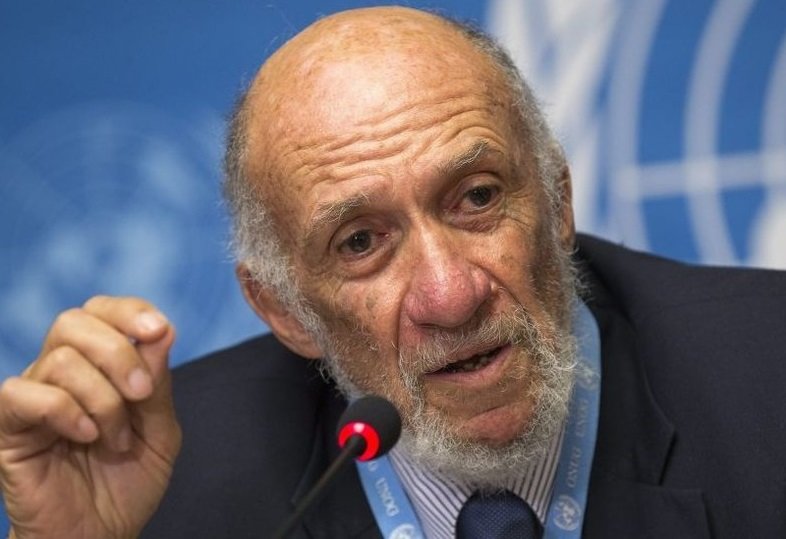
Over the past decades, despite being faced with threats, provocations, harsh sanctions, and even a variety of covert interventions, Iran has been more stable than ever- a fact even acknowledged by Professor Richard Falk as the former UN Special Rapporteur.
Falk, who came to Tehran as a member of an American delegation in 1979, has an interesting narrative of Bakhtiar’s desperation on the day of Shah-Escape. 
As Iran marks 41th anniversary of Islamic revolution, we asked Professor Falk to share his experience from this historical trip and the visit he later had with the founder of Islamic republic of Iran Ayatollah Khomeini. 
Richard Anderson Falk is an American professor emeritus of international law at Princeton University. He is the author or co-author of 20 books and the editor or co-editor of another 20 volumes. In 2008, the United Nations Human Rights Council (UNHRC) appointed Falk to a six-year term as a United Nations special Rapporteur on the situation of human rights in the Palestinian Territories occupied since 1967.   
Following is the full text of the interview:
Q: Before Iran’s Islamic revolution, as a member of an American delegation, you had a visit to Iran. What were the objectives of that trip?
A: I was chair of a small committee in the United States with the name, “Committee for the Defense of Human Rights in Iran,” which sponsored events with Iranian students and some prominent figures. It became active within university settings as the revolutionary movement gathered momentum in 1978.
The Committee had almost no funding, but had dedicated members, and achieved a certain visibility as there was so little attention being given to these historic developments in Iran unfolding as the months passed. The treatment of these issues in the mainstream media was not only mostly very pro-Shah but also quite uninformative, and even uniformed.
It was in this context that I received as chair of the Committee an invitation from Mehdi Bazargan to visit Iran in a delegation of three persons for a period of two weeks. The stated purpose of the visit was to convey to several Americans a better understanding of the revolution underway. I felt that it was important to accept this invitation precisely for the reasons given in the letter of invitation. Our objective, then, was to achieve this better understanding of the revolution movement in Iran, and do our best after returning to share the experience and our impressions as widely as possible, and this is what we did.
In this spirit I did my best to find two persons who would benefit from such a visit, possessed an open mind toward the challenge being posed to imperial rule in Iran, and had some access to media and influential audiences back in the United States. My first two choices both agreed to become members of the delegation along with myself. Ramsey Clark was my first choice. He had been prominent in government, having been Attorney General, was part of a well-known political family, and had previously been considered a possible candidate for the American presidency. Besides being extremely intelligence, Ramsey had a high profile that generated great media interest and had a reputation for telling unpleasant and inconvenient truths.
My second choice was Philip Luce, a prominent religious activist who achieved world fame by his public acts of opposition to the Vietnam War. He was a person of the highest integrity, and fearless in searching for the truth in controversial political settings.
The three of us made the trip without deep prior personal associations, but we got along very well throughout our time together in Iran, and subsequently. 
Q: How different was what you witnessed from the US media narratives of the Iranian revolution’s developments?
A: The differences were spectacular. The US media conveyed very little understanding of the character of the movement in Iran, and was perplexed by its strength and outlook. At the time, the Shah’s government was a close ally of the United States in the midst of the Cold War, and Iran’s strategic location with respect to the Soviet Union made it very important to Washington to keep the Shah’s regime in control of the country. As well, the US Government, having played an important role by way of covert intervention in the 1953 coup that restored the Shah to the Peacock Throne, there was a particularly strong commitment made in Washington to doing whatever was necessary to defeat this nonviolent mass movement led by a then still rather obscure religious figure. It was deemed unthinkable within the United States government that such a seemingly primitive movement of the Iranian people could produce the collapse of the Iranian government that had mighty military and police capabilities at its disposal, possessed a political will to use lethal ammunition against unarmed demonstrators, and gained the geopolitical benefits of a ‘special relationship’ with the most powerful state in the world deeply invested in upholding its regional interests. In such a setting the media reflected the propaganda and ideological outlook of the government, and was not a source of independent and objective journalism.
It was in such an atmosphere that we hoped that we could bring some more informed and realistic commentary on the unfolding revolutionary process in Iran, including identifying its special character as neither left nor right, seemingly led by a religious leader who remained virtually unknown in the West. It was even unclear to us at the time of our visit whether Ayatollah Khomeini was the real leader or only a figurehead, a temporary phenomenon. We hoped to provide some insight into such questions, as well as to understand whether the new political realities in Iran would produce confrontation or normalization. Was the United States prepared, as it was not in 1953, to live with the politics of self-determination as it operated in Iran or would it seek once more to intervene on behalf of its geopolitical agenda? 
Indeed, we did have some effect on the quality of Western media coverage of the developments in Iran. Ramsey Clark and myself were invited to do many interviews and asked for to describe our impressions by mainstream TV channels and print outlets. As a result, at least until the hostage crisis, discussion of Iran Politics became more informed and some useful political debate emerged, at least for a while.  
Q: You met the then Prime Minister of Iran Shapour Bakhtiar on the same day when Mohammad Reza Pahlavi left Iran. What was Bakhtiar’s assessment of the developments including Shah’s departure?
A: We had the impression from our meeting that the Prime Minister was uncertain about the situation and his own personal fate. Of course, we met with Mr. Bakhtiar at a tense time, only a very few hours after the Shah was reported as having left the country. Bakhtiar had a reputation. of being hostile to intrusions of religion in the domain of politics, and had a personal identity strongly influenced by French culture along with its very dogmatic version of secularism. When we met, the city of Tehran was in a kind of frenzied mood, with cars blowing their horns in celebration, and posters of Khomeini appearing everywhere. We had trouble maneuvering through the traffic so as to keep our appointment.
We found Mr. Bakhtiar cautious and non-committal, and possibly intimidated, not by us, of course, but by the dozen or so others in the room who were never introduced, and wore the clothes associated with security personnel. We assumed that at least some of these anonymous individuals were from the SAVAK, and maybe explained partly why Bakhtiar seemed so uncomfortable. When we asked his help in arranging a visit to prisoners confined in Evin Prison, he seemed unable to answer until he received guidance from one of these advisers present in the room. After a short, whispered instruction, the Prime Minister told us that a visit could be arranged on the following day to the political prisoners, but that we would not be allowed to enter the part of the prison reserved for common criminals. After being at the prison, we felt that the political prisoners were treated well, seen as possibly of a future ruling elite, while the ordinary criminals held no interest for past or present, and lived in crowded cells often with no windows.
Overall, we were left with not much clarity about how Bakhtiar viewed the future of his caretaker government. We had no real opinion on whether what he was saying to us with the others in the room was what they wanted him to say, or expressed his real views, or maybe reflected some sort of compromise. Would he be soon replaced, and his own role challenged as unlawful, or even criminal? We had the impression of a frightened bureaucrat lacking in leadership potential. Maybe our impressions were distorted by the reality that our visit took place at such a tense and difficult moment, which turned out to be transformative for the country and its people. As a result these impressions of a sad and entrapped individual may leave too negative a picture.  
Q: What was the Central Intelligence Agency’s assessment of the Iranian revolution’s developments? Did CIA have a lucid exact assessment of the revolutionary forces and Iran’s future political system?
A: We had no contact with the CIA, but did meet with the American ambassador to Iran at the time, William Sullivan, who had a counterinsurgency background with a militarist reputation. He gave us a briefing that was much more illuminating as to Iranian developments than was our meeting with the Prime Minister. Sullivan acknowledged that the U.S. was caught off guard by both the character and the strength of the movement, and was struggling to keep up with events. He told us that the Embassy had previously constructed no less than 26 scenarios of political developments that might threaten the Shah’s leadership, but not one was concerned about a threat to the established order mounted by Islamically oriented opposition. The American preoccupation, reflecting Cold War priorities, limited its concerns to containing the Marxist and Soviet-oriented left, and the belief that to the extent there was a political side to Islam it was aligned with the West in its anti-Communist agenda as evident in the setting of the Soviet intervention in Afghanistan. 
Somewhat to our surprise, Sullivan spoke of his acute frustrations in dealing with the Carter presidency, especially with the National Security Advisor, Zbigniew Brzezinski, who he claimed to be unwilling to accept the finality of the Shah’s loss of power or of the outcome of the revolutionary movement. Sullivan advocated coming to terms with the emerging new realities as representing America’s national interests, but he spoke very clearly of the resistance to this view at the White House. Sullivan partly attributed this stubbornness to the influence of the Iranian ambassador on. Brzezinski, a view later supported by State Department officials. 
Q: What were the issues discussed at a meeting you had in Neauphle-le Chateau with the late Islamic Republic’s founder Ayatollah Khomeini and how would you describe his personality?
A: We met for a long time, maybe three hours, and covered many issues. During the conversation, after some rather long introductions on our sides about our experience in. Iran, we listened and responded to concerns expressed by Ayatollah Khomeini. After that we posed a series of questions. I will mention here a few topics discussed that have a lasting interest. 
Ayatollah Khomeini’s first and understandable concern was whether the US Government would try to repeat the intervention of 1953 or live with the outcome of the revolution. Of course, we were not in a position to give a clear answer. We did think there was less disposition by the US to intervene than 25 years earlier, but we knew of the strategic importance attached to keeping Iran allied to the US in Cold War contexts and of the personal as well as ideological closeness between Carter and the Shah, especially after the Carter family spent New Year’s Eve in Tehran as the Shah’s guest in 1978, and Carter made his famous toast about the Shah being surrounded by the love of his people.
Ayatollah Khomeini was also concerned about whether the military contracts with the United States would be fulfilled now that there would be a change of government in Iran. This line of questioning gave us a sense that Ayatollah Khomeini had a rather practical turn of mind.
At the same time, he volunteered the view that he hoped that soon he would be able to resume his religious life, and explained taking up residence in Qom rather than Tehran seemed consistent with such an intention. Ayatollah Khomeini told us that he has reluctantly entered politics because in his words ‘there was a river of blood between the Shah and the people.’
When we asked for his hopes for the revolutionary government, this religious leader made clear that he viewed the revolution as an Islamic rather than an Iranian occurrence. He stressed this issue, but without any sectarian overtones. He did go on to say that he felt that the basic community for all people in the Islamic world was civilizational and religious, and not national and territorial. Ayatollah Khomeini explained in ways I subsequently heard from others, that territorial sovereign states built around national identity did not form a natural community in the Middle East the way it did in Europe.
Ayatollah Khomeini also made clear to us that he viewed the Saudi monarchy was as decadent and cruel as was the Shah, and deserved to face the same fate. He felt that dynastic rule had no legitimate role in Islamic societies.
We also asked about the fate of Jews and Bahais in the emergent Islamic Republic of Iran, aware of their close working relationships with the Shah’s governing structure. We found the response significant. He expressed the opinion that Judaism was ‘a genuine religion’ and if Jews do not get too involved in support for Israel, they would be fine in Iran. His words on this, as I recall them, were ‘it would be a tragedy for us if they left.’ He viewed Bahais differently because of their worship of a prophet after Mohammad, leading him to adopt the view that Bahais were members of ‘a sect’ and did not belong to ‘a true religion,’ and thus its adherents would not be welcome in the new Iran. Afterwards, I learned that Ayatollah Khomeini intervened to oppose and prevent genocidal moves being advocated in relation to the Bahai minority living in Iran, but I have no confirmation of this. 
Q: What was the last US Ambassador to Iran William Sullivan’s mission? He is known to be an anti-riot man. Did he give any intellectual help to Iran military or SAVAK (the secret police, domestic security and intelligence service in Iran during the reign of the Pahlavi)?
A: Of course, Sullivan never would tell us about his covert activities. He had the reputation of being ‘a counterinsurgency diplomat’ as he had served in Laos as an ambassador during the Vietnam War. It was at a time that the embassy was being used to take part in a Laotian internal war that included directing US bombing strikes against rebel forces.
With this knowledge, I was invited to testify in the U.S. Senate to oppose his confirmation. Unfortunately, my testimony did not prevent him from being confirmed as ambassador to Iran, although several senators at the time indicated to me privately their agreement with my testimony, but were unwilling to reject President Carter’s choice so early in his presidency. When in Iran I urged the meeting, and Ramsey Clark was skeptical at first, saying that he had had an unpleasant encounter with Sullivan some years earlier. I convinced Ramsey that the credibility of our trip would be compromised if we made no effort to get the viewpoint of the American Embassy. We did make an appointment, Sullivan’s first words as we entered were “I know Professor Falk thinks I am a war criminal..” Yet he welcomed us, and talked openly and at length about the situation and his efforts to get Washington to accept what had happened in Iran. In retrospect, I think he hoped we would be a vehicle for making his views more publicly known.
He made the point that there were no social forces ready to fight to keep the Shah in power. The business community, or national private sector, was alienated by the Shah’s reliance on international capital to fulfill his development plans. The armed forces were also not favorable enough to the throne to fight on its behalf, complaining that the Shah’s abiding fear of a coup mounted against him, created distrust of his own military commanders, and led him to frequently shuffle the leadership in the armed forces. This resulted in a low level of loyalty, and helps explain why the military watched the political transformation take place without showing any pronounced willingness to intervene, despite being nudged in an interventionary, especially in the context of a visit by an American NATO general at the height of the revolutionary ferment. The general was widely reported to be exploring whether it was plausible to encourage the Iranian military to defend the established order. 
We also asked about what would happen to the surviving leaders from the Shah’s government who had been accused of crimes against the Iranian people. Ayatollah Khomeini responded by saying that he expected that what he called ‘Nuremberg Trials’ would be held to hold accountable leading figures from the fallen government, and some from bureaucratic backgrounds, including SAVAK officials. We wondered why this plan was not later followed, and why those from the Shah’s regime accused were often executed after summary, secret trials. We knew some of those who had led the revolution had received support from the CIA during their period as students overseas or even when serving as mosque officials, which would be damaging and confusing to make public at a time of such uncertainty. It is important to remember that until the Islamic Revolution in Iran, Western intelligence assumed that the anti-Marxist approach of those of devout Islamic faith would make all religiously oriented personalities strong allies of Western anti-Communism, a view that persisted to some extent until after the Afghanistan resistance to Soviet intervention which was headed by Islamic forces, and was only decisively shattered by the 9/11 attacks on the World Trade Center and Pentagon in the United States. 
Q: Why did the liberal–Islamist groups fail to secure the support of Ayatollah Khomeini at the end of the day?
A: It is difficult for an outsider like myself to comment on the internal politics in that revolutionary period. The situation in Iran was still fluid, and worries about a counterrevolutionary coup to bring the Shah back to his throne a second time were widespread. Added to this, the change in Iran came so quickly. Several secular personalities of liberal persuasion told us that ‘the revolution happened too quickly. We were not ready.’ 
Ayatollah Khomeini while still in Paris, seemed originally to believe that liberal Islamically oriented bureaucrats would be needed to run the government on a day to day basis. He may have envisioned a governing process relying on technical experts, especially to achieve good economic policies and results that he thought necessary to keep the support of the Iranian masses. Such expectations seem to be not entirely consistent with the vison of Islamic Government set forth in his published lectures, available to us in English, that were written while he was living as an exile in Iraq. His insistent theme in the lecture was that a government consistent with Islamic values could not be reliably established on democratic principles without being subject to unelected religious guidance as the source of highest authority.
We also were aware of several other explanations for this about face on the governing process. Some in Iran believed that Ayatollah Khomeini only discovered his political popularity after he returned to the country, and this made him believe he had a mandate to impose a system of government that reflected his ideas. Others offered the opinion that he became convinced by his entourage of advisors that the revolutionary spirit and agenda was being lost by the liberals, and hence were urging him to take direct and visible charge of the government. And finally, there arose the view that the liberals were given a chance, and their performance disappointed Ayatollah Khomeini, leading him to reenter politics and move to Tehran to lead the country. As far as I know, this story of transition from the Pahlavi Era to the Islamic Republic remains veiled in mystery.  Hopefully, before long the mystery will disappear with the appearance of more authoritative accounts of what transpired after the Ayatollah Khomeini returned to the country.
What we do know is that what was established in this transition period has survived for more than 40 years despite being faced with threats, provocations, harsh sanctions, and even a variety of covert interventions. Arguably, Iran has been as stable as any country in the region, and more stable than most. This is impressive, although it does not overcome some criticisms directed at violations of basic human rights of people in Iran.

River to Sea Uprooted Palestinian   
The views expressed in this article are the sole responsibility of the author and do not necessarily reflect those of the Blog!