Uprooted Palestinians are at the heart of the conflict in the M.E Palestinians uprooted by force of arms. Yet faced immense difficulties have survived, kept alive their history and culture, passed keys of family homes in occupied Palestine from one generation to the next.
The poisonous effects of American interference and failed policies are still affecting Iraq’s agricultural sector today. Here’s how.
Decades of US interference have plagued Iraq’s agricultural sector
“You lied!”
Those were the screams of former US Army veteran Mike Prysner echoing in the lecture hall during a speech by George W. Bush, and the lasting trauma still resonates in the ears of millions of Iraqis and Americans today, almost two decades later.
From a full-scale invasion under the pretext of overthrowing Saddam Hussein to the insurgence of ISIS, Iraq has been plagued with endless wars and destruction.This invasion and endless interventions aggravated the marginalization of sectors in Iraqi society and allowed the internal state of Iraq to crumble under sectarianism and violence.
The lasting effects of the US policies are especially present within the aftermath of the agricultural sector among others. Farmers across the country continue to be displaced and doubt remains overcast on Iraq’s environmental capabilities and the future of agricultural development.
American invasion
One of the many false pretenses for the heavily documented war was the alleged harboring of weapons of mass destruction (WMD) by former Iraqi president Saddam Hussein. Former Secretary of State Colin Powell infamously claimed that the US was aware of Iraq’s weapons of mass destruction and their role in terrorism. Powell’s bold statements and deceptive assertions regarding the evidence that was available have ultimately haunted the US for what has become known as the very public “campaign of lies” the US tricked global citizens into believing.
For over 7 years, Iraq was invaded and bombed by the US and the coalition of the willing, not to mention their use of white phosphorous munitions. Although they claimed that white phosphorus was used whilst fully considering the incidental effects on civilians, the secondary effects on Iraq’s agriculture were most definitely not taken into account.
Deliberate destruction
The invasion and destruction that accompanied the war did not only permanently damage arable lands with mines and cluster ammunition, but the suspension of government agricultural institutions and irrigation projects also caused disastrous results to the population.
From 2002 to 2008, agriculture’s contribution to the country’s GDP has decreased from almost 9% to 3.6% due to challenges created by war, social instability, and institutional and economic concerns.
Agriculture, forestry, and fishing, value-added, % of GDP (Source: World Bank)
In a final blow after causing significant damage to the agricultural sector, the US secured its monopoly over the Iraqi farming industry and the future of agriculture by issuing Order 81. The Order was described as an attempt to “rebuild” Iraq’s agriculture industry by the head of the Coalition Provisional Authority in Iraq, Paul Bremer.
What was Order 81?
After Coalition Provisional Authority Order 81 was implemented, farmers were forbidden from conserving, distributing, or propagating harvested seeds, resulting in a dependency on big businesses such as Monsanto, Cargill Inc., and Dow Chemical. As a consequence, Iraq has only been able to meet 4% of its seed demands since 2005. These distributors are known to patent their seeds and collect fees without considering if crops were proven to contain their proprietary genetic information.
Monsanto, an agrochemical and agricultural biotechnology corporation founded in 1901, is notorious for its contribution to the neutron initiators inside the atomic bombs dropped on Japan, as well as for producing Agent Orange. The US military used Agent Orange in Vietnam during the infamous operation Ranch Hand, destroying crops and ultimately causing half a million Vietnamese children to be born with birth defects and millions of others left with cancer and other serious health conditions.
Dying of thirst
Reconstruction efforts in Iraq also targeted the distribution of safe drinking water.
Iraq’s infrastructure was heavily bombed in the 1990s after the US-led coalition conducted massive airstrikes on the region during the gulf war. Water and sewerage treatment facilities were heavily damaged. As people suffered from a lack of access to clean water, diseases multiplied.
The US war has critically aggravated the water crisis. Water is scarcely passing through the Tigris and Euphrates as is, causing contaminated water to reach crops, and in turn poisoning much of the population. The UN Security Council described the effects of the war as returning Iraq to the “pre-industrial age”, and warned of the imminent catastrophe that would hit the Iraqi population.
The Tigris River is bordered by Iran, Iraq, Turkey, and Syria. Along with the Euphrates, they create a river system that encircles Mesopotamia known as the Fertile Crescent. The Tigris is an important source of transportation and irrigation, with a history dating back to the earliest known civilizations.
Tigris River (Global Atlas)
Scorched earth
The catastrophic insurgence of ISIS ripped Iraq’s already suffering sectors into developmental and economic shreds.
The US policies created a weak state that resulted in the marginalization of considerable sectors of Iraqi society. ISIS militants, armed partially with CIA-funded weapons, developed into one of the goriest terrorist organizations of our time.
The world watched in horror as ISIS became globally renowned for unspeakable atrocities like beheadings, kidnapping of women and children, and numerous suicide bombings and terrorist attacks that not only affected the Middle East but many western countries, especially Europe.
ISIS used the burning tactic to terrorize inhabitants, laid landmines, and destroyed agricultural equipment. IEDs were frequently utilized to fortify their defense. They attempted to meticulously carry out a form of ecocide, as their “scorched earth” tactics took hold. Oil wells were set on fire and thousands of civilians came close to suffocation and others suffered respiratory complications.
In a final effort to devastate their targets, they booby-trapped escape routes, barns, and pump stations.
The presence of the terrorist group forced agricultural workers and farmers to evacuate their farmlands during the bloody conflicts. Numerous families retell their experiences of being forced to abandon their farming communities when ISIS militants surrounded the area in mid-2014. The same families who evacuated their homes reported returning to their homes post-ISIS and finding them heavily booby-trapped. Numerous families have lost children and relatives after bombs inexplicably detonated on their properties.
A glimpse of hope
Away from the nightmares that haunt Iraq, as one of many initiatives, Iraq’s holy shrines have begun to establish massive farms for relying on agricultural production and providing national agricultural products that are distinguished by quality, as well as meat at subsidized prices.
Farms administrated by the Imam Hussein Holy Shrine (Website)
Agricultural cities are being established to provide the cultivation of wheat, barley, yellow corn, fodder, jet, and cattle, as well as raising sheep and cows.
Despite the seemingly irreversible effects of America’s assaults and intrusion on Iraq’s wellbeing have undoubtedly damaged the country, things can still be turned around. With Iraq’s Parliamentary elections looming, the crucial vote of the youth may have the power to carry Iraq out of decade-long darkness and into the light.
The relationship between Iran and Saudi Arabia has always been eye-catching for regional observers.
For decades observers have seen the Middle East through the prism of a Saudi-Iranian cold war. During the eight-year Iran-Iraq war, Gulf States particularly Saudi Arabia and Kuwait, lent more than $37bn to Saddam Hussein’s war effort.
According to a report by The Economist, this binary view of a “proxy war” has outlived its usefulness—because the Saudis lost. They failed to build a deep well of support in other Arab countries, settling for ineffective chequebook diplomacy with fickle politicians and warlords. Iran is undeniably the strongest foreign actor in Lebanon, Syria and Iraq.
The Saudis still fight a rearguard action in Yemen, but their six-year war against the Yemeni Ansarullah revolutionaries, has been all in vain. Diplomats from the Gulf curtly describe several Arab states as “outside the Arab fold”, The Economist report explained.
It was a victory for Iran, not to mention, for the Axis of Resistance – which according to many includes resistance factions in Lebanon, Syria, Iran and Yemen.
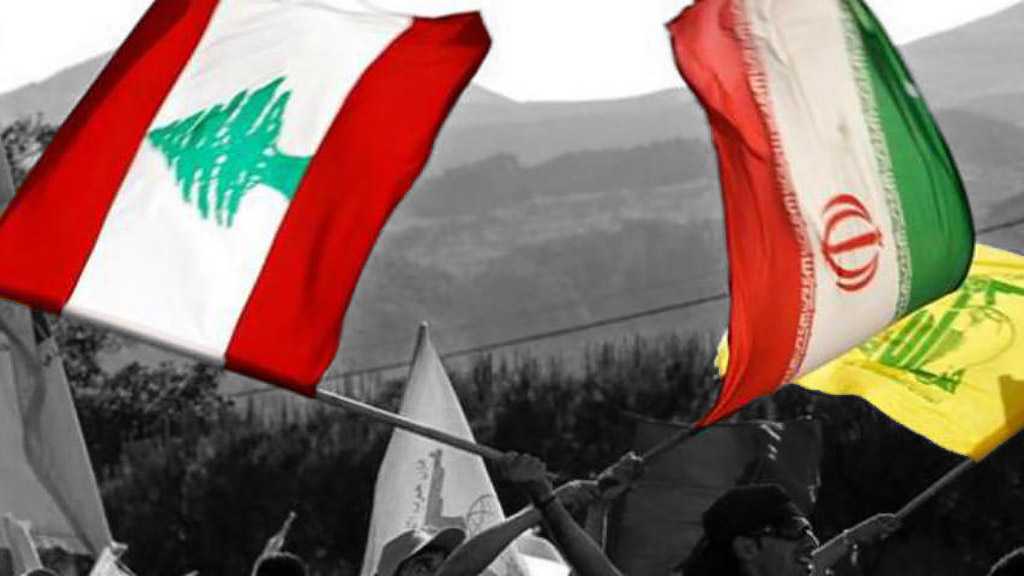
Lebanon, a small Middle Eastern country, has been an important outlet to Mediterranean for many Arab countries, notably Saudi Arabia. It is also home to the Lebanese resistance movement Hezbollah.
In the past year, the country has been plagued with a suffocating economic crisis. Life in Lebanon is defined by petrol queues, lengthy blackouts and growing hunger. Lebanon’s bankruptcy stems from decades of misrule by the political class.
Hezbollah, founded in the 1980s, resisted the “Israeli” entity for its occupation of south Lebanon. Many Lebanese, regardless of sect or political persuasion, saw this as a legitimate struggle. The group’s popularity soared after the “Israeli” withdrawal in 2000, and stayed high even after war with the entity in 2006, which began with the capture of two “Israeli” soldiers. Arabs of all stripes cheered it for giving the “Israeli” entity a bloody nose, a feat no Arab state had managed in decades.
The Lebanese Resistance movement has not only protected Lebanon militarily, but it has attended to the medical and social needs of the all Lebanese.
Today, with the worsening of the economic situation in Lebanon, Hezbollah and its allies promoted the notion of a resistance economy in Lebanon. In April, Hezbollah trumpeted the Sajjad card, a ration-card scheme named after the 4th Shia Imam Ali ibn Hussein Zein al-Abidin [AS] that offers discounts to participants.
However, the indignities that define life in Lebanon have not spared anyone. Pharmacy shelves are bare: expats visiting for the summer stuff their suitcases with medicines, not only prescription pills but even basics like paracetamol that are unavailable in the country. Petrol stations, if not closed, have hours-long queues that snake for blocks.
The situation has been getting even worse no thanks to the Western siege, which Hezbollah Secretary General His Eminence Sayyed Hassan Nasrallah has repeated in various speeches.
To the West, the “Israelis” and the locals, Sayyed Nasrallah offers more than empty words. In a televised speech during the 2006 “Israeli” aggression on Lebanon, the Resistance Leader told his viewers to look out to sea. Moments later a missile slammed into an “Israeli” destroyer off the coast, damaging the vessel and killing four sailors.
Sayyed Nasrallah supported peaceful anti-government demonstrations in 2019 and endorsed economic and political reform. However, His Eminence cautioned protesters from being infiltrated by a fifth column on the payroll of foreign embassies.
As for the economic crisis, Sayyed Nasrallah urged the Lebanese to bypass the Western siege and look east to Asian powers such as China, which stand ready to pour billions into Arab economies despite howls of outrage from the Americans.
Hezbollah remains the “Israeli” entity’s strongest Arab foe. Generals in Tel Aviv acknowledge that another war with the group would be painful. Aside from a few brief border skirmishes, however, it has not fought the entity in 15 years.
The Resistance Leader at various occasions reiterated the unconditioned Iranian support to the Hezbollah, Lebanon and the Lebanese. Most recently, His Eminence thanked Iran for its willingness to aid Lebanon with its oil and gas crisis. Sayyed Nasrallah further welcomed UNCONDITIONED aid from any country provided that it would ask nothing in return from Lebanon.
The first Iranian ship carrying fuel sailed last Thursday. It has been followed by a second ship days after… more ships are expected to come.
“A second ship will set sail in the next few days, and it will be followed by others,” Sayyed Nasrallah said. “We will continue this process as long as Lebanon needs it,” His Eminence said. “The aim is to help all Lebanese, [not just] Hezbollah supporters or the Shia.”
Iranian Foreign Minister Mohammad Javad Zarif said that Iranian were not brought to their knees in spite of tough economic pressures exerted by the United States against the country.
Speaking on Monday in a ceremony of honoring martyrs of the Ministry of Foreign Affairs during the eight years of Sacred Defense, Zarif addressed US authorities and added, “You (US) are criminals against humanity and today, you are claiming the human rights? You are coward and savage but could not bring Iranians to their knees.”
While respecting and honoring the families of martyrs of the Foreign Ministry and commemorating the name and memory of all martyrs of the Islamic Revolution, Sacred Defense and nuclear scientists as well as martyrs of defenders of holy shrines especially former IRGC Quds Force Commander Lt. Gen. Suleimani and his comrades who were assassinated by the US terrorist forces in Iraq, he reiterated, “In spite of tough and cruel US sanctions imposed against the country, Iranians were not brought to their knees in the current economic war.”
The minister said that Washington assassinated ISIL terrorists’ number 1 enemy.
Addressing the families of martyrs, Zarif said, “Today, in this critical regional and international situation and in spite of irregularities, martyrs with their sacrifice bestowed dignity and grandeur to the Islamic Iran and did not allow others to insult noble people of the country during these years.”
He pointed out that martyrs brought dignity and pride for Iran and were it not for their braveries and courage, the country would have given in the battlefield during the eight years of the Sacred Defense.
Elsewhere in his remarks, Zarif pointed to the eight years of Sacred Defense and said, “During Iran-Iraq war, former Iraqi dictator Saddam Hussein was heavily supported by other countries both financially and militarily and today, these countries are claimant of human rights which is ridiculous.”
Leader of the Islamic Revolution His Eminence Imam Sayyed Ali Khamenei says Iran’s decisively victorious defense against foreign-backed forces of Iraq’s former dictator Saddam Hussein proved that invading the country is a “very costly” undertaking.
“When a nation shows that it has the diligence and power to defend itself and delivers a crushing response to invaders, invaders would then think twice before perpetrating any incursion against this country and its people, and realize that such an act of aggression would be very costly for them,” the Leader said on Monday.
Imam Khamenei made the remarks via video-link during an even held in the capital Tehran to honor one million veterans of the country’s 1980-88 war against Saddam’s invading forces.
Successful engagement in the war, therefore, awarded the country its current level of security, the Leader noted, enumerating the rewards of the Sacred Defense.
The name signifies Iran’s eight-year-long struggle under the leadership of the late founder of the country’s Islamic Republic, Imam Khomeini against the Iraqi aggressor.
The Leader said the defensive struggle also equipped the Iranian people with a sense of self-belief in its ability to fend for itself and put it on a course of technological and scientific development because it had to wade into many new areas to be able to buttress its defensive activities.
The war taught us that “some things that appear to be impossible, are actually possible,” Imam Khamenei stated.
While specifying the actual goal of the warmongers as being destruction of the country’s Islamic Revolution and its Islamic establishment, the Leader noted that Saddam and his Ba’ath party were just being used as “tools by powers, such as the United States, that had suffered serious blows from Iran’s Revolution.”
Others, like the Soviet Union, the Western military alliance of NATO, as well as some other Western and even European countries also contributed to the war because they were “concerned” about the emergence of a new phenomenon in the region that had been founded upon religion, Imam Khamenei said.
Documents that surfaced afterwards showed the US had entered some agreements with Saddam before the war, the Leader remarked, adding that during the war too, Washington would generously provide the former Iraqi dictator with intelligence and arms support.
Imam Khamenei reminded how weapon-laden vessels would dock at regional ports to shore up the invading forces against Iran on a daily basis during the wartime.
Imam Khomeini, however, identified the main forces lying behind the war well, and aptly advised that the Iranian nation to join the Armed Forces in fighting the invaders, the Leader said.
Imam Khomeini’s addresses at the time were marked by “truthfulness, innocence, acuity, and decisiveness,” while his leadership style featured appropriate discernment of the requirements of the battle’s different stages as well as proper moralizing of the Iranian servicemen, Imam Khamenei recalled.
His leadership of the country during the war was also “very prudent,” Imam Khamenei said, noting how his innovative wartime strategies would help the Armed Forces outflank the enemy at various stages.
In the meantime, Imam Khomeini brought about a “massive popular mobilization” during the war, helping recruit all the potentials that were being offered by the full spectrum of the country’s population into the battle, the Leader remembered.
This helped many potentials that lay latent in many people at the time to come to the fore, leading to emergence of many exceptional military, intelligence, and other leaders among the people, Imam Khamenei said, citing the example of Lieutenant General Qassem Soleimani, former commander of the Quds Force of Iran’s Islamic Revolution Guards Corps [IRGC], and many others.
The Leader said despite some attempts at casting doubt over Iran’s victory in the war, it should be known that the country’s triumph is “as bright as the sun” as neither did it lose a handspan of its soil, nor did its leadership take a single step back.
This is while the former monarchical regime’s reign was marked by regular unauthorized intervention of foreigners, including during the World Wars, Imam Khamenei noted.
The Leader said Sacred Defense constitutes part of the country’s national identity because it amounted to supreme manifestation of popular involvement.
The warfare, on the other hand, also betrayed the true and made-up face of the Western world to the Iranian people because it saw the entire Western front pool their forces to deny Iran everything and fortify its enemies to the limit, Imam Khamenei said.
The Leader recalled how the Western countries would outfit the aggressors with chemical weapons, thus going back on all of their pro-human rights claims
Imam Khamenei finally called for the promotion and preservation of the memory of the heroic struggle, especially through creation of rich textual materials that could yield many other instances of content, such as plays and motion pictures.
Prior to the Leader’s remarks, Armed Forces Major General Mohammad Baqeri briefed the participants on the country’s ongoing and pending plans to honor the memory of the war.
He unveiled a stamp printed out to honor the war’s 40th anniversary, and announced that the country would be inaugurating as many as eight Sacred Defense museums over the upcoming days.
“We are determined not to allow the distortion of the history of the Sacred Defense that is an invaluable resource for the next generation of the country’s independence, esteem, and pride,” the military chief said.
The US government offers financial rewards to those who help arrest a Hezbollah leader or who reveal details of their activities that enable the US to disrupt them. These rewards vary from five to ten million dollars. Thus far, no one has been able to obtain a single dollar of these awards from the US administration since 1985, when Hezbollah officially came into existence in Lebanon. How are the organisation and its leaders affected by these tempting millions offered by Washington?
There is no doubt that the “Axis of Resistance” in Lebanon is operating outside the American system. Hezbollah possesses no property outside Lebanon, and no bank accounts in any local bank inside or outside the country, notably not in any western countries. Family members and children of Hezbollah leaders are not present in western countries, therefore they are outside the US’s blackmailing orbit. Hence, the decision to place Hezbollah leaders on the US terrorist list and confiscate their “non-existent” funds is not much more than an ostentatious display by which the US aims to self-advertise itself as the world’s policeman.
Washington believes that announcing the names of Hezbollah leaders could give impetus to America’s allies in Lebanon. But the US’s allies in Lebanon are too weak – although persistent and holding at least some leverage – to confront Hezbollah in the first place. Most importantly, US sanctions cannot possibly be effective in a country like Lebanon – or in other countries under the “Axis of the Resistance” umbrella because they are sovereign states outside direct US control and the “Axis of the Resistance” is far from being weak.
This takes us to Iraq, an “Axis of the Resistance” stronghold, during the 2018 parliamentary campaign. Before the elections the US Presidential envoy against ISIS, Ambassador Brett McGurk, visited National Security Minister Faleh Al-Fayyad in his office in Baghdad. McGurk complained that Fayyad had met with Sheikh Muhammad Kawtharani, a Hezbollah official on the US terrorism list.
Al-Fayyad replied:
“It is not permitted to interfere in internal Iraqi affairs, nor with what an Iraqi citizen does. Sheikh Kawtharani is an Iraqi citizen, and America has no authority or jurisdiction over us to dictate who we can or cannot receive.”
Sources in the “Axis of the Resistance” confirm, in fact, that “Sheikh Muhammad Kawtharani was never a military leader but part of the political bureau. By virtue of his studies and the presence of his father, a scholar and jurist, in Najaf for many years, Sheikh Mohammed was born and raised in the holy city. Sheikh Kawtharani married an Iraqi woman from Baghdad, mastered the language and the Iraqi mentality, which made him very successful in managing the Iraqi file and communicating with Iraqi leaders. He had spent time in Saddam Hussein’s prisons and was a close companion of Sayyed Abbas Al-Mousawi, the Secretary-General of Hezbollah assassinated by Israel in 1992. He was able to forge close relations with Iraqi leaders during their presence in Lebanon in exile as refugees in the days of Saddam Hussein’s authority. He is the Hezbollah official who knows Iraq best, from the Marjaiya in Najaf to every single political member from Erbil to Basra.”
“Sheikh Kawtharani has no enemies among Iraqi leaders because his way of dealing with them is never condescending; he does not impose his agenda or conditions on them. Rather, his objective is to unite Iraqi groups on mutually agreed decisions and to listen to their complaints when they find it difficult to communicate with each other. He is a coordinator and a mediator, one of the most difficult functions to serve – especially among Iraqi Shiite parties”, said the source.
“America knows that Sheikh Kawtharani does not work within the security-military apparatus of Hezbollah, but is the Assistant to Secretary-General Sayyed Hassan Nasrallah for Iraq affairs.
Sayyed Nasrallah is the leader of the” Axis of Resistance “and enjoys excellent relationships with Palestinians, Syrians, Iraqis, Yemenis, and various leaders in different countries. Therefore, the US wanted to obstruct his return to Iraq in order to prevent Iraqi Shiite solidarity, especially following his success in reunifying the Iraqis after the assassination of the Iranian Major General Qassem Soleimani”, according to the source.
Shiite parties were not satisfied with the choice of President Barham Saleh of Adnan al-Zurfi as prime minister. Iraq was facing serious domestic unrest between Shiites, Sunnis and the Kurds. By selecting Mr Mustafa Kazemi, the tension was de-fused with the help of Sheikh Kawtharani and the Iranian leadership who mediated to help the Iraqis find the most suitable candidate for all.
The source asserts that “Sheikh Kawtharani has better relations with most Iraqi politicians than any Iraqi or non-Iraqi leader or personality. This is what allowed him to work to support Iraq; US financial rewards of $10 million will not prevent him from travelling to Iraq when he so desires.”
As for the American financial rewards, generally speaking, they create a positive outcome for every Hezbollah official: the higher the amounts offered by the US on one’s head, the more prestige one accrues. This raises the wanted leaders to a privileged social status in Lebanon, Syria, Iraq, Iran, Yemen and Palestine, because threatened US punishment is understood to indicate US fear, proof of a Hezbollah leader’s power to annoy the US and its administration.
These rewards have not harmed Hezbollah at all over the 35 years of their existence. But internally, the higher the amount, the more important the “wanted” Hezbollah leader is in relation to other Hezbollah officials. The wanted leader’s financial compensation increases, and additional budgets, guards and security members are allocated to protect him. Multiple cars are at his disposal, and more than one apartment is offered for his convenience and security. Precaution in selecting an apartment includes the presence of an electric elevator that reaches the underground basement, to cover his arrival, departure, and movements in and out.
The US rewards incite jealousy among those Hezbollah officials who have not yet attained the distinction of having a US reward on their head. Those with a lower reward wish the US could offer more millions on their heads for them to gain a higher position in society!
Those officials higher on the US list of terrorist rewards become weightier and gain additional powers. Their credibility and influence with foreign political leaders and allies during their contact or meetings increases, so that allies brag about contacts and pictures taken next to them.
Long ago, the US put Imad Mughniyeh on its list and placed a reward on his head. He then reached the level of Military Commander in Chief of Hezbollah and Deputy Assistant Secretary-General of the Jihad Council. This is but one example of promotion thanks to US targeted opposition.
If the US decides to target leaders placed on its terrorist bounty list, Hezbollah’s response then becomes more significant because they become part of a new equation of deterrence. Thus, what US officials imagine as harsh punishment for Hezbollah leaders actually becomes a source of direct reward within the Hezbollah system and society! It is but one more example of the way in which the US’s desire to punish and eliminate is turned to advantage and even privilege in a system and culture they do not understand.
Proofread by: C.G.B and Maurice Brasher
This article is translated free to many languages by volunteers so readers can enjoy the content. It shall not be masked by Paywall. I’d like to thank my followers and readers for their confidence and support. If you liked it, please don’t feel embarrassed to contribute and help fund it, for as little as 1 Euro. Your contribution, however small, will help ensure its continuity. Thank you.
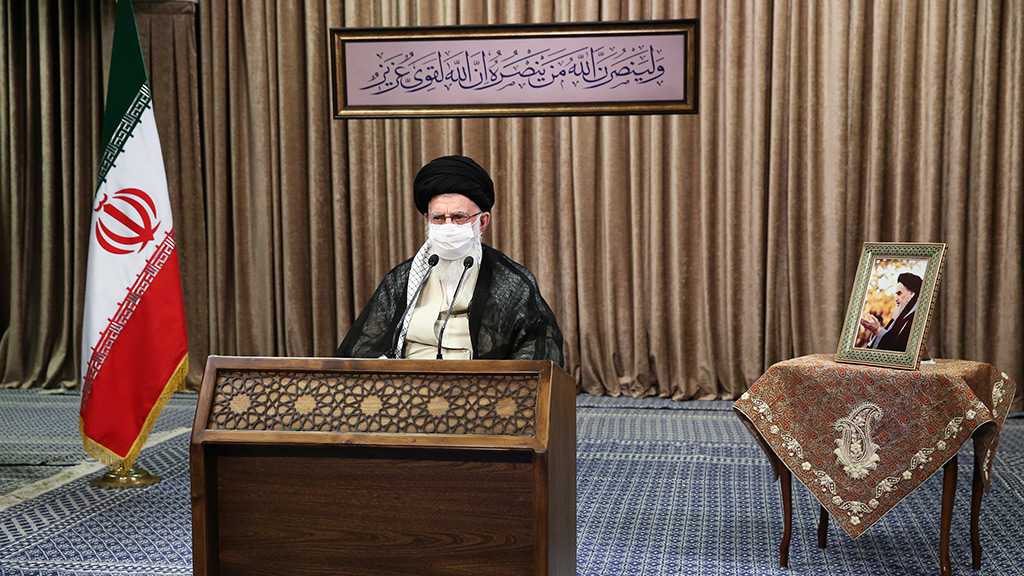
The following is the full text of a televised speech delivered on April 9, 2020 by Ayatollah Khamenei, the Supreme Leader of the Islamic Revolution, on the occasion of the 15th of Sha’ban.
In the Name of Allah, the Beneficent, the Merciful
All praise is due to Allah, the Lord of the Worlds, and peace and greetings be upon our Master Muhammad, and upon his pure household
May the auspicious 15th of Sha’ban be a blessed eid for all you dear brothers and sisters, the entire Iranian nation and all Muslims and all liberated people in the world. Unfortunately, I do not have the opportunity to meet with you up close and I have to speak to you from a distance, but this is an experience in itself. Today, I will say a few things about the Imam of the Age- may our souls be sacrificed for his sake- and I will raise a few points about the current issue of the country, but first of all, let us send greetings to the Imam of the Age:
Greetings be upon you Imam of the Age, greetings be upon you God’s firm pledge, greetings be upon you God’s promise – such promise whose fulfillment He guaranteed – greetings be upon you the hoisted flag, and you the manifestation of knowledge, of protection, of vast mercy and of inviolable promises.”
The following section of the holy ziyarah “Al-e Yasin” is full of love: “Our greetings be upon you when you rise and re-appear at the behest of God and when you put on the veil of disappearance. Our greetings be upon you when you engage in recitation and tafsir.”
Perhaps, there have been few historic eras during which humanity was in as much need as the present time for the existence of a savior. This holds true for both elites who feel this need consciously and the masses of the people who feel the need as well, but unconsciously. Everyone feels the need for a savior, a Mahdi. Everyone feels the need for the hand of divine power, for an infallible Imam, for purity and for divine guidance. We know of few historic eras during which there was so much need for this lofty truth.
Today, after having experienced various schools of thought and various philosophies – ranging from communism, western liberal democracy to the current form of democracy in the world, with the oversized claims that they make – humanity does not feel at ease. Despite all the astonishing scientific breakthroughs which have completely changed the way of life, humanity does not feel happy. Humanity suffers from poverty, disease, perversion and sins. It is afflicted with injustice, inequality and deep and growing class rifts. Humanity is subject to the abuse of power at the hands of big powers. They abuse science and natural discoveries, the capabilities discovered in nature. Humanity is faced with all these. These things have caused humans, throughout the world, to feel exhausted and to feel the need for a liberating hand.
Billions of people throughout the world are suffering. Some people might have prosperity, but they are not really tranquil. Humanity suffers from anxiety, and scientific breakthroughs and various developments have not managed to bestow bliss on humanity. Of course, human intellect is a great blessing. Similarly, experience is a valuable blessing. These are God’s blessings and they can solve many problems in life, but there are some knots that cannot be untied with these tools.
An example is justice. The issue of justice cannot be resolved with today’s advanced science and technology. Its knot cannot be untied with them. Today, injustice is fed by science. In other words, advanced science is at the service of injustice and warmongering. It is at the service of occupying others’ lands and of dominating nations. So, science cannot untie such knots. These things require a spiritual and divine hand and the powerful hand of an infallible Imam. It is he who can do these things. Therefore, his great mission is to administer justice. This has been pointed out in many prayers and ziyarahs.
The administration of justice is something that cannot be achieved by anyone other than the hand of divine power which is manifested by the Imam of the Age. And the kind of justice that Hazrat is expected to administer is not particular to one specific area, rather it covers all aspects of life: Justice in power, wealth, health, human dignity, social status, spirituality, the possibility for growth and in all other dimensions of life. These are the things that are expected to be established by the Imam of the Age (may our souls be sacrificed for his sake) and by Allah’s favor, this will happen. All people- including elites and those who can understand events and the masses of the people some of whom might be preoccupied with their daily life and therefore are unaware of the developments in the world– have this need, either consciously or unconsciously.
All religions have promised a big “faraj” and a great divine movement at the end of history, which is of course not the end of history. When the era of the Imam of the Age begins, the real world and the real life of humanity begins to take shape. However, all religions have promised an end to the current condition of life that we have today. Therefore, this is a need, but in order to channel this need and render it fruitful, we have been asked in Islam to anticipate his re-appearance. This “anticipation” is beyond a mere sense of need. They have said that we should anticipate. Anticipation means hope. It means believing in a definite future. So, it is not just a mere belief. Anticipation is constructive. Therefore, in our narrations and teachings, the anticipation for this big faraj enjoys a high position. Later on, I will expand on this anticipation.
In a towqi’ [holy edict] of the Imam of the Age to Ibn Babawayh– Ali ibn Babawayh– he quotes the Holy Prophet (God’s greetings be upon him and his household) as saying “The best action that my Ummah can take is to anticipate the faraj.” There is a narration by Imam Musa ibn Ja’far which says, “After knowledge and understanding, the best course of action is anticipation for the faraj.” The Arabic word “ma’rifah” means monotheism and understanding divine truths. The Commander of the Faithful (greetings be upon him) says, “Anticipate the faraj and do not lose hope in the spirit of God.” It says that we should anticipate and we should not lose hope of divine spirit, mercy and assistance.
So in anticipating the faraj, there is dynamism and action. Well, this has been said about anticipating the re-appearance of the Imam of the Age. It is evident that anticipating the faraj means anticipating the re-appearance of the Imam of the Age. However, this is one manifestation of the anticipation. When the Holy Prophet says, “The best action that my Ummah can take is to anticipate the faraj” this reflects on all the problems that might occur to us in life. We should not become disappointed when confronting problems and we should anticipate a faraj, knowing for certain that it will materialize. The anticipation for the faraj is a faraj in itself. There is a narration by Hazrat Musa ibn Ja’far which says, “You should know that the anticipation for the faraj is a faraj in itself.” So, the anticipation for the faraj is a kind of opening for us as it liberates us from a state of despair and desperation which might force one into doing strange things. Well, this is what it means.
When the Holy Prophet and the Imams said this, it means that Mohammad’s (God’s greetings be upon him and his household) Ummah never becomes disappointed at any incident in life and that it always waits for the faraj. Well, anticipation does not mean sitting idle and fixating one’s eyes at the door, rather it means preparing oneself, taking action and feeling that there is an end that can be achieved and for that, one should work hard. We who anticipate the faraj and the re-appearance of the Imam of the Age (may our souls be sacrificed for his sake) should work to that end. We should work hard on the path of establishing a Mahdawi society. We should get close to the Mahdawi society as much as we can because the Mahdawi society is the society of justice, spirituality, understanding, brotherhood, camaraderie, science and dignity.
There is one point about the anticipation: anticipating the faraj is different from showing impatience and setting a timeline – for example by saying to ourselves that such and such an incident and difficulty should come to an end at such and such a time or that Hazrat should re-appear in such and such a day. This anticipation for the faraj does not mean showing impatience and being restless.
This anticipation means preparing oneself. Showing impatience and being in a rush are among the forbidden things. There is a narration which says, “God will not hurry up if His servants hurry up.” If you are in a rush, this does not mean that God will make hasty decisions because of you. No, there is a time and a reason for everything and things will be done based on divine providence. As I mentioned before, the anticipation for the faraj means both the re-appearance of the Hazrat and the opening after big difficulties: the opening after difficult incidents that involve everyone such as the incidents that occur today in the world which disappoint many and force others into suicide. However, when there is the anticipation for the big opening, this will not happen as one knows that such incidents will surely come to an end.
Well, there is another point here: the tranquility resulting from the anticipation and one’s self-confidence – as a result of which individuals feel calm and undisturbed – could be strengthened with prayers, with supplication and by speaking to God. “For without doubt in the remembrance of Allah do hearts find satisfaction” [The Holy Quran, 13: 28]. Now, we are in the month of Sha’ban and after that, we have the month of Ramadan. There are numerous duas and various prayers and speaking to God without any interceder is very valuable. And speaking to the infallible Imams (greetings be upon them), who are the closest people in the whole world to Allah the Exalted, will give one tranquility and peace of mind. Remembrance of Allah the Exalted opens our path, gives us joy and attracts divine mercy.
Surely, the millions of hands that were raised last night will bear fruits. Last night, millions of people succeeded in familiarizing their hearts with God, in connecting with Him, in holding up one’s hands and in speaking to Him. Without any doubt, the results of this action will show themselves both in individuals themselves and in the whole society and many blessings will ensue. These were the points that I wished to discuss about the issue of the re-appearance, the faraj and the uprising of the Imam of the Age. Of course, many things can be said in this regard, but for today, this much is enough.
As for the current issue of the country – the coronavirus outbreak – well, this is an epidemic and a test. It is a test for the whole world: for both governments and nations. Governments are tested in this incident and so are nations. It is indeed a very strange test. Of course, enough has been said about the statistics, the very good measures that have been adopted and the recommendations of officials. The IRIB has also had a good performance, to be fair, in this regard. I do not want to speak about these matters, but I have certain other points to raise:
One point is that the Iranian nation has had a brilliant performance in this test. During the coronavirus test and during this pandemic, is modern pandemic, the Iranian nation shone brightly. First of all, the peak of this national glory belongs to the medical staff of the country. I have spoken many times and I would like to reiterate again the significance of their work and the value of their self-sacrifice, including that of physicians, nurses, laboratory experts, radiologists, medical assistants in health centers, public services divisions, the sections in charge of research, and management inside the Ministry of Health and outside it – the managers active in this area. The peak of this glory belongs to them. They placed their lives and their health at the service of the people. This is very significant and magnificent.
They endured the pain of being away from their family. Many of them did not see their family even during Nowruz holidays and they suffered from sleeplessness and psychological pressures resulting from treating patients in a critical state. They welcomed all these things and therefore, a good memory of the medical staff and system of the country will be engraved in the minds of the Iranian nation. This is a good and happy memory left behind at this point in time by the medical, nursing and treatment society of the country.
As well as them, we should mention volunteers: those who were not part of the medical staff, but who entered the arena voluntarily. Jihadi clergy and students, thousands of diligent basijis throughout the country and the masses of the people presented such valuable services that are beyond description. On the one hand, such services make one really happy and on the other hand, they make one feel grateful.
We should mention the Armed Forces as well. The Armed Forces truly utilized all their power of construction and creativity. They placed all their resources at the service of the task which even included scientific resources, scientific discoveries and the manufacture of medical instruments and medical equipment for hospitals and clinics as well as other goods and instruments which were at the disposal of the Armed Forces. They did their best to utilize their power of construction and creativeness in the area of science and pragmatism.
Later on, new capacities were discovered and it became clear that there are numerous capacities inside and outside the Armed Forces while we had been unaware of them beforehand. Youth appear on television and explain the things that they have built, but we did not know of them before. These are the new discovered capacities.
The people’s cooperation has also created beautiful, fascinating and astonishing scenes and they can be seen everywhere. I would like to cite instances of this popular cooperation. Of course, these are not all the cases, rather these are the ones that have been reported to me: in Sabzevar, for example, they have launched the plan “A sacrifice for every neighborhood”: the people in the neighborhood gather together, sacrifice an animal and give the meat to the needy in that neighborhood. This is a very essential, important and interesting plan for feeding the needy. In Yazd, the mother of a martyr has enlisted the help of several ladies in order to turn their houses into sewing workshops with the purpose of producing masks and giving them to the people for free. In Nahavand, a group of ladies who used to bake bread and send it to the frontlines during the Sacred Defense Era have become active again in order to control the disease and help fight it. In Khuzestan, the clergy have set up groups to disinfect the people’s houses. In Shiraz, local well-established personalities speak to the owners of different properties – such as the owners of houses and shops – so that they will not receive their rent or give a discount and delay the payments during the outbreak, thus helping local shopkeepers. In Tabriz, the head of the seminary has entered the arena on the ground to offer help. In another city, a hezbollahi candidate for the parliamentary elections, who was not elected, has decided not to close down his committee so that he can organize activists at the service of a jihadi movement and of fighting the coronavirus.
Of course, these examples are based on a few reports available to me, otherwise, there are hundreds or rather thousands of examples like this in different shapes throughout the country, some of which I have also cited in my previous speeches. It is important to pay attention that these are signs of the depth and the influence of Islamic culture in the hearts of our people. This is contrary to the claim of those who unfortunately tried to humiliate Iranian culture– Islamic-Iranian culture– in the past two decades in order to divert the attention of the people towards the western lifestyle. However, despite their wishes, this is not the case. Fortunately, this feeling of Islamic thinking and Islamic culture is a very strong and firm feeling in our people.
Western culture and civilization showed their mettle as well! Well, our national television showed some of the things that happened in western countries, in Europe and in the US, but some of them were not broadcast because this is the information that we receive and therefore, we are aware of it. The west displayed its cultural products as well. In some western countries– in Europe and the US– it so happened that governments confiscated masks and gloves belonging to another government while they were being transferred in order to use them for themselves. This happened in European and American governments. And the people there emptied the stores in a short time, in the space of one, two hours- as they were anxious to fill their fridges and they emptied the shops. They showed the whole world on television the empty shelves in the stores. Our television showed it as well. And there were some people who fought with one another over toilet paper. There were also long rows of people trying to buy guns. It was broadcast on television that the people were lining up to buy guns because they felt insecure and felt the need to buy guns in this sensitive period of time. We can also refer to their prioritization of patients: their preference not to treat the elderly. They said, “It is not necessary for us to bother treating the elderly, the disabled and the like who suffer from various conditions and ailments considering the restrictions that we have.” These are the things that have happened there.
Some people in those countries have committed suicide out of fear of the coronavirus and of death. This is the conduct that some western nations have shown. Of course, this is a logical and natural consequence of the philosophy ruling over the western civilization, which is an individualistic, materialistic and secular philosophy. Even if there is belief in God in that philosophy, it is not based on correct, towhidi and deep tenets. This is another issue.
I would like to add that a western official said a few days ago that the “Wild West” has been revived. This is what they say. When we say that there is a spirit of wildness in the west which is not incompatible with their perfumed and neat appearances, some people express their surprise and deny it. Now, they themselves are saying this! They say that such behavior is a symbol of the Wild West being revived.
Another dimension of this issue is the public behavior of our dear nation in acting on the recommendations. One can see that the people are really acting on what the National Anti-Corona Headquarters announces in a definite manner. Of course, they might announce something while they have doubts and the people might conclude that it is not necessary to do it, but when something is announced in a definite manner and they feel that they should do something, they cooperate with officials on the recommendations that they issue.
One example is this year’s “sizde-bedar” ceremony. Nobody would have believed that the people would cancel it, but they did. The people did not attend sizde-bedar. This shows that the people have accepted public discipline in confronting this disease in the true sense of the word. Of course, this should continue. This public discipline should continue to exist and the decisions announced by the National Anti-Corona Headquarters – as the Headquarters is the first-tier organization in charge of this task – should be taken seriously and acted upon.
Another dimension of the issue is that coronavirus is clearly a grave problem for today’s humanity. It is a big and dangerous outbreak that has occurred to humanity, but compared to other problems, it is a relatively small matter. We have been witness to many problems in the world and in our own country, which were not less important, rather more important than this recent malady, including the fact that Saddam’s planes dumped chemicals on our country 32 years ago– on exactly the same days that coronavirus has now entered our country. They killed thousands of people in our cities and in their own cities and they did so with mustard gas and the like. This happened and of course, all big powers in the world supported and helped Saddam on that day. Some of these so-called civilized and advanced countries gave him chemical substances and weapons and until today, none of them has answered for the crimes that they committed back then.
And that criminal Saddam, behaved towards our people and his own people in Halabja in the same manner, because he felt that the people of Halabja might be cooperating with the soldiers of the Islamic Republic, he killed them on the streets in a brutal manner. Well, these things have happened. During the two world wars, millions of people were killed as well. In the case of the coronavirus, it is said that one million-plus individuals have been infected and some have lost their lives. However, in the first and second world wars which occurred in Europe with an interval of about 20 years, several million people were killed. I do not remember exactly how many, but I know that tens of millions of people were killed during those wars.
During the Vietnam War too, which was waged by the US, many people were killed and the same is true of other wars. Just recently, many people were killed and martyred during the attack that the US and others launched in Iraq. These cases have been frequent. Therefore, when we think about the recent matter, we should not ignore the other important incidents that have always occurred in the world and we should know that at the very moment, millions of people are under the pressure of oppression at the hands of big powers and enemies in the world and they are deeply suffering. The people in Yemen, Palestine and many other parts of the world are under pressure. Therefore, the issue of coronavirus should not make us forgetful of the plots of enemies and of arrogance and we should know that the enmity of arrogance is based on the essence of the Islamic Republic.
If someone thinks that we should not show enmity so that they will not show us enmity either, this is not true. The essence of the Islamic Republic is the principle of Islamic democracy and this is not acceptable, understandable and tolerable to them! This is another point.
I will tell you that officials in the National Anti-Corona Headquarters are working seriously. We receive the reports in this regard and we are aware of their activities. They have also come up with certain plans for underprivileged classes, but I wish to stress and recommend that executive officials should implement the plans for helping these classes as soon as possible and in the best way they can, God willing.
However, the people are also responsible. There are some people who really find it very hard to make ends meet and they cannot manage their daily affairs. The people whose hands are open and who are financially well-off should begin extensive activities in this regard.
We read in the holy dua “Shajarat-un Nubuwwa”: “Feed me so that I can help- by means of what you bestowed on me with Your Grace- those who are deprived of your bounties and blessings to a large part, as you provided me with Your shelter.” This is one of the necessary tasks that should be carried out, in particular because the month of Ramadan is imminent. The month of Ramadan is the month of giving alms, making sacrifice and helping the needy. It will be such an excellent move to launch a big movement in the country for charitable purposes and offering pious help to the needy and the poor. If this happens, there will be a good memory of this year in the minds of the people.
In order to prove our love for the Imam of the Age, we should create scenes and reflections of the Mahdawi society. As I mentioned before, the Mahdawi society is the society of justice, dignity, knowledge and assistance. We should realize these things within the scope of our capability in our life. This will help us get closer to that ideal society.
The last point that I would like to raise is that in the absence of public meetings in the month of Ramadan – as this year, we are deprived of these very valuable public meetings which are places for making dua, speaking to one another and supplicating to God – we should not forget about acts of worship, praying and showing humility towards God. We can do the same things and show the same humility in our own homes, when we are alone or when we are among our family members and our children. Of course, there will be some television programs as well which can be benefitted from. And we are obliged to do so.
I also have one word of advice for officials and for young activists in the arena of science and technology. Two things should not be forgotten: one is the issue of “surge in production” which is vital for the country. We should pursue the issue of production in the country at any cost and we should help production witness a surge in the true sense of the word. And another is the issue of manufacturing the many things that we need and doing laboratory wok. By Allah’s favor, the youth in laboratory sections will pursue this matter.
I ask Allah the Exalted to bestow salvation on the Iranian nation. May God gladden the immaculate soul of our magnanimous Imam, that He associates the pure souls of our dear martyrs with the Holy Prophet, that He will realize the big dreams of the Iranian nation and that He hastens the re-appearance of the Imam of the Age- may our souls be sacrificed for his sake- God willing.
Greetings be upon you and Allah’s mercy and blessings
The Throne Of Saint Jewry
-
The Throne Of Saint Jewry November 12 2026
___________________________________ More Vids! +BN Vids Archive! HERE!
___________________________________ Suppo...
Cracks in the foundations of Pax Judaica
-
World Jewry is terrified of the Kushner revelations from Cole as they
attack the foundations of Pax Judaica. We already know the basic facts of
the corrupt...
Report on Beth Israel vigil 09-12-26
-
*Eat-a-Cheeseburger Day Approaches*
This year, EAC Day appears on Monday, September 21st. The date coincides
with the Jewish holiday called Yom Kippur. Cl...
-
Hello all,
It is with great sadness that I share with you the passing of our beloved
sister, Mother, and Grandmother, the individual that you all knew ...
Best Horror Podcast
-
Best Horror Podcast Introduction: Horror podcasts […]
The post Best Horror Podcast appeared first on Copper Shock Horror Podcast.
Ikhras Endorses Muntadhar Al-Zaidi
-
“Oh parties of banditry and sectarianism and corruption, we have come and
our goal is to destroy you.” Ikhras formally endorses Muntadhar al-Zaidi,
Iraqi j...
Prince Charles: Foreign Jews behind bloodshed in ME
-
In May, 2017, British Crown Prince Charles declined an invitation from
Zionist entity’s president Reuven Rivlin‘s to attend the 100th anniversary
of the no...
Palestinian Women – One for All, All for One
-
Honouring All Palestinian Women by Honouring Three: Hanin Zoabi, Ahed
Tamimi, Samah Sabawi Vacy Vlazna “Palestinian women have always stood side
by side ...
US’s Saudi Oil Deal from Win-Win to Mega-Lose
-
By F. William Engdahl Who would’ve thought it would come to this? Certainly
not the Obama Administration, and their brilliant geo-political think-tank
neo-...
-
*Mordechai Vanunu wins human rights prize of Brazilian Press Association *
* http://www.alternativenews.org/english/index.php/features/updates/7038-mordechai...
Abdul Aziz Rantissi:
"My ultimate wish, my God, is to attain martyrdom,"...God granted him his wish on April 17, 2004, at the hands of Israeli assassins.