Showing posts with label Iran-India Relations. Show all posts

Saturday, 7 March 2020

Imam Khamenei Urges India to Stop Extremist Anti-Muslim Violence


By Staff, Agencies
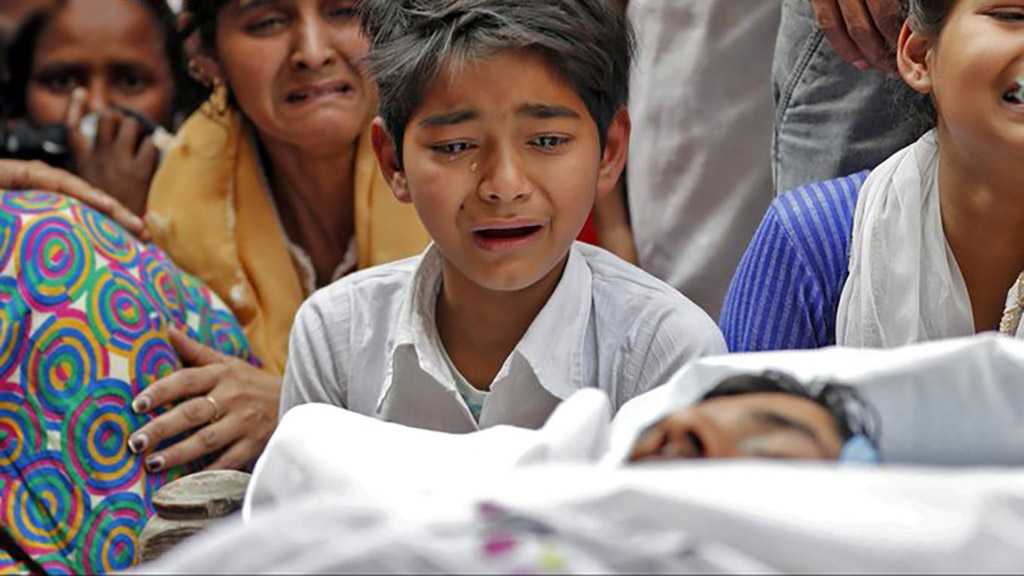
Leader of the Islamic Revolution His Eminence Imam Sayyed Ali Khamenei deplored the massacre of Muslims in India, calling on the New Delhi government to confront extremist Hindus.
In a post on Thursday, Imam Khamenei’s official Twitter account denounced the recent wave of violence against Muslims in India.
“The hearts of Muslims all over the world are grieving over the massacre of Muslims in India,” the post read.
“The govt of India should confront extremist Hindus & their parties & stop the massacre of Muslims in order to prevent India’s isolation from the world of Islam,” it added.
The post ended with the hashtag #IndianMuslimslnDanger.
Violence erupted in the Indian capital last week, leading to a three-day-long rampage, with Hindu mobs attacking Muslim homes, shops and mosques.
The attacks were carried out on protesters, who have been rallying against a new citizenship law, after the ruling Bharatiya Janata Party [BJP] leader Kapil Mishra threatened peaceful sit-ins would be removed from the streets.
The violence in Delhi killed scores of people.
It was the worst violence in Delhi since 1984, when more than 3,000 Sikh minority were killed following the assassination of then-Prime Minister Indira Gandhi.

River to Sea Uprooted Palestinian   
The views expressed in this article are the sole responsibility of the author and do not necessarily reflect those of the Blog!

Saturday, 21 December 2019

The Indo-‘Israeli’ Trans-Arabian Corridor Will Push Russia Closer to Pakistan

Global Research, December 19, 2019


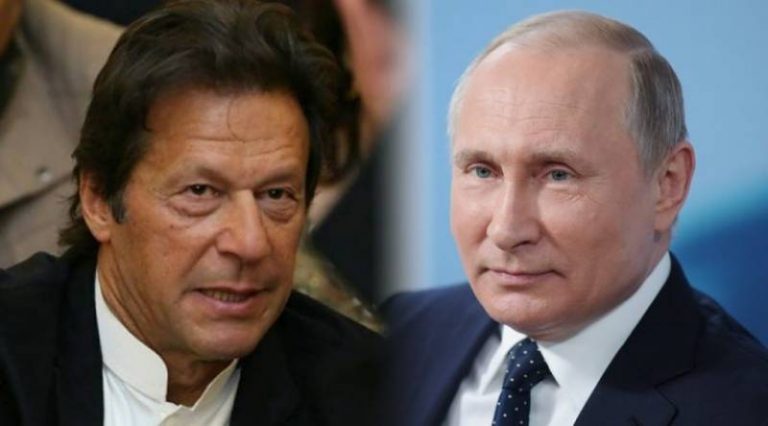
India’s participation in “Israel’s” Trans-Arabian Corridor for connecting the Eastern Mediterranean and Afro-Asian (“Indian”) Ocean will render New Delhi’s North-South Transport Corridor (NSTC) with Iran, Azerbaijan, and Russia economically redundant, consequently pushing Russia closer to Pakistan as Moscow seeks to ensure the viability of its southern connectivity vision through N-CPEC+ instead.
India Slaps Iran Yet Again
Sputnik reported earlier this month that “Israel” and India shared documents pertaining to the former’s Trans-Arabian Corridor for connecting the Eastern Mediterranean and Afro-Asian (“Indian”) Ocean during the meeting between the former’s Minister of Foreign Affairs Katz (who’s also interestingly the Minister of Intelligence) and the latter’s External Affairs Minister Jaishankar during the Mediterranean Dialogues forum. This development is strategically significant because the success of India’s participation in that “Israeli”-led initiative will render New Delhi’s North-South Transport Corridor (NSTC) with Iran, Azerbaijan, and Russia economically redundant since there wouldn’t be much of a reason for the South Asian state to utilize it for exporting goods to Europe if it can reach its destination much quicker through the Trans-Arabian Corridor while transiting through territories much wealthier than Iran such as the GCC and “Israel” which are more capable of buying some of its wares en route.
NSTC Is Dead, Long Live N-CPEC+!
Nobody should be surprised this turn of events since India had already agreed to comply with the US’ unilateral anti-Iranian sanctions regime and cut off the Islamic Republic from what had at one time been among its largest energy customers, further exacerbating its ongoing economic crisis as a result. Moreover, India slashed its budget for the NSTC’s terminal port of Chabahar earlier this summer and even deployed its warships to the Gulf following the Ansaraullah’s attack on Saudi Arabia’s Aramco that the West incredulously blamed on Iran. India isn’t a formal member of the US’ so-called “coalition” but it de-facto behaves as such through these means. Adding some more context to its decision to strengthen its integration with the GCC and “Israel” is the fact that India recently rejected joining the Chinese-led “Regional Comprehensive Economic Partnership” (RCEP) last month, which the author analyzed at the time undermined Russia’s “Greater Eurasian Partnership” (GEP) too.
It’s therefore perfectly understandable why India is intensifying its alliance with “Israel”, especially since Prime Minister Modi praised the self-professed “Jewish State” last month for supposedly “sharing and valuing the same principles of democracy”, in spite of this move being aimed against Iranian and even Russian interests. The Islamic Republic is left in the lurch after having naively trusted India to fulfill its NSTC commitments and therefore relieve the country’s increasing US-imposed “isolation”, though Russia is much more strategically resilient because it’s not only interested in constructing the railway portion of the Trans-Arabian Corridor which the author analyzed in two analyses last year on this topic, but is also preparing itself to pioneer what his earlier cited RCEP-GEP analysis described as N-CPEC+. That neologism refers to the expansion of CPEC through post-war Afghanistan for connecting Russia with the Afro-Asian Ocean via the global pivot state of Pakistan.
The Fast-Moving Russian-Pakistani Rapprochement
This isn’t the author’s “wishful thinking” like some critics have alleged, but a serious project that’s proceeding apace after two extremely important developments in Russian-Pakistani relations in just as many months and possibly even a third one that might manifest itself next week. The Russian Trade Representative in Pakistan publicly announced his country’s intent to establish a “reliable and mutually acceptable” banking system following the resolution of their Soviet-era dispute last month, which the author analyzed represents the prerequisite towards making tangible progress on N-CPEC+. Earlier this month, a massive trade delegation from Russia visited Pakistan and committed to at least several billion dollars’ worth of investments, proving that progress on improving the economic dimension of Russian-Pakistani relations is proceeding faster than even the most optimistic observers expected.
As for the third instance, Iran invited Pakistan to participate in the joint naval drills that it’s hosting next week with Russia and China, which would build upon the growing closeness of the Russian and Pakistani navies in recent years which the author analyzed in his piece late last year about “Russia’s Naval Strategy In The Afro-Asian Ocean” should Islamabad take Tehran up on it. So concerned is India about this possible development that the Observer Research Foundation’s Head of the Maritime Policy Initiative Abhijit Singh wrote in his recent piece for Russia’s top think tank, the Valdai Club, that “many in New Delhi are worried over the prospect of Russia’s involvement in a naval exercise with both Pakistan and China in a sensitive Indian Ocean littoral region” and that “Russia’s engagement in the Indian Ocean has indeed grown but not quite in the way India’s maritime watchers had imagined”, which is exactly what the author predicted in his previously cited analysis a year ago.
Concluding Thoughts
Considering that India has all but officially bowed out of the NSTC by slashing its funding for Chabahar earlier this year and is now exploring the possibility of replacing that trade route with the “Israeli”-led Trans-Arabian Corridor instead (a trend that was obvious enough for any objective observer to discern), it makes perfect sense that Russia would take the necessary steps to ensure the viability its southern connectivity vision through N-CPEC+ in response. After all, its GEP is dependent on pioneering new axes of supercontinental connectivity, and with the NSTC no longer as promising as before, the only realistic recourse for Russia is N-CPEC+, which could also complement NSTC in the unlikely event that it’s revived by serving to diversify Moscow’s access to the Afro-Asian Ocean. India isn’t expected to be too happy about this development, but it was none other than its own decision to join the Trans-Arabian Corridor at the NSTC’s expense that inspired Russia’s N-CPEC+ outreaches to Pakistan.
*
Note to readers: please click the share buttons above or below. Forward this article to your email lists. Crosspost on your blog site, internet forums. etc.
This article was originally published on OneWorld.
Andrew Korybko is an American Moscow-based political analyst specializing in the relationship between the US strategy in Afro-Eurasia, China’s One Belt One Road global vision of New Silk Road connectivity, and Hybrid Warfare. He is a frequent contributor to Global Research.
Featured image is from OneWorldRussia’s S-400 Sale to India Won’t Imperil Its Partnership with PakistanThe original source of this article is Global ResearchCopyright © Andrew Korybko, Global Research, 2019

River to Sea Uprooted Palestinian   
The views expressed in this article are the sole responsibility of the author and do not necessarily reflect those of the Blog!

Tuesday, 27 August 2019

How the current Kashmir crisis presents a strategic opportunity for Iran

Posted originally to Eurasia Future on 19 August 2019.
India de facto annexed Indian-occupied Jammu and Kashmir earlier this month and heightened military tussles at the border with Pakistan have been a constant feature since then. India has sought to impose as much of a blackout in Kashmir as possible, albeit this hasn’t succeeded in stopping videos and testimonies of the repressionreaching global audiences. Awareness of the depth of the repression in Kashmir has been rising incrementally, making it increasingly difficult for anyone to ignore.
The possibly highly strategic dimension of the Kashmir conflict, however, and significance of the escalatory crescendo for Iran in particular is something that deserves special attention.
What’s unfolding in Kashmir and what it means for Iran
Following the martyrdom of iconic freedom fighter Burhan Wani in 2016, the Kashmiri Azaadi struggle entered a new phase altogether, with the amplified vigour driving the…
View original post 1,446 more words

River to Sea Uprooted Palestinian   
The views expressed in this article are the sole responsibility of the author and do not necessarily reflect those of the Blog!

Saturday, 3 August 2019

The Spy Game: It Ain’t What It Used to Be

Image result for The Spy Game: It Ain’t What It Used to Be
August 1, 2019
The Tehran government has announced the arrest of seventeen Iranian citizens caught spying for America’s Central Intelligence Agency (CIA). Some of those arrested have already been sentenced to death. It is the third major roll-up of CIA agents in Iran that I have been aware of, the first occurring in 1991 involved 20 American agents. The second episode in 2011 led to the arrest of 30 spies. The earlier arrests reportedly eliminated what were presumed to be the entire networks of American agents operating inside Iran and it is to be presumed that the recent arrests will have the same impact.
The Iranians presented a considerable quantity of evidence, including photos and business cards of US government officials, to back up their claim of American spying but President Trump dismissed the report as “totally false” and “just more lies and propaganda” — while Secretary of State Mike Pompeo said: “I would take with a significant grain of salt any Iranian assertion about actions that they’ve taken.”
Iran’s press release on the arrests together with a briefing by an intelligence official supplemented by local media coverage provided some of the details. The seventeen reportedly had “sophisticated training” but those who had sabotage missions did not succeed. Other objectives included “collecting information at the facilities they worked at, carrying out technical and intelligence activities and transferring and installing monitoring devices.”
Some of the agents had reportedly been recruited by falling into what is referred to as a “visa trap” set by the CIA for Iranians seeking to travel to the US. This has long been the preferred tool for recruiting Iranian agents. The intelligence official handed out a CD with a video recording of an alleged CIA case officer speaking to an Iranian target, which was presumably recorded secretly. The video shows a blonde woman who speaks Persian with an American accent. The disc also included names of several US embassy staff in Dubai, Turkey, India, Zimbabwe and Austria who Iran claims were involved in the recruitment and training of the Iranian spies.
How exactly did the recruitments take place as there is no US Embassy in Tehran and few Americans resident in the country? Many of the Iranians were targeted when they walked into an American Embassy in a country to which they are free to travel, which includes Turkey and Dubai. In the words of the Iranian intelligence official, “Some were approached when they were applying for a visa, while others had visas from before and were pressured by the CIA in order to renew them.”
Others were targeted and recruited as spies while attending scientific conferences around the world. Those recruited received promises of money, eventual resettlement and a job in the US or medical assistance. To maintain contact with its agents inside Iran, the CIA would reportedly conceal spyware and instructions in containers that look like rocks, which would be planted in city parks or in rural areas. The Iranian agents would then recover the material, which might include false identification documents. It should be observed that fake rocks are a standard espionage tool. They are hollowed out to conceal spy-gear and communications. After they are in place, a signal is made to alert the agent that there is something ready to be picked-up. In the trade they are referred to as “dead drops.”
Why does the United States continue to spy on Iran with such ferocity? The Mullahs became a major intelligence target for Washington in the wake of the 1979 US Embassy hostage crisis, in which fifty-two American diplomats and intelligence officers were held for 444 days. The CIA mounted a major intelligence operation run from Europe that collected a wide range of information on the Iranian government and, increasingly, on its technical capabilities, including a suspected nuclear development program. In 2015 the CIA under President Barack Obama and Director John Brennan ramped up collection efforts against Iran as part of the verification process for the Joint Comprehensive Plan of Action (JCPOA). More recently, Mike Pompeo, when CIA Director, further increased efforts against Iran when the Trump Administration withdrew from that agreement in the belief that Iran represented a rogue nation and a threat to United States interests and allies. In reality, of course, there is no real American vital interest relating to Iran and Trump has been acting on behalf of Israel and Saudi Arabia, both of whom are hostile to Iran as a regional rival.
But running intelligence operations in a country without a US Embassy to serve as a base for spies proved difficult. Many spies have been caught, by one Iranian estimate, 290 agents arrested in recent years. Most often the exposure of the spies has been due to human error or technical problems in communications. Iran has benefited by boasting of those arrests and has long promoted its capacity to uncover American spy rings in the country. As the New York Times reports, Iran has recently aired a documentary featuring efforts to expose and rid the country of the CIA agents working there.
A recently produced and very popular Iranian fictional television series called “Gando” has also introduced the narrative of a perpetual fight against American spies into the country’s popular culture. The show features brave Iranian intelligence officials in pursuit of an American spy posing as a journalist.
According to a Yahoo News investigation, Iran was in 2009 enraged by reports that the CIA had possibly penetrated its nuclear program and its counter-intelligence agents immediately went on the hunt for moles. By 2011, Iranian officials had uncovered and arrested a network of 30 CIA sources, a fact that US officials later confirmed. Some of the accused informants were executed. The Iranian government was able to find the operatives because of failures in the systems and techniques that the CIA agents used to communicate with the agents. Once a flaw in communications is detected, it is possible to exploit that so one can sit back and wait and watch for all those linked to the network to reveal themselves.
One might observe that the continued massive American “maximum pressure” spying effort directed against Iran is a bit of an anachronism. It is agreed by nearly all observers that Iran has no nuclear weapons program and is unlikely to start one. The sanctions put in place against the country unilaterally by the US cannot produce a popular uprising that will bring down the regime, but they have indeed hurt the country’s economy badly and the people are suffering. Iran’s military cannot stand up against its neighbors, much less against the United States, and its ability to meddle in the affairs of its neighbors is extremely limited.
So, it is probably just as well that Iran has again rolled up most of the American spies in the country, though it will be a tragedy for the men and women involved. Many critics of the Agency have argued that the CIA has forgotten how to spy in an age of drones and electronic surveillance, which may be true. Certainly, the CIA record regarding Iran is nothing to brag about.

Also by this author


River to Sea Uprooted Palestinian   
The views expressed in this article are the sole responsibility of the author and do not necessarily reflect those of the Blog!

Wednesday, 24 April 2019

The Ball’s In Iran’s Court To Stop Anti-Pakistani Baloch Terrorism

Editor Note: Until election of Imran Khan the terrorism ball was always in Pakistan court. In early fifties Pakistan was a part of Eisenhower pact against Soviet Union,  Later, in 1970's, Pakistan was the backyard during the US-Saudi wars against Soviets in Afghanistan..


By Andrew Korybko
Pakistan filed an official complaint against Iran just two days before Prime Minister Khan’s first visit to the Islamic Republic for its unwillingness to take action against Baloch terrorist groups like the one that claimed credit for the recent terror attack along the Makran Coastal Highway despite being informed by Islamabad about training camps and logistics bases within its borders, which therefore puts the ball in Iran’s court to stop this resurgent trend of transnational terrorism in the region and will obviously figure very high on the agenda during the Pakistani leader’s upcoming two-day visit.
An umbrella group of three Baloch terrorist organizations claimed credit for the recent killing of 14 Pakistanis who were pulled off of a bus traveling along the Makran Coastal Highway by fighters disguised as legitimate members of the security services and martyred in front of the other passengers. Pakistan filed an official complaint against Iran just two days before Prime Minister Khan’s first visit to the Islamic Republic for its unwillingness to take action against Baloch terrorist groups such as the one that was responsible for the latest attack, claiming that Tehran had previously been informed by Islamabad of training camps and logistics bases within its borders but hadn’t done anything to address this resurgent trend of transnational terrorism in the region. Although it’s not directly stated, the complaint heavily implies a high degree of hypocrisy on the side of the Iranian government which had previously resorted to over-the-top rhetoric back in February after a Baloch terrorist attack along the Pakistani frontier, even ridiculously hinting that an Indian-like “surgical strike” against Pakistan was one of the options on the table.
I wrote about that incident in a previous piece about how “Iran’s Being Tricked Into Making Balochistan The New Kurdistan” by India, but Tehran apparently doesn’t care all that much because it’s too obsessed with the carrot of potential “sanctions relief” that “Israel’s” new ally in New Delhi is dangling in front of it through the Chabahar Corridor even though “Iran Just Fell Victim To Blowback From The US-Indian Hybrid War On CPEC” back in December. I explained how India’s RAW (its version of the Mossad) is responsible for this upsurge in regional terrorism, which the whole world is already aware of after Pakistan provided evidence of this to the United Nations’ International Court of Justice following the capture of Hybrid Waragent Kulbushan Jadhav and his admission to operating out of Iran’s nearby Indian-owned Chabahar port. My analysis at the time mentioned that Iran had the chance to use that tragedy to strengthen anti-terrorist cooperation with Pakistan along their shared border and possibly establish an Iranian version of the “Overseas Pakistani Baloch Unity” initiative (OPBU, recently rebranded to PBU after dropping the first prefix) for reintegrating wayward Baloch into society.
It now looks as though Iran ignored that opportunity and is therefore indirectly responsible for the latest terrorist attack in Pakistan as a result of its negligence. It’s important to point out that the incident was probably timed to coincide with Prime Minister Khan’s first two-day visit to Iran just like the February one against the Islamic Republic was likely inended to provoke a crisis in bilateral relations precisely at the moment that India was planning its Bollywood-like “surgical strike” against Pakistan. Islamabad wisely isn’t biting the bait but it surely isn’t going to leave Iran’s irresponsibility to its neighbor unaddressed during the Prime Minister’s trip either, especially since last week’s terrorist attack was obviously meant to diminish international confidence in CPEC after targeting one of the global pivot state’s main transit routes connecting to the terminal port of Gwadar. As such, Iran’s IRGC are compelled to take decisive action against the Indian-backed terrorist groups on their soil if they themselves truly aren’t the “terrorists” that Trump claims that they are, thus putting the ball in their court and making Prime Minister Khan’s upcoming visit a defining moment in bilateral relations.

Related


River to Sea Uprooted Palestinian   
The views expressed in this article are the sole responsibility of the author and do not necessarily reflect those of the Blog!

Trump And PM Khan Might Have Just Ruined Iranian-Indian Relations

By Andrew Korybko
Source
The American and Pakistani leaders independently took two very important and uncoordinated moves at almost the exact same time that might coincidentally have the same effect of ruining Iranian-Indian relations.
Iranian-Indian relations might be about to enter their worst-ever period in modern history as a result of two very important and uncoordinated moves undertaken at almost the exact same time by the American and Pakistani leaders. PM Khan just paid his first visit to Iran where he and his hosts announced that they’ll enter into a new era of anti-terrorist cooperation that geopolitical analyst Adam Garrie comprehensively analyzed in his recent piece on this breaking news event. The ball was indeed in Iran’s court to stop India’s anti-Pakistani Baloch terrorism like I wrote the other day, and to Tehran’s credit, its leadership finally understood this and decided to expand its military partnership with the global pivot state of Pakistan. This will greatly complicate India’s Hybrid War capabilities in clandestinely using Iranian territory to carry out terrorist attacks against Pakistan by proxy as it obsessively seeks to sabotage CPEC, meaning that PM Khan’s visit will have far-reaching and long-term geostrategic security consequences in the New Cold War.
In parallel with this, Trump decided that the US won’t renew its Iranian oil sanctions waivers and that Washington’s GCC partners of Saudi Arabia and the UAE will help the Islamic Republic’s energy customers replace their imports with Gulf resources instead. India was very vocal last year about its intent to defy the US’ unilateral sanctions against Iran, but as I wrote in my piece at the time about the “Indian Illusion“, all of this was just rhetoric to hide the fact that New Delhi was quietly implementing its new American patron’s will. Trump just put Modi on the spot, however, and it might augur negatively for the Indian leader during the ongoing month-long electoral process if he publicly capitulates to the US’ demands and replaces Iranian resources with Gulf ones like I suspected he’s been planning to do since late last year after his summit in Argentina with Saudi Crown Prince Mohammed Bin Salman. As such, this American move might also be yet another “bad cop” tactic against Modi to get more strategic concessions out of India.
It therefore wouldn’t be an exaggeration to say that Trump and PM Khan might have just ruined Iranian-Indian relations for good when considering the combined effect of their latest moves to that relationship. The Pakistani leader exposed India’s Hybrid War terrorist plot during his talks with the Iranian leadership which probably explains why the two neighboring nations decided to take their military cooperation with one another to the next level, while the American leader is forcing India to stop importing Iranian oil under the threat of potentially crippling “secondary sanctions” and to replace its resources with those from the Islamic Republic’s hated GCC foes. Although Iran and India still have shared strategic interests in the Chabahar Corridor and North-South Transport Corridor, the trust that formerly defined their relations is broken and their ties will never be the same. The end result is beneficial to the US and Pakistan for different reasons and might even interestingly be a tangential outcome of their recent diplomatic cooperationin Afghanistan.

River to Sea Uprooted Palestinian   
The views expressed in this article are the sole responsibility of the author and do not necessarily reflect those of the Blog!