Showing posts with label SAA. Show all posts

Wednesday, 1 December 2021

Inside Syrian Idlib

30 Nov 2021

Source: Al Mayadeen Net

Tim Anderson

For NATO, dismembering a country [Syria] is a second-best war aim, after the failure of complete ‘regime change’.


Idlib; where NATO-embedded media is exposed

The NATO-embedded media often speaks as though the HTS/Nusra/al-Qaeda held enclave in two-thirds of Idlib Province represents Syria and is a haven of ‘moderate rebels’. They also claim the enclave holds 4 million people, while the Syrian government says 1.3 million.

War propaganda themes have become dutifully reported ‘facts’: this is a ‘Syrian Civil War’ (even as Syria is occupied by NATO’s two largest armies plus Israel, plus thousands of foreign terrorists), the Syrian Government has repeatedly used ‘chemical weapons’ (i.e. WMDs, meriting NATO retaliation) and (for some unexplained reason: pure evil?) bombs its own schools and hospitals.

But there is another Idlib: that part liberated, at great cost, by Syria’s national army.

From August 2019 through to early 2020, the Syrian Arab Army (SAA) liberated the south-eastern third of Idlib province, including the towns of Khan Shaykhoun, Maarat al-Numan, and Saraqeb. That opened the M5 highway for all traffic from the south to Aleppo, through Hama and SE Idlib.

The SAA looked for further advances, but the NATO powers demanded an end to Syrian operations, in defense of the al-Qaeda enclave. That real threat of intervention led Russia to engage in further talks with Turkey and to stall further advances. 

Yet this development demonstrated that Syria, with its allies, could have freed the country from all terrorism were it not for repeated interventions from the NATO-led war coalition, which prefers to dismember and maintain occupied enclaves: NW Idlib, the NE ‘autonomous’ zone, the US occupied al Tanf zone and the Israeli occupied Golan.

In November 2021, I visited Syrian Idlib, authorized by the Syrian Army, just as most western journalists are authorized by US troops when they enter its various war zones. In one day, we traveled to Khan Sheykhoun in the south through Maarat al-Numan, the second-largest provincial city, to the strategic crossroads town of Saraqeb.

Khan Sheykhoun is the only Idlib town I saw with a significant civilian population. Mayor Mohammad Iskandar told us that 600 to 700 families have returned, about 10% of the pre-war population. Now far from the frontline, the town is peaceful with some rebuilding and small markets.

Most of those displaced moved to Turkey or north Idlib and some to other parts of Syria. The mayor is in touch with many and says most want to return, but the armed groups (HTS/Nusra) demand large sums of money for them to leave.

We also spoke with Mr. Iyad Sukheta, who runs a small grocery store, a small farm, and used to drive a bus. Like the Mayor, Iyad has also remained in Khan Sheykhoun throughout the conflict. 

He says the ‘musalaheen’ (armed groups) took many prisoners and killed many local people, including his 17-year-old son. They wanted him to use his bus to drive people north, but he refused. 

Asked about the chemical weapons incident of April 2017, Iyad said that the prisoners were not sacrificed (as they had been in East Ghouta in 2013) but rather, after a Syrian airstrike, the armed groups attacked the local people directly with chemicals. Many were killed. 

Back in 2017, the armed groups blamed the SAA, using their own false flag massacre to incite President Trump (who had campaigned against the war) to make his first missile strike on Syria.

Maarat al-Numan is a much bigger town, with an ancient history and sitting on the frontline between Syrian forces and the Turkish-backed Nusra/HTS gangs. Even though the SAA has pushed its effective frontline forward three times in the past two years, there are no civilians here. The frontline, about 4km north, is constantly tested by the armed groups.

I visited Maarat’s museum with its famous Roman and Byzantine mosaics, which have been protected for several years with sandbags. As with many mosques, schools, and hospitals throughout Syria, the HTS/Nusra terrorists had used it as a military headquarters, digging tunnels under the Museum.

Jabal Zeitoun (Olive Mountain) is now at the center of the frontline, as it occupies the high ground from which the SAA’s 9th Division has placed a substantial vanguard of soldiers, tanks, arms, and surveillance equipment. Yet the actual Maarat frontline extends over many kilometers.

Nusra/HTS had built barricades around the town’s hospital and placed a small mosque inside. We saw evidence of supplies (medicines and cars) from Qatar, Germany, Sweden, and France. The typical pattern of the armed groups’ takeover of Syrian hospitals (for example in Aleppo) has been that they first rob all existing supplies.

Despite nominal support at the UN for the ‘territorial integrity’ of Syria, the NATO states had backed a breakaway Idlib enclave called ‘North Syria’. In much the same way, and contrary to international law, they still support an ‘Autonomous Administration of North and East Syria’. Dismembering a country is a second-best war aim, after the failure of complete ‘regime change’.

Further on up the road, the crossroads town of Saraqeb is also at the frontline, with Nusra/HTS making daily small arms attacks on, and occasional shelling of, SAA positions. They hide behind, and sometimes in front of, the many Turkish bases which are all across northern and central Idlib. The aim of these attacks, according to General J, has been to provoke retaliation which might spark direct conflict between Syrian and Turkish forces. 

Captain Y took us to the frontline, looking out on the road to Ariha, and with a Turkish base 1.7 kilometers ahead. They know these distances quite precisely and are ready to liberate their country from foreign occupation and NATO-backed terrorism when the time is right.

Syria could have eliminated terrorism and restored its territorial integrity long ago, were it not for the NATO-led war coalition which prefers to fragment and occupy segments of the country, all along its land borders. In this way, they provide safe haven for internationally-proscribed terrorist groups.

The opinions mentioned in this article do not necessarily reflect the opinion of Al mayadeen, but rather express the opinion of its writer exclusively.


Related Videos


River to Sea Uprooted Palestinian   
The views expressed in this article are the sole responsibility of the author and do not necessarily reflect those of the Blog!

Sunday, 21 November 2021

Strategic Insight Into The Russian-Israeli-Syrian Triangle

 21 NOVEMBER 2021

Source


Strategic Insight Into The Russian-Israeli-Syrian Triangle

OneWorld is publishing the full text of the interview that Andrew Korybko gave to Giorgio Cafiero on this topic, some excerpts of which the latter included in his recent article for Inside Arabia titled “Israel’s Working Relationship with Russia Inside Syria”.

1. What does Russia believe it can get for itself through cooperation with Israel in relation to Syria?

Russia and Israel agreed to a deconfliction mechanism in September 2015 shortly before the onset of the former’s intervention in Syria. The two sides hoped to mitigate the risk of midair incidents since Moscow bombs forces that it and Damascus regard as terrorists while Israel does the same, albeit the latter strikes Syria’s IRGC and Hezbollah allies that were invited into the country but which Tel Aviv regards as latent national security threats. Neither wants to clash with the other since that could dramatically escalate regional tensions. Moreover, Russia and Israel have excellent relations, particularly proven by the fact that Tel Aviv declined to sanction Moscow in solidarity with its Western allies all these years.

Russia officially condemns Israel’s strikes from time to time but hasn’t ever taken any action to stop them, whether directly or indirectly. The second-mentioned observation gained extra credence in recent years after Syria has thus far failed to use the S-300s that it belatedly received from Russia in late 2018 after the incident near Latakia that President Putin described as a tragic chain of circumstances. Even though Russia also officially acknowledges the legality and anti-terrorist purposes of the IRGC and Hezbollah’s presence in Syria, some argue that the Kremlin might discretely be hoping for Damascus to request their dignified but phased withdrawal (in this context, under the duress of Israeli airstrikes) as part of a compromise solution for ending the war.

2. To what extent is Russian-Israel cooperation vis-à-vis Syria problematic for Moscow’s relationship with Tehran?

Russia and Iran both fight against ISIS/ISIL/Daesh and other terrorist groups in Syria, but the first-mentioned mostly does so through the air and via the sharing of tactical intelligence to the Syrian Arab Army (SAA) while the second joins the SAA and their shared Hezbollah allies in on-the-ground battles. Moscow and Tehran therefore have the same interest in supporting Damascus, but they seemingly differ over their post-war vision for the country. The Kremlin believes that a series of mutual compromises is needed by all parties of the conflict while the Islamic Republic’s implied stance is that its Arab ally doesn’t necessarily have to concede anything to those whom it doesn’t regard as its political equals.

Even though Russia isn’t directly involved in Israel’s strikes, Iran and Hezbollah might not be happy that Moscow doesn’t ever tip them off when it’s informed of these attacks ahead of time per the reported protocol connected with their deconfliction mechanism. There might also be some questions about why Syria hasn’t yet used its Russian-supplied S-300s that were belatedly shipped to the country after the September 2018 incident for the reported purpose of deterring what was described at the time as further irresponsible Israeli behavior. Since then, Israel has continued to strike Syria, with Damascus only targeting its incoming missiles and not using the S-300s or other anti-air defense systems to strike the attacking jets themselves like many earlier expected.

3. Does Bashar al-Assad’s government believe that Russia can pressure Israel in ways which suit the interests of Damascus?

It’s unlikely that Syria seriously has those expectations, and in the off chance that it did, they’re unrealistic. The power dynamic actually seems to be the inverse: Israel believes that Russia can pressure Syria when it comes to requesting Iran and Hezbollah’s withdrawal. Moscow doesn’t want to take sides since it has great relations with both, albeit of a different nature and strategic impact with respect to advancing its interests, hence why it’s hitherto sat back and passively let everything unfold between them as it has.

Nevertheless, it’s precisely this passivity in spite of occasional condemnations of Israeli strikes that can be interpreted as tacitly advancing Tel Aviv’s interests since Moscow doesn’t do anything to stop its attacks against the IRGC and Hezbollah, not directly nor indirectly as was earlier explained. This leads some to wonder whether Russia discretely prefers for Israeli strikes to function as a form of pressure for getting Syria to request Iran and Hezbollah’s withdrawal as part of a larger regional compromise that the Kremlin might hope to broker.

4. What are Israel’s incentives to work with Russia? Is there any good reason for Israelis to believe that Russia will act against Iranian influence/power in Syria?

There’s a massive Russian diaspora living in Israel that has gradually come to command sizeable influence in society and some parts of the permanent bureaucracy, including the formulation of foreign policy. President Putin is also very well respected in Israel for his resolute opposition to anti-Semitism, fascism, and historical revisionism connected to World War II. Furthermore, as an influential Great Power that’s returned to West Asia with its Syrian intervention and is nowadays considered the kingmaker for resolving that country’s crisis, Israel has every reason to pragmatically expand its relations with Russia, especially since this could give it some leverage to better balance its historical relationship with the US.

Nevertheless, Israelis shouldn’t have any unrealistic expectations about Russia directly acting against Iranian influence in Syria. Doing so would risk undermining Moscow’s anti-terrorist campaign there as well as its bilateral relations with the Islamic Republic which are important for maintaining stability in the South Caucasus, Caspian Sea, and Afghanistan. The most that Russia is seemingly willing to do is “passively facilitate” regular Israeli strikes against the IRGC and Hezbollah by not interfering with them per the reported conditions of the September 2015 deconfliction agreement and speculatively not authorizing Syria to use the S-300s and other anti-air defense systems for targeting attacking Israeli jets (which could escalate tensions), which is still a lot.


River to Sea Uprooted Palestinian   
The views expressed in this article are the sole responsibility of the author and do not necessarily reflect those of the Blog!

Friday, 5 November 2021

Saudi Arabia Started Its Aggression against Lebanon; Twisting Hezbollah’s Arm is Impossible – Deputy SG

 Nov 4, 2021

Saudi Arabia Started Its Aggression against Lebanon; Twisting Hezbollah’s Arm is Impossible - Deputy SG

By Staff

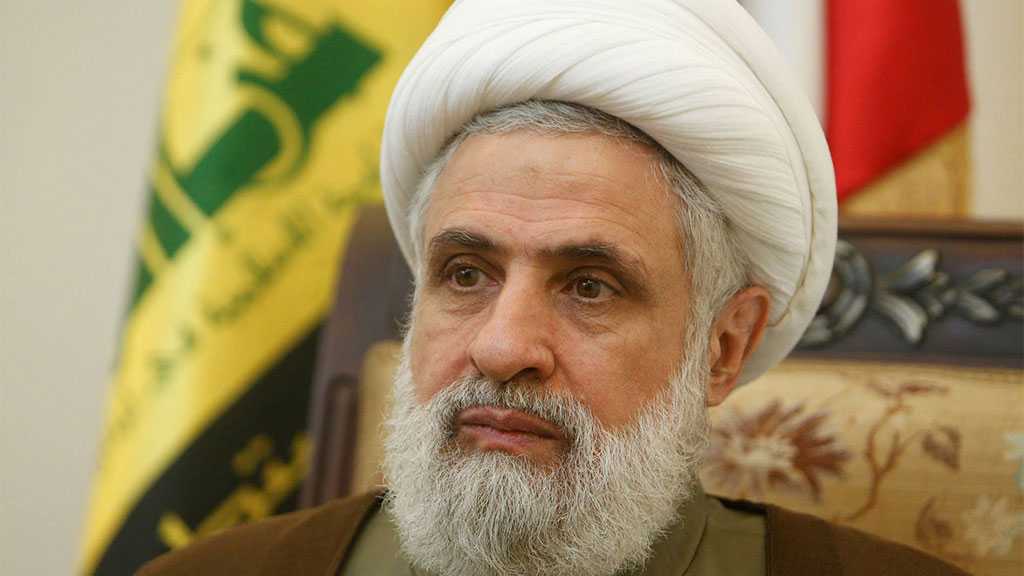
Hezbollah Deputy Secretary General His Eminence Sheikh Naim Qassem asserted that Saudi Arabia is disturbed because it couldn’t dominate the political decision in Lebanon despite the cash it had spent on its allies in Lebanon, pointing out that Saudi Arabia couldn’t put up with its casualties in the region, so its aggression on Lebanon was just a reaction, and that is one of the reasons behind the current crisis in Lebanon.

Sheikh Qassem asserted that the timing of the Saudi aggression on Lebanon is linked to Marib and Riyadh’s terrible loss in Yemen, so that it’s trying to divert attention from the battles there by exercising pressure on Lebanon.

The Hezbollah Deputy Secretary General said that Riyadh should apologize for its unjustified aggression on Lebanon, noting that the kingdom is not doing the right thing because nobody can twist the arm of Hezbollah and the Lebanese people.

“Lebanon is not a scapegoat and it’s challenging Saudi Arabia as an independent country. We won’t accept Saudi Arabia’s interference in the government after all the achievements it has accomplished,” Sheikh Qassem added.

His Eminence also said, “We will not surrender or give up on our dignity to please Saudi Arabia, even if it had practiced aggression on us, and we don’t hold responsibility for anything that happened”, pointing out that “Saudi Arabia might continue its aggression against Lebanon, as it doesn’t have any disciplines. It wants to take revenge, and it has to apologize. If it wants to continue its aggression, it will have more casualties.”

Regarding the Tayouneh Massacre, Sheikh Qassem said that “the US couldn’t achieve its goals in Lebanon despite all its attempts, and it had tried with all the possible means to turn the Lebanese public on Hezbollah but it couldn’t make it.”

He asserted that the discord that was sought in Tayyouneh massacre is an American-Saudi act executed by the Lebanese Forces party, but Hezbollah and Amal Movement have aborted it for the sake of Lebanon, pointing out that the Lebanese Forces is the sole party that receives allocations from Saudi Arabia, and the Americans have tried to integrate the Lebanese Forces members into the “NGO” groups to enhance their image.

Sheikh Qassem also talked about the maritime borders, saying that the Lebanese government is the one who says where our borders are, and Hezbollah doesn’t interfere in that, adding that “we are waiting for the government to finish the demarcation process and the disputed areas.”

He also stressed that “If the government says that the “Israeli” enemy is assaulting a disputed area, we, as a resistance, will do our duty.”

Regarding the relationship with Syria, Sheikh Qassem noted that the relationship between Hezbollah and Syria is very good, especially with Bashar al-Assad as a president, and the relations with the Syrian Arab Army is very good as well, adding that such relations are unshakable, and that there is a high level of coordination on the mutual ties.

He said that the Hezbollah-Syrian relationship is one that became deep by blood, resistance, and liberation, and that such relationship was never this good in any past period.

His Eminence also said that “many of our Resistance fighters have come back to Lebanon, and the number of fighters that stayed there is related to the situation on the ground”, asserting that “we are ready for any larger or lower presence there depending on the developments.”


River to Sea Uprooted Palestinian   
The views expressed in this article are the sole responsibility of the author and do not necessarily reflect those of the Blog!

Thursday, 4 November 2021

Israel Bombs Several Posts in Damascus Countryside from Over Palestine

  ARABI SOURI 

Israel bombs sites in Damascus countryside- Syria

Israel bombed a number of posts before noon today, unprovoked, and only to add to the pressure on the Syrian people exerted by the NATO Turkish madman Erdogan in the north with his Al Qaeda affiliated terrorist groups, and the escalation in plundering and oppression by the US-sponsored Kurdish SDF separatist terrorists in the northeast of Syria.

A Syrian military spokesperson state to Sana:

“At around eleven and 17 minutes this morning, the Israeli enemy fired a burst of surface-to-surface missiles from the direction of northern occupied Palestine, targeting some points in the Damascus countryside. Our air defenses confronted the aggression’s missiles and shot down some of them.”

The Syrian military spokesperson added, “the aggression resulted in two soldiers wounded and some material losses.”

British prominent investigative journalist Vanessa Beeley was within a 100 meters proximity from one of the targeted sites in Damascus countryside, she explains her experience in this thread:

Vanessa Beeley tweeting (thread) from Damascus Countryside near a site that was targeted.

This is the first time in a very long while the US-protectorate known as Israeli carry out aggression in the day time, Israel usually committed its war crimes in the dense of the night and from behind civilian airplanes, or like the last aggression when it bombed a Syrian Army base near Tadmor (Palmyra) tasked to combat ISIS from over the US soldiers illegally deployed in the Al Tanf illegal military base earlier this on the 13th of this month October, which also resulted in a strong response by the resistance axis from both Syria and Iraq against those soldiers who facilitated the aggression.

Mark these Israeli aggressions and its continuous war crimes against the whole region, it will become handy when the Syrians and others retaliate, the Israelis will start crying they’re the victims.

5 Kamikaze Drones Bomb Biden Forces Illegally Deployed in Syrian Al Tanf

https://syrianews.cc/5-kamikaze-drones-bomb-biden-forces-illegally-deployed-in-syrian-al-tanf/embed/#?secret=QcG9eRX4hk

Elizabeth the 2nd Forces Highly Likely among the Casualties in Al Tanf Bombing

https://syrianews.cc/elizabeth-the-2nd-forces-highly-likely-among-the-casualties-in-al-tanf-bombing/embed/#?secret=xr0u5sQTXb

If you want us to remain online, please consider a small donation, or see how you can help at no cost.
Follow us on Telegram: https://t.me/syupdates link will open the Telegram app.


River to Sea Uprooted Palestinian   
The views expressed in this article are the sole responsibility of the author and do not necessarily reflect those of the Blog!

Friday, 29 October 2021

Erdogan Beefing Up Turkish Army in Idlib to Protect al Qaeda Terrorists

 ARABI SOURI 

Erdogan beefs up Turkish forces to protect Al Qaeda in Idlib

Erdogan, the Turkish madman is up to nothing good, as usual, NATO’s top leader is beefing up his forces in ‘Al Qaeda last stronghold’ in the Syrian Idlib province anticipating an imminent military operation by the Syrian Arab Army and its allies to clean the province from Al Qaeda and its affiliates, the madman and sultan wannabe continues to place conscript Turkish troops as human shields to protect the terrorists he considers more loyal to him.

Multiple sources confirmed the entry of large columns of military vehicles and tanks into the Idlib province in the northwest of Syria through the Kafr Lucin border crossing over the past two days, previous columns entered through the same crossing on the 21st of the month.

The video is also on BitChute.

These new units are added to the already beefed up Turkish army units in the observation posts especially the ones in the Zawya Mountain region of Idlib province, which have been only grown in numbers instead of reducing them as Erdogan’s own commitments before the Russian President Putin and in line with the multiple agreements within the framework of the Astana de-escalation zones, Idlib Agreement, Moscow Agreement, and even the Adana Accord signed when Erdogan was still the mayor of Istanbul and months only before he was jailed for inciting radicalism against the secular state of Turkey.

Under the initial agreements to establish the de-escalation zones and within its points, the Turkish army would establish 11 military points to serve as observation posts to monitor the radical terrorist groups under Turkey’s control and to work on disarming them from medium and heavy weapons. Instead, Erdogan increased the number of those zones with dozen new ones and instead of disarming the radical terrorists, most of who are from Al Qaeda Levant which keeps changing its name (Nusra Front, ISIS, HTS, FSA, Hamzat, Sultan Murad..), Erdogan beefed up their numbers with new recruits, supplied them with more heavy weapons and high-tech drones and pushed many of them into suicide missions to bomb the Russian base in Hmeimim!

The latest augmentation in the number of Turkish troops in the Idlib province is yet another proof that Turkey is not to be trusted in any agreement, Erdogan, the NATO leader is a flipflop on the personal and political levels, the Turkish Army is still hoping to drag its NATO brethren into a confrontation with the Syrian Army and its Russian allies in Syria, and hoping that a large number of the Turkish soldiers get killed in such confrontation to shore up his dwindling support base in his country due to the devastating economic crises created by his military adventures abroad by gaining more support for those ‘fallen soliders’ in order for the people to forget their pressing economic issues, this cheap policy works well in the USA and other western countries, why shouldn’t it work for Turkey? Believes the up to no good flipflop Erdogan.

Even Trump is Smarter than Erdogan: 37 More Turkish Soldiers Killed in Idlib

https://syrianews.cc/even-trump-is-smarter-than-erdogan-37-more-turkish-soldiers-killed-in-idlib/embed/#?secret=u057zTzy9F

If you want us to remain online, please consider a small donation, or see how you can help at no cost.
Follow us on Telegram: https://t.me/syupdates link will open the Telegram app.

Related Videos

Related News


River to Sea Uprooted Palestinian   
The views expressed in this article are the sole responsibility of the author and do not necessarily reflect those of the Blog!

Tuesday, 19 October 2021

Sayyed Nasrallah to Lebanese Forces: Don’t Miscalculate, Hezbollah Has 100,000 Fighters

 October 19, 2021

Sayyed Nasrallah
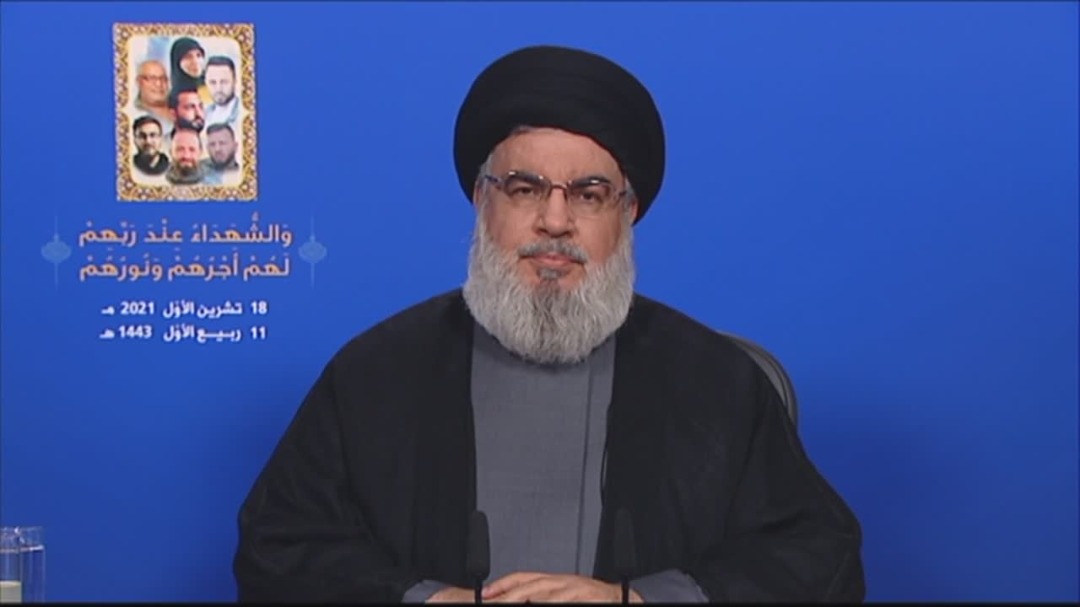
Hezbollah S.G. Sayyed Hasan Nasrallah during a televised speech via Al-Manar (Monday, October 18, 2021).

Marwa Haidar

Hezbollah Secretary General Sayyed Hasan Nasrallah on Monday lashed out at the Lebanese Forces militia, advising its chief to abandon attempts to ignite a civil war in Lebanon.

In a speech that basically tackled the latest massacre by the notorious militia in Tayouneh last Thursday, Sayyed Nasrallah warned the head of Lebanese Forces party (LF), even without mentioning his name, against any miscalculation regarding the civil war in Lebanon.

Sayyed Nasrallah in this context, revealed the number of Hezbollah fighters who are ready to defend their country.

“Don’t miscalculate and behave,” Sayyed Nasrallah addressed LF, adding: “Hezbollah has 100,000 fighters who are fully ready to act in case we just point to them to do so.”

The Hezbollah S.G. said the Lebanese security apparatus confirmed that LF militants and snipers were responsible for Tayouneh massacre which killed seven Lebanese civilians during a protest against the politicization of an investigation into Beirut Port.

Sayyed Nasrallah said that the LF has been for long time instigating the Christians in the country, especially residents of Ain Al-Rimaneh and Al-Hadat, against Hezbollah through creating fake enemy of residents in Dahiyeh.

His eminence stressed that Hezbollah, Amal Movement, the entire Shiite sect and Muslims don’t pose a threat to the Christians in Lebanon, but rather the LF poses an existential threat to them.

Sayyed Nasrallah called on state institutions to hold a serious probe into the massacre in Tayouneh, stressing importance of staging another investigation by the Lebanese Army in order to look into the videos circulated by social media showing Lebanese soldier firing at a peaceful protester during October 14 massacre.

On the issue of Beirut Port blast investigation, his eminence stressed that Hezbollah has been keen to reveal the truth in this issue, slamming judges who gave permission to the ship carrying ammonium nitrate to enter Beirut Port several years ago.

Meanwhile, Sayyed Nasrallah praised families of the martyrs who fell in Tayouneh massacre, hailing their patience and wisdom. In this context, his eminence vowed that Hezbollah won’t abandon the martyrs and will go ahead with legal course in a bid to hold the perpetrators accountable.

Lebanese Forces Trying to Ignite Civil War

Sayyed Nasrallah started his speech by congratulating Muslims on the birthday anniversary of Prophet Mohammad (PBUH), announcing that despite pain and grief, Hezbollah will hold a ceremony to mark the occasion next Friday in Dahiyeh.

His eminence praised celebrations held by the Yemeni people on the occasion, as well as stances announced by Ansarullah leader Sayyed Abdul Malek Al-Houthi.

Sayyed Nasrallah, meanwhile, offered condolences over martyrdom of a number of Afghan people in a terrorist attack staged by ISIL terrorists on a mosque in the city of Kandahar.

He also offered condolences over martyrdom of freed prisoner Medhat Saleh, who was killed by Israeli occupation forces few days ago.

The Hezbollah S.G. then get into the main issue of his speech, the massacre committed by Lebanese Forces militants in Tayouneh last Thursday.

Sayyed Nasrallah said that the LF has been instigating against Hezbollah for long time, trying to create a fake enemy to the Christians in Lebanon.

“The Lebanese Forces party wanted to make our people in Ain Al-Rimaneh, Forn Al-Chebbak and Al-Hadat feel concerned and afraid of people of other regions especially in Dahiyeh.”

“This party and its leader (Samir Geagea) aim at presenting themselves as defenders of Christians in Lebanon in order to serve their goals related to political leadership,” he said, noting that the LF leader has been convicted by the Lebanese judiciary over war crimes.

“In the latest years, the Lebanese Forces, and with the support of regional and international powers, has been working to create an enemy to the Christians in Lebanon and to present himself as the defender of this community against this so-called enemy, which is Hezbollah,” Sayyed Nasrallah said, citing schemes to target Hezbollah by the US, ‘Israel’ and some Gulf states.

And to confirm that Hezbollah is being targeted by the LF along with regional and international powers, Sayyed Nasrallah said that the Lebanese Forces chief focused in his remarks following the massacre in Tayouneh on Hezbollah, despite that fact that three of the seven martyrs are supporters of Amal Movement.

“The real program of the LF is to the civil war, for this scheme leads to the displacement of the Christians and then creating a Christian canton which LF chief aims to rule.”

Sayyed Nasrallah noted that the massacre in Tayouneh opens a new chapter of Hezbollah’s way to deal with the local issue.

He said that both Hezbollah and Amal Movement were reassured by the Lebanese Army a night before the massacre over the security situation in the region of the protest near Justice Palace, where the shooting took place.

Commenting on LF leader’s remarks that the Tayouneh massacre was a “mini May 7 events” Sayyed Nasrallah said that such remarks is a clear claim of responsibility of the shooting.

Hezbollah Defended Christians, LF Existential Threat

Sayyed Nasrallah then elaborated on the idea that Hezbollah is not an enemy to the Christians in Lebanon and Syria. He stressed that Hezbollah’s behavior with Christian in Lebanon and Syria throughout years confirm that the Lebanese Resistance party look at the Christians in the country as political partners and not enemies.

“For those who say that Hezbollah is the enemy of Christians, you can ask the churches which Hezbollah defended in Syria against Takfiri terrorists.”

“When Hezbollah defended its people of the Christians in Syria and the Lebanese border towns against ISIL and Nusra terrorists, the Lebanese Forces party was offering all forms of support to the Takfiris.”

He addressed the Christians in Lebanon by saying: “All those who tell you that Shia and Muslims are an enemy they are fabricating such accusations. The greatest existential threat for you is the Lebanese Forces since this party had allied with the terrorists in Syria.”

Sayyed Nasrallah then pointed to Hezbollah’s behavior towards Christians following the Israeli withdrawal from Lebanon in 2000.

“Hezbollah prevented any of its fighters or fighters belonging to Amal Movement from entering the Christian towns in south Lebanon upon the Liberation in 2000. We even did not harm collaborators with Israeli enemy in that towns, rather we handed them over to the Lebanese Army. This was in a bid to avoid any Muslim-Christian sedition.”

Sayyed Nasrallah then said that Hezbollah, throughout years adopted a policy of openness with political parties, including the Christian powers.

“In February 6, 2006 we held a MoU with the largest Christian party, which is the Free Patriotic Movement (FPM),” Sayyed Nasralah said, noting that the LF was the first side who stand against the MoU between Hezbollah and the FPM.

S. Nasrallah Advises LF Not to Miscalculate

Sayyed Nasrallah then advised the LF and its leader to abandon the idea of suing discord in a bid to ignite a civil war in Lebanon.

“If you want to prepare for a civil war then have not to miscalculate. Take a note that Hezbollah is made up of at least 100,00 well-trained and experienced fighters whom can act in case Hezbollah’s leadership points to do so,” Sayyed Nasrallah addressed the LF and its chief.

In this context, Sayyed Nasrallah stressed that the Resistance is not weak, but rather is keen to preserve security and avoid sedition.

“Hence, I say to LF and its leader: Don’t miscalculate, behave and take lesson from the wars you had been engaged in.”

Sayyed Nasrallah said that the Lebanese state institution along with religious figures, especially the Christians, “must bear responsibility and stand against this criminal butcher in a bid to avoid civil war and preserve national peace.”

He then stressed importance of launching a serious investigation into the massacre in Tayouneh, noting that the Lebanese Army must also do so regarding a video circulated on social media and shows a Lebanese soldier firing at a peaceful protester during Tayouneh shooting.

In this context, Sayyed Nasrallah warned against any dispute between Hezbollah and the Lebanese Army, stressing that the national army is part of the golden formula aimed at defending Lebanon: Army-People-Resistance.

Beirut Port Blast Probe

On the issue of Beirut Port blast probe, Sayyed Nasrallah affirmed that Hezbollah is keen to know the truth behind the tragedy which killed more than 200 Lebanese people and injured thousands on August 4, 2020.

“We won’t take back on this case. It’s a political responsibility to know those who were responsible for this tragedy.”

Several sides contacted Hezbollah and reassured the party that it would not be accused, Sayyed Nasrallah said, noting that those sides also acknowledged that the probe is discretionary.

“The way the probe is going on won’t lead to reveal truth. The judges who gave permission to the ship carrying the ammonium nitrate to enter Beirut Port bears responsibility of the tragedy in the port.”

Meanwhile, Sayyed Nasrallah hailed patience and wisdom of Tayouneh massacre’s martyrs, vowing that the blood of those martyrs won’t go in vain.

His eminence also equated Tayouneh martyrs to those of the Resistance who were martyred in defending Lebanon.

“We have to preserve goals achieved by the Resistance and its martyrs, on top of which are security and national peace,” Sayyed Nasrallah addressed martyrs’ families as saying.

Addressing the Resistance supporters, Sayyed Nasrallah stressed that this stage prompts more patience and insight in a bid to avoid any form of infighting in the country. In this context, his eminence noted that igniting a civil war is the “last card played by our enemies.”


 Source: Al-Manar English Website

Related Videos

Related Articles


River to Sea Uprooted Palestinian   
The views expressed in this article are the sole responsibility of the author and do not necessarily reflect those of the Blog!

Monday, 18 October 2021

What Business Does America Have on Syrian Lands!

What Business Does America Have on Syrian Lands!

By Mohammad Sleem

Beirut – As the Syrian crisis reached the end of a devastating war, Syrian Foreign Minister Faisal Mekdad called for the withdrawal of US and Turkish troops from Syria in a speech to the UN General Assembly in New York lately, asking what the American troops have to do on the Syrian territories.

Mekdad stated that Syria will reassert the government’s control over the entirety of the country again, insisting that “This is a non-negotiable national and constitutional right”.

Moreover, the Syrian foreign minister stressed that foreign presence on Syrian soil without Syria’s approval is both illegitimate and a violation of international law and the UN Charter.

So how is the American presence shaped and formed in Syria in all?

The deployment of American troops and its international allied forces has focused in recent months on the Syrian-Jordanian-Iraqi border triangle at the Tanf border crossing near the deployment of the Syrian Army and its allied forces. The Tanf border crossing is of great importance to all local, regional and international parties involved in the Syrian conflict, in addition to Albukamal in Deir ez-Zor province.

Rmelan Airport:

It is one of the most important locations for US forces. The Ramlan base area has oil wells under the control of the Syrian Democratic Forces [SDF]. The base has been constructed by the US in November 2016 after measures to build new facilities and to expand runways. It was originally an airstrip for agricultural pesticide spraying aircraft and helicopters.

The airport, known as Abu Hajar Airport, is located southeast of the town of Rmelan, northeast of Qamishli city in al-Hasaka governorate, close to the Syrian-Turkish-Iraqi border triangle, an area known for its heavy oil production and subject to the People’s Defense Units [YPG]’s self-administration system. The airport is the first established US military presence since the beginning of the war on Syria.


Ayn al-Arab Base:

This base is located south of the city of Ayn al-Arab [Kobane] near the village of Kharab Ashiq, about 33 kilometers south of the Turkish border. It is the largest of US base and it provides support to the international coalition forces and its allies. Western newspapers published information from the analysis of satellite images showing housing units for hundreds of soldiers and a fleet of vehicles of different types as well as facilities for military transport aircraft and the defense of al-Qaeda, such as control towers.

Al-Mabrouka Base:

It is a small camp in the village of Al-Mabrouka, where small-scale US forces are located west of Qamishli city in al-Hasaka governorate within the control of the YPG.


Rubaria Airport:

Located near the northeastern city of al-Hasakah, near the border with both Iraq and Turkey, the airport was originally a small airstrip for small agricultural aircrafts before the US turned it into a helicopter runway under the supervision of its troops to provide logistics to Kurdish forces and support other international coalition forces fighting the Wahhabi Daesh [Arabic acronym for “ISIS” / “ISIL”].


Tell Beydar:

The base is located 30 kilometers northwest of al-Hasaka and is close to the Turkish border. It includes helicopter airstrips and a training camp for non-combat forces such as police, civil defense and others to meet the needs of Kurdish forces in managing the areas they control.


White Hill [Tell Abyad]:

A large number of US soldiers are deployed at the base. Some reports indicate more than 200 troops are deployed in the city, and the US flag is raised on some government buildings in the city center.

US forces are present alongside forces from the international coalition and armed opposition states at the Syrian al-Tanf base on the Syrian-Iraqi-Jordanian border triangle. The US requires the establishment of a “no-clash” zone under which no coalition forces of the government allow them to approach or enter.

Furthermore, US forces are also present in several camps in Raqqa province to support the SDF’s operations, which have been fighting to retake Raqqa from Daesh. US forces use artillery of various kinds like rocket launchers and other heavy combat equipment, in addition to various types of intelligence and armored vehicles to conduct joint patrols with the SDF.

US forces are also deployed as training advisers in at least three training camps in al-Hasaka governorate to train Kurdish fighters as well as near the city of Manbij, north of Aleppo, which has been controlled by the SDF since August 2016.

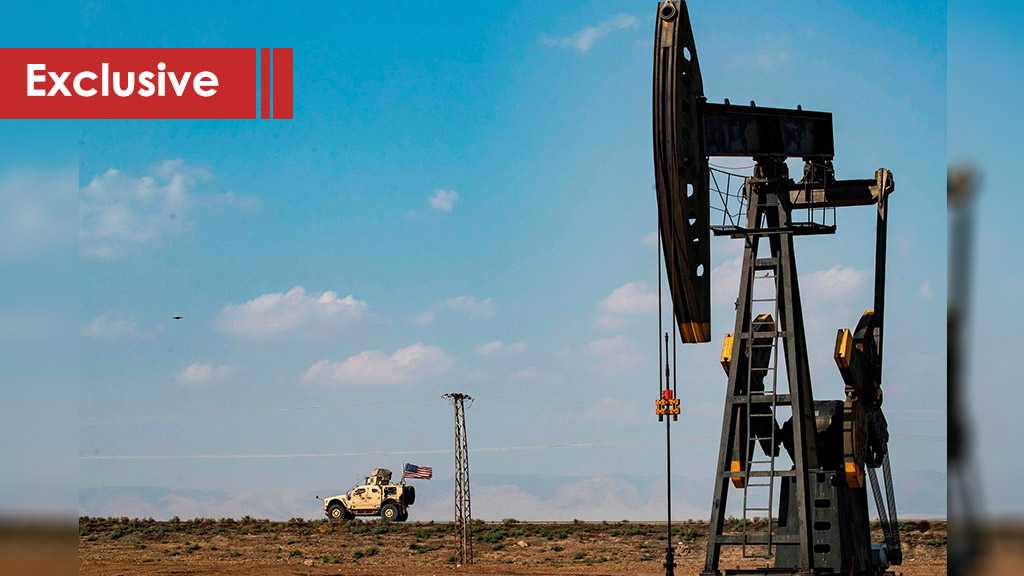
Based on the aforementioned, it’s crystal clear that the US does not have any business in Syria except what it has been doing for decades: draining Syria’s natural resources! Wherever natural resources and oil exist, American troops arrive in a jiffy and settle down.


River to Sea Uprooted Palestinian   
The views expressed in this article are the sole responsibility of the author and do not necessarily reflect those of the Blog!