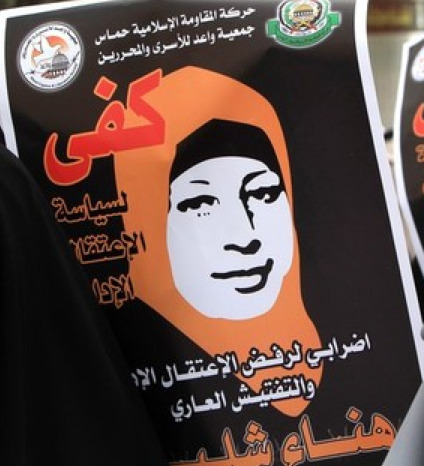
Showing posts with label Hana Ash-Shalabi. Show all posts

Thursday, 10 May 2012

Historic Hunger Strikes: Lightning in the Skies of Palestine

By Richard Falk


May 8 2012

There is ongoing militant expression of Palestinian resistanceto the abuses of Israel’s 45 years of occupation and de facto annexation of the West Bank and East Jerusalem, and five year blockade of Gaza taking the form of a series of hunger strikes. Recourse to this desperate tactic of courageous self-sacrifice is an extreme form of nonviolence, and should whenever and wherever it occurs be given close attention.

Palestinians have protested by hunger strikes in the past but failed to inspire the imagination of the wider Palestinian community or shake the confidence of Israeli officialdom. Despite the averted gaze of the West, especially here in North America, there are some signs that this time the hunger strikes have crossed a historic threshold of no return.


These strikes started by the individual exploit of a single person, Khader Adnan, at the end of 2011. Dragged from his home in the village of Arraba near Jenin by a night raid by dozens of Israeli soldiers, humiliated and roughed up in the presence of his two and four year old daughter, carried away shackled and blindfolded, roughly interrogated, and then made subject to an administrative decree for the eighth time in his young life, Adnan’s inner conscience must have screamed ‘Enough!’ and he embarked on an open-ended hunger strike. He continued it for 66 days, and agreed to take food again only after the Israeli authorities relented somewhat, including a pledge not to subject Adnan to a further period of administrative detention unless further incriminating evidence came to the surface. Upon release, Adnan to depersonalize his ordeal insisted on visiting the families of other Palestinians currently under administrative detention before returning to his own home.


He has spoken out with firm gentleness and invited persons of conscience everywhere to join in the struggle to induce Israel to abandon administrative detention, and the accompanying violations of Palestinian human rights. Khader Adnan’s open letter to the people of the world is reproduced below to convey the tone and substance of his struggle.


Supporters of Hana Shalabi
Following Adnan, and inspired by him, was Hana Shalabi, a young Palestinian woman subject to a similar abusive arrest, accompanied by humiliations associated with her dress and sexual identity. Shalabi was from the villange of Burqin also near Jenin, and had been released a few months earlier in October 2011 as part of the prisoner exchange that was negotiated to obtain the release of the sole Israeli captive, Gilad Shalit. She had seldom strayed from her family home prior to the re-arrest on February 16, 2012, and her life was described as follows by her devoted sister, Zahra: “The four months between October and February were trouble-free days, bursting with dreams and ambitions. Hana loved to socialize and meet with people. She was busy with getting her papers in order to register for university, with her eyes set on enrolling at the American University in Jenin.

She wanted to get her driver’s license, and later buy a car. She went on a shopping spree, buying new carpets and curtains for her bedroom…and she dreamed of getting married and of finding the perfect man to spend the rest of her life with.” It is little wonder that when arrested in the middle of the night she reacted in the manner described by Zahra: “She was panicking, and kept repeating over and over again that she was not going with the soldiers because she didn’t do anything.”


Shalabi Gets Freedom… In Gaza

As with Adnan, Shalabi was released after she was in critical condition, but in a vindictive manner, being sent to live in Gaza for three years, thereby separated from her family and village, which were her places of refuge, love, and nurturing. She also made it clear that her experience of resistance was not meant for herself alone, but was intended to contribute to the struggle against prison abuse and the practice e of administrative detention, but even more generally as engagement in the struggle for Palestinian rights, so long denied. The example set by Adnan and Shalabi inspired others subject to similar treatment at the hands of the Israelis arrest and prison service. Several Palestinians detained by administrative detention decrees commenced hunger strikes at the end of February, and as many as 1650 others, and possibly more, initiated a massive hunger strike on Palestinian Prisoner’s Day, April 17ththat is continuing, and has been named ‘the battle of empty stomachs.’ The main battlefield is the mind of the oppressor, whether to give in and seem weak or remain firm and invite escalating censure, as well as Palestinian militancy, should any of those now in grave condition die.
 

The latest news suggests that Bilal Diab and Thaer Halahleh, continuing their hunger strike that started on February 28th of this year, are clinging to life by a thread. A few days ago they were both been finally transferred to civilian hospitals. Mr. Halahleh after the 70th day without food announced that he was no longer willing even to drink any water or accept further medication.


As might be expected the voices of concern from the international community have been muted and belated. The International Committee of the Red Cross has finally expressed in public its concern for the lives of these strikers. The UN Envoy to the Middle East, Robert Serry, never someone outspoken, acknowledged a few days ago in a brief and perfunctory statement that he was‘deeply troubled’ by the danger to these hunger strikers, as if such a sentiment was somehow sufficient to the outrages being inflicted.
More persuasively, several human rights NGOs, including Physicians for Human Rights--Israel have been reminding Israel of its obligation to allow family visits, which prison authorities have repeatedly denied, despite it being an accepted tenet of medical ethics that is affirmed in Israel’s Patient’s Rights Law.


On May 7, 2012 the Israel’s High Court of Justice denied urgent petitions for release from administrative detention filed on behalf of Mr. Diab and Mr. Halahleh. The Court in a classic example of the twisted way judges choose to serve the state rather than the cause of justice declared: “Hunger strikes cannot serve as an element in a decision on the very validity of administrative detention, since that would be confusing the issue.” Would it be so confusing to say that without some demonstration of evidence of criminality rejecting such a petition amounts to imposing a death sentence without even the pretensions of ‘a show trial’ that relies on coerced confessions? Israel’s highest judicial body leaves no doubt about their priorities by invoking anti-terrorism as a blanket justification, saying that Israel “should not have to apologize for securing its own safety.”


Other reports that the Israeli government has yet to feel pressure from European governments to act in a more humanitarian manner in response to these hunger strikes, but is worried that such pressure might come soon.


After remaining silent for a long time, Robert Serry, the UN Envoy to the Middle East, a few days ago timidly issued a public statement saying that he was ‘deeply troubled’ by the near death condition of the Mr. Diab and Mr. Halahleh.


On a wider canvas, the hunger strikes are clearly having some effect on Israeli prison policy, although it is not clearly discernible as yet. The Israeli Public Security Minister, Yitzhak Aharonovitch, convened a meeting in which he voiced the opinion that Israeli reliance on administrative detention was excessive, and should be reduced. There is also some discussion with officials of the Israeli Prison Service and a committee representing some of the April 17thprisoners on a series of demands relating to prison conditions.


The following demands have been articulated by the April 17th hunger strikers, under the banner of ‘The Prisoners Revolution’:


1. Ending the Israeli Administrative detention and solitary confinement, in which Palestinians were imprisoned for more than ten consecutive years, in solitary cells that lack basic human necessities of life.


2. Allowing family visits to those from the Gaza Strip due to political decisions and unjust laws, such as the so-called "law of Shalit.


3. Improving the livelihood of prisoners inside Israeli Jails and allowing basic needs such as a proper health treatment, education and TV channels and newspapers.


4. Putting an end to the humiliation policy carried by the Israeli Prison Service against Palestinian prisoners and their families, through humiliating naked inspection, group punishment, and night raids.


**********

April 30 2012

Khader Adnan’s Open Letter to the Free People of the World
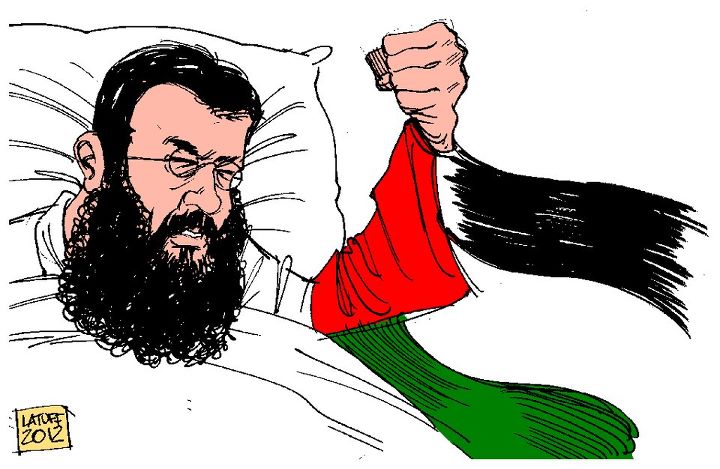
In the name of Allah, Most Compassionate, Most Merciful,*

* Praise be to Allah, and peace and blessings be upon the Messenger of
Allah.*

Dear free people of the world.

Dear oppressed and disenfranchised around the globe.

Dear friends of our people, who stood with me with a stern belief in freedom and dignity for my people and our prisoners languishing in the Occupation's prisons.

Dear free women and men, young and elderly, ordinary people as well as intellectual elites everywhere -
I address you today with an outpouring of hope and pain for every Palestinian that suffers from the occupation of his land, for each of us that has been killed, wounded or imprisoned by the state of terror, that denies anything beautiful in our lives, even the smile of our children and families. I am addressing you in my first letter following my release - praying it will not be the last - after Allah granted me freedom, pride and dignity.

I was an "administrative detainee"in the jail of occupation for four months, out of which I have spent 66 days on hunger strike.

I was driven to declare an open-ended hunger strike by the daily harassment and violation of my people's rights by the Israeli Zionist occupation. The last straw for me were the ongoing arrests, the brutal nighttime raid on my house, my violent detention, during which I was taken to the "Mavo Dotan" settlement on our land occupied 1967, and the beatings and humiliation I was treated to during arrest interrogation. The way I was treated during the interrogation at the Jalameh detention center, using the worse and lowest verbal insults in the dictionary.

After questioning, I was sentenced to imprisonment under administrative detention with no charges, which proves mine and others' arrests serve only to maintain a quota of prisoners, to harass us, to restrict our freedom and to undermine our determination, pride and dignity.

I write today to thank all those who stood tall in support of my people,with our prisoners, with Hana al-Shalabi and with myself. I call on you to stand for justice pride and dignity in the face of occupation. The assault on the freedom and dignity of the Palestinian people is an assault on free people of the world by a criminal occupation that threatens the security, freedom and dignity of all, no matter where. Please, continue in exposing this occupation, boycotting and isolating it internationally. Expose its true face, the one that was clearly exposed in the attack of an Israeli officer on our Danish cohort. Unlike that attack, the murder our people is a crime that goes by unspoken of and slips away from the lens of the camera.

Our prisoners are dying in silence. Hundreds of defenders of freedom are on hunger strike inside the prisons, including the eight knights, Bilal Diab and Thaer Hlahalh, who are now on their 61stday of hunger strike, Hassan Safadi, Omar Abu Shalal, Mahmoud Sarsak, Mahmoud Sarsal, Mohammad Taj, Jaafar Azzedine (who was arrested solely for standing in solidarity with myself) and Ahmad haj Ali. Their lives now are in great danger.

We are all responsible and we will all lose if we anything happen to them. Let us take immediate action to pressure the Occupation into releasing them immediately, or their children could never forgive us.Let all those free and revolutionary join hands against the Occupation's oppression, and take to the streets – in front of the Occupation's prisons, in front of its embassies and all other institutions backing it around the world.

With deep appreciation,

*Khader Adnan *

++++

Having followed these hunger strikes for several months, I am convinced that these individuals subject to administrative detention are ordinary persons living a normal life, although chafing under the daily rigors and indignities of prolonged occupation. Israeli commentary tends to divert humanitarian concerns by branding these individuals as ‘terrorists,’ taking note of their alleged affiliation with Islamic Jihad. Adnan who is obviously preoccupied with his loving family, a baker by profession, working in his village, does not seem a particularly political person beyond the unavoidable political response to a structure of domination that is violent, cruel, and abusive. The language of his Open Letter is one that exhibits moral intensity, and seeks support for the Palestinian struggle for a sustainable peace with justice. It has none of the violent imagery or murderous declarations found in Al Qaeda’s characteristic calls for holy warfare against the infidels.

I was impressed by Hana Shalabi’s sister’s response when asked about the alleged connection with Islamic Jihad. Zahra responded to the question with a smile saying, ‘She’s not really Islamic Jihad. She doesn’t belong to any faction. When Israel imprisons you, their security forces ask which political faction you belong to. Hana chose Islamic Jihad on a whim.’ Even if it was than a whim, for a religious person to identify with Islamic Jihad it does not at all imply a commitment to or support for terrorist tactics of resistance. Zahra asks rhetorically, ‘Does she have missiles or rockets? Where is the threat to Israel? ..Why can’t we visit her? She has done nothing.’ And finally, ‘I would never place my enemy in my sister’s position…I would not wish this on anyone.’

Israel has by vague allegations of links to terrorist activities tried its best to dehumanize these hunger strikers, or to dismiss such actions as the foolish or vain bravado of persons ready to renounce their lives by their own free will. But their acts and words if heeded with empathy, their show of spiritual stamina and sense of mission, convey an altogether different message, one that exhibits the finest qualities that human beings can ever hope to achieve. Those of us who watch such heroic dramas unfold should at least do our best to honor these hunger strikers, and not avert our eyes, and do our utmost to act in solidarity with their struggles in whatever way we can.

We cannot now know whether these hunger strikes will spark Palestinian resistance in new and creative ways. What we can already say with confidence is that these hunger strikers are writing a new chapter in the story line of resistance Sumud, and their steadfastness is for me a Gandhian Moment in the Palestinian struggle.

River to Sea Uprooted Palestinian  
The views expressed in this article are the sole responsibility of the author and do not necessarily reflect those of this Blog!

Sunday, 22 April 2012

Khader Adnan: Freed for How Long?

by Stephen Lendman

My PhotoOn April 17, Palestinian Prisoners Day, Khader gained freedom. At issue is for how long?
As announced, Israel released him as scheduled. He endured 66 hunger striking days to be free.
 
So was Hana Shalabi last October when released with other Palestinian prisoners in exchange for Gilad Shalit. Held two and a half years without charge, she wasn’t free long.

On February 16, she was again arrested and detained uncharged. After 44 hunger striking days, she was lawlessly exiled to Gaza where she’s recuperating from her ordeal. Weeks after he resumed eating, Khader also perhaps still struggles to regain full health.

On April 18, Maan News quoted him saying:
“The happiness I saw on my peoples’ faces made me forget all the suffering I experienced when I was on hunger strike.”
On arrival in Jenin, he went to an Arraba village sit-in tent to meet Jaafar Izz Addin’s parents. Imprisoned, he’s now hunger striking for justice. So are hundreds of other other Palestinian prisoners.
On April 17, they began an open-ended strike against abusive prison conditions and practices. Children young as 10 are affected. So are women.


Khader, Hana, and others inspired them. They’re doing it en masse for justice. Hundreds more may join them. Israel holds thousands of Palestinian political prisoners. Three al-Aridha brothers are among them – Amjad, serving 20 years, Mahmoud for life, and Raddad indefinitely without charge.

Khader also went to Kafr Raai village to meet Bilal Thiab’s mother. He’s been hunger striking about 50 days. Asked about his last prison moments before freedom, Khader said:
“It looked like an uprising as all my hunger-striking fellow prisoners began chanting ‘Allahu akbar’ (Allah is greater).
“I tried to bid them farewell, but I was denied that and was moved from one detention center to another until I finally arrived at Salem center in the northern West Bank.”
Abusively moving him from one location to another delayed his release 16 hours. At Salem, ICRC got custody. They took him to Arraba. Khader added that Israel’s delay reactivated his hunger strike. He feared not being released.
“They detained me in the darkness so that nobody could see them, and when they released me they did it in the darkness so that nobody could welcome me. They failed in that because I had a reception which indicates that our people are still committed to the prisoners’ cause and will support them until they are all freed.”
Israeli abuses don’t quit. Even on days prisoners are released they’re abused. Windows in other prisoners’ cells were “shut down” to prevent them from seeing Khader leave.

He believes hunger striking for justice works. He supports prisoners doing it in “stages.” First dozens, then hundreds, then en masse to expose prison and occupation harshness. He hopes hundreds more will join those now striking.
“My hunger strike was not a new form of hunger strike, but the long duration gave it special importance. This is like vertical expansion where you construct a building on a small area of land, but that building benefits everybody.”
On April 17, Al Haq quoted hunger striking prisoners saying, “We will live in dignity.” The human rights organization highlighted thousands of lawlessly held Palestinian political prisoners, many without charge or trial.

Their mistreatment “includes internment, the denial of family and lawyer visits, prolonged periods of isolation, and the lack of fair trial.” Letting the whole world know is vital.
On Palestinian Prisoners Day, Al Haq marked the occasion by highlighting abusive Israeli treatment and thousands of affected political prisoners.

Special attention was given to Bilal Diab and Thaer Halahleh. Ignored by the international community, they’ve been hunger striking around 50 and counting. Israel only responds to world condemnation. Even then, very rarely. Most often, it’s to lash out.

UN Member States must pressure Israel to obey international law, stop abusive practices, or face sanctions and other measures with teeth. That and much more needs to happen to end decades of abuse.
On April 17, Addameer and 12 other human rights organizations “salute(d) all Palestinian political prisoners, especially those engaging in brave civil disobedience through ongoing hunger strikes.” At issue are appalling abuses and long denied justice.

hunger strike martyrs © google images
They called imprisoning Palestinians “a form of Israeli institutionalized violence.” It includes torture and other ill-treatment from arrest to detention. Brutality, injustice, and racism define Israeli policy.
Corporate profiteers are involved. The British/Danish security firm G4S was highlighted. In 2007, its Israeli subsidiary Hashmira contracted with the Israeli Prison Authority to provide security systems.
Ketziot and Megiddo have them. Both notoriously hold Palestinian political prisoners inside Israel in violation of international law. They also service Ofer prison in the West Bank, as well as Kishon and Moskobiyyeh where human rights organizations documented extreme torture and abuse.

G4S is complicit with other occupation practices. It provides equipment and services for West Bank checkpoints along the Separation Wall’s route. Also to terminals besieging Gaza and for Israeli police and business enterprises operating in illegal settlements.

“A panel of legal experts concluded that G4S may be criminally liable for its activities.” At issue is its involvement with Israel’s illegal Wall and other international law violations.

The EU announced it won’t renew its G4S contract following pressure from Palestinian rights organizations. Global civil society groups denounce its complicity with lawless imprisonment, worker rights abuse, and other human rights violations.

prison martyrs © palestineposterproject.org
 
Addameer and other groups “demand that the Palestinian leadership bans G4S from private and public tenders, and ask for the strict application of the boycott legislation in the Arab world against companies cooperating with the Israeli prison system.”

On April 18, the Samidoun Palestinian Prisoner Solidity Network highlighted ongoing mass hunger strikes. On April 17, 1,200 Palestinian political prisoners began them. Another 2,300 refused meals. They intend greater solidarity actions against detentions without charge or trial, abusive isolation, and other harsh prison abuses.

Last October, as part of the Shalit prisoner swap deal, the Israeli Prison Service (IPS) agreed to cease abusive isolation and other punitive measures within three months if prisoners ended hunger strikes.

April 18 marks six months since the agreement. No policy changes occurred. Business as usual continues. Israel makes deals, then breaks them. Mass Palestinian hunger strikes protest what’s no longer tolerable anywhere.

Ten or more Palestinians remain on long-term strikes of from 28 to about 50 days. Ahmad Saqer is Israel’s longest held uncharged prisoner. April 18 marked his 32nd hunger striking day. Mohammed Suleiman protested by refusing badly needed medical treatment.

Mohammad Taj demands prisoner of war status. He’s been hunger striking nearly five weeks. Others also against numerous abuses. All demand justice. Israel provides none. IPS prohibited Addameer lawyer, Samer Sam’an, from visiting hunger strikers in violation of IPS regulations. At issue is further isolating them to break their spirit.

In response to Israeli abusiveness, Palestinian prisoners are increasingly determined to hunger strike for justice. They hope the whole world’s watching. It’s time to end decades of abusive injustice.

Palestinian courage needs supportive global pressure. Both must be sustained for effectiveness. Change won’t happen easily or quickly, but always comes bottom up. Even Israel’s not immune from what’s too robust to ignore. Hopefully, change is just a matter of time.

A Final Comment

April 18 marked Bahraini human rights hunger strike Abdulhadi Alkhawaja‘s 70th hunger striking day. Perhaps doctors can explain how he lasted this long. He called his wife and said he’ll stop allowing IV and other intravenous fluids. He’ll only ingest water.
 
On day 67, his family finally got to see him after being denied for days. His daughter Zainab said one hour was provided. Family members were searched and escorted by police and soldiers.
His appearance was frightening. “I didn’t think he could look worse than the picture we saw, but he did.” He was a skeletal version of his former self. He “looks like someone who is in the final days of a long fight with a terminal illness.”

Nonetheless, he greeted family members with a smile, saying: “Why do you all look so sad?”
His eyes weren’t normal or focused. His hands were ice cold. He hasn’t spoken to doctors for days. He’s in imminent danger of death. He could go any time. He said “Whatever happens is in the interest of the people.” He’s willing to die for justice.

Like Khader, Hana, and other long-term hunger strikers, few anywhere match their courage. They deserve sustained world support in response.

River to Sea Uprooted Palestinian  
The views expressed in this article are the sole responsibility of the author and do not necessarily reflect those of this Blog!

Wednesday, 18 April 2012

Palestine’s Prisoners Day: In the Footsteps of Khader Adnan


Palestinian children take part in a rally in front of the Red Cross headquarters in Gaza City marking Palestinian Prisoners Day 17 April 2012. (Photo: REUTERS - Suhaib Salem)

Published Tuesday, April 17, 2012

Khader Adnan was expected to return to his village of Arrabeh today after waging a 67-day hunger strike that led to Israel agreeing to release him on 17 April, by chance coinciding with the annual Palestinian Prisoners Day. However, at the time of publishing, Khader had still not been released and the Israeli Prison Service had not communicated with either his lawyer or family on his status.

When Khader Adnan is finally allowed to return to his home village of Arrabeh, just outside of Jenin, he will return to a resurged prisoners’ movement that he very well may have sparked.

Palestinian prisoners are reinstating their integral role in the national struggle, notably without the help – or interference – of political parties and leaders. Adnan’s solitary bravery and commitment restored a sense of agency and power to prisoners.

Without directives from political organizations, individual prisoners have been steadily enlisting in a battle against the policy of administrative detention by refusing their meals. The final outcome of this movement is still unknown, but its recession does not appear imminent. On the contrary, the prisoners’ movement is gaining momentum as today hundreds more launched an open-ended hunger strike.

Following the precedent of Khader, female prisoner Hana Shalabi began a hunger strike immediately upon her re-arrest on 16 February. She spent 43 days fasting before reaching an agreement with Israel that saw her exiled to Gaza for three years. After her there were more. Bilal Diab and Thaer Halahleh have fasted for 49 days, Omar abu Shalal for 45 days, and Hassan al-Safadi for 43.
 

In recognition of Khader’s impact on the strength of the prisoners’ movement, the Palestinian Ministry of Prisoners Affairs held its annual Prisoners Day commemoration in Arrabeh yesterday evening.
While driving to the ceremony, Abdel Aal, the General Director of the Palestinian Prisoners’ Club, received a phone call from a prisoner in Ofer jail, Muhammed Dawood Abu Ajaj. Abu Ajaj has been held in administrative detention for the last 20 months and had received notice that his incarceration was extended another four months.

He called Abdel Aal to announce that he too will go on hunger strike.

So, as of yesterday there were at least 11 prisoners fasting in protest of administrative detention, which allows Israel to hold prisoners indefinitely without charge.

In a significant development today, coinciding with Palestinian Prisoner’s Day, over 1,200 prisoners – of the 4,610 currently held – began an open-ended hunger strike, thus broadening the struggle from administrative detention to a more general demand for rights that are denied to Palestinians in Israeli jails.

While the repercussions of Khader’s example are undeniable, some have argued that the seeds of this fertile movement may have been planted before last December’s arrest of Khader.

On 27 September 2011, prisoners affiliated with the Popular Front for the Liberation of Palestine began a hunger strike to protest what was called the “Shalit laws."

“These were not laws, but punitive measures that had been inflicted on Palestinians prisoners in retribution for Hamas holding Gilad Shalit,” a representative from Addameer, a Palestinian prisoner rights group, explains.

Small solidarity tents were quickly erected in West Bank cities. By October 6 Addameer approximated that about 400 prisoners had joined the strike.

But just as the strike was finding its stride, Israel announced the punitive measures would be reversed.
“The prison authorities told the strikers that soon there would be an ‘event’ that would change everything,” said Addameer.

The “event” was the prisoner exchange deal Hamas brokered with Israel wherein 1,027 Palestinians would be released in exchange for Gilad Shalit, the sole Israeli held by Palestinians.
 

Shalit was released, the prisoners ended their hunger strike, but the punitive measures did not end.
“Following the deal, the measures were altered but not reversed,” says Addameer. “The deal significantly overshadowed the hunger strike that was started in September.”

The large-scale strike that was launched today is a continuation of what prisoners began in September. But this time the strike will not be characterized by any one political faction.

In order to emphasize the unified nature of the strike, the prisoners are forming a committee with representatives from Hamas, Fatah, PFLP, and Islamic Jihad.

This committee will be responsible with setting and communicating their demands with the Israeli Prison Service (IPS).

The strike seeks to fully reverse all punitive measures that were taken in connection with Shalit, including arbitrarily denying or humiliating visitors to prisoners and humiliating and abusing prisoners during transfers.

Prisoners are also seeking an end to solitary confinement and the prohibition against residents of the Gaza Strip from visiting family members in prison. There are currently 456 Gazan prisoners who have been denied family visits since 2007.

Outside the prison walls, the national unity that prisoners are fostering is still limited to political rhetoric. With both Fatah and Hamas being accused of trying to manipulate the hunger strike for political gains, this enduring political rivalry threatens fissures within the prisoners’ movement as well. However, prisoners, no matter their party affiliation, are united by a common experience inside Israeli jails that may allow the movement to surmount looming divisions. 
River to Sea Uprooted Palestinian  
The views expressed in this article are the sole responsibility of the author and do not necessarily reflect those of this Blog!

Tuesday, 3 April 2012

Haniyeh: Shalabi Broke the Will of her Warden

Gaza premier Ismail Haniyeh said Monday that he would protest Israel's decision to deport Palestinian detainees in international and Arab courts, according to Maan news agency.

Hana Shalabi
Former hunger-striker Hana Shalabi, who arrived in Gaza on Sunday, was the latest prisoner to be deported by the Zionist entity under the terms of her release. Shalabi is from Burqin village in the northern West Bank.

Haniyeh visited her on Monday in Shifa Hospital in Gaza City. He told reporters her deportation was a war crime and a violation of human rights and international law, Maan’s report said.

He praised 29-year-old Shalabi, who he said had "broken the will of her warden."

His Hamas-led government will bear all responsibility for her, he added.

Haniyeh urged Egypt to pressure the Israeli enemy to stop targeting released prisoners.

The Gaza premier insisted that Israel should respect the terms of its agreement with Shalabi. According to the deal, Shalabi will be allowed to return home after three years.

Human rights groups have slammed the terms of Shalabi's deal. The International Committee of the Red Cross urged Israel "to comply with international humanitarian law, which prohibits Israel, whatever its motives, from forcibly transferring Palestinians to another territory."

Related Articles

River to Sea Uprooted Palestinian  
The views expressed in this article are the sole responsibility of the author and do not necessarily reflect those of this Blog!

Prince of Gaza hailed Qatari donation of 25000 tons of fuel to Gaza,

Haneyya calls on Egypt to restrain Israeli targeting of Palestinian prisoners

[ 02/04/2012 - 05:53 PM ]


GAZA, (PIC)-- Palestinian premier in Gaza Ismail Haneyya has called on Egypt, in its capacity as the patron of the prisoners’ exchange deal between Hamas and Israel, to pressure Israel into abiding by articles of the deal.

Haneyya, during a visit to liberated prisoner Hana’a Shalabi in Shifa hospital in Gaza on Monday, said that Israel had violated articles of the agreement that banned re-arrest of freed captives in this deal.

He described the deportation of Shalabi to Gaza as a war crime and a violation of human rights, adding that his government would ask Arab and international courts to put an end to such policy.

The premier, shifting to another issue, said that the fuel crisis in Gaza would be resolved within days, pointing to the presence of his deputy in Cairo for that matter.

He hailed in this respect the Qatari donation of 25000 tons of fuel to Gaza, adding that it would suffice the Strip for two months.

River to Sea Uprooted Palestinian  
The views expressed in this article are the sole responsibility of the author and do not necessarily reflect those of this Blog!

Monday, 2 April 2012

Shalabi Gets Freedom… In Gaza


After 43 days of hunger strike, Hana Shalabi was finally freed when the Israeli occupation authorities deported her to Gaza, in a move described by the Palestinians as a “war crime” and a “crime against humanity”.

Hana Shalabi with her family

Shalabi confirmed that she chose deportation rather than continuing with her hunger strike in prison, because of the serious deterioration in her condition, but stressed the need to continue to support the Palestinian prisoners who are in hunger strike. She had been taken from the Ramla prison south of Tel Aviv to the Erez crossing.
Hana Shalabi out of prison

The Palestinian prisoner, who was being transferred by ambulance to a local hospital for tests, said she was "very happy to be in my country with my people," but that the meeting with her family was very difficult.
Hana Shalabi out from ambulance

In Gaza, people bearing her picture and calling out her name were waiting for her with the participation of officials from the Islamic Jihad and Hamas movements. The Islamic Jihad movement asserted its rejection to deportation policy but welcomed the arrival of Shalabi to Gaza.
Hana Shalabi

The deal has been also criticized by rights groups and the Palestinian prisoners affairs ministry, which said she had been forced to accept the arrangement.

In a statement released on Sunday through her lawyer Jawad Bulus, Shalabi said:
Supporters of Hana Shalabi

“To my dear family and my people and all the free people in the world, I thank you for your efforts and I appreciate everything you did for me and for the prisoners. I hope that you will understand my position and my decision, which was taken freely. I chose to be transported to Gaza, which is half the homeland, and to be with my family and people there for three years. After that I will go back to my home in Jenin and to my family. I hope that my decision will be respected and that we will continue to support together those who are fighting their battles for the homeland and for the prisoners.”


Source: Agencies
02-04-2012 - 10:10 Last updated 02-04-2012 - 13:5


River to Sea Uprooted Palestinian  
The views expressed in this article are the sole responsibility of the author and do not necessarily reflect those of this Blog!

Friday, 30 March 2012

Hana Shalabi Reportedly Ends Hunger Strike


Both Reuters and the BBC have published reports in the last three hours saying Palestinian prisoner Hana Shalabi, 30, has ended her hunger strike. Under a deal reportedly reached, Shalabi will be freed from prison and deported to the Gaza Strip, where she is to remain in exile for three years.

RAMALLAH, West Bank, March 29 (Reuters) - A Palestinian
woman on hunger strike in protest at her detention without
charges by Israel will be deported to the Gaza Strip under a
deal ending her fast, boths sides said on Thursday.

Hana Shalabi, a member of the Islamic Jihad militant group,
stopped taking food after Israeli troops seized her in the
occupied West Bank on Feb. 16. She was the second Palestinian
detainee in quick succession to go on hunger strike, a protest
since taken up by around two-dozen others.

Qadoura Fares of the Palestinian Prisoners Club said
Shalabi, 30, had agreed to three years' exile in Gaza, which is
geographically separate from the West Bank and under Israeli
blockade, "in return for ending her strike and being freed".

"This is her decision and her own life," Fares told Reuters.


Reuters also quotes an unnamed Israeli military source as saying the deportation will occur "in the next few days."

The news comes on the 44th day of Shalabi's hunger strike. Last week, reports surfaced saying the prisoner was near death and being subjected to intense pressure by Israeli officials to end her hunger strike. Today's BBC report quotes Palestinian Prisoner Affairs Minister Issa Qaraqaa as saying, "She had to accept because Israel put pressure on her. But we are totally opposed to all deportation measures." 


Shalabi mounted her hunger strike in protest against Israel's policy of administrative detention, under which Palestinians can be arrested and held for long periods of time without charges and without trial.
River to Sea Uprooted Palestinian    
The views expressed in this article are the sole responsibility of the author and do not necessarily reflect those of this Blog!

Tuesday, 27 March 2012

Jihad leader launches hunger strike in Israeli jail while-HanaShalabi in critical condition

Maan News Agency | March 27, 2012

JENIN (Ma’an) — Islamic Jihad announced Tuesday a senior member of the movement who was detained by Israel a week ago has began a hunger strike against his administrative detention.

Jafar Ez Al-Din Qadan, 40, was seized by Israeli forces from Arraba village south of Jenin, at dawn on Wednesday. He was transferred to administrative detention — without charge — and immediately began refusing food in protest, the group said.

Ez Al-Din Qadan has spent four years in Israeli jails. His brother Tareq was released in the October 2011 prisoner exchange deal, and deported to the Gaza Strip.

Jihad-affiliated detainee Khader Adnan, also from Arraba, ended a 66-day hunger strike after striking a deal for early release and non-renewal of his detention order in February.

Hunger striker Hana Shalabi refused a deal to shorten her administrative detention order to four months, and has spent 41 days without food.

Shalabi is in a critical condition, doctors say.
River to Sea Uprooted Palestinian  
The views expressed in this article are the sole responsibility of the author and do not necessarily reflect those of this Blog!

Monday, 26 March 2012

40 Days and 40 Nights: The Biblical Fast of Hana Shalabi


A Palestinian woman holds a placard depicting Palestinian prisoner Hana Shalabi during a rally in support of her hunger strike as well as calling for the release of Palestinian prisoners held in Israeli jails, in front of Damascus Gate in Jerusalem's Old City 24 March 2012. (Photo: REUTERS - Ammar Awad)
Hana Shalabi’s hunger strike has put her life in danger but she charges on in her battle against Israel’s practice of imprisonment without charge.

Ramallah – Islamic Jihad spokesperson and former detainee Khader Adnan won the battle of “empty stomachs” and handed the torch to Hana Shalabi, another fierce warrior who refuses to give up on her rights.

On Sunday, Shalabi completed 40 days of an open hunger strike for “victory or martyrdom.” She is protesting against being held by Israeli occupation forces without charge, a procedure known as administrative detention. Her body is frail but she is defiant and intent on continuing her protest.
Shalabi continues to fight her battle with the Israeli authorities following the failure of negotiations between her lawyers and the prosecution to reach a compromise to end her agony.

On March 19, Shalabi had sent a message from the prison clinic in Ramleh through her lawyer, Jawad Boulos, head of the legal department in the Palestinian Prisoners Club (PPC).

“It is true that our lives are the most precious, but our freedom is even more precious and more powerful than their prison cells,” she wrote.

Shalabi explained how the authorities had suddenly transferred her to Rambam hospital in Haifa for medical checkups and then returned her to the hospital of Ramleh prison. This happened without her consent and even after she refused.
 
According to her lawyer, Shalabi is being kept alone in the same room where Adnan held his hunger strike two months ago. She has lost about 16 kilograms (from 73kg to 56kg) and is facing enormous pressure to end the strike.

Authorities are attempting to break Shalabi by focusing on the adverse effects of the lack of food on her body, suggesting that she might become paralyzed or face permanent physical damage.
She is completely isolated from the outside world. Psychological pressure is also growing, especially when her plight is compared to Adnan’s and the amount of support he had received.

Countering the constant fabrications of Israeli authorities, president of the PPC Kaddoura Fares, denies the claim by the Prison Service Ethics Committee that Shalabi’s health situation is satisfactory. He describes her situation as critical and says that she may very well die.

Her family is a major source of strength that allows her to persevere. They have always been involved in the struggle. She is the daughter of Yehia Shalabi (67) and has five sisters and three brothers. Her fourth brother, Samer, was killed by Israeli forces.

Al-Akhbar met with Omar Shalabi, Hana’s brother, who said that she had decided to start the hunger strike prior to her release in the Gilad Shalit prisoner swap. She was protesting being administratively detained for 25 consecutive months.

He said she had told her family she was going on an open hunger strike the moment she was detained again last February 16. She asked them to support her and not to worry.

It is difficult for Omar to articulate his feelings toward his sister. “What you lose is difficult to regain,” he says, speaking of Samer. It worries her family most that Shalabi might face the same fate.
“Her spirits are high and she has faith in God,” he continues, “Our prayers have not stopped. The tent we set up outside our home is always full of visitors expressing solidarity, from Jenin, Jerusalem, Ramallah, and 1948-occupied Palestine. This makes things easier, along with the solidarity actions and protests.”  

Although many organizations and lawyers have tried to help, the occupation authorities still refuse to provide Shalabi’s family with a permit to visit her.

The PPC explains that Shalabi’s parents applied dozens of times for such a pass but the Israeli secret service kept refusing on grounds of a “security threat.”

Other Palestinian prisoners who had bravely stood by Adnan are also active in supporting Shalabi. Some decided to carry on with hunger strikes against the occupation and its prisons.
Iyad Mahamid, a lawyer at PPC, told Al-Akhbar that while visiting Majdo prison he found out that “the prison administration was punishing the prisoners who went on hunger strike in solidarity with Hanaa Shalabi. There were 50 of them just in Majdo.”

The lawyer confirms that the administration “segregated some of them, denying them visitation rights and the use of the canteen. It also imposed between 200 and 300 shekels (US$50 – 80) in fines and barred them from receiving lawyers, claiming they are in bad health due to the hunger strike.”


The Palestinian Joan of Arc

Hana Shalabi was born in February 1982 in the village of Barqin near Jenin in the north of the occupied West Bank, to a family of refugees from Haifa. She is single and has been detained by the occupation twice.

She spent about two and a half years in detention the first time she was detained. This time, she decided it would be different.

She had experienced the reality of Israeli prisons and the meaning of detention: the endless interrogations for days on end, the harassment, and the sordid treatment used by the occupation against Palestinian prisoners, especially women.

On 14 September 2009, Shalabi was arrested for the first time. It was during Ramadan. In the al-Jalma interrogation center, she underwent intensive questioning 10 hours a day, for eight consecutive days.

The soldiers and interrogating officers would beat and humiliate her.

Shalabi lost track of time and did not eat because it was Ramadan and she was fasting. She would only drink some water after the interrogation sessions late at night.

The interrogators did not care about her fasting, and did not provide her with iftar or sohour meals on time. She spent a total of 17 days in a small, dirty, and unlit room containing just a bed and an exposed toilet.

“The Palestinian Joan of Arc,” as some supporters call Shalabi, confirmed that she was verbally harassed by an interrogating officer after a particular session.

He rudely called her habibti (my love), making her angry. He ordered the soldiers to hit her on her face and body. Then, they tied her to the bed and proceeded to insult her and film her on the bed.
Shalabi spent 25 consecutive months in administrative detention.

Shalabi was released on 18 October 2011 in the first phase of a prisoner swap between Hamas and Israel. On 16 February 2012, she was rearrested inside her home.

The Israeli army surrounded her family’s neighborhood and raided the houses of her brothers and parents.

Shalabi was handcuffed and detained, without allowing her to say goodbye to her family or informing them of where they were taking her.

She was blindfolded until they reached the Salem detention center near occupied Jenin. That same day, she began a new struggle against the occupation and went on an open hunger strike.

This article is an edited translation from the Arabic Edition.

River to Sea Uprooted Palestinian  
The views expressed in this article are the sole responsibility of the author and do not necessarily reflect those of this Blog!