Showing posts with label South Korea. Show all posts

Monday, 23 August 2021

Is Afghanistan the First Domino to Fall?

War and Conflict — Strategic Culture

August 22, 2021

Tim Kirby

It certainly looks like a domino that has been put in position poised to fall waiting for others to take their places in the line.

With America withdrawing from Afghanistan abruptly after some 20 years, one big question is being discussed throughout the strategic sphere by those both in big institutions and laying on their couches – is the American loss in Afghanistan the first domino to fall in the eventual collapse of the Global Hegemon? After all, Afghanistan is the “graveyard of empires” probably because it is an expression that sounds nice and because the Soviets fell apart a few years after losing to the locals. So this must be the “beginning of the end” right?

Well, we should never be so quick as to jump onto narrow narratives without looking at the big picture. Side-by-side images of the Americans and their allies fleeing Vietnam and Afghanistan by helicopter are flooding Facebook, posted by those in the Alternative Media who take great joy in any loss by the 21st century’s “Evil Empire” but they seem to forget that just a few decades after losing in Vietnam the United States won the Cold War and took dominance over the planet.

Image: Strategic meme-of-the-year material for 2021.

No single event no matter how photogenic it is, is not going to be a sign of the grand demise of the “Sole Hyperpower”. It really took from the beginning of WWI till the end of WWII for the British to truly fall apart as a geopolitical force. The Soviet Union fell much quicker, but it is very widely believed that Perestroika (or the The Reykjavik Summit) was the real first white flag that devolved into the breakup of the union years later. The Roman Empire was a vastly slower burn than either of these two modern behemoths.

This means we should not be debating if Afghanistan is the first “domino” to fall, but instead we should really take a look at what the rest of the dominos falling would look like. At this point we can surely put together a rough picture of what the next tiles to fall would look like, i.e. what other major failures/events would really be signs of the Monopolar World meeting its demise? The following are a few humble offerings as to what these dominos could be…

Abandoning the Maidan Regime in the Ukraine

The unexpected surrender and soon to be total fall of Kabul has certainly resonated in another city that starts with the letter K. If Washington is finding it necessary to abandon a twenty-year Nation-Building project that they have invested vast sums of money and manpower into, that means that back-burner Kiev could be cut loose in the near future, putting the fate of the region in the hands of the Russians.

Image: We all know who secures Ukrainian “independence”.

The Maidan has been a major roadblock for Russia. As Brzeziński wrote, “It cannot be stressed enough that without Ukraine, Russia ceases to be an empire, but with Ukraine suborned and then subordinated, Russia automatically becomes an empire” and Washington has done an absolutely fantastic job of turning the region into an “anti-Russia” as Putin recently called it.

If the Maidan project were to be abandoned, it would become another quite massive domino. Washington giving up on Kiev, resulting in that current political entity probably being divided up, mostly going to Moscow, would symbolize either the USA’s inability to stop the rise of the Russians or their begrudging acceptance of it.

Taiwan, Hong Kong and/or South Korea

The Trump-era State Department Democracy storm that was inflicted on Hong Kong has seemed to fade away, but a total abandonment of the thorns in the side of the Chinese Dragon would also result in another domino being placed into position.

Image: Not State Department = No Professional Protest Organizers in China.

Bailing on Hong Kong activists or failing to maintain Taiwan’s independence would certainly present a strong sign of weakness and inability from the standpoint of Washington. Furthermore, although China has never had a passionate love for the North Koreans, having South Korea as essentially an American beachhead right next door has been a cause of concern for decades for Beijing. The South Korean economy on paper looks amazing and their cities dazzle with progress but what would be the effects of Ameria giving up on them? Is South Korea able to stand as a great nation, or is it really only successful thanks to the American umbrella? The answer to that would reveal itself within two weeks of an America-free Korean Peninsula.

Simply put, if Washington gives up on Hong Kong, Taiwan and/or South Korea it is another sign of the end for sure as China would be more or less rid of these weak points that have been exploited against it for decades.

A Loss of Control Over the “Bigs”

Big Tech, Big Pharma, Big Agro and so on, have dutifully served Washington’s interests despite their theoretically international nature. But we should never forget that large for-profit entities are quite “whoreish” and will serve whichever master they need to. If Washington cannot control the Bigs as it used to, this would be another domino.

To a small extent this is happening in Hollywood where the Chinese market’s (and its official and unofficial) demands are having a major impact. But if it comes to a point that Hollywood is only making a chunk of the world’s blockbusters rather than nearly all of them it would be the end of the total unobstructed Soft Power dominance of this American institution. Or even worse, if Hollywood can be bought out from under America then a new global narrative could be spun quite quickly.

If the Hegemon fades, the leadership of the Bigs will feel increasing pressure from the Russians, Chinese and Arabs to give up the whole “gay thing” and portray these societies in a positive light whether through bribery or threats of force. Apple may be “designed in California” but if need be they would surely bail for greener pastures rather than living a life of poverty loyal to a failed America.

Mexico, Lakotastan and African-America

The United States has done a fantastic job of fostering independence movements within its rivals while making diverse masses “American” at home. However, as with the Soviets and the British, waves of breakaway republics and successful secessionist movements would be a very big domino indeed.

The Soviets tried to create an African workers uprising in America in the 60’s and failed miserably, but BLM could get out of control, or in the case of a dying USA, could become used by foreign powers. An Afro-American Maidan would certainly be another sign of doom.

The rise of an independent Native-American state like the Lakota Indians’ lands would be yet another tile being stood into place, opening the door for further break-away attempts.

When the Mexicans lost the Mexican-American war they lost the chance to become the dominant power on the continent. Few remember, but the destiny of this New World was not just given to the Americans wrapped in a box. If the Mexicans had won the war they would be the ones with access to the Atlantic (via the Gulf of Mexico) and the Pacific simultaneously, not Washington. It would have been very possible for them to secure the entire West Coast. A Mexico that would begin to take action as an independent actor would certainly be another sign of serious trouble for Washington. Thus far, on the North American continent “there can be only one” but perhaps that isn’t necessarily going to always remain the same “one”.

The death of the Dollar or collapse of the Federal Reserve

If the dollar were to collapse, or there were serious problems at the Federal Reserve, as have been predicted for many years due to insane national debt, this would of course be the biggest domino of all. The West has been able to accumulate bafflingly massive debt with no consequences because of the dominance of Washington. It is very hard to call in a debt from the toughest kid school surrounded by his henchmen. But when the big bully stops growing, and loses his buddies, all of a sudden getting your $5 back with a few whacks from a baseball bat becomes viable.

Image: If you are powerful enough no one can call in your debts.

No one can call in the debt of a Global Hegemon, but Regional Powers have to balance their checkbook. A decrease in power could lead to the national debt prophecy coming true in our lifetimes which would be probably the largest domino of all.

In conclusion

Is Afghanistan “the first domino to fall” in the death of the American Empire? This cannot be proven, but it certainly looks like a domino that has been put in position poised to fall waiting for others to take their places in the line. Other major defeats would be required to say for sure that this “New American Century” is over, not even making it to the one-fourth mark. It is really the other potential signs of the end that are of most concern not squabbling over Afghanistan’s domino status. So the big question is, if Washington is losing its Monopolar World Order, then where will be the next grand retreats?


River to Sea Uprooted Palestinian   
The views expressed in this article are the sole responsibility of the author and do not necessarily reflect those of the Blog!

Wednesday, 7 April 2021

التنافس على مرفأ بيروت Competition for the port of Beirut

 ** Please scroll down for the English Machine translation **

Lebanon: No Justice 6 Months After Blast | Human Rights Watch

التنافس على مرفأ بيروت


لم يكن خافياً حجم الأهميّة التي يعلّقها الرئيس الفرنسي أمانويل ماكرون على المساهمة التي توفرها المبادرة الفرنسيّة في تشكيل الحكومة اللبنانية لحساب حصول الشركات الفرنسيّة على دور محوريّ في مشاريع ذات جدوى اقتصادية عالية يصنَّف مرفأ بيروت بالنسبة لفرنسا في طليعتها.

جاء الاهتمام الألماني بمرفأ بيروت علنياً ومنافساً للدور الفرنسي رغم الشراكة الفرنسية الألمانية في إطار المقاربة الأوروبية الموحدة للوضع اللبناني، وهذا يكشف الأهمية النوعية التي يمثلها المرفأ في الأدوار الاقتصادية للدول الكبرى وموقعها في اقتصادات المنطقة.

ربما تكون هناك اهتمامات لا تقل عن الاهتمام الفرنسي والألماني فكثيراً ما كان لافتاً ان الصين التي تتولى معداتها تشغيل مرافئ عالمية كبرى كمرفأ بوسطن الذي يُعتبر الأول أميركياً ومرفأ أمستردام الذي يعتبر الأول في العالم، وتقول المعلومات أن الشركات الصينية تنظر لمرفأ بيروت كجزء من شبكة خطوط تجارية مع العمق الآسيويّ، تشكل السكك الحديديّة بين بيروت ودمشق من جهة وبيروت والساحل السوري من جهة موازية مكوّنات أساسية لمشروع إعادة الإعمار والاستثمار، بالإضافة إلى اهتمام كوريا الجنوبية، التي قيل إن شركاتها أعدّت دراسات لتحويل مرفأ بيروت الى نقطة وصل رئيسيّة بين الشرق والغرب.

هذا الاهتمام يؤكد بالإضافة لكونه تعبيراً عن أن لبنان ليس قضية خاسرة اقتصادياً ولا هو تفليسة تنتظر مَن يديرها، فشلَ المشاريع المنافسة لمرفأ بيروت والتي تمّ إعدادها كبدائل له، ويعتقد البعض أن تفجير المرفأ كان في خدمتها، وفي طليعتها مشروع تقدّم مرفأ حيفا المحتلة كمدخل للتجارة الدوليّة نحو العمق العربيّ والآسيويّ بالاستناد الى معاهدات التطبيع الإسرائيلية الخليجية، ويتخذ العديد من الباحثين الاقتصاديين من حادثة قناة السويس التي يعتقدون بكونها مفتعلة، دليلاً على التخبّط الإسرائيلي في السعي لضرب الخيارات المنافسة لخط حيفا نحو العمق العربي والآسيوي، ومن التمسك الدولي بقناة السويس دليلاً على تعثر المساعي الإسرائيلية.

الخلاصة التي يشترك فيها الأوروبيون هي ان التطبيع لم يخلق ولن يخلق بغياب حل للقضية الفلسطينية شروط الأمان اللازمة لعمليات تجارية ستمتد على مسافة ألف كلم تعبر في جزء منها داخل الأردن الذي كشفت الأحداث الأخيرة فيه درجة القلق من وضعه تحت تأثير ضغوط وأحداث كبرى، ما يعني أن الدور التقليدي لمرفأ بيروت والرهان على توسيعه لا يزال يشكل المحور الرئيسيّ لتجارة الترانزيت بين أوروبا والعمقين العربي والآسيوي بإجماع الشركات العالمية الكبرى شرقاً وغرباً، ما يترجم اهتماماً سياسياً من حكومات الدول المعنية بالانفتاح على لبنان ومشاريع تمويل اقتصاده، والسعي لامتلاك تأثير على المسارات السياسية فيه.


Competition for the port of Beirut


It was no secret that the French initiative, and the contribution of President, Emanuel Macron, in forming the Lebanese government to order give the French companies a pivotal role in projects of high economic feasibility that places the port of Beirut the forefront.

The German interest in the port of Beirut came publicly and competing despite the Franco-German partnership within the unified European approach towards Lebanon, and this reveals the qualitative importance that the port represents in the economic roles of the major countries and their position in the economies of the region.

It has often been remarkable that China, operating major international ports such as Boston Harbor, the first American and the port of Amsterdam, which is considered the first in the world, consider the port of Beirut as part of a network of commercial lines with Asian depth, the railway between Beirut and Damascus on the one hand and Beirut and the Syrian coast on the parallel are key components of the reconstruction and investment project, in addition to the interest of South Korea, whose companies are said to have prepared studies to turn Beirut port into a major link between the East and the West.

This interest confirms in addition to being an expression that Lebanon is not an economically lost cause nor is it bankruptcy awaiting someone to manage it, the failure of the competing projects for the port of Beirut, which have been prepared as alternatives to it, and some believe that the bombing of the port was in its service, and at the forefront of which is the project of advancing the occupied Haifa port as an entry point for international trade, with the Arab and Asian depth, based on the Israeli-Gulf normalization treaties. Many researchers believe that the Suez Canal incident is fabricated, and evidence of Israeli confusion in seeking to strike the rival options of the Haifa line towards the Arab and Asian depths, and that the international adherence to the Suez Canal is evidence of the faltering Israeli efforts.

The conclusion that the Europeans share is that normalization has not created and will not create, in the absence of a solution to the Palestinian issue, the safety conditions necessary for commercial operations that will extend over a distance of a thousand kilometers that cross in part inside Jordan, in which recent events have revealed the degree of concern about its situation under the influence of major pressures and events, which means that the traditional role of the port of Beirut and the bet on its expansion continues to be the main focus of transit trade between Europe and the Arab and Asian giants by the consensus of major international companies east and west, which translates political attention from governments Countries concerned with opening up to Lebanon and projects to finance its economy, and seeking to have an impact on its political tracks.


River to Sea Uprooted Palestinian   
The views expressed in this article are the sole responsibility of the author and do not necessarily reflect those of the Blog!

Monday, 3 August 2020

POMPEO’S DILEMMA: US IS RUNNING OUT OF AIRCRAFT CARRIERS AND TARGETS TO UP PRESSURE AGAINST CHINA

The USS Nimitz and USS Ronald Reagan cruising around somewhere near China

Source

02.08.2020

As South Front reported last week, US Secretary of State Mike Pompeo dedicated a major address to insulting and threatening China. However, his extravagant rhetoric and threats to further increase US pressure on the Asian giant have a major flaw. The deployment of US military assets to menace China’s frontier zones are already at historically high levels, leaving very little room for additional pressure short of an amphibious landing or missile strike.

As reported by the South China Morning Post last week, US military aviation flights around its maritime borders in July were the highest on record. According to the Beijing-based South China Sea Strategic Situation Probing Initiative (SCSPI), during the week ending 25 July US air force E-8C surveillance planes were spotted closer than 100 nautical miles to the southeast coast of Guangdong province on four separate occasions.

“At the moment the US military is sending three to five reconnaissance aircraft each day to the South China Sea,” SCSPI said. “In the first half of 2020 – with much higher frequency, closer distance and more variety of missions – the US aerial reconnaissance in the South China Sea has entered a new phase.”

US planes have ventured “unusually close” to Chinese airspace several times since April. The closest flight to date was in May when a US navy P-8A Poseidon – designed for anti-submarine warfare – almost reached the 12 nautical mile limit near Hainan Island, on China’s southernmost tip.

SCSPI said its statistics showed flights by US planes approaching up to 50 to 60 nautical miles off the mainland were “frequent”. A record of 50 sorties – flying from US land bases located in the vicinity of the South China Sea – was set in the first three weeks of July, coinciding with separate Chinese and US military exercises in the area.

On peak days, SCSPI said it had counted as many as eight US aircraft, including the aircraft types P-8A EP-3E, RC-135W and KC-135. One such peak occurred on July 3, as aircraft carriers USS Ronald Reagan and USS Nimitz, along with their respective strike groups, entered the region.

The two aircraft carrier strike groups conducted drills in the area on two separate occasions, commencing on July 4 and July 17. In between the exercises, the US State Department issued a statement describing China’s claim to the disputed waterway as “unlawful” and adding that Washington supported the other Southeast Asian claimants.

The resource-rich South China Sea is one of the world’s busiest waterways, with around a third of international shipping passing through it. China claims most of the area while Vietnam, the Philippines, Malaysia, Brunei and Indonesia all have overlapping claims.

The range of US military planes involved in the South China Sea missions was an indication of their purpose, according to SCSPI director Hu Bo. These included anti-submarine patrol, communication signal collection, and radar frequency detection, among others.

With the People’s Liberation Army also exercising in the Paracel Islands earlier this month, the US intelligence aircraft were probably collecting data on the PLA electronics, Hu said, adding. “The increasing US military operations have become the largest risk and potential source of conflicts.”

These operations have led to a number of incidents, and occasionally crises, in the past. The most serious occurred in April 2001 when a US navy EP-3E Aries II flew to within 59 nautical miles of Hainan Island and collided with an intercepting PLA navy J-8II fighter.

The Chinese pilot died and the US plane was forced to land on Hainan, giving then-president George W. Bush the first diplomatic crisis of his tenure.

In 2014, 2015 and 2017, the Pentagon repeatedly accused Chinese fighters of nearly causing accidents by making “unsafe” interception manoeuvres with US spy planes near the Chinese coast in the South China Sea, East China Sea and the Yellow Sea.

Hong Kong-based military commentator Song Zhongping said the PLA could be expected to send fighters out to intercept and expel US aircraft on every close reconnaissance mission.

“The PLA has developed a standard operating protocol on these US planes approaching Chinese airspace. With more frequent US provocations, the PLA will have more frequent interceptions too,” he said.

“It poses a challenge to pilots’ skills and training, but the PLA has also become quite proficient to avoid possible accidents or collisions.” LINK

The record number of military flights was accompanied by a large spike in navy deployments as well, with three aircraft carriers cruising around the South China Sea during June and July. Prior to the extended excursions of the USS Ronald Reagan and USS Nimitz mentioned above, the USS Theodore Roosevelt had wound up its latest trouble-plagued deployment to the north-western Pacific, much of which was spent at Guam as the crew desperately tried to contain an outbreak of the Coronavirus, with a short patrol towards China’s maritime border zone.

While the US’ increasingly hostile and hysterical tone against China has done nothing to alter the latter’s implacable resolve to pursue and defend their maritime claims and vital national interests, the US its placing its allies and partners in the region in an increasingly difficult position, South Korea in particular but also Japan and others, as they try to maintain amicable relations with China whilst hosting substantial US military forces whose distant commanders seem determined to pick a fight with China.


MORE ON THE TOPIC:


River to Sea Uprooted Palestinian   
The views expressed in this article are the sole responsibility of the author and do not necessarily reflect those of the Blog!

Friday, 26 June 2020

THE CHALLENGES AND OPPORTUNITIES OF THE EMERGING NEW WORLD ORDER

By James O’Neill
One of the many difficulties in interpreting the statements of United States President Donald Trump is to decide what category to put his many statements (and even more prolific tweets) in.
Is it another thought bubble similar to his pronouncements on a cure for COVID-19 that was more likely to kill rather than to cure those who followed his advice? Is the latest pronouncement said with an eye to his re-election this coming November, to be discarded once that hurdle has been passed?
The answer to that question is perhaps best found by looking at his track record over the past 3 ½ years. There have been many pronouncements in the foreign policy field, but vanishingly small achievements have followed. The much-heralded nuclear deal with North Korea is one of the latest to fall by the wayside with North Korea’s president Kim announcing a resumption of nuclear testing.
Kim’s cited reason was the total absence of any concrete moves by the United States in settling their multiple outstanding issues. Kim noted, with some justification, that Trump’s negotiating technique was to demand concessions from the North Koreans which had to be fulfilled before the US would make any moves itself, such as reducing troop numbers in South Korea, or ceasing its economic warfare on the North.
It is a well-established principle that what a person does is a much more reliable indicator of future behaviour than what they say. Since becoming president, Trump has withdrawn from, or announced the United States’ intention of withdrawing from, a significant number of major treaties. These included, a by no means exhaustive list, the nuclear arms deal with Iran negotiated with the other United Nations Security Council permanent members plus Germany and European Union; the International Postal Union; the Paris climate agreement; the Trans-Pacific Partnership; UNESCO; and the Human Rights Council.
Whatever else these moves may mean; they are not the actions of a country committed to solving international problems in a multi-national format. Given this track record over the past 3+ years there is no basis for believing that they are temporary measures designed only to enhance Trump’s re-election prospects. Rather the attitude has been, “as long as you do what we want, we will stay.”
Given also the lack of any serious opposition to these moves in the US Senate or his putative presidential opposition candidate Joe Biden, it is probably safe to assume that these moves reflect a broader US approach to multilateral relations. That is, “as long as you do what we want we will stay” in any given organisation.
The reaction to unfavourable decisions by international bodies does however go further. The International Criminal Court (that the United States does not belong to) recently announced it was reopening its investigation into war crimes committed by the United States (and its allies) in Afghanistan. One might argue that this is long overdue, given that these alleged crimes have been a feature of the long 18+ years of warfare carried out on that country. This is before one even begins to contemplate the manifest lies on which the original invasion was based.
Trump’s reaction to the ICC announcement was to threaten both the organisation and its investigating staff, implying a military response if they had the temerity to indict any Americans for war crimes. The principles established in the Nuremberg and Tokyo war crimes trials are, it seems, but an historical aberration when even the investigation of what are, in reality, well documented crimes, invokes such a lawless and violent response.
It is in this context that one has to look at Trump’s sudden enthusiasm for an arms control treaty with Russia. This is the topic to be discussed at the forthcoming meeting between the United States and Russian representatives at a 22 June 2020 meeting in Vienna.
There are a number of ways to interpret the United States’ sudden enthusiasm for an agreement with Russia. The first and most obvious is that it is that the United States has realised that the modern Russian arsenal, partially detailed in President Putin’s March 2018 speech to the Russian parliament, is vastly superior to anything in the United States arsenal and that gap is unlikely to narrow, little alone close, for the foreseeable future.
The Russian (but United States resident) writer and military analyst Andre Martyanov is particularly scathing on this point, both in his books and all his website.
While that is possibly part of Trump’s motivation, this is far from being the whole explanation. One has only to look at the continuing role of the United States in Ukraine, not to mention the farcical trial of four alleged perpetrators of the shooting down of MH 17 (three Russians and one Ukrainian) to gauge a measure of United States sincerity.
Far more likely a motive is that Trump is using the meeting as part of his much wider campaign of trying to disrupt the burgeoning Russia China partnership that is going from strength to strength. Trump wants a new deal on nuclear arms that includes China, but he is silent on the other nuclear powers (Great Britain, India, France, Pakistan and Israel) all of whom have a similar or greater number of nuclear weapons than China.
China has long since passed the United States as the world’s largest economy in terms of parity purchasing power. It has formed a close and growing relationship with Russia, not only in its huge Belt and Road Initiative (with now more than 150 countries) but in a series of other organisations such as the Shanghai Corporation Organisation and ASEAN that is presenting a radically different model of economic co-operation and development than the exploitative western model that has dominated for the past 300 years.
This threat to the United States’ self-defined role as the world’s dominant power did not commence during Trump’s presidency, and the United States reaction to it will not cease with the ending of that presidency, either at the end of this year or in four years’ time. If Biden wins in November, we may be spared the endless tweets and bombastic behaviour, but it would be naïve to anticipate any significant change in United States foreign policy.
Therein lies the greatest danger to world peace. The likely future trends arising out of the growing might of China and its relationship with Russia have recently been analysed by the imminent Russian academic Sergey Karaganov. His analysis of the developing China Russia relationship and its geopolitical implications was recently published in an Italian outlet and conveniently summarised in English by Pepe Escobar in his article “Russia Aiming to Realise Greater Eurasian Dream”.
Karaganov argues that Russia’s growing relationship with China represents a wholly new non-aligned movement centred in the greater Eurasian landmass. Unlike the British and the later United States models which depended on invasion, occupation and exploitation of the natural resources of the conquered nations, the new Eurasian model is much more likely to recognise the individual rights and aspirations of the participating nations and pursue policies of mutual benefit.
None of which is seen as other than a threat to the United States and the model it seeks to impose upon the world. Trump’s recent gestures towards Russia need to be interpreted in that light. The United States has no genuine interest in the welfare and prosperity of either Russia or China. Rather, they exist as pieces to be used in the United States version of the world chess board, manipulated to try and maintain the old model of Western, and in particular, United States dominance.
The reluctance of a growing number of European countries to subscribe to that version is more apparent by the day. Therein lies the challenge, the prospect for a better future for the countries joining the pivot to the east, and the greatest danger from a desperate United States unwilling to acknowledge that its days of dominance are rapidly disappearing.
As the Indian commentator M.K. Bhadrakumar says: “Trump’s diatribe against the ICC exposes the hypocrisy of American policies, which keeps blabbering about a rules based international order while acting with impunity whenever it chooses, for geopolitical reasons.” He cites examples and then concludes that “America under Trump has now become the rogue elephant in the international system.” That is, with respect, a perfect summation of where we are at present.

River to Sea Uprooted Palestinian   
The views expressed in this article are the sole responsibility of the author and do not necessarily reflect those of the Blog!

Thursday, 25 June 2020

THE CHALLENGES AND OPPORTUNITIES OF THE EMERGING NEW WORLD ORDER


By James O’Neill
One of the many difficulties in interpreting the statements of United States President Donald Trump is to decide what category to put his many statements (and even more prolific tweets) in.
Is it another thought bubble similar to his pronouncements on a cure for COVID-19 that was more likely to kill rather than to cure those who followed his advice? Is the latest pronouncement said with an eye to his re-election this coming November, to be discarded once that hurdle has been passed?
The answer to that question is perhaps best found by looking at his track record over the past 3 ½ years. There have been many pronouncements in the foreign policy field, but vanishingly small achievements have followed. The much-heralded nuclear deal with North Korea is one of the latest to fall by the wayside with North Korea’s president Kim announcing a resumption of nuclear testing.
Kim’s cited reason was the total absence of any concrete moves by the United States in settling their multiple outstanding issues. Kim noted, with some justification, that Trump’s negotiating technique was to demand concessions from the North Koreans which had to be fulfilled before the US would make any moves itself, such as reducing troop numbers in South Korea, or ceasing its economic warfare on the North.
It is a well-established principle that what a person does is a much more reliable indicator of future behaviour than what they say. Since becoming president, Trump has withdrawn from, or announced the United States’ intention of withdrawing from, a significant number of major treaties. These included, a by no means exhaustive list, the nuclear arms deal with Iran negotiated with the other United Nations Security Council permanent members plus Germany and European Union; the International Postal Union; the Paris climate agreement; the Trans-Pacific Partnership; UNESCO; and the Human Rights Council.
Whatever else these moves may mean; they are not the actions of a country committed to solving international problems in a multi-national format. Given this track record over the past 3+ years there is no basis for believing that they are temporary measures designed only to enhance Trump’s re-election prospects. Rather the attitude has been, “as long as you do what we want, we will stay.”
Given also the lack of any serious opposition to these moves in the US Senate or his putative presidential opposition candidate Joe Biden, it is probably safe to assume that these moves reflect a broader US approach to multilateral relations. That is, “as long as you do what we want we will stay” in any given organisation.
The reaction to unfavourable decisions by international bodies does however go further. The International Criminal Court (that the United States does not belong to) recently announced it was reopening its investigation into war crimes committed by the United States (and its allies) in Afghanistan. One might argue that this is long overdue, given that these alleged crimes have been a feature of the long 18+ years of warfare carried out on that country. This is before one even begins to contemplate the manifest lies on which the original invasion was based.
Trump’s reaction to the ICC announcement was to threaten both the organisation and its investigating staff, implying a military response if they had the temerity to indict any Americans for war crimes. The principles established in the Nuremberg and Tokyo war crimes trials are, it seems, but an historical aberration when even the investigation of what are, in reality, well documented crimes, invokes such a lawless and violent response.
It is in this context that one has to look at Trump’s sudden enthusiasm for an arms control treaty with Russia. This is the topic to be discussed at the forthcoming meeting between the United States and Russian representatives at a 22 June 2020 meeting in Vienna.
There are a number of ways to interpret the United States’ sudden enthusiasm for an agreement with Russia. The first and most obvious is that it is that the United States has realised that the modern Russian arsenal, partially detailed in President Putin’s March 2018 speech to the Russian parliament, is vastly superior to anything in the United States arsenal and that gap is unlikely to narrow, little alone close, for the foreseeable future.
The Russian (but United States resident) writer and military analyst Andre Martyanov is particularly scathing on this point, both in his books and all his website.
While that is possibly part of Trump’s motivation, this is far from being the whole explanation. One has only to look at the continuing role of the United States in Ukraine, not to mention the farcical trial of four alleged perpetrators of the shooting down of MH 17 (three Russians and one Ukrainian) to gauge a measure of United States sincerity.
Far more likely a motive is that Trump is using the meeting as part of his much wider campaign of trying to disrupt the burgeoning Russia China partnership that is going from strength to strength. Trump wants a new deal on nuclear arms that includes China, but he is silent on the other nuclear powers (Great Britain, India, France, Pakistan and Israel) all of whom have a similar or greater number of nuclear weapons than China.
China has long since passed the United States as the world’s largest economy in terms of parity purchasing power. It has formed a close and growing relationship with Russia, not only in its huge Belt and Road Initiative (with now more than 150 countries) but in a series of other organisations such as the Shanghai Corporation Organisation and ASEAN that is presenting a radically different model of economic co-operation and development than the exploitative western model that has dominated for the past 300 years.
This threat to the United States’ self-defined role as the world’s dominant power did not commence during Trump’s presidency, and the United States reaction to it will not cease with the ending of that presidency, either at the end of this year or in four years’ time. If Biden wins in November, we may be spared the endless tweets and bombastic behaviour, but it would be naïve to anticipate any significant change in United States foreign policy.
Therein lies the greatest danger to world peace. The likely future trends arising out of the growing might of China and its relationship with Russia have recently been analysed by the imminent Russian academic Sergey Karaganov. His analysis of the developing China Russia relationship and its geopolitical implications was recently published in an Italian outlet and conveniently summarised in English by Pepe Escobar in his article “Russia Aiming to Realise Greater Eurasian Dream”.
Karaganov argues that Russia’s growing relationship with China represents a wholly new non-aligned movement centred in the greater Eurasian landmass. Unlike the British and the later United States models which depended on invasion, occupation and exploitation of the natural resources of the conquered nations, the new Eurasian model is much more likely to recognise the individual rights and aspirations of the participating nations and pursue policies of mutual benefit.
None of which is seen as other than a threat to the United States and the model it seeks to impose upon the world. Trump’s recent gestures towards Russia need to be interpreted in that light. The United States has no genuine interest in the welfare and prosperity of either Russia or China. Rather, they exist as pieces to be used in the United States version of the world chess board, manipulated to try and maintain the old model of Western, and in particular, United States dominance.
The reluctance of a growing number of European countries to subscribe to that version is more apparent by the day. Therein lies the challenge, the prospect for a better future for the countries joining the pivot to the east, and the greatest danger from a desperate United States unwilling to acknowledge that its days of dominance are rapidly disappearing.
As the Indian commentator M.K. Bhadrakumar says: “Trump’s diatribe against the ICC exposes the hypocrisy of American policies, which keeps blabbering about a rules based international order while acting with impunity whenever it chooses, for geopolitical reasons.” He cites examples and then concludes that “America under Trump has now become the rogue elephant in the international system.” That is, with respect, a perfect summation of where we are at present.

River to Sea Uprooted Palestinian   
The views expressed in this article are the sole responsibility of the author and do not necessarily reflect those of the Blog!

Tuesday, 28 April 2020

Corona Crisis: a Viral Episode or a Half-Life Nightmare*

 BY GILAD ATZMON


radioctive CV19.jpg

By Gilad Atzmon

Herd Immunity Ratio
As an intellectual exercise let’s think of an imaginary state, “State A.” Our fictional State A is devastated that 100 of its citizens are infected with Covid-19. For this exercise, we accept that these 100 citizens are representative of State A‘s demography, classes, ethnicities and so on. Apparently, State A’s nightmare is just the beginning because out of its 100 Covid-19 carriers, not one survives the next three weeks.
Let’s now imagine another case, we will call “State B.” State B is similar to state A in terms of its size, population, geography, climate, culture, ethnicity, nutrition, etc. In State B 100 citizens also tested positive for Covid-19. Following the experience of State A, State B braces itself for the possibility that all its infected citizens may perish but then for reasons that are not yet clear to us, no one in state B dies. And if this is not different enough, hardly any of the 100 develop any symptoms.
The crude difference between State A and B may tell us something about the herd immunity in States A and B. It is easy to detect that the ratio created by the number of fatalities (F) divided by the number of those infected (I) is an indication of the level of immunity or ‘herd immunity’ in a given region or a state.
State A: F/I = 100/100=1
State B: F/I = 0/100=0
State A’s immunity ratio equals 1. This means that anyone who contracts the virus in State A will likely die. In state B, on the other hand, one is likely to survive the virus. In fact, they may, without knowing it, have already survived.
But let us now consider some more realistic cases. In “State C,” again, a state similar to A and B, out of 100 who tested Covid-19 positive, 10 people died within the next few weeks.
State C: F/I=10/100=0.1
The herd immunity ratio in State C is 0.1. In terms of herd immunity, State C is far better off than State A as a virally infected subject may benefit from a 0.9 chance to survive. But State C’s situation is not as good as in State B where no one is expected to die as the F/I ratio in State B is O. We can see that the smaller the F/I ratio is, the greater is the herd immunity in a given state or a region.
But let us look at another realistic case. In “State D” out of 100 patients only 1 died within a few weeks.
State D: F/I=1/100=0.01.
This means that in State D the herd immunity is close to perfect. Someone who contracts the Covid-19 virus has only a remote chance that he will lose his life. In other words, the survival rate is 0.99
State C and D are not completely imaginary cases. The F/I ratio in State C is a good representation of the numbers we saw in Northern Italy, NYC, Spain, UK and other vulnerable regions that have suffered heavily in the last few weeks. The ratio in State D is very similar to South Korea and Israel. Though many people are identified with Covid-19 in these two states alone, very few have died.
Such a methodical search for herd immunity ratio may help to identify the survival rate in different states, regions and cities. It may help us to determine policy; to decide who, what and how to lockdown or maybe not to lockdown at all. It can also help to locate the origin and the spreaders of the disease as we have a good reason to believe that the regions with the most immunity to a given viral infection have likely experienced the disease in the past and have developed some form of resistance.
In reality, this model is problematic for many reasons and can hardly be applied. As things stand (in reality), we are comparing data that was collected under different circumstances and using various procedures designed with completely different strategies and philosophies. Both Israel and South Korea, for instance, conducted testing on mass scale and hence, identified many more carriers. More crucially both Israel and S. Korea made a huge effort to identify super spreaders and applied strict isolation measures to those spreaders and those who were infected by them. Britain, USA and Italy on the other hand conducted limited testing and have generally tested those who developed symptoms or were suspected of being infected.


Dr. Erickson COVID-19 Briefing – “millions of cases, small amount of death, millions of cases, small amount of death..”
But there is a far greater problem with the above herd immunity ratio model. It assumes that we know what we are dealing with i.e., an infectious viral situation, while the evidence may point otherwise.

The Radioactive Clock
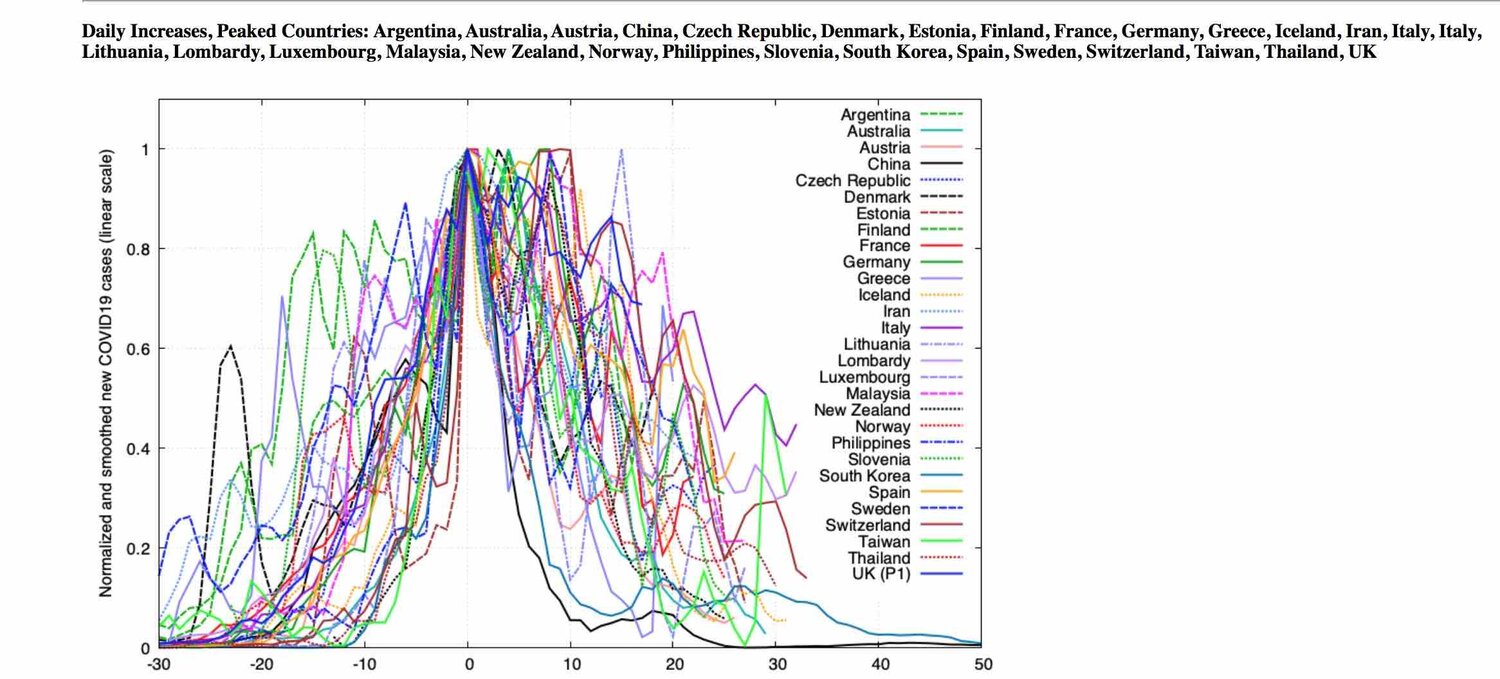
It has become clear that the health crisis we are facing isn’t consistent with anything we are familiar with. Those who predicted a colossally genocidal plague weren’t necessarily stupid or duplicitous. They assumed that they knew the root cause of the current crisis. They applied recognized models and algorithms associated with viral pandemics. They ended up eating their words, not because their models were wrong but because they applied their models to the wrong event. While no one can deny the alarming exponential growth of the disease, it is the unusual ‘premature’ curve-flattening point and then the rapid decline of infections which no one explained. In fact, some still prefer to deny it.
Many of us remember that our so-called ‘experts’ initially tended to accuse China of ‘hiding the real figures’ as no one could believe that the virus, all of a sudden, pretty much ran out of steam. Some also claimed that Iran was faking its figures to make its regime look better. Then came South Korea and the scientific community started to admit that despite its initial rapid exponential growth, for an unexplained reason, the ‘virus’ seems to run out of energy in an unpredictable fashion: the curve straightens out almost abruptly and starts to drop soon after, almost literally disappearing to the point where even a country as enormous as China passes days without diagnosing a single new Covid-19 carrier.


When Italy experienced its Corona carnage, every health ‘expert’ predicted that when the ‘virus’ slipped out of the rich Lombardy region and made it to the poor south, we would see real genocide. That didn’t happen.
Rarely we see scientists sticking their necks out telling the truth. This interview with Swedish Prof. Johan Giesecke is a must watch!
We have also started to notice that lockdowns have not necessarily saved the situation and that adopting relatively light ‘lockdown’ measures doesn’t translate into a total disaster as Sweden has managed to prove. The ‘virus,’ appears to stop spreading according to its own terms rather than the terms we impose upon it.


dailyincreaseGA.jpg

Thinking about the anomalies to do with the virus in analytical mathematical terms, as opposed to seeing the virus in biological or medical terms, has made me believe that a paradigm shift may be inevitable. We seem to have been applying the wrong kind of science to a phenomenon that is not really clear to us. This may explain what led a British ‘scientist’ to reach a ludicrous and farfetched estimate that Britain could be heading towards an astronomic death figure of 510.000. Following the same flawed algorithm, Anthony Fauci advised the American president that America could see two million dead. Both scientists were wrong by a factor of 25-40 times. Such a mistake in scientific prediction should be unforgivable considering the damage it inflicted on the world’s economy and its future. One might say that the good news is that our governments are finally listening to scientists, the tragedy, however, is that they are listening to the most idiotic scientists around.
Looking at the tsunami of raw data regarding worldwide spread of Covid 19 reveals a lot, perhaps more than we are willing to admit at this stage. The numbers, the shape of the Corona growth curve and the manner in which it flattens and declines suggests to me that something different may be at play. It seems as if the disease is shaped by an autonomous internal clock that determines its time frame and that it is not impeded by any form of organic resistance such as antibodies or herd immunity. The curve’s rise toward that flattening instant is indeed characterized by consistent and exponential growth. But then, in a seemingly arbitrary manner, the disaster stops its increase and the numbers of those infected by Covid-19 starts to drop.
Looking for such a pattern that produces an exponential growth that comes to a sudden end calls to attention the concepts of radioactivity in general and of the half-life in particular.
Each radioactive isotope has its own decay pattern. The rate at which a radioactive isotope decays is measured in ‘half-life.’ The term half-life is defined as the time it takes for one-half of the atoms of a radioactive material to disintegrate. Radioactive decay is the disintegration of an unstable atom with an accompanying emission of radiation. The change from an unstable atom to a completely stable atom may require several disintegration steps and radiation will be given off at each step.
Half-life is a measurement of time (set by the radioactive isotope) that involves a repeated release of radiation. Each time radiation is released the radioactive isotope is splitting in half, this repeats until it either reaches stability or maybe becomes ineffective. If you bear the half-life dynamic in mind you can see how one person can ‘infect’ or shall I say, radiate an entire stadium a few times over during a two hour football match. All it takes is a radioisotope with a half-life cycle of a few seconds.
Once the atom reaches a stable configuration, no more radiation is given off. For this reason, radioactive sources become weaker with time, as more and more unstable atoms become stable atoms, less radiation is produced and eventually the material will become non-radioactive. I wonder whether this could provide an explanation for the abrupt curve flattening that is associated with Covid-19
What may be possible is that Covid 19 is not the root cause of the current disease, it may instead be a by-product of a radioactive interaction. I am not in any position to substantiate this theory. Instead, I offer an alternative way of thinking about the problem that may shed light on the situation. If Covid-19 is a by-product of radiation, then the sudden decrease in radioactivity due to the nature of half-life reactions can explain why the virus loses its growth energy when it seems as if it has become unstoppable.
If this theory has any merit, then we are misdiagnosing the Corona crisis, misapplying the science and implementing the wrong strategies. It may also indicate that herd immunity won’t work, as we are not dealing with a viral infection but instead becoming ourselves, a source of radiation.
This theory may help explain why Israel and South Korea (State D) were so successful in combating the crisis. It wasn’t the lockdown that saved these countries. It was their aggressive search for and quarantine of super spreaders and those who were potentially radiated by them. Consciously or not, rather than stopping the virus they isolated the catalysts that were leading to the creation of the virus.
Our world is in a grave crisis and could benefit from thinkers who are slightly more creative, sophisticated and responsible than the characters who currently occupy the World Health Organisation, the CDC and London’s Imperial College. But more than anything else, I reiterate once again: we need to escalate our response to the Corona crisis into a criminal investigation so we can figure out every possible error or malevolent act that led humanity into the current grim situation .

River to Sea Uprooted Palestinian   
The views expressed in this article are the sole responsibility of the author and do not necessarily reflect those of the Blog!

Monday, 13 April 2020

Public Health, COVID-19 and Recovery


By Tim Anderson
1918 influenza pandemic db399
In all epidemics, there are some principles which determine how well communities and nations will respond, how long the crisis will last and how soon there will be recovery. We can already draw some lessons from the very big differences between particular countries in the COVID-19 pandemic, in particular why some wealthy nations like the UK and the USA are amongst the hardest hit. Although the numbers infected are still rising and the impact has not yet peaked, in most countries, we are entitled to ask: why have some countries controlled infections and minimized deaths better than others? This question, I suggest, leads us to consider principles of public health systems, of health planning and of broader social coherence. In particular, we should observe renewed evidence which affirms that public health systems are best able to develop the planning, prevention measures and coordination necessary to deal with epidemics.
The year 2020 saw the rise of a global epidemic (a pandemic) with a new variety of coronavirus which attacks human respiratory systems. This virus is highly infectious, if not highly fatal, compared to the recent epidemics of SARS-1 and MERS. COVID-19 seems deadly mainly to the elderly and the unwell (Doherty 2020). Extremely restrictive measures have been applied across much of the globe, while health systems try to contain the crisis and work out how best to prevent and treat it.
Nevertheless, extraordinary levels of skepticism about the state in western societies have aggravated reactions to severe quarantine measures, leading some to question whether the epidemic even merits emergency attention. This is while we see reports of more than a thousand deaths every day in the USA, China’s recovery after its extreme ‘lockdown’ measures, the scandal of dead bodies on the streets of Guayaquil in Ecuador (Gallón 2020), and while Cuban doctors help deal with the crisis in many countries (AP 2020). Skepticism has become cynicism in many western countries, due to a deep distrust of governments and their corporate partners. Undoubtedly powerful opportunists will exploit this crisis. Large corporations will automate and shed labor, some local authorities will extend arbitrary powers and Washington will persist with its economic and ‘regime change’ wars, using COVID-19 rationales where possible.
But this is a real public health crisis and it would be a mistake to ignore the fact that public health is, in itself, a central battleground. The same financial oligarchies that drive war and corporate privilege also block or colonize public health systems, which they see as multi-billion dollar milk cows. If individual liberties remain the central focus of critique, without recognition of the role of health systems, neoliberal ideologies will simply respond, as usual, on the ‘individual right’ to choose health insurance and to avoid ‘authoritarian’ public health systems. In the current crisis the principal alternatives we see to rapid response, protective public health measures is a neoliberal state which prevaricates, then resorts to heavy-handed policing and its armed forces for social control (Haynes 2020; Browne 2020), when the crisis is undeniable and there is no adequate health workforce.
This is a comparative study of the COVID19 phenomenon, drawing on established principles of public health and epidemic control and making use of the best available epidemiological evidence. It aims to identify and articulate lessons about health systems. Key examples used are the USA and the UK, contrasted with China and South Korea. The Anglo-American duo have stressed more privatized health systems in recent decades, while both China and South Korea have moved from private insurance-based systems to near-universal coverage systems with national planning bodies and increased public investment in their health systems (Dai 2009, Qingyue, Hongwei, Wen, Qiang and Xiaoyun 2015; Kwon, Lee and Kim 2015). The comparison is not, therefore, between capitalist and ‘socialist’ or non-capitalist systems, but rather between systems which have weakened or reinforced their universal health guarantees and health planning commitments.
After some comments on the origins of COVID-19, and on general principles of epidemic control, I examine the interim evidence of differential impact in several countries. The conclusions are over which systems are best prepared, which will minimize casualties and which will recover sooner. These understandings deserve consideration in their own right.

1. The Origins of COVID-19

Much is still unknown about the origin of the new coronavirus, and many of the early claims seem unfounded. A necessary agnosticism should accompany any honest study of this question of origin. COVID-19 (also called SARS-CoV-2) is the latest in the family of RNA coronaviruses, and at least 58 haplotypes (genetic varieties) have been identified, half from inside China and half from outside (Yu, Tang and Corlett 2020). China sequenced and published the virus genome in mid-January (Cohen 2020a) and since then Italian studies isolated and have been sequencing the genome of the Italian virus, showing a particular strain, slightly distinct from the Chinese varieties (Bergna 2020). Many new flu viruses come from animals, and COVID-19 has a possible link to coronavirus haplotypes found in bats (Yu, Tang and Corlett 2020). The first recorded mass outbreak of infections came from the Huanan Seafood Market in Wuhan city, China.
However, notice the difference between ‘first recorded outbreak’ and ‘the origin’. There are several now which suggest that COVID-19 did not have its origins in Wuhan. This parallels the terrible ‘Spanish Flu’ epidemic of 1918-19, which is now generally thought to have not come from Spain. In that pandemic, where millions died, the flu was traced back to migrant workers from France, making it “unlikely” that the 1918 A(H1N1) influenza virus originated in Spain (Trilla, Trilla and Daer 2008). John M. Barry, in the Journal of Transnational Medicine, reviewed the literature on the origins of the 1918 pandemic and, drawing on US, British and Australian studies, concluded that “the most likely site of origin was Haskell County, Kansas”. This county, an isolated area with many farm animals, had an outbreak of a virulent flu in January 1918, a flu which killed healthy young men. That flu spread to an army camp at Funston, and from there was carried to the war fields in France (Barry 2004). Australian Nobel laureate MacFarlane Burnet wrote that the evidence was “strongly suggestive” that the disease started in the United States and spread with “the arrival of American troops in France” (Burnet and Clark 1942). Barry concludes by saying “the fact that the 1918 pandemic likely began in the United States matters because it tells investigators where to look for a new virus. They must look everywhere” (Barry 2004).
An early Chinese genetic study suspected that COVID-19 came to Wuhan from elsewhere. This analysis suggested that the virus “was potentially imported from elsewhere; the crowded market then boosted SARS-CoV-2 circulation” (Yu, Tang and Corlett 2020). Another Chinese study of the first 41 patients admitted to hospital and diagnosed with COVID-19, observed that 27 (66%) “had been exposed to Huanan seafood market” (Huang et al 2020), but 13 (33%) had not. “That’s a big number, 13 , with no link” said infectious disease specialist Daniel Lucey of Georgetown University (Cohen 2020). Professor Robert Garry, from the University of Tulane in New Orleans, also pointed out “our analyses, and others too, point to an earlier origin than [Wuhan]. There were definitely cases there, but that wasn’t the origin of the virus” (Holland 2020). Then a British study, looking at 160 varieties and combining them in three groups, with A as the ancestral strain, found that most of the COVID19 varieties from Wuhan and from east Asia were Type B and non-ancestral (Forster, Forster, Renfrew and Forster 2020).
The transmission path was not well anticipated. Later genomic studies showed that most cases of the outbreak in New York came from Europe; these cases were detected late, due to a lack of testing. Presidents Trump’s 31 January entry ban on people from China had no impact on this source of infection (Zimmer 2020). Later links were found to US warships and US military bases (Arkin 2020).
Many new viruses come from animals, and COVID-19 may have an ancestral link with coronavirus strains found in bats; however no definite link of this sort has been established with the Wuhan outbreak. Nevertheless, western media showed video of a Chinese woman eating a cooked bat, suggesting a Chinese origin. The BBC has pointed out this was from a 2016 travel show, shot on the Pacific island of Palau (BBC 2020).
Importantly, there are reports of earlier cases in both Italy and the USA. In northern Italy local doctors remember “a very strange pneumonia, very severe, particularly in old people” in November and December of 2019. That may mean that “the virus was circulating [there] … before we were aware of this outbreak occurring in China” (Poggioli 2020). The first cases in the USA have also been linked to the many flu deaths throughout 2019. When Centre for Disease Control (CDC) Director Robert Redfield was asked whether some of the US ‘flu deaths’ might have been COVID19, and wrongly diagnosed, he replied “some cases actually have been diagnosed [that way] in the US to date” (New China TV 2020). This raised the possibility of 2019 cases in the USA, perhaps before Wuhan’s December 2019 outbreak. That admission led Chinese official Lijian Zhao to demand ‘transparency’ from the US: “When did patient zero begin in the US? How many people are infected … be transparent! Make public your data! US owes us an explanation” (Zhao 2020). The CDC’s acknowledgement of early and perhaps widespread infections in the USA was reinforced by estimates from the Director of the Department of Health in the state of Ohio, Amy Acton. She was reported as saying that “the fact of community spread says that at least 1 percent … is carrying this virus in Ohio today … over 100,000” (Sullivan 2020). However the matter of 2019 infections and deaths in Italy and the USA is as yet unresolved.
There have also been suggestions that the virus may have come the biological warfare laboratories of the US military. Suspicions were aroused by the sudden closure of the US army’s bioweapons research centre at Fort Detrick in Maryland, in August 2019. This closure was due to fears that “contaminated waste” or agents such as Ebola, smallpox and anthrax could leak from the facility (Wyatt 2020). There was also the presence of US soldiers at the Military World Games in Wuhan in October 2019, just before the Wuhan outbreak. Both issues create grounds for suspicion, yet no direct link has as yet been established. One group of mostly US-based scientists, looking at the characteristics of the virus, have asserted that SARS CoV-2 was “not a laboratory construct” but had natural origins (Anderson, Rambaut, Lipkin, Holmes and Garry). However the better view of their report – hedged with “likely”, “probably”, “not been described” (i.e. no evidence) and “we do not believe” qualifiers – is that they could find ‘no evidence’ of a laboratory origin. So evidence on this matter also remains unresolved.
Overall, there are several sources of evidence that suggest COVID-19 did not originate in Wuhan, nor its seafood market, although that was the first recorded largescale outbreak. Politicised talk of a ‘Chinese virus’ parallels the misnaming of the 1918 pandemic as ‘Spanish Flu’. Most other claims are not well founded. In these circumstances an agnostic approach, open to new evidence, is necessary if we want to really understand the origin of COVID19.

2. Principles of epidemic control

In 2018 the WHO, writing of ‘challenges and risk factors’ for epidemics, spelt out some contemporary risk factors and emphasised key features of an effective response. Current risk factors are aggravated by greater international travel, growing peri-urban areas which have contact with animals, the massive displacement of people by wars and disasters, the overuse of antibiotics which has created microbial resistance, new hazardous agricultural practices and “poor health care systems that have inadequate infection prevention and control practices” (WHO 2018: 25-26). Effective responses to an epidemic require early detection, then containment measures followed by control and mitigation then, if possible, elimination or eradication (WHO 2018: 28-30)
Health researchers have repeatedly argued that “to accurately predict, plan, and respond to current and future influenza pandemics, we must first better understand the events and experiences of 1918 … we must remain vigilant and use the knowledge we have gained from 1918 and other influenza pandemics to direct targeted research and pandemic influenza preparedness planning, emphasizing prevention, containment, and treatment.” (Morens, Taubenberger, Harvey and Memoli 2010). Of course, planning and prevention are notable features of public health systems, but quite scarce in systems that rely on private health care (Anderson 2007).
Nevertheless, even in the USA which have never had a well-developed public health system, components of a pandemic plan were utilized during the 1918–1919 flu crisis. There was “coordination between different levels and branches of government, improved communications … mass dispensing of vaccines, guidelines for infection control, containment measures including case isolation and closures of public places, and disease surveillance”, which were employed “with varying degrees of success” (Ott, Shaw, Danila and Lynfield 2007). Today the US maintains a Centre for Disease Control and Prevention (CDC), but it lacks a universal health guarantee and carries the burden of corporatized ‘managed care’ (Sekhri 2000).
There are some important lessons from the US experience in 1918-1919. Strochlic and Champine (2020) stress the danger of relaxing restrictive quarantine measures too soon – those US cities that kept social closures for some weeks after the peak of casualties avoided a second ‘spike’ and had the lowest overall death rates. Unlike New York today under COVID-19, a city with the highest rates of infection, New York City in 1918 began its quarantine measures early and kept them for four weeks after the spike in deaths. It then had “the lowest death rate of the eastern seaboard”. San Francisco, St Louis and some other cities, which ended their quarantine measures earlier, had a second round of deaths and a second round of quarantine restrictions (Strochlic and Champine 2020). See Graphic 1 below. So the lesson here is to implement quarantine measures (1) early and (2) keep them going for some weeks after the peak in deaths.
Graphic 1: 1918 restrictions in US cities (Strochlic and Champine 2020)
1918 restrictions in US cities c2b91

In Spain, the epidemic was first widely reported in late May 1918. Rates of death from influenza shot up, but the first epidemic seemed to have ended in 2 months. However, a second epidemic began slowly in September, peaking in October. No antibiotics were then available for pneumonia, which was usually the final killer. A third and final period of the epidemic was from January to June 1919. Deaths were more common amongst babies and young people and more than 260,000 (1% of the Spanish population) died (Trilla, Trilla and Daer 2008).
So the current pandemic restrictive measures are not new: quarantine regimes including distancing and the wearing of masks, while treatments are developed and a vaccine to accelerate social immunity is found. Isolation measures, closures of social facilities and social distancing must be developed according to local circumstances, preferably with popular education and broad social consent. Such measures are particularly important to slow the epidemic, especially when there is limited knowledge of how to treat and contain it.
There is a consensus on this across many different countries. George Gao, head of the Chinese CDC says “social distancing is the essential strategy for the control of any infectious diseases, especially if they are respiratory infections”. “Non-drug measures” are particularly important, especially without clear knowledge of the appropriate drugs. This social distancing generally includes isolating those with the infection, quarantining their close contacts, suspending social gatherings and restricting movement, if not complete lockdowns (Cohen 2020). It has been suggested that, with general quarantine measures “compliance of below 70% is unlikely to succeed for any duration of social distancing, while a compliance at the 90% level is likely to control the disease within 13–14 weeks, when coupled with effective case isolation and international travel restrictions” (Chang, Harding, Zachreson, Cliff and Prokopenko 2020). More targeted quarantine measures would require large scale testing.
The phenomenon of ‘herd immunity’ can occur in two ways, (1) by ‘natural selection’, where largescale death will claim many and only those able to develop auto-immunity survive; or (2) by an accelerated method where a vaccine is given to rapidly increase the numbers of those with antibodies for the particular virus. This both slows down transmission and protects those with transmitted immunity (Regalado 2020). The wide use of mass vaccines across the 20th century saved millions of lives, from diseases such as smallpox, polio, cholera and measles. At least 16 vaccines for COVID-19 are under testing at the time of writing (Akst 2020), and estimates of availability range from two to eighteen months.

3. Differential impact

Even as COVID19 infection rates remain high in much of Europe and the USA, we can see important differences across countries in the impact, management, and recovery from the virus. Interpreting interim data is difficult but necessary, if we are to learn contemporary lessons. The first obstacles to reading the data are that there is under-reporting and low levels of testing. Problems for learning also come from the commitment, in many countries, to highly privatized health systems. These are notoriously weak in preventive health and crisis management, There is also a great resistance in western societies to learning from other cultures. For example, it has been pointed out that when China was in the midst of its crisis, with hundreds dying, this was cited in western circles as “proof their government was incompetent”; yet when China’s infection rates fell this was said to be “proof they were lying about numbers” (Mastracci 2020). Not so many were ready to learn from China.
We have to recognize some caveats about the use of contemporary, interim data. Although the WorldOmeter site collates COVID19 data from governments and seems to do this fairly reliably, the state reports do vary considerably. Yet it is easy to check, for example, the published government data from (e.g.) the UK, South Korea and the USA (GOV.UK 2020, KCDC 2020 and CDC 2020) against that collated at WorldOmeter. Nevertheless, this raw data has to be treated with caution. Some useful caveats on using this epidemic data were spelled out in an article on the BBC. Henriques (2020) pointed out that the varied scale of testing will have a great impact on cited infections, suggesting that the “lack of widespread, systematic in most countries is probably the main source of discrepancies in death rates internationally” (Henriques 2020). As it happens, information on the level of testing in many countries has since become available. Henriques also points out the difference between ‘dying with’ and ‘dying from’ the disease, including the fact that the reasons for medical registration of death vary between countries. The H1N1 epidemic of 2009 also showed wide cross-country variation in death rates, and some of the higher rates were later revised downwards when better information was available (Vaillant, La Ruche, Tarantola and Barboza 2009). Conversely, deaths may also be underestimated, as many are never tested. Most likely, infection rates are more unreliable than the death rates, due to under-reporting and lack of testing. Finally, levels of bacterial resistance (important in the case of pneumonia, a major cause of COVID19 related death) may vary between countries. Differing demographics are also important. For example, there are said to be proportionally twice as many Italians over 65 years of age as there are Chinese (Henriques 2020). These are important factors to bear in mind, but should not deter us from making use of the best available evidence. Commentary without evidence is guesswork.
It is important to discuss, in particular, why the UK and US reactions and disease control seem to have been so poor. The Anglo-American duo has been presented, by UK and US agencies, as at the peak of “international preparedness for epidemics and pandemics” in measures of ‘Global Health Security’ (IPT 2020). Yet virtually none of the impact data supports that claim. Daily deaths from COVID19 in China began to fall in late February, to just a handful each day in the first week of April. In that same first week of April, the USA was suffering more than one thousand deaths every day and the UK around 500 or more deaths every day (WorldOmeter 2020). Why did these two wealthy countries fare so badly?
The UK and USA reacted very slowly to the pandemic and, by early April when cases and deaths had fallen in China and South Korea, and were peaking in much of Europe (by late March in Italy and Spain), US and UK rates were still rising (Burn-Murdoch 2020). On 10 April COVID19 linked deaths were 4 times (in the USA) and 9 times (in the UK) the global average (WorldOmeter 2020). By that time the rate of testing in both countries was comparable and relatively high. Table 1 below shows testing in the UK rising strongly only in early April. This table has no data for China, but we have other sources which show that Chinese testing was intense, at least in the affected provinces.
Table 1: COVID19 tests per million population
5 April10 April
USA5,3067,167
UK2,8804,392
Netherlands4,4015,926
South Korea8,9969,310
France3,4365,114
Italy11,43614,114
Spain7,5937,593
Chinanana
Source: WorldOmeter 2020
Guangdong province “did more than 320 000 RT-PCR tests on those who had attended fever clinics and hospitals over 30 days between January and February 2020”. This was “about ten times the baseline testing capacity for routine influenza-like illness surveillance during the influenza season of 2018” (Forster, Forster, Renfrew and Forster 2020). Indeed, the Chinese were the first to sequence and publish the genome of the virus, in mid-January, and to develop tests (Cohen 2020a). At the time of writing, “of 202 companies around the world producing commercialized Covid-19 test kits, 92 are from China” (Cookson and Hodgson 2020). WHO official Bruce Aylward pointed out that China had to innovate to stop the first largescale outbreak of the virus, and to isolate and quarantine those found to be infected. That meant testing. Yet as late as mid-March the UK government announced that it would only test for COVID-19 among people admitted to hospital and that people with mild symptoms wouldn’t be tested but should simply stay at home for seven days” (Hamzelou 2020).
By way of contrast, according to the WHO, South Korea was “pretty rigorous about testing all the suspect cases and finding all the contacts … [and so] they seem to have turned a corner” (Hamzelou 2020). The much lower death rate in South Korea tends to bear that out. The contrast with an indecisive UK approach was noted.
“In contrast with the early stages in the UK – where Boris Johnson said coronavirus was likely to “spread a bit more”, South Korean health officials quickly learned the lessons from Wuhan … [they] prioritized identifying and isolating people testing positive for the disease, and developed capacity to run about 15,000 diagnostic tests a day” (Beaumont 2020).
Other sources noted the early high levels of testing in China and South Korea, including many who had no symptoms of illness. “Widespread testing” in China, Iceland and South Korea “identified a high proportion of infections in people without discernible symptoms” (Gale 2020). The Chinese Centre for Disease Control and Prevention developed the earliest tests and “details of it were posted on the World Health Organization website on 24 January, just after the Wuhan lockdown was announced”. By late March China had conducted “well over 320,000 tests” (Beaumont 2020). Cookson and Hodgson (2020) wrote that “Germany and South Korea have led the way in rolling out tests on a large scale, but the UK and US have been laggards”.
It has emerged that US military bases and some warships have become strong sources of infection and likely also international transmission (Arkin 2020), as indeed they were a century ago, with the so-called ‘Spanish flu’. That remains an as-yet unaddressed threat to the US population and the international community,  given that the US has nearly 800 military bases around the world (Vine 2015). Crowded prisons have become an additional hotbed of COVID19 infection, and the US has the biggest prison system and the highest imprisonment rate on earth (Wagner and Sawyer 2018). This threatens the lives of prisoners and staff (Yan 2020) and creates a hotline of community transmission because, contrary to popular belief, there is constant high-level traffic between prisons and wider communities. There is little sign that either the US military or prison authorities have a plan to deal with these threats.
In the absence of a vaccine, drug treatments varied considerably, although similar drugs were potentially available. One large survey of more than 6,000 physicians from 30 countries sheds some light on the disparity. Substantial differences can be seen between the US and Chinese doctors. The survey question was “of the medications you have personally prescribed or have seen used, please indicate which ones are most effective”. The results are shown in Table 2 below.
Table 2: Medications used for COVID19 and thought to be “most effective”
Hydroxychlor. or ChloroquineNothingAnti-viral/ immunotherapyAntibioticsAnalgesicsPlasma
USA23%51%1% – 10%18%21%48%
China44%4%35% – 42%33%20%3%
Source: Sermo 2020. (1) Plasma used was from recovered patients, a sort of pre-vaccine. (2) The antiviral-immunotherapy drugs included Lopinavir, Ritonavir, Remdisivir, Oseltamivir and Interferon-beta.
The most striking differences are that very many US doctors often regarded no medication as the best option, while Chinese doctors made far greater use of anti-viral or immunotherapy drugs, and a type of pre-vaccine treatment of plasma from recovered patients. In early February the Cuban interferon variant (Interferon Alpha-2B Recombinant: IFNrec) was also being used in China, in combination with the anti-virals (Telesur 2020; O’Connor 2020). The top “more information topic” all doctors requested was more on “the efficacy of existing medicines” (Sermo 2020: 19). Clearly there was uncertainty, but Chinese doctors were using more sophisticated medication. Why were US doctors more reluctant to use anti-virals? First, they could not use the Cuban version of interferon because of the economic blockade imposed by their government against Cuban products (O’Connor 2020). Second, it seems likely that the medical consensus in the USA – dominated as it is by large private health corporations, managed care and expensive patented medicines – would not easily countenance the provisional use of unproven and expensive antivirals. In China, on the other hand, the antivirals were likely much more affordable.
Western scientists have acknowledged that the speed in vaccine development “is thanks in large part to early Chinese efforts to sequence the genetic material of Sars-CoV-2, the virus that causes Covid-19. China shared that sequence in mid-January (Spinney 2020; Cohen 2020a). By early April, vaccines in development were said to include two “frontrunners” in the US, one in China and one in the UK, all of which had clinical trials underway. Another 11 were in development (Akst 2020). In addition, the Hong Kong listed CanSino Biologics has a vaccine project with the Chinese military (Bloomberg 2020) and the UK giant GlaxoSmithKline has a collaborative vaccine project with China’s Xiamen Innovax Biotech (Taylor 2020). There is clearly a race to produce first and to be recognized as safe and effective. Billions of dollars are at stake, as well as many thousands of lives. No doubt there will be a war of words when the first vaccines emerge. Estimates of vaccine readiness vary from two months to 18 months. However, it seems likely that the Chinese companies, in particular, will fast track their process.
With the uncertainty about treatment and in the absence of a vaccine, ‘non-pharmaceutical’ means of containing the spread of the virus became important. That meant quarantine measures and limits on movement and association, to prevent an escalation of contagion. These measures must necessarily be tailored to particular circumstances and, to justify any curtailment of civil liberties, should be ‘proportionate’ to the particular threat posed. The UN Human Rights Committee’s General Comment on Article 12 (‘Freedom of Movement’) of the International Covenant on Civil and Political Rights, explains proportionality in this way:
“Restrictive measures must conform to the principle of proportionality; they must be appropriate to achieve their protective function; they must be the least intrusive instrument amongst those which might achieve the desired result; and they must be proportionate to the interest to be protected.” (HRC 1999: 14)
In this sense, restrictive measures during the pandemic must relate to the threat and should be relaxed when the threat has diminished. Since a wide variety of restrictive measures have been imposed across a large range of countries, it necessarily falls to citizens of those places to demand accountability, full explanations and the best targeted and “least intrusive” measures. Nevertheless, as mentioned above, during the 1918 epidemic in the USA, the cities that relaxed too soon were hit by a second wave (Strochlic and Champine 2020). That potential threat is a relevant consideration. So the public health and civil rights logic are for gradual relaxation which allows for control of transmission, until proper treatment is found. A Chinese study on preventing a second wave of infections was widely misreported as saying that “lockdowns shouldn’t be fully lifted until coronavirus vaccine found” (Reynolds 2020). In fact that study calls for a gradual response, with vigilance to “allow policymakers to tune relaxation decisions to maintain [low] transmissibility” (Leung, Wu, Liu and Leung 2020).
On quarantine, once again, we see big differences between China and the USA. In Wuhan, once the new virus was detected, there was an early and severe lockdown of the city and to some extent Hubei province, to prevent it from spreading to the rest of the country. That was only relaxed after 76 days, several weeks after new infections had peaked and fallen (CGTN 2020). In the US the restrictions were at first aimed at the supposed source in China, then others were imposed quite late. The US national health system, such as it is, was poorly equipped to manage the process. Washington moved slowly and indecisively, with a series of complacent and repeated assurances throughout February from President Trump, that “we have it very well under control” (Brewster 2020; Guerra 2020). Similarly, British leader Boris Johnson was accused of complacency, being “slow to act” and even suggesting that some natural “herd immunity” might be necessary. This sounded like the UK government “was deliberately aiming for 60 percent of the populace to fall ill” (Stewart, Weaver and Proctor 2020; Yong 2020). Without vaccine assisted “herd immunity”, such an approach would mean tens and perhaps hundreds of thousands could die. As it turned out, Johnson himself contracted the virus and was hospitalized.
The rapid and strict Chinese measures seemed to contain the spread of the virus in Wuhan and some contiguous central provinces, while other provinces were less unaffected (Fan et al 2020). Another study showed a similar pattern, with western, northern and some of the eastern provinces relatively unaffected (Guan et al 2020). China’s prompt and comprehensive measures (early detection, massive localized testing including temperature monitoring, treating, contact tracing and quarantine) allowed the hardest hit area, Wuhan, to gradually emerge from severe quarantine restrictions after 76 days. That city now has a color-coded, graduated system to allow progressively greater freedom to move around (Galindo 2020). In the USA the ‘hot spots’ have been New York and New Jersey, but very quickly high levels of infection, including community transmission, were reported on the west coast (California, Washington), in the great lakes area (Illinois, Michigan) and in the southeast (Louisiana, Florida) (CDC 2020). By 9 April twelve US states had death rates of 35 per million, more three times the reported global average (WorldOmeter 2020).
Amongst the many institutional failures has been the failure to predict better ‘preparedness’ for such an epidemic. The crisis poses a great challenge to US ideology, based as it has been on corporate privilege and a belief in US technological superiority. In the past this neo-colonial approach was linked to the rationale of ‘market solutions’. For example, in late 2019 an Anglo-American group created a ‘Global Health Security Index’ which ranked the USA at the top of countries able to deal with “infectious disease outbreaks that can lead to international epidemics and pandemics”; the UK was number two (IPT 2020). Yet after three months of the COVID-19 pandemic many of the GHS rankings seem absurd, with the top three (USA, UK and The Netherlands) showing significantly worse than world average fatality rates from COVID-19. Of the highly ranked GHS countries, only South Korea showed some consistency between GHS ranking and superior performance. See Table 3 below.
Table 3: GHS rankings vs. COVID-19 death rates
GHS rank / 195COVID-19 deaths / million **
USA150
UK2118
Netherlands3140
WORLD12.3
South Korea94
China512
Column 1: IPT 2020 (Top GHS rankings means those countries “most prepared” for an epidemic); Columns 2 & 3: WorldOmeter 2020, data at 10 April 2020;
Since all the above states, by early April, had fairly high and comparable levels of testing (4,400 to 9,300 per million), and as death rates are more reliable than infection rates, we are entitled to use death rates as a rough inverse measure of epidemic preparedness. That is, unless we assume that the full extent of the virus has not yet been measured, or that the virus may be about to recur in China or Korea. There is not much reason, at this stage, to imagine that under-reporting of death is better or worse in any of those states.
Indeed South Korea, with an early and strong testing regime (KCDC 2020), was able to carry out more selective quarantine measures, “to make tactical decisions regarding schools … movements … to move forward without some of the draconian measures”, and this allowed it to keep many factories, shopping malls and restaurants open (Beaubien 2020).
This brings us to the ‘anti-authoritarian’ argument, used by the Anglo-American duo. Both the US and the UK have either rejected a full, well-coordinated public health system (the US) or undermined it (in the UK) on the grounds of ‘liberty’ and the ‘authoritarian’ nature of large, well-resourced public health systems. Yet both, once they realized the scale of the epidemic, resorted to their police and armed forces to control civilian populations, recognizing that such measures were beyond the capacity of their health workforce (Haynes 2020; Browne 2020). Where restrictive measures are imposed early by local health authorities, there is more likely to be understanding and compliance.

4. Lessons

There is also the question of culture and broader social cohesion. It has been suggested that eastern countries like South Korea and China have done better because of the “deep divisions and poor leadership in the west”, and that “the trust that citizens must have in governments is low in the west and that has hurt its ability to mobilize people in a time of grave peril” (Chaulia 2020). The cynical reactions to the erratic behavior of the UK and US leaders lend some support to this claim. The western stereotype is often that “authoritarian” systems fail from suppressing information and communications (Gebrekidan 2020). But the suggested authoritarian-liberal dichotomy is a false one, because the late entry of the US and UK to quarantine restrictions was accompanied by severe policing, severe penalties, the use of police drone surveillance and the domestic deployment of armed forces (Castle 2020; Haynes 2020; Browne 2020). All public health systems are paternalistic, or maternalistic, but the use of armed forces due to incapacity in the public health system is a serious failing.
There are important lessons from China, as from principles drawn from past epidemic management, and the crisis has exposed weaknesses in the US and UK systems. The social mobilization in Wuhan, organized by local authorities and backed by the central government, certainly helped early recovery from what could have been an even more devastating epidemic (Leung, Wu, Liu and Leung 2020). Other countries cannot copy that experience, but they can observe and draw lessons (CGTN 2020).
Early restrictive and quarantine measures were in principle justified, but by international law they should be ‘proportionate’ to the particular threat posed and employing the ‘least restrictive’ measures possible. Public health logic accepts that restrictions on movement and association should be relaxed as the infection rates abate, in coordination with an epidemiological vigilance to ensure that a second wave of infections does not arise (Leung, Wu, Liu and Leung 2020; EurekAlert 2020). Time frames should reassure populations that there is some end in sight to restrictive measures, and that relaxation can begin even before vaccines are available, when the disease is controlled.
It seems likely that greater experimentation with the use of anti-viral and immunotherapy drugs helped treatment in China, but this was impeded in the USA, where strong patent laws and corporate management make the newer forms of such drugs expensive. There is now strong competition to produce the first vaccine, and for that reason level some availability seems likely within two months. However, we can expect to see a war of words between the companies involved, over questions of safety and efficacy.
Overall, countries such as the US and the UK, which had weak or run down public health systems, failed their own peoples by predictable deficits in preparedness, health workforces, protective equipment, preventive capacity, early detection and swift responses. When they did respond they tended to draw on security forces in lieu of an effective health workforce. Death rates were far higher than average and recovery may take longer. In the case of the US, the deficit is compounded by serious infection in the 150 military bases at home and the 800 US military bases abroad. Those pose a risk to the US population and to the many host countries. China and South Korea did better through their universal health cover, greater investment in health systems and greater commitment to health crisis planning.

River to Sea Uprooted Palestinian   
The views expressed in this article are the sole responsibility of the author and do not necessarily reflect those of the Blog!