Uprooted Palestinians are at the heart of the conflict in the M.E Palestinians uprooted by force of arms. Yet faced immense difficulties have survived, kept alive their history and culture, passed keys of family homes in occupied Palestine from one generation to the next.
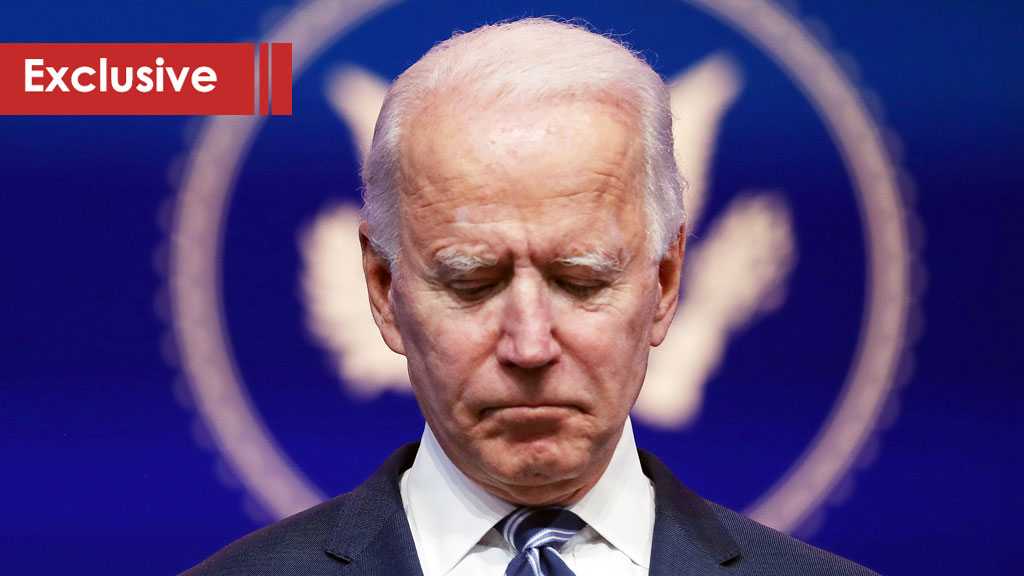
Media outlets have been trying to anticipate and predict the new Biden Administration’s performance in terms of US domestic and international politics, with much focus on the nuclear deal with Iran known as the JCPOA.
Articles and Op-eds praised the quick reversal of his predecessor’s decisions such as the reversal of the ‘Muslim Ban’, which may seem like a sign of goodwill. He seems to be giving his administration a façade of diversity which is impressive to the public opinion at least.
But people of different color and race in the new administration is not necessarily a good thing. If those placed in power do not represent the popular opinions of the communities they come from then it is to no avail. The appointing of Kamala Harris, as the first woman of color to hold the position of Vice President, does nothing unless she is willing to create real change for women of color.
Also pointing an American-Palestinian, Maher Bitar to a position co-ordinating the stream of information coming in from the US intelligence apparatus does not necessarily mean Biden will retreat from supporting the Israeli apartheid regime.
According to a report published by the Politico last Friday, Bitar, who served as general counsel to Democrats on the House Intelligence Committee and played an important role in former president Donald Trump’s first impeachment, will assume the post of senior director for intelligence on Mr. Biden’s National Security Council.
The designation of the high-profile Arab-American lawyer to a prominent White House position co-ordinating the stream of information that pours in from the vast US intelligence apparatus and Kamala Harris sounds like Biden has decided to use the “oriental orientalists” to help him push his US policies forward.
The Joe Biden website reads “Joe knows how we treat Muslim-Americans and prioritize issues affecting them reflects who we are as nation. As President, he will: protect Muslim-American constitutional and civil rights; honor the diversity of Muslim-American communities; ensure adequate healthcare; create a safe learning environment; rebuild our economy with a more resilient, more inclusive middle class; and make communities safer.” But these remain to be words of publicity and an exploitation to the American diversity unless serious steps are made and new policies are made in terms of dealing with the “East”.
Why should the reversal of the “Muslim Ban” matter when the US is helping destroy many of the Muslim countries on that list? The halting of the border wall is maybe perceived as move of good will too, but wouldn’t it be great and more real if the United States was to also halt its policies which help create many of the refugees trying to find a better life in the United States?
The US Biden administration is different from the Trump administration, probably only in stopping the US staunch support for Saudi Arabia’s war on Yemen. It may arrive to a deal with Iran too on its nuclear program, but simultaneously without addressing the nuclear war heads Israel possesses or the violence and breach of law against other states.
“Orientalism,” as Edward Said wrote, is “a Western style for dominating, restructuring, and having authority over the Orient.”
The result of this attitude and these policies? A culture in which the Middle East is seen as a playground and a subject for exploration, rather than a region of equal worth and value as the West. This was what the Palestinian-American intellectual and professor Edward Said observed in much detail in his famed book Orientalism, over fifty years ago.
From my youth I had a strong connection to Aleksandr Solzhenitsyn, but I did not know precisely why. His name was mentioned in our house. His friends were friends of my parents.
Solzhenitsyn was supposed to spend a summer in the late 1970s with our family in Alaska. That was the plan, one that excited me. In preparation, I attempted to read Cancer Ward, the semi-autobiographical novel Solzhenitsyn completed in 1966, a dissection of the cancerous Soviet police state. I was 12 years old. I was unprepared for such a thing. It would be a long time before I had the maturity.
Solzhenitsyn in that spring of 1978 gave the famous commencement speech at Harvard, where he publicly shamed the country’s elite, to an America unprepared to accept such a thing. And it would be a long time before the country even had the maturity to understand and could really do so.
Solzhenitsyn did not visit us in Alaska that year.
Now, I’m over forty years older, Donald Trump is America’s 45th President, and the country is revisiting the prophet’s words. Because President Trump is up against the same angry Harvard crowd.
Under a False Flag
From the earliest days in the build up to the 1917 Bolshevik Revolution, as part of a purely political strategy, Vladimir Lenin attacked Tsar Nicholas II for his alleged mistreatment of Jews and publicly denounced not only all manifestations of antisemitism but everything but the kitchen sink that could be associated with it.
After the Revolution, when Lenin took power in Russia, he endorsed the establishment of special departments for Jewish affairs in both the ruling Communist Party and in the relevant ministry, the Commissariat of Nationalities, headed by Joseph Stalin. Lenin had taken note of the higher percentage of Jews in the revolutionary movement than their proportion in the population, and he initiated the promotion of Jews to higher positions in the state and party apparatus. Lenin essentially took from Oliver Cromwell’s playbook. And, voilà, an elite Jewish politburo was born.
“With the notable exception of Lenin, the majority of the leading figures are Jews. Moreover, the principal inspiration and driving power comes from the Jewish leaders,” said Sir Winston Churchill referring to the Soviet government.
The Bolsheviks claimed power on November 7, 1917 and two days later the fledgling government issued its famous “Decree on Peace.”
The Balfour Declaration, a letter dated November 2, 1917 from British Foreign Secretary Lord Arthur Balfour to Lord Walter Rothschild, a leader of the British Jewish community, for transmission to the Zionist Federation of Great Britain, was then published on the very same day as Lenin’s “Decree on Peace.”
This was kept secret, because in 1917 the British government, through international bankers, offered a national home for Jews in Palestine, at the expense of the land and future of the Palestinians.
The promissory note to Lord Rothschild for the Zionist Federation, the Balfour Declaration, partly drafted by Associate Justice of the Supreme Court Louis Brandeis, and underwritten by U.S. Congress has cost and continues to cost American taxpayers billions of dollars a year.
The year 1917 was a very big year, indeed. A revolutionary one. A transparent cabal of British and American financiers backed Vladimir Lenin and the so-called Jewish “Bolsheviks” set out to destroy Russia and murder tens of millions of Christians, at very same time the Balfour Declaration backed by a secret cartel was signed to establish a Jewish state in the Middle East where Palestinians would be mass murdered, as if by Biblical design.
In “Under a False Flag,” Lenin described a three-phase development of capitalism, culminating in reactionary and militarist imperialism, sustaining itself through super-profits used to secure the support of an aristocracy. It is a Biblical account of opportunism. Then, in “The Deception of the People by the Slogans of Equality and Freedom,” Lenin warns about the elaborate false flag operations and deception perpetuated under the disguise of democracy.
“The best way to control the opposition is to lead it ourselves,” said Vladimir Lenin.
Much has been written about that event. Much has still gone unsaid. I plan to say some of the unsaid things.
Aleksandr Solzhenitsyn was a writer in the grand 19th century Russian literary tradition who represents our plight today to defeat violence and lies, the twin pillars of 21st century authoritarianism, in America. The twin pillars of the totalitarianism in the East in the 20th century that Solzhenitsyn warned us from that day forth.
On that day at Harvard in the 20th century, Aleksandr Solzhenitsyn’s words had the same effect as the preaching of John the Baptist. Both had a sharp message to deliver to an audience they believed had grown complacent and morally decadent.
Solzhenitsyn tried to shake up the exact people he believed were responsible for the decline of the West and installation of a politburo, the shrill war mongers in Washington DC. Similarly, John the Baptist denounced the moral depravity of King Herod and his politburo. The politburo was the principal policymaking committee in the former Soviet Union, founded in 1917, to oversee the violence and lies of the state. It is the most appropriate word.
For his prophetic word, John the Baptist was thrown into a dirty dungeon. Then, on September 11th of that year, to be exact, his head was offered on a platter as a gift from Herod to his equally depraved daughter, Salome. In 1978, Aleksandr Solzhenitsyn was banished from the intellectual set in America. Harvard, the New York Times and DC’s politburo put his head on a metaphorical cocktail tray.
When the most influential group of American intellectuals, liberals and Neoconservatives alike, united against one man, a Russian refuge in a New England town, there was unquestionably a John the Baptist vibe. Both prophets were dismembered, dismissed for saying too much.
Speaking of prophets, the esteemed Palestinian scholar Edward W. Said wrote that “American Orientalism” is unique because it is seen almost entirely thru the prism of Israel. To be precise, the Zionist Israel of the Ashkenazi European Jews. He’s been dead for nearly 17 years. But the British are pathologically relentless in their perverse cruelty and continue to this day post mortem to brutally smear Edward Said for saying too much. He has been dismissed by the Zionist powers even in death.
Today, we simply cannot dismiss the most uncomfortable part, the distinct roles that atheist Jews have played in empire and in the installation of a suzerain or politburo in the Holy Roman, Habsburg, Russian, French, British, and American Empires, and in the outcomes of the Israel project via the World Wars and the British Zionist enterprise today. But, let’s get one thing straight. Capisce? We are talking about a policy making minority of white, liberal, atheist, intellectual elites, not Jews, in general. Not by a long shot. John the Baptist and Solzhenitsyn were warning us about the conspiracy of identity politics, not about Jews. They were warning us about rich, atheist oppressors. They were not fingering religious Jews.
I think Zionism in America today is best understood as what is left of the politburo —decades of clandestine operations of a rogue network of military-industrial complex officials and intelligence agents involved in an invisible government supporting a British enterprise. Zionism has more in common with a corporation than a religion or even a political ideology. Zionism has got little to do with religious Jews. In fact, Zionism is opposed to Judaic dogma and is thus heretical. Not to mention that Zionism is next level schismatic.
The Schismatics
Let’s start at the beginning. There are three Abrahamic religions, a group of Semitic-originated religions that claim descent from the Judaism of the ancient Israelites and the worship of the God of Abraham. According to the Hebrew calendar, this is the year 5,781. Christianity was founded 2,020 years ago, and Islam 1,450 years ago. Each religion was originally a whole one. Over time, each has encountered schism.
A schism is a division between people, usually belonging to a religious denomination. The word is most frequently applied to a split in what had previously been a single religious body, such as “the Great Schism” of Christianity in 1054 between Orthodoxy (true faith) in the East and the Roman Catholic Church in the West. Then, the Western Church became highly political and split into a million pieces.
A schismatic is a person who creates or incites schism in an organization or who is a member of a splinter group. Schismatic as an adjective means pertaining to a schism or schisms, or to those ideas or policies that are thought to lead towards or promote schism. In religion, the charge of schism is distinguished from that of heresy, since the offense of schism concerns not differences of belief or doctrine but promotion of, or the state of, division.
However, schisms frequently involve heresy, but it becomes the matter of a political point of view rather than a church law. For instance the Orthodox Church considers the Roman Catholic Church heretical but the Catholic Church says that the Orthodox Church is schismatic. Because the Orthodox Christian Church is not a political organization.
While Christianity was intended as a beautiful religion of peace, some of the schismatic pieces are heretical, politically aggressive and even war-like.
Orthodox Christianity is one of three original true Abrahamic faiths —Orthodox Christianity, Orthodox Judaism and Orthodox Islam. Each has suffered schisms and with each spilt, like cancer cells, the divisions have increased toxicity, chaos and conflict and decreased full unity and peace.
As breaks in a religion increase and church laws or canons are broken in favor of a new branch, the least canonical branches become the most political. While, there are several formal branches of Jewish faith (Reform, Conservative, Orthodox and Reconstructionist Judaism), Zionism is purely political but has somehow retained a religious imprint. This is because Zionism is a product of the British Empire, namely Western intelligence services.
The schisms within Orthodox Christianity today are regional and related to the Catholic Church, such as what has been going on in Ukraine —all orchestrated by Western intelligence services such as America’s CIA and Britain’s MI6. A schism in Orthodox Islam emerged into public consciousness at the end of the 1970s —the Sunnis and Shias. In 1978, the Islamic revolution in Iran, orchestrated, once again by the CIA and MI6, brought politics front and center.
This political strategy of cancerous attack on a faith, religious metastasis, is a fundamental aspect of atheist philosophy as it is applied in the ideologies of Nazism, Bolshevism, and Neoconservatism. It is the basic principle of divide and rule, but applied to a sovereign religion, not a sovereign state.
Zionist Ze’ev Jabotinsky, co-founder of the Jewish Legion of the British army in World War I in Poland, was a journalist who died as Vladimir Jabotinsky in 1940, near Hunter, New York. He founded the militant Zionist Revisionist movement that played an important role in the establishment of the State of Israel. During the 1920s and 1930s, Jabotinsky and his movement were frequently called fascist.
Polish Zionist Jabotinsky and his buddies implemented a staggering number of permutations that did divisive harm to Judaism. At the same time, the permutations enabled Polish Zionism to appeal to a broader base of supporters than any other Jewish political movement. This created an elite leadership that was vastly out of touch with the majority of Jewish people.
Sound familiar? It should. Because Zionism is the living definition of identity politics. It is a perversion. Like “angiogenesis” in a cancer, which is perversion of a normal cellular process, a perversion that is an essential requirement for the development of cancer. Thus, attempts to stop the spread of a cancer in a human body that can easily result in killing the person. The Western intelligence services attack in a political war-like fashion the immune systems of the peaceful Abrahamic religions.
In his 2008 book, The Transparent Cabal: The Neoconservative Agenda, War in the Middle East, and the National Interest of Israel, Stephen J. Sniegoski describes in great detail how Neoconservatives were the driving force behind the Bush administration’s war in Iraq, their motivation was based on their belief that American interests in the Middle East are virtually identical with the Israeli Likud party’s beliefs about Israeli interests in the region, and these mutual interests lie in destabilizing Israel’s adversaries and reconfiguring the environment rather than in the traditional American policy of stabilizing the Middle East.
They began to see McGovern and Carter Democrats and the Nixon and Ford Republicans as insufficiently devoted to anti-communism, military strength, interventionism and Israel and gravitated first to Senator Henry Jackson (D-WA) and then to the Reagan Republicans.
Sniegoski argues that, while the Neoconservatives were the driving force for the war with Iraq in 2003, the basic idea of offensive war to weaken Israel’s neighbors, induce regime change and reconfigure the region has been an element of Zionist thinking since Vladimir Jabotinsky in the 1920s.
The barbaric Zionist Jews that caused the Great Terror remained in power in the Soviet Union until Joseph Stalin had to purge (murder) them. Consequently, U.S. Senator Jackson went on to become the patron saint of those outcasted Soviet Jews and his legacy, while mostly clandestine, can be glimpsed at briefly through the Henry Jackson Society, a Transatlantic foreign policy think tank based in London. Its purpose is “the promotion of liberal democracy across the world,” and it is currently focused primarily on “supporting global democracy in the face of threats from China and Russia.” Importantly, the Henry Jackson Society in England is the sister organization to The Atlantic Council in America, a den of vipers.
“Senator Henry Jackson, the Solzhenitsyn Affair, and American Liberalism,” by Jeff Bloodworth (2006) provides a sanitized version of how Jackson exploited Aleksandr Solzhenitsyn with his anti-communism campaign. Clearly, the CIA was heavily involved and poached Solzhenitsyn as its asset. And it did not go well.
For his “defense of the rights of the Jewish people,” in 1983 an international panel selected the late Senator Henry Jackson as a recipient of the first “Jabotinsky Prize: Shield of Jerusalem” award.
Identity Politics
There is a unique historical relationship between capitalism and Jews that is crucial to understanding America. Why Jews have tended to be disproportionately successful in capitalism, the Jewish role in the development of capitalism, and the role of capitalism in the fate of Jews. In a way, Jews unknowingly were the early agents of globalization.
Like today’s web strategists and technologists, Jews were keen on building networks across national borders. And like today’s high-tech entrepreneurs, the global Jewish diaspora managed to utilize this network for their benefit. Who wouldn’t? The relationship is best understood in the context of identity politics and the function of conspiracy inherent to capitalism.
Identity politics in America began in 1973, the year the first volume of Alexander Solzhenitsyn’s Gulag Archipeilago was published in the West. In fact, if you take a look at the “Solzhenitsyn affair” which involved Neoconservative U.S. Senator Henry Jackson, President Nixon, Vice President Gerald Ford, the birth of “human rights,” the Helsinki Commission, and the emigration of millions of Soviet Jewry to America, you get a much better understanding of the people who consider themselves to be the elite in U.S. today.
In response to Republican President Nixon, it was Democrat Senator Jackson and House Representative Charles Vanik who passed a bill in 1974 denying the Soviet bloc most favored nation trading status unless it granted Jews freedom to emigrate. The first piece of U.S. legislation inspired by the “Universal Declaration of Human Rights,” the Jackson‐Vanik amendment has acted as a catalyst in hastening Soviet Jewish emigration policies.
Since the mid-1960s, nearly half a million Jews from the former Soviet Union have settled in the United States. They constitute the largest single group of Jewish immigrants to enter the U.S. since the 1920s. Although they share kinship ties with the many American Jews whose roots are also in the pre-communist Russian empire, their lives have been shaped by different forces: the Bolshevik revolution and life in a communist state. Like American Jews, contemporary emigres are distinguished by high levels of skill and education, are urban and disproportionately professionals. Unlike most American Jews, they have had minimal exposure to formal Jewish training and Jewish religious life, and no experience with a highly organized Jewish community.
This is a tremendous piece of American history. Soviet Jews have been steadily streaming into the U.S. for decades, to the point of even insulting Israel, which campaigned hard on their behalf and had hoped to populate itself with the Jewish emigres. The U.S. has long had an open policy to Jews, which continued even after the Soviets cracked open their borders. Soviet Jews were not forced out due to war, famine or natural disaster and didn’t seek refugee status. This is an important point today. Because some may have been fleeing prosecution for crimes against humanity during the Great Terror.
Enormous resources were invested in this immigration of Soviet Jews by the U.S. Government. Accordingly, Soviet Jews in the U.S. created an ecosystem of prosperity around themselves and the Jews who mass migrated to Israel.
According to Pew, after the fall of the Soviet Union in the early 1990s, Israel’s largest wave of Jewish immigrants arrived from Russia and other former Soviet republics. These immigrants far outnumbered those from other countries since Israel achieved statehood. According to Pew, Soviet Jews brought a secular mindset to Israel, and more than two decades later, Jews who were born in the FSU continue to be noticeably less religious than Israeli Jews overall. Secular means atheist: 81% FSU-born Jews in Israel self-identify as secular. Importantly, 25% of Israel’s population is made up of Jews from USSR and these Soviet Jews are running Israel’s Likud government.
We must insert Canada here. Throughout the 1990s and early 2000s, Canada has been one of the most active centers of former Soviet Jewish immigration. Toronto has attracted disproportionate numbers of immigrants: over 47% of all new immigrants to Canada have settled in Toronto in the late 1990s. About 70% of former Soviet Jewish immigrants to Canada reside in Toronto. According to the 1996 Canadian census, nationally there were about 16,000 Jews born of Russian/Soviet parents, mostly refugees – arrivals of the 1970s and 1980s.
Toronto is the most Zionist community in the world. Toronto is also an international hot spot for all types of bigotry and heinous hate crimes. Toronto is important to our story for one reason. Zionist operatives there are complete morons, so much so that they exposed with their own incompetence the biggest subversive cultural revolution in the history of the world.
Identity politics as a school of thought is Hitler’s racist ideology with a fresh coat of paint. The paint comes from an exclusive manufacturer that gives each paint color the thoughtful name of a Pantone pedigree which can used across global industries with ease.
Zionism is Slippery
Zionism is an especially slippery one, and that is its most marked characteristic.
On November 10, 1975 UN Resolution 3379 passed which defined Zionism as a form of racism and racial discrimination. The Soviet Union originated the idea leading up to the International Convention on the Elimination of All Forms of Racial Discrimination. What national consensus influenced the Soviet Union to take such a step?
Remember, Zionists Jews played a highly disproportionate and probably decisive role effectively dominating the Soviet terror regime during its early years and in a genocide of tens of millions of Christians.
In 1975, the UN General Assembly adopted resolution 3379, which “determine(d) that Zionism is a form of racism and racial discrimination.” Fifteen years later, on December 16 1991, that resolution was revoked. The UN had defined Zionism as a racist ideology. It was repealed in 1991 when Israel and the U.S. initially refused to participate in the Madrid Peace Conference.
The Madrid Peace Conference, held from October 30 to November 1, 1991, marked the first time that Israeli leaders negotiated face to face with delegations from Lebanon, Jordan, Syria, and, most importantly, with the Palestinians.
The year 1991 was also the year that communism fell. That year and the George H.W. Bush legacy in the Middle East —the Gulf War and the Madrid peace conference— continue to shape U.S. policy in the region a quarter century later.
Most people do not seem to understand that Jewish is not a race. However, how Jewish today is applied has subversively made it one. Jews come in all sizes, shapes and colors including black. A Jew is not just a willow thin white lady with a Harvard degree and a Park Avenue apartment full of Chanel suits who works as a staff writer at the New York Times. The Manhattan doyenne is literally the racist version.
Zionism dictates racial and religious supremacy. Israel, a state built on ethnically cleansed land, thus operates under the veil of a democracy in which the Jewish population is the exclusive beneficiary of the democratic process. However, Israel’s Jewish population is itself stratified within an ethnic hierarchy, where prosperous Ashkenazi (white Jews of European descent) dominate the economy, media and politics. In comparison, Mizrahi and Sephardi (Jews of MENA descent) suffer socio-economic hardship.
If you have ever been to Jerusalem, you know what I am describing. The disparity is shocking. It is like going to the Jim Crow South in America. It is a type of white supremacy. It is racism. It is apartheid, but even worse. It is severe brutality, communist strength brutality. This type of racism means that white lady at the New York Times can write about everybody else and decide on their narratives. Moreover, like anti-Semitism, racism is part of the racket of the Zionist Cultural Revolution.
Racism is all too evident in Israel. Ruling class Zionists cause the hardship that the Mizrahi and Sephardi suffer. Through rhetoric and vitriol they’re able to redirect anger toward African migrant communities who’re victims of greater oppression themselves. It’s a mess, but you never hear about it. The media, the Jerusalem press corps, sees to that.
Zionism is a white, Ashkenazi phenomenon, based on the denial of the Orient and the rights of both Mizrahi Jews and the Palestinians, “the other.” You could call it white supremacy and you’d be right. Solzhenitsyn detailed it in the banned book, 200 Years Together, which documents the mutual understanding between Russians and Jews of the Soviet Union. Solzhenitsyn could have easily been writing about Neoconservatives in America.
The Zionist Cultural Revolution
There’s an uncomfortable similarity between the Zionist Neoconservatives in America —and their dedicated “intelligence community” such as the CIA and the NSA— and the Zionist Bolsheviks who ran the early Soviet terror agencies that committed all of the atrocities: NKVD, Cheka, KGB, and GRU —80% of Stalin’s Soviet government, from bottom to top. Zionists were responsible for The Great Terror and the genocides of tens of millions, “The New Martyrs” —all of those who were martyred in the years of severe persecutions against the faith and the Orthodox Church, which continues in the world for over 70 years in the 21st century.
The persecution started immediately after the 1917 October Revolution, when the Bolsheviks took over. The persecution against the faithful was purposeful and long, and surpassed in cruelty all the previous persecutions against the Church, including those by the Roman emperors in the first, second, and third centuries. The Bolsheviks created an antihuman and criminal ideology to guide rulers for decades. This ideology led to millions of victims, the people of different beliefs and social status. They began with the class struggle against the nobility and merchant class followed by the dispossession of well-to-do peasants, then resettlement and destruction of whole ethnic communities. One destruction campaign followed another and these criminal actions continued for several decades. The Russian Orthodox Church was only one of the targets of that suicidal campaign waged by the authorities against their own people.
The number is unknown, whether it was tens of thousands, hundreds of thousands or millions, because the whole truth about those years will never be revealed. Not all the archives will ever be opened so that the records could reveal who remained faithful to the end and who stumbled. Besides, there are many forgeries in the transcripts of interrogation we use to restore the story of a given new martyr. Some recorded as having renounced their faith did not actually do that.
Revolutions are always atheist in nature. The Zionist cultural revolution is the revolution of revolutions. In fact, it seems to have been modeled on the fall of Byzantium. Atheist revolutionaries spread religious disunity and divide the majority of people as a means to gain political or territorial advantage for a minority of atheists. A revolution can manifest as an inner enemy which appears within the bowels of society to break its spirit, turning the majority into a helpless victim of the minority or suzerainty as it did in Byzantium after nearly twelve hundred years of peaceful living.
I wrote this a year ago: “I am not going to go into detail about the Neocons because there’s really not too much to say beyond the salient fact that they are a deliberately constructed social group, almost like a secret society, that has only one unifying principle: to make money and do it anyway they desire, because when you are morally bankrupt the world is your oyster of possibilities. Neoconservatives identify themselves as whomever is paying them to do so. In layman’s terms, we would call them con artists.”
From a policy perspective, the reference that makes most sense to the Neocons and racist Zionist Jews, in general, is the one instance in our country’s history of American authoritarianism — the one party terror state that was the Jim Crow South — was built on minority rule. The degree of discrimination against blacks under Jim Crow was unparalleled. Yet elite opinion at the time sanctioned it as legally-mandated white supremacy. This is exactly the same kind of warped thinking and public manipulation we see among Neocons today.
The “intelligence community” believes the U.S. was built on this superiority of white men. Their professional culture was shaped by that system. Slavery and Jim Crow may be behind us, and attitudes have no doubt become more open and tolerant over time, but they remain unchanged.
Racist Neoconservatives have run Washington DC this way. The Zionist elite minority and their cult-like war machine. Their think tanks, in particular, should all be abolished like slavery and then segregation was.
What is the difference between the oppressors in the U.S. “intelligence community” and the infamous oppressors of Nazi and Soviet secret police? Nothing. The slightly longer answer to that question is that the Americans are clumsy to the point of incompetence and even more arrogant than the Germans and Russians.
“Stalin’s terror” is, in fact, Zionist terror. Anti-Jewish sentiment is widespread among people of the former USSR because Jews played a highly disproportionate and probably decisive role effectively dominating the Soviet terror regime during its early years. In turn, Neoconservatives carried this torch to America and along with the fabricated “war in Iraq” in 2003, lied their way to achieve nearly every war since World War Two.
The use of terror to revolutionize society is an historical precedent established by the Bolsheviks. We need to talk about the bullies in America’s politburo. We need to talk about their exploitation of religion. We need to talk about the British Zionist enterprise —The Saker (Andrei Raevsky) calls this the “AngloZionist Empire” —in relation to America’s alliance with Israel. We need to look at racial trouble in the U.S. and issues like “cancel culture” with respect to the Zionist Cultural Revolution.
U.S. President Trump has encouraged these conversations. You just were not aware that this is part and parcel of “draining the swamp.” He’s turned the British Zionist enterprise upside down. He’s called their bluff. Donald Trump is essentially “containing” Zionism to use a word that the Neocons understand. The Zionism he seeks to contain is the toxic part, the white supremacist ideology. For example, Trump is pushing back against the rising tide of Marxist critical theory. He’s quietly containing the Zionist cultural revolution in America. In order to contain today’s cultural threats, the oppression must be eliminated.
At the same time, Israel is rejecting that political Zionism. Slowly. It’s a process. A very slow one. Apartheid in South Africa was not resolved over night. Apartheid is a cancer in the body politic of the world. One of the largest Christian denomination, the Dutch Reformed Church (NGK), used Christian theology to argue a theological support for the Apartheid regime. The Dutch Reformed Church, with 3 million Christian members, remained the “official religion” of the Apartheid-supporting National Party.
How the Zionist regime and settler colonialism will be brought to an end is an important question to discuss. The clearest and most practical vision to date seems to be that, as in South Africa, the Zionist state will have no choice but to capitulate.
How the Zionist cultural revolution will be brought to an end is the question we all must face if we want to stop the chaos in the world. We need a mutual understanding of the answer.
Live Not By Lies
Aleksandr Solzhenitsyn wrote the essay “Live not by Lies” in 1974 on the same day in February that year that secret police broke into his apartment and arrested him. The next day he was exiled to West Germany.
Everybody today knows that the media is a horrific problem. The extent of lying in the press is simply out of control. Now we need to better understand why journalists gesticulate wildly on social media, wave their arms in the air at the New York Times, shout at the crowd from CNNand MSNBC, invent things in the Washington Post, and try to attract the fame and attention they feel they deserve in The Atlantic.
All those years ago, Solzhenitsyn attempted to inform the world that the Bolsheviks committed the greatest human slaughter of all time. And he said the fact that most of the world is ignorant and uncaring about this enormous crime is proof that the “fourth estate” —the press, the media, and the profession of journalism— is in the hands of the Bolshevik perpetrators. He was warning that the “fourth estate” is the “fifth column.” Today the media is visibly filled with the “intelligence community.” Simply turn on CNN; former intelligence agency officials are now political commentators.
Julian Assange reported that nearly every war that has started in the last 50 years has been a result of media lies. The “intelligence community” has him locked up in a British prison.
The Balfour Declaration was only considered to be a first step that would enable the British Government to entreat the sympathies of world Jewry, for the Entente war effort and a British Palestine. To that end, the Government quickly embarked upon an elaborate and extensive propaganda campaign. This endeavour was undertaken with the ever present advice and work of Britain’s Zionist supporters in London. Together, British officials and Zionists sought to create and disseminate the myth that the Jewish nation was about to be reborn in Palestine under British auspices, which would capture the Jewish imagination but would in no way commit the Government to anything beyond the vague terms of the Balfour Declaration.
This was the sum of British policy towards the Zionist movement for the remainder of the war and the extent of the Anglo-Zionist alliance, as it was originally conceived by the British Government. Journalism has been a British military strategy since 1917.
Journalism in America today is, in fact, Zionist “hasbara” and therefore, by design, is intended to hide the truth. Hasbara is the Israeli word for how Zionists explain to the world through the Jerusalem press corps their slaughter of Palestinians. It is almost never the truth. Zionist propaganda and the most ridiculous lies. The sole purpose of Zionist hasbara is to side step conspiracy.
For example, maybe the biggest historic example, in fact, whenever there’s an attempt to discuss ancient Christianity and its legacy of Eastern Orthodox Christianity —iconoclasm, persecution, martyrdom, and subsequently a massive, Holocaust-like, genocide of Christians— it is shut down in the same manner that Aleksandr Solzhenitsyn and others were when speaking of Jews as perpetrators.
Simply put, the Orthodox Christian Church is not a political organization. While the Church is a global body, it does not function like a transnational corporation. Any “power” has been decentralized. Inasmuch as there is no PR, marketing, or even a spokesperson to be found, the Orthodox Church is even without the Madison Avenue language necessary to express the concept of the “New Martyrs” in secular terms.
In other words, Christian imperialism exists in the West today in the person of the Pope. In the East, it was and remains a temptation. Orthodox Christianity peacefully held the nations of Byzantium together for twelve hundred years, not imperialism. Since 1453 and the fall of Constantinople, anti-Christian forces worldwide, and destructive forces inside the broader Christian Church itself have carried out the real imperialistic plans.
Christians are the victims of worldwide persecution and this does not minimize the Holocaust nor demonetize Islam. The untold story of the 20th century is the murder of over 50 million Christians, mostly at the hands of communist and Islamic regimes. Christian genocide has continued into the 21st century. In an era when we get get statistics for nearly anything at our fingertips within seconds, some how the number of Christian lives lost to terrorism, war, genocide and mass murder is strangely missing.
It is estimated that the number of Christian martyrs during the 20th century far exceeds that of all the martyrs who died for Christ during the first three centuries of Christianity. Simply combine Christian mass murders worldwide.
The political scientist, adviser and academic who spent more than half a century at Harvard University, Samuel P. Huntington has been credited with forecasting the cultural and religious context in which a 9/11-type incident could emerge. In 1993 Huntington argued that with the collapse of communism, ideological rivalries would no longer drive global affairs. Conflict would occur between groups defined by culture, religion and identity. His thesis was propped up amid NATO’s fresh attacks on the Slavic (Orthodox Christianity) fraternity.
Huntington is the Zionist cult scholar who inspired “Israel Lobby” book by John Mearsheimer and Stephen Walt. Another Zionist cult political scientist Zbigniew Brzezinski (the father of corporate media maven Mika Brzezinski), back in 1997, in his book The Grand Chessboard: American Primacy and Its Geostrategic Imperatives wrote: “After the victory over communism, we need a split of Orthodoxy and the breakdown of Russia, and Ukraine, where betrayal is the norm of public morality, will help us in this.”
When Zionist Brzezinski died, Zionist Radek Sikorski, the former foreign minister of Poland and “a distinguished statesman at the Brzezinski Institute on Geostrategy at the Center for Strategic and International Studies” wrote a very telling love letter to “Zbig” in the Washington Post. Zionist Sikorski is married to an American columnist, Zionist Anne Applebaum. Applebaum and her husband serve as British foreign agents of influence. Lucas is British. Are Sikorski and Applebaum the Julius and Ethel Rosenberg of the 21st century? Communists? Maybe not, but they have not been playing for Team USA. Applebaum has spent the better part of her dreadful writing career trashing the conservative Catholic majority of Poland, which is literally all of Poland. The country is at least 93% Roman Catholic in faith. Also, Anne Applebaum heavily plagiarized Aleksandr Solzhenitsyn (several books worth) and censored out the parts incriminating the cabal of atheist Jews and the Anglo-American “intelligence community” or their unspeakable crimes in Soviet Russia, so there’s that.
According to U.S. President Jimmy Carter’s National Security Adviser, Brzezinski, after the collapse of communism, the Zionist West’s main opponent became the Orthodox Christian Church. The Balkan wars manufactured by NATO in the late 1990s were a manifestation of this concept. Samuel Huntington peddled an international conspiracy theory that became the cornerstone of NATO after the fall of the USSR.
I wrote this a year ago and it has taken me that long to get the full depth and vastness of the terror: “Remember, the true religions prevent the New World Order, that is the crux here. With that in mind, you should know, if you don’t already, that Orthodox Christianity is the truest form of Christianity. It just is. Don’t argue with me, just accept it. Here comes the worse part. After the devastation that NATO caused in Serbia in the 1990s people started to notice a pattern with NATO operations after the second World War, specifically that the Alliance was bombing Christians. For a person like me, I don’t normally think in such terms so that before the recent crisis in Ukraine, I myself brushed it off as a conspiracy theory. Well, guys, it is not.”
Zionist Albright spelled out the first two decades of the new millennium in 1998: “As we prepare to undertake NATO’s first post-Cold War expansion next spring, prior to the Summit, the Alliance is considering its vision for the future, and initiatives critical to preparing NATO for the 21st century.” The transparent cabal have focused on so-called “disinformation.” Check out Albright’s speech at the Atlantic Council in 2017 regarding the alleged threat of “digital disinformation.”
Life is full of disinformation, it’s called lying.
Tintin in the Land of the Soviets
The very first adventure of one of the world’s most beloved cartoon characters.
If someone would give me a handsome book deal, I’d love to do a children’s book or even young adult franchise in tribute to 1929 publication, “Tintin in the Land of the Soviets” and Belgian cartoonist Hergé, where Tintin discovers the truth about the Bolsheviks, specifically the theft of the country’s wealth by its leadership.
Listen, Vladimir Lenin was a grifter who exploited the Jews. This is a simple and easily understandable message that we ought to convey broadly. In fact, in the original book, Tintin stumbles upon the secret cache of riches that Stalin, Lenin, and Trotsky have stolen from the Soviet people.
Armed with this knowledge, Tintin flees Russia with his faithful dog called Snowy returning safely to Belgium and is greeted with great pomp by the rapturous public. The ending to my book would be just as magnificent as the original. Because in my book the pathological hatred for President Trump, the Neoconservative fifth column and their think tanks in our nation’s capital would be really explosive.
I would update the story for 2020 in America and my character would visit “the Land of the Neoconservatives.” Because the Bolsheviks —Stalin, Lenin, and Trotsky— were a British cabal in Russia just like the Neoconservatives are today in America. A sneaky fifth column of total frauds supported by the same dark financial structure in the City of London, in the interest of the global elite. I might even use the phrase “Davos Man” Samuel P. Huntington penned in a paper about elites and “an emerging global superclass” of “Davos men” or “gold-collar workers.”
I am actually quite serious. The mutual understanding is one that we ought to be teaching kids as soon as they can understand that conspiracy is a part of modern life. Importantly, convey the message that conspiracy aims to divide us and is a most always blamed on the victim.
No, the Bolshevik Revolution in 1917 was not a Jewish plot. In fact, kids ought to learn about the function of economic conspiracies and the political perversion of the religions so they don’t grow up to be adults who fall for hate propaganda and deceitful intellectual ideologies.
To find unity, let’s bring conspiracy out of the shadows.
While Solzhenitsyn’s work was a significant contribution to such mutual understanding, many were offended by his suggestion that some Jews also need to come to terms with their sins. I take a different stand, maybe because I have the benefit of hindsight and luxury of progress. I say we need to look at ourselves. Look within U.S. foreign policy. Look at the trillions of dollars that America has sent in aid to fund the Israel project. Don’t blame the “Jooz.”
I believe that we are at an important crossroads of knowledge. It is time for everybody to take a closer inspection in the mirror to reflect on how we arrived here, in order to fully shift the understanding internally. The mirror reveals it all, crystal clear, if we’re willing to look.
The veil of the mutual understanding was lifted in Ukraine. Did Aleksandr Solzhenitsyn change the course of either the East or the West? Maybe not back then. But his words have had residual impact since the Harvard speech, for certain, and we are only now really starting to appreciate them as we should, four decades later.
Alexander Solzhenitsyn spoke of a “moral revolution” that would move beyond the excesses of modernity, yet without returning to the spiritual despotisms of the past. Because he instinctively knew that the so-called “intelligence community” was up to no good and was scheming to split peaceful religions and society, in general. The Bolsheviks had relied on those covert actions. And ascetic religions were and are the enemy of the “intelligence community,” back then and now, because these religious practices allow a man to take control of himself in a powerful way, to think for himself.
Thus, the immediate threat to American national security is our military-industrial complex and specifically its intelligence agencies that pervert religions around the world. Alexander Solzhenitsyn said it all those years ago at Harvard. But he used words we did not understand at the time. Because we were not prepared to hear them.
Aleksandr Solzhenitsyn understood that spiritual genocide, a cancer resulting from a system, like communism, can be not only be difficult to recognize—and many people are entirely unaware that this type of terror even exists.
Let’s try internal realization instead of finger pointing. When we seek knowledge about the world’s damaged bullies through compassion and understanding, we will eventually come to a state of full unity through mutual understanding. This is what Aleksandr Solzhenitsyn tried.
They need to understand that we know. We need to understand that they are human.
Solzhenitsyn sought to encourage a mutual understanding between Russians and Jews. He even cooperated with the CIA until it became clear that they like the Jewish politburo in the Soviet government were equally as perverted, equally as corrupted from their original course.
The mutual understanding is that the peaceful religions have been been perverted for the purpose of terror. We only now can begin to understand all of this. Because we are finally having a spiritual awakening in America.
On a policy level, this leads to better decision making. Because humility fosters critical thinking. It is also important in ending wars and in conflict resolution. It enables a policy where a nation is more likely to accept that it wrongfully provoked war. And this kind of public policy starts with education of the very young.
“It’s a universal law — intolerance is the first sign of an inadequate education. An ill-educated person behaves with arrogant impatience, whereas truly profound education breeds humility,” said Aleksandr Solzhenitsyn.
Nicholas Molodyko is a writer in Chicago who writes about Western popular culture and politics in relation to the secret history of the Eastern religions. After writing professionally in the fields of public health research and international development, while working in Europe, Asia and Africa, he is now writing independently at Mediapart in France.
31 January 2020 23:24 UTC | Last update: 2 weeks ago
Earlier this week, in the wake of the announcement of Donald Trump’s “deal of the century” for Israel and Palestine, Jared Kushner, its chief architect explained to CNN’s Christiane Amanpour just how much he had studied the region.
“I’ve been studying this now for three years,” Kuchner said. “I’ve read 25 books on it, I’ve spoken to every leader in the region, I’ve spoken to everyone who’s been involved in this.”
The impression from those few titles to emerge is that they are broadly written from a Washington perspective, and not necessarily that insightful about the lived experiences of Palestinians, who Kushner on Wednesday called “foolish” for rejecting his plan.
In the spirit of a geo-political book club, the editors and writers at Middle East Eye would like to offer Mr Kushner the following reading list to maybe deaden his echo chamber.
Our choices are, we suspect, more eclectic than those he has read so far, and include poetry, fiction and graphic novels amid geo-political analysis and discourse. The list, presented here in no particular order, is by no means exhaustive. We have restricted ourselves to books originally written in or translated into English.
But we hope that Mr Kushner and others engaged in securing the “deal of the century” might obtain a different perspective from the reading list below. Please let MEE know on Facebook and Twitter (@MiddleEastEye) which titles you think we have missed.
Twenty-five books, after all, barely scratches the surface when it comes to explaining what has become the Middle East’s most intractable problem.
1. The Question of Palestine by Edward Said
For a long time, Edward Said was the most high-profile and internationally recognised of Palestinian intellectuals. His untimely death in 2003 was a blow for Palestinian advocacy, especially in the US, where few prominent Palestinian voices have been able to rise to prominence.
The Question of Palestinewas published in 1979, a year after Said’s better-known volume Orientalism, and discusses the situation of the Palestinians, including the history of the Nakba, the dispossession and scattering of the Palestinian diaspora, and the misrepresentation of the Palestinian cause in the Western world.
Said also examines the development of Palestinian political movements, particularly the Palestine Liberation Organisation led by his then friend Yasser Arafat, and the changing perceptions of Palestinian groups towards the question of Jewish identity and Israeli statehood.
Towards the end of his life, Said espoused a humanist vision of a unified secular state between the Jordan River and the Mediterranean, based on equal rights and universal suffrage. The reality on the ground in Israel-Palestine suggests a one-state reality is already playing out. The result, more than ever, is that Said’s ideals need to be pushed to the fore.
2. The Gun and the Olive Branch by David Hirst
Few volumes during the past half-century have been as contentious about the Israel-Palestine conflict as David Hirst’s The Gun and the Olive Branch. First published in 1977, it was initially savaged in the UK and ignored in the US (the first 14 pages of subsequent editions detail this).
Hirst’s narrative was the first of international note to question the pro-Israeli orthodoxy about the state’s creation as well as highlighting how Washington and other Western capitals had fuelled the conflict.
That Hirst, a reporter for The Guardian, had meticulously researched and presented his argument – the book comes in at more than 600 pages – only seemed to inflame his critics more.
But Hirst is even-handed in his coverage: he apportions blame to both sides, but is especially adept at examining the Israeli role in the conflict. Through this he pre-dated the later work of Israel’s New Historian revisionist school of academics, including Illan Pappe (below), who challenged the until-then accepted view of the state’s formation and past.
The most recent edition of The Gun and the Olive Branch was published in 2003, near two decades ago, during which so much has come to pass between Israel and Palestine. But Hirst’s work is still as relevant as ever: his analysis of the routes of the conflict, going back as far as the 1880s, are peerless and set the groundwork for what has come to pass since.
3. Palestine by Joe Sacco
Palestine, by Joe Sacco, is one of the best reads for a novice attempting to understand the situation in the land between the River Jordan and the Mediterranean – and not just because it is a graphic novel, a medium historically dismissed as juvenile by many.
Based on reporting by Sacco from Israel-Palestine during 1991 and 1992 (the tail end of the first Intifada and before the Oslo Accords), it goes into uncompromising detail about life in the occupied territories and the daily occupation and injustices faced by Palestinians.
Sacco doesn’t shy away from the personal: although a self-professed sympathiser with the Palestinian cause, he notes that a formative moment in his understanding of the conflict was the news in 1985 of the murder of Leon Klinghoffer. The 69-year old disabled Jewish-American was killed by the Palestinian Liberation Front after it hijacked a cruise liner, something which Sacco says angered and discomforted him.
Throughout, Sacco presents the lives of real people – both Palestinians and Israelis – with unflinching honesty, resorting to neither polemic nor hyperbole.
4. Palestine +100: Stories from a Century after the Nakba edited by Basma Ghalayini
In the introduction to Palestine +100: Stories from a Century after the Nakba, a powerful collection of short stories in which 12 Palestinian writers imagine life in 2048, editor Basma Ghalayini considers why Palestinian writers in general eschew the genre of science fiction.
“The cruel present (and the traumatic past),” she writes, “have too firm a grip on Palestinian writers’ imaginations for fanciful ventures into possible futures.”
Palestine +100 is a collection informed by catastrophe – the forced expulsion of 700,000 Palestinian Arabs in 1948 to create the state of Israel – that triggered a refugee crisis, the consequences of which reverberate to this day.
The ideas are myriad and eclectic: they include Saleem Haddad’s Song of the Birds (the teen sister of an older brother who killed himself sees her world disintegrate – literally); Anwar Hamed’s The Key (Palestinian ghosts defy technology to torment the Israel of the future); and Ahmed Masoud’s Application 39 (Gaza City hosts the 2048 Olympic Games)
A worthy collection that excavates and probes, reacquainting the West with the horrors of Palestinian existence right now.
5. The Butterfly’s Burden by Mahmoud Darwish, translated by Fady Joudah
The oeuvre of acclaimed poet Mahmoud Darwish is too large to simply select one collection over another. With more than 30 published books and poems translated into 35 languages, he is deservedly one of the Arab world’s most famous and prolific writers.
The Butterfly’s Burden pulls together three of his previously published collections: The Stranger’s Bed (1998); State of Siege (2002), his response to the second intifada; and Don’t Apologize for What You’ve Done (2003), all published in Arabic following his return to Ramallah after 26 years in exile.
In much of his work he mixed modern poetry with Arabic rhythmical meters: subjects included the Palestinian revolution of 1965-1993 and the mass exodus of 1948
The Butterfly’s Burden was awarded the Saif Ghobash-Banipal Prize for Arabic Literary Translation in 2008, the same year that Darwish died.
It’s also worth tracking down Palestine as Metaphor, a collection of interviews with Darwish. Published last year, it includes an incisive piece with Israeli poet and magazine editor Helit Yeshurun which explores exile, memory, history and belonging through Darwish’s clear, just and poetic vision.
6. A History of Modern Palestine: One Land, Two Peoples by Illan Pappe
During the 1980s and 1990s, a new generation of Israeli historians sought to challenge long accepted narratives about the creation of the Israeli state and the nature of Zionism.
Arguably the most famous among these New Historians, as they are known, is Ilan Pappe, who more than anyone else broke with the establishment’s account of what happened to the native Arab population of Palestine in 1948 during Israel’s “independence war”.
He is one of the few Israeli voices to question the legitimacy of the Israeli state in its current form, for which he has earned much opprobrium from Israelis, while attracting also acclaim and support from activists, intellectuals and academics worldwide.
In A History of Modern Palestine, Pappe depicts a land which, rather than being made to flourish by intrepid pioneers, was subjected to ethnic cleansing and premised a project of demographic and cultural superiority. He rejects the viability of a two-state solution and instead offers a state where all the inhabitants of the land are on an equal footing.
Also see The Ethnic Cleansing of Palestine, where Pappe demonstrates how Zionist leaders planned the expulsion of Palestinians from March 1948 onwards through intimidation and destruction, challenging the official Israeli account currently accepted by many in Washington.
7. Returning to Haifa by Ghassan Kanafani
Read Donald Trump’s “deal of the century” and one thing soon becomes very stark: the US administration has no conception of what Palestine means to Palestinians.
Washington has no idea why a return to their homes is such a core tenet of Palestinian identity today – even among the younger generations who have never been able to set foot on the lands of their elders.
Ghassan Kanafani’s short storyReturning to Haifa, which features in his collection Palestine’s Children, sets this into perspective with its focus on a Palestinian couple coming back to the home from which they had to flee 20 years earlier
Its poignancy comes in how Kanafani demonstrates what Palestine means for refugees, including their grief for what has been lost and their steadfast determination of fighting for a future.
Also see Kanafani’s short fiction story The Land of the Sad Orange, which focuses on the journey of one Palestinian family from Jaffa, expelled from their homes during the Nakba, and the consequent strain on their mental health, not least how Palestinian children cease being children as they carry the weight of displacement.
8. The Palestinians by Elias Sanbar, translated by John Tittensor, Nigel Palmer
Palestine is one of the most frequently photographed places in the world – yet, according to Sanbar, real life is almost always missing from photographs taken mainly by visitors, with their focus on conflict.
Sanbar’s avowed intention with The Palestinians is to reconstruct their history in a book which he titles a “private album”.
The result is an alternative and in-depth vision of Palestine over the course of two centuries, a highly symbolic place whose people have been both captured and abstracted by the camera.
The contents of the book include themes such as pilgrims and tourists, intermingled with coverage of everyday life and uprisings.
A 2015 winner of the Palestine Book Awards, The Palestinians offers what writer Amelia Smith called “an alternative way to look at Palestine, a glimpse beyond the headlines. But it also leaves you with a question: How do these “alternative” images come to be adopted as the “normal” lens through which the world views Palestine?”
9. Gate of the Sun by Elias Khoury, translated by Humphrey Davies
Although a work of fiction by a Lebanese author, Gate of the Sun is informed by Elias Khoury’s extensive interviews and research with refugees, lending the novel its humanity and spiritual resonance.
A meandering journey alternating between the fate of Palestinians in their homeland post-Nakba, and those exiled in refugee camps in Lebanon, it is a moving testament to those who have suffered occupation and mass expulsion.
Indeed, no less than Edward Said described this epic and its 1,001 nights-style tapestry as giving “voice to rooted exiles and trapped refugees, to dissolving boundaries and changing identities, to radical demands and new languages”.
In the wake of the “deal of the century”, it makes for a moving testament to those who have suffered occupation and mass expulsion.
10. Palestinian Walks: Notes on a Vanishing Landscape by Raja Shehadeh
It is impossible to address the Israel-Palestine conflict without considering land and the occupied West Bank’s changing landscape. Shehadeh addresses this through his love of “sarha” – walking or roaming in Arabic.
Through a series of seven hikes in the West Bank hills, which span 27 years, Shehadeh describes the wildness, abundance and beauty of Palestine.
But then there is the sadness, frustration and injustice of that land being snatched, severed and seized.
Palestinian Walks, which won the Orwell Prize in 2008, is also notable for the contemplations that Shehadeh weaves through his wanderings, from Oslo’s inherent failures to the growing realisation that two peoples must come to terms with one another.
11. My People Shall Live: The Autobiography of a Revolutionary by Leila Khaled
Leila Khaled’s autobiography was published when she only 29, usually a premature age for someone wanting to document their life’s achievements. But by then Khaled, who gained notoriety as a plane hijacker and icon of Palestinian resistance, had already experienced more than most people manage during a lifetime.
Published in 1973, My People Shall Livedetails Khaled’s early years with her family fleeing the catastrophe that engulfed the Palestinians after the creation of Israel.
She then lives as a refugee in Lebanon and Kuwait, joins the left-wing Arab Nationalist Movement in Beirut at 15, and later becomes part of the Marxist-Leninist Popular Front for the Liberation of Palestinian (PFLP).
Some of the strongest moments are the interaction between her life and that of her family, such as her mother’s disbelief when she is jailed for a hijacking: “I know my daughter … she’s not like they are saying, all this beauty!”
More than anything My People Shall Live depicts the events, tragedies and injustices that create a “terrorist” in the eyes of the Israeli government and its allies.
12. A Child in Palestine: The Cartoons of Naji al-Ali by Naji al-Ali
If there was ever a book that Kushner needs to read then it’s A Child in Palestine, which beautifully presents Naji al-Ali’s illustrations of Handala, an innocent refugee boy who has become a symbol of Palestinian resistance.
For anyone who’s visited the Middle East, Handala is a common sight in souks and bazaars, his likeness adorning keychains, necklaces and T-shirts among other regalia. He’s also graffitied on the Separation Wall in Palestine, the pyramids of Cairo and the famed old city of Sanaa.
Shoeless and in tatters, Handala’s face is never shown to the audience. Like his creator Ali, who was also a refugee, Handala is forced to confront the tragedies of the region at a terribly young age.
Through his creation, Ali’s sharp and critical commentary on regional politics and the inhumanity of war has left an indelible mark, which few cartoonists have been able to replicate.
The book is short, with Ali’s cartoons filling up most of its 117 pages. But it resonates, along with the memory of Naji al-Ali: the brilliant cartoonist was gunned down in London in 1987, three years after fleeing Kuwait, where he had received death threats. His killers have never been caught.
13. Mornings in Jenin by Susan Abulhawa
Susan Abulhawa’s novel is an angry and sad work that insists you see the Palestinian experience, from the 1948 Nakba to the Lebanese civil war, from a deeply personal perspective.
At the centre of the narrative is Amal, orphaned during the 1967 war and the victim of multiple displacements.
There are also her twin brothers, one brought up as an Israeli, the other a proud Palestinian embittered by tragedy.
The contrasting scenes of bucolic pre-Nakba village life and refugee camps in Jenin and Beirut are described in Mornings in Jeninin stark relief by Abdulhawa. And while Palestinian life and culture are enjoyed and treasured, they are eventually torn apart by Israeli attacks.
14. Teaching Plato in Palestine by Carlos Fraenkel
Neo-conservatives are famously fond of the ancient Greek historian Thucydides – but perhaps Kushner might find another fifth-century Athenian a better frame of reference when it comes to the Middle East.
Plato has, unfairly, a pretty poor reputation thanks to the philosopher Karl Popper. But in this essay, Carlos Fraenkel suggests several of the Greek thinker’s notions can help untangle the natural biases that each side has in Israel and Palestine.
Who decides what justice is? Have you truly examined the experience of another? Is non-violent resistance helpful in attracting support – or does it merely make you a doormat for more powerful forces?
Teaching Plato in Palestine posits these kinds of questions and others in the context of the occupation, post-classical Arab philosophers’ own reception of Plato, and how they relate to Islam and Judaism. Required reading for those wanting a different take on the conflict.
15. Shatila Stories
Shatila Stories is a collaborative novel written by nine Palestinian and Syrian refugees (names below) from Lebanon’s Shatila refugee camp, described here as “a prison without walls”.
Initially set up in 1949 to house Palestinian refugees, it has also come to house a recent influx of Syrian refugees from the conflict of the past decade.
Its population is now estimated to stand at more than 40,000 for a space that covers barely one square kilometre.
The authors are mostly novices, who use real life experiences – such as the very real risk of being killed by low-hanging electricity cables, which are tangled with water pipes – to inform their fiction. Through this they present a startling and vivid idea of life in the camp.
The co-authors are Omar Khaled Ahmad, Nibal Alalo, Safa Khaled Algharbawi, Omar Abdellatif Alndaf, Rayan Mohamad Sukkar, Safiya Badran, Fatima Omar Ghazawi, Samih Mahmoud, Hiba Marei, with translation by Nashwa Gowanlock.
16. Hamas Contained by Tareq Baconi
You’d be forgiven, after reading the “deal of the century” proposal, for thinking Hamas is to blame for the humanitarian crisis in Gaza rather than, say, the Israel-imposed siege that has now lasted for more than 12 years.
In that case, read Hamas Contained: The Rise and Pacification of Palestinian Resistance, Tareq Baconi’s groundbreaking history based on interviews with leaders and the group’s own writings, for an informed and critical take on the movement and a deeper understanding of what has motivated it over the past 30 years.
Most people learning about Gaza from the mainstream media, Baconi argues, will either see it as a strip of land destroyed with unprecedented humanitarian suffering; or a haven run by an unruly organisation that has taken its people hostage in order to run a campaign of terror against Israel.
Both views are reductionist and unhelpful in understanding either the movement or why two million Palestinians are crammed into a land mass the size of Philadelphia today. Reading Baconi’s history is a perfect remedy.
17. The Woman from Tantoura by Radwa Ashour, translated by Kay Heikkinen
Ruqayya is a young Palestinian girl, who somehow survives the ethnic cleansing of her small village, Tantoura. It shapes her life as she ultimately carries the weight of that experience into her old age.
With The Woman from Tantoura, Egyptian novelist Radwa Ashour has crafted a beautiful story that captures the essence of the Palestinian experience through Ruqayya’s existence.
The story takes as its focus the cross-border, multi-generational trauma to which Palestinians refuse to succumb in their relentless search for meaning.
The result is a haunting story about loss, survival, memory, identity, and the persistence to return home – no matter how long it takes.
18. I Saw Ramallah by Mourid Barghouti, translated by Adhaf Soueif
In his forward to this memoir, Edward Said callsI Saw Ramallah“one of the finest existential accounts of Palestinian displacement that we now have”. There are few higher endorsements.
A renowned poet, Mourid Barghouti here tries his hand at prose, with natural poetic flourishes of course. Barghouti was locked out of his homeland by the 1967 war while studying in Egypt.
His memoir chronicles the strangeness of his return 30 years later: the diminished waters of the River Jordan he crosses, the absence of lost relatives and a people forever coming to terms with the violence that has cost them so much.
Ramallah, too, is a much-changed place. Barghouti finds some humour in this, but also there is an enduring melancholy that with so much time passed, home is not what it once was. Though he has returned, the poet will be eternally homeless.
19. Words Under the Words: Selected Poems by Naomi Shihab Nye
Any of Nye’s books are a pleasurable and informative introduction to the Palestinian experience, but a good place to start isWords under the Words.
It’s a collection of selected poems from her previous books: Different Ways to Pray, Yellow Glove, and National Poetry Series winner Hugging the Jukebox.
Having grown up both in Palestine and the US, and travelling the world to deliver workshops and talks, Nye calls herself “the wandering poet”. She writes in English about subjects close to her heart, including her mixed heritage (she is the daughter of a Palestinian refugee father and an American mother) and being Arab American.
A Palestinian Might Say is as good a place as any to sample her work
A Palestinian Might Say
What?
You don’t feel at home in your country,
almost overnight?
All the simple things
you cared about,
maybe took for granted..
you feel
insulted, invisible?
Almost as if you’re not there?
But you’re there
Nye also writes for children and is a professor of Creative Writing at Texas State University.
20. Baddawi by Leila Abdelrazaq
For younger Palestinians in the diaspora, much of their connection to their homeland and understanding of the traumatic events is understood through the recollections of their elders.
In the graphic novel Baddawi, Leila Abdelrazaq draws from her own father’s tales of childhood in the eponymous refugee camp in north Lebanon as well as his youth growing up in Beirut.
Somewhat controversially, Israeli and Lebanese aggressors are depicted only abstractly: this is a piece whose focus is very much on the Palestinian experience alone.
Threaded throughout this occasionally bleak work are patterns based on tatreez Palestinian embroidery, a poignant symbol of Palestine’s enduring folk culture.
21. The Sea Cloak & Other Stories by Nayrouz Qarmout
The Sea Cloak & Other Storiesis a deceptively short volume – but while the 11 stories initially appear easily digestible, they are likely to leave a sour taste.
Here Qarmout portrays daily life in Gaza, “the world’s largest prison” for a band of mostly female characters.
For anyone looking to experience what constitutes “normal life”, this collection is an introduction to what it feels like to come of age in this charged environment. There are the games played by children, such as “Arabs and Jews”, but also the traditions and heritage of a culture so often misrepresented.
A writer, journalist and women’s rights campaigner, Qarmout doesn’t portray her characters as victims: nor does she shy away from expressing the restrictive realities of her traditional upbringing either.
22. The Earth in the Attic by Fady Joudah
And the sea, each time it reaches the shore,
Becomes a bird to see of the land
What it otherwise wouldn’t.
And the wind through the trees
Is the sea coming home.
The plight of Palestinian refugees, those who’ve inherited the intergenerational trauma of displacement, is often hard to articulate.
Poets like the great Mahmoud Darwish encapsulated the subtlety and pained beauty of exile, and of trying to retain the soil, both literal and metaphorical, carried by those forced to leave their homes in the Nakba of 1948 and subsequent migrations thereafter.
His work also gave birth to a second, a third and a fourth generation of Palestinians dreaming of return, and transforming that yearning into a romance of words.
Fady Joudah is one of those voices, and a powerful one. The Palestinian-American is the child of refugees and grew up between Libya and Saudi Arabia, before pursuing his career as a doctor in Texas.
His poetry – such as The Earth in the Attic – is adorned with references to his humanitarian missions, bringing him in contact with painful stories that mimic those of his own parents. Like Darwish, he leans on a connection with trees, birds and sea allowing them to speak on his behalf.
His painstaking translation of the great works of Darwish and Ghassan Zaqtan has earned him accolades, as well as a reputation for bridging the rooted tradition of Palestinian poetry-as-testament with a new audience who needs to hear and read it.
23. Dreaming of Freedom: Palestinian Child Prisoners Speak edited by Norma Hashim, translated by Yousef M. Aljamal
The Israeli justice system has long been accused of being one-sided and unsympathetic to Palestinian citizens of Israel, with a conviction rate of between 85 and 93 percent.
In occupied Palestinian Territories however, the reality is grimmer. Palestinians arrested by Israeli forces in Gaza, the West Bank and East Jerusalem are mostly tried in military courts, with a conviction rate of close to 100 percent, according to Human Rights Watch.
Many of them are children, detained and charged with “security violations” that can include throwing rocks, waving Palestinian flags or simply protesting.
Once they’ve spent time in Israeli jails, these juveniles, and often their family members, are then denied work and travel visas, leaving them economically and politically vulnerable.
The story of Ahed Tamimi, the 16-year-old activist from Nabi Saleh sent to jail for attempting to stop Israeli soldiers from entering her home, shone a light on the systemic practice of child detentions.
Their harrowing stories of torture, humiliation and repeated incarceration tell of a generation confined within a punitive system that criminalises their existence. But there are also stories of hope, of the dreams only children can retain against often insurmountable odds.
24. Before Their Diaspora by Walid Khalidi
Walid Khalidi, a Jerusalem-born Palestinian historian, takes the reader on a visual journey into the lives of Palestinians in their homeland before they were expelled in 1948.
Here he has carefully handpicked 500 photographs depicting different aspects of Palestinian society between the Ottoman rule of Palestine in 1876 until the end of the British mandate in May 1948. Their subjects include not only inhabitants of the region but also others among the diaspora in the UK and the US.
Each photograph, sourced from public or private collections, is accompanied with well-researched captions from Arabic, English and Hebrew sources.
There are few better volumes for a visual record of the rich history of the land and its people than Before Their Diaspora, from children in schools and farmers in their fields to busy city centres and acts of resistance. A must-read if you wish a better understanding of Palestinian heritage.
25. The Book of Disappearance by Ibitisam Azem, translated by Sinan Antoon
For her novelThe Book of Disappearance, Azem takes an interesting hypothesis: what if Israelis woke up one day to discover that all the Palestinians had disappeared?
Instead of instant celebration, what follows in her novel is initial chaos with no one left to drive the buses, deliver the newspapers or run the cafes. Palestinian prisoners are also no longer in their cells.
Azem’s narrative is a work of fantasy, but one which features historical context in the form of stories from 1948, as told to one of the protagonists by his grandmothers, which he then records in a notebook.
This record eventually lands in the hands of his Israeli friend and neighbour who then makes initially hesitant steps at usurping his disappeared friend’s home.
The Palestinians may be gone, and their houses claimed, one by one, by those who remain – but what The Book of Disappearance leaves the reader with is a sense of palpable eeriness of the ghosts and memories which do not go away.
Voltaire, actualité internationale, n°191
-
Outre ce site internet gratuit, nous publions une lettre confidentielle en
PDF, Voltaire, actualité internationale. Chaque jeudi soir ou vendredi
matin, vo...
A Jewish One World Government
-
A Jewish One World Government October 21 2026
___________________________________ More Vids! +BN Vids Archive! HERE!
___________________________________ Su...
The United States At A Crossroad
-
The United States At A Crossroad—An Analysis (16 Sept 2026) by Lawrence
Davidson Part I—Texas vs Minnesota Back in mid-May […]
Report on Beth Israel vigil 09-12-26
-
*Eat-a-Cheeseburger Day Approaches*
This year, EAC Day appears on Monday, September 21st. The date coincides
with the Jewish holiday called Yom Kippur. Cl...
-
Hello all,
It is with great sadness that I share with you the passing of our beloved
sister, Mother, and Grandmother, the individual that you all knew ...
Best Horror Podcast
-
Best Horror Podcast Introduction: Horror podcasts […]
The post Best Horror Podcast appeared first on Copper Shock Horror Podcast.
Ikhras Endorses Muntadhar Al-Zaidi
-
“Oh parties of banditry and sectarianism and corruption, we have come and
our goal is to destroy you.” Ikhras formally endorses Muntadhar al-Zaidi,
Iraqi j...
Prince Charles: Foreign Jews behind bloodshed in ME
-
In May, 2017, British Crown Prince Charles declined an invitation from
Zionist entity’s president Reuven Rivlin‘s to attend the 100th anniversary
of the no...
Palestinian Women – One for All, All for One
-
Honouring All Palestinian Women by Honouring Three: Hanin Zoabi, Ahed
Tamimi, Samah Sabawi Vacy Vlazna “Palestinian women have always stood side
by side ...
US’s Saudi Oil Deal from Win-Win to Mega-Lose
-
By F. William Engdahl Who would’ve thought it would come to this? Certainly
not the Obama Administration, and their brilliant geo-political think-tank
neo-...
-
*Mordechai Vanunu wins human rights prize of Brazilian Press Association *
* http://www.alternativenews.org/english/index.php/features/updates/7038-mordechai...
Abdul Aziz Rantissi:
"My ultimate wish, my God, is to attain martyrdom,"...God granted him his wish on April 17, 2004, at the hands of Israeli assassins.