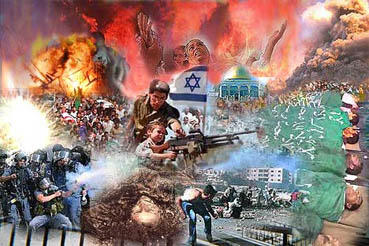
Uprooted Palestinians are at the heart of the conflict in the M.E Palestinians uprooted by force of arms. Yet faced immense difficulties have survived, kept alive their history and culture, passed keys of family homes in occupied Palestine from one generation to the next.
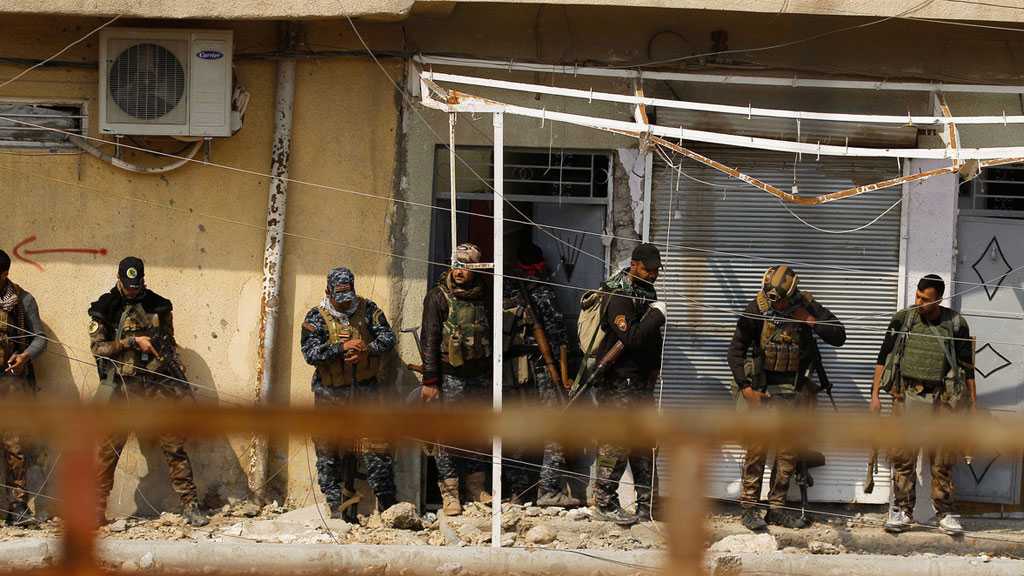
The headquarters of Iraqi anti-terror group within the Popular Mobilization Units [PMU], better known as Hashd al-Sha’abi, came under attack in Baghdad, raising suspicions about the US role in Iraq.
More than a dozen members of the Hezbollah Brigades [Kata’ib Hezbollah] were reportedly detained during the raid in southern Baghdad in the early hours of Friday. Initial reports said several commanders of the anti-US group, which is integrated into Iraq’s security forces, were among those arrested.
Their fate remains unclear, with some unnamed officials saying they are in the custody of Iraqi security services, but according to PMU sources, all those detained have been handed over to US forces.
An Iraqi official initially told Reuters that at least three of the group’s detained commanders had been transferred over to the US military.
A number of local media outlets also reported that American forces were involved in the raid.
One tweet by a PMU member said that Iraqi Prime Minister Mustafa al-Kadhimi had apologized to the anti-terror group’s head Hadi al-Ameri over the incident.
Back on April 6, a member of the Iraqi parliament’s security and defense committee warned against the ulterior motives behind the redeployment of US troops to various military sites across the Arab country, saying Washington was drawing up plans to target PMU commanders.
On March 27, the New York Times newspaper reported that the Pentagon had ordered a secret directive, which called on US military commanders to prepare a campaign against the Hezbollah Brigades, which is part of the PMU.
But the top US commander in Iraq had warned that such a campaign could be bloody and counterproductive.
Lieutenant General Robert P. White wrote in a blunt memo that a new military campaign would also require that thousands more American troops be sent to Iraq.
PMU fighters have played a major role in the liberation of areas held by Daesh [the Arabic acronym for Takfiri ‘ISIS/ISIL’ group] terrorists ever since the group launched an offensive in the country, overrunning vast swathes in lightning attacks.
In November 2016, the Iraqi parliament voted to integrate the PMU, which was formed shortly after the emergence of Daesh in Iraq in 2014, into the country’s military.
The popular group, however, is a thorn in the side of the United States which is widely believed to be managing an array of terrorist groups, including Daesh, to advance its ‘Israel’-centric agenda in the region.
An Israeli soldier aims at Palestinian youth during a
protest against the war on Gaza, at the Qalandia checkpoint, in the occupied
West Bank, on 16 November 2012. (Photo: AFP - Abbas Momani)
Nazareth – Much of Israeli politics is myth-making – the
creation of narratives based on illusions – and the country’s election last week
was no exception. Commentators have been quick to characterize the result as a
dramatic upset, with the right-wing led by Benjamin Netanyahu locked in a
dead-heat with the left.
In this narrative, Yair Lapid, a TV personality whose Yesh Atid party
constitutes part of what Israelis describe as the “center-left bloc,” came from
nowhere to win 19 seats, making his the second largest party. He took many
votes, it seems, from Netanyahu’s Likud party, which won 31 seats in an an
electoral pact with the far-right party of Yisrael Beiteinu. In the outgoing
parliament, they had 42 seats between them.
Lapid is now the expected kingmaker. According to the mythical narrative, it
lies in his hands to either join a right-wing coalition government under
Benjamin Netanyahu and moderate it, or refuse the invitation and remain in a
center-left opposition that will harry Netanyahu at every turn.
This was the interpretation promoted, for example, by Ari Shavit, a leading
commentator with the Haaretz newspaper: “Netanyahu, it seems, will win a
third term as prime minister, but he will not rule the country. His life will
not be easy, not politically and not in terms of policy...This week the idiotic
march of the right to the right wing of the right came to an end, and the
renewed march of the right toward the center began.”
The reality is rather different. This election has been a personal blow to
Netanyahu, no doubt, but not to the right. Netanyahu misread the public mood,
but not on the central issues that should define the left-right divide in
Israel: the Israeli-Palestinian conflict and decades of belligerent Israeli
occupation.
His mistake was to believe he had sidelined the so-called “social justice
protests” that swept Israel in the summer of 2011 but failed to reignite
significantly last year. He had not. The white middle class in Israel,
comprising Ashkenazi Jews, has remained disgruntled at what it sees as the rapid
decline in its privileges and standard of living as Netanyahu’s neoliberal
policies have accreted ever more power and wealth to a small business elite,
many of them benefactors to his party.
By contrast, Lapid captured the self-pitying mood of the protests with his
demand that all Israelis “share the burden” – a dig at the rapidly growing
community of Jewish religious fundamentalists known as the Haredim, and the
large minority of Israel’s 1.4 million Palestinian citizens. The burden, in this
case, refers chiefly to serving in the army, or doing equivalent national
service.
Far from a collapse of the right, the election demonstrated that the right is
continuing to push the center of political gravity – particularly on the future
of the Israeli-Palestinian conflict – ever further rightwards.
This has been most apparent in changes to the composition of the Likud party
itself. Primaries held shortly before the election to select the party’s list of
candidates for the Knesset were effectively hijacked by the settlers and the
extreme right. The Likud’s shrinking liberal wing was removed in a putsch, to be
replaced by ultra-nationalists. They include Moshe Feiglin, who has been leading
efforts to take over the Likud party on behalf of the settlers for more than a
decade. He will now occupy a Likud seat in the Knesset for the first time.
Likud’s move to the far-right has been achieved while maintaining the
impression that it is still the party that represents the traditional Israeli
right. It has joined two other parties on the far-right – Yisrael Beiteinu
(Israel is Our Home) and Habayit Hayehudi (the Jewish Home) – that have
maneuvered themselves into the political mainstream, even while holding on to
their extremist platforms.
A decade ago Yisrael Beiteinu, led by Avigdor Lieberman, was a fringe
far-right party catering to recent immigrants from the former Soviet Union. And
the National Union, the forerunner of the Jewish Home, was a small party with
limited appeal outside the hardcore settlements. Lieberman and the new leader of
the Jewish Home, Naftali Bennett, both former acolytes of Netanyahu, have
rapidly reinvented their parties, drawing much wider support. It was precisely
the alignment in the platforms of Lieberman and Netanyahu’s party that allowed
them to create a joint electoral list.
These three extreme-right parties – Likud, Yisrael Beiteinu, and the Jewish
Home – now hold 43 seats in the 120-member Knesset, or more than a third. The
most likely scenario is that together they will form the basis of the next
coalition government.
The extent of the popular shift to the right is apparent when one considers
the views that these parties, or leading members of them, openly espouse.
Lieberman’s party talks of the Palestinian minority as a “fifth column,” one
that should be stripped of its citizenship rights through a combination of
redrawn boundaries and the imposition of loyalty tests. The Jewish Home,
meanwhile, has declared that Israel should immediately annex Area C, the 62
percent of the West Bank temporarily placed under full Israeli rule by the Oslo
accords but now riddled with settlements. Like Likud, neither party considers a
Palestinian state – even one limited to slivers of the West Bank – an acceptable
prospect.
The virulent anti-Arab positions, directed against Palestinians on both sides
of the Green Line. are reminiscent of the Kach party, led by Rabbi Meir Kahane
and outlawed in the late 1980s for racist incitement.
Michael Ben Ari, a former Kach leader who narrowly avoided winning a place in
the Knesset for the Otzma Leysirael (Strong Israel) party, made precisely this
point: “I’m not the only one who represents Rabbi Kahane; he is represented by a
great many people everywhere, inside and outside the Knesset.”
The move rightwards over the past decade has been replicated in the two
Jewish religious fundamentalist parties, Shas and the United Torah Judaism – and
not just in terms of their social policies, but also in relation to the
Israeli-Palestinian conflict. The ultra-Orthodox, or Haredim, were once clearly
anti-Zionist, believing that the establishment of a Jewish state before the
arrival of the Messiah was a blasphemy.
But Israel’s Zionist parties slowly and insidiously co-opted the Haredim.
They did it by building exclusive ultra-Orthodox communities just over the Green
Line, in the West Bank. The Haredim, with large families of up to ten children
each, are always desperate for new, cheap housing in segregated communities
where they will not have to mix with secular Israelis.
The Haredi towns over the Green Line are now the biggest, and
fastest-growing, settlements in the West Bank. As a result, the ultra-Orthodox
have become largely ambivalent about Zionism, but ever more committed to
investment in the settlements and the displacement of the Palestinians. Their
parties, particularly Shas, have responded with increasing anti-Arab rhetoric
and opposition to a peace process.
Following this election, the far-right bloc and the religious parties have 61
seats, or a fraction over half the Knesset.
Contrary to the current orthodoxy, the so-called oppositional bloc of the
“center-left” is not a real counterweight to the rightward shift of these
parties. This bloc – including Lapid’s Yesh Atid party, the now barely
functioning Kadima party established by Ariel Sharon seven years ago as a
breakaway from Likud, and a new faction called Hatnuah set up by former Kadima
leader Tzipi Livni – espouses positions that would once have comfortably
positioned them on Israel’s traditional right wing. The Israeli center-left has
simply filled the political vacuum left by Likud’s departure to the extreme
right.
Similarly, the Labor party – never the peace party it claimed to be – has,
under its new leader Shelly Yachimovich, shied away even from the pretense of
advocating a solution to the Israeli-Palestine conflict. Instead Yachimovich
rode the social justice bandwagon like Lapid, arguing for a return to an
old-style Zionism that looked after its own, in this case the Israeli Jewish
middle class.
That middle class includes many of the non-ideological settlers who were
bribed by successive governments to move to the fortress-like larger settlements
of the West Bank. This is one of the reasons why the center-left mostly avoided
talking about either Palestinian statehood or the corollary of dismantling the
main settlements. Instead it focused during the campaign on the much easier
target of the failure of the Haredim and the “Arabs” – Palestinians with Israeli
citizenship – to meet their obligations .
Lapid exemplified this strategy. When he mentioned the Palestinians it was
chiefly to iterate to his audience that they would have to forgo their capital
in East Jerusalem, which he believes must remain in Israeli hands in a final
agreement. When he talked about the settlers, it was to commit to “settlement
construction to meet natural growth.”
Aside from questions about social justice, the substantive difference between
the center-left and the far-right does not pertain principally to the
Palestinians or the peace process. It concerns the importance attached by each
side of the divide to Israel’s international standing and especially its
relations with the White House.
The far-right, including Netanyahu, are so wedded to their ideological
intransigence on the Palestinian issue that they are prepared to risk isolation
and pariah status rather than make concessions, even meaningless ones. The
center-left, meanwhile, openly worries about the damage the appearance of
intractability will do to Israel’s long-term strategic interests. They do not
intend to offer much more to the Palestinians than Netanyahu and the right; but
they do believe in the importance of perpetuating a futile peace process as a
way to avoid alienating Israel’s patrons and exposing the leadership’s bad
faith.
In this political feud, the Palestinians constitute little more than a shadow
play.
The real political division, at least in terms of the peace process, is
between the Zionist and non-Zionist parties in the Knesset – or, more
specifically, between the Jewish parties and the three Palestinian or
Palestinian-dominated parties.
These Palestinian parties, approximately representing the socialist, Islamic,
and nationalist camps among Palestinian citizens, hold approximately a tenth of
the seats in the Knesset. They have been struggling in recent elections to
persuade their constituencies to vote. At the last election, just 53 percent of
Palestinian citizens turned out, the lowest number in the minority’s
history.
There have been several factors responsible for this gradual decline in the
investment by the Palestinian minority – inside the Green Line – in Israeli
national politics. In part, it derives from a realization that the struggle for
civic equality is doomed because of Israel’s status as a Jewish state; in part,
from the marginalization of the Palestinian parties to the point where they can
do little more than hector from the Knesset’s sidelines; and in part, from a
fear that the more the Palestinian parties turn the Knesset into an arena of
confrontation, the more certain it is that Israeli politics will turn more
anti-Arab.
But the power of the mythical narrative has spread far and wide. That was
why, shortly before polling day, the Arab League urged Palestinian voters inside
Israel to cast a ballot to ensure the Palestinian parties were well represented
in the Knesset. That call, and the Palestinian parties’ warnings of the danger
posed by the rise of the far-right, appeared to be responsible for a small
increase in turnout, to 56 percent.
The Arab League’s assumption was that Israel’s left and right camps would fight
for control of the government and that a few extra seats for the Palestinian
parties could have a decisive impact in aiding the center-left – and with it
hopes of reviving the peace process.
In reality, however, all the Zionist parties, including the center-left, are
agreed on core principles: that Israel should be a Jewish state, or ethnocracy,
that represents worldwide Jewry, not its own ethnically mixed citizenry; that a
viable Palestinian state would be a strategic threat to Israel and its emergence
must be prevented; and that Israel’s Palestinian parties should never be allowed
to wield influence on either of the two previous issues.
Only one Israeli government dared to break this last principle. Yitzhak Rabin
allowed the Palestinian parties to support his minority government from outside
the coalition so that he could force through the Oslo process. Even though he
kept the Palestinian parties at arm’s length, the arrangement outraged the
right, which saw it as an act of treachery. The inflammatory rhetoric against
Rabin, including from Netanyahu, created a political climate that motivated his
assassin to act.
Rabin’s killing did not revive the Zionist left, as might have been expected;
it brought Netanyahu to power a short time later, for his first term as prime
minister in the late 1990s. A consensus was cemented then that the Palestinian
parties were not legitimate partners in government.
This lesson has been absorbed by Lapid and the center-left. As pundits
wondered what Lapid might do as kingmaker, he hastily reassured Israeli Jews
that he would not ally himself with the Palestinian parties. “I will not try to
form an opposition bloc to Netanyahu with the Haneen Zoabi [a Palestinian
legislator reviled by most Israeli Jews over her participation in a 2010 aid
flotilla to Gaza]. It's not gonna happen.” Instead, Lapid immediately began
negotiations with Netanyahu to build a coalition.
This is the ideal scenario for Netanyahu, who would prefer not to lead a
government seen by the US and Europe as provocatively extremist. In the last
government, Netanyahu moderated his image, but not his policies, by recruiting
former Labor leader Ehud Barak as defense minister. Barak is now gone. Lapid
could serve a similar function, helping Netanyahu to construct a false image of
his government as a coalition of the center and the right.
This is a view already being promoted by the US and Europe. In the immediate
wake of the election, they were reported to be using Lapid’s success as leverage
on the Palestinian leadership, demanding that it come back to the negotiating
table with Israel.
The Palestinians are not fooled. They have rejected the characterization of
Yesh Atid as centrist. A PLO official told Haaretz: “It’s enough that
Yair Lapid refused in advance to be part of a bloc with the Arab parties.” In
the view of Ghassan Khatib, the former head of the Palestinian Authority’s
information center, “The election results prove that as far as the Palestinians
are concerned, nothing will change.”
River toSeaUprooted Palestinian The views expressed in this article are the sole responsibility of the author and do not necessarily reflect those of this Blog!
Ahead of the Israeli elections next January, a merger between the parties of the prime minister, Binyamin Netanyahu, and the foreign minister, Avigdor Lieberman, has been announced. They are to contest the elections on a joint list, intending to become the largest bloc in the Knesset.
The move is seen as an achievement for both men. Netanyahu was shaken by the recent decline in the popularity of his Likud party at the rate of one seat per week. More specifically, his apprehension revolved around the possible return of Ehud Olmert, the former Israeli prime minister, as leader of an opposition alliance consisting of Tzipi Livni, the former foreign minister; Shaul Mofaz, leader of Kadima; and Yair Labed, a rising political star.
Netanyahu's avowed objective is to assemble a major political force that would guarantee his re-election and ensure his dominance of the Israeli right. Lieberman is the main beneficiary of this alliance: it guarantees power for his party, Yisrael Beiteinu, and under the agreement, Lieberman can choose to run whatever ministry he desires, including the important ministry of defence. He will gain political legitimacy and be transformed from a mere participant in a coalition government to a key player. If in recent years the government has been a construct of Netanyahu and Ehud Barak, the defence minister, the next government will be a Netanyahu-Lieberman one. Lieberman can also contest Likud's leadership after Netanyahu.
The alliance reflects a lunge to the right, at a time of greater extremism in Israeli politics. Previously, Lieberman was very much on the margins. When he became minister of transport, a minister in the Labour party resigned, refusing to sit at the same table with him.
After that, Lieberman became the foreign minister. Many thought this would provoke the ire of the international community. But he was warmly received in European capitals. If one had said 10 years ago that Lieberman would become foreign minister, one would have been accused of ignorance, if not of hostility and incitement against Israel.
Among the obvious outcomes of this new coalition is the fact that Likud has become more extremist, and Lieberman more influential and more dangerous. A few months ago Lieberman called for the toppling of President Mahmoud Abbas, despite the fact that the Palestinian leader has maintained the peace in the shadow of the occupation, and continues to pursue negotiations – even in the absence of an Israeli partner. Lieberman also called for economic, political and security sanctions on the Palestinian Authority after it began diplomatic moves to gain UN recognition for a Palestinian state.
Lieberman has espoused policies hostile to Arab citizens of Israel, who constitute 17% of the population. The slogan of his party is "No citizenship without loyalty"; he seeks to oblige Arabs citizens to declare loyalty to the Zionist state as a condition for citizenship, including the right to vote and become members of the Knesset. As the danger of racism depends not only on its callousness but on its power and influence, this coalition at the heart of government suggests a sharp rise in levels of racism and a dramatic decline in democracy.
Central to Lieberman's politics is official recognition for the annexation of Jerusalem and the illegal Jewish settlements, in exchange for the transfer of major Arab population centres in Israel to Palestine. Altogether, Lieberman's aim is to make the citizenship of Palestinian Arabs conditional and temporary. Ultimately, this could result in a pure Jewish state, free of Arab citizens.
When Jörg Haider and his extreme right party entered the Austrian government, several European countries imposed sanctions. Lieberman is far more dangerous than Haider. His stature is proof that extremism has come to dominate in Israel. Should the kind of politics that are rejected in Europe be accommodated in the Holy Land?
The last government and Knesset, whose term has just ended, was the most extremist so far; in the upcoming elections the situation is likely to change for the worse. So what should we do? I believe trying to persuade Netanyahu and his government to adopt more moderate policies is a waste of time and effort. The only way to ensure change is through pressure and sanctions on the Israeli government. Netanyahu's political conduct shows that he bows only when confronted. Whoever wants a just peace and to prevent looming wars, whoever wants to put an end to the crimes committed by occupation, whoever wants to combat racism, must help in imposing sanctions.
• Comments on this article are set to remain open for 24 hours from the time of publication but may be closed overnight
River toSeaUprooted Palestinian The views expressed in this article are the sole responsibility of the author and do not necessarily reflect those of this Blog!
Global Peace Index, issued by the American Australian Institute for Economics and Peace, ranked "Israel" in the forefront of countries that pose a threat to world peace and ranked 150 in the index. It is noteworthy that the Institute "GPI" is an international non-profit organization specialized in studying the security situation in the world through scientific tools and publishes an annual report since 2007.
According to its report for year 2012, it has been shown that only eight countries, out of 158 countries are more threatening than "Israel" to world peace, including the countries of the Middle East; Iran ranked 128, Lebanon ranked 136, and then Egypt 111, and Syria is ranked 147 in spite of the massacres being committed daily, as it has declined from rank 41 from last year, but "Israel" precedes it by three ranks.
Countries were classified in descending order according to 23 examined negative fields that pose a threat to peace in general, i.e. the proportion of murders and crime, relations with neighboring countries, the power of the army, export of arms, number of soldiers, and the volume of heavy weapons owned by the state as well.
The index classified Somalia in the last rank 158, as the most dangerous country for world peace for the third consecutive year, and then followed by Afghanistan, Sudan, Iraq, Democratic Republic of Congo, Russia, North Korea, Republic of Central Africa, "Israel", and later in the list, Pakistan, Syria, Libya, Nigeria, Chad, Kuala Lumpur, Yemen, India, Georgia and Zimbabwe. ---------------------------
Livni: Next Elections, No Kadima
Army Radio
Tzipi Livni, attended the seminar of the Ministry of Information in Herzliya, to talk about the illegality of "Israel" in the world and ways to face it, but an occasional note from the public changed everything. During her speech, someone from the audience asked her: "Will Kadima join the government?" as a reference to the new elections. Livni, who was the leader of this party less than three months ago, responded without hesitation: "Kadima will not participate in new elections."
So what does that mean? Was it a vague skit? Or perhaps Livni is cooking something new - for example, a new party with Haim Ramon, who also withdrew from Kadima less than a month ago? Recently, Livni herself is trying to create the image of a "simple worker" for herself, which has been done previously, but she is now investing more in this regard.
MK Ze'ev Bielski said in response, "Livni was one of the founders of the party and she is still a member as I hope she will be present again in the future among its ranks - but I have a different estimate." In an interview at our show "Poker Tov Yisrael" With Micah Friedman, Bielski said: "Elections will be held in a year and a half, during which the public who voted for Kadima, will realize that this party will be serving the State of "Israel"." "We will find an alternative to the Tal Law, and we will change the approach of the government, "and he pledged that" Kadima is a primary party that will contribute to the State of "Israel" and the "Israeli" government".
In the meantime, the President of the Coalition in Likud, Ze'ev Alkene, who seems to be concerned about his office, asked for the forgiveness of Prime Minister Netanyahu. Last week, Alkene voted in favor of the Organization Act, which angered the prime minister and his men, who are more likely to dismiss him.
Such dismissal requires a secret voting session in the Likud bloc. Alkene depended on the freedom of vote given to him, but he is still so far from those who are struggling against Netanyahu's position. Alkene wanted to apologize in the meeting of the bloc, but it was canceled due to the abuse of the prime minister. Therefore, the two met yesterday, when he admitted his guilt. He said, " If the words that I said last week, were interpreted as an abuse against you, Prime Minister, I apologize, it was not my intention, "and continued, " I will take advantage of this meeting in order to apologize in case my words were understood as a personal abuse or interpreted as such. " MEP: Gush Dan Shelters, All Contaminated
Ynet- Amir Ben David The examination done by the "Israeli" Ministry of Environmental Protection of the shelters in Gush Dan and Sharon raised a big concern, since taking refuge at these shelters is expected to cause real damage. In real-time shelters are supposed to protect us, but in almost all shelters that have been tested, toxic and carcinogenic elements were found in the air. The Ministry of Environmental Protection examined 179 shelters, and in 177 of them, hazardous materials were found. 10% of these shelters had amounts of toxic substances that exceeded the expected rate that causes a short-time damage.
The screening process took place in the cities of Tel Aviv, Ramat Gan, Givatayim, Holon, Beth Am, Herzliya and Ramat Hasharon. Toxic or carcinogenic materials were not found in only one shelter in Holon and another in Beth Am. In contrast, in seven shelters in Ramat Hasharon, four in Tel Aviv, and two in Holon and one each from other cities, large enormous quantities of carcinogens and toxic materials were found.
MEP: Gush Dan Shelters, All Contaminated
Ynet- Amir Ben David
Ministry agents who carried out the examination said it is difficult to ascertain whether the materials came to the shelter are a result of terrestrial gases leakage or due to equipment and other materials stored in or near them. However, they recommend conducting tests on the same shelters to determine the terrestrial gases.
In the years 2008-2012 agents in the Ministry of Environmental Protection shelters of Tel Aviv scanned the areas for fear of contamination. A disturbing picture resulted from the examination will be published in the next issue of the journal "Ecology." Source: Hebrew Papers
River toSeaUprooted Palestinian The views expressed in this article are the sole responsibility of the author and do not necessarily reflect those of this Blog!
Meridor: Likud, Kadima, No big difference
Walla! News - Pinchas Wolf
Several weeks have passed since Kadima joined the coalition, and already one of the senior government officials and Likud party call for a parties' union. Meeting with a group of Hasidic Jews in al-Quds (Jerusalem), which took place last weekend, Deputy Prime Minister and Minister of Intelligence, Dan Meridor, said that he supports the return of Kadima to Likud.
"I would support Likud going back to what it was, and Kadmia joining Likud again, but how will they do it? Will they return in person or reach agreements? I do not understand it," said Meridor and added, "I said from the beginning, to unite the Likud again. Arik Sharon was behind disbanding the Likud, this is history, because of the withdrawal from Gaza and so."
Meridor explained that currently there is no difference between the prime minister's Likud and Kadima. "You listen to the Prime Minister on Palestinians; the same words of Kadima on the economic and social level. I do not think there are major differences, so why having two entities? What's the point?"
ـــــــــــــــــــــــــــــــــــــــــــــــــــــــــــــــــــــــــــــــ
85% of Egyptians oppose any type of normalization with "Israel"
"Israel" Hayom-Daniel Siryoti
Menachem Begin Heritage Center published yesterday a poll to evaluate the Egyptian public's position regarding their country's peace treaty with "Israel". The poll, which was conducted by the Maagar Mochot research institution managed by Prof. Yitzhak Katz in conjunction with a Palestinian polling company, showed that the vast majority of Egyptians - more than 85% - oppose any type of normalization with "Israel" and want to see a worsening of relations, even to levels of "hatred."
However, the survey also showed that 90% of Egyptians believe that peace is preferable to war, and that the peace treaty with "Israel" was the "right choice."
Source: Hebrew papers, Translated and Edited by moqawama.org River toSeaUprooted Palestinian
The views expressed in this article are the sole responsibility of the author and do not necessarily reflect those of this Blog!
May 15, 2012 "Information Clearing House" -- Over the past month Palestinian leaders have begun to publicly acknowledge that continuing actions by the Israeli government, and corresponding inaction by the “international community,” have destroyed any reasonable hope of a viable and independent Palestinian state.
Listen to Ahmed Qurei, who held high office in the Palestinian Authority under Yasser Arafat:
“It is probably no longer possible to create the kind of state that we want. Now we must choose between two stark choices: either we settle for a worthless state made of hapless ghettoes and miserable slums…or struggle for one unitary and democratic state where Jews and Arabs can live equally in all of Mandate Palestine…”
Among many Palestinian Islamic leaders, hope for the future now exists only in the form of a Quranic prophecy, which tells of Islam’s divinely inspired victory over the Jews in Palestine as punishment for the unholy behavior of the Israeli state. This might be compared to the Christian Zionist’s prophecy of the triumph of Israel presaging the second coming of Christ.
Either way it goes, a unitary secular and democratic state or God’s intervention, Israel as a “Jewish State” is seen as terminal. Of course, that is not how the politically minded Zionists, led by Benjamin Netanyahu and his Likud party, see it. Netanyahu has recently formed a “unity” government with the major opposition party, Kadima, and by doing so appears to have secured his political leadership for some time to come. So, what sort of scenario do these Zionists seek to realize now and in the future?
Part II – The Zionist Scenario:
How do Zionist leaders see the future? As far as I understand the situation, here is their projected scenario:
1. The Zionist leadership sees victory (Israel’s sovereign possession of all the land of Palestine from the Mediterranean to the Jordan River – some even covet Jordan) as inevitable. It is just a matter of time. This assessment is based on power relations. On the one hand, the Israelis have vast military superiority over the Palestinians and have defeated all the Arab forces sent against them. On the other, they have the United States and a good portion of Europe in their political pockets. So how can they lose?
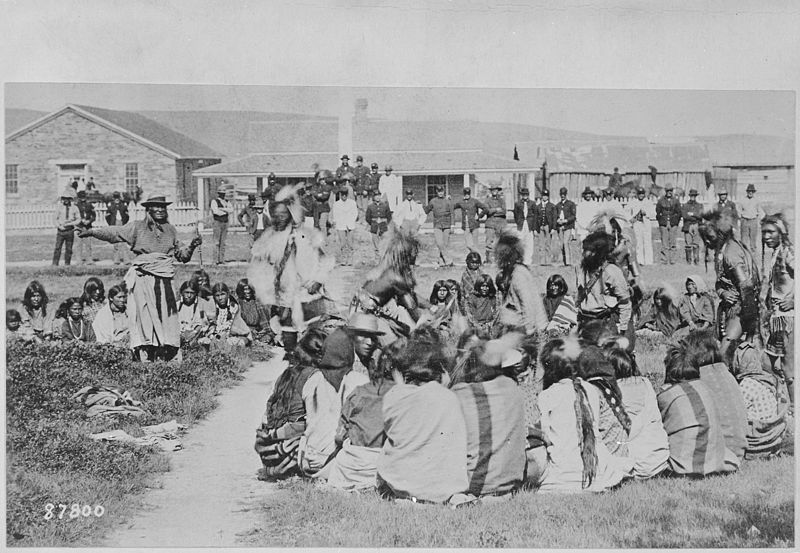
2. Victory means ethnically cleansing the land of most of the Palestinians–a process that is on-going. Every effort is being made to force as many as possible into exile. This is being done by an on-going policy of making life as miserable as possible for all non-Jewish natives of Israeli controlled territory. For instance, it is public knowledge in Israel (if not the U.S.) that “police brutality against Palestinians has been routine for decades.” Those who, despite all, refuse to leave, are being territorially restricted and economically marginalized. It is often speculated that the model for the latter situation is the Indian reservations in the U.S. as they existed circa 1870. And indeed, for Zionists this model can be more easily rationalized than the ghettos of old Europe.
2a. In the process of this ethnic cleansing, the number of Palestinians who die is irrelevant to the Zionist leadership. The Palestinians, like the American Indians, are seen as hardly human. If the Zionists could make them all disappear without serious international repercussions they would do so.
3. All this having been accomplished, Zionist leaders plan to simply maintain the status quo and wait. They believe that, just as was the case of the American Indians, the world will eventually forget the fate of the Palestinians, and this forgetting will seal Israel’s dominion over the land. At least from the Zionist point of view, that is the end of the story.
By the way, Zionists are not the only ones betting on this sort of scenario. The Chinese in Tibet, and the Sinhalese in Sri Lanka, are also counting on the world forgetting their victims. And, in each case they might be right. However, it is the Zionists who are running the greatest risks pursuing this strategy of conquest. Why is that the case?
Part III – Problems For The Zionist Scenario
1. Israel is not a great power like China, and does not occupy a half-forgotten spot on the globe like Sri Lanka. It is very much on the map as far as vast numbers of people are concerned, both supporters and opponents. Of course, Israel continues to enjoy the patronage and protection of a great power, the U.S. But, as unlikely as it might seem at present, this can change.
2. It is not the 18th and 19th centuries anymore and outright colonial domination is no longer in favor. The only way Israel can commit crimes with impunity is by: (a) playing the holocaust card and (b) sustaining the political clout of its lobbies. The first practice is rapidly wearing thin almost everywhere one looks. The second, on the other hand, is the key to their patronage and protection. Yet counter lobbies are even now evolving, and an increasingly vocal international Boycott, Divestment and Sanctions movement is on-going. The past 95 years of solid Western backing of Zionist political goals (counting from the Balfour Declaration) does not make the future a sure thing for the Israelis and their ideological supporters.
3. As they conquer Palestine they destroy Judaism. Here is the greatest irony: ultimate success of the Zionist strategy marks the ultimate corruption of official, organized Judaism. This is so because such success seals the devil’s bargain that ties the organized aspect of this religion to the racist and anti-human goals of Zionist ideology. With the death knell of the Palestinian state comes the death knell of official Judaism.
3a. Do you want to know why anti-Semitism appears to be on the rise? Because the Zionists have changed the definition of the term. The traditional definition tells us that anti-Semitism is hatred for Jews as Jews. The new, Zionist inspired definition, includes opposition to anything the “Jewish state” of Israel does. Oppose the political goals of Zionism and you allegedly oppose Jews and Judaism. Ergo, you’re an anti-Semite.
3b. This assertion on the part of Zionists is, of course, a modern innovation. Yet it gains popularity based on the premise laid down by Joseph Goebbels that “if you tell a lie big enough and keep repeating it, people will eventually come to believe it.” Nonetheless, the truth is that Zionism and Israel have never been synonymous with Judaism. All Jews are not and never have been Zionists and all Zionists have never been just Jews. That being the case, the claim by Zionists that Israel and its government represent Jewry en masse is false. Yet the lie is stated over and again. The Jews who object to this false claim are now labeled “self-hating Jews.” This too is nonsense.
Part IV – What of Palestinian Resistance?
The most striking thing about the list of obstacles given above is that Palestinian resistance in places like the West Bank, Gaza and Israel proper, is not on it. Why? Again, it has to do with power relations. When, during the Second World War, resistance manifested itself against Nazi occupation, the cost was remarkably high. Partisans might shoot a German soldier, but then the German Army would shoot 50 civilians as punishment. Nonetheless, the Germans lost the war and most of the Nazis from that time have been hunted down and given their own punishment.
The Israelis have employed the Nazi strategy of disproportionate revenge and collective punishment from the very inception of the Israeli state. If anything, the kill ratio they exact from the Palestinians is even higher than the Nazi average. But the same powers that once brought low the Nazis now either support or turn a blind eye to the savagery of the Israelis.
Under these circumstances the Palestinians have indeed been worn down. In Gaza they are confined to the world’s largest open air prison and in the West Bank most of their leaders are either in prison or have been turned into collaborators. It has gotten to the point where the most effective act of resistance they can muster is the threat that over a thousand of them, locked away in Israeli prisons without charge or trial, will starve themselves to death.
Part V – Conclusion
The death knell of the two state solution and its corresponding corruption of official Judaism is not the end of the story. But, the final chapter can no longer be written by the Palestinians alone. The West began the present horror in the “Holy Land” when it sought to pay for the sin of European anti-Semitism by allowing the destruction of the Palestinian people. Ultimately, it is only with help from the West that the situation can be put right. However, as long as they are under the corrupting influence of Zionism, most governments will not seek to do so. So this corrective effort has to be undertaken by a movement of civil society – Boycott, Divestment and Sanctions. And the Jews of the world better hope and pray for its success. For it is not just the fate of the Palestinians that rides on the outcome. It is the fate of the Jews as well.
Lawrence Davidson is professor of history at West Chester University in West Chester PA. His academic work is focused on the history of American foreign relations with the Middle East. He also teaches courses in the history of science and modern European intellectual history. http://www.tothepointanalyses.com/
River toSeaUprooted Palestinian The views expressed in this article are the sole responsibility of the author and do not necessarily reflect those of this Blog!
Israelis barely had time to absorb the news that they were heading into a summer election when Prime Minister Binyamin Netanyahu yesterday pulled the rug from underneath the charade. Rancourous early electioneering had provided cover for a secret agreement between Netanyahu and the main opposition party, Kadima, to form a new, expanded coalition government.
Rather than facing the electorate in September, Netanyahu and his hardline rightwing government are expected to comfortably see out the remaining 18 months of his term of office. Not only that, but he will now have the backing of more than three-quarters of the 120-seat Israeli parliament, leading one commentator to crown him the “King of Israel”.
The announcement may have taken Israelis by surprise but it fully accorded with the logic of an increasingly dysfunctional Israeli political culture.
Shaul Mofaz, who a few weeks ago ousted Tzipi Livni as head of the centre-right Kadima party, had been vitriolic in denouncing Netanyahu. He called the prime minister a “liar” and went to the trouble of posting on his Facebook page a pledge that he would never make a deal with this “weak, incompetent and deaf government”.
He also boasted in a recent interview that he would topple Netanyahu by leading the revival of mass social protests expected in the summer.
Last year hundreds of thousands took to the streets to demand an end to the rocketing cost of living, much of it caused by business cartels that were empowered by Netanyahu and his Likud party in privatisation programmes years ago.
But the reality was that Mofaz, a hawkish former army chief of staff who is seen as a lacklustre, power-hungry and slippery politician, had no credibility with either the demonstrators or the wider electorate.
Kadima, which has never strayed far from its ideological roots in the Likud, from which it split several years ago, is currently the largest faction in the parliament. But polls suggested Mofaz would lead it to electoral oblivion.
The deal will win him a temporary reprieve, with a seat in the inner circle alongside Netanyahu and Ehud Barak, the long-time defence minister whose own party was expected to vanish if the September election had taken place.
Kadima will get no ministries but Mofaz will have a say in the biggest issues facing Israel: its dealings with Iran and the Palestinians.
This may be good for Mofaz personally but most likely his act of supreme duplicity will finish off Kadima as an independent party. The next year and a half may see him try to return to the Likud fold.
Netanyahu, meanwhile, has created a national unity government that more precisely reflects the majority mood: an unalloyed, aggressive and xenophobic rightwing consensus.
There was little need for Netanyahu to bring Kadima into the coalition. He was racing ahead in the polls, his popularity outstripping that of all the other major party leaders combined. And he had won this scale of support even as senior security officials, including the former heads of the Mossad and the Shin Bet, questioned his rationality on the issue of whether to attack Iran.
But there are advantages to Netanyahu in postponing an election he was expected to win.
Not least, it gives him time to entrench moves towards authoritarianism. Netanyahu has been behind a series of measures to weaken the media, human rights groups, and the courts. At the moment his government is defying a series of Supreme Court rulings to dismantle several small Jewish settlements on Palestinian land that are illegal even under Israeli law.
An uninterrupted 18 months will allow him to further undermine these rival centres of power. One of the promises he and Mofaz made yesterday was to overhaul the system of government. Netanyahu now has enough MPs to overturn even the most sacrosanct of Israel’s Basic Laws.
In addition, the new coalition will face an all but non-existent parliamentary opposition: a shrivelled centre-left of the Labor and Meretz parties, with only a handful of seats; a few noisy ultra-nationalists who would be more trouble in government than Netanyahu needs; and the Arab parties, who are reviled by Jewish public and politicians alike.
Labor’s new leader, Shelly Yacimovich, was expected to partially revive her party’s fortunes on the back of the social protests and might have been joined in a potentially confrontational opposition by a new centrist party, headed by TV news anchor and heart-throb Yair Lapid. Now both are relegated to the political margins.
Avigdor Lieberman, the foreign minister and leader of the far-right Yisrael Beiteinu party, whom Netanyahu fears most as a potential challenger, has also been defanged. His current, pivotal role in the coalition will be savagely diminished by the bulky presence of Kadima.
Another bonus for Netayahu is that he is now better situated to see off the potentially dangerous early days of a Barack Obama second term, if the US president is re-elected in November. This is when some observers believed the US president, serially humiliated by Netanyahu over the settlements and the peace process, might seek his revenge.
But should Obama choose a fight on the Palestinian issue, he will be facing a prime minister whose position in Israel is unassailable.
What does all this mean for Iran and the Palestinians?
Regarding the former, several commentators and some of his own ministers have argued that Netanyahu now has a free hand to launch a go-it-alone attack on Iran and destroy what he claims is a nuclear weapons programme that might one day rival Israel's own secret arsenal.
More likely, the expanded coalition will make little difference to Israeli calculations over Iran, one way or the other. Mofaz, like most of the security establishment, opposes an attack unless it is headed by the US.
But Netanyahu will doubtless exploit his strengthened position to up the rhetoric against Tehran and add to the pressure for intensified action from the US and Europe.
As for the Palestinians, it can mean only more of the same -- or worse. Mofaz, who tried to distinguish himself in opposition by proposing a miserly peace plan that would see the Palestinians holed up in a series of enclaves, lacks the political weight to deflect Netanyahu from his even more intransigent approach.
But at least for Netanyahu, the Kadima leader will cut a more presentable figure in Washington than Lieberman as an advocate for Israel’s hard line.
The Israeli prime minister’s claim yesterday that he was about to unveil a “responsible peace process” should be taken no more seriously than his professed commitment, abandoned the same day, to submit himself to the judgment of the Israeli electorate.
The one small sliver of light is that what remains of the Israeli left, so long in hibernation or denial, may finally be stirred into a response by the antics of this ugly ruling cabal.
Last year’s social protests remained, in a great Israeli tradition, studiously “apolitical”, unlike their counterparts, the Occupy movements, in the United States and Europe.
The demonstrators refused to draw any connection between the rapidly polarised economic situation -- the gap between Israel’s rich and poor is now as bad as in the US -- and either the right’s self-serving neoliberal policies or the occupation that has channelled endless resources to the settlers and the security establishment.
This summer Israel may finally get its own Occupy movement -- one prepared to tackle the real occupation. - Jonathan Cook won the Martha Gellhorn Special Prize for Journalism. His latest books are “Israel and the Clash of Civilisations: Iraq, Iran and the Plan to Remake the Middle East” (Pluto Press) and “Disappearing Palestine: Israel’s Experiments in Human Despair” (Zed Books). His website is www.jkcook.net. He contributed this article to Palestine Chronicle.com. A version of this article originally appeared in The National - www.thenational.ae.
River toSeaUprooted Palestinian The views expressed in this article are the sole responsibility of the author and do not necessarily reflect those of this Blog!
After Israel’s former defense minister Shaul Mofaz defeated her, sources close to former Kadima leader Tzipi Livni estimated she will soon announce her retirement from politics.
“Tzipi, you belong with us,” said Knesset Member Tuesday night after gaining 61.7% of the votes while Livni got only 37.2% from the Kadima primaries.
Butcher of Gaza
“I'll see you sometime, somewhere,” she told her supporters after losing the vote. "She realized it was over after she saw the results," the source told Israeli daily Yediot Ahronot. "She said she understood she had missed her calling."
Livni told reporters that she had called Mofaz and congratulated him on his victory. She refused to take any questions.
Mofaz was pronounced the winner in the early hours of Wednesday morning, ending Livni's three-and-half-year reign as party leader. Turnout at the primary was low, with 41 percent of Kadima's 95,000 registered members casting their ballots on Tuesday.
Source: Websites
28-03-2012 - 11:54 Last updated 28-03-2012 - 11:54
River toSeaUprooted PalestinianThe views expressed in this article are the sole responsibility of the author and do not necessarily reflect those of this Blog!
Israeli opposition party Kadima has described the opening of Rafah border crossing by Egypt as a diplomatic failure for Israeli Prime Minister Benjamin Netanyahu.
In a statement on Saturday, the Kadima party reacted to the reopening of the Rafah border crossing to Gaza by Egypt's interim government and blamed Netanyahu's cabinet for failing to prevent the move, Ha'aretz reported.
“The breaking of the blockade, with no coordination with Israel, and against its will, constitutes a diplomatic failure of the Netanyahu government - that because of its diplomatic weakness and inability to create coordination and cooperation with international parties, has left Israel isolated, in a position of weakened security, while Hamas has gotten stronger,” a statement released by the party said.
Egypt opened its Rafah border with the Israeli-blockaded Gaza Strip on Saturday, allowing people to cross freely for the first time in four years. The border had been closed since 2007, when Hamas took control of Gaza.
"The Rafah border was opened for the first time [Saturday] in direct opposition to Israel's interests," the statement continued.
The Israeli opposition party said the reopening of the border "breached the blockade that the Kadima government had brokered with international assistance against Hamas."
The new Egyptian government says that the permanent opening of the Rafah border crossing will ease the Israeli siege on the sufferings of Gazans.
As the usual suspects started howling for Western intervention in the Libyan revolution – in the name of “humanitarianism,” of course – the objects of their concern made it clear they didn’t want or need any such “help.”
US Defense Secretary Robert Gates was right on the mark when he described this howling as nothing but “loose talk” – and just how loose was dramatized by the dispatch of a British Special Forces team to Eastern Libya, a move that backfired badly. The Libyan rebels made their point by detaining the team, whose ostensible mission, as described by Western media, was to “escort a junior diplomat” to “reach out” to the Libyan rebels. They were discovered in the Eastern part of the country, which is held by the rebels, and brought to Benghazi – where they were promptly clapped in jail. After holding them for some 24 hours, the rebels sent them packing.
As the embarrassing incident came to light, British Foreign Secretary William Hague sought to rationalize his government’s rash action:
“It is a very difficult situation to be able to understand in detail. There are a number of different opposition groups to Colonel Gadhafi in Libya who do seem relatively disparate. ‘We want to clearly understand what the dynamic is here because we want to be able to work with them to ensure the demise of the Gadhafi regime, to see a transition to greater stability in Libya and ultimately to more representative government.”
Translation: We just were unlucky enough to meet up with the wrong group – but give us time, we’ll find more pliable elements soon enough.
Undeterred by the rude reception, Hague promised that efforts to “contact” the Libyan opposition would continue. We can count on that, I’m sure. “We intend, in consultation with the opposition, to send a further team to strengthen our dialogue in due course,” he said. “This diplomatic effort is part of the UK’s wider work on Libya, including our ongoing humanitarian support. We continue to press for Gadhafi to step down and we will work with the international community to support the legitimate ambitions of the Libyan people.”
If the Libyan people should begin entertaining any ambitions considered illegitimate by Her Majesty’s Government, well, then, that’s another matter.
This incident raises a number of questions, including: what were the Brits really doing in Libya, and why – if this was a “diplomatic” mission – did it require the services of 8 SAS (Special Air Service) tough guys, members of Britain’s legendary elite commando unit, crack troops who are the tip of Britain’s interventionist spear? After all, the normal way to engage in diplomacy is to contact the government– or, in this case, the rebel committee in Benghazi – one wishes to communicate with, and make arrangements out in the open. Why send a covert action team, peopled with top-notch military personnel whose job is not to negotiate but to kill – unless one is not engaging in diplomacy but in other activities of a less benign nature?
The Guardianreports that this very odd “diplomatic” delegation consisted of 6 SAS officers and 2 MI6 intelligence agents – who arrived via helicopter, although from where is unknown at the moment – and cites a rebel source as saying:
“They were carrying espionage equipment, reconnaissance equipment, multiple passports and weapons. This is no way to conduct yourself during an uprising. “Gadhafi is bringing in thousands of mercenaries to kill us, most are using foreign passports and how do we know who these people are? “They say they’re British nationals and some of the passports they have are British. But the Israelis used British passports to kill that man in Dubai last year.”
That last sentence was quite a zinger, and I had to laugh out loud as I read it. The whole affair is uproarious, rather like a particularly subversive installment of Yes, Minister. As the Western powers try to mold, manipulate, and “manage” events on the ground in the Middle East, this is a measure of just how much credibility they have in the people’s eyes: zero. Go home – and stay there: that’s the message. And one can hardly blame the Libyans, especially in the case of the Brits.
After all, wasn’t it Tony Blair who held Gadhafi’s hand throughout the despot’s rather rapid “rehabilitation” – and signed a secret military agreement with the Libyan government, affixing his signature to a document pledging to arm and train Gadhafi’s “specialized military units, special forces and border security units?” It most certainly was. As a reward for capitulating to the West so readily and publicly, Gadhafi was also to be given access to NATO’s military secrets. All this was done during Blair’s last trip abroad as the representative of the British government, in which his job was clearly to say to the Libyan dictator: “Join the club, Moammar. You’re one of us, now!”
What I want to know is why, having pledged to train and support the very troops the rebels are now battling, the British government thought they could send a “diplomatic” team into the country and be greeted with open arms. Unless, of course, their mission wasn’t just an innocent diplomatic blunder, and was, instead, of a more sinister cast.
There’s no end of hilarity in this episode. Feast your eyes on this Telegraph story, which purports to tell us “what went wrong” with the SAS intervention. The subhead alone is priceless: “As the diplomatic team in Libya were rescued by HMS Cumberland after their humiliating capture, the Ministry of Defense was left trying to work out what on earth went wrong.” The tone of wide-eyed naivete persists throughout: “When the helicopter touched down outside Benghazi in the early hours of Friday morning, the SAS troops on board knew they were entering a volatile situation. Tasked with escorting a diplomat to meet rebel Libyanforces and assessing the humanitarian situation on the ground, they did not, however, expect a hostile reception. With the British Government openly rejecting Colonel Moammar Gadhafi and already in dialogue with opposition leaders, it should have been an uncontroversial visit.”
Ah, but even the credulously pro-government Telegraph noted the, er, unusual circumstances of this diplomatic courtesy call: “However, the manner of their arrival – in the dead of night, armed with weapons, maps and explosives while dressed in plain black clothing – did little to assuage local panic.”
Yes, that does seem a tad suspicious, now doesn’t it? But, of course, those excitable Libyans would go into a “panic.” Just because their country has been invaded and occupied countless times by foreigners, why get all huffy and hostile when a mysterious helicopter carrying armed foreigners arrives in the dead of night? I guess some people are just hypersensitive.
Whether the Brits really believed they would be showered with rose petals and hailed as saviors upon arrival, as the “allied” forces were supposed to have been greeted by grateful Iraqis in 2003, is almost beside the point. The point being that what is happening in Libya, and throughout North Africa and the Middle East, is the exact opposite of what occurred in Iraq, and – contra Charles Krauthammer – refutes the Bush Doctrine that served to justify the invasion.
The idea that Washington could lead a regional revolution against corrupt authoritarians who ruled with our open support – in Tunisia, Egypt, Saudi Arabia, and theGulfemirates – is such an obvious contradiction that several observers doubted the President’s sincerity, concluding that Bush’s “global democratic revolution” was just an ideological cover for some ulterior motive – oil, Israel’s “security,” or some combination of the two.
In order to “drain the swamp” of the Middle East, and eliminate the conditions that led to the proliferation of terrorism in the Muslim world – as the neoconservative Deep Thinkers theorized – the first obstacles to be removed were US allies in the region: Tunisia’s Ben Ali, Pharaoh Mubarak, and the tinpot kings and emirs of the Gulf. In any genuinely revolutionary upsurge in support of democracy these characters would logically be the first to go – and so they are gone, or going very shortly. The very fact that these tyrants were – and are – valued allies of the American Imperium will mean that we can expect the same “welcome” experienced by our British partners.
As the tag team of John McCain and Joe Lieberman calls for all measures short of an outright invasion to “help” the rebels, the War Party is being told firmly but politely “thanks but no thanks” by the emerging rebel leadership.
Aside from the complete repudiation of the War Party’s agenda, what’s interesting about this story of a spy mission gone bad is the question of just what these “special forces” were really doing in Libya. My guess is they were trying to aid a particular faction of the Libyan opposition by providing its members with logistical and military support. They could hardly do so openly, and so they arrived in the dead of night, armed to the teeth and loaded down with enough spy paraphernalia to outfit a James Bond movie.
Apparently determined to provide as much comedic relief during the Libyan crisis as possible, the Telegraph released a partial transcript of the conversation between the British ambassador, Richard Northern, and a rebel leader. Here is Mr. Northern, explaining what that crack team of British commandos and two spooks were up to:
“We have been planning to send some officials to stay in Benghazi to liaise with you, with the National Council,. … And we sent today, ahead of those officials who were coming, we sent a small group just to find if there was a hotel, if everything was working, if there was somewhere they could stay and work when we get our group organized.”
Did the Ambassador really think the Libyans would fall for this? Somehow, I doubt it. A more calculated insult would be hard to imagine. The rebel leader, who is not named, responded with admirable calm: instead of berating Northern, the official said the matter is “under investigation.” That’s one investigation I would love to see pursued to the very end.
The hilarity ends, however, with the realization that this dubious “diplomatic” mission will have some real-world consequences, the first being that Gadhafi will use this incident to do what all tyrants do when their rule is challenged: point to a dreaded foreign threat to justify the continuation of their onerous rule. The Gadhafi clique has maintained from the very beginning that the rebellion is the result of a foreign “conspiracy” consisting of Washington, Al-Qaeda, and the purveyors of “hallucinogenic drugs.” To this rather disparate rogues gallery they can now add the Brits, giving the germ of credibility to Gadhafi’s somewhat LaRouchian paranoia – and prolonging the civil war that is tearing the country apart.
Speaking of paranoia: it almost makes one wonder if, perhaps, they did it on purpose – that they wanted to be caught. What else did they expect by landing in an open field, on the outskirts of a populated center? When confronted, they claimed they weren’t armed. From all accounts, however, they had enough explosives and other weapons to outfit a small army. So much for that “weapons embargo”!
The British government is saying – with a straight face – that they intend to send in yet more “diplomatic” missions, presumably with the agreement of the rebel high command, but if I were them I wouldn’t count on it.
NOTES IN THE MARGIN
On another topic: If you’re wondering where the next Muslim domino is going to fall, I say look to Pakistan – where the corruption that provoked the ire of the Tunisians, Egyptians, Bahrainis, and Iraqis has reached Brobdingnagian proportions. And speaking of the Iraqis – expect the anti-government demonstrations to be met with even worse repression (dozens have already been killed by US-funded “security” forces), and the protests to grow much larger and more radical in their demands.
Some of you may have noticed that we have resumed our relationship with Amazon.com. The reason is simple: it was dumb to boycott just Amazon when practically every banking institution and every hosting service in the country was caving in to pressure to refuse services to WikiLeaks. We thought it was important, however, to speak out against the intimidation tactics of the US government, and that we did: as George W. Bush would say – “Mission accomplished!” Seriously, though, we didn’t really think that one through: and I, for one, never thought that so many would be cowed into bowing to the dictates of the US government. Ever the optimist, I was shocked when so many caved. Live and learn.
And of course another reason for our return to the Amazon fold is financial: we just can’t afford the thousand or so dollars a month we make from the relationship, and several of our donors raised this question with us during the recent fundraising drive. It is a point well taken. We listen to you, our readers and supporters, and not only that, we respond.
Speaking of our recent fundraising campaign: I am pleased to say it was a great success – although it did get scary for a while there, especially in the beginning. And it did take a good three weeks: why, I remember – years ago – when it used to only take a single week to make our goal. Times sure have changed: they’ve gotten harder.
Yet we at Antiwar.com are determined to ride out this economic storm, and we’re doing it with your essential and much-appreciated support. To all those who dug down deep in their pockets and gave, you have my eternal thanks.
It’s always hard to write these thank-you notes, because it’s difficult to express the depths of my gratitude. However, let me try.
Every time I sit down to write a column I give silent thanks to Antiwar.com’s readers – and its incomparable staff – for the opportunity to spread the anti-interventionist message far and wide. It is a privilege, and a responsibility, to be in this position, and I never forget – not for a moment – that this kind of support has to be constantly earned.
This is the whip that drives me, and keeps me trotting along, sometimes at a very rapid pace, and it can get exhausting. I struggle mightily, however, to make sure that exhaustion never turns up in my writing. By constantly challenging myself, and my readers, I strive to ward off the worst afflictions of the ideological writer: the recourse to formulaic jargon-clotted prose, and the kind of groupthink that accompanies every movement for social change. I may not always succeed as well as I would like, but this is the kind of lazy writing I could never habitually indulge in – because it would bore me to tears.
Voltaire, actualité internationale, n°190
-
Outre ce site internet gratuit, nous publions une lettre confidentielle en
PDF, Voltaire, actualité internationale. Chaque jeudi soir ou vendredi
matin, vo...
Rabbi Jeff and Grok
-
JAKEGTV, banned on JewTube and Jew-owned Instagram, seems to be back on
X:POV: You Try Watching The Flydubai Hijacking But The Anchors Keep
Noticing https:...
The Legendary Golem
-
The Legendary Golem October 3 2026 ___________________________________ More
Vids! +BN Vids Archive! HERE! ___________________________________ Support
The B...
The United States At A Crossroad
-
The United States At A Crossroad—An Analysis (16 Sept 2026) by Lawrence
Davidson Part I—Texas vs Minnesota Back in mid-May […]
Report on Beth Israel vigil 09-12-26
-
*Eat-a-Cheeseburger Day Approaches*
This year, EAC Day appears on Monday, September 21st. The date coincides
with the Jewish holiday called Yom Kippur. Cl...
-
Hello all,
It is with great sadness that I share with you the passing of our beloved
sister, Mother, and Grandmother, the individual that you all knew ...
Best Horror Podcast
-
Best Horror Podcast Introduction: Horror podcasts […]
The post Best Horror Podcast appeared first on Copper Shock Horror Podcast.
Ikhras Endorses Muntadhar Al-Zaidi
-
“Oh parties of banditry and sectarianism and corruption, we have come and
our goal is to destroy you.” Ikhras formally endorses Muntadhar al-Zaidi,
Iraqi j...
Prince Charles: Foreign Jews behind bloodshed in ME
-
In May, 2017, British Crown Prince Charles declined an invitation from
Zionist entity’s president Reuven Rivlin‘s to attend the 100th anniversary
of the no...
Palestinian Women – One for All, All for One
-
Honouring All Palestinian Women by Honouring Three: Hanin Zoabi, Ahed
Tamimi, Samah Sabawi Vacy Vlazna “Palestinian women have always stood side
by side ...
US’s Saudi Oil Deal from Win-Win to Mega-Lose
-
By F. William Engdahl Who would’ve thought it would come to this? Certainly
not the Obama Administration, and their brilliant geo-political think-tank
neo-...
-
*Mordechai Vanunu wins human rights prize of Brazilian Press Association *
* http://www.alternativenews.org/english/index.php/features/updates/7038-mordechai...
Abdul Aziz Rantissi:
"My ultimate wish, my God, is to attain martyrdom,"...God granted him his wish on April 17, 2004, at the hands of Israeli assassins.