Uprooted Palestinians are at the heart of the conflict in the M.E Palestinians uprooted by force of arms. Yet faced immense difficulties have survived, kept alive their history and culture, passed keys of family homes in occupied Palestine from one generation to the next.
Kordahi’s resignation was made in the expectation that Macron’s visit with Saudi Arabia would help ease the economic pressure on Lebanon
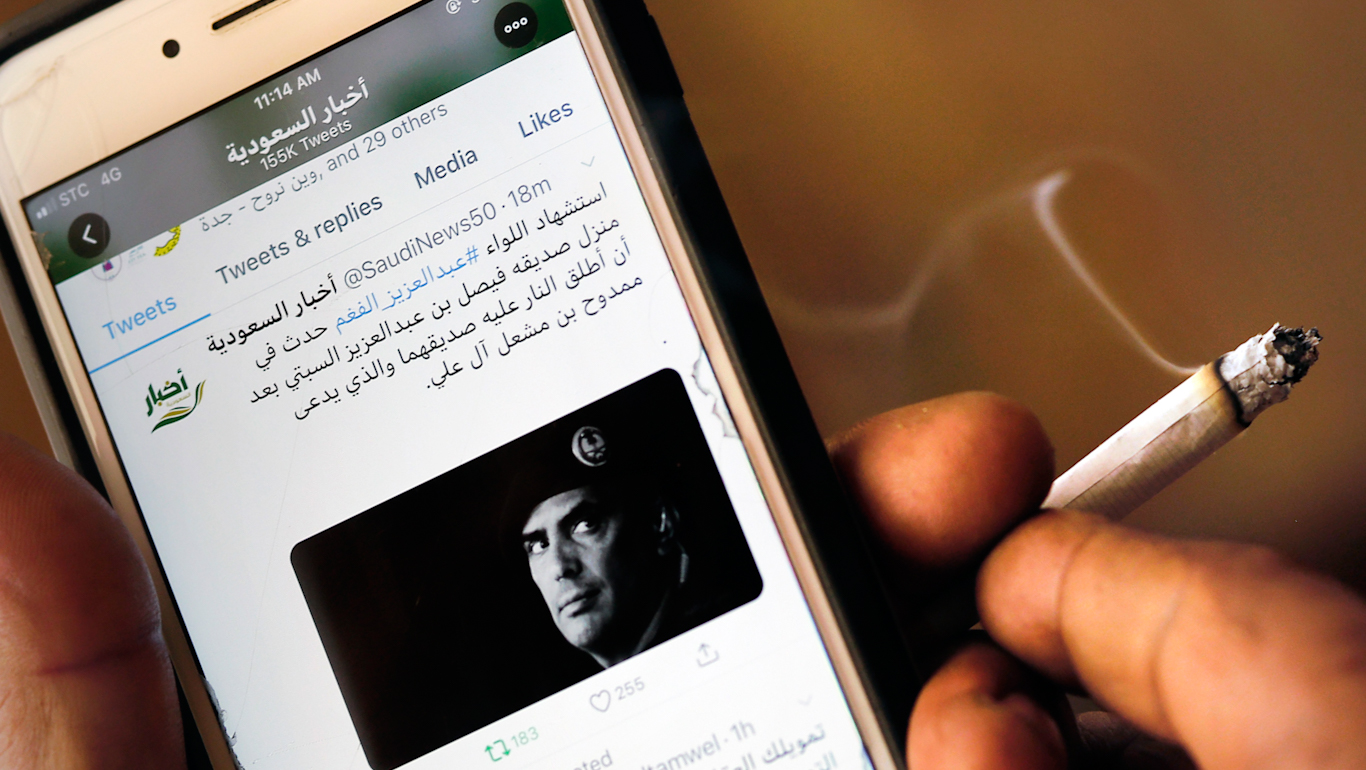
(AP Photo/Bilal Hussein)
At noon on 3 December, Lebanese Minister of Information George Kordahi submitted his resignation to President Michel Aoun and to the government of Lebanon.
The now former information minister, who joined Prime Minister Najib Mikati’s newly assembled cabinet, resigned over the diplomatic row with Saudi Arabia when Kordahi’s comments against the war in Yemen caused Saudi Arabia to recall its ambassador from Lebanon and ban all Lebanese imports.
Months before assuming his post, Kordahi had said that the Yemenis were defending themselves against the Saudi-led siege on Yemen, calling the war against Yemen ‘futile.’
In a statement given upon his resignation at a press conference, Kordahi said: “An intentional campaign was launched against me in some Lebanese and Gulf media and communication sites,” and that “because of this massive and unjust pressure against Lebanon, I refused to resign.”
He also said that “all those who attacked me in Lebanon were the ones who raised slogans of freedom and independence.”
Kordahi’s resignation on Friday emerged out of the hope that French President Emmanuel Macron’s upcoming visit to Saudi Arabia would help ease the pressure on Lebanon.
Kordahi told AFP ahead of his resignation that he does “not want to cling to this position if it can be useful,” hoping instead his resignation will come ahead of a possible deal between Macron and Saudi Arabia that would alleviate the economic and political blows waged by the kingdom. “I want to give Lebanon a chance,” he said.
He added that “the interest of my country and family is above my personal interest, and the interest of the Lebanese is more important than my ministerial position.”
“I don’t accept being used as a tool to harm my Lebanese brothers in the Gulf. The war in Yemen will not last forever, and a day will come when the warring sides will sit at the table,” Kordahi said.
At the peak of the crisis, Saudi officials had said that Kordahi’s comments reflected ‘Iranian influence’ in Lebanese politics.
The diplomatic row between Saudi Arabia and Lebanon, however, reveals one of many examples of Saudi Arabia’s much more influential position in politics over Lebanon.
In banning Lebanese imports and breaking economic ties over a minor issue, Saudi Arabia demonstrated an aggressive ability to strike at Lebanon’s already struggling economy.
In 2017, Saudi Arabia kidnapped and tortured Saad al-Hariri, the then prime minister of Lebanon, releasing him three weeks later.
The Yemeni forces advanced on the southern gates of the central Marib city, pushing Saudi-backed militants loyal to former president Abd Rabbuh Mansur Hadi further back.
According to a report published on Friday by Lebanese al-Akhbar daily, Saudi forces and their mercenaries failed to stop Yemeni soldiers and their allies from making rapid advances on the southern flank of the provincial capital city.
Hadi loyalists have already withdrawn from most of their positions in the eastern and central parts of the Balaqin sub-district over the past two days, despite intense airstrikes carried by Saudi warplanes in their support.
The paper, citing local military and tribal sources, said Yemeni army troops and Popular Committees fighters have made major advances on the western outskirts of Falaj area after establishing control over all heights overlooking the region.
Sources close to pro-Hadi forces said their defeats appear to have been an inside job.
Pro-Hadi Marib governor general Sultan al-Arada expressed his disappointment over the unfolding developments in the province, confirming that the al-Balaq al-Awsat district and surrounding areas in Wadi al-Zannah region had been taken over by the opposite side.
On Thursday, Saudi warplanes conducted more than a dozen air raids against al-Jubah and Sirwah districts in Marib province.
The military aircraft also launched two airstrikes against the Yemeni capital city of Sanaa late on Thursday.
Saudi Arabia, backed by the US and other key Western powers, launched the war on Yemen in March 2015, with the goal of bringing Hadi’s government back to power and crushing the popular Ansarullah resistance movement.
Having failed to reach its professed goals, the war has left hundreds of thousands of Yemenis dead and displaced millions more. It has also destroyed Yemen’s infrastructure and spread famine and infectious diseases there.
Despite heavily-armed Saudi Arabia’s continuous bombardment of the impoverished country, Yemeni armed forces and the Popular Committees have grown steadily in strength against the Saudi invaders and left Riyadh and its allies bogged down in the country.
The media establishment controlled by Riyadh, Abu Dhabi, and Western corporate elites is attempting to mislead supporters of the regional resistance and make them turn on the groups they currently support.
As the regional ‘Axis of Resistance’ to Western hegemony in the Middle East advances on multiple fronts, a desperate attempt is being made by Western and Arab reactionary regime media outlets, to portray the alliance, led by Iran, as being on its last legs.
Iran currently leads a successful alliance of forces, including; Ansarallah in Yemen, Hezbollah in Lebanon, Hamas and Islamic Jihad in Gaza, the PMU in Iraq, among many others. Although Washington puts on that its primary concern about the Islamic Republic of Iran is its alleged pursuit of nuclear weapons, its regional alliance is what truly bothers policymakers in the US beyond all other considerations. This regional alliance, dubbed the ‘Axis of Resistance’, is what makes Iran an impossible target for war and all attempts to weaken its cross-border presence have been tried and so far failed.
The latest in attempts to dislodge Iran from its allies is in fact coming in the form of media psyops, designed to inflame local tensions in places like Iraq, Syria, and Lebanon. In Iraq, as a clear example of such attempts to stir division is the narrative that is pushed by Western, Persian Gulf regime media, that seeks to paint Iraq as shifting away from groups allied with Tehran.
One of the biggest challenges to the US, preventing it from reigning supreme over Iraq, is the Iraqi Popular Mobilisation Units (PMU). After becoming the Iraqi ground force to rid the country of Daesh and Al-Qaeda terrorists, the PMU gained huge credibility for its efforts and later began to focus its attention on expelling the US from their country, especially in the wake of the 2020 drone strikes which killed leading PMU commanders such as Abu Mahdi al-Muhandis, along with Iran’s General Qassem Soleimani. A vote in the Iraqi parliament that year did in fact conclude that the US be ordered out by the government in Baghdad.
Whilst the Iraqi parliament once had a large presence of the PMU-aligned Fateh bloc, who were democratically elected by the Iraqi people, this October saw a dramatic decrease in the seats won by the Fateh Alliance; from 48 seats in 2018 to 16 seats in the recent election. This was instantly pounced upon by Western media and their allied media outlets in the Middle East. The election was called to be fraudulent by the likes of Kataeb Hezbollah and Asaeb Ahl Al-Haq, with claims being widely made of UAE interference in the democratic process.
But for the sake of argument, let’s put aside the claims of the PMU – about election rigging – and just look at what the results actually show. The Western and Arab reactionary regimes media-machine are using the dramatic drop in seats to corroborate their claims that Iraqis are shifting politically and are turning on the PMU. On the surface, 16 seats out of a 329-member parliament seem pretty damning, especially when the leading Sadrist movement won 74 seats. However, instead of delving deeper into this issue, the media of the empire stop there, because when you look at the popular votes, their narrative begins to look rather ridiculous. So, yes the PMU lost a large number of seats, but when we compare their popular vote count to that of the leading party, headed by Moqtada al-Sadr, these claims of a massive drop in support for the PMU are debunked entirely. The PMU aligned parties of the Fateh alliance won a total of 470,000 votes, meaning that they actually won the popular vote over the Sadrists who received 450,000 votes. The reason why the seats were lost was not due to a lack of support, in fact, they are the most popular in parliament, instead, it came down to the amendments made to the electoral system in Iraq.
Additionally PMU ally, Nouri al-Maliki, won an astounding victory, this is to go along with other parties who are favorable to the PMU also winning seats. So the narrative that Iran and its allies are losing in Iraq is just a lie.
Then came the attempted assassination of Iraqi Prime Minister, Mustafa al-Kadhimi, earlier this month. Instantly, media outlets belonging to Saudi Arabia, such as al-Hadath, and other media groups operating out of the United Arab Emirates, reported in a way which would make it seem like the PMU were responsible. Although Kataeb Hezbollah and Asaeb Ahl Al-Haq have been widely blamed for the assassination attempt, using three drones to do so, they themselves have denied it and pointed to irregularities indicating an American role in the attack. Most notably, the PM’s residence is based in Baghdad’s US Embassy ‘Greenzone’, which is protected by C-RAM air defense systems and has a relatively effective siren system. It wasn’t until explosions were heard, resulting from the drone attack, that the sirens went into effect and the C-RAM systems were never used to confront the threat.
With the assassination attempt, coupled with the loss of seats for the Fateh Alliance, a stream of stories ranging from Al-Arabiya, to Politico and the Telegraph, began producing pieces on Iran’s alleged weighing influence in Iraq and the fall of support for the PMU. But as we established above, the election example is completely invalid and in the case of the PMU being accused of attempting to assassinate PM Kadhimi, there is no proof. So ultimately there is no proof whatsoever of their claims.
If we then turn to Yemen, the Ansarallah movement is rapidly gaining ground in the northern, resource-rich, Marib area. The advance of the Yemeni resistance against the Saudi-backed forces of Abdrabbuh Mansour Hadi has been steady, despite deadly airstrikes from the Saudi coalition. But if you turn to Western media and the media establishment in Saudi Arabia or the UAE, you would be made to believe that Ansarallah isn’t gaining territory at all.
Furthermore, if we take the example of Hezbollah inside of Lebanon, after the mass shooting of unarmed demonstrators by the Lebanese Forces, resulting in the deaths of 7 innocents in mid-October, the group could have easily been dragged into civil war. The situation could have been very different, but Hezbollah kept the peace and despite the severe economic crisis in Lebanon, the resistance group has not buckled under the pressure. Instead of reacting irrationally, Hezbollah has provided co-ops for the Lebanese people and has brought in fuel, whilst making it very clear to the groups’ enemies that they are ready to defend themselves.
After liberating most of southern Lebanon from the Zionist army in 2000, later defeating the occupation’s military in 2006, Hezbollah has only grown in its strength and according to its Secretary-General, Sayyed Hassan Nasrallah, now possesses a military structure of over 100,000 fully trained and armed men.
The Kingdom of Saudi Arabia and the Gulf Regimes have recently attempted to squeeze Lebanon, by cutting off diplomatic ties and trade, over a comment made by Lebanon’s Minister of Information, George Kordahi, prior to him assuming office. With this, Gulf Regimes have used their media to coordinate a dis-information war against Hezbollah, after failing all other attempts to weaken it domestically.
Saudi Arabia’s broadcaster al-Hadath, owned by al-Arabiya, has also been producing outrageous propaganda, claiming that the Syrian President Bashar al-Assad has kicked out the Iranian Islamic Revolution Guard Corps (IRGC) Commander, Javad Ghaffari, for so-called violations of Syrian sovereignty, in order to sow division between supporters of the two-sides. Yet, Javad Ghaffari was rotated weeks prior to the claims of Saudi media and it was said to have been an Iranian decision.
In all, the media establishment controlled by Riyadh, Abu Dhabi, and Western corporate elites is attempting to mislead supporters of the regional resistance and make them turn on the groups they currently support. This is simply a last-ditch attempt to attack the Axis of Resistance after a long-term failed campaign, which has only damaged the civilian populations residing in the countries of the resistance, whereas the parties and armed groups maintain their power.
The opinions mentioned in this article do not necessarily reflect the opinion of Al mayadeen, but rather express the opinion of its writer exclusively.
Marib, the ancient capital of Sheba, referred to in both the Bible and the Holy Quran as a wealthy and wise kingdom, once ruled across the entire southern Arabian peninsula.
Today, Marib has risen again, this time as the final stronghold of Yemen’s latest invaders, now in panicked retreat after a six-year battle that has depleted their coffers and exhausted their forces.
This war was announced from Washington on 26 March 2015 and led by Saudi Arabia in support of the overthrown government of Abdrabbuh Mansour Hadi, a regime that had already lost the capital city of Sanaa to Yemen’s Ansarallah (Houthis) movement a few months prior.
A coalition of 10 countries, including pack leaders Saudi Arabia and the UAE, was formed to force the return of his highly unpopular government. The name Operation Decisive Storm was chosen and the air strikes began.
Ansarallah were assessed as being weak and the operation was expected to last no more than a few weeks or months, at the most.
Instead, Ansarallah prevailed, forcing its Saudi and Emirati foes to insert ground troops into the expanding quagmire and divide their roles in Yemen.
Today, the UAE is present mainly in the country’s south controlling its strategic ports and islands, while the Saudis remain in the north, along their extensive northern border with Yemen, in the east, where the province of Marib and its rich oil and gas fields are located, and in the west, in the coastal city of Hodeidah.
For Yemenis, the importance of Marib is not limited to its oil and gas fields, but also for its ancient culture, its inclusion in the holy Quran, and its significant historical sites and water engineering feats, such as the ancient Marib dam built around the 8th century BC. A new dam, the country’s largest, was later built near the cherished ruins of the old one.
Saudi Arabia acknowledged Marib’s importance by making it the stronghold for its war operations, building military bases and bribing local tribes to fight alongside the coalition. Most of Riyadh’s military and intelligence operations – excluding air strikes – were launched from Marib against the northern Houthi-controlled Sanaa city and province.
Ansarallah endured these onslaughts for three years, then flipped the war on its adversaries in 2018 by going on the offensive. Since then, the group has expanded its territorial gains significantly, destabilized Saudi Arabia’s own borders, and exponentially advanced its military tactics and capabilities in drone and missile technology.
These startling gains forced the coalition to the negotiating table in 2018 to sign the Hodeidah Agreement. The agreement was a boon for Ansarallah from a military perspective, first and foremost. Hodeidah and its Red Sea port are west of Sanaa, and the negotiated ceasefire would help Ansarallah turn its focus on only two fronts now, the east (Marib) and the south.
But the agreement also had humanitarian benefits for a country besieged by land, sea, and air by coalition forces since the war’s onset. With goods now entering the port, fresh access to medicine, fuel and food reduced the crisis in territories controlled by Ansarallah.
In 2019, Ansarallah marched eastward, increasing their defence operations inside Saudi Arabia, and targeting the capital city of Riyadh, airports, and Aramco facilities in retaliation for Saudi airstrikes. The UAE was also threatened when drone activity caused a brief closure of Dubai airport.
The UAE’s very existence depends on the security of Abu Dhabi and Dubai. Understanding that they were one ballistic missile away from an existential disaster, the Emiratis withdrew from Marib leaving the Saudis to their own devices, and headed south. The ten-nation coalition had now dwindled to two, neither of whom were fighting alongside the other.
For Sanaa, access to oil is a higher priority than access to ports, hence Ansarallah’s decision to first push eastward, where Marib lies. Although the reverse would have been easier – at 17,000 km², Marib requires a huge military presence, while Hodeidah port and its surrounding areas are less than 1,000 km² – the Yemeni rebels chose the harder, more dangerous fight first.
Today, the complete liberation of Marib is imminent. Of its 14 districts, 13 are now back in Yemeni hands, with only Marib city and the oil fields remaining, alongside one major Saudi military base (Sahen Jin).
Marib’s liberation will be an unprecedented victory for Ansarallah that will place Sanaa back firmly on the world map. Aside from the huge morale boost for the Houthi rebels, Ansarallah will gain control of Yemen’s vital water and oil resources and bring relief for the capital’s civilians. Despite the fact that areas controlled by the group enjoy more financial stability ($1 = 600 Yemeni Rials versus 1,480 Rials in areas outside their control) the war has impoverished Sanaa.
Marib’s liberation will also mean that Ansarallah will govern around 80 percent of the Yemeni population of 30 million, secure its eastern front, and make a move on Hodeidah where remaining coalition forces are based.
After the liberation of Hodeidah and Marib, Saudi Arabia will lose its boots on the ground in Yemen, but will it retreat and accept defeat?
Will Saudi Crown Prince Mohammed Bin Salman – also his country’s minister of defense – who spearheaded the war against Yemen, accept this fait accompli? Will Saudi Arabia continue bombing Yemen for another six years?
With so many unexpected victories under its belt, Ansarallah is now in a position to direct these Saudi decisions. Already this year, the Yemeni rebels have bombed Aramco and Saudi airports in retaliation for airstrikes in Sanaa. Riyadh clearly understands the correlation – bombing Sanaa means Aramco will get hit – and so although the war is still fiercely being played out, important deterrences have been established.
In September, during the approach toward Marib, Ansarallah leader Abdul-Malik al-Houthi said: “We will liberate the entirety of our country and recover all regions occupied by the Saudi-led aggression.”
After the fall of Marib, Saudi Arabia will never be the same. Having expended all its chips and a vast fortune on bringing the Houthis to heel, Riyadh’s influence in the Arab and Muslim world are set to decline.
Through proxies and large financial donations, the Saudis have historically managed Muslim communities and dictated the policies of entire states. But in an actual direct war, led by one of the world’s wealthiest nations against one of its poorest, the Saudis lost resoundingly.
After the fall of Marib, the UAE’s position is less clear, but it will ultimately face one of two choices: either surrender to Ansarallah’s demands or face reprisals inside Dubai and Abu Dhabi.
Yemen has vast mineral reserves of zinc, silver, nickel, gold, copper and cobalt as well as oil and gas fields, resources that the Saudis have not allowed successive Yemeni rulers to exploit, develop or monetize since 1934.
Yemen was then (arguably still is) considered a Saudi backwater, and Riyadh’s policy toward its southern neighbor was entirely driven by the kingdom’s founder, Abdul Aziz Al Saud, who declared in an infamous quote:
“the honor of Saudis is in the humiliation of Yemen, and their (Saudi) humiliation is in the glory of Yemen.”
These words had monumental significance: the guiding principle for all future Saudi monarchs would be to subjugate Yemen at all cost, or the price would be existential.
With Ansarallah in charge, reverberations will be felt across West Asia – not least because Yemenis still consider the Saudi provinces of Jizan and Najran to be part of Yemen.
Yemen is often referred to as the ‘birthplace of Arabs,’ with numerous tribes stretching across the Arabian peninsula to Iraq tracing their origins back to Yemen.
At the other end of the Arabian peninsula, Ansarallah will also be controlling the strait of Bab al Mandab which leads directly to the straits of Suez. This gives them geopolitical and geoeconomic clout over Egypt, historically the ‘mother’ of the Arab world, and a country which itself has launched a failed war against Yemen.
Ansarallah controlling access to the Suez Canal will be a nightmare for the Israelis – Tel Aviv and Zionism are the mortal enemy of the Houthis, and no ship heading for Israel will be allowed to cross this strait.
China and Iran will be big winners in the ensuing geopolitical shuffle. Iran will gain its first diehard ally in the Arabian Peninsula – one that has oil, produces its own weapons, and can defend itself without costing Tehran money, manpower or resources.
Yemen’s geography is of strategic importance to China too: its southwestern part faces the east coast of Africa, and with the Bab al Mandab strait, Yemen has more than 10 major ports on the Indian ocean, and through the Red Sea to the Mediterranean.
It is the closest West Asian nation to the Horn of Africa, where China has its only overseas military base in Djibouti, and where it has built roads and railways connecting the latter to Ethiopia.
With the US, UK and western countries in general having supported the aggression against the Yemeni people, Ansarallah is more likely to choose to align with China, Iran, and other unaligned nations.
Reports indicate that Saudi Arabia spent well over $300 billion on its war on Yemen. Six years later, it is on the verge of being soundly defeated, with only Marib blocking that path. Marib is the city that will soon dictate the terms that end this war, and perhaps the end of Saudi power projection as we know it.
The views expressed in this article do not necessarily reflect those of The Cradle.Author
Unsubstantiated Saudi state media claims are very specifically designed to inflame tensions and to make the supporters of Hamas, Iran and Syria doubt their leaders and what may be going on behind the scenes.
RIYADH, SAUDI ARABIA — Saudi state media outlets have been found to repeatedly report information, lacking sources or supporting evidence, in order to attack their political opposition in the Middle East. This can range from stories about deserters from Hamas to the utterly absurd fictions regarding alleged assassinations of high-ranking Iranian officials, which, taken together, constitute a pro-Israel, pro-Washington psyop.
This Wednesday, Saudi state broadcaster Al-Hadath claimed that an Iranian ‘Islamic Revolutionary Guard Corps’ (IRGC) Commander named Seyyed Mustafa Javad Ghaffari had been kicked out of Syria by the country’s president, Bashar al-Assad, sparking speculation over a possible breakdown in relations between Tehran and Damascus. For Israeli and U.S. media, which have now taken the report at face value, it is an intriguing story. And it would be an interesting development, except for one small detail: there is not a shred of evidence to support the claims.
According to the original report on Al-Hadath, Commander Ghaffari had set up a “black market” by bypassing customs and smuggling goods into Syria; additionally, Ghaffari had allegedly admitted to storing weapons in prohibited areas inside of Syria. Later reports in Israeli media, quoted Saudi media as claiming that Assad had accused Ghaffari of violating Syrian sovereignty and hence had expelled him. In addition to this, the unnamed Saudi media source seemed to work off of the assumption that the Iranian commander was behind an attack on U.S. forces and their allies on October 20 at their al-Tanf base in Syria. According to Al-Hadath, Syria was unhappy specifically with the IRGC commander’s conspiring against the Israelis and U.S. forces that occupy their territory, owing to fears of being dragged into a regional war.
Not surprisingly, Saudi Arabia’s broadcaster used biased language, in what should have been a professional report, demonstrating instantly that the outlet, Al-Hadath, was coming at the report from the state’s propagandistic perspective. On its website, its report concludes:
The source viewed the exclusion of Mustafa Ghaffari, who is following in the footsteps of Qassem Soleimani by establishing the Syrian Hezbollah militia, as a blow to Soleimani’s vision and dream of establishing a land bridge between Iran and Lebanon.
So who is this source? We don’t have a name or even a title. All we know is that Al-Hadath calls them someone that is familiar with the Syrian senior leadership. Lacking any further information, it is reasonable to ask the following questions: How does an enemy state to both Syria and Iran manage to acquire such information first? If this source exists, they clearly chose an enemy state to leak this information to, so why not an American or Israeli media outlet with more credibility? And finally, is there really any such source?
I spoke to Seyyed Mohammed Marandi, Professor of English Literature and Orientalism at the University of Tehran, who says that the claims are “utter nonsense.” “All Iranian commanders are rotated, Hajj Javad isn’t the first,” Marandi explained. He also went on to say that “actually, the Iranian change in command happened weeks ago; if they [Saudi media] know so much why didn’t they say anything when it happened?”
A history of similar claims
Interestingly, this is far from the first time that such reports have emerged — reports that carry the potential to sow confusion and distrust amongst supporters of parties and nations that are enemies of Saudi Arabia.
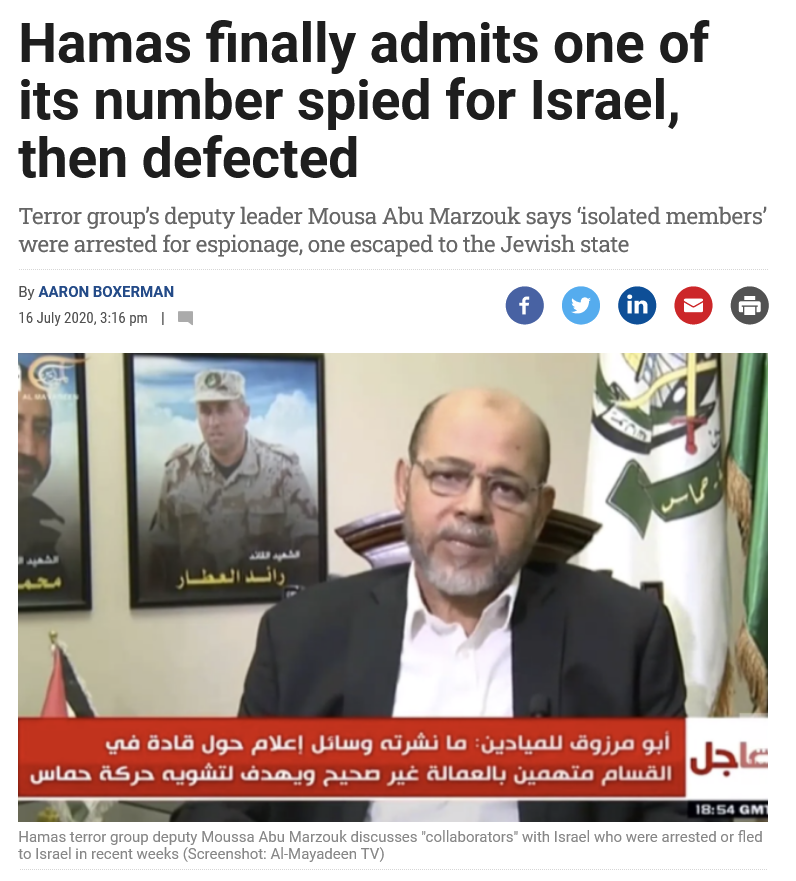
On July 19, 2020, Saudi Arabia’s Al-Arabiya published claims that high-ranking Hamas officials had been caught spying on the Gaza-based movement, including a Commander of the al-Qassam Brigade’s elite naval wing, said to be named Mohammed Abu Ajwa, who they claimed fled to Israel via boat after spying for Israel since 2009. The source for these claims was again unnamed and the allegations were denied strongly by Hamas spokesman Hazem Qassem, who said that “the Al-Arabiya channel is promoting rumors that serve the aims of the occupation in destabilizing the home front in Gaza.” It is now 2021 and Israel has yet to even comment on these claims officially, which is strange considering that such a propaganda win for Israel would normally be weaponized by their political establishment. In addition to this, no one in Gaza has ever heard of this alleged commander.
As with the claims made about Syria expelling an IRGC Commander, there was a minuscule grain of truth to what was claimed. In the case of Syria’s “expulsion” of Iran’s commander, Javad Ghaffari did leave Syria weeks ago; and in the case of Hamas collaborators, the movement did arrest 16 individuals on the basis of spying for Israel. In fact, the report for Al-Arabiya quoted the Ministry of Information for Hamas, to substantiate its claims of Hamas members being arrested.
The Times of Israel even claimed that it was a big deal that “Hamas admits” one of its own fled to the Israeli side, after Hamas leader Mousa Abu Marzouk had stated as much, a fact already acknowledged to be true. This demonstrates the sensationalism of Israeli media at the time. During the interview quoted, conducted with Marzouk for Al-Mayadeen TV, the Hamas leader said:
They are isolated members. There is no connection between them. They are not commanders in the [Hamas military wing] Izz al-Din al-Qassam Brigades, nor are they commanders in Hamas… What the occupation claims, that they are commando officers or senior naval officers, is absolutely false.”
The Times of Israel, along with other Israeli media, was quick to parrot unsubstantiated Saudi claims
It is important to know that Hamas regularly arrests collaborators and sentences many of them to death. This is not uncommon, nor is it out of the ordinary for members of the group to be blackmailed by Israel to work for them. To become a member of Hamas is not a difficult task and its membership is wide-ranging inside Gaza.
An Iranian commander assassinated, or not really
Another example of bogus claims made by Saudi State TV is that of an Iranian commander being assassinated in Syria’s Eastern Deir Ezzor province in November of 2020. In this case, Al-Arabiya added sketchy details to a story built on weak foundations. The alleged assassination of an Iranian Quds force commander would have had serious implications, especially as some sources claimed that it came as a result of a U.S. coalition force bombing campaign.
At the time I tracked the report to its origin, discovering that the allegations had emerged from a Syrian-opposition media group, called “Step News Agency,” which published a report on the alleged incident on November 29, 2020. The article claimed that the agency’s reporter, Abdul Rahman al-Ahmad, who was said to have been based in the Eastern Deir Ezzor province of Syria “obtained information” that indicated a vehicle belonging to Iran’s elite Quds forces was targeted and destroyed. The car was, according to this report, targeted near the Salbi area, in the Suwaiya Desert, after having crossed into Syria from a designated area for militias, near the Al-Qaim crossing. The initial report noted only that two were said to have died in the attack, also claiming that the week prior to this, unidentified aircraft – suspected to have belonged to the U.S. coalition – had launched 10 raids on pro-Iranian militia sites.
Israeli media outlets then ran with the claims despite having nothing but the word of a single Syrian opposition journalist to go on. Israel Hayom News, for instance, cited developed claims from Syrian-opposition media that instead of two Iranians having been killed, it was “a logistics officer in the IRGC’s elite Quds Force,” as well as two other Iranians, who had been assassinated.
Al-Arabiya Newsthen claimed to have obtained the identity of the commander, naming him as “Muslim Shahdan.” This was then published by the likes of the Daily Mail, which also repeated the claim made by the Turkish-based Anadolu Agency that there were now three IRGC members killed inside the car allegedly targeted in Deir Ezzor, Syria.
There was never any photographic evidence, witness testimony, approximate timing, video evidence, or any official confirmation of exactly where in Deir Ezzor this attack took place. There was no continuity through the various contradictory claims made by all the different media outlets and no one could even determine how many people actually died in the reported attack.
The story originated with Syrian opposition media groups, who have a clear anti-Iran agenda and have continued to peddle false claims of Iranian forces being killed in virtually every single Israeli attack on Syria, figures that Israel never clarifies and for which we never see proof. These groups claim to have sources in Syrian government-controlled areas, even naming those individuals occasionally. The question also must be posed in this case that if the Syrian government knows these journalists, how is it that they are still able to obtain sensitive information on military operations and casualties of individuals known only to a few to be in the country, in top-secret locations? Are we to believe that these unnamed sources are never identified and that in Syria anyone can know sensitive information about the government at any time without any questions asked? Also, how is it that these opposition journalists are the first people to report casualties, often before there is time for local medical staff to declare deaths?
There was then the story that was looped in with the alleged assassination attack, claiming that U.S. coalition forces attacked 10 Iranian sites in Abu Kamal, but according to the initial reports from Syrian opposition media, that had happened a week prior to the assassination. Israel Hayom and the Daily Mail failed to specify when the two separate attacks took place, making it seem as if it all had occurred on the same night. Again there are no specifics given here, just the repeated claims from Syrian opposition media.
The allegations that were made about weapons having been transported, in the car of the commander that was allegedly attacked, also seemed very unlikely. Why would an Iranian Quds Force commander be traveling in a car packed full of weapons and why do a weapons transfer in a regular car carrying a high-ranking commander in it? Why not just transport the weapons in trucks? These small details made the story seem less believable, especially when no one had been able to officially identify the two, three, or four Iranians said to have been killed.
As spokesman for Iran’s Foreign Ministry, Saeed Khatibzadeh, later told Iran’s Mehr News that these allegations were false, yet many Western media outlets failed to publish this information. Talking to a Syrian Arab Army military source at the time, I was also informed that they were “not aware of any such attack happening”.
Saudi media playing a pro-Israel, pro-Western agenda
The examples above demonstrate a clear pattern with the media of Saudi Arabia and the way in which their “unnamed sources” are taken at face value and repeated verbatim throughout Western and Israeli media. The claims clearly serve a political agenda, but not just any agenda.
Such claims are very specifically designed to inflame tensions and to make the supporters of Hamas, Iran and Syria doubt their leaders and what may be going on behind the scenes. They play on issues that are normally dealt with behind closed doors and it is well understood that the average consumer of news will not have the time or resources to dig into such stories with the intent of uncovering the truth.
Israeli officials have now twice traveled to Saudi Arabia in the past year, that we know of, not only raising suspicions of unofficial cooperation between Riyadh and Tel Aviv, but confirming that the Kingdom of Saudi Arabia is warming up to the idea of openly normalizing ties with Israel, while the closeness of the United States government to the Saudis has long been apparent. Hence for Saudi state media to run media operations, as a form of psychological warfare, against their political foe, is not much of a surprise. Yet, for outlets across the world to choose to regurgitate the claims made by Saudi media, verbatim and without any critical take, is a real indictment of them and demonstrates a lack of journalistic credibility on their part.
تخصص ورشات عمل العديد من مراكز الدراسات الأميركية أبحاثها للوضع في اليمن، في ضوء المستجدات التي لم يعد ممكناً إخفاؤها، والتي تتلخص بالتقارير المجمع عليها حول اعتبار سقوط مدينة مأرب بيد أنصار الله مسألة وقت، والتي اختصرها معاون وزير الخارجية الأميركي السابق ديفيد شنكر بقوله في إحدى ورشات العمل البحثية، إن استحواذ الأنصار على مأرب بات محسوماً، واصفاً ذلك بالسيناريو الأسوأ لواشنطن والرياض، وبخسارة الحرب على اليمن خسارة كاملة، والإجماع على مكانة مأرب يطال الجميع أميركيين وسعوديين ويمنيين، وعلى ضفاف ما يجري في مأرب برز المؤشر الثاني وهو تضعضع التحالف المناوئ للأنصار، وما ظهر على جبهة الحديدة كاف لإثبات ذلك، فإن كان ما جرى نتيجة صفقة فهو كارثة تشي بانهيار التحالف، وإن كان نتيجة سوء تنسيق بخلفية الخوف من تداعيات انهيار جبهة مأرب على القوات المنتشرة في الساحل بلا عمق يحميها، فتلك مصيبة، وفي الحالتين ستتواصل التداعيات، خصوصاً إذا أضيف للمشهد التمايز الإماراتي عن السعودية بخطوات يمنية يظهرها تمايز وضع الجنوب اليمني، وإقليمية كان آخرها التواصل العالي المستوى بين الإمارات وإيران وما نشر عن زيارة شخصية إماراتية كبيرة لطهران قريباً، فيما تبقى الإمارات بخلاف السعودية بمنأى عن استهداف الأنصار لمدنها وسفنها بصورة تثير شكوك السعودية بتفاهمات تحت الطاولة.
–
أغلب الباحثين الأميركيين يشبه الوضع في اليمن بالوضع في أفغانستان عشية اتخاذ قرار الانسحاب الأميركي، فوضع قوات منصور هادي ليست أفضل حالاً من قوات أشرف غني، وعزم وعناد واقتدار أنصار الله ليس أقل مما أظهرته حركة طالبان، وحجم الحصار المفروض على أفغانستان لم يكن دون مستوى الحصار على اليمن، والأميركيون يقولون إنهم وهم يختلفون على ظروف الانسحاب يتفقون على أنه كان خياراً مراً لكن لا بد منه، فالوضع بدا ميؤوساً منه، والبقاء لعشرين سنة أخرى لن يغير المشهد، إلا باستنزاف المزيد من الأموال وإزهاق المزيد من الأرواح، ويقول بعض هؤلاء الباحثين، ربما يكون وزير الإعلام اللبناني جورج قرداحي آخر من استخدم توصيف الحرب العبثية، بما يتضمنه التوصيف لحرب لا نصر فيها، لكن لا هزيمة، بينما صارت اليوم حرباً مضمونة الخسارة، ولم يعد لدى السعوديين ترف الوقت لاتخاذ القرار بالانسحاب، وتجاوز الأمر حدود الحديث عن كارثة إنسانية محققة، فقد أنتجت الحرب تحولاً استراتيجياً كبيراً.
–
السعوديون عبر وسائل إعلامهم يغيبون عن النقاش، لكن فلتات مواقف وردت على قناة العربية الحدث، كانت تدعو واشنطن للتساؤل عما يعنيه نشوء أفغانستان ثانية على البحر الأحمر تمسك بمضيق باب المندب، بدت رداً أو مناقشة للنصيحة الأميركية، من خلال المقارنة بين الموقع الاستراتيجي لكل من أفغانستان واليمن، حيث اليمن بقوته الصاعدة شريك مقبل في أمن الطاقة والملاحة الدولية، وباب المندب أحد أهم المضائق العالمية، الذي يزيد أهمية عن مضيق هرمز ومضيق جبل طارق، فهو وحده يربط أربعة بحار ومحيطات، هي البحر الأحمر والمحيط الهادئ والخليج والبحر الأبيض المتوسط، ويطرح السعوديون أسئلة ينتظرون أن يتلقفها الإسرائيليون حول الخلل الاستراتيجي في موازين القوى التي تترتب على التسليم بخسارة اليمن، الذي لا تخفي قيادته اصطفافها في محور المقاومة، وما أظهرته من مقدرات يجب أن يحسب له الحساب في كل ما يطال أمن «إسرائيل»، فيما يرد الأميركيون أنهم خسروا مع الخروج من أفغانستان التواجد من مسافة صفر مع كل من إيران والصين وروسيا، وتركوا الفرص مفتوحة لاحتوائها من التحالف الإيراني الصيني الروسي، بالإضافة لفرص تواصل أطراف هذا التحالف عبر اليابسة للمرة الأولى عبر الجغرافيا الأفغانية، لكن كل هذا كان لا بد من تقبله لاستحالة البقاء.
–
كيف سيتصرف الأميركيون والإسرائيليون، وكيف سيتفاعل السعوديون، يقول الأنصار إنهم جاهزون لكل احتمال، وأن بديل النصر هو النصر فقط، والخيار بين نصر لليمن لا يشعل المنطقة ونصر يأتي بعد اشتعالها، لكنه لن يكون محصوراً باليمن عندها.
فيديوات متعلقة
تدرييات ‘قاسية’ إستعدادا للحرب.. الوحدة السعودية الخاصة تسيطر على باص إيراني
Kabbalistic Balance
-
Kabbalistic Balance August 6 2026 ___________________________________ More
Vids! +BN Vids Archive! HERE! ___________________________________ Support
The Br...
Report on Beth Israel vigil 07-04-26
-
*1A Rights under combined attack from local government plus media*
Ann Arbor City Council is at it again. Right before the long 4th of July
weekend, they ...
-
Hello all,
It is with great sadness that I share with you the passing of our beloved
sister, Mother, and Grandmother, the individual that you all knew ...
Best Horror Podcast
-
Best Horror Podcast Introduction: Horror podcasts […]
The post Best Horror Podcast appeared first on Copper Shock Horror Podcast.
Ikhras Endorses Muntadhar Al-Zaidi
-
“Oh parties of banditry and sectarianism and corruption, we have come and
our goal is to destroy you.” Ikhras formally endorses Muntadhar al-Zaidi,
Iraqi j...
Prince Charles: Foreign Jews behind bloodshed in ME
-
In May, 2017, British Crown Prince Charles declined an invitation from
Zionist entity’s president Reuven Rivlin‘s to attend the 100th anniversary
of the no...
Palestinian Women – One for All, All for One
-
Honouring All Palestinian Women by Honouring Three: Hanin Zoabi, Ahed
Tamimi, Samah Sabawi Vacy Vlazna “Palestinian women have always stood side
by side ...
US’s Saudi Oil Deal from Win-Win to Mega-Lose
-
By F. William Engdahl Who would’ve thought it would come to this? Certainly
not the Obama Administration, and their brilliant geo-political think-tank
neo-...
-
*Mordechai Vanunu wins human rights prize of Brazilian Press Association *
* http://www.alternativenews.org/english/index.php/features/updates/7038-mordechai...
Abdul Aziz Rantissi:
"My ultimate wish, my God, is to attain martyrdom,"...God granted him his wish on April 17, 2004, at the hands of Israeli assassins.