Showing posts with label Saudi Arabia. Show all posts

Wednesday, 20 October 2021

Huge Crowds in Yemen Celebrate Prophet’s Birth and Recent Military Successes — Pledge Full Liberation

October 19th, 2021

By Ahmed Abdulkareem
Source

All were celebrating and dancing on the ruins of Saudi destruction in a demonstration that is also a challenge to the machine of death.

SANA`A, YEMEN — Carrying a green flag in his hand and with ribbons tied on his wrist, Walid Ahmed al-Thueli, accompanied by a big family, arrived at the Square of the Seventy in the capital Sana’a early morning of Monday. He came to celebrate the birthday of Islam’s Holy Prophet Muhammad and recent victories that have been achieved by Yemeni forces against Saudi-led Coalition. The Yemeni’s family, which abides in the Rawdah neighborhood north of Sana`a, left their house at 6 a.m. to ensure finding a good place in the arena but were unable to reach the center of the square. Inside the square filled with celebrators, thousands of protesters were singing traditional songs collectively and dancing to the tune of “al-Baraa,” a dance of the Yemeni heritage.

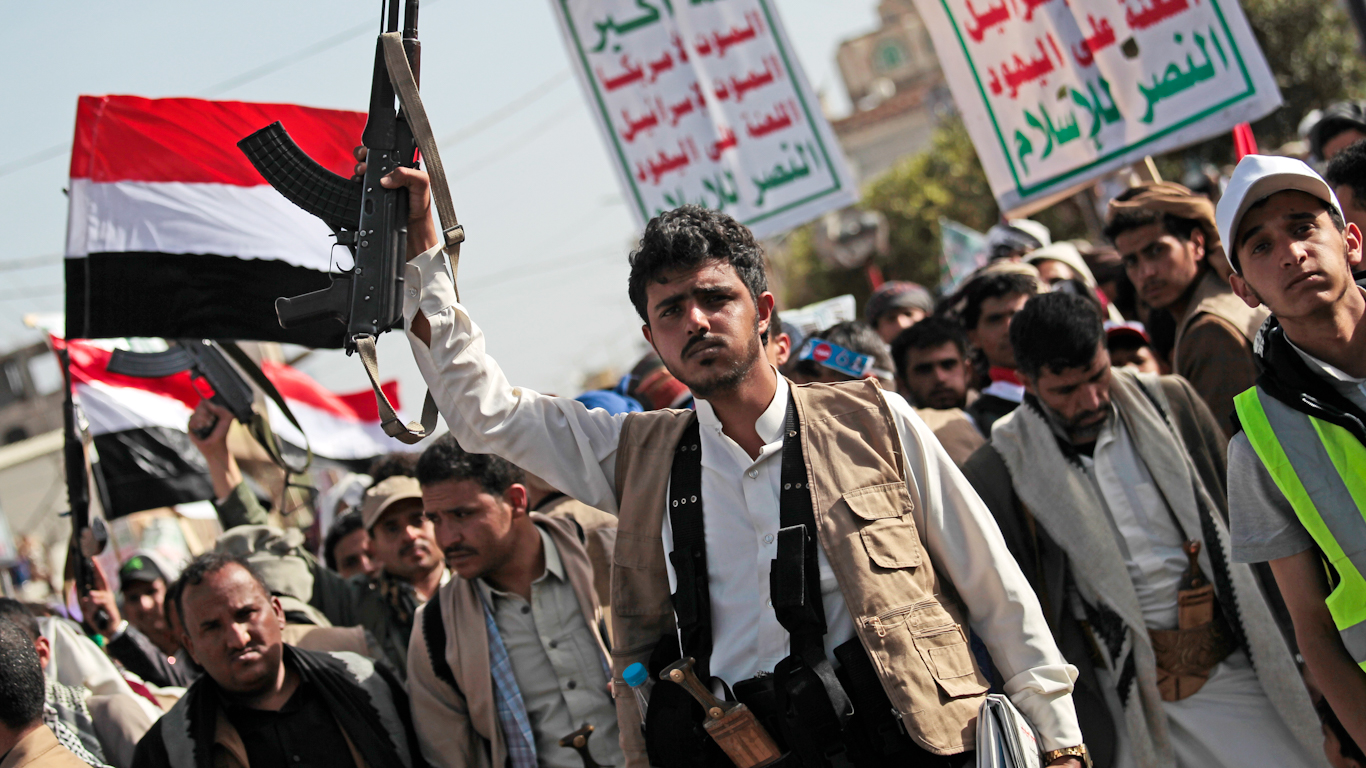
Despite an ever-present hovering of Saudi warplanes above, a fuel crisis, high prices and destroyed roads, massive demonstrations took place across 14 Yemeni provinces on Monday — including Sana`a, Sadaaal-HoudeidaHajjahal-Jawfal-BeydaTaizeAmranIbbDhamaral-MahwitRaymahShabwa, and the oil-rich Marib. The protests, organized by Ansar Allah (Houthis), were not only to celebrate the birth anniversary of the Prophet Mohammad, but also to send local, regional and international political messages, including pledging to expel Saudi-led Coalition forces from the whole country, rejecting the policy of normalization with Israel, and opposing the actions of industrialized countries that threaten the climate.

In Sana`a, where the largest demonstrations took place, hundreds of thousands of residents from the suburbs of Sana`a and its neighboring provinces gathered near the rubble left by Saudi air raids on the parade platform in the Square of the Seventy in the center of the capital. Since early Saturday evening, human torrents had been pouring into the square from four entrances, facing potential ​bombardment that might be renewed at any moment by fighters flying in Yemeni airspace. Other Arab and Islamic communities also joined with protestors in the Seventy Square, including Palestinian, Syrian, and Egyptian communities and a delegation from southern Saudi Arabia, specifically from Najran.

Welcome banners were hung over the square, which was decorated with green flags and colored lights. Loudspeakers blasted out hymns and the big flat-screens around the square displayed inspirational programs. All were celebrating and dancing on the ruins of Saudi destruction in a demonstration that is also a challenge to the machine of death. “We came to this place to make it clear to the world that our lives are continuing and that, despite the destruction, the bombing, we are winning and the joy is still here between us,” Walid said.

There was a similar mass demonstration for women, who gathered in Althawrah Sports City Stadium north of Sana`a. In oil-rich Marib, where the Yemeni Army has advanced steadily towards the last strongholds of the Saudi’s allies in the province, the demonstrations were held in Harib for the first time despite a constant hovering of Saudi warplanes above. In al-Jawf — an oasis region in western Yemen that was the core area of one of the most ancient of the Arabian kingdoms, “the Minaean state of Ma’in” — thousands also took to the streets in al-Hazm.

In Shabwa, the third-largest governorate by area in Yemen and home to the port of Balha’s natural gas refinery, thousands of southerners took the streets in Bihan, a newly liberated area  to celebrate the Prophet’s birthday and the expulsion of Saudi forces. The number of people who took part in the demonstrations dwarfed similar rallies that took place in previous years, indicating a growing support to Sana`a authority.

Celebrations and positions

The massive crowds were unprecedented, exceeding all expectations. Following the completion of preparations in various governorates, organizing committees opened the celebration squares in Monday’s early hours and more squares were opened to accommodate the large influx of protestors. Security was tight across Yemeni cities where the protests were held, as reports circulated that al-Qaeda and IS were planning attacks on demonstrators in retaliation for their recent crushing defeat in Al-Bayda. Police carried out special measures to ensure security, including establishment of additional checkpoints in the Yemeni capital and throughout Yemen’s provinces. Despite the huge crowds, no incidents or attacks were reported.

The leader of Ansar Allah, Abdulmalik al-Houthi, was the keynote speaker at the celebrations via video conference and giant screens. In the annual speech, in which the principles of the political program of Ansar Allah for the  year are laid out by the leader of the movement, al-Houthi outlined Ansar Allah’s strategy and position on a number of local, regional and international issues. He renewed Ansar Allah’s position on efforts to end the war in Yemen, saying that the Yemeni people’s efforts to achieve freedom and independence are uncompromisable, confirming that the Yemenis will continue struggle until the end of the war, expelling the occupiers, lifting the siege, paying compensation and reconstruction.

Al-Houthi renewed Yemenis’ support for the Palestinians. At this point, he also confirmed that the Yemeni Army will definitely be a part of determining the al-Quds Formula. “We confirm what we previously proclaimed, that we are part of the historical equation announced by Sayyed Hassan Nasrallah that the threat to al-Quds means a regional war,” al-Houthi said. He also condemned the so-called Abraham Accords and recent normalization of relations between Israel and some Arab regimes, describing them as “demonic alliances.” Prior to that, Ansar Allah had announced their joining in an initiative, the so-called Jerusalem (Al-Quds) Formula, that ​was spearheaded by Lebanon’s Hezbollah and has already been embraced by Palestine’s armed resistance

Joyful chaos

The birth anniversary of Prophet Mohammad, which is also known as Eid Milad-un-Nabi or Mwaled, is observed on the twelfth day of Rabi-ul Awwal, the third month of the Islamic calendar. The Holy Prophet was born in Mecca on that day in the year 571. The revival of the Prophet’s birthday was prohibited under the Saudi influence during the previous regimes. Now — as in other Islamic countries, except Saudi Arabia where the prophet was born — this day is a time of rejoicing for all Yemenis. This year, the scenes inside the besieged, hungry and pandemic-ravaged country were abounding with joyful chaos, a rare sight in the war-torn country.

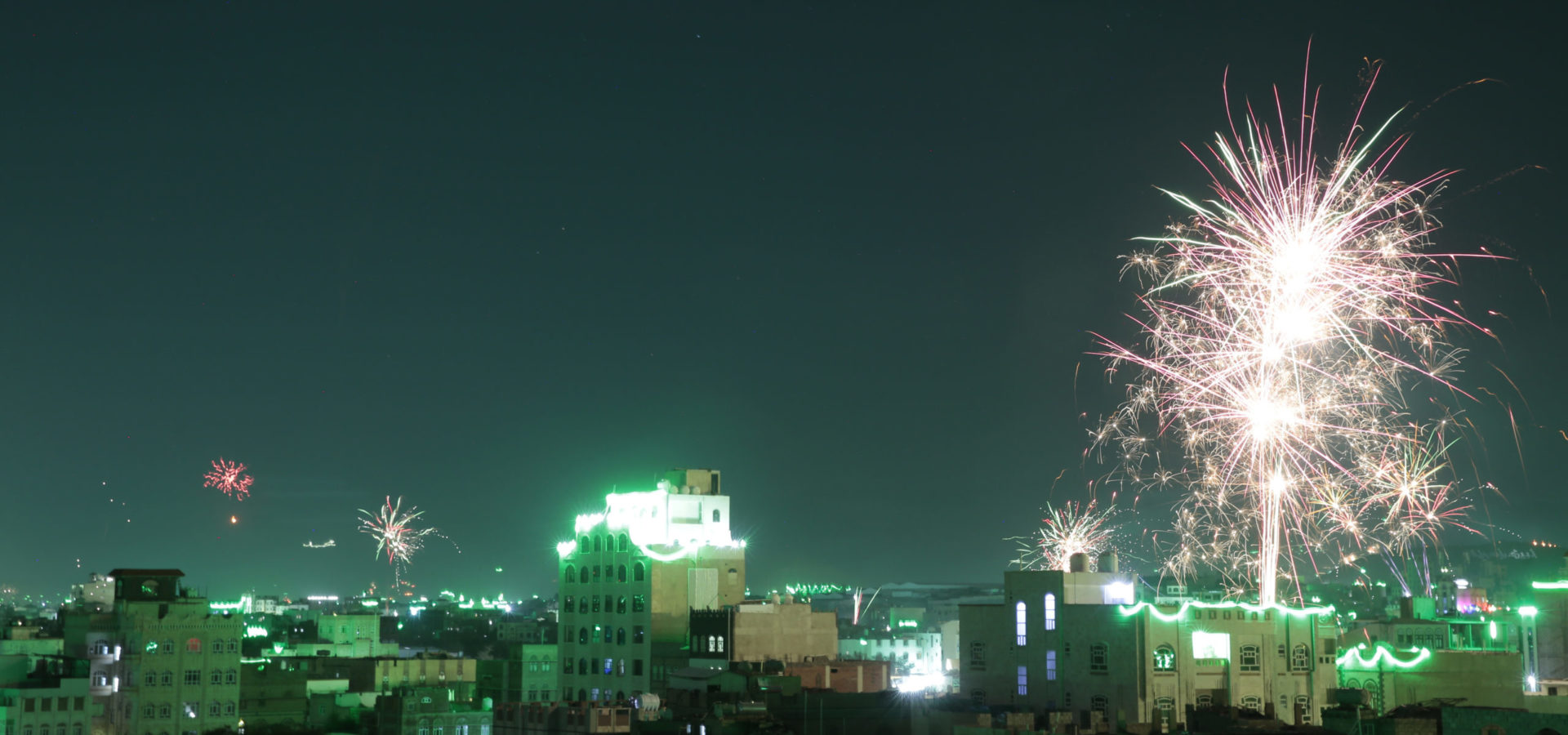
The cars, homes, public places, government buildings and squares are decorated with green lights despite the lack of power; and green flags fly, representing peace, spiritualism and patience. Yemen’s impoverished families were keen to distribute sweets and gifts, hold parties, and create paintings, sculptures, poetry and essays that are appropriate for al-Mwaled. The sky of Yemen was also decorated with fireworks

The massive and unprecedented celebrations, however, came also in the wake of the recent developments in Yemen`s Shabwa and Marib provinces, and southern areas. The spokesman for the Yemeni Armed Forces, Brigadier General Yahya Saree, confirmed at a press conference held in Sana`a on Sunday that Sana`a forces supported by local tribes have managed to liberate 3,200 square kilometers in Shabwa and Marib during new military operations dubbed Rabi’ al-Nasr’ (Spring of Victory). In Shabwa province, which contains Yemen’s largest natural-gas reserves and produces over 100,000 barrels of oil per day, General Saree confirmed that Baihan, Usailan and Markha Olaya had been liberated in the operation of Rabi’ al-Nasr.

US, facing defeat, cries foul, talks peace

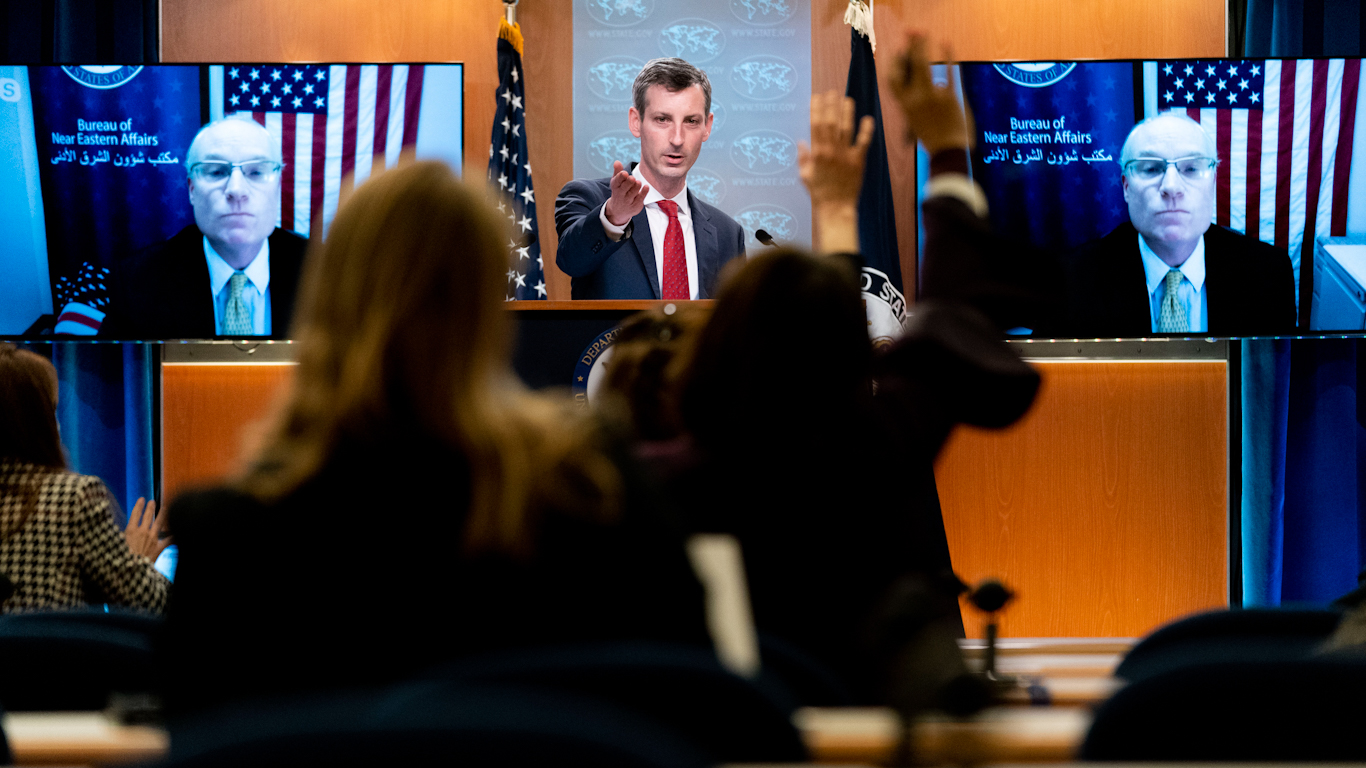
In Marib, which lies about 120 km (75 miles) east of Sana`a,  Abdiyah, Harib, and parts of Al-Jubah and Jebel Murad are freed despite the fact that the United States has tried to stop Ansar Allah’s advance in the oil-rich province. In the statement of the U.S. State Department spokesman Ned Price, which was met with dismissal by Ansar Allah, was a call to “Houthis” to stop and ensure the opening of a safe passage for “life-saving aid and the wounded.” Mohammed Abdulsalam, Ansar Allah spokesman, said on Saturday night that “the U.S. demand is roundly condemned. It shows Americans are in close connection with al-Qaeda and Daesh militants, who suffered heavy defeat in the al-Abdiyah district of Marib province.” He added:

As Yemeni forces are closing in on the last bastions of Saudi-led militia forces as well as Daesh and al-Qaeda operatives, Americans are crying foul and claiming they seek peace. This is while they are the enemy of peace and tranquility in Yemen and worldwide. 

In the other southern areas, people are suffering from a serious humanitarian crisis because of Saudi policies that have led to high prices of food and medicine and frequent power outages. Yemeni currency has been in freefall, with the value now at a mere 1,180 Yemeni Rials to a single U.S. dollar, making food prohibitively expensive in a nation where 80% of the population is reliant on aid.


River to Sea Uprooted Palestinian   
The views expressed in this article are the sole responsibility of the author and do not necessarily reflect those of the Blog!

Saturday, 14 August 2021

Manipulating Dollar-Riyal Exchange Rate, Saudis and US Double Cost of Yemen’s Staple Goods

August 13th, 2021

Yemen Dollar Feature photo

By Ahmed Abdulkareem

Source

Thousands of Yemenis held rallies in cities across the country demanding hunger not be used as a weapon by Saudi Arabia and the United States in order to bring locals to their knees.

ADEN, YEMEN — “The prices are skyrocketing. We can’t feed our children. They are starving,” Saher Abdu Salem, a government employee and a mother of five, said as she participated in a protest in Aden against Saudi Arabia and the government of ousted Yemeni President Abdul-Mansour al-Hadi. The protests took place at the Aden port this week in the wake of a recent decision by the Saudi-backed government in Aden to raise the U.S. dollar exchange rate for major life-saving goods. Now Saher and her husband are struggling to feed their family in the coastal city where the price of the staple ‘rooti’ loaf of bread has soared 250% in a month, its portion halved in size. “When the U.S. State Department expresses its concern over us, this means that it will deal a new blow to our hungry stomachs,” she said.

In this recent development, the oil-rich kingdom has raised the U.S. dollar exchange rate used to calculate customs duties on essential goods that enter Yemen, a country grappling with what the United Nations says is the world’s largest humanitarian crisis, with millions facing famine. The decision, which has been adopted by the ousted president’s government, has quickly been put into effect and has doubled customs tariffs for major goods and products that enter from the ports controlled by the Saudi-led Coalition.

In the wake of the Saudi decision, the price of essential goods has been doubled, particularly in Aden, Hadramout, al-Mahrah and all southern provinces occupied by the Saudi-led Coalition. In Aden, prices of oil, sauces, vegetables and fruits have more than tripled. The hike in duties from 250 to 110 Yemeni Riyals to the dollar applies to basic commodities such as flour, sugar, cooking oil, rice, milk, fuel and medicine.

According to the United Nations and local humanitarian bodies working on the ground, the move has already aggravated the humanitarian crisis in the war-torn country where more than 80% of the population is reliant on imports. On Wednesday, a report issued by the United Nations Office for the Coordination of Humanitarian Affairs in Yemen said that the Yemeni riyal in “the areas of the internationally recognized Yemeni government” (referring to the Saudi-backed government of al-Hadi) has lost more than 36% of its value within a year, causing prices to rise. Moreover, the move has spread fear among Yemeni families who are struggling against floods, COVID-19 and other diseases.

The World Bank has said that about 70% of Yemenis are at risk of starvation at a time when the country’s gross domestic product (GDP) has been halved since 2015, when the war began. The World Bank added, in the report published on its website, that “food prices have also risen due to the suspension of commercial imports and the resulting shortage of supplies, and the depreciation of the Yemeni riyal, which currently barely exceeds a third of its 2015 value.”

Refusing to acquiesce

Thousands of Yemenis held rallies in cities across the country demanding hunger not be used as a weapon by Saudi Arabia and the United States in order to bring locals to their knees. In the Saudi-controlled south and east of Yemen — where separate protests have broken out recently over frequent power cuts and the deterioration of health services, in light of the spread of COVID-19 and non-payment of wages — hundreds took the street in Aden, Abyan and Taiz, and al-Shehr ports located in al-Mahrah.

Meanwhile, many traders, importers, and related workers refused to acquiesce in the Saudi decision and instead went on strike. “This decision is a disaster for all Yemenis, and we have been on strike since Eid al-Adha,” Wael Gabr, a merchant who went on strike along with dozens of his peers at the al-Shahr port in al-Mahra, said. The Chamber of Commerce and Industry, based in Aden, also rejected the decision and warned of its repercussions.

Food prices have spiked sharply in the southern governorates since June 2020 thanks to Saudi mismanagement, according to the World Bank, which reported that the national average cost of a Minimum Food Basket (MFB) rose to YR 41,950 (about $63) in June, 4% above the MFB in May, driven by the large depreciation of the rial. The MFB cost increased, month to month, by 18% in Aden, 13% in Lahji and 11% in Dhalee, impacting southern households. In sharp contrast, the MFB cost declined markedly by 7% in Sana`a and remained stable in most other northern governorates, despite acute fuel shortages.

“We hold America responsible”

In Sana`a, where the Ansar Allah-led government has been able to maintain a stable exchange rate, thousands of people took the street on Sunday in Bab al-Yemen southeast of the city. There, protesters voiced slogans and chants against both Riyadh and Washington, expressing deep dissent over the recent rising rate of customs tariffs imposed by Saudi Arabia. “Nothing happens without the knowledge or consent of the United States,” Gabriel Ahmed said, as he joined with others chanting the slogan “Who is behind the decision…? America! America!”


A statement read by protest organizers proclaimed:

We consider raising the price of the customs dollar a pre-planned American decision by President Biden`s administration itself and implemented by the puppet tools in Aden. And we hold America responsible for exposing civilians in all Yemeni governorates to starvation, and we hold it responsible for using the siege of starvation as a weapon of war against the Yemeni people.”

In a speech to the protesters, Mohammed Ali al-Houthi, a high-ranking leader in the movement, said that the U.S. is constantly trying to depreciate Yemen’s rial against the American dollar in a move similar to its efforts in Syria, Palestinians and Lebanon: “It is the U.S. that has put a blockade against our country and killed our people. Saudi Arabia and the UAE are nothing more than tools for implementing U.S. schemes and agendas.”

This step — which came as part of the maximum pressure campaign exercised by Saudi Arabia and supported by the Biden administration, to bring the Yemenis to their knees — coincides with another step no less dangerous than rising tariffs. In July, Saudi Arabia began a new campaign to purge the kingdom — particularly its southern governorates of Asir, Jizan, and Najran — of Yemeni nationals, including workers and academics, in a move that will not only exacerbate Yemen’s humanitarian crisis, social instability and armed conflict for years to come, but also undermine whatever possibility remains of the Yemeni Republic emerging from this war intact, according to a recent report from Sana`a Center for Studies.

However, Yemenis are not giving up. Ansar Allah, which has led the resistance against the Saudi-led war, announced that they will continue to fight the Saudi Coalition, despite the economic pressures, until Saudi Arabia and its allies end the war, lift the blockade, and leave the country. Abdulmalik al-Houthi, the leader of Ansar Allah, said on Monday, “When Washington and its allies speak of peace, they mean others must surrender to their demands.” He concluded, “We are ready for peace, not surrender, and we will resist by all available means.”


River to Sea Uprooted Palestinian   
The views expressed in this article are the sole responsibility of the author and do not necessarily reflect those of the Blog!

Thursday, 22 July 2021

Yemen: Biden Shrugs Off Campaign Promise as US Backs New Saudi Offensive and AQAP Support

July 13th, 2021

By Ahmed Abdulkareem

Source

The US has refused calls to stop arming Saudi Arabia amid its devastating war in Yemen and is now doubling down on a military solution, falling back on its reliance of armed militant groups that it used to devastating effect in Syria, Libya, Afghanistan and Iraq.

AL-BAYDA, YEMEN — President Joe Biden gave a lot of people a sense of cautious optimism when he took to the campaign trail and promised to bring a swift end to the Saudi-led war on Yemen. The oil-rich monarchy, supported heavily by the United States, has been waging arguably the deadliest military campaign of the past decade on the forgotten country for over six years, exacting a brutal humanitarian toll on its civilian population.

To his credit, Biden sent Tim Lenderking to lead a team of negotiators in an attempt to broker reconciliation between the conflict’s many belligerents. But without the political will to stand up to the Saudi monarchy and the varied American interests that profit handsomely from its wars, Lenderking had little chance of success. Now it seems the Kingdom — once again emboldened, armed, and covered by the United States — has all but abandoned any pretense of reconciliation and doubled down on its brutal war.

A Piercing Star falls to earth

Last week, the Saudi-led Coalition began a massive military operation they’re calling al-Najm al-Thaqib, which translates from Arabic into The Piercing Star. The operation ostensibly aims to recapture large swaths of territory in central Yemen’s al-Bayda province, which was captured by Ansar Allah after a series of long and grueling battles with militants from al-Qaeda on the Arabia Peninsula (AQAP) last fall. AQAP had been entrenched in the province for decades, somehow persevering through concerted military efforts by both the Saudi-led Coalition and at least four consecutive U.S. administrations to dislodge it — including Barack Obama’s infamous drone war.

On August 28, 2020, local tribal partisans backed by Ansar Allah defeated AQAP and myriad extremist allies, including elements of IS, in a week-long operation. This victory came just as AQAP was preparing to sweep the Yemeni provinces of al-Bayda, Dhamar, and Sana’a in an operation that aimed to repeat the scenarios seen in Mosul, Iraq and Raqqa, Syria, where ISIS was able to take and hold a so-called caliphate extending from western Iraq to into eastern Syria.

Al-Bayda and the surrounding provinces saw a state of relative calm in the wake of the operation, as residents experienced life without the yoke of al-Qaeda, some for the first time in their lives. Now, some of those residents fear that Saudi Arabia, backed by the United States, is attempting to resettle those groups in al-Bayda as a hedge against Ansar Allah.

Saudi jets have carried out scores of airstrikes in al-Bayda in recent weeks, flying in from the north to unleash tons of bombs made and supplied by the United States and giving AQAP a potential avenue to retake the province, as the airstrikes have targeted Ansar Allah and their local tribal allies almost exclusively.

According to the nonprofit Yemeni Executive Mine Action Center (YEMAC), American-made cluster bombs — which even the U.S. military has pledged not to use, due to their high rate of collateral damage — including the CBU-58, CBU-105, CBU-87, M26, and DPICM M77, have all been used in the offensive.

In a press conference, YEMAC displayed unexploded American bombs used in the operation, including the same GBU-39 and GBU-31 that were used with deadly effect in Israel’s recent attacks on Gaza. YEMAC held the press conference after an unexploded U.S.-made GBU-24 was recovered from a civil-defense building in Sana’a.

While there is not yet conclusive evidence of direct coordination between the Saudi Coalition and AQAP in the offensive, AQAP militants began pushing into al-Bayda from the south almost as soon as the Saudi airstrikes began. The southern villages of al-Zaher and al-Sma’h — including the areas of Jumaima, Wafaa, Sharadeh, al-Sous, Shabakat Dhi Madahi, Akrama, Shawkan and others — have already been recaptured by al-Qaeda according to a number of Saudi state-funded media outlets, which celebrated the putsch as a victory for the Saudi-led Coalition.

No “Certain Victory”

However, the celebrations were short-lived, as Ansar Allah has already begun to recapture areas it gained last August in a military operation it has dubbed al-Nasr al-Mubin, an Arabic phrase meaning “Certain Victory.” That operation has already seen the defeat of AQAP and militants allied with Saudi Arabia in the al-Zahir Directorate as well as dozens of military sites in the al-Dahaki and Al-Soma`h districts, and even areas that Ansar Allah failed to capture from AQAP during its August offensive, according to a statement it issued on Tuesday.

Yemen Marib
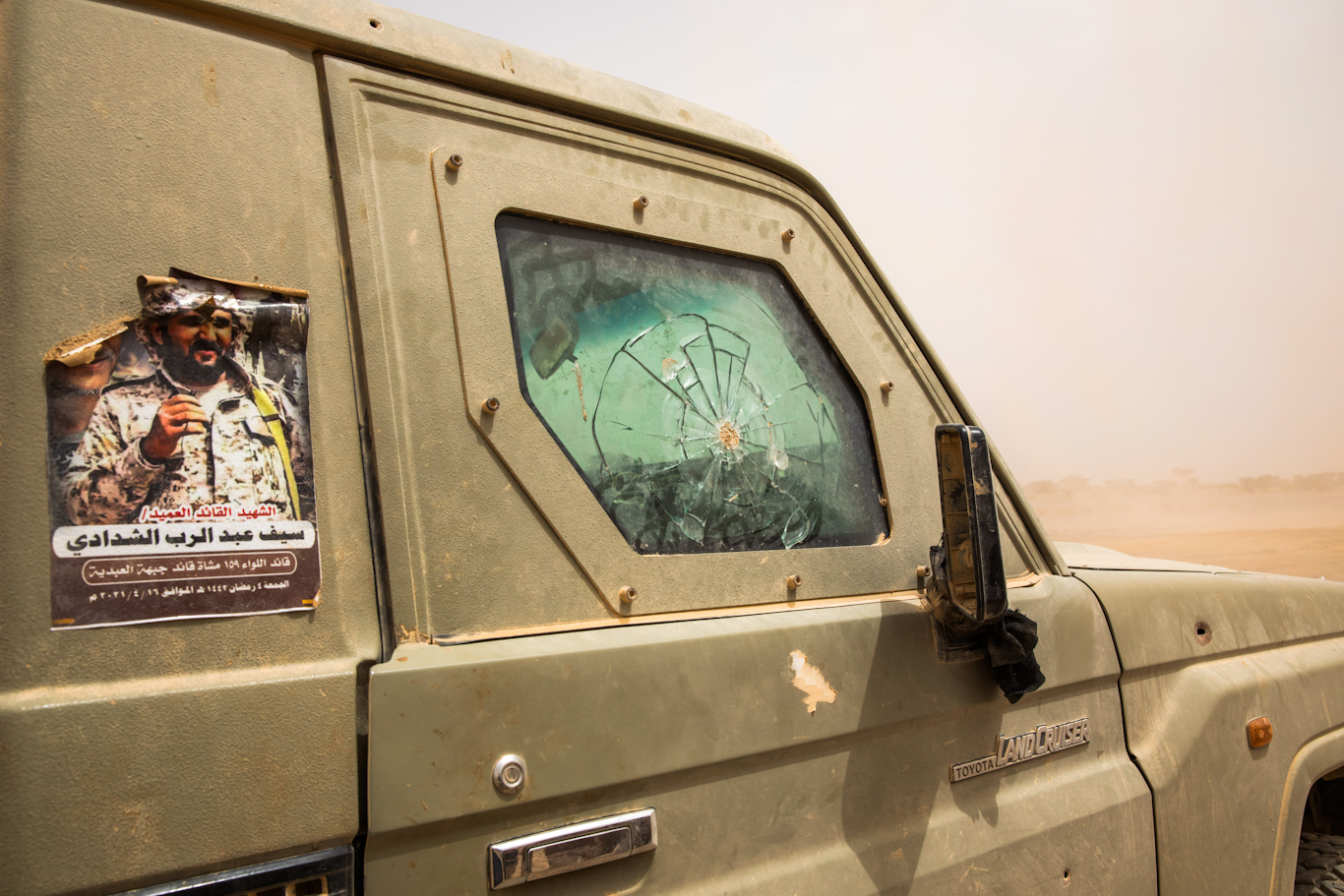
An armored vehicle belonging to Saudi-backed militants shows a poster that reads, “martyr commander brigadier general Self Abd al-Rab al-Shadady.” Al-Shadady” was recently killed in clashes in Marib, Yemen, June 19, 2021. Nariman El-Mofty | AP

On Friday, the media bureau of the Houthis’ Operations Command Center published a video showing some of its victories in al-Bayda. Several senior AQAP commanders were killed or captured in the battles, including the infamous Abu Dharr al-Tayabi, Tawfiq al-Farawi and Othman Ahmad Abdullah al-Mushdali. A spokesman for Ansar Allah said:

Despite having mobilized members of al-Qaeda in the Arabian Peninsula (AQAP) and Daesh (IS) Takfiri terrorist groups, Saudi [Arabia] failed and has so far reaped nothing other than defeat on every front. The coalition has received severe blows in al-Bayda, even though it has hired al-Qaeda and Daesh terrorists.”

But Ansar Allah is far from a decisive victory. Fierce clashes continue near Lahj province and coalition warplanes continue to pound al-Bayda.

US cooperation with a Jihadi recruiter

According to members of the Houthi negotiating delegation, who spoke to MintPress on condition of anonymity, the escalation in al-Bayda is being used to pressure Ansar Allah to halt its advance on the oil-rich Marib province and to force it to accept conditions that Saudi Arabia and Lenderking’s envoy have imposed on Ansar Allah as a precondition for a peace deal.

For their part, the Houthis have promised to retaliate by resuming drone and ballistic missile attacks on Saudi oil and military targets in the Kingdom’s southern provinces, according to Brigadier General Abed Al-Thor and General Aziz Rashid, who told MintPress that military pressure on the Kingdom will only be increased in the wake of the recent Saudi escalation.

The attacks on al-Bayda come in the wake of meetings between the Saudi-backed vice president of Yemen, Ali Mohsen al-Ahmar, and Vice Admiral Brad Cooper, commander of the U.S. Naval Forces Central Command and the U.S. 5th Fleet and Combined Maritime Forces. Cooper pushed for intelligence sharing and support for armed militant groups under the banner of curbing the arming of the Houthis by the Iranian government.

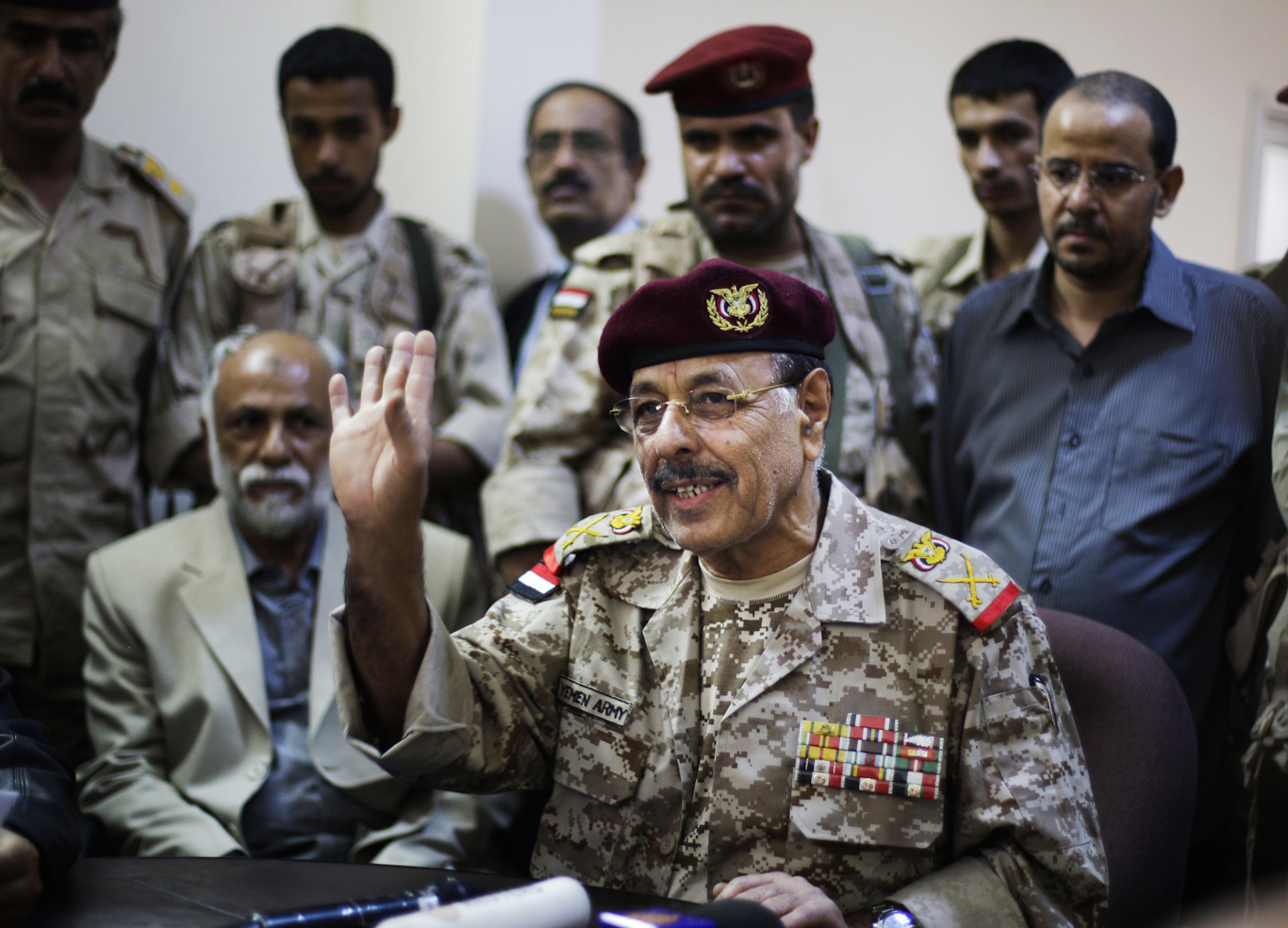
Ali Mohsen al-Ahmar
Al-Ahmar speaks to journalists during a 2011 press conference in Sanaa, Yemen. Hani Mohammed | AP

Al-Ahmar has been tied to various extremist groups in Yemen and, according to Reuters, “The Muslim Brotherhood and other Sunni Islamists gained strength, particularly under … al-Ahmar, who built a power base in the army. Jihadist fugitives formed al Qaeda in the Arabian Peninsula (AQAP).” According to a 2000 New York Times report, al-Ahmar even “traveled to Afghanistan in the 1980s to meet Osama bin Laden, and assisted in recruiting militants from across the Muslim world for the Afghan struggle.”

The U.S. has long been involved in the training and arming of militants in Yemen, whom it saw as a hedge against Ansar Allah. Al-Ahmar has publicly praised the U.S. for cooperating with him to combat what he called “the Iranian project.”

Grim prospects for peace

On July 1, U.S. State Department spokesman Ned Price said that the United States was “beyond fed up” with the Houthis’ advance in Marib and laid the blame for the humanitarian situation in Yemen squarely at the feet of the Houthis, claiming it was they who failed to work with the “other parties … who are actively working towards peace,” a reference to Saudi Arabia and its allies in the country.

Price’s statements and the Biden administration’s about-face on Yemen has raised questions among activists struggling to stop the war, especially as the U.S. has largely refused calls to stop arming Saudi Arabia amid a devastating civilian death toll, and now seems to be doubling down on its commitment to a military solution to the conflict, falling back on its habit of supporting armed militant groups that it used to devastating effect in Syria, Libya, Afghanistan and Iraq.

“The Biden administration should have stopped providing weapons and training to the warring parties to ensure that the war would not continue, and not support one at the expense of the other, so logic and reality say,” Dala al-Matari, an activist from the Stop the Bombing of Yemen campaign said. Like many Yemenis, al-Matari believes that President Biden used his seeming opposition to the highly controversial war as a trump card to boost his chances in last year’s presidential election.

For its part, Ansar Allah has outright accused the Biden administration of giving a green light to Saudi forces to attack al-Bayda so that it can more easily provide al-Qaeda and IS with weapons and intelligence information. Officials in Sana’a say the Biden administration is playing with fire by not only destroying peace efforts but also resettling and supporting al-Qaeda, especially amid a Taliban resurgence in Afghanistan.

Dhaif Allah al-Shami — the spokesman for the Sana’a-based Yemeni government run jointly by Ansar Allah and the General People’s Congress, the largest political party in the country — said that the United States had “run the recent military escalation in al-Bayda.” He accused the Biden administration of being behind the plan, stating: “The United States, which falsely and wrongly claims to be concerned with peace in Yemen, is [the one] fueling the bitter clashes in the al-Zahir district of the province.”

Major General Nasser Al-Atif, minister of defense in the Ansar Allah-led government, said in a statement on Monday:

We have a new strategy to face the new Saudi escalation that will cost the coalition a heavy price if they continue to support terrorist elements, and this is something they should understand well. Saudi Arabia and the United States claim that they are keen on peace, stopping the war, and addressing the inhumane issues, but in fact they are talking all this just for media consumption and the exploitation of international and regional positions.


River to Sea Uprooted Palestinian   
The views expressed in this article are the sole responsibility of the author and do not necessarily reflect those of the Blog!

Saturday, 10 April 2021

Analyzing Saudi Arabia’s Changing Attitude Towards Former Allies & Enemies

 By Denis Korkodinov

Source

Analyzing Saudi Arabia

There is a huge possibility that the kingdom will nevertheless reconsider some of the directions of its foreign policy, given that the new US President Joe Biden and the head of the American State Department Antony Blinken began to exert tremendous pressure on Riyadh, demanding, in particular, to complete the war in Yemen.

A key feature of the development of the Middle East, from the mid-1970s to the present, is its direct dependence on the global hydrocarbon market. Nevertheless, based on the new geopolitical reality and the existing uncertainty due to the COVID-19 pandemic, MENA states are forced to significantly reduce their costs and abandon projects related to ensuring regional interests. Saudi Arabia, which for a long time positioned itself as the leading donor for the overwhelming majority of states, is also forced to experience economic difficulties. Such a picture can negatively affect the kingdom’s ability to ensure the realization of its own regional interests and forces it to reconsider its relations with former enemies and allies. First of all, this concerns Iran and Syria.

The main stumbling block between the countries is the draft political settlement of the Syrian crisis. Official power in Damascus, are loyal to the Iranian Ayatollah regime. Riyadh, especially since the beginning of the period of the so-called “Arab Spring”, has been pursuing the goal of reducing Tehran’s influence in the region, but it no longer regards Syrian President Bashar al-Assad as an ideological adversary. Differences in views with Iran are the main source of existing problems on the path to normalizing Syrian-Saudi relations. However, there is a huge possibility that the kingdom will nevertheless reconsider some of the directions of its foreign policy, given that the new US President Joe Biden and the head of the American State Department Antony Blinken began to exert tremendous pressure on Riyadh, demanding, in particular, to complete the war in Yemen. It is quite clear that such a requirement is deliberately impracticable, primarily for political reasons. Thus, the withdrawal of Saudi troops from Yemen may cause another escalation of the conflict, which, in principle, is already clearly visible in the situation in the province of Marib. Of course, this development of events does not meet the interests of the Saudi monarchy, which is especially sensitive to attacks carried out by the Ansar Allah movement both inside and outside Yemen. It should also be noted that the withdrawal from Yemen risks undermining the position of Crown Prince Mohammed bin Salman. In addition, Washington is seeking to re-establish a nuclear deal with Iran, thereby placing the kingdom at a real threat. In such conditions, Riyadh needs to urgently transform its foreign policy, including towards Syria.

On March 1, 2021, Russian Foreign Minister Sergei Lavrov became the first “extra-regional” high-ranking diplomat to make an official visit to Riyadh and meet in person with Crown Prince Mohammed bin Salman after the United States announced a series of anti-Saudi sanctions. Moscow is highly counting on the kingdom’s assistance in recognizing the new Libyan government and resolving the Syrian crisis. According to Russia, this would serve as an international guarantee that the region can soon return to a peaceful life and forget about the time of the protracted Arab Spring. In turn, Riyadh is interested in using Moscow as a mediator in negotiations with Damascus. In addition, the kingdom pursues the goal of determining the direction of its further path in the international arena and finding a “spare ally” in the person of Russian President Vladimir Putin.

Initially taking an irreconcilable position in relation to official Damascus, Saudi Arabia is gradually beginning to change its mind and is ready for a dialogue with Bashar al-Assad, including within the framework of the League of Arab States, from which Syria was excluded in 2011. Now Riyadh is considering the possibility of resuming Damascus’s membership in the “Arab family”, but the timeframe for the implementation of this plan is still unclear. So, according to a former employee of the Ministry of Foreign Affairs of Kuwait, retired Colonel Abdullah Mohsen Lafi al-Shammari, this may not happen before the presidential elections in Syria to be held in December 2021. In addition, the question of whether Damascus will want to return to the Arab League raises great doubts. In any case, now Russia and Iran are almost completely compensating Syria for all the costs that could be borne by the member countries of the international Arab organization.

One can, of course, consider that the starting point of such a sharp turn in Saudi diplomacy is the “destructive” policy of US President Joe Biden, who, having attacked Crown Prince Mohammed bin Salman with harsh criticism, called this approach a “recalibration.” However, a former member of the General Staff of the Saudi Arabian Armed Forces, Major General Mohammad al-Harbi, said there is an understanding in the Saudi court that the American “condemnation strategy” is part of a larger geopolitical game. Kuwaiti expert Abdul Mohsen al-Shammari is of the same opinion. At least no one in Riyadh views the murder of Jamal Khashoggi as a serious reason for breaking off relations with Washington. Based on the principle of “real politics,” the Saudi court will not revise the format of cooperation with the White House in the next 30-50 years, even if force majeure circumstances arise in the form of a global conflict.

By putting pressure on Mohammad bin Salman, Washington, apparently, hopes for his categoricality, primarily in issues related to Iran and Russia. Joe Biden dislikes that Riyadh has questioned the US plan to reopen the nuclear deal with Tehran. In addition, the royal family’s interest in developing a constructive dialogue with Moscow also raises concerns in the White House administration. At the same time, Washington’s anti-Saudi rhetoric can be viewed as a kind of manifestation of jealousy.

Recently, US President Joe Biden sanctioned strikes against Iranian targets in Syria. This was a kind of signal for Saudi Arabia, which the US administration thus asked to join its military campaign. And, apparently, in Riyadh they are in no hurry to welcome this “invitation”, preferring to renew good relations with Damascus, but at the same time not to offend Washington. This opinion was confirmed by the Saudi expert Mohammed al-Harbi and his Kuwaiti counterpart Abdul Mohsen al-Shammari.

It is also worth noting that Russia and Saudi Arabia are trying to put pressure on the United States to ease sanctions on Syria in accordance with the “Caesar’s Law.” Our countries agree that Caesar’s Law is generally toxic to regional security and stability. In particular, due to the worsening humanitarian crisis in Syria, the parties to the conflict may attempt another escalation and shift the field of armed struggle to other states. Recent negotiations between Russian Foreign Minister Sergei Lavrov and the Crown Prince of Saudi Arabia, Mohammed bin Salman, touched upon, among other things, this problem.

Saudi Arabia is ready to reconsider its relations not only with Syria, but also with Turkey, the political tension with which has become especially aggravated after the events of October 2018. Ankara and Riyadh actually took diametrically opposed positions in the international arena. In just two years, more than 20 Turkish schools have been closed in Mecca and Medina, and imports of Turkish goods into the kingdom in December 2020 reached an all-time low of $13.5 million, about 9 percent of imports in the same period in 2019. However, the situation began to change. Paradoxically, the reason for this was the results of the Second Karabakh war between Armenia and Azerbaijan. At least Riyadh positively assessed the use of Turkish drones during the conflict as a tool for enforcing peace and in March 2021 expressed its intention to purchase 8 Bayraktar TB2 complexes from Ankara, which was officially confirmed by Turkish President Recep Erdogan.

Saudi expert Mohammad al-Harbi, speaking about the transformation of foreign policy approaches in the Middle East, noted that Riyadh is ready to forget about grievances and start building friendly relations with many regional and non-regional players. According to the Saudi general, under the influence of the global economic crisis and the COVID-19 pandemic, the kingdom’s foreign policy has undergone dramatic changes. Ideological differences with many states are a thing of the past. There is a huge need for the development of a regional anti-crisis communication system. As a first step on this path, Riyadh is pursuing the goal of normalizing relations with Syria, as well as trying to neutralize the “sharp corners” in the dialogue with Turkey with the obligatory mediation of Russia.

The increased Saudi interest in the peace process in Syria certainly plays a defining role in bilateral contacts. Riyadh intends to contribute to the achievement of peace in the Syrian Arab Republic and agrees to a leading position in the country of Bashar al-Assad. Nevertheless, according to Muhammad al-Harbi, the process of revising the Saudi policy towards official Damascus is still at a starting level, and therefore, it is not yet clear what such a policy can lead to. Nevertheless, Riyadh intends to clearly and consistently implement the Syrian-Saudi “warming” project. It is noteworthy that the regime of Bashar al-Assad quite adequately responds to the good aspirations of the kingdom. At the very least, Damascus is showing international sympathy for the Saudis to become guarantors of security in the MENA region, while maintaining Moscow’s mediating role. However, now the main obstacle is the pro-Iranian and pro-Turkish armed formations that have occupied a significant part of Syrian territory. These “unwanted forces” act as a trigger in regional politics and significantly complicate the implementation of the peacekeeping project under the auspices of Saudi Arabia.

It is possible that following the visit of Russian Foreign Minister Sergei Lavrov to Riyadh, direct talks may be organized between the Crown Prince of Saudi Arabia Mohammed bin Salman and Syrian President Bashar al-Assad already directly in Moscow. In any case, the Saudi court feels a great need for such a negotiation process to take place. The Russian Kremlin, apparently, is working out the details of this plan, hoping, thereby, to strengthen its own positions in the region. After all, if Bashar al-Assad and Mohammed bin Salman really meet directly and can shake hands, then this will generate a global resonance, and this act in terms of its geopolitical impact can be comparable to the conclusion of the Versailles Peace Treaty. At the very least, Riyadh and Damascus, through the resumption of bilateral relations, will be able to end the protracted armed conflict that has led to the deaths of more than 2 million ordinary Syrians.


River to Sea Uprooted Palestinian   
The views expressed in this article are the sole responsibility of the author and do not necessarily reflect those of the Blog!

Friday, 9 April 2021

What Just Happened In Jordan?

 By Andrew Korybko

Source

What Just Happened In Jordan?

Last weekend’s arrest of several prominent people in Jordan, including the unofficial house arrest of former Crown Prince Hamzah, on suspicion of conspiring to destabilize the country in possible coordination with foreign intelligence agencies is more than likely a preemptive security operation aimed at thwarting a latent threat and not an urgent response to what some have feared was an imminent regime change attempt.

An Unexpected Conspiracy In The Heshemite Kingdom

Jordan is one of those few countries that’s friends with everyone and enemies with no one, which is why the world paid attention last weekend after the arrest of several prominent people on suspicion of conspiring to destabilize the country in possible coordination with foreign intelligence agencies. This included the unofficial house arrest of former Crown Prince Hamzah, who subsequently released footage of himself condemning alleged corruption in the monarchy that he claimed was responsible for worsening his citizens’ living standards, after which he pledged loyalty to King Abdullah II to de-escalate the crisis (presumably while under pressure). Former Crown Prince Hamzah had also reportedly met with some tribal leaders who’ve purportedly been unhappy with the stagnant – if not, according to some accounts, gradually deteriorating – socio-economic situation in the Kingdom. Amman has since banned all coverage of this palace scandal on traditional and social media in an attempt to quell the uncertainty that it provoked in this so-called “oasis of regional stability”.

A Saudi, “Israeli”, Or Joint Saudi-”Israeli” Coup Attempt?

These fast-moving developments prompted a lot of speculation about what might really be going on behind the scenes, especially concerning the possible role of foreign intelligence agencies. It can’t be known for sure, but it doesn’t seem like there was any imminent regime change attempt that was thwarted at the last possible minute by the security services. Rather, it appears to be the case that the government staged a preemptive security operation after finally obtaining enough indisputable evidence that something foul was afoot, hoping to nip this latent threat in the bud long before it blooms. Some have suggested that the connections that two of the detained individuals have with Saudi Arabia hints at Riyadh’s covert involvement in recent events. Others, meanwhile, saw a hidden “Israeli” hand behind everything due to the Mossad ties that the businessman who reportedly offered to fly former Crown Prince Hamzah out of the country is alleged to have. It’s unlikely, however, that those secretly allied governments played any significant role in what just happened in Jordan.

Interpreting The Reported Foreign Intelligence Connections

It’s an open secret that foreign intelligence agencies, especially those based and/or active in the Mideast, cultivate a broad network of agents, informants, and “useful idiots”. Neither Saudi Arabia nor “Israel” have any serious problems with Jordan that can’t be amicably resolved, and therefore wouldn’t benefit from a destabilizing regime change in the neighboring kingdom between them. It’s therefore likely the case that while both of their intelligence agencies probably at least have some indirect presence close to the Jordanian royal family, they each lack the strategic motivation whether unilaterally or jointly with one another to overthrow King Abdullah II. In all likelihood, they might have been aware of former Crown Prince Hamzah’s recent meetings with increasingly unhappy tribal leaders and perhaps even his speculative resentment at being passed over for the throne by the current King in favor of the latter’s son in 2004, but it’s doubtful that they sought to operationalize this in any way. They likely only observed and monitored it, that’s all.

A Possible Disruption To The “Phased Leadership Transition”?

This brings the analysis around to discussing the domestic situation in Jordan. Many people are reportedly unhappy with everything there, and have allegedly been so for quite a while already, but the majority of the population is also loyal to the royal family and doesn’t seem to harbor any serious aspirations of replacing it with a republican form of government or any other. Like all monarchies, Jordan will inevitably undergo a “phased leadership transition” one way or another when power is transferred from the current King to his successor at some point in the future, but it’s here where the security services might have feared that a speculatively resentful former Crown Prince Hamzah might try to make a last-ditch move in an attempt to reassert what he and his unclear network of supporters (likely a combination of civil society elements, tribal leaders, and perhaps even some members of the royal family) believe is his rightful claim to the throne. They therefore probably acted preemptively in order to thwart that scenario before it had a chance to materialize.

Concluding Thoughts

As it stands, Jordan’s stability doesn’t seem threatened. Palace intrigue is normal in any monarchy, just like intrigue between members of a democracy’s permanent military, intelligence, and diplomatic bureaucracies (“deep state”) is too, but it was nevertheless unexpected that something so dramatic took place in Jordan last weekend since few thought that such intrigue had became so intense to warrant such a high-profile security response. At the very least, former Crown Prince Hamzah’s reported closeness with increasingly frustrated but also supposedly influential tribal leaders was a cause of serious concern for the Kingdom’s security services since they feared that it represented a latent regime change threat which might materialize in the midst of the inevitable “phased leadership transition” from King Abdullah II to his son sometime in the future. There might even be a bit more to it than just that, but it’s extremely unlikely that any such speculation will ever be confirmed. For now, King Abdullah II doesn’t seem to have anything to worry about except for the economy.


River to Sea Uprooted Palestinian   
The views expressed in this article are the sole responsibility of the author and do not necessarily reflect those of the Blog!

Tuesday, 30 March 2021

As Tide Turns, Houthis Reject US, Saudi “Peace” Deals for the Recycled Trash They Are

The Houthis — empowered by six years of perseverance amid one of the most violent wars against some of the world’s most powerful military forces, not to mention the ability to reject the proposals set forth by those same powers — have little incentive to accept Riyadh or Washington’s “peace” offers.

By Ahmed Abdulkareem

Source

SANA’A, YEMEN — March 26 marks the sixth anniversary of the U.S.-backed Saudi bombing campaign in the war-torn country of Yemen and massive demonstrations took place across the country on Friday in commemoration.

Hundreds of thousands of people took the streets in the Yemeni capital of Sana’a near the besieged Sana’a International Airport, and in Hodeida, home of the country’s largest and most important seaport. In fact, thousands of Yemenis gathered in more than twenty city squares across the northern provinces, carrying Yemeni flags and holding banners emblazoned with messages of steadfastness and promises to liberate the entire country from Saudi control. Images of the demonstrations show a sea of Yemeni flags, posters bearing pictures of Houthi leader Abdulmalik al-Houthi, and the slogan “Six years of aggression — We are ready for the seventh year — We will win.”

“We are here to send a message to both the United States and Saudi Arabia that we are ready to make more sacrifices against the Saudi-led Coalition,” Nayef Haydan, a leader of the Yemeni Socialist Party and member of the Yemeni Shura Council, said. “Any peace initiative must contain a permanent end to the war, lift the blockade completely, include a detailed reconstruction program, and compensate Yemenis,” he added.

Having bombed for six years, Saudis now talk peace

For six years, Saudi Arabia and the United Arab Emirates, two of the richest countries on the planet, have relentlessly bombed the poorest nation in the Middle East, with crucial assistance from three consecutive U.S. administrations. For 2,160 days — six years straight — the Royal Saudi Air Force and the UAE Air Force have, with American assistance, launched nearly 600,000 airstrikes in Yemen. The bombing has targeted civilian homes, schools, hospitals, roads, funerals, food facilities, factories, mosques, water, pumps and sewage, markets, refugee camps, historical cities, fishing boats, fuel stations, a school bus full of children, and Bedouin camps, making any potential reconstruction very long and costly.

The bombing continues even as talks of new peace initiatives begin to surface. Just last Sunday, March 21, consecutive Saudi airstrikes destroyed a poultry farm in Amran province. The attack was especially egregious as Yemen is suffering from one of the most severe famines in recent history. In fact, the country faces a humanitarian, economic, and political crisis of a magnitude not seen in decades. According to the United Nations, almost 16 million Yemenis live under famine, with 2.5 million children suffering from malnutrition. And thousands of Yemeni state workers now face hunger as their salaries have gone unpaid for years after the Saudi Coalition seized control of the country’s central bank.

Relentless destruction

As the war enters its seventh year, the country’s war-weary masses face grim new milestones. The fastest growing outbreak of cholera ever recorded and outbreaks of swine flu, rabies, diphtheria and measles are among the man-made biological threats facing Yemen. Meanwhile, hundreds of Yemenis are dying of Covid-19 every day amid a collapsed and destroyed health system. Many of these diseases and crises are not natural but have been created, artificially and intentionally, by Saudi Arabia. The U.S.-backed Saudi Coalition has completely or partially destroyed at least 523 healthcare facilities and bombed at least 100 ambulances, according to a report from the Sana’a-based Ministry of Health issued last Tuesday.

Years after Saudi Arabia imposed a blockade on Yemeni ports, halting life-saving supplies, Yemenis are still suffering from a lack of food, fuel and medicine. Hodeida Port, which is the primary entry point for most of Yemen’s food imports, is still under a strict Saudi blockade; even humanitarian aid is prevented from reaching the port. Sana’a International Airport, which has been bombed heavily by the Saudi Air Force in the past two weeks, has been blocked almost since the war began, leaving thousands of medical patients to die prematurely because they were unable to travel abroad for treatment.

Yemenis for their part, have resorted to targeting the Saudi Coalition in its own backyard. Hoping that taking the battle to the Kingdom will exact enough of a toll on the Saudi monarchy to cause it to rethink its quagmire in Yemen, Houthi missiles and drones have had increasing success in striking Saudi oil infrastructure, airports and military bases, leaving Saudi soil exposed to daily bombardment for the first time since the Al Saud family established their state.

In a recent statement, the spokesman for the Ansar Allah-backed Yemen Army claimed that its Air Force had carried out more than 12,623 drone strikes and reconnaissance operations during the past six years and that, in the past two months alone, 54 high-precision ballistic missiles have been fired at vital Saudi targets, some of them deep inside Saudi Arabia.

Last Wednesday, Saudi Arabia’s Abha Airport was attacked by a number of drones, and on Friday, a facility belonging to Saudi state-owned oil giant Aramco in the Saudi capital of Riyadh was hit with six drones, causing damage to the facility, according to Yemen military sources.

Saudi futility

Despite its enormous onslaught, lethal Western weapons, and hundreds of billions of dollars wasted on this war, Saudi Arabia has been unable to crush the will of the Yemeni people, who continue to fight for independence and sovereignty. At the end of March 2015, Saudi Crown Prince Mohammed Bin Salman promised confidently that it would all be over within a few weeks and that Ansar Allah would quickly surrender. Now, after six years of war, Bin Salman has not only been unable to defeat The Houthis. Instead, it is The Houthis remain steadfast in their resistance and have grown even more powerful, leading to much consternation in Saudi Arabia and a half-hearted attempt by Bin Salman to ask The Houthis to accept his country’s version of peace and free the Kingdom from the quagmire it has created for itself in Yemen.

As Yemenis make their final push to recapture the strategic city of Marib, amid failed U.S. efforts to protect their Saudi ally from Houthi ballistic missiles and drones, both Washington and Riyadh have presented peace initiatives in an effort to stem the tide of Saudi Coalition military defeats. Those initiatives, however, fail to address or alleviate the humanitarian plight of Yemenis, end the war, or even lift the blockade.

Sour wine in new bottles

On March 12, U.S. Special Envoy for Yemen Tim Lenderking announced an initiative to end the war during a webinar with the Atlantic Council. The plan is essentially a recycled version of a previous proposal presented by Mohammed Bin Salman and the Trump administration one year ago in Oman, dubbed “The Joint Declaration.” It contains a matrix of Saudi principles and conditions aimed at the surrender of the Yemen Army, the Houthis, and their allies, in exchange for an end to the war. Lenderking’s initiative gives no guarantee that the Coalition will take any measures to lift its blockade and end the world’s worst humanitarian crisis.

On March 22, Saudi Arabia announced its own “ceasefire initiative” to end the war it announced from Washington D.C. six years ago. Saudi Foreign Minister Faisal bin Farhan revealed the initiative, which would include a nationwide ceasefire under the supervision of the UN and a partial re-opening of the Sana’a International Airport to certain destinations. It also included a revenue-sharing plan that would guarantee the Saudi government access to a portion of the wealth generated by Yemen’s oil and gas deposits in Marib.

Come back when you’re serious

Both initiatives were rejected by Sana’a. “We reject the American and Saudi peace initiatives because they do not meet the demands of the Yemeni people,” Khaled Al-Sharif, chairman of the Supreme Elections Committee, said of the proposals during a meeting held in Sana’a on Monday. According to many Yemenis, including decision-makers in Sana’a, the U.S. and Saudi plans are not intended to achieve peace, but to advance their political goals in the face of an imminent military failure following six costly years of war. The measures, according to officials in Sana’a, are also about saving face and presenting an untenable plan, so that when it is inevitably rejected the tide of public opinion will turn in favor of the Saudi-led Coalition.

In a live televised speech commemorating the sixth anniversary of the war on Thursday afternoon, ِAbdulMalik al Houthi, the leader of the Houthis, refused Washington and Riyadh’s initiatives, explaining:

The Americans, the Saudis, and some countries have tried to persuade us to barter the humanitarian file for military and political agreements. We refuse that.

Access to oil products, food, medical and basic materials is a human and legal right that cannot be bartered in return for military and political extortion.

We are, [however], ready for an honorable peace in which there is no trade-off for our people’s right to freedom and independence or to Yemen’s legitimate entitlements.”

The Houthi leadership views the policies of the Biden administration as not far removed from those of his predecessor, Donald Trump. “Biden’s administration is following the same policies as those of former President Donald Trump. [They] have not offered a new plan for peace in Yemen. Washington has rather presented an old plan for the resolution of the conflict,” Ansar Allah spokesman Mohammed Abdul-Salam said, adding that the U.S. plan does not offer anything new. ”The plan has placed conditions for the opening of the Hodeida port and Sana’a International Airport, which are unacceptable,” he concluded.

No retreat, no surrender

The Houthis — empowered by six years of perseverance amid one of the most violent wars against some of the world’s most powerful military forces, not to mention the ability to reject the proposals set forth by those same powers — have little incentive to accept Riyadh’s offer. They see the end to the conflict coming from Washington in the form of an announcement of an immediate ceasefire, a departure of all foreign forces from the country, and lifting of the air and sea blockade as a pre-condition for any deal. “They should have demonstrated their seriousness for the establishment of peace by allowing food and fuel to dock at the port of Hodeida rather than put forth proposals,” Mohammed Ali al-Houthi said.

Over two thousand consecutive days of war have proven that Saudi Arabia is not ready to bring peace to war-torn Yemen. With the exception of a fragile ceasefire in Hodeida and a small number of prisoner releases, negotiations between the two sides generally reach a dead end, as Bin Salman looks for total surrender and nothing else. Numerous negotiations between Saudi Arabia and Yemen have failed, including UN-brokered peace talks in Switzerland in 2018. The Yemenis, who are now on the offensive, are unlikely to retreat or surrender. The offensive to recapture oil-rich Marib and sweep the shrinking areas that remain in Saudi control shows no signs of slowing down and, according to high-ranking military officials, the Saudi-controlled gas-rich province of Shabwa will be the next to be liberated. Moreover, retaliatory ballistic missiles and drone attacks against Saudi targets will continue.

Despite recent peace initiatives, the Saudi-led Coalition has only intensified military maneuvers in Yemen this week. Saudi warplanes are seen regularly above highly populated urban areas in the north of the country, dropping hundreds of tons of ordnance, most supplied by the United States. There is a near-consensus among the leadership of the Yemeni army and Ansar Allah that the current U.S. administration is participating in the battles taking place in the oil-rich Marib province. However, the Houthis have not directly accused the Biden administration of being involved in the fighting and are waiting for more evidence to do so. They may not have to wait long. On Tuesday, a sophisticated, U.S.-made MQ-9 Reaper drone was downed with a surface-to-air missile as it was flying over the Sirwah district in Marib.


River to Sea Uprooted Palestinian   
The views expressed in this article are the sole responsibility of the author and do not necessarily reflect those of the Blog!