Showing posts with label UNRWA. Show all posts

Sunday, 28 November 2021

China, Russia and India: Foreign Ministers Joint Communique

November 27, 2021

Joint Communique of the 18th Meeting of the Foreign Ministers of the Russian Federation, the Republic of India and the People’s Republic of China

November 26, 2021

1. The 18th Meeting of the Foreign Ministers of the Russian Federation, the Republic of India and the People’s Republic of China was held in the digital video-conference format on 26 November 2021. The meeting took place in the backdrop of negative impacts of the global Covid-19 pandemic, on-going economic recovery as well as continuing threats of terrorism, extremism, drug trafficking, trans-national organized crime, natural and man-made disasters, food security and climate change.

2. The Ministers exchanged views on further strengthening the Russia-India-China (RIC) trilateral cooperation and also discussed various regional and international issues of importance. The Ministers recalled their last meeting in Moscow in September 2020 as well as the RIC Leaders’ Informal Summit in Osaka (Japan) in June 2019 and noted the need for regular high level meetings to foster closer cooperation among the RIC countries.

3. Expressing their solidarity with those who were negatively affected by the Covid-19 pandemic, the Ministers underlined the importance of a timely, transparent, effective and non-discriminatory international response to global health challenges including pandemics, with equitable and affordable access to medicines, vaccines and critical health supplies. They reiterated the need for continued cooperation in this fight inter-alia through sharing of vaccine doses, transfer of technology, development of local production capacities, promotion of supply chains for medical products. In this context, they noted the ongoing discussions in the WTO on COVID-19 vaccine Intellectual Property Rights waiver and the use of flexibilities of the TRIPS Agreement and the Doha Declaration on TRIPS Agreement and Public Health.

4. Emphasizing the need for collective cooperation in the fight against Covid-19 pandemic, the Ministers noted the measures being taken by the World Health Organization (WHO), governments, non-profit organisations, academia, business and industry in combating the pandemic. In this context, the Ministers called for strengthening the policy responses of WHO in the fight against Covid-19 and other global health challenges. They also called for making Covid-19 vaccination a global public good.

5. The Ministers agreed that cooperation among the RIC countries will contribute not only to their own growth but also to global peace, security, stability and development. The Ministers underlined the importance of strengthening of an open, transparent, just, inclusive, equitable and representative multi-polar international system based on respect for international law and principles enshrined in the Charter of the United Nations and central coordinating role of the United Nations in the international system.

6. The Ministers reiterated that a multi-polar and rebalanced world based on sovereign equality of nations and respect for international law and reflecting contemporary realities requires strengthening and reforming of the multilateral system. The Ministers reaffirmed their commitment to upholding international law, including the purposes and principles enshrined in the Charter of the United Nations. The Ministers acknowledged that the current interconnected international challenges should be addressed through reinvigorated and reformed multilateral system, especially of the UN and its principal organs, and other multilateral institutions such as International Monetary Fund (IMF), World Bank (WB), World Trade Organization (WTO), World Health Organization (WHO), with a view to enhancing its capacity to effectively address the diverse challenges of our time and to adapt them to 21st century realities. The Ministers recalled the 2005 World Summit Outcome document and reaffirmed the need for comprehensive reform of the UN, including its Security Council, with a view to making it more representative, effective and efficient, and to increase the representation of the developing countries so that it can adequately respond to global challenges. Foreign Ministers of China and Russia reiterated the importance they attached to the status of India in international affairs and supported its aspiration to play a greater role in the United Nations.Foreign Ministers of Russia and China congratulated India for its successful Presidency of the UNSC in August 2021.

7. Underlining the significance they attach to the intra-BRICS cooperation, the Ministers welcomed the outcomes of the 13th BRICS Summit held under India’s chairmanship on 9 September 2021. They agreed to work actively to implement the decisions of the successive BRICS Summits, deepen BRICS strategic partnership, strengthen cooperation in its three pillars namely political and security cooperation; economic and finance; and people-to-people and cultural exchanges. Russia and India extend full support to China for its BRICS Chairship in 2022 and hosting the XIV BRICS Summit.

8. In the year of the 20th Anniversary of the Shanghai Cooperation Organization (SCO) the Ministers underlined that the SCO as an influential and responsible member of the modern system of international relations plays a constructive role in securing peace and sustainable development, advancing regional cooperation and consolidating ties of good-neighbourliness and mutual trust. In this context, they emphasized the importance of further strengthening the Organization’s multifaceted potential with a view to promote multilateral political, security, economic and people-to-people exchanges cooperation. The Ministers intend to pay special attention to ensuring stability in the SCO space, including to step up efforts in jointly countering terrorism, illicit drug trafficking and trans-border organized crime under the framework of SCO-Regional Anti-Terrorist Structure. They appreciated the Ministerial meeting in the SCO Contact Group on Afghanistan format held on 14th July 2021 in Dushanbe.

9. The Ministers supported the G-20’s leading role in global economic governance and international economic cooperation. They expressed their readiness to enhance communication and cooperation including through G-20 Foreign Ministers’ Meeting and other means, through consultations and mutual support in areas of respective interest.

10. The Ministers stand for maintaining and strengthening of ASEAN Centrality and the role of ASEAN-led mechanisms in the evolving regional architecture, including through fostering ties between ASEAN and other regional organizations such as the SCO, IORA, BIMSTEC. The Ministers reiterated the importance of the need for closer cooperation and consultations in various regional fora and organizations, East Asia Summit (EAS), ASEAN Regional Forum (ARF), ASEAN Defence Ministers Meeting Plus (ADMM-Plus), Asia-Europe Meeting (ASEM), Conference on Interaction and Confidence Building Measures in Asia (CICA) and the Asia Cooperation Dialogue (ACD), to jointly contribute to regional peace, security and stability.

11. The Ministers consider it important to utilize the potential of the countries of the region, international organizations and multilateral associations in order to create a space in Eurasia for broad, open, mutually beneficial and equal interaction in accordance with international law and taking into account national interests. In that regard, they noted the idea of establishing a Greater Eurasian Partnership involving the SCO countries, the Eurasian Economic Union, the Association of Southeast Asian Nations and other interested States and multilateral associations.

12. The Ministers condemned terrorism in all its forms and manifestations. The Ministers reaffirmed that terrorism must be comprehensively countered to achieve a world free of terrorism. They called on the international community to strengthen UN-led global counter-terrorism cooperation by fully implementing the relevant UN Security Council (UNSC) resolutions and the Global Counter-Terrorism Strategy. In this context, they called for early adoption of the UN Comprehensive Convention on International Terrorism. The Ministers stressed that those committing, orchestrating, inciting or supporting, financing terrorist acts must be held accountable and brought to justice in accordance with existing international commitments on countering terrorism, including the UN Global Counter-Terrorism Strategy, relevant UN Security Council resolutions and the FATF standards, international treaties, including on the basis of the principle “extradite or prosecute” and relevant international and bilateral obligations and in compliance with applicable domestic legislation.

13. The Ministers emphasized the importance of the three international drug control conventions and other relevant legal instruments which form the edifice of the drug control system. They reiterated their firm resolve to address the world drug problem, on a basis of common and shared responsibility. The Ministers expressed their determination to counter the spread of illicit drug trafficking in opiates and methamphetamine from Afghanistan and beyond, which poses a serious threat to regional security and stability and provides funding for terrorist organizations.

14. The Ministers reiterated the need for a holistic approach to development and security of ICTs, including technical progress, business development, safeguarding the security of States and public interests, and respecting the right to privacy of individuals. The Ministers noted that technology should be used responsibly in a human-centric manner. They underscored the leading role of the United Nations in promoting a dialogue to forge common understandings on the security of and in the use of ICTs and development of universally agreed norms, rules and principles for responsible behaviour of States in the area of ICTs and recognized the importance of strengthening its international cooperation. The Ministers recalled that the development of ICT capabilities for military purposes and the malicious use of ICTs by State and non-State actors including terrorists and criminal groups is a disturbing trend. The Ministers reaffirmed their commitment to principles of preventing conflicts stemming from the use of ICTs, as well as ensuring use of these technologies for peaceful purposes. In this context, they welcomed the work of recently concluded UN-mandated groups namely Open Ended Working Group on the developments in the fields of Information and Telecommunications in the context of international security (OEWG) and the Sixth United Nations Group of Governmental Experts (UNGGE) on Advancing responsible State behaviour in cyberspace in the context of international security and their consensual final reports. The Ministers supported the OEWG on the security of and in the use of ICTs 2021-2025.

15. The Ministers, while emphasizing the important role of the ICTs for growth and development, acknowledged the potential misuse of ICTs for criminal activities and threats. The Ministers expressed concern over the increasing level and complexity of criminal misuse of ICTs as well as the absence of a UN-led framework to counter the use of ICTs for criminal purposes. Noting that new challenges and threats in this respect require international cooperation, the Ministers appreciated the launch of the UN Open-Ended Ad-Hoc Intergovernmental Committee of Experts to elaborate a comprehensive international convention on countering the use of ICTs for criminal purposes under the auspices of the United Nations, pursuant to the United Nations General Assembly resolution 74/247.

16. The Ministers reaffirmed their commitment to broadening and strengthening the participation of emerging markets and developing countries (EMDCs) in the international economic decision-making and norm-setting processes, especially in the aftermath of the Covid-19 pandemic. In this regard, they emphasized the importance of constant efforts to reform the international financial architecture. They expressed concern that enhancing the voice and participation of EMDCs in the Bretton Woods institutions remains far from realization.

17. The Ministers reaffirmed their support for a transparent, open, inclusive and non-discriminatory multilateral trading system, with the World Trade Organization (WTO) at its core. In this context, they reiterated their support for the necessary reform which would preserve the centrality, core values and fundamental principles of the WTO while taking into account the interests of all members, especially developing countries and Least Developing Countries (LDCs). They emphasized the primary importance of ensuring the restoration and preservation of the normal functioning of a two-stage WTO Dispute Settlement system, including the expeditious appointment of all Appellate Body members. The post-pandemic world requires diversified global value chains that are based on resilience and reliability.

18. The Ministers agreed that the imposition of unilateral sanctions beyond those adopted by the UNSC as well as “long-arm jurisdiction” were inconsistent with the principles of international law, have reduced the effectiveness and legitimacy of the UNSC sanction regime, and had a negative impact on third States and international economic and trade relations. They called for a further consolidation and strengthening of the working methods of the UN Security Council Sanctions Committee to ensure their effectiveness, responsiveness and transparency.

19. The Ministers reaffirmed their commitment to the implementation of the 2030 Agenda for Sustainable Development in its three dimensions- economic, social and environmental in a balanced and integrated manner – and reiterated that the Sustainable Development Goals are integrated and indivisible and must be achieved ‘leaving no one behind’. The Ministers called upon the international community to foster a more equitable and balanced global development partnership to address the negative impact of the Covid-19 pandemic and to accelerate the implementation of 2030 Agenda while giving special attention to the difficulties and needs of the developing countries. The Ministers urged developed countries to honour their Official Development Assistance (ODA) commitments, including the commitment to achieve the target of 0.7 percent of gross national income for official development assistance (ODA/GNI) to developing countries and to facilitate capacity building and the transfer of technology to developing countries together with additional development resources, in line with national policy objectives of the recipients.

20. The Ministers also reaffirmed their commitment to Climate action by implementation of Kyoto Protocol and Paris Agreement adopted under the principles of the United Nations Framework Convention on Climate Change (UNFCCC), including the principle of Equity, Common But Differentiated Responsibilities, the criticality of adequate finance and technology flows, judicious use of resources and the need for sustainable lifestyles. They recognized that peaking of Greenhouse Gas Emissions will take longer for developing countries, in the context of sustainable development and efforts to eradicate poverty. They stressed the importance of a Post-2020 Global Biodiversity Framework that addresses the three objectives of the Convention on Biological Diversity (CBD) in a balanced way. They welcomed the outcomes of the 26th Conference of Parties of the United Nations Framework Convention on Climate Change (COP-26) and the 15th Conference of Parties of the Convention on Biological Diversity (CBD COP-15).

21. The Ministers underlined the imperative of dialogue to strengthen international peace and security through political and diplomatic means. The Ministers confirmed their commitment to ensure prevention of an arms race in outer space and its weaponization, through the adoption of a relevant multilateral legally binding instrument. In this regard, they noted the relevance of the draft treaty on the prevention of the placement of weapons in outer space and of the threat or use of force against outer space objects. They emphasized that the Conference on Disarmament, as the single multilateral negotiating forum on this subject, has the primary role in the negotiation of a multilateral agreement, or agreements, as appropriate, on the prevention of an arms race in outer space in all its aspects. They expressed concern over the possibility of outer space turning into an arena of military confrontation. They stressed that practical transparency and confidence building measures, such as the No First Placement initiative may also contribute towards the prevention of an arms race in outer space. The Ministers reaffirmed their support for enhancing international cooperation in outer space in accordance with international law, based on the Outer Space Treaty. They recognized, in that regard, the leading role of the UN Committee on the Peaceful Uses of Outer Space (COPUOS). They agreed to stand together for enhancing the long-term sustainability of outer space activities and safety of space operations through deliberations under UNCOPUOS.

22. The Ministers reiterated the importance of the Convention on the Prohibition of the Development, Production and Stockpiling of Bacteriological (Biological) and Toxin Weapons and on their Destruction (BTWC) as a key pillar of the global disarmament and security architecture. They highlighted the need for BTWC States Parties to comply with BTWC, and actively consult one another on addressing issues through cooperation in relation to the implementation of the Convention and strengthening it, including by negotiating a legally binding Protocol for the Convention that provides for, inter alia, an efficient verification mechanism. The BTWC functions should not be duplicated by other mechanisms. They also reaffirmed support for the Organization for the Prohibition of Chemical Weapons (OPCW) and called upon the State Parties to the Chemical Weapons Convention (CWC) to uphold the Convention and the integrity of the CWC and engage in a constructive dialogue with a view to restoring the spirit of consensus in the OPCW.

23. The Ministers showed deep concern about the threat of Weapons of Mass Destruction (WMD) falling into the hands of terrorist groups, including the use of chemicals and biological agents for terrorist purposes. To address the threat of chemical and biological terrorism, they emphasized the need to launch multilateral negotiations on an international convention for the suppression of acts of chemical and biological terrorism at the Conference on Disarmament. They urged all States to take and strengthen national measures, as appropriate, to prevent terrorists from acquiring weapons of mass destruction, their means of delivery and materials and technologies related to their manufacture.

24. The Ministers noted rising concerns regarding dramatic change of the situation in Afghanistan. They reaffirmed their support for basic principle of an Afghan-led and Afghan-owned peace and called for formation of a truly inclusive government that represents all the major ethnic and political groups of the country. The Ministers advocated a peaceful, secure, united, sovereign, stable and prosperous inclusive Afghanistan that exists in harmony with its neighbors. They called on the Taliban to take actions in accordance with the results of all the recently held international and regional formats of interaction on Afghanistan, including the UN Resolutions on Afghanistan. Expressing concern over deteriorating humanitarian situation in Afghanistan, the Ministers called for immediate and unhindered humanitarian assistance to be provided to Afghanistan. The Ministers also emphasized on the central role of UN in Afghanistan.

25. They stressed the necessity of urgent elimination of UNSC proscribed terrorist groups such as Al-Qaeda, ISIL and others for lasting peace in Afghanistan and the region. The Ministers acknowledged the widespread and sincere demand of the Afghan people for lasting peace. They reaffirmed the importance of ensuring that the territory of Afghanistan should not be used to threaten or attack any other country, and that no Afghan group or individual should support terrorists operating on the territory of any other country.

26. The Ministers reiterated the importance of full implementation of the Joint Comprehensive Plan of Action (JCPOA) and UNSC Resolution 2231 and expressed their support to the relevant efforts to ensure the earliest reinvigoration of the JCPOA which is a landmark achievement for multilateral diplomacy and the nuclear non-proliferation.

27. The Ministers reaffirmed their strong commitment to the sovereignty, political independence, territorial integrity and unity of Myanmar. They expressed support to the efforts of the Association of Southeast Asian Nations’ (ASEAN) aimed at implementation of its Five-Point Consensus in cooperation with Myanmar. They called on all sides to refrain from violence.

28. The Ministers underlined the importance of lasting peace and security on the Korean Peninsula. They expressed their support for a peaceful, diplomatic and political solution to resolve all issues pertaining to the Korean Peninsula.

29. The Ministers welcomed the announcement of the Gaza ceasefire beginning 21 May 2021 and stressed the importance of the restoration of general stabilization. They recognized the efforts made by the UN and regional countries to prevent the hostilities from escalating. They mourned the loss of civilian lives resulting from the violence, called for the full respect of international humanitarian law and urged the international community’s immediate attention to providing humanitarian assistance to the Palestinian civilian population, particularly in Gaza. They supported in this regard the Secretary General’s call for the international community to work with the United Nations, including the United Nations Relief and Works Agency for Palestine refugees in the Near East (UNRWA), on developing an integrated, robust package of support for a swift and sustainable reconstruction and recovery as well as for appropriate use of such aid. The Ministers reiterated their support for a two-State solution guided by the international legal framework previously in place, resulting in creating an independent and viable Palestinian State and based on the vision of a region where Israel and Palestine live side by side in peace within secure and recognised borders.

30. The Ministers reaffirmed their strong commitment to the sovereignty, independence, unity and territorial integrity of the Syrian Arab Republic. They expressed their conviction that there can be no military solution to the Syrian conflict. They also reaffirmed their support to a Syrian-led and Syrian-owned, UN-facilitated political process in full compliance with UNSC Resolution 2254. They welcomed in this context the importance of the Constitutional Committee in Geneva, launched with the decisive participation of the countries-guarantors of the Astana Process and other states engaged in efforts to address the conflict through political means, and expressed their support to the efforts of Mr. Geir Pedersen, Special Envoy of the UN Secretary General for Syria, to ensure the sustainable and effective work of the Committee. They reiterated their conviction that in order to reach general agreement, members of the Constitutional Committee should be governed by a sense of compromise and constructive engagement without foreign interference and externally imposed timelines. They emphasized the fundamental importance of allowing unhindered humanitarian aid to all Syrians in accordance with the UN humanitarian principles and the post-conflict reconstruction of Syria that would contribute to the safe, voluntary and dignified return of Syrian refugees and internally displaced persons to their places of origin thus paving the way to achieving long-term stability and security in Syria and the region in general.

31. The Ministers expressed grave concern over the ongoing conflict in Yemen which affects the security and stability not only of Yemen, but also of the entire region, and has caused what is being called by the United Nations as the worst humanitarian crisis currently in the world. They called for a complete cessation of hostilities and the establishment of an inclusive, Yemeni-led negotiation process mediated by the UN. They also stressed the importance of providing urgent humanitarian access and assistance to all Yemenis.

32. The Ministers welcomed the formation of the new transitional Presidency Council and Government of National Unity in Libya as a positive development and hoped that it would promote reconciliation among all political parties and Libyan society, work towards restoration of peace and stability and conduct elections on 24 December 2021 to hand over power to the new government as per the wishes of the Libyan people. They also noted the important role of UN in this regard.

33. The Ministers noted that some of the planned activities under the RIC format could not take place in the physical format due to the global Covid-19 pandemic situation. They welcomed the outcomes of the 18th RIC Trilateral Academic Conference organized by the Indian Council of World Affairs, New Delhi (ICWA) in the video-conference format on 22-23 April 2021. In this context, they also commended the contribution of the Institute of Chinese Studies (New Delhi), Institute of Far Eastern Studies of the Russian Academy of Sciences (Moscow) and China Institute of International Studies (Beijing) in establishing the RIC Academic Conference as the premier annual analytical forum for deepening RIC cooperation in diverse fields.

34. The Ministers expressed their support to China to host Beijing 2022 Winter Olympic and Paralympic Games.

35. Foreign Minister of the People’s Republic of China and the Foreign Minister of the Russian Federation thanked the External Affairs Minister of India for successful organization of the RIC Foreign Ministers Meeting. External Affairs Minister of India passed on the chairmanship in the RIC format to the Foreign Minister of the People’s Republic of China. The date and venue of the next RIC Foreign Ministers Meeting will be agreed upon through the diplomatic channels.


River to Sea Uprooted Palestinian   
The views expressed in this article are the sole responsibility of the author and do not necessarily reflect those of the Blog!

Wednesday, 24 March 2021

Save Sheikh Jarrah: The online campaign giving hope to Palestinian refugees in East Jerusalem

 Residents of Karm al-Jaouni live under the threat of forcible eviction that would see them replaced by Israeli settlers

Nabil al-Kurd, a long-time resident of Karm al-Jaouni, stands next to a wall graffitied with “We will not leave” in Arabic (MEE/Aseel Jundi)

By Aseel Jundi in Sheikh Jarrah

Published date: 22 March 2021 16:06 UTC 

At first glance, everything looked seemingly normal in Karm al-Jaouni in the Sheikh Jarrah district, but the clamour of gathering news outlets and legal institutions last week told another story of a neighbourhood in turmoil.

The Sheikh Jarrah district is inhabited by refugees who were expelled from their towns and villages by Zionist militia during the Palestinian Nakba (Catastrophe) in 1948. But due to Israel’s push to populate the area with Israeli settlers, Palestinian residents are now, once again, facing the spectre of expulsion.

In an effort to garner international support, activists launched an online campaign, #SaveSheikhJarrah, in Karm al-Jaouni on Monday to help save the residents, who have lived in the neighbourhood for decades, from forcible removable, which many of their neighbours have already endured. 

Nabil al-Kurd, a 70-year-old Jerusalemite and resident of Karm al-Jaouni, sees the campaign as a glimmer of hope that could help him retain his current home, and avoid reliving the experience of having been forced out of his family house in Haifa in 1948.

Karm al-Jaouni
Israel’s judicial system has repeatedly shown bias toward Israeli settlers (MEE/Aseel Jundi)

“We want to relay our voices to Jordan, the Palestinian Authority, the United Nations and international law organisations because all these parties are involved in our issue, which has certainly reached the level of war crime,” he said.

In 1956, the Jordanian government, together with the UN agency for Palestinian refugees, reached an agreement to settle these families in Jerusalem in return for their UNRWA documents.

Some 28 families were selected and provided with housing units, built by the Jordanian government, for three years, after which the ownership of the property will be automatically theirs. The lease contracts expired in 1959 and the residents became the owners of the property.

‘Their dogs attack us, their trash floods the entrance, they have killed the trees and turned the house into ruins’

– Nabil al-Kurd, resident

However, after the occupation of Jerusalem in 1967, with the eastern part of the city coming under Israeli control, the inhabitants of Sheikh Jarrah district were taken by surprise when two Jewish committees registered their ownership of the 18-dunums of land at the Land Department in 1972.

Thereafter, dozens of judicial cases were raised in Israeli courts, as the 28 nuclear Palestinian families expanded and the number of residents facing eviction in favour of settlers rose to around 600 Palestinians.

In 2019, lawyer Sami Ershied told MEE that Sheikh Jarrah eviction cases are discriminatory because the legal procedures do not take into account that East Jerusalem is an occupied territory.

Under international law, an occupying state cannot forcibly transfer residents of occupied territories because it has an obligation to preserve the demographic composition of the inhabitants.

Another point of contention has been claims made by religious Israelis that a sacred shrine belonging to Shimeon al-Siddiq (founder of the Israelite Tribe of Simeon) is located in the heart of the Karm al-Jaouni district.

Palestinian residents refute this claim, asserting that the shrine is Islamic, and known as the saint Saad al-Din Hijazi, who was buried there 400 years ago, and that “Ottoman maps” prove their narrative.

Relentless harassment

Al-Kurd’s experience with the Israeli occupation is a flagrant example of Palestinians suffering at the hands of settlers.

In 2001, he built a house adjacent to the one he already had, only for Israeli occupation authorities to confiscate the keys to the new house, just four days before he was planning to move in. In 2009, settlers came and occupied the house, turning Kurd’s life into hell. 

At the time, al-Kurd erected a tent at the entrance of the house where Palestinian, European and Jewish activists came to demonstrate their support. Settlers harassed the activists by spraying them with spoiled milk, hitting them with rotten fruits, vegetables, and waste and setting rodents on them while they slept.A decade in, Palestinian family fights on against East Jerusalem eviction

Five years later, the settlers set fire to the tent and burned it down, but the harassment of the family did not stop, even after the sit-in ended.

“Settlers would take their clothes off and stand at the windows overlooking our home. I had to hang a fabric barrier to protect my wife and daughters,” Nabil said. 

“Their dogs attack us, their trash floods the entrance, they have killed the trees and turned the house into ruins.”

Since his retirement several years ago, this elderly Jerusalemite has divided his time between keeping an eye on settlers, lest they suddenly attack his family, and countering the Israeli judicial system.

The Israeli district court has recently issued a verdict giving al-Kurd a grace period to vacate his house before May.

Al-Kurd said that although the settlers lack any proof of ownership of the land, they are adamant to evacuate its residents in accordance with the Judaisation policies in occupied East Jerusalem.

Residents of the neighbourhood, he said, have had no means of defending themselves except resorting to the law, but that avenue has been marred with challenges as the judicial system has repeatedly shown bias toward the settlers.

‘I did not surrender’

The online campaign, which has been trending in both Jordan and Palestine, has given hope to Fawziah al-Kurd, who was forcibly removed from Karm al-Jaouni in 2008, that an international campaign would stop Israel from expelling these refugees for a second time, and allow her to return to her neighbourhood.

Fawziah, who is better known as Um Kamel al-Kurd, said that although it has been 13 years since she was forced to leave, she still visits the place three times a week. 

Fawziah al-Kurd
A 2008 photo shows the tent that Fawziah al-Kurd lived in for a year after she was expelled from her home in Sheikh Jarrah (provided)

She said she passes by her house, which is currently occupied by settlers, as a show of resilience and to reiterate her refusal to abandon it. 

“I lived in the house for 40 years, the last five of which were the hardest because Israelis took half of my house by force before practically throwing me out on the street along with my ailing husband,” Fawziah told MEE. 

“Despite all of this, I did not surrender and I lived in a tent adjacent to my house for a whole year.”

Save Sheikh Jarrah

One of the coordinators of #SaveSheikhJarrah, Karmel al-Qasim, who lives in the area, said that his family was given until early May to vacate their house in which they have been living since 1956.

‘Our one and only demand is to let us live peacefully in our homes just like any normal family anywhere in the world’

– Karmel al-Qasim, resident

He pointed out that the goal behind the campaign is to convey the voice and the suffering of Karm al-Jaouni residents to the whole world and generate international political pressure to stop the displacement and dispersion of its inhabitants, once again.

“Our one and only demand is to let us live peacefully in our homes just like any normal family anywhere in the world, without the threat of eviction and displacement,” Qasim said. 

“Through the #SaveSheikhJarrah campaign, we call upon UNRWA and Jordan to assume their legal and moral responsibilities toward us because we have been living here in compliance with an agreement that both parties reached in the 1950s.” 

Karmel said he will not abandon his right to resist the policy of eviction and will continue to follow in the footsteps of his late mother Amal al-Qasim, a refugee who was expelled from Jaffa in 1948. 

He, along with his brothers and sisters, intend to stand fast in their neighbourhood, which is strategically located near the Old City of Jerusalem.

Aref Hammad, a member of Sheikh Jarrah Refugees Housing Units Committee, told MEE that the Skafi, Qasim, al-Kurd, al-Jaouni, Hammad, al-Daoudi and al-Dijani families are in the process of filing an appeal to the Israeli Supreme Court, in a last push in the legal recourse against the eviction verdicts recently issued by the district court. 

Hammad said that 169 residents of the neighbourhood have received orders to vacate their homes, including 46 children from 12 different families. 

Related Videos

Related


River to Sea Uprooted Palestinian   
The views expressed in this article are the sole responsibility of the author and do not necessarily reflect those of the Blog!

Wednesday, 11 November 2020

The raging pirate is down! no sorry about him! القرصان الهائج سقط! لا أسفَ عليه!

The raging pirate is down! no sorry about him!

This image has an empty alt attribute; its file name is Untitled-382.png

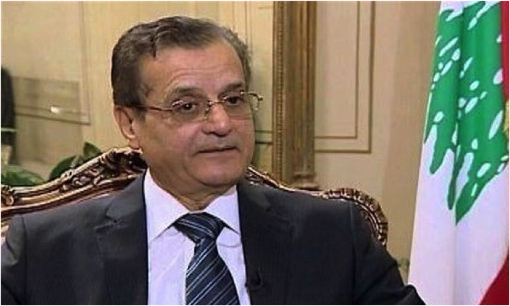
Dr. Adnan Mansour

A few days ago, the American people said their word. His boss, Donald Trump, dropped, and refused to be re-elected.

It is Donald Trump, who has not stored the world in voluntarily within him, like the hatred and abhorrence he has stored for a president who has left only the traces and filth of his abusive, unjust, tyrannical, savage decisions, which have tampered with international laws, customs and conventions, and the world’s customary assets and laws.

He is with the leaders and rulers of his friendly states, he was blunt, rude, opportunistic, heavy-handed, dictated, ordered, blackmailed, imposed arbitrary decisions on them, to serve his policies, without relying on the rights of others and taking their interests.

They would be slow, poured his anger upon them, and they were watching. His behavior towards the countries that reject his policies is clear, as it was between two options: either to bow to and bear his fierce and unjust decisions against their peoples, or to wait for many sanctions, the blockade and work by all means to overthrow their rulers and regimes.

It is Trump who violated the Charter of the United Nations and ignored its resolutions, and exceeded international laws, by his unilateral actions, which violated the rights of peoples, the sovereignty of states, imposed a financial embargo, an economic and commercial blockade, and resorted to the application of strict policies against it, which led to serious humanitarian repercussions and consequences, which directly reflected on the lives of civilians in all its aspects.

It is Trump, a model of moral degradation, and a human conscience, which once prevented the export of medicine to Iran and Syria, which were most needed, to treat civilians, infants, children, and the elderly, at the height of their fight against the Corona pandemic. Indifferent, indifferent to any sense, human attitude, moral duty, or responsibility of a man of a great power, who is full of freedom, justice and human rights everyday.

It is Trump who has counted thousands of lies by the media that have marked his character in power. He is a rebel, a renegade, a violator of international conventions, and a withdrawal from them, flouting the obligations and signatures of the United States, and respecting them.

It is Trump who withdrew from the Paris Climate Change Agreement three years after. it came into force, which was approved on December 12, 2016.

It is Trump who decided to withdraw from the International Organization for Education, Science. and Culture (UNESCO), where the withdrawal came into effect on December 31, 2017.

On June 17, 2017, Trump imposed new economic restrictions on Cuba and reconsidered the measures taken by former President Barack Obama’s administration that would normalize diplomatic relations with Havana.

It’s Trump who vetoed the international nuclear deal.

He withdrew in 2018, after the five Security Council countries and Germany signed it with Iran, which was approved and supported by the United Nations and the UN Security Council, which was considered a major achievement at the time by the countries of the world, and all the signatories, and is in the service of security and worldpeace.

It is Trump who on February 2, 2019, decided to end Washington’s commitment to the 1987 Intermediate-Range Nuclear Power Treaty with Russia, causing a new opening toa dangerous arms race.

It is Trump, who overthrew international resolutions and agreements related to the Palestinian issue, revealed his blatant bias towards the occupied Zionist entity, his abhorrent hostility towards then at Palestinian Arab people, the Arab people as a whole and their legitimate rights, through a series of resolutions and actions he took and implemented, consisting of moving the U.S. Embassy to Jerusalem, the nat-nat in it as the capital of the Zionist occupation state, stopping financial support to the Palestinian Authority, and also stopping supporting the Palestinian Refugee Relief Agency (UNRWA), in addition to his decision to close the Palestinian Embassy in Washington.

It is Trump who has acknowledged the sovereignty of the Zionist occupation authority over Jerusalem and the Golan, and supported and supported its resolutions and practices in the construction of settlements and the confiscation of land, in violation of the insolent and flagrant disregard of the relevant UNresolutions.

It is Trump, who has ordered the EUROPEAN Union to increase its military budget within NATO, under threat and threat of action against some of its countries, if not responding, where the EU had no choice but to bow to its demands.

It is Trump, who has imposed harsh sanctions without adopting humanitarian standards that have had a bad impact on more than one country. His immoral and inhuman sanctions against Iran, Korea, Syria, Venezuela, Cuba, Russia and China were against officials, bodies, institutions, companies, individuals, economic, industrial, scientific, medical, Russian, Chinese, Indian, Iraqi, Syrian, Lebanese, Venezuelan, Korean and other personalities.

It is Trump, who has challenged the nations of the world by taking unilateral decisions, outside the framework of the United Nations organization and the international community, against countries that are opposed to hegemony and hegemony, to impose them on the countries of the world against their will, even if they see in these resolutions as illegal, fair and legitimate. Their acquiescence to his will, their obedience to him, and whatever they are, have been visible. Because she is well aware that if he rejects his decisions, he will put them under the guillotine of U.S. sanctions. Many U.S. resolutions have been scaled up, and have hit the core of the dignity, prestige, and prestige of major allies, as they have been shackled, and revealed the extent of their “sovereignty” and freedom of decision, their commitment and respect for international conventions, and their open acquiescence to their decisions. Perhaps the 5+1 nuclear agreement, the living example, to show the whole world the extent to which major countries such as France, Britain, Germany and other u.S. influence, dictates and decisions, where these countries have not been able, until the moment to abide by the nuclear agreement in letter and spirit, and apply it in practice, and deal with Tehran under its terms, because it cannot escape the pressure of Trump and ignore the response to the will, fearing his anger and avoiding sanctions.

He is Trump, a racist whose many positions, and his many tweets, and his many tweets were characterized by hatred and arrogance, through which he insulted and insulted mexicans whom he accused of bringing crime and drugs to his country, in addition to describing African countries with Haiti and El Salvador as scum, and full of “dirty dens”, which generated a wave of anger against his racist statements in the countries of the world, especially within the African Union.

It is Trump, the cowboy dasher, who revealed last September during an interview with Fox News that he had a chance to assassinate Syrian President Bashar al-Assad, but then Defense Minister Metis, was against it! He also ordered the assassination of The Iranian Revolutionary Guard’s Quds Force commander Qassem Soleimani and Deputy Commander of the Iraqi People’s Mobilization Abu Mahdi al-Muhandis on January 3 this year.

It is Trump, who has pursued aggressive policies that have shed the blood of thousands of martyrs and wounded in Iraq, Syria, Libya, Yemen, Palestine and others. Policies that fed the forces of terrorism as. a result of U.S. military, financial, media and logistical support.

It is Trump, a pirate of money and attitudes, who knows where to eat the shoulder, how to exploit, blackmail, and plunder his “friends”, through the soft veiled threat, intimidation, intimidation and intimidation, under the pretext of providing care for them, securing protection and continuity of their existence and governing Their chairs, using the vocabulary of arrogance and cynicism, sometimes, arrogance, mockery, and sometimes contempt, and when needed, enabled him to withdraw hundreds of billions of dollars from their pockets, and the “cute” robbery of their coffers.

It is Trump, whose memory will remain in the memory of the dirtiest and worst policy pursued by the American president, who has never known the politics of morality, nor the living human conscience towards it, and who was thrown by fate to be a day at the head of a great power, who saw nothing but bitterness, and who seought nothing but disappointment in his dealings with them, where his policies were met with more indignation, condemnation, and condemnation.

Today, with the oppressed free peoples of the world, tormented by their destructive policies, which are pursuing him with their curses and their curses, and after his fall, we say aloud: Donald Trump! President, the Americans have uttered, the curses of the free peoples who have suffered on your hands the policies of humiliation, siege, and unjust punishments,

Destruction, killing, and “organized” looting will continue to haunt you wherever you are, and the free world is screaming loudly and chanting with them: Donald Trump, you raging cowboy who staggers and fell, and the free people of the world have not tasted on your hands but the sag, leave, and i don’t regret you…!

ـــــــــــــــــــــــــــــــــــــــــــــــــــــــــــــــــــــ

Former Minister of Foreign Affairs and Expatriates

القرصان الهائج سقط! لا أسفَ عليه!

د. عدنان منصور

قبل أيام، قال الشعب الأميركي كلمته. أسقط رئيسه دونالد ترامب، ورفض إعادة انتخابه .

هو دونالد ترامب، الذي لم يختزن العالم كرهاً في داخله، مثل ما اختزنه من كره ومقت شديد حيال رئيس لم يترك لدى دول العالم وشعوبها المقهورة، إلا آثار وقذارة قراراته المسيئة، الظالمة، المستبدة، المتوحشة، التي عبثت بالقوانين والأعراف والإتفاقيات الدولية، والأصول واللياقات المتعارف عليها في العالم.

فهو مع زعماء وحكام الدول الصديقة له، كان عنجهياً، فظاً، انتهازياً، غليظ الطبع، يملي، يأمر، يبتز، يفرض قراراته التعسفية عليها، لتصبّ في خدمة سياساته، دون الإكتراث الى حقوق الآخرين والأخذ بمصالحهم.

فإن تلكؤوا، صبّ عليهم غضبه، وكان لهم بالمرصاد. أما سلوكه تجاه الدول الرافضة لسياساته فواضح، حيث كانت بين خيارين: إما ان ترضخ وتتحمّل قراراته الشرسة المجحفة بحق شعوبها، وإما أن تنتظر منه الكثير من العقوبات، والحصار والعمل بكل الوسائل على الإطاحة بحكامها وأنظمتها.

هو ترامب الذي عمد إلى انتهاك ميثاق الأمم المتحدة وتجاهل قراراتها، وتجاوز القوانين الدولية، بإجراءاته الأحادية الجانب، التي انتهكت حقوق شعوب، وسيادة دول، وفرضت حظراً مالياً، وحصاراً اقتصادياً، وتجارياً عليها، ولجأ الى تطبيق سياسات صارمة بحقها، أدّت إلى تداعيات ونتائج إنسانية خطيرة، انعكست مباشرة على حياة المدنيين من مختلف جوانبها.

هو ترامب، نموذج الانحطاط الأخلاقي، وعديم الضمير الإنساني، الذي منع يوماً تصدير الدواء الى إيران وسورية اللتين كانتا بأشدّ الحاجة إليه، لعلاج المدنيين من رضع، وأطفال، ومسنين، وهما في ذروة مكافحتهما لجائحة كورونا. غير مكترث، وغير عابئ بأيّ شعور أو موقف إنساني أو واجب أخلاقي، أو مسؤولية رجل دولة عظمى، تتشدّق كلّ يوم بالحرية والعدالة وحقوق الإنسان.

هو ترامب الذي أحصت له وسائل الإعلام آلاف الأكاذيب التي طبعت شخصيته وهو في السلطة. هو المتمرّد وناكث العهود، ومنتهك الإتفاقيات الدولية، والمنسحب منها، ضارباً عرض الحائط التزامات الولايات المتحدة وتواقيعها عليها، واحترامها لها.

هو ترامب الذي انسحب من إتفاقية باريس لتغيير المناخ بعد ثلاث سنوات من بدء نفاذها، والتي أقرّت في 12 كانون الاول 2016.

هو ترامب الذي قرّر الانسحاب من المنظمة الدولية للتربية والعلوم والثقافة (اليونسكو)، حيث دخل الانسحاب حيّز التنفيذ في 31 كانون الأول 2017.

هو ترامب الذي فرض يوم 17 حزيران عام 2017، قيوداً اقتصادية جديدة على كوبا، وأعاد النظر في ما اتخذته إدارة الرئيس السابق باراك أوباما، من إجراءات من شأنها تطبيع العلاقات الدبلوماسية مع هافانا .

هو ترامب الذي انقض على الإتفاق النووي الدولي

وانسحب منه عام 2018، بعد أن وقعت عليه دول مجلس الأمن الخمس وألمانيا مع إيران، والذي حظي بموافقة ودعم الأمم المتحدة ومجلس الأمن الدولي، والذي اعتبر إنجازاً كبيراً في حينه من قبل دول العالم، وكلّ الموقعين عليه، ويصب في خدمة الأمن والسلام العالمي.

هو ترامب الذي اتخذ يوم 2 شباط 2019 قراراً بإنهاء التزام واشنطن بمعاهدة القوى النووية المتوسطة المدى، التي أبرمت مع روسيا عام 1987، ليتسبّب بفتح الباب مجدّداً أمام سباق تسلح خطير.

هو ترامب، الذي أطاح بالقرارات الدولية، والإتفاقيات ذات الصلة بالقضية الفلسطينية، وكشف عن انحيازه السافر للكيان الصهيوني المحتلّ، وعن عدائه البغيض حيال الشعب العربي الفلسطيني، والشعوب العربية برمّتها وحقوقها المشروعة، من خلال سلسلة من القرارات والإجراءات التي اتخذها ونفذها، تمثلت بنقل السفارة الأميركية الى القدس، والاعتراnatف بها كعاصمة لدولة الاحتلال الصهيوني، وبوقف الدعم المالي للسلطة الفلسطينية، وبالتوقف أيضاً عن دعم وكالة غوث اللاجئين الفلسطينيين (الأونروا)، بالإضافة الى قراره بإغلاق السفارة الفلسطينية في واشنطن.

هو ترامب الذي أقرّ بسيادة سلطة الاحتلال الصهيوني على القدس، وعلى الجولان، وأيّد ودعم قراراتها وممارساتها في بناء المستوطنات ومصادرة الأراضي، منتهكاً ومتجاهلاً بشكل وقح وفاضح القرارات الأممية ذات الصلة.

هو ترامب، الذي أمر الاتحاد الأوروبي بزيادة موازنته العسكرية داخل حلف الناتو، وتحت التهديد والتلويح باتخاذ إجراءات ضدّ بعض دوله، ان لم تستجب، حيث لم يكن أمام الاتحاد الأوروبي إلا الرضوخ والاستجابة الى طلباته.

هو ترامب، الذي فرض عقوبات قاسية دون الأخذ بالمعايير الإنسانية التي تركت آثارها السيئة على أكثر من دولة. فكانت عقوباته اللاأخلاقية واللاإنسانية ضدّ إيران وكوريا وسورية وفنزويلا وكوبا وروسيا والصين، لتطال مسؤولين، وهيئات، ومؤسسات، وشركات، وأفراد، ومرافق اقتصادية، وصناعية وعلمية، وطبية، وشخصيات روسية وصينية وهندية وعراقية وسورية ولبنانية وفنزويلية وكورية وغيرها.

هو ترامب، الذي تحدّى دول العالم، باتخاذه قرارات أحادية الجانب، خارج إطار المنظمة الأممية والمجتمع الدولي، ضدّ دول رافضة للتسلط والهيمنة، ليفرضها على دول العالم رغماً عنها، وإنْ رأت في هذه القرارات عدم قانونيتها، وعدالتها وشرعيتها. فرضوخ هذه الدول لمشيئته، وطاعتها له، ومهما علا شأنها، كانت ظاهرة للعيان. لأنها تدرك جيداً، أنه في حال رفضها لقراراته، سيضعها تحت مقصلة العقوبات الأميركية. فالعديد من القرارات الأميركية حجمت، وأصابت بالصميم كرامة، ومكانة، وهيبة دول كبرى حليفة له، حيث كبّلها، وكشف عن مدى «سيادتها» وحرية قرارها، والتزامها واحترامها للاتفاقيات الدولية، وعن رضوخها المكشوف لقراراته. ولعلّ الاتفاق النووي الـ 5+1، هو المثل الحيّ، ليبيّن للعالم كله مدى تحرّر دول كبرى مثل فرنسا وبريطانيا وألمانيا وغيرها من النفوذ والإملاءات والقرارات الأميركية، حيث لم تستطع هذه الدول، حتى اللحظة الالتزام بالاتفاق النووي نصاً وروحاً، وتطبيقه عملياً، والتعامل مع طهران بموجب بنوده، بسبب عدم تمكّنها من الإفلات من ضغوط ترامب وتجاهل الإستجابة لإرادة، خشية من غضبه وتفاديا لعقوباته.

هو ترامب، العنصري الذي امتلأت مواقفه الكثيرة، واتسمت تصريحاته، وتغريداته العديدة بالكراهية والاستعلاء، التي من خلالها شتم وسبّ يوماً المكسيكيين الذين اتهمهم بجلب الجريمة والمخدرات إلى بلاده، بالإضافة الى وصفه لدول أفريقية ومعها هاييتي والسلفادور على أنها حثالة، ومليئة «بالأوكار القذرة»، ما ولد موجة غضب عارمة ضدّ تصريحاته العنصرية في دول العالم، وبالذات داخل الاتحاد الأفريقي .

هو ترامب، الكاوبوي الداشر، الذي كشف في شهر أيلول الماضي أثناء مقابلة له، أجرتها معه قناة «فوكس نيوز»، من أنه كانت لديه فرصة لاغتيال الرئيس السوري بشار الأسد، لكن وزير الدفاع آنذاك متيس، كان ضدّ ذلك! وهو أيضاً الذي أمر باغتيال قائد فيلق القدس في الحرس الثوري الإيراني قاسم سليماني، ونائب قائد الحشد الشعبي العراقي أبو مهدي المهندس يوم 3 كانون الثاني من هذا العام.

هو ترامب، الذي انتهج سياسات عدوانية، سالت من جرائها دماء آلاف الشهداء والجرحى في العراق وسورية وليبيا واليمن وفلسطين وغيرها. سياسات غذت قوى الإرهاب نتيجة الدعم الأميركي العسكري، والمالي، والإعلامي، واللوجستي لها.

هو ترامب، قرصان المال والمواقف، الذي بعرف من أين تؤكل الكتف، وكيف يستغلّ، ويبتز، وينهب «أصدقاءه»، من خلال التهديد المبطن الناعم، والتخويف، والترغيب والتهويل، بحجة توفير الرعاية لهم، وتأمين الحماية والاستمرارية لوجودهم وحكمهم وكراسيهم، مستخدماً تجاههم، مفردات العنجهية والاستخفاف، أحياناً، والصلف، والاستهزاء، والاحتقار أحياناً أخرى، وحين تدعو الحاجة، ما مكنه من سحب مئات المليارات من الدولارات من جيوبهم، والسطو «الظريف» على خزائنهم.

هو ترامب، الذي ستظلّ الشعوب العربية، ومعها غالبية شعوب العالم الحرة، تختزن في ذاكرتها أقذر وأسوأ سياسة أتبعها الرئيس الأميركي بحقها، الذي ما عرف يوماً سياسة الأخلاق، ولا الضمير الإنساني الحيّ حيالها، وهو الذي قذفته الأقدار ليكون يوما على رأس دولة عظمى، لم تر منه إلا المرارة، ولم تلمس منه إلا الخيبة في تعاطيه معها، حيث لقيت سياساته عندها المزيد من السخط، والتنديد،

والغضب…

اليوم، مع شعوب العالم الحرة المقهورة، المعذبة بسياساته المدمّرة لها، التي تلاحقه بلعناتها وأنينها، وبعد سقوطه، نقول بصوت عال: دونالد ترامب! أيها الرئيس الذي لفظه الأميركيون، إن لعنات الشعوب الحرة التي عانت على يديك سياسات الإذلال والحصار، والعقوبات الظالمة،

والدمار، والقتل، والنهب «المنظم» ستظلّ تلاحقك أينما كنت، وأحرار العالم يصرخون بصوت عال ونردّد معهم: دونالد ترامب، أيها الكاوبوي الهائج الذي ترنح وسقط، ولم يذق أحرار العالم على يديك غير الحنظل، إرحل، ولا أسفاً عليك…!

ـــــــــــــــــــــــــــــــــــــــــــــــــــــــــــــــــــــ

وزير الخارجية والمغتربين الأسبق

River to Sea Uprooted Palestinian   
The views expressed in this article are the sole responsibility of the author and do not necessarily reflect those of the Blog!

Sunday, 23 August 2020

Weekly Report on Israeli Human Rights Violations in Palestine (13– 18 August 2020)


Weekly Report on Israeli Human Rights Violations in the Occupied Palestinian Territory (13– 18 August 2020)

Israeli Violations of Human Rights in Palestine

13 – 18 August 2020

  • 18 Palestinian civilians shot and wounded in IOF excessive use of force:
    • 9 injuries documented near the Annexation Wall in Tulkarm and Ramallah;
    • 6 injuries were documented in IOF suppression of protests in Kafr Qaddum and Ramallah;
    • 2 injured in occupied East Jerusalem, including a person with disability; and another wounded in Bethlehem.
  • IOF warplanes launch multiple airstrikes on Gaza Strip, and shells an UNRWA school in al-Shati refugee camp;
    • Pregnant woman and her baby, and two other children wounded with debris
  • shootings reported at fishing boats western Gaza Strip;
  • In 66 IOF incursions into the West Bank, including occupied East Jerusalem: 45 civilians arrested, including 5 children;
  • Israeli collective punishment policy: IOF harden closure restrictions over the Gaza Strip
    • Karm Abu Salem crossing closed; fuel entry ban results in power plant shutdown; sea closed denying fishermen work
  • 3 houses demolished, including 2 self-demolished, and 3 commercial facilities self-demolished in occupied East Jerusalem;
  • +200 dunums razed in Tulkarm for settlement-road construction;
  • Settler-attacks in the West Bank: excavator set on fire, car windows broken, 5 vehicles assaulted in Salfit; and tent destroyed, and property stolen in Hebron;
  • IOF established 29 temporary military checkpoints in the West Bank and arrested 4 Palestinians on said checkpoints

Summary

Israeli occupation forces (IOF) continued to commit crimes and multi-layered violations against Palestinian civilians and their properties, including raids into Palestinian cities that are characterized with excessive use of force, assault, abuse and attacks on civilians. This week, IOF escalated its attacks on the Gaza Strip with multiple airstrikes, one of which landed on a United Nations Relief and Works Agency (UNRWA) school in Gaza city. Additionally, IOF tightened its closure restrictions on the Gaza Strip, closing Karm Abu Salem, banning en try of fuel that resulted in the Gaza Power Plant shutdown, and closing the sea. These decisions is a continuation of the collective punishment policy, and inhumane and illegal retaliatory actions adopted by Israel against the Gaza Strip civilian population since 2007. PCHR fears for the lives of Palestinian civilians as the attacks continue and warns of their repercussions on the collective economic and social rights of Palestinians. Additionally, IOF continued its attacks in the West Bank, including excessive use of force, demolition of houses and facilities and settlement expansion.

This week, PCHR documented 145 violations of international human rights law and international humanitarian law (IHL) by IOF and settlers in the oPt. It should be noted that the limitations due to the corona virus pandemic, including closure of certain territories, has limited PCHR’s fieldworkers mobility and ability to conduct field documentation; therefore, the information documented in this report are only part of the continued IOF violations.

IOF shooting and violation of right to bodily integrity: IOF shot and wounded 18 Palestinians in IOF excessive use of force in the West Bank: 9 injuries were documented near the Annexation Wall in Tulkarm and Ramallah; 6 injuries were documented in IOF suppression of protests in Kafr Qaddum and Ramallah; 2 injured in occupied East Jerusalem, including a person with disability; and another wounded in Bethlehem.

In the Gaza Strip, 4 Palestinians, including a pregnant woman and her child, as well as 2 other children, sustained injuries caused by debris fallen due to Israeli airstrikes on the Gaza Strip, one of which targeted a an UNRWA school in the densely populated al-Shati refugee camp, and caused material damage and suspended school. Additionally, IOF opened fire 7 times at fishing boats in western Gaza Strip and once at agricultural lands in the east.

IOF incursions and arrests of Palestinian civilians: IOF carried out 66 incursions into the West Bank, including occupied East Jerusalem. Those incursions included raids of civilian houses and shootings, enticing fear among civilians, and attacking many of them. During this week’s incursions, 45 Palestinians were arrested, including 5 children. IOF also conducted two limited incursions into eastern Khan Younis and northern Gaza Strip.

Settlement expansion activities and settlers’ attacks: IOF continued its settlement expansion operations in the West Bank, including occupied East Jerusalem, PCHR documented 7 violations, including:

  • East Jerusalem: 3 houses demolished (2 self-demolished)l; and 3 commercial facilities self-demolished;
  • Tubas: barracks removal notice served;
  • Tulkarm: wide-scale land razing for construction of a settlement road;
  • Nablus: barracks demolition notice

PCHR also documented 5excavator set on fire, windows broken in 3 houses; vandalization; and lands set on fire in Nablus; 5 vehicles assaulted and vandalization in Salfit; a tent destroyed, and property stolen in Hebron.

Israeli closure policy and restrictions on freedom of movement:

On Sunday morning, 16 August 2020, Israeli authorities announced a complete closure of the Gaza sea in a manifestation of its collective punishment policy and measures announced since last week, which included Karm Abu Salem crossing closure and ban on entry of fuel and construction materials.

This decision followed the Israeli authorities’ former decisions (3 days prior) to reduce the fishing area from 15 to 8 nautical miles and to close Karm Abu Salem crossing (five days prior), except for the transportation of goods for vital humanitarian cases. Due to the suspension of fuel entry, the Gaza Power Plant announced its shutdown starting from Tuesday morning, 18 August 2020, which carries endless repercussions on the basic services provided to the Gaza Strip population, especially health and sanitation services, as well as commercial, industrial and agricultural facilities.

This decision falls under the framework of the complete, illegal and inhumane closure policy imposed by the Israeli authorities on the Gaza Strip since June 2007, as the  Gaza Strip crossings have witnessed tightened restrictions on the movement of goods and persons.

Meanwhile, IOF continued to divide the West Bank into separate cantons with key roads blocked by the Israeli occupation since the Second Intifada and with temporary and permanent checkpoints, where civilian movement is restricted, and they are subject to arrest.

  1. Violation of the right to life and to bodily integrity
  1. Shooting and other violations of the right to life and bodily integrity
  • At approximately 02:10 on Thursday, 13 August 2020, Israeli military warplanes launched a missile at al-Shati Joint Primary School (D, Z) run by the UNRWA agency, adjacent to al-Shati Clinic, west of Gaza City. The missile exploded in the third floor in the school’s southern side, causing damage in teachers’ room and a number of classrooms’ doors, and smashing a number of windows. As a result of that, the educational process was suspended. The targeted area is a densely populated area with no military objects and does not pose any threat at the lives of Israeli soldiers.
  • At approximately 07:10 on the same Thursday, IOF stationed at the annexation wall gate on lands of Far’un village, south of Tulkarm, fired rubber bullet, sound bombs and tear gas canisters at Palestinian civilians who attempted to enter the gate. As a result, 3 civilians were shot with a rubber bullet to their lower extremities.
  • At approximately 13:00 on Friday, 14 August 2020, IOF stationed at the northern entrance established at lands of Kafr Qaddum village, north of Qalqilya, suppressed a protest in which dozens of civilians protested, demanding to open the street, which is closed since 2003 and condemning the Israeli settlement expansion. IOF chased the young men who gathered in the area, clashed with them and fired rubber bullets, sound bombs and tear gas canisters at them. As a result, 4 civilians were injured, 3 of them with rubber bullets in the back and lower extremities, and one with a tear gas canister in his shoulder.
  • At the same time, IOF stationed at the annexation wall gate established at lands of al-Midya village, west of Ramallah, fired tear gas canisters at agricultural lands, adjacent to the annexation wall. A number of young men gathered and threw stones at Israeli soldiers while the latter immediately responded with live and rubber bullets at the protestors and clashed with them. As a result, a 22-year-old was shot with a rubber bullet in his right leg and a 19-year-old young man was  shot with a rubber bullet in his foot. Both wounded civilians were transferred to Palestine Medical Complex for medical treatment.
  • After Friday prayer, IOF suppressed a set-in organize by dozens of worshipers in front of the Dome of the Rock Mosque in occupied East Jerusalem’s Old City, in protest against the peace agreement between Israel and UAE. The protestors chanted slogans and raised banners condemning the normalization of UAE-Israel relations. Few minutes later, Israeli police attacked the protestors, confiscated their banners, forcibly dispersed them, and arrested journalist Mustafa Abu Romouz (43) while on duty in al-Aqsa Mosque.
  • At approximately 22:20 on the same Friday, Israeli military warplanes launched a missile and a drone fired 2 missiles at agricultural land, east of al-Buraij in central Gaza Strip. the bombardment caused a large hole in the land and 7 nearby houses sustained damage. Two children further were wounded as a result of the rubble and shattered glass. They were transferred to al-Aqsa Hospital in Deir al-Balah and their injuries were classified as minor. the wounded children were identified as:
  1. Bara’a Hasan Mohammed Husein (11) was hit in his head.
  2. Ahmed Mohammed Husein (3), sustained bruises and swelling in his right face side and a scratch in his right foot.
  • At approximately 23:10, an Israeli drone fired a missile at an empty land in Beit Hanoun in northern Gaza Strip. five minutes later, Israeli military warplanes launched 2 missiles at the same area, causing a 4-meter hole in the ground. Asma’a Marzouq Hasan Abu Jarad (33), who is a nine month pregnant, and her child Mariam Hejazi (two and half years) suffocated due to the smoke resulting from the bombardment. They were transferred via Palestine Red Crescent Society (PRCE) ambulance to al-Awdah Hospital and their injuries were classified minor. The bombardment also lifted damage in a number of the nearby houses.
  • At approximately 08:25 on Saturday, 15 August 2020, IOF stationed at the annexation wall gate established at lands of Far’un village, south of Tulkarm, fired rubber bullets, sound bombs and tear gas canisters at Palestinian civilians, who attempted to pass through the gate. As a result, 2 civilians were shot with 2 live bullets in their lower extremities.
  • At approximately 14:00 on Saturday, 15 August 2020, a number of Palestinian young men gathered in Bab al-Zawya area in the center of Hebron and set tires on fire at the entrance to al-Shallah street, adjacent to military checkpoint (56) established at the entrance to al-Shuhada’a street. The protestors threw stones at Israeli soldiers stationed behind the abovementioned checkpoint while a number of soldiers chased stone-throwers and fired sound bombs and tear gas canisters. As a result, a number of civilians suffocated due to tear gas inhalation. Clashes that erupted between IOF and the protestors continued until 18:00, in which Israeli soldiers closed the road in the center of the city and prevented civilians’ vehicles from movement. No arrests were reported.
  • At approximately 17:00 on Saturday, IOF stationed at the northern entrance established at lands of Kafr Qaddum village, north of Qalqilya in which dozens of civilians protested to demand opening the street, which has been closed since 2003, and to condemn the Israeli settlement expansion. IOF chased the young men, who gathered in the area, clashed with them, and fired rubber bullets, sound bombs and tear gas canisters at them. As a result, an 18-year-old civilian was shot with a rubber bullet under his eye, and a 23-year-old civilian was shot with a rubber bullet in his thigh.
  • At approximately 20:30, IOF stationed at the annexation wall gate established at lands of al- al-Midya village, west of Ramallah, opened fire at a 31-year-old civilian, from Deir Abu Masha’al village, northwest of the city, while passing through the gate. As a result, he was shot with a rubber bullet in his foot. He was transferred to Palestine Medical Complex for medical treatment.
  • At approximately 23:00 on the same Friday, Israeli military warplanes launched 3 missiles at an empty land, east of al-Buraij in the central Gaza Strip. As a result, the land sustained damage; no casualties were reported.
  • At the same time, IOF stormed al-Isawiya village, northeast of occupied East Jerusalem. They deployed the village neighborhoods, established checkpoints at its entrances, prevented civilians from entering or exiting it, and searched the vehicles before allowing them to exit the village. In the meantime, a number of young men protested at the entrance to Obeid neighborhood, north of the village, and threw stones, fireworks, and Molotov Cocktails at Israeli soldiers. A large Israeli force immediately stormed the neighborhood and fired rubber bullets, sound bombs and tear gas canisters at the protestors. Clashes that erupted between IOF and the young men continued for more than 2 hours. As a result, dozens of civilians suffocated due to tear gas inhalation. IOF also arrested Motasem Hamzah Obeid (17).
  • At approximately 23:30, Israeli soldiers stationed in a military watchtower established in the vicinity of Rachel’s Tomb, north of Bethlehem, opened fire at an 18-year-old civilian. As a result, he was shot with a live bullet in his foot. The wounded civilian was transferred to Beit Jala Hospital for medical treatment. His health condition was classified as stable. IOF claimed that they opened fire at a Palestinian, who attempted to throw a Molotov Cocktail at the military watchtower, north of Bethlehem.
  • At approximately 04:00 on Sunday, 16 August 2020, Israeli gunboats stationed northwest of Beit Lahia, west of al-Sudaniya area, and west of Jabalia in northern Gaza Strip, chased and heavily opened fire at Palestinian fishing boats sailing within the allowed fishing area ( 1- 4 nautical miles). Israeli gunboats also fired dozens of artillery shells in the vicinity of the fishing boats and pumped water at them. IOF’s attack continued for the same day morning. As a result, 18 fishermen lost their fishing nets in the sea. The shooting caused fear among fishermen, who sailed back to the shore.
  • At approximately 07:00, IOF stationed at the annexation wall gate established at lands of Far’un village, south of Tulkarm, fired rubber bullets, sound bombs and tear gas canisters at civilians, who attempted to pass through the gate. As a result, a 35-year-old civilian, from Qalqilya, was shot with a rubber bullet in his left leg. He was transferred to Dr. Thabet Hospital in Tulkarm.
  • At approximately 07:30, on the same Sunday, Israeli gunboats stationed west of Deir al-Balah shore in the central Gaza Strip, chased and opened fire at Palestinian fishing boats sailing within the allowed fishing area (1 – 3 nautical miles). Israeli gunboats also fired artillery shells at the vicinity of the fishing boats, forcing fishermen to leave the see. Nizar ‘Ayash, Head of the General Union of Fishing Workers in the Gaza Strip, said to PCHR’s fieldworker that Israeli gunboats chased fishermen along the Gaza Strip shore and forced them to leave it in order to impose closure on the sea. Ayash mentioned that they were not informed  officially of closing the sea because coordination with Israeli authorities has stopped since last May.
  • At approximately 08:00, Israeli gunboats stationed adjacent to Rafah and Khan Younis shores, opened fire at Palestinian fishing boats. Fishermen, as a result of that, panicked and sailed back to the shore fearing for their lives. No casualties were reported.
  • At approximately 01:00, on Monday, 17 August 2020, IOF reinforced with several military vehicles stormed Hebron’s southern area and deployed al-‘Ajouri square area. The soldiers raided and searched a commercial shop owned by Sa’di Abdul Rahman al-Ja’bari (35). In the meantime, a number of Palestinian young men gathered and threw stones  at Israeli soldiers and closed the road with rocks and metal barricades. Israeli soldiers fired sound bombs and tear gas canisters at the young men. As a result,  a number of young men suffocated due to tear gas inhalations. IOF also arrested Sa’di al-Ja’bari.
  • At approximately 08:45 on the same Monday, Israeli gunboats stationed west of al-Nuseirat shore in the central Gaza Strip, chased 2 Palestinian fishing boats and opened fire around them. They also pumped water at the two fishing boats. The attack continued for 2 hours. No casualties were reported.
  • At approximately 08:55 on the same Monday, IOF that was leveling lands in Shufa village, east of Tulkarm, suppressed a protest in which dozens of civilians participated in protest against leveling their lands. IOF fired sound bombs and tear gas canisters at the civilians while attempting to confront IOF’s bulldozers and banning them from leveling. As a result, many civilians suffocated due to tear gas inhalation. IOF also arrested Omer Tahsin Hamed (40). Due to that, Tahsin’s father fainted and fell on the ground.
  • At approximately 09:00, on the same Monday, Israeli soldiers stationed at Qalqilya military checkpoint, north of occupied East Jerusalem, opened fire at Walid Abu Nasser (50), who is disabled (he suffers from deafness and hearing loss) from Nablus, while attempting to bypass the checkpoint through the vehicles lane. As a result, Abu Nasser was shot with a live bullet in his leg. He was transferred to Shaare Zedek Medical Center in West Jerusalem for medical treatment.

Israeli police claimed in a statement they published on the social media that one of the Israeli security service officers at Qalqilya checkpoint, noticed that a Palestinian civilian  arrived at the vehicles lane. They ordered him to stop several times, but he did not respond, so they opened fire at his lower limb of his body and arrested him. The Israeli police stated later that  the civilian, who sustained minor and moderate wounds  turned out to be a disabled person as he suffers from deafness and hearing loss. The police added that wounded civilians were transferred to the hospital and his health condition is stable.

  • At approximately 15:00, a number of Palestinian outraged young men gathered at Bab al-Zawiyah area in the center of Hebron and threw stones at Israeli military Checkpoint (56) established at the entrance to al-Shuhada’a closed street. Israeli soldiers indiscriminately fired sound bombs and tear gas canisters at the young men. As a result, a number of civilians, who were present in the market, suffocated due to tear gas inhalation. In the meantime, an Israeli infantry unit stormed al-Shalah Old street’s market. They chased the young men between commercial shops and fired rubber bullets at them. At approximately 17:00 on the same day, Israeli soldiers withdrew from the area towards the checkpoint. No arrests were reported.
  • At approximately 01:05 on Tuesday, 18 August 2020, Israeli military warplanes launched 3 missiles at an empty land, in eastern al-Shoka village, east of Rafah. No casualties were reported.
  • At the same time, Israeli gunboats stationed northwest of Jabalia and northwest of Beit Lahia in northern Gaza Strip, chased and sporadically opened fire at Palestinian fishing boats sailing within the allowed fishing area ( 2 nautical miles). Fishermen, as a result of that, panicked and had to sail back to the shore. No casualties were reported.
  • At approximately 10:30 on the same Tuesday, Israeli gunboats stationed northwest of Beit Lahia in northern Gaza Strip, chased and heavily opened fire at Palestinian fishing boats sailing within the allowed fishing area (2 nautical miles). They also fired a number of sound bombs and pumped water at the fishing boats. Fishermen as a result of that, panicked and had to sail back to the shore. No casualties were reported. It should be noted that fishermen lost their fishing nets due to the Israeli attack on them.
  • At approximately 10:30 on the same Tuesday, IOF that was leveling a residential building in al-Mokaber Mount village, southeast of occupied East Jerusalem, suddenly and indiscriminately fired live and rubber bullets at a group of Palestinian civilians, who gathered in the area to protests against IOF’s leveling  process. As a result, Mohammed Mo’ammer Khader Abu Osba’a (24) was shot with a live bullet in his chest and abdomen. He was transferred via a civilian vehicle to Al-Makassed Hospital in al-Tour neighborhood, east of occupied East Jerusalem’s Old City.  Medical sources classified his health condition as serious as the bullet penetrated his spleen and liver. After Abu Osba’a arrived at Al-Makassed Hospital where was admitted to the surgery room, an Israeli “Yasam” special patrol unit stormed the hospital and stationed at its entrance near the Emergency Department for hours and withdrew later after it failed of arresting Abu Osba’a .

Israeli police claimed that while IOF were demolishing a residential building in al-Mokaber Mount village, they opened fire at a young Palestinian man who threw fireworks at them and fled from the area after he was injured. After tracking him down, IOF found him at Al-Makassed Hospital.

  • At approximately 22:55, Israeli soldiers stationed along the border fence, east of al-Shoka village, east of Rafah, opened fire at agricultural lands. No casualties were reported.
  1. Incursions and arrests:

Thursday, 13 August 2020:

  • At approximately 02:15, IOF moved into Faqqua village, northeast of Jenin, north of the West Bank. They raided and searched Mohammed Nazeeh Massad’s (26) house and arrested him.
  • At approximately 02:20, IOF moved into Rujeib village, southeast of Nablus, north of the West Bank. They raided and searched Obada Mohammed Rawajba’s (20) house and arrested him.
  • At approximately 02:40, IOF moved into Kafr al-Dik village, west of Salfit. They raided and searched three houses belonging to Zahi Ibrahim al-Dik (24), Majd Fayez Damra (22), and Hussam Mazen al-Ahmed (22), and arrested them.
  • At approximately 03:00, IOF moved into Kafr Ni’ma village, west of Ramallah governorate. They raided and searched two houses belonging to Na’eem Mohammed Ramadan (30) and Ra’ed Abbas Nassar (29) and arrested them.
  • At approximately 03:00, IOF moved into al-Issaweya, northeast of the occupied East Jerusalem. They raided and searched two houses belonging to Eyas Hussain Obaid (19) and Mahmoud Mohammed Obaid (16) and arrested them.
  • At approximately 03:10, IOF moved into Tubas, north of the West Bank. They raided and searched Nasser Abdullah “Mohammed Ali” Daraghma’s (43) house and arrested him.
  • At approximately 04:50, IOF moved into Beit Rima village, northwest of Ramallah governorate. They raided and searched Naser Abdul Latif al-Barghouthi’s (24) house and arrested him.
  • Around the same time, IOF moved into Deir Ghassana village, northwest of Ramallah. They raided and searched Salah Bassam al-Barghouthi’s (24) house and arrested him.
  • Around the same time, IOF moved into Deir Qudais village, west of Ramallah governorate. They raided and searched Hamad Zeid Abu Zeid’s (27) house and arrested him.
  • At approximately 05:30, IOF moved into Jenin refugee camp, west of Jenin, north of the West Bank. They raided and searched Salah Ahmed Staiti’s (25) house and arrested him. It should be noted that Salah is Dalia Staiti’s brother, who was shot killed by the IOF last week.
  • At approximately 09:00, IOF moved into al-Wad village, one of the occupied East Jerusalem’s Old City’s neighborhoods. They raided and searched Nehad Bader Zughaiar’s (42) house and took him to al-Maskoubeya investigation center, west of the city. IOF released him after several hours of interrogation on condition that banning his entry to the Aqsa Mosque for a week.

It should be noted that IOF arrested Zughaiar on 05 June 2017, while returning from Saudi Arabia, as he spent 35-months in the Israeli prisons when they accused him of belonging to “Shabab al-Aqsa Organization”, and released on 04 May 2020.

  • At approximately 16:20, IOF stationed at Hawara military checkpoint, on the eastern entrance of Nablus, north of the West Bank, arrested Mohannad Yousef Kan’an (19), from Burin village, southeast of the city. IOF took him to an unknown destination.
  • At approximately 21:30, IOF established a temporary military checkpoint on Nablus Ramallah Road, north of the West Bank. IOF arrested Sanad Mohammed Staiti (23), from Jenin refugee camp, west of Jenin, and took him to an unknown destination.
  • At approximately 23:00, IOF established a temporary military checkpoint on the Arab American University’s rotary, north of the West Bank. IOF arrested Tareq Sa’eed Zakarna (22), from Qabatya village, southeast of Jenin. IOF took him to an unknown destination.
  • IOF carried out (4) incursions in Hebron and Surif, in Hebron governorate; Deir Estiya, Yasouf, in Salfit governorate. No arrests were reported.

Friday, 14 August 2020:

  • At approximately 03:40, IOF moved into Anabta village, east of Tulkarm. They raided and searched Abdul Rahim Fathi Abu Kamla’s (25) house and arrested him.
  • Around the same time, IOF moved into al-Ama’ari refugee camp, southeast of al-Beira, north of Ramallah governorate. They raided and searched several houses and arrested Nael Yousef Abu Kwaik (30) and Yousef Hammad (27).
  • At approximately 10:30, IOF moved into Kafr al-Dik, west of Salfit. They raided and searched several houses and took photos for several old houses in the city; they withdrew, and no arrests were reported.
  • IOF carried out (7) incursions in Ya’bad and Qabatya, in Jenin governorate; Nuba, Deir al-Asal, and Dura in Hebron governorate; Beit Amin, southeast of Qalqilya; Biddya, west of Salfit. No arrests were reported.

Saturday, 15 August 2020:

  • At approximately 01:00, IOF reinforced with several military vehicles moved into Halhul village, north of Hebron governorate, and stationed near Hahul Gas Station, near the northern entrance of the city. IOF raided and searched the station and confiscated surveillances devices before they withdrew. No arrests were reported.
  • At approximately 05:30, IOF moved into Jenin refugee camp, west of Jenin, north of the West Bank. They arrested Islam Mahmoud al-Jarboua’ (20) and took him to an unknown destination.
  • IOF carried out (2) incursions in Beit Ula and Yatta, in Hebron governorate. No arrests were reported.

Sunday, 16 August 2020:

  • At approximately 03:00, IOF moved into Taqu’ village, east of Bethlehem. They raided and searched Mahmoud Jamal al-Sabbah’s (23) house and arrested him.
  • At approximately 13:00, IOF arrested Saddam Aqel Dar al-Haj (28), from Ayda refugee camp, west of Bethlehem, while present near a stadium in al-Khader village, south of the city. IOF took him to an unknown destination.
  • At approximately 15:00, IOF summonsed Jerusalem Governor, Adnan Adel Tawfiq Ghaith (46), via phone to refer to al-Maskoubeya police station, west of the occupied East Jerusalem. As soon as he arrived, IOF handed him a decision issued by the Israeli Central Commander, to extending the ban on his entry to the West Bank for an additional 6 months.

This decision came after a few days of releasing Ghaith, who was arrested and interrogated under inhuman conditions for more than 17 days in Ashkelon prison. This arrest is the 18th of its kind since his inauguration as Governor.

  • At approximately 16:00, IOF moved into al-Issawiya village, northeast of the occupied East Jerusalem. They raided and searched Hamada Nimir (37) and arrested him.
  • IOF carried out (3) incursions in Yatta, Dura, and Fureidis villages in Hebron governorate. No arrests were reported.

Monday, 17 August 2020:

  • At approximately 01:00, IOF moved into al-Doha village, west of Bethlehem. They raided and searched two houses belonging to Hamza Ibrahim Malash (29) and Hasan Mohammed Shehada (31) and arrested them.
  • At approximately 02:00, IOF moved into Beit Sahour village. They raided and searched Ahmed Ridwan Hamamera’s (27) house and arrested him.
  • At approximately 02:00, IOF reinforced with several military vehicles moved into Kharsa village, south of Dura, southwest of Hebron governorate. They raided and searched Jaser Kamel Qutait’s (32) house and arrested him.
  • At approximately 02:30, IOF moved into Askar refugee camp, northeast of Nablus, north of the West Bank. They raided and searched Othman Khalil Qatanani’s (17) house and arrested him.
  • At approximately 02:40, IOF moved into Qalqilya. They raided and searched two houses belonging to Sajed Yousef Qur’an (17) and Lewa’ Faisal Nofal (24) and arrested them.
  • Around the same time, IOF moved into al-Zawiya village, west of Salfit. They raided and searched Firas Abdul Karim Mwaqadi’s (36) house and arrested him.
  • At approximately 02:45, IOF moved into Duma village, southeast of Nablus, north of the West Bank. They raided and searched several houses including two houses belonging to Fadel Abdul Sattar Salaweda and Ibrahim Nour al-Dein Salaweda. No arrests were reported.
  • At approximately 05:00, IOF moved into Anata village, northeast of the occupied East Jerusalem. They raided and searched Emad Jom’a al-Silwadi’s (23) house and arrested him.
  • At approximately 14:50, IOF stationed at a temporary military checkpoint near al-Nabi Elias village’s rotary, east of Qalqilya, arrested Abdul Ra’ouf Tayseer Yasine (20), from Qalqilya. IOF took him to an unknown destination.
  • IOF carried out an incursion in Deir Estiya, north of Salfit. No arrests were reported.

Tuesday, 18 August 2020:

  • At approximately 12:15, IOF moved into Burin village, southeast of Nablus, north of the West Bank. They raided and searched several houses and arrested Tamim Mohye al-Dein Emran (22).
  • At approximately 02:00, IOF moved into Ayda refugee camp, north of the occupied East Jerusalem. They raided and searched Ahmed Jalal Darwish’s (19) house and arrested him.
  • At approximately 02:15, IOF moved into Tayaseer village, east of Tubas, north of the West Bank. They raided and searched several houses and arrested Amer Ahmed Dabak (29), the secretary of Fatah Movement in Tubas.
  • At approximately 03:00 IOF moved into Azza refugee camp, west of the occupied East Jerusalem. They raided and searched Aysar Nawwaf al-Qaisi’s (19) house and arrested him.
  • At approximately 03:20, IOF moved into Oqbat Jaber refugee camp, southwest of Jericho. They raided and searched Nader Mohammed Qatam’s (40) house and arrested him.
  • At approximately 04:00, IOF moved into Zububa village, west of Jenin. They raided and searched several houses and arrested two civilians including a child; Qusai Mohammed Taleb (17) and Mohammed Adnan Jaradat (22).
  • IOF carried out an incursion in Telfit village, southeast of Nablus. No arrests were reported.

III. Settlement Expansion and settler violence in the West Bank, including occupied East Jerusalem

  • Demolition and Confiscation of Civilian Property
  • On Thursday, 13 August 2020, Mohammed Doyyat implemented the Israeli Municipality decision and self-demolished a part of his house in Sur Baher village, south of occupied East Jerusalem. Mohammed Doyyat said that in 2006, he built access ramp for his son, who suffers from cerebral palsy, instead of carrying him up to their home on the second floor. Doyyat added that he built a small brick-roofed kitchen near his son’s room. Doyyat clarified that he hired a lawyer to license the ramp and kitchen, but the municipality refused and issued a demolition decision in 2008, in addition to imposing a fine of NIS 25,000 on him. Doyyat added that he managed to delay the demolition for 5 years, but the municipality issued an immediate demolition order against the roof of the annexed building in 2015, so he removed it. Doyyat pointed out that Israeli municipality staff raided his house 2 weeks ago and handed him a notice to demolish the ramp, destroy the walls of the annexed building (kitchen) and remove the sheds and wood placed after demolishing the roof in 2015.
  • On Friday, 14 August 2020, Ihab Hasan Khalil ‘Oqail implemented the Israeli Municipality decision and self-demolished his under-construction house in Karm al-Shiekh neighborhood in Silwan village, south of occupied East Jerusalem’s Old City, under the pretext of non-licensing. ‘Oqail said that he started to build his tin-plate house in April 2019 in order to live in it with his family comprised of 4 persons. ‘Oqail clarified that the municipality staff raided his house few months ago and summoned him for investigation. When he headed to the municipality, he was informed that the municipality would appoint a session to consider his house case. On Sunday, he was shocked when municipality staff raided his house and informed him about the final demolition order. The municipality staff gave him 4 days to implement the demolition. ‘Oqail pointed out that he and his family members dismantled the walls and roof of his 80-square-meter house to avoid paying demolition costs for the municipality.
  • At approximately 13:00, Mahdi al-‘Abasi implemented the Israeli Municipality decision and self-demolished his house in ‘Ein al-Louza neighborhood in Silwan village, south of occupied East Jerusalem’s Old City, under the pretext of non-licensing. Al-‘Abasi said that he built his tin-plate house ( 40 sqm) 7 months ago. He pointed out that the land on which the house was built belongs to him and his two brothers Mohammad and Mo’tasem. He added that about a year ago, the municipality staff demolished 6 commercial and residential facilities, properties of him and his 2 brothers, built on the land and forced them to pay the demolition costs. Al-‘Abasi clarified that few months later, he was forced to rebuilt the house in order to shelter his family, because he was unable to buy or even rent a licensed house. Al-‘Abasi said that last month, the municipality issued a final demolition decision against his house and gave him until 20 August 2020 to implement the order, or it will do so.
  • At approximately 09:00 on Sunday, 16 August 2020, IOF accompanied with Israeli Civil Administration officers moved into ‘Atouf village, southeast of Tubas in northern Jordan Valley. Israeli authorities hanged a 96-hour notice on Khalil Khalaf Ahmed Bani ‘Odah’s 150-square-meter barrack’s gate used for breeding sheep, under the pretext of illegal construction in Area C.
  • At approximately 08:00 on Monday, 17 August 2020, IOF moved into Kafr al-Labad village in eastern Tulkarm, where they leveled Palestinians’ lands (200 dunums) in Ras al-Maseed and al-Hafasi areas in order to build a road for “Avnei Hefetz” settlement, which is established on these lands. These lands belong to Khattab, Marzouq and Foqahaa’ families. It is expected that IOF will level other 600 dunums to complete the construction of the settlement road according to the Israeli plan. Mayor of  Kafr al-Labad Municipality, Ihab Ghazalah, said that during the past years, IOF prevented Palestinians from reclaiming or working in their lands, in addition to attacking the farmers and forcing them to leave their lands at gunpoint. It should be noted that these lands are registered in the Land and Water Settlement Authority, and the settlers’ seizure of this road would close the village and isolate it from its western side.
  • At approximately 11:30 on Monday, 17 August 2020, IOF accompanied with Israeli Civil Administration officers moved into al-Sahel area in Beit Dajan village, northeast of Nablus. IOF hanged a demolition notice on Mostafa ‘Ali Mostafa Salama’s 400-square-meter barrack’s gate used for breeding sheep, under the pretext of illegal construction in Area C.
  • On Monday, 17 August 2020, Ahmed Yousef Shoqirat implemented the Israeli Municipality order and self-demolished his 3 commercial shops in al-Sal’ah neighborhood in Jabel Mukaber village, southeast of occupied East Jerusalem, under the pretext of non-licensing. Shoqirat said that 3 years ago, he rebuilt his shop established in 2000 and built 3 others small shops ( 90 sqm) beside it. Shoqirat clarified that he received a demolition notice 4 months ago in favor of establishing the American Street Project in the area, despite the fact that Shoqirat’s shops are located 10 meters away from the plan supposed to be established. Shoqirat added that he managed to delay the demolition, but on 13 August 2020, the court issued a self-demolition order against his 3 shops, in addition to refusing the appeal against the demolition decision. Shoqirat pointed out that the Israeli Municipality threatened him to pay NIS 100,000 for the municipality staff, if they demolish the shops. Shoqirat said that his shops were used for selling foodstuff, and he was forced to vacate the shops’ contents before demolishing them and place them out, causing  spoilage of foodstuff. Shoqirat’s losses were estimated at NIS 10,000.
  • On Tuesday, 18 August 2020, Israeli Municipality bulldozers backed by special forces demolished an under-construction residential building, property of ‘Aziz Jameel Ja’abees and his 3 sons, in al-Sal’ah neighborhood in Jabel Mukaber village, southeast of occupied East Jerusalem, under the pretext of non-licensing. Mohammed Ja’abees, one of the building owners, said that at approximately 06:00, at least 500 Israeli soldiers backed by 100 military construction vehicles moved into Jabel Mukaber village and surrounde al-Sal’ah neighborhood to implement an immediate demolition order issued by the Israeli court against their residential building. He added that IOF declared the area as closed military zone and denied Palestinians’ access to it. IOF demolished the 4-storey residential building, which was supposed to shelter 8 families. Ja’abees pointed out that his family paid more than NIS 250,000 as fines and attorneys’ fees to freeze the demolition order, but in vain. Ja’abees clarified that during the demolition, which lasted for over 8 hours, dozens of the villagers gathered in the area to console them.
  • Israeli Settler Violence
  • At approximately 00:05 on Thursday, 13 August 2020, Israeli settlers, from ” Price Tag ” group, attacked al-Hariqah area between ‘ Urif and ‘Asira al-Qibliya villages, southeast of the city. The settler set  Mohammed ‘Abed al-Kareem Hamdan and ‘Ali ‘Issa Makhlouf’s digger on fire. They also vandalized a rock, which was placed near the digger, with racist slogans. The settlers withdrew before the village residents arrived and put out the fire.
  • At approximately 01:30, Israeli settlers, from ” Price Tag ” group, attacked ‘Asira al-Qibliya village and threw stones at ‘Abed al-Baset Mohammed ‘Abed al-Rahman Ahmed’s house windows. As a result, the house windows were broken. Meanwhile, the village residents confronted the settler who withdrew later.
  • Around the same time, Israeli settlers moved into Yasuf village, east of Salfit, where they attacked 5 vehicles and punctured their tires. The settlers also vandalized the kindergarten’s walls with racist slogans.
  • At approximately 19:30, Israeli settlers, from ” Price Tag ” group, attacked ‘Asira al-Qibliya village and threw stones at Qasem Mohammed Hsan Salah and Majdi Ibrahim Mohammed Makhlouf’s houses windows. As a result, the houses windows were broken. The settlers also set Palestinians’ agricultural lands planted with olive and almond trees on fire. Meanwhile, the village residents confronted the settler who withdrew later.
  • On Tuesday, 18 August 2020, Israeli settlers, from “Havat Ma’on” settlement outpost, which is established on Palestinians’ confiscated lands in eastern Yatta city, south of Hebron, attacked Palestinians’ lands in Wad al-Sawi area in Yatta and demolished ‘Ali Suliman Abu Hadeed’S (50) tent. The settlers also stole steel pipes and punctured rubber tires for a water tank. It should be noted that the eastern side of Yatta city is exposed to ongoing IOF and settlers’ attacks; the latest of which was about two weeks ago when IOF established a military watchtower on Palestinians’ lands near At-Tuwani village in Hebron.
  1. Closure policy and restrictions on freedom of movement of persons and goods

Gaza Strip:

  • On Sunday morning, 16 August 2020, Israeli authorities announced a complete closure of the Gaza sea within a series of collective punishment measure issued last week, including closing Karm Abu Salem Crossing and stopping the entry of fuel and construction materials into the Gaza Strip.

The Israeli Coordinator of Government Activities in the Territories (COGAT), Kamil Abu Rukun, stated that “pursuant to security consultations, it was decided to immediately close the Gaza Sea until further notice”.

  • On Wednesday, 12 August 2020, Israeli authorities announced new restrictions on the movement of goods entering the Gaza Strip and reduced the fishing area, in alleged response to the launch of incendiary balloons towards Israeli settlements adjacent to the Gaza Strip. The Israeli Coordinator of Government Activities in the Territories (COGAT), Kamil Abu Rukun, stated that pursuing to security consultations, it was decided to immediately stop the entry of fuel into the Gaza Strip and reduce the permitted fishing area from 15 to 8 nautical miles until further notice. Abu Rukun added that “These decisions were made in light of the ongoing violence and launch of incendiary balloons from the Gaza Strip towards Israeli territory.”

This decision followed the Israeli authorities’ former decision to close Karm Abu Salem crossing issued two days ago (starting from Tuesday, 11 August 2020) except for the transportation of goods for vital humanitarian cases and fuel.

Due to the Israeli authorities’ suspension of fuel entry into the Gaza Strip, Gaza Power Plant declared its decision to suspend the power plant at full capacity starting on Tuesday morning, 18 August 2020.

The decision suspending the entry of fuel into the Gaza Strip deepens its electricity crisis and increases its 64% power deficit (pre-suspension decision). In the best case scenario, the Gaza Strip available power reaches 180 Megawatts (120 MW from Israel, and 60 MW from the Gaza power plant), a far cry from its 500 MW minimum need.

In light of the Israeli decision, it is expected that the power deficit would reach 76% after the power plant shuts, raising the hours of power outages to 16 – 20 hours per day.

This development bears warning to the impact on the lives of the 2 million Gaza residents, as their homes and workplaces will turn into hell, preventing them from leading normal lives due to the high heat and humidity. Most significantly, as the electricity crisis intensifies, basic services are expected to rapidly deteriorate, particularly health and sanitation services, including drinking water sources and sanitation services.

Furthermore, reducing the fishing area negatively affects and undermines the livelihoods of 4,160 fishermen and 700 workers in professions associated with the fishing sector i.e. the main providers for their families (a total of 27,700 persons). Even before this decision,  Gazan fishermen already suffered an inability to fish and sail freely in the allowed fishing area due to the recurrent Israeli attacks at sea, the entry ban of equipment and necessary supplies for fishermen. Consequently, hundreds of fishermen are effectively unable to provide their families’ basic needs, such as food, medicine, clothing, and education.

The impact of the new Israeli decisions would deepen the humanitarian and living crises in the Gaza Strip, especially raising unemployment, poverty and food insecurity.

West Bank:

In addition to permanent checkpoints and closed roads, this week witnessed the establishment of more temporary checkpoints that restrict the goods and individuals movement between villages and cities and deny civilians’ access to their work. IOF established 29 temporary checkpoints, where they searched Palestinians’ vehicles, checked their IDs and arrested 4 of them. IOF closed many roads with cement cubes, metal detector gates and sand berms and tightened their measures against individuals movement at military permanent checkpoints.

Ramallah and Al-Bireh:

Hebron:

  • On Thursday, 13 August 2020, IOF established 2 checkpoints at the entrance to al-Arroub refugee camp and at the entrance to Beit ‘Awwa village.
  • On Friday, 14 August 2020, IOF established 4 checkpoints at the entrance to Idhna village, at the eastern entrance to Dura, at the southern entrance to Hebron, and at the western entrance to Hebron.
  • On Saturday, 15 August 2020, IOF established 2 checkpoints on Beit Einun road and at the entrance to Ash-Shuyukh village.
  • On Sunday, 16 August 2020, IOF established 4 checkpoints at the western entrance to Hebron, on Abu Risha road, at the entrance to Rabud village, and at the entrance to al-Fawwar refugee camp.
  • On Monday, 17 August 2020, IOF established 3 checkpoints at the entrance to Idhna village, at the entrance to al-Fawwar refugee camp and at the entrance to Kurza village.
  • On Tuesday, 18 August 2020, IOF established 2 checkpoints at the entrance to al-Fawwar refugee camp and at the entrance to Beit Ummar village.

Nablus:

  • On Saturday, 15 August 2020, IOF established a checkpoint at al-Moraba’a intersection, south of Nablus.

Jenin:

  • On Saturday, 15 August 2020, IOF established a checkpoint at Ti’inik village intersection, southeast of Jenin.

Salfit:

  • On Friday, 14 August 2020, IOF established a checkpoint at the northern entrance to Salfit.
  • At approximately 12:45 on Friday, IOF closed a metal detector gate established at the entrance to Haris village, north of Salfit, and re-opened it at 14:00.

Qalqilya:

  • On Thursday, 13 August 2020, IOF established a checkpoint at the entrance to Kafr Laqif village, east of Qalqilya.
  • On Friday, 14 August 2020, IOF established 2 checkpoints at the entrance to ‘Izbat al-Tabib village and between Qalqilya and Hableh village.
  • On Sunday, 16 August 2020, IOF established 2 checkpoints between Jayyous and Nabi Ilyas, and at the entrance to ‘Izbat al-Tabib village in eastern Qalqilya.

Tulkarm:

  • On Friday, 14 August 2020, IOF established a checkpoint at the eastern entrance to Tulkarm.
  • On Sunday, 16 August 2020, IOF established a checkpoint at the entrance to Qaffin village, north of Tulkarm.
  • On Monday, 17 August 2020, IOF established a checkpoint at the entrance to Beit Lid village, east of Tulkarm.

River to Sea Uprooted Palestinian   
The views expressed in this article are the sole responsibility of the author and do not necessarily reflect those of the Blog!