Showing posts with label Galilee. Show all posts

Thursday, 29 July 2021

Hezbollah Is “Israel’s” Main Concern

July 28, 2021
Visual search query image

By Staff

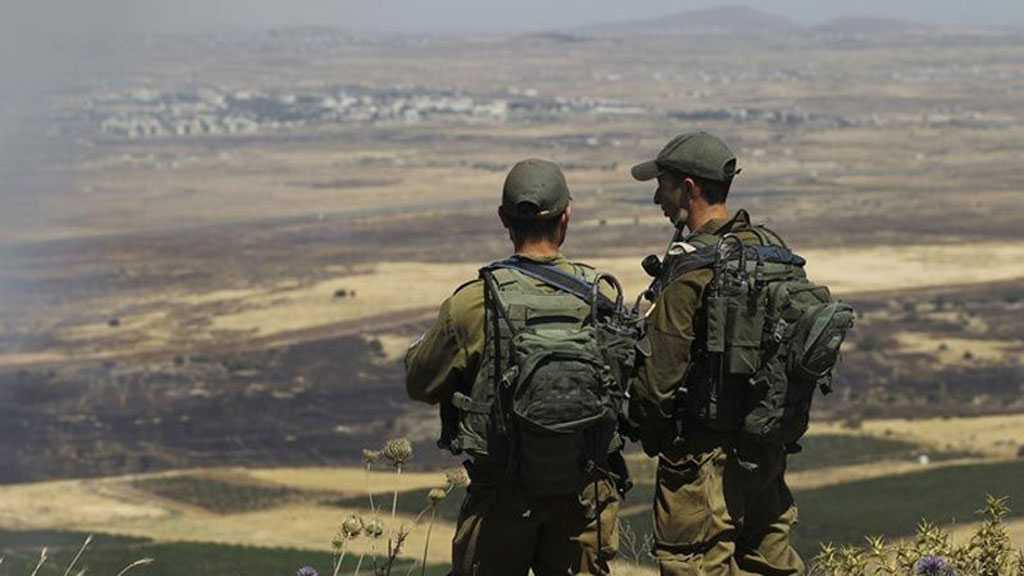
“Israel” is constantly obsessing about Hezbollah. The constant state high alert along Lebanon’s southern frontier governs and restricts the movements of the “Israeli” troops there. 

In a lengthy article, a military analyst at ‘Walla’ News website, Amir Bohbot, revealed the extent to which the “Israelis” fear any movement on the border that Tel Aviv thinks has a connection with Hezbollah.

According to Bohbot, a classified unit called the “Galanit Anemone Unit” was established a year and a half ago. It consists of officers and intelligence soldiers from the Galilee formation, soldiers from Unit 9900 of the Mock Intelligence and Unit 8200, which is the largest and most powerful intelligence-gathering unit in the Zionist entity. The unit was formed in order to focus on the confrontation with Hezbollah and what is happening on the northern front.

Below is the text of the article:

Soldiers of the Galanit Anemone team, located unknown individuals in civilian clothing moving suspiciously along the border. Combining the various intelligence capabilities from the 8200 and the 9990 units in the Intelligence Division, the Northern Command turned on the red light due to changes in the region.

The classified team in the Galilee formation operated under the command of an intelligence officer of the 91st Infantry Division, whose military career is well intertwined with the activities of Hezbollah over the past two decades, and explains some of the challenges facing the Galanit Anemone Unit.

Lieutenant Colonel T., 37, began his service as an intelligence NCO in 2003 in the Galilee. In 2005, he was in the area during an attempted kidnapping in the town of Ghajar on the border with Lebanon, when Hezbollah fighters tried to kidnap soldiers. A year later, in the summer of 2006, when he had become the head of the research brigade in the Intelligence Division “Aman” and was in the port in Kiriya, Tel Aviv, a terrifying report arrived about the activation of the “Hannibal Procedure”.

“There was an alert, and there were reinforcements on the ground. As soon as the alert level declined, Hezbollah surprised us and kidnapped Ehud Goldwasser and Eldad Regev,” the lieutenant colonel recalled.

The shortfalls in intelligence and the delivery of information to the forces on the ground are engraved in Lt. Col. T.’s head and accompany him in his daily operational activities. In 2014, he became the intelligence officer of the 769th Brigade under the command of Brigadier General Dan Goldbus, when the first explosive device was detonated against an “Israeli” army force.

At that time, an assessment began to form that Hezbollah had tunnels deep in the ground and in the rocks below the border. Eventually, Lt. Col. T. became the operations commander for locating and destroying the tunnels in Galilee. In 2018, he closed the circle and was appointed head of the Lebanese branch of the research division and played a significant role in the psychological warfare against Hezbollah operatives on the border seeking revenge for killing Hezbollah operatives in Syria, including the attempted attack on the Gladiola outpost in the Shebaa Farms [Mount Dov] in 2020.

About a year and a half ago, under strict conditions of secrecy, a classified team called “Kalanit Hagalil” was established under his command. The team combined soldiers and intelligence officers from the Galilee formation, with soldiers from the 9900 unit for visual intelligence and the 8200 unit, which is designated as the largest and most powerful intelligence-gathering unit in “Israel”.

“They all sit together around the same table and do multidisciplinary intelligence. Their first organized work was the exposure of the tunnels on the Lebanese border,” Lt. Col. T. explained, emphasizing that blending their expertise produces valuable and very significant intelligence for the Northern Command.

The idea was born in the sharp mind of Brigadier General Y., who was formerly the Galilee Squad Intelligence commander and now commander of Unit 8200. He is now nicknamed “Y. Hezbollah” due to his extensive knowledge of the organization’s secrets.

He was the one who initially put forward an assessment that wasn’t based on actual intelligence about Hezbollah digging tunnels. A commander of an area parallel to his in Unit 8200 and Lt. Col. T. cooperated. In the planning stages, an objective was set for the special team to gather information on routines in real-time and war requirements in the field of warning, pursue and track operatives, take over an area [control], produce information on enemy plans, produce targets, and monitor Hezbollah’s activities along the border. The idea was approved and supported by the current “Aman” chief, Major General Tamir Heiman.

“As soon as the 8200 commander arrives here, to the area, and tells his people ‘you are the most important’, this expresses everything. He conveys a message to everyone. Partnership yields successes that cannot be talked about,” Lt. Col. T. explained. “We collect information about residential areas, forests, and open areas. After an attempt to target an officer and a soldier on the border with sniper fire last August, we responded by attacking targets that we had produced. This intelligence is produced by the squad. Thwarting what is happening on the border is carried out in cooperation between the Galanit Anemone, the Shin Bet, and the police.”

Meanwhile, Hezbollah continues to wage nerve-wracking psychological warfare against the army and has been moving along the border for a decade. In some cases, it puts people at points near the border on the pretext that they are environmentalists, shepherds, or hikers.

But the leader of the Galanit Anemone refers to a new phenomenon: the Radwan Unit. Hezbollah’s elite fighters are moving along the border.

In this context, he says, “The soldiers of the Galanit Anemone not only detect Hezbollah members on the line of contact but also track them down and try to find their whereabouts. It’s months-long work. They move close to the border, observe, and gather intelligence about the ‘Israeli’ side. At first, they were unknown to us”.

According to estimates by Northern Command officers, the Radwan Unit is building operational capabilities for future warfare. Lt. Col. T. asserts that in addition to the firepower built by Hezbollah, which ranged between 130,000 and 150,000 missiles, the party gathers intelligence along the borders in order to carry out its threats and incursions and attacks inside settlements and outposts along the borderline.

“When Hezbollah sets up an anti-tank missile launcher cell in the border area, we must detect it before it launches the missile,” Lt. Col. T. added, “and after we exposed Hezbollah’s tunnels and destroyed them, it tries to find other routes to infiltrate into “Israel”.”

In the past year, the efforts to infiltrate into “Israeli” territory intensified, but Lt. Col. T. and the intelligence soldiers in the Galilee formation warn that the Radwan Unit and other Hezbollah operatives will one day be able to use these infiltration methods to carry out operations.

“Hezbollah is no longer the same terrorist organization that we knew before. It is an army in every sense of the word. It is an organization that learns, draws conclusions with capabilities that would not embarrass a regular Western army and despite its size, it operates under very high and strict secrecy,” said the Galilee intelligence officer.

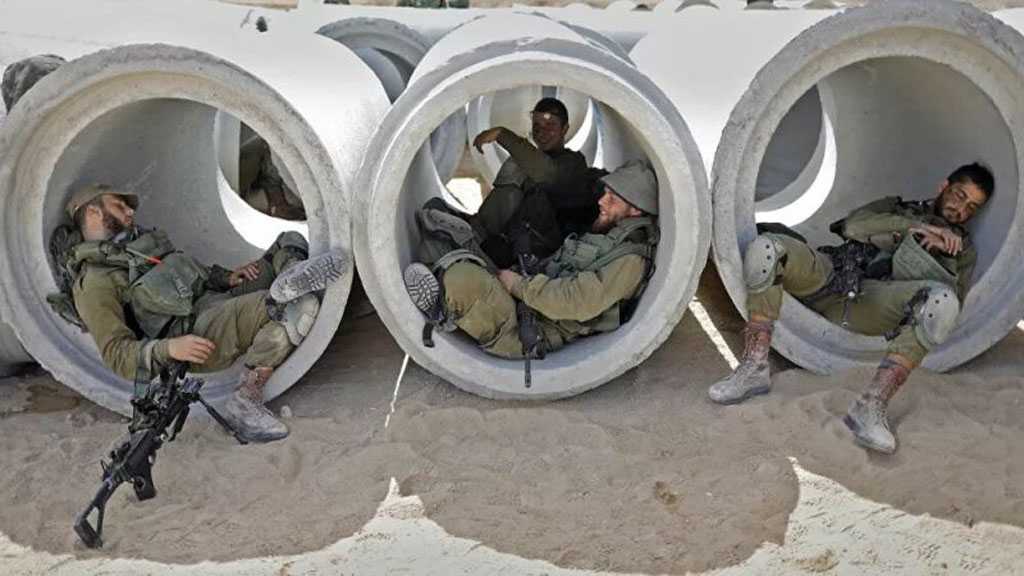
Soldiers and commanders of the Galanit Anemone sit in the operations room throughout the day and receive signal intelligence from Unit 8200 [phone calls and exchange of messages from the area], drone and satellite images, surveillance balloons, and other sensors, some of which belong to the 869th Field Intelligence Battalion.

Soldiers, religious and secular, including members of the Druze community who speak fluent Hebrew worked to expose the party’s movements in the region and thwart any suspicious trend during the period of tension in which Hezbollah sought revenge by killing soldiers.

“The Galanit Anemone operates in routine and emergency. In my head, I always have a picture of my childhood friend from Kiryat Shmona, Liran Saadia in the Egoz unit, who was killed in the Second Lebanon War, during a battle with a cell of saboteurs. He was hit and killed by an anti-tank missile in the town of Maroun al-Ras. We did not have information to prevent this. Our goal is to deliver intelligence information to the field.”

According to the division’s intelligence officer, they are monitoring broader activities and looking for a reference on the ground, such as a third-generation anti-tank missile unveiled by the Iranian security industry that may reach the region and pose a threat to the army and the settlements near the fence.


River to Sea Uprooted Palestinian   
The views expressed in this article are the sole responsibility of the author and do not necessarily reflect those of the Blog!

Saturday, 1 May 2021

Scores Of ‘Israelis’ Killed, Many Others Injured in Stampede in The Occupied Territories

Scores Of ‘Israelis’ Killed, Many Others Injured in Stampede in The Occupied Territories

30/04/2021

By Staff, Agencies

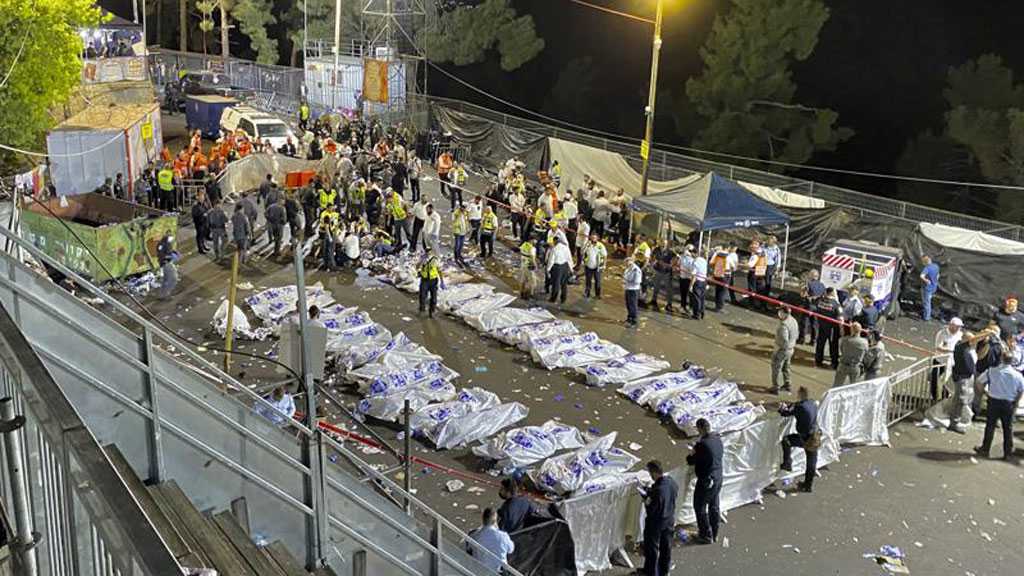
At least 45 ‘Israeli’ settlers were killed and scores of others injured, many critically, in a stampede during a Jewish bonfire festival held in the north of the ‘Israeli’-occupied Palestinian territories.

Tens of thousands were attending the annual Lag B’Omer Jewish festival at, what has been identified as, the tomb of Rabbi Shimon Bar Yochai, a religious figure, in a town named as ‘Meron’ in the occupied territories.

Initial reports citing Magen David Adom of the Zionist regime’s emergency services’ organization, suggested that 24 of those injured were in critical condition. Six helicopters were sent over to address the situation

Zionist Prime Minister Benjamin Netanyahu described the incident as a “heavy disaster.”

Later reports put the number of the injured at 400.

A Zionist police official said “dozens of participants in a concert had ‘slipped,’ falling on those below them in the stands and causing a crushing domino effect.” The incident took place at around 1 a.m. on Friday at a bonfire lighting ceremony.

Other reports said the crush was caused after “a section of stadium seating had collapsed at the event site,” and many were killed as a result of asphyxiation after it was set off.

Others were killed being trampled upon during the stampede.

The Zionist military said a roof had collapsed at the site of the incident.

Footage recorded before the crush showed the thousands-strong participants dancing, reveling, and jumping on stands at, what the newspaper identified as, a “makeshift arena.”

A makeshift hospital is reportedly being set up in the area to address the situation.

The event was held without any regard for standing health precautions against the spread of the new coronavirus, including respect for social distancing rules and prohibition of mass gatherings.

Pictures provided both during the celebration and in the immediate aftermath of the stampede, meanwhile, showed many attending the site without facemasks.


River to Sea Uprooted Palestinian   
The views expressed in this article are the sole responsibility of the author and do not necessarily reflect those of the Blog!

Sunday, 25 April 2021

Tanks Are No Match for Hezbollah’s Hybrid Warfare

 “Israeli” Tanks Are No Match for Hezbollah’s Hybrid Warfare

By Staff, The National Interest  

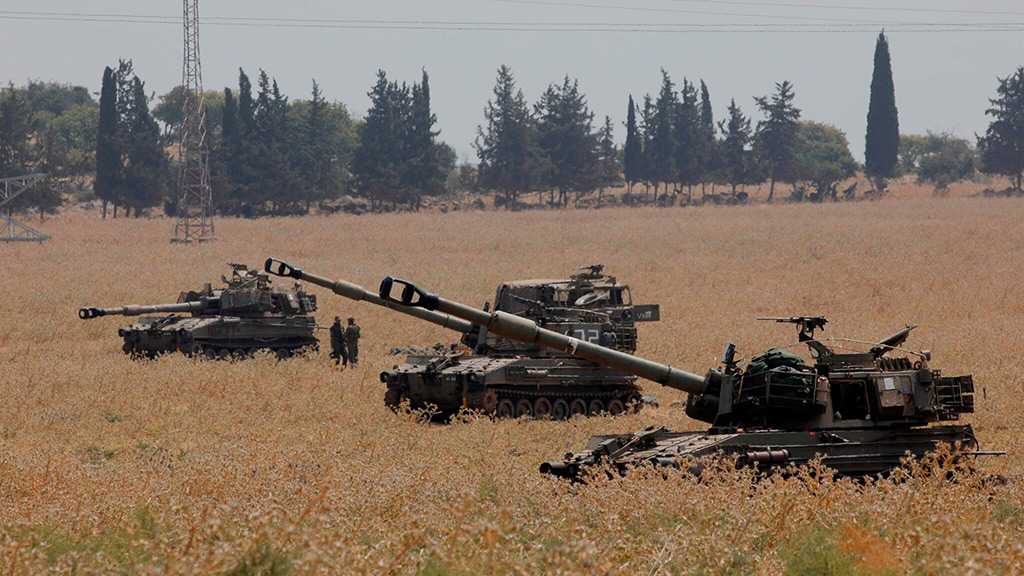
The exercises last month by the “Israeli” entity’s 188th Barak [“Lightning”] Armored Brigade on the occupied Golan Heights, illustrated the wide spectrum of threats the “Israel” Occupation Forces [IOF] must prepare for: the maneuvers included conventional mechanized operations, counter-guerrilla tactics against an irregular army like Hezbollah, and destroying tunnels.

The IOF would love nothing better than to fight an old-fashioned tank battle, at which it is famously proficient. But twenty-first-century warfare is more about guerrillas and tunnels, and these are the bane of high-tech, mechanized armies.

The “Israeli” Army has had to cope with Palestinian Resistance movement Hamas infiltration tunnels dug from Gaza into the southern “Israeli” entity. Last year, the “Israelis” discovered what they alleged were several Hezbollah tunnels between southern Lebanon and the northern parts of the “Israeli” entity, stoking fears of a surprise Hezbollah operations to seize al-Jaleel [Galilee].

The problem is that tanks can’t get inside a tunnel, but a Hezbollah fighter with an anti-tank missile can pop out of one and destroy a $5 million Merkava tank. Haunting the “Israeli” Armored Corps is the debacle of the 2006 “Israel”-Lebanon War, when Hezbollah used a sprawling network of tunnels in southern Lebanon to ambush and knock out numerous “Israeli” armored vehicles.

The “Israeli” armor commanders seemed grimly determined to avoid a repeat of 2006.  “We understood there was a need for change,” Lt. Col. Yoav Schneider, commander of the “Israeli” entity’s 82nd Tank Battalion said.

If tunnels were the only threat faced by “Israel”, that would be challenging enough. But the IOF also has to prepare for a conflict with Hezbollah, a formidable practitioner of “hybrid warfare” that combines the well-trained soldiers and advanced weapons of a conventional army with the flexibility and elusiveness of guerrillas. Battling Hezbollah could encompass everything from stopping a surprise Hezbollah attack to seize “Israeli” towns, to crossing into well-fortified southern Lebanon to destroy Hezbollah rocket operations.

An advance into Lebanon will not be the timid, clumsy offensive of 2006.

The threat of advanced anti-tank weapons, such as the deadly laser-guided Russian Kornet employed by Hezbollah in 2006, had led some critics to question whether tanks are still useful. Combat in the rough terrain that guerrillas will operate from, such as hills or the numerous villages that dot Lebanon and Syria, is challenging for armored vehicles.

And there yet still more challenges the IOF must train for. And the worst part is that the “Israelis” can never be sure which threat will emerge next. This array of threats would tax even a superpower, let alone a nation of fewer than nine million people.


River to Sea Uprooted Palestinian   
The views expressed in this article are the sole responsibility of the author and do not necessarily reflect those of the Blog!

Tuesday, 16 February 2021

Israeli Military Analyst: Hezbollah Elite Forces Deployed in Lebanon’s Border Towns to Invade Galilee and Occupy Settlements upon Command


February 13, 2021

The Israeli Military Analyst, Alon Ben David, considered that Hezbollah elite troops are deployed in the Lebanese border towns with the occupied Palestinian territories to invade Galilee and occupy a number of settlements for a number of days upon the command of the Resistance leadership, adding that period of calm which had prevailed in the area had ended.

Ben David pointed out that Hezbollah has been preparing to engage in short wars with the Israeli occupation army in case the latter responded to the inevitable military operation of the Resistance in retaliation for the Zionist crime of killing one of its fighters in an air raid on Syria in 2020.

In this regard, the Zionist analyst also indicated that the recent drills of the Israeli army on the northern border, Lightning Storm, simulate a military escalation that slides into an all-out war after Hezbollah supposedly snipes a Zionist soldier.

Meanwhile, Ben David also noted that the Israeli intelligence checks Hezbollah fighters are not present in the posts that the air force intends to strike in Syria in order to avoid any military confrontation with the Resistance Party.

Source: Al-Manar Eglish Website


River to Sea Uprooted Palestinian   
The views expressed in this article are the sole responsibility of the author and do not necessarily reflect those of the Blog!

Thursday, 31 December 2020

Political Jesus

 PEPE ESCOBAR • DECEMBER 23, 2020

Hieronymus Bosch, The Adoration of the Magi: detail featuring the splendid African Balthasar and, partially naked, at the entrance of the hut, the Anti-Christ.

Let’s hit the road in the search for the real Jesus.

Galilee, Year 27: baptized by an itinerant preacher, John the Baptist. That’s when the story really begins. We know virtually nothing of his life till then.

Galilee is ruled by shabby client kings of the Roman empire – first Herod, then his son Herod Antipas. Jesus only enters imperial jurisdiction later, when he moves to Judaea, a Roman province since Year 6.

Galilee is all about agricultural and fishing land, surrounded by way more sophisticated Greeks and Phoenicians. Jesus grows up in a context of simple peasant life; increasing taxes; population explosion; and then non-stop fragmentation of peasant land, causing the proverbial pressures on traditional family life.

Social oppression inevitably had to engender resistance – in the form of budding peasant unrest. Talk about quite fertile ground for the proliferation of charismatic spiritual leaders.

Yet who was Jesus The Man, really? A Jewish holy man? A prophet? A magician? A miracle man? A peasant leader? A revolutionary? Prefiguring Walt Withman, he did “contain multitudes”. He was indeed all things to all men.

What we seem to know for sure is that he had charisma in spades – and exuded natural authority.

The Synoptic Gospels point to problems with Mom and his brothers. Yet he never abandoned his followers – those twelve specials, all from very humble backgrounds, except Matthew (a tax collector).

He lived on the (dusty) road – full time, and that was not exactly comfortable. He was at ease with everyone – prostitutes included.

As a preacher, he was a master of P.R. He talked in parables – easily grasped by small agricultural communities. That’s where he felt really at home.

So Jesus was a rural, not urban, phenomenon. He specially appealed to those who were ill – mentally and physically. He built up a solid reputation as a healer: all those miracle cures – especially exorcisms. And the whole lot interpreted as a sign of holiness.

Jesus was a Palestinian Jew. His followers were overwhelmingly Jews – those peasants destabilized by heavy taxation of their lands and ingloriously clashing with the corruption of Herod’s political machine.

Jesus focused on the imminence of God’s kingdom. But what did he really mean? The Gospels don’t make it easier. Much of his preaching is inclusive. Yet sometimes he would refer to a “Last Judgment” in which the wicked will be punished and the good will be rewarded.

Essentially, he was a millenarian prophet. But as much as he was striving for moral renewal, he was delivering a social message – where the “kingdom” to come represented the Triumph of the Outcast. What that really mean, in practice, was possibly a renewal of family and village community life.

Whatever he was really up to, the Powers That Be feared Jesus. After all he was way too popular. And even if he did not advise armed resistance, Power could not but be very worried by a charismatic leader with miraculous attributes dazzling the crowds.

Jesus may have sensed he was a target. And that’s what may have provoked the move to Judaea – possibly in Year 30. And then to Jerusalem.

Jerusalem may have been the Holy Grail. The apex of his mission – as he finally sensed he was ready to confront the powers behind the Temple.

He made a Jerusalem entrance that was nothing short of epic, riding a donkey – as if fulfilling a prophecy (Zechariah) that “a king” would enter Jerusalem on a donkey. In Matthew, the crowds actually call him “Son of David”.

Jerusalem was buzzing with people getting together for Passover. And last but not least, Roman governor Pontius Pilate and his troops were also in town, freshly arrived from Caesarea – the Roman HQ in the province – and obsessed with maintaining order.

Enter Caiaphas, the high priest: a canny, vastly experienced political operator, who managed for years to get the support of the Jews while placating his Roman overlords.

Now imagine the scene – worthy of a Scorsese epic: an outsider, itinerant preacher from Galilee, arriving in the mean streets with his posse, all speaking in weird accents, with the crowds shouting he may be the Messiah.

And then, the ultimate set piece: he enters the Temple, by himself, and overthrows the tables of the moneylenders. What did he really want?

That’s Political Jesus 1 and 2.

1. To graphically stress the end of the old order – Temple included – and the coming of the “new kingdom”.

2. To express – politically – the growing popular revolt against the ruling elite.

And by a simple twist of fate, that’s when he sealed his destiny.

Blowback was instantaneous. The Jewish priests had to be placated. They feared Roman retaliation. And then Caiaphas saw his opening, telling them – according to the Gospel by John – “it is better for one man to die for the people”.

And that’s how Jesus the Outsider was used as only a pawn in their game to maintain order in Jerusalem.

He was now free to enter History as a larger than life Martyr, Savior, and Myth.


River to Sea Uprooted Palestinian   
The views expressed in this article are the sole responsibility of the author and do not necessarily reflect those of the Blog!

Sunday, 20 December 2020

Hezbollah’s Surface-to-surface Firepower Capability Greater Than That Of 95% Of World’s Militaries – JP

 Hezbollah’s Surface-to-surface Firepower Capability Greater Than That Of 95% Of World’s Militaries – JP

By Staff, The ‘Jerusalem’ Post

In yet another show of how the Zionist entity is focused on Hezbollah’s growing military might, the ‘Israeli’ daily, The ‘Jerusalem’ Post highlighted in one of its opinion pieces the resistance group’s updated capabilities, considering it is now greater than that of 95% of the world’s militaries.

The Post considered that Hezbollah makes no effort to hide its intention to kill and maim ‘Israeli’ settlers. “One way it plans to do this is through cross-border ground raids in the next war with ‘Israel.’ Hezbollah has repeatedly declared its intention of sending its elite Radwan Force death squads into the Galilee region, with the mission of attacking ‘civilians.’”

The article’s author, Eli Bar-On, added that Hezbollah’s intentions regarding its massive projectile arsenal are no different. He claimed that the resistance group’s arsenal has grown to 170,000 rockets and missiles since the July 2006 aggression, according to some estimates.

“It includes unguided short-range projectiles, long-range rockets, and missiles with ranges of more than 300 km., as well as hundreds of attack drones,” the former Eli Bar-On instructor at the ‘Israeli’ military college went on to say.

He then cited Hezbollah Secretary General His Eminence Sayyed Hassan Nasrallah’s repeated warnings to use the long-range missiles to strike the Zionist entity’s nuclear power reactor in Dimona.

The author claimed that Hezbollah is also engaged in an effort to build precision-guided munitions [PGMs], which he referred to as a top-priority conventional threat to ‘Israel.’

Meanwhile, Zionist military experts suggest that Hezbollah has succeeded in its efforts, at least to some extent, and Hezbollah is now in possession of a few dozen precision-guided missiles. Such a capability will allow Hezbollah to conduct pinpoint strikes in any future conflict with the Zionist entity and target its top strategic assets.

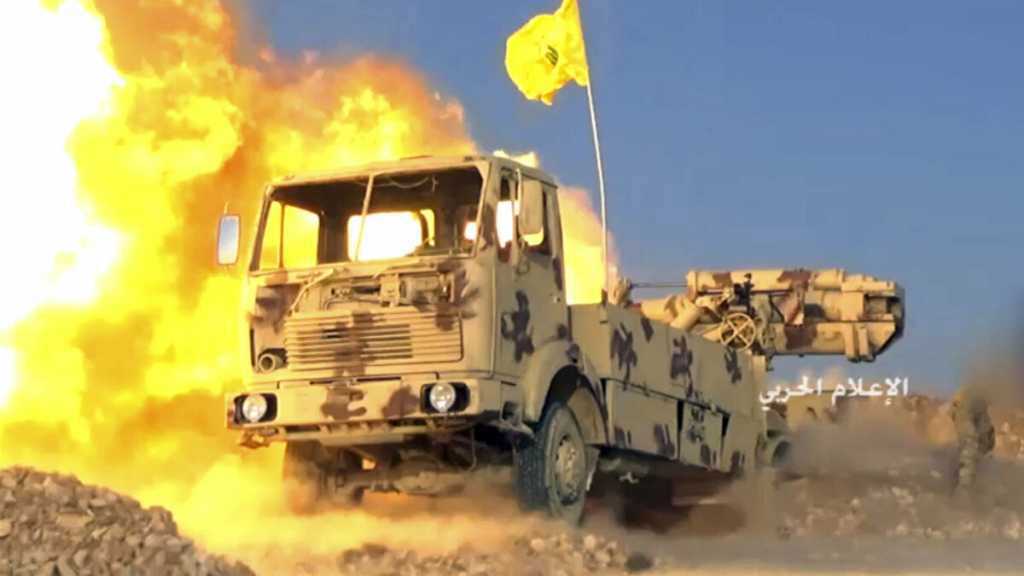
Hezbollah can fire up to 4,000 projectiles a day, compared to a total of fewer than 4,000 rockets fired throughout the entirety of the 34-day conflict in 2006, according to the daily. “Its surface-to-surface firepower capability is greater than that of 95% of the world’s militaries.”

According to Bar-On, Sayyed Nasrallah in 2016 “declared that he has his own version of an “atomic bomb,” in the form of a missile strike on Haifa’s ammonium storage site” – which has since been emptied – that would result in the deaths of tens of thousands of Zionist settlers.

Consequently, in any future war, the Zionist military, he said, will have no choice but to operate deep in Lebanon – both through airstrikes and a ground campaign – to neutralize Hezbollah’s capabilities.


River to Sea Uprooted Palestinian   
The views expressed in this article are the sole responsibility of the author and do not necessarily reflect those of the Blog!

‘Thinking Machiavelli, Acting Mussolini’

By Alastair Crooke
Source: Strategic Culture

Earlier this month, the Lebanese al-Manar TV aired footage of Israeli bases in Upper Galilee, which were filmed by a Hizbullah drone. An Israeli base in Brannite and a command centre in Rowaysat al-Alam in northern Israel can be seen in the footage. According to Southfront, whose military expertise is highly regarded, Hizbullah now operates a variety of drones, some with combat capabilities. Reports suggest that Hizbullah has established a formidable stealth drone and smart cruise missile force (with support from Iran). The Russia-linked, military site, Southfront, concludes that today, the movement is better trained and equipped than many armies around the world.

Israel is convinced that, for the first time, that the ‘next war’ will not be limited to Lebanese territory; that its own borders will be violated; and that offensive combat forces will enter settlements and homes and clash with Israeli troops.

This is giant ‘chess’ – where a combination of armed drones, suicide drones and ‘smart’ missiles likely will predominate (rather than tanks, as in the 2006 war). In its evolving thesis of a new war with Hizbullah, Israel believes that all its airfields will be bombed with precision missiles. (And is therefore trying to get from the U.S., a few squadrons of the new generation F-35B jets that do not need long runways, so as to try to secure its air superiority in the face of a possible swarm drone or missile attack on its air defences).

This represents just one component to Iran’s transmutation of any Israeli or American ‘military’ option against Iran into a suicide ‘Red Pill’ for whomsoever might launch it. Quietly, while all the world was focussed on the ‘Big One’ (putative nuclear weapons), over the last four years, Iran has built a conventional ‘swarm’ and ‘smart’ (and virtually undetectable by radar) ‘ant’s hive’ of ‘micro’ weapons circling across the region – from Gaza, Lebanon, Syria, and Iraq to Yemen.

Although it is still to sink-in to European and American thinking (obsessed with the possibly now passé framework of the ‘Big One’ – the JCPOA), Iran quietly has inverted the calculus. It possesses the leverage now. And it has other trade options (through looking East) opening to it. Israel and its Gulf State ‘allies’, by contrast are on the defensive.

So what is next? An Iranian law has come into force setting a 60-day deadline for the U.S. to lift sanctions. If the U.S. doesn’t do so, the law states that Iran must raise uranium enrichment levels to 20% and limit UN inspectors’ access to its nuclear sites. The bottom line for Israel is that this new paradigm demands swift, confidential talks with America.

Some in Israel clearly ‘get it’: In one of the split-screen realities, it is all about nukes (on which U.S. politics is focused), but featuring on another screen is Iran’s Red Pill deterrence against the U.S. putting the military option back on the table.

However, as Professor Michael Brenner has observed, “foreign policy has got short shrift over the last two years” in the U.S. (Iran and the JCPOA being the one exception): “Even on that [latter] issue, there is scant dissent from the twin propositions that Iran is a hostile state that threatens our vital interests and that the Islamic state’s disappearance would remove a serious anathema. So pervasive is this consensus that the foreign affairs community has developed something that approximates herd immunity to critical thinking. Political élites, think tankers, and consultancy gurus all sing in chorus from the same hymnal. Such differences as exist are barely noticeable variations on the fundamentally same threat assessments or on tactics for countering those alleged threats. Strategy is nowhere to be seen”.

Today, we are all too highly susceptible, to “techno-chauvinist” perspectives. Because we are incessantly told technology – whether military, or via algorithmic control – is the irresistible driver of change. Consequently, we now simply cannot imagine a future in which the solution to our problems is not more and more technology (or more and better weapons). Clearly, step-evolutions in weaponry can become a strategic game-changer (it just has); yet the best lesson history can offer is that the future is determined by cultural and social dynamics, as much as it is shaped by technology alone

And just as America experiences its cultural Blue versus Red ‘war’, so the Middle East has its’ own cultural wars, which are being exacerbated and made more intractable by that Washington ‘tin ear’ to critical thought, and which insists to define the world around it as a Manichean struggle between the forces of light and of darkness; of freedom versus despotism; of justice versus oppression and cruelty.

Washington truly stares at its own image in the mirror, and throws this wide shawl across the rest of the world. Its’ own Presidential election is no longer purely political, but it too now is configured more as a ‘crusade’ against cosmic evil – a devil, or demiurge (Trump). The salience of this for the Middle East is that, what America defines as ‘evil and malign’, may be no more other societies’ cultural wars (little different to America’s own), playing out.

Here is the point: technology – whether military or financial – is often not the determinant. The Iranian nation has been placed under huge stresses, yet it has found the inner resources to build a solution (its smart weapon deterrence). It has demonstrated societal and cultural energy. This matters.

Jacques Barzun, the philosopher of history, asks the question: “What makes a nation?” He answers his own question. “A large part of the answer to that question is: common historical memories. When the nation’s history is poorly taught in schools; ignored by the young, and proudly rejected by qualified elders, awareness of tradition consists only in wanting to destroy it”.

The December issue of The Atlantic magazine has an interview with Professor Peter Turchin, who is actually a zoologist. He spent his early career analyzing population dynamics. Why does a particular species of beetle inhabit a certain forest, or why does it disappear from that same forest? He developed some general principles for such things, and wondered if they apply to humans, too.

One recurring pattern, Turchin noticed is something he calls ‘élite overproduction’. This happens when a society’s ruling class grows faster than the number of rulers it needs. (For Turchin, “élite” seems to mean not just political leaders, but all those managing companies, universities, and other large social institutions, as well as those at the top of the economic food chain.) As The Atlantic describes it:

“One way for a ruling class to grow is biologically—think of Saudi Arabia, where princes and princesses are born faster than royal roles can be created for them. In the United States, élites overproduce themselves through economic and educational upward mobility: More and more people get rich, and more and more get educated. Neither of these sounds bad on its own. Don’t we want everyone to be rich and educated? The problems begin when money and Harvard degrees become like royal titles in Saudi Arabia. If lots of people have them, but only some have real power, the ones who don’t have power eventually turn on the ones who do …”.

The final trigger of impending collapse, Turchin says, tends to be state insolvency. At some point rising insecurity becomes expensive. The élites have to pacify unhappy citizens with handouts and freebies—and when these run out, they have to police dissent and oppress people. Eventually the state exhausts all short-term solutions, and what was heretofore a coherent civilization disintegrates.

Turchin’s article was intended – and did – resonate as a description of the U.S. in its current state. Yet it describes much of the Middle East to a ‘T’ – particularly in the context of weak oil prices. The region is an economic disaster. And no, Turchin’s observations apply not just to the region’s autocrats, but in certain important respects – i.e. in social poverty and inequality – they apply to Israel, as much as to anyone else.

Cultural ‘war’ is as much about whether a civilisational ‘life’ is ebbing, or is both vital and fertile.

In the wake of the Iranian Revolution; 9/11, and the ‘Arab Spring’, Robert Worth notes in a long essay in the NYT Magazine, key Gulf leaders such as Mohammad bin Zayed (MbZ), shifted from an initial openness to political Islam, to a recognition that the path of the Muslim Brotherhood, and that of his own path to feudal power, simply “were incompatible”.

MbZ incrementally turned implacably hostile to the MB, to Iran, and was wary, even, of the Wahhabi establishment in Saudi Arabia. By 2013, MbZ was deeply worried about the future. The Arab Spring uprisings had toppled several autocrats, and political Islamists were rising to fill the vacuum. Worth expands:

“It was a recipe for apocalyptic violence; and regional powers were doing little to stop it. Turkey was vehemently cheering its own favoured Islamists on and backing some of them with weapons. So was Qatar, the U.A.E.’s oil-rich neighbour in the Persian Gulf. The Saudis were ambivalent, hampered by an elderly and ailing monarch.”

“He would soon enlist as an ally Mohammed bin Salman, the young Saudi crown prince known as MbS, who in many ways is MbZ’s protégé. Together, they helped the Egyptian military depose that country’s elected Islamist president in 2013. In Libya in 2015, MbZ stepped into the civil war, defying a United Nations embargo and American diplomats. He fought the Shabab militia in Somalia, leveraging his country’s commercial ports to become a power broker in the Horn of Africa. He joined the Saudi war in Yemen to battle the Iran-backed Houthi militia. In 2017, he broke an old tradition by orchestrating an aggressive embargo against his Persian Gulf neighbour Qatar. All of this was aimed at thwarting what he saw as a looming Islamist menace.”

Of course, all this, and the Sandhurst-trained monarch’s model ‘Spartan’ army, made him a star in Washington (although he subsequently fell-out with Obama, over the latter’s support for Morsi – and later, over Obama’s JCPOA, which MbZ opposed).

What then was the Gulf and Sunni riposte to this impending cultural war catastrophe? MbZ actualised an ambitious dream: that of “building a state that would show up the entire Islamist movement by succeeding where it had failed. Instead of an illiberal democracy — like Turkey’s — he would build its opposite, a socially liberal autocracy, much as Lee Kuan Yew did in Singapore in the 1960s and 1970s.” The future was a binary choice: repression or catastrophe. He chose repression: “It is ‘culture war’” he said.

This was a coherent, if tiny, civilisation disintegrating. A Gulf cultural tradition was being eviscerated in order to shield it against the Islamist and Iranian ‘virus’’. Even Worth, who visited the region often, described the inhabitants as ‘rootless individuals’, wandering the caverns beneath the hyper-capitalist, glass towers. Energy fades, civilisation gently dies.

But for the Israeli commentator, Zvi Barel, MbZ’s normalisation with Israel is simply the inevitable continuation – a further weave into the fabric of MbZ’s worldview: “His hatred for the Muslim Brotherhood equals only to his fear of Iran, in which he sees a clear and immediate threat to the Emirates in particular – and to Sunni Islam in general”.

In the Middle East, the Shi’a – widely – are enjoying a renaissance, just at the moment when the Sunni ‘old’ establishment is convulsed with fear at being overwhelmed by the region’s Shi’a. Cultural virility can trump repression, as Iran is showing. And the correct response to a cultural resurgence is almost never a ‘military option’. Iran’s readiness to face-off over the JCPOA makes a western course-correction urgent. Will that happen? In Washington, almost certainly not: We shall just have to shuffle unsteadily and nervously along the cliff edge of Israeli and U.S. demands for ‘forever-containment’ – awaiting events.

River to Sea Uprooted Palestinian   
The views expressed in this article are the sole responsibility of the author and do not necessarily reflect those of the Blog!

Tuesday, 8 September 2020

Despite High Alert, Weapons Theft at A Large ‘Israeli’ Base Near the Border with Lebanon

Despite High Alert, Weapons Theft at A Large ‘Israeli’ Base Near the Border with Lebanon

By Staff, Agencies

Despite the ‘Israeli’ entity’s high alert as it is expecting a possible retaliation from Hezbollah for the assassination of one of its fighter in Syria, ‘Israeli’ media announced that unidentified persons entered the 769th Central Brigade in Galilee, northern occupied Palestine, near the border with Lebanon, and seized many weapons after entering the armory.

Among the missing 23 rifles were throwing grenades, and 15 M-16 rifles.

A gap was found in the wall surrounding the base. Meanwhile, the Zionist military is examining all investigative bodies, including the possibility of helping those it described as “thieves” from inside the base.

It is noteworthy that the 769th Brigade is the regional brigade in the Galilee formation. It is responsible for the ongoing security in the eastern sector of the border between the occupied Palestinian territories and Lebanon.

The Zionist military is currently investigating the circumstances of the incident.


River to Sea Uprooted Palestinian   
The views expressed in this article are the sole responsibility of the author and do not necessarily reflect those of the Blog!

Tuesday, 1 September 2020

“Israelis” Await Hezbollah’s Response in the North

“Israelis” Await Hezbollah’s Response in the North

Translated by Staff

Tal Lev-Ram, a correspondent for “Israel’s” Maariv newspaper, is forecasting a tense and heated phase for the “Israeli” military along the norther frontier in the near future. The outlook comes despite the “relative calm” on the ground and civilian life carrying on as normal.

The reporter examined recent statements by Hezbollah Secretary General Sayyed Hassan Nasrallah regarding the open account with the enemy – the party will continue to collect from the “Israeli” army. He said that this did not surprise the “Israeli” security establishment.

Lev-Ram pointed out that the assessment confirms that Sayyed Nasrallah’s objective is a limited operation aimed at killing an “Israeli” soldier in response to the killing of a Hezbollah member in an attack attributed to “Israel” in Syria about a month ago.

He added that there are those in the occupation army who don’t believe that the high level of tension that may last for a long time warrants imposing restrictions on civilian routines in the north, whether on the settlers living in the region or on visitors to the occupied Galilee and Golan.

According to the reporter, the assessment of the occupation army “indicates that Hezbollah will continue its attempts to carry out an operation along the border, as it tried the last two times using precise tools and snipers so that the operation does not get out of control.” 

“Nevertheless, the army takes into account the possibility of an anti-armor missile being launched by Hezbollah at its forces, and that is why its officials on the ground strictly prevent and limit entry to threatened areas in Lebanon and avoid committing tactical mistakes in the area where Hezbollah continues to search for a target.”

In light of the tense situation in the region and Hezbollah’s assertion that it will continue attempting to carry out an operation against “Israeli” forces, the state of high alert may  spill over into the Jewish holiday season, which starts on September 18 and continues until the end of the month and includes the Jewish New Year and the Day of Atonement.

Related Articles


River to Sea Uprooted Palestinian   
The views expressed in this article are the sole responsibility of the author and do not necessarily reflect those of the Blog!

Tuesday, 28 July 2020

السؤال المقلق: ردّ المقاومة سيكون متناسباً أو غير متناسب… وأين؟


المشهد الإقليمي بالغ التأزم بدلالة هذه المعطيات:
»إسرائيل» قصفت بصواريخها موقعاً عسكرياً قرب دمشق ذهب ضحيته شهيدٌ لحزب الله.
سبق لقائد المقاومة السيد حسن نصرالله أن أعلن قبل أشهر تصميم المقاومة على الردّ في حال خرقت «إسرائيل» قواعد الاشتباك وتسبّبت في استشهاد مجاهدين لحزب الله سواء في لبنان أو سورية أو أيّ مكان آخر.
نصرالله أكّد انّ الردّ «لن يكون بالضرورة في مزارع شبعا المحتلة إنما في لبنان».
تجدّد الجدل بعد العدوان الإسرائيلي الأخير حول عبارة «الردّ سيكون في لبنان». بعض الخبراء العسكريين قال إنه سيكون حصراً داخل الأراضي اللبنانية. بعضهم الآخر استبعد ذلك وشدّد على أنه سيكون من لبنان وفي أي مكان تحتله «إسرائيل» في لبنان او سورية او فلسطين.
أعقب العدوان تحرّش مقاتلات أميركية بطائرة ركاب مدنية إيرانية فوق منطقة التنف السورية المحتلة فاضطرت الى الهبوط سريعاً إلى مستوى أدنى ما ألحق أضراراً بدنية بركابها قبل هبوطها بأمان في مطار بيروت الدولي.
إيران استهجنت التحرّش العدواني الأميركي وتوعّدت بالرد في المكان والزمان المناسبين، كما صدر عن قيادة محور المقاومة تهديد بالردّ على أيّ اعتداء يستهدف أحد أطرافه.
توقعت القيادة السياسية والعسكرية الإسرائيلية وتحسّبت لردٍّ أكيد من حزب الله فنشرت قوات برية إضافية على طول الحدود مع لبنان، وأخلت دونما ضجة بعض المستوطنات الحدودية، وقلّصت المجال الجوي في شمال الكيان الى 6 كيلومترات بدعوى تسهيل كشف التهديدات المرتقبة ضدّها من لبنان.
رئيس الحكومة نتنياهو أمر وزراءه بعدم التعليق على مسألة العدوان وكيف يمكن أن يكون شكل الردّ من حزب الله وذلك منعاً لأي إحراج لأطراف الصراع!
الولايات المتحدة حركت حاملة طائراتها ايزنهاور مع 12 مدمّرة الى المياه اليونانية بدعوى إجراء تدريبات مع القوات الجوية اليونانية بعدما ألغت مناورة «النجم الساطع» المقرّرة مع البحرية المصرية. كما حركت حاملة الطائرات نيميتز الى شرق المتوسط، بحسب ما سرّبته «إسرائيل».
رئيس هيئة أركان الجيوش الأميركية الجنرال مارك ميلي سارع الى «إسرائيل» للاجتماع الى نتنياهو وقادته العسكريين في قاعدة نفاتيم الجوية لتدارس «خطر إيران والوضع المتأزم في الإقليم».
في ضوء هذا الوضع المتأزم ينهض سؤال متعدّد الأبعاد ومقلق لجميع أطراف الصراع في غرب آسيا: أين سيكون ردّ حزب الله؟ وهل سيكون ردّه متناسباً مع حجم الاعتداء الإسرائيلي الأخير قرب دمشق أم غير متناسب بالضرورة؟ وهل يمكن أن يعقب ردّ حزب الله ردٌّ إسرائيلي بدعم أميركي قد يتطوّر الى حرب واسعة؟ وفي حالةٍ كهذه، ماذا يمكن أن تكون التداعيات؟
الجواب عن هذا السؤال المتعدد الأبعاد ولّد بدوره اجتهادات وأسئلة متعددة من خبراء عسكريين ومراقبين عديدين متابعين.
في موضوع المكان المستهدف بالردّ رأى بعضُ الخبراء والمراقبين انه سيكون في منطقة الجليل المحتلة حيث لـ «إسرائيل» مستوطنات عدة وقواعد عسكرية ومرافق اقتصادية يسهل على المقاومة استهدافها من لبنان مع التحوّط لردة فعل العدو. البعض الآخر لم يستبعد أن يكون منطلق ردّ المقاومة من سورية حيث لحزب الله وجود وقدرات، وان يكون الموقع المستهدف في الجولان السوري المحتلّ حيث للعدو مستوطنات ومرافق مهمة أيضاً. ويتساءل هؤلاء: لماذا لا يكون ردّ المقاومة من سورية وفي سورية (المحتلة) ما دام العدو قد هاجم موقعاً في سورية يحتضن مجاهدين لحزب الله؟
في موضوع هل سيكون ردّ المقاومة متناسباً أو غير متناسب مع حجم الاعتداء الإسرائيلي الأخير قرب دمشق، انقسم الخبراء والمراقبون بين فريقٍ رجّح ان يكون الردّ متناسباً لحرص حزب الله على إلزام «إسرائيل» احترام قواعد الاشتباك، وفريق يدعو الى ان يكون غير متناسب، وحجته انه آن الأوان، إزاء تكرار الاعتداءات الإسرائيلية من جهة، وضرورة التحذير من مغبة التمادي في هذه السلوكية العدوانية من جهة أخرى، لتسديد ضربة غير متناسبة للعدو لحمله على الاتعاظ والانكفاء.
في موضوع هل يمكن أن يعقب ردّ حزب الله غير المتناسب على «إسرائيل» ردٌ من العدو مدعوم أميركياً قد يتطوّر الى حرب واسعة، يرجّح بعض الخبراء والمراقبين ان يبقى الردّ الإسرائيلي متناسباً وإن على قدْرٍ من الشدْة وذلك لانشغال «إسرائيل»، حكومةً وجمهوراً، بأزمات وتحدّيات كثيرة ليس أقلها استشراء جائحة كورونا، وازدياد إغلاق القطاعات الاقتصاديّة، وتزايد نسبة البطالة الى معدلات غير مسبوقة، واتساع رقعة التظاهرات ضد حكومة نتنياهو بسبب تفاقم الضائقة المعيشية. البعض الآخر لا يستبعد البتّة أن يتطور الردّ الإسرائيلي، عمداً او نتيجةً لتفاعلات غير منظورة، الى حرب واسعة يبتغيها كلٌ من نتنياهو وترامب بفعل الشبق المستبّد بهما للبقاء في السلطة، ولظنّهما أن حرباً واسعة ستؤدي في نهاية المطاف الى تدمير إيران، وبالتالي تغيير وجهة استطلاعات الرأي في أميركا المائلة حاليّاً لمصلحة جو بايدن، وتفادي إدانة نتنياهو بالرشوة وخيانة الأمانة في المحاكم الإسرائيلية.
هذا الفريق من الخبراء والمراقبين يلتقي مع فريق من أهل الرأي يعتقد أن ردّ المقاومة على العدو لا يجب أن يكون غير متناسب فحسب، بل يقتضي اغتنام الفرصة ايضاً اذا ما ركب العدو الصهيوأميركي رأسه ووسّع رقعة الحرب للردّ عليه بقسوة على مستوى الإقليم برمته وبجبهة موحّدة تضمّ جميع أطراف محور المقاومة وتستهدفه بحربٍ متعددة الجبهات والمواقع والأبعاد بغية إلحاق تدميرٍ كارثي بالكيان الصهيوني لا يقوى بعدها على النهوض.
هذا الخيار (أو وجهة النظر) يجد مسّوغاته الوازنة لدى الداعين اليه عند استشراف تداعيات الحرب الواسعة التي يمكن أن تقع. ذلك أنهم يعتقدون أن الدمار الذي سيلحق بـ «إسرائيل»، سكاناً وعمراناً وصناعةً ومرافقَ ومستوطنات ومواصلات وموانئ سيكون كارثياً وبحجمٍ يفوق بأضعاف ما سيلحق بلبنان وسورية وإيران وقطاع غزة والضفة الغربية من أضرار لدرجة قد يحمل قادة العدو على تفاديه بالإحجام عن اعتماد خيار توسيع رقعة الحرب.
متى تدقّ ساعة القرار؟ الكلّ في حال انتظار.
وزير سابق

River to Sea Uprooted Palestinian   
The views expressed in this article are the sole responsibility of the author and do not necessarily reflect those of the Blog!