Uprooted Palestinians are at the heart of the conflict in the M.E Palestinians uprooted by force of arms. Yet faced immense difficulties have survived, kept alive their history and culture, passed keys of family homes in occupied Palestine from one generation to the next.
This is a translation of Ramzan Kadyrov’s reaction on this telegram channel to this clip of Biden’s lecturing in his speech to the General Assembly of the UN.Video Player
The leader of the most problematic, aggressive country in the world, embittered by all Muslim states and plowing the Arab world with aerial bombs, Biden, who shamefully returned troops from Afghanistan, all of a sudden began to mention the Chechen Republic. We have not yet recovered from a number of his absurd statements and actions as President of the United States, and he is already making us happy with his new strange and contentious statements. Biden made such an absurd statement, in response to which I can only invite him to our republic so that he can see with his own eyes that there are no roosters in the Chechen Republic, and there is not even such a word. Instead of that, we have chicken husbands
Georgia is gaining additional importance in Washington’s calculations, and soon President Biden, because it challenges Russia’s nine autonomous republics — most of whose population is Muslim — including Chechnya, Ingushetia and Dagestan.
Since joining NATO in the early 1950s, Ankara has played a key role in opposing the Western camp, led by America, to the Soviet Union, which was then adjacent to Turkey through Georgia and Armenia in the south. Through dozens of Atlantic and U.S. bases in its territory (12 of which remain), Turkey was also an advanced outpost to defend Western interests and prevent the Communist Soviet Union from expanding south toward the Arab and Muslim world.
The fall of the Soviet Union after the Afghan war and the resulting birth of The Islamic Republics of Turkish origin gave Ankara more power in regional and international calculations, especially after the late President Turgut Ozal’s talks on “the unity of the Turkish nation, from the Adriatic Sea (Bosnia, Kosovo and Macedonia) to the China Dam, through Bulgaria and Greece, where Muslim minorities of Turkish origin are.
Ozal’s words were welcomed and encouraged by Washington, the traditional enemy of the Soviet Union, and then Russia, which the West wanted to surround from its southern flank, where the Islamic republics, and from the West, where the countries that nato embraced in 2004, namely Estonia, Latvia and Lithuania, and southern Bulgaria and Romania, which overlook the Black Sea, which Turkey controls, control its only Bosphorus Strait.
This came at a time when Ukraine and Georgia paid dearly for their adventures during their velvet revolutions in which Western institutions played a major role, with Abkhazia and South Ossetia declaring independence with the support of Moscow, and separated from Georgia, while the civil war in Ukraine was a reason for the partition of the country, after the citizens of the eastern regions voted for secession, prompting Russia to “annex” Crimea in 2014.
As was the case in the 1950s and beyond, Ankara has played, and continues to play, some role in all of these developments that President Erdogan wanted to help him to support his projects and plans, which appear to have been influenced by Ozal’s slogans, and Ankara has had, and continues to be, directly and indirectly linked to the developments of its neighbor Georgia, whose tens of thousands of its citizens work in Turkey.
Georgia is gaining additional importance in washington’s calculations, and soon President Biden, because it challenges russia’s nine self-governing republics — mostof whose population is Muslim — including Chechnya, Ingushetia and Dagestan.
Thousands of citizens of these and other Central Asian republics have joined Al-Nusra and ISIS, while Washington wants to help it in the future in its plans to tighten the blockade on Russia, and the factions of “Afghan jihadists” helped America achieve its first goal, which is to overthrow and tear the Soviet Union, according to the green belt theory, it became clear that Washington is planning to return to this belt, and wants Turkey to play a key role in activating it, but after agreeing with Erdogan on a comprehensive deal to achieve both sides the biggest direct and indirect gains, which Presidents Biden and Erdogan are preparing on the eve of the phone call between the two parties, which seem to have been delayed by the many topics that will be in front of them, difficult and intertwined, and they need each other.
In exchange for the financial and political support of Erdogan, which seems to be in dire need, President Biden wants Turkey to go back to the 1950s and prove its absolute loyalty to Washington and NATO, which is clearly preparing for a new phase of psychological, economic and political war against Russia, this time through its back gardens to the south and west, which means that it needs to support President Erdogan because of his ties and role in the Central Asian Islamic Republics (Kazakhstan, Turkmenistan, Kyrgyzstan and Uzbekistan), as in the Caucasus, where Azerbaijan is linked to Azerbaijan. Georgia has privileged relations, and Washington seeks to annex it to NATO, along with Ukraine.
The events in Armenia at this time are of added importance, having become a direct arena for U.S. and French intervention against the traditional Russian role. Ankara is watching all these interventions closely, firstly because Armenia is a neighboring country, and secondly because of information about the possibility that President Biden will recognize the Armenian genocide of the Ottoman era during World War I, without neglecting Washington’s privileged relationship between Ankara and Kiev, and at the expense of The Russian plans in Ukraine, Erdogan has repeatedly rejected Putin’s decision to “annex” Crimea to Russia, while information speaks of very broad cooperation between Turkey and Ukraine in all fields, especially military industries, including drones, tanks and missiles, with significant Turkish support for the Muslim minority in Crimea.
Ankara has also succeeded in establishing privileged relations with most of the former Soviet Republics and Eastern European countries that have bad memories with Moscow, which President Biden may need in his future calculations to tighten the blockade on Russia within its borders or elsewhere, particularly Latin America, where Erdogan has succeeded in establishing privileged relations with its most prominent head of state, Nicolas Maduro, despite all the personal, ideological and political contradictions between them.
President Biden may need Turkish support for his plans and projects in the Middle East, particularly in Syria, which has turned into a front alcove to defend Russian interests in the region, and across it in many regional and international arenas in which Washington, some Western capitals, and sometimes Ankara, are competing, despite the contradiction of interests among all of these capitals.
In all cases, it seems clear that we will not wait long to see what Biden will ask of Erdogan, and how the latter will respond to these demands, the most important of which is undoubtedly a return to Turkey’s nationalist, religious and historical behavior against Russia. For the past five years, after Erdogan’s apology following the downing of the Russian plane, President Putin has sought to block this possibility through a combination of interlocking economic, political and military relations with Ankara and its implications for coordination, cooperation and joint action in Syria.
With the information that president Biden expects to clear all his accounts with Ankara, whether negative or positive, President Erdogan finds himself in a situation that is never enviable, having become clear that his options are limited, either continue the current situation in the relationship with Moscow and Washington, which Biden will not accept, or continue his cooperation with Russia and its allies, which is completely impossible.
In this case, in his very difficult situation internally, he has no choice but to agree with President Biden on the axes of the next phase, and to minimize the losses in his relations with Russia that he does not want to repeat, as Biden, who knows he has a lot of serious papers against him personally and officially, wishes.
The most important question remains: Will Biden put these papers on the table and ask for them to be resolved, or will he ask Erdogan to use his own papers in Russia’s backyards, in exchange for absolute support in the gardens of others!?
تكتسب جورجيا أهمية إضافية في حسابات واشنطن، وقريباً الرئيس بايدن، لأنها تحدّ جمهوريات الحكم الذاتي الروسية – معظم سكّانها مسلمون – وعددها تسعة، ومنها الشيشان وأنغوشيا وداغستان.
حسابات بايدن مع روسيا.. ماذا سيفعل إردوغان؟
أدَّت أنقرة منذ انضمامها إلى الحلف الأطلسي في بداية الخمسينيات من القرن الماضي دوراً أساسياً في معاداة المعسكر الغربي، بزعامة أميركا، للاتحاد السوفياتي، الذي كان آنذاك مجاوراً لتركيا من خلال جورجيا وأرمينيا في الجنوب. كما كانت تركيا، من خلال عشرات القواعد الأطلسية والأميركية الموجودة في أراضيها (ما زال هناك 12 قاعدة منها)، مخفراً متقدماً للدفاع عن المصالح الغربية ومنع الاتحاد السوفياتي الشيوعي من التمدد جنوباً باتجاه العالم العربي والإسلامي.
وجاء سقوط الاتحاد السّوفياتيّ بعد الحرب الأفغانيّة وما نتج منه من ولادة الجمهوريات الإسلاميّة ذات الأصل التركي، ليمنح أنقرة المزيد من عناصر القوة في الحسابات الإقليمية والدولية، وخصوصاً بعد أحاديث الرئيس الراحل تورغوت أوزال عن “وحدة الأمة التركية، من البحر الأدرياتيكي (البوسنة وكوسوفو ومقدونيا) إلى سد الصين الحصين، مروراً ببلغاريا واليونان، حيث الأقليات المسلمة ذات الأصل التركي.
وقد حظيت مقولات أوزال بترحيب وتشجيع من واشنطن؛ العدو التقليدي للاتحاد السوفياتي، ومن بعده روسيا، التي أراد الغرب أن يحاصرها من خاصرتها الجنوبية، حيث الجمهوريات الإسلامية، ومن الغرب، حيث الدول التي احتضنها الحلف الأطلسي في العام 2004، وهي أستونيا ولاتفيا وليتوانيا، وجنوبا بلغاريا ورومانيا اللتين تطلان على البحر الأسود، الذي تسيطر تركيا على مضيقه الوحيد البوسفور.
أتى ذلك في الوقت الذي دفعت أوكرانيا وجورجيا ثمن مغامراتهما غالياً خلال ثوراتهما المخملية التي أدت فيها مؤسسات غربية دوراً رئيسياً، فقد أعلنت أبخازيا وأوسيتيا الجنوبية استقلالهما بدعم من موسكو، وانفصلتا عن جورجيا، فيما كانت الحرب الأهلية في أوكرانيا سبباً لتقسيم البلاد، بعد أن صوّت مواطنو المناطق الشرقية من أجل الانفصال، ودفع ذلك روسيا إلى “ضم” شبه جزيرة القرم إليها في العام 2014.
وكما كان الوضع في الخمسينيات وما بعدها، فقد أدت أنقرة، وما تزال، دوراً ما في مجمل هذه التطورات التي أراد لها الرئيس إردوغان أن تساعده لدعم مشاريعه ومخططاته التي يبدو أنها تأثرت بالشعارات التي رفعها أوزال، فقد كان لأنقرة، وما يزال، علاقة مباشرة وغير مباشرة بمجمل تطورات جارتها جورجيا، التي يعمل عشرات الآلاف من مواطنيها في تركيا.
وتكتسب جورجيا أهمية إضافية في حسابات واشنطن، وقريباً الرئيس بايدن، لأنها تحدّ جمهوريات الحكم الذاتي الروسية – معظم سكّانها مسلمون – وعددها تسعة، ومنها الشيشان وأنغوشيا وداغستان.
وقد انضمّ الآلاف من مواطني هذه الجمهوريات وغيرها في آسيا الوسطى إلى “النصرة” و”داعش”، في الوقت الذي تريد واشنطن لها أن تساعدها مستقبلاً في مخطّطاتها لتضييق الحصار على روسيا، كما ساعدت فصائل “الجهاديين الأفغان” أميركا في تحقيق هدفها الأول، وهو إسقاط الاتحاد السوفياتي وتمزيقه، وفق نظرية الحزام الأخضر، فقد بات واضحاً أن واشنطن تخطط للعودة إلى هذا الحزام، وتريد لتركيا أن يكون لها دور أساسي في تفعيله، ولكن بعد الاتفاق مع إردوغان على صفقة شاملة تحقّق للطرفين الحد الأكبر من المكاسب المباشرة وغير المباشرة، وهو ما يستعدّ له الرئيسان بايدن وإردوغان عشية المكالمة الهاتفية بين الطرفين، والتي يبدو أنها تأخّرت بسبب كثرة المواضيع التي ستكون أمامهما وصعوبتها وتشابكها، وهما يحتاجان إلى بعضهما البعض.
ومقابل الدعم المالي والسياسي لإردوغان، الذي يبدو أنه في أمس الحاجة إليه، يريد الرئيس بايدن لتركيا أن تعود إلى خمسينيات القرن الماضي، وتثبت ولاءها المطلق لواشنطن والحلف الأطلسي، الذي يبدو واضحاً أنه يستعد لمرحلة جديدة من الحرب النفسية والاقتصادية والسياسية ضد روسيا، وهذه المرة عبر حدائقها الخلفية جنوباً وغرباً، وهو ما يعني حاجتها إلى دعم الرئيس إردوغان بسبب علاقاته ودوره في جمهوريات آسيا الوسطى الإسلامية (كازاخستان وتركمنستان وقرغيزيا وأوزبكستان)، كما هو الحال في القوقاز، حيث ترتبط تركيا مع أذربيجان وجورجيا بعلاقات مميزة، وتسعى واشنطن لضمّها إلى الحلف الأطلسي، ومعها أوكرانيا.
وتكتسب أحداث أرمينيا في هذا التوقيت أهمية إضافية، بعد أن تحوّلت إلى ساحة مباشرة للتدخل الأميركي والفرنسي ضد الدور الروسي التقليدي. وتراقب أنقرة كل هذه التدخلات عن كثب؛ أولاً لأنّ أرمينيا دولة مجاورة لها، وثانياً بسبب المعلومات التي تتحدث عن احتمالات أن يعترف الرئيس بايدن في 24 نيسان/أبريل القادم بالإبادة الأرمنية في العهد العثماني إبان الحرب العالمية الأولى وخلالها، من دون أن تهمل واشنطن العلاقة المميزة بين أنقرة وكييف، وعلى حساب المخططات الروسية في أوكرانيا، إذ أعلن إردوغان أكثر من مرة رفضه قرار بوتين “ضم” شبه جزيرة القرم إلى روسيا، في الوقت الذي تتحدّث المعلومات عن تعاون واسع جداً بين تركيا وأوكرانيا في جميع المجالات، وخصوصاً الصناعات العسكرية، ومنها الطائرات المسيّرة والدبابات والصواريخ، مع دعم تركي كبير للأقليّة المسلمة في القرم.
كما نجحت أنقرة في إقامة علاقات مميزة مع معظم جمهوريات الاتحاد السوفياتي السابق ودول أوروبا الشرقية التي لها ذكريات سيئة مع موسكو، وهو ما قد يحتاجه الرئيس بايدن في حساباته المستقبلية لتضييق الحصار على روسيا داخل حدودها أو في أي مكان آخر، وبشكل خاص أميركا اللاتينية، التي نجح إردوغان في إقامة علاقات مميّزة مع أبرز رئيس دولة فيها، نيكولاس مادورو، رغم كلّ التناقضات الشخصية والعقائدية والسياسية بينهما.
وقد يحتاج الرئيس بايدن إلى دعم تركي لمخططاته ومشاريعه في الشرق الأوسط، وخصوصاً في سوريا، التي تحولت إلى خندق أمامي للدفاع عن المصالح الروسية في المنطقة، وعبرها في العديد من الساحات الإقليمية والدولية التي تنافسها فيها واشنطن وبعض العواصم الغربية، وأحياناً أنقرة، على الرغم من تناقض المصالح بين جميع هذه العواصم.
وفي جميع الحالات، يبدو واضحاً أننا لن ننتظر طويلاً حتى نرى ما سيطلبه بايدن من إردوغان، وكيف سيرد الأخير على هذه المطالب، وأهمها من دون شك العودة إلى السلوك القومي والديني والتاريخي التركي ضد روسيا. وقد سعى الرئيس بوتين طيلة السنوات الخمس الأخيرة، وبعد اعتذار إردوغان منه إثر إسقاط الطائرة الروسية، لسد الطريق على هذا الاحتمال، من خلال مجموعة من العلاقات الاقتصادية والسياسية والعسكرية المتشابكة مع أنقرة وانعكاساتها على التنسيق والتعاون والعمل المشترك في سوريا.
ومع المعلومات التي تتوقع للرئيس بايدن أن يصفي كل حساباته مع أنقرة، سواء كان سلباً أو إيجاباً، يجد الرئيس إردوغان نفسه في وضع لا يحسد عليه أبداً، بعد أن بات واضحاً أن خياراته محدودة، فإما يستمر في الوضع الحالي في العلاقة مع موسكو وواشنطن، وهو ما لن يقبل به بايدن، وإما يتمادى في تعاونه مع روسيا وحليفاتها، وهو مستحيل تماماً.
وفي هذه الحالة، لا يبقى أمامه، في ظلّ وضعه الصعب جداً داخلياً، إلا الاتفاق مع الرئيس بايدن على محاور المرحلة القادمة، وبالحد الأدنى من الخسائر في علاقاته مع روسيا التي لا يريد أن يعاديها، كما يرغب بايدن، الذي يعرف الجميع أنه يملك الكثير من الأوراق الخطيرة ضده شخصياً ورسمياً.
ويبقى السؤال الأهم: هل سيضع بايدن هذه الأوراق على الطاولة ويطلب حسمها أم سيطلب من إردوغان أن يستخدم ما يملكه من الأوراق في حدائق روسيا الخلفية، مقابل تقديم دعم مطلق له في حدائق الآخرين!؟
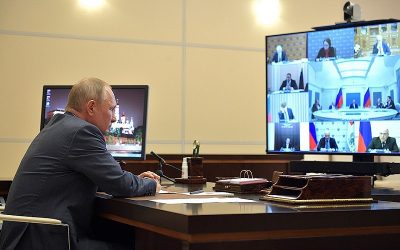
The Western Mainstream Media’s aggressively propagated infowar narrative that President Putin “disappeared” and is “paralyzed” in the face of World War C is factually false because it ignores the Russian leader’s regular video conferences with various officials that are widely reported on by his country’s domestic media, which actually prove that he’s decentralizing state affairs to a degree by delegating important tasks to relevant decision makers, as all responsible leaders should do during times of crisis such as this one.
Yet Another Infowar Product From The Fake News Factory
The Western Mainstream Media never tires when it comes to disparaging President Putin even if their latest infowar narrative contradicts everything that they’ve spent over the last decade trying to indoctrinate their audience into believing. The so-called “Fourth Estate” previously invested much of its efforts into wrongly depicting the Russian leader as a “dictator” who’s supposedly “obsessed with controlling everything” in his country, which is why it’s so surprising that they’re now aggressively propagating the notion that he’s “disappeared” and is “paralyzed” in the face of World War C. This claim is factually false since it’s refuted by his country’s domestic media consistently reporting on his regular videoconferences with various officials, but it’s likely being pushed upon the public anyhow in order to artificially manufacture a sense of uncertainty about Russia’s long-term political stability, which could then be used as another angle from which to attack the progress that he and Trump have recently made in pursuit of their hoped-for “NewDetente“.
Russia’s Ongoing Decentralization Process Should Be Celebrated, Not Condemned
Far from shirking his duties, President Putin is embracing them like never before, albeit in a manner which admittedly caught his critics unaware. They’ve invested so much time, money, and effort into portraying him as a “power-hungry dictator” that they’re simply unable to adapt their weaponized narrative to the reality that he’s now decided to decentralize state affairs to a degree by delegating important tasks to relevant decision makers, as all responsible leaders should do during times of crisis such as this one. No single individual, let alone of the world’s geographically largest state, can deal entirely on their own with such a situation as World War C, hence why President Putin made the wise choice to share the burden of leadership with other officials. It would have been egocentric to the extreme as well as highly dangerous if he believed that he could single-handedly manage Russia’s response to COVID-19, which is impossible for any one person to do. Nobody has the knowledge, time, and management capabilities to take full “dictatorial” control over such a crisis.
Russia Isn’t A One-Man Show
President Putin is aware of his limitations as a human being, and he also has an eye on his eventual retirement from public life, whether that’s as early as 2024 or perhaps even as late as 2036 if the public approves constitutional amendments to allow him to run for two additional terms during a forthcoming referendum, the date of which is presently unknown since the it’s been indefinitely postponed because of World War C. Whatever one’s criticisms of the Russian leader might be, few would ever assert that he isn’t a skilled manager, for better or for worse depending on their perspective. With this in mind, it’s completely within his character to gradually prepare for the country’s inevitable transfer of power whenever that moment arrives, hence why he understands the importance of delegating responsibilities to relevant officials in the context of the current crisis in order to reduce the country’s dependence on him personally. This is also in line with the proposed constitutional amendments that aim to reduce the power of the presidency in favor of parliament.
Russia’s Decentralization Is Over A Decade In The Making
There’s some truth to the claims that President Putin previously concentrated a lot of power in his hands, but that was entirely legal within the framework of the Russian Constitution and was mostly exercised in response to the federal intervention in Chechnya that characterized the country’s most pressing domestic challenge at the beginning of the century. Under powerful presidential systems such as Russia’s, the elected head of state has the final say in deciding the country’s course of action in crisis situations, which enables it to more rapidly respond to challenges as they develop. Seeing as how that particular one has been completely resolved, it was fitting for President Putin to begin gradually loosening the reins of control over the country as it returned to normalcy, which explains the expansion of his United Russia party throughout the land and its embedding of influence into practically all public state structures. This initial phase of pragmatic decentralization was followed by the “technocracy” that former President Medvedev encouraged during his time in office.
Constructive Criticism Of Russia Should Be Fact-Based & Fair
The third phase is the present one that’s currently unfolding before the world’s eyes whereby President Putin has sought to constitutionally reform the state legislature in order to grant it more responsibilities by the time he leaves office. The unexpected onset of World War C simply accelerated these plans that were already in progress since the official end of the second federal intervention in Chechnya in April 2009. Therefore, it’s not out of the ordinary whatsoever for President Putin to take advantage of these circumstances by “leading from behind” while tasking relevant officials to “lead from the front” in his stead, which they’ll eventually have to do once he inevitably leaves office. As the author wrote in March 2018, “It’s Okay To Constructively Criticize Russia, Even President Putin Does It!“, and even RT published an usually scathing op-ed the other day about the Russian government titled “Once he recovers from Covid-19, PM Mishustin faces new ordeal – reviving economy & Kremlin’s popularity with thinning oil kitty“. Such criticisms, however, should be fact-based and fair, but that isn’t the case with the Mainstream Media’s latest infowar attack, which therefore makes it propaganda.
*
Note to readers: please click the share buttons above or below. Forward this article to your email lists. Crosspost on your blog site, internet forums. etc.
This article was originally published on OneWorld.
Andrew Korybko is an American Moscow-based political analyst specializing in the relationship between the US strategy in Afro-Eurasia, China’s One Belt One Road global vision of New Silk Road connectivity, and Hybrid Warfare. He is a frequent contributor to Global Research.
Recent events (including Putin’s and Zelenskii’s recent trip to Israel or the latest Polish-Ukrainian theory about the USSR being an accomplice to the Holocaust) again gave me that strong feeling that the way Jews are seen in the West is truly very different from how Jews are viewed in Russia. Yet, in the West, this difference is often (almost always, really!) overlooked and assumptions are made about Russia and Russians which are simply not warranted and which end up being highly misleading. This is why I will try to debunk some of these assumptions today.
First, a very quick and very short look into our recent history
The very best book to read on Russian-Jewish relations is “200 Years Together” by Alexander Solzhenitsyn. The problem with this book is that has never been officially translated into English. Yup, that’s right. A CRUCIAL book by a Nobel Prize winner can be so controversial that nobody in the publishing business has dared to print it. Happily, a number of websites offer unofficial “samizdat” translations, see here, here and here. I cannot vouch for the quality of these translations as I read the book in Russian, not in English. But yeah, in the “land of the free”, the putative “brave” do not get to read a book if that book debunks the western narrative about Russia and Jews. By the way, Solzhenitsyn’s masterpiece is not the only such book which exists only in Russian, there are many more including Andrei Dikii’s “Jews in Russia and the USSR” which can also only be found on the Internet Archive here.
I can’t even begin to try to summarize that most interesting, and controversial history here. All I will say for right now is that when we speak of “Russians” and “Jews” we need to separate these categories into 4 subcategories:
Russians from what would be considered Russia today, in other words, “Great-Russians” (here “great” does not indicate a superiority, but only a peripheral place of residence, meaning Russians who don’t live in central Russia). For our purposes I will from now on simply call them “Russians”.
Russians from what would be considered the Ukraine today in other words, “Small-Russians” (meaning Russians living near the cradle of the Russian civilization, Kiev). For our purposes, I will from now on refer to them as “Ukrainians”, but only in a geographical sense, not a cultural one.
Russian Jews (as opposed to Ukrainian Jews)
Ukrainian Jews (as opposed to Russian Jews)
These four subgroups have had a very different historical experience and they need to be considered separately, as lumping them all together really does not allow any analysis.
Besides, and as I have also mentioned it in the past, the Ukrainian nationalist propaganda does, in fact, have sometruth to it. Yes, it is a grossly distorted truth, and it is mixed in with an avalanche of lies, but still, not all of it can simply be dismissed. For example, while there never was any “Ukraine” in history, and while what is called today the “Ukrainian language” is not really Ukrainian at all (the “surzhik” would be the real thing), it still remains an undeniable fact that the Polish occupation of southern and eastern Russia (which is what “the Ukraine” is – Russia’s southeastern “borderland” which is what the word “Ukraine” originally meant) left an extremely profound mark on those Russians who lived under the Polish-Latin occupation. I won’t go into historical details today as I already did that hereand here, but I will just say that this tragic history eventually inspired one of the favorite slogans of Ukrainian nationalists: “to drown all the Polaks and the Moskals in Kike blood” (or any variation of these three nationalities).
Charming, no?
The undeniable historical truth is that the centuries long occupation of the Russian eastern frontier lands by the Poles and their Latin masters created so much hatred between all the nationalities involved that it appears that every time they had a chance to try to persecute or kill each other, they immediately did so. Here area few examples of that kind of violence:
The (in)famous “pogroms”: these were spontaneous and violent uprisings and subsequent brutal riots against Jews by their resentful neighbors. By the way, during the Civil War, the Reds often were the worst perpetrators of these pogroms because they also saw the comparatively wealthy Jews as class enemies in the Marxist sense of the word.
The very high percentage of Jews among the first generation Bolsheviks (80%-85% according to Vladimir Putin; fwiw, I agree with this figure). These Bolshevik Jews were typically concentrated in the secret police organs and they typically spearheaded the massacre of millions of Orthodox Christians (which have since been gloried by the Russian Orthodox Church in Exile and, later, somewhat reluctantly and only partially, by the Moscow Patriarchate, as the “New Martyrs and Confessors of Russia”).
A very high percentage of Jews among the Party leaders during the (truly horribly brutal) collectivization and and dekulakization which took place all over the Soviet Union but which the Ukrainian nationalists (and the western propaganda machine) characterize as a deliberate anti-Ukrainian genocide they call the “Holodomor” (yes, I know, Wikipedia entries on all these topics are pure propaganda, but I link to them precisely so you can see what the Ukrainian propaganda writes).
A very high percentage of Ukrainians in the post-Stalin Soviet elites, many of whom participated in the bloody purges of the CPSU by Stalin; and since about 80%+ of the top Party officials were Jews, these purges necessarily involved a lot of repressed Jews (whether guilty ones who themselves were covered in innocent blood or innocent ones, who were simply repressed with the rest of them).
I could list more examples, but I think that these are sufficient for our purposes. What we can immediately see is that there are significant differences between what took place in modern Russia and in the modern Ukraine, including:
An example of a crucial geographical difference would be “pogroms” which, contrary to western propaganda, pogroms all took place in what would be the modern Ukraine today, never in Russia.
There is also a difference in time: Russians in the Ukraine were persecuted by Poles and Jews for centuries whereas Russians in what is modern Russia today were primarily persecuted by Bolshevik Jews “only” between 1917 and Stalin’s purges of the party in the late 1930s.
And then, there is the crucial, truly immense, difference which WWII made.
Next, a look at what happened during World War II and the Nazi occupation
When the Nazis launched their attack on the Soviet Union there were a lot of Russians and Ukrainians who welcomed the Nazis, not necessarily because they liked the Nazi ideology but because many of them hated their Bolshevik oppressors even more than they disliked the Germans. After all, the horrors of the Civil War and of the Collectivization were still present in the mind of millions of people both in the (newly created) Ukrainian SSR and in the Russian SSR.
I would like to remind all those who nowadays try very hard to forget it, that the Nazi ideology characterizes both Russians and Ukrainians as subhumans (Untermensch) whose sole purpose would be to serve their Aryan master race overlords (Herrenvolk) in the newly conquered living space (Lebensraum). Simply put: Hitler promised his followers that they would be very happy slave owners! It is no wonder that the prospective slaves felt otherwise…
In the course of the war, however, profound differences began to emerge:
First, in the Ukraine, the Nazi ideology DID inspire a lot of nationalists for the exact same reasons that Nazi ideology inspired nationalist Poles (who were Hitler’s first most loyal allies only to later be betrayed by him). Over the centuries the Papacy not only created the Ukrainian nationalist identity, it then actively fostered it every time Russia was weakened (if that topic is of interest to you, see here). The bitter truth which folks in the West don’t like to be reminded of is that the regimes of Petain, Franco, Pavelic, Pilsudksi, etc. were all created and supported by the Papacy which, of course, also supported Bandera and his Ukronazi deathsquads. As for Hitler himself, he was initially strongly supported by the UK (just as Trotsky was supported by the Jewish bankers in the US). Indeed, russophobia has a long and “distinguished” history in the West: western leaders change, as do their ideological rationalizations, but their hatred and fear of Russia always remains.
In contrast, General Andrei Vlasov, who created the “Russian Liberation Army” (ROA) had exactly zero support in the West, and very little support in Russia proper. The ideology of the ROA was a mix of moderate nationalism with some no less moderate socialism. In hindsight, it never stood a chance of becoming truly popular in Russia simply because the sight of a Russian general wearing a Nazi uniform was not something that most Russians could serenely look at, whereas in the current Nazi-occupied Ukraine, Nazi uniforms and symbols are still very popular. Last, but certainly not least, the demented and outright genocidal policies of the Nazis in occupied Russia resulted in such a blowback that the war to liberate Russia from the Nazis became a war of national survival which the vast majority of Russians fully supported.
It is also interesting how differently the Anglo powers treated the Ukronazis and the Russians of the ROA: the West lovingly imported to the US and Canada all the Ukronazis it could get its hands on, yet at the same time the West forcibly repatriated millions of Russians, including POW and ROA members, with often horrible consequences for the repatriates. As for General Vlasov himself, he was executed along with other officers accused of treason.
For the Ukrainian nationalists, WWII began as a God-sent chance to finally bring about their dream to “drown all the Polaks and the Moskals in Kike blood”, and then this dream was crushed by the Soviet counter-attack and subsequent annihilation of most (about 80%) of the German military machine. And while many Ukrainians (and Poles) did see the Soviets as their liberators from the Nazi horrors, the Ukronazis obviously saw the Soviet Army solely as an occupation force which they resisted for as long as they could (after the end of the war, it still took the Soviets several years to finally crush the Ukronazi underground). And while most Russians felt like they were the real victors of WWII, the Ukronazi nationalists felt that they had been defeated. Again. The same goes for the Poles, by the way (this trauma gave birth to something I refer to as the “Pilban syndrome”).
Now for the self-evident truism about Jews: while many Russians remained acutely aware of the Jewish role in the Bolshevik revolution and, especially, in the class terror which followed, they did not see ALL Jews as enemies of Russia, especially not when
There were plenty of patriotic Jews who loved Russia and/or the USSR
That Hitler’s demented racism inevitably had to bring Jews and Russians together, even if only for a while and mostly under the “common enemy” heading.
Many (most?) Russians know for a fact that Nazi concentration/extermination camps did, in fact, exist even if they did not kill 6M Jews, even if they had no gas chambers and no crematoria (except to deal with insect-born diseases). Why? Because it was the Soviet military which liberated most of these camps and because there were plenty of non-Jewish Russians/Soviets in these camps. Finally, besides the camps themselves, most Russians also know about the infamous Einsatzgruppen which probably murdered even more Jews (and non-Jews) than all the concentration/extermination camps combined. The fact is that Nazi atrocities are not seriously challenged by most Russian historians.
The bottom line is this: whatever (at the time very real) hostility history had created between Jews and Russians, World War II had a huge impact on these perceptions. That is not to say that the Russians have forgotten the genocidal policies of Lenin and Trotsky, but only that after WWII, most Russians justly felt that they were victors, not defeated losers.
The Ukrainian nationalists, in contrast, were “multi-defeat” losers: they were defeated by the Germans, the Russians and even the Poles (who rarely attack anybody unless their prospective victim is already agonizing or unless there is some “big guy” protecting them – Churchill was quite right with his “greedy hyena of Europe” comment!). And now, more recently, they were soundly defeated not once, but TWICE, by the Novorussians. That kind of “performance” will often result in a nationalistic reaction.
And that is true not only for the Ukraine, but also very much applies to the West of 2020.
Does the collective West also suffer from the same “multi-defeat” complex?
It seems to me that most people reading these lines already know that the “collective West” aka the “AngloZionist Empire” is in terrible shape. Just look at the political chaos in the US, the UK, France, Germany and all the rest of the NATO/EU countries. The West is not only losing militarily and economically, it is also agonizing culturally, socially, morally and spiritually. Furthermore, that which we all used to think of as “western values” is now being replaced by some insipid “multiculturalism” which seems to pious euphemism for the obvious plan to erase pretty much all of the western historical and cultural legacy. Like all forms of persecution, this one is also resulting in an increasingly powerful case of ideological blowback: a very dangerous and toxic resurgence of both Fascism and National-Socialism.
How could a person (Hitler) and an ideology (National-Socialism) be both declared uniquely evil AND, at the same time, undergo at least a partial rehabilitation in the same society? Simple! The only condition necessary to make that happen is to condition people to accept cognitive dissonances and not to be too troubled when they happen. The average citizen of the Empire has been conditioned to accept, and even embrace, such cognitive dissonances quite literally since birth and he has become very, very good at that. But there is also a historiographical blowback in action here:
Following WWII and, especially, following the 1970s, the Zionists made what I consider to be a disastrous mistake: they decided to present Hitler and his ideology as some kind of special and unique form of evil which supersedes any and all, past or even future, imaginable forms of evil. And just to make sure that this claim would stick, they decided to add some highly specific claims including the “official’” figure of 6 million murdered Jews, the gas chambers and crematoria being the most famous ones, but there were many more (including electrocution pools, human skin lamp shades and human fat soaps – but which had to be ditched after being proven false). Eventually these claims all came under very effective attack by the so-called “revisionist historians” who have since proven beyond reasonable doubt that these specific claims were false. That did not make these historians very popular with the rulers of the Empire who, instead of allowing for of a healthy historical debate, decided to make “revisionism” a criminally punishable thoughtcrime for which historians could be jailed, sometimes for years! The reaction to that kind of abuse of power was inevitable.
One of the most pernicious result of this policy of criminalizing historical investigations into WWII has been the fact that many people in the West concluded that since these specific claims were bunk, then all of the claims about Nazi atrocities were bunk too. Huge logical mistake! The fact that these specific claims have already been debunked in no way implies that OTHER widely reported atrocities did not occur.
For example, the fact that gas chambers were probably not used to kill anybody (at least not in significant amounts) does not at all imply that many hundreds of thousands, or even million of people, were not killed by execution, starvation or disease (typhus, dysentery, etc.). Just look at the death rates in Japanese POW camps, and they had no gas chambers or crematoria. As for the Soviets, they deported “class enemies” from their homes and simply released them in the middle of the Siberian taiga during the winter and with no survival gear: most of them also quickly died, simply from exposure.
The simple truth is that any modern state has the means to murder people on an industrial scale even without the use of such exotic (and, frankly, ill-suited) techniques as gas chambers or crematoria (in Rwanda, they mostly used crude machetes). But western historians are banned from even researching these topics!
This situation resulted in an environment in the West in which one cannot criticize (or even doubt!) Jews or things Jewish without immediately being called an “anti-Semite”. Ditto for anybody daring to present another version of WWII. That this kind of collective brainwashing would inevitably result in a massive blowback was easy to predict but, alas, the Zionists never had the foresight to see this coming. Either that, or they were quite happy to report a “surge in anti-Semitism” in the West to extort even more political power (and money!). Whatever may be the case, it is close to impossible in the current West to freely and openly discuss these topics.
Now a quick comparison with modern Russia
The political environment in Russia is radically different. For one thing, it is not illegal (or even improper) in Russia to criticize Jews, or modern “Judaism” (really a modern form of rabbinical Phariseism) or Israel or the Zionist ideology (which, by the way, the USSR did denounce and oppose as a form of racism). Yes, there are still (pretty bad) laws on the books forbidding the promotion of national hatred and “extremist speech”, but the truth is that as long as you only investigate historical topics (such as the real number of Jews murdered by the Nazis) and you do not advocate (or engage in) violence you will be fine. Not only that, but you can find pretty much any and all anti-Jewish/Zionist books on the Russian Internet for easy and free download. Finally, while a lot of Jews did leave the USSR, those who stayed (or have since returned) did that of their own free will and that strongly suggests that, unlike their brethren in Israel, many (most?) Russian Jews do not have feelings of hatred for Russia, the Russian people or even the Orthodox Church (some do, of course, but this is a minority).
Some near sighted Jews regularly deplore that the political discourse in Russia is not as tightly controlled as the one in the West. I would simply like to remind them that the much more permissive intellectual environment of Russia has NOT resulted in an automatic fusion between patriotism and hostility to Jews, as is sadly the case in the West (unless, of course, we are dealing with what French philosopher and dissident Alain Soral calls “National-Zionism” which is a separate phenomenon which I discussed in some detail here).
True, when patriotism (love for one’s country) turns into nationalism (love of one’s ethnicity), then things typically go south, but that is a danger of which the Kremlin is acutely aware of and that is why Russian nationalists are, after Russian Wahabis, the most frequently jailed people in Russia under anti extremism laws (keep in mind that both Russian nationalists and Russian Wahabis typically not only disseminate “extremist literature” but they also are typically engaged in one form of violence or another, thus they are often jailed on terrorism charges too).
An increasing number of Russia are, however, puzzled by what they see as a slow-motion rehabilitation of Hitler and the Nazi regime. For example, while in the West the officialdoxa is still that Hitler and the Nazis were the worst evil in history, there is a rapidly growing “alternative” viewpoint, mostly found on the Internet, of course, in which Hitler is viewed as a much more complex person, who has been unjustly demonized and whose actions need to be placed in a “correct” historical context. And, in fact, there is some truth to that – Hitler was a complex personality and the Nazis were demonized beyond way beyond anything reasonable. Finally, the proponents of this “rehabilitation” will always point out that Hitler’s enemies were at least as ruthless and evil has he was. Again, there is also much truth to that. However, when the EU declares in a solemn vote that Nazi Germany and the Soviet Union were both equally responsible for WWII, then a fundamental red line is crossed, one which places an “equal” sign not only between the aggressor and the aggressed but also between those who were defeated and those who were victorious.
As I have often written in the past, under international law the ultimate, most evil, crime is not “genocide” or “crimes against humanity”. It is the “crime of aggression” because, in the words of the US judge who declared this principle, “the crime of aggression contains all the other crimes”, which is only logical. Thus by accusing the USSR of aggression, the EU is basically annulling them findings of the Nuremberg Tribunal, it makes the USSR every bit as guilty of all the atrocities of WWII as the Nazis.
Are the Russians correct when they say that there is a slow-motion rehabilitation of Hitler and his ideology in the West?
Absolutely!
The fact that this slo-mo rehabilitation is still currently and mostly confined to the margins of the political discourse does not change the Russian awareness that no matter how much Hitler and his minions are disliked or even hated in the West, Russia and Russians will always be hated even much more. This is also true of what the West calls “Islamic extremism” which is only “bad” when it is not fully controlled by the West (terrorists!!), and which is “good”, axiomatically so, when directed against Russia or other Orthodox nations (freedom fighters!!).
Under these circumstances, is it really surprising that many (most?) Russians feel like the West is a much bigger danger to the Russian civilizational realm than any anti-Russian plans concocted by Jews, Zionists or the Israelis?
Absolutely not!
Not only do most Russians hate Hitler and everything he stood for, they also truly understand that the vast majority of Jews murdered by the Third Reich were simple, innocent, people whose only crime was to be of the same ethnicity/religion as some other Jews who did, indeed, richly deserved to be hated for their racist messianism (be it religious or secular). That is a fundamental injustice which Russians will never accept because accepting it would be a betrayal of truth (a hugely important concept for the Russian civilization) and no less of a betrayal of the memory of all the innocents murdered by the Nazis.
Conclusion one: history matters, a lot!
Whatever we all may think of Jewish identity politics or whatever our opinion of the Soviet Union, it is undeniable that Hitler’s policies inflicted unspeakable suffering upon both Russians and Jews. Western Alt-Righters, who still delude themselves into thinking that Russians share in their racist delusions, can deny and denounce this, but the fact is that history has forever created a bond between Jews and Russians: their common memory of the mass atrocities perpetuated against them by the Nazis. No amount of political gesticulations will change that.
That does not, of course, mean that Putin, the Kremlin or anybody else is an “ally” of Israel or that Putin and Bibi Netanyahu are working together (or for each other). This utter nonsense is a completely false conclusion resulting from a fundamental and profound misreading of Russian history and Russian culture. But it goes even further than that. I would argue that the history of the Russian culture is also fundamentally incompatible with any racist/racialist ideas.
The ideology of pre-1917 Russia can be described as “Orthodox monarchism”. This is not really correct for a long list of reasons (reality is always more complex than buzz-words and slogans), but by and large you could say that what was considered morally right or morally wrong was defined by the Russian Orthodox Church. Well, it just so happens that while original Christianity (i.e. Orthodoxy) was very critical of rabbinical “Judaism” (the religion and wordview), that same original Christianity was far less hostile to Jews (the ethnicity) then western Christian demominations. In fact, true Christianity has always been pro-patriotic but anti-nationalistic. This was also the practice in the Eastern Roman Empire (whose political structure Russia inherited). By the way, this is also true for the 2nd religion of Russia, Islam.
Then, after the 1917 Revolution, Russia was initially submitted to two decades of Jewish terror, especially a kind of terror directed against the Russian people and the Orthodox faith. With the coming to power of Stalin, however, major changes took place (and most of those who had drowned Russia in innocent blood were themselves executed during the famous “purges”). And while Stalin never was an “anti-Semite” (this is silly nonsense which both Stalin’s actions and writings directly contradict), his purges (and reforms) did profoundly change the nature of the Soviet regime, including the ethnic composition of the leaders of the CPSU which became much more diverse.
Speaking of the Soviet Union in general, it is also important to remember that the Marxist-Leninist ideology also rejects racial and ethnic differences and, instead, advocates a solidarity of all people against their class oppressors.
Thus neither the pre-1917 nor the post-1917 mainstream Russian ideology/worldview are a viable ground to try to promote racist ideas. And, thankfully, neither is modern (“Putin’s”) Russia.
The truth is that Russia which, as I mentioned above, is the political heir to the East Roman Empire (aka “Byzantium” in western parlance) has ALWAYS been multi-religious, multi-cultural, multi-ethnic and pretty much any and all other “multi-something” you can think of. For all the many sins of the Russian people during their history, racism was never one of them!
For example, this is also why, while most people in the West see Islam (and Muslims) as “aliens”, most Russians are totally used to them and see them as longtime neighbors. That does not mean that Russian’s don’t remember the dozen or so wars Russia fought against the Ottomans, nor does it mean that Russia has forgiven the Wahabi atrocities in Chechnia. It simply and only means that Muslims, and even Turks, are not see as “national enemies” by Russians.
The same is true for Jews. Yes, the Russians do remember what Jews did to them during the early years of the Bolshevik regime, but that memory, that awareness, does NOT typically result into any kind of racism, including any type of anti-Jewish racism. Nor do the horrors committed by Jewish Bolsheviks obfuscate all the very real contributions of various Jews to the Russian culture.
By the way, it is important to remember here that while it is true that most first-generation Bolsheviks were Jews, it is not true that most Jews were Bolsheviks. In fact, Jews were found pretty much everywhere, including amongst Menshevik’s, anarchists, Bundists, etc…
So yes, Jews and Russians mostly lived together for about 200 years, and much of our common history is tragic, painful and even shameful, but at the end of the day, it would be false to think that most Russians either dislike or fear Jews. They do not. Even when they are critical of this or that personality, ideology or religion (original Christianity will always be the ultimate enemy of rabbinical Judaism, just as rabbinical Judaism will always remain the ultimate enemy of original Christianity; we can understand why that is so, or we can deplore it, but we should never forget or deny this!).
If any self-described anti-Semite reads these words and is absolutely outraged by what I just wrote, please also make sure to read “The Invention of the Jewish People” by Shlomo Sand” which will show to you that the very notion of “ethnicity” (whether Jewish or non-Jewish) is a modern invention with very little actual basis in history, especially in the history of multi-cultural empires. Simply put: in a culture which does not really believe in the importance of ethnicity no truly racist ideology can develop. It is really that simple!
Yes, I know about Dostoevskii’s and Rozanov’s dislike for Jews (and Poles, by the way), and yes I know about the Pale of Settlement (won’t touch this here, but it sure was not what western historians in the West think it was – just read Solzhenitsyn!). I also know about the “Blood Libel” (won’t touch this one either, but I will recommend you read the 2007 book by Israeli historian Ariel Toaff “Passovers of Blood”) and about all the other myths spread in the West (by Jews and non-Jews) about “Russian anti-Semitism”. But the truth is simple: while there were many instances in history when Jews and Russians clashed (including the 10th century destruction of Khazaria by Russian forces or the 15th century struggle against the “Heresy of the Judaizers” – which, by the way, Wikipedia does a very bad job describing: in reality this was an early attempt by Kabbalists to infiltrate the Russian Orthodox Church just as they had successfully infiltrated the Papacy). Yet, these conflicts did not resulted in any major hostility of Russians towards Jews (the inverse is, alas, not nearly as true).
Conclusion two: Putin, Zelenskii and the Israelis
The recent trip of both Zelenskii and Putin to Israel has, again, brought the topic of the Jewish, Russian and Ukrainian “triangle” to the front page news. The Poles also seized the opportunity to make things worse for themselves when they chimed in on it all. You read the stories, so no need to repeat it all here. What was most impressive about this event was that Zelenskii decided that he would travel to Israel, only to then declare that he would not participate in the commemorative events. Why? Clearly, he was terrified that the Ukronazis will denounce him for caving in to Zionist pressure.
Putin did the exact opposite, not only did he travel to Israel and he spoke at the event, he also reminded the (mostly Jewish) audience of the horrors which the Russian people also suffered at the hands of the Nazis. Clearly, Putin did not fear that some Russian nationalists would accuse him of caving in to Zionist pressure. Why not?
Second, Jewish supremacism was very short lived in the USSR (roughly from 1917 to 1937) and neither Putin nor any other Russian political leader will let claims of exclusive “special” Jewish suffering go unchallenged. And while most Russian politicians don’t feel the need to express any doubts about the “official” 6 million figure, they do like to remind their Jewish friends that the Russian nation suffered anywhere between 20 to 27 million dead people during WWII, thus denying Jewish victims any superior victim status over non-Jewish victims.
Our fundamental disagreement about WWII, Hitler and Jews
Likewise, it is BECAUSE Russians have zero sense of guilt towards Jews, that Putin could mention this figure of 80-85% of Jews in the first Bolshevik regime in front of an assembly of Haredi rabbis (see the video here for yourself:
Can you imagine Merkel or Trump daring to say these things in front of such an audience?
Unthinkable!
Conclusion three:
Ever since Vladimir Putin came to power, Russia has been gradually and steadily separating herself from the collective West. This process is not so much about being “against” the West as it is about being “different” from the West, but unapologetically so! This is especially visible in the nature and quality of the political discourse in Russia which is truly dramatically different from the kind of hyper-controlled (and, of course, hyper-manipulated) political discourse in the West. Simply put, Russians live in a much more open and diverse intellectual landscape than their western neighbors. As a result, it would be a major mistake to assume, for example, that Russian patriots hold views similar to those held by western nationalists. Hence the existence of what we could call “Our fundamental disagreement about WWII, Hitler, Jews and race”.
Voltaire, actualité internationale, n°191
-
Outre ce site internet gratuit, nous publions une lettre confidentielle en
PDF, Voltaire, actualité internationale. Chaque jeudi soir ou vendredi
matin, vo...
A Jewish One World Government
-
A Jewish One World Government October 21 2026
___________________________________ More Vids! +BN Vids Archive! HERE!
___________________________________ Su...
The United States At A Crossroad
-
The United States At A Crossroad—An Analysis (16 Sept 2026) by Lawrence
Davidson Part I—Texas vs Minnesota Back in mid-May […]
Report on Beth Israel vigil 09-12-26
-
*Eat-a-Cheeseburger Day Approaches*
This year, EAC Day appears on Monday, September 21st. The date coincides
with the Jewish holiday called Yom Kippur. Cl...
-
Hello all,
It is with great sadness that I share with you the passing of our beloved
sister, Mother, and Grandmother, the individual that you all knew ...
Best Horror Podcast
-
Best Horror Podcast Introduction: Horror podcasts […]
The post Best Horror Podcast appeared first on Copper Shock Horror Podcast.
Ikhras Endorses Muntadhar Al-Zaidi
-
“Oh parties of banditry and sectarianism and corruption, we have come and
our goal is to destroy you.” Ikhras formally endorses Muntadhar al-Zaidi,
Iraqi j...
Prince Charles: Foreign Jews behind bloodshed in ME
-
In May, 2017, British Crown Prince Charles declined an invitation from
Zionist entity’s president Reuven Rivlin‘s to attend the 100th anniversary
of the no...
Palestinian Women – One for All, All for One
-
Honouring All Palestinian Women by Honouring Three: Hanin Zoabi, Ahed
Tamimi, Samah Sabawi Vacy Vlazna “Palestinian women have always stood side
by side ...
US’s Saudi Oil Deal from Win-Win to Mega-Lose
-
By F. William Engdahl Who would’ve thought it would come to this? Certainly
not the Obama Administration, and their brilliant geo-political think-tank
neo-...
-
*Mordechai Vanunu wins human rights prize of Brazilian Press Association *
* http://www.alternativenews.org/english/index.php/features/updates/7038-mordechai...
Abdul Aziz Rantissi:
"My ultimate wish, my God, is to attain martyrdom,"...God granted him his wish on April 17, 2004, at the hands of Israeli assassins.