August 03, 2018
“Trotsky was and, in as much as he lives in his writings, remains the foremost strategist of world socialist revolution. Hence the indissoluble association of his name with the theory and strategy of Permanent Revolution—an association familiar even to those like Mazaheri….”
That is a quote from the World Socialist Web Site’s
3-part series designed to rebut my work popularising the concept of “Iranian Islamic Socialism”, and by extension to also rebut “Islamic Socialism”, “Christian Socialism”, “Hindu Socialism”, etc.
Well, a supremely important association which I think is not at all familiar even to those like the World Socialist Web Site is that, for Shia, Imam Ali “remains the foremost strategist of world cultural revolution”. Nor are they likely at all familiar that the conscious martyrdom of his son, Imam Hossain (spelled Husayn or Hussein or Hussain in Arabic), makes him “the foremost strategist of world permanent revolution”.
This article will show that there is room for all of them in socialism, and in the fight against capitalism and imperialism.
The reason for this is because Prophet Mohammad, unlike Jesus son of Mary, undoubtedly led the greatest, most immediate and most sweeping religious and political revolution ever. This undeniable fact of humankind’s history can certainly continue to be ignored, but it will remain a historical fact.
This should be quite relevant to the WSWS in 2018 because the messages of Imam Ali and Imam Hossain have been combined, over many decades, with socialism to arrive at the unique culture proclaimed in the 1980s and which I refer to as “Iranian Islamic Socialism”.
That is a on an undeniable socio-political-cultural level. On an intellectual level it is just as crystal-clear: 20th/21st century Iranians re-examined Islam through the intellectual lenses provided by Marxism, Trotskyism, Maoism and all the other socialist schools of thought, and this led to the intellectual concept known as Revolutionary Shi’ism.
All of these facts can certainly continue to not be discussed outside of Iran, but Iran will keep adding layer upon layer of solder upon these two ideas from two different historical eras – the early Islamic era and the modern era of socialism – and certainly all without me clarifying it or commenting upon it.
It is unfortunate – because it shows their lack of crucial & objective historical knowledge – that just as Western leftists do not appreciate the political-economic-social revolutionary aspects of Prophet Mohammad, even fewer appreciate the similar qualities of Imam Ali. That will be the basis of this part, while Part 9 will discuss the related political qualities of Imam Hossain. These are not two figures I have plucked from obscurity – they are the two key leaders of the Shia religion, as well as successful revolutionary political beacons in two eras separated by 1300 years.
For the WSWS, Western leftists, and many Western rightists, religion is not and should not be political. People keep telling this to Iranians as if we have not heard it before…and quite obviously totally ignored it!
“It is surprising! For what purpose then, was the Prophet fighting? For what purpose was Imam Ali fighting? Is it not the question of politics? Is it not the fact that criminals are ruling over the people?”
In these two articles on Ali and Hossain I will often quote from Revolutionary Shi’ism proponent Ali Shariati and his
Martyrdom and Martyrdom, a collection of his lectures on this issue.
Westerners may believe that religion and politics must be separated in a government: to use their sacred, inviolable and individualistic phrase, they “have that right” in their own countries. What they cannot believe – unless they willingly wish to remain in error – is that politics and religion are somehow two fundamentally unrelated socio-intellectual domains: both endeavour to tell us how to live, after all. It is notable that the Western view also lacks the democratic majority in a global sense – perhaps one finds that significant.
What is certain is that if one side does not give up…we will just go around in circles endlessly: Westerners with their dogmatic secularism and rabid laïcité (both of which latently support Christianity), and on the other side people like Shariati, myself and countless billions of others with: It is surprising! For what purpose then….
How imperialism dies: Learning from socialism’s mistakes and unlearning capitalist propaganda
The WSWS seems to think that I have invented something new:
“He again insists that socialism in Iran can galvanize the masses only if fused with Shia Islam. This argument is far easier to make if one ignores, as Mazaheri does, any consideration of the pivotal role of the Stalinist Tudeh Party in the development of the Iranian workers’ movement.”
I am not insisting anything about the galvanising power of Shia Islam in Iran – this is what has already happened. Truly, I am a journalist just reporting the facts. These are facts which are, unfortunately, not reported by many others.
However, this article will provide some new scholarship on Iran: I will show how there is a clear parallel between the aims of Imam Ali and Mao, both of whom attempted Cultural Revolutions after they perceived their initial political revolutions to be failing.
This is of vital interest, precedent and perspective to all political revolutionaries, and not just Shia and Chinese ones.
Now, I don’t want much credit here because I will use Shariati’s own scholarship to show that he essentially proved this…but he did not know it. The likely reason is that people like Shariati (died 1977) did not have the chance to unlearn the anti-socialist propaganda about China’s Cultural Revolution, which I
helped debunk here. Furthermore, Shariati was so powerful because he was incredibly and uniquely adept at employing Marxist perspectives on Islam, but he was also anti-Marxist in the sense that he did not want formal communists to come to power in Iran – he was not inclined to openly laud Chinese communists, perhaps. Indeed, much of Shariati’s writing on communism is negative and filled with now-outdated ideas that communism is inescapably totalitarian, whereas modern socialist countries are not the USSR in 1942.
While there is much writing on Marxism and socialism on the Farsi-language internet, there is apparently no claim like the one I am making. Nor is there much on the claims of the next part in this series – the link between Imam Hossain and the need for “Permanent Revolution”, but it is not the desert of the Imam Ali-Cultural Revolution claim. However, I feel certain these links are easily proven, and that they likely were made in the revolutionary heyday of the 1970s…back when Revolutionary Shi’ism was disseminated via cassette tapes of Shariati and Khomenei lectures and flimsy mimeographs. I’m glad the internet makes the registration of such ideas seemingly permanent.
The continued moral failures of capitalism and imperialism mean that socialism – from an economic and democratic perspective – is the only way forward. Iran, and others, will never give up religion, so that is a non-issue, but understanding historical parallels shows the universality of the human economic-political experience. The ability to appreciate Prophet Mohammad, Ali, Hossain, Jesus, Moses, Mao, Trotsky and others as common socio-political liberators draws us all closer together, and closer to the goal of peace and shared prosperity.
This what’s makes the above claim by the WSWS rather pernicious, and it marks a turning point in their tract: it’s when the WSWS tries to appropriate the credit for the 1979 Iranian Revolution away from Revolutionary Shi’ism in order to give it to the Iranian Communist Party. And to give it lock, stock and barrel, furthermore. This is why the bulk of their series discusses the history of the Tudeh Party. Both ideologies existed, but one obviously prevailed; both ideologies existed, and to completely ignore one of them is obviously bad history. This appears like the rather common modern practice of rewriting Iranian history by Westerners, which is misleading, dangerous and self-serving. Of course, Iran is not alone in being victimised like this.
Certainly, it was not communism which ultimately galvanised the masses: by the late 1970s communism had already been present for decades, just as it was in every other nation in the world. Indeed, as Iran was never subject to colonial domination, it is a fact that communism had far more latitude and influence than in many colonised nations. But the truly-atheist Tudeh party members (which were truly few in Iran, where polls show less than 5% are atheists today) faced the same problem the WSWS does today: you may educate the Iranian masses all you want on Trotskyism, but that doesn’t mean they will also renounce viewing Imam Ali as a religious and political model.
While their series was informative on the topic they preferred – although it was clearly exaggerated – WSWS readers would have learned much more about Iran if they had instead talked about the enduring political influence of Imam Ali.
Indeed, the refusal to even consider the possibility that Ali, Islam or religion can have a positive and enduring political influence is what dooms Western leftism to political marginalisation in Iran, and elsewhere. It is also creates obvious enmity, discord, sanction & murder.
Imam Ali’s failed Cultural Revolution: the ideological schism between Shia and Sunnis
In short: Imam Ali, the very first male Muslim, Mohammad’s son-in-law, the 4th Caliph to Sunnis and the 1st to Shia –in the historical context of a perceived slackening in Islam’s revolutionary, political and moral integrity – cemented the ideological Sunni-Shia schism by trying to implement a Cultural Revolution after the initial political Revolution of Islam.
(The schism was officially created decades before: Mohammad repeatedly & openly declared Ali to be his successor at
the event of Ghadir Khumm, but this decision was surprisingly reversed on the very day of the Prophet’s death at
the Saqifah. This decision installed tribal dominance instead of the will and house of Mohammad, and Ali was not able to resist this decision. Ghadir Khumm is why Shia consider Ali to be the first Caliph, and is truly the root of the split, but Ali’s future actions – described here – would considerably exacerbate it.)
Perhaps all peoples of all times have reinterpreted religion to better understand and to improve the times in which they have lived?
It’s certain that many reinterpret religion to make their times more reactionary: drive through the United States and you will hear on radio station after radio station the combination of Christian fundamentalism and anti-government / pro-capitalist ideology. This is no exaggeration – for them the “beast” of the Bible is actually a symbol for the government, which is inherently evil. It obviously fits perfectly with the neoliberal view. There is also plenty of airspace reserved for “
prosperity gospel”, where faith in God is only needed to make you rich. These are obviously not distortions of a failed Christian creed, but of a failed capitalist-imperialist one.
Instead of delusionally reinterpreting Jesus as a way to make money, the application and promotion of leftist perspectives on Ali and Hossain provided more inspiration for the common masses than the Tudeh Party ever did or possibly ever could.
Leftists fail to see that Prophet Mohammad was a political revolutionary
Don’t worry: This section will not be long, nor will it involve quoting the Koran.
I could do that, but many leftists have closed ears, and “God confounds whom He will” (couldn’t resist that one short, oft-repeated quote!).
What this section will recap is the political humanitarian revolution which Prophet Mohammad created. These basic historical, sociological and political aspects of Islam are facts which cannot be denied, and should be of intellectual interest to atheists at the very least.
As I have said often before: Shariati was just one of many, many similar Iranian political thinkers who was / are intensely Muslim and also politically leftist. His work is marked by superb political insights combined with an intensely urgent and open concern for morality.
For an example of his political insights, Shariati noted that the social origins of Jesus and Mohammad – the two Abrahamic prophets of whom we have definitive historical proof – were not the aristocratic ones of Buddha, Confucius, Lao Tzu, Zoroaster, Aristotle, Plato, etc. Indeed, all the founders of schools of pre-Enlightenment thought in Europe, China, Iran and India fundamentally supported their aristocratic, elitist, hyper-conservative political establishments. However, the primary Abrahamic messengers (including Moses, who was born to an enslaved people and then orphaned) were drawn from the People and openly opposed the existing power structure.
This helps explain why the main Abrahamic prophets were explicitly sent to free people not just spiritually and morally but politically as well. Unlike Buddhism, Hinduism, Confucianism or Taoism, “Abrahamism” has always been decidedly political and decidedly against the establishment: Abraham against the ruling polytheists and his father the idol-maker; Moses against Pharaoh; Jesus son of Mary against a slave-owning, imperial Rome which lacked political compassion; Mohammad against the oppression inherently imposed by polytheism (the humorous and sad delusion that God or gods are actually working against you), the meagre cynicism of materialism (scientific, not material), aristocratic privileges, social castes and tribal divisions.
Indeed the Western-created “Sunni-Shia divide” could only be created by non-Muslims because Mohammad ENDED tribalism, sectarianism and nationalism ,and every Muslim is aware of this. This is easily proven: Watch any gathering of Muslims and you see people of all hues and ethnicities – it is beautiful, politically, and the direct result of the humanitarian revolution espoused by Islam. This is absent among the insular “chosen” Jews, and far less present among Christians; indeed, the presence of multiple races in Christianity is largely due to their legacy of forced conversion, a practice barred in Islam.
All of this helps show why Islam is the undoubted political updating of Abrahamic thought. Mohammad had a mission of unification because he repeatedly confirmed the previous Scriptures of Judaism and Christianity (the Torah (Old Testament) and New Testament), and because he also created a unification of time and space by pointedly declaring Islam to NOT be a “new” religion – it is simply a continuation of the one true religion of monotheism.
This idea (
tawhid) is the indispensable base of Islam: it is the oneness of God, which implies the oneness of all things (from atoms to people to galaxies, as everything is under the direction of a limitless, all-knowing, all-seeing God). This is a fundamentally unitarian concept, accommodates both Western and Eastern concepts, and is also fully in accordance with the last great confirmed scientific theory, the Theory of Relativity.
A fun scientific sidebar!
The Theory of Relatively is far from being just the equation E = mc2 – that’s just the part to say to appear smart. Its theoretical importance is this: when observing the universe no one place is any better or different than another – the laws of nature are universal no matter where or by whom they are described, i.e. there is this egalitarian tawhid on a galactic level.
There is one scientific and cosmological debate left which, I must concede, still threatens the victory of tawhid and which could prove the polytheists correct: What is the true nature of the universe’s continual expansion?
If expansion never stops, that implies an eventual thinning out of matter, and thus cooling, and thus death – in theological terms, the Day of Judgement. But what if there is never a day when the universe stops expanding but – instead of thinning out – a day when it actually contracts upon itself? And if that occurs, does it then expand again?
The latter is posited by Hinduism, which believes that the universe has an infinite number of deaths and rebirths; Big Bang, contraction and reversal, then back to the same Big Bang; have all been here before, and we will all be here again. Does time run backwards during a contraction?
This is all scientifically plausible because it has not yet been disproven.
The key appears to lay in solving the mysteries of black holes, if that possible.
Another key lays in the possibility of being able to discover the nature of matter by finding the truly “smallest particle” – we may just keep subdividing forever: molecules into atoms into quarks into…. If we subdivide forever, that seems to support tawhid, because God is limitless. If we reach an end, that seems to support Hindu cosmology.
So for all the opprobrium Muslims and monotheists heap on Hinduism for their idolatry (known as
shirk), we still cannot scientifically reject their cosmology. For now, the answer is a question of faith.
I think religious honesty requires us to be open and honest about the limitations of our scientific knowledge – the Koran repeatedly states that one who makes up lies about God is among the most reprehensible of sinners. Indeed, a mind that demands total certainty and cannot tolerate doubt is a fanatical one. I also think every religious person agrees that atheists are far more fanatical in their alleged cosmological certainties than either monotheists or polytheists.
We may never find out, but I have faith in the galactic applicability of tawhid. Fortunately, the Koran forbids forcing a Hindu into accepting tawhid. Nor can you force a Muslim to become a Hindu because Hinduism – it is often said – is not a religion but a culture: there is no process to “convert” to Hinduism – one can only live it. So…Muslims have no problem allowing Hindus to remain peacefully confounded in whatever hundred billion-year cycle they are currently in, and the same goes for Hindus regarding Muslims who refuse to practice Hindusim.
I do not seek to upset the peace of the Hindus, because solving the most difficult astronomical and cosmological questions are far beyond the ken of a daily hack journalist like myself. And maybe there is tawhid in Hinduism which I am perhaps missing?
What this sidebar makes clear is: capitalist-imperialist Western societies have been totally unable to incorporate 20th-century scientific advances into their cultural philosophies. Their People are encouraged in identity politics (where one viewpoint is superior to another, depending on the situation), supporting foreign wars and in exacerbating economic inequalities, all of which contradict the social corollaries of modern science.
They remain quite stuck in their unmodern bourgeois conceptions of humanity, society & science, and this should be expected: they have rejected socialism, which was directly inspired by such modern scientific advances, and which has always sought to reflect it.
Back to something far easier to explain: Iranian Islamic Socialism.
This inviolable unity of all things proclaimed by Mohammad necessary implies a call for socio-political-economic-cultural unity. To say that it does not is to take us back to, “It is surprising! For what purpose then….”
Shariati’s genius was to take Islamic concepts like tawhid and make correlates with them in Marxist socio-economic thought. He did this over and over, and this is why he was so wildly popular and why Iran was so successfully inspired to create a truly modern revolution in 1979. This is also why all of the politics and structures I have described in this 11-part series do not have historical parallels; are decidedly not capitalist; nor are they a return to the 7th century – what has been created in Iran since 1979 is entirely unique (revolutionary).
And I’d say he was right: Tawhid clearly is more politically revolutionary than the insufficient “chosen people” unity of the Jews. Even China’s I Ching explicitly warns of this, in Chapter 13 “Seeking Harmony” – “Seeking harmony within a clan, it is selfish and stingy”.
It is also more progressively uniting than the Holy Trinity of Christianity, which Islam explicitly rejects: God is not three – He is one, and one is all.
In the Abrahamic religion Islam is obviously the most concerned with this idea of egalitarian unity. Indeed, Prophet Mohammad “cornered the market on unity” for all-time and for every time: In Islam (as I alluded to earlier by saying that Islam unified time and space), anyone who has ever believed or will ever believe in monotheism is essentially a Muslim. This insistence also makes it an undeniable reality that there can never be another monotheistic religion in the Abrahamic line – Islam has effectively co-opted all monotheism.
Therefore, the next Abrahamic prophet can only appear on the Day of Judgment… because what else could possibly be offered more than an Islam which offers everything there always has, is, and will be offered regarding monotheistic belief? This is why the Koran begins with praise after praise for monotheistic Jews & Christians as well as plea after plea for Jews & Christians to join this intellectual, social and cultural updating of Abrahamism provided by its latest prophet.
Because another monotheistic prophet is thus a logical impossibility, Muslims believe a “Hidden Imam” (or
Mahdi) walks the earth until the Day of Judgment, when he will walk hand-in-hand with Jesus to defeat the false messiah (or Antichrist to Christians) and establish peace and justice on earth This doctrine is not essential in Sunni, but popular, while for Shia it is an essential doctrine.
Many have falsely claimed to be the Mahdi over the centuries, including the fore-runner of the Bahai – that claim was obviously false, because peace and justice clearly do not reign globally. That is why the Bahai are not tolerated in Iran (and this fact predates 1979, of course): there is a rather enormous, Islam-jeopardizing claim which is being made and not fulfilled.
But the galactic nature of tawhid and the realisation that Islam owns all monotheism aside, what needs to be appreciated by non-Muslims is how Mohammad overturned the political order and broke with aristocratic and sectarian values. Just as bus drivers became bosses in 1979 Iran, so in the time of Mohammad slaves with noble natures became higher than aristocrats. From Shariati:
“This is why the Prophet of Islam marked the turning point for slaves who, throughout history, were certain that their fate was slavery…they believed that they existed solely to experience suffering, to carry heavy loads, and to go hungry so that others might receive pleasure. They were born and created for this.
This deprived class, who were convinced that the gods or God were their enemy…. The Prophet of Islam had been appointed in order to complete the movement which had existed throughout history against deception, falsehood, polytheism, creation of discord, hypocrisy, aristocracy and class differences which were all made an object of the spiritual struggle; and by announcing that all of humanity is of one race, one source, one nature and one God, to declare equality for all, with philosophical explanation, and by fighting an economically powerful regime to maintain social equity.”
Clearly, the lenses, ideas and language of Marxism, socialism, class struggle, democratic equality and economic equality are present and have been combined with Islam in 20th century Revolutionary Shi’ism. Combine this by many volumes and you have only Shariati’s output on an issue which captivated Iranian society. “Iranian Islamic Socialism” is not new – it just an apt journalistic catchphrase.
Certainly, the political impact of Jesus son of Mary was only felt after his death, while Prophet Mohammad created political revolutions in land after land, tribe after tribe, ethnicity after ethnicity, and race after race with his creed of total social equality.
Many Christians openly hold Mohammad’s political conquests against him from a moral point of view: this because they clearly fail to realise the revolutionary socio-political demands of Islam, due to their often total ignorance of Islam’s doctrines. Priests in Islam simply are fighters for God and social justice. Islamic preachers are not monks, nor celibate, nor divorced from society, nor unconcerned with society in order to worship God all alone, nor encouraged to live in isolation, nor obsessed with performing rites and rituals, nor plying magic to make it rain (or to do whatever polytheistic / folk shamans do), etc. They are ordered to create social justice.
However, to Shariati and to Shia, this very real socio-political revolutionary aspect of Islam was diminished due to the failure of 2nd and 3rd-generation Islamic revolutionaries to heed Imam Ali’s message.
Imam Ali and his call for Cultural Revolution to preserve the leftist political gains
Because Islam was a political revolution of still unparalleled global consequence, there is much for everyone to study on a historical-political level in the period immediately after Mohammad, who passed in 632. We can view this era from an areligious historical perspective, and it is politically quite enlightening.
This is not the exact same thing as what Shariati and others did – they applied a modern political lens on Islam itself as well as its history. What I am saying here is: Non-Muslims can apply a modern historical lens on the early Islamic era, and we will find the results are almost identical.
We must realise that in 656, when Imam Ali became the 4th Caliph, it was a dire situation for the now-aged first generation of political revolutionaries of Islam.
After all, how many political revolutions haven’t lasted more than a few years before reverting back to the previous & reactionary status quo?
From a purely political perspective, and as Shariati recounts: In 656 it was nearing the end for that first generation of revolutionaries. Ali, the only person ever born in the Kabaa, was 55 years old and had fought in nearly every major battle. He had also retired from politics to work as a farmer – he still mended his own shoes. He had to be pushed into becoming Caliph, and only did so because the revolution was starting to eat its children: His predecessor had been assassinated, factions had appeared, once-liberated areas were rebelling due to poor political governance, while some new converts may have converted for political gain and were thus possible opportunists with questionable grounding in Islam.
It is as if Raul Castro was seeing the growth of parties who want Guantanamo Bay to be legally part of the USA, that the Committees for the Defense of the Revolution were no longer holding meetings, and that state-ownership of the mother industries of the economy were being sold off to Floridians.
Imam Ali assumed the Caliphate and did what he thought was needed – he restored the political revolution of equality initiated by Mohammad.
Ali waged a war against financial corruption and unfair privileges – he was a politically-enlightened (as well as religiously enlightened) revolutionary, after all. He gave the same wages for politicians as he did to slaves, levelled taxes and opposed the reigning nepotism in favor of seniority. There is no doubt that such leftist ideas rarely reign supreme now, either, and that they were just as opposed by the same unenlightened forces back in the 7th century.
Ali’s message of political piety was obviously not appreciated by everyone, least of in largely-Christian Damascus. The governor there was
Muawiyah I, the eventual founder of the Umayyad dynasty. After a political marriage to a powerful Christian tribe and many military successes, Muawiyah was powerful enough to not recognise Ali as the 4th Caliph.
The Christian makeup of Damascus was not the problem: the problem was that the anti-reactionary blaze of the Revolution of Islam had so very much to burn. From Shariati, in that typically overstuffed-yet-somehow-not-unnecessary style of Persian carpets and minatures:
“The traditions, rules, etiquette of society, economic and aristocratic systems, thoughts, ideas, tastes, literature, poetry, music, dance, amusements, social relations, ethics and manners of ‘civilized’ Rome and Iran, the social class system and aristocratic regime, the political system of the Caesars and Kings, the type and form of monastic and clerical traditions, the properties which are hierarchical and bureaucratic, the official and classical system of rule, and finally, the progressive (meaning less austere) Iranian and Roman civilizations certainly had an influence upon the simple Islamic communities.
The wealth, power, position and countless ‘spoils’ which had been earned in the Muslim victories make people grow fat and it is because of this that they are no longer listening to Ali’s advice, his goal and his sufferings. The majority of the people are quite happy with the situation. They are no longer fond of such problems. They show no sensitivity whatsoever to them. These people have now changed into being the servants of wealth and power.”
Shariati has clearly recounted a lessening of political fervour which can be seen in seemingly all political revolutions.
Also for Shariati, Ali is so vital in large part because the power centre in Damascus began to manipulate Islam for its own political conquests, fostering a quietism among the religious authorities.
Comparisons of the post-Mohammad-era political culture with the USSR after Stalin and China in the 1960s show obvious parallels…as they must, because all three were the supremely-modern political revolutions of their respective eras.
After the first generation of revolutionaries passed with Stalin, Khrushchev pursued revisionist policies in the name of individualistic anti-Stalinism; then, when the USSR had pulled itself up to the level of the dominant Western imperialists, they preferred the calm Brezhnev era, which was totally stagnant from a revolutionary perspective; finally, Gorbachev’s era had become so estranged from Russian socialist ideals that he foolishly embraced massive tolerance of counterrevolutionary thought (glasnost), which played a major role in subverting the Russian Revolution. Revolutionaries became “the servants of wealth and power,” instead of the deprived classes.
Following 1949’s victory, after many years of similar revolutionary stagnation and at least seven failed official anti-corruption campaigns, Mao and his fellow first-generation revolutionaries listened to the demands of their youth in the 1960s and empowered them to institute the Cultural Revolution
in order to restore revolutionary integrity. Thus when Mao died in 1976 the younger generations had personally witnessed the regeneration of revolutionary ideals, and ones extremely similar to those which Imam Ali was espousing 1,300 years earlier. In 2018, when China is close to returning a socialist nation to the same economic status as the dominant Western imperialists, books such as
China is Communist, Dammit by Jeff J. Brown are necessary reading not just in the West but inside China itself – rust never sleeps, after all.
Iran instituted the world’s only other official Cultural Revolution immediately after the 1979 Revolution. Even though it expressly rejected anti-imperialist and anti-capitalist thought, as in China, it came at a very different revolutionary period of revolutionary history. This is a vital nuance, but one which does not overshadow the kinship between the world’s only two official Cultural Revolutions. There was talk of a second one in 2005 with the election of Ahmadinejad, the first Basiji president.
In my 8-part series on China I showed how constant Western pressures (blockade, Vietnam War, Indonesian communist genocide) were key additional reasons for China’s Cultural Revolution – it would thus not be historically surprising if the constant Western pressure on Iran does eventually produce a 2nd Cultural Revolution more exactly similar to the first one in China.
The appetite for and unprecedented success in Cultural Revolution is one of the many, many cultural and political similarities between modern Iran and modern China, as I discussed
in part 4 of this series.
Perhaps it is not surprising that the non-Semitic Iranians have been so insistent in their accusation that the Arab early Sunnis turned Islam into an imperialist war machine instead of being content to morally improve their own backyards. But it seems historically verifiable: Instead of the values being determined by the Koran and Islam, the values were being decided by Damascus…unless Ali’s ideas prevailed. Did they?
To Shia: The counter-revolution in Islam in generations after Mohammad
No they did not. Ali’s Cultural Revolution created major opposition from the Byzantine elites in Damascus. Governor Muawiyah openly rebelled, demanding autonomy, refusing diplomacy, and thus sparking the
First Fitna (Muslim Civil War).
Muawiyah’s army had become accustomed to war, with regular battles against the Byzantines (or Romans, as they called themselves – North European historians apparently insist on this false distinction). The militarily-innovative Muawiyah had just established Arab naval supremacy over the Byzantine / Eastern Roman Empire in the
Battle of the Masts of 654, two years prior to Ali’s assumption of the Caliphate. The death of the Zoroastrian Yazdgerd III, Sassanid Iran’s last ruler, occurred in 651 and thus both East and West presented plenty of war booty for thousands of kilometers.
So, in 656, for Imam Ali to come in with his revolutionary piety instead of worldly gain at a historical time when all roads to conquest were wide open….
War between the partisans of Ali (the word “Shia” means “partisans of Ali”) and Muawiyah ensued and, about to be defeated, Muawiyah famously instructed his soldiers to put Korans on the tip of their lances. Inspiration or blasphemy? The soldiers themselves did not know, either, and the confusion stopped the fighting and saved Muawiyah. Diplomacy resumed, arbitration was unsatisfactory and confusion reigned for several years…which was the obvious goal of Muawiyah.
It was his goal because during this break in the First Fitna the powerful new elites in all directions certainly did not grow to appreciate pious Ali’s views. It’s as if Muawiyah was betting on the continued decreasing of revolutionary fervour and increasing of capitalist-imperialist desires. Ali’s soldiers began to be poached and bought off by Damascus. Infighting and discord increases among Ali’s own partisans. Eventually, Ali could not consolidate his position in Iraq, where Muawiyah’s army began invading.
In 661 Imam Ali is assassinated in in Kufa, Iraq – stabbed in the back while prostrated in prayer.
Ali’s legacy is summed up by Shariati thusly:
“The Prophet is the manifestation of Islamic victory on the foreign front – over outright atheism and polytheism – whereas Ali is the manifestation of Islamic defeat within the ranks, at the hands of hypocrisy.”
Thus we have a major cause of the root of the Iranian obsession with hypocrisy, which is essentially the same thing as “corruption” to the Chinese or “opportunism” to Cubans. Of course, capitalists cannot be called “hypocrites” because capitalism is synonymous with hypocrisy, corruption & opportunism in every sense of the words and their practices & applications.
Equal to Iranian hatred of hypocrisy is “arrogance”, which is used synonymously with “imperialism” in everyday Iranian political discourse: imperialists arrogantly believe that they know better than the conquered locals, after all.
In the same way but with none of the same logic, Americans use “imperialism” and “capitalism” interchangeably, even though they are two very separate (but related) practices. Falsely using these two as synonyms explains why Western media essentially instructs (“read: capitalism”) in the rare case they actually even print the word “imperialism”.
“The political, social and international make-up of Ali was the representative par excellence of a new struggle, a struggle between the leaders and the loyalists of the new set of values, of the new faith, who rose up with new and true slogans of Islam and found themselves confronting the greed and worst elements of the revival of the rule of ignorance…. Ali is the manifestation of an age in which an internecine struggle took place between a loyal faithful and anti-movement elements who donned the masks of faith.”
Ali did not represent “only Iranians” or “only Iraqis” or “only Mohammad’s Banu Hashim clan of the Quraysh tribe” – he represented the idea of moral improvement: that is what true socio-political revolutions must be based on, while forgetting it means the revolution is nearing its end.
This is why Iranian Islamic Socialism has been proven to be not just some petty nationalist, sectarian or racist creed but a true, progressive revolution. The message of Imam Ali is open to all peoples; his political message is open to non-Muslims, if they would only look….which is rather the point of this article.
“Confronting the ‘neo-ignorance’ and ‘neo-aristocracy’, which comes to life within the context of Islam under the cover of truth and the very heart of the justice-seeking Revolution of Islam, Ali is the base of resistance.”
It is not surprising that a “resistance base” – has been chose as the term for the smallest unit of Iran’s Basij – there are 60-80,000 such small bases nationwide, comprising 10-25 million Basiji.
We also see here how Shia view Ali’s opponents as a “neo-aristocracy” which mistakenly installed an era of “neo-ignorance” (“neo” because it is post-Mohammad, but “ignorance” because they opposed the social revolutionary Ali).
Ali resisted the unjust, and this resistance is most certainly the cause of his still-galvanising legacy in 2018. The Tudeh Party, for all their decades of progressive activity, never approached the impact of Ali in Iran- not in politics, nor in culture, nor in morality, nor in anything. Iranian socialists succeeded because they subverted themselves to Ali, and thus won over the masses.
The effects of Ali’s failed ‘Cultural Revolution’ – revolution devolves to empire
Upon Ali’s assassination his son, Hassan, becomes the next caliph, but he is obviously dominated by Muawiyah. Muawiyah is declared Caliph with the promise that upon his death the Caliphate will return to Hassan or, if Hassan has passed, his brother Hossain.
But infamously, upon his death in 680 Muawiyah reneges on this promise and appoints his son Yazid for his successor as Caliph. The Umayyad dynasty is declared.
Thus, not only is Mohammad’s will disregarded, but the house of the Prophet has been deeply marginalized, and the democratic, consultative government of Islam has ended with the re-establishment of monarchy.
Some say that Muawiyah told his son to be gentle with Hossain, the grandson of Prophet Mohammad, but it should be clear that this will not be the case.
The Umayyad dynasty, while it was religiously tolerant – indeed, it was officially secular and Christians held top posts – it was ethnically intolerant, as it was pro-Arab. It was also an imperialist war machine which conquered from Spain to Afghanistan. Its legacy is almost universally considered to be negative among all Islamic historians (except by Syrian nationalists). How could it be otherwise? Given its imperialist nature, it was obviously not revolutionary nor sufficiently Islamic.
(Like Alexander, the Umayyads mistakenly thought they could do anything remotely significant to the continent and perpetual superpower of India – claims of victories there by Greeks or Muslims are woefully & shamefully exaggerated, and serve only to amuse Indians. Unfortunately, the belief of such false claims undermine the amazing achievements of India, and thus have produced a huge Western and Muslim under-appreciation for their singular importance and dominance throughout human history.)
While the actual Sunni-Shia schism undoubtedly started on the day Mohammad died, with the refusal to honor Mohammad’s appointment of Ali as the first Caliph, it might have been averted if Ali’s Cultural Revolution had been implemented.
So…we can say this intellectual schism was a cultural conflict between the Byzantine and Persian cultures in early Islamic society – that would seem to rest upon the belief in some sort of native Persian austerity which lays in opposition to a native Mediterranean belligerence. Or we can say that the Umayyads created a wholly new Islamic culture which preferred tolerance and imperialism (how very modern European) to the socio-political revolutionary Islam of Mohammad. Or we can take a political-ideological view – the Umayyad Dynasty only was able to take power because the Revolution of Islam had weakened in its fervour and integrity.
This weakening was not just by the new Islamic elite like Muawiyah, but with the People themselves – to believe otherwise seems to accept a view that history is controlled by the 1%: why did the 99% not rise up with Ali? Clearly, many preferred Muawiyah’s promises, his larger army, his richer allies, his less pious worldview. Islam was a political revolution and people do tire of revolution, after all – not everyone is a seemingly tireless Lenin or “Mr. Dyanmo”
Mehdi Ben Barka of Morocco (assassinated in France in 1965, likely with aid from the Moroccan monarchy).
Of course, while under the reign of the Umayyads many would regret this decision – and these are called “Shia” today.
While they would initially headquarter in Iraq and become culturally rooted in the “Shia crescent” (Lebanon east to Iran), Shia are significantly present in nearly every Asian country from Turkey eastward until Bangladesh & China. Thus, Shi’ism is not just a small regional affair as portrayed in the West; this vast presence helps explain why there never any sort of ideological-fuelled war with Sunnis like beween Protestants and Catholics…until Zionism gained the upper hand, that is.
If the Umayyad reign had been more politically enlightened, then they would have likely superseded Ali, correct? Instead, as time went on, Imam Ali obviously became appreciated for the true & just revolutionary he was. Despite nearly 70 years of rather appalling ritual cursing of Ali – the first male Muslim – in public prayers, as ordered by the Umayyad Islamic authorities, Ali’s message grew and now
his picture is all over Iran and elsewhere.
I rather doubt Mao knew the story of Ali, but as he was also an undoubtedly poetic soul I’m sure he would have appreciated it…assuming he had dispensed with the blinding anti-religious hatred of early socialists.
Conclusion:
I hope this historical recounting clearly shows how, for Shia, Ali represents a Cultural Revolution within Islam after the original Revolution of Islam. As I said, my terms and historical parallels may be new, but the ideas were present before I was even born. This will become even more clear in the next part of this series, on Imam Hossain. 20th/21st century revolutionary Shi’ism is largely based around the combination of Prophet Mohammad, Imam Ali & Imam Hossain and the political ideas of modern socialism.
The split between Iran and the rest of the Muslim world is not based on religious doctrine, but on political-economic doctrine. Iran was always fortunate to escape the capitalist-imperialist domination nearly all other Muslim nations have been and are still subjected to.
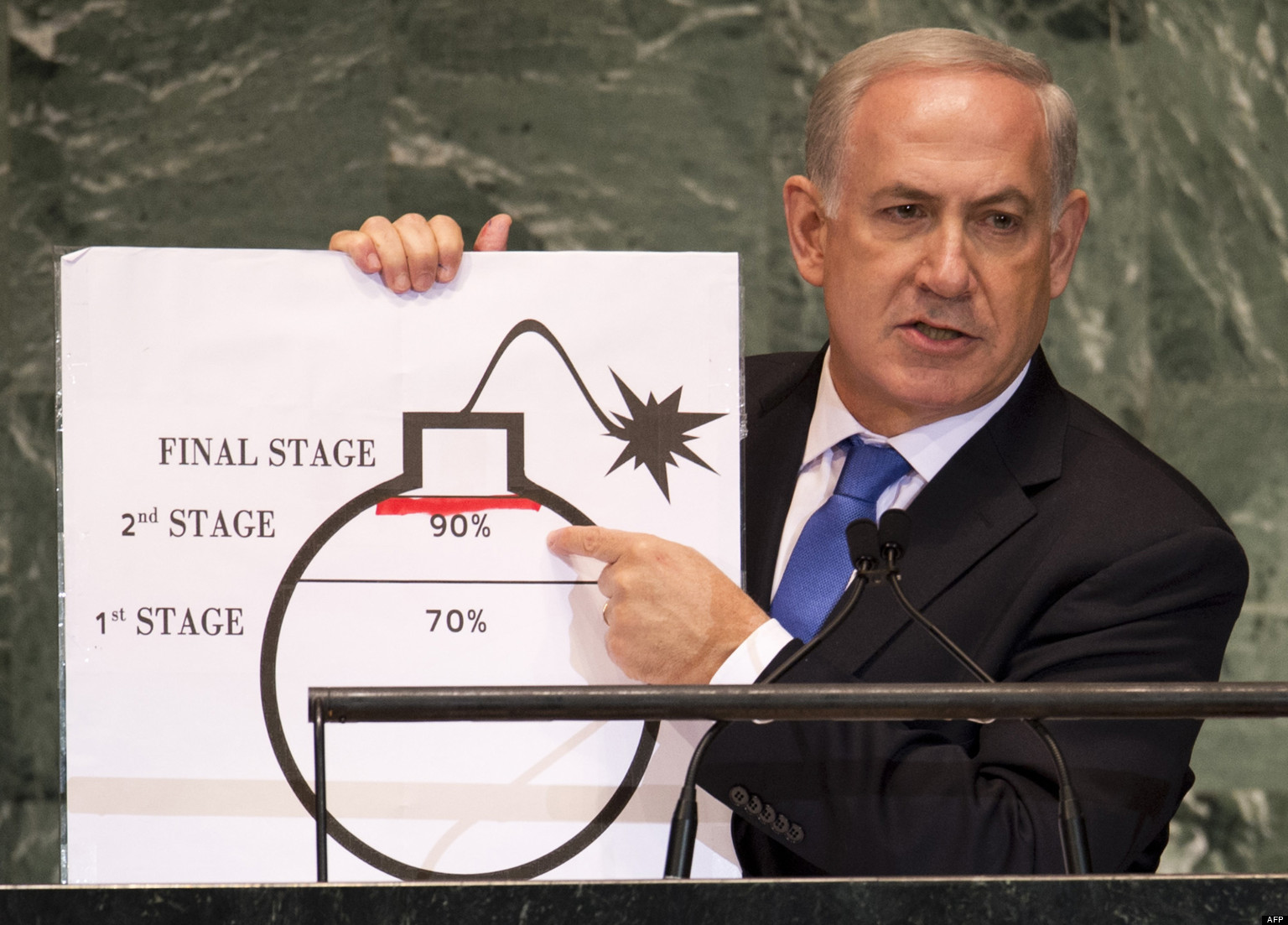
It is unfortunate that it must be tirelessly repeated to combat the dominant propaganda: The “Sunni-Shia divide” is a concoction of Washington and Tel Aviv designed to further their imperialist capitalism. That is very clear from Netanyahu’s 2016 interview with the US television news program
60 minutes: Simply look at the chilling way he responds to the journalist’s question, “
Israel and Saudi Arabia: Are you actually developing an anti-Iran alliance in the Middle East?” It’s clear that he has put plenty of time into thinking about this from the way he tries to persuasively respond: “
It doesn’t have to be developed – it’s there anyway.” (
here at the 4:30 mark) To me it is clear that he is talking about “developing” the Sunni-Shia split, in defiance of nearly all of its 1400+ years of history.
These two articles should illustrate that the so-called “divide” is nothing compared to the Western European Catholic-Protestant divide but much closer to the Theravada-Mahayana discussion in Buddhism, where things were heated temporarily after the split, but then calmed down into peaceful mutual coexistence. Of course, if the Americans had defeated socialism in Vietnam I’m sure they would have exacerbated this difference and would have manipulated the Vietnamese into waging war on the minority Theravada nations of Sri Lanka, Cambodia, Laos, Burma and Thailand….
Yet Ali does represent a different school of Islamic thought in politics, culture and economics – many would say “the original school”.
Ali poses the question: What is to be done in the face of decreased revolutionary commitment and political counter-revolution? His son Hossain provided the answer: constant self-sacrifice for the benefit of a political-social-moral-cultural-religious goal.
Islam, like communism and Confucianism, views humans as perfectible via correct efforts and beliefs. Thus the martyrdom of Hossain inspires a Permanent Revolution in all Muslims, but especially Shia, and one which is simultaneously personal-moral & social-political.
In my experience, open-minded & religiously-searching Sunnis know, appreciate and are inspired by Hossain and Ali, but more than a few Sunnis seem to have no idea. Of course, how many Christians can truly parse the differences between the apostles of Jesus? Let’s not be harsh – we’re all united here under God (and the concept of tawhid).
However, “martyrdom” is not only about suicide – to believe this obviously extreme idea is to assume so many, many things incorrectly about the Muslim concept of “martyrdom”, and most of which reduce Iranians and Muslims to non-humans.
Clarifying the martyrdom of Hossain, the Western and Muslim views of martrydom, the cultural effects of the promotion of selflessness, and the Iranian governmental policies which have been inspired by this culture, are the subject of the next part in this series.
***********************************
This is the 8th article in an 11-part series which explains the economics, history, religion and culture of Iran’s Revolutionary Shi’ism, which produced modern Iranian Islamic Socialism.
Here is the list of articles slated to be published, and I hope you will find them useful in your leftist struggle!
‘Cultural’ & ‘Permanent Revolution’ in Iranian Revolutionary Shi’ism
‘Martyrdom and Martyrdom’ & martyrdom, and the Basij
‘The Death of Yazdgerd’: The greatest political movie ever explains Iran’s revolution (available with English subtitles for free
on Youtube here)
Iran détente after Trump’s JCPOA pull out? We can wait 2 more years, or 6, or…
Ramin Mazaheri is the chief correspondent in Paris for PressTV and has lived in France since 2009. He has been a daily newspaper reporter in the US, and has reported from Iran, Cuba, Egypt, Tunisia, South Korea and elsewhere. His work has appeared in various journals, magazines and websites, as well as on radio and television. He can be reached on Facebook.
The Essential Saker II: Civilizational Choices and Geopolitics / The Russian challenge to the hegemony of the AngloZionist Empire
The Essential Saker: from the trenches of the emerging multipolar world
 Uprooted Palestinian




 terror warfare along the Syrian, Iraqi, and Iranian borders.” (see