Showing posts with label Great Return March. Show all posts

Sunday, 21 November 2021

Bahaa Abou Al-Ata…A Name Deeply Engraved within the Israeli Mind

 Nov 20, 2021

Source: Al Mayadeen

By Hassan Lafi

Abou al-Ata was responsible for removing the “Master of Israeli Security” from the podium in an embarrassing fashion, which Netanyahu viewed as a personal insult.


اخبار لبنان من لبنان - أخبار كل يوم
Martyr Bahaa Abou el-Ata

The decision taken by “Israel” to assassinate Bahaa Abou al-Ata, the leader of the northern region in the Quds Brigades – the military faction of the Islamic Jihad Movement in Palestine -, was certainly not a normal event. It took place on the dawn of Tuesday, 12 November 2019, and showcased a string of complicated Israeli calculations given that this assassination would be the first targeting a resistance commander since 2012, and occurred amidst a lack of tension or war.

Thus, the two Israeli institutions, the political and military, were aware that taking this decision would certainly break the equation sanctified by the Palestinian resistance, which stipulates that any assassination equals a war.

Subsequently, the assassination of Abou al-Ata, for “Israel”, was a declaration of a military battle with the resistance in Gaza. And certainly, the Israeli intelligence assessments know very well that the shrapnel of the Gaza rockets in that battle will not be confined to the borders of the settlements around the Gaza Strip and the south, but will rather reach deep into the “Gush Dan” area, the most densely populated center in the occupied lands.

Nonetheless, this scenario occurred in the battle of “Sayhat al-Fajr” (The Cry of Dawn) which the al-Quds Brigades fought against “Israel.”

Two years after the assassination of Bahaa Abou al-Ata, the question still remains: what was the Israeli view of the Palestinian leader’s personality? And what did it represent in the Israeli mindset of both military and political institutions? 

Amos Gilad, head of the Israeli Institute for Policy and Strategy (IPS) and former director of policy and political-military affairs at the Ministry of Security, answered when asked about Bahaa Abou el-Ata by saying: “He was the chief motivator for the Islamic Jihad’s operation, and possesses a strong and bold personality.” 

Israeli Occupation Army Spokesman Heidi Zilberman did not diverge from Gilad’s assessment, saying to journalists following the assassination of Abou al-Ata that “Israel” understands well that the martyr was “a wild element, mostly working according to a point of view paradoxical to regional interests.” This confirms that the occupation dealt with the resistance leader as a major hurdle to its regional plans, the most important of which were:

First: “Israel” was in need of cooling down the Gaza front through understandings of instilling calm in exchange for humanitarian facilitations (on a humanitarian level). This approach turned, two years after the assassination of Abou al-Ata, into a full-fledged plan put forward by the Israeli foreign minister Yair Lapid, and adopted by his government, titled “Security in exchange for Economy”, away from any political dimensions related to the Palestinian rights as a people under occupation.

Second: The political leadership of the Israeli occupation at the time, represented by Prime Minister Benjamin Netanyahu, considered that the continuation of the “ninth hour” strategy, of which martyr Abou al-Ata was the icon, that maintains a state of perpetual conflict through engagement with “Israel,” negatively affects the impetus of some normalizing countries to steer towards “Tel Aviv”, which Netanyahu considered a major goal in his regional policies. Moreover, the name of Bahaa Abou al-Ata was engraved deeply in Netanyahu’s mind at two instances that had great impact on his policies and personality. 

The first instance was Abu al-Ata’s crucial role in sanctifying the eye for an eye equation with the occupation, which came in defense of the peaceful protesters who were being assaulted during their “Return Marches” by the IOF. This equation engendered successive rounds of military escalations, becoming the main reason behind the toppling of Netanyahu’s government in November 2018 following the resignation of the then-Minister of Security, Avigdor Lieberman, who opposed accepting a ceasefire with the resistance in Gaza right after the “Ashkelon Hell” battle. Lieberman viewed this “compromise” as a capitulation on the part of Netanyahu’s government. 

The second instance was al-Ata’s responsibility for removing Netenyahu, the so-called “master of Israeli security,” from the podium in an embarrassing fashion in front of his electoral audience in “Ashdod”. This incident was considered by the former PM as a personal insult to him that affected his entire political future, especially with the wide circulation of Abou al-Ata’s picture in Israeli media. Although this circulation aimed to send a threat to the Palestinian leader in order to hinder his work, the continuation of “Al-Quds Brigades”, under his leadership, in the engagement strategy, made him a permanent presence in the Israeli media. Every time Bahaa Abou al-Ata’s photo is published, the Israeli public recalls the humiliation of Netanyahu and his escape from Abou al-Ata’s missiles to the shelter. 

Third: At the time, “Israel” was seeking to focus its efforts on the northern front and the Iranian nuclear project, taking advantage of the presence of US President Donald Trump in office. However, as the Gaza front continued to heat up through the engagement strategy, the occupation considered that the Islamic Jihad, as an effective part of the resistance axis, impeded these Israeli endeavors. Therefore, the Israeli occupation planes tried to assassinate in Damascus the commander of the military department in the Islamic Jihad movement, Akram al-Ajouri, whom “Tel Aviv” calls the military mastermind of the al-Quds Brigades, in tandem with their assassination of Abou al-Ata, who was considered the most powerful executive commander in the Brigades. Thus, “Israel” would have dealt a simultaneous double blow to the military mind and arm of the Islamic Jihad, in order to paralyze the military capacity of the al-Quds Brigades.

This strategy echoes the mistakes made in 1995 when former Israeli PM Yitzhak Rabin decided to assassinate the founder of the Islamic Jihad movement and its first secretary-general, Dr. Fathi Shaqaqi, believing that the movement was solely based on the person of Shaqaqi.

However, less than six months later, the Islamic Jihad was carrying out its first operations in “Tel Aviv,” in response to the assassination of martyr Shaqaqi, under the leadership of Dr. Ramadan Shallah back then, may God have mercy on him.

In the case of Bahaa Abou al-Ata, the Jihad movement, led by its Secretary-General Ziad al-Nakhala, did not wait extensively to prove to “Israel” the failure of its expectations: Half an hour after Abou al-Ata’s assassination, al-Quds Brigades fired a rocket barrage in the direction of the “Gush Dan” area, announcing the start of the “Sayhat al-Fajr” battle.


River to Sea Uprooted Palestinian   
The views expressed in this article are the sole responsibility of the author and do not necessarily reflect those of the Blog!

Thursday, 1 April 2021

Land day: Israel’s programme of Palestinian land theft goes on undisturbed


Palestinian protesters mark Land Day in the Umm Al-Hiran village in the Wadi Atir area of the Negev (Naqab) desert (AFP)
Ghada Karmi is a former research Fellow at the Institute of Arab and Islamic Studies, University of Exeter. She was born in Jerusalem and was forced to leave her home with her family as a result of Israel’s creation in 1948. The family moved to England, where she grew up and was educated. Karmi practised as a doctor for many years working as a specialist in the health of migrants and refugees. From 1999 to 2001 Karmi was an Associate Fellow of the Royal Institute of International Affairs, where she led a major project on Israel-Palestinian reconciliation.

Ghada Karmi

30 March 2021 13:32 UTC | Last update: 

For Palestinians, Land Day continues to be an inspiration and a tribute to the just struggle of an unbowed people for their land

The centrality of the struggle for land has always been fundamental to understanding the Israeli-Palestinian conflict.

It is at the heart of two major events whose anniversaries fall due on 30 March. The first, Land Day, commemorates the surge of Palestinian resistance to the takeover of their land by Israel in 1976; and the second marks the start of the Great March of Return in 2018, when thousands of Palestinians in Gaza demonstrated for the right of refugees to return to their confiscated lands in Israel.

From the start the Zionist movement was predicated on the acquisition of an empty territory on which to establish a state exclusively for Jews. Since no such land was available in the Palestine of the time, it had to be carved out, first by purchase, and later by war.

The land-grabbing journey

As Jewish immigrants began to arrive in the country in increasing numbers after 1917, Zionist organisations such as the Jewish National Fund and the Palestine Jewish Colonisation Association set about buying Palestinian land, provided it was untenanted at the time of purchase.

Today, Israel’s settlements have meant that Palestinian ownership of West Bank and East Jerusalem land has shrunk to under 13 percent

Many Arab landowners living outside Palestine, in addition to a minority of Palestinian peasants, sold them land. These sales were mainly motivated by economic necessity, since the Zionist organisations had access to foreign funds unavailable to Arabs.

Years of intense Zionist effort, however, yielded disappointing results. By 1947, and despite their funding and connections to powerful supporters of Zionism, these organisations had acquired no more than a meagre 6.7 percent of Palestine’s land.

But this disappointment was soon reversed by the Arab-Israeli war of 1948. In that war Israel captured 78 percent of Mandate Palestine, taking large swathes of Palestinian land, mostly untenanted thanks to population flight and expulsions in the war. 

After 1948 the new Israeli state swiftly enacted a series of laws designed to acquire more Palestinian land by pseudo-legal means. These included the 1950 Absentee Property Law, permitting the state to take over Palestinian land and property in their owners’ absence; and soon after, the 1953 Land Acquisition Law, which introduced a new category of “state lands” and “closed areas”.

This had the effect of making the state the majority owner of the land, which was to be permanently out of the reach of its previous Palestinian owners.

Subsequent events up to and including the 1967 Arab-Israeli war, that put Israel in occupation of the rest of Palestine, have been stages on the same land-grabbing journey. Today, Israel’s settlements have meant that Palestinian ownership of West Bank and East Jerusalem land has shrunk to under 13 percent. That is set to diminish further as the settlement process continues with further land loss. 


Palestinian children hold up pictures of keys, symbolising the homes they left behind (AFP)

This is the background to the dramatic protests of Land Day in 1976. Their trigger at the time was the Israeli government’s plan to expropriate thousands of dunums of Arab land in the Galilee to build Jewish industrial villages. In line with the Israeli government’s 1975 “Galilee Development Plan” to expand Jewish settlement, it would accelerate Judaisation of what was a majority Arab area. 

A turning point

On 30 March a general strike was called, and widespread demonstrations in Arab towns erupted from the Galilee to the Negev. Thousands marched in protest, while solidarity demonstration were held in the Occupied Territories and the Palestinian refugee camps in Lebanon.Land Day: A potent symbol of the Palestinian struggle

Unexpected at the time from what had been a largely quiescent Arab population, Israel was alarmed and deployed thousands of police, army units and tanks to quell the protests. Six Arabs were killed, hundreds wounded, and hundreds more arrested.

Land Day, as it became known, was a turning point. It was the first time since 1948 that the Arabs in Israel acted as a national collective, refusing to accept the theft of their land after years of control by Israel’s military rule. Land Day was an expression of national pride and self-confidence. It marked the assertion of an Arab presence that Israel’s politics could no longer ignore, and the starting point for Arab political participation in Israel. 

From that time to this, Land Day has been commemorated annually by Palestinians everywhere. In 2018 it was marked by the start of another great Palestinian protest over land. The Great March of Return saw 30,000 Palestinians in Gaza demonstrate near the Israeli separation fence of electrified barbed wire and sensors. It was a peaceful protest, demanding the right of refugees to return to their lands and an end to the blockade of Gaza. Intended to last from 30 March to 15 May, Nakba Day, the same protests took place every Friday.

A double heroism

As in 1976 Israel retaliated with murderous violence. Between 30 March and 15 May 2018 an estimated 110 protesters were killed, and 13,000 wounded by a combination of sniper fire and drones. By the time the March of Return was halted by Hamas in December 2019, 214 people had been killed, and 36,000 wounded. Of these, 1,200 needed long term rehabilitation following bone infections and limb injuries. Israeli soldiers seemed to be using a “shoot-and-maim” policy, deliberately targeting the legs of protestors to cause maximum disability.

Land Day marked the assertion of an Arab presence that Israel’s politics could no longer ignore

Gaza’s health system, damaged by years of blockade, understaffing, and equipment and power shortages, has been unable to cope with the toll of so many injured. Yet that did not stop Palestinian youth braving death and injury each week for nearly two years, and creating a new Palestinian legend to commemorate on 30 March. 

Israel never changed course in the face of that double Palestinian heroism celebrated on Land Day. It went on to build “Development towns” for Jews, 26 by 1981, with the effect of altering the Galilee’s demography in favour of Jews.

In Gaza, likewise, the blockade continues, and Israel’s pretext of its brutality as self-defence against the Great March of Return has been accepted by many Western governments. Its programme of Palestinian land theft goes on undisturbed.  

But for Palestinians on 30 March, Land Day continues to be an inspiration, and a tribute to the just struggle of an unbowed people for their land.

The views expressed in this article belong to the author and do not necessarily reflect the editorial policy of Middle East Eye.

Related

Historical References:


River to Sea Uprooted Palestinian   
The views expressed in this article are the sole responsibility of the author and do not necessarily reflect those of the Blog!

Thursday, 11 February 2021

Investigation to Move Forward: Everything You Need to Know about ICC Latest Ruling on Israeli War Crimes (SPECIAL REPORT)

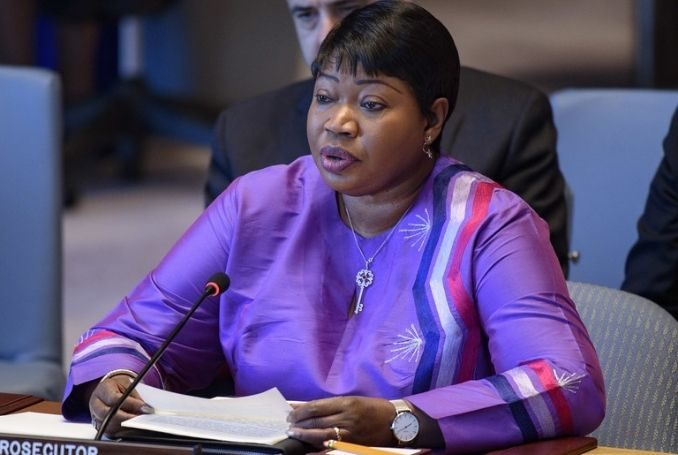
ICC Prosecutor Fatou Bensouda. (Photo: UN Website)

By Palestine Chronicle Staff

On Friday, February 5, the last hurdle in the way of an international investigation into war crimes committed in occupied Palestine has been removed, as the International Criminal Court in the Hague has finally approved the Prosecutor’s request to open legal proceedings regarding war crimes in the occupied Palestinian territories, including Gaza.

“Pre-Trial Chamber I of the International Criminal Court .. decided, by majority, that the Court’s territorial jurisdiction in the Situation in Palestine, a State party to the ICC Rome Statute, extends to the territories occupied by Israel since 1967, namely Gaza and the West Bank, including East Jerusalem,” the ICC said in a press release that was made available to international media, including The Palestine Chronicle.

The Investigation

After years of haggling, the ICC had resolved in December 2019 that, “there is a reasonable basis to proceed with an investigation into the situation in Palestine, pursuant to Article 53(1) of the Statute.”

Article 53(1) merely describes the procedural steps that often lead, or do not lead, to an investigation by the Court.

That Article is satisfied when the amount of evidence provided to the Court is so convincing that it leaves the ICC with no other option but to move forward with an investigation.

Indeed, Bensouda had already declared late last year that she was,

“satisfied that (i) war crimes have been or are being committed in the West Bank, including East Jerusalem, and the Gaza Strip… (ii) potential cases arising from the situation would be admissible; and (iii) there are no substantial reasons to believe that an investigation would not serve the interests of justice.”

The Reactions

The decision, then, has angered Israel and its Western allies, who insisted that the ICC has no jurisdiction, since Palestine, they alleged, is not an independent state. 

As soon as Bensouda made her decision, although, after much delay, the US administration swiftly moved to block the Court’s attempt at holding Israeli officials accountable. On June 11, US President Donald Trump signed an executive order slapping sanctions on members of the global judicial body, citing the ICC’s investigations of US war crimes in Afghanistan and Israeli war crimes in Palestine.

In an historic irony, Germany, which had to answer to numerous war crimes committed by the Nazi regime during World War II, stepped in to serve as the main defender of Israel at the ICC and to shield accused Israeli war criminals from legal and moral accountability.

Germany, among others, then argued that the ICC had no legal authority to discuss Israeli war crimes in the occupied territories. These efforts, however, eventually amounted to nil.

Dr. Triestino Mariniello, member of the legal team for Gaza victims at the ICC,  told Palestine Chronicle TV: 

“There are at least eight countries that are openly against an investigation of the Palestinian situation. Germany is one. Some of the others came as a surprise, to be honest, for at least four other countries, Uganda, Brazil, Czech Republic, and Hungary had explicitly recognized that Palestine is a State under international law, yet are now submitting statements before the ICC Pre-Trial Chamber saying that this is not true anymore.”

The Pre-Trial Chamber

Consequently, Bensouda referred the matter to the ICC Pre-Trial Chamber, requesting a “ruling on the scope of the Court’s territorial jurisdiction in the Situation in the State of Palestine”.

The pre-trial chamber consists of judges that authorize the opening of investigations. Customarily once the Prosecutor decides to consider an investigation, she has to inform the Pre-Trial Chamber of her decision.

According to the Rome Statute, Article 56(b), 

“… the Pre-Trial Chamber may, upon request of the Prosecutor, take such measures as may be necessary to ensure the efficiency and integrity of the proceedings and, in particular, to protect the rights of the defence.”

According to Dr. Mariniello:

 “This request to the Pre-Trial Chamber was not necessary, for a simple reason: because the situation is being referred by the State of Palestine. So, when a State party refers a situation to the Prosecutor, the Prosecutor does not need authorization by the Pre-Trial Chamber.”

The Court’s Jurisdiction

The State of Palestine became a signatory of the Rome Statute in January 2015. By accepting the jurisdiction of the Court, Palestine became a State Party. 

The Pre-Trial Chamber 1 reiterated that Palestine is a State Party, therefore the Court has jurisdiction over its territory. Dr. Mariniello told The Palestine Chronicle: “The Pre-trial Chamber did not only recognize that Palestine is a State, they also stated that the Court’s jurisdiction extends to the West Bank, including East Jerusalem, and Gaza. What we feared was a further fragmentation of the Palestinian territory” but, according to the ruling, this was not the case.

A Victory

“It is a landmark decision since all the comments expressed by the legal team representing the Gaza victims have been approved. Therefore, they rejected all the arguments by civil society organizations or even states who were trying to persuade the Court that Palestine is not a State,” Dr. Mariniello added.

Professor Richard Falk, Former UN Special Rapporteur on Palestinian human rights, told Palestine Chronicle TV that the ICC investigation is a “breakthrough”.

“It’s a breakthrough even to consider the investigation, let alone the indictment and the prosecution of either Israelis or Americans that was put on the agenda of the ICC, which led to a pushback by these governments … Israel has denounced the Court as if it is improper to examine any State that claims the matter of geopolitical impunity. So you have a core denial of the rule of law.”

The Narrow Scope

Professor Falk elaborated, 

 “The scope of the investigation is something that is ill-defined, so it is a matter of political discretion,” Professor. Falk said, adding that “the Court takes a position that needs to be cautious about delimiting its jurisdiction and, therefore, it tries to narrow the scope of what it is prepared to investigate. I don’t agree with this view … but it does represent the fact that the ICC, like the UN itself, is subject to immense geopolitical pressure”.

The legal representatives of the ‘Palestinian Victims Residents of the Gaza Strip’ had expressed their concern on behalf of the victims regarding “the ostensibly narrow scope of the investigation into the crimes suffered by the Palestinian victims of this situation.”

The ‘narrow scope of the investigation’ has thus far excluded such serious crimes as Crimes Against Humanity. According to the Gaza legal team, the killing of hundreds and wounding of thousands of unarmed protesters participating in the ‘Great March of Return’ is a crime against humanity that must also be investigated.

The ICC’s jurisdiction, of course, goes beyond Bensouda’s decision to investigate ‘war crimes’ only.

Article 5 of the Rome Statute – the founding document of the ICC – extends the Court’s jurisdiction to investigate the following “serious crimes”:

(a) The Crime of Genocide

(b) Crimes Against Humanity

(c) War Crimes

(d) The Crime of Aggression

It should come as no surprise that Israel is qualified to be investigated on all four points and that the nature of Israeli crimes against Palestinians often tends to constitute a mixture of two or more of these points simultaneously.

That in mind, according to Mariniello,

“The scope of the investigation is not binding for the future. The Prosecutor can decide, at any moment, to include other crimes. We hope it will happen because, otherwise, many victims will never get justice.”

What Now

Mariniello told The Palestine Chronicle,

 “Now, the hard work starts for the legal representatives of the ‘Palestinian Victims Residents of the Gaza Strip’, we cannot lower the guard. We need to work so that the ICC Prosecutor can identify the people responsible for international crimes and their criminal behavior as soon as possible.”

The Prosecutor

The decision that there were sufficient elements to investigate war crimes committed in the Occupied Palestinian Territories was taken by ICC Prosecutor, Fatou Bensouda, who is currently nearing the end of her term. 

A new prosecutor should be elected soon.

(Managing Editor of The Palestine Chronicle, Romana Rubeo, composed this report) 


River to Sea Uprooted Palestinian   
The views expressed in this article are the sole responsibility of the author and do not necessarily reflect those of the Blog!

Thursday, 6 August 2020

BDS Victory, Manchester university divest from Caterpillar

By Elfalasteen -August 5, 2020

MANCHESTER, PALESTINOW.COM — Students across the UK have called on universities to end their complicity in Israeli apartheid. ‘Apartheid off Campus’ actions were held at over 30 universities this week.

Stop Arming Colonialism

The protests are part of the annual Israeli Apartheid Week, an international series of events that “seeks to raise awareness about Israel’s apartheid regime over the Palestinian people and build support for the growing Boycott, Divestment and Sanctions (BDS) movement.”

Israel is currently militarily occupying the West Bank and East Jerusalem, maintaining a siege of the Gaza Strip and denying equal rights to its Palestinian citizens.

Israeli Apartheid Week is now in its 15th year. The theme of the event this year is #StopArmingColonialism.

Students call for divestment from Caterpillar

In the UK, students at Manchester University called for an end to university investments in Caterpillar:The BDS (Boycott, Divestment and Sanctions of Israel) society marched through the University of Manchester campus to demand that the University divests its shares, worth £482,381.26, from Caterpillar, and in solidarity to the Palestinians protesting every day during the Great March of Return, of which over 200 have been killed by the Israeli military.

The protest is part of a three-year campaign against the university’s investments in Caterpillar. In February, students occupied a meeting of the Board of Governors, demanding that the university divest.

Caterpillar bulldozers used in revenge attacks on Palestinian families

Caterpillar, a US multinational, provides D9 military bulldozers to the Israeli army through the US’ Foreign Military Sales programme. According to a recent book by research group Corporate Occupation, Caterpillar bulldozers were used in demolitions of at least 41 Palestinian properties by Israeli authorities during 2018. Seven of these demolitions were acts of collective punishment against the families of Palestinians accused of involvement in resistance attacks on Israeli soldiers or colonists. The Israeli policy of punitive home demolitions is widely accepted to be in breach of international law.

Caterpillar D9 bulldozers were used in January 2018 to demolish houses near Jenin in the West Bank. The demolition was carried out as a revenge attack against the family of Ahmad Jarrar. Jarrar was suspected of fatally shooting an Israeli colonist. According to Israeli human rights group B’Tselem, the soldiers, accompanied by Caterpillar D9 bulldozers, began the demolition while people were still inside one of the houses. One Palestinian man was killed during the incident.

“Our kids were so frightened they were in tears”

In a testimony given on 24 January 2018, Nassim Jarrar said:


Shortly after 3am we heard cars and a bulldozer approaching our house. The bulldozer started demolishing the western side of the house. My husband, children and I started screaming because we were scared the house would collapse on top of us. We felt the ground shake and heard parts of the house come crashing down. We went into the kitchen and stood there, confused and scared. Our kids were so frightened they were in tears. The sounds of the demolition grew louder.

Caterpillar D9 Bulldozers are also regularly used in invasions of the Gaza strip, razing Palestinian farmland in the area close to the apartheid barrier between Gaza and Israel, levelling the land to give Israeli snipers a clear shot at Palestinian Great March of Return protesters.

Bulldozer used in yet another murder

On 19 March, the Israeli military shot dead two young Palestinian men. Raed Hamdan, 21, and Zayed Nuri, 20, were driving in their car when soldiers opened fire on them. A military bulldozer was then used to drag and crush the car. The bulldozer appears to be manufactured by Caterpillar. Palestinian people tweeted that the men were still inside the car when it was bulldozed:


About last night in #Nablus and the killing of the two friends, Raed and Zayed.
“Then an Israeli bulldozer drove over the car several times, and the screaming of the guys inside the car was heard, until they were no longer screaming”. pic.twitter.com/TWM8KKB0hG

— Fidaa فِداء (@fidaazaanin) March 20, 2019

The Canary contacted Caterpillar for comment but had not received a reply at the time of publication.

The Apartheid Week protest comes as campaigns against Israel’s home demolition policies are gathering momentum. The #StopTheDemolitions campaign aims to persuade construction equipment manufacturers to stop supplying the Israeli authorities. The Israeli state used military and civilian bulldozers to demolish 461 Palestinian structures in the West Bank last year.

Caterpillar isn’t the only company being targeted. Activists have also taken direct against bulldozer company JCB twice within a year, blockading its factories and preventing goods from arriving and leaving.

On 21 March, four #StopTheDemolitions activists appeared in court in Newcastle-under-Lyme to plead not guilty. They were charged with blockading the JCB Global Logistics Headquarters earlier this month. UK company JCB also manufactures bulldozers which the Israeli authorities use to demolish Palestinian homes. The defendants plan to argue that their actions were justified because of JCB’s complicity in Israel’s home demolitions.

As activists face prosecution, Israel continues to act with impunity, while the bulldozer companies continue to rake in the profits.


River to Sea Uprooted Palestinian   
The views expressed in this article are the sole responsibility of the author and do not necessarily reflect those of the Blog!

Sunday, 29 December 2019

IOF Attack Final Round of Weekly Protests in Gaza

Source

 December 27, 2019

Israeli occupation forces attacked Palestinians taking part in the final round of protests held on a weekly basis near the fence separating the Gaza Strip from the Occupied Territories, leaving a number of protesters injured.
Palestinian media outlets reported that the Israeli forces shot and injured protesters in the east of Jabalia and the east of Khan Yunis on Friday.
Tens of Palestinians also suffered from suffocation due to inhaling tear gas used by the Israeli troops in the eastern part of Gaza.
The “Great March of Return” rallies have been held every week since March 30 last year. The Palestinians want the return of those driven out of their homeland by Israeli aggression.
The protest organizers announced on Thursday that the rallies would be suspended until March 2020, after which it would be held on a monthly basis.
Yousri Darwish, a member of the Supreme National Committee of the Marches of Return, said the decision to suspend the rallies was made in the best interest of the Palestinian people.
He said preparations for the commemoration of the Land Day would be done in the upcoming few months in which the protests would stop. The annual event is held on March 30 to mark the killing of six Palestinians by Israeli forces during mass protests against Israel’s seizure of their land in 1976.

جماهير غزة تؤكد تمسكها بحقوقها وثوابتها الوطنية


River to Sea Uprooted Palestinian   
The views expressed in this article are the sole responsibility of the author and do not necessarily reflect those of the Blog!

Wednesday, 27 November 2019

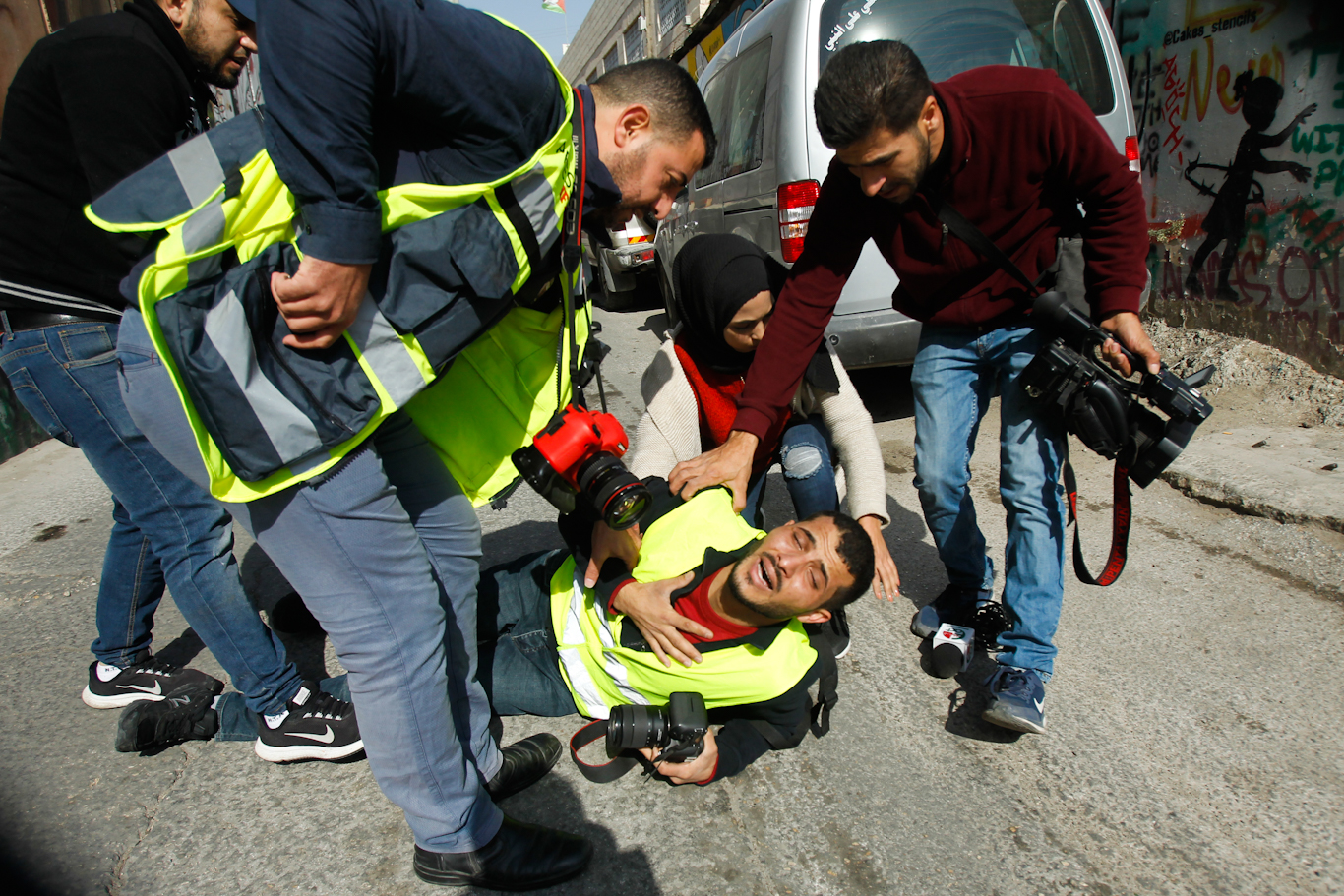
Blinded Palestinian Journalist Exposes Israel’s Increasing Violence Against Media


Muath Amarneh Feature photo

Blinded Palestinian Journalist Exposes Israel’s Increasing Violence Against Media

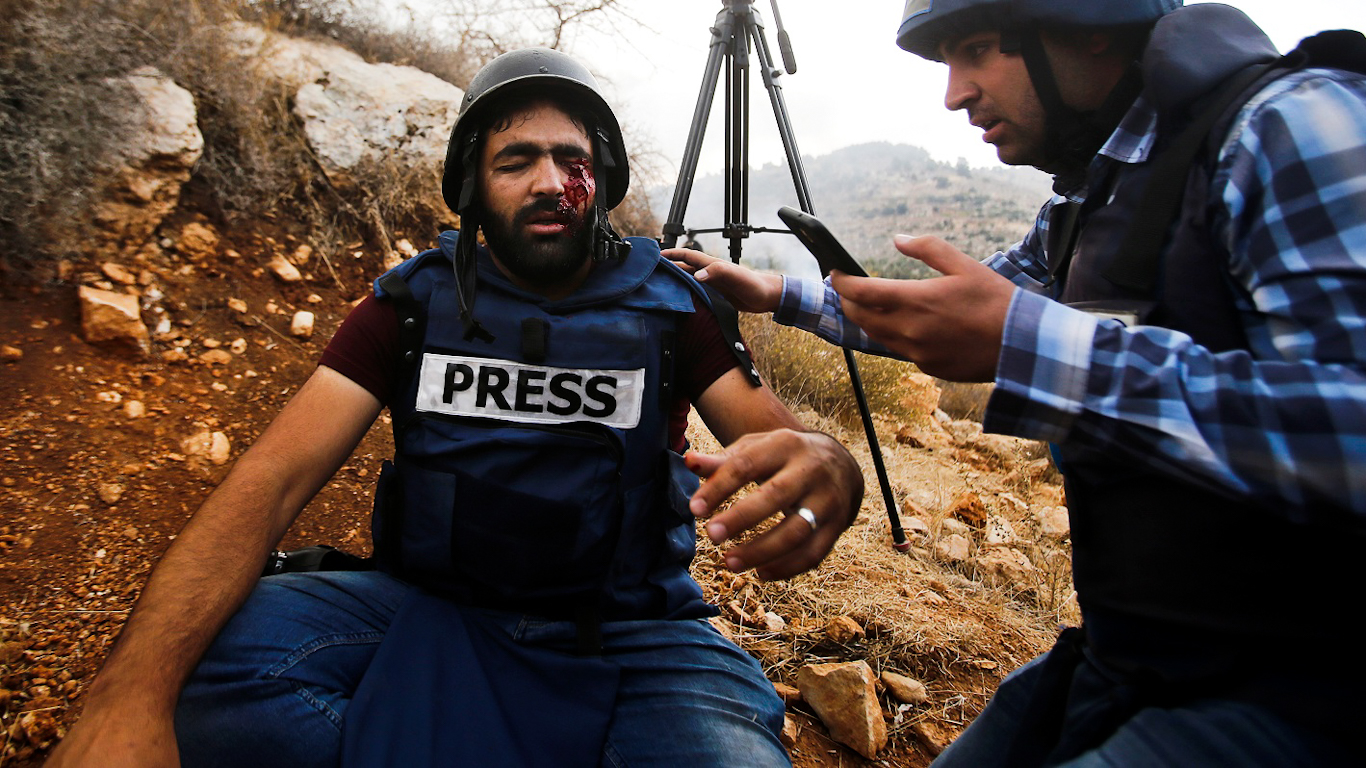
On November 15, Palestinian photojournalist Muath Amarneh covered a demonstration in Surif, a West Bank city where residents were protesting against the theft of their land by Israeli settlers. Wearing a press jacket and helmet, Amarneh was shot in the head by an Israeli bullet while taking pictures on a nearby hill — about 330 feet from the soldiers.
“Everything just changed. I felt the whole world was circling around me. And I felt my whole life flash before me. I felt like I was dying,” Amarneh said, describing his reaction when hit.
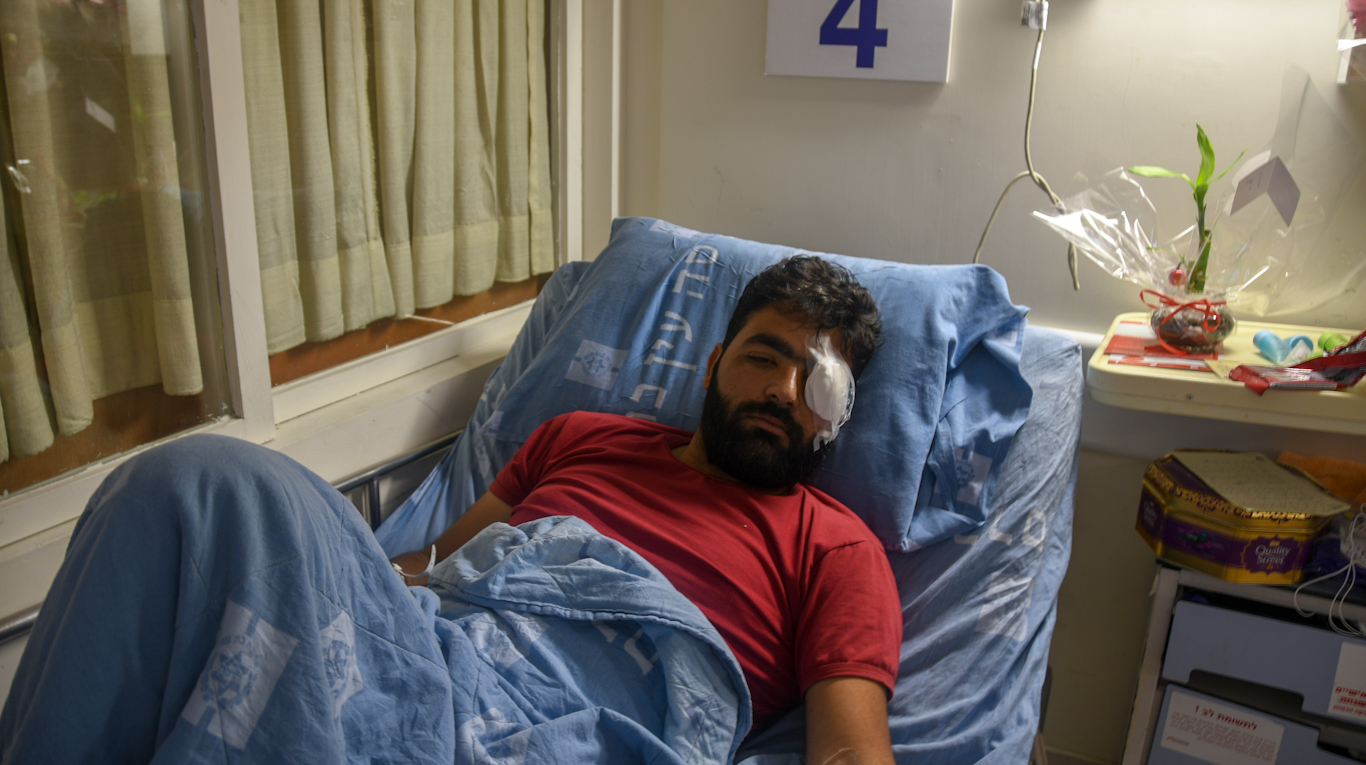
With blood dripping from his eye, Amarneh was taken to a hospital in Hebron, West Bank. He was eventually transported to Hadassah Hospital in Jerusalem where his left eye was removed. He remains there awaiting further operations to have the bullet removed from his head. 
Videos and photos capturing Amarneh after the bullet pierced his eye went viral online. Using the hashtags #MuathEye#EyeofTruth and #MuathAmarneh, “journalists across the world posted images of themselves with an eyepatch or one hand over their eye as a way to stand in solidarity with Amarneh.

Increasing Israeli violations against Palestinian press

After being shot, Israeli soldiers rushed to Amarneh claiming he wasn’t hit by one of their bullets but rather with stones thrown by protesters, but Amarneh was behind a line of demonstrators hurling stones.
“The army told me that, “This is not from us. This is from the people who are protesting and throwing stones. It’s the Palestinian who threw stones at you. It’s not a bullet from us,” Amarneh said.
Israeli police said they used “non-lethal means” to “disperse the rioters.” “The use of the non-lethal means was not directed at all at the photographer, and his injury could have been caused by the violent rioters,” Micky Rosenfeld, the Israeli police’s foreign press spokesperson, said.
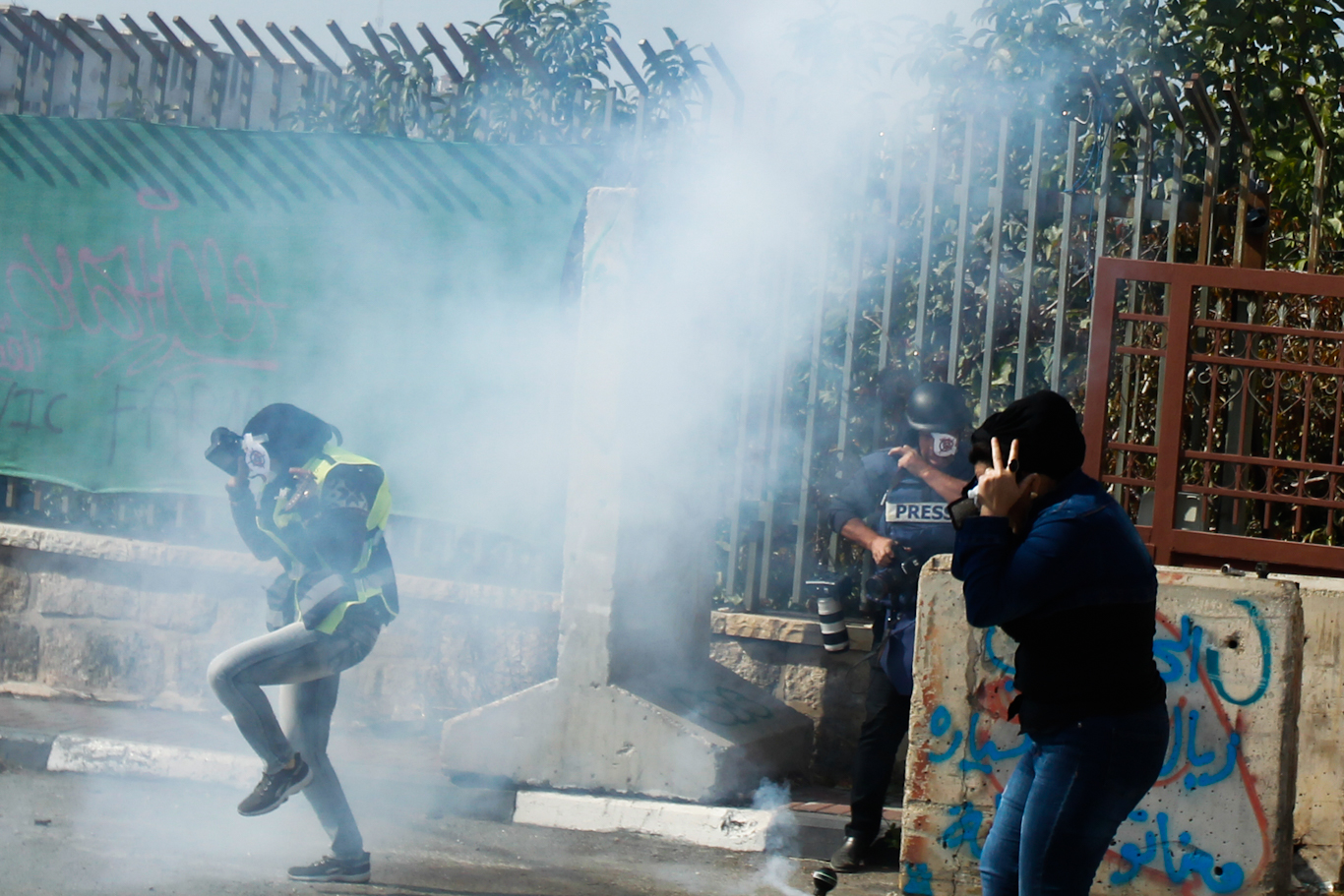
Palestinian journalists take cover from tear gas shot by Israeli police during a solidarity protest on November 17, 2019 in Bethlehem. Photo | Musa Al-Shaer
However, Amarneh believes he was directly attacked by Israeli forces.
Four days before Amarneh lost his eye, Omar al-Badawi was fatally shot by Israeli soldiers during clashes near Hebron. Video captured al-Badawi as he was shot in the chest by Israeli forces. Soldiers claimed they assumed al-Badawi was carrying a molotov cocktail, but he was merely holding a towel to extinguish a fire engulfing a tree near his home. Amarneh was one of the journalists who documented al-Badawi’s murder.
“After what happened, the Israeli army really doesn’t want journalists to show the world what’s going on,” Amarneh said. He feels that since al-Badawi’s killing was broadcast globally, the Israeli army is intensifying its crackdown on Palestinian journalists. He mentioned how an area in Bethlehem designated for journalists for years by the Israeli military is now an unwelcome location.
“This Thursday, they started telling journalists that if you stay in this place, we will arrest you,” Amarneh said, describing how the soldiers pushed the journalists and seized their cameras.
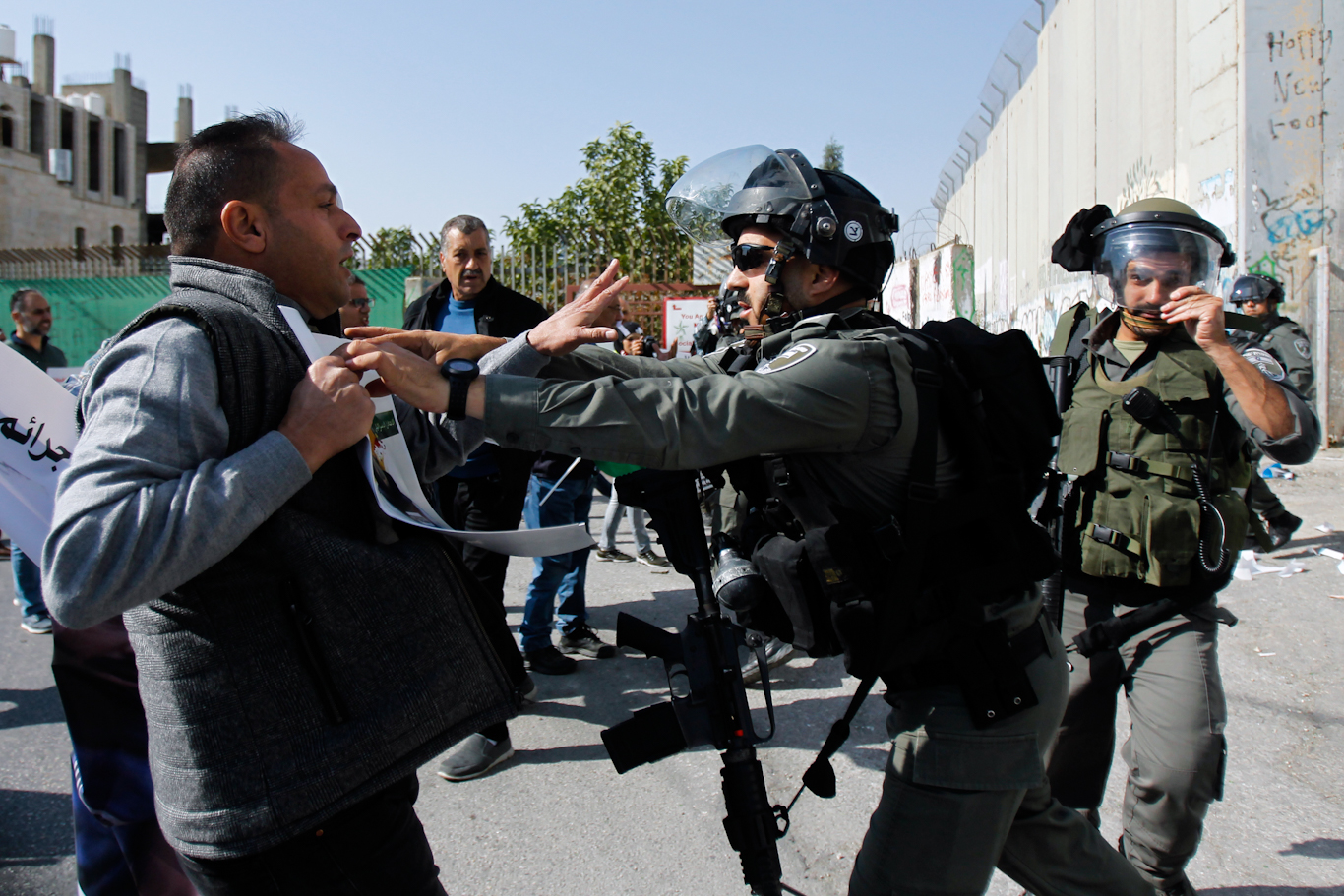
The following Sunday after Amarneh was shot, Palestinian journalists held a sit-in in Bethlehem to express their support. Israel Police dispersed the crowd using tear gas, with dozens of demonstrators suffocating from tear gas inhalation and seven individuals lightly wounded.
Israeli polcie grab a member of The Palestinian Journalists’ Syndicate during a solidarity protest on November 17, 2019, in Bethlehem. Photo | Musa Al-Shaer
On Wednesday, the Israeli army closed the office of Palestine Television in Jerusalem for six months after storming Al-ArzMedia Services Company which provides services to Palestine TV.
Mousa Rimawi, Director General of the Palestinian Center for Development and Media Freedoms (MADA), believes the Israeli army targeted Amarneh.
“I think they are targeting him. Witnesses say that. He said that. This is not the first time they are targeting journalists,” Rimawai said.
We saw it in Gaza, especially last year. When the Israeli army was targeting journalists, killing two of them and injuring tens of journalists by snipers.”
In 2018, Palestinian journalists Yasser Murtaja and Ahmad Hassan Abu Hussein were killed by Israeli snipers just one week apart from each other while covering the Great March of Return protests at the Gaza border.
According to The Palestinian Center Development and Media Freedoms (MADA), 455 Israeli violations and 129 Palestinian violations occurred against Palestinian journalists in 2018  — a more than 52 percent increase in the last two years. During the first half of 2019, 330 violations were documented against Palestinian media  — a 19 percent increase from the same period last year. The majority of these violations comprise physical abuse, arrests or detentions, questioning, preventing coverage and shutting down websites and social media accounts.
Palestinian journalists
Palestinian journalists help a colleague injured during a solidarity protest on November 17, 2019 in Bethlehem. Photo | Musa Al-Shaer
“They want to silence this media who is covering the events relating to the Israeli occupation and to cover their crimes and daily practices in Palestine,” Rimawi said.
The Palestinian Journalists’ Syndicate (PJS) places the number of violations in 2019 higher, at more than 630, with 90 percent of reported attacks executed by Israel. Musa Al-Shaer, a board member of PJS, said MADA’s calculation is lower because they adjust the statistics in order to receive financial aid from the international community.

Facebook’s censorship of Palestinian media

Of the 330 documented violations by MADA, 65 of them were committed by Facebook. In 2016, the Israeli government and Facebook announced they were working together to combat incitement on social media. The driving force behind this partnership was Israel’s accusation that Palestinian violence is fueled by incitement online.
“After that announcement, Facebook began to block Palestinian sites for journalists and media outlets,” Rimawi said. He explained that Facebook has adopted Israel’s definition of incitement when deciding what content to censor. But going by Israel’s standards poses a problem for Palestinians.
“If someone posts a picture of a martyr, that’s incitement for Israelis, but for Palestinians that is normal. You could be posting a picture of your cousin who is a martyr,” Rimawi said.
Palestinians call those who died resisting the Israeli occupation “martyrs”, while Israelis refer to them as terrorists. He mentioned that words like Hamas (which literally translates to excitement in Arabic) and Qassam, the name of the military wing of Hamas, are consistently flagged. In some instances, a person named Qassam might end up with a deactivated Facebook account.
Facebook censorship of Palestinian media is increasing, and Israel appears to be the one steering the wheel. In 2017, 85 percent of Israeli government requests to “remove content deemed harmful or dangerous” was approved.
“We know Israel is pressuring other social media sites like Instagram and Twitter, but there are no agreements between them and Israel,” Rimawi said. “But with Facebook there is.”

Paving the way for Palestinian freedom of press

Amid a sharp rise in violations against Palestinian journalists, MADA is working with other civil society organizations to build a coalition to defend freedom of expression and digital freedom in Palestine. The coalition plans to tackle legislation, government policies, monitoring press freedom, Israeli violations and Facebook restrictions.
“It’s a good thing when people will not be silent, when countries will not be silent when there’s killing of journalists. But it must be linked with policies,” Rimawi said.
Muath Amarneh
Palestinian photojournalist Muath Amarneh lies injured in his hospital bed in Jerusalem. Photo | Delilah Boxstein
Amarneh has frequently experienced Israeli abuse in his ten years of working as a journalist. He was previously shot multiple times by rubber bullets on the lower parts of his body and fired at by water cannons. But this recent attack was the most severe.
Amarneh is currently focused on his recovery but asserts he will seek legal action when he is healed. Despite the trauma of losing his eye, he still plans to continue reporting.
“I won’t stop being a journalist but now I feel unsafe,” Amarneh said. “They could attack my other eye. It will be harder for me to continue what I am doing.”
Feature photo | Palestinian photojournalist Mu’ath Amarneh, seated on the left, moments after being shot in the left eye by an Israeli soldier in Surif, West Bank on November 15, 2019. Photo | Palestinian Information Center

River to Sea Uprooted Palestinian   
The views expressed in this article are the sole responsibility of the author and do not necessarily reflect those of the Blog!