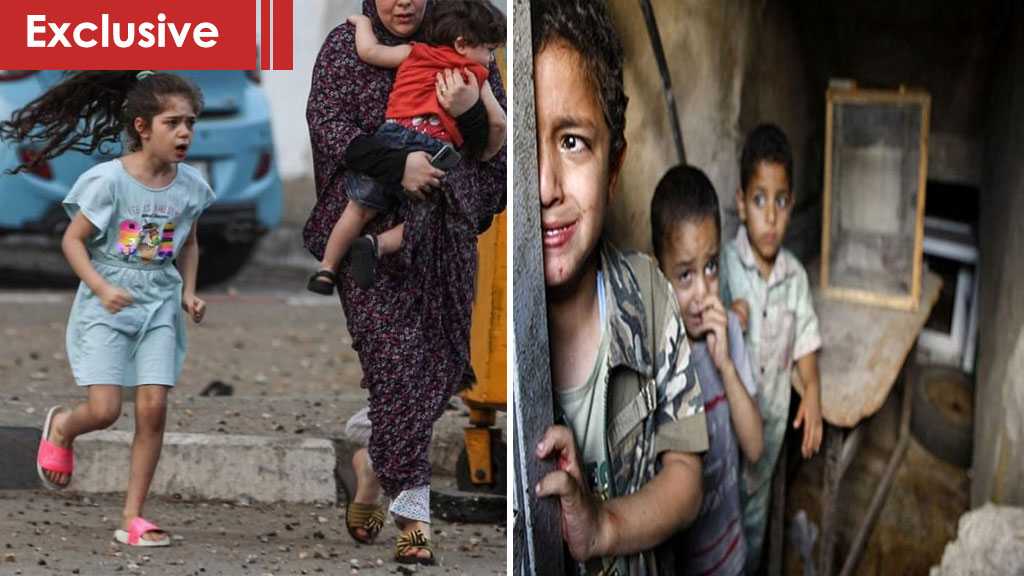
Uprooted Palestinians are at the heart of the conflict in the M.E Palestinians uprooted by force of arms. Yet faced immense difficulties have survived, kept alive their history and culture, passed keys of family homes in occupied Palestine from one generation to the next.
Taking yet another part in unending crimes against Yemeni children, the United States approved a $650m sale of air-to-air missiles to Saudi Arabia, the Pentagon announced.
The announcement brings to light the Biden administration’s first major weapons deal with the Gulf kingdom.
In a statement on Thursday, the Pentagon claimed that the US State Department approved the sale to help Riyadh ‘counter current and future threats.’
It added that Massachusetts-based firm Raytheon would be the “principal contractor” for the sale of AIM-120C-7/C-8 Advanced Medium Range Air-to-Air Missiles [AMRAAM] and related equipment.
The sale comes months after President Joe Biden claims he would end US support for Saudi Arabia’s “offensive operations” in Yemen, including “relevant arms sales.”
The State Department’s bureau of political-military affairs alleged in a series of tweets on Thursday that the missiles are “not used to engage ground targets.”
The sale does not require congressional approval, but lawmakers can block the deal by passing a disapproval bill in the Senate and the House of Representatives.
The missile sale follows the US approval of a $500m helicopter maintenance deal for the kingdom in September.
As a candidate, Biden berated Saudi Arabia over the Yemen war and the killing of US-based journalist Jamal Khashoggi, calling the kingdom a “pariah.”
Saudi Arabia and its allies launched a devastating war against the poorest Middle Eastern country in 2015 to reinstall former president Abd Rabbuh Mansur Hadi, a staunch ally of Riyadh, and crush the Ansarullah resistance movement.
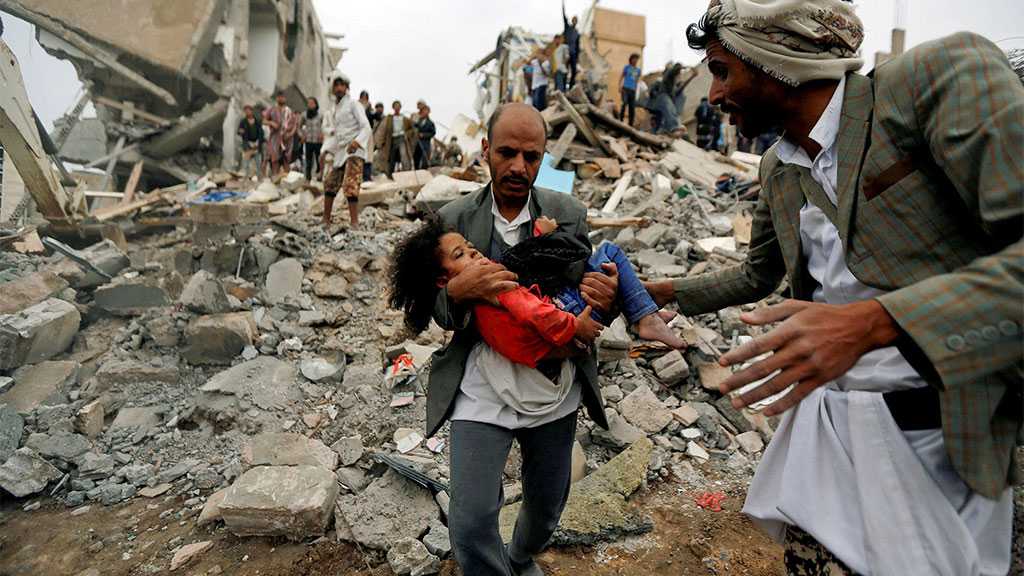
The coalition of aggression, however, has so far fallen way short of the goal. Hundreds of thousands of Yemenis have, however, died ever since amid the aggression and a simultaneous siege that the forces have been imposing on the entire nation.
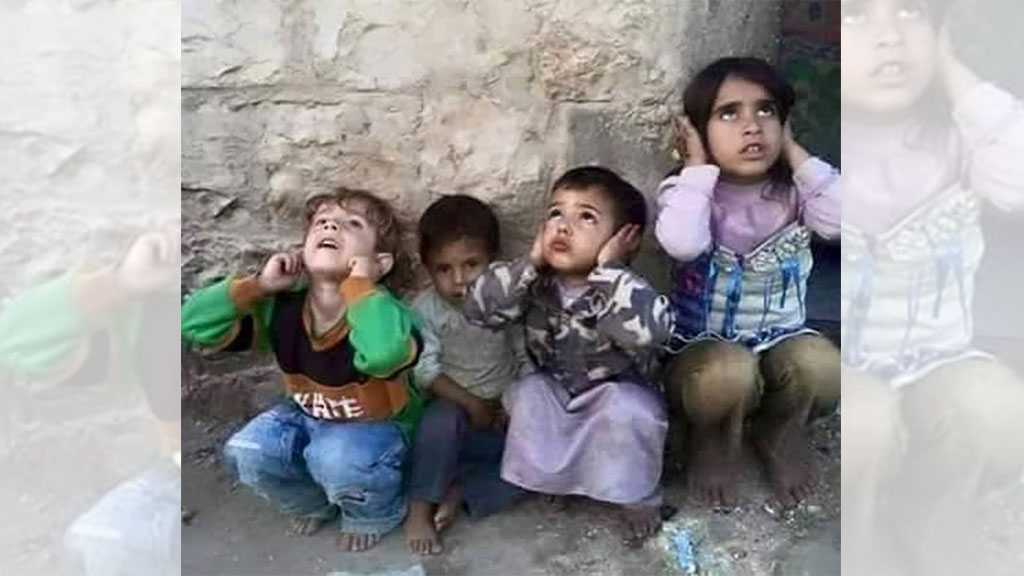
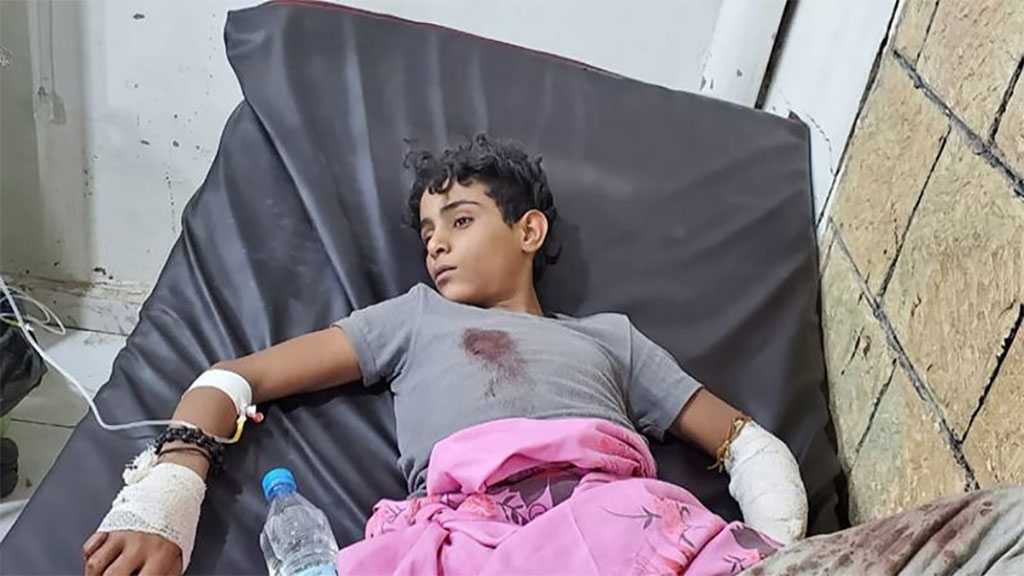
The protracted war in Yemen has killed or maimed at least 10,000 children since the war began in March 2015, which is equivalent to four children every day, the United Nations Children’s Fund [UNICEF] said in October.
Anti-war groups in the United States are urging the Congress to “prevent a human catastrophe” in Yemen by ending military support for Saudi Arabia’s aggression on the war-ravaged country.
The 56 organizations called on American lawmakers in a letter to take advantage of the National ‘Defense’ Authorization Act [NDAA] to end the sale of arms to the aggressors.
“By suspending the sale of arms and ending US participation in the Saudi coalition’s war and blockade, Congress can prevent a humanitarian catastrophe from spiraling further out of control as it reasserts its constitutional authority on matters of war and peace,” the letter read.
Unless the lawmakers take such an action, Washington would remain complicit in the tragedy created by the Saudi monarchy in Yemen, they further suggested, asserting that the lawmakers have the power to “legislate an end to ongoing US complicity in the war and blockade in Yemen.”
“With the help of US logistical and maintenance support, Saudi Arabia’s blockade of Yemen has created untold suffering for tens of millions of people and contributed to hundreds of thousands of deaths,” Hassan El-Tayyab, legislative director for Middle East policy at the Friends Committee on National Legislation, one of the letter’s organizers, said in a statement.
If the lawmakers refuse to endorse an amendment to the bill filed by Rep. Ro Khanna, the US would continue abetting the Saudi kingdom and its crimes against humanity, he noted.
“It’s now critical Congress support Rep. Khanna’s amendment to the FY2022 National ‘Defense’ Authorization Act and finally terminate US participation in Saudi’s aerial operations for the sake of millions of Yemenis in desperate need,” El-Tayyab added. “Members of Congress have two choices: vote for this amendment, or vote for an active US role in crimes against humanity for millions of people, including children.”
The amendment would block funding for “logistical support in the form of maintenance or the transfer of spare parts for aircraft that enable coalition strikes,“ as well as “sharing intelligence for the purpose of enabling coalition strikes.”
It would also oblige the US military not to “command, coordinate, participate in the movement of, or accompany the regular or irregular military forces of the Saudi-led coalition forces.”
Despite the growing outrage among lawmakers and the public, the United States continues to aid and abet the cruel war on the Yemeni nation.
“Without real action, millions of lives are at risk, and the US will be complicit,” Marcus Stanley, advocacy director at the Quincy Institute for Responsible Statecraft, said in a statement. “The Khanna amendment offers an opportunity to genuinely end American support for Saudi aggression and take a crucial step to end the humanitarian crisis in Yemen. We urge a vote for this amendment. Half measures like reporting requirements or partial restrictions will not do, it is time to definitively end our support for this war.”
In February, US President Joe Biden announced that he was ending the US support for the war in Yemen, including “relevant arms sales,” touting the move as part of efforts to restore an emphasis on human rights, but that pledge is yet to materialize.
Saudi Arabia and its regional allies launched a devastating war in Yemen in 2015 to reinstall a former friendly government and crush the popular Ansarullah movement.
Related Videos
The capital Sana’a commemorates the seventh anniversary of the Revolution of 21 Sept
Watch the children’s march entitled The Revolution of September 21st in the Eyes of Yemen’s Children
A military parade of security units on the occasion of the September 21st revolution
Saudi Arabia in Yemen for seven years has committed crimes that were not done by the armies of Hulagu and Genghis Khan, with the countries they invaded. Its siege caused Yemen to reach a great famine and a tragedy described as the worst in the world.
All of the United Nations’ reports about the Yemeni issue were neglected by the Saudi and Emirati regimes. The most prominent of reports was written by the Executive Director of the World Food Program David Beasley, in which he confirmed the death of a Yemeni child every 75 seconds in Yemen.
Speaking to the United Nations Security Council, Beasley said, “I was in Yemen, where more than 16 million people are facing a crisis that reaches the level of hunger and worse.” He warned that 400,000 Yemeni children may die this year, if no urgent intervention is made. “As we sit here, a child dies every minute and a quarter. Are we going to turn our backs on them and look in the opposite direction?” he asked.
A report denounced the West’s lack of awareness of the tragedy of Yemen; rather, they are racing to sell arms to Saudi Arabia and the UAE, colluding with them in the aggression against Yemen. Only 1-7 billion dollars were collected out of the 85/3 billion dollars demanded by the United Nations to help Yemen in facing famine, diseases and disasters of war, which UN General Antonio Guterres described as a “death sentence” for Yemenis.
“The Food Program has announced that nearly a third of families in Yemen suffer from malnutrition and rarely consume foods such as beans, vegetables, fruits, dairy products or meat, as there are families who live on leaves,” the report further stated.
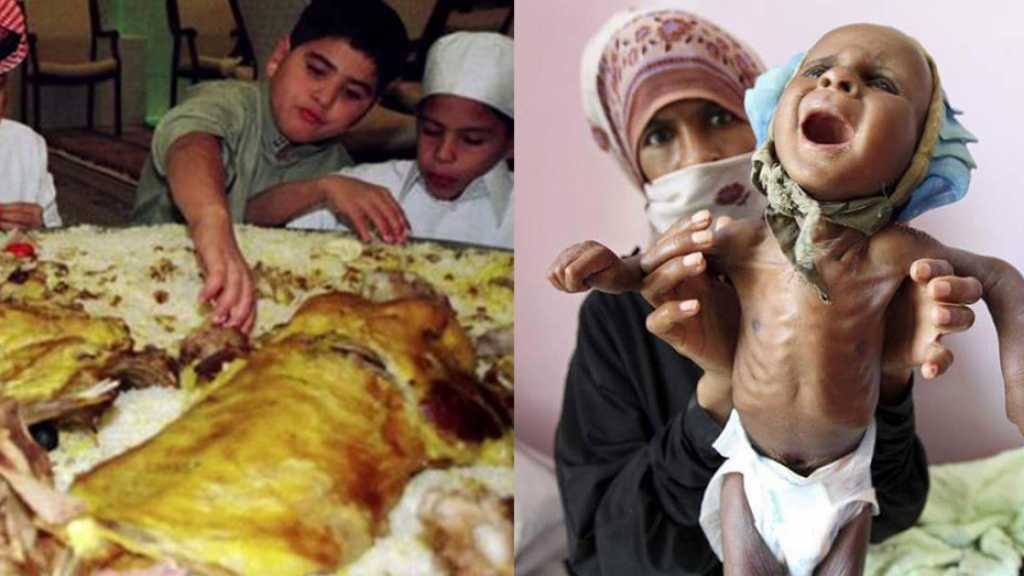
Yemeni vs. Saudi Kids
The report compared the peoples of Yemen and Saudi Arabia and said that the situation is completely different. As Yemenis die of starvation, Saudi officials discuss how to confront obesity, which threatens 70% of the Saudi people.
Because of over-eating, the rate of food loss and waste in Saudi Arabia reaches more than 33%, which is more than 40 billion riyals annually [approximately $11 billion], according to the Saudi Minister of Environment, Water and Agriculture Abdul Rahman bin Abdul Mohsen Al-Fadhli, who called for a highly effective mechanism to reduce the amount of food lost and wasted.
The consultant in laparoscopic and obesity surgery, Dr. Ayed Al-Qahtani, had stated that Saudi Arabia is one of the Arab countries that suffers the most from obesity and severe obesity, with the real obesity rate suffered by individuals in Saudi Arabia is 70%.
Al-Qahtani also mentioned that the number of children suffering from obesity has reached about three and a half million children, at a rate of 18% of children of the kingdom, which calls for the intervention of the concerned authorities to put an end to this scourge that threatens the lives of children in the future.
The US-Saudi aggression committed a new massacre early Thursday in Yemen’s border area of al-Raqo in Saada province less than a day after a similar crime.
Two citizens were martyred and six others were wounded as a result of Saudi missile and artillery shelling on the border area of al-Raqo in Munabbih district.
On Wednesday, Al-Masirah network reported that the border area of al-Raqo was subjected to Saudi missile and artillery shelling, which injured eight civilians, some of whom are in serious condition.
Al-Masirah explained that the al-Raqo market was bombed by the Saudi-led aggression in an indiscriminate manner that lasted for hours, and the Apache helicopters run by the US-Saudi aggression had flown heavily over al-Raqo area since the early morning hours.
In recent weeks, dozens of civilians, including children and women, were martyred and wounded in almost daily crimes committed by the Saudi forces, especially in al-Raqo area and the border areas in general.
In light of its defeats on various frontlines and its failure to achieve any of its objectives, the US-Saudi aggression is notorious for its indiscrimination shown by its numerous attacks against densely-populated centers especially in Saada province, including markets, hospitals, and schools.
Tens of thousands have lost their lives since August 2015, when Saudi Arabia and a number of its regional allies launched its devastating campaign against Yemen.
Eid is the usual occasion during which people, mainly children, celebrate. It is the day they wait and dream of, often sleeping over the Eid’s eve hugging their new clothes, shoes, and perhaps toys.
The unusual is the case some dear nations are passing through… War, famine, blockade and insecurity! In Palestine, the nation of the free people and the occupied land has been around the past week through the bloodiest attack by ‘Israeli’ aggressors. Likewise, Yemen has been in a state of war and blockade for the seventh year in a row.
Palestinians and their Yemeni counterparts are the contemporary oppressed nations in our region. Their Eids are the ones marred by blood and the smell of death.
The US-Saudi blockade and the inhumane practices against Yemenis can best be described through the tight siege targeting airports and seaports, especially Sanaa Airport and the Hudaydah Seaport. It is a matter that makes it almost impossible to get containers of food, clothes and Eid equipment into the country. Prices hence skyrocketed, reflecting negatively on the children’s requirements of ‘joy’.
Meanwhile, the Coronavirus spread played another negative role in reducing visits that usually take place between relatives in times of Eid.
Traditionally, when life was normal, Yemenis used to hold Eid prayers in the early morning, before starting to exchange visits. Children, who accompany their parents, receive a symbolic financial treat from their visited relatives. They also eat some Eid delights such as raisins, nuts, sweets and juice.
They also used to exchange congratulations in gatherings of men and woman apart.
Since the war broke out, however, Yemenis started remembering theirs beloved ones whom they lost due to this war. Their sorrow, nevertheless, does not affect their determination and will to survive and confront this aggression.
Since March 2015, until May 2021, the Saudi-led and US-funded war on Yemen has killed, injured and maimed more than 40,000 civilians. Among the martyrs there are 3000 children and 2000 women. The injured are more than 20,000, not to mention the thousands of displaced citizens
Um Abdul Salam, a housewife, says the Eid under the aggression isn’t like before. Social relationships have changed and been affected by the hard livelihoods among most of the people.
“The impacts of war pushed many to send congratulations via phone instead of visiting each other, as visits would definitely mean more expenses.”
For his part, Hamza, a shop owner in Sabaa Neighborhood in the capital Sanaa, who buys some food, sweets and toys for kids, says:” People’s financial situations are very bad. Most of them cannot afford the basic needs, how would they be able to pay for the Eid requirements?” Then he assures that Yemenis are to stay solid and steadfast without submitting any to the criminal aggressors.
Meanwhile, Mr. Amin Ahmad, a citizen who has been enduring like his nationals a brutal and bloody war, underscores that neither the blockade nor the aggression would prevent the Yemenis from practicing their Eid rituals. “The war would rather push us for more determination to fight and support with money until achieving the greatest victory.”
Another testimony was from the young Um Abdullah [26 years] who said: “I don’t feel the Eid joy ever since my parents and siblings were martyred in a Saudi bombing that targeted our home in Saawan Neighborhood eastern Sanaa. However, despite the pain, I try to spread the joy among my little children.”
Salaries’ cut due to the aggression has also marred the Eid’s joy. It was very challenging for the tireless employees who remained patient amid this harsh circumstance.
Nu’man, a governmental employee, said: “We are able to tolerate this. As a Yemeni proverb says {Eid is the wellbeing.} We will endure this as long as we are confronting the aggression. We will remain steadfast for the sake of the nation.”
Another colleague, Khaled, commented on the matter as saying: “They wanted to break our will and humiliate us by delaying our salaries. They wanted us to submit but we will keep enduring and confronting the aggression. It is enough to buy the children’s clothes and the basic needs.”
The same issue is for Um Ousama [50 years], ana academic who describes the Eid as featureless and lacks the true meaning of joy.
“We, the unpaid employee, didn’t buy new clothes or good sweets. I just bought new outfits for my little children so that they can feel some happiness,” she said.
However, she noted that despite everything, Yemenis are determined to feel the Eid, draw a smile, and continue the path for achieving victory and liberating Yemen from the Al Saud and the US grip that is abusing the country’s wealth and resources. Only then, Eid’s joy will be doubled.
Gaza… A test to the conscience of humanity!
Meanwhile in central Gaza, a young girl received her Eid treat. Unlike other places, where in the background children hear songs and laughter, she went to spend her treat playing with the swing, with bombardment in the background. An ‘Israeli’ rocket hit the place. Yes, the rocket targeted the place where she was swinging with her fellows.
While people prepare for Eid by cleaning their houses for visitors to come and bake Eid delights, another heartbreaking scene showed a few-years-old boy cleaning stains of thick blood from the floor… Why on earth would children experience such monstrous incidents while the rest of the world is busy with the most superficial lifestyles!?
When an adult die, we usually avoid letting children be present at the scenes of funerals, but in Palestine the children are the ones that bid farewell to their martyred parents. The Palestinian children acquire the concept of death even before they learn to speak. But they are also the ones who lecture the world how on earth dignity is felt, nations are protected, and blood can be an offering they willfully sacrifice.
Like Yemen like Palestine, the lands where mothers give birth to heroes and heroes not only make history but also shape the crystal-clear future: Justice to prevail, injustice to fade forever…
During lean years, the US-backed Saudi-led coalition launched a war and a siege on Yemen. The killing machine relished in killing and destroying moving and inanimate objects alike, and the suffocating siege reaped everything else in all areas and services.
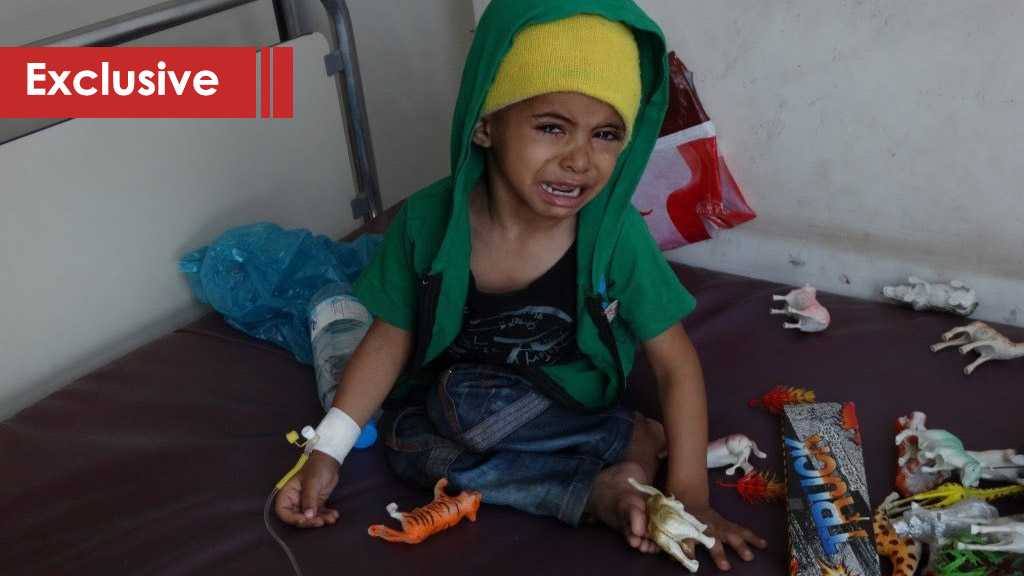
The Leukemia Center at Kuwait University Hospital in Sanaa is the only center in the Republic of Yemen still treating children with leukemia. Being the only one shows the barbarity of the coalition’s targeting. The center itself was not even safe from its targeting.
The center, with its limited capabilities and its medical staff that was affected by the consequences of the unjust siege and the disruption of salaries for four and a half years, has no chance for it to provide to children who come to it from all Yemeni governorates as a last resort from a reality rife with death.
The coalition’s siege continued to target this center and the children patients on a daily basis, killing them slowly and coldly and making their small bodies a hotbed of cancer and a path for its spread. It is also preventing the arrival of the appropriate medicine. The doctors at the center confirm the existence of a frightening spread of leukemia during the years of aggression and the emergence of very complex cases and new types of leukemia in children the specialized center had not previously seen.
The center’s pediatric specialist, Dr. Nasim Al-Ansi, told Al-Ahed News that an increase and exacerbation of the same type of cancer has been observed in recent years, as the incidence of [myeloid leukemia] has increased, and acute lymphocytic leukemia – the most common type – and cases that the center receives are significantly complicated and more difficult to treat.
Al-Ansi pointed out that in a large percentage of cases prior to the aggression, the affected white blood cells did not exceed 50 thousand, but in these years the cases of acute complex lymphocytic leukemia doubled. The number of white blood cells in some cases reached more than 100 thousand, 200 thousand, and 600 thousand. In some cases, it reached one million cancer cells.
What is worse is that the leukemia treatment center, which is the only one in the country, does not have the capacity to deal with these types of complex cancers, and most children suffer major setbacks that doctors cannot treat, especially with the collapsing health situation in the country as a result of the Saudi-led siege and aggression.
According to the pediatric specialist, “The center and its doctors suffer great hardship in treating children with complex cases of cancer, with whom relapses occur during treatment. The center cannot treat them. They need to travel outside the country to be treated in specialized centers and undergo marrow transplant. How is this possible for them when the aggression imposed its siege and closed all ports, including Sanaa International Airport?”
Al-Ahed closely monitors the pain of the children at the leukemia treatment center
On a field tour of the leukemia treatment center, we were surprised by the overcrowding of young patients and their families. Its yards, corridors, and rooms are filled with children waiting painfully and desperately for their turn in taking chemotherapy. This waiting often continues for days, even weeks. A large percentage of them come from distant provinces.
The number of children received by the center has doubled in recent years. In 2019, the center received 159 new cases. These numbers reached nearly 210 new cases in 2020.
Al-Ansi explains that the center “receives cases of leukemia from all governorates, and there is a wide spread of the disease in the governorates of Saada, Hodeidah, Amran, and Hajjah.” These governorates were subjected to the largest percentage of bombing by cluster bombs and prohibited and mysterious weapons. During 2019-2020, cases began to spread significantly in Ibb Governorate, which is one of the most important centers of refuge for the displaced coming from the most targeted and bombed areas.
Where would all these children go, especially since the number of the patients exceeded this modest center’s capacity?
Who will save children with leukemia from death?
Childhood in Yemen is deprived of dreams and hopes in light of the continued tyranny of the countries of arrogance. Young leukemia patients are stuck between their desperate struggle with more complex types of cancer on the one hand, and with no opportunity to cure it and slow down its horrific spread in their bodies due to the lack of medicines as well as the closure of all outlets for treatment abroad on the other.
They also suffer when they see one of their parents floundering in search for the cost of their medication or drowning in debts that accumulate for an open-ended journey with one end, as a result of the difficult living conditions caused by the coalition and siege.
“The blockade created difficulty in providing chemotherapy drugs. Patients wait for more than two weeks for these drugs to arrive. When they arrive, they do in small quantities that do not cover the need. Sometimes some kinds of drugs are available, while others are not,” Al-Ansi states.
These children suffer from cancer and aggression, then they are finally forced to choose death to escape their grief and pain. The death toll from leukemia increased between 2018 and 2020, and according to the center’s statistics, it exceeded 200 deaths.
Some of these children wish that cancer would leave them in this life a little longer for them to have the chance to ask the bosses of the aggression, why do you kill us a thousand times when you can do that to us only once?
The aggression on Yemen has officially entered its seventh year. During the last six years, the international community turned a blind eye to the horrific massacres and violations committed against the Yemeni people which include killing, destruction, starvation, and a siege.
In an interview with Al-Ahed News, Acting Yemeni Minister of Human Rights Ali Al-Dailami detailed the war crimes that the Yemenis endured during the years of aggression.
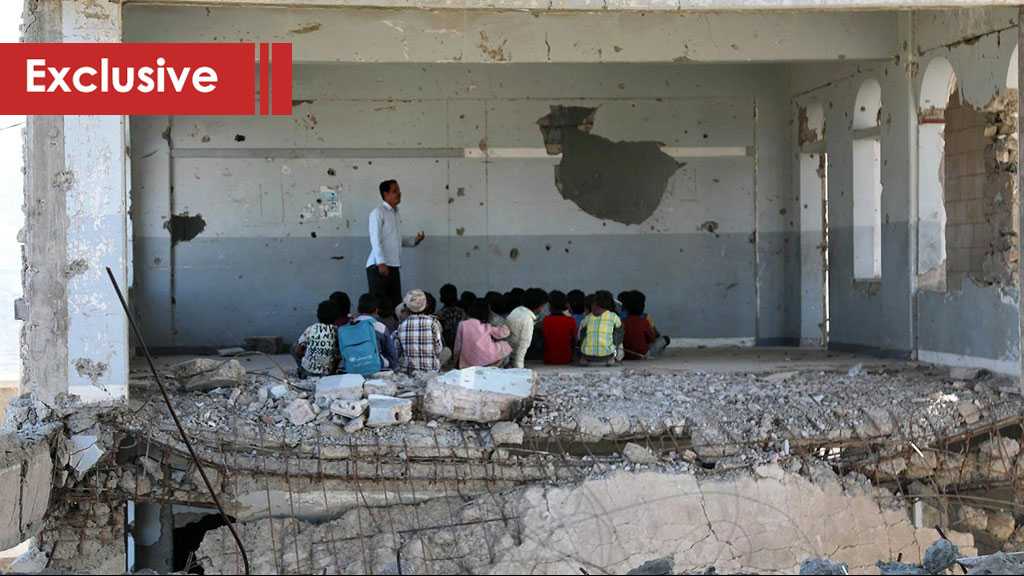
– Destruction of infrastructure: The Saudi-led coalition deliberately destroyed infrastructure, including thousands of hospitals, schools, universities, power plants, roads and bridges, communication networks, and fuel supply facilities. In addition, it destroyed food factories, food storage facilities, transportation networks, drinking water, and irrigation facilities, as well as other civilian facilities that provide basic services. International humanitarian law prohibits the targeting of these sites.
– Starvation and siege: The Saudi-led coalition sought to starve and destroy the Yemeni people by targeting many resources that are essential for the survival of the civilian population. The total blockade imposed on all of Yemen’s land, sea, and air ports is a continuous inhumane practice that causes shortages of basic goods, especially food and medicine.
The Saudi-led forces are blocking the entry of these basic goods that are needed to save lives, and the coalition also intensified its targeting of the port of Hodeida with the aim of halting its maritime navigation service. It completely closed Sanaa airport and strengthened all these inhuman measures by moving the Central Bank of Yemen from the capital to the Aden Governorate, which it occupies and controls through armed proxies. This resulted in salary cuts for state employees that started from the first month that the Central Bank of Yemen was relocated.
– The spread of famine and food insecurity was one of the consequences of the military attacks and sieges on agricultural crops, food storage facilities, livestock, drinking water, and irrigation facilities, in addition to the contamination of wells and irrigation tanks with chemicals and harmful materials that are internationally prohibited. Many lands and agricultural crops were also destroyed due to the use of internationally banned weapons, including phosphorus bombs, white phosphorus, and enriched uranium. These caused a humanitarian disaster, which has long-term effects on women, children, and the elderly.
– During the aggression and the blockade, Yemen faced a major crisis in providing food due to the illegal measures imposed by the coalition that also led to the country’s economic decline. This is widely regarded as one of the main causes of acute food insecurity, in addition to inflation, rising food prices, and the depletion of foreign exchange reserves.
According to an analysis, children in Yemen are the most affected group, as they are at particular risk of acute malnutrition, and they are in dire need of food and medicine. The percentage of the population that is food insecure this year is estimated at around 77% (13.3 million people), with an increase of 21.4% compared to 2017. Around 22.7% of the total population are in Emergency (IPC Phase 4), while 25.6% will soon be in Emergency (IPC Phase 3). With the continuation of the aggression, a large proportion of the population will suffer from acute food insecurity at the end of this year and be classified as living in Famine (IPC Phase 5). The percentage of food insecurity increased during 2018-2019 to 21.4% of the population.
Of course, women and children are the most affected groups by the Saudi-led aggression and blockade and are especially vulnerable to certain diseases, such as malnutrition and anemia.
This includes pregnant women and newborns. Statistics show us the high levels of malnutrition in children and women. More than 2.6 million children under the age of five suffer from malnutrition, including 500,000 who are suffering from severe acute malnutrition, and more than 1.8 million pregnant and lactating women suffer from malnutrition.
– There has also been a sharp decline in access to clean drinking water, decreasing from 10% to 66%, after the water and sanitation sector services were damaged as the coalition targeted dozens of tanks, water wells, springs, and water-raising pumps that run on solar energy. This is in addition to power cuts and lack of fuel, the high average cost of the production unit and the high cost of maintenance (95%), and the inability to pay workers in the sector. Water facilities have been damaged, and water projects in the public and private sectors have ceased to operate (the activities of many local institutions have stopped). The environmental situation in cities and urban areas further deteriorated due to the accumulation of solid waste and garbage. It is estimated that 20.5 million Yemeni people do not have access to clean water.
According to the Consumer Price Index data issued by the Central Bureau of Statistics, the cost of living has recently increased to more than 80%, compared to what it was before the aggression on Yemen. 92.2% of families do not have sufficient funds to secure their basic needs as a result of the aggression.
– There is also the spread of various epidemics and the increase in the number of chronic diseases, including all kinds of cancers caused by the coalition’s use of internationally prohibited weapons. Meanwhile, a high number of patients are suffering from kidney failure and diseases related to the heart, liver, and other vital organs.
The death rate is rising due to diseases and the lack of medicine.
Prior to the Saudi-led aggression, the rate of cancer incidence was 2.3% per year. It has since increased by 5.5% as a result of the coalition’s use of internationally banned and carcinogenic weapons. In March 2021, the number of people with carcinomas increased to 72,000. Meanwhile, the percentage of patients heading to consultation centers for periodic follow-ups and the external administration department for chemotherapy decreased to 20% during the aggression because people can’t reach health facilitates safely amid the bombing of bridges and roads.
The provision of ultrasound services, as well as surgical interventions and radiation therapy, decreased by 50% during the aggression. It also became difficult to obtain radioactive sources and linear accelerators. The radiotherapy service may be permanently stopped due to the poor efficiency of the currently available radioactive source, which may cause a humanitarian disaster for cancer patients.
The provision of some diagnostic services that were provided free of charge to patients in the center has stopped, and 50% of the chemical medicines required for patients, especially targeted therapies that need to be transported at certain temperatures, have been discontinued. The provision of essential medicines, antibiotics, and intravenous solutions decreased by 80% due to the blockade and the scarcity of financial resources.
Meanwhile, 40% of the diagnostic and medical equipment stopped working due to maintenance issues and the unavailability of spare parts. There are approximately 28 dialysis centers that may have to halt operations completely and no longer provide services to 120,000 people with kidney failure and diabetes, in addition to thousands of people with cancer and thalassemia. On the other hand, there are more than 75,000 patients who need treatment abroad. They are facing death as a result of the closure of Sanaa International Airport that is preventing them from traveling for medical treatment.
So far, there are more than 2,326,568 cholera infections and suspected cholera cases, and the number of deaths from this epidemic has reached 3,786.
The coalition used internationally banned weapons in many of its attacks. Medical reports confirmed that the weapons and ammunition used by the coalition caused deformities of fetuses and newborns, especially those weapons that were used in the governorates of Saada, Hodeida, Sanaa, and Taiz. These are the same weapons that the US forces used in their aggression against Iraq in 2004, especially in Fallujah. The attacks caused the deformation of hundreds of newborns and fetuses. Humanitarian organizations have warned against the use of these weapons in Yemen. These are the same weapons the Zionist entity used in the Gaza Strip in 2009, also resulting in the deformation of dozens of newborns and fetuses.
In many of the wars and armed conflicts that occurred in the past, civilian victims, especially women and children, are neglected. The sound of planes and missiles and sudden explosions result in a number of deaths, especially among women and children, and affect pregnant women and fetuses. Preliminary statistics, registered by the Ministry of Public Health and Population, showed that 450 women in 2015 suffered miscarriages due to fear, and anxiety caused by the bombardment.
Following the detailed presentation on the deteriorating humanitarian situation in Yemen as a result of the Saudi-American aggression and blockade, Acting Minister for Human Rights, Ali Al-Dailami, reviews Yemen’s Hiroshima, a report recently issued by the Ansarullah Political Bureau’s Rights and Legal Department.
In his interview with Al-Ahed News, Al-Dailami pointed out that this is the first human rights report that shows the scale of the coalition’s crimes that are being overseen by the US, Saudi Arabia, and the UAE and their mercenaries from within. It also shows the coalition’s brutality towards civilians. The reporter’s name obviously refers to the atrocities committed by the Americans in Japan during World War 2 – namely the nuclear strike on Hiroshima, which killed millions of people and destroyed the city. This is what America, its aides, and its tools are doing in Yemen. They are targeting both the land and people, with various types of lethal weapons that have long-term effects such as cluster bombs. The title of the report illustrates the brutal model being applied in Yemen, and against the Yemeni people.
Al-Dailami explains that the report documented the crimes the coalition committed against children, women, and the elderly using pictures and eyewitness testimonies. These crimes mentioned in the report are only a small part of what was documented by specialists who followed international standards and methodology in the monitoring and documentation process. There are still dozens of crimes and violations that have killed people, and the report focused largely on one of the most serious crimes stipulated in the Rome Statute of the International Criminal Court, which is the premeditated murder that falls under war crimes, crimes against humanity, genocide, and the crime of aggression.
Al-Dailami notes that there will be other issues and publications on the various direct and indirect crimes that have affected Yemen and its people as well as their implications and repercussions on people’s lives.
The report includes three main parts:
– The rules of international law and the violations of the aggression thereof
– The alleged pretexts for the countries of aggression
– The crimes of the countries of aggression as narrated by the documentation team, victims, and witnesses
In response to Al-Ahed’s question about the role of human rights organizations in what is happening in Yemen, Al-Dailami points out that these groups acted against the basic framework of their work and did not adhere to the humanitarian agenda but rather to an agenda that corresponds to the demands of the coalition. The following are examples:
– International Resolution 2342: It indicates the poor humanitarian situation in Yemen that has become catastrophic in most of the country’s governorates and regions. But it doesn’t include any condemnation of the coalition and its daily crimes. This indicates UN and international collusion with the forces of aggression, which means more destruction, collapse, and the continuous deterioration of basic services.
– The closure of Sanaa International Airport: This is an unjustified closure. Meanwhile, the United Nations missions continue to use Sanaa Int. Airport for their flights exclusively without opening humanitarian and commercial services to the Yemenis. This makes the United Nations the main accomplice for the countries of aggression and fully responsible for the worsening humanitarian situation.
– Blockading ports and maritime outlets: The United Nations is fully aware of the extent of the impact of the imposed blockade on port traffic in Hodeida, Salif, and Ras Issa in particular. This situation imposed on the maritime ports is witnessed by the United Nations, but it continues to mislead the world in service of the Saudi-led coalition, which uses the blockade as a means of war on Yemen and the Yemenis.
– According to Al-Dailami, the speech of the Secretary-General of the United Nations at the opening of the fifth high-level humanitarian pledging event for Yemen was also an indication of the disregard for the suffering of Yemenis. Antonio Guterres acknowledged that famine is weighing on Yemen and the race is underway to save Yemen from the famine that most of the Yemeni people may be exposed to. He affirmed that there are quite a few Yemenis starving to death in conditions similar to famine.
– Meanwhile, reports from the Office of the United Nations High Commissioner for Human Rights in Yemen documented civilian casualties and the killing of a large number of civilians in the Shada District of Saada Governorate as a result of airstrikes and an intense attack by a military helicopter. It is clear that the United Nations body records the criminal incident and identifies the perpetrator. However, it does not take any measures related to the protection of civilians and redress for the victims. In addition, the United Nations is unable to hold the coalition’s forces accountable for their crimes against civilians.
Al-Dailami adds that the Yemenis are still following up on the statements of this agency and its officials, which are full of expressions of concern, and fear.
Jamie McGoldrick, the Humanitarian Coordinator for Yemen, expressed his grave concern about reports of airstrikes on civilians in Saada Governorate, including attacks on a house and a private car in two separate areas that resulted in the killing of civilians, including women and children.
The UN agencies keep reminding the parties to the conflict without taking any action that would stop the aggression and its tools from killing civilians in all Yemeni governorates. The following is from one of its officials:
“We recall that indiscriminate or disproportionate attacks or attacks targeting civilian objects such as markets are prohibited under international humanitarian law. We remind all parties to the conflict of their obligation to ensure full respect for international human rights law and international humanitarian law. All incidents resulting in civilian casualties … must be thoroughly investigated to ensure accountability when breaches of international law have been found to have taken place.”
At the top of the list of acts of complicity is the removal of the Kingdom of Saudi Arabia from the list of countries and unofficial bodies that failed to adopt the measures necessary to protect children. It had a direct role in child recruitment, detention, kidnapping, sexual violence, and attacks on schools and hospitals.
The Secretary-General cited a continuous and significant decrease in the number of deaths and injuries in the airstrikes and the implementation of the provisions of a memorandum of understanding calling for the adoption of a program of activities aimed at strengthening prevention and protection measures.
He also added that the program will be subject to monitoring for a period of 12 months and that any failure in this field will lead to the inclusion on the list of the same violations.
“The secretary-general has brought shame on the UN by removing the Saudi-led coalition from his ‘list of shame’ even as it continues to kill and injure children in Yemen,” HRW’s Children’s Rights Advocacy Director Jo Becker said as she reacted to this UN decision.
For her part, Adrian Labar, the director of Watchlist, an NGO concerned with children and armed conflict, said that the removal “sends the message that powerful actors can escape the killing of children.” She called for an “independent, objective, and transparent evaluation of the process that led to the decision” of removing Saudi Arabia from the list of shame.
The Saudi-led coalition remained on the blacklist for three years, as it was added to the list in 2016. It was later removed after protests by Saudi Arabia. The Secretary-General of the United Nations at the time, Ban Ki-moon, accused Saudi Arabia of exerting unacceptable pressure on the United Nations, as allied countries have threatened to cut off funding for humanitarian aid programs.
According to Al-Dailami, evidence of collusion, condemned by all Yemeni society, people, and institutions, is evident through the stance of the international community towards the coalition’s practices – it gives the coalition more room to commit crimes against Yemenis every day. This stance is a reflection of the lack of responsibility and appreciation of the magnitude of the humanitarian situation in Yemen, which goes beyond just being a political crisis.
In response to a question about whether the continuation of the aggression will contribute to the subjugation of the Yemeni people, Al-Dailami asserts that the Yemeni people have conveyed their message to the world.
The plan to occupy Yemen was concluded in the US capital and cooked in the kitchens of the American intelligence. It was decided that it will only take two weeks. But here we are, seven years later! They thought that things would go according to their plan. However, God’s plan and kindness to the army, the popular committees, and the missile force, the supervision of a wise leadership – represented by Sayyed Abdul Malik Badreddine al-Houthi – with strong confidence in God and its representative, and the steadfastness of the Yemeni people have foiled all external bets. There is no doubt that solidarity and support are important from a leader like His Eminence Sayyed Hassan Nasrallah and the Islamic Republic.
Al-Dailami notes that the ongoing siege is killing the Yemeni people, and it has become tighter since Biden took office and announced that he would seek peace in Yemen. This is his way of building peace through blackmail. These are their initiatives, and this is their alleged peace. International silence clearly and explicitly confirms that laws, international agreements, the Universal Declaration of Human Rights, and the United Nations Charter have died and are only a cover for the interests of major countries, even at the expense of dead women and children.
Al-Dailami stressed that the Yemeni people depend on God and move with their steadfastness to defend against injustice and their just cause. As for the countries of aggression, they are losers. He points out that the Yemeni people convey the most wonderful examples of sacrifice, and steadfastness. They insist on the independence of their country and respect for its sovereignty. They are steadfast, defiant, proud, and a great people.
Addressing the forces of aggression, Al-Dailami says: “Haven’t you had enough of killing civilians, especially children and women? Haven’t you had enough lessons to learn from great men? You are facing the Yemeni people! The saying tells you, ‘Yemen is the graveyard of invaders.’”
تقول الأمم المتحدة إن 3.6 مليون يمني يواجهون نقصاً طارئاً في المواد الغذائية، وأن 16500 منهم وصلوا إلى مستويات كارثية.
طفل يعاني من سوء التغذية مع والدته في مخيم للنازحين في محافظة حجة شمال اليمن
قالت صحيفة “نيويورك تايمز” الأميركية إنه للمرة الثانية خلال 3 سنوات، يخيم خطر المجاعة على نطاق واسع على اليمن، الدولة التي مزقتها الحرب، حيث يتشرد الملايين ويكافحون يومياًُ للعثور على الطعام.
وأضافت أن الحرب قد أدت إلى نقص مزمن في الغذاء في اليمن، وهي ما كانت بالفعل أفقر دولة في العالم العربي.
وتم تفادي المجاعة في عام 2018 فقط من خلال التدفق الكبير للمساعدات الأجنبية. لكن جماعات الإغاثة تقول إن التهديد أكبر هذه المرة مع اشتداد الحرب، وتفشي الوباء الذي جعل الدول المانحة أكثر تركيزاً على الشؤون الداخلية.
وقالت الصحيفة إنه عندما أصيب ابن إيمان مرشد البالغ من العمر 8 أشهر بحمى وقيء، أمضت ثلاثة أيام في محاولة الذهاب إلى أقرب عيادة، وفي النهاية خرجت سيراً على الأقدام لمدة ساعتين مع طفلها. وحتى بعد أسبوع من العلاج، تركه سوء التغذية الحاد ضعيفاً وبالكاد هو قادر على الحركة.
وتابعت “نيويورك تايمز”: تقول الأمم المتحدة إن 3.6 مليون يمني يواجهون نقصاً طارئاً في المواد الغذائية، وأن 16500 منهم وصلوا إلى مستويات كارثية. وتقدر المنظمة الدولية أن 400 ألف طفل يمني معرضون لخطر الموت جوعاً.
نقله إلى العربية: الميادين نتإن الآراء المذكورة في هذه المقالة لا تعبّر بالضرورة عن رأي الميادين وإنما تعبّر عن رأي الصحيفة حصراً
For the second time in three years, the threat of widespread famine hangs over the war-torn country, where millions are displaced and struggle daily to find food.
A 4-year-old child suffering from malnutrition with his mother at a camp for internally displaced people this month in Yemen’s northern Hajjah province.Credit…Essa Ahmed/Agence France-Presse — Getty Images
AL HARF, Yemen — The mother’s first challenge when her spindly 8-month-old son came down with a fever, diarrhea and vomiting was to get from their poor, isolated village in northern Yemen to the nearest clinic.
After three days of failing to find a ride, she set out on foot, carrying her sick child for two hours to reach the medics who immediately recognized yet another case in Yemen’s spiraling crisis of acute malnutrition.
Even after a week of treatment with enriched formula, the boy, Sharaf Shaitah, lay motionless on a hospital bed, his bones peeking through the skin of his twiggy limbs. Asked if her family had enough to eat, his mother, Iman Murshid, replied, “Sometimes we have enough, sometimes we don’t.”
Six years into a war that has killed hundreds of thousands of people, shattered the country and battered much of its infrastructure, Yemen faces rising rates of hunger that have created pockets of famine that aid groups warn are likely to grow, leaving even more malnourished Yemenis vulnerable to disease and starvation.
The war has led to chronic food shortages in what was already the Arab world’s poorest country. A widespread famine was averted in 2018 only by a large influx of foreign aid. But the threat is greater this time, aid groups say, as the war grinds on, families grow poorer and the coronavirus pandemic has left donor nations more focused on their own people.
“The famine is on a worsening trajectory,” said David Beasley, the executive director of the World Food Program, in an interview after returning recently from Yemen. “Our biggest problem now is lack of money — and the war. Six years of war has completely devastated the people in every respect.”
Nearly half of Yemen’s population, 13.5 million people, are struggling to get enough food, according to the United Nations. That number is expected to rise by nearly three million by the end of June, largely because funding shortfalls have reduced how many people aid agencies can feed.
The United Nations says that 3.6 million Yemenis are already in an “emergency” stage of food shortage, and 16,500 have reached “catastrophe.” It estimates that 400,000 children are at risk of dying of hunger.
“If we don’t get them on full rations soon, I just don’t imagine we won’t have a full-scale famine,” Mr. Beasley said.
A World Food Program distribution site last year in Sana, Yemen.Credit…Khaled Abdullah/Reuters
Yemen has been on a downward spiral since 2014, when rebels allied with Iran and known as the Houthis seized the country’s northwest, including the capital, Sana, sending the government into exile.
In 2015, a coalition of Arab countries led by Saudi Arabia and backed by the United States began a bombing campaign aimed at ousting the Houthis, but the war settled into a stalemate, with competing administrations in the north and south and attacks frequently killing civilians.
Aid groups have reported that coalition airstrikes, often using American munitions, have been the leading direct cause of civilian casualties, killing thousands of people. In 2019, Congress voted to end U.S. support for the Saudi-led campaign, but President Donald J. Trump vetoed the measure.
Within days of taking office, President Biden froze some arms sales to the coalition and halted intelligence and logistical support for it. He has appointed a high-level envoy to push for peace talks, and Saudi Arabia has announced a new peace plan, but those efforts have yet to make concrete progress.
The growing hunger crisis stems from the wider breakdown of Yemen’s economy during the war, experts say. The United Nations estimates that the war has claimed more than 200,000 lives, mostly from indirect causes like hunger and disease.
The shattering of the country has displaced millions of people, separating them from their livelihoods and leaving them dependent on aid. Even people who still have jobs have been left destitute. The competing governments in the north and south have struggled to pay salaries, and a drop in the value of Yemen’s currency has rendered imported products unaffordable in a country that imports nearly all of its food.
Economic slowdowns in wealthy Gulf countries have cut into remittances sent home by Yemeni expatriates, an economic lifeline for many families. An air and sea blockade by the Saudi-led coalition on Houthi-controlled territory has restricted imports of vital goods like fuel.
Aid groups warn that spreading hunger contributes to health problems that Yemen is not equipped to deal with, especially among children, and that more people could end up dying from illnesses exacerbated by hunger than from the war itself.
“The truth is that people don’t have enough food and they can die from causes related to that,” said Bismarck Swangin, a spokesman for UNICEF in Yemen. “When you say famine-like conditions, people’s bodies are collapsing because they don’t have enough food.”
The crisis has fallen hard on rural clinics in areas battered by war.
A Yemeni mother feeding her malnourished child at a maternity and children’s hospital this month in Sana.Credit…Mohammed Huwais/Agence France-Presse — Getty Images
The clinic where Ms. Murshid brought her son, the Harf Sufian Rural Hospital, about 85 miles north of Sana, receives as many as 40 malnutrition cases per month.
Its medics have only six beds for malnourished children and treat them with enriched formula and vitamin supplements provided by aid organizations. But they lack antibiotics to treat associated infections and isolation rooms to prevent children with measles or respiratory infections from passing them to other patients.
The clinic also lacks an intensive care unit for children who arrive there in critical condition. Many of them don’t survive long enough to reach better-equipped facilities.
“Most cases die due to the lack of an I.C.U.,” said Muhammad al-Qadhi, a nutritionist, flipping through photos of bony children with hollow eyes who have died in the clinic.
The number of malnutrition cases the clinic handles has climbed steadily, said Abdulelah Otilah, the director, but its services have been jeopardized by funding cuts by international aid groups. The clinic has not received a fuel shipment since December and is down to its last 60 liters of diesel for the electricity generator that powers incubators for premature babies.
Unless more fuel arrives, “death then looms large,” Dr. Otilah said. “We can’t help but ask God for support.”
Yemen faced the threat of famine in 2018, prompting large donations from countries including the United States, the United Arab Emirates and Saudi Arabia, which also allocated $2 billion to support Yemen’s central bank.
Those measures pulled the country back from the brink, but without solving Yemen’s underlying problems. Early last year, when donor countries were shifting their focus to protecting their own populations and economies from the coronavirus pandemic, the aid budget for Yemen fell short again and hunger increased.
A U.N. pledging conference on March 1 aimed to raise $3.85 billion to help Yemen avoid famine. But participating countries committed less than half that much, $1.7 billion, forcing U.N. agencies to scale back their plans.
Patients undergoing dialysis treatment at a hospital in the port city of Al Hudaydah.Credit…Agence France-Presse — Getty Images
“Cutting aid is a death sentence,” the U.N. secretary general, António Guterres, said of the outcome.
Rafat al-Akhali, a fellow at the Blavatnik School of Government at Oxford University who studies Yemen, said that frustration with the lack of progress toward ending the war, questions about the efficacy of the United Nations and concerns about Houthi interference with aid delivery had all contributed to reduced donations.
Foreign aid can help Yemeni families avoid catastrophe, he said, but only an end to the war can ease Yemen’s many crises.
“The real solution is for the conflict to stop and for some semblance of normality to be restored, but without that what are you left with other than aid coming in from U.N. agencies or an injection of cash?” he said.
In another rural clinic near the town of Qaflat Athr, also north of Sana, Amna Hussein, 15 months old, lay weakened by diarrhea and vomiting linked to malnutrition. She had been treated in the same clinic last year and had improved, her mother said, and they had returned each week for nutritional supplements to keep her healthy. But last month, because of funding cuts, the supplements ran out and now Amna was back in the clinic.
Her mother, who declined to give her name because of shame, said that she and her four daughters had left her husband and moved in with her brothers, who had barely enough to feed them.
“We are like refugees in other people’s home,” she said. “You can only appreciate whatever is provided.”
Shuaib Almosawa reported from Al Harf, Yemen, and Ben Hubbard from Beirut, Lebanon. Rick Gladstone contributed reporting from New York.
The man bankrupting America
-
“Go F*** Yourself, Scott: A Full Background Check on The Man Bankrupting
America, Human Skin Tag, Scott Bessent.“ (Blundell).In the same week,
different US...
Occult Utopia Of Jewish Golden Age
-
Occult Utopia Of Jewish Golden Age September 6 2026
___________________________________ More Vids! +BN Vids Archive! HERE!
________________________________...
And You Remain Impossible to Erase
-
There you are, the inspiring Imam, forever present in the conscience of the
honorable and the hearts of the loyal.
Father Dave Smith, Pray For (Mufti) Dr. Hassoun
-
Abducted by the terrorist regime in Syria in 2025, Sheikh Hassoun has been
sentenced to life in prison I spoke with Father Dave Smith, an Australian
Anglic...
Report on Beth Israel vigil 08-15-26
-
*Charlie Kirk and JFK*
John F. Kennedy was assassinated under questionable circumstances on
November 22, 1963, and Charlie Kirk fell on September 10 of la...
On The Road To International Anarchy
-
ON THE ROAD TO INTERNATIONAL ANARCHY— An Analysis (14 August 2026) by
Lawrence Davidson Part I — The Turn Toward […]
-
Hello all,
It is with great sadness that I share with you the passing of our beloved
sister, Mother, and Grandmother, the individual that you all knew ...
Best Horror Podcast
-
Best Horror Podcast Introduction: Horror podcasts […]
The post Best Horror Podcast appeared first on Copper Shock Horror Podcast.
Ikhras Endorses Muntadhar Al-Zaidi
-
“Oh parties of banditry and sectarianism and corruption, we have come and
our goal is to destroy you.” Ikhras formally endorses Muntadhar al-Zaidi,
Iraqi j...
Prince Charles: Foreign Jews behind bloodshed in ME
-
In May, 2017, British Crown Prince Charles declined an invitation from
Zionist entity’s president Reuven Rivlin‘s to attend the 100th anniversary
of the no...
Palestinian Women – One for All, All for One
-
Honouring All Palestinian Women by Honouring Three: Hanin Zoabi, Ahed
Tamimi, Samah Sabawi Vacy Vlazna “Palestinian women have always stood side
by side ...
US’s Saudi Oil Deal from Win-Win to Mega-Lose
-
By F. William Engdahl Who would’ve thought it would come to this? Certainly
not the Obama Administration, and their brilliant geo-political think-tank
neo-...
-
*Mordechai Vanunu wins human rights prize of Brazilian Press Association *
* http://www.alternativenews.org/english/index.php/features/updates/7038-mordechai...
Abdul Aziz Rantissi:
"My ultimate wish, my God, is to attain martyrdom,"...God granted him his wish on April 17, 2004, at the hands of Israeli assassins.