Uprooted Palestinians are at the heart of the conflict in the M.E Palestinians uprooted by force of arms. Yet faced immense difficulties have survived, kept alive their history and culture, passed keys of family homes in occupied Palestine from one generation to the next.
Chinese Foreign Minister Wang Yi’s reception of leaders of the Taliban movement at the end of July is the first indicator of the nature of future cooperation between the two sides, even before the movement’s entry into the Afghan capital of Kabul in mid-August.
The Taliban has a cooperative relationship with China, which shares a border with Afghanistan that is only 76 kilometers long. The (Taliban) movement says it hopes to secure much-needed economic benefits and Chinese investment in Afghanistan.
The Taliban spokesman noted that China’s assistance will help the movement to revitalize the country’s economy, and added that China is a vital outlet for Afghanistan into the international market, especially because access to foreign markets is hampered by sanctions and the absence of international recognition. Thus, cooperation with China is a timely opportunity for the Taliban movement.
Access to these markets requires a modern transportation network, which prompted the Chinese Sany Group to express its willingness to invest in Afghanistan. The company contributes to establishing what is known as the Belt and Road Initiative, a project (through which) China plans to expand its international trade influence.
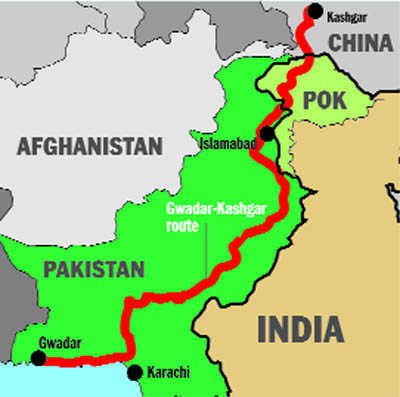
China has long sought to include Afghanistan in the China-Pakistan economic corridor, a part of the Belt and Road Initiative, and the Taliban confirmed that it supports this initiative since it serves the development and prosperity of the region.
Another vital challenge for the Taliban movement is the power crisis, an (area) which would form a major investment opportunity, as only 35% of Afghans have access to electricity, and 70% of Afghanistan’s electricity needs are imported from abroad.
As for the rich natural wealth and reserves that Afghanistan enjoys, they seem to be a priority in the joint plans for cooperation, considering that the Taliban confirmed that copper mines in Afghanistan will be back in operation with the help of China.
Over a week ago the excruciatingly slow Doha peace talks between the Kabul government and the Taliban resumed, and then they dragged on for two days observed by envoys from the EU, US and UN.
Nothing happened. They could not even agree on a ceasefire during Eid al-Adha. Worse, there’s no road map for how negotiations might pick up in August. Taliban supreme leader Haibatullah Akhundzada duly released a statement: the Taliban “strenuously favors a political settlement.”
But how? Irreconcilable differences rule. Realpolitik dictates there’s no way the Taliban will embrace Western liberal democracy: They want the restoration of an Islamic emirate.
Afghan President Ashraf Ghani, for his part, is damaged goods even in Kabul diplomatic circles where he’s derided as too stubborn, not to mention incapable of rising to the occasion. The only possible solution in the short term is seen as an interim government.
Yet there is no leader around with national appeal – no Commander Massoud figure. There are only regional warlords – whose militias protect their own local interests, not distant Kabul.
While facts on the ground spell out balkanization, the Taliban, even on the offensive, know they cannot possibly pull off a military takeover of Afghanistan.
Russia, China, Pakistan and the Central Asian “stans” – everyone is trying hard to circumvent the stalemate. Shadow play, as usual, has been in full effect. Take for instance the crucial meeting of the Collective Security Treaty Organization (former Soviet states) – nearly simultaneous with the recent Shanghai Cooperation Organization summit in Dushanbe and the subsequent Central Asia-South Asia connectivity conference in Tashkent.
The CSTO summit was 100% leak-proof. And yet, previously, they had discussed “possibilities of using the potential of the CSTO member states” to keep the highly volatile Tajik-Afghan border under control.
That’s very serious business. A task force headed by Colonel-General Anatoly Sidorov, the chief of the CSTO Joint Staff, is in charge of “joint measures” to police the borders.
Now enter an even more intriguing shadowplay gambit – met with a non-denial denial by both Moscow and Washington.
The Kommersant newspaper revealed that Moscow offered some “hospitality” to the Pentagon at its military bases in Kyrgyzstan and Tajikistan (both SCO member states). The objective: keep a joint eye on the fast-evolving Afghan chessboard – and prevent drug mafia cartels, Islamists of the ISIS-Khorasan variety and refugees from crossing the borders of these Central Asian ‘stans.
What the Russians are aiming at – non-denial denial withstanding – is not to let the Americans off the hook for the “mess” (copyright Sergey Lavrov) in Afghanistan while preventing them from reestablishing any offshoot of the Empire of Bases in Central Asia.
They established bases in Kyrgyzstan and Uzbekistan after 2001, although they had to be abandoned later in 2004 and 2014. What is clear is there’s absolutely no chance the US will re-establish military bases in SCO and CSTO member nations.
Birth of a new Quad
At the Central Asia-South Asia 2021 meeting in Tashkent, right after the SCO meeting in Dushanbe, something quite intriguing happened: the birth of a new Quad (forget that one in the Indo-Pacific).
This is how it was spun by the Afghan Ministry of Foreign Affairs: a “historic opportunity to open flourishing international trade routes, [and] the parties intend to cooperate to expand trade, build transit links and strengthen business-to-business ties.”
If that sounds like something straight out of the Belt and Road Initiative, well, here’s the confirmation by the Pakistani Foreign Office:
“Representatives of the United States, Uzbekistan, Afghanistan and Pakistan agreed in principle to establish a new quadrilateral diplomatic platform focused on enhancing regional connectivity. The parties consider long-term peace and stability in Afghanistan critical to regional connectivity and agree that peace and regional connectivity are mutually reinforcing.”
The US doing Belt and Road right into China’s alley? A State Department tweet confirmed it. Call it a geopolitical case of “if you can’t beat ’em, join ’em.”
Now this is probably the only issue that virtually all players on the Afghanistan chessboard agree: a stable Afghanistan turbo-charging the flow of cargo across a vital hub of Eurasia integration.
Taliban spokesperson Suhail Shaheen has been very consistent: the Taliban regard China as a “friend” to Afghanistan and are eager to have Beijing investing in reconstruction work “as soon as possible.”
The question is what Washington aims to accomplish with this new Quad – for the moment just on paper. Simple: to throw a monkey wrench into the works of the SCO, led by Russia-China, and the main forum organizing a possible solution for the Afghan drama.
In this sense, the US versus Russia-China competition in the Afghan theater totally fits the Build Back Better World (B3W) gambit, which aims – at least in thesis – to offer an alternative infrastructure plan to Belt and Road and pitch it to nations from the Caribbean and Africa to the Asia-Pacific.
What is not in question is that a stable Afghanistan is essential in terms of establishing full rail-road connectivity from resource-rich Central Asia to the Pakistani ports of Karachi and Gwadar, and beyond to global markets.
For Pakistan, what happens next is a certified geoeconomic win-win – whether via the China-Pakistan Economic Corridor, which is a flagship Belt and Road project, or via the new, incipient Quad.
China will be funding the highly strategic Peshawar-Kabul motorway. Peshawar is already linked to CPEC. The completion of the motorway will symbolically seal Afghanistan as part of CPEC.
And then there’s the delightfully named Pakafuz, which refers to the trilateral deal signed in February between Pakistan, Afghanistan and Uzbekistan to build a railway – a fundamentally strategic connection between Central and South Asia.
Full connectivity between Central Asia and South Asia also happens to be a key plank of the Russian master strategy, the Greater Eurasia Partnership, which interacts with Belt and Road in multiple ways.
Lavrov spent quite some time in the Central Asia-South Asia summit in Tashkent explaining the integration of the Greater Eurasia Partnership and Belt and Road with the SCO and the Eurasia Economic Union.
Lavrov also referred to the Uzbek proposal “to align the Trans-Siberian Railway and the Europe-West China corridor with new regional projects.” Everything is interlinked, any way you look at it.
Watching the geoeconomic flow
The new Quad is in fact a latecomer in terms of the fast-evolving geopolitical transmutation of the Heartland. The whole process is being driven by China and Russia, which are jointly managing key Central Asian affairs.
Already in early June, a very important China-Pakistan-Afghanistan joint statement stressed how Kabul will be profiting from trade via the CPEC’s port of Gwadar.
And then, there’s Pipelineistan.
On July 16, Islamabad and Moscow signed a mega-deal for a US$3 billion, 1100-kilometer gas pipeline between Port Qasim in Karachi and Lahore, to be finished by the end of 2023.
The pipeline will transport imported LNG from Qatar arriving at Karachi’s LNG terminal. This is the Pakstream Gas Pipeline Project – locally known as the North-South Gas project.
As much as the Kabul government, the Taliban seem to be paying very close attention to all the geoeconomics and how Afghanistan is at the heart of an inevitable economic boom.
Perhaps both sides should also be paying close attention to someone like Zoon Ahmed Khan, a very bright Pakistani woman who is a research fellow with the Belt and Road Initiative Strategy Institute at Tsinghua University.
Pakistani naval personnel stand guard near a ship carrying containers at the Gwadar port, 700kms west of Karachi, where a trade program between Pakistan and China operates. Photo: AFP/Aamir Qureshi
Zoon Ahmed Khan notes how “one significant contribution that China makes through the BRI is emphasizing on the fact that developing countries like Pakistan have to find their own development path, rather than follow a Western model of governance.”
She adds, “The best thing Pakistan can learn from the Chinese model is to come up with its own model. China does not wish to impose its journey and experience on other countries, which is quite important.”
She is adamant that Belt and Road “is benefiting a much greater region than Pakistan. Through the initiative, what China tries to do is to present the partner countries with its experience and the things it can offer.”
All of the above definitely applies to Afghanistan – and its convoluted but ultimately inevitable insertion into the ongoing process of Eurasia integration.
A very important meeting took place in Moscow last week, virtually hush-hush. Nikolai Patrushev, secretary of the Russian Security Council, received Hamdullah Mohib, Afghanistan’s national security adviser.
Taliban co-founder Mullah Abdul Ghani Baradar (center) and other members of the Taliban arrive to attend an international conference in Moscow on March 18, 2021. Photo: Alexander Zemlianichenko / AFP
There were no substantial leaks. A bland statement pointed to the obvious: They “focused on the security situation in Afghanistan during the pullout of Western military contingencies and the escalation of the military-political situation in the northern part of the country.”
The real story is way more nuanced. Mohib, representing embattled President Ashraf Ghani, did his best to convince Patrushev that the Kabul administration represents stability. It does not – as the subsequent Taliban advances proved.
Patrushev knew Moscow could not offer any substantial measure of support to the current Kabul arrangement because doing so would burn bridges the Russians would need to cross in the process of engaging the Taliban. Patrushev knows that the continuation of Team Ghani is absolutely unacceptable to the Taliban – whatever the configuration of any future power-sharing agreement.
So Patrushev, according to diplomatic sources, definitely was not impressed.
This week we can all see why. A delegation from the Taliban political office went to Moscow essentially to discuss with the Russians the fast-evolving mini-chessboard in northern Afghanistan. The Taliban had been to Moscow four months earlier, along with the extended troika (Russia, US, China, Pakistan) to debate the new Afghan power equation.
On this trip, they emphatically assured their interlocutors there’s no Taliban interest in invading any territory of their Central Asia neighbors.
It’s not excessive, in view of how cleverly they’ve been playing their hand, to call the Taliban desert foxes. They know well what Foreign Minister Sergey Lavrov has been repeating: Any turbulence coming from Afghanistan will be met with a direct response from the Collective Security Treaty Organization.
In addition to stressing that the US withdrawal – actually, repositioning – represents the failure of its Afghan “mission,” Lavrov touched on the two really key points:
The Taliban is increasing its influence in the northern Afghanistan border areas; and Kabul’s refusal to form a transitional government is “promoting a belligerent solution” to the drama. This implies Lavrov expects much more flexibility from both Kabul and the Taliban in the Sisyphean power-sharing task ahead.
And then, relieving the tension, when asked by a Russian journalist if Moscow will send troops to Afghanistan, Lavrov reverted to Mr Cool: “The answer is obvious.”
Mohammad Suhail Shaheen is the quite articulate spokesman for the Taliban political office. He’s adamant that “taking Afghanistan by military force is not our policy. Our policy is to find a political solution to the Afghan issue, which is continuing in Doha.” Bottom line: “We confirmed our commitment to a political solution here in Moscow once more.”
That’s absolutely correct. The Taliban don’t want a bloodbath. They want to be embraced. As Shaheen has stressed, it would be easy to conquer major cities – but there would be blood. Meanwhile, the Taliban already control virtually the whole border with Tajikistan.
New face of the Taliban: The insurgents’ spokesman Mohammad Suhail Shaheen speaks to media in Moscow on February 15, 2021.
The 2021 Taliban have little in common with their 2001 pre-war on terror incarnation. The movement has evolved from a largely Ghilzai Pashtun rural guerrilla insurgency to a more inter-ethnic arrangement, incorporating Tajiks, Uzbeks and even Shi’ite Hazaras – a group that was mercilessly persecuted during the 1996-2001 years of Taliban power.
Reliable figures are extremely hard to come by, but 30% of the Taliban today may be non-Pashtuns. One of the top commanders is ethnically Tajik – and that explains the lightning-flash “soft” blitzkrieg in northern Afghanistan across Tajik territory.
I visited a lot of these geologically spectacular places in the early 2000s. The inhabitants, all cousins, speaking Dari, are now turning over their villages and towns to Tajik Taliban as a matter of trust. Very few – if any – Pashtuns from Kandahar or Jalalabad are involved. That illustrates the absolute failure of the central government in Kabul.
Those who do not join the Taliban simply desert – as did the Kabul forces manning the checkpoint close to the bridge over the Pyanj river, off the Pamir highway; they escaped without a fight to Tajik territory, actually riding the Pamir highway. The Taliban hoisted their flag in this crucial intersection without firing a shot.
The Afghan National Army’s chief, General Wali Mohammad Ahmadza, fresh into his role by appointment from Ghani, is keeping a brave face: ANA’s priority is to protect the main cities (so far, so good, because the Taliban are not attacking them); border crossings (that’s not going so well), and highways (mixed results so far).
This interview with Suhail Shaheen is quite enlightening – as he feels compelled to stress that “we don’t have access to media” and laments the “baseless” barrage of “propaganda launched against us,” which implies that Western media should admit the Taliban have changed.
Shaheen points out that “it’s not possible to take 150 districts in just six weeks by fighting,” which connects to the fact that the security forces “do not trust the Kabul administration.” In all districts that have been conquered, he swears, “ the forces came to the Taliban voluntarily.”
A smoke plume rises from houses amid an ongoing fight between Afghan security forces and Taliban fighters in the western city of Qala-i- Naw, the capital of Badghis province, on July 7. The Taliban launched its first major assault on a provincial capital since the US military began its final drawdown of troops from the country.
Shaheen makes a statement that could have come straight from Ronald Reagan in the mid-1980s: The “Islamic Emirate of Afghanistan are the real freedom fighters.” That may be the object of endless debate across the lands of Islam.
But one fact is indisputable: The Taliban are sticking by the agreement they signed with the Americans on February 29, 2020. And that implies a total American exit: “If they don’t abide by their commitments, we have a clear right of retaliation.”
Thinking ahead to “when an Islamic government is in place,” Shaheen insists there will be “good relations” with every nation, and embassies and consulates will not be targeted.
The Taliban “goal is clear: to end the occupation.” And that brings us to the tricky gambit of Turkish troops “protecting” Kabul airport. Shaheen is crystal clear. “No NATO forces – that means continuation of occupation,” he proclaims. “When we have an independent Islamic country, then we will sign any agreement with Turkey that is mutually beneficial.”
Shaheen is involved in the ongoing, very complicated negotiations in Doha, so he cannot allow himself to commit the Taliban to any future power-sharing agreement. What he does say, even though “progress is slow” in Doha, is that, contrary to what was previously reported by media in Qatar, the Taliban will not present a formal written proposal to Kabul by the end of the month, The talks will continue.
Going hybrid?
Whatever the “Mission Accomplished” non-denial denials emanating from the White House, a few things are already clear on the Eurasia front.
The Russians, for one thing, are already engaging the Taliban, in detail, and may soon strike their name off their terror list.
The Chinese, for another, are assured that if the Taliban commits Afghanistan to join the Belt and Road Initiative, connecting via the China-Pakistan Economic Corridor, ISIS-Khorasan will not then be permitted to go on overdrive in Afghanistan bolstered by Uyghur jihadis currently in Idlib.
And nothing is off the table for Washington when it comes to derailing BRI. Crucial silos scattered across the deep state must be already at work replacing a forever war in Afghanistan with hybrid war, Syria-style.
Lavrov is very much aware of Kabul power brokers who would not say “no” to a new hybrid war arrangement. But the Taliban for their part have been very effective – preventing assorted Afghan factions from supporting Team Ghani.
As for the Central Asian “stans,” not a single one of them wants any forever wars or hybrid wars down the road.
Fasten your seat belts: It’s gonna be a bumpy ride.
Shortly after Joe Biden’s win in the U.S. presidential election, Iranian foreign minister Javad Zarif traveled to Islamabad for two days of talks. Political ties between Iran and Pakistan are warm, but their relationship has grossly underperformed in the economic and security domains.
That is partly owing to Donald Trump, who withdrew from the Iran nuclear deal, the Joint Comprehensive Plan of Action (JCPOA), in 2018 and reimposed draconian sanctions, while adding a raft of new penalties relating to terrorism and human rights. But Trump will soon be gone, and his replacement, Joe Biden, has vowed to re-enter the JCPOA.
Zarif and his Pakistani counterpart discussed ways to expand trade and economic cooperation. In theory, sanctions relief resulting from a revived JCPOA could help to realize their goals. But there is reason to doubt that Iran-Pakistan relations will significantly improve during Biden’s presidency.
First of all, it is far from guaranteed that Biden will be able to re-join the JCPOA. The current Iranian president, Hassan Rouhani, is a political moderate who negotiated the Iran deal from 2013-15 but is due to leave office next year. Iran’s reformers have been losing popularity, and it is likely Rouhani will be replaced by an anti-American hardliner.
Moreover, the Iran deal is now quite unpopular with Iranians, who have not seen the sort of economic benefits that they expected. And trust in the United States is low, given that Trump abrogated the JCPOA unilaterally, even though Iran was complying with its terms, and proceeded to cripple the Iranian economy amid an escalating pandemic.
There is also the risk that Trump will pile on more pressure and provoke retaliation from Iran before he leaves office. He reportedly considered a strike on Iranian nuclear facilities soon after the election. Such tactics could trigger a military confrontation, greatly complicating a U.S. return to the JCPOA.
Added to that, Trump is apparently planning a “flood” of lame-duck sanctions before January. Iran might respond by dialing up its nuclear activities in further violation of the JCPOA. Tehran started breaching the agreement in 2019 when the United States revoked oil waivers. While those steps are currently reversible, continued infringements could ruin the deal.
Even if the JCPOA does survive, resuscitating it will be a fraught and drawn-out process. Biden has vowed to pursue a follow-on agreement that addresses Iran’s ballistic missile program, use of regional proxies (such as Hezbollah), and sunsets in the original deal which see limitations on Iranian nuclear activity expire.
Any attempt to rein in Iran’s defensive capabilities by constraining its missile program or use of proxies, while addressing nuclear sunsets, may well be rejected by Tehran. Iran might also demand compensation from the United States for re-imposing sanctions, which would likely be a non-starter in Washington.
Then there is the tricky issue of the United States’ regional partners, principally Israel, Saudi Arabia, and the UAE, who were very uncomfortable with the initial nuclear deal and would surely be displeased with an attempt to revive it. Added to that, Iran will not be a priority for the Biden administration as it tries to grapple with the coronavirus health and economic crises.
On the plus side, the Democratic Party is more united behind the JCPOA than it was in 2015. Almost all of the party’s presidential candidates pledged to return to the deal. However, the Senate will likely remain in Republican hands, potentially throwing congressional obstacles in Biden’s way.
To help the next president navigate through this minefield, analysts have proposed a sequenced approach to resuscitating the agreement. The United States and Iran would gradually return to compliance with the JCPOA by 2021, when Rouhani leaves office. Then they could proceed to broader talks about missiles and regional security.
But restoring the JCPOA is no panacea. The deal only lifts ‘secondary sanctions’ that prohibit third parties from doing business with Iran. It does not remove ‘primary sanctions,’ which apply to American companies but also affect non-U.S. entities by restricting their ability to trade in dollars.
This helps explain why commerce between Iran and Pakistan remained low even after the nuclear deal was implemented. In 2015 the two countries pledged to boost trade to $5 billion by 2021, but they never got close to achieving that goal. If history is any guide, Pakistan would only see meager economic benefits from JCPOA sanctions relief.
Of course, there are other factors constraining trade, including high tariff barriers in Iran and woefully inadequate transport connectivity between the two countries. Moreover, years of economic mismanagement have left Pakistan with a chronic trade deficit. Efforts to boost exports have been further hampered by the coronavirus economic slump.
Another obstacle may come from Iran’s nemesis, Saudi Arabia, which has close economic and security ties with Pakistan and exerts considerable influence there. Saudi pressure apparently blocked the progress of a long-delayed and now-defunct gas pipeline between Pakistan and Iran. While Saudi-Pakistan ties are waning, somewhat, they remain strong.
Worse still, for Islamabad, its arch-enemy India would likely benefit more from a revival of the JCPOA than Pakistan would. Before Trump withdrew from the deal, India imported significant amounts of oil from Iran and also moved forward with gas and infrastructure deals, such as the Chabahar port project. Those deals have stalled but might be revamped.
Closer ties between India and Iran could also mitigate Tehran’s support for the Kashmir cause. In recent years, the Iranian supreme leader and other officials have been more supportive of Pakistan’s stance on Kashmir. But a renewal of Indian trade and investment may force Iran to moderate its tone.
The read-outs from Zarif’s meeting in Islamabad were revealing for what they did not mention. While the Pakistani statement referred to Kashmir, there was no explicit reference in the Iranian text. In previous bilateral visits, the two sides pledged to connect Chabahar with the China-Pakistan Economic Corridor (CPEC). But there was no talk of CPEC this time.
With a revival of the JCPOA on the horizon, Iran will not want to antagonize Delhi by courting its main strategic rivals in Beijing and Islamabad. Tehran must tread carefully, as it is currently negotiating a strategic partnership with China at the same time as Chinese and Indian troops are locked in a protracted stand-off on the disputed Himalayan border.
A restoration of the JCPOA could actually inflame tensions between Pakistan and Iran. If India capitalizes on sanctions relief to re-enter the Iranian market and improve its political relations with Tehran, we may see a resurgence of old Pakistani fears that India is using Iran as a launch-pad for intelligence operations inside Pakistan.
Those fears were seemingly confirmed in 2016 when alleged spy Kulbhushan Jadhav was arrested in Pakistan after entering the country via Iran. And, since then, Pakistani concerns about Indian covert operations have only increased. The government recently issued a dossier detailing Delhi’s apparent links to various terrorist groups.
In this feverish environment, sparks could fly on the Iran-Pakistan border. Both countries have long accused the other of harboring militant groups. Terror attacks have sometimes led to cross-border shelling and could result in further violence if Islamabad sees an Indian hand in Iran-based terrorist activity.
Afghanistan is another possible flashpoint. The two countries were on opposing sides in the 1990s, when Pakistan backed the Afghan Taliban and Tehran supported their adversaries, the Northern Alliance. Since then, Iran has cultivated closer ties to the Taliban, while cooperating with Pakistan on the peace process.
But they are not entirely on the same page. Iran is more eager than Pakistan to see a broad, inclusive government in Kabul that is not monopolized by the Taliban. Indeed, Tehran opposed the peace settlement signed in Doha in February 2020 as it excluded the Afghan government.
However, Pakistan and Iran might collaborate more closely if Biden pursues a regional security dialogue as part of his follow-on agreement to the JCPOA. Because Islamabad has good political relations with both Tehran and Riyadh, it has helped mediate between the two rivals to defuse regional crises in recent years and could do so again.
But, while the Biden era might see a modest improvement in Iran-Pakistan ties, major progress is unlikely.
Rupert Stone is a freelance journalist working on issues related to South Asia and the Middle East. He has written for various publications, including Newsweek, VICE News, Al Jazeera, and The Independent.
There was a time when New Delhi was proudly selling the notion of establishing its own New Silk Road – from the Gulf of Oman to the intersection of Central and South Asia – to compete with China’s Belt and Road Initiative (BRI).
Now it looks like the Indians have stabbed themselves in the back.
In 2016, Tehran and New Delhi signed a deal to build a 628-km rail line from strategic Chabahar port to Zahedan, very close to the Afghan border, with a crucial extension to Zaranj, in Afghanistan, and beyond.
The negotiations involved Iranian Railways and Indian Railway Constructions Ltd. But in the end nothing happened – because of Indian foot-dragging. So Tehran has decided to build the railway anyway, with its own funds – $400 million – and completion scheduled for March 2022.
The railway was supposed to be the key transportation corridor linked to substantial Indian investments in Chabahar, its port of entry from the Gulf of Oman for an alternative New Silk Road to Afghanistan and Central Asia.
Upgrading rail/road infrastructure from Afghanistan to its neighbors Tajikistan and Uzbekistan would be the next step. The whole operation was inscribed in a trilateral India-Iran-Afghanistan deal – signed in 2016 in Tehran by Indian Prime Minister Narendra Modi, Iranian President Hassan Rouhani and then Afghan President Ashraf Ghani.
The unofficial New Delhi excuse revolves around fears that the project would be slammed with US sanctions. New Delhi actually did get a Trump administration sanctions waiver for Chabahar and the rail line to Zahedan. The problem was to convince an array of investment partners, all of them terrified of being sanctioned.
In fact, the whole saga has more to do with Modi’s wishful thinking of expecting to get preferential treatment under the Trump administration’s Indo-Pacific strategy, which relies on a de facto Quad (US, India, Australia, Japan) containment of China. That was the rationale behind New Delhi deciding to cut off all its oil imports from Iran.
So far all practical purposes, India threw Iran under the bus. No wonder Tehran decided to move on its own, especially now with the $400 billion, 25-year “Comprehensive Plan for Cooperation between Iran and China”, a deal that seals a strategic partnership between China and Iran.
In this case, China may end up exercising control over two strategic “pearls” in the Arabian Sea/Gulf of Oman only 80 km away from each other: Gwadar, in Pakistan, a key node of the $61 billion China-Pakistan Economic Corridor (CPEC), and Chabahar.
Added
Tehran, so far, has denied that Chabahar port will be offered on a lease to Beijing. But what is a real possibility, apart from Chinese investments in an oil refinery near Chabahar, and even, in the long run, in the port itself, is an operational link between Gwadar and Chabahar. That will be complemented by the Chinese operating the port of Bandar-e-Jask in the Gulf of Oman, 350 km to the west of Chabahar and very close to the hyper-strategic Strait of Hormuz.
How corridors attract
Not even a Hindu deity on hangover could possibly imagine a more counter-productive “strategy” for Indian interests in case New Delhi backs off from its cooperation with Tehran.
Let’s look at the essentials.
Added
What Tehran and Beijing will be working on is a de facto massive expansion of CPEC, with Gwadar linked to Chabahar and further onwards to Central Asia and the Caspian via Iranian railways, as well as connected to Turkey and the Eastern Mediterranean (via Iraq and Syria), all the way to the EU.
Added
This game-changing progress will be at the heart of the whole Eurasian integration process – uniting China, Pakistan, Iran, Turkey and of course Russia, which is linked to Iran via the International North-South Transport Corridor (INSTC).
Added
For the moment, for all its hefty reverberations in multiple areas – upgrade of energy infrastructure, refurbishing of ports and refineries, construction of a connectivity corridor, investments in manufacturing, and a steady supply of Iranian oil and gas, a matter of national security for China – there’s no question that the Iran-China deal is being effectively downplayed by both sides.
The reasons are self-evident: not to raise the Trump administration’s ire to even more incandescent levels, considering both actors are considered “existential threats”. Still, Mahmoud Vezi, chief of staff for President Rouhani, guarantees the final Iran-China deal with be signed by March 2021.
CPEC, meanwhile, is on a roll. What Chabahar was supposed to do for India is already in effect at Gwadar – as transit trade to Afghanistan started only a few days ago, with bulk cargo arriving from the UAE. Gwadar is already establishing itself as a key transit hub to Afghanistan – way ahead of Chabahar.
For Kabul, the strategic factor is essential. Afghanistan essentially depends on overland routes from Pakistan – some can be extremely unreliable – as well as Karachi and Port Qasim. Especially for southern Afghanistan, the overland link from Gwadar, through Balochistan, is much shorter and safer.
For Beijing, the strategic factor is even more essential. For China, Chabahar would not be a priority, because access to Afghanistan is easier, for instance, via Tajikistan.
But Gwadar is a completely different story. It’s being configured, slowly but surely, as the key Maritime Silk Road hub connecting China with the Arabian Sea, the Middle East and Africa, with Islamabad collecting hefty transit funds. Win-win in a nutshell – but always taking into consideration that protests and challenges from Balochistan simply won’t disappear, and require very careful management by Beijing-Islamabad.
Chabahar-Zahedan was not the only recent setback for India. India’s External Affairs Ministry has recently admitted that Iran will develop the massive Farzad-B gas field in the Persian Gulf “on its own” and India might join “appropriately at a later stage”. The same “at a later stage” spin was applied by New Delhi for Chabahar-Zahedan.
The exploration and production rights for Farzad B were already granted years ago for India’s state company ONGC Videsh Limited (OVL). But then, again, nothing happened – due to the proverbial specter of sanctions.
Sanctions, by the way, had been in effect already under Obama. Yet at the time, India and Iran at least traded goods for oil. Farzad B was scheduled to be back on track after the signing of the JCPOA in 2015. But then Trump’s sanctions iced it again.
It doesn’t take a PhD in political science to ascertain who may eventually take over Farzad B: China, especially after the signing of the 25-year partnership next year.
India, against its own energy and geostrategic interests, has in fact been reduced to the status of hostage of the Trump administration. The real target of applying Divide and Rule to India-Iran is to prevent them from trading in their own currencies, bypassing the US dollar, especially when it comes to energy.
The Big Picture though is always about New Silk Road progress across Eurasia. With increasing evidence of closer and closer integration between China, Iran and Pakistan, what’s clear is that India remains integrated only with its own inconsistencies.
Post-Deng China witnessed three variants of socio-economic trajectories associated with three different Leaders. Even though the economic programme of reform initiated by Deng went on unhindered, there were significantly different style of implementation of the same. A brief recapitulation is noted below:
A. Jiang Zemin (till 2003)
In 1997, after Deng’s departure Jiang Zemin became the paramount leader of China. Both – the economic reforms and the deep-rooted problems of economy – accentuated during Jiang’s stewardship. There was marked increase in political corruption, inter-regional imbalance and inter-class imbalance in growth, rural migration into urban areas, unemployment, inequality and wealth gap, and crime rates across China. During 1998 and 1999, many SOE were privatized with massive lay-offs and asset transfer to private businessmen, many others were restructured to make them profitable. The employee welfare and social welfare system which were embedded in SOE (since the Mao era) were completely dissolved – this also created a low-income urban working class. The government followed a policy of retaining the crucial sectors within state-owned enterprises while small and medium SOW were either privatised or closed down. Crucial sectors or ‘commanding heights’ were:
Nation-wide service networks like railways, aviation, telecommunication, electricity etc.
Mining and exploration coal, oil, and natural gas
Basic metal processing like steel, and aluminium
Basic hydrocarbon processing like refinery and petrochemicals
Heavy industrial machinery such as machine tools, power generation equipment, rolling stock
Infrastructure engineering and construction – roads, railways, ports, dams
Significant consumer durables like automobiles
Military machinery
Apart from reducing the number of SOE (from 262,000 units employing 113 million in 1995-1997 period to 110,000 units employing 64 million in 2007-2008) and restructuring bigger SOEs, the government reduced tariffs, trade barriers, regulations; reformed banking system. The average return on assets in SOEs soared from 0.2% in 1998 to 5% in 2007. In the same period, the SOEs’ profits rose from 0.3% to 6.6% of GDP. Funds continued to be poured into SEZ and export-oriented manufacturing industry. As per Chinese National Bureau of Statistics, Hong Kong-Taiwan-Japan-South Korea-Singapore contributed about 71% of the FDI that flowed into China between 1990 and 2004. To sum it up cogently, it can be said that government of China pursued neoliberal economic agenda along with consulting advice from USA bankers and capitalists. China joined World Trade Organization in December’2001. During the period 1990–2004, China’s economy grew at an average rate of 10% per year.
A very interesting observation can be made related to the foreign relations during Jiang era – all foreign trips by the leadership and communication with foreign media were consciously made to revolve around China’s (the then) economic growth model and the imperatives. Incidents like USA bombing of China embassy in Belgrade, and collision with USA aircraft near Hainan Island were played down after some exchange of documents. Apparently, the top leadership aimed only at maintaining the stability of the government and the economy.
Very significant transformation took place in the CPC itself – from being a party of predominantly peasants and workers, CPC converted itself to a party with large number of middle-class petty bourgeois. This class evolved during the industrial restructuring of 1990s, who came out as the main beneficiary due to their entrepreneurship and connection with the then local and central leadership of CPC, and more importantly this class acted as a robust base of CPC in the urban regions of China.
B. Hu Jintao (2003 to 2012)
Hu Jintao had to continuously swim against the tide of domino effect from the (capitalist) economic reform and opening which was primarily initiated by Deng in 1979. During October’2003 Third Plenum, amendments to the constitution were discussed – an overarching government economic policy would be introduced to reduce unemployment rate, to re-balance income distribution, and to protect the environment. Also private property rights would be protected. Due to widespread poverty, inequality, and discontent the Chinese Government was forced to seek a balanced society above all. Using the concept of “socialist harmonious society”, balanced wealth distribution, improved education, and improved healthcare were assigned high priority.
During 1995, exports from East Asian countries to China were not very significant percentage of their total exports (Japan exported 4.95%, South Korea exported 7.0%, Taiwan exported 0.3%, Singapore exported 2.3%). In 1995, Chinese total exports were worth about 149 billion USD. However, by 2013 there was an explosive growth in exports from East Asian countries to China as a percentage of their total exports – (Japan exported 18.1%, South Korea exported 26.1%, Taiwan exported 26.8%, Singapore exported 11.8%). And, in 2013, Chinese exports to the world were worth about 2210 billion USD (a little over 30% of the value were exported by wholly foreign-owned enterprises, and 12% of the value were exported by joint ventures between foreign-owned and China-owned enterprises). Apparently, during this period China evolved as ‘core’ and East Asia as ‘periphery’ in a new sub-system within the overall world-system (with USA and west Europe as ‘core’ and rest of the world as ‘periphery’).
China’s GDP grew 10.1%, in 2004, and 10.4% in 2005 in spite of attempts by the government to cool the economy. And, in 2006 trade crossed USD 1760 billion, making China third-largest trading nation in the world. Again, in 2007 China registered 13% growth in GDP (USD 3552 billion) becoming world’s third largest economy by GDP. According to UN estimates in 2007, around 130 million people in rural areas of the backward inland provinces still lived in poverty, on consumption of less than $1 a day, while about 35% of the Chinese population lived under $2 a day. Chinese government’s official Gini index peaked at 0.49 in 2008– 2009 and thereafter declined only marginally, to 0.47 in 2014. The Global Financial Crisis in 2008 revealed the innate weakness of Chinese economy – export-oriented economy depends upon economic conditions in foreign countries much more than internal consumption. Government of China took highly effective policy decisions about economic stimulus and implemented those effectively (however, it also increased the already high debt burden). The stimulus (about US$600 billion at the then-current exchange rate) involved state investments into physical infrastructure like railway network, roads, bridges and ports, urban housing complex, easing credit restrictions and lowering tax on real estate. As per National Bureau of Statistics of China, in 2010, GDP of China was Yuan 40850 billion, which can be broken down into following expenditure categories:
Household Consumption Expenditure – Yuan 14146.55 billion (34.63% of GDP)
Government Consumption Expenditure – Yuan 6011.59 billion (14.71% of GDP)
Gross (Fixed) capital formation – Yuan 19186.69 billion (46.96% of GDP)
Net Exports of Goods and Services – Yuan 1505.71 billion (3.68% of GDP)
Household consumption has not increased substantially with economic growth – may be one of the reasons were wages and salaries of working class didn’t move upwards with same pace. Even though the reforms helped to improve the socio-economic indicators, taking into consideration the difference between coastal region and inland regions as well as between urban and rural regions, China could hardly overcome the poverty and inequality predominantly in the inland and rural regions.
By 2011, there were less than 10 out of 40 major industrial sectors in which SOE accounted for more than 20 percent of output. Another significant statistics of 2012 on industrial enterprises (as per National Bureau of Statistics, China) shows:
State-owned Enterprises
Private-owned Enterprises
Private-owned FDI Enterprises
Total Asset (billion Yuan)
31,209
15,255
17,232
Profit (billion Yuan)
1,518
2,019
1,397
The above statistics might suggest at the first glance that, state-owned enterprises are laggard in profitability. However, such conclusion will be clearly wrong if it is noted that there exist wide difference of asset ownership across various sectors – in mining and extraction of coal, petroleum, natural gas etc. SOE commands 93% of sector-specific assets, while in textiles sector Private enterprises commands 90% of sector-specific assets. Different sectors of industry have different profit-capital asset employed ratio.
C. Xi Jinping (2013 onwards)
Since around 2010, Chinese government and CPC has been busy implementing economic policies that will pursue ‘economic growth based on domestic consumption’ while maintaining the decades old export-oriented economy. With Xi Jinping at the top chair, a long pending but top priority task was undertaken – war against corruption and nepotism. CPC took strong measures so that corrupt among ruling party cadres and government officials were identified and punished, Marxist principles were enforced as guideline for CPC so that the society and economy can be steered towards equality and justice. CPC has also became proactive in taking actions to enhance its geopolitical and geo-economic base throughout the world. Simultaneously, Chinese government has taken concrete measures to modernize all wings of military through research and development of 5th generation stealth military aircrafts, naval ships, nuclear submarines, hypersonic missiles, anti-satellite missiles, as well as procuring most lethal S400 air defence system and electronic warfare systems from Russia.
However, China has performed extremely well in reduction of poverty. In 2015, World Bank Group estimated that only 0.7% of Chinese citizens live below extreme poverty line of $1.9 (2011 PPP) per day, while 7.0% of Chinese population live below lower-middle poverty line of $3.2 (2011 PPP) per day. Such rapid poverty-reduction is an unparalleled achievement in the history of mankind.
As per National Bureau of Statistics of China, in 2019, GDP of China was Yuan 99492.74 billion (by expenditure approach), which can be broken down into following categories:
Household Consumption Expenditure – Yuan 38589.56 billion (38.78% of GDP)
Government Consumption Expenditure – Yuan 16559.90 billion (16.64% of GDP)
Gross (Fixed) capital formation – Yuan 42862.78 billion (43.08% of GDP)
Net Exports of Goods and Services – Yuan 1480.50 billion (1.49% of GDP)
Compared to 2010 statistics, in 2019 the household consumption has moved upwards at almost 39% of GDP. However, the 2019 figures of household consumption below 50% of GDP can’t be considered as healthy neither gross capital formation more than 30% of GDP can be termed as balanced growth. This is not to say that, the period of 1970-1975 was better because household consumption component was around 60 – 65% of GDP (GDP itself was very low).
The inequality between urban and rural remained too glaring even in 2019 – as we can note in the following data as per National Bureau of Statistics of China (2019 data),
Per Capita Disposable Income Nationwide – Yuan 30,733
Per Capita Disposable Income of Urban Households – Yuan 42,359
Per Capita Disposable Income of Rural Households – Yuan 16,021
Per Capita Expenditure Nationwide – Yuan 21,559
Per Capita Expenditure of Urban Households – Yuan 28,063
Per Capita Expenditure of Rural Households – Yuan 13,328
The growth model chosen by Deng and reinforced by Jiang has already run out of steam. It had its own utility to provide mass employment and to build the fixed capital for the national economy. Chinese government need to pivot economic growth on domestic consumption as soon as possible without damaging the export sector much. To boost consumption, ‘demand’ for goods and services will have to be enhanced – in China, ‘purchasing power’ is the key for boosting demand and hence, domestic consumption. Income of ordinary citizens should be increased through forced regulations whereby the surplus from industrial operation (that is pocketed by the capitalists for accumulation of capital) will be distributed to the working class. Similarly for the agricultural sector, government should provide much higher procurement prices for agricultural produces. Another key area that needs government intervention is social security and welfare system, whereby housing-education-healthcare for all rural and urban people living with daily expenditure below USD 10 will be arranged by the government (against a token amount of annual insurance premium). Most of such people will be confident enough to spend instead of saving money for rainy day. The well-entrenched capitalist elites will resist because such steps would restrict their continuous capital accumulation process – however, China being a socialist peoples’ democracy, it has to give priority to the common people.
BRI – Challenge to Current World-system?
Belt and Road Initiative (formerly One Belt One Road – OBOR programme) of China actually is a framework wherein investments amounting to anything between one to two trillion USD in different countries of Asia, Europe, Africa, South America will be done in primarily government-to-government projects. When successfully implemented, may be around 2035, BRI will completely transform the economy and comfort of peoples in more than 100 countries. Investments are mainly channelled into physical infrastructure, mining and exploration, power generation, industrial production hub, agricultural production hub, and communication network. BRI, instead of moving away from existing liberal capitalist economy, predicates on existing capitalist system with more inclusive agenda compared to Zionist Capitalist dominated financial system – thus BRI projects attempt to alleviate poverty and unemployment in participating states without bothering about the government ideology.
BRI benefits China in primarily four ways:
Corridors like CPEC (through Pakistan) and CMEC (through Myanmar), when fully established, will provide alternate trade routes for China-based companies to import energy and raw materials as well as export finished goods through Arabian Sea and Bay of Bengal respectively; the corridors will circumvent the ‘choke point’ of Malacca Strait
China-Mongolia-Russia and China-Central Asia-West Asia corridors will be channel for further Chinese investments across Asia; in the long run exports and imports among these Eurasian states will experience quantum jump
‘State capitalism’ will get a boost with most of the BRI projects being G-to-G kind; most of the participant governments will control the new projects thereby reproducing the production relations of capitalist society with the ‘state’ playing the role of capitalist who will make ‘profit’ and accumulate ‘capital’
Enhance Chinese ‘image’ through socio-cultural exchange
Enhance Chinese ‘influence’ through government-to-government contacts
There are more BRI corridors as well as ‘Maritime Silk Road’ planned as part of BRI. I would not get into the details of such a mammoth programme (consisting of hundreds of gigantic projects) which itself is a separate subject. However, it will be very interesting to analyse if and how BRI will pose a challenge to the existing world-system coordinated by the Deep State.
BRI follows the traditional capitalist economic model of ‘profit’, but unlike the Zionist Capitalist propelled system, BRI system aim for nominal profit margins that will create a tremendous ‘pull factor’ among the developing countries to seek BRI projects. Another key difference is: BRI system is radically different from existing capitalist system by shunning hegemony and force BRI promotes harmonious global integration. In all probability, BRI will create a ‘benign core’ and ‘exultant periphery’ in a global scale which uncannily resembles the Confucian concepts of family and state governance. The existing hegemonic world order and the Deep State will find it very hard to digest such decline of their stature and the formation of a new core-periphery. However, by no means will this new development threaten to upend the existing Zionist Capitalist world order – the new core-periphery will form a significant non-imperial sub-system within the existing world-system. USA, 5-Eyes, and Israel will have to share the hegemony with China being the BRI core and Russia as the semi-periphery (with low population count and hence limited domestic market, Russia can’t play much bigger role).
In practice, post-WW II world order has seen the working of core-periphery system with USA (and NATO) enforcing their will on the weak countries on the ‘periphery’ whenever a threat to the primacy of ‘accumulation capital’ was perceived by the Deep State cabal. The Deep State capital, through control of the media and academia, ensure that such threat to capital gets portrayed as a threat to ‘democracy and human rights’ which in turn provides a moral high ground to the Hegemonic superpower to invade any country at will. In the BRI system such supremacy of capital is not expected simply because Chinese outlook on ‘world-system’ was built typically on Confucian praxis.
Significant observations on post-Deng China:
1. CPC central committee in a conference in 2015 formulated eight principles of ‘socialist political economy with Chinese characteristics’:
Sustainability Led by Science and Technology
Orienting Production to Improve the Livelihood of the People
Public Ownership Precedence in National Property Rights
The Primacy of Labour in the Distribution of Wealth
The Market Principle Steered by the State
Speedy Development with High Performance
Balanced Development with Structural Coordination
Economic Sovereignty and Openness
Undoubtedly the above eight principles (like Buddha’s ‘asta-marga’ teaching) are very sound principles – but these are not focussed to Marxist ideology in a sense that, any other liberal democratic capitalist political party can also follow such principles for an effective management of economy and society. CPC leadership should take into account the core ideology of Marx-Engels-Lenin-Mao to explore that, the owners of capital can never reconcile with the proletariat and petty-bourgeois (as petty-bourgeois, I’m meaning only the middle-income group of rural land-holding peasants and urban professionals and self-employed people who own very little capital to earn their livelihood) – the theory of historical materialism clearly and correctly predict that, in the long-run, the capitalists will continue to accumulate capital with endless exploitation of 90% of the population, eventually they will overrun the CPC setup (as insider like CPSU in Soviet Union, or as outsider like Solidarity Movement in Poland) and create a state which will be ‘liberal capitalist’ in letter and spirit. Mao and Deng differed only on strategy to achieve Marxist economy and classless society, they never differed in the end objective – successive CPC leaders shouldn’t forget to take note of that.
Questions will be raised, ‘why then Mao didn’t create a classless society since 1950 or why Mao also tried for accumulation of capital to begin with’ or for that matter, even before Mao, ‘why in 1921 Lenin was staking on new economic policy (NEP) to introduce free market and capitalism under state control’?
To seek the answer, let’s visit the greatest leader of transformation – Lenin. Lenin considered the NEP as a strategic retreat from principles of socialism – Bolshevik party leaders had to create the “material basis” of economic development in Soviet Union before they could initiate the first stage of socialism to be followed by the second stage. This was exactly the situation for Mao and Deng in China who wanted to first create the basic building block for Chinese economy for which the forces of production were either outdated or non-existent. Interestingly, both CPSU and CPC tried to create ‘communes’ as an ideal communist construct for the rural regions and agricultural sector – primarily due to mismanagement among the party members and lack of indoctrination among the rural population, both the experiments failed. More valid question however remains, ‘why both CPSU and CPC got lost in the quagmire of ‘initial capitalistic development’ and never returned to their end objectives’ even after there was basic level of ‘fixed capital formation’ in Soviet Union by 1960 and in China by 2010! May be because geopolitical events were unsurmountable. To best of my knowledge, this question remains unanswered till date.
2. Another issue related to very high exports and some trade surplus obscures two significant points:
(a) China (with a GDP of Yuan 99,492.74 billion i.e. USD 14,140 billion) in 2019 not only exported goods and services worth USD 2,486.69 billion, but the import was also huge at USD 2,135.74 billion (as per National Bureau of Statistics of China). Even if the overall export surplus is not substantial, when the values are grouped continent-wise, large imbalance due to export surplus can be noted for Oceanic and Pacific Islands (about USD 64 billion), Europe (about USD 95 billion), North America (about USD 330 billion), while marginal imbalance of USD 5 – 10 billion export/import surplus exists in case of Asia, Africa, Latin America. Moving deeper at a country-level, one would find more imbalances. The main reason is that, the sourcing requirements of China (energy, raw materials, manufacturing components, foodstuff, etc.) and sourcing countries are, most of the time different from the nature of exported item (manufactured finished goods), quantity and destination where export opportunity exist.
(b) More often than not, the economists forget to mention that the imports of China has multiple categories including import by foreign-owned export-oriented enterprises for value addition before exporting goods, import by Chinese-owned enterprises for value addition before dispatching for export as well as for domestic selling, import of plant and machinery etc. for capital formation, and import for direct household consumption. Contrary to that, export has almost single dimension – manufactured finished goods, primarily consumer goods with some industrial goods as well. There is overwhelming dependence on exports which jeopardise Chinese economy to the extent that, without continuous growth in demand from foreign countries, Chinese economy will encounter slow growth. In future, there can be scenarios where trade partner countries (other than USA) may reduce good imports from China in order to produce within their country (to reduce unemployment).
3. Trade surplus resulting from the exports and high internal savings empowered the east Asian countries like Japan and China to accumulate largest forex reserves (together they account for more than USD 6 trillion) which were used to purchase USA Treasury bonds. USA Treasury bonds are issued by USA government to cover fiscal deficit – thus China and Japan are largest creditors of USA. With this arrangement of deficit financing successive USA government has been reckless to cut taxes (of oligarchy) and increase direct government expenditure to keep voters happy. The prices of east Asian exports into USA were kept low to keep it attractive in the USA market. Finally, more demand of east Asian goods increased trade surplus and more trade surplus meant more purchase of Treasury bonds. A two-way mutual relation between USA and China-Japan thus helped USA engage in end-less wars as well as keep inflation within USA low, hence, even if USA leaders take anti-import posture that will be only to please the constituency of nationalist voters. However, China will not only be at the receiving end if and when exports get restricted suddenly, China should be prepared for the worst scenario when, in future, USA will simply refuse to pay for their debt.
China will have to take a serious initiative on how US Dollar can be removed from world’s reserve currency status. Along with Russia, China should look into the possibility of introducing a new international currency which will be backed by gold – this action will not lead to a socialist economy, but this action will certainly work towards curbing the USA government’s undue advantage of printing as much fiat Dollar as possible using the global reserve currency without gold-backing status.
4. Indisputably China achieved incredible feats in economic growth and socio-economic indicators during past few decades. But such achievements to a large extent depended also on credit policy (apart from FDI and export). As a result, China’s total debt burden including households, government (central, regional, local), non-financial industry sector (including real estate), and financial sector has been rising over the decades albeit slowly. Apparently, in 2019 beginning, Household debt rose to more than 50% of GDP, Government debt crossed 50% of GDP, Financial sector debt rose to more than 40%, non-financial Industry sector breached 150% of GDP. As a whole, Chinese government is in a precarious position to control such huge debt (total crossing 40 trillion USD) – with strict control economic growth will be at stake. Even though the government of China have been periodically trying to deleverage the economy with control measures, economic growth trounced all such attempts till date.
The problem of bad debt first hit the Jiang government in late 1990s. The non-performing loans (NPL) caught the leadership’s eyes back then. And to address the burning issue, in 1999 asset management company was created, which absorbed Yuan 2 trillion bad loans from state-owned banks leaving the banks normal and healthy. For Chinese government NPL issue will continue to be a thorn in the flesh.
5. Maritime border disputes in South China Sea and East China Sea have historical roots when Japan displaced European powers from these two sea regions. It is also true that, after WW II most of the littoral countries (except Vietnam and North Korea) were/are backed by the Deep State and were/are armed to the teeth. However, it will be a monumental milestone for Chinese diplomacy and indeed, image, if China can resolve the maritime border issues without conflict, and if required, sharing the under-sea resources with the littoral states.
On the land border disputes, China resolved all but the dispute with India. The land border was drawn by the British colonial power who ruled most of south Asia till 1947, but Chinese government never accepted the border. Chinese government should keep no stone unturned to bring India-Pakistan-China on the same discussion table with UNO as observer. It will be beneficial for all three countries if they settle the dispute once for all through mutual concessions using give-and-take policy. A border war for a land with little economic value (but high geopolitical strategic value) makes no sense.
6. During 1700 to 1840 China was world’s biggest economy and second largest land empire. However that position didn’t deter the European powers from rampaging at their will inside Chinese territory. Chinese empire lost the edge because of inability to keep track with global technological changes. For the European powers, advancements in few industrial and military technology proved decisive. Keeping such watershed moments in view, government of China should make extraordinary arrangements (like special task force etc.) to bridge manufacturing technology gaps which have been pointed out by McKinsey Global Institute in “China and the world” report published in July 2019, some of which are:
Electronic Components
Display
Integrated circuits
Pharmaceuticals
Small-molecule drugs
Biomolecule drugs
Genomics
Gene sequencing
Gene editing
The above mentioned elements are not necessarily of military in nature – the backwardness in military technology are well-known which are being addressed by Chinese government since past two decades, jet engines with thrust-vectoring control technology among the most significant ones.
6. GEOPOLITICS 1930 ONWARDS
With the setting up of Bank for International Settlements (BIS) in Switzerland in 1930, the disputes and tussle among the most prominent Jewish and Anglo banker families (like Rothschild, Rockefeller, Morgan, Warburg, Lazard, et al.) over type of business, geographical region of influence, and share of banking sector operations got resolved. The Zionist Capitalist elites were fully united in words and deeds notwithstanding the occasional rivalry and difference of opinion between followers of two camps: Rothschild and Rockefeller. The long-term objective of the Zionist Capitalist Deep State clique (representing primarily the Jewish, Anglo, Dutch, French, German oligarch and aristocrat families who had accumulated wealth and have been engaged in business in banking-land-industry-trading) after WW I has been to establish a hegemonic world order which would:
own ‘political process and power’ in every society/country on the earth
own ‘economic process and wealth’ in every landmass/country/ocean on the earth
control ‘socio-cultural process and population’ in every region/country on the earth
I find it difficult to consider that, ‘winning’ political power anywhere in the world, has ever been an objective of the Deep State – they want to ‘own’ the process through which any political party may be made to ‘win’ or ‘loose’ power depending on short-term and long-term interest of the Deep State.
The Zionist Capitalist Deep State crystallized in its existing form when WW II started in 1936 (with signing of anti-communist pact between Germany, Italy, and Japan). Expectations of the Zionist Capitalist Deep State were destruction of powerful societies (non- Anglo/Jewish/Dutch/French) who had potential to develop advanced economy, and expansion of Zionist Capitalist empire:
combatants Fascist Germany and Communist Soviet Union decimating each other’s (i) military forces, (ii) physical infrastructure, and (iii) population across entire Eurasia;
combatants Fascist Japan and Nationalist China decimating each other’s (i) military forces, (ii) physical infrastructure, and (iii) population across entire East Asia;
stages (a) and (b) would be followed by occupation of whole Europe and Asia by the ‘benevolent’ Anglo-American military who would claim that they have ‘liberated’ these ancient civilizations from the ‘authoritarian dictatorships’ of fascism and communism;
stage (c) would be followed by establishment of ‘liberal democratic capitalism’ version of empire (as against ‘colonial extractive capitalism’ version) in whole Europe and Asia to continue plunder of wealth in maximum possible way;
Unfortunately half of the objectives remained unfulfilled in the WW II that was over by 1945 – because of two political parties: Communist Party of Soviet Union (CPSU) and Communist Party of China (CPC) whose top leadership mobilised their countrymen in collective patriotic spirit, Soviet Union and China didn’t capitulate but their direct adversaries (Germany and Japan) were trounced. Phase II became a necessity for the Deep State.
WW II – Phase II:
Phase II of WW II was initiated as soon as phase I was over. ‘Operation Unthinkable’ was planned by most ardent imperialist Churchill in order to launch a surprise attack on Soviet Union to achieve the original objectives that Hitler failed to achieve, but dropped. Realising that a military block consisting of all societies that join together as Zionist Capitalist Deep State would be more effective to demolish: (a) morally and militarily supreme power like Soviet Union which recuperated economically,
(b) new power like Communist China (where by January’1949, Peoples Liberation Army already won three major campaigns in last strongholds of Kuo Mintang party in east and south regions of China), NATO was formed in April’1949.
To achieve the long-term objective of hegemonic world order as well as the four WW II objectives, the Deep State displayed creativity in designing and deploying diplomatic, political, economic, cultural tools and methods that proved to be highly durable and extremely effective:
UNO and its key sister organizations were established to control the international political incidents in all regions across the globe
Through WBG, IMF, ADB global banking and financial companies spread its tentacles to every region of the world to control natural resources and economy
US Dollar as the foreign currency exchange basis across the globe – not only the gold backing was withdrawn from Dollar in 1971 by USA government, but the hegemon also manipulated the Arab rulers to use Dollar as currency for most crucial commodity trading (of petroleum)
Trade pacts like GATT, WTO, and similar other pacts driven by USA-West Europe-Japan were implemented so that the hegemonic power maintains their hold over global trade
Promotion of ‘periodic election’ plus ‘market economy’ plus ‘private ownership’ masquerading as ‘Democracy’ across the globe
Promotion of literature-cinema-fine arts that revolves around sex-drug-commercial duplicity in all major languages across the globe
Promotion of mainstream media for broadcasting and publishing round-the-clock propaganda on the above mentioned tools (i) to (vi) in all major languages across the globe
Promotion of academic institutions and intellectual for propagating curriculum on the above mentioned tools (i) to (vi) in all major languages across the globe
Promotion of religious fundamentalist groups (male chauvinists with belief in illusory past glory from society which profess religious faiths like Sunni Islam, in Catholic Christianity, in Puritan Christianity, Brahminical Hinduism etc.) as well as ethnic fundamentalist groups (believing superiority of his/her ethnicity) in all regions across the globe
Development of highly complex computerised system and other industrial technology to replace human labour in every sphere of productive work as much as possible
During the ensuing four and a half decades- from 1945 to 1990- major tasks accomplished by Deep State were:
The Zionist Capitalist elites located primarily on either side of the Atlantic (who were driving force for aristocratic groups like Bilderberg Club, Club of Rome, Trilateral Commission as well as think-tanks like Council for Foreign Relations) were immensely successful in mobilising most of the academic institutions and media entities across world to spread propaganda among the people world-wide about ‘failure’ of socialism/ communism/ Marxist principles in Soviet Union and east European countries as well as China. While it was true that these countries which were devastated during WW II couldn’t provide the standard of living as west European imperialist/colonialist countries could offer to their citizens, these socialist countries provided all basic amenities of life to all its citizens.
In most unfortunate turn of history, in the second half of 1950s CPSU led by Khrushchev (a closet Zionist) denounced Stalin’s leadership in Soviet Union that not only defeated the most cruel war machinery ever built on earth but became the second superpower of the world by 1945 (in 22 years after Stalin got the top leader’s position). This created an unbridgeable ideological gap between CPSU and CPC that divided the entire socialist/communist movement across the globe. After removal of Khrushchev from the position of top leader in Soviet Union political situation was salvaged internally, however, China became completely blind about the changing landscape of Soviet Union. The lack of trust of Chinese leadership in Soviet leadership was utilised by the Deep State elites in the 1980s to bleed Soviet Union in Afghanistan and Angola.
By 1960 most of the Asian, and African countries got freedom from the west European imperialist/ colonialist powers like UK, France, and Belgium etc. Most of these countries were ruled by nationalist party who heavily mixed socialist ideological tenets with their nationalist creed. Most of these countries, backed by Soviet Union, had highly corrupt ruling party. Such leaders easily became prey for the global capitalist-imperialist elites, and simultaneously those semi-literate societies came under the spell of ‘Hollywood’-promoted illusion and ‘drug-sex-violence’ kind of culture. The significant block led by Soviet Union and relatively small islands of Chinese sphere came to a crossroads – they were falling behind in harnessing technological progress in economic growth, which resulted in relatively low standard of living of majority population while government officials and ruling party leaders led much better life.
Deep State tried hard to manipulate the policy of government and bureaucracy as well as to co-opt the key political parties across all countries so that they can create pro-USA, pro-5 Eyes, pro-Israel policies as well as anti-Soviet Union anti-China policies. Simultaneously, oligarch-aristocrat families and elite individuals with servility towards Zionist Capitalist ideology (i.e. capitalist enterprises, private ownership, European ‘liberal imperialism’) were promoted in political leadership-bureaucracy-judiciary in those countries so that they can convert the policies into actions to advance interests of global oligarchy.
In many large countries across the world, the Zionist Capitalist Deep State manipulated domestic politics to overthrow patriotic and incorruptible leaders who couldn’t be co-opted by them – Congo, Iran, Indonesia, Chile, Guatemala, Afghanistan, Bangladesh, etc. The Deep State mainly mobilised the country’s military forces to grab state power by killing the top leader(s) and by creating a repressive environment. Sometimes that would include mass murder of leaders and members of socialist party/communist party – in Indonesia, in the 2nd half of 1960s, between one to two million members of communist party were killed by military junta. In all the above mentioned cases, soon after coming to power the military junta would create economic policies that would favour the MNC from USA, 5 Eyes, west European countries, and simultaneously reduce contacts with Soviet Union and China.
Developing conventional, nuclear, biological, chemical, and other special weapons and building a military force based on land, marine, air, and space that will be able to dominate every other country in every region, and if necessary, the military force can take punitive actions against any country including carrying out ‘first strike’ against other nuclear powers like Soviet Union and China without any possibility of retaliatory strike. USA built over 700 military bases all over the world.
The Deep State operatives were very successful in their original plan of wrecking Soviet Union from within. In the beginning of 1980s two leaders got into powerful political positions in the Soviet block – Yuri Andropov became top leader of CPSU and Lech Walesa became top trade union leader in Poland, Such high-ranking anti-socialist leaders quickly made inroads into state structure and policies in Soviet Union and Poland. After Andropov handpicked Gorbachev to lead CPSU, it was only a matter of time for the Deep State to wrap-up the socialist experiment what was known as USSR. Gorbachev and his so-called reformist clique systematically incapacitated Soviet economy, and also actively promoted downfall of governments in every east European country which were led by socialist party aligned with CPSU. This clique was helped by professionals from USA and west Europe. They also pinned hope that CPC leader Zhao Ziyang will become the ‘Gorbachev of China’ to bring down the government ruled by CPC – however this was a complete failure as Zhao himself confided with Gorbachev that ‘Deng was the top leader’ in a meeting when Tiananmen Square protest was raging in Beijing in 1989. Without a single gun-shot being fired by the military wings of Zionist Capitalist cabal, the Soviet Union dissolved itself between 1990 to 1991 CE –the phase II of WW II came to an end. Instead of serious introspection and course correction among ruling party officials and government departments to design policies keeping pace with socio-economic changes and technological changes, all these ‘reformist’ leaders decided that the best way to (personal?) growth was to join hands with Zionist-Capitalist world order after bringing down the governments ruled by their own party communist/socialist party.
By 2020 whole Europe and half of Asia had been occupied by the ‘benevolent’ Anglo-American NATO military who claimed that they guarantee ‘independence’ of those ‘liberated countries’ from the clutch of ‘authoritarian’ communism, and they also ensure that ‘liberal democratic capitalism’ version of empire will suck the land and citizens dry. No wonder, Soviet WW II war memorials and monuments have been systematically destroyed in east Europe – how long the Deep State would tolerate anti-zionist anti-capitalist flag hoisted by Soviet Red Army in Europe with immense sacrifices and sufferings by Soviet leaders, soldiers and people?
Concomitant with the complete control of all political parties (across the wide spectrum of their professed ideology) on both sides of the Atlantic: North America, South America, Europe, the discerning Zionist Capitalist cabal maintains a complex cobweb connecting all key members and rotating them from one role to another. Thus a retired Director of intelligence department of USA will occupy the chair of Chairman of a big financial investment firm as well as the role of a university Professor! The cabal maintains a carefully constructed façade where professionals from different spheres of society jointly appear as a highly educated, experienced and intelligent wing – industrialists, bankers, politicians, bureaucrats, military officials, business managers, legal and media professionals, academicians, NGO managers, cinema directors and artists all walks of life are present.
After Soviet Union was pulled down, the corrupt and treacherous Soviet leaders and their lackeys backed by the Zionist Capitalist oligarchy and elites ripped apart the socio-economic fabric of Russian society. The state exchequer was looted blatantly, the natural resources were divided among the Soviet elites-turned-businessmen, the industrial capital largely destroyed or privatised without any meaningful payment to state, workers were retrenched or pauperised without regular wages, and peasants were left without proper means of cultivation. Not only peoples tried to earn livelihood offering sex-drug-smuggling etc., but steep drop in birth rates across all splinter provinces of USSR made it to appear like entire Eurasian landmass will get depopulated within two generations. The Deep State also tried to split Russia (which, after the USSR dissolution, became largest state in Eurasia) into 4 – 5 regions through creating and aiding regional separatist movements with help of the 5th column elites and oligarchy within Russia. Without funding, military capabilities of Russia went into oblivion. Technological research and development as well as manufacturing of defence machinery came to a dead end. Demoralised troops and open corruption became symbolic of Russian military.
So, were the different factions of Zionist Capitalist cabal content with the successful closure of the WW II by 1991? What were they thinking about the glaring failure of destroying the CPC rule in China? Apparently, the Deep State was not only happy with their performance in destroying the CPSU and Soviet Union, they were also very confident about China becoming a ‘normal country’ with full-scale liberal democratic capitalist system of economy and periodic elections to elect governments that will be run by the Zionist Capitalist world order staying behind the curtain (as it happened for all countries in the world in 1992 except China-Vietnam-North Korea-Iran-Zimbabwe-Angola-Cuba). We need to ask ourselves, how the Deep State was so confident that China will be on board with them.
1978 onwards the drive towards industrial capitalism in China using the global finance owned by the Zionist Capitalist bankers and industrialists was initiated by Deng and followed up by Jiang Zemin in such earnestness that, the Deep State representatives like Kissinger and Financial Institutions like JP Morgan had to conclude that Chinese acumen for business and trade will transform the society into a capitalist society. Japan was anyway part of the world order triad i.e. USA-West Europe-Japan, and with China’s entry, the triad would have become USA-West Europe-East Asia. Chinese government went all-out to create a ‘happy hunting ground’ for global Zionist Capitalist interests which wanted more and more profits towards endless accumulation of capital, and hence were busy shifting their manufacturing base to China to harness low-cost labour and slack regulations. By 2008, i.e. after 30 years of reform, China became third largest economy in terms of GDP nominal (as per IMF estimates USD 4604 billion) and largest export base in the world (In 2007-2008, its Export-to-GDP ratio reached 32%, and its Exim-to-GDP ratio was 59%), but it also became a society where inequality was one of the highest in the world – China’s Gini coefficient (a measure of inequality – ‘0’ represents perfect equality, ‘1’ represents perfect inequality) rose from about 0.3 in early 1980s to 0.49 in 2008. The media, academia, multilateral institutions funded by the Deep State went all-out to woo the CPC leaders towards ushering a new era of ‘political reforms’ after such a brilliant success of ‘economic reforms’ – by ‘political reforms’ they meant introduction of multi-party election system and privatisation of the state-owned enterprises. After one and a half decades of persuasion, by middle of 2000s the Deep State cabal understood that, CPC never ever had any such plan of changing their ideology of political economy.
And about the same time in 2007 Munich Security Conference, Putin as the leader of Russia, delivered his famous Munich speech. In no uncertain terms, Putin criticized USA’s hegemonic dominance and its “almost uncontained hyper use of force in international relations“. That speech came as a shocker to the Zionist Capitalist clique – it was like waking up from a slumber. All these years they thought WW II was over with Soviet Union completely decimated – after 16 years they had the ignominy of attending a conference on European soil, where a Russian leader was chastising them about use of force in settling disputes!
Actually 2000 onwards, there had been relentless sole-searching among top leadership of Russia. It was about the overall decay of Russia within a span of just 10 years – between 1985 and 1995. As a result, the Russian government and a section of ruling party led by Putin has been pushing economic policies that created new consumer goods industry and improved agricultural production, enhanced the oil-gas extraction operation. Within few years’ time Russia got on its feet and created an economy based on ‘domestic consumption’ and pushed export of oil-gas to earn foreign exchange. However, the Zionist Capitalist oligarchy led by powerful faction of the ruling party was deeply entrenched in the bureaucracy, academia and media who supported (and benefited from) their illegal amassing of wealth. Corruption, nepotism, extortion among ruling party cadres and government officials, mostly went unpunished. Outward flow of capital and tax breaks for rich businessmen were also happening albeit at a slow pace. But noticing the overall upswing in Russian society the Deep State got alarmed – ‘filthy’ Russian bear is again cooking up some curry that may prove difficult to digest in long run!
By profession I’m an Engineer and Consultant, but my first love was and is History and Political Science. In retired life, I’m pursuing higher study in Economics.
I’m one of the few decade-old members of The Saker blog-site. Hope that this website will continue to focus on truth and justice in public life and will support the struggle of common people across the world.
Voltaire, actualité internationale, n°191
-
Outre ce site internet gratuit, nous publions une lettre confidentielle en
PDF, Voltaire, actualité internationale. Chaque jeudi soir ou vendredi
matin, vo...
A Jewish One World Government
-
A Jewish One World Government October 21 2026
___________________________________ More Vids! +BN Vids Archive! HERE!
___________________________________ Su...
The United States At A Crossroad
-
The United States At A Crossroad—An Analysis (16 Sept 2026) by Lawrence
Davidson Part I—Texas vs Minnesota Back in mid-May […]
Report on Beth Israel vigil 09-12-26
-
*Eat-a-Cheeseburger Day Approaches*
This year, EAC Day appears on Monday, September 21st. The date coincides
with the Jewish holiday called Yom Kippur. Cl...
-
Hello all,
It is with great sadness that I share with you the passing of our beloved
sister, Mother, and Grandmother, the individual that you all knew ...
Best Horror Podcast
-
Best Horror Podcast Introduction: Horror podcasts […]
The post Best Horror Podcast appeared first on Copper Shock Horror Podcast.
Ikhras Endorses Muntadhar Al-Zaidi
-
“Oh parties of banditry and sectarianism and corruption, we have come and
our goal is to destroy you.” Ikhras formally endorses Muntadhar al-Zaidi,
Iraqi j...
Prince Charles: Foreign Jews behind bloodshed in ME
-
In May, 2017, British Crown Prince Charles declined an invitation from
Zionist entity’s president Reuven Rivlin‘s to attend the 100th anniversary
of the no...
Palestinian Women – One for All, All for One
-
Honouring All Palestinian Women by Honouring Three: Hanin Zoabi, Ahed
Tamimi, Samah Sabawi Vacy Vlazna “Palestinian women have always stood side
by side ...
US’s Saudi Oil Deal from Win-Win to Mega-Lose
-
By F. William Engdahl Who would’ve thought it would come to this? Certainly
not the Obama Administration, and their brilliant geo-political think-tank
neo-...
-
*Mordechai Vanunu wins human rights prize of Brazilian Press Association *
* http://www.alternativenews.org/english/index.php/features/updates/7038-mordechai...
Abdul Aziz Rantissi:
"My ultimate wish, my God, is to attain martyrdom,"...God granted him his wish on April 17, 2004, at the hands of Israeli assassins.