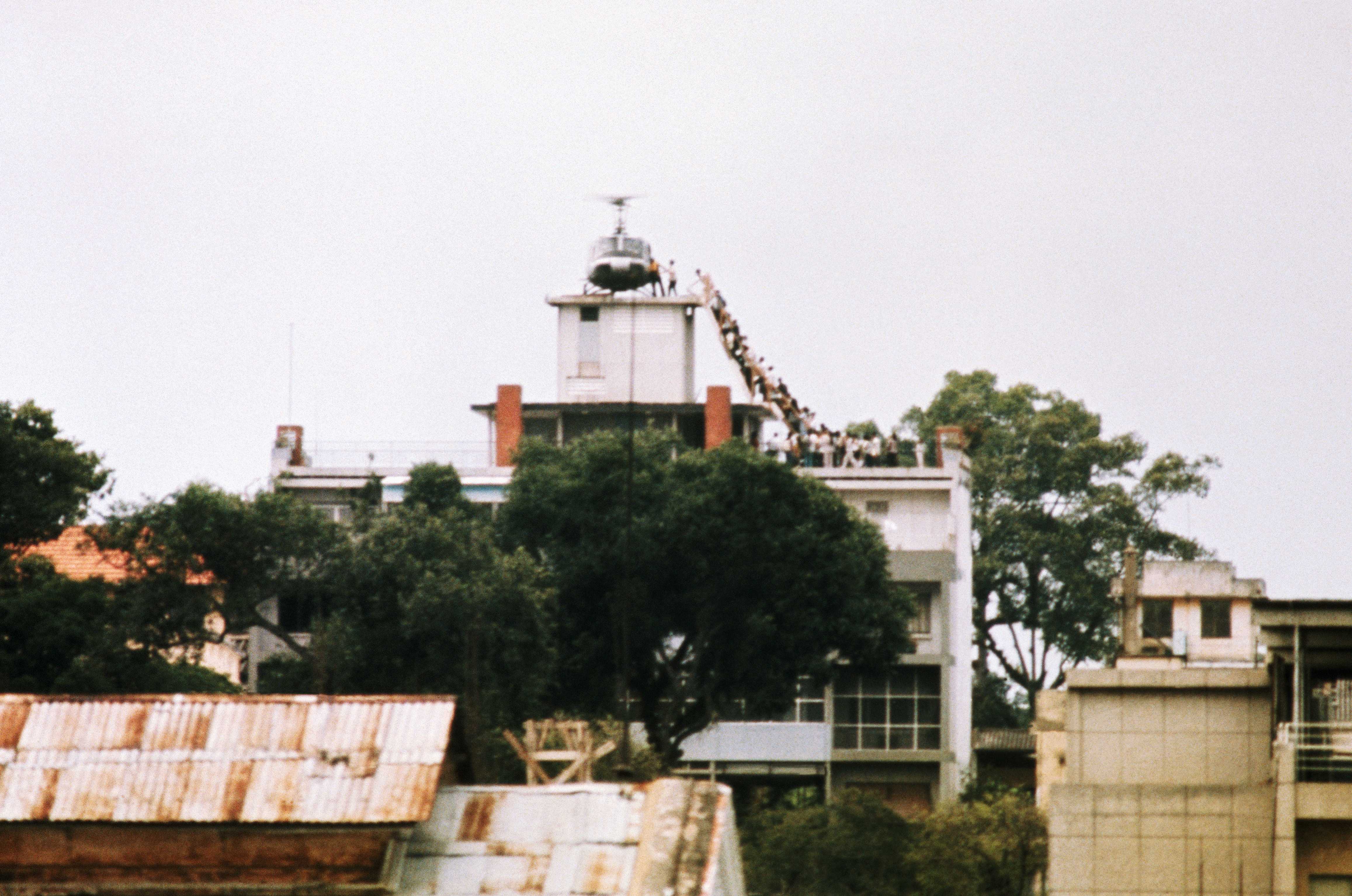
August 12, 2021 will go down as the day the Taliban avenged America’s invasion and struck the blow that brought down its man in Kabul

by Pepe Escobar, posted with permission and first posted at Asia Times
August 12, 2021. History will register it as the day the Taliban, nearly 20 years after 9/11 and the subsequent toppling of their 1996-2001 reign by American bombing, struck the decisive blow against the central government in Kabul.
In a coordinated blitzkrieg, the Taliban all but captured three crucial hubs: Ghazni and Kandahar in the center, and Herat in the west. They had already captured most of the north. As it stands, the Taliban control 14 (italics mine) provincial capitals and counting.
First thing in the morning, they took Ghazni, which is situated around 140 kilometers from Kabul. The repaved highway is in good condition. Not only are the Taliban moving closer and closer to Kabul: for all practical purposes they now control the nation’s top artery, Highway 1 from Kabul to Kandahar via Ghazni.
That in itself is a strategic game-changer. It will allow the Taliban to encircle and besiege Kabul simultaneously from north and south, in a pincer movement.
Kandahar fell by nightfall after the Taliban managed to breach the security belt around the city, attacking from several directions.
In Ghazni, provincial governor Daoud Laghmani cut a deal, fled and then was arrested. In Kandahar, provincial governor Rohullah Khanzada – who belongs to the powerful Popolzai tribe – left with only a few bodyguards.
He opted to engage in an elaborate deal, convincing the Taliban to allow the remaining military to retreat to Kandahar airport and be evacuated by helicopter. All their equipment, heavy weapons and ammunition should be transferred to the Taliban.
Afghan Special Forces represented the cream of the crop in Kandahar. Yet they were only protecting a few select locations. Now their next mission may be to protect Kabul. The final deal between the governor and the Taliban should be struck soon. Kandahar has indeed fallen.
In Herat, the Taliban attacked from the east while notorious former warlord Ismail Khan, leading his militia, put up a tremendous fight from the west. The Taliban progressively conquered the police HQ, “liberated” prison inmates and laid siege to the governor’s office.
Game over: Herat has also fallen with the Taliban now controlling the whole of Western Afghanistan, all the way to the borders with Iran.
Tet Offensive, remixed
Military analysts will have a ball deconstructing this Taliban equivalent to the 1968 Tet Offensive in Vietnam. Satellite intel may have been instrumental: it’s as if the whole battlefield progress had been coordinated from above.
Yet there are some quite prosaic reasons for the success of the onslaught apart from strategic acumen: corruption in the Afghan National Army (ANA); total disconnect between Kabul and battlefield commanders; lack of American air support; the deep political divide in Kabul itself.
In parallel, the Taliban had been secretly reaching out for months, through tribal connections and family ties, offering a deal: don’t fight us and you will be spared.
Add to it a deep sense of betrayal by the West felt by those connected with the Kabul government, mixed with fear of Taliban revenge against collaborationists.
A very sad subplot, from now on, concerns civilian helplessness – felt by those who consider themselves trapped in cities that are now controlled by the Taliban. Those that made it before the onslaught are the new Afghan IDPs, such as the ones who set up a refugee camp in the Sara-e-Shamali park in Kabul.

A new generation of IDPs in Afghanistan. Image: Supplied
Rumors were swirling in Kabul that Washington had suggested to President Ashraf Ghani to resign, clearing the way for a ceasefire and the establishment of a transitional government.
On the record, what’s established is that US Secretary of State Antony Blinken and Pentagon chief Lloyd Austin promised Ghani to “remain invested” in Afghan security.
Reports indicate the Pentagon plans to redeploy 3,000 troops and Marines to Afghanistan and another 4,000 to the region to evacuate the US Embassy and US citizens in Kabul.
The alleged offer to Ghani actually originated in Doha – and came from Ghani’s people, as I confirmed with diplomatic sources.
The Kabul delegation, led by Abdullah Abdullah, the chairman of something called the High Council for National Reconciliation, via Qatar mediation, offered the Taliban a power-sharing deal as long as they stop the onslaught. There’s been no mention of Ghani resigning, which is the Taliban’s number one condition for any negotiation.
The extended troika in Doha is working overtime. The US lines up immovable object Zalmay Khalilzad, widely mocked in the 2000s as “Bush’s Afghan.” The Pakistanis have special envoy Muhammad Sadiq and ambassador to Kabul Mansoor Khan.
The Russians have the Kremlin’s envoy to Afghanistan, Zamir Kabulov. And the Chinese have a new Afghan envoy, Xiao Yong.
Russia-China-Pakistan are negotiating with a Shanghai Cooperation Organization (SCO) frame of mind: all three are permanent members. They emphasize a transition government, power-sharing, and recognition of the Taliban as a legitimate political force.
Diplomats are already hinting that if the Taliban topple Ghani in Kabul, by whatever means, they will be recognized by Beijing as the legitimate rulers of Afghanistan – something that will set up yet another incendiary geopolitical front in the confrontation against Washington.
As it stands, Beijing is just encouraging the Taliban to strike a peace agreement with Kabul.
The Pashtunistan riddle
Pakistani Prime Minister Imran Khan has minced no words as he stepped into the fray. He confirmed the Taliban leadership told him there’s no negotiation with Ghani in power – even as he tried to persuade them to reach for a peace deal.
Khan accused Washington of regarding Pakistan as “useful” only when it comes to pressing Islamabad to use its influence over the Taliban to broker a deal – without considering the “mess” the Americans left behind.
Khan once again said he “made it very clear” there will be no US military bases in Pakistan.
This is a very good analysis of how hard it is for Khan and Islamabad to explain Pakistan’s complex involvement with Afghanistan to the West and also the Global South.
The key issues are quite clear:
1. Pakistan wants a power-sharing deal and is doing what it can in Doha, along the extended troika, to reach it.
2. A Taliban takeover will lead to a new influx of refugees and may encourage jihadis of the al-Qaeda, TTP and ISIS-Khorasan kind to destabilize Pakistan.
3. It was the US that legitimized the Taliban by striking an agreement with them during the Donald Trump administration.
4. And because of the messy withdrawal, the Americans reduced their leverage – and Pakistan’s – over the Taliban.
The problem is Islamabad simply does not manage to get these messages across.
And then there are some bewildering decisions. Take the AfPak border between Chaman (in Pakistan’s Balochistan) and Spin Boldak (in Afghanistan).
The Pakistanis closed their side of the border. Every day tens of thousands of people, overwhelmingly Pashtun and Baloch, from both sides cross back and forth alongside a mega-convoy of trucks transporting merchandise from the port of Karachi to landlocked Afghanistan. To shut down such a vital commercial border is an unsustainable proposition.
All of the above leads to arguably the ultimate problem: what to do about Pashtunistan?
The absolute heart of the matter when it comes to Pakistan’s involvement in Afghanistan and Afghan interference in the Pakistani tribal areas is the completely artificial, British Empire-designed Durand Line.
Islamabad’s definitive nightmare is another partition. Pashtuns are the largest tribe in the world and they live on both sides of the (artificial) border. Islamabad simply cannot admit a nationalist entity ruling Afghanistan because that will eventually foment a Pashtun insurrection in Pakistan.
And that explains why Islamabad prefers the Taliban compared to an Afghan nationalist government. Ideologically, conservative Pakistan is not that dissimilar from the Taliban positioning. And in foreign policy terms, the Taliban in power perfectly fit the unmovable “strategic depth” doctrine that opposes Pakistan to India.
In contrast, Afghanistan’s position is clear-cut. The Durand Line divides Pashtuns on both sides of an artificial border. So any nationalist government in Kabul will never abandon its desire for a larger, united Pashtunistan.
As the Taliban are de facto a collection of warlord militias, Islamabad has learned by experience how to deal with them. Virtually every warlord – and militia – in Afghanistan is Islamic.
Even the current Kabul arrangement is based on Islamic law and seeks advice from an Ulema council. Very few in the West know that Sharia law is the predominant trend in the current Afghan constitution.
Closing the circle, ultimately all members of the Kabul government, the military, as well as a great deal of civil society come from the same conservative tribal framework that gave birth to the Taliban.
Apart from the military onslaught, the Taliban seem to be winning the domestic PR battle because of a simple equation: they portray Ghani as a NATO and US puppet, the lackey of foreign invaders.
And to make that distinction in the graveyard of empires has always been a winning proposition.
Related Video


