Uprooted Palestinians are at the heart of the conflict in the M.E Palestinians uprooted by force of arms. Yet faced immense difficulties have survived, kept alive their history and culture, passed keys of family homes in occupied Palestine from one generation to the next.
Hezbollah Deputy Secretary General Sheikh Naim Qassem stressed on Saturday that the Resistance Party will continue accumulating weapons, training troops and augmenting military power to face any Israeli war.
Addressing the Arab Forum for Supporting the Palestinian Prisoners in the Israeli jails, Sheikh Qassem reiterated Hezbollah stance which backs the prisoners and condemns all the Zionist measures against them.
Sheikh Qassem indicated that supporting the Palestinian cause is the duty of all the liberals across the world, adding that the fall of the Israeli occupation is just a matter of time.
Sheikh Qassem also noted that some Lebanese parties reject the resistance weaponry in order to identify themselves with the Arab regimes normalizing ties with the Zionist entity.
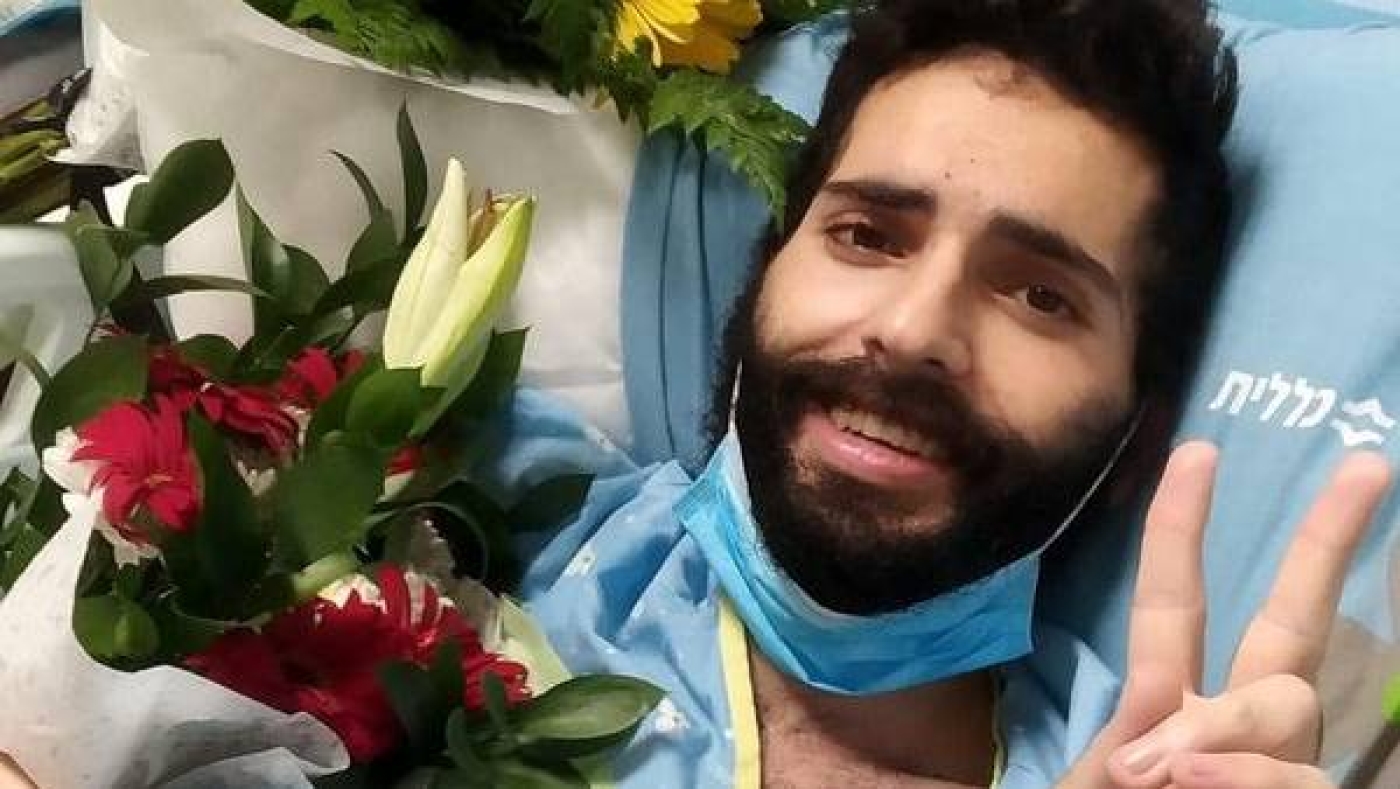
Palestinian Prisoner Miqdad al-Qawasmi ends his hunger strike after a reached agreement to release him next February according to the Prisoners Information Office.
Al-Qawasmi won a decisive victory and ended his hunger strike that lasted 113 days
The Palestinian Prisoners Information Office announced that prisoner Miqdad al-Qawasmi won a decisive victory on Thursday and ended his hunger strike that lasted 113 days.
After long and difficult rounds of negotiations waged by the supreme leadership body of Hamas prisoners, an agreement was reached to release al-Qawasmi next February, the Office stated.
For his part, Nahed al-Fakhoury, director of the Prisoners’ Information Office stated that the head of the higher leadership committee for Hamas prisoners and the body’s foreign affairs official met al-Qawasmi and followed up on his health condition.
This comes at a time where 5 prisoners are continuing their open hunger strike in the Israeli occupation prisons, in protest of their administrative detention.
Palestinian factions celebrate the victory
On Twitter, Hamas spokesman Hazem Qassem expressed that al-Qawasmi “scored a victory against the zionist jailer in the battle of determination and defiance.”
He added that, once again, the prisoner proves the ability of the Palestinian to confront the occupier by all means, and reveals the inability of the occupation to stop the Palestinians’ struggle to gain their freedom.
يسجل الأسير مقداد القواسمي نصرا على السجان الصهيوني في معركة الإرادة والتحدي بعد الوصول لاتفاق بتحديد اطلاق سراحه في فبراير المقبل.
يثبت الأسير مقداد القواسمي من جديد قدرة الفلسطيني على مصارعة المحتل بكل الأدوات ، ويكشف مجددًا عجز الاحتلال عن إيقاف مسيرة نضال شعبنا لانتزاع حريته— حازم قاسم (@hazemaq) November 11, 2021
For its part, the Palestinian Mujahideen Movement blessed al-Qawasmi’s victory in the 113-day battle, which he fought with his empty stomach against the occupation.
The movement affirmed that al-Qawasmi’s victory proves the Palestinian prisoner’s will and determination against the occupier’s weakness.
It also stressed that the resistance will work hard to fulfill its promise of liberating other brave prisoners who are still on hunger strike.
“Administrative detention, in the way that the Israelis practice it, is fundamentally a violation of the Geneva conventions,” says Samidoun’s International Coordinator, Charlotte Kates, when asked to comment on the legality of the detention of six long-term hunger-striking Palestinian political prisoners, two of which could die at any moment.
On October 22, experts at United Nations Human Rights Council (UNHRC) urged “Israel” to release five Palestinian hunger strikers over fears that there could be a rapid deterioration in their health at any moment. Despite this, Israeli authorities have continued to ignore these concerns. Now that there is another hunger striker to add to the original list, the risk of a violent escalation in the occupied territories, as a result of one or more prisoners dying in Israeli custody, is growing every day.
The six Palestinian prisoners currently on long-term hunger strike are: Kayed al-Fasfous, Miqdad Al-Qawasmeh, Alaa Al-Araj, Hisham Abu Hawash, Ayyad Al-Herimi and Louay Al-Ashqar. The mother of Miqdad Qawasmi, who spoke with Arab48 news, says that her son “has constant pain in the abdomen, his joints, and bones, and cannot see, in addition to arrhythmia, migraine and many other conditions,” adding that she lives in fear of him dying in the coming days. Kayed al-Fasfous, who has been on hunger strike for the longest period out of the group, abstaining from food for 118 days, also risks “clinical death” at any moment, according to his loved ones.
To get greater insight I traveled to Madrid, interviewing Charlotte Kates, the current International Coordinator for Samidoun, a leading Palestinian political prisoner advocacy group, who urged international mobilization to expand upon current social media and protest campaigns. Samidoun helped organize a protest which was set for the launch of a new Palestinian political movement ‘Masar al-Badil’ and in solidarity with the six political prisoners on hunger strike.
Firstly, I asked her to explain further what is happening to the political prisoners, she started by stating: “All of them are being held without charge or trial under administrative detention,” going on to explain that “administrative detention was first introduced to Palestine by the British colonial mandate and then adopted by the Zionist regime and is routinely used to imprison Palestinians on the basis of so-called secret evidence, with no charge, no trial and no opportunity to meaningfully contest on their imprisonment.”
“Because of that, these prisoners are putting their bodies and their lives on the line…Kayed al-Fasfous and Miqdad al-Qawasma have both been on hunger strike for over 100 days, they are held in the hospital, they have become emaciated, but they are refusing to stop because they know that this is a method of struggle, a method of resistance to obtain their freedom”.
Asked what Samidoun is currently doing to support the hunger strikers in administrative detention (held without a charge), Kates said: “We are working to organise with many other groups around the world, to protest, to put pressure on Western governments which are responsible for diplomatic, military and financial support for the Israeli occupation and to hold these governments accountable for their crimes against Palestinian prisoners, including the hunger strikers, the administrative detainees and all 4,650 Palestinians jailed by the Israeli occupation.”
I asked Charlotte Kates about the latest reports, coming out of the Israeli military prisons, that Samidoun had received, she answered: “In the past weeks and months, there has been a large escalation, not only in repression, but also in Palestinian resistance and the story of the 6 prisoners, who escaped from Gilboa prison, inspired Palestinians in and around the world and also internationals who were concerned for social justice, to take action and to mobilize in support of these prisoners.”
“What we have seen in response is a retaliation, and a criminal form of retaliation against the Palestinian prisoners has been this repression targeting every right they have obtained, which has only come through hunger strikes and other forms of collective struggle.”
As Samidoun provides legal help to Palestinian political prisoners, How does Charlotte Kates view administrative detention?
“Well, administrative detention, in the way that the Israelis practice it, is fundamentally a violation of the Geneva conventions. Israel will claim that an occupier has the right to detain people under the law, but the reality is that they use administrative detention on a systematic and constant basis. There are currently 500 Palestinians being held in administrative detention, there are around 100 orders issued every month, many of these are renewed repeatedly on the basis of so-called security reasons that are never revealed. Palestinians spend years at a time in administrative detention, so rather than being rare and time limited administrative detention is a systematic form of colonial oppression that happens on a very frequent basis and which is extended without any cause, or any allegation being presented.”
She added that: “It should be noted that these so-called allegations are illegitimate, because the entire system is based on the criminalization of legitimate Palestinian resistance, but in these cases even within the military court system, which convicts over 99% of Palestinians, Israel doesn’t think it can make a case, which just shows that with blatant disregard to fair trial standards, like it signed the International covenant on civil and political rights, not to mention the Geneva conventions, administrative detention is a violation of international law.”
In mid-October the Palestinian Islamic Jihad (PIJ) Party, a political and armed group based in the Gaza Strip, organized a mass hunger strike which included around 400 prisoners belonging to the group. “Israel” quickly struck a deal to end this mass hunger strike, which threatened to draw in other political parties to organize their members to do the same. Yet, despite “Israel” having de-escalated tensions through striking a deal, which secured more basic rights for Palestinian prisoners, PIJ and Hamas, Gaza’s ruling Party, have both threatened retaliation in the event that any hunger striking prisoner is to die in Israeli custody. If this is to occur, a sudden armed escalation between “Israel” and the Gaza Strip could easily come as a result of it.
Palestinian ‘Islamic Jihad’ and ‘Hamas’ resistance movements threatened to escalate once again hadn’t the detainees’ sufferings in the ‘Israeli’ occupation prisons been finished, especially amid the news circulating that the hunger strike might lead to the martyrdom of some of them.
The resistance movements renewed in the past days, through an Egyptian mediation, warnings that the issue of the detainees would affect the calmness along the Gaza border.
They also warned about the danger caused by the enemy’s continuation of renewing the prisoners’ administrative detention, especially those on hunger strike, adding that the lives of detainees are a redline, which once violated, will push the resistance factions to annul all understandings reached earlier with the enemy.
In the same context, Islamic Jihad leader Mohammad Shallah cautioned that any martyrdom caused among the detainees on hunger strike will further escalate the situation, adding that the resistance will wreak havoc on the occupation in case any detainee was martyred.
For his part, Hamas politburo member Zaher Jabbarin stressed that the resistance leadership is following up the issue of the detainees and has many options that are ready, in which the enemy “should expect any development amid its aggression and tyranny against our detainees and their legitimate rights.”
In yet another victory scored by the Palestinian ‘Islamic Jihad’ detainees, the resistance movement’s Leadership Committee announced that its detainees have suspended their hunger strike, declaring victory against the ‘Israeli’ occupation prisons administration.
A statement made by Islamic Jihad spokesman Tarek Izzeddine mentioned that “in a rapid development, the committee decided to suspend the strike, declaring to our people the victory of our resistance fighters in the battle of empty stomachs.”
He, however, made clear that details of the deal will be announced later.
“The victory of the detainees in their hunger strike against the occupation’s prisons administration is a victory of the entire Palestinian people and a turning point in the confrontation with the jailer to achieve the demands, adding that breaking the pride of the occupation at the hands of the Islamic Jihad has been certain.
The committee also explained that the decision to suspend the open hunger strike was made after the ‘Israeli’ prisons’ administration has submitted to most of the Islamic Jihad detainees’ demands, atop of which was to stop the brutal campaign against them, return the isolated ones, and improve the conditions of the female detainees.
Additionally, the committee thanked the Palestinian people and the free people of the world who supported this movement to preserve the organizational identity and the heritage of the Palestinian martyrs.
The Director of the media office of the Palestinian Popular Resistance Committees Muhammad Al-Buraim (Abu Mujahid), says that liberating prisoners will remain a priority.
Abu Mujahid: Wafaa Al-Ahrar deal will remain engraved in the memory of the Palestinian people
The Director of the Media Office of the Palestinian Popular Resistance Committees Muhammad Al-Buraim (Abu Mujahid) stated on Monday, that the “Wafa Al-Ahrar” deal is considered a complete shift in the history of the Palestinian resistance, and proved that the will and determination of the Palestinian resistance are stronger than Zionist tyranny.
Abu Mujahid emphasized that the Wafaa Al-Ahrar deal remains engraved in the memory of our Palestinian people symbolizing a crucial victory over the Zionist enemy.
In October 2011, after an Israeli soldier was kidnapped and held captive for over five years, more than 1,400 Palestinian prisoners were released from occupation prisons.
Abu Mujahid saluted the heroic prisoners in the occupation prisons, led by the prisoners who are engaging in hunger strikes, and those who executed the Freedom Tunnel escape from Gilboa Prison.
The comments of Abu Mujahid come during a time where over 400 Islamic Jihad prisoners are continuing their open hunger strike in the Israeli occupation prisons, refusing their administrative detentions. Among the prisoners are Kayed Al-Fasfous, who has been on a hunger strike for 95 days, and Miqdad Al-Qawasmi, on a hunger strike for 88 days and suffering major health complications.
On Sunday, the Islamic Jihad’s media official Daoud Shehab disclosed to Al Mayadeen that the Israeli Prison Authority has gradually begun to retreat from its position as a result of direct negotiations with the leadership of the movement.
It is noteworthy that the occupation had tightened its measures within prisons, after the Gilboa prison break.
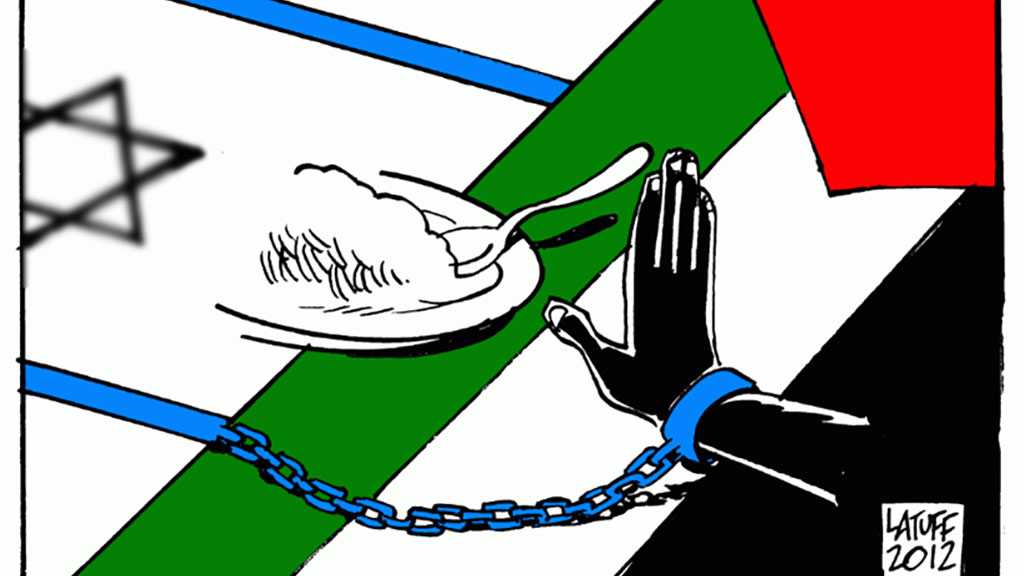
A number of Palestinian prisoners languishing in Zionist occupation jails have been on hunger strike for months to protest their arbitrary incarceration under inhumane conditions and to demand freedom.
Imprisoned under the so-called policy of “administrative detention,” at least seven Palestinian prisoners are registering their protest against their ill-treatment and repressive ‘Israeli’ policies in illegal detention through hunger strikes and boycotting military court hearings.
Kayed Fasfous has been on hunger strike for 76 days, Mikdad Qawasme for 69 days, followed by Hisham Abu Hawwash for 43 days, Rayeq Bisharat for 38 days, Shadi Abu Aker for 35 days, and Hasan Shoukeh for 9 days, according to prisoners’ advocacy groups.
Qawasme was recently shifted to a hospital following a rapid deterioration of his health, while Fasfous and three other inmates have been put in Ramla prison clinic, Palestinian Prisoners’ Society [PPS] said in a statement.
A 24-year-old resident of the southern occupied West Bank city of al-Khalil, Qawasme recently decided to up the ante by refusing to take any supplements or intravenous fluids during the indefinite strike.
PPS has expressed grave concern over his deteriorating condition, including extreme weight loss, low heart rate, shortness of breath, blurry vision, migraines and severe pain, and inability to stand.
Under the “administrative detention” policy, the Zionist occupation regime has been detaining Palestinians without legal trial or charges for long periods of time.
To protest the Zionist occupation’s use of administrative detention and neglect of ailing Palestinian prisoners, at least five other Palestinian prisoners have announced that they would boycott the Zionist military courts and refuse to take any medicine.
The Commission of Palestinian Detainees published Friday new letters from Mohammad and Mahmoud Al-Arda from behind the bars of “Israeli” prisons. The letters included new details about the “Tunnel of Freedom” under Gilboa Prison and their current situation behind bars.
Detainee Mahmoud Al-Arda revealed new details about the tunnel through which six detainees broke free from prison, saying that the main reason behind digging the tunnel is “snatching freedom.”
“Digging the tunnel was in retaliation for the martyrdom of detainee Mohamad Al-Ashkar in 2007, and for this same reason the tunnel in Shatta Prison was dug in 2012,” he added.
“The Tunnel of Freedom came in protest to the martyrdom of the detainee Kamal Abo Waer, the miserable situation of the women in detention, the awful isolation circumstances, the non-implementation of the quests of the mass hunger strike of detainees in 2017, the current tragic conditions and preserving achievements.”
In parallel, Al-Arda dedicated “this victory to martyrs Mohamad Al-Ashkar, Kamal Abo Waer, as well as to the martyrs of The Palestinian Detainees Movement, The Resistance, to our Arabic and Muslim peoples, to the free souls everywhere, and to Gaza in gratitude to what it had offered to the detainees.”
He announced that the tunnel has got the name “The Road to Al-Quds.”
“We have won and “knocked the empty water tank of the lorry” as the great writer Ghassan Kanafani once said. We have delivered our message to the world, that we are seekers of freedom and rights, that we are oppressed, and the world should be by our side in order to free our land,” he added.
For his part, detainee Mohamad Al-Arda, stated that he has been isolated from the outside world since the last nine days, and he paid tribute to his Palestinian people.
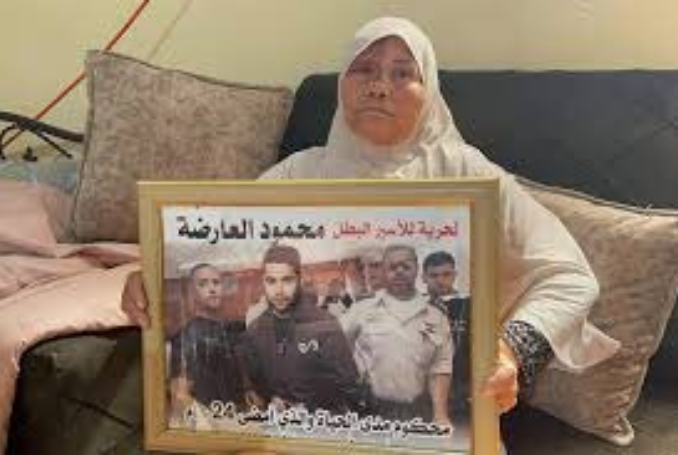
Fathia, the mother of Palestinian prisoner Mahmoud Arda. (Photo: via Social Media)
Palestinian prisoners Mahmoud Arda, 46, sent a letter to his mother through his lawyer, Quds News Network reported on Friday.
The letter read as follows:
“I’d like to extend my greetings to you, mom, and tell you that I tried very hard to come and hug you before you leave this world, but I couldn’t.
“You are in my heart and head. The good news is that I have eaten figs from many places across our homeland. I also ate prickly pears, pomegranates, sumac, and wild thyme. I even ate guava for the first time in 25 years. I had a jar of honey as a gift for you. Extend my greetings to my dead sisters Basima, Ruba, Khitam, and Saeda, and to my brothers as well, as I miss them a lot.
“I smelled freedom and we saw that the world has changed. I climbed the mountains of Palestine for long hours and we walked across broad plains. I saw how the plain of Arraba, my hometown, is a small part of Bisan and Nazareth.
“My greetings to all family members and friends. My greetings to my niece, Sinat, who I wore her socks all across the mountains. My greetings to Abdullah, Hadeel, Yousef, the wife of Raddad, and all family, to Sarah, Rahaf, Ghada, Muhammad, and everyone. A special greeting to Huda. I miss her so much and I will send the whole story to her.”
Arda, 46, spent over 28 years of his life in Israeli jails, 25 of which are continuous. He is serving a life sentence.
On September 6, along with other five prisoners, he managed to carry out a daring escape from the highly fortified Gilboa prison. However, he was recaptured by the Israeli Police on the outskirts of Nazareth, north of occupied Palestine.
In violation of the Fourth Geneva Convention and others, the Israeli occupation pursues a policy of medical neglect against Palestinian prisoners who are continuously subjected to torment and maltreatment.
The Israeli occupation’s neglect of Palestinian prisoners violates the Fourth Geneva Convention
Behind the walls of the Israeli occupation prisons, Palestinians are always exposed to aggression and brutality under the Israeli apartheid regime. As a result of neglect and abuse, some freed prisoners with forsaken medical cases are reported dead shortly after their release, and others are reported dead inside the prison.
The methods to weaken both the will and the body are a tragic duality practiced amidst an Israeli political and judicial system that legitimizes torture and psychological pressure against Palestinian and Arab prisoners.
The reported health status of prisoners proved that the Israeli occupation, specifically the Israeli Prison System (IPS), flagrantly violated many international treaties and covenants, especially the Fourth Geneva Convention.
According to the Addameer Association for prisoners’ support, there are 4,650 Palestinian prisoners in Israeli occupation jails, including 200 children and 520 administrative detainees held without trial or charges.
The latest victim of negligence
The most recent case was reported on Wednesday after a Palestinian man diagnosed with cancer was medically neglected, resulting in his death.
The released Palestinian prisoner, Hussein Masalmeh, 39, was reported dead by the Commission for Detainees and Ex-Detainees’ Affairs on Wednesday night.
A statement by the Commission stated that the Israeli occupation’s medical negligence resulted in Masalmeh’s martyrdom.
They revealed that the prisoner spent 19 years of his 20-year sentence in prison, beginning in 2002 until February 14, 2021, when he was released to his painstaking medical journey in the Hadassah Hospital in the occupied city of al-Quds for seven months.
A week ago, he was transferred to Istishari Hospital in Ramallah where he died as a result of Israeli negligence.
Hussein Masalameh complained of abdominal pains for two months, while incarcerated in “Israel’s” southern an-Naqab prison, before he was admitted to the Soroka Hospital to be treated for what was later diagnosed as blood and bone marrow cancer.
The Palestinian Prisoners’ Club held the Israeli occupation responsible for the liberated prisoner’s death, condemning the Israeli occupation’s crimes of “medical negligence” that has been practiced for years against hundred of ill prisoners.
The adopted policy of neglect
Prisoners are subjected to systematic brutal physical and psychological torture methods, which harm and weaken their bodies. These methods include denial of access to real medical care, delaying the provision of treatment to sick and injured prisoners, oppression, humiliation, and torture, followed by fierce interrogations.
The Commission revealed that more than 500 male and female Palestinian prisoners in Israeli jails suffer from illnesses and diseases, which include severe cases of cancer.
Prisoners’ testimonies revealed that “200 prisoners are suffering from chronic illnesses, 25 from cancer, and 85 from various disabilities (physical, mental, psychological, and sensory), while the remaining 25 prisoners permanently reside in the clinic of Ramleh prison”, according to the Commission.
According to a report by the United Nations, “206 Palestinian prisoners and detainees died in Israeli jails as a result of cruel treatment and harsh conditions; 71 died as a result of torture; 54 died due to medical negligence; 74 were assassinated after detention.”
The Israeli occupation prisons’ administrations continue to delay the transfer of incurable cases to hospitals, and if they are ever transferred, it would be with their hands and feet handcuffed, not to mention the harsh and cruel treatment they are subjected to. According to the Commission of Detainees and Ex-Detainees’ Affairs, ill or injured prisoners are transported in unsanitary closed cars, instead of properly sanitized ambulances.
Factors that could increase the number of ill prisoners
The factors that contribute to consolidating the policy of deliberate medical negligence are many, and they include delaying providing treatment and committing medical crimes. The policy of neglect adopted by the occupation forces means neglecting their responsibility in providing the necessary medical care for prisoners.
Other factors include the abstinence from maintaining hygiene in the prisons necessary for the wellbeing of ill patients. There are no reports whatsoever of ensuring healthy and clean environments for prisoners. In the same context, no measures are taken to prevent insects and rodents from swarming into the imprisonment areas.
Another factor is overcrowdedness in cells and the absence of isolation rooms for patients with infectious diseases, such as acute and infectious viral intestinal infections and scabies, which threaten the health condition of fellow inmates.
Moreover, punitive measures are taken against the prisoners, which worsens their psychological conditions, and they can be summarized by the delays in transferring them to specialized external hospitals, denial of visits, sudden night searches, placing prisoners in solitary confinement cells, and forcing prisoners to take off their clothes in a humiliating and degrading manner.
Furthermore, the prisons lack any auxiliary medical devices for people with special needs, such as prosthetic limbs for amputees, medical glasses, and breathing devices and nebulizers for patients with asthma, chronic bronchitis, and other pulmonary diseases.
Female prisoners
Female prisoners of course do not get any kind of special treatment in Israeli occupation prisons. According to the Commission of Detainees and Ex-Detainees’ Affairs, female prisoners suffer from the absence of any gynecologist or female specialist or assistant, especially for pregnant prisoners who need regular follow-ups.
This only leads us to the injustice of forcing pregnant female prisoners to give birth with their hands and legs cuffed, without any consideration for the prenatal and postnatal care required, not to mention their suffering during labor.
Anhar al-Deek, a 25-year-old Palestinian prisoner, is one of many women in Israeli prisons who had to go through tough pregnancy circumstances until she was conditionally released from an Israeli prison before giving birth. She sent a message that described her sufferings in captivity, which caught the attention of the international community and triggered public opinion, thus pressuring the Israeli occupation to release her.
“What shall I do if I give birth while I’m away from you (her family)? I am handcuffed and you know how cesarean operations are [difficult enough] outside prison, so how [do you think it’ll be] in prison, with me handcuffed and alone?” Anhar wrote in agony prior to her release.
Israa Jaabis is another prisoner that has been suffering from medical neglect in the occupation prisons for 11 years since her arrest. Jaabis has third degree burns all over her fragile body, which she sustained after her car exploded near an Israeli occupation checkpoint in 2015. As a result, she was charged with attempted murder.
In a statement to her lawyer, she mentioned that the Israeli Prison System (IPS) did not provide her with the proper health care necessary for her treatment.
Even teenagers are not spared
In a statement from Ofer Prison to Addameer Association, an 18-year old teenager revealed his suffering inside the occupation prison. The boy stated that the doctor in the occupation prison only made quick tests after he started suffering from severe stomach pain. The doctor only gave him pills to help with the pain, which only worked at first. But after he was admitted to the clinic again, the medical staff said he was dehydrated. Yet after his release, he was struck with severe pain, and he was diagnosed with appendicitis that led to an infection spreading all over his body after his appendix burst. This is only one example of a series of easily avoidable prolonged agony the prisoners have to go through due to the maltreatment and negligence of the Israeli occupation in prisons.
“It turned out that my appendix had burst and an infection spread throughout my abdomen”, he revealed.
The 22-year-old wounded prisoner, Ayman al-Kurd, from occupied al-Quds, who received a 35-year prison sentence, is yet another example of the Israeli occupation brutality.
Al-Kurd now suffers from paralysis in his lower limbs, moves in a wheelchair, and lives in extremely difficult, agonizing health conditions in the Ramle Prison Hospital, following a rampage by the Israeli forces who shot him 13 times at close range.
Statements from behind the prison walls
Several prisoners shared statements with the Commission from inside the occupation prisons. They emphasized that prisoners live under difficult conditions without taking into account their physical and medical situation, in addition to being subjected to continuous physical assaults and psychological pressure.
In a statement from the Gilboa Prison, from which 6 prisoners managed to break out, Prisoner Amir Makhoul stated that the administration medically neglects around 70 prisoners that require immediate professional aid, some of whom suffer from hypertension, diabetes, and other chronic diseases.
Prisoner Bilal Zayed said that the number of medical cases in Megiddo Prison that require immediate and serious healthcare exceeds 300. He also mentioned that some detainees who arrive in the prison suffer from depression, introversion, and lack of self-esteem due to the applied interrogation methods that involve psychological and physical torture, solitary confinement, degrading treatment, and verbal abuse.
The Fourth Geneva Convention
The Israeli occupation has always violated the basic humanitarian laws and the laws endorsed by the Geneva Conventions, precisely the Fourth Geneva Convention, and continues to do so by adopting the policy of medical neglect towards the Palestinian prisoners suffering under the occupation.
The IPS continues to violate the relevant provisions of the Geneva Conventions by neglecting the basic medical needs of prisoners. In contrary to the Fourth Geneva Convention, the occupation deprives Palestinian prisoners of family visits, clothing, and blankets during the cold.
A report by the United Nations mentions that, in 2014, the Israeli occupation issued new “legislations” against Palestinian prisoners that include “forced feeding during hunger strikes, increasing the punishment for children up to 20 years of imprisonment, denial of secondary and higher education, the illegal fighter law, torture, and the imposition of unaffordable fines on prisoners”, all of which are in violation of the adopted Fourth Geneva Convention.
What is the Fourth Geneva Convention?
The Fourth Geneva Convention was adopted by the Diplomatic Conference for the Establishment of International Conventions for the Protection of Victims of War held in Geneva, as one of the four treaties signed in 1949.
The Geneva Convention IV stipulates protecting the people “who, at a given moment and in any manner whatsoever, find themselves, in case of a conflict or occupation, in the hands of a Party to the conflict or Occupying Power of which they are not nationals”.
What does the Geneva Convention IV State?
Under the Convention, article 76 states that prisoners and detainees “shall, if possible, be separated from other detainees and shall enjoy conditions of food and hygiene which will be sufficient to keep them in good health, and which will be at least equal to those obtaining in prisons in the occupied country.” It also states that all prisoners should receive the proper medical attention based on their health conditions.
Article 85 emphasizes that the detaining power should take the necessary measures to ensure that proper accommodation is offered, which includes a safeguard from humidity, sufficient sleeping space, and ventilation.
Articles 91 and 92 of the Geneva Convention IV emphasize that prisons should include a proper infirmary, with the presence of a qualified doctor, in addition to medical inspections at least once a month in order to monitor the nutrition of prisoners and to detect any contagious diseases.
No accountability
With the Geneva Convention IV put on hold, and with easy comparison to how the Israeli occupation treats the Palestinian prisoners, one cannot but ask: Why is the Israeli occupation not held accountable for its acts? Why is it not convicted of committing war crimes over the endless violations of humanitarian laws? Until they are held accountable, Palestinian prisoners will continue to suffer under the injustice of the occupation.
And You Remain Impossible to Erase
-
There you are, the inspiring Imam, forever present in the conscience of the
honorable and the hearts of the loyal.
Father Dave Smith, Pray For (Mufti) Dr. Hassoun
-
Abducted by the terrorist regime in Syria in 2025, Sheikh Hassoun has been
sentenced to life in prison I spoke with Father Dave Smith, an Australian
Anglic...
The eight heads were only the beginning
-
“Over 1,200 Human Heads And Multiple Human Fetuses Discovered In A
Warehouse In Detroit“ (Books Behind Borders):Despite everything authorities
had already ...
Jewish Supremacy Over The Goy
-
Jewish Supremacy Over The Goy August 26 2026
___________________________________ More Vids! +BN Vids Archive! HERE!
___________________________________ Sup...
Report on Beth Israel vigil 08-15-26
-
*Charlie Kirk and JFK*
John F. Kennedy was assassinated under questionable circumstances on
November 22, 1963, and Charlie Kirk fell on September 10 of la...
On The Road To International Anarchy
-
ON THE ROAD TO INTERNATIONAL ANARCHY— An Analysis (14 August 2026) by
Lawrence Davidson Part I — The Turn Toward […]
-
Hello all,
It is with great sadness that I share with you the passing of our beloved
sister, Mother, and Grandmother, the individual that you all knew ...
Best Horror Podcast
-
Best Horror Podcast Introduction: Horror podcasts […]
The post Best Horror Podcast appeared first on Copper Shock Horror Podcast.
Ikhras Endorses Muntadhar Al-Zaidi
-
“Oh parties of banditry and sectarianism and corruption, we have come and
our goal is to destroy you.” Ikhras formally endorses Muntadhar al-Zaidi,
Iraqi j...
Prince Charles: Foreign Jews behind bloodshed in ME
-
In May, 2017, British Crown Prince Charles declined an invitation from
Zionist entity’s president Reuven Rivlin‘s to attend the 100th anniversary
of the no...
Palestinian Women – One for All, All for One
-
Honouring All Palestinian Women by Honouring Three: Hanin Zoabi, Ahed
Tamimi, Samah Sabawi Vacy Vlazna “Palestinian women have always stood side
by side ...
US’s Saudi Oil Deal from Win-Win to Mega-Lose
-
By F. William Engdahl Who would’ve thought it would come to this? Certainly
not the Obama Administration, and their brilliant geo-political think-tank
neo-...
-
*Mordechai Vanunu wins human rights prize of Brazilian Press Association *
* http://www.alternativenews.org/english/index.php/features/updates/7038-mordechai...
Abdul Aziz Rantissi:
"My ultimate wish, my God, is to attain martyrdom,"...God granted him his wish on April 17, 2004, at the hands of Israeli assassins.