Uprooted Palestinians are at the heart of the conflict in the M.E Palestinians uprooted by force of arms. Yet faced immense difficulties have survived, kept alive their history and culture, passed keys of family homes in occupied Palestine from one generation to the next.
At least 16 people, including children, killed in Saudi-led strikes in Yemen’s southwestern province of Taiz, a report says, as Saudi Arabia keeps bombing the southern impoverished neighbor in defiance of international calls to end its bloody war.
The deadly aggression occurred on Friday evening, when Saudi-led warplanes targeted a gathering of civilians in Muqbana district of the province, Yemen’s Arabic-language al-Masirah television network reported.
It added that continued presence of the enemy warplanes in the skies of Muqbana and the possibility of other strikes prevented the paramedics to reach the crime scene to exhume the bodies of the victims and attending the wounded.
The airstrikes came as the Saudi-led forces and its mercenaries have escalated their aggression in the western coastal region of Yemen.
Saudi Arabia, backed by the US and other key Western powers, launched the war on Yemen in March 2015, with the goal of bringing the former Riyadh-backed regime back to power and crushing the popular Ansarullah resistance movement which has been running state affairs in the absence of an effective government in Yemen.
The war has stopped well shy of all of its goals, despite killing tens of thousands of Yemenis and displacing millions more. The war has also taken a heavy toll on the country’s infrastructure, destroying hospitals, schools, and factories.
An all-out blockade was also imposed on Yemen since the onset of the bloody war, pushing Yemen into the world’s worst humanitarian crisis, including by hampering access to aid.
Despite heavily-armed Saudi Arabia’s continuous bombardment of the impoverished country, Yemeni armed forces and the Popular Committees have grown steadily in strength against the Saudi invaders and left Riyadh and its allies bogged down in the country.
The Leader of the Yemen’s Ansarullah resistance movement Sayyed Abdul Malik Badreddine al-Houthi praised the steadfastness and resilience of the Yemenis in the face of the devastating US-Saudi aggression and crippling siege, stating that the Yemeni people personify the principle of resistance against enemies.
Sayyed al-Houthi made the remarks during the largest collective wedding event in celebration of the wedding of 7,200 bride and groom, sponsored by the General Authority for Zakat in the capital Sanaa on Thursday evening.
“Our people embody the principle of compassion, cooperation, piety and solidarity, and represent an impressive example of social cohesion,” the Yemeni resistance leader said.
“Despite immense sufferings and challenges, brutal siege and dire economic situation, the Yemeni nation continues to tread its path to progress.”
“Today, we represent the principle of steadfastness in the face of enemies. All challenges that we are grappling with at the present time are the upshot of enemies’ conspiracies,” he pointed out.
Dressing in traditional costumes, more than 7,000 grooms participated in a collective wedding in Sanaa that was held outside the al-Saleh Mosque on Thursday.
The event marked the largest collective wedding in the country’s history.
As a tradition, the brides do not make appearance in public during the ceremony.
The collective wedding, funded by local charities, is a way to help young couples to get married with an affordable and memorable ceremony.
Saudi Arabia, backed by the United States and regional allies, launched the war on Yemen in March 2015, with the goal of bringing the government of Yemen’s former president Abd Rabbuh Mansur Hadi back to power and crushing Ansarullah.
The war has left hundreds of thousands of Yemenis dead, and displaced millions more. It has also destroyed Yemen’s infrastructure and spread famine and infectious diseases there.
Despite heavily-armed Saudi Arabia’s incessant bombardment of the country, Yemeni Armed Forces and the Popular Committees have grown steadily in strength against the Saudi-led invaders and left Riyadh and its allies bogged down in the country.
Yemen’s foreign minister says Saudi Arabia’s intensified attacks on the war-wracked country show the inability of the Saudi Arabia in the face of the Sana’a government, whose forces have continued to liberate areas under the control of Saudi-backed mercenaries.
“The bombardment [of Yemen] and the repetition of what has happened since the beginning of the aggression is a manifestation of [Saudi Arabia’s] helplessness,” Hesham Sharaf told Lebanon’s al-Mayadeen television network on Sunday.
“The current escalation on several fronts comes as the Saudi coalition reached the conviction that it has failed to put pressure on Sanaa,” he added.
The Yemeni minister then emphasized that the Yemeni forces are ready to respond to any escalation.
At the same time, Sharaf expressed his country’s readiness for dialogue and reaching “a just peace,” but stressed that the Saudi-led coalition must first stop its attacks on Yemen and open the Sana’a Airport and Yemen’s ports as a gesture of goodwill.
“We extend our hand for peace, but for a just peace,” he remarked. “Open the Sana’a Airport and [Yemen’s] ports and those would be gestures of peace, but moving towards peace [talks] while bombing us and showing us [your] muscle would not help.”
The Yemeni minister explained that the Sana’a International Airport is a civilian airport and “has nothing to do” with the nearby al-Dailmi airbase.
“Bombing the Sanaa Airport means that they don’t want to normalize the situation in Yemen or move towards peace.”
Sharaf also stressed, “We do not accept guardianship, neither from Saudi Arabia, nor from the UAE, nor any other country, and therefore, we will continue our efforts despite all obstacles,” in an apparent reference to the Yemeni counter-attacks.
The Yemeni foreign minister’s remarks come as Saudi fighter jets have continued to target the Yemeni capital, Sana’a, to make up for their defeats in other areas.
According to Yemen’s al-Masirah television network, Saudi warplanes conducted three airstrikes on the Sana’a International Airport on Sunday evening.
Two Saudi airstrikes also hit the neighborhood of Dhahaban in Sanaa at dawn on Saturday.
A Yemeni security official said on Monday that at least one citizen was killed and eleven others wounded, including African migrants, when the Saudi-led coalition bombarded several border districts in Saada province, northern Yemen.
The official explained that the Saudi army attacked the highway in the border directorate of Shada with artillery shells, killing one citizen and wounding two others.
Three Yemeni citizens and five African migrants were also injured by Saudi army fire in the al-Raqaw area in the border directorate of Monabbih, Yemen Press Agency reported.
Saada’s border districts are subjected to the Saudi-led coalition’s daily air raids, which cause casualties and large damage to citizens’ homes and property.
Saudi Arabia, backed by the US and regional allies, including the UAE, launched the war on Yemen in March 2015, with the aims of bringing the government of Yemen’s former president Abd Rabbuh Mansur Hadi back to power and crushing the popular Ansarullah movement.
The war has left hundreds of thousands of Yemenis dead and displaced millions more. It has also destroyed Yemen’s infrastructure and spread famine and infectious diseases there.
Despite heavily-armed Saudi Arabia’s continuous bombardment of the impoverished country, Yemeni armed forces and the Popular Committees have grown steadily in strength against the Saudi-led invaders and left Riyadh and its allies bogged down in the country.
The Yemeni forces advanced on the southern gates of the central Marib city, pushing Saudi-backed militants loyal to former president Abd Rabbuh Mansur Hadi further back.
According to a report published on Friday by Lebanese al-Akhbar daily, Saudi forces and their mercenaries failed to stop Yemeni soldiers and their allies from making rapid advances on the southern flank of the provincial capital city.
Hadi loyalists have already withdrawn from most of their positions in the eastern and central parts of the Balaqin sub-district over the past two days, despite intense airstrikes carried by Saudi warplanes in their support.
The paper, citing local military and tribal sources, said Yemeni army troops and Popular Committees fighters have made major advances on the western outskirts of Falaj area after establishing control over all heights overlooking the region.
Sources close to pro-Hadi forces said their defeats appear to have been an inside job.
Pro-Hadi Marib governor general Sultan al-Arada expressed his disappointment over the unfolding developments in the province, confirming that the al-Balaq al-Awsat district and surrounding areas in Wadi al-Zannah region had been taken over by the opposite side.
On Thursday, Saudi warplanes conducted more than a dozen air raids against al-Jubah and Sirwah districts in Marib province.
The military aircraft also launched two airstrikes against the Yemeni capital city of Sanaa late on Thursday.
Saudi Arabia, backed by the US and other key Western powers, launched the war on Yemen in March 2015, with the goal of bringing Hadi’s government back to power and crushing the popular Ansarullah resistance movement.
Having failed to reach its professed goals, the war has left hundreds of thousands of Yemenis dead and displaced millions more. It has also destroyed Yemen’s infrastructure and spread famine and infectious diseases there.
Despite heavily-armed Saudi Arabia’s continuous bombardment of the impoverished country, Yemeni armed forces and the Popular Committees have grown steadily in strength against the Saudi invaders and left Riyadh and its allies bogged down in the country.
Beirut – It seems that the field map is becoming clear in the governorates of northern Yemen. With the approaching fall of the strategic city of Marib in the hands of the Yemeni army and the popular committees, the other fronts in Hudaydah and Mokha began to fall apart, as if the Marib front has shaken the other fronts and decided the whole battle.
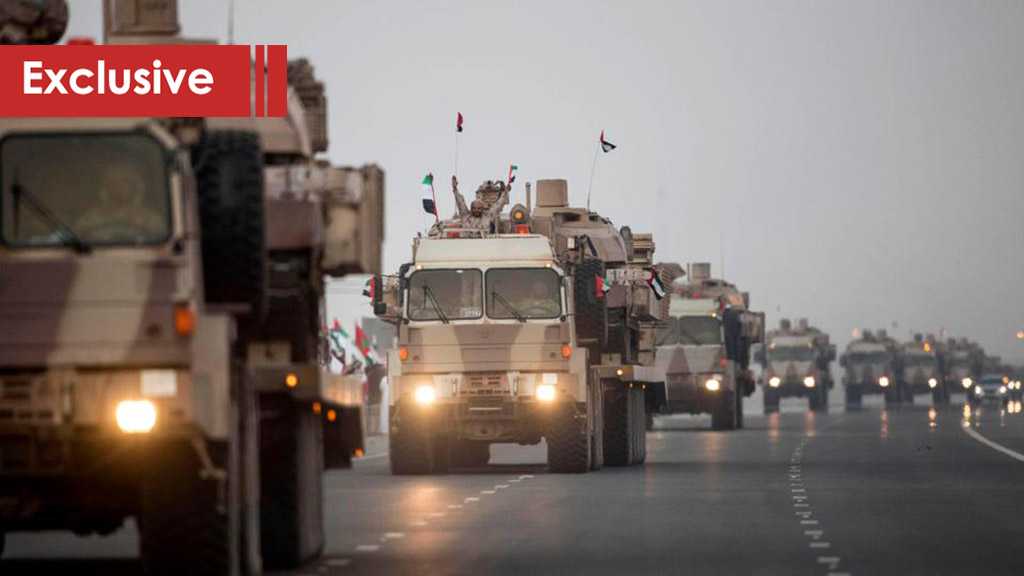
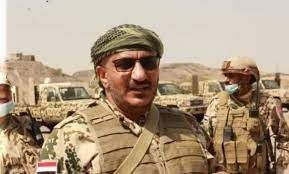
In a sudden turn in the course of the field, the Emirati-backed forces withdrew from the southern areas of Hudaydah that is led unilaterally by Haitham Taher in an unreasonable way with respect to the forces in Mokha city led by Tarek Saleh and backed by the United Arab Emirates [UAE] as well, which left the latter shocked, confused, and doubtful about the existence of an agreement and a prior coordination between Taher and close confidents of the fugitive president Abed Rabbu Mansour Hadi who is supported by Saudi Arabia.
Sources reported unannounced heated disagreements among the factions of the UAE-backed forces in the western coast of Yemen, in the aftermath of the sudden and wide withdrawals in Hudaydah areas, which represented a stab in the back of Saleh’s forces, leaving the armed factions affiliated with the southern transitional council shocked and confused. The sources added that the so-called “legitimacy of Hadi” is coming to an end.
The withdrawing forces, however, claimed that they have evacuated the fighting areas in Hudaydah in accordance with the Stockholm Agreement reached late 2018, which is supposed to take place in coordination and understanding with the United Nations mission; but it was not kept informed with the updates.
But other sources asserted that the Emirati forces had previously started a large-scale evacuation of its forces after receiving a series of military strikes from the Yemeni Ansarullah movement. Such strikes were based on accurate intelligence by the movement.
In addition, the Yemeni army and popular committees rushed to take control over these areas, and opened the main road that connects them with the capital Sanaa. Among these areas are the eastern and northeastern coastal city of Hudaydah, and areas to the south of the city on the outskirts of the Hudaydah International Airport, in addition to the Ad Durayhimi District, the coastal line of the “Beit Al-Fakih” District, At Tuhayta District, Al-Haima port to the south of Al-Khawkha District, areas in the Hays District and areas to the south of these two directorates of the Taizz Governorate.
On the other hand, Saudi Arabia evacuated most of its compounds in the last few weeks, especially in Al-Mahrah governorate, but a number of its troops is still at its center in Al-Ghaydah, along with a group of officers who still roam about 27 compounds where mercenaries forces of the southern separatists are present, and it has become rare to find any Emirati forces in many southern areas.
Regarding the Marib front, the Yemeni army and the popular committees have eased their attack on the city and headed to the south, achieving a progress that surpassed what it was like before, and succeeded, for the first time since years, to return to southern areas, even though a settlement with the local tribes there. But this operation allowed them to lay siege to all the southern and eastern crossings- the southern crossings that lead to Marib, and that made the Saudis and all the southern mercenaries in need for a long trip that takes them from Hadramout to the sieged city.
Accordingly, there is only one passage left, and if the Yemeni army and popular committees decide to go for an all-out confrontation to capture the city, this passage will be closed. The problem of Saudi Arabia here is that the support it received from the US did not help. Therefore, Marib has fallen and the greater is yet to come. Was the UAE Minister of State for Foreign Affairs Anwar Gargash right when he said that “the liberation of Hudaydah is the beginning of the end of the war”?
Yemeni journalist Ali al-Darwani confirmed to Al-Ahed News that nothing is being done confidentially regarding the Emirati withdrawal from the western coast that is at least more than 50 km long, but rather a relocation in case Marib fell, which will impose new fields on Ansarullah, first of which will be this coast where Taher’s forces consider themselves to be trapped between the jaws of the pincers, for this coast’s width reaches 5 km in some areas. He added that these forces opted to withdraw to the southern areas to strengthen their influence in order to defend Bab al-Mandeb strait which is a US-“Israeli” quest, fearing its fall in the special committees hands and thus taking control over the maritime navigation.
Al-Darwani also said that in case Marib fell, 50,000 to 100,000 fighters of the Islah party backed by the UAE and its allies like al-Qaeda and Salafists will flee to the southern regions, where they have authority. This large number will enhance their resilience in defending Bab al-Mandeb which might be a priority for the Yemeni army and the committees, and even for the Saudi-backed forces in Aden and the south, which fought the Islah Party in many areas.
The Yemeni journalist concluded that the Emirati withdrawal is a purely tactic withdrawal so that Abu Dhabi maintains its interests in the south, fearing Ansarullah first, and Saudi Arabia second.
Related Videos
After the withdrawal of the Saudi coalition… the opening of Al Dune Beach in Hodeidah
This is not poetry nor mere exaggerations with the hope of spreading false hope. It is the reality of the Yemeni geographic revenge against the occupation.
Israeli technology is one of the most important sources of input for the Neom project, which heavily relies on stability that cannot be attained without securing the Red Sea itself.
For the UAE, Bahrain, “Israel,” and the United States to launch maritime military exercises is no show of force; it is a reflection of deep concern and misgiving, primarily that of “Israel.”
“Israel” is dealing with four nightmares in the Red Sea, and Yemen seems to be their common thread.
The first nightmare: “We will strike critical targets.” That is how Ansar Allah responded last year to “Israel’s” comment on the situation in Yemen. Ansar Allah’s words were not just mere lip service, for Yemeni drones and Sanaa’s missile capabilities pose a genuine threat to the occupation on the Red Sea front, which has been confirmed by various Israeli military research centers.
Throughout the entirety of the Yemeni Army and Popular Committee-controlled Yemen, threatening “Eilat” is not any harder than threatening Saudi Aramco – that is Ari Heistein’s approach, a researcher in the Israeli Institute for National Security Studies. Though Heistein underrates the Yemeni threat, he acknowledges that Ansar Allah is able to use long-range missiles to hit targets from very far ranges. He sums up the whole situation with a single phrase: “It is realistic; however, it is limited.”
The precarious aspect of “limitation” stems from one basic angle: long-range missiles would grant the Israeli defense systems a certain margin of time to respond. This study was written two weeks ahead of the battle of Seif al-Quds, which proved that the issues in the Israeli defense systems do not solely rely on preparation, for what merits preparation more than a war?
The second nightmare: during the 1967 war, “Israel” experienced firsthand the repercussions of the Suez Canal and the Straits of Tiran being closed, so what could be the adverse effects of a farther passage – Bab-el-Mandeb Strait – being closed?
Closing Bab-el-Mandeb Strait in the face of Israeli vessels could seriously harm Israeli trade, both in terms of imports and exports. India is the largest Israeli arms importer in the world, importing 43% of “Israel’s” arms exports between 2016 and 2020, while Vietnam is the third-largest in the world, importing 12% of “Israel’s” arms exports.
Arms exports are a vital part of the Israeli economy, as “Israel” ranks eighth in the world in terms of arms exports, exporting 3% of the world’s arms. Therefore, closing Bab-el-Mandeb in the face of Israeli ships, one of the main pillars of the Israeli economy, heavily impacts the lives of Israeli settlers, whom the Israeli authorities need many temptations to keep in place.
The Israeli economy heavily relies on imported goods, which cross through the Indian Ocean through Bab-el-Mandeb. “Israel” might experience a situation that is opposite to the one it went through during the October 1973 war, which saw “Israel” suffering because of Bab-el-Mandeb being closed in the face of Iranian tankers transporting oil to “Israel” back when Iran was under the Shah. Today, “Israel” is extremely worried about the same strait standing in solidarity with revolutionary Iran.
The third nightmare: “Israel” dreams about having coastal tourist-attractive cities, and they are part of its plans for the future, firstly due to profits they would generate, and secondly due to the doors they could open for normalization.
Carnegie Center calls this project “The diplomacy of the Saudi Neom.” Neom city is at the heart of this project, and Israeli technology is one of the most important sources of input for this project, which requires high levels of stability that cannot be attained without stability in the Red Sea. Losing the opportunity of having military stability in the Red Sea means “Israel” would lose its economic opportunities in these “smart cities.”
The fourth nightmare: China aims to ensure the finest conditions for stability in the regions and straits through which the Belt and Road Initiative goes. By taking a look at a map of the initiative, one sees that Bab-el-Mandeb is a pivotal intermediate link for its success. The same initiative deems the Haifa port as less of a priority in terms of pathways into the Mediterranean sea, especially because it has many alternatives.
“Israel,” who is acting very cautiously in fear of the US aims to please China, hopes to reap the utmost benefits from the project. However, Bab-el-Mandeb could seriously harm “Israel” if China was put in a zero-sum game. “Israel” would lose a railway that connects “Eilat” and “Ashdod” and huge gas pipelines that would transmit energy through the occupied territories and supply them with energy as well.
This is the Yemeni geographic revenge from the occupation, as the four Yemeni nightmares are enough to shake “Isreal” to the core in terms of the occupation’s security and economy.
من دون مقدمات وعلى حين غرة أخلت قوات طارق صالح مواقعها على ساحل الحديدة في اليمن متوجهة إلى تعز، في وقت انسحبت قوات العمالقة التي كانت تشاركها جبهات الحديدة إلى ثلاث جهات… هي البرح للقتال مع صالح وعدن بينما رفضت بعض قوات من العمالقة الانسحاب ووقع غالبيتها في الأسر كما حصل مع كامل اللواء الخامس من العمالقة في الحديدة.
في معلومات حصلت عليها «البناء» فإنّ طارق صالح كان قد أبلغ قادة القوات المتواجدة في الحديدة قراره الانسحاب من الساحل الغربي إلى موزع ومن ثم البرح في محافظة تعز، وقالت المصادر إن طارق صالح زار الحديدة قبل أيام من الانسحاب وأبلغ القادة هناك قائلاً:
«أيها الإخوة سوف تسقط كلّ جبهات الساحل من الحديدة حتى خوخة، ونحن قررنا إعادة التموضع في البرح وموزع ومن يريد منكم الانضمام معنا فأهلاً وسهلاً بمن يريد منكم أن يكون تحت قيادتي». وأضاف صالح «من لا يريد كان الله بعونه يبقى وعليه مواجهة مصيره فوافق البعض وطلب البعض الآخر مبالغ مالية».
لماذا الانسحاب وإلى تعز تحديداً؟
تقول مصادر يمنية مقرّبة من آل صالح إن الانهيار في جبهات مأرب كان قوياً ومتسارعاً بشكل وضع خريطة الحرب اليمينة كلها على طريق النهاية السريعة لمصلحة أنصار الله.
وتضيف أن منطقة الساحل الغربي لا يمكن الدفاع عنها في حال سقوط مأرب إذا ما تمكّن أنصار الله من إرسال آلاف المقاتلين الذين كانوا في مأرب إلى الساحل الغربي، بالتالي أصبحت الخيارات أمام طارق صالح محدودة للغاية… إذ أنه ليس في وارد الذهاب للقتال في مأرب بوجه عشرات آلاف المقاتلين من أنصار الله، وليس لديه في الجنوب أيّ محب أو صديق، بالتالي فإنّ وجوده في الجنوب مرفوض من قبل الانتقالي، فكانت تعز أقلّ الخيارات سوءاً، خصوصاً أن لِعمّه فيها أنصار كون تعز كانت المحافظة التي تشكل منها كلّ كوادر الدولة اليمنية أيام حكم علي عبدالله صالح، بالتالي فسوف يجد طارق صالح فيها مقرأً للاستقرار المؤقت الذي يمنحه هامشاً من المناورة لعدة أشهر ربما، مع علمه أن محاولته هذه محفوفة بالمخاطر والصعوبات كون تواجده في تعز سوف يكون عرضة للحصار بسبب طول خطوط الإمداد وقدرة أنصار الله على قطع هذه الخطوط، فضلاً عن تواجد الإصلاح فيها، غير أن ضيق الخيارات لديه وحاجته إلى الحماية جعلته ينتقل إلى تعز، فكلّ ما يطلبه الرجل حالياً هو حماية نفسه لا أكثر.
Iran Shoots Down US LUCAS Drone Over Bandar Abbas
-
Iran’s Army air defenses have shot down a LUCAS drone belonging to the US
military over the southern port city of Bandar Abbas, according to an
official st...
The one advantage of corruption
-
Non-paywalled crooked Kushner article: “The Art of the Deal: Jared
Kushner’s Hacked Phone Revealed His Secret Negotiations—Including More Than
$700 Million...
A Jewish One World Government
-
A Jewish One World Government October 21 2026
___________________________________ More Vids! +BN Vids Archive! HERE!
___________________________________ Su...
The United States At A Crossroad
-
The United States At A Crossroad—An Analysis (16 Sept 2026) by Lawrence
Davidson Part I—Texas vs Minnesota Back in mid-May […]
Report on Beth Israel vigil 09-12-26
-
*Eat-a-Cheeseburger Day Approaches*
This year, EAC Day appears on Monday, September 21st. The date coincides
with the Jewish holiday called Yom Kippur. Cl...
-
Hello all,
It is with great sadness that I share with you the passing of our beloved
sister, Mother, and Grandmother, the individual that you all knew ...
Best Horror Podcast
-
Best Horror Podcast Introduction: Horror podcasts […]
The post Best Horror Podcast appeared first on Copper Shock Horror Podcast.
Ikhras Endorses Muntadhar Al-Zaidi
-
“Oh parties of banditry and sectarianism and corruption, we have come and
our goal is to destroy you.” Ikhras formally endorses Muntadhar al-Zaidi,
Iraqi j...
Prince Charles: Foreign Jews behind bloodshed in ME
-
In May, 2017, British Crown Prince Charles declined an invitation from
Zionist entity’s president Reuven Rivlin‘s to attend the 100th anniversary
of the no...
Palestinian Women – One for All, All for One
-
Honouring All Palestinian Women by Honouring Three: Hanin Zoabi, Ahed
Tamimi, Samah Sabawi Vacy Vlazna “Palestinian women have always stood side
by side ...
US’s Saudi Oil Deal from Win-Win to Mega-Lose
-
By F. William Engdahl Who would’ve thought it would come to this? Certainly
not the Obama Administration, and their brilliant geo-political think-tank
neo-...
-
*Mordechai Vanunu wins human rights prize of Brazilian Press Association *
* http://www.alternativenews.org/english/index.php/features/updates/7038-mordechai...
Abdul Aziz Rantissi:
"My ultimate wish, my God, is to attain martyrdom,"...God granted him his wish on April 17, 2004, at the hands of Israeli assassins.