Showing posts with label Conspiracy on Libya. Show all posts

Sunday, 2 February 2020

A Tour for Americans in Kaddafi's Libya they never saw on Television PUMPED


Meet the king:  Added by UP
Anyone talking about pre-war Libya is simply making it up.   
The King never lived under Gaddafi, still,
he can tell you "everything" about Libya,
and he is not making it up.
This post was first posted on 27 Oct 2011 as reply to Senior Editor of VT Gordon Duff, who rejoiced the Death of on TV: Gaddafi Questions. Though Duff never lived in pre-war Libya may be never visited Libya, he claimed he can tell his readers "everything" about Libya, and he is not making it up.

A Tour for Americans in Kaddafi's Libya they never saw on Television

The Libya Americans never saw on Television

You know I have to wonder if Americans know anything about Libya at all. There are many from other countries that don’t seem to know much about it either I am afraid.

Comments on different news sites tell me how mislead many are. One of the most predominant comments is now Libya will come out of the Dark Ages.

Well I am not sure what dark ages they are talking about as Libya was quite advanced.
NATO has blown them back to the dark ages,

So take a tour of Libya with me and see how things were before US/NATO intervention and tell me if they lived in the Dark Ages.

Videos of how Libya was before the invasion are below. Definitely they did not live in the dark ages.

Before we start the tour there are a few things you need to know however.
1. There is no electricity bill in Libya; electricity is free for all its citizens.
2. There is no interest on loans, banks in Libya are state-owned and loans given to all its citizens at zero percent interest by law.
3. Having a home considered a human right in Libya.
4. All newlyweds in Libya receive $60,000 dinar (U.S.$50,000) by the government to buy their first apartment so to help start up the family.
5. Education and medical treatments are free in Libya. Before Gaddafi only 25 percent of Libyans were literate. Today, the figure is 83 percent.
6. Should Libyans want to take up farming career, they would receive farming land, a farming house, equipments, seeds and livestock to kickstart their farms are all for free.
7. If Libyans cannot find the education or medical facilities they need, the government funds them to go abroad, for it is not only paid for, but they get a U.S.$2,300/month for accommodation and car allowance.
8. If a Libyan buys a car, the government subsidizes 50 percent of the price.
9. The price of petrol in Libya is $0.14 per liter.
10. Libya has no external debt and its reserves amounting to $150 billion are now frozen globally.
11. If a Libyan is unable to get employment after graduation the state would pay the average salary of the profession, as if he or she is employed, until employment is found.
12. A portion of every Libyan oil sale is credited directly to the bank accounts of all Libyan citizens.
13. A mother who gives birth to a child receive U.S.$5,000.
14. 40 loaves of bread in Libya costs $0.15.
15. 25 percent of Libyans have a university degree.
16. Gaddafi carried out the world’s largest irrigation project, known as the Great Manmade River project, to make water readily available throughout the desert country.
17 Women’s Rights: Under Gaddafi, gender discrimination was officially banned and the literacy rate for women climbed to 83 per cent. The rights of Black’s were also improved.
To add to problems now facing those in Libya are the tons of DU dropped on them by US/NATO forces.

There was no DU before to make people sick, so now there will be numerous health problems never before seen in Libya.
1. Libya is Africa’s largest exporter of oil, 1.7 million tons a day,
which quickly was reduced to 300-400,000 ton due to US-NATO bombing.
Libya exports 80% of its oil: 80% of that to several EU lands (32%
Italy, 14% Germany, 10% France); 10% China; 5% USA.
2. Gaddafi has been preparing to launch a gold dinar for oil trade with
all of Africa’s 200 million people and other countries interested.
French President Nickola Sarkozi called this, “a threat for financial
security of mankind”. Much of France’s wealth—more than any other
colonial-imperialist power—comes from exploiting Africa.
3. Central Bank of Libya is 100% owned by state (since 1956) and is thus outside of multinational corporation control (BIS-Banking International Settlement rules for private interests). The state can finance its own projects and do so without interest rates
4. Gaddafi-Central Bank used $33 billion, without interest rates, to
build the Great Man-Made River of 3,750 kilometers with three parallel pipelines running oil, gas and water supplying 70% of the people (4.5 of its 6 million) with clean drinking and irrigation water.
5. The Central Bank also financed Africa’s first communication satellite with $300 million of the $377 cost. It started up for all Africa, December 26, 2007, thus saving the 45-African nations an annual fee of $500 million pocketed by Europe for use of its satellites and this means much less cost for telephones and other communication systems.
Some of the numbers above vary a bit from web site to web site but all are relatively close.

Great Man made River Project Libya Absolutely Amazing

The Great Man-Made River is a network of pipes that supplies water from the Sahara Desert in Libya, from the Nubian Sandstone Aquifer System fossil aquifer. Some sources cite it as the largest engineering project ever undertaken.

The Guinness World Records 2008 book has acknowledged this as the world’s largest irrigation project.

According to its website, it is the largest underground network of pipes and aqueducts in the world. It consists of more than 1300 wells, most more than 500 m deep, and supplies 6,500,000 m³ of freshwater per day to the cities of Tripoli, Benghazi, Sirt and elsewhere. Muammar al-Gaddafi has described it as the “Eighth Wonder of the World.

Great Man Made River Project Libya

Libya – Great Man Made River Project

Libya Telecom and Technology (LTT)

Libyan Farm–This is about half an hour driving from Tripoli,

Libya Footage

Libya footage II

Libya footage II.V

Libya Footage III

Photos around Tripoli, Libya

1. “Severan Arch, Leptis Magna”
2. “All roads lead to …”
3. “Detail of Severan Arch, Leptis Magna”
4. “Oration, Leptis Magna”
5. “Arches, Leptis Magna”
6. “Carved marble Leptis Magna”
7. “Detail on marble column, Leptis Magna”
8. “Doorways, Leptis Magna”
9. “Forest of columns Leptis Magna”
10. “Front terrace Villa Silin”
11. “Gargoyles on arches, Leptis Magna”
12. “Granite columns Leptis Magna”
13. “Leptis Magna”
14. “Majestic columns, Leptis Magna”
15. “Grave, Leptis Magna”
16. “Check the surf, Villa Silin”
17. “Market Leptis Magna”
18. “Market place Leptis Magna”
19. “Modern meets ancient”
20. “Tumbling into the ocean, Leptis Magna”
21. “Statues”
22. “The Latrines”
23. “View to the ocean Leptis Magna”
24. “Gum tree, Leptis Magna”

Photos from Libya

The Green Mountain of Libya

Libya as you never seen it

Libya Tourist Attractions

Libya’s beautiful beaches

Tripoli, Libya

Visit to Tripoli/Libya A walk about.

Libya 2009

Pro Gaddafi Rally in Benghaziin May 2011

Massive Anti-NATO-Rebel Demonstrations in Tripoli, July 1, 2011 1.5 million people were at this rally.

Translation of Gaddafi speech today, translation by Karim Budabuss:
The leader is talking now. He is saying that this is a historical day, and he is challenging Sarkozy, Cameron and Obama to switch on their TVs and watch the crowds and he is saying that they will find out that they are delusional because they entered a war which they never win, he also says if you continue targeting our houses we can do the same coz Europe is not far away but he said lets not do this and watch the crowds , kids and women.
They are not here because i ordered them to, it is they are free will. in this war you are not facing me you are facing these crowds. I am nothing, if you want peace with Libyans, it is up to the crowds.
If you want any thing , negotiate with the crowds. The regime is not Gaddafi regime, it is a Libyan regime . Even if many got scared, defected and escaped, the Libyans will remain, and each coward will be replaced with a hero.
Is it a democracy to bomb the civilans, we don’t want a democracy which comes with bombs. The socialist Jamahyria will win, the real democracy which serves the people. I advice you to stop bombing, and stop becoming mercenaries for some rebels.
The Libyans said their words, they marched, their tribes made it clear that the future is for Libyans, the oil is for Libya, Libya is ours. You are delusional, a group of traitors convinced you that Libya is easy to get, you hired mercenaries , propaganda, psychological war all that didn’t allow you to make any progress on the ground.
Turn on ur TVs and watch the longest Libyan flag 4.5 km, I didn’t make this flag, people donated to make this flag. Those rebels are no different from who betrayed Libyan during the Italian invasion.
Libyan people go in millions without weapons to liberate the regions under rebel control. You Libyan people are the only one who can finish this war with a victory. If they want to negotiate we welcome that, otherwise we are continuing and they are definitely losing no matter how many weapons they drop with parachute to the rebels.
We will not betrayed our history nor our children and their future. The glory is for you brave Libyans, the struggle will continue. (end of speech)

The Real Reason Why Gadaffi Was Killed & Why We’re In Libya

They also want the oil and water from Libya as well. The want to privatize everything they can so their companies make profits.
The US and EU hate not having their profiteers in a country and the IMF and World Bank also want their piece of the pie as well. They in essence steal everything from countries they can. They could care less about the people.

Cost of war to Libyans about $200 Billion

Over 800 Bodies Dumped in Libyan Cemetary by Rebels

Criminal State – A Closer Look at Israel’s Role in Terrorism/NATO and US supporting the Rebels who are actually terrorist on the US/NATO Terrorist list. I thought the war was against terrorist not to help them. I guess they have been helping the Terrorists all along. Anything to keep the wars going for the profiteers.

Racist murders in Libya at the hands of rebel forces

There is also some Video of Canadians who went to Libya on vacation on the link below.

Libya war lies worse than Iraq

UN chief Ban alarmed over rising civilian toll in Libya

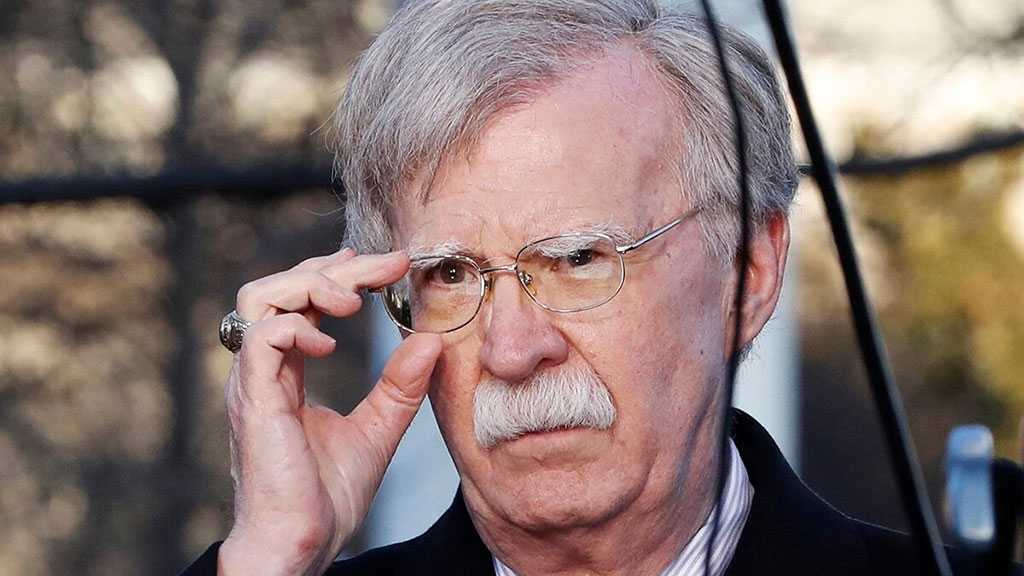
John Bolton Admits All Of These Wars Are For Oil

NATO’s 26,000 sorties, including 9,600 strike missions, destroyed, water, schools, hospitals, food, and many other necessities needed by civilians. They also killed many civilians. These are War Crimes.

Africa
Recent

River to Sea Uprooted Palestinian

Friday, 13 September 2019

Trump: Bolton Was «Way Out Of Line» On Venezuela


Trump: Bolton Was «Way Out Of Line» On Venezuela
Speaking for the first time about reasons for firing his national security advisor John Bolton, US President Donald Trump said he was “way out of line” on Venezuela, even as the State Department doubled down on regime change.
“I disagreed with John Bolton on his attitudes about Venezuela. I thought he was way out of line,” Trump told reporters at the Oval Office on Wednesday.
The failed attempt to effect regime change in Caracas – which Bolton has been at the forefront of since January – was only one of the issues the president brought up. Bolton’s sabotage of denuclearization talks with North Korea, earlier this year, was another.
“We were set back very badly when [Bolton] talked about the Libyan model” with North Korea, Trump added. “That’s not a question of being tough, that’s a question of being not smart to say something like that.”
Libyan leader Muammar Gaddafi had agreed to give up his nuclear and chemical weapons programs to the US, only to be violently overthrown and murdered by US-backed groups in 2011.
Bolton also “wasn’t getting along with the people in the administration that I consider very important,” Trump added, making sure to point out that he had opposed the 2003 Iraq War while Bolton was an unapologetic advocate of it.
None of that explains why Trump hired Bolton and kept him on as his principal foreign policy adviser for nearly 18 months, however. Nor does it explain why Trump agreed to appoint Bolton’s colleague Elliott Abrams as Washington’s point man on Venezuela, despite a history of his Trump-bashing public comments.
The Trump administration on Wednesday showed no signs of abandoning the approach to Caracas championed by Bolton and Abrams since January, despite it having failed miserably. Shortly after Trump’s comments, Secretary of State Mike Pompeo announced that the US has invoked the Inter-American Treaty of Reciprocal Assistance (TIAR), which would give legal framework for military intervention in Venezuela.
Pompeo’s pretext is that this was requested by Juan Guaido, the self-proclaimed “interim president” of Venezuela recognized by the US and a handful of its allies, but no one else in the world. Guaido’s repeated attempts to take over power in Caracas since January have failed miserably.
Trump maintained that his policy on Venezuela is “humanitarian” and designed to “help” people there, and blamed “socialism” for the country’s economic woes. He has framed his 2020 re-election bid as stopping the “socialist” Democrats from taking over the US.
“I don’t want to talk about that,” Trump said when asked if he would be willing to meet with Venezuelan President Nicolas Maduro. This was in stark contrast to his readiness to meet with the Iranian president, another thing Bolton reportedly opposed.
Related Videos


Related Articles

River to Sea Uprooted Palestinian   
The views expressed in this article are the sole responsibility of the author and do not necessarily reflect those of the Blog!

Wednesday, 21 August 2019

American Media Distortion vs. Facts


American Media Distortion vs. Facts
TEHRAN (FNA)– The privately-owned media is still dominated by the interests of the US political and corporate elites, and used as a tool by the government to manufacture public consent.
In any circumstance, they use the media to publish fabricated news, lies and biased information to get the public in line with their political motives, aiming at achieving their agendas. In many cases, the US has used the media to distort facts in regard to its foreign policy action in the Middle East.
Not so long ago, US corporate media played an integral role in fueling the Iraq War in 2003. It had no doubts that the Bush administration went to war because they wanted to strengthen the credibility and influence of America in the Middle East to reassert its position as an un-challengeable hegemon after the 9/11 attack.
But they distorted the facts surrounding Iraq’s weapons of mass destruction (WMDs) and terrorist harboring as invasion rationale. It was published by many Western media coverage outlets, particularly the US media, to disseminate to the public. In the weeks leading up to the illegal invasion, nearly three-quarters of the American public believed the lie promoted in that moment. Then, the US-led military coalition, which included their allies, invaded Iraq. After the invasion was done, the truth was revealed that there were no such WMDs.
Another prime example comes from the war against Qaddafi of Libya. Media distortion and manipulation were used to start the war against Libya. To gain support for the invasion and aggression, which is part of the traditional tactics the US and NATO have followed, perception management was overtly employed through well-known US media agencies and other Western mainstream news.
After The Financial Times, for instance, reported that Libyan military jets attacked civilian protesters, US and EU officials hardly condemned Qaddafi’s regime and took military action. Truly, there was no piece of video evidence proving the attack, and the report turned out to be false. Libyan military planes only got involved later on during the conflict when they missioned to bomb ammunition depots to prevent the rebels from getting arms, after the media claims were made about jets firing on protesters.
There was no doubt that reports were distorted. To some critics of the US military actions in foreign countries, it is undoubtedly conclusive that there have been lies and distortions involved in wars the US has fought in. The most recent example could be Syria and its imaginary chemical attacks on its own people.
It is even more interesting that the US uses media not only to manufacture the public consent of its domestic citizens in association with wars in foreign countries, as mentioned above, but also employs it as fact distortion in international affairs outside of America.
As the world order is moving to multi-polarity, and the Islamic Asian civilization is being realized, particularly by Iran’s growing economic and political development, the competition between the status quo dominant US and Iran has continuously been obvious in recent years.
The current confrontation amid the unresolved economic terrorism has certainly demonstrated this fact. Concerning this, the US has used as many tactics as possible to contain challenger Iran in international issues, regionally and globally.
As a superpower with dominant power in global media, the US will inevitably continue to use the media to manufacture public consent regarding domestic and international affairs. There is no doubt that the US corporate media, to an extent, will play a complimentary role in its foreign policy approach in publishing false ideas and news, creating concepts and framing theories that favor its own interests, and not the ones that serve regional peace and global stability.

River to Sea Uprooted Palestinian   
The views expressed in this article are the sole responsibility of the author and do not necessarily reflect those of the Blog!

Wednesday, 3 July 2019

Libya: The Hidden Turkish Intervention


As of 30 April, the LNA controlled 1259800 square kilometres of territory (equal to 77.58% of the surface of Libya, including 6.5% of the Tuariq Council area), the Tebus controlled 260989 square kilometres (16.07%) and the GNA 103081 square kilometres (6.35%).
On May 2, the LNA interrupted the supply lines between Sadiyah and Aziziya, while advancing on Aziziya from Hira and Qasarat.
On May 3, the barracks of the 166th Brigade of the Libyan National Army near Sabha was attacked, causing nine deaths. The attack on the Sabha training camp was the work of ISIL terrorists, who murdered eight soldiers, beheading one, as they already did in Buabat al-Faha, Baraq Shati and Darna. The action was a demonstration of the links between GNA and Islamist terrorism.
Numerous terrorists were treated in the Italian camp hospital of Misurata, according to the Media Centre of the al-Qarama Operative Centre of the LNA:
“We have received confirmed intelligence information on the Italian camp hospital in Misurata which treats numerous terrorists fighting alongside the Muslim Brotherhood and the militias”; listing the terrorists treated in the Italian hospital of Misurata:
Muhamad Abdalqani, known as Abu Zubayr, of ISIL
Asad Qudayr al-Shami known as Abu Qatada, of Bayt al-Maqdis
Abdalwahab Mahmud al-Asali, of Bayt al-Maqdis
Abu al-Layth, of al-Qaida in the Islamic Maghreb
Hasan Abdalwadud, known as Abu Sayaf, of ISIL
Ayman Tahar al-Isqandarani, known as Abu Fatima, of ISIL in Algeria
Abdulah Hasan al-Iraqi, of ISIL in Algeria
Said al-Mashgul, known as Abu al-Bara, of al-Qaida in the Islamic Maghreb
Ibrahim Ataf Qudayr, known as Abu al-Dahma, al-Murabitin Army terrorist organisation
The statement confirmed the arrest of terrorists from the Egyptian organisation Hisham Ashmawi arrested in Darna. “We know that the Italian forces have assigned this field hospital to fight terrorism and not to support it”, concluded the statement of the Operations Room al-Qarama.
On May 5, the LNA advanced in the Qahali quarter, freeing the al-Naq petrol station, and liberated Sabiah and Suq al-Sabat, arriving on the southern outskirts of Suani.
On May 7, the LNA shot down a GNA Mirage F-1, taken off from Misurata, on al-Hirah, south of Tripoli, capturing its pilot.
On May 10, the LNA advanced on Tuisha and clashed with the GNA west of Sabiah.
Meanwhile, a leader of Jabhat al-Nusra, a terrorist organization, arrived in Libya from Syria to join the Islamist militias of the GNA that were fighting against the Libyan National Army (LNA) in Tripoli. Nusret Imamovic was a Bosnian who studied Islamic Sharia in Sarajevo. He had been fighting for Jabhat al-Nusrah in Syria since 2012, and resided in Azaz, Governorate of Aleppo, before Syrian forces freed the area.
On May 11, the LNA recaptured the Zahra Bridge.
On 13 May, the Tobruq Parliament voted on the law defining the Muslim Brotherhood as a terrorist group. An LNA airstrike destroyed the headquarters of the al-Faruq brigade in al-Zuiya, west of Tripoli, eliminating a leader of the ISIL, Safwan al-Jabar.
On the 14th of May, the LNA shot down a UAV of Turkish manufacture, belonging to the GNA of Misurata, at the air base of al-Jufra.
On May 16, the Saqa units of the LNA entered Tripoli from the south. Qalifa Haftar met in Rome with council president Giuseppe Conte, who called for a ceasefire.
On May 17, Fathi al-Majbri, Vice President of the Presidency Council of the Government of the National Accord, accused Fayaz al-Saraj of using his powers for personal gain, of the failure of the political process and of the outbreak of war in Tripoli. Al-Majbri declared that al-Saraj was obsessed with power and willing to do anything to stay in power;
“What civil status are you talking about while violating the simple principles of government administration? Fayaz al-Sarraj manages the country with the de facto authority of outlaw militias. Al-Saraj has allied himself with extremist groups and today they are the backbone of the forces fighting against the Libyan army”.
Meanwhile the GNA admitted that it had lost Sabratha and Surman, stating “that the two municipalities were now taking orders from the parallel government in the eastern region”, in other words, the interim government of Bayda led by Abdullah al-Thani. GNA’s Ministry of Local Government said Surman supported what he described as “aggression against Tripoli”. U.S. public relations firm Mercury signed a $2 million a year contract with Fayaz al-Saraj to spread favourable propaganda through the Wall Street Journal, including an article on May 9 asking President Donald Trump to support al-Saraj rather than Field Marshal Qalifa Haftar.
On May 18, the Islamist factions of the government of Fayaz al-Saraj received Bulgarian MG-M1 machine guns and ammunition, delivered to the GNA from Turkey along with at least 40 BMC Kirpi II and Vuran armored ammunition, disembarked from the Amazon cargo ship, in Misurata, to repel the operations of the Libyan National Army in Tripoli. Kirpi armored vehicles are produced by the Turkish company BMC in Samsun. The BMC was sold in 2014 to the Committee for the Industry of the Armed Forces of Qatar by Turkish businessman Ethem Sançak, a member of the governing body of the Justice and Development Party of Turkish President Recep Tayyip Erdogan. BMC manufactures the new Turkish tank Altay, whose deliveries began in December 2018, and in March 2019 Qatar ordered 100 of them. In January 2019, Turkey and Qatar opened a military engine plant in Karasu, northwest Turkey.
On May 20, the LNA captured the transport base of Tripoli, advancing towards Qalat Qafar and Nasr.
On May 21, the head of the Tarhuna Salah al-Fanidi council declared at a meeting of commanders and tribal leaders in Sidi Sayah that the Tarhuna, Bani Walid, Warshafana and Nuahi al-Arbah tribes supported the Libyan National Army in operations in Tripoli.
On 22 May, the LNA freed the Walid district of Tripoli.
On May 24, the LNA freed Ramlah and advanced to Ayn Zara.
On May 25, the Libyan National Army (LNA) advanced south and east of Tripoli with the support of the Libyan Air Force.
On May 28, the LNA advanced in the Walid district while the GNA reoccupied the transport field. Egyptian Intelligence Director (GIS) Abas Qamal visited Libya and met Qalifa Haftar. Fayaz al-Saraj visited Malta.
On 29 May, 1 Dassault Falcon 900EX (I-OUNI) from the Italian secret service took off from Tripoli.
On 30 May, Qalifa Haftar visited Moscow.
On May 31, the head of the LNA’s al-Qarama information office, Qalid al-Mahjub, confirmed the arrival of 12 Turkish military instructors at Misurata.
On June 3, the LNA repelled the attack by the GNA forces on the international airport of Tripoli, after two days of combat and the elimination of 31 GNA fighters, the arrest of dozens more and the destruction of many of their military vehicles and artillery pieces. ISIL detonated two car bombs in Darna, killing and injuring 19 people. The LNA repelled the ISIL attack on checkpoint 400 in al-Fuqaha, al-Jufra region. Salah al-Raqi, GNA undersecretary in the Ministry of Housing and head of the Islamist militia Fursan Janzour, was eliminated in clashes with LNA forces in Tripoli.
On June 4, 18 GNA militiamen were eliminated in clashes at al-Tuysha, south-west of Tripoli Airport.
On June 7, the LNA destroyed military aircraft at the Mitiga airport occupied by the GNA, including at least one Turkish armed drone.
On June 8, the LNA freed the Tuayshah, Ramalah and Tariq bin Ziyad area by advancing on Suani, south of the airport, and Walid.
On June 10, GNA forces withdrew from the Ayn Zara – Fuzi Al-Mansuri line in Tripoli.
On June 13, a GNA L-39ZA aircraft was shot down at al-Dafniyah, 200 km south-east of Tripoli, as it flew to the Misurata air base.
On June 20, the LNA repelled the GNA attack on Tripoli International Airport.
On June 21, a GNA unit, Battalion al-Uburm, moved to the LNA.
On June 24, the GNA forces were repelled by the LNA at al-Tuaisha, south-west of Tripoli International Airport, attacking on two axes: the airport road from Dakla and the Qazirmah area.
On June 26, the LNA entered Qaryan and eliminated 11 GNA fighters, but after a surprise attack by the GNA forces, the LNA decided to withdraw from the city 100 km south of Tripoli. The LNA repelled a GNA raid on al-Quasim and Abu Shiba, northwest of Qaryan.
On June 26, the Libyan National Army handed over captured U.S. mercenary to U.S. officials. Jamie Sponaugle was a mercenary pilot captured after his plane was shot down during the fighting in Tripoli, he had received orders from the GNA to destroy Libyan infrastructure. The GNA, with Turkish, Italian and French support, launched a major attack south of Tripoli, occupying Hira, Buqaylan, Quasim and Wadi Shaybah.
On 27 June, LNA Major Muhamad Ahmad al-Targi fell in combat in al-Quasim, north of Qaryan. As the LNA withdrew from Qaryan after the attack launched by the GNA.
On June 28, a Lockheed Martin C-130J of the Italian Air Force departing from the base of Pisa San Giusto landed in Misurata, with supplies for the Italian military hospital in Misurata.
On June 28, LNA repelled the attack on al-Sabia, 40 km south of Tripoli, advancing on al-Aziya. After leaving Qaryan, the LNA command moved to Tarhuna. Meanwhile, Qalifa Haftar also arrived in Tarhuna, 60km southeast of Tripoli. Following the aggression of Qaryan, where 28 wounded in the hospital were killed by the Islamists of Fayaz Saraj.
On 29 June, the General Command of the Libyan National Army declared:
“While the forces of the Libyan National Army are fighting terrorism on Libyan territory, terrorists in our country have had Turkish logistical support for years. In recent days it has evolved into direct Turkish intervention using war planes, transporting mercenaries and sending ships loaded with weapons, ammunition and armoured vehicles to support terrorism in Libya. Therefore, the General Command of the Libyan National Army ordered the Air Force to target Turkish ships and boats within Libyan territorial waters.
The Interim Government must expel all Turkish companies operating in Libya and end their operations on all projects on Libyan territory, boycotting Turkish industries and products and stopping civilian flights to and from Turkey at Libyan airports in response to this Turkish terrorist attack. Turkish drones had bombed several locations at the airport south of Tripoli, in support of the Islamist militias of Fayaz al-Saraj in Tripoli”.
The week before, Turkish President Recep Tayyip Erdogan admitted that his government had provided arms, ammunition and military support to the al-Saraj gangs.
Qalid al-Mahjub, spokesman for the Tripoli Operations Room of the Libyan National Army (LNA), stated that there was a Turkish Operations Room leading the Islamist groups of the Fayaz al-Saraj government in battle, composed of numerous Turkish army officers, who trained the al-Saraj Islamist militias during battles against the Libyan National Army in the southern districts of Tripoli. Al-Mahjub declared that the Turkish Operations Room was located in the Mitiga airport in the centre of Tripoli, and that they also used Turkish drones taking off from the Air College of Misurata, under mercenary command.
On June 30, an LNA air attack on the Mitiga international airport destroyed 1 Turkish UAV while taking off. The Libyan National Army arrested several Turkish citizens, engaged in sabotage and subversion operations and in coordinating Ankara’s military support to the Islamist government of Tripoli. The detainees were General-Major Güksel Kahya, Deputy Minister of Defence of Turkey, General-Major Irfan Ozsert, Head of Military Intelligence and Secretary General of the Turkish General Staff, General-Major Levent Ergond, responsible for the operations of the Turkish armed forces abroad, Rear Admiral Gersoy Zaipanar, Brigadier General Ilkay Altyndach and Brigadier General Selcuk Yavuz, responsible for the actions of the special forces on the Syrian border.
Levent Ergon was sentenced for illegal activities to 13 years in prison, but was released by the Erdogan government, which then appointed him in charge of the operations of the Turkish armed forces.
Ilkay Altyndach was imprisoned for disseminating secret documents, but was released by Erdogan and in 2018 promoted to brigadier general.
Rear Admiral Gersoy Zaipanar was sentenced and sentenced to 16 years in prison for conspiracy, but was released by Erdogan.
Brigadier General Selcuk Yavuz led an offensive in Syria with the special units he directed.
According to the Turkish journalist Abdullah Bozkurt, “such people would be Erdogan’s neo-nationalist dream team for dirty operations abroad. They are all indebted to Erdogan and therefore happy to carry out any sordid action, such as supporting Islamist groups to use them as agents of influence… it is clear that they were engaged in military and intelligence operations in Libya”.
The Ministry of Defence of Benghazi declared that Turkey was the sanctuary of terrorists sought by the Libyan National Army.
On July 1, the GNA militia leader Ahrar Libya, Isam Qatus, was eliminated in the clashes in Laft. He was appointed NTC ambassador to Niger in 2014.
GNA L-39 planes launched by Misurata bombed Tarhuna, 65 km south-east of Tripoli.
Fayaz al-Saraj flew to Italy to meet the Minister of the Interior Matteo Salvini in Milan. Saraj asked for a “reserved” meeting to obtain more military aid from the Italian government in favour of GNA.
GNA sources stated that “the government of Tripoli greatly appreciates the role and position of Italy, but at this point calls for a greater effort to consolidate the political role of a Libyan government recognized by the United Nations. We have asked for weapons, we have asked for intelligence, medical support, and at least stronger, more evident, more open political support”.
On July 2, the LNA Air Force bombarded 30 GNA targets at al-Azizya, Swani and Tajura. At least 90 GNA fighters were eliminated.

River to Sea Uprooted Palestinian   
The views expressed in this article are the sole responsibility of the author and do not necessarily reflect those of the Blog!

Saturday, 11 May 2019

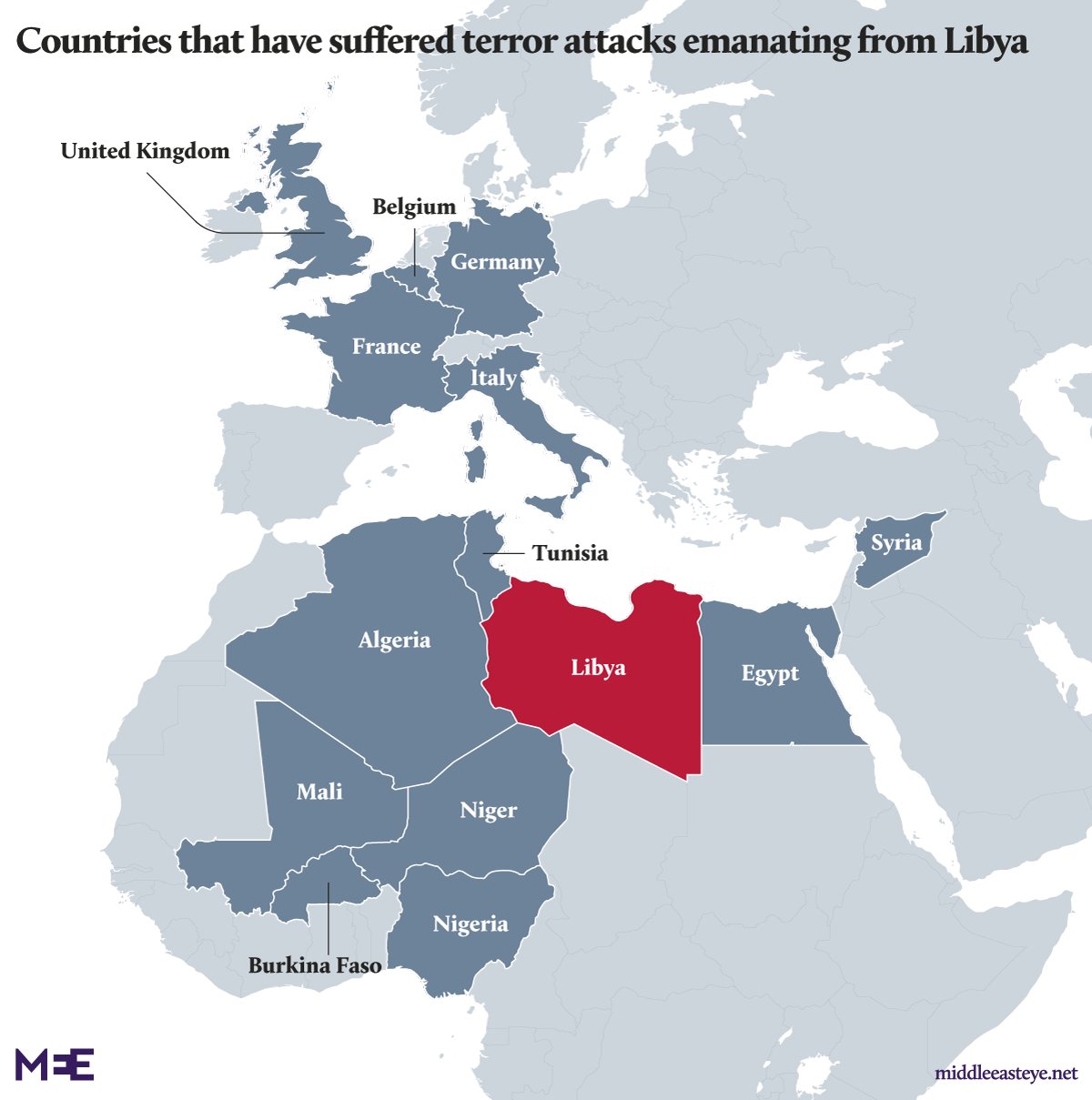
How the West’s War in Libya Has Spurred Terrorism in 14 Countries

The true extent of the fall-out from the Libya war is remarkable: it has spurred terrorism in Europe, Syria, North Africa and sub-Saharan Africa
Eight years on from Nato’s war in Libya in 2011, as the country enters a new phase in its conflict, I have taken stock of the number of countries to which terrorism has spread as a direct product of that war.
The number is at least 14. The legacy of David Cameron’s, Nicolas Sarkozy’s and Barack Obama’s overthrow of Libyan leader Muammar Gaddafi has been gruesomely felt by Europeans and Africans.
Yet holding these leaders accountable for their decision to go to war is as distant as ever.
Ungoverned space
The 2011 conflict, in which Nato worked alongside Islamist forces on the ground to remove Gaddafi, produced an ungoverned space in Libya and a country awash with weapons, ideal for terrorist groups to thrive.
But it was Syria that suffered first.
After civil war broke out there in early 2011, at the same time as in Libya, the latter became a facilitation and training hub for around 3,000 fighters on their way to Syria, many of whom joined al-Qaeda affiliate, Jabhat al-Nusra and the Islamic State-affiliated Katibat al-Battar al-Libi (KBL), which was founded by militants from Libya.
In Libya itself, a rebranding of existing al-Qaeda-linked groups in the north-eastern area of Derna produced Islamic State’s first official branch in the country in mid-2014, incorporating members of the KBL.
During 2015, IS Libya conducted car bombings and beheadings and established territorial control and governance over parts of Derna and Benghazi in the east and Sabratha in the west. It also became the sole governing body in the north-central city of Sirte, with as many as 5,000 fighters occupying the city.
By late 2016, IS in Libya was forced out of these areas, largely due to US air strikes, but withdrew to the desert areas south of Sirte, continuing low-level attacks.
Libya Map
In the last two years, the group has re-emerged as a formidable insurgent force and is again waging high-profile attacks on state institutions and conducting regular hit-and-run operations in the southwestern desert.
Last September, UN Special Representative to Libya Ghassan Salame told the UN Security Council that the IS “presence and operations in Libya are only spreading”.
Terror in Europe
After the fall of Gaddafi, IS Libya established training camps near Sabratha which arelinked to a series of terrorist attacks and plots.
“Most of the blood spilled in Europe in the more spectacular attacks, using guns and bombs, really all began at the time when Katibat al-Battar went back to Libya,” Cameron Colquhoun, a former counterterrorism analyst for Britain’s Government Communications Headquarters, told The New York Times.
“That is where the threat trajectory to Europe began – when these men returned to Libya and had breathing space.”
Salman Abedi, who blew up 22 people at a pop concert in Manchester in 2017, met with members of the Katibat al-Battar al-Libi, a faction of IS, several times in Sabratha, where he was probably trained.
Other members of the KBL were Abdelhamid Abaaoud, the ringleader of the 2015 Paris attacks on the Bataclan nightclub and sports stadium, which killed 130 people, and the militants involved in the Verviers plot to attack Belgium in 2015.
The perpetrator of the 2016 Berlin truck attack, which left 12 people dead, also hadcontacts with Libyans linked to IS.
So too in Italy, where terrorist activity has been linked to IS Libya, with several individuals based in Italy involved in the attack on the Bardo museum in Tunis in 2015, which killed 22 people.
Libya’s neighbours
Tunisia suffered its deadliest terrorist attack in 2015 when a 23-year-old Tunisian armed with a machine gun mowed down 38 tourists, mainly Britons, at a beach hotel in the resort of Port El Kantaoui.
The perpetrator was reportedly an adherent of IS and, like Salman Abedi, had been trained in the camp complex at Sabratha from where the attack was staged.
Libya’s eastern neighbour, Egypt, has also been struck by terrorism emanating from the country. IS officials in Libya have been linked to, and may have directed, the activities of Wilayat Sinai, the terrorist group formerly known as Ansar Bayt al-Maqdis, which has carried out several deadly attacks in Egypt.
After the fall of Gaddafi, the Western Desert became a corridor for the smuggling of weapons and operatives on their way to the Sinai.
Egypt conducted air strikes against militant camps in Libya in 2015, 2016 and again in 2017, the latter following the killing of 29 Coptic Christians near Cairo.
Into the Sahel
But Libya has also become a hub for jihadist networks stretching south into the Sahel. Libya’s 2011 uprising opened a flow of weapons into northern Mali, which helped revive an ethno-tribal conflict that had been brewing since the 1960s.
By 2012, local allies of Al-Qaeda in the Islamic Maghreb (AQIM) had taken control of day-to-day governance in the northern Mali towns of Gao, Kidal and Timbuktu.
After France intervened in Mali, the ongoing lack of governance in Libya precipitated several groups to relocate their operational centres to Libya, including both AQIM and its offshoot, Al-Mourabitoun, from where these groups could acquire weapons more easily.
With Libya as its rear base, Al-Mourabitoun under its leader Mokhtar Belmokhtar was behind the attack on the Amenas hydrocarbon complex in eastern Algeria in January 2013, which left 40 foreign workers dead; the gun attack on the Radisson Blu hotel in Bamako, Mali in November 2015, which killed 22 people; and for the attack on Hotel Splendid in Ouagadougou, Burkina Faso, which killed 20 people in January 2016.
Al-Mourabitoun has also attacked a military academy and French-owned uranium mine in Niger.
Disastrous foreign policy
The fall-out from Libya spreads even wider, however. By 2016, US officials reported signs that Nigeria’s Boko Haram jihadists, responsible for numerous gruesome attacks and kidnappings, were sending fighters to join IS in Libya, and that there was increased cooperation between the two groups.
The International Crisis Group notes that it was the arrival of weapons and expertise from Libya and the Sahel that enabled Boko Haram to fashion the insurgency that plagues north-western Nigeria today.
There have even been claims that Boko Haram answers to IS commanders in Libya.
In addition to these 14 countries, fighters from several other states have joined IS militants in Libya in recent years. Indeed, it is estimated that almost 80 percent of IS membership in Libya is non-Libyan, including from countries such as Kenya, Chad, Senegal and Sudan.
These foreign fighters are potentially available to return to their own countries after receiving training.
The true extent of the fall-out from the Libya war is remarkable: it has spurred terrorism in Europe, Syria, North Africa and sub-Saharan Africa. Islamic State, although now nearly defeated in Syria and Iraq, is far from dead.
Indeed, while Western leaders seek to defeat terrorism militarily in some places, their disastrous foreign policy choices have stimulated it in others.
Mark Curtis is a historian and analyst of UK foreign policy and international development and the author of six books, the latest being an updated edition of Secret Affairs: Britain’s Collusion with Radical Islam.

River to Sea Uprooted Palestinian   
The views expressed in this article are the sole responsibility of the author and do not necessarily reflect those of the Blog!