Showing posts with label America First. Show all posts

Friday, 29 January 2021

Democrats’ ‘divide and conquer’ Senate show trial may jeopardize duopoly

 US Rep. Ilhan Omar (D-MN) (L) talks with Speaker of the House Nancy Pelosi (D-CA) during a rally with fellow Democrats before voting on H.R. 1, or the People Act, on the East Steps of the US Capitol on March 08, 2019 in Washington, DC. (AFP photo)

Chairman Roger Wicker, R-Miss., right, and Senator Roy Blunt, R-Mo., confer during the Senate Commerce, Science, and Transportation Committee confirmation hearing for Gina Raimondo, nominee for Secretary of Commerce, in Russell Senate Office Building in Washington, DC on January 26, 2021. / AFP / POOL / Tom Williams
Democrats’ ‘divide and conquer’ Senate show trial may jeopardize duopoly
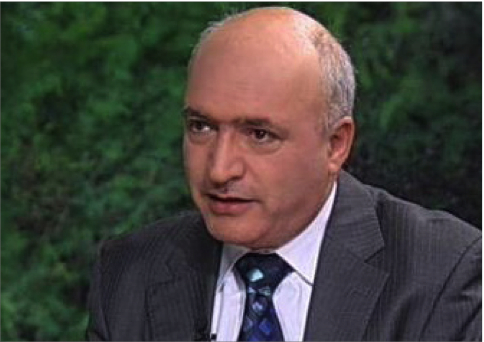
(Ramin Mazaheri (@RaminMazaheri2) is currently covering the US election. He is the chief correspondent in Paris for Press TV and has lived in France since 2009. He has been a daily newspaper reporter in the US, and has reported from Iran, Cuba, Egypt, Tunisia, South Korea, and elsewhere. He is the author of ‘Socialism’s Ignored Success: Iranian Islamic Socialism’ as well as ‘I’ll Ruin Everything You Are: Ending Western Propaganda on Red China,’ which is also available in simplified and traditional Chinese.)

Tuesday, 26 January 2021 10:40 PM  [ Last Update: Tuesday, 26 January 2021 10:44 PM ]

Press TV and The Saker

By Ramin Mazaheri

Much ink could be spilled about the upcoming, and second, Senate impeachment trial of Donald Trump, but that would be a waste of ink – the trial has nothing to do with social justice or patriotism and everything to do with aggravating political divisions for elites’ gain.

We could say it’s just “politics as usual”, but only if: the “True Rate of Unemployment” wasn’t pushing 30%, even per Politico; 2020 didn’t witness the biggest annual rise in the US poverty rate since the 1960s; America didn’t just have its most disputed election in anyone’s memory; there weren’t armed soldiers protecting politicians nationwide, or, according to nearly 40% of the country, there weren’t armed soldiers making sure politicians are illegitimately installed in the White House. In the US right now politics are not usual, whatsoever.

It is incredibly bad journalism the way the US Mainstream Media endlessly overplays the number of Republican defectors against Trump – they get way, way too much press, and of course it’s because they don’t want to admit Trump has any grassroots support (which is not from neo-Nazis). One might have easily imagined that scores of House Republicans were about to vote in favor of Trump’s impeachment, yet only 10 out of 211 did (5%). To give one mainstream example, it was totally misleading of the Los Angeles Times to write that a “bipartisan House majority voted to charge him” after the House’s January 13 vote, and in their lede paragraph, no less, and to even mention the 10 Republicans in their headline. Trump remains the most popular Republican by leaps and bounds – there is no way 17 of 50 Republican senators will end their re-election chances just to appease a Never Trumper movement which only won the general election by a 51-47 margin. Trump’s first Senate trial was a landslide – by supermajority standards – for “not guilty”: 52-48 in favor of Trump.

Given the assurance of acquittal (again) we should ask who benefits from this second trial, and who does not benefit?

Obviously, the enormous mass of everyday Americans will see no benefit from the trial, and I listed just a few of the once-in-a-century reasons why they have more pressing concerns. It is never declared in the US media that the US public has no real appetite for the Senate trial – they need and want the governors of the nation to govern, and right now.

The only way Americans could possibly be convinced that the nation needs to shut down Congress for weeks with a trial whose conclusion is not in doubt is via constant Mainstream Media talking heads shrieking about its necessity, and with the very same fervor that they were shrieking that Russia stole the 2016 election. This is fake-news, too, and it certainly takes airtime away from discussing things like the “True Rate of Unemployment”.

The only people among average Americans who insist that seeing ex-president Trump in the dock is more pressing than resolving the multiple areas of socioeconomic disaster are the most bloodthirsty and rabid of the Never Trumpers. How can one easily switch off four years of demonization? Answer: many simply are psychologically unable to move on, and even though they got what they want – Trump is out of the White House. But while these people – generally upper- and upper-middle class persons who are not very touched by the economic crisis – are loudly obnoxious they are not in actual control of the levers of power.

It’s primarily the nation’s elite-level politicians who really want to make America’s Marianas Trench-depth cultural-political divide even deeper, but not for the reasons one may think.

Many Congressional Democrats are no doubt embarrassed and vengeful over having been turned into cowering, world’s fanciest gas mask-wearing deserters on January 6 – these people control the legislative docket and they want Trump to look afraid now. That would be a self-centered and over-emotional reaction, but why should we ascribe self-sacrifice for the well-being of the nation among the virtues of Congressional Democrats?

The Capitol Hill protest did make many Democrats even more dead-set on getting Trump out: Despite being elected president once and narrowly winning re-election – or rather, precisely because of this electoral success – Democrats want to try and ensure that Trump cannot run in 2024, and a Senate conviction would bar Trump from ever holding public office again. Again, they are deluded by endless MSM spin if they think they have a realistic chance of turning so many Republicans.

Those are two plausible motivations for the Senate trial, but they are not sufficiently convincing.

How elite Democrats gain from a trial, but America loses (unless a 3rd party truly sprouts)

There seem to be so many tiny groups which gain in the many instances where one reads “but America loses”? Thirty million Americans file for unemployment in 2020 – the S&P 500 gains $14 trillion in value over the same timeframe (up 16% annually). Four hundred thousand Americans die from coronavirus – the first vaccine announced only two days after Joe Biden prematurely declares victory, allowing Biden to change the media focus from his divisive and promise-backtracking early declaration.

By forcing a trial in the Senate Democrats seem to think they can win big by playing “divide and conquer” or even just “divide and divide”.

In the latter scenario Democrats certainly gain by forcing Congressional Republicans to openly divide themselves into pro- and anti-Trump factions, which will necessarily be revealed during the Senate vote on the 2nd impeachment. That vote will be like the 2003 Iraq War vote for Democrats (but only if we falsely imagine today’s Democrats to actually be an anti-war party anymore). If nothing else is gained for elite Democrats – who happily watched households crumble and workers go hungry until after Biden’s election to finally become willing to negotiate a second, paltry household stimulus – a Republican Party distracted by squabbles, and thus open to being bought into defection on certain key votes, is enough reason to waste everyone’s time with a Senate show trial.

The “divide and conquer” scenario is more worrying for national health, because the pro-War Democratic Party does like to conquer human beings: There are incredibly shocking efforts to blacklist, censor and seemingly criminalize Trump supporters. By forcing Trump’s Congressional supporters into the open Democrats will know exactly where to set their stigmatizing sights. I cannot believe that Democrats are going to lead a multi-month, much less multi-year, “Trumperphobia” campaign, but I also couldn’t believe the 2016 Russophobia campaign lasted until even after the 2019 Mueller Report’s exoneration of Russia. Is it possible that Democrats are going to persist in their anti-Trumper cultural pogrom for years rather than honestly discuss America’s decline?

But the main question is: How deep is the American duopoly? Answer: the deepest and oldest in the world.

What if Democrats are actually trying to create a Republican Party division into two parties, with the Trumper faction defecting to a new “Patriot” or “America First” party? That would end the need for Democratic legislative majorities – all they’d need is a plurality (as in every other modern democracy).

Is it possible that Trump will actually undo America’s awful legislative duopoly and bring in a multi-party system? Like most good things Trump has done, this boon would be an unintended consequence of Trump’s actual political agenda.

Are Democrats looking to end the two-party system by giving Trumpers a clear indication that they can either organize, drop out or get persecuted by the US system? Are anti-Trump Republicans daft enough to think that the Republican Party will stay Reaganite forever, even after Reaganites allowed the Great Financial Crisis to mushroom into the Great Recession for so many of their voters?

I would say that – in the end – Democrats are not looking to end the duopoly, in which they are the party which is paid no matter what: they are paid to make sure actual leftist ideas lose, by combining them with fake-leftists idea such as identity politics, and they are paid to make sure leftist gains are truly, truly minimal when they do occasionally have power.

But Democrats are US politicians, after all – they cannot think long-term, and they openly admit they spend 2/3rds of their working hours focused on getting campaign money for their re-election – and so they really don’t know what they are doing, or even care about the medium- and long-term consequences of their actions. The Senate trial of Trump is useless theater, but who knows what these professional actors really feel or if they even feel anything at all? If they feel anything it is for their supporters and “work family”, which can be found on Wall Street and not Main Street.

Just as the January 6th protest was improvised and not the start of a long-term “Occupy Capitol Hill” movement – it had none of the determination and planning of Egypt’s Tahrir Square” (in a nod to this week’s 10th anniversary of that wonderful progressive movement, which was repeatedly sabotaged by Washington and Tel Aviv and their Egyptian compradors). Democrats are now improvising a way to keep inflicting opprobrium, censorship and maybe even criminal convictions on the odious – yet quite popular and taboo-breaking – Trump. Just like in 2016: anything to keep from discussing the real roots of any sort of “drain the Swamp” political feeling and America’s undeniable decline. 

Elite Democrats don’t have Russia to kick around anymore, let’s remember – all they have is Trump and his 74 million supporters. Kick them too much and Democrats might break their own precious duopoly.

(The views expressed in this article do not necessarily reflect those of Press TV.)


Press TV’s website can also be accessed at the following alternate addresses:

www.presstv.ir

www.presstv.co.uk

www.presstv.tv


River to Sea Uprooted Palestinian   
The views expressed in this article are the sole responsibility of the author and do not necessarily reflect those of the Blog!

Sunday, 13 December 2020

2021 is the year of politics par excellence 2021 عام السياسة بامتياز

2021 is the year of politics par excellence 2021

Nasser Qandil

–

There is no longer any doubt that U.S. President-elect Joe Biden will take office on January 20, and that the questions that accompanied the election phase and some of them are still present, will not find an opportunity for President Donald Trump to remain in the White House and refuse to recognize the results of the election to refrain from handing over power, and there is no doubt that President  Biden borrows the slogan that President Barack Obama and then President Donald Trump began as president, namely America First,  meaning To get out of the role of the global policeman and get involved in international and regional conflicts, which proved unresolved as proven to affect the decline of American prestige and damage to American interests, and retreat towards attention within the borders where the devastation is widening and the decline is magnified, and the need for restoration and maintenance politically, socially and economically, but they left it during practice to calculate the involvement in conflicts under the pressure of the interests of economic blocs, political blocs,  allies and financiers..

–

America was sinking more into ruin and getting more involved in failure, the more america’s slogan (America First) was left to become a valid slogan for a rival election campaign, on which Obama would win against Joe McCain, the legacy of George Bush  Jr.,and Trump’s victory against  Biden, carrying the legacy of Obama, and Biden’s victory over  Trump, carrying his own legacy, and america has reached a place where it has not been betrayed. As Biden’s article published in Foreign Affairs last spring, which decisively calls for the reconsideration of diplomacy, from the revitalisation of the United Nations, to the restoration of international conventions, to the revival of partnerships with Europe and with adversaries in Russia, China, Iran and elsewhere, suggests that it is free to rebuild America and re-establish a new position capable of competing for world leadership, after the attempt to rule the world by force failed.

–

Observers inside and outside America agree that the Iranian nuclear file is the key to the transition from the policies of involvement to america’s first policies, a file that formed an agreement on it, was the first qualitative translation of the Obama era to the concept of returning to the American interior and withdrawing from involvement in the policy of interventions, and acknowledging the realities of the new balances that govern the world, by returning to the understanding on the nuclear file with Iran is restored America’s unity with Europe, which was shattered by the U.S. withdrawal from the agreement before any other reasons, and through return opens the door to the revival of NATO rift between The United States, European and Turkish wings, and through the return to understanding the level of tension with Russia and China, and most importantly, through this return Washington eases the burden of escalation in the Middle East, which is the biggest source of moral and material depletion of status and potential for Washington.

–

The positions of the Biden administration, particularly what he personally said and reaffirmed by his national security adviser, seem to be toward the priority of a return to nuclear understanding, under one condition is Iran’s commitment to its terms,and Iran seems clear in its declaration of readiness to abide by the terms of the agreement on one condition is the return of the Biden  administration to the understanding, which means that the first months of 2021 will be a date for the return. This means opening the wide door to a series of repercussions on the region’s files, from Syria to Yemen to Iraq and Lebanon except the conflict on Palestine, as well as opening the door to the return of international understandings from which Trump came out and  Biden will return to it, and open the door to negotiate from the site of the search for solutions to the outstanding problems with both Russia and China..

– 2021 is a year of politics with distinction

2021 عام السياسة بامتياز

ناصر قنديل

–

لم يعُد ثمّة شك بأن الرئيس الأميركي المنتخب جو بايدن سيتسلّم مقاليد الحكم في 20 كانون الثاني المقبل، وأن التساؤلات التي رافقت المرحلة الانتخابية ولا تزال ذيول بعضها حاضرة، لن تجد طريقها لخلق فرصة لتشبث الرئيس دونالد ترامب بالبقاء في البيت الأبيض ورفض الاعتراف بنتائج الانتخابات وصولاً للامتناع عن تسليم السلطة، كذلك لم يعُد هناك شك بأن الرئيس بايدن يستعير الشعار الذي بدأ به الرئيس باراك أوباما ومن بعده الرئيس دونالد ترامب رئاستيهما، وهو أميركا أولاً، يمعنى الخروج من دور الشرطي العالمي والتورط في النزاعات الدولية والإقليمية، التي ثبت العجز عن حسمها كما ثبت تأثيرها على تراجع الهيبة الأميركيّة وتضرّر المصالح الأميركيّة، والانكفاء نحو الاهتمام بداخل الحدود حيث الخراب يتّسع والتراجع يتضخّم، والحاجة للترميم والصيانة سياسياً واجتماعياً واقتصادياً تتحوّل الى أولوية، لكنهما لم يلبثا خلال الممارسة أن تركاه لحساب التورط في الصراعات تحت ضغط مصالح تكتلات اقتصادية ولوبيات سياسيّة وحلفاء ومموّلين.

–

كانت أميركا تغرق أكثر في الخراب وتتورّط أكثر في الفشل، كلما تمّت مغادرة شعار أميركا أولاً لدرجة يعود ليصير شعاراً صالحاً لحملة انتخابية منافسة، فيفوز على أساسه أوباما بمواجهة جو ماكين حامل تركة جورج بوش الإبن، ويفوز على أساسه ترامب في مواجهة بايدن حاملاً تركة أوباما، ويفوز على أساسه مجدداً بايدن على ترامب حاملاً تركة نفسه، وقد بلغت أميركا مع الإمعان في خيانة هذا الشعار الى مكان لم يعُد يحتمل التلاعب به مجدداً، كما تقول مقالة بايدن المنشورة في مجلة الفورين أفيرز في الربيع الماضي، والتي تدعو بحسم لإعادة الاعتبار للدبلوماسية، من تنشيط الأمم المتحدة، الى العودة للاتفاقيات الدوليّة، إلى إحياء الشراكات مع أوروبا ومع الخصوم في روسيا والصين وإيران وسواها، للتفرغ لإعادة بناء أميركا وإعادة إنتاج موقع جديد لها قادر على المنافسة على زعامة العالم، بعدما فشلت محاولة حكم العالم بالقوة.

–

يُجمع المراقبون والمتابعون داخل أميركا وخارجها على أن الملف النوويّ الإيرانيّ يشكل مفتاح الانتقال من سياسات التورّط الى سياسات أميركا أولاً، وهو الملف الذي شكّل التوصّل الى اتفاق حوله، كان أول ترجمة نوعيّة في عهد أوباما لمفهوم العودة الى الداخل الأميركي والانسحاب من التورط في سياسة التدخلات، والإقرار بحقائق الموازين الجديدة التي تحكم العالم، فعبر العودة للتفاهم حول الملف النووي مع إيران تُستعاد وحدة أميركا مع أوروبا التي تصدّعت بفعل الانسحاب الأميركي من الاتفاق قبل اي أسباب أخرى، وعبر العودة يُفتح باب إحياء حلف الناتو المتصدّع بين أجنحة أميركية وأوروبية وتركية، وعبر العودة للتفاهم ينخفض سقف التوتر مع روسيا والصين، والأهم أنه عبر هذه العودة تتخفف واشنطن من أعباء التصعيد في الشرق الأوسط الذي يشكل أكبر مصدر للاستنزاف المعنوي والمادي للمكانة والإمكانات بالنسبة لواشنطن.

–

تبدو المواقف الصادرة عن إدارة بايدن، خصوصاً ما قاله هو شخصياً وأعاد تأكيده مستشاره للأمن القومي، باتجاه اولوية العودة للتفاهم النووي، ضمن شرط واحد هو التزام إيران بموجباتها، وتبدو إيران واضحة في إعلانها عن الاستعداد للالتزام بموجبات الإتفاق بشرط واحد هو عودة إدارة بايدن للتفاهم، ما يعني ان الشهور الأولى من العام 2021 ستكون موعداً للعودة للتفاهم، وهذا يعني فتح الباب الواسع لسلسلة من التداعيات على ملفات المنطقة، من سورية إلى اليمن إلى العراق ولبنان وصولاً لربط النزاع حول المواقف المتعارضة حول فلسطين، كما يعني فتح الباب واسعاً لعودة تفاهمات دولية خرج منها ترامب وسيعود إليها بايدن، وفتح الباب لتفاوض من موقع البحث عن حلول حول المشاكل العالقة مع كل من روسيا والصين.

–

عام 2021 هو عام للسياسة بامتياز


River to Sea Uprooted Palestinian   
The views expressed in this article are the sole responsibility of the author and do not necessarily reflect those of the Blog!

Tuesday, 15 September 2020

Why Today’s India is on the Wrong Side of History

Why Today’s India is on the Wrong Side of History

September 13, 2020

by Allen Yu for the Saker Blog

Recently, I wrote a short comment in the piece India’s border policies line with Thalassa noting that “India is on the wrong side of history.” It was too “conclusory” a comment deserves to be better explained. So I’d like to take a brief time why I think India is on the wrong side of history in siding with America against China today.

I’d first like to take a larger view of history.

Historical Context

Human history has for the most part gotten better over the last few tens of thousands of years. Our technology has advanced. Our life expectancies have increased. The last 200 or so years have seen the most explosive advances. The pace of scientific and technological advances has created a world beyond the wildest dreams of our ancestors.

And if we believe that the human spirit of ingenuity will continue, as there is no reason not to, then the best is still yet to come. 90% of all scientists that have ever lived are alive today. If we can have peace and the world allowed to be free from hegemonic oppression, I’d say the future is bright for the human species.

Unfortunately, ominous dark clouds have hung over the world despite all the positive momentum of history. We live in a time of great paradoxes. Though the world is currently in a “time of peace,” with technologies and economies fast advancing, in relative overall prosperity, sponsored Color Revolutions and civil wars have been unleashed upon many nations, devastating regions from Iraq to Afghanistan to Ukraine to Egypt to Syria to Hong Kong. Economic sanctions have ravaged whole generations of peoples in regions from N. Korea to Turkey to Iran to Venezuela.

WWII by most accounts represents a righteous high point in history. It represents the defeat of the axes of fascism and colonialism. Yet, fascism and colonialism never left us. It got transformed and embedded into our new world.

The more things changed, the more we realize that many things haven’t changed. The poor and disposed of the colonial era are for the most part still poor and dispossessed. Russia is still the target of Western aggression after hundreds of years of antagonism. Even China – the presumed challenger to the West – has not escaped the trajectory of this history. Western powers – with their allies – are now actively scheming and working hard to suffocate China economically and technologically in an attempt to shove it back to a place of perpetual subservience to Western interests.

Some may argue say that Russia and China’s problems are that both had overplayed their hands. Russia had overextended itself in Eastern Europe and the Middle East, and crossed the West’s “red line” in Ukraine. China has crossed the “red line” in the S. China Sea, Hong Kong, Xinjiang, etc.

The truth is that it is the West that has crossed the line in Europe, the Middle East and in Ukraine … and in S. China Sea, Hong Kong, and Xinjiang.

India’s Strategic Blunder

It is at this critical juncture that India has decided to pivot toward the West. India is making a gigantic strategic mistake. Here are some reasons why.

  • It does not make sense to make an enemy of 1.4 billion people. It’s is one thing to fight a border war, but it is quite another to actually join a group of others to contain the development and growth of 1.4 billion people. The wrath and actions coming out of the U.S. against China has been truly surprising and depressing. It is against the basic rights and dignity expressed in the UN charter. Why should India join that chorus? Chinese have no animosity toward the Indian people. However, the Indian populace – fanned by an irresponsible media with much rumors and fake news – has allowed itself to be whipped into a giant anti-China frenzy.
  • America – and the broader West – will not help India to develop. Many Indians fancy that India – after America decouples from China – will take the place of China and that the West is going to help pull India out of poverty the way it has helped to pull China out of poverty. That is just not going to happen. There are a few reasons for this.
    • First, America has squandered much of its capital since becoming the sole superpower with its endless wars since the fall of the Soviet Union. America today thinks the world as set up after WWII is set against it, with much of the world leaching off America’s largess. America will have no more of it. Enough has been enough! Never again will America work for another country!!! America now wants the world to serve it, not the other way around. If Indians think America had pulled China out of poverty (Chinese mince at that notion since they believe it is they themselves who pulled themselves out of poverty), they can rest assured America will not be able to do the same for India.
    • Second, the West has come to see the world not in win-win terms, but in zero sum terms. For a brief while, the West did experiment with some version of win-win globalism. While it infused globalism with its own suffocating ideologies and rules to benefit itself, it did for a while work on a flatter world. In this “flat world,” people the world over get to exchange ideas and goods and services with each other, for each other’s own benefits, all in a win-win fashion. But that period soon ended. It’s not just Trump. It’s the whole establishment and populace. The jealousy by which the West has come to guard their knowhow, markets, and manufacturing resources for Covid-19 vaccines represents just the tip of the ice berg. The West used to think of itself as a shining beacon for the world. It had first rate technology and science that attract the world over to learn and disseminate back to the world. Now, it considers people coming to learn and bring back knowledge as “stealing.” It considers manufacturing abroad as stealing. It considers R&D abroad as “stealing.” Whatever India hopes to get from America and the West, it is not going to be good jobs or know-how. America wants its manufacturing back. It has drawn from China’s rise the (incorrect) lesson that it should never help or allow another power rise. It doesn’t want to depend on China – or anyone else – to make anything but the lowest value items. It becomes suspicious when others make its masks, medical equipment, pharmaceutical products, software, cars, computers, etc. It will think twice, thrice, about ever helping to create a new peer competitor again.
    • America – and the broader West – is in decline. The West is in decline. There is no doubt about it. The writing is on America’s economic wall – or more accurately, in its Fed balance sheet. An economy cannot go on printing money. An economy cannot stay productive with prolonged low interest rates and paper printing, where the most productive and valuable thing it produces are military weapons. Many people talk about America’s “soft power.” I say B.S. If you take away America’s military, do you think America’s “soft power” will stand on its own? No. America’s “software power” will vaporize. American soft power stands on its military power. And America’s military power stands on the might of its economic power. Recently, that economic power is buttressed in part by China (through trade). But now America no longer wants to rely on faraway lands for anything. Once it starts decoupling from China, it will soon realize how weak it economically is. An economic reckoning will come. Such a inflection point would not necessarily bad for the American people. Stripped of its imperial duties and obligations, Americans can focus on the important things that had made America “America” again. But it means the days of the American Empire are ending. The days of America helping to lift another nation from poverty has long gone.
  • America – and the broader West – is not capable of negotiation. The West cannot keep any agreement that goes against their interests. When even the slightest of circumstances change, they find a reason to tear up the agreements, with the Iran nuclear deal but one example. Whatever deal India think it is going to get, it is not going to get what it thinks it will get. The relationship will only work song as so India gives up much more than it receives. This is the Western way. Forget about getting a fair deal. Forget about even getting a good deal. India is thinking about forging a long-term deal … I say be realistic. There is nothing special about India that will make the West change. Beggars can’t demand change. The West is not going to change its fundamental ways for you.
  • India will miss the boat in the rising Asian Century. The engine of the new global growth for the foreseeable future will be China and its surrounding neighbors. No one doubts that. Many ASEAN nations – despite having intractable territorial disputes with China in the S. China Sea – have decided to join China in building a shared future. India too has been invited but it has decided time and time against joining China because of its territorial disputes with China. This is short-sighted. China and India are old sister civilizations that have long interacted with each other. The notion of a straight line fixed territory is a Western concept. When we fixate on boundaries to the exclusion of everything else, we get led down a zero-sum intractable dispute.

China’s “community with shared future for mankind”

China is pushing forward a framework of “community with shared future for mankind” for foreign relations. This is a rejection of both traditional ideological based framework of international relations as well as the cold “realist” approach.

It is a rejection of traditional ideology in the sense it is truly agnostic about what forms of government or other ideologies other nations follow. As Deng Xiao Ping has been quoted to say, “It doesn’t matter whether a cat is black or white, as long as it catches mice.” It doesn’t matter if you have a left leaning or right leaning, or capitalistic or socialist, or “democratic” or “authoritarian” government, what matters is if you deliver good governance for the people.

It is a rejection of traditional realistic approach because it doesn’t really view might as the end and be all. While China acknowledges cold realism, it also aspires for a new world order that promotes global justice – which can be summarized as true sovereignty of each nation to develop as it chooses for its people.

The way to a stable world then – according to China – is to create an environment where we can raise the water for each other, shelving all conflicts as much as possible. Once everyone is better off enough – hopefully much better off than today – many issues – including territorial disputes – will become much easier to resolve.

Why Shelf Territorial Dispute?

So if we go back to the India and China territorial dispute: sure, the two neighbors can always fight to the death over a piece of territory, but that is missing the forest for the trees. What they need – above all else – is to develop each other’s society, to pull its peoples from poverty, to provide a better future for its people. What they need then is to meet each other somewhere in the middle and to enable each other to cooperate with each other. China’s faith – which should be India’s as well – is that the benefits of cooperation will in the future outweigh – far outweigh – any territorial concession each can make. It will outweigh territorial concessions because the sky is the limit to where each nation can develop.

If you think lifting 800 million out of poverty over 4 decades is amazing, think lifting 1 .4 billion between India and China over the next 4 decades! That’s the kind of vision and possibility we are looking at!!!

The way out of today’s intractable territorial dispute is to shelf it and to focus on things both sides can cooperate on, leaving the problem for a much more prosperous generation to settle on. The important thing is to build a bigger pie for our future generations instead of bickering over today’s limited pie.

Unfortunately India has decided to not only reject that vision, but to ally with U.S. to suppress China’s win-win shared common future from arising.

From China’s view, the world has been held hostage by the West for too long. Too many nations either cannot or do not want to stand up for their right to develop. The cost of standing up to the hegemon just seems too high. Many actually want to work with the hegemony, hoping to for fleeting crumbs of good will and vague rewards, even if it means enabling the hegemon to continue its pillaging and oppression over them.

The human psyche is a strange thing. While human beings have been known to rise to the highest of braveries in defense of justice, righteousness, honor, and faith, they can also be exceedingly weak and feeble. There are too many stories of a man or woman being beaten to death by a criminal, with passive crowds and strangers watching and passing by, doing nothing.

“Give a Man a Fish, and You Feed Him for a Day. Teach a Man To Fish, and You Feed Him for a Lifetime.” The world must go beyond taking short-term benefits from the West and learn to fish by themselves. It cannot always beg for a fish scrap here and there. It cannot keep fighting against or sabotaging each other for favors from the rich.

Too many of the areas of the world with territorial conflicts have arisen from their colonial legacy. The China-Indian territorial disputes arose from British colonial legacy (others that come to mind include the Palestinian issue, Cyprus, Kashmir, Pakistan-India animosity, etc.). The world must be able to through this trap to free themselves collectively from their colonial legacy.

The West – despite all its follies – continue to be strong. It has the most wealth, technologies, and strongest military. It can buy allies anywhere around the world. It can bribe and corrupt most governments around the world. But in the long term, it cannot last. The rest of the world must learn to stand up by itself.

Freedom and Development with Strings Attached

As the world currently stand, if nothing major is done, much of the fruits of science and technology will continue to accrue only to a few nations. The U.S. and the “West” has been the undisputed leader across a wide swath of science and technology in the 20th and 21th century. By their actions throughout history and today, we know Western dominance rests exclusively on their scientific and technological prowess. If their ideological prowess, not their technological prowess, is the source of their power, why are they so quick to demand others adopt their ideologies while remaining so protective of their technologies?

I mean … have you wondered why the West would want to shove down the rest of the world’s throat their version of “democracy” and “rule of law” … but get so worked up when others learn from them knowledge about science and technology?

Today, China is the only power capable of challenging all dimensions of the Western grip on of scientific and technological dominance – at least in the foreseeable future. But just as China begins to appear to be a credible competitor or alternative, the West is mounting an all spectrum attack on China to suppress its ability to access technology and markets around the world.

Thus we see that the West’s preaching of “free markets” and “rule-based economy” has always been a mirage. The British demanded “freedom” because they wanted the “freedom” to pillage on their own terms. They know that since they had the best technology and companies, the world is there for their picking if the barriers are broken down. Hence they worked to knock those barriers down!

The U.S. took on their mantle … and demanded “freedom” … too, also for the U.S. to pillage the world on their own terms. But when their dominance is threatened, the veil of “free markets” and “rule-based” trade systems has come down too.

From the Chinese view, the U.S.’s lack of confidence about China’s rise shows how insincere and hypocritical the West has always been about the world. Many Chinese have long seen through the façade of “ideologies,” and “norms” and “rules” masquerading hegemony real politik.

China’s dreams for win-win shared future are not false ideals. After all, it is not completely devoid of precedence. After U.S. helped to rebuild Europe and/or Japan, has the U.S. not received benefits from those regions? Of course! Not only have they contributed to advances in science and technology, they also provided a market for the U.S.

But there is a critical limit about American good will. Europe and Japan were allowed to succeed – but only up to a certain level. The main value of allowing Europe and Japan some prosperity is not in making those regions better off per se. The main value was in using those regions to contain Soviet Union / Russia and China. Europe and Japan understand their roles as subservient powers – and their roles as first lines of containment against Russia and China.

A Disgruntled West

Today, with U.S.’s political system and social fabric deteriorating, the U.S. is going through a fundamental rethink. The U.S. now openly thinks allies like Japan and Europe have been “taking advantage” of the U.S. The U.S. now wants payback. From its allies, it seeks better trade deals and more “protection money.”

And against China, it is on a crusade to stop its development. In China’s view, this is a red line and truly tragic. China believes the fundamental right of every people is the right to develop. It is the right of the U.S. to want to decouple from China. But to try to form an alliance to constrain the growth of 1.4 billion, as it had already with lesser powers such as N. Korea, Cuba, Iran, and Venezuela is to cross China’s fundamental red line.

India is on the wrong side of history because it is siding with a West that is going to such levels to extend its grip on dominating the world. Some time ago, I remember seeing Trump tweet out an edited version of Time’s cover of Trumpism outlasting Trump … lasting “4EVER”! There is an important kernel of truth to that video!

The West has changed. It is now open about wanting to dominate the world through suppression instead of being the light that draws the world.

Painting Itself into a Corner

In wanting to join the Western crusade against China, India too has crossed to the wrong side of history. In the coming multipolar world, India is positioning itself in a place where it will be difficult for it to develop. The capital and knowhow that can flow from a renewed China will no longer flow to India. By rejecting the Belts and Road Initiates and the RCEP, India is decoupling from Asia’s coming century.

Losing all that, but what does India have to gain? India will not be able to tease more territory out of China by playing tough. If India believes it can hang on the disputed territories against China, so too can China hang on to its disputed territories against India. Whatever India thinks it can do against China, China can do the same to India. This should be beyond any doubts!

So no new territories will be gained (or lost) through India’s current posture. What is lost however is the space for cooperation and mutual growth. India’s rejection of strategic cooperation perceived tactical gain is India’s tragic mistake today.

China is strong enough to go along without India if necessary. It is moving full steam ahead with its Belts and Road Initiative, RCEP, CJK, etc. It has formed a formidable relationship with Russia not based on ideology, alliance, political preferences, etc. – but based on building up and emphasizing common interests between two previous competitors. China and Russia will be friends not necessarily because the people “like” each other – although Chinese generally do have overwhelming positive feels toward the Russian people – but because their leaders have worked hard to ensure that they have develop and enhance many overlapping common interests.

A Relationship of Mutual Respect and Shared Common Future

Russia and China represents the sort of respectful, cooperative give and take relationship that China believes will represent the future of man-kind. They will succeed because such thinking not because you either join China or get kicked out on the high way. No, it will succeed because it will create far more than the West’s zero sum approach.

Now, don’t think everything is jolly good between Russia and China. I am sure the leaders have had many “frank” discussions about their differences … often. Historically China and Russia has had many issues. But rather than just hyping up (or burying, which is just as bad) their past, they have chosen to work on cooperating with each – to each other’s mutual benefits.

There is still time for India to join China. For eons China and India have coexisted with each other without a clearly demarcated border. Yes, in our modern world, we all long for clearly defined boundaries. But if that’s not possible, it should not be the end all and be all! Through cooperation, India and China can build a bright, shared future together, notwithstanding the territorial disputes. Now is the time for India’s leaders to decide if petty adventures on the border and allying with a dying hegemon are truly in India’s interest. Will India go down defiant, proud, and loud – but weak, petty, and trapped in the history of time?


Allen Yu is an IP attorney in Silicon Valley, a founding blogger at blog.hiddenharmonies.org, as well as an adjunct fellow at the Chunqiu Institute for Development and Strategic Studies. He holds a J.D. from Harvard Law School and a D. Engr., M.S., and B.S. from UCLA Samueli School of Engineering.


River to Sea Uprooted Palestinian   
The views expressed in this article are the sole responsibility of the author and do not necessarily reflect those of the Blog!

Saturday, 15 August 2020

Is the US a Global Leader Anymore?


Is the US a Global Leader Anymore?

August 13, 2020

by Zamir Awan for the Saker Blog

Currently, the biggest challenge faced by the world is Pandemic. Outbreak early this year has engulfed the whole world. Indeed, the COVID-19 is not too fatal, yet due to its highly contagious nature, it has impacted society adversely. It is a new virus, a lot of studies are going on, especially on its cure and vaccines. Yet, nothing is commercially available; all such R&D is at the laboratory level. Either it is stage one or two or any other advanced stage, yet it might take some time to make the vaccine available at a commercial scale for everybody to be benefitted.

The number of CVID-19 cases has exceeded 20 million, with a death toll of around 750,000. The economic impact is even more visible. And some of the countries are already slipped into recession, while few are almost near to collapse. Social distance has made everyday life more difficult, people are losing jobs, businesses are suffering, and some of the markets have been closed.

At this challenging moment, the whole world was looking toward the US as a global leader to rescue them. Developing countries and underdeveloped countries were more miserable and was expecting much more from the US. Even the developed nations and well-advanced countries were also expecting some kind of assistance or help from the US.

Unfortunatetely, the US was the worst-hit country in the world, with the highest number of Coronavirus cases and the death toll. It was the time when the US can prove its global leadership role. NATO allies, other friendly countries were in award position, when the US showed cold shoulders.

It is entirely right; every country should look after its own interest and must say his own country first. But for a leader, one has to take everyone else along with and protect everyone.

Acknowledging the US’s global leadership, just after World War II (WWII), by launching the Marshal Program aimed to rebuild war-torn Europe was a successful model. As a result, the US gained a leadership role. But during the last couple of decades, the US policies witnessed a deviation from Global responsibilities.

The US was leaving International organizations and treaties, one after another, ignoring its global obligations and escaping from global responsibilities gradually.

  • In 1982, to maintain its maritime hegemony, the United States refused to sign the United Nations Convention on the Law of the Sea (UNCLOS), of which it is still not a party. It has created an imbalance of power in the global maritime and vulnerability.
  • In 1984, the United States formally withdrew from UNESCO, dissatisfied with the gradual erosion of its social control by developing countries. After returning to the Organization in 2003, it once again withdrew in 2017 on the so-called ground of saving funds and urging reform. UNESCO suffered a considerable loss in its routine functions. It has impacted the capabilities of the Organization adversely due to a shortage of funds.
  • In 1985, the United States refused to recognize the compulsory jurisdiction of the United Nations International Court of Justice (ICJ) after Nicaragua complained that US armed intervention violated its sovereignty. A message that the US was not sincere about global justice. As a matter of fact, the US was extensively involved in war-crimes and international terrorism and scared of convictions.
  • In 1995, the United States withdrew from the United Nations Industrial Development Organization and refused to pay arrears by claiming domestic budgetary constraints, damaging the global industrialization program. Yet increased its defense budget.
  • The United States has refused to sign the Kyoto Protocol since 2001, saying it was not in its national interest to meet relevant environmental obligations. By withdrawing, the US denied its responsibility in protecting the global environment. It should be noted that damaging the environment is a severe collective crime with humanity.
  • In 2001, the United States withdrew from the United Nations World Conference against Racism, Racial Discrimination, Xenophobia, and Related Intolerance after failing to prevent discussion of Israeli military action against Palestinians. Today, what is happening in the US is also the result of these policies.
  • In 2001, to strengthen its military advantage, the United States formally withdrew from the Anti-Ballistic Missile Treaty signed by the United States and the Soviet Union in 1972. However, it gave supremacy to the US but created an arms race world-wide, forcing other nations to compete in the US.
  • In 2002, the United States withdrew from the Rome Statute of the International Criminal Court, citing unfavorable terms for American soldiers, diplomats, and politicians. It was a message that the US did not feel globally obliged not to commit war crimes, espionage, the aggression of sovereign states, etc.
  • In 2017, the United States announced its formal withdrawal from the Trans-Pacific Partnership (TPP) because it believed that multilateral trade agreements were not in its best interests and hindered its “America First” policy. Although the US is the largest economy of the world, it yet believes in unfair practices.
  • In 2017, the US government announced its withdrawal from the Paris Agreement, aimed to strengthen the global response to the threat of climate change, believing that it could hinder economic development. An irrational approach and wrong decision again.
  • In 2017, the United States withdrew from negotiations of the United Nations Global impact on Migration and cast votes against the UNGCM at the UN General Assembly.
  • In 2018, even though the IAEA confirmed Iran’s fulfillment of its JCPOA commitment and that the United States had no clear evidence to show Iran conducted nuclear tests in breach of the deal, the United States withdrew from the JCPOA, a deal that has been endorsed by the United Nations Security Council and re-imposed unilateral sanctions against Iran. This decision has damaged the US image adversely. Contaraily imposed irrational sanctions on Iran, making the lives of Iranian more miserable.
  • In 2018, the US announced its withdrawal from the UN Human Rights Council, claiming it failed to protect human rights adequately. The current violence in the US may also be the outcome of this decision.
  • In 2018, the United States withdrew from the Optional Protocol to the Vienna Convention on Diplomatic Relations, Concerning the Compulsory Settlement of Disputes relating to the jurisdiction of the ICJ in order to avoid a Palestinian complaint filed legitimately to the ICJ. It has caused a strong wave of anti-American sentiments in the Arab world.
  • In 2019, the United States withdrew from the INF Treaty to develop short- and medium-range missiles without restraint. Again a wrong decision at wrong timings, pushing the world toward developing more lethal weapons.
  • In 2020, under the pretext of alleged Russian violations of the Open Skies Treaty, the United States announced steps to exit the Treaty.
  • In 2020, the US government, looking for scapegoats for its botched response to COVID-19, announced its withdrawal from the World Health Organization. It should be noted that the United States still owes more than $200 million in assessed contributions. Will the US pay this sum before going out? Exactly, when WHO needs to be strengthened, the US decision harmed the Organization’s capabilities.

Notably, the Trump-Administration has focused only on “America First,” leaving the rest of the world ignored. The Pandemic has exposed Trump-administration’s policies further. Europe was suffering from COVID-19 and expecting that the US may come up with some kind of help and rescue. But, unfortunately, this was not in the minds of the Trump-Administration.

If the United States tries to escape from its global responsibilities, it may no longer enjoy the status of global leadership. The gap created by the US may be filled-in by some other powers. Enjoy authority, but with responsibilities!

Author: Prof. Engr. Zamir Ahmed Awan, Sinologist (ex-Diplomat), Editor, Analyst, Non-Resident Fellow of CCG (Center for China and Globalization), National University of Sciences and Technology (NUST), Islamabad, Pakistan.


River to Sea Uprooted Palestinian   
The views expressed in this article are the sole responsibility of the author and do not necessarily reflect those of the Blog!

Tuesday, 14 April 2020

Geostrategic Factors: Will China Wins “World War C”

By Andrew Korybko
Global Research, April 14, 2020

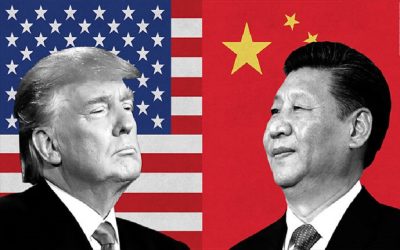
The New Cold War between the US and China abruptly took a new form following the global outbreak of COVID-19, but Beijing still has a solid chance of coming out on top in this struggle for global leadership if it accurately assesses the changed geostrategic situation in the Eastern Hemisphere and accordingly crafts the right policies for responding to it.
Will The World Backtrack On BRI After World War C?
“The US & China Are Intensely Competing To Shape The Outcome Of World War C“, as the author noted late last month when analyzing the consequences of the global COVID-19 outbreak on the New Cold War between these two Great Powers, but Beijing still has a solid chance of coming out on top in this struggle for global leadership if it accurately assesses the changed geostrategic situation in the Eastern Hemisphere and accordingly crafts the right policies for responding to it. The Asian Giant is under immense pressure as its envisaged model of reformed globalization under the Belt & Road Initiative (BRI) is increasingly seen with skepticism, not so much because of the intense infowar that the US has been waging against it over the past few years, but simply because of the sudden supply chain consequences that were brought about as a result of the world’s rolling lockdowns. Foreign investors and national leaders alike are no longer ignorant of the strategic vulnerabilities inherent to the globalized world system as a whole, and many are now seriously reconsidering its merits and correspondingly contemplating re-offshoring production back to their own countries or at least their immediate regions.
China’s Grand Strategy
This represents the most profound challenge that China has been forced to confront in the decades since it first decided to reform its economy by opening up to foreign investment. It was hitherto taken for granted that the globalization trend would generally continue unabated, notwithstanding some high-profile expressions of economic nationalism such as the ones most commonly associated with Trump’s “America First” policy, and that only gradual reforms would be necessary to improve this model and thus indefinitely perpetuate it. China, comfortable with its position as “the world’s factory” and flush with excess cash to invest in connectivity infrastructure projects all across the world for the purpose of more closely tying its partners’ economies to its own in pursuit of what it describes as a Community of Common Destiny, took the lead in taking globalization into its next natural phase through BRI. The grand strategic intent was to peacefully replace America’s previously predominant global economic role and therefore enter into a position of privileged soft power whereby China could then shape the world order to its liking through trade and institutions.
A Concise Analysis Of Afro-Eurasia
Those carefully crafted calculations have suddenly been thrown into uncertainty as a result of World War C, which is why it’s imperative for China to assess the changed geostrategic situation as accurately as possible in order to craft the right policies for saving its global leadership model. What follows is a concise summary of the importance that each region of Afro-Eurasia holds for Chinese strategists at the present moment, which also briefly describes their challenges and opportunities. The Western Hemisphere is omitted from this analysis because China’s relations with Latin America aren’t anywhere as significant for its global strategy as those that the country has the Eastern Hemisphere as whole, and the complex contours of Chinese-American relations will be greatly determined by the outcome of their so-called “trade war”. As such, the author believes that it’s much more relevant to discuss East & Southeast Asia, South Asia, Central Asia, the Mideast, Africa, Russia, and the EU instead, ergo the focus of the present article. Having said that, here are the geostrategic factors that will determine whether China wins World War C:
East & Southeast Asia
This region of the world previously planned to enter into the world’s largest trade bloc, the Regional Comprehensive Economic Partnership (RCEP), irrespective of India’s US-influenced refusal late last year to move forward with this game-changing development. This eastern periphery of Eurasia functions as a future integrated market for Chinese goods and services, conveniently located right next to the People’s Republic. The problem, however — and one that was already emerging prior to World War C — is that these countries’ production facilities inside China are considering re-offshoring back home or to other parts of the region as a result of the trade war, with this trend taking on a renewed importance given the global supply chain disruption in recent months. The same holds true for non-regional companies such as those from the West which are eyeing ASEAN (and especially Vietnam) as a favorable replacement to China, sometimes for political reasons. China will therefore need to ensure that RCEP eventually enters into effect in order to mitigate some of the immediate economic consequences through its envisaged regional marketplace, as well as remain competitive with lower-cost labor from its neighbors in order to slow down the speed of this seemingly inevitable re-offshoring process.
South Asia
The opportunities and challenges that South Asia poses for China are more geopolitical in nature than economic. The US’ successful co-opting of India into a proxy for “containing” China reduces the likelihood of a meaningful economic rapprochement between these two Asian Giants, and instead positions what’s soon predicted to become the world’s most populous country as a possible rival to the People’s Republic in the long term, with the short- and medium-term consequences being that it might become an even more appealing re-offshoring destination for foreign Chinese-based companies than even ASEAN. The global pivot state of Pakistan, however, represents nothing but opportunities for China because of CPEC, BRI’s flagship project. This ambitious initiative serves not only as a geostrategic shortcut to the energy market of the Mideast and the growing labor-consumer one of Africa that conveniently bypasses the increasingly militarized South China Sea and Strait of Malacca, but is also the basis upon which all other major BRI projects will be managed, relying upon the invaluable experiences learned during its years-long implementation. In order to succeed in South Asia in the post-coronavirus environment, China must manage to retain pragmatic relations with India in parallel with undercutting its attractiveness as a re-offshoring center while maximizing every mutual strategic opportunity that it can reap from CPEC.
Central Asia
The Eurasian Heartland is primarily functions as a reliable source of Chinese energy imports. It has obvious connectivity potential for linking China to the Mideast and Europe through the “Middle Corridor” that’s being pursued in partnership with Turkey, but in and of itself, it doesn’t have much economic significance for the People’s Republic due to its comparatively small labor and consumer markets relative to East-Southeast-South Asia and Africa. It does, however, function as a crucial test case for the resiliency of the Russian-Chinese Strategic Partnership insofar as it provides these two Great Powers with the opportunity to reach pragmatic “compromises” in pursuit of their grander strategic goal of multipolarity, but there’s no sidestepping the fact that some in Moscow seem to be increasingly uncomfortable with being replaced by Beijing in the region that they’ve long regarded as their “backyard”. Furthermore, rising Sinophobia in some of these countries as a result of the massive influx of Chinese goods and the replacement of some local laborers with imported Chinese ones creates a possible fault line for the future, albeit one that doesn’t necessarily have to have any security implications since the region’s traditional Russian hegemon has no interest whatsoever in allowing Central Asia to be used as a base for launching terrorist attacks against it in Xinjiang.
Mideast
Just like Central Asia, the Mideast is mostly important to China for energy reasons even though it too has obvious connectivity potential in linking East Asia with Western Europe. Unlike Central Asia, however, some of the most geostrategically positioned countries like Iraq and Syria have been destroyed by Hybrid War, while populous Iran is under sanctions pressure like never before and could very well be the next to follow in the worst-scenario scenario. This makes the Mideast risky from a strategic connectivity standpoint, though that nevertheless hasn’t stopped some Chinese firms from making inroads in this region. The GCC countries, and especially Saudi Arabia, are attempting to restructure their economies in order to reduce their dependence on energy exports, which in turn necessitates Chinese investment in their planned production facilities. China’s growing economic and military influence (in terms of exports) in the Mideast also presents it with the diplomatic opportunity to participate in resolving some of the region’s crises following the model that it’s spearheading in Myanmar, which could prove very valuable for managing other conflicts that might one day arise elsewhere along its New Silk Road.
Africa
Africa’s importance might arguably even overshadow that of East & Southeast Asia when it comes to China’s grand strategy since the People’s Republic is depending on having reliable access to the continent’s raw material, labor-consumer markets, and increasingly, its energy resources in order to maintain domestic growth throughout the present century. Unlike in East & Southeast Asia, however, there are few competitors to China’s plans in Africa, with the only ones that deserve mention being the US’ ongoing infowar campaign to discredit BRI and the nascent joint Indo-Japanese “Asia-Africa Growth Corridor” being supported by the US, France, and the GCC as a possible long-term (key word) competitor to China’s investment model there (focusing instead on “soft infrastructure” like schools, job training, and healthcare services in contrast to the attention that China pays to its “hard” counterpart like physical connectivity infrastructure). Being much more under China’s influence than any other part of the world due to the mutual benefits derived from the premier position that the People’s Republic holds in Africa’s trade and investment spheres, it’s unlikely that many of its countries will be swayed into turning against Beijing’s reformed globalization model of BRI by the Trump-promoted appeal of economic nationalism. This doesn’t mean that China should grow complacent, however, but should instead strive to present Africa as a shining example to the rest of the world of everything that can be achieved as a result of bilateral cooperation through BRI.
Russia
The future of Russian-Chinese relations is quickly becoming an interesting field of study because of the progress that Moscow is making on reaching a “New Detente” with Washington, the latter of which has been extensively covered by the author in a series of four articles here, here, here, and here. To summarize, Russia’s pursuit of a series of “pragmatic compromises” with the US on a host of relevant issues ranging from NATO expansion to North Korea could lead to a fast-moving rapprochement between the two with serious strategic implications for China, especially if the People’s Republic comes to rely more on the Eurasian Great Power for ensuring reliable access to the markets of Western Europe through the complementary Eurasian Land Bridge and Northern Sea Route. That’s not to say that Russia will ever “cut off” China and/or the EU’s access to the other since the country itself is depending on reaping the economic benefits of facilitating their overland and maritime connectivity with one another, but just that this relationship could be leveraged in more “creative” ways to advance certain political-strategic objectives vis-a-vis China (such as in Central Asia for example, be it in coordination with the US or carried out independently) the same way as it’s alleged to have employed its energy relationship with the EU in the first decade of the present century. In addition, Russia’s envisaged irreplaceable role in facilitating Chinese-EU trade used to be taken for granted but is now highly uncertain since it’ll depend on whether globalization survives World War C and if China even retains an interest in having Russia fulfill this role in the first place to the extent that Moscow previously anticipated.
EU
The last region of the Eastern Hemisphere relevant to Chinese grand strategy is the EU, and it’s definitely one of the most important. This region of Western Eurasia has a large and highly developed consumer market that the Chinese economy depends on for growth, especially considering that most of its members use the euro, one of the world’s strongest and most stable currencies. It’s extremely important that China does everything that it can to ensure that the EU as a whole remains committed to expanding bilateral economic relations, especially through BRI, hence Beijing’s unprecedented soft power outreaches in recent weeks through the provision of medical equipment and healthcare specialists to some of its members like Italy and aspiring ones such as Serbia. Accordingly, it naturally follows that China would prefer for the EU to emerge from this crisis stronger and more integrated than ever in order to facilitate this goal, though that’s also why its weakening, disintegration, and/or pivot towards the US would be so detrimental to Beijing’s grand strategy. If China’s economic reach becomes limited in the EU as a result of the bloc gradually “de-globalizing” (including through re-offshoring Chinese-based production facilities to ASEAN, India, and/or back home [perhaps to the organization’s poorer members along its periphery]) or possibly even embracing a degree of Trump-inspired economic nationalism, then it would greatly reduce China’s influence to its immediate region (East and Southeast Asia) and the Global South (mostly South Asia [except India] and Africa in this respect) and thus make it more easily “containable” through Hybrid War means.
The Three Steps To Success
Taking all of the above insight into consideration, the following three steps are absolutely necessary if China wants to win World War C:
1. Ensure The Continued Attractiveness Of Globalization:
If Trump-inspired economic nationalism becomes a new global trend throughout the course of World War C, then BRI will be in danger of becoming nothing more than a bare-bones project that turns into a skeleton of its formerly so-ambitious self. This would require China to undertake a range of far-reaching reforms at home in order to restructure its economy from its hitherto export-dependent nature and into something more autarkic, though the latter has very real limits given how much the country relies on foreign trade surpluses reaped from globalization processes to drive domestic development and purchase essential resources like energy, raw materials, and even food. Without ensuring the continued attractiveness of globalization, China could very well enter into its worst-ever crisis since the 1949 Communist Revolution that could have unimaginable economic and even political consequences, which is why it’s of the highest priority that the People’s Republic does everything in its power to protect this trade model at all costs.
2. Focus On The Afro-Eurasian Triangle:
Provided that globalization survives in some relevant form after World War C (which remains to be seen but would be attributable in that case to China pulling out all the stops in pursuit of this goal), then China will have to focus on the Afro-Eurasian Triangle of RCEP, Africa (increasingly via S-CPEC+), and the EU in order to guarantee its place as the US’ global systemic rival. These three regions of the Eastern Hemisphere all complement one another in terms of China’s grand strategy as was extensively explained in each case earlier above, though this also means that they’re all possible targets upon which the US can put Hybrid War pressure. China cannot depend on any one of these regions alone if it aspires to remain a global leader, though it could still in theory manage to attain this goal provided that it only “loses” one of them. The “loss” of Africa is highly unlikely, so in the scenario that it “loses” the EU, then China would become a power relevant only to most non-Western countries (which is the still the lion’s share of the world), whereas the “loss” of RCEP would make China more dependent on Russian-controlled trans-continental trade routes to the EU (the “Middle Corridor” through Central Asia and Northern Sea Route) that could be indirectly influenced by the US through the “New Detente”.
3. Manage The US-Indian Strategic Partnership & The “New Detente”:
Both the ever-intensifying US-Indian Strategic Partnership and the gradual progress that America is making on reaching a “New Detente” with Russia represent latent challenges of the greatest geopolitical magnitude if they aren’t nipped in the bud before they blossom or properly managed in advance. There’s little that China can do to influence either of them, though the first-mentioned might fizzle out if India implodes as a consequence of World War C or due to the Hybrid War being waged by the Hindu nationalist government on its own citizens in an attempt to turn the country into a “Hindu Rashtra” (Hindu fundamentalist state), while the second might abruptly be derailed by the American “deep state” at any time and would almost certainly fail if Trump loses re-election. In the “worst-case” scenario of each US-backed “containment” vector entering into force and possibly even combining into an unofficial semi-united American-Russian-Indian front against it, China would do best trying to emulate its global rival’s Kissingerian policy by “triangulating” both between its Great Power neighbors and itself and between those two and the US in an effort to relieve the growing multilateral pressure upon it.
Concluding Thoughts
China’s global leadership ambitions are being challenged like never before as a result of World War C and the subsequent suspicion that many countries now have of globalization processes, especially in respect to the strategic vulnerability inherent to being dependent on foreign supply chains halfway across the world for essential products such as medical equipment. The rolling lockdowns that unfolded across the world over the past two months, beginning in China and eventually spreading to the West, exposed the fragility of the previous world system and will inevitably necessitate some serious reforms to its structure at the very least, with the possible mass movement away from globalization towards Trump-inspired economic nationalism being the absolute worst-case scenario for China since it would completely cripple its grand strategy. It’s for this reason that the People’s Republic must do everything in its power to ensure the survival of as much of the pre-crisis globalization system as possible in order to stand a credible chance of remaining the US’ only global rival, after which it must then focus on the Afro-Eurasian Triangle of RCEP, Africa, and the EU concurrent with managing the dual latent challenges posed by the US-Indian Strategic Partnership and the “New Detente” in the center of the Eastern Hemisphere. Should China succeed with these daunting tasks, then the world’s multipolar future will be assured, though its failure would mean that unipolarity will probably return with a vengeance.
*
Note to readers: please click the share buttons above or below. Forward this article to your email lists. Crosspost on your blog site, internet forums. etc.
This article was originally published on OneWorld.
Andrew Korybko is an American Moscow-based political analyst specializing in the relationship between the US strategy in Afro-Eurasia, China’s One Belt One Road global vision of New Silk Road connectivity, and Hybrid Warfare. He is a frequent contributor to Global Research.
Featured image is from OneWorldThe original source of this article is Global ResearchCopyright © Andrew Korybko, Global Research, 2020

River to Sea Uprooted Palestinian   
The views expressed in this article are the sole responsibility of the author and do not necessarily reflect those of the Blog!