Showing posts with label Mali. Show all posts

Wednesday, 10 November 2021

What Is France Hiding in the Sahel?

November 09th, 2021
Reexamining and recalibrating its foreign policy towards Africa is something that may not appeal to France right now but it’s something that must be done.

By Clinton Nzala

Source

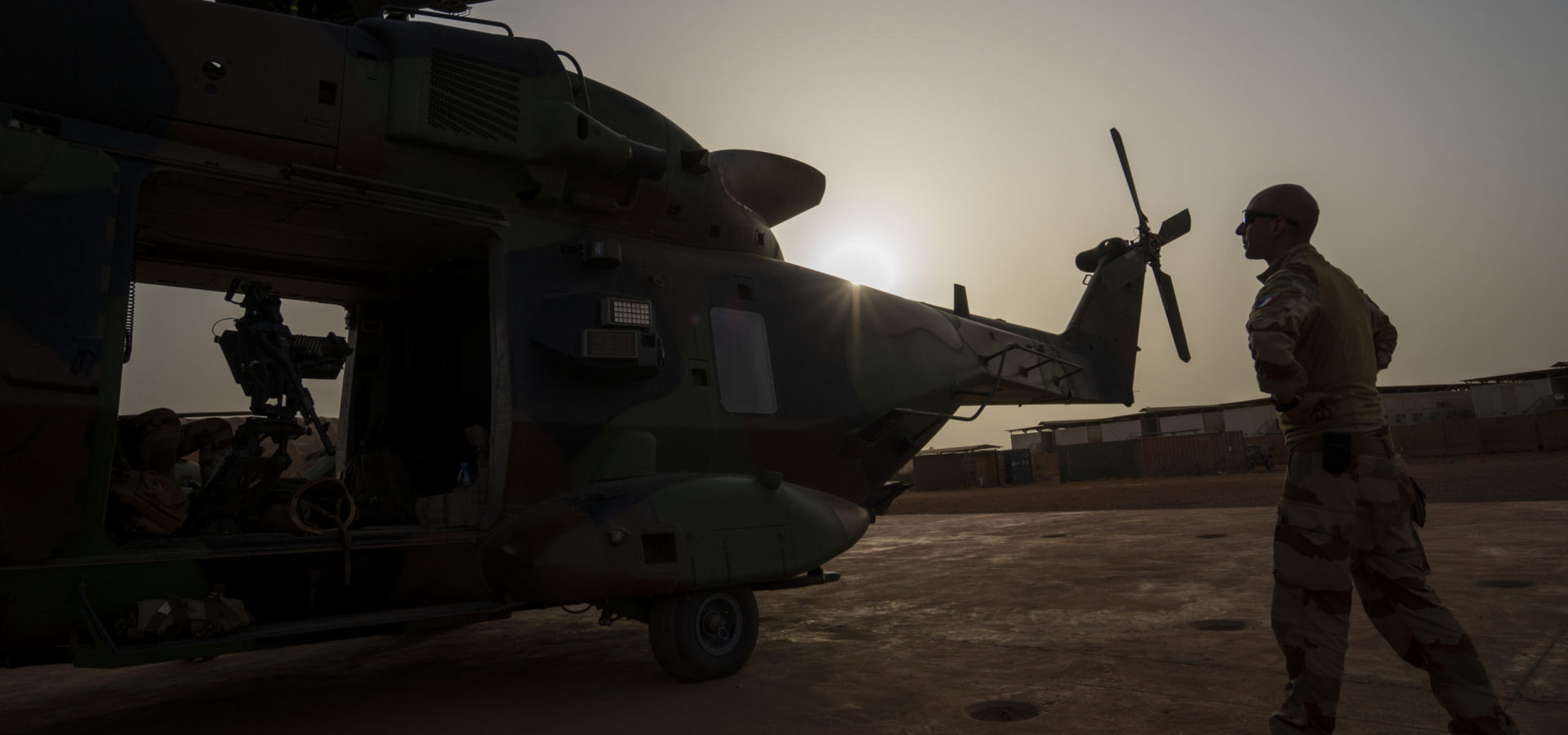
BAMAKO, MALI — On the 8th of October, Choguel Maïga, the prime minister of Mali, boldly informed the world that its former colonial power, France, was sponsoring terrorists in the country’s northern region. Standing before dozens of cameras and microphones, he provided details on how the French army had established an enclave in the northern town of Tidal and handed it over to well-known terrorist groups. The revelation was shocking not simply for the serious nature of the accusation but because in past times West African leaders have rarely sparred so openly with the French government. A chain of events simmering in the background for weeks triggered the latest spat.

On October 2nd, Britain’s BBC published an article with the headline “Mali’s plan for Russia mercenaries to replace French troops unsettles Sahel.” The embattled media outlet further claimed: “There is deep international concern over Mali’s discussions with the controversial Russian private military company, the Wagner Group.”
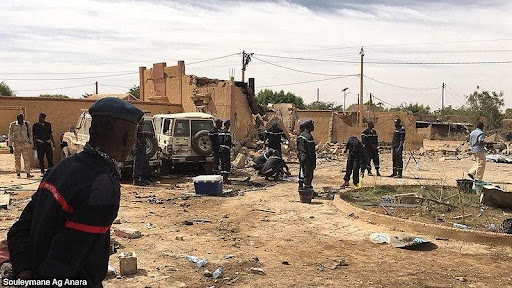
Scene after a terrorist attack in Gao, Mali, Nov. 13, 2018. | Wikimedia Commons

By now we all understand that whenever Western corporate media outlets utter the expression “international community,” they are referring simply to the U.S. and its European buddies, such as France. Case in point, in Addis Ababa, the seat of the African Union, or at the headquarters of the Economic Community for West African States (ECOWAS), there was absolutely no concern about Mali’s discussions with the Wagner Group. Even in Mali, the majority of citizens and political actors welcomed the possibility of the Russian security firm joining the fight against terrorist groups in the north. Why? Well, Malians believe the Wagner Group to be significantly more neutral than France, a country they accuse of having its own political and economic interests in the conflict.

L’habit ne fait pas le moine (the vestment doesn’t make the monk)

Anti-French protests have not been in short supply in Mali over the past few years, a sign of the citizens’ displeasure with the presence of foreign troops in their country. A segment of society has gone as far as describing the situation as an occupation. For this reason the only place of concern for replacing the French military with a Russian security firm was in Paris. But why? Why would the French government be worried about the possibility of the Wagner Group joining the fight against terrorist groups in the Sahel? If France were indeed concerned about defeating these armed groups, then their government should have been happy to receive news that more hands will soon join the battle, especially those belonging to a military firm experienced in conducting anti-terror operations.

France instead threw a tantrum, tossing all of their toys out of their coats. French officials threatened to withdraw their troops from the region and cease providing aid to Mali’s armed forces. Florence Parly, France’s current Minister of the Armed Forces and a former member of the Socialist Party, arrogantly told reporters that her country will not “cohabit with Russian mercenaries.” Well, someone needs to tell the minister that in Africa guests don’t get to decide who they share the house with; only the host is reserved such rights.

It is not difficult to understand why France would react in such a manner. In my village on the banks of Africa’s longest river, the Zambezi, we say, “Only a witch is unsettled by the arrival of a witch-finder in the village.”

If I said I was surprised by France’s reaction, I would be lying. The average African is well aware that France’s so called fight against “terrorism” in the Sahel has nothing to do with protecting the lives of the people of the region but everything to do with protecting its interests. Those interests date back to the dark period when the region was ruled with an iron fist from Paris. Only naivety would permit someone to believe that the French government would fork out billions of francs and risk the lives of its citizens to protect the lives of Black people thousands of miles away.
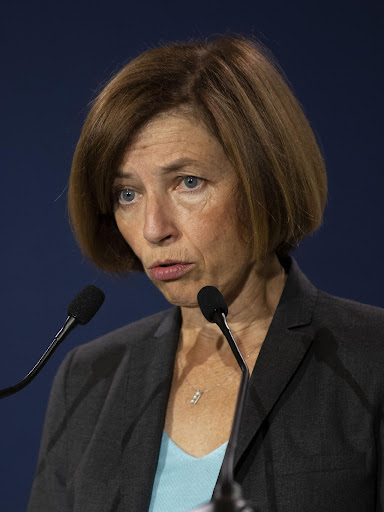
France’s Minister of the Armed Forces,
Florence Parly. | Wikimedia Commons

Rights denied from Paris to Marseilles and beyond

If France is in love with Africans, why don’t they first express their affection to the French citizens of African descent? Twenty-one years into the new millennium, Black people living in France continue to be treated as second-class citizens. More often than not, these souls are compiled into squalid living conditions in the ghettos of Paris or Marseille, with little or no social services provided to them, and are subjected to racism and harassment by security agents for no reason other than not looking “French enough.” How about first assisting those Africans in Libya who are being held as slaves in torture hellholes run by armed bandits funded by the European Union?

What about France repaying Haiti for forcing the small Caribbean country to reimburse its former slaveholding settlers and their descendants following the Haitian revolution. That total amount was not repaid until 1947 and, in present-day value, amounts to over $28 billion, according to French economist Thomas Piketty, or upwards of $260 billion if a 3 percent annual interest rate were applied. In 2015, just prior to his trip to Haiti, the French president said, “When I come to Haiti, I will, for my part, settle the debt that we have.” Aides scurried to clarify that the debt in question was not monetary but “moral.” In the relationship between France and Haiti, however, neither debt has been settled.
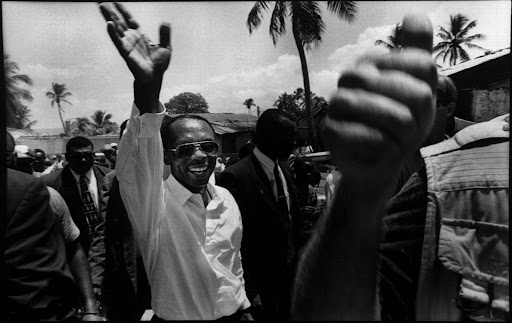
Former Haitian President Jean-Bertrand Aristide insisted that France open talks with Haiti about repaying the money extorted from the country after its independence in 1804. Aristide was deposed in two separate coups (1991 and 2004). On both occasions he was forced into exile. | http://www.aristidefoundationfordemocracy.org

As far as Mali is concerned, France will not play fair because Paris’s only concern is that the arrival of other actors in the African country will dilute its own influence and the monopoly French companies enjoy in the region. All other Africans and their descendants affected by the French colonial and neo-colonial project must fend for themselves.

France’s fit also shows the deeply ingrained colonial hangover it continues to suffer several decades after losing its colonies in West Africa. Paris arrogantly and abhorrently still views itself as the landlord and self-appointed sheriff of West Africa; therefore, any other party that wishes to venture into the region must seek its permission and blessings, a mentality that in the last five decades has led to a lot of bloodshed and atrocities committed by France’s stooges in its former colonies. These tragedies include the brutal murder of Pan-Africanist revolutionary heroes such as Thomas Sankara and other leaders who signed their death certificates by simply refusing to bow down at the throne of French imperialism.
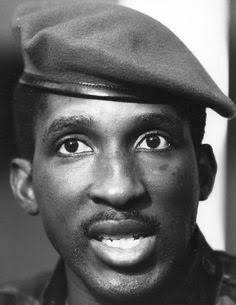
“He who feeds you, controls you.” — Former President of Burkina Faso, Thomas Sankara. | Twitter @lord_tillah

A very troubled history in Africa

France’s role in overthrowing African leaders and replacing them with dictators, such as Gabon’s Omar Bongo, is well documented. This started with the first military intervention into Gabon in 1964, when French paratroopers flew in to help then-President Leon Mba to brutally crush an attempted overthrow by a group of young military officers. These soldiers had briefly seized power in response to growing public dissatisfaction with Mba’s leadership. During the next four decades, France would go on to directly or indirectly participate in the toppling or installing of governments in different African countries such as Niger, Chad, Ivory Coast, Burkina Faso, Central African Republic and the Democratic Republic of Congo, among many others. Paris even deployed troops to Rwanda in 1994 as part of Operation Turquoise, which provided support to Hutu government forces during the genocide in the small African country. Once establishing a control zone, French military officials allowed Radio Télevision Libre des Milles Collines to broadcast from Gisenyi. One radio show encouraged “Hutu girls to wash yourselves and put on a good dress to welcome our French allies. The Tutsi girls are all dead, so you have your chance.”
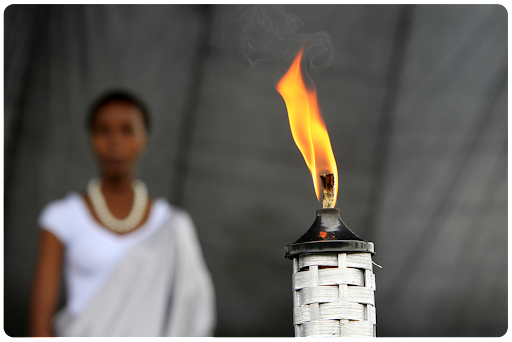
The Flame of Hope burns at an official Kwibuka event. In Rwanda. Kwibuka means ‘to remember.’ It describes the annual commemoration of the 1994 genocide against the Tutsi in Rwanda. The 2021 Kwibuka theme was to “Remember, Unite, Renew.” | Kwibuka.rw

Successive French governments have often claimed that these interventions were done to maintain or stabilize democracy. However, if France’s past and current allies are anything to go by, this claim is outright laughable. The list of Paris’s choice of friends in Africa is littered with brutal and corrupt dictators such as Blaise Compaore (Burkina Faso), Mobutu Sese Seko (Democratic Republic of the Congo) and Omar Bongo (Gabon), individuals who not only bled their country’s coffers dry but committed unimaginable human rights atrocities right under the nose, or with the explicit blessing, of the French government.

France’s two-faced foreign policy in West Africa was further exposed in February 1996, when Niger’s first democratically elected government was overthrown by the military. Instead of throwing its support behind ousted president Mahamane Ousmane, officials in Paris opted to watch from the sidelines despite having a military base in the country. Deciding to stand idly by was viewed as a nod of approval for the coup.

The same France that claims to be in Africa to ensure the “natives” can fully enjoy the benefits of Western democracy, on two occasions in the 1990s ordered its troops stationed in Gabon to join Omar Bongo’s troops to violently crush pro-democracy demonstrators. In this case, thousands had taken to the streets to protest against the results of a disputed election. Paris also continues to hobnob with autocrats such as Cameroon’s Paul Biya, who has turned the country into a personal fiefdom that he has ruled with an iron fist since 1982.

As the self-appointed enforcer of democracy in Africa, France certainly has a strange choice of bedfellows. Going by the long list of Paris’s shady activities in the region, how can claims made by the government of Mali, that France is sponsoring and arming terrorist groups, effectively destabilizing the region, be dismissed? Instead of issuing threats, the best way the French government can clear its name is by being more transparent with its activities in the Sahel. Paris should also understand that regional and continental organizations such as the African Union and ECOWAS are capable of dealing with the conflict in the Sahel.

Taking care of business

Despite the misgivings some outsiders might have against African organizations in resolving internal conflicts, the African Union Mission in Somalia has unequivocally demonstrated its capabilities against Al Shabaab. Meanwhile, the Southern African Development Community (SADC) standby forces — led by Rwanda, Botswana and South Africa — have produced even better results in battling insurgents in Mozambique’s Cabo Delgado region. These achievements have been made with less than 10 percent of the resources that Paris has spent in the Sahel conflict with absolutely no results to speak of.

It is long overdue that the world accepts the fact that Africans are capable of solving their own problems.

Conclusion

The situation in the Sahel region remains a source of concern and requires long-lasting solutions. Those solutions, however, must derive from the streets of Addis Ababa, Bamako, Nouakchott, N’Djamena and Dakar, not from the government corridors and suburbs of Paris or Brussels. The quarrel between Bamako and Paris should serve as an eye-opener to the latter, that the age of barking orders to  former colonies is over, fini.

France must now come to the realization that while the older generation of Africans might have been pliable to its machinations in the region, it is now dealing with a new generation of Africans, people unwilling to bow down passively to a former imperial power. It’s a generation that won’t allow the West or another power to choose their enemies or friends.

“Everything must change,” sang the late and legendary South African trumpeter, composer and singer, Hugh Masekela, in his hit song called “Change.” The time of change in how West Africa conducts its affairs has also come and, while the process of change can be painful and uncertain, it is inevitable.

Reexamining and recalibrating its foreign policy towards Africa is something that may not appeal to France right now but it’s something that must be done. It’s undeniable that there will always be a strong relationship between France and its former colonies and, while there is nothing wrong with this reality, the new relationship must be built on mutual respect, and not be that of master and servant.


River to Sea Uprooted Palestinian   
The views expressed in this article are the sole responsibility of the author and do not necessarily reflect those of the Blog!

Tuesday, 28 October 2014


Algeria has a common border with seven African countries, with a total length of over 6300 km, which is a very important geostrategic factor. However, it faces currently in a seat that dare not speak its name, from its eastern border to the South, while in the West, the monarchy of Morocco mobilizes its troops smugglers of drugs and fuel into a pernicious ploy Algeria.

Not content with this, the Kingdom of sex tourism did not hesitate to buy many journalists in the media to discredit the French Algeria, as was revealed by the mysterious Chris Coleman, whom we now call the Arab Snowden . It detailed the relation that the Makhzen with these French journalists, responsible for supporting the archaic monarchy of Morocco in its management of the Western Sahara issue which, remember, is still an unsolved case of colonization. The smear campaign against Morocco towards Algeria lasted for years but it has taken a new turn with a rumor that made the rounds of social networking on redessinnement of the Moroccan-Algerian border under the supervision of French military when, shortly before the feast of Eid El Kebir, Morocco annexed would, according to information emanating from Makhzen, part of the Algerian soil 15 km from Oujda. Some time later, Morocco invented an incident that allegedly occurred at the border, the Algerian army accused of shooting Moroccan nationals and have seriously injured one of them.

Moreover, the recent sensational outputs of the lawyer for the families of the monks of Tibhirine, French Patrick Baudouin, after the visit to Algeria of the judge Trévidic have to spread the good old thesis of the new "who-killed-who" so dear in France, but knowing there is a dubious relationship between the lawyer and the monarchy of Morocco, this eagerness does not surprise us too much.

Indeed, the very close links between Patrick Baudouin and the Franco-Moroccan Driss el-Yazami who served both in the FIDH (International Federation for Human Rights) and they were respectively president and secretary Assistant general, we show it is necessary that the hand of makhzan behind in places where it should not be. Nicknamed the "man of makhzan" Driss el-Yazami is close to the royal family and he never ceased to deny the existence of detention and torture in Morocco, despite a report of 6600 pages of CIA published in 2014 contradicting, which is still quite surprising from a staunch defender of human rights, what is more, recipient of the Legion of Honor.

Through these two friends, Baldwin and el-Yazami, we are witnessing another form of smear campaign targeting Algeria and from the obsolete monarchy in Morocco and France in decline. Morocco, instead of respecting international law and UN resolutions, puts his head in the sand like an ostrich and continues to make an imaginary enemy is none other than Algeria he considers his personal enemy, pushing the effrontery to build a wall along its border, mimicking his good friend Israel, under the watchful eye of France plays the dual map, showing white leg in Algiers while maintaining a crisis between Morocco and Algeria. Algeria weakens the more regionally and nationally, the more France is strengthened, either by landing huge contracts, or by setting up increasingly in Africa and reclaiming its former colonies. It is no coincidence that France is behind the attempts of Morocco want to play a major role in the Sahel, although its ambassador to the UN, Gerard Araud, has declared in 2011, as recounted Javier Bardem, the great defender of the autonomy of Western Sahara "Morocco is a mistress  with whom we sleep every night, which is not particularly love, but we have to defend  ' . Machiavellian colonial France is learned that in the division, stoking the fire between both while providing support to both sides. Never relations between Algeria and France have been better, yet it continues to feed and support Morocco in its blind approach to destabilize Algeria by the flood plan of the Algerian territory with tons drug trafficking and smugglers.

Stigma of Algeria led by French journalists bribed by the Makhzen is not inconsistent and fits perfectly with the colonial policy of France, which benefits most certainly the weakness of the current Algerian government has benefited firms French windfall by giving them contracts. Blowing hot and cold in the Maghreb and the Sahel, France applies to the letter "constructive chaos" advocated by Susan Rice. The neocons would they be in power in Paris? The same pattern occurred in Libya, where France has armed terrorists to destroy the country after maintained friendly relations with Gaddafi's receiving in Paris and getting him lucrative financial contributions. The two paradigms, namely the influence of the former colonial powers and weak up in African countries, shows us how instability with different faces will be an inevitable consequence for the African continent. To overcome the French colonialism or other, it takes real states, solid, with strong government with popular support. Currently the African continent saw scourges such as poverty, illiteracy, tribal wars and various diseases, which did certainly not immunized against the filthy maneuvers of the former colonizer continues to dictate to the puppet government and low when they are not anti nationals.

Compulsive gestures of the Moroccan monarchy is far from innocent and pose a danger which is added to the total instability along the eastern border along Libya, where the attempted terrorist incursions are constantly produce. The Algerian army, ANP, faces real trials, as in the fight against the terrorists who seek to carry out attacks in Algeria, in the prosecution of smugglers have increased after the fall of Libya devastated. Do not forget Tunisia, where terrorist groups are active in their own way and where the attacks are the daily lot of the population, and the declaration of Tunisian Prime Minister stating that terrorists based in Libya have attack plans Tunisia and Algeria confirms our words. In Tunisia, the election results will be the former leaders of the regime of Ben Ali and the Ennahda party to share the cake, and there is talk of "revolution"! Faced with the resurgence of former leaders Ben Ali, Ennahda has promised Americans to keep a low profile in order to accommodate the Muslim Brotherhood recently expelled from Qatar. Indeed, how can one explain the silence of Ennahdha, a specialist in "spontaneous" demonstrations, face the return of the old regime of Ben Ali? Not to mention the US secret base on Tunisian soil granted by Ennahdha.

Still unstable country along our huge borders. And "bobos" dreaming of revolution to Gene Sharp Otpor we praise the Tunisian model! South border, meanwhile, are far from safe, and worse, have many dangers, especially from terrorists who move freely from the chaos that France and NATO in Libya have installed by grinding it countries. Egyptian President Al Sissi, in a letter sent by the Foreign Minister to the Algerian authorities, evokes a threat to Algeria and Egypt through Libya. An attack targeting the Egyptian army that killed 30 soldiers and wounded 29 others took place in Al-Arish on Friday 24, confirming warnings of Egyptian President. Tiguentourine such a scenario against Algeria is not excluded, and our army thwarts attempts daily attacks. In fact, Algeria is permanent war on several fronts. Add to this picture the crisis in Mali and sub-Saharan refugees who flocked by the thousands in Algeria with all the dangers that entails, both in health that safe level. The Algerian authorities are no prepared this migration, they left a huge amount of refugees mingle with the population without control or organization, or no country in the world can not accept migrants without knowing their origin and past and without having thoroughly studied their case. This influx has an additional risk from smuggling to different traffic and even terrorism. No serious action has been taken by the Algerian government in the reception of refugees, while cases of Ebola is evoked in Mali.

This damning report, it appears that some 6300 km must be monitored and secured by the Algerian army and border guards, which is a major challenge and a real problem in terms of workload, knowing that nations like Libya have almost disappeared from the map, and we are surrounded by countries dismantled virtually no army, except Islamist militias who pledged allegiance to Daech-ISIS, as in the Caliphate of Darna in Libya. 

France is washing its hands, although it wreaked havoc in Libya, Sahel, Mali, leaving this poisoned chalice to Algeria and it is likely to play an essential role in the regulation of these conflicts, because it is in the stability of Algeria. Contrary to what Western politicians believe in their blindness to ignore the real threats, the issue of Algerian borders and instability concerns all of Europe. If Algeria holds good today, thanks to its hardened for years in the fight against terrorism army. However, the Western powers do not organize any conference or summit to assess and study the implications for the prevailing insecurity in the Sahel and threatens the already precarious stability of the entire African continent. Instead, Western governments have a policy of forward flight by refusing to support the Algerian roadmap to resolve the Libyan crisis, Western countries aligning with France, which has never abandoned its Françafrique policies. Once again we see with amazement the arrogance of French politicians who dare to give lessons in democracy to the entire planet, as the UMP Jacques Myard, a member of the Foreign Affairs Committee of the French Parliament and fed by money taxpayer who is appealing against the arrival of refugees in France. French gentlemen, you seem to forget that you have armed jihadists in Syria and Libya and the current crisis in the Sahel, in which Algeria faces in spite of itself, is only the result of your political adventurism! Go solve the crisis in the Sahel, Mr. Myard, and take with you Marine Le Pen is a crusade against immigrants in Calais. Faced with such behavior, it is clear that the right and the French far right continue to play Fibre xenophobia and racism primary, showing that France has not changed since Petain. It should also be noted that the device Frontex, the European Agency for Safety and external borders of the European Union, is attributable to the hypocritical Europeans who persecute refugees while destabilizing and destroying their country monumental failure.

The issue of Algerian borders do not respect that Algeria and knowing that it is the gateway to Europe, the continent must take this matter seriously instead of indulging in a perverse game by saying one thing and otherwise. French gentlemen, you are expected on the Sahrawi issue. Why do you insist that the Western Sahara is Moroccan at all costs, and in spite of UN resolutions? It is clear that you do not apply the regulations that suit you. Why not support the road map of Algeria in the resolution of the Libyan crisis? Why the issue of Mali, Libya and so many others he has not been mentioned refugees in your assemblies and advice of ministers who, instead of addressing these serious issues, like more and more to playgrounds? Your partisan squabbles are only squabbling kids. A little dignity, Your French politicians! Your country symbolizes the decline, he will have to accept it, and it is useless to look for enemies outside while it is in yourself, in your atavism of colonizing nation. What is the state of your military operations and Serval barkhane? We see no result, what served your presence in the Sahel? What did you do to combat terrorism? Give us the numbers and not just bullshit! It is not customary from "big mouths" omerta to practice their military conquests and your silence that does not match your profile franchouillard arrogant and pretentious says a lot about your military fiasco in Mali and the Sahel in general. Fix problems and crises that you created rather than pass the buck we ignoring your responsibilities. Take charge of the millions of people you have thrown on the road with your bombs and your criminal actions, rather than relying on Algeria to repair your damage! While you train Africa in endless conflicts, the third round of talks between Bamako and armed groups in Northern Mali opened in Algiers on Tuesday October 21 in order to restore peace in northern Mali. This is Algeria, which still must assume a burden which it would have passed and your responsibility! 

Nobody wants to take the trouble to find solutions, it is essential for Algeria to resolve these conflicts by weighing with its well established in countries such as Libya and Mali diplomacy. Algeria must play a role in these crises do not exceed more on its territory, the geography is crucial in diplomacy. The Algerian diplomatic approach is vital, but we also provide solutions to our internal policies such as the crisis of Ghardaia which is very dangerous for the country problems. The strategic extension of Algeria can only be African, and to this end must be intensified lobbying with the Algerian presence throughout Africa reconnecting with our art of diplomacy and strengthening relations between nations, both by cooperation as investments that span the continent. This ambitious goal is within reach of our country that has the means and skills, provided there is a political will and courage.

We must not underestimate the massive exodus of sub-Saharan refugees constitutes a time bomb for Algeria and in addition to all the threats that target our country. In our fieldwork, we saw a catastrophic situation for Algerians due to the interference of France in Africa. Instead of organizing racist attacks in Calais, Marine Le Pen and others should take care of these sub-Saharan immigrants. Algeria is not exclusive to the resolution of problems of these refugees. France is the origin of the crisis in the Sahel, it solves the! Take its responsibility by welcoming all those people its insane policy was thrown into misery and distress! The laxity of the Algerian authorities on the treatment of refugees is more than doubtful, and if there is an agreement between the low current Algerian government and France on this issue, namely the reception of African migrants whose Malians majority, it can only be obsolete because it does not apply to the Algerian people. If the current Algerian government lacking legitimacy with an impotent president who represents himself has guaranteed his younger brother with the interests of France, it does not represent the Algerian interests. Distinguished French politicians, give us the service, take care of refugees from countries that destabilize you, this is the least of things.

Mohsen Abdelmoumen

River to Sea Uprooted Palestinian   
The views expressed in this article are the sole responsibility of the author and do not necessarily reflect those of the Blog!

Monday, 26 May 2014

The fruit of Nato's war in Libya are the coups and terror spreading across Africa

Seumas Milne .


It's not just Libya that's living with the fallout from Nato's intervention. Blowback from the Libyan war has spread across Africa, destabilising the Sahel region and beyond.

Bomb blast in central Jos, Nigeria
Iraq may have been a blood-drenched disaster and Afghanistan a grinding military and political failure. But Libya was supposed to have been different. Nato's war to overthrow Colonel Gaddafi in 2011 was hailed as the liberal intervention that worked.
The western powers might have had to twist the meaning of the UN resolution about protecting civilians, the city of Sirte might have been reduced to rubble, large-scale ethnic cleansing taken place and thousands of civilians killed. But it was all in a noble cause and achieved without Nato casualties.
This wasn't Bush and Blair, after all, but Obama, Cameron and Sarkozy. The people were free, the dictator was dead, a mooted massacre had been averted – and all this without any obvious boots on the ground. Even last year the prime minister was still claiming it had all been worthwhile, promising to stand with Libyans "every step of the way".
But three years after Nato declared victory, Libya is lurching once again towards civil war. Over the past few days, the CIA-linked General Hiftarlaunched his second coup attempt in three months, supposedly to save the country from "terrorists" and Islamists. On Sunday, his forces stormed the national parliament in Tripoli, after 80 people were killed in fighting in Benghazi two days earlier.
Now Libya's chief of staff has called on Islamist militias to defend the government in advance of new elections. Since the country is overrun with militias far more powerful than its official forces, riven with multiple divisions and prey to constant external interference, the chances of avoiding full-blown conflict are shrinking fast.
But these are only the latest of the clashes and atrocities that have engulfed Libya since Nato's "liberation": including bombings, assassinations, the kidnapping of the prime minister, the seizure of oil terminals by warlords, the explusion of 40,000 mainly black Libyans from their homes, and the killing of 46 protesters on the streets of Tripoli in one incident — ignored by the states that supposedly went to war to protect civilians.
In reality, the west seized the chance to intervene in Libya to get a grip on the Arab uprisings. Nato air power in support of the Libyan rebellion increased the death toll by a factor of about 10, but played the decisive role in the war— which meant no coherent political or military force was ready to fill the vacuum. Three years on, thousands are held without trial, there are heavy curbs on dissent, and institutions are close to collapse.
But the US and Britain are still training Libyan troops to keep control. Before Gaddafi's overthrow, Hiftar headed the military wing of the CIA-backed National Salvation Front. In advance of his latest coup attempt, a sympathetic US sent a force of marines to Sicily ready to intervene, and John Kerry has promised tohelp Libya with "security and extremism".
Both the UAE and Saudi Arabia are openly backing Hiftar, as is the military coup leader in Egypt, General Sisi. Having suppressed, jailed and shot in large numbers Egypt's own Islamists, Sisi and his Gulf backers are determined to prevent them consolidating power in oil-rich Libya. There are signs that Sisi – who complains that the west failed to garrison Libya after Gaddafi's overthrow – wants to use Libya's crisis to send in his own forces.
But it's not just Libya that's living with the fallout from Nato's intervention. Blowback from the Libyan war has spread across Africa, destabilising the Sahel region and beyond. After Gaddafi's fall, Tuareg people who had fought for him went home to Mali, bringing Libyan arms caches with them. Within months, that had tipped northern Mali into full-scale armed rebellion and takeover by Islamist fighters.
The result was last year's French military intervention, backed by the US and Britain. But Libya's impact goes much wider. Among the groups whose armed campaigns have been fuelled by large-scale heavy weapons supplies from Gaddafi's looted arsenals is Boko Haram.
Support for the fundamentalist Nigerian terror sect – which kidnapped 200 schoolgirls last month and has been responsible for more than 1,500 deaths since the start of the year – has been fed by deprivation, drought and brutal state repression in the Muslim north.
But, as elsewhere in Africa and the Middle East, each outside intervention only spreads the cycle of the terror war. So the call for action over the outrage of the Boko Haram kidnapping has brought US, British and French forces to oil-wealthy Nigeria, just as the Mali crisis last year led to the establishment of a US military drone base in neighbouring Niger.
US armed forces are now involved in 49 out of 54 African states, along with the former colonial powers of France and Britain, in what's becoming a new carve-up of the continent: a scramble for resources and influence in the face of China's growing economic role, underpinned with an escalating military presence that spreads terror as it grows. That will bring its own backlash, as did the war in Libya.
Supporters of Nato's Libyan war counter that, even if the country is now plagued by chaos and violence, there was no western military intervention in Syria and more than 150,000 have died in its horrific civil war. But of course there is large-scale covert intervention in support of the Syrian rebels by both the Nato powers and the Gulf states.
One of the ugliest aspects of western policy towards Syria is the turning on and off of that backing to keep their favoured armed groups in the game – without giving them any decisive advantage. In fact, US, British and Gulf support is being stepped up right now because of regime advances on the field.
But it defies logic to imagine that the death toll would have somehow been lower in Syria, or the sectarian conflict less brutal, if the US and its allies had launched a full-scale military attack at any stage of the conflict. The experience of Iraq, where the war is now estimated to have killed 500,000, makes that obvious enough.
But such is the expectation of routine war-making among parts of the western elite that they're already impatient for another outright intervention. "What would America fight for?" asked the Economist plaintively earlier this month, echoing the US Republican charge of weakness in the White House. For the rest of the world, the reality of Libya and its disastrous consequences should be answer enough.
Source: Guardian
River to Sea Uprooted Palestinian   
The views expressed in this article are the sole responsibility of the author and do not necessarily reflect those of the Blog!

Thursday, 18 April 2013

Muslim Brotherhood capo blames America' (& allies) conspiracy for Boston bombings

Via FLC


"... In English, the Brotherhood's political party released a statement "categorically reject[ing] as intolerable the bombings committed in the U.S. city of Boston," and "offer[ing] heartfelt sympathies and solemn condolences to the American people and the families of the victims."In Arabic, senior Brotherhood leader and the vice chairman of the group's political party Essam el-Erian took a different tack. In a post on his Facebook page, he condemned the Boston attack -- but also linked it to the French war in Mali, the destruction in Syria and Iraq, and faltering rapprochement between the Turkish government and Kurdish rebels.
El-Erian is making the case that all of these setbacks -- from Boston to Baghdad -- are somehow connected. "Who disturbed democratic transformations, despite the difficult transition from despotism, corruption, poverty, hatred, and intolerance to freedom, justice tolerance, development, human dignity, and social justice?" he asked. "Who planted Islamophobia through research, the press, and the media? Who funded the violence?"..."

River to Sea Uprooted Palestinian  
The views expressed in this article are the sole responsibility of the author and do not necessarily reflect those of this Blog!

Tuesday, 19 March 2013

France Increases its Support to Terrorists in Syria

Yusuf Fernandez

In late February, some international agencies reported that hundreds of foreign rebels were fleeing from the Idleb Province in Northwestern Syria through Turkey under the claim that they were planning to join al-Qaeda militants in Mali in order to fight against French troops deployed there.
terrorists in SyriaThe reason of this withdrawal is not clear.

Some observers said that the real reason behind it was the Syrian army´s offensive against terrorist groups in the province and the disappointment of some militants who have seen that their fight is not popular in Syria, as their recruiters had made them believe before going to Syria.

The irony is that France, which invaded Mali some weeks ago to theorically fight against radical groups in that country, will have to end up fighting against the same groups that the French government has been openly funding. These militants have used French money and training in Syria in order to gain combat experience and they will implement this newly-acquired knowledge against French troops in Mali.

According to observers, France has become the most prominent Western backer of Syria´s armed opposition and is now directly funding terrorist groups around Aleppo and other parts of the Arab country as part of a new attempt to overthrow the Syrian government. Large sums of money have been delivered by French government proxies across the Turkish border to rebel commanders, diplomatic sources have confirmed. The money has been used to buy weapons inside Syria and to fund armed operations against government forces.

Laurent FabiusOn March 14, French FM Laurent Fabius announced that France and the UK would ignore a EU ban on sending weapons to Syria in order to supply terrorist groups fighting there with more arms. The goal remains the same: to overthrow Bashar al Assad´s government. The French newspaper Le Figaro also reported in those days that French military advisers had recently met with rebel groups inside Syria, in an area between Lebanon and Damascus. It is worth pointing out that sending military personnel to a country without the permission of its government amounts to a military invasion.

Despite all this support, the political goal of France in Syria seems to be as far as ever. “Things are not moving. The solution that we had hoped for, and by that I mean the fall of Bashar and the arrival of the (opposition) coalition to power, has not happened”, acknowledged Fabius on January 24. In December 2012, he had claimed that the “end is nearing” for the Syrian president. A senior Lebanese official who visited France towards the end of last year told the daily Al Safir that “France was surprised by the fact that Syrian president Bashar al-Assad, his regime and his army could resist”.

For its part, the Syrian government has condemned this French interference in its internal affairs. “France is acting like a hostile nation”, said National Reconciliation Minister Ali Haidar to AFP. “It is as if it wants to go back to the time of the occupation,” he added, referring to the French rule in Syria after World War I. Damascus has made it clear that France´s current policies will weaken or even eliminate its political, economic and cultural influence in Syria, maybe forever.

Moreover, France is now getting nervous about the possibility of reprisals from the al-Qaeda-linked groups, similar to those it is funding in Syria, for its intervention in Mali. On March 1, three suspected militants were arrested in southern France for allegedly planning an attack in the deays ahead, the Paris prosecutor said.

Change of foreign policy

The boomerang effect of supporting terrorism in Syria is just one of the disastrous consequences of the change of the French policy towards the Arab and Muslim world, which started when the pro-Israeli and pro-NATO Nicolas Sarkozy became President. Prior to that fact, France had gained a solid reputation due to its Gaullist foreign policy, one of whose pillars was the independence of the country with respect to the United States. In February 2003, French Foreign Minister, Dominique de Villepin, was universally applauded when he opposed Colin Powell´s pathetic attempts to justify the then-forthcoming invasion of Iraq with blatant lies about the non-existent Iraqi weapons of mass destruction.

French soldiers in MaliThe new French foreign policy, under influence of Zionist politicians such as Sarkozy himself, Bernard Kouchner or Laurent Fabius and Zionist activists as Bernard Henry-Levy, changed the equation. France began to promote pro-Israeli and neo-colonial policies in Africa and the Middle East, where France adopted an even more radical stance against Syria and Iran than any other Western country.
In Africa, Paris has increased its military presence in recent years. France´s intervention in Mali, with a contingent of 750 troops, has sought to bolster the Malian army against the al-Qaeda rebels, who have controlled the north of the country for about two years. However, the war in Mali is still beginning and, even worse, it is becoming another asymmetric and far-reaching war which could involve France for years, although Paris has repeatedly announced its willingness to evacuate its army from the African country as soon as possible.

Qatar, France´s ally, supported extremists in Mali

On the other hand, Qatar, which just happens to be a major ally of France in the Syrian question, has criticized Paris´s intervention in Mali arguing that the force would not solve the problem. French officials have openly accused Qatar of funding the Mali rebels.

Hamad, HollandeThe first accusations of Qatari involvement with Tuareg separatists and al-Qaeda-linked groups came in a June 2012 article in French weekly the Canard Enchainé. The publication quoted an unnamed source in French military intelligence saying: “The MNLA (secular Tuareg separatists), al-Qaeda-linked Ansar Dine and MUJAO [movement for unity and Jihad in West Africa] have all received cash from Doha.” “The French government knows perfectly well who is supporting these terrorists. Qatar, for example, continues to send so-called aid and food every day to the airports of Gao and Timbuktu.”

The speculation is that Qatar is keen to increase its influence in Mali in order to develop business ties with this nation, which is believed to have significant oil, gas and uranium resources. Moreover, its presence in Mali “greatly increase the Emirate´s influence in West Africa and the Sahel region”, regional geopolitical expert Mehdi Lazar, who specialises on Qatar, wrote in French weekly news magazine L’Express in December. Qatar would also be trying to destabilize Algeria, one of the Arab countries remaining free from its political influence.

France, for its part, is determined to help the pro-French military junta rule the entire nation and sees Qatari activities in Mali with dismay. The Canard Echainé wrote: “Earlier this year, several notes from the DGSE (the French Intelligence Service) alerted the Elysee Palace on international activities and, dare we say, the emirate of Qatar.”

On 22 January, French news site France24 published an article entitled “Is Qatar fuelling the crisis in north Mali?” which claimed that Doha had taken sides with the Mali insurgents. According to author Segolene Allemandou, Qatari rulers aim to spread extremism in Africa with the help of these rebels. The subtle message was clear: the emirate´s support for terrorism will damage its long-term image in Europe.

Destroying a pluralist Syria

Assad praying at Sunni mosqueIn this context, everyone can understand that Saudi and Qatari support extremists who fight against a multifaith and multicultural Syria and against all the religious groups supporting interfaith cooperation and coexistence, such as mainstream Sunni Muslims, Shiites, Alawites and Christians. After all, in Saudi Arabia only the Wahabi current enjoys full religious freedom. The rest of the faiths are discriminated, persecuted or banned. But some people can find it difficult to understand why the West, including France, is allied with extremist Salafist groups persecuting Christians and destroying churches.

The anwer is that France and other Western governments are actually not interested in democracy or political and religious freedom but in pursuing their own political, strategic and economic interests at any cost. French aggressions in Africa have led to the death of thousands of innocent people and have ruined the lives of millions of others, not to mention its involvement in the Rwandan genocide in 1994. With its current policies towards Syria, Paris only tries to reimpose their neo-colonial yoke on that country. However, after many decades of independence and of enjoying their sovereignty, Syrian people are not willing to become slaves of European goverments or of corrupt, backward, terrorist-friendly and despotic regimes as the Saudi or the Qatari.

By funding and delivering weapons to terrorist groups, the French government, alongside with its allies, is not only violating the international law but it is also destroying the possibility of a peaceful solution to the Syrian conflict and leaving its resolution in the hands of the military. In this way, Syria´s friends should take good note of this fact and multiply their military aid to Syria in order to prevent their own interests from being damaged. The Syrian state is strong and its people is indomable, but there is no doubt that Syria will need all kind of support from free people in the world in order to resist this aggression.
Source: Al-Manar Website
18-03-2013 - 14:11 Last updated 18-03-2013 - 15:45
River to Sea Uprooted Palestinian  
The views expressed in this article are the sole responsibility of the author and do not necessarily reflect those of this Blog!

Monday, 4 March 2013

"Hundreds of foreign jihadis seen leaving Syria on Tuesday through Turkey"

FLC


DAMASCUS, Feb. 26 (Xinhua) -- "Hundreds of foreign jihadist fighters joining the battles against the Syrian troops were seen leaving Syria on Tuesday through borders with neighboring Turkey, the opposition Britain-based Syrian Observatory for Human Rights reported.
The reason behind the withdrawal is still vague, said the Observatory, citing one fighter as saying that his comrades "have been pulled out of Syria to join jihadists in Mali."
The Observatory said the fighters pulled out from Syria's northwestern province of Idlib, a main hotspot in Syria's long- standing conflict.
The Syrian government has for long accused Turkey of making its lands as routes for the foreign radical fighters in order to fight against the Syrian administration.
Meantime, the Syrian air force shelled the town of Kureen in Idlib earlier in the day, said the Observatory....
In the Kurdish-dominated district of Ashrafieh, clashes erupted earlier in the day between rebel fighters and Kurdish local committees, the Observatory continued...."
River to Sea Uprooted Palestinian  
The views expressed in this article are the sole responsibility of the author and do not necessarily reflect those of this Blog!

Saturday, 23 February 2013

French war on Mali to clinch warplane mega deal

French war on Mali to clinch warplane mega deal
 
France’s Rafale warplanes
Thu Feb 21, 2013 7:31AM
The Rafale has spearheaded the French war on Mali and has been hailed by French President Francois Hollande for its successful air strikes against the impoverished desert African country. Four weeks after the French offensive began in Mali, Hollande flew to India last week in a bid to finalize what is reputedly the biggest military aviation deal in history, centered on the Rafale.”
France’s claim of combating terrorism in Mali does not add up. Re-conquest of this former French colony and control of rich natural resources in West Africa are some of the more plausible reasons for this criminal offensive that began on 11 January.


Yet another plausible reason is to showcase the Rafale, France’s new fighter-bomber.

The Rafale has spearheaded the French war on Mali and has been hailed by French President Francois Hollande for its successful air strikes against the impoverished desert African country. Four weeks after the French offensive began in Mali, Hollande flew to India last week in a bid to finalize what is reputedly the biggest military aviation deal in history, centered on the Rafale.

In other words, the whole war may have been staged to showcase the Rafale with the precise purpose of sealing a deal worth $12-14 billion with India and to fend off a rival tender from Britain’s state-of-the-art Typhoon.

Here’s the background.

Another week, another UN Security Council member comes to India to flog weapons of mass destruction. Just as tensions are boiling between nuclear-powered India and Pakistan over the incendiary Kashmir dispute - soldiers have been killed on both sides in cross-border firefights in recent weeks - along come the leaders of France and Britain to push multi-billion-dollar weapons sales.

Last week, it was French President Francois Hollande who led a delegation of four government ministers and some 60 industrial chiefs to India.
Arriving on 14 February and greeted by Indian Premier Manmohan Singh, French English-language broadcaster France 24 reported the importance of Hollande’s purpose in no uncertain terms: “The two-day visit will be dominated by trade issues, including a $12-billion contract for Rafale fighter jets, dubbed ‘the deal of the century’ in France.”
That deal - still to be finalized, perhaps next year - involves the sale of 126 French-made Rafale fighter-bombers and a potential follow-up of 63 more. It is reckoned to be the biggest-ever military aviation contract between two countries. The bombers are designed to deliver nuclear warheads - a feature that no doubt lends a selling edge on the Indian sub-continent.

This week, however, it was British Prime Minister David Cameron’s turn. Cameron flew to India for a three-day visit to shore up the “special relationship” with Britain’s former colony and past imperial “jewel in the crown.” It was Britain’s biggest overseas trade delegation, according to spokesmen in Downing Street. Accompanying Cameron were four government ministers, nine parliamentarians and representatives of over 100 British industries and businesses, including British Aerospace.

The latter company is particularly relevant since the main objective for Cameron was to dissuade India from finalizing the French fighter jet deal and to award the contract instead to the British-made Eurofighter Typhoon.

“PM in last-ditch bid for India fighter deal,” headlined the Financial Times, which added that Cameron was trying to snatch the contract “from under the nose of French President Francoise Hollande.”

The irony is a little hard to take of UN Security Council members engaged in a dog fight to fuel an arms race between India and Pakistan - the two states, both nuclear powers, have fought four wars since their foundation in 1947. The irony of Britain’s nefarious role is especially bitter. It was Britain’s malevolent partition of India that created the long-running dispute between newly formed India and Pakistan over the mainly Muslim territory of Kashmir. Three of the four wars fought by India and Pakistan have been over Kashmir - that is, as a result of British imperialist meddling. And now Britain is seeking to make billions of dollars from the bellicose tensions that it bequeathed to the region.

To call this a cynical business is a gross understatement. As the adage goes: war sells, war is good for business. And both France and Britain in recent years have done their utmost in pushing wars across the Middle East and North Africa, which in turn have helped push up sales of their state-of-the-art warplanes. The latest sales promo is France’s war on Mali - but more on that later.

The British-French rivalry for the Indian fighter jet bonanza can be traced to NATO’s war on Libya during 2011, which culminated in the overthrow and murder of Libyan leader Muammar Gaddafi. On 17 March 2011, the UN Security Council voted a resolution to set up a no-fly zone in Libya, ostensibly under the pretext of “responsibility to protect” civilians in an apparent uprising by militants in the east against the government of Tripoli. Two days later, on 19 March, the no-fly zone quickly turned into a seven-month aerial bombing campaign by NATO against Gaddafi forces. Many legal experts opine that the NATO bombardment of Libya, which was instrumental in the overthrow of the Libyan government, was not mandated by the UNSC Resolution 1973. That is, NATO acted illegally.

The two NATO powers that led the bombing onslaught in Libya - involving more than 10,000 air sorties - were France and Britain. The air war was a showcase for the new Rafale, built by French company Dassault, as well as British Aerospace’s Typhoon. Indeed, it was Rafale fighter jets that first opened NATO fire on Gaddafi forces outside Benghazi.

Before NATO’s bombing spectacle in Libya got underway, the Rafale and Typhoon had already been short-listed by India from out of six tenders for the record $12-14bn fighter jet contract. This aerial campaign served as the air force for Libyan militants to bring about Western regime change. But it also had the added benefit of showcasing French and British warplanes that were fresh off the production line and poaching for international customers.

Eight months after NATO’s blitzkrieg on Libya finished, the government of India announced that it was opting for the Rafale.

The Financial Times on 7 July 2012 reported: “For Dassault’s Rafale and Eurofighter’s Typhoon, the conflict to unseat Libyan dictator Colonel Muammar Gaddafi helped to decide the biggest jet fighter tender ever.” The paper went on blandly: “In fact, the Typhoon and Rafale both performed well over Tripoli, bolstering confidence on both sides that they are the better aircraft. In the end, the French [warplanes] were quicker and that, say analysts, helped nudge India’s decision towards Dassault’s Rafale.”

That’s not the end of the affair. Even though the French seemed to clinch the fighter jet mega deal with India last July, the British have not given up hope on snatching the prize from their rival.

Indeed, hot on the heels of Hollande’s visit last week to New Delhi, British Prime Minister David Cameron was in India precisely to convince Premier Singh on the benefits of the Typhoon.

The Guardian quoted a Downing Street spokesman as saying: “We respect [sic] the fact that the Indians have chosen their preferred bidder and are currently negotiating with the French. Of course, we will continue to promote Eurofighter [Typhoon] as a great fast jet, not just in India but around the world.”

Given the magnitude of the aviation deal with India and other potential buyers, it can be safely assumed that the British have not been “respecting” the French rival, but rather have been lobbying New Delhi intensely to steal the deal ever since the Indian government signaled last year that it was opting for the Rafale.

The war on Libya may have launched the Rafale on the world stage as a lean fighting machine, winning over New Delhi in particular, but perhaps the French felt compelled subsequently to go to war in Mali with the aim of closing the Indian deal. Bear in mind that Hollande’s Rafale-selling delegation to India comes one month after the beginning of the French offensive in its former West African colony.

With British rival pressure bearing down on the French, it is not inconceivable that deployment of the Rafale in the challenging environment of Mali was contrived as a timely reminder to India of the aircraft’s military capabilities.

It should be recalled that France’s military intervention in Mali on 11 January - as with NATO’s bombing of Libya - was not authorized by the UN Security Council. The latter only gave a qualified approval last December for the deployment of an African-led mission to Mali under the auspices of the Economic Community of West African States (ECOWAS), which was envisaged to take place in September later this year. The French jumped the gun for an urgent reason. Why?

The official French rationale for launching its sudden offensive in West Africa - defending Europe’s security from terrorism - does not quite ring true. After all, the radical militants it is supposedly combating in Mali are the same, or are closely related to, the Mujahideen militants in Libya that the Rafale fighter jets were providing air cover for in 2011. These same elements are also linked to extremists that France and other NATO states are supporting in Syria to overthrow the Assad government in Damascus. Clearly, the official French rationale for its military intervention in Mali spearheaded by the Rafale fighter jets does not add up.

But a “sale of the century” hanging in the balance involving fighter jets to India worth $12-14 billion? Now, that does make sense.

FC/HSN
River to Sea Uprooted Palestinian  
The views expressed in this article are the sole responsibility of the author and do not necessarily reflect those of this Blog!