Showing posts with label East Asia. Show all posts

Thursday, 12 August 2021

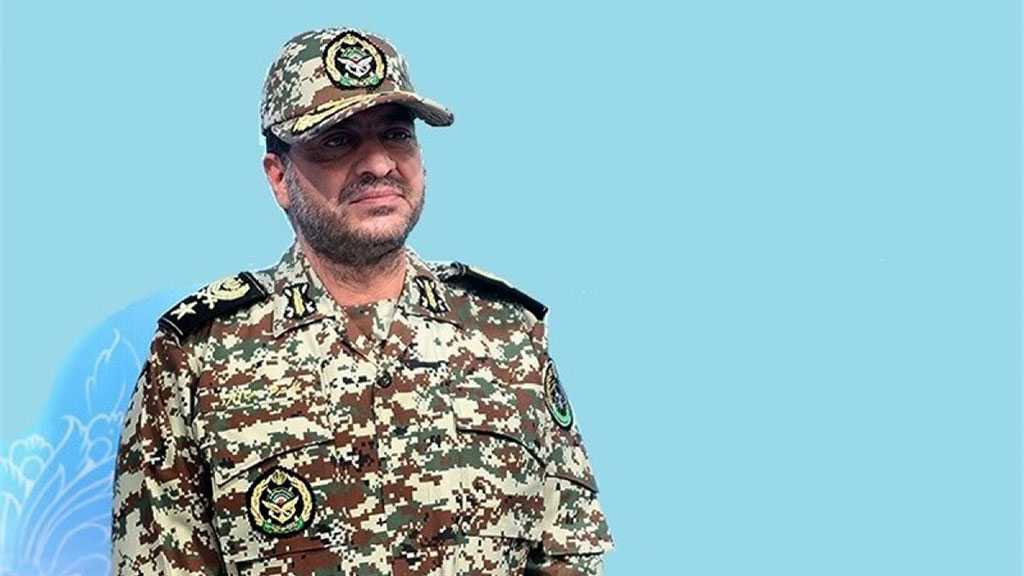
Iran’s Top Commander: Vigilant Air Defense Force Not to Allow Any Aggression

 August 12, 2021

Iran’s Top Commander: Vigilant Air Defense Force Not to Allow Any Aggression

By Staff, Agencies 

Iran’s Air Defense Forces Commander, Brigadier General Alireza Sabahi Fard, confirmed that his forces   is keeping “a watchful eye” on the country’s strategic regions and will not allow any act of aggression by the enemy to go unnoticed.

While visiting the air defense center in the southeastern port city of Chabahar on Wednesday, Fard said that committed and expert personnel of air defense defend the country with a watchful eye, stressing, “We will not allow any mistake by the enemies for the sake of our authority and dignity.”

“The units of this force, by [exercising] intelligence, vigilance and keeping a watchful eye, will not allow any aggression by outsiders,” he added.

The top commander further noted that the northern Indian Ocean and the strategic region of southeastern Iran are under full surveillance of the air defense, stressing the region enjoys complete security.

Fard said the Chabahar air defense center is in charge of monitoring the sky of a part of the country where there is a lot of air and sea transportation to the Strait of Hormuz and the Gulf, as well as to East Asia and Central Asia, adding that various types of surveillance equipment are deployed to the region to monitor any moves.

“All kinds of completely indigenous electronic interception, radar and missile systems, which are the result of round-the-clock efforts of the youth of this border and region, are deployed in this area, and the enemies know that we are very close to them in the region and we even monitor their breathing,” he added.

The senior commander reiterated that Iran’s air defense has long been capable of detecting and monitoring any flying object with any radar cross-section and uses powerful systems and weapons for tactical and defensive actions against offensive forces.


River to Sea Uprooted Palestinian   
The views expressed in this article are the sole responsibility of the author and do not necessarily reflect those of the Blog!

Saturday, 26 December 2020

A Hard Look at Rent and Rent Seeking with Michael Hudson & Pepe Escobar

A Hard Look at Rent and Rent Seeking with Michael Hudson & Pepe Escobar

December 23, 2020

Michael Hudson and Pepe Escobar discuss rent and rent-seeking, i.e., unproductive economic activity, in the US and China mainly but including the Russian, Iranian and Brazilian economies.

In the first 15 minutes, an overview from Michael Hudson explains what happened in the US economy once jobs and manufacturing were offshored to mainly China.  He proposes that even if China did not exist, the US economy has been changed to the extent that it is almost impossible to change back to a productive economy without material changes in the economic model.

Pepe keeps the conversation flowing quickly with incisive questions.  The two esteemed gentlemen take a look at the Chinese view on a possible Biden administration and how the military hawks in Washington could be countered.   Outlining the ‘conflict of systems’ between the US and China, Michael Hudson explains the thinking of the Pentagon and paying ‘protection money’ historically to fund oligarchies.  It is a ‘war between systems’, Hudson explains with the thinking being:  “If only China did not export to us, we could reindustrialize.”

“It’s over”: says Hudson, because “we’ve painted ourselves into such a debt corner.  So much money flows to the top 5% that there is no money for investment, no money for growth.”

Hudson explains the concept of capitalism, how it was conceived to work against neo-liberalism, and how it has changed to systemic support for rentier economics.

A wealth of detail follows, around fictitious debt and wealth creation.   Michael discusses the ‘brainwashing’ of Russia vis a vis economic policy and central bank to end up in a position where Russia was paying 100% interest for years under American advisors and privatized rentiers, “a bunch of gangsters.”   Very interesting is the discussion on how the perpetrators, the leading university of the US in the destruction and looting of Russia, could not be brought to a court.

“You don’t need an army to destroy a country any longer.  All you need to do is to teach it American economics.”  Michael Hudson

A question from Pepe regarding the economies of North East Asia, South East Asia, the Asia Crisis and currently further integration with Russia, resulted in this very cogent quote from Michael Hudson.

“The current mode of warfare is to conquer the brains of a country, to shape how people think.  If you can twist their view into unreality economics, to make them think you are there to help them and not to take money out of them, then you’ve got them hooked.  You need to lend them money, and then crash it.”  Michael Hudson.

The conversation ends with an extensive question from Pepe regarding the biggest myth regarding Belt and Road, the supposed ‘debt trap’.  The difference in systems, non-rentier, and rentier, debt, and neo-liberalism again is illustrated in a crystal clear fashion.


River to Sea Uprooted Palestinian   
The views expressed in this article are the sole responsibility of the author and do not necessarily reflect those of the Blog!

Saturday, 17 October 2020

Phoenix and the rebirth of evil part I:

Phoenix and the rebirth of evil part I:

By Ken Leslie for the Saker Blog

The Poglavnik of the East[1]

“I know no way of judging the future but the past.”

Patrick Henry, 1765

“This time, it’s different”

Any gambler bleeding thousands of dollars at a table in Las Vegas

These days we all seem preoccupied with daily events which are taking a turn for the worse. No, not everything is “bad” but only those who are sound asleep do not hear the cold winds of war rattling the windows. My previous essay “Two clicks to midnight” has caused quite a stir with over 20000 views and hundreds of comments. I put it to you that this is not the result of my brilliant writing and analytical skills (I mean this) but the ability to express something that many people keep hidden inside—questions about the true nature of the system in which we live, their inchoate fears and half-buried memories. I believe in the cathartic power of the truth (the way I see it) and it appears that so do many others. This in itself is encouraging because it means that under layers of lies, anxieties, complexes and dogmas, there lies a good human heart capable of love and redemption. Given the current state of the world, this is the only way I know of fighting for a more hopeful tomorrow—warts and all.

Our gracious host has achieved fame (he might disagree!) through a knowledgeable and timely analysis of the Western military-political nexus that is using all its power to destroy Russia and China. His prescient and nuanced assessments of the situation in the “East” have made many of us loyal visitors and contributors to this blog. Now, I can’t hope to offer anything like the military analysis a la Saker of Andrey Martyanov. And that is just as well because they are doing an excellent job. What I can do well is to observe certain historical patterns and try to interpret them in the modern setting. As knowers say, history does not repeat itself but it rhymes. It is these “rhymes” or similarities between historical events that tell us all we need to know about the limited cognitive grasp of the human beings as well as partial predictability of human behaviour. Of course, the complexity of the systems in question precludes any confident claims but nevertheless—past is all we have and we’d better learn how to use its lessons pronto.

Of course, there is danger of overestimating the importance of past events but it is equally dangerous to ignore them. In applied probability, these two types of bias are called “Hot Hand” and “Gambler’s fallacy” and they hamper any analysis of complex events. Yet, as noted by Patrick Henry above, all we have is the past and we’d better study it carefully—if judiciously.[2] And then, there are the emotions—yearning for justice in the face of a blatant injustice and anger at the abandon with which criminal elites hiding behind the holiest of principles have destroyed innocent human lives. After decades if not centuries of demonisation of Russia in all its forms, the time has come to fight back—to turn the light of history on its enemies. As some of you might have noticed, I have focussed almost exclusively on Roman Catholicism at the risk of alienating some readers. This does not mean that evil is the exclusive province of the Vatican but that a large proportion of recent historical tragedies are closely linked with if not caused by it. Given the nature of these tragedies, I intend to explore the nefarious role of this “Official” Christianity in some detail.

In the infernal Encyclopaedia of human beastliness that is kept bound and chained to the gates of Hell there are few events as heart breaking and anger provoking as the War in Vietnam, one of the longest and bloodiest conflicts in modern history. “Conflict” is not the right term here. Rather, the Wars in Vietnam which started in 1945 and ended in 1975 represent an archetype of naked criminal aggression and genocide waged by all weapons in the arsenal of the Western “democracy” against an old and proud people which only wanted to see the backs of foreign invaders. 19th Century was very unkind to the peoples of East Asia in that it brought with it an unstoppable surge of Western imperialism greedy for raw materials and cheap labour. The British, the Dutch and finally the French swooped on the rich rubber and timber-growing fields of Malaysia, Indonesia and Vietnam respectively, crushing any resistance with the aid of modern weapons and advanced political warfare techniques. Although each of these examples deserves in-depth treatment, I wish to devote and dedicate this essay to Vietnam, whose suffering brings tears to any feeling person’s eyes even today 45 years after colonel Ted Serong clambered up the rickety ladder on the roof of the Saigon embassy leaving the long-suffering country in utter ignominy. If you are wondering who this is, you’ll need to wait for part II.

You may ask—why now? There are several reasons. First, historical amnesia is very dangerous and as stated by President Putin, deliberate attempts by those who fought on the side of evil to embellish their role and soothe their ravaged consciences can only bring us closer to another global tragedy. Change is inevitable and needed but not at the expense of the rehabilitation of the worst human instincts and thirst for iniquity. Second, even in the bloody milieu of European colonial conquest, Vietnam stands out as a symbol of martyrdom—in the Christian sense, despite or because most crimes against the Vietnamese people were committed in the name of a Church which calls itself the only true Christian faith. Third, obsessed by Eurocentrism, we tend to forget that lives and struggles of other peoples are equally as important. Finally, the topic I shall focus on is highly relevant in the modern era of limited and “targeted” military and paramilitary operations underpinned by a vast human and electronic intelligence apparatus and the largest military in the world. There are a lot of parallels between what happened in South Vietnam from 1967 to 1973 and more recent US-sponsored or executed crimes in different parts of the world.

Although I’d love to expound, this is not the place to retell the story of the tragedy of Vietnam which began with a mid-19th Century scouting expedition by several French Jesuits on behalf of French capital. Their demise at the hands of Vietnamese patriots served as a pretext for what Wikipedia describes as follows: “Vietnam’s sovereignty was gradually eroded by France, which was aided by the Spanish and large Catholic militias in a series of military conquests between 1859 and 1885.”[3] Although the Vietnamese fought bravely against the legions of newly-converted “rice Christians”, they could not withstand the onslaught of one of the premiere imperial powers of the day.[4] After a couple of decades of resolute resistance, the kingdom of Vietnam became another French colony to be exploited and visited by adventurers.

In their obsession with the hard-nosed “it’s all about the money” agenda, many seem to ignore the fact that the conquest of a people requires the destruction and erasure of their spiritual and cultural identity. While money is of paramount importance, it is useless if the people resisting are aware of their history and culture. This allows them to draw from deep wells of history and replenish their strength. Very often, they come out victorious in the end. The strategists of the global spiritual conquest in the Vatican have been well aware of the power of religion as a weapon to be wielded against indigenous cultures. The psychology of religious conversion is a fascinating psychological topic which deserves a separate article. Once a person converts (for personal gain or under duress), he or she becomes isolated from or ostracised by their family and wider community. Exposed to the opprobrium and shame, the new convert turns to his new family—priests and laymen who are masters at leveraging the sense of guilt and anger. This is combined with the “carrot”—the convert is told that they are special because they belong to the “true” faith. They are initiated within the new ingroup and are soon ready to turn their anger against their former friends and kin.[5]

In Vietnam, this spiritual war (which for me is the most pernicious and least explored form of aggression) resulted in the formation of a class of Vietnamese Catholic converts who struggled to reconcile their origins with a foreign religion and culture to which they were now irrevocably bound. These people became members of a nascent Vietnamese middle class whose ambition to better themselves involved supporting the French occupation and generally renouncing their Buddhist heritage. They often received a French education and tried to emulate French culture and mores. The ones who excelled were employed as low-level bureaucrats or officers. This soon brought them into conflict with those Vietnamese who saw French presence and religious encroachment for what it really was—a brazen attempt to behead the Vietnamese civilisation (which owes a lot to China) and replace it with a docile population of useful “supplétifs”, that is, deracinated aboriginals who are given just enough incentives to keep them in check. The hatred of their community would do the rest.

The ignominious defeat of the French state in 1940 was momentous for France’s colonies which soon had to decide between Petain’s Vichy and De Gaulle’s Cross of Lorraine. That same year, the seemingly unstoppable Japanese Imperial Army occupied the French Indo-China and hammered out a pragmatic agreement with the Vichy colonial government which allowed the latter to continue governing the colony with the Japanese taking on a largely overseeing role. Needless to say, the fruits of the colonial plunder started travelling due East resulting in deadly famines and the birth of a movement of Vietnamese patriots who were guided by (but never subservient to) the precepts of Marxism-Leninism.[6] This cell of exceptional individuals who devoted their lives to the struggle for freedom having spent (cumulatively) over 300 years in French prisons were led by the most exceptional of their number—one Nguyễn Sinh Cung better known as Ho Chi Minh. A tireless revolutionary, socialist, humanist and fighter against oppression, Ho had led an incredible life of adventure, adversity and reincarnation. After being largely side-lined for most of his political life, Ho grabbed the moment in 1944, when he and his comrades organised and led the indigenous guerrilla resistance to Japanese occupation. The name of the movement for the liberation of Vietnam became world-famous as the Viet Minh.

Following the war, Ho Chi Minh declared the independence of Vietnam in August 1945. He was keen to enlist the help of the United States whose anticolonialism under Roosevelt offered hope to many liberation movements. However, with the death of FDR, the US foreign policy doctrine experienced a U turn. Instead of continuing their assistance to Ho provided by the OSS in the fight against the Japanese, the newly-hatched American Empire decided to defend the colonial status quo on the pretext of fighting communism. Although exhausted and shamed by its wartime record, France reneged on any promises made by the pre-war Blum government and decided to restore its colonial empire in the hope that the false grandeur of pith helmets and white dress shoes would constitute a sufficient recompense for being a willing partner of Hitler’s own empire just a year earlier (resistance excepted).

To cut a long story short, after eight years of bloody struggle, the Vietminh succeeded in liberating their country following a brilliant victory at Dien Bien Phu in May 1954. This gave rise to an international conference at which the USSR and China convinced Ho to agree to a temporary partition and a unification following a “free and fair” election in 1956. There was some anger at the time at the role Ho’s two mentors played but their reticence was understandable given the current political and economic situation as well as the hawkishness of the US foreign policy apparatus. Nevertheless, this was the crucial point in the evolution of Vietnamese Golgotha because the names of Ho Chi Minh and Vo Nguyen Giap became household names overnight—the great heroes of the liberation struggle—so much so that even the Americans knew that were an election to take place, the Viet Minh would take the vast majority of votes. This was absolutely unacceptable to warmongering criminals the Dulles brothers and their minions. A free Vietnam friendly to China and the USSR was a nightmare which called for a nightmarish solution. The first task for the dark cabal was to find somebody who could rival Ho as a figure of national prominence and significance. This was impossible in principle because most prominent Vietnamese politicians (including the emperor Bao Dai) were in France’s employ and the people of Vietnam at that point would rather eat raw nettles than countenance another French puppet ruling over them. However, everything was not lost.

In one of many Roman Catholic seminaries in the United States, an austere, celibate Vietnamese man, short in stature but full of noblesse oblige was waiting to be interviewed by one of the leading RC politicians of the era, Senator Michael Mansfield. Diem had left Vietnam in 1950 ostensibly to take part in a Vatican celebration but in reality, to lobby for the RC takeover of Vietnam under his family. Diem’s reputation as a nationalist who equally opposed the French and the Vietminh was played up for the media.[7] What was kept in the background was that Diem was a scion of the most powerful RC family in Vietnam as well as the fact that he had collaborated with the Japanese during the war. One of his brothers, Bishop Ngô Đình Thục was one of the most senior RC clerics in Vietnam and the co-ordinator of the takeover of this largely Buddhist country. Having been vetted by “Hitler’s Pope” Pius XII, Diem immediately acquired access to various offices discretely tucked away inside the massive brownstone buildings of Georgetown in which the fate of Vietnam was being decided at that very moment.[8] Having received the necessary instructions from his Padron in Rome, the ultra-powerful Archbishop of New York, Cardinal Francis Spellman put into motion a process that would result in one of the greatest instances of unprovoked carnage in history.

Diem’s religious zealotry and hatred of Buddhism made him an immediate hit with the Roman Catholic elites in the USA who yearned to redeem the catastrophic “loss of China” to the Communists. Immediately, a “Vietnamese Lobby” was formed consisting of some of the most prominent and influential Roman Catholic personalities on the US scene including Cardinal Spellman, Joseph and John Kennedy, judge William O. Douglass, senator Mike Mansfield and many others. Needless to say, Diem was favoured by the Dulles brothers who would play a crucial role in the formation of his semi-secret system of oppression. Under their tutelage and boosted by American money, the hitherto unknown Catholic zealot would turn Vietnam into a bulwark of anti-Communism modelled on fascist Catholic satrapies such as Spain, Croatia and Slovakia. It did not matter that Diem was almost completely unknown to the people or that up to 90% of Vietnamese population was Buddhist. These inconvenient facts would be overcome by enthusiastic CIA engineers of chaos whose task was to ensure Diem’s rule at all costs.

What happened after this is generally well known. With the help of the CIA man Edward Lansdale, Diem crushed his opponents and became president of Vietnam after a 98.2% victory in a sham election. Soon after, he instituted a reign of terror primarily targeted against Buddhists, Cao Dai and Hoa Hao sects as well as members of the Viet Minh who had remained in South Vietnam after the partition. On the instigation of his American bosses, he reneged on the promise of reunification and in order to strengthen his shaky hold on power organised a massive transfer of Roman Catholics from North to South Vietnam. Despite the North’s leniency towards their religion, many fell for the expensive and effective propaganda campaign funded by various US Catholic Charities and the CIA. “Virgin has gone to the South” was a potent call for hundreds of thousands of Catholic believers to leave their ancestral homes and start afresh in the newly born Civitas Dei.[9]

This unprecedented demographic shift had a twofold effect: it strengthened Diem’s popular base with Northern Catholics being vastly over-represented in his oppressive apparatus including military, intelligence, police as well as countless Catholic militias strewn around South Vietnam (e.g. Father Nguyen Lạc Hoa’s “Sea Swallows).[10] On the other hand, the population movement increased the political homogeneity of the North making its preparations for a war of liberation easier. Here is a quote from a research essay by Peter Hansen: “Jean Lacouture, for example, suggested that Ngô Đinh Diệm deliberately created a “ring of steel” by strategically placing settlements of loyalist Bắc Di Cư around Sài Gòn to protect himself both from communists and from potential enemies within the RVN: ‘As a result, surrounded by fortifications turning them into strategic hamlets, some villages filled with refugees formed a sort of a belt surrounding Saigon; it was as though the beleaguered [Ngô Đinh Diệm] regime wanted to fortify its capital with an iron guard composed of those people most hostile to communism and most violently attached to militant Catholicism.’”[11]

By 1955 everything was in place. The influx of American military and academic advisers, law-enforcement officials and economic experts gave Diem an ostensibly modern system of state repression together with his own FBI, special units, a plethora of secret services and even his own political party (Can Lao, a child of his brother Nhu’s political ambitions) which underpinned the regime’s security through the infiltration by its members into all important institutions. Diem’s secret police was headed by Dr Tran Kim Tuyen, a Catholic who excelled at cruelty and pro-regime zeal. The signal was given for an all-out campaign of anti-Buddhist and anti-left terror. Tens of thousands of innocent Buddhists were imprisoned in animal-like cages or killed by Diem’s assassination squads (akin to the Nazi Einsatzgruppen).

Like in Croatia, whole villages converted to Catholicism in order to avoid imprisonment, torture and death.[12] Hundreds of thousands were relocated into American-funded Potemkin villages called Agrovilles which were supposed to disrupt the traditional patterns of village life deemed unfriendly to the ways of the Catholic puppet Poglavnik. The terror reached its peak in 1958 and 1959. Hitherto dormant on the orders of the Hanoi government, the surviving remnants of the Vietminh started to organise and offer minimal resistance to the crazed crusader. The signal from the North to transition to armed struggle was issued with great reluctance—only after the vast majority of old and experienced cadres was eliminated by Diem’s death squads and there was a serious risk of a rebellion against the Socialist Lao Dong party by the disgruntled activists in the south.

Despite his best (worst) efforts, Diem could never overcome the ultimate barrier which separated him from the people of Vietnam—his religion. He always viewed his role as that of a Roman Catholic autocrat who holds the power of life and death over his flock. Like most religious transplants, he did not appreciate the deep animistic, Buddhist, Confucian and Daoist roots of the ancient Vietnamese civilisation. He did try to emulate these superficially for the sake of appearance but ultimately failed. He even emulated Pavelic and his successors by trying to create a congregation of “loyal” Buddhists who would support his anti-Buddhist crusade.[13] Nevertheless, for a short time, Diem was lionised by his masters in Washington as… oh, think of something… George Washington of Asia who stood alone in his deadly struggle against “Communist oppression”!. The honeymoon might have lasted longer but for the rapaciousness and zealotry of Diem, his family and his regime enforcers. The rumours of the nation-wide killing spree which had resulted in a large number of dead, imprisoned, dislocated and dispossessed non-Catholics started to reach the pricked ears of the Western media. No amount of slick propaganda could hide the horrors of Diem’s torture chambers and death squads (shades of Papa Doc Duvalier and his Ton Ton Macoutes). Not only did Diem antagonise the absolute majority of Vietnamese people including many hitherto loyal Catholics, but his masters in Washington were starting to get alarmed—similar to the German and Italian unease with the genocidal rage of Pavelic’s Ustashe whose cruelty threatened to upset Hitler’s European apple cart.

John F. Kennedy who had by then replaced an aging Eisenhower was faced with a serious problem. As a loyal Roman Catholic and a protégé of Cardinal Spellman, he was a passionate supporter of Diem and his Independent Croatia on the Mekong. As a young senator, Kennedy owed the support of his (mainly Irish Catholic) Boston constituents who were clamouring for a war against the USSR to his rabidly anti-Soviet and anti-communist pronouncements. Once he reached the top spot, he had to face some hard truths: First, Roman Catholics were still a minority in the USA and he had to moderate his inclinations and instincts in order to appeal to the majority. Second, the instability of South Vietnam caused by Diem’s persecution of the Buddhists (large-scale resistance started only in 1961) was threatening America’s wider interests in South-East Asia. Until the very last moment, he procrastinated. Removing Diem would not only end Spellman’s dream of a Catholic Vietnam but Kennedy would have to betray all that he held dear.

To assuage his guilt, he decided to revamp the war strategy in order to bolster Diem’s regime. First, he ordered a large increase in the number of “military advisers” who by now were taking an active part in the fighting. Second, following the doctrine outlined by General Maxwell Taylor, Kennedy placed the accent on the role of the special forces—specially trained paramilitary units used for targeted attacks, sabotage, training various collaborationist forces and assassination. The so-called Green Berets have their origins in the darkest days of the Cold War when the 10th Special Forces Group was placed in Germany in order to create an elite stay-behind army. The Lodge-Philbin act ensured that large numbers of East European Catholics, many of them with strong Nazi inclinations, received the green headgear and later proved their “mettle” in Vietnam.[14]

Kennedy’s efforts proved in vain. The elan and fighting spirit of the Viet Minh (now called Viet Cong by its enemies) could not be matched even by the heavily armed and US-assisted South Vietnamese ARVN (Army of the Republic of South Vietnam). Helicopters and fighter-bombers flown by American officers and large-calibre artillery were largely helpless against a lithe and mobile guerrilla force motivated by patriotism and belief in a better future. The most egregious example of the impotence of Diem’s military and their US advisers was the battle of Ap Bac which took place in early 1963 and was described in great detail by Neil Sheehan in his famous book.[15] The defeat of Diem’s army and the US strategy reverberated far and wide. But this was only a side issue. By the spring of 1963, the Buddhists of Vietnam had had enough. Having failed to stop Diem’s terror through protest and civil disobedience, they resorted to the ultimate weapon of non-violent religions—public suicide.

A number of monks and nuns burned to death in city centres in full view of foreign news cameramen. Diem’s obduracy and unwillingness to heed the protest convinced many in the United States that Diem was beyond salvation (pun not intended) and that America’s interest would be better served by somebody else. The two quarrelling factions bickered for months until the newly-appointed ambassador to Saigon, Henry Cabot Lodge (a protestant and a political rival of the Kennedys) started organising a coup. Diem and his brother Nhu were aware of America’s deadly grudge and tried at the last minute to start negotiations with the North Vietnamese government. But time had run out. The ever-loyal Kennedy had to accept his advisers’ recommendation and OK the removal of the would-be Catholic emperor of the East. This was executed by a junta of non-Catholic generals with a little help from an experienced CIA agent of French extraction, Lucien Conein.

Diem was overthrown soon and after an adventurous escape attempt ruthlessly killed, together with his brother while on his way to surrendering to the new government. When he heard the news, Kennedy was genuinely distraught and bereaved. Clearly, his emotions had nothing to do with the fight against communism in which Diem had been failing terribly, and everything to do with the fact that he himself was responsible for the murder of the last openly Catholic leader in Asia. Only three weeks later, he, the first Catholic leader of America would meet the same fate.

The early hope that a less repressive regime in Saigon would motivate the people to turn against the Viet Cong proved empty. Disaster after disaster followed with the guerrillas strengthened by infiltrators from the North Vietnam destroying large ARVN units without suffering major losses. Indeed, the Buddhists were not as good as Diem at killing “commies” and after a couple of years of chaos, the chastened and worried US empire decided to up the ante. The new strategy was two pronged. On the one hand, the old Catholic hands had to be quietly reactivated in order to form a “patriotic” core within the government and the army and second, the fighting would have to be done by the Americans.

By 1964, the stage was set for a drawn-out and bloody denouement of Vietnam’s struggle for freedom and independence. In its attempt to crush the Vietnamese resistance, the Americans employed every weapon and killing technique known to (in)humanity. Having laid out the broad historical context, in part II of this essay I shall analyse the strategy behind and impact of one of the most horrifying weapons wielded in an already horrific war—the Phoenix Programme.

  1. “Poglavnik” was the official title (meaning the Head or Leader) of Ante Pavelic, the leader of one of the bloodiest regimes in modern history—The Independent State of Croatia. ↑
  2. Another analogy is the distinction between a person suffering from delusions seeing connections and references everywhere (which does not necessarily mean they don’t exist) and another person with amnesia who is incapable of learning from past experiences. ↑
  3. This is not quite correct. The Jesuit infiltration into Vietnam began much earlier. The fact that these early “explorers” happened to be Portuguese is relevant for what is to follow. Numerous Catholic militias existed well into the 1960s and were an inextricable part of the French and American war efforts. They are also mentioned in Grahame Green’s “The Quiet American”. ↑
  4. There are close parallels between the Vietnamese struggle and the Chinese Boxer rebellion which was also triggered by the excesses of the (mainly RC) missionaries. ↑
  5. Please remember this bit because it is directly related to the topic of the essay. Also, what I describe here has been the modus operandi not only of the right wing of the Roman Catholicism but also many militant schools of Sunni Islam. ↑
  6. An excellent analysis of Vietnamese communism can be found in Gabriel Kolko’s “Anatomy of a War: Vietnam, the United States, and the Modern Historical Experience”. ↑
  7. That this was total nonsense became clear when Diem started to arrest, kill and torture anyone who had fought against the French. ↑
  8. This refers to the book by John Cornwell: Hitler’s Pope: The Secret History of Pius XII. ↑
  9. The personal accounts by Catholic refugees largely fail to mention Lansdale (who might have been inflating his own role) and ascribe the decision to move to the local clergy—disciplined soldiers of the Vatican. ↑
  10. JFK was particularly impressed by Father Hoa and his fiery anticommunism. ↑
  11. Hansen, P. (2009). Journal of Vietnamese Studies, Vol. 4, Issue 3, pps. 173–211. ↑
  12. Exactly the same thing happened in the Independent State of Croatia. ↑
  13. From “Vietnam: Why did We Go?” by Avro Manhattan: “Before engaging upon a thorough persecution against the Buddhists, President Diem attempted to form a body of Buddhists who would support his policies of coordination and integration.” ↑
  14. See William Simpson’s “Blowback” for a detailed account of this infamous episode. ↑
  15. The book “A Bright Shining Lie: John Paul Vann and America in Vietnam” is an excellent if sanitised source of facts on the American strategy in Vietnam. One just needs to fill in the gaps with executions, secret torture chambers and other CIA special desserts. ↑

River to Sea Uprooted Palestinian   
The views expressed in this article are the sole responsibility of the author and do not necessarily reflect those of the Blog!

Sunday, 26 July 2020

Interview: Iran’s former ambassador to China, Mehdi Safari on 25-year historic agreement with China.

Source


Interview: Iran’s former ambassador to China, Mehdi Safari on 25-year historic agreement with China.
July 23, 2020
Interview with the Al-Alam News channel, Iran’s former ambassador to China, Mehdi Safari, revealed his thoughts and important details about the comprehensive 25-year historic agreement currently being finalised between Iran and China.
Description:
In an in-depth interview with the Al-Alam News channel, Iran’s former ambassador to China, Mehdi Safari, revealed his thoughts and important details about the comprehensive 25-year historic agreement currently being finalised between Iran and China.
Al-Alam News
Transcript:
Interviewer:
What is the nature of the policy pursued by Tehran with regards to the East, and is it related to the current situation in Iran?
Safari:
Look. To answer your question, I would say, after the success of the Islamic Revolution, the motto of the (foreign) policy of the Islamic Republic of Iran was “Neither East, nor West”. However, the Islamic Republic had and still has diplomatic relations with all states except Israel and America, which we consider to be our enemies; or if we felt that a side is showing hostile behavior (towards Iran).
You used the slogan “Neither East, nor West”. The part “Neither East” existed when the Soviet Union was still a part of the global system and had its own policies, but after the collapse of the Soviet Union, the Russian Federation changed its policies. You also saw how our relations with our neighboring countries in the north have developed and become stronger.
First of all, China is neither western nor eastern, as it is located in east Asia. Well, this applies to Japan, Korea, Malaysia, Indonesia, Thailand and India. All of these countries are located in East Asia. We had and will always foster diplomatic relations with the aforementioned countries. Therefore, our policy did not change. All the relationships that existed between us and these countries were mutual and equal. But why did this desire for a relationship with China rise to the surface and why did this relationship become strategic? I would like to give you a clarification. To start with, this relationship is needed by both China and us. After the Americans began to besiege China from the east… If you go back in memory, you would remember the issue of the three islands that were the subject of a dispute between China and Japan. Americans wanted to create a disputed area. Then, after the South China Sea issue (the disputed islands), another issue came up with Vietnam and the Philippines regarding Chinese oil reserves. The Chinese also felt that Obama had revived their closed base in northern Australia. They also felt that if they do not find another path across the sea, they might encounter problems that they don’t have the time to deal with, especially with their current trade situation, and the energy-related crisis in general.
Well, China brought up Mr. XI Jinping’s idea about ​​the west, the west of the country, and revived the principle of “One Belt, One Road”, i.e. the Silk Road. In other words, it is turning towards the East. China could have started (its project) from three routes: (1) through Russia to northern Europe, (2) through the Islamic Republic of Iran towards the central and southern European states, or (3) crossing the ocean to head to the continent of Africa.
China launched this project (for many reasons). (First,) in the past, this country used to import only one million barrels of oil in the past. Six years ago, it imported five million barrels. While today, it imports 11, 500, 000 barrels of oil, 5, 500, 000 barrels of which passes through the Persian Gulf. Well, now let us see. Which country has 2, 200 kilometers of maritime borders? The Islamic Republic of Iran. Which country has oil and gas here (in this region)? The Islamic Republic of Iran also. This is the main factor that enables us (Iran) to become China ‘s strategic partner. From the Chinese perspective, energy security is more important than the provision of energy. If energy provision is important, energy security is even more important. Well, who can provide all of these (services)? In this region, we are the ones who can do that.
Second, China is the world’s top trader, to say the least. I personally believe that China enjoys the world’s number one economy. The reason (for this success) is that Americans, who say “we are number one”, print $600 billion or $700 billion four or five times a year and inject them in the market. Now, China wants to guarantee the security of its trading operations in our region, in the Indian Ocean and in the Gulf of Oman. It sees that the Islamic Republic of Iran is the only country fighting terrorism (ISIS) and drug trafficking. So what have these factors succeeded to achieve? It made our country a strategic partner of China.
Interviewer:
Did this policy come after you (Iranians) lost hope in the West? And how is it consistent with the policy of “Neither East, nor West”?
Safari:
First of all, our relationship with China did not begin recently. We have enjoyed strong relations and ties with this country for many years. However, it is a well-known fact that today’s China is significantly different from the China of 10 or 20 years ago. Today’s China is completely different in terms of technology, trade, its construction of power stations, etc. So we can see that China can fulfill our needs. Instead of turning towards Europe and America that are imposing limitations and restrictions on us, we can now get our needs (from China). And when I say now, this does not mean just today. This project was launched 15 or 20 years ago. Take a close look. The Chinese have been working hard and actively in Iran for 20 years. Check the number of dams, power stations, steel plants, mines and petrochemicals (built in Iran by China). Therefore, this relationship did not begin yesterday nor today.
Perhaps China’s political view of the West and America has changed during the past five or six years. Now, it is turning more towards us, to its west – as I’ve mentioned before. The need of the two parties (for this relationship) became bilateral and mutual, which led to setting up a cooperation project that would last for 25 years. Therefore, I can say that this matter (the cooperation) is not related to recent developments. China has been importing our oil for years. We have also been exchanging economic cooperation, finance, and projects in various fields. Why is this subject being discussed now? Regarding our view of the West or East, if we take a look at the comprehensive partnership project with China, we will find that it paves the way for relations with most European states – with Austria, Germany, France, Romania, the former Yugoslavia, or even Sweden – in addition to our neighboring states. I honestly do not know the reason for this great sensitivity over our cooperation with China. Go and take a look at our cooperation and agreements with Austria and Germany. All of these (cooperation) offers were raised in the various specialized joint committees. Therefore, these steps are not new. The motto of the (foreign) policy of the Islamic Republic of Iran, “Neither East, nor West”, hasn’t changed. Our view of the former Soviet Union or the West is still the same. However, when the Soviet Union changed its policies and came to the negotiating table, we came to a balanced agreement and started dealing with the Union.
Interviewer:
Does China’s historic anti-colonial policy play a role in Tehran’s decision to turn to the East?
Safari:
Of course. If you noticed, China never had any conflicts with us, nor did it wage any wars against us. There were no border skirmishes or disputes between us. China is a very rich country in terms of culture, and as you mentioned, it is not opportunistic. These factors were important in (our choice) to deal with China. On the other hand, this country (China) had some needs that led it to turn towards our country. Therefore, these needs from both sides were complementary, which led to the crystallization of this comprehensive partnership.
Interviewer:
Do you feel like you were obliged to turn to China, or is this plan a part of Iran’s foreign policy in general?
Safari:
No, I personally think that this is a real strategy that we have been following for almost 20 years. Today, the cooperation project has reached a state of maturity. This project was brought up six years ago during the visit of Mr. Xi Jinping to Iran, but there was a delay from our end. Now I say that this project shouldn’t be delayed any further. We have to begin this project sooner rather than later.
At the time, we were in the midst of talks with the West, and this was, in my opinion, the reason for the delay in the comprehensive partnership project with China. We had this strategy before us 20 or 25 years ago, and we have been engaging in all kinds of cooperation with China. However, the conditions China is living under led it to conclude and sign such an agreement with us. Of course, as I’ve mentioned earlier, when it (China) was turning to the West (for cooperation), it did not sign (any agreements) with us. It rather signed (agreements) with Iraq, Saudi Arabia, Egypt, Oman, Russia, and other countries, because of the reasons I explained earlier. However, the circumstances surrounding China have changed, due to its trade, economic and political differences with America and the West in general.
Interviewer:
Can you tell us more about this agreement (with China)?
Safari:
This comprehensive partnership includes an energy component. This energy component is divided into two subsections: (1) oil and gas, and (2) the construction of power stations and the use of renewable energy. In the energy component, China pledged to buy our oil for 25 years. And (in return) what do we guarantee for 25 years? To sell our​​ oil to them. China also showed its intention to invest in and provide the necessary financing for our refineries and petrochemical plants, and we too would like this (financing) idea to be put into effect, especially on our coastlines which we use for exportation. With regards to energy and the construction of power plants, there is a willingness by both sides to build power stations in various regions jointly (in terms of financing) as it is considered a part of Iran’s infrastructure.
There is also a section regarding investment in renewable energy. Here, I would like to give an example with regards to solar (power) systems, or solar energy plants. As you know this has two implications. On the one hand, the situation of us here in the Islamic Republic of Iran is more favorable than China in this field. On the other hand, China is one of the highly developed countries and it occupies first place in renewable energies. Every year, it generates about 20 GW of these energies per day around the country. Moreover, the Islamic Republic of Iran is a very suitable place for such projects, (especially keeping in mind) the deserts (we have) and how such projects help (us) fight the problem of desertification in the country.
We would like for the Chinese to come and build solar cell (plants) in Iran, and to develop our power stations. Secondly, regarding electrical energy, you know that the Chinese also rank first in the world in (building) private and public vehicles such as buses. Therefore, we are thinking about starting joint work in this sector in Iran
There is also the subject of transportation, which includes roads and railways. Well if China actually wants to turn to the East and revive the Silk Road, then all the aforementioned is included in the project. China must prepare and start making high-speed trains for the transportation and transit of various goods through the Islamic Republic of Iran to the West, and from the North to the South and vice versa. In other words, (we are referring to) the transit of goods from Chabahar to Mashhad, Turkmenistan and Kazakhstan, and vice versa; and from Mashhad to Tabriz, Europe, and other states neighboring Iran. Therefore, transportation offers both parties an incentive to cooperate.
With regards to tourism, China has 250 million tourists (that travel) annually, while we have two million tourists. If every year, three million Chinese citizens came (to Iran) with their rich culture, and wandered in the country, we will witness an increase in job opportunities in the field of tourism and handicrafts. You must know that the Chinese love our handicrafts. If it happened that our handicrafts found their way into the Chinese market, i.e. one billion and four hundred million people, imagine if each one of them bought only a vase! When Coca-Cola went to China, and it should not have been allowed to go there, one of the company’s managers said “if each one of them (Chinese people) drank only one can, this would mean one billion and four hundred million cans!” Our handicrafts and carpets are extremely popular in China. We are looking to create job opportunities. If the Chinese were present in the tourism sector and worked to strengthen our infrastructure, we would succeed in attracting Chinese tourists. Once that is done, you would see the significant outcomes of this project.
Interviewer:
What does China want from this agreement?
Safari:
I have already told you about China’s interests, and the conditions the US put China under. The transit of China’s goods, and having access to raw materials, whether from Iran or from the south, in addition to the provision of energy and the maintenance of energy security, are both very important for China. Any disruption that might occur along the trade route, or any difficulty that might arise in the process of obtaining raw materials, can cause the country great problems.
I have told you that we were very late to sign this agreement. Because of this delay, China has gone its own way, and has concluded agreements and treaties with other countries. China reached Europe via Russia, Kazakhstan, the Caspian Sea, Georgia and Azerbaijan. We took too long to establish this partnership. During my last interview I said frankly, we should have signed this joint cooperation agreement six years ago. China had many interests (in working with Iran). We were the ones who took too long (to sign). As for them (Chinese), they secured their interests through (agreements with) other countries.
Interviewer:
Is there any indication that Iran will grant China any concessions?
Safari:
We fought our neighboring country (Iraq) for eight years (to gain back) two inches of land. So do you believe we would give away our islands (to China)? Where was this news written? Who said that? It is these agents of the West who are creating such an atmosphere after they saw that they have failed to achieve their goals of undermining (the achievements) of the Islamic Republic. China came to invest in power stations, and the manufacture of cars and spare parts in these areas. Chabahar Port was mentioned (in the agreement) but for what? In order to transport goods. Kish and Qeshm Islands were mentioned as places for investment in power stations and construction. The news (about giving away our islands) are totally false and beyond belief.
Interviewer:
There are mixed opinions about this agreement with China. What do you have to say about that?
Safari:
Those who are against (this agreement) fell under the influence of (rumors that circulated) on cyberspace, and began to raise these false issues. They think that they can (break this agreement). If you have noticed, the US Secretary of State is against this agreement. (He said) “If this agreement is to be signed, we should not lift the sanctions imposed on the Islamic Republic of Iran”. This (opposition) indicates that we (Iranians) are on the right track. He (Pompeo) said “for this reason (i.e. lifting the sanctions), we (Iranian) shouldn’t do that (i.e. cooperate with China).” He also says that we and Russia have worked together to kill people in Syria, while (in fact) they (Americans) were supporting ISIS. You (Americans) are claiming that Russia is a bad country, and it kills people. If so, then how do you team up with Russia at the United Nations to maintain sanctions and ensure they are not lifted? That is why it is clear that the West is behind this atmosphere (of opposition to the agreement). Western regimes are creating this atmosphere.
This also applies to reactionary states in the region. How do these reactionary states cooperate with China in the area of ​​investment and give it their oil, but when it comes to the Islamic Republic they say that China should not work with us because (by doing that) it would be supporting terrorism, while we all know that (it is) these (very) states that support ISIS and terrorism in the region?! Therefore, in my opinion, this cooperation is beneficial to both sides. (Certain) foreign states know that such cooperation would help us overcome this impasse.
Interviewer:
Will we witness such an agreement with other states?
Safari:
Let me tell you something. I told other states that a text similar to the text (of this agreement) was presented in most joint committees (between us and these states). It would be interesting for you to know that there are some subjects (that were included in our agreement with China), but we avoided discussing with European states. However, we have signed similar agreements with most European and Asian states.
I hope that we sign the agreement (with China) and launch this project as soon as possible, which is in the interest of both countries. If we start this work (which covers the fields of) tourism, energy, environment, agriculture, health, pharmacy, road construction, and financing, then I promise you we will create more than three million jobs. If about one or three million Iranians got involved with handicrafts, their work will bring prosperity to tourism and handicrafts in our country. We are looking to create jobs. If we get the necessary finance, we will create enough jobs to push our economic wheel forward and begin exporting.
Interviewer:
Which states will oppose this agreement and how are Iran and China planning to face the upcoming obstacles – if there were any?
Safari:
I think that the countries who are against the agreement, and I mean America, Israel and the Arab states, have started to create a hostile environment (regarding this agreement) in cyberspace. I think, for the benefit of our country, we should ignore them. In order to address this issue, we must run these projects as soon as possible so that the Iranian people can witness the results, then these issues will be automatically resolved. Of course, in addition to this atmosphere (of opposition), the West may exert pressure on China to go back on this agreement, and this is an important point. Therefore, we have to further our interests, and implement this agreement in the areas that I’ve mentioned to you. This agreement, especially in (the section regarding) infrastructure projects, can be very beneficial to the Islamic Republic of Iran and to our dear (Iranian) people. Don’t forget my words. I don’t know if I’ve already mentioned this or not. Imam Khomeini (may God bless him and grant him peace), once said: “If Westerners praise you, know that you have made a mistake; and if they disparage you, know that you are on the right path, and continue what you have started.
Important note: Please help us keep producing independent translations for you by contributing as little as $1/month here: https://www.patreon.com/MiddleEastObserver

River to Sea Uprooted Palestinian   
The views expressed in this article are the sole responsibility of the author and do not necessarily reflect those of the Blog!

Saturday, 11 July 2020

America’s Sicilian Expedition

Source
July 10, 2020


America’s Sicilian Expedition
Of all the enemies to public liberty, war is, perhaps, the most to be dreaded, because it comprises and develops the germ of every other. War is the parent of armies; and from these proceed debt and taxes; and armies, and debts, are taxes of the known instruments for bringing the many under the domination of the few … no nation could reserve its freedom in the midst of continual warfare.’’ (My emphasis – FL) (1)
Thus was the initial warning by James Madison to the possible development (and dangers) which lie ahead of the great social and political experiment in what was to become the American Republic. In fact these militaristic/ imperial proclivities were also noted by the more astute members and chroniclers of American history and repeated by Alexis De Tocqueville in 1835. He wrote that:
Among democratic nations the wealthiest, best educated, and ablest men seldom adopt a military profession, the army taken collectively, eventually forms a new nation by itself where the mind is less enlarged, and habits are made rude than in the nation at large. Now this small and uncivilized nation has arms in its possession and also knows how to use them; (My emphasis – FL) for indeed the pacific temper of the community increases the danger to which a democratic people is exposed from the military and the turbulent spirit of the Army. Nothing is so dangerous as an army in the midst of an unwarlike nation; the excessive love of the whole community for quiet puts the Constitution at the mercy of the soldiery. (2)
‘Unwarlike’? Well the Republic was to become very warlike for most of its history. Things got started in earnest in 1846-48 with the US/Mexican conflict. This marked the first U.S. armed conflict chiefly fought on foreign soil. It pitted a politically divided and militarily unprepared Mexico against the expansionist-minded administration of U.S. President James K. Polk, who believed the United States had a “manifest destiny” to spread across the continent to the Pacific Ocean. A border skirmish along the Rio Grande started off the fighting and was followed by a series of U.S. victories. When the dust cleared, Mexico had lost about one-third of its territory, including nearly all of present-day California, Utah, Nevada, Arizona, and New Mexico. So the US got the taste of imperial hubris and easy victories early on. This was the beginning of a will to global expansion which has seen the US develop a penchant for global hegemony.
What could be more apposite and sombre of these measured warnings to the present time and the leadership thereof. The United States has transmuted from being an experimental national democracy into a rampaging imperial juggernaut with all the attendant features of empire. In general and in more recent times these imperial conflicts have been wars of choice. No-body had attacked the US since the half-hearted British attempt in 1812 and the Japanese in 1941. The only war of any significance since independence was the internal conflict between the industrial north and the agrarian south.
The Rise of Empire
This awakening of US imperialism was later extended to the Spanish/American war of the late 19th century. New territories in Latin America and East Asia were added through their annexation. The US had thus become the latest newcomer to the imperialist club although it always insisted (rather unconvincingly) that it was different to the more established British, French, Spanish and Portuguese exploitative models. There was a belief, presumably mandated by the deity, in America’s manifest destiny to rule the world. This is the same patter, which is now trotted out by the neo-cons, the Deep State, NSA, MIC, MSM, and political parties. Whether they actually believe in this is something of a moot point.
Yet now the United States finds itself everywhere in a situation of endless simultaneous wars, occupations, blockades (whoops, I mean sanctions), economic warfare, surveillance warfare and one-sided alliances whereby its ‘allies’ are in many ways worse treated than its chosen enemies and are becoming increasingly disenchanted with their subaltern role. This is particularly instanced in the American German falling out over the question of Russian Gas and Nordstream2. Germany has its own national interests which conflict with those of the US. How exactly is this going to play out? It should be understood in this respect that the US does not have ‘allies’ in the generally accepted understanding of the term, but subaltern hierarchies of the ‘Me Tarzan – You Jane’ variety. The ‘Jane’ in the situation are the assembled and invertebrate species of EU vassal regimes who up to this point in their history have always been willing to prostrate themselves at the command of their transatlantic masters.
One of the stranger anomalies of this US global military-economic posture is the influence of Israel – Israel this tiny country, with its tiny population, in the middle east must be obeyed at all costs. And making sure that it is obeyed are the various interest groups in the US which inter alia includes the American Israeli Public Affairs Committee (AIPAC) the Anti-Deformation League (ADL) the Jewish Institute for National Security Affairs (JINSA). Most, if not all, of the senior members of these organizations are Jewish, Zionists and/or neo-conservatives. To give an example of their influence and reach take the case of uber-hawk and Zionist lackey Lindsey Graham of South Carolina
Amidst the general routine and prevalent corruption in American political and corporate life the Las Vegas gambling magnate Sheldon Adelson – staunch supporter of his particular interests and the Israeli cause – began throwing around tens of millions of dollars to push legislation to ban internet gambling in order to protect his billion dollar oligopoly casino interests against competition. It wasn’t long before Graham introduced a bill to ban internet gambling. When asked about the curious coincidence of timing Graham said that his Southern Baptist constituents in South Carolina (SC) shared Adelson’s aversion to internet gambling so there was no quid pro quo involved.
It should be borne in mind, however, that Graham had held Federal Office in SC since 1995, and yet he had felt no driving urge to introduce such legislation until 2014. This took place when Graham had apparently undergone a Damascene Conversion precisely at the time that Mr Adelson began to shower him with monies. Graham’s transaction with his benefactor apparently did not meet the Supreme Court’s chief Justice, John Roberts’s, narrow definition of an illegal quid pro quo as expressed in the Court’s 2010 Citizens United Decision.
In another unrelated instance involving Graham, which might be considered as being questionable, there were his political liaisons with a foreign state and its leader – Benjamin Netanyahu – whose policies Graham would be disposed to imbibe and support whatever the policies the Israeli Prime Minster might propose, an arresting statement in light of the Senator’s oath to the American Constitution and the voters he represents. (3)
Yet another instance of a corrupt American official in the pocket of Israeli interests. Moreover, it is not merely lower rank officials who willingly take the knee to Israel, the process reaches up to the highest levels of the US political establishment; so much so that It seems difficult to exactly work out who is whose client state in the US/Israel relationship.
Various right-wing think-tanks (see above) most importantly the American Enterprise Institution, or to give it its full name, The American Enterprise Institute for Public Policy Research is a Washington, D.C. based think-tank which researches government, politics, economics, and social welfare. AEI is an independent non-profit organization supported primarily by grants and contributions from foundations, corporations, and individuals. This of course is a rather misleading description of what it actually does, and what its alleged goals are, in what is a vehemently pro-Zionist neo-con outfit. Leading figures include Richard Perle, Douglas Feith, Mr and Mrs Wurmser as well as the rest of the Zionist neo-con gang whose entire raison d’etre seems to be unconditional support for Israel. This was instanced in the policy statement, A Clean Break: A New Strategy for Securing the Realm (commonly known as the “Clean Break” report) was a policy document that was prepared in 1996 by a study group led by Richard Perle and Douglas Feith  for Benjamin Netanyahu, the then Prime Minister of Israel. The report explained a new approach to solving Israel‘s security problems in the Middle East with an emphasis on “Western values” (i.e., naked imperialism). It has widely been criticized for advocating an aggressive new policy including the removal and murder of Saddam Hussein in Iraq and the ongoing war and annexation of parts of Syria by engaging in proxy and actual warfare and highlighting Iraq’s alleged possession of mythical “weapons of mass destruction”.
It would not be an exaggeration to surmise that US foreign policy is now, and has been for some time, subsumed under Israel’s strategic interests and policies in the middle-east. Exactly what the United States gets out of this relationship is not clear other than the mollycoddling and financing of the Zionist apartheid state for no apparent returns.
The US foreign policy enigma:
I think it was Winston Churchill who once described the foreign policy of the Soviet Union as being ‘’ … a riddle wrapped in a mystery inside an enigma; but perhaps there is a key. That key is Russian national interest.’’ It seems that much the same is true of the United States and its foreign policy. The cornerstone of the policy was put in place in the 1990s with the collapse of the Soviet Union, the dismemberment of Yugoslavia and the expansion of NATO up to Russia’s western frontier and the first and second Iraq wars, as well as the destruction of Libya, ably assisted by the British and French. This period of triumphalism for the Anglo-Zionist empire is ending with the imperial overstretch eventuating from 9/11. This episode has been subject to a myriad of various theories and has never been definitively demonstrated as to who were the brains behind this event. That being said the consequences of the event had deep-going ramifications. As one commentator has noted.
‘’The September 11, 2001, terrorist attack and the botched response to it delivered a twofold lesson: first, perpetual intervention in conflicts abroad is likely to spawn what the CIA calls ’’blowback’’ an unintended negative consequences of an intervention suffered by the party that intervenes. It is irrefutable that America’s funding and arming of religious based (i.e., Jihadis- FL) resistance to the Soviet invasion of Afghanistan created a Frankenstein’s monster that little more than a decade later brought the war back to the United States. But we have been largely unwilling to join the dots beyond that. Invading Iraq in 2003 spawned further instability in the middle-east and the emergence of more terrorist groups. Why is it that so few of our pundits have noticed the obvious fact that the civil war in Syria and the rise of ISIS are the direct results of our actions in Iraq? Beyond that the United State’s government’s ham-fisted meddling in internal Ukrainian politics helped to set in motion a predictable chain of events that has sparked a new cold war. Actions such as this have drained our Treasury and destabilized large areas of the World. (4)
It also seems pertinent to enquire as to what extent is the United States carrying out policies which could be defined as being the pursuit of its national interests; this as opposed to the interests of internal and itinerant cosmopolitan groups in the US whose sympathies and interests lie elsewhere in overseas climes and not in the US heartlands. But this should be expected from the aims and objectives of these footloose globalist oligarchies in the key positions at the apex of American institutions and exerting what amounts to a stranglehold on policy-making.
Overstretch, Hubris and Messianism
Generally speaking all empires have recognisable contours of development, maturity, and decline; and there is no reason to suppose that America and its empire will be an exception to this general rule. For all that the American ruling class has taken it upon itself to deny these fundamental conditions and processes of empire. A case study was the fate of the British Empire. At the end of WW2 Britain could no longer bear the costs of holding down 25% of the worlds surface. Moreover the populations of empire – particularly in India – did not wish to be held down. Post 1945 the jig was up: the UK was effectively bankrupt, and the US took full advantage of this.
‘’The US concept of multilateralism was expressed in the Lend-Lease programme in its dealings with the UK. The British loan of 1946 and the Bretton Woods Agreements called for the dollar to supplant sterling as the world’s reserve currency. In effect the Sterling Area was to be absorbed into what would be the dollar area which would be extended throughout the world. Britain was to remain in a weakened position in which it found itself at the end of the war … with barely any free monetary reserves and dependent on dollar borrowings to meet its current obligations. The United States would gain access to Britain’s pre-war markets in Latin America, Africa, the middle-east and the far east … the Anglo-American Loan Agreement spelt the end of Britain as a Great Power.’’ (5)
This is the way empires die, new empires arise, decline, and they in their turn also die, and this process admits of no exceptions.
The Big Push
From a geopolitical viewpoint the most important developments in recent years have been the relative decline of America in economic, political, and cultural terms, the rise of China, and the recovery of Russia from the disastrous years of the Yeltsin ascendancy. That being said it should be acknowledged that America is the most powerful global economic and military alliance – but there has been the undermining of this pre-eminence which is symptomatic of its present state. I remember the scene in the film Apocalypse Now with Martin Sheen playing Captain Willard who sums up his (and America’s) dilemma: ‘’Every minute I stay in this room, I get weaker, and every minute Charlie squats in the bush, he gets stronger.’’ That pretty much sums up the situation facing America then and now. As for the $ dominance well that worked provided advantage was not taken of its privileged position, but of course, human nature being what it is, advantage was taken. Moreover, the reserve status of the dollar isn’t, as many suppose, a one-way gravy train. Given that the dollar is the world’s global currency demand will fluctuate. Increased demand will push up the value of the greenback meaning that goods and services exported to the US will become cheaper. However a strong dollar will push up the costs of America’s export producers and lead to a hollowing out of US industry. Hence the Rust Belt. The absurdity of having a domestic currency serve as the global reserve currency means that the US monetary authorities need to engineer a situation whereby an equilibrium match of dollar inflows to dollar outflows is attained. A difficult if not impossible trick to perform. Please see the Triffin Paradox.
This is a situation which the US cannot endure. It must act now to reverse its own decline and prevent the rise of other great powers. The ‘Big Push’ mentality whereby the final victorious outcome against an entrenched enemy became a feature of military ‘thinking’ (sic) during WW1. The British and French offensives on the western front, the battles of the Somme 1916, Ypres III 1917 (Wipers 3 as the British soldiers’ called it) and the Nivelle offensives 1917, did not succeed in bringing about a victory over embedded German opposition and cost hundreds of thousands of casualties for a few blood-soaked hundred meters of gain. The situation was reversed in 1918 when the Germans went on the offensive, but the result was a successful counter-offensive by the British, French, and newly arrived American divisions and finally the Armistice of 1918.
Be that as it may this ‘Big Push’ mentality has seemingly insinuated itself into current US’s strategic thinking. This in spite of the fact that the rather inconsistent results of such past policies does not offer a particularly feasible option – but they may just do it anyway. Who knows?
Thumbing through the history books is always a good guide to how the decision makers behave at the inflexion points of history.
The Sicilian Expedition
In the History of the Peloponnesian War the Greek Historian, Thucydides, gives an account of the key moment in the ongoing wars between Sparta and Athens. This was the invasion of Sicily by Athens or more commonly known as the Sicilian Expedition. The view of Pericles in 430 BC was the status quo option: neither expand the Athenian empire nor diminish it. No withdrawal from Afghanistan.
… do not imagine that what we are fighting for is simply the question of freedom or slavery; there is also involved the loss of empire and dangers arising from the hatred we have incurred in the administration of it. Nor is it any longer possible to give up this empire – though there maybe some people in a mood of panic and in the spirit of political apathy actually think that this would be a fine and noble thing to do. Your empire is now like a tyranny; it may have been wrong to take it; it is certainly dangerous to let it go. (6)
Sound familiar? After the acquisition of empire, the costs of this enterprise start to roll in; the process then begins to move and then stagnate under the weight of its own slowing momentum and popular resistance. But like today’s neo-cons the Athenian war party nonetheless prevailed: the empire must at all costs be preserved. In terms of a modern cost-benefit analysis this would in purely rational business terms conclude that the maintenance of empire was not sustainable; it was a loss-making operation.
Sceptics about the wisdom of the Sicilian adventure including Nicias warned about the irrational exuberance of the war party as follows:
It is true that this assembly was called to deal with the preparations to be made for sailing to Sicily. Yet I still think that this is a question that requires further thought … is it really a good thing to send the ships at all? I think that we ought not to give just hasty consideration to so important a matter which does not concern us … I shall therefore confine myself to showing you that this is the wrong time for such adventures and that the objects of your ambitions are not to be gained easily. What I say is this: In going to Sicily you are leaving many enemies behind you, and you apparently want to make new ones there and have them also on your hands. It is with real alarm that I see this young man’s party (i.e., the war party FL) sitting at his (Alcibiades) side in this assembly all called in to support him and I and my side call for the support of the older men among you. If any one of you sits next to one of his supporters do not allow yourself to be browbeaten or frightened of being called a coward if you do not vote for war. (7)
But such reasoned arguments did not move the war party who gave Nicias’ arguments noticeably short shrift. The war party was on heat and there was no stopping the momentum of war pumped up by an adrenalin of mass psychosis. But this was not the end of the matter.
The war 415-413 BC itself turned out to be an absolute disaster for Athens. After achieving early successes the Athenians were checked by the arrival Spartan general, Gylippus, who galvanized the local inhabitants into action. From that point forward, however, as the Athenians ceded the initiative to their newly energized opponents, the tide of the conflict shifted. A massive reinforcing armada from Athens briefly gave the Athenians the upper hand once more, but a disastrous failed assault on a strategic high point and several crippling naval defeats damaged the Athenian soldiers’ ability to continue fighting and also their morale. The Athenians attempted a last-ditch evacuation from Syracuse. The evacuation failed, and nearly the entire expedition were captured or were destroyed in Sicily. Athens never really recovered after this strategic rout.
The whole sorry episode seems remarkably familiar: deadly examples of overestimating your own strength and underestimating the strength of the opposition. This policy (or lack of) has turned out to be a leitmotif in the US wars of choice against small but determined adversaries. The results of deploying the same playbook operationalised by the same incorrigible Neanderthals in the deep state with the same utterly predictable results. This present ongoing American attempt to construct a world empire through political, economic, and military means seems to be gearing up and preparing to launch its own Sicilian Expedition and this process has already been started. A classic example of imperial overreach. Nevertheless, the policy must go on; and it must be soon or never. One is reminded of Einstein’s famous dictum applicable to the PTB who are in charge of US policy. (8) But do the Americans really believe that they can carry this off? Are they actually crazy? Or is the whole thing nothing more than a brilliant bluff. Time will tell.
NOTES
(1) James Madison – ‘Political Observations’ – 1795. Letters and Writings of James Madison – 1865 – Volume IV
(2) Alexis de Tocqueville – Democracy in America – Volume 2 – pp.282/283
(3) ‘Senator Lindsey Graham – Meeting in Israel with PM Netanyahu – Fox News – 27 December 2014.
(4) Mike Lofgren – The Deep State – p.43
(5) Michael Hudson – Super Imperialism – pp.268/269
(6)Thucydides – History of the Peloponnesian War – The Policy of Pericles – Book 2 – 63
(7) Thucydides – Ibid – Launching of the Sicilian Expedition Book 6 – 8, 9, 10
(8)  “The definition of insanity is doing the same thing over and over again but expecting different results.”

River to Sea Uprooted Palestinian   
The views expressed in this article are the sole responsibility of the author and do not necessarily reflect those of the Blog!