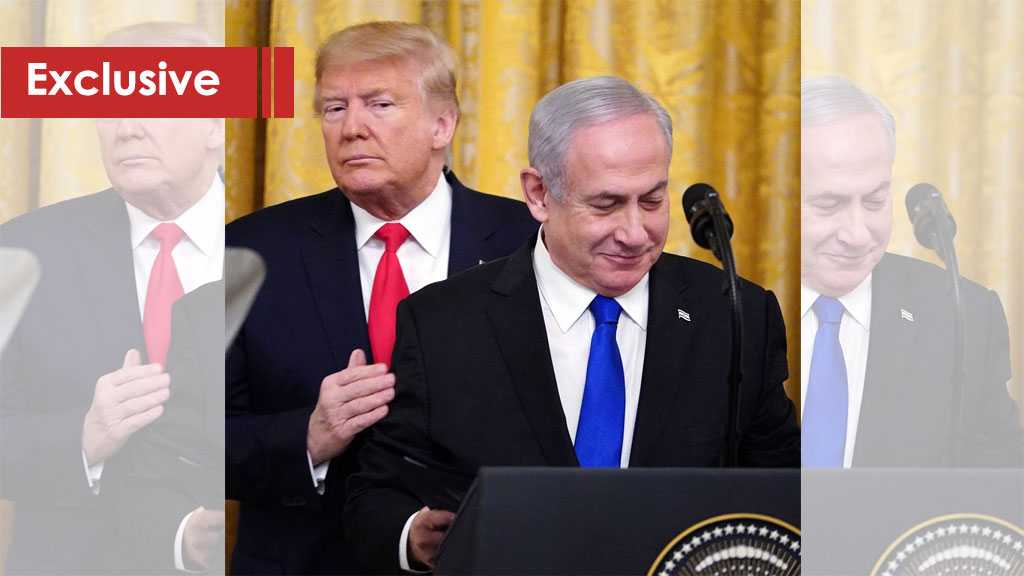
Uprooted Palestinians are at the heart of the conflict in the M.E Palestinians uprooted by force of arms. Yet faced immense difficulties have survived, kept alive their history and culture, passed keys of family homes in occupied Palestine from one generation to the next.
The Philadelphia mayor has been criticized for hosting a pro-Palestinian rally.
Mayor of Philadelphia Jim Kenney hosted a rally on the UN’s Day of Solidarity with Palestinians, where organizers advocated for Palestinian’s right of return.
In a speech to Jewish leaders, the mayor condemned hatred in general and defended his participation in the event.
During a “Shine a Light on Antisemitism” event hosted by some major Jewish group, the mayor boldly told leaders that any form of hate or discrimination must be condemned.
He added that “It is up to us not to repeat the mistakes of the past.”
In his speech, Kenney expressed zero support for “Israel”.
Outside the municipal headquarters on Monday, the mayor gave the organizers a proclamation honoring the UN’s international solidarity day with Palestinians and their history.
The mayor explained on Tuesday that Philadelphia’s “Office of Immigrant Affairs (OIA) and the Office of City Representative (OCR) have been in discussions with representatives of the local Palestinian community to host an event that recognizes their contributions to the city and region.”
The mayor added that he participated in the event as he participated in many others to recognize Philadelphia’s ethnically and religiously diverse communities.
It also coincides with the day the UN General Assembly adopted Partition Resolution No. (181) which called for the partition of Palestinian lands to accommodate the occupation’s expansionist goals, forcefully separating the land into “Arab and Jewish states”.
Kenney was urged not to participate in the pro-Palestinian rally by “Israel’s” consul general in New York and Pennsylvania, Asaf Zamir. His letter was left unanswered by the Mayor’s office.
Following message was written by Palestinian political prisoners in Israeli occupation prisons on the death of Samah Idriss, Lebanese Arab revolutionary intellectual. The editor-in-chief of Al-Adab magazine, Samah Idriss was the co-founder of the Campaign to Boycott Supporters of “Israel” in Lebanon. In his speech to the Masar Badil (Palestinian Alternative Revolutionary Path) conference in Beirut on 30 October of this year, he declared, “If we abandon Palestine, we abandon ourselves.”
We republish in full the letter from Palestinian prisoners:
The prisoners’ message in memory of Samah Idriss
It is an unusual morning, when the news of your departure comes to sink its teeth into the delicateness of love and emotion, the morning turns into sunset and your soul sets there, Samah. We remain in its shade as it flutters and fills the space on this exceptional morning. The news of the tragedy of your departure replaces for now our thoughts of liberation and freedom. Your absence keeps us transfixed in time, we look around us and remember you, and we still need your words and your committed, principled positions. We are still in the middle of the road to freedom, Samah.
Your news has traveled and reached us as the dew drops fade from the prison fences and bars. With it, our feelings crept in, and we felt the wound of losing you publicly. We want you to hear our last cry, you, who always spoke with our voice and our screams, or perhaps we want to bid you farewell with a whisper of screaming.
Our words will certainly reach you. We are in the prisons of the Zionist colonizer, and we wanted to meet you. You can see and, as you taught us, the journey is still long, and our lamp still needs a lot of oil, so why have you left now?!
Samah, we know that you have not left the mountain. You are as a mountain in your stances, and your steps are engraved in the path of this long journey. You are our beloved comrade, a companion on the hard path of struggle, a friend on the long road. Your body has left us, but your spirit will remain an inspiration to us. Your words and your positions are a beacon that we raise, debate and discuss as we walk. We will keep walking, comrade, until we get there.
From behind bars, behind walls, behind fences, in the clutches of the Zionists, we salute your family, your loved ones, your comrades and your companions. We mourn you with pride and admiration, and the highest commitment to the struggle. We mourn you as a writer, an intellectual, a comrade, and a fighter for the freedom for which you died. Sleep with clear eyes, and know that the road to freedom will never be cut off for free people.
We don’t know each other. I only know that you are Miss South Africa and just heard of your name two days ago when the media reported that you will represent South Africa at the Miss Universe pageant on the ruins of the ethnically cleansed village of Um Al-Rashrash in apartheid Israel. I assume you don’t know enough about the suffering of the Palestinian people as a result of Israel’s occupation colonization and apartheid in Palestine. I myself spent six years in South Africa where I got my Ph.D. degree and even citizenship.
Even before the end of the apartheid system in 1994, we, Palestinians, wholeheartedly supported the struggle in South Africa and played a role in the Boycott, Divestment and Sanctions (BDS) movement that formed one of the major pillars of the struggle to bring apartheid down. Nelson Mandela made it absolutely clear on more than one occasion that without the support of the Palestine liberation organization, among other national liberation movements, the end of the racist regime would have been delayed.
I live in the Gaza concentration camp which has been under a medieval siege imposed by apartheid Israel since 2007. But even before that, Israel had occupied it since 1967. As a result of Israel’s racist policies, our children suffer from malnutrition; the 2 million people living in the strip do not have access to electricity, clean water, medicine, and hundreds of other items that Israel does not allow. Over the last decade, the country you are visiting has launched four massive wars on Gaza killing more than 4000 civilians, including hundreds of women and children, and destroying hundreds of buildings, factories, roads, and schools.
A UN fact-finding mission, headed by none other than your own Richard Goldstone, has labeled these massacres “war crimes and possible crimes against humanity.” And anti-apartheid activists, including the likes of Desmond Tutu and Ronnie Kasrils, have told us that what we are going through in Palestine is “far far worse than apartheid.” Moreover, two mainstream human rights organizations, Human Rights Watch and Israel’s most respected human rights organization, Btselem, issued two damning reports last year calling Israel an apartheid state that discriminates not only against the residents of Gaza and the West Bank but also against its own third-class Palestinian citizens.
Ms. Mswane, allow me to ask you this question. How would you have felt if a Palestinian woman decided to join a similar contest in South Africa in the 70s and ’80s of the last century? How would you have responded if a similar contest was held in Sofia town, for example? And how would the South African people have reacted to the participation of Palestinians in concerts and sports games in apartheid South Africa?
You must have heard of the tens of beautiful women incarcerated in Israeli dungeons without charge or trial, simply for the mere reason of speaking out against occupation and apartheid. Our women, like South African women before them, are at the receiving end of a multi-tiered system of oppression and expect solidarity from their Black sisters.
I am an associate professor of literature; I teach hundreds of female students who come from refugee camps and whose parents and grandparents are also refugees. My students have one message when I told them that a South African woman is coming to apartheid Israel; they asked me to write this message and appeal to you to refrain from violating our BDS guidelines and stand on the right side of history. I am certain you will not disappoint them.
Nelson Mandela’s much-quoted sentiment that “(South African) freedom is incomplete without the freedom of the Palestinians” is decorating the walls of refugee camps in the Gaza Strip where millions of refugees are waiting for the day of their return to the towns and villages which were ethnically cleansed in 1948 by racist gangs ruling the country you are visiting. We are only asking you to make the right decision that thousands of artists, writers and cultural figures–including Miss Malaysia and Miss Indonesia– have made – to stand against apartheid Israel.
The Palestinian cause is political, it is a cause of National Liberation.
The violation of the human rights of the Palestinian people is the consequence of the violation of their right to struggle for their national liberation, their right to exist as a nation-state.
The Palestinian cause is political, it is a cause of National Liberation, and it is the cause of a native people that today in the 21st century is fighting against a colonial yoke and anachronism called “Israel”. That’s all, I repeat that’s all.
To hide the colonial character, Zionist propaganda has successfully managed to plague a pseudo-narrative, claiming it is a prehistoric, millenarian, religious, anti-Semitic, complex, metaphysical conflict. All an attractive abstract… all an aesthetic blah, blah of aromatic lies.
The Palestinian Cause is a political issue of liberation and national independence like the Algerian cause against French colonialism, the struggle for independence lead by the Indian people against British colonialism, the Libyan struggle for liberation against Italian colonialism, the struggle of the Mexican people against Spanish colonialism, the Haitian struggle for liberation against French colonialism and more. These people had their human rights violated, their humanity dismembered.
All colonization registers were showing the violation of the human condition, it is a whole regime and logic of torture, Apartheid, slavery, spoliation, hatred, contempt, racism, supremacy, bestiality, terror, massacres, genocide, memoricide, historicide, culturicide, epistemicide. And all this is done and instrumentalized through the human values of the time.
If the Palestinian people renounce the struggle for their National Liberation against the Israeli colonial yoke, if they renounce their Right of Return to their historical Palestine, if they renounce their Palestinian demonym, then the violation of these human rights will cease, and the Palestinian people will disappear. However, the liberation from the colonial yoke will lead to end human violations and eradicate violence.
The vulnerable West fails to understand the colonial nature of Zionism in Palestine. Likewise, the Palestinian Authority and some Palestinians do not want to talk about the Palestinian Cause as a reason for National Liberation and today the PLO (Palestine Liberation Organization) has become an entelechy.
There are those who limit themselves to the framework of human rights and there are Arab dictatorships that want to limit the Palestinian Cause to a charitable, humanitarian and benevolent mission. They want to make “Jerusalem” an Islamic symbol; they don’t only disregard the Palestinian National Liberation Cause against Israeli colonialism, but they see it as a religious duty to defend “Israel”. These Arab tyrannies use Palestinian blood to make gigantic economic investments and especially to perpetuate themselves in power as a plan of the imperial West.
In the first instance and till this day, the Palestinian cause is believed and felt to be a religious conflict…the Western displayed remarkable ineptitude to bring the Arab world to a religious commodity…After the end of the Cold War which meant the spread of the internet, the whole world discovered the human atrocities against the Palestinian people. It was obvious that there was no way to hide the barbarity. The well-hidden corpse stinks and there is no way to conceal the stench. Human Rights became a real opportunity for Palestine, as the bestial victim is humanized, while the real victim was guilty, and the fascist character of that bohemian “state” known as “Israel” is unveiled. It is a huge breakthrough, but be warned, there is less talk today of the liberation of Historic Palestine against the Israeli colonial yoke.
Within that grandiose opportunity of the human rights scene, there is also much taboo, repression, persecution and corruption. Repression in the Arab world is brutal but in the West, repression is sophisticated. In the West, as far as Zionism is concerned, repression goes through euphemisms like, you have to be prudent, strategic, intelligent, objective (self-censorship), don’t say this, don’t go near such and such a group, you won’t get a job, you won’t get a grant if you say that, don’t talk about armed struggle as an alternative, you can go to jail as an anti-Semite. Fear operates elegantly.
Fear is the big problem, fear is an infidel component inside of us, and solidarity, struggle, creativity and even talent revolve around fear.
That “our fear”, that cowardice turns us into creative and talented colonized people.
Pro-Palestinian consciousness has been stifled in the colossal Zionist propaganda agenda, for example, they must plead that to be anti-Zionist is not the same as to be an anti-Semite. The tool of Human Rights is valuable and meritorious; it has dismantled religious stereotypes and raised public awareness. People are already talking about Apartheid, ethnic cleansing, occupation, political prisoners, the Wall of Shame, the false two-state solution; no one is talking about the Right of Return of the Palestinian refugees scattered around the world. BDS (Boycott, Divestment and Sanctions) is perhaps the most valuable tool. But it is less visible to speak of the Palestinian Cause as a reason for National Liberation against a colonial yoke. Talking about the consequences and not the Cause is not the most honest thing to do. There is a desire to make that seem outdated, rhetorical, conventional…we have to evolve, we have to move forward, and there are those who say that we have to think about peace. We are becoming Zionists, thus defrauding life. The Galilean Mahmud Darwish said, we resist because we love life.
Fear operates and we think we are clever in our cowardice. Let us not confuse fear with strategy. Let us assume that we are fighting against the greatest power in the world, Zionism.
The Palestinian people are facing a classical colonialism that not only usurped their homeland but usurped their history because it comes from a European movement that has the purpose to turn a certain religious community into a People. That’s why it usurps the history, its culinary territorial characteristics and the whole cultural expression of the native people. The ideologists of Zionism clearly see the need to exterminate this native people in order to guarantee their nation-state project for the sake of the Jewish religious community. The existence and continuity of the Palestinian people is threatened. The Palestinians were expelled from their homeland and are being expelled from history. Palestine, a people with more than 11,000 years in the light of history, has become today a forbidden people.
I renounce intelligence, strategy, prudence and moderation. I cling to justice, to what is honest, sane, noble, generous, humanistic and dignified; the National Liberation of the native people against anachronism and the colonial yoke. I do speak of the abolition of the colonial regime of “Israel”. And I clarify, don’t ever expel those who expelled us, instead, make them Palestinian citizens, as did the Zionist Ukrainian Aryan Golda Meyer, the Belarusian Aryan Shimon Peres and thousands of Zionist Jews, when the extinct League of Nations, established that every Jew who wished to live in Palestine, should apply for Palestinian citizenship.
We have a date with Universal History, to abolish colonial anachronism from our historical time.
When the Israeli Knesset (parliament) failed to renew what is commonly referred to as the Family Reunification Law, news reports and analyses misrepresented the story altogether. The even split of 59 MKs voting in favor of the law and 59 against it gave the erroneous impression that Israeli lawmakers are equally divided over the right of Palestinians to obtain permanent residency status or citizenship in Israel through marriage. Nothing could be further away from the truth.
Originally passed in 2003, the Citizenship and Entry Law was effectively a ban on Palestinian marriage. Under the guise of ‘security’, the law prohibited Palestinians in the West Bank, who marry Israeli citizens, to permanently move to Israel, obtain work, permanent residency and, ultimately, citizenship.
The law was never made permanent as it was subjected to an annual vote, which successfully renewed it 17 times, consecutively. The 18th vote, on July 6, however, ran into an obstacle. Contrary to the perception given by media coverage, those who voted against the renewal of the ban did so for purely political reasons and not out of concern for the tens of thousands of Palestinian families that have splintered and broken up since the law came into effect.
Since the ousting of former Israeli Prime Minister, Benjamin Netanyahu, at the hands of his protégé, current Prime Minister, Naftali Bennett, Israel’s former leader has been determined to topple Bennett’s already fragile coalition. Bennett’s government allies cobble up extreme right-wing parties, including Yamina, the party of the prime minister himself, centrist and even leftist parties, the likes of Meretz. It even hosts an Arab party, United Arab List, or Ra’am, of Mansour Abbas. A coalition of this nature is unlikely to survive long, considering Israel’s tumultuous politics, and Netanyahu – eager for an early election – will do everything in his power to facilitate what he sees as an imminent collapse.
Netanyahu’s Likud party and its allies in the opposition voted against renewing the discriminatory law to score a political point. Their justification, however, was more appalling than the law itself. The Likud wants the temporary law to become a permanent fixture, a Basic Law, to be added to dozens of other similar racially motivated laws that target the very fabric of Palestinian society.
Welcome to Israel’s demographic war on the Palestinian people. This one-sided war is situated in the belief among Israel’s Jewish majority, that Israel’s greatest challenge is sustaining its demographic advantage which, thanks to a decided campaign of ethnic cleansing that began over seven decades ago, has been held by Jews over Palestinian Arabs.
Israel’s main fear is not simply a decisive Palestinian majority between the River Jordan and the Mediterranean Sea. Israel’s Jewish ruling classes are also rattled by the real possibility of the growing political influence of Israel’s Palestinian Arab constituency, and are doing everything in their power to ensure Palestinian holders of Israeli citizenship are kept at a minimum. The Citizenship and Entry Law was designed specifically to keep this population in check.
The general elections of March 2020, in particular, provided a taste of what a doomsday scenario would look like. Arab Israeli parties unified under the single ticket of the Joint List and emerged with 15 seats, making it the third-largest political bloc in the Israeli Knesset, after Likud and Blue and White. If Palestinian Arabs mastered this much influence, though they represent only 20% of the overall Israeli population, imagine what they could do if the demographic tide continues to shift in their favor.
For Israel, the future of Jewish majority – read: supremacy – is dependent on keeping the population equation in favor of Israeli Jews at the expense of Palestinian Arabs. Most of the laws that discriminate against Palestinians, regardless of where they reside – in fact, anywhere in the world – is motivated by this maxim.
According to the Legal Center for Arab Minority Rights in Israel (Adalah), Israel’s Palestinian Arab population is targeted with 65 different government laws and regulations, which ensure Palestinian Arabs do not prosper as a community, remaining politically disempowered, socio-economically disadvantaged and constantly threatened with the loss of their residency, and even citizenship.
Palestinians elsewhere suffer an even worse fate. For example, Palestinians living in Jerusalem, who supposedly hold permanent residency status, are subjected to different types of legal harassment, so that Jerusalem can maintain its current Jewish majority. When Israel illegally occupied East Jerusalem in 1967, the city was almost entirely Palestinian Arab. Through numerous tactics, the city’s Arab population is now an ever-shrinking minority. Worse still, in 2018 Israel passed a law that granted the Ministry of Interior the right to revoke the residency of Jerusalemites based on the murky accusation of ‘breach of loyalty’.
The occupied West Bank and Gaza are confined, as only Israel determines who remains and who is permanently exiled. The Israeli military occupation of these regions has taken population control to a whole new level; it is almost an exact science.
This is also precisely why Israelis abhor the very discussion of the Right of Return for Palestinian refugees, for they consider it an implicit call for the ‘destruction of Israel as a Jewish state’. According to this logic, if millions of Palestinian refugees are allowed to return to their homes and lands in historic Palestine, Israel will no longer exist in its current form, as a Jewish state, but will become a democratic state for all of its citizens, instead.
What is likely to happen next is that Israel’s Interior Ministry will continue to find caveats in Israel’s ever-flexible laws to block the reunification of Palestinian families, until the Knesset officially renews the Citizenship and Entry Law or, worse, make it permanent. Either way, Israel’s demographic war on Palestinians is likely to intensify in the future. Considering that it is a war that cannot rationally be won, Israel is likely to delve deeper into the abyss of apartheid.
As Israel continues to experiment with controlling the Palestinian population, it would be shameful if the international community continued to remain silent. This moral outrage must end.
– Ramzy Baroud is a journalist and the Editor of The Palestine Chronicle. He is the author of five books. His latest is “These Chains Will Be Broken: Palestinian Stories of Struggle and Defiance in Israeli Prisons” (Clarity Press). Dr. Baroud is a Non-resident Senior Research Fellow at the Center for Islam and Global Affairs (CIGA) and also at the Afro-Middle East Center (AMEC). His website iswww.ramzybaroud.net
Lifta, the only town Israel did not demolish after the Nakba, stands as a symbol of the Palestinian right of return, but an Israeli government “development” plan may soon change that.
LIFTA, JERUSALEM — Yacoub Odeh is 81 years old but he can still remember his childhood in the Palestinian village of Lifta as if it were yesterday. Children playing together in the gardens, swimming in the pools and laying in the grass.
Today, Lifta remains as a frozen time capsule. While the residents were expelled during Israel’s 1948 ethnic cleansing campaign (Nakba), the ruins of their homes still stand. These ruins carved into the lush hillside are perceived as a symbol of the Palestinians’ right of return. This is the only town Israel did not demolish after the Nakba, but a government plan may soon change that.
In May, the Israel Lands Authority (ILA), the government agency in charge of managing public lands, issued a new tender for construction in Lifta. The development scheme, known as Plan 6036, seeks to build 259 housing units along with a commercial and business space and a luxury hotel on top of and around the existing houses. Daphna Golan-Agnon, a law professor at the Hebrew University of Jerusalem and part of the Save Lifta Coalition’s board, explained that while the homes may not be demolished, “the village will disappear behind walls of concrete needed to hold new construction.”
The bid was supposed to be held on July 4, but significant public opposition delayed it to July 29.
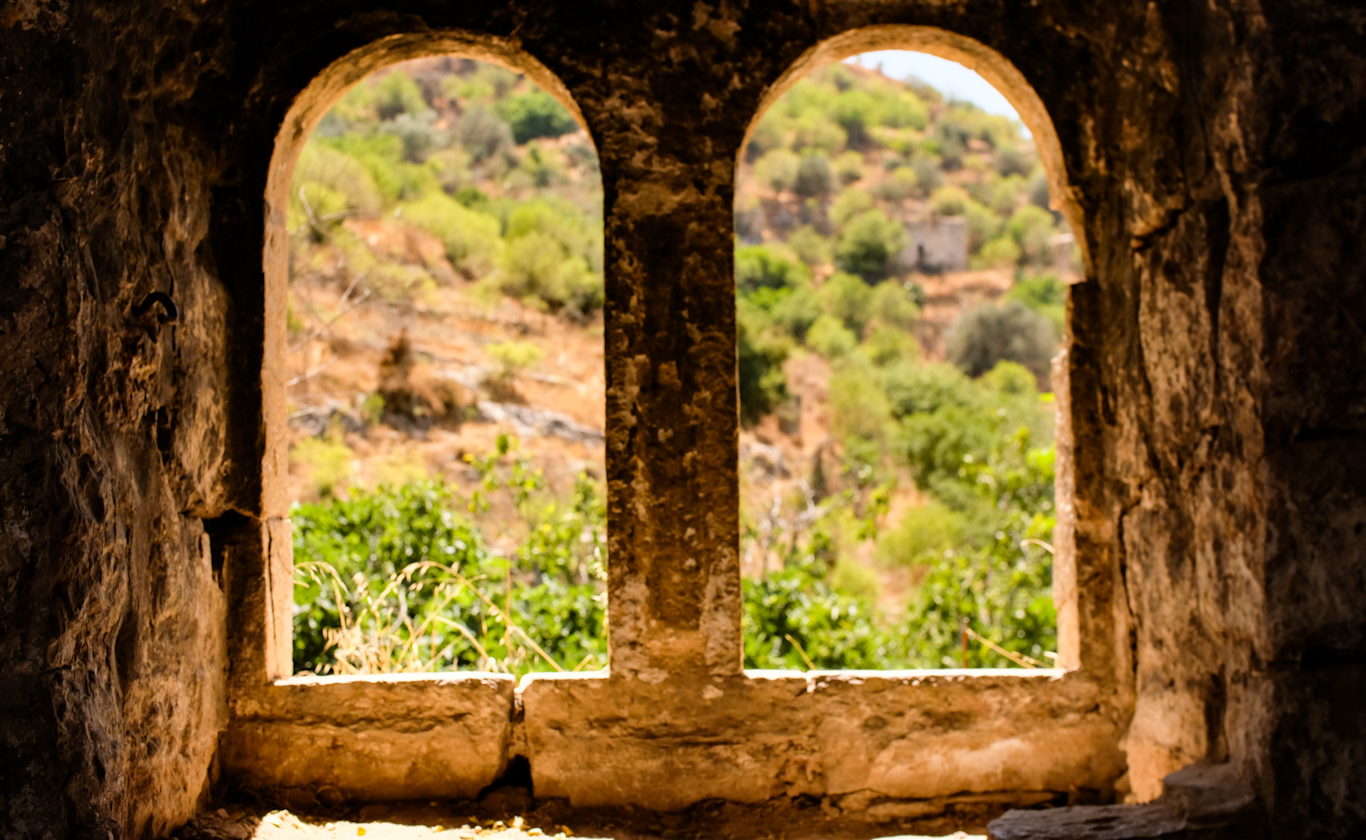
The ruins in Lifta, a Palestinian village ethnically cleased in 1948. Liebe Blekh | MintPress News
Attempts to demolish Lifta have been ongoing for years. The ILA first published a tender for Plan 6036 in 2010 after the Israeli state approved the construction plan for Lifta in 2006. A 2012 Jerusalem District Court ruling found Plan 6036 insufficient and requested amending it in accordance with a conservation survey on Lifta from the Israel Antiquities Authority (IAA).
The IAA survey was completed in 2017 and found that Plan 6036 could not be executed without making significant adjustments in order to preserve the ancient village. Plan 270b was drawn up to fit the survey’s findings but in 2017 the Local Planning and Building Committee of Jerusalem temporarily halted the initiative for further examination.
The recent ILA announcement was met with hundreds of letters to Jerusalem’s mayor rejecting the sale. When reached for comment, the Municipality of Jerusalem told MintPress News that it “wasn’t informed about the publication of this tender and didn’t approve it. The mayor of Jerusalem asked all the relevant authorities to reconsider the construction plan.” The Israel Lands Council, which operates the ILA, did not respond to a request for comment.
‘In one hour, we became refugees’
Lifta’s strategic location at the edge of Jerusalem has made it a prime target for land grabs. Acting as a suburb of Jerusalem, Lifta’s placement next to the Jerusalem-Jaffa Highway makes for an easy trip to the Mediterranean while still being tied to the city of Jerusalem.
Lifta, often referred to as the entrance to Jerusalem, was a wealthy, agricultural community supported by olive presses and flour mills and situated atop the Wadi al-Shami spring. Homes made of limestone were cut into the hillside and Lifta’s roads wended through the valley.
Prior to the 1948 Nakba, Zionist militias like the Haganah saw seizing Lifta as necessary to cement Jewish control over all of Palestine. According to the Haganah Historical Archives, “[s]ecuring the western exit of the city [of Jerusalem] entailed the eviction of Arabs.” Israeli historian Benny Morris said the Haganah fired the first shots in 1947, setting off the mass expulsion of Lifta’s 2,960 residents.
In December 1947, the Haganah killed a Palestinian business owner in Lifta. Later that month, one of Lifta’s two coffeehouses was ambushed with gunfire and grenades. The attack killed six and wounded seven. Two months into 1948, the Jewish Agency chairman and future first prime minister of Israel, David Ben-Gurion, boasted of the ethnic cleansing’s success, telling his political party members: “From your entry into Jerusalem through Lifta — Romema, through Mahane Yehuda, King George Street and Mea She’arim — there are no strangers. One hundred percent Jews.“
Odeh, head of the Lifta Cultural Heritage Protection Commission, was 8-years-old when Lifta came under siege by Zionist forces.
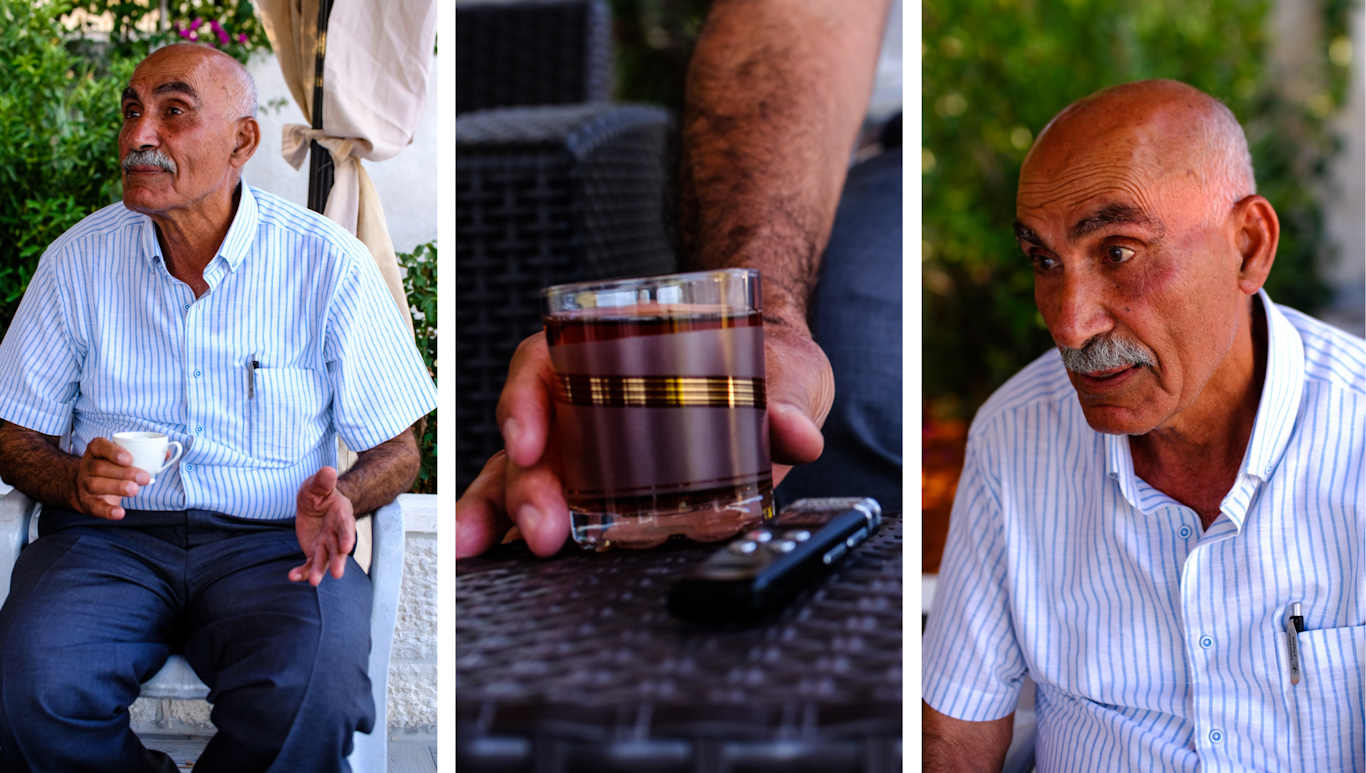
Yacoub Odeh, Nakba survivor and head of the Lifta Cultural Heritage Protection Commission. Liebe Blekh | MintPress News
“I remember one day my mother was preparing the fire to heat our room, and then [the Zionist miltiias] began to shoot. My brothers began to cry, ‘Mama, mama! They’re shooting us!’ My mom took us inside the room in the corner and under a table to protect us,” Odeh said, recalling two stories of Lifta — the town’s beauty and charm and then its tragic fall.
“There is the beautiful life and then began the miserable life because of the occupation.”
Toward the end of February 1948, Odeh’s father put him, his siblings and his mother into a truck heading to Ramallah to escape the violence in Lifta. Odeh’s father stayed behind to defend the village from the Zionist gangs.
“We were only wearing the clothing we had on because we are coming back tomorrow. We are coming back. Now we just want to be far from the shooting.” Odeh took a deep sigh and said, “In one hour, we became refugees.”
Today, 55 buildings out of approximately 450 remain in Lifta, including a club, mosque, cemetery and school, which now operates as a school for Israeli Jews. Liftawi refugees are estimated at around 30,000 and live in Jerusalem, the Occupied West Bank and the Diaspora. Most of the homes are empty, but a few are occupied by Israeli settlers. According to Zochrot, the Israeli nonprofit seeking to raise awareness of the Nakba, the “settlements of Mey Niftoach and Giv’at Sha’ul were built on village lands and now have become parts of the suburbs of Jerusalem.”
Saving Lifta
The Save Lifta Coalition orchestrated the campaign to the mayor and has been organizing since 2010 against Plan 6036. The organization spent five years working with scholars, activists, conservation specialists and higher education professionals to develop an alternative to 6036.
Their proposal aims to “expand the area of the national park and turn the village into a natural urban space for the adjacent neighborhoods,” while preserving Lifta’s cultural landscape.
The World Monuments Fund added Lifta to its list of endangered sites in 2018 and UNESCO added the village to its tentative list of world heritage sites.
‘Not something we can discuss now’
When asked about the plan’s responsibility regarding the right of return for Palestinians, Golan-Agnon said, “our plan is a plan to save Lifta as it is for the future generations to decide upon its fate.” She explained:
Many of us [in the coalition] do think there should be a right of return for Palestinians but we know it’s not something we can discuss now. So we say, it’s beautiful, keep it open, and then one day there can be a decision about what happens and who’s coming.
Dana Amawi’s grandmother grew up in Lifta and was expelled from the village in 1948. Now the family lives in Amman, Jordan. The 20-year-old said she was shaken to her core upon hearing the news of the sale. “Lifta symbolized a tiny, very small bit of hope that maybe we will be able to return to it,” Amawi told MintPress. “And now to think that other people might live in the house that I have the right to be in, it’s very sad.”
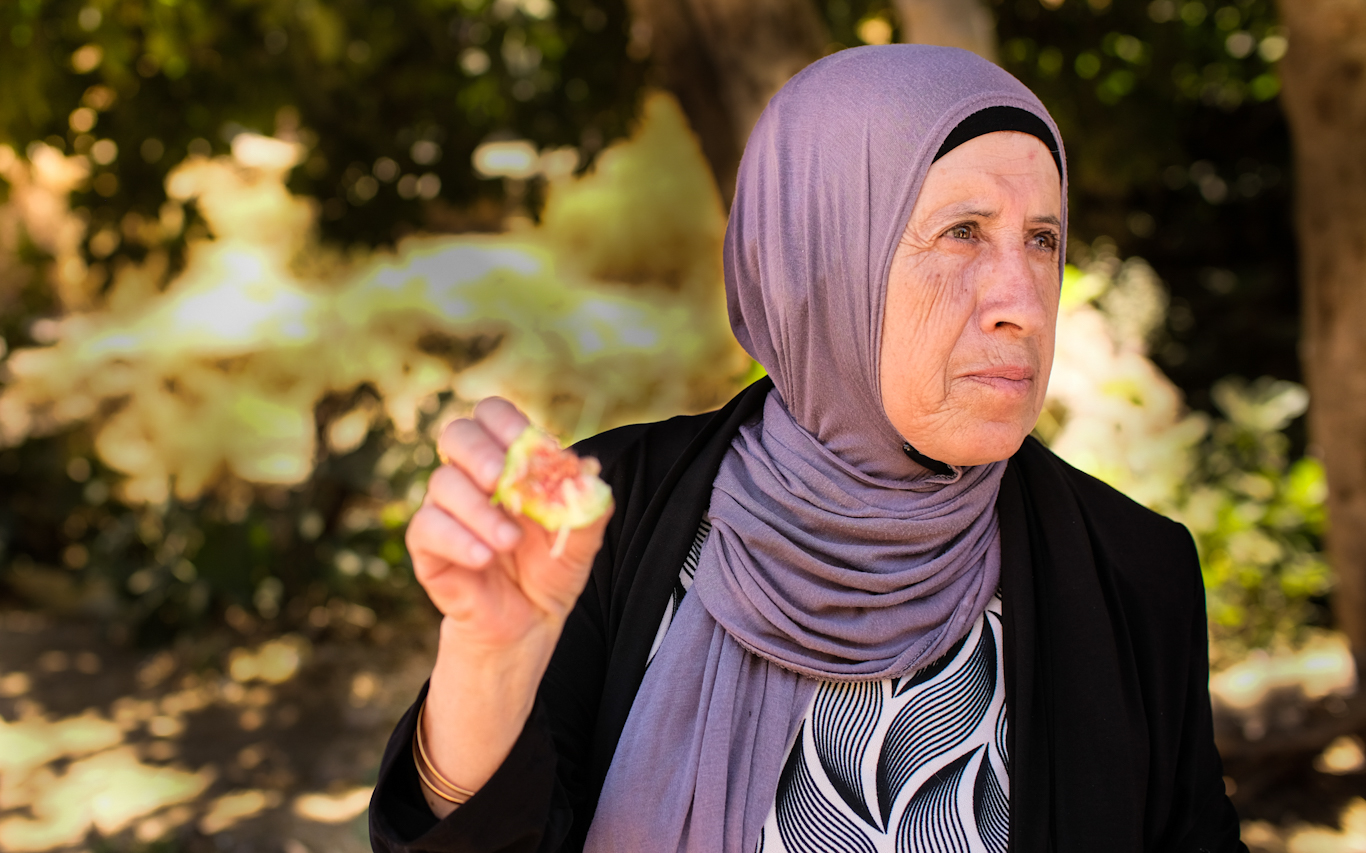
A Palestinian woman holds a partially eaten fig picked from a tree in Lifta. Liebe Blekh | MintPress News
Amawi said that her grandmother fell ill after learning of the auction. “She got sick. She had a fever and she was really, really sad because to her, this is where she grew up. This is where her earliest memories are and this is where she has the right to be,” Amawi said.
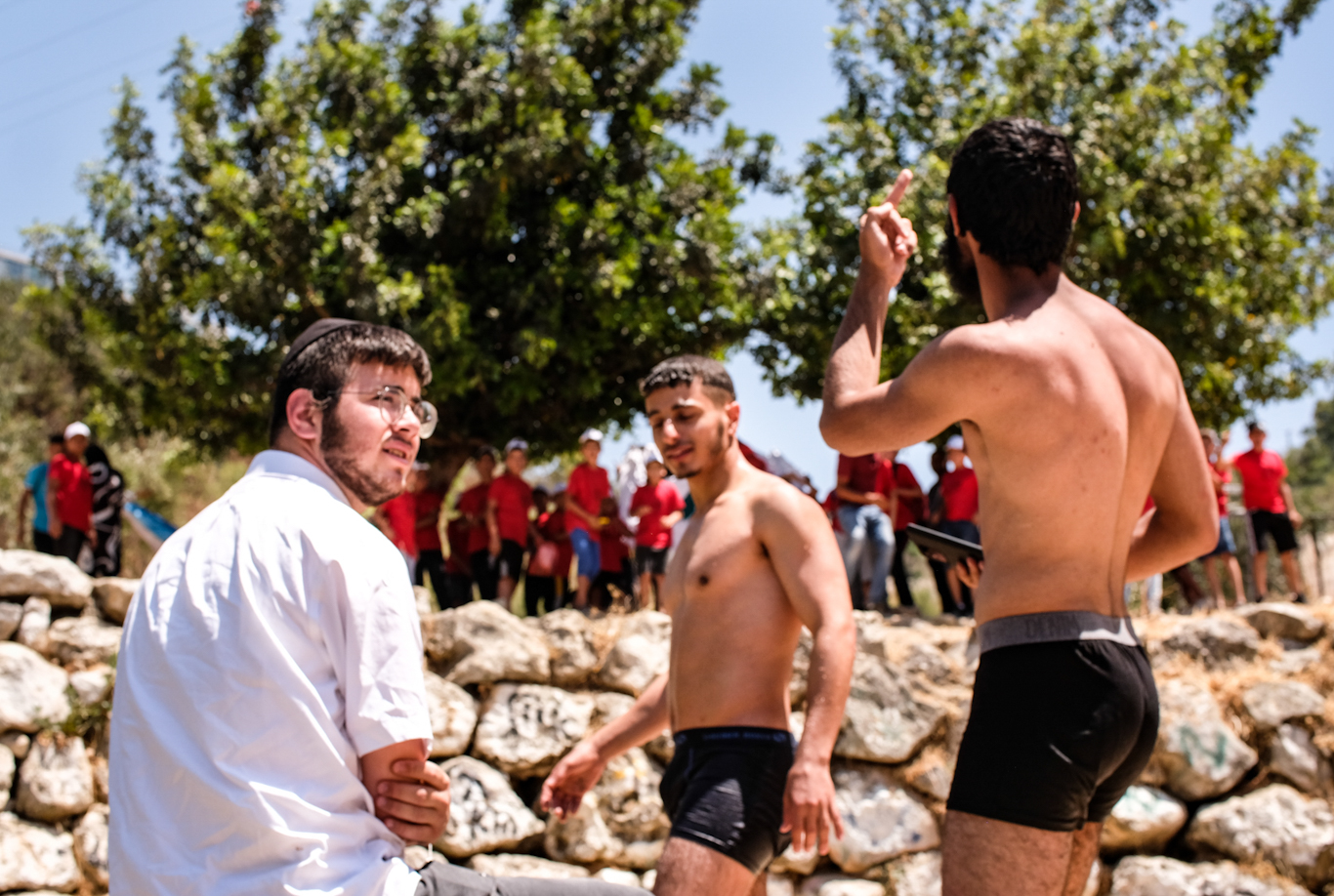
Stone houses like the one Odeh spent his early childhood in now crumble from neglect. The walls are sprayed with graffiti and piles of trash line the floors. On Shabbat (the Jewish sabbath), you’ll often find Israelis bathing in the spring’s waters.
Aseel AlBajeh, advocacy officer and legal researcher at the Palestinian human rights organization Al-Haq, visited Lifta in 2018. Her grandmother, who lives in Ramallah, is from Lifta. “It was a painful experience,” AlBajeh said of her time in Lifta. “I wasn’t sure if I wanted to come back to Lifta in this situation.”
‘You are here as a visitor’
During her visit, AlBajeh tried recalling her grandmother’s memories of a flourishing Lifta, but she said those stories were disrupted by the fact that she’s only in Lifta because of a permit she received from the Israeli government to enter 1948-occupied Palestine or modern-day Israel from the West Bank. “You are here as a visitor. It’s like it’s not a place where you belong, or this is what [the Israeli government] intends for refugees to feel like,” AlBajeh said. “Settlers were swimming in the spring of the village and they were blasting loud music, and it also disrupted my ability to even imagine Lifta as Palestinian.”
Israeli settlers in Lifta hold a middle finger to a group of Palestinian children. Blekh | MintPress News
To help her reclaim Lifta, AlBajeh took a small piece of the village’s remains during her visit. She collected a broken tile painted with traditional designs from one of the house’s floors, knowing this might be the last physical object she can have of Lifta.
“Lifta is a witness of what happened during the Nakba,” AlBajeh said, explaining:
We have this connection as Palestinians, and when we see the cactus plants, we connect this as evidence that displacement happened here. And if you go to Lifta, you’ll see the huge amount of cactus. So even if the houses remain and [Israel] tries to remove the cactus, it’s still painful… It’s not about the stones or about the trees. It’s about the whole identity of Lifta and the Palestinian history, which we still connect to. “
‘We were kings in our village’
Odeh’s memories paint Lifta as an idyllic place, an oasis carved into the steep slopes of Jerusalem where life was carefree and bountiful. “We were kings in our village,” Odeh said. “Everything we need, we had — a life so simple. We didn’t need cinema or computers, no, everything we needed came from our land.”
But the minute Odeh and his family became refugees, their resources became scarce. “At that time there were no charitable associations or agencies ready to help,” Odeh recalled. “You know what Nakba means? Nakba does not mean to destroy homes. No, Nakba means to destroy the life — economic life, social life, educational life, political life. They destroyed our life.”
Upon reminiscing about Lifta, Odeh said his dream is to go back home:
I miss my childhood. Palestinian children have lost their childhood life to play like children, to go to the theater, to concerts, to football. No, until now we have house demolitions, we have arrests, we have land confiscation and killings. Every day we have events like these — if not my family, my neighborhood.”
The recent developments in the Zionist entity reopen the discussion regarding the extent to which this entity is influenced by the US policy as well as the changes inside the United States.
Since Trump’s failure in the US Presidential Elections, the countdown to Benjamin Netanyahu’s downfall has started -who represents the ‘Israeli’ version of Trump’s personality- even though the former was able to reproduce his leadership via three consecutive elections, and prepared to a fourth round to fortify his position against probes in cases of corruption, and to fight the possibility of moving him away from the political scene through a rival party coalition. However, Netanyahu’s ploys didn’t survive in front of the results of the recent war with Gaza, which turned the political atmosphere inside the occupation entity to the extent that Netanyahu’s government was found responsible or losing the deterrence with Gaza, not to mention his weakness to handle the resistance and its growing might.
Herein, we should notice the relative comparison between the American and the ‘Israeli’ arenas:
On the one hand, the extravagance of America’s right wing led to dangerous division that caused an intense desire among all of Trump’s opponents [including some of the Republican party members] to get rid of him via ballot boxes, so they voted majorly against the far-right policies [represented by Trump] more than to support his rival Biden and his electoral program. And in the ‘Israeli’ arena, the right policies led to attractions from within the Zionist society, not between the left and the right, but within the right itself. A dominant agreement emerged that Netanyahu is sticking to power at any price, even if it led to a ‘civil war’, and that he is using Zionist religious parties that exchange with him the electoral services and well as the governmental benefits.
On the other hand, it happened previously that the personalities of Trump and Netanyahu have been linked to each other, in the course of unprecedented similarity in political tendencies of both sides regarding several issues. Trump’s failure in the US has motivated many ‘Israeli’ politicians to think about a way to get rid of his closest ally, Netanyahu. However, they didn’t possess the required energy to unite. Then came the recent confrontation with the Palestinians to uncover the weak structure of the entity as well as the policies of Netanyahu’s government. The decision was among several political parties to scapegoat him based on the rule of preserving the rightist policies that are threatened with the strong Palestinian uprising on the one hand, and the harmony with the American policies as much as possible on the other hand. Hence, the Zionist right settlement scheme would be saved, while Netanyahu’s attempts to shake the alliance with the US due to his objection of its return to the nuclear deal with Iran would fail.
Separation
Both American and ‘Israeli’ societies suffer from not yet hidden political, ideological, and ethnic divisions. Both societies need to absorb the tension from time to time via changing the top of the pyramid. This is one issue. Another remarkable one is that ‘Israel’ didn’t succeed for long in staying away from the requirements of the American interests in the region. And without harboring hopes on a major separation between the two sides, we witness a sort of coldness in relations due to three main points over the past three decades.
First: With launching the Madrid Conference for settlement in the region in the beginning of the 1990s after the US-led war in Kuwait, when Isaac Shamir [Likud] government objected to the principle of establishing an independent Palestinian state, but the Zionist entity’s need for the US financial support to contain the Jewish migration from the Soviet Union and other places pushed ‘Israel’ to reduce its objections and conditions. Washington was able, through guaranteed loans worth billions of dollars, to tame the ‘Israeli’ policy in favor of its wider interests. Then, Shamir was displaced from the ‘Israeli’ scene, and was succeeded by Isaac Rabin [Labor Party] to lead the Oslo track which happened to become later the Palestinian Authority in Gaza and Ariha. However, after the assassination of Rabin in 1995, the abilities of the most harmonized Zionist parties with the US policy declined on the level of their potential to attract, and the base of the far-right parties, which reject the issue of ‘Two-state-solution’ or freezing the settlement activity grew, especially in the aftermaths of the major migration from the previously-known Soviet Union and other places. This led to a change inside the Zionist society, in addition to the structure of its successive governments.
Second: Netanyahu’s impediment of Barack Obama’s attempts to revive negotiations with the Palestinian Authority based on freezing the settlement activity in the West Bank, and then the US signing of a nuclear deal with Iran in 2015. Netanyahu objected to it publicly and inside the US congress in a famous speech. Meanwhile, the dispersion within Netanyahu’s rival ‘Israeli’ parties didn’t allow the formation of a change that suits the US regional policy. Trump came to power in 2016 to revive Netanyahu’s hopes about change that he didn’t dream about from the part of the American orientation on other levels [such as moving the US embassy from Tel Aviv to al-Quds, recognizing the ‘Israeli’ sovereignty in the Golan, supporting the settlement activity in the West Bank, cutting funds of the Palestinian refugees’ UNRWA agency, shutting the office of the Palestine Liberation Organization in Washington, and encouraging the ‘Israeli’ normalization with Arab states regardless to the Palestinians.] A parallel US shift took place when Trump left the nuclear deal with Iran.
Third: Biden’s rising to power in Washington, which modified the ‘Israeli’ expectations. This is not limited to some differences regarding the traditional support of ‘Israel’ between America’s Republican and Democratic parties. The truth is that a change started to be witnessed in the public American mood in which a new political generation in the US, and inside the Democratic party is more liberal than its predecessors and doesn’t grant ‘Israel’ an ultimate support. It also cannot digest the rightist ‘Israeli’ thinking to ban the establishment of a Palestinian state, and the Palestinian people’s right to live on their land within internationally recognized borders. The ‘Israeli’ narrative, which has dominated the minds of the US elite over several decades regarding the right of Jews alone to establish their national Jewish state, has turned less tempting to many Americans. Additionally, the pro-Palestinian activism on social media platforms managed to breach the pro-‘Israel’ traditional media, in which Facebook and Twitter’s restrictions couldn’t curb this activism that was crystal-clear during the latest round of ‘Israeli’ aggression. It also scored important attractions in English and other foreign language.
Moreover, the Biden administration prioritizing of returning to the nuclear deal with Iran formed a separation from Netanyahu government’s orientations. He has started hinting to moving without an agreement from Washington, a matter that is not only underestimated in the US, but also among ‘Israeli’ milieus that are worried about losing the strategic alliance with the US.
Back to the house of obedience
After this third stop, ‘Israel’ returns to the so-called American ‘house of obedience’ or to adapting with the major US interests. This return is based upon avoiding confrontation with the US policies and their regional requirements to deal with the nuclear Iran in particular, reducing tension and difference with the American administration when dealing with the flaming Palestinian issue nowadays. However, it is not necessarily at the expense of the rightist tendencies regarding the settlement scheme that is the core of the Zionist project. The official US interest intersected with the internal ‘Israeli’ parties’ interests to remove Netanyahu from the scene. The US administration will take advantage of this shift in an attempt to revive negotiations between the Palestinian Authority and the occupation’s government to delegitimize the Palestinian resistance and the Axis that supports it in the region. Washington is to offer significant motivations to the future Zionist right government, led by Naftali Bennett, to allow progress in negotiations. Hereby, new obstacles will emerge from the side of Netanyahu’s successors who publicly adopt a hardline track regarding the rights of the Palestinian people, especially regarding the evacuation of some occupied land, freezing settlement, or establishing the Palestinian state. This will later turn things to the previous empty circle on the level of negotiations.
It is worth noting that Biden’s administration is not totally free to dictate its policies on ‘Israel’, especially amid the contradictions within the US political environment and inside the democratic party itself. However, ‘Israel’s’ dire need to the US support is an existential need to bear the pressures and preserve the qualitative military superiority. This will push the next ‘Israeli’ government to reduce the public contact with the US to overcome the challenges posed in this phase.
Finally, it is important to examine the extent to which the future Zionist government would succeed in:
– Managing the internal chaos along with threats of physical killing among the right affiliates
– Managing the military confrontation with the Gaza Strip
– Managing the variations with the US administration regarding the Palestinian issue and the Iran nuclear deal
On the American level, it is important to note the US administration’s ability to:
– Pass the nuclear deal with Iran without shockwaves inside the US congress and the circles of the conservatives who are more sticking to the ‘Israeli’ interests
– Dealing with the critical Palestinian issue, militarily and politically, based on the results of the recent confrontation that raised the voice of the Palestinian resistance
Nouvelles du front ukrainien, par Thierry Meyssan
-
Les États-Unis et la Russie veulent conclure la paix le plus vite possible
en Ukraine. Le problème n'est pas où l'on croit : il semble que les
straussiens ...
The man bankrupting America
-
“Go F*** Yourself, Scott: A Full Background Check on The Man Bankrupting
America, Human Skin Tag, Scott Bessent.“ (Blundell).In the same week,
different US...
Occult Utopia Of Jewish Golden Age
-
Occult Utopia Of Jewish Golden Age September 6 2026
___________________________________ More Vids! +BN Vids Archive! HERE!
________________________________...
And You Remain Impossible to Erase
-
There you are, the inspiring Imam, forever present in the conscience of the
honorable and the hearts of the loyal.
Father Dave Smith, Pray For (Mufti) Dr. Hassoun
-
Abducted by the terrorist regime in Syria in 2025, Sheikh Hassoun has been
sentenced to life in prison I spoke with Father Dave Smith, an Australian
Anglic...
Report on Beth Israel vigil 08-15-26
-
*Charlie Kirk and JFK*
John F. Kennedy was assassinated under questionable circumstances on
November 22, 1963, and Charlie Kirk fell on September 10 of la...
On The Road To International Anarchy
-
ON THE ROAD TO INTERNATIONAL ANARCHY— An Analysis (14 August 2026) by
Lawrence Davidson Part I — The Turn Toward […]
-
Hello all,
It is with great sadness that I share with you the passing of our beloved
sister, Mother, and Grandmother, the individual that you all knew ...
Best Horror Podcast
-
Best Horror Podcast Introduction: Horror podcasts […]
The post Best Horror Podcast appeared first on Copper Shock Horror Podcast.
Ikhras Endorses Muntadhar Al-Zaidi
-
“Oh parties of banditry and sectarianism and corruption, we have come and
our goal is to destroy you.” Ikhras formally endorses Muntadhar al-Zaidi,
Iraqi j...
Prince Charles: Foreign Jews behind bloodshed in ME
-
In May, 2017, British Crown Prince Charles declined an invitation from
Zionist entity’s president Reuven Rivlin‘s to attend the 100th anniversary
of the no...
Palestinian Women – One for All, All for One
-
Honouring All Palestinian Women by Honouring Three: Hanin Zoabi, Ahed
Tamimi, Samah Sabawi Vacy Vlazna “Palestinian women have always stood side
by side ...
US’s Saudi Oil Deal from Win-Win to Mega-Lose
-
By F. William Engdahl Who would’ve thought it would come to this? Certainly
not the Obama Administration, and their brilliant geo-political think-tank
neo-...
-
*Mordechai Vanunu wins human rights prize of Brazilian Press Association *
* http://www.alternativenews.org/english/index.php/features/updates/7038-mordechai...
Abdul Aziz Rantissi:
"My ultimate wish, my God, is to attain martyrdom,"...God granted him his wish on April 17, 2004, at the hands of Israeli assassins.





.jpg)