Showing posts with label Dictatorship. Show all posts

Tuesday, 23 November 2021

Erdogan’s Democracy… Tension in a Dangerous Direction! ديمقراطية إردوغان.. التوتر في اتجاه خطِر!

Erdogan’s Democracy… Tension in a Dangerous Direction!

ARABI SOURI 


Opinion polls rule out that Erdogan will win the upcoming elections, which leads him to more tension and hostility towards opposition parties.

The following is the English translation from Arabic of the latest article by Turkish career journalist Husni Mahali he published in the Lebanese Al-Mayadeen news site Al-Mayadeen Net:

The Turkish political and media scene is witnessing an exciting debate after some media professionals loyal to Erdogan spoke about the possibility of banning the CHP’s activity, prosecuting its leader Kemal Kılıçdaroğlu and some of the party’s leaders, and placing them in prisons.

This media talk was accompanied by a very violent attack by the Turkish president on the leader of the Republican People’s Party, Kemal Kılıçdaroğlu, and his ally in the ‘Nation’s Alliance,’ the leader of the Good Party, Maral Aksanar. Erdogan does not miss any occasion, whether internal or external, without attacking Kılıçdaroğlu and Aksanar, with the most violent words, descriptions, and phrases, including those targeting their dignity and honor.

In all of his speeches, Erdogan accuses Kılıçdaroğlu (Kilitchdar-oglu) and Aksanar of allying with the Peoples’ Democratic Party, the political wing of the Kurdistan Workers’ Party, in an attempt to win the sympathy, solidarity, and support of the popular street, arguing that “Kurdistan Party” is a terrorist organization and the enemy of the Turkish nation and state. This has failed, at least so far, as all independent opinion polls have proven the decline in the popularity of the Justice and Development Party (Erdogan’s AKP) and its ally the National Movement, in return for a noticeable increase in the popularity of the Good Party and the Republican People’s Party and the Democratic People’s Party.

All polls also ruled out a victory for President Erdogan in the upcoming elections and expected his rivals, including Istanbul Mayor Ekrem Imamoglu and Ankara Mayor Mansur Yavas, to receive at least 58% of the vote compared to Erdogan’s 40-42%.

Such possibilities push Erdogan to increase tension and hostility towards opposition parties and all opponents, with all their political and social affiliations and alignments, and they are all subjected to a very violent attack by Erdogan and his ally, the leader of the nationalist movement Devlet Bakhchali and the media loyal to them together. The media attack acquires a frenzied character without limits, as long as the judiciary does not move a finger against these, and unlike everyone who utters even one word against Erdogan, the judiciary is prosecuting him for insulting the President of the Republic.

The judiciary is also prosecuting Erdogan’s opponents, including journalists, academics, intellectuals, artists, and others, and without this attack being sufficient for Erdogan and his media to limit the activity of the opposition parties and their forces, which are taking advantage of Erdogan’s failure in the foreign and domestic policies, the most important of them is the serious economic and financial crisis that the opposition leaders expect to bring the country to the brink of complete bankruptcy with the continued depreciation of the Turkish lira by at least 15% in just one month, which was reflected very dangerously on the high prices of all services and basic materials and the cost of living, then unemployment, poverty, and hunger which have become a daily phenomenon.

The opposition expects Erdogan and his government to impose a new series of taxes to cover the budget deficit, which will burden the citizen who will take revenge on Erdogan in the first upcoming elections. Such a possibility prompts Erdogan to seek “hellish” plans, as characterized by the opposition, to ensure that he remains in power, no matter what it costs him. Within these endeavors, Erdogan seeks and will seek to divide the ranks of the nation’s coalition parties, which includes the Republican People’s Party – CHP (28%) and the Good Party (14%), and indirectly the HDP – People’s Democratic Party (10%).

The polls expect Ali Babacan’s Progress and Democracy Party (3%) and Davutoğlu’s Future Party (2%), along with the Democratic and Happiness Party, to agree with the Nation’s Alliance against the Public Alliance, which includes the Justice and Development Party – AKP (30%) and the National Movement (8%), in addition to the Great Unity Party.

The opposition also expects Erdogan to impose strict control over the media and social media networks, while working to change the election law at the last moment, with the possibility of postponing or canceling the elections with security justifications, both internal and external, which is Erdogan’s prerogative according to the constitution. The opposition also talks about the possibility of electoral fraud, as was the case in the April 16, 2017 referendum. On the basis of this referendum, Erdogan changed the political system to become a presidential one, taking control of all state agencies, facilities, and institutions, and becoming the absolute ruler of the country. The leader of the Republican People’s Party, Kemal Kılıçdaroğlu, accused the Supreme Electoral Commission, at the time, of falsifying the results by agreeing, after the polls were closed, to adopt the more than two million unsealed ballot papers.


Talking about the possibility of banning the activity of the Republican People’s Party and prosecuting its leaders remains the most dangerous scenario for Turkey’s future, because Ataturk was the one who founded this party that ruled the country alone until the end of World War II. This concern may not be enough to deter Erdogan from thinking in this way, after he put the two co-leaders of the Peoples’ Democratic Party, Selahattin Demirtaş and Vikan Yoksakdag, and a number of party leaders in prison, five years ago, and joined them with about forty of the mayors elected in 2019, which was not enough for the party’s supporters and followers to take to the streets, because they know that the authorities will not spare them, even though 5.86 million voted for the party in the June 2018 elections.

In all cases, and with the exclusion of any possibility of holding early elections in light of the difficult internal and external conditions that the country is going through, everyone knows that Erdogan does not and will not, in any way, accept defeat and hand over power to his enemies. He knows that they will pursue him on many charges, the most important of which is serious corruption and his involvement in foreign files, the most important of which is his relations with armed groups in Syria and Libya.

Washington’s position is not clear, at least until now, on the overall developments inside Turkey, recalling that President Biden had spoken at the end of 2019 “about the need to get rid of Erdogan democratically”, after describing him as “authoritarian.”

The media presents many future scenarios, not only regarding Washington’s possible position, but also the position of Western capitals, and even Moscow, all of which are said to turn a blind eye to Erdogan’s staying in power, whatever his negatives, as long as it benefits directly or indirectly of him. Defenders of this view say that the mentioned capitals are more likely to deal with the absolute ruler Erdogan instead of a new president or a new coalition government with several contradictory parties, and their agreement even on crucial issues will never be easy.

Some see in such a scenario a sufficient reason for Erdogan to continue his current policies internally and externally, as long as the aforementioned capitals content themselves with denunciation and condemnation, without taking any practical action against Ankara.

Everyone knows that Erdogan plans to stay in power, drawing lessons from the experiences of regimes in Arab and Islamic countries, and whether they remain in power or fall from it was in most cases subject to American indication.

This is the case for Adnan Menderes, who made Turkey (1950-1960) an “American state.” The military overthrew him and executed him, while Washington did nothing, which it did with the Shah of Iran, Hosni Mubarak, Zine El Abidine Ben Ali, and others in other countries in which America has accounts and accounts!


If you want us to remain online, please consider a small donation, or see how you can help at no cost.
Follow us on Telegram: https://t.me/syupdates link will open the Telegram app.


ديمقراطية إردوغان.. التوتر في اتجاه خطِر!


2021 18 تشرين ثاني

المصدر: الحسني محلي

استطلاعات الرأي تستبعد أن يفوز إردوغان في الانتخابات المقبلة ما يدفعه إلى مزيد من التوتر والعداء تجاه أحزاب المعارضة.


This image has an empty alt attribute; its file name is recep-tayyip-erdogan-turkey.jpg
يبقى الحديث عن احتمالات حظر نشاط حزب الشعب الجمهوري وملاحقة قياداته قضائياً السيناريو الأخطر بالنسبة إلى مستقبل تركيا.

تشهد الساحة السياسية والإعلامية التركية نقاشاً مثيراً بعد أن تحدث البعض من الإعلاميين الموالين لإردوغان عن احتمالات حظر نشاط حزب الشعب الجمهوري، وملاحقة زعيمه كمال كليجدار أوغلو والبعض من قيادات الحزب قضائياً، ووضعهم في السجون. 

حديث الإعلاميين هذا رافقه هجوم عنيف جداً من الرئيس التركي على زعيم حزب الشعب الجمهوري كمال كليجدار أوغلو وحليفته في تحالف الأمة، زعيمة الحزب الجيد مارال أكشانار. فلا يفوّت إردوغان أي مناسبة، داخلية كانت أو خارجية، من دون أن يهاجم كليجدار أوغلو وأكشانار، وبأعنف الكلمات والأوصاف والألفاظ والعبارات، بما فيها تلك التي تستهدف كرامتيهما وشرفيهما. 

ويتهم إردوغان في كل أحاديثه كليجدار أوغلو وأكشانار بالتحالف مع حزب الشعوب الديمقراطي، الجناح السياسي لحزب العمال الكردستاني، في محاولة منه لكسب تعاطف الشارع الشعبي وتضامنه ودعمه، بحجة أن” الكردستاني” تنظيم إرهابي وعدو الأمة والدولة التركيّتين. هذا الأمر فشل فيه، على الأقل حتى الآن، حيث أثبتت جميع استطلاعات الرأي المستقلة تراجع شعبية حزب العدالة والتنمية وحليفه الحركة القومية، مقابل زيادة ملحوظة في شعبية الحزب الجيد وحزبي الشعب الجمهوري والشعوب الديمقراطي. 

واستبعدت كل الاستطلاعات أيضاً الفوز للرئيس إردوغان في الانتخابات المقبلة، وتوقعت لمنافسيه، ومنهم رئيس بلدية إسطنبول أكرم إمام أوغلو، ورئيس بلدية أنقرة منصور ياواش، أن يحصلوا على ما لا يقل عن 58٪ من الأصوات مقابل 40-42٪ لإردوغان. 

وتدفع مثل هذه الاحتمالات إردوغان إلى مزيد من التوتر والعداء تجاه أحزاب المعارضة وكل المعارضين، بميولهم وانتماءاتهم السياسية والاجتماعية كافة، ويتعرّضون جميعاً لهجوم عنيف جداً من إردوغان وحليفه زعيم الحركة القومية دولت باخشالي والإعلام الموالي لهما معاً. ويكتسب الهجوم الإعلامي طابعاً مسعوراً من دون حدود، ما دام القضاء لا يحرك ساكناً ضد هؤلاء، وخلافاً لكل من يتفوّه ولو بكلمة واحدة ضد إردوغان، حيث يلاحقه القضاء بتهمة الإساءة إلى رئيس الجمهورية، كما يلاحق القضاء معارضي إردوغان من الصحافيين والأكاديميين والمثقفين والفنانين وغيرهم، ومن دون أن يكون هذا الهجوم كافياً بالنسبة إلى إردوغان وإعلامه للحدّ من نشاطِ أحزاب المعارضة وقواها، والتي تستغل فشل إردوغان في السياستين الخارجية والداخلية، وأهمهما الأزمة الاقتصادية والمالية الخطيرة التي تتوقع لها قيادات المعارضة أن توصل البلاد الى حافة الإفلاس التام مع استمرار تراجع قيمة الليرة التركية بما لا يقل عن 15٪ خلال شهر واحد فقط، وهو ما انعكس بشكلٍ خطير جداً على ارتفاع أسعار كل الخدمات والمواد الأساسية وغلاء المعيشة ثم البطالة والفقر والجوع الذي تحول الى ظاهرة يومية. 

وتتوقع المعارضة لإردوغان وحكومته أن يفرضا سلسلة جديدة من الضرائب لتغطية العجز في الموازنة، وهو ما سيثقل كاهل المواطن الذي سينتقم من إردوغان في أول انتخابات مقبلة. ويدفع مثل هذا الاحتمال إردوغان إلى السعي من أجل خطط “جهنمية”، بتوصيف المعارضة، لضمان بقائه في السلطة، ومهما كلفه ذلك. وضمن هذه المساعي، يسعى وسيسعى إردوغان لشق وحدة الصف بين أطراف تحالف الأمة الذي يضم حزب الشعب الجمهوري (28٪) والحزب الجيد (14٪)، وبشكل غير مباشر حزب الشعوب الديمقراطي (10٪) . 

وتتوقع الاستطلاعات لحزب التقدم والديمقراطية بزعامة علي باباجان (3٪) وحزب المستقبل بزعامة داود أوغلو (2٪)، ومعهما الحزب الديمقراطي والسعادة، أن تتفق مع تحالف الأمة ضد تحالف الجمهور الذي يضم حزب العدالة والتنمية (30٪) والحركة القومية (8٪) إضافة إلى حزب الوحدة الكبرى. 

كما تتوقع المعارضة لإردوغان أن يفرض رقابة صارمة على الإعلام وشبكات التواصل الاجتماعي، مع العمل على تغيير قانون الانتخابات في آخر لحظة، مع احتمالات تأجيل أو إلغاء الانتخابات بمبررات أمنية، داخلية وخارجية، وهو من صلاحيات إردوغان وفق الدستور. كما تتحدث المعارضة عن احتمالات تزوير الانتخابات، كما جرى في استفتاء 16 نيسان/أبريل 2017. وقام إردوغان بناء على هذا الاستفتاء بتغيير النظام السياسي ليصبح رئاسياً، فسيطر على كل أجهزة الدولة ومرافقها ومؤسساتها، وأصبح الحاكم المطلق للبلاد. واتهم زعيم حزب الشعب الجمهوري كمال كليجدار أوغلو آنذاك الهيئة العليا للانتخابات بتزوير النتائج عبر موافقتها، بعد إغلاق صناديق الاقتراع، على اعتماد بطاقات الاقتراع غير المختومة، وعددها أكثر من مليوني بطاقة.   

ويبقى الحديث عن احتمالات حظر نشاط حزب الشعب الجمهوري وملاحقة قياداته قضائياً السيناريو الأخطر بالنسبة إلى مستقبل تركيا، لأن أتاتورك هو الذي أسّس هذا الحزب الذي حكم البلاد حتى نهاية الحرب العالمية الثانية بمفرده. وقد لا يكون هذا القلق كافياً لردع إردوغان عن التفكير بهذا الأسلوب، بعد أن وضع الزعيمين المشتركين لحزب الشعوب الديمقراطي صلاح الدين دميرطاش وفيكان يوكساكداغ وعدداً من قادة الحزب في السجون، قبل خمس سنوات، وضمَّ إليهم نحو أربعين من رؤساء البلديات المنتخبين عام 2019، من دون أن يكون ذلك كافياً بالنسبة إلى أنصار وأتباع الحزب للخروج الى الشوارع، لأنهم يعرفون أن السلطات لن ترحمهم، مع أن عددهم كان 5.86 ملايين صوّتوا للحزب في انتخابات حزيران/يونيو 2018. 

وفي جميع الحالات، ومع استبعاد أي احتمال لإجراء الانتخابات المبكرة في ظل الظروف الداخلية والخارجية الصعبة التي تعيشها البلاد، يعرف الجميع أن إردوغان لا ولن يقبل بأي شكل من الأشكال بالهزيمة وتسليم السلطة لأعدائه. فهو يعرف أنهم سيلاحقونه بتهم كثيرة، أهمها الفساد الخطير، وتورطه في ملفات خارجية، وأهمها علاقاته مع المجموعات المسلحة في سوريا وليبيا.  

ومن دون أن يكون واضحاً، على الأقل حتى الآن، موقف واشنطن من مجمل تطورات الداخل التركي، مع التذكير بأن الرئيس بايدن كان قد تحدث نهاية 2019 “عن ضرورة التخلص من إردوغان ديمقراطياً”، بعد أن وصفه “بالاستبدادي”. 

ويطرح الإعلام العديد من السيناريوهات المستقبلية، ليس فقط بالنسبة إلى موقف واشنطن المحتمل، بل أيضاً موقف العواصم الغربية، وحتى موسكو، والتي يقال إنها جميعاً قد تغض النظر عن بقاء إردوغان في السلطة، ومهما كانت سلبياته، ما دامت المستفيدة منه بشكل مباشر أو غير مباشر. ويقول المدافعون عن هذا الرأي إن العواصم المذكورة ترجّح التعامل مع الحاكم المطلق إردوغان بدلاً من رئيس جديد أو حكومة ائتلافية جديدة بعدة أحزاب متناقضة، واتفاقها حتى في القضايا المصيرية لن يكن سهلاً أبداً. 

ويرى البعض في مثل هذا السيناريو سبباً كافياً لاستمرار إردوغان في سياساته الحاليةِ داخلياً وخارجياً، ما دامت العواصم المذكورة تكتفي بالاستنكار والتنديد، من دون أن تتَّخذَ أي إجراء عمليّ ضدّ أنقرة.

ويعرف الجميع أن إردوغان يخطط للبقاء في السلطة، مستخلصاً الدروس من تجارب الأنظمة في الدول العربية والإسلامية، وبقاؤها في الحكم أو سقوطها منه كان في معظم الحالات رهن الإشارة الأميركية. 

وهذه هي الحال بالنسبة إلى عدنان مندرس الذي جعل من تركيا (1950-1960) “ولاية أميركية”، فأطاحه العسكر وأعدموه، فيما لم تحرّك واشنطن ساكناً، وهو ما فعلته مع شاه إيران وحسني مبارك وزين العابدين بن علي وآخرين في دول أخرى، ما زال لأميركا فيها حسابات وحسابات!


River to Sea Uprooted Palestinian   
The views expressed in this article are the sole responsibility of the author and do not necessarily reflect those of the Blog!

Monday, 9 August 2021

Gaslighting: The Psychology of Shaping Another’s Reality

Gaslighting: The Psychology of Shaping Another’s Reality

August 08, 2021

By Cynthia Chung for The Saker Blog

“But I don’t want to go among mad people,” Alice remarked.
“Oh, you can’t help that,” said the Cat: “we’re all mad here. I’m mad. You’re mad.”
“How do you know I’m mad?” said Alice.
“You must be,” said the Cat, “or you wouldn’t have come here.”

– Lewis Carroll’s “Alice’s Adventures in Wonderland

We are living in a world where the degree of disinformation and outright lying has reached such a state of affairs that, possibly for the first time ever, we see the majority of the western world starting to question their own and surrounding level of sanity. The increasing frenzied distrust in everything “authoritative” mixed with the desperate incredulity that “everybody couldn’t possibly be in on it!” is slowly rocking many back and forth into a tighter and tighter straight jacket. “Question everything” has become the new motto, but are we capable of answering those questions?

Presently the answer is a resounding no.

The social behaviourist sick joke of having made everyone obsessed with toilet paper of all things during the start of what was believed to be a time of crisis, is an example of how much control they have over that red button labelled “commence initiation of level 4 mass panic”.

And can the people be blamed? After all, if we are being lied to, how can we possibly rally together and point the finger at the root of this tyranny, aren’t we at the point where it is everywhere?

As Goebbels infamously stated,

If you tell a lie big enough and keep repeating it, people will eventually come to believe it. The lie can be maintained only for such time as the State can shield the people from the political, economic and/or military consequences of the lie. It thus becomes vitally important for the State to use all of its powers to repress dissent, for the truth is the mortal enemy of the lie, and thus by extension, the truth is the greatest enemy of the State [under fascism].”

And here we find ourselves today, at the brink of fascism. However, we have to first agree to forfeit our civil rights as a collective before fascism can completely dominate. That is, the big lie can only succeed if the majority fails to call it out, for if the majority were to recognise it for what it is, it would truly hold no power.

The Battle for Your Mind

Politicians, Priests, and psychiatrists often face the same problem: how to find the most rapid and permanent means of changing a man’s belief…The problem of the doctor and his nervously ill patient, and that of the religious leader who sets out to gain and hold new converts, has now become the problem of whole groups of nations, who wish not only to confirm certain political beliefs within their boundaries, but to proselytize the outside world.

– William Sargant “Battle of the Mind

It had been commonly thought in the past, and not without basis, that tyranny could only exist on the condition that the people were kept illiterate and ignorant of their oppression. To recognise that one was “oppressed” meant they must first have an idea of what was “freedom”, and if one were allowed the “privilege” to learn how to read, this discovery was inevitable.

If education of the masses could turn the majority of a population literate, it was thought that the higher ideas, the sort of “dangerous ideas” that Mustapha Mond for instance expresses in “The Brave New World”, would quickly organise the masses and revolution against their “controllers” would be inevitable. In other words, knowledge is freedom, and you cannot enslave those who learn how to “think”.

However, it hasn’t exactly played out that way has it?

The greater majority of us are free to read whatever we wish to, in terms of the once “forbidden books”, such as those listed by The Index Librorum Prohibitorum[1]. We can read any of the writings that were banned in “The Brave New World”, notably the works of Shakespeare which were named as absolutely dangerous forms of “knowledge”.

We are now very much free to “educate” ourselves on the very “ideas” that were recognised by tyrants of the past as the “antidote” to a life of slavery. And yet, today, the majority choose not to…

It is recognised, albeit superficially, that who controls the past, controls the present and thereby the future. George Orwell’s book “1984”, hammers this as the essential feature that allows the Big Brother apparatus to maintain absolute control over fear, perception and loyalty to the Party cause, and yet despite its popularity, there still remains a lack of interest in actually informing oneself about the past.

What does it matter anyway, if the past is controlled and rewritten to suit the present? As the Big Brother interrogator O’Brien states to Winston, “We, the Party, control all records, and we control all memories. Then we control the past, do we not? [And thus, are free to rewrite it as we choose…]”

Of course, we are not in the same situation as Winston…we are much better off. We can study and learn about the “past” if we so desire, unfortunately, it is a choice that many take for granted.

In fact, many are probably not fully aware that presently there is a battle waging for who will “control the past” in a manner that is closely resembling a form of “memory wipe”.

***

William Sargant was a British psychiatrist and, one could say, effectively the Father of “mind control” in the West, with connections to British Intelligence and the Tavistock Institute, which would influence the CIA and American military via the program MK Ultra. Sargant was also an advisor for Ewen Cameron’s LSD “blank slate” work at McGill University, funded by the CIA.

Sargant accounts for his reason in studying and using forms of “mind control” on his patients, which were primarily British soldiers that were sent back from the battlefield during WWII with various forms of “psychosis”, as the only way to rehabilitate extreme forms of PTSD.

The other reason, was because the Soviets had apparently become “experts” in the field, and out of a need for national security, the British would thus in turn have to become experts as well…as a matter of self-defence of course.

The work of Ivan Pavlov, a Russian physiologist, had succeeded in producing some disturbingly interesting insights into four primary forms of nervous systems in dogs, that were combinations of inhibitory and excitatory temperaments; “strong excitatory”, “balanced”, “passive” and “calm imperturbable”. Pavlov found that depending on the category of nervous system temperament the dog had, this in turn would dictate the form of “conditioning” that would work best to “reprogram behaviour”. The relevance to “human conditioning” was not lost on anyone.

It was feared in the West, that such techniques would not only be used against their soldiers to invoke free-flowing uninhibited confessions to the enemy but that these soldiers could be sent back to their home countries, as zombified assassins and spies that could be set off with a simple code word. At least, these were the thriller stories and movies that were pumped into the population. How horrific indeed! That the enemy could apparently enter what was thought the only sacred ground to be our own…our very “minds”!

However, for those who were actually leading the field in mind control research, such as William Sargant, it was understood that this was not exactly how mind control worked.

For one thing, the issue of “free will” was getting in the way.

No matter the length or degree of electro-shock, insulin “therapy”, tranquilizer cocktails, induced comas, sleep deprivation, starvation etc induced, it was discovered that if the subject had a “strong conviction” and “strong belief” in something, this could not be simply erased, it could not be written over with any arbitrary thing. Rather, the subject would have to have the illusion that their “conditioning” was in fact a “choice”. This was an extremely challenging task, and long term conversions (months to years) were rare.

However, Sargant saw an opening. It was understood that one could not create a new individual from scratch, however, with the right conditioning that was meant to lead to a physical breakdown using abnormal stress (effectively a reboot of the nervous system), one could increase the “suggestibility” markedly in their subjects.

Sargant wrote in his “Battle of the Mind”: “Pavlov’s clinical descriptions of the ‘experimental neuroses’ which he could induce in dogs proved, in fact, to have a close correspondence with those war-neuroses which we were investigating at the time.”

In addition, Sargant found that a falsely implanted memory could help induce abnormal stress leading to emotional exhaustion and physical breakdown to invoke “suggestibility”. That is, one didn’t even need to have a “real stress” but an “imagined stress” would work just as effectively.

Sargant goes on to state in his book:

“It is not surprising that the ordinary person, in general, is much more easily indoctrinated than the abnormal…A person is considered ‘ordinary’ or ‘normal’ by the community simply because he accepts most of its social standards and behavioural patterns; which means, in fact, that he is susceptible to suggestion and has been persuaded to go with the majority on most ordinary or extraordinary occasions.”

Sargant then goes over the phenomenon of the London Blitz, which was an eight month period of heavy bombing of London during WWII. During this period, in order to cope and stay “sane”, people rapidly became accustomed to the idea that their neighbours could be and were buried alive in bombed houses around them. The thought was “If I can’t do anything about it what use is it that I trouble myself over it?” The best “coping” was thus found to be those who accepted the new “environment” and just focused on “surviving”, and did not try to resist it.

Sargant remarks that it is this “adaptability” to a changing environment which is part of the “survival” instinct and is very strong in the “healthy” and “normal” individual who can learn to cope and thus continues to be “functional” despite an ever changing environment.

It was thus our deeply programmed “survival instinct” that was found to be the key to the suggestibility of our minds. That the best “survivors” made for the best “brain-washing” in a sense.

Sargant quotes Hecker’s work, who was studying the dancing mania phenomenon that occurred during the Black Death, where Hecker observed that heightened suggestibility had the capability to cause a person to “embrace with equal force, reason and folly, good and evil, diminish the praise of virtue as well as the criminality of vice.”

And that such a state of mind was likened to the first efforts of the infant mind “this instinct of imitation when it exists in its highest degree, is also united a loss of all power over the will, which occurs as soon as the impression on the senses has become firmly established, producing a condition like that of small animals when they are fascinated by the look of a serpent.

I wonder if Sargant imagined himself the serpent…

Sargant does finally admit: “This does not mean that all persons can be genuinely indoctrinated by such means. Some will give only temporary submission to the demands made on them, and fight again when strength of body and mind returns. Others are saved by the supervention of madness. Or the will to resist may give way, but not the intellect itself.”

But he comforts himself as a response to this stubborn resistance that “As mentioned in a previous context, the stake, the gallows, the firing squad, the prison, or the madhouse, are usually available for the failures.”

How to Resist the Deconstruction of Your Mind

He whom the gods wish to destroy, they first of all drive mad.

– Henry Wadsworth Longfellow “The Masque of Pandora”

For those who have not seen the 1944 psychological thriller “Gaslight” directed by George Cukor, I would highly recommend you do so since there is an invaluable lesson contained within, that is especially applicable to what I suspect many of us are experiencing nowadays.

The story starts with a 14 year old Paula (played by Ingrid Bergman) who is being taken to Italy after her Aunt Alice Alquist, a famous opera singer and caretaker of Paula, is found murdered in her home in London. Paula is the one who found the body, and horror stricken is never her old self again. Her Aunt was the only family Paula had left in her life. The decision is made to send her away from London to Italy to continue her studies to become a world-renowned opera singer like her Aunt Alice.

Years go by, Paula lives a very sheltered life and a heavy somberness is always present within her, she can never seem to feel any kind of happiness. During her singing studies she meets a mysterious man (her piano accompanist during her lessons) and falls deeply in love with him. However, she knows hardly anything about the man named Gregory.

Paula agrees to marry Gregory after a two week romance and is quickly convinced to move back into her Aunt’s house in London that was left abandoned all these years. As soon as she enters the house, the haunting of the night of the murder revisits her and she is consumed with panic and fear. Gregory tries to calm her and talks about the house needing just a little bit of air and sun, and then Paula comes across a letter written to her Aunt from a Sergis Bauer which confirms that he was in contact with Alice just a few days before her murder. At this finding, Gregory becomes bizarrely agitated and grabs the letter from Paula. He quickly tries to justify his anger blaming the letter for upsetting her. Gregory then decides to lock all of her Aunt’s belongings in the attic, to apparently spare Paula any further anguish.

It is at this point that Gregory starts to change his behaviour dramatically. Always under the pretext for “Paula’s sake”, everything that is considered “upsetting” to Paula must be removed from her presence. And thus quickly the house is turned into a form of prison. Paula is told it is for her best not to leave the house unaccompanied, not to have visitors and that self-isolation is the best remedy for her “anxieties” which are getting worst. Paula is never strictly forbidden at the beginning but rather is told that she should obey these restrictions for her own good.

Before a walk, he gives as a gift a beautiful heirloom brooch that belonged to his mother. Because the pin needs replacing, he instructs Paula to keep it in her handbag, and then says rather out of context, “Don’t forget where you put it now Paula, I don’t want you losing it.” Paula remarks thinking the warning absurd, “Of course I won’t forget!” When they return from their walk, Gregory asks for the brooch, Paula searches in her handbag but it is not there.

It continues on like this, with Gregory giving warnings and reminders, seemingly to help Paula with her “forgetfulness” and “anxieties”. Paula starts to question her own judgement and sanity as these events become more and more frequent. She has no one else to talk to but Gregory, who is the only witness to these apparent mishaps. It gets to a point where completely nonsensical behaviour is being attributed to Paula by Gregory. A painting is found missing on the wall one night. Gregory talks to Paula like she is a 5 year child and asks her to put it back. Paula insists she does not know who took it down. After her persistent passionate insistence that it was not her, she walks up the stairs almost like she were in a dream state and pulls the painting from behind a statue. Gregory asks why she lied, but Paula insists that she only thought to look there because that is where it was found the last two times this occurred.

For weeks now, Paula thinks she has been seeing things, the gas lights of the house dimming for no reason, she also hears footsteps above her bedroom. No one else seems to take notice. Paula is also told by Gregory that he found out that her mother, who passed away when she was very young, had actually gone insane and died in an asylum.

Despite Paula being reduced to a condition of an ongoing stupor, she decides one night to make a stand and regain control over her life. Paula is invited, by one of her Aunt Alice’s close friends Lady Dalroy, to attend a high society evening with musical performances. Recall that Paula’s life gravitated around music before her encounter with Gregory. Music was her life. Paula gets magnificently dressed up for the evening and on her way out tells Gregory that she is going to this event. Gregory tries to convince her that she is not well enough to attend such a social gathering, when Paula calmly insists that she is going and that this woman was a dear friend of her Aunt, Gregory answers that he refuses to accompany her (in those days that was a big deal). Paula accepts this and walks with a solid dignity, undeterred towards the horse carriage. In a very telling scene, Gregory is left momentarily by himself and panic stricken, his eyes bulging he snaps his cigar case shut and runs after Paula. He laughingly calls to her, “Paula, you did not think I was serious? I had no idea that this party meant so much to you. Wait, I will get ready.” As he is getting ready in front of the mirror, a devilish smirk appears.

Paula and Gregory show up to Lady Dalroy’s house late, the pianist is in the middle of the 1st movement of Beethoven’s Piano Sonata #8 in C minor. They quickly are escorted to two empty seats. Paula is immediately immersed in the piece, and Gregory can see his control is slipping. After only a few minutes, he goes to look at his pocket watch but it is not in his pocket. He whispers into Paula’s ear, “My watch is missing”. Immediately, Paula looks like she is going to be sick. Gregory takes her handbag and Paula looks in horror as he pulls out his pocket watch, insinuating that Paula had put it there. She immediately starts losing control and has a very public emotional breakdown. Gregory takes her away, as he remarks to Lady Dalroy that this is why he didn’t want Paula coming in the first place.

When they arrive home, Paula has by now completely succumbed to the thought that she is indeed completely insane. Gregory says that it would be best if they go away somewhere for an indefinite period of time. We later find out that Gregory is intending on committing her to an asylum. Paula agrees to leave London with Gregory and leaves her fate entirely in his hands.

In the case of Paula it is clear. She has been suspecting that Gregory has something to do with her “situation” but he has very artfully created an environment where Paula herself doubts whether this is a matter of unfathomable villainy or whether she is indeed going mad.

It is rather because she is not mad that she doubts herself, because there is seemingly no reason for why Gregory would put so much time and energy into making it look like she were mad, or at least so it first appears. But what if the purpose to her believing in her madness was simply a matter of who is in control?

Paula almost succeeds in gaining the upper-hand in this power-struggle, the evening she decided to go out on her own no matter what Gregory insisted was in her best interest. If she would have held her ground at Lady Dalroy’s house and simply replied, “I have no idea why your stupid watch ended up in my handbag and I could care less. Now stop interrupting this performance, you are making a scene!” Gregory’s spell would have been broken as simple as that. If he were to complain to others about the situation, they would also respond, “Who cares man, why are you so obsessed about your damn watch?”

We find ourselves today in a very similar situation to Paula. And the voice of Gregory is represented by the narrative of false news and the apocalyptic social behaviourist programming in our forms of entertainment. The things most people voluntarily subject themselves to on a daily, if not hourly, basis. Socially conditioning them, like a pack of salivating Pavlovian dogs, to think it is just a matter of time before the world ends and with a ring of their master’s bell…be at each other’s throats.

Paula ends up being saved in the end by a man named Joseph Cotten (a detective), who took notice and quickly discerned that something was amiss. In the end Gregory is arrested. It is revealed that Gregory is in fact Sergis Bauer. That he killed Alice Alquist and that he has returned to the scene of the crime after all these years in search for the famous jewels of the opera singer. The jewels were in fact rather worthless from the standpoint that they were too famous to be sold, however, Gregory never intended on selling these jewels but rather had become obsessed with the desire to merely possess them.

That is, it is Gregory who has been entirely mad all this time.

A Gregory is absolutely dangerous. He would have been the end of Paula if nothing had intervened. However, the power that Gregory held was conditional to the degree that Paula allowed it to control her. Paula’s extreme deconstruction was thus entirely dependent on her choice to let the voice of Gregory in. That is, a Gregory is only dangerous if we allow ourselves to sleep walk into the nightmare he has constructed for us.

“When I use a word,” Humpty Dumpty said in rather a scornful tone,
“it means just what I choose it to mean — neither more nor less.”
“The question is,” said Alice, “whether you can make words mean so many different things.”
“The question is,” said Humpty Dumpty, “which is to be master – – that’s all.”

– Lewis Carroll’s “Through the Looking Glass

The author can be reached at https://cynthiachung.substack.com/

  1. The Index Librorum Prohibitorum was a list of forbidden books, which were judged to be dangerous to the faith and morals of Roman Catholics, and had a suspicious gravitation towards works by platonic humanists. Among the banned works would include those of Dante, Erasmus and all of Machiavelli’s books. For more refer to my paper on this subject

River to Sea Uprooted Palestinian   
The views expressed in this article are the sole responsibility of the author and do not necessarily reflect those of the Blog!

Tuesday, 13 July 2021

Undermining Political Rights in Bahrain: A Prolonged Systematic Brutality

Undermining Political Rights in Bahrain: A Prolonged Systematic Brutality

By Sondoss al-Asaad

Ten years since the onset of the 2011 popular uprising, Manama’s regime has decided to terminate the political action in the country after dissolving all political societies and liquidating their funds on flimsy pretexts, which has been confirmed by Amnesty International in its report, “No one can protect you.”

The report along others highlights the dismantling of political activism in Bahrain by targeting the leaders and members of political societies due to their national stances against corruption, monopoly, brutality and the culture of impunity.

This campaign has been led by the Minister of Justice, Islamic Affairs and Endowments, Khalid bin Ali Al Khalifa, a member of the ruling family and whose personal relation with the peaceful opposition is only characterized by animosity and hostility.

Undermining political action is indeed an arbitrary approach that the authorities insist on following against the opposition, for nothing but to consolidate absolute rule.

This approach has been followed with all opposition political societies, starting with the Islamic Action Society [Amal] and then the top opposition bloc Al-Wefaq National Islamic Society, all the way to the secular National Democratic Action Society [Waad], which was dissolved on May 31, 2017.

The dissolution of Al-Wefaq and the liquidation of its funds came on the basis of malicious allegations, including: Providing an incubating environment for terrorism and extremism; Calling for external intervention in internal national affairs; Inciting violence and encouraging mass rallies and sit-ins; organizing activities that cause strife in the country; Criticizing the performance of the authorities, etc.

Targeting Al-Wefaq continued with the arbitrary detention of Sheikh Ali Salman, the top opposition leader, with the aim of silencing and framing all political associations, and instead formulating sham associations to whiten the face of the regime before the international community.

Definitely, Bahrain’s judiciary is non independent and human rights organizations have frequently described as unjust and subservient to the authority.

This confirms the regime’s public and comprehensive prosecution of all the citizens, turning Bahrain into a big prison in light of the firm popular conviction that Al-Wefaq is not just a political association, but rather a natural organization that reflects the people’s aspirations, due to the broad segment it represents.

Thus, there is no solution in Bahrain without a comprehensive political solution and a genuine political partnership, which guarantee the building of a state of institutions and law, the achievement of justice and development within the framework of a constitutional monarchy similar to the modern kingdoms.

Manama regime must come out of the crucible of exclusivity of public opinion and must engage people in the political process, and thus be able to see the broad horizon of a policy solution that will be reflected in all aspects of life in Bahrain because the marginalization of constitutional institutions has done a great deal of damage to the local economy.

Likewise, the security mentality, the suppression and marginalization of elites, and the importation of an alternative people has impeded human development in the country.


River to Sea Uprooted Palestinian   
The views expressed in this article are the sole responsibility of the author and do not necessarily reflect those of the Blog!

Friday, 30 April 2021

Bahrain’s Al Khalifa Regime: MBS Retreating, And So Are We!

1/5/2021
Bahrain’s Al Khalifa Regime: MBS Retreating, And So Are We!

By Latifa al-Husseini

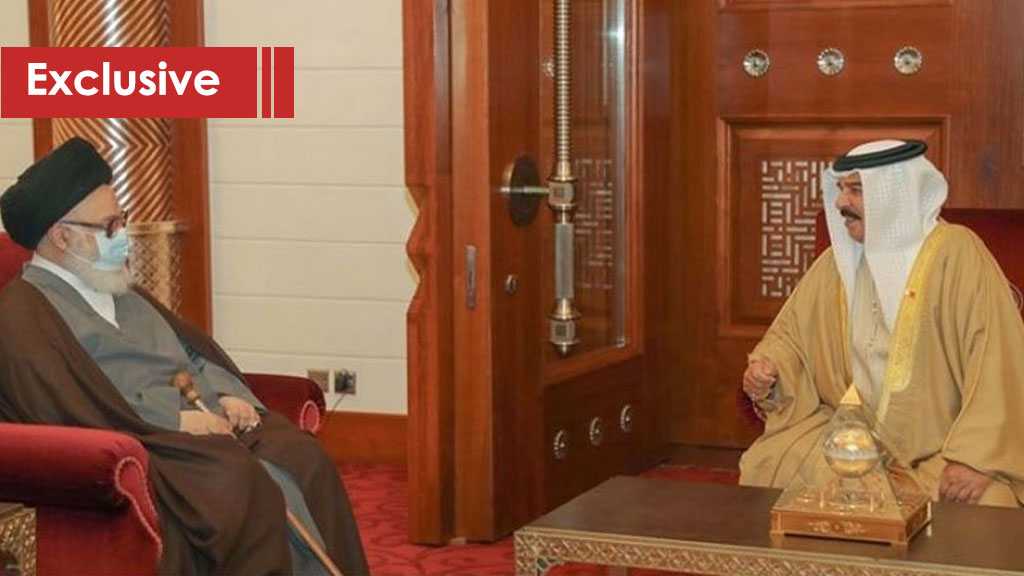
The photo joining Bahrain King Hamad bin Isa Al Khalifa and Cleric Sayyed Abdullah al-Ghuraifi will represent nothing but a dual meeting. No signs that the session the Bahraini regime sought to exaggerate will establish any decisive solution that would exit the kingdom from the ten-year-old unending crisis.

Inspecting the aims behind Al Khalifa’s receiving of Sayyed Abdullah al-Ghuraifi isn’t an unsolved puzzle. Many similar meetings and a repeated style questions trust in the ruling regime whose record is full of abusing each and every detail and issue.

Five days earlier, on April 25, Hamad bin Isa received Sayyed al-Ghuraifi with a group of scholars and clerics in a meeting meant to congratulate on the occurrence of the holy month of Ramadan. The king was keen to appear to the people smiling in the photo disseminated by his official media. The guest, however, didn’t appear smiling at all. The meeting is the second of its kind between the two sides in five months.

In December, Sayyed al-Ghuraifi visited the Saferiya Palace after ten years of estrangement. It followed the tightened grip against the political and popular opposition, in which every demander of rights ended either behind bars or martyred.

“It is just a waste of time,” this is how senior Bahraini opposition sources described the meeting. “Those who want an actual solution to the problem and starting a dialogue with the opposition after years of oppression, detention, torture, suppression, negligence, killing, and execution, won’t be satisfied with an imagery photo that don’t reflect any seriousness,” the source added.

“Sayyed Abdullah al-Ghuraifi doesn’t shut a door in front of the regime due to his religious rank,” the senior sources analyzed, “however, the regime is awaiting opportunities to promote what it wants to show the foreign public opinion in the first place, then the local one.”

Nothing to be mentioned about the meeting. It is just that it slightly broke the ice between the opposition and the regime that didn’t offer any real initiative that solutions might be built upon. Those observing the exacerbating political and rights situations in Bahrain know very well that tightening the security fist inside the kingdom doesn’t match the claims of openness to the people’s demands and those representing them.

Would the king release around 2000 political, not criminal, detainees inside his prisons? Will the regime’s apparatuses suddenly treat them humanely and treat those whose health situations intentionally deteriorated due to the negligence of his personnel and prisons’ administrations, especially the notorious Jaw Prison? Would the regime allow the opposition figures to breathe and restore their unjustly usurped freedom? Would the national identity be restored to those whose citizenships were revoked? Will the collective and Friday prayers return to their golden days in Duraz? Will the regime revive those who are now under the soil?

Those are realistic questions to which the sources add the following: “Will the regime stop its unending violence against a big sect of its people? Will it accept that the jurisdiction established justice indeed? Will it accept that the parliament carry out its observatory role to hold the government accountable? Will it stop curtailing his power and respond to the criticism and accusations?”

 Despite the gloomy situation in Bahrain, it should be said that something is happening. This is what the Bahraini sources hint to.

According to their information, the king’s latest step goes along with the calmness in the region, especially after the recent stances voiced by Saudi Crown Prince Mohammad Bin Salman [MBS], and his retreating rhetoric regarding Iran. Unlike what he believed before, MBS said “Iran is a neighboring country, and we want good and special relations with it. We don’t want Iran’s situation to be difficult, we want it prosperous.”

So, the Bahraini opposition’s issue is related to the Iranian-Saudi dialogue. In this context comes releasing female detainee Zakiya al-Barbouri who was detained three years ago during a fierce raid that targeted civilian houses in the town of Nuweiderat.

The Bahraini opposition examines what it happening at home very carefully. It is true that things are turning to calmness, but the lost trust in the authority’s performance and its continued elusiveness won’t let it rest until an inclusive solution to the crisis prevails, in which citizens obtain their rights.

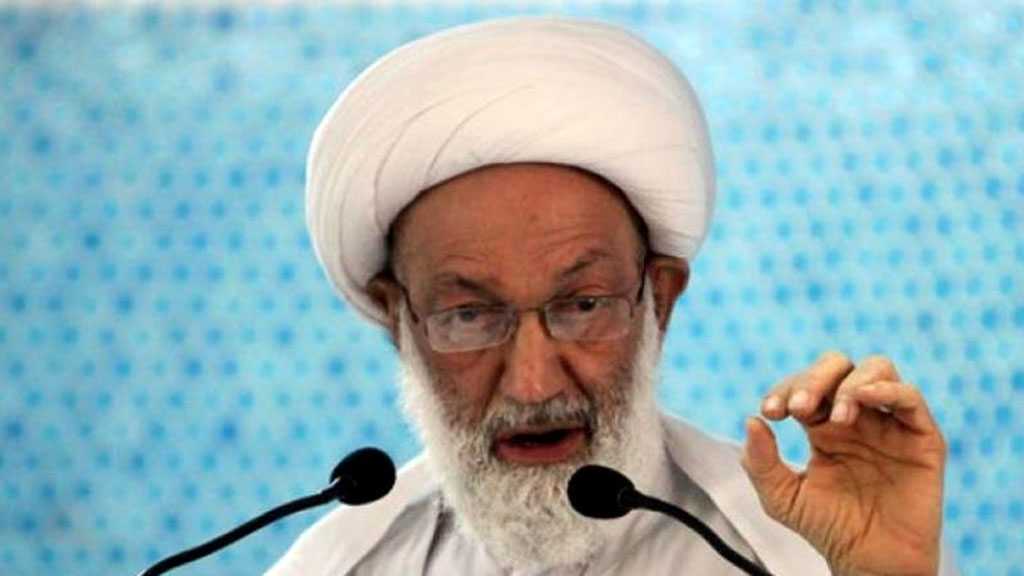
Despite all the dominant fear, the opposition is always open to any step that seems positive. Prominent Cleric Ayatollah Sheikh Isa Qassim identified, in his advisory words, the way to exit this complicated calamity. He emphasized that “solving the crisis that threatens with complete destruction depends on the ruler’s retreating his mistake, and doing this is a grace.”

Ayatollah Qassim called on the regime to initiate an agreement with the opposition to set a new constitutional, institutional, and practical situation that preserves the rights of the citizens and admits their sovereign position in their country’s policy.

Upon this, the good will be returned with another good; and the stance made by al-Wefaq National Islamic Society’s Deputy Secretary General, Sheikh Hussein al-Daihi, is clear in this regard as he confirmed that any step forward made by the crown prince will be met with more step forwards.

It is the kingdom of “retweets”, which waits the regional events to similarly stop oppressing its people, or it is just perhaps to have some rest before resuming its actions in another situation.


River to Sea Uprooted Palestinian   
The views expressed in this article are the sole responsibility of the author and do not necessarily reflect those of the Blog!

Tuesday, 20 April 2021

Sheikh Isa New Constitution Sole Way out of Bahrain Crisis

 20/4/2021

Sheikh Isa Qassim: New Constitution Sole Way out of Bahrain Crisis

By Staff, Agencie

Bahrain’s top cleric Ayatollah Sheikh Isa Qassim stressed that “Drawing up a new constitution is the only way out of the political crisis in the protest-hit kingdom.”

He further called on urging the regime in Manama to pursue an agreement with the Bahraini opposition instead of increasingly suppressing the dissidents.

“Since the people do not find anything to persuade themselves to stop their protest movement and are witnessing a surge in the [regime’s] policy of repression, dictatorship and marginalization, they are pressing ahead with their uprising, whatever the cost may be,” Sheikh Qassim said in a statement released on Monday and carried by the Bahrain Mirror news website.

His Eminence further highlighted: “There would be no way out of the current situation unless the government reaches an agreement with the opposition to draw up a new constitution and found relevant institutions so as to protect the citizens’ rights and recognize their sovereign position in the country’s politics.”

The senior cleric pointed out that “Reforms must be undertaken at a pace satisfactory to the public and must guarantee the authority, dignity, comfort, security and interests of all.”

This comes as Bahrain’s crackdown continues in Ramadan as regime forces attack political inmates in Jaw prison.  “There is a serious political and legal crisis in Bahrain, the consequences of which will be dangerous for both the nation and the government itself,” he stated.

He denounced the Manama regime over the “absurd” policy of putting more people behind bars, saying such a practice will not even benefit the “unjust political goal” being pursued by the Al-Khalifah regime.

“If the purpose of populating prisons with thousands of inmates is to tone down the demands for political and civil rights to mere calls for the release of prisoners, the calls among the prisoners themselves for the nation’s rights [to be guaranteed] will definitely thwart such a conspiracy,” Sheikh Qassem confirmed.

“The people of Bahrain are well aware of the fact that the solution to the country’s crisis lies only in a genuine improvement of the situation and establishment of a political relationship between the nation and the government on the basis of new and viable principles,” His Eminence elaborated.


Related Videos


Related Articles


River to Sea Uprooted Palestinian   
The views expressed in this article are the sole responsibility of the author and do not necessarily reflect those of the Blog!

Sunday, 18 April 2021

Bahrain Crackdown: Demonstrations Continue For 20th Consecutive Night in Support of Jailed Activists

Bahrain Crackdown: Demonstrations Continue For 20th Consecutive Night in Support of Jailed Activists

By Staff, Agencies

Amid the continued crackdown of the Manama regime, Bahrainis have rallied for the 20th night to reiterate their call for an immediate and unconditional release of political inmates amid concerns over the alarming situation of the country’s prisons in light of the coronavirus outbreak.

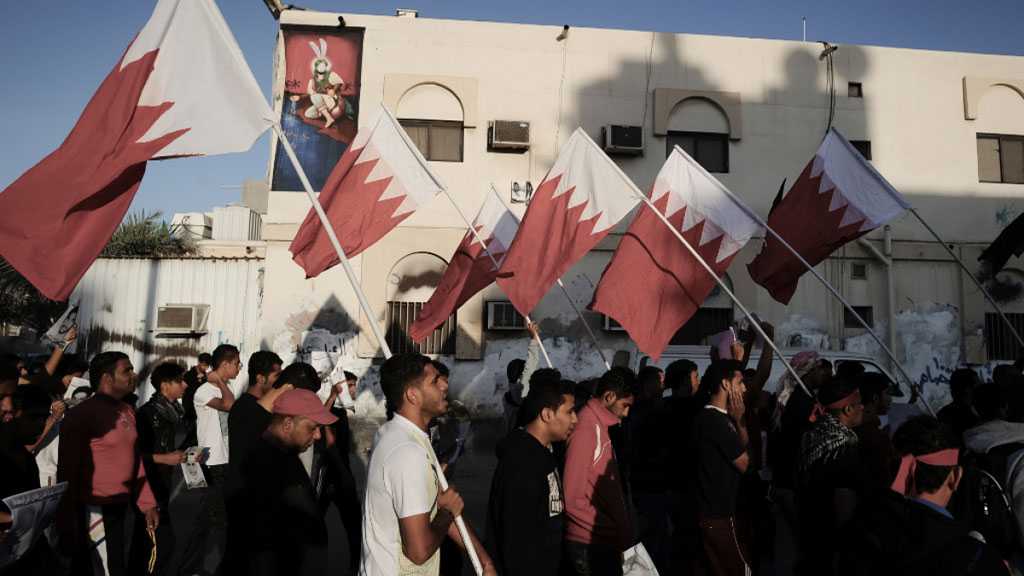
The demonstrations were held under the banner of “Friday of Prisoners’ Rage,” with participants denouncing Bahraini authorities’ mistreatment of imprisoned activists, and the miserable conditions of prisoners at detention centers across the tiny kingdom.

The demonstrators carried Bahrain’s national flags as well as pictures of jailed political opponents, and chanted anti-regime slogans in several villages, including Karzakan, Karbabad, Hamala, Shahrakan, al-Dair, Karrana, Abu Saiba, Shakhura, Bu Quwah, North Sehla and Samaheej, as they called for the unconditional freedom of the prisoners.

Similar rallies were held in the villages of Dar Kulaib and Ma’ameer, where protestors held up the pictures of prominent opposition figure Zakia al-Barbouri, who was charged to five years in prison on February 6, 2019, and had her citizenship revoked in a politically-motivated case.

Earlier this month, Bahrain’s most prominent Shia cleric Sheikh Isa Qassim warned that political dissidents in Bahraini prisons are facing deaths and demanded their immediate release. 

In a statement carried by Arabic-language Bahrain Mirror news website on April 1, the senior cleric called on the ruling Al Khalifa regime to choose between the deaths of the dissident inmates and their release.

“One of the worst things that the government of Bahrain does is to keep prisoners as leverage for political bargaining, especially now that the coronavirus is attacking prisons with full force,” the senior cleric added.

Demonstrations in Bahrain have been held on a regular basis ever since a popular uprising began in mid-February 2011.

The participants demand that the Al Khalifah regime relinquish power and allow a just system representing all Bahrainis to be established.

Manama, however, has gone to great lengths to clamp down on any sign of dissent.

On March 14, 2011, troops from Saudi Arabia and the United Arab Emirates were deployed to assist Bahrain in its crackdown.

On March 5, 2017, Bahrain’s parliament approved the trial of civilians at military tribunals in a measure blasted by human rights campaigners as being tantamount to imposition of an undeclared martial law countrywide.

King Hamad ratified the constitutional amendment on April 3, 2017.


River to Sea Uprooted Palestinian   
The views expressed in this article are the sole responsibility of the author and do not necessarily reflect those of the Blog!