Showing posts with label War On The People. Show all posts

Saturday, 3 April 2021

إذا لم يقف المواطن مع مؤسسات الدولة في هذه الحرب فسوف تخسرها مهما قمنا من إجراءات If the citizen does not stand with state institutions in this war, it will lose it, regardless of the measures we take


المصدر

أكّد الرئيس السوري بشار الأسد وجود معركة تقاد من الخارج ضد الليرة السوريّة،

 داعياً إلى معاقبة التجار المتربّحين من انهيار العملة المحلّية.

وأشار الرئيس الأسد في اجتماع حكومي إلى أن «مجموعة الإجراءات والتشريعات والقوانين التي صدرت في الآونة الأخيرة للتخفيف عن المواطن تؤكد فكرة أنه لا يوجد شيء مستحيل».

وأضاف «إذا لم نكن قادرين على حل كل المشاكل، فإننا نستطيع أن نحل جزءاً من المشاكل.. وعندما لا نستطيع اليوم أن نحل مشكلة معينة نستطيع أن نحل مشاكل أخرى تخفف عن المواطن».

كما أوضح الرئيس الأسد أن أحد الأمثلة على هذه الإجراءات هو معركة سعر الصرف التي تمكنّا فيها من تحقيق إنجازات لم تتحقق سابقاً».

كذلك لفت إلى أنه «من الخطأ في مثل هذه الحالة.. أو هذا النوع من المعارك أن يعتقد الناس أن هذا الموضوع هو موضوع إجرائيّ.. إذ إن الموضوع أوسع.. حيث هناك مضاربون ومستفيدون.. وهناك معركة تُقاد من الخارج».

وتابع قائلاً «أصبحت أدوات الأعداء في هذه المعركة واضحة بالنسبة لنا.. ومن خلال وضوحها ومعرفة الآليات التي استخدمت قمنا نحن باستخدام آليات معاكسة.. وقد أثبتت هذه المعارك التي خضناها أن سعر الصرف في سورية الجزء الأكبر منه هو حرب نفسية».

وشدّد على ضرورة «مواجهة هذا النوع من المعارك أن نقوم بتوعية الناس بأن ما يحصل الآن بالنسبة لسعر الصرف لا يقل أهمية عن المعركة العسكرية لاستقرار البلد.. مثله مثل الحرب.. مثل الأمن الغذائي.. مثل الكثير من العوامل الأخرى.. يجب أن يتم التعامل معها كمعركة.. فإذا لم يقف المواطن مع مؤسسات الدولة في هذه الحرب فسوف تخسر المؤسسات مهما قمنا من إجراءات».


Saturday, 7 March 2020

Imam Khamenei Urges India to Stop Extremist Anti-Muslim Violence


By Staff, Agencies
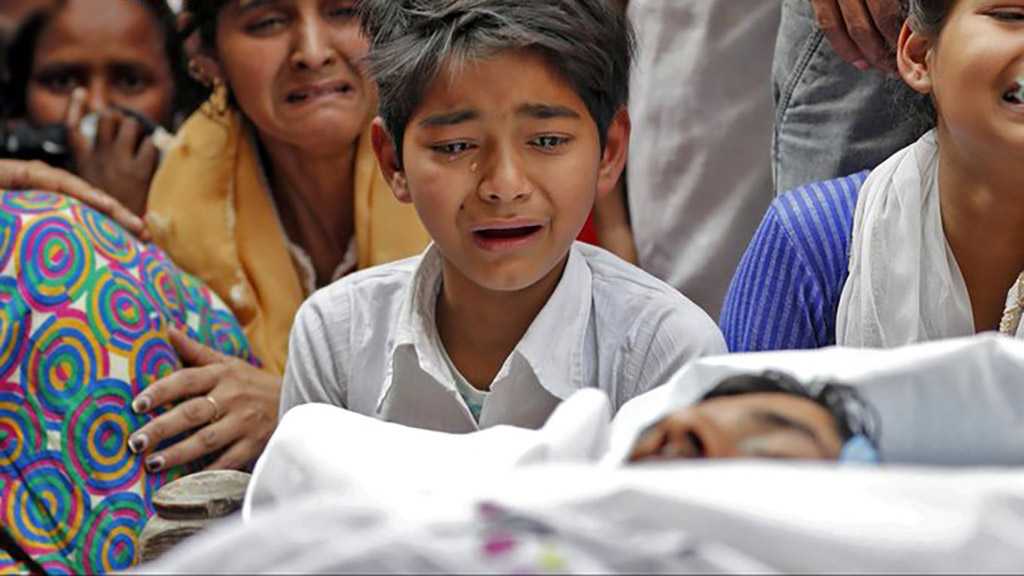
Leader of the Islamic Revolution His Eminence Imam Sayyed Ali Khamenei deplored the massacre of Muslims in India, calling on the New Delhi government to confront extremist Hindus.
In a post on Thursday, Imam Khamenei’s official Twitter account denounced the recent wave of violence against Muslims in India.
“The hearts of Muslims all over the world are grieving over the massacre of Muslims in India,” the post read.
“The govt of India should confront extremist Hindus & their parties & stop the massacre of Muslims in order to prevent India’s isolation from the world of Islam,” it added.
The post ended with the hashtag #IndianMuslimslnDanger.
Violence erupted in the Indian capital last week, leading to a three-day-long rampage, with Hindu mobs attacking Muslim homes, shops and mosques.
The attacks were carried out on protesters, who have been rallying against a new citizenship law, after the ruling Bharatiya Janata Party [BJP] leader Kapil Mishra threatened peaceful sit-ins would be removed from the streets.
The violence in Delhi killed scores of people.
It was the worst violence in Delhi since 1984, when more than 3,000 Sikh minority were killed following the assassination of then-Prime Minister Indira Gandhi.

River to Sea Uprooted Palestinian   
The views expressed in this article are the sole responsibility of the author and do not necessarily reflect those of the Blog!

Monday, 7 October 2019

US MILITARY SUPPORT OF SAUDI ARABIA’S HOPELESS WAR IN YEMEN


US Military Support Of Saudi Arabia's Hopeless War In Yemen
07.10.2019
The US has continued supporting its efforts against the Houthis.Since the beginning of the Saudi-led intervention in Yemen in 2015.
Despite wide-ranging and seemingly endless support, which comes in spite of bombing of civilian targets and other questionable methods of fighting the war, such as using child soldiers from African countries, Saudi Arabia is losing the war vs the Yemeni group.
The US maintains that it assists the Saudi-led coalition fighting in Yemen, because the Houthis are an Iranian-backed group whose “malign influence” must not be allowed to spread any further. Support against the Houthis is allegedly only expressed in weapon deliveries, training assistance, logistics and intelligence support.
However, the US is actively taking part in counterterrorism actions in Yemen, allegedly targeting ISIS and al-Qaeda, but there is little clarity of what exactly is going on in that regard.
In short, the US support for the Kingdom can be summarized in the following groups, laid out in a report focused on the war in Yemen called “Yemen: Civil War and Regional Intervention,” published on September 17th, 2019. [pdf]
Anybody who is even an involuntary and sporadic observer of the situation in Yemen can see that there is no such thing as a Civil War there, but regardless the efforts of the Trump administration, most of which began during the Obama administration are properly presented. Some are simply exaggerated, such as support for UN resolutions on the conflict:
  • Support for U.N. efforts to advance a political process – U.S. policymakers have repeatedly expressed confidence in the role of Special Envoy Griffiths to move the various Yemeni parties toward a political settlement. Moreover, U.S. officials have emphasized Yemen’s unity, saying that “dialogue represents the only way to achieve a stable, unified, and prosperous Yemen.” In September 2019, one U.S. official also announced that the United States was conducting talks with the Houthis to further a negotiated solution to the Yemen conflict.
This would make a difference if it was a bipartisan solution coming from US Congress and supporting by the presidential administration, but currently it is just hollow rhetoric.
  • Condemnation of Iran’s destabilizing role in Yemen – U.S. policymakers have repeatedly portrayed Iran as a spoiler in Yemen, bent on sabotaging peace efforts by lending support to Houthi attacks against Saudi Arabia.
This goes without saying, Iran’s role in anything at all is “destabilizing,” the Islamic Republic is “the enemy” and it must be opposed in any way possible.
  • Assistance for the coalition – According to President Trump’s most recent report to Congress on the deployment of U.S. armed forces abroad, “United States Armed Forces, in a non-combat role, have also continued to provide military advice and limited information, logistics, and other support to regional forces combatting the Houthi insurgency in Yemen. United States forces are present in Saudi Arabia for thispurpose. Such support does not involve United States Armed Forces in hostilities with the Houthis for the purposes of the War Powers Resolution.” In the summer of 2019, President Trump ordered the deployment of a Patriot air defense battery to Prince Sultan Air Base in central Saudi Arabia, as Saudi King Salman reportedly approved the deployment of U.S. forces on Saudi territory. According to the State Department, “We stand firmly with our Saudi partners in defending their borders against these continued threats by the Houthis, who rely on Iranian-made weapons and technology to carry out such attacks.”
It is simply a way to fight against Iran, through supporting the Saudi-led intervention in Yemen and disregarding any atrocities that are carried out, since Saudi Arabia claims it attempts to avoid civilian casualties and tries to protect human rights, but that is still simply a claim that is backed by no concrete efforts whatsoever.
  • Sales of armaments and munitions to Gulf partners – Though the Obama Administration placed a hold on a planned sale of precision guided munitions (PGMs) to Saudi Arabiain 2016, both the Obama and Trump administrations have approved several billions of dollars in major weapons sales to Saudi Arabia and the United Arab Emirates. When the Trump Administration notified Congress of 22 emergency arms sales in May 2019, Secretary Pompeo cited Iran’s “malign activity” and the need “to deter further Iranian adventurism in the Gulf and throughout the Middle East” as justification for the sales.
Again, any actions that are undertaken are specifically aimed at countering Iran, regardless of whether there’s really any concrete evidence of Iran being present there. Yes, the Houthis are supported by Iran, but it apparently never gets excessive. Iran’s “malign influence” is the be-all and end-all of all justifications.
  • Humanitarian Aid for Yemen – As previously mentioned (see, The Humanitarian Crisis in Yemen), the United States is one of the largest humanitarian contributors in Yemen.
How much of that humanitarian aid reaches those that require it the most, those trapped in al-Hudaydah with the Saudi-led coalition continuing its attacks on the city in spite of the UN-brokered ceasefire surely aren’t being reached by it, or not by a significant part of it.
  • Finally, here comes the other be-all end-all justification – counterterrorism efforts by the US in Yemen – the United States has continued to work with local and regional actors to counter terrorist groups operating in Yemen such as al-Qaeda and ISIS.
These counterterrorism efforts are outlined in a June 2019 letter by Trump to US Congress:
“A small number of United States military personnel are deployed to Yemen to conduct operations against al-Qaeda in the Arabian Peninsula (AQAP) and ISIS-Yemen. The United States military continues to work closely with the Republic of Yemen Government (ROYG) and regional partner forces to dismantle and ultimately eliminate the terrorist threat posed by those groups. Since the last periodic update report, United States forces conducted a number of airstrikes against AQAP operatives and facilities in Yemen, and supported the United Arab Emirates-and ROYG-led operations to clear AQAP from Shabwah Governorate. United States Armed Forces are also prepared to conduct airstrikes against ISIS targets in Yemen.”
In 2019 in southern Yemen, AQAP has periodicallystruck both ROYG troops and forces allied with the Southern Transitional Council. Fighting between the ROYG and the STC has raised some concern that a divided south will provide AQAP breathing room to reemerge as a terrorist threat both to Yemen and its neighbors.
Al-Hudaydah, one of the most significant, if not the most significant “stronghold” of the Houthis against the Saudi-led coalition is in the South, thus it would make sense it needs to be overwhelmed in order to defeat the terrorists. Such a justification is not too far from any possible future scenarios.
Regardless of this support, the Saudi-led coalition is losing against the Houthis, and it is losing heavily.
Even the UAE initiated a drawdown, with groups affiliated to it even carrying out strikes on the Saudi-controlled Southern Transitional Council (the “internationally-recognized” Yemen government).
“As previously mentioned, one possible explanation for the summer 2019 phased drawdown of UAE forces from Yemen was out of concern that the reputational damage the UAE had incurred from its active participation in the war in Yemen outweighed the military results it had achieved on the ground after more than four years of warfare.”
Clearly Saudi Arabia and the US have no such worries. After all, following the international outcry against Saudi Arabia’s aerial campaign in Yemen in 2018, Saudi Arabia reportedly invested $750 million in a training program through the U.S. military in helping mitigate civilian casualties. Clearly, they’re putting effort through paying copious amounts of money to silence the most influential “defender” of human rights – the US.
Reports praising US efforts to train and prepare the Saudi army for the fight are numerous, some of the most famous ones are regarding Maj. Gen. Frank Muth, who served as Program Manager (PM) for Saudi Arabian National Guard (OPM-SANG) for two years.
Muth quickly learned that the assignment needed three ingredients to be successful. “First, I had to develop a relationship with the Saudi leadership, and that took time and trust to build those relationships, and over time they trusted our recommendations,” Muth explained. “Of course, it wasn’t just me building the relationship, every Soldier and civilian that works for OPM-SANG plays a tremendous role in developing a strong relationship with their Saudi counterparts.”
He seems to have learned wrong, since his efforts led to quite little in terms of actual military success.
In the lengthy video he explains what transpired at SANG, and how it could’ve been successful back in 2017. In 2019 it is quite obvious that it wasn’t.
Most recently, the Saudi-led coalition’s “success,” in addition to the US’ massive support of its efforts there were once more reinforced.
The Houthis reported that they had carried out a successful months-long operation in southern Saudi Arabia that has resulted in the deaths of 500 Saudi-aligned troops and the capture of approximately 2,000.
Furthermore, the Houthis said that the attack on Aramco’s oil infrastructure was part of the operation, which the US and the Kingdom blamed on Iran. After all, drones and missiles went past several Patriot defense batteries and caused heavy damage, with almost all of them not being stopped. Those that were stopped, were actually aimed poorly, and weren’t really dismantled by the Patriot systems.
فیلد مارشال!@FieldMarshalPSO
Geolocation of Buqayq facilities Air defense systems.
this facilities at least defended by one Patriot PAC-2/3 , 3 Skyguard and one Shahine Batteries.

View image on Twitter
126 people are talking about this

Anthony Fenton@anthonyfenton
Saudi-Canadian LAVs as far as the eye can see

Embedded video
86 people are talking about this
Saudi Arabia has bought fighter jets, warships, air and missile defense systems for billions of dollars. The US even said that it plans to deploy more hardware to Saudi Arabia to defend it, that is surely not to be free, as well.
Regardless, there is very little result in terms of military success and a very large promise that if a larger regional conflict were to start, Saudi Arabia would be very decisively on the losing side of it.
MORE ON THE TOPIC:

River to Sea Uprooted Palestinian   
The views expressed in this article are the sole responsibility of the author and do not necessarily reflect those of the Blog!

Saturday, 20 April 2019

Oxfam: Yemen Risks «Massive Resurgence» of Cholera


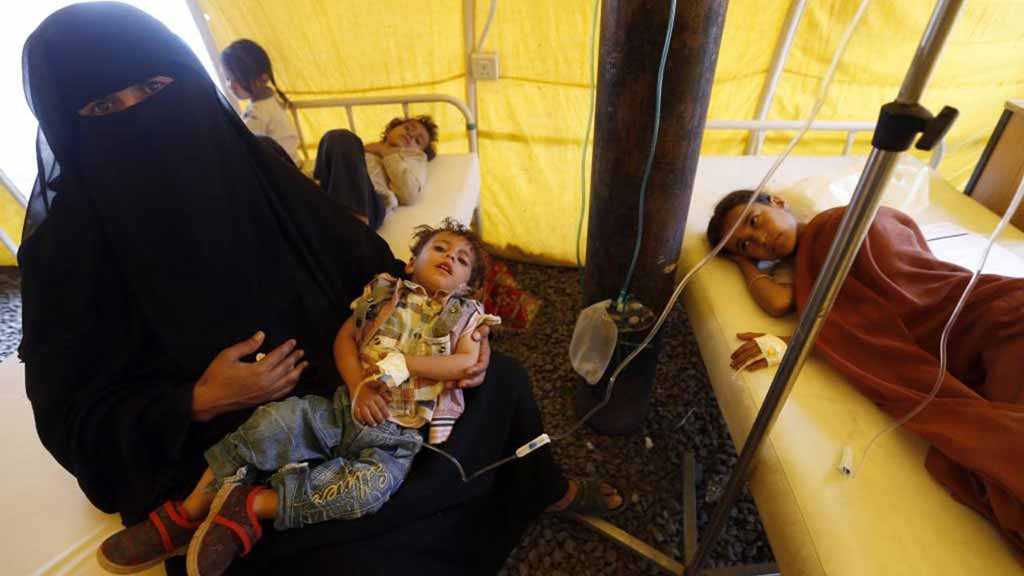
Oxfam warned Thursday that war-torn Yemen risks a “massive resurgence” of cholera, with around 195,000 suspected cases of the disease recorded so far this year.
“Fears that the world’s worst cholera outbreak could be set for a massive resurgence are growing,” the relief organization said.
It said aid agencies were struggling to reach suspected cases.
In a statement, Oxfam pointed to “fighting and restraints on access, including checkpoints and permit requirements imposed by the warring parties,” and warned the coming rainy season was likely to accelerate the spread of the disease.
The water-borne bacterial infection has claimed more than 3,000 lives in Yemen since the outbreak began in 2016, according to Oxfam.
At a medical center for the displaced in the western town of Khokha, Qassem Suleiman had brought his son Alaa for tests after a serious case of diarrhea.
Doctor Wadah al-Tiri told AFP that several patients had been transferred to Aden while others had been treated at the Khokha center.
He said a tent was to be set up for suspected cases.
The doctor said Yemen badly needed international aid to combat the epidemic.
The UN’s humanitarian coordination office OCHA said last month that children under the age of five make up nearly a third of this year’s cases.
The spike, which comes two years after Yemen suffered its worst cholera outbreak, was concentrated in six governorates including in the Red Sea port of Hudaydah and Sanaa province, both combat zones, it said.
Yemen’s conflict has created the perfect environment for cholera to thrive, as civilians across the country lack access to clean water and health care.

UN: Yemen’s Children Suffer ‘Devastating Toll’ in 5-Year Conflict

The United Nations said Monday that the five-year-old conflict in Yemen has taken a “devastating toll” on the country’s children, with thousands killed, maimed and recruited to fight since the war began.
“The impact of this conflict on children is horrific,” Virginia Gamba, UN special representative for children and armed conflict, told a meeting of the Security Council. “All parties to the conflict have acted and reacted militarily to events resulting in the use and abuse of children in multiple ways.”
Since monitoring began in Yemen in April 2013 (before the conflict fully erupted) until the end of the 2018, Gamba said more than 7,500 children had been killed or maimed and more than 3,000 have been verified as recruited or used, and there have been more than 800 documented cases of denial of humanitarian access to children.
Gamba said children reportedly have been forcibly recruited from schools, orphanages and communities to fight on the front lines, man checkpoints, deliver supplies or gather intelligence.
Last year, over half of the children recruited were under the age of 15. During that period, the UN says more than 200 were killed or maimed while being used by the warring parties.
In addition to harm to child soldiers, Gamba said of the more than 7,500 children martyred or maimed between 2013 and 2018, nearly half of the casualties were caused by Saudi-coalition airstrikes.
Another 40 percent of such casualties came in ground fighting, including shelling and mortars.
The UN has been working to end the conflict. On Monday, special envoy Martin Griffiths offered a glimmer of hope that the parties might be ready to take a first step away from the battlefield.
He told council members that both sides of the conflict have accepted a detailed redeployment plan to begin moving their fighters away from the crucial Red Sea port city of Hudaydah.
“We will now move with all speed toward resolving the final outstanding issues related to the operational plans for phase two, redeployments and also the issue of the status of local security forces,” Griffiths told the council in a video briefing from Amman, Jordan.
The parties committed to the plan at talks in Stockholm in December, but efforts to implement the agreement have failed. Griffiths expressed some confidence that they would go forward now.
“When — and I hope it is when and not if — these redeploys happen, they will be the first ones in this long conflict,” he said.
Griffiths acknowledged that the “the war in Yemen … shows no sign of abating,” and said there needs to be real progress on the military redeployments before the focus can shift back to the political track.
US Acting UN Ambassador Jonathan Cohen welcomed Ansarullah acceptance to phase one of the withdrawal plan and said Washington would be “watching closely to see if they make good on that agreement.”
Meanwhile, UN humanitarian operations in Yemen are at risk of running out of money in the coming weeks.
UN aid chief Mark Lowcock said that nearly four months into 2019, the response plan has received only $267 million in actual funding.
“UN agencies are rapidly running out of money for essential relief activities,” he warned.
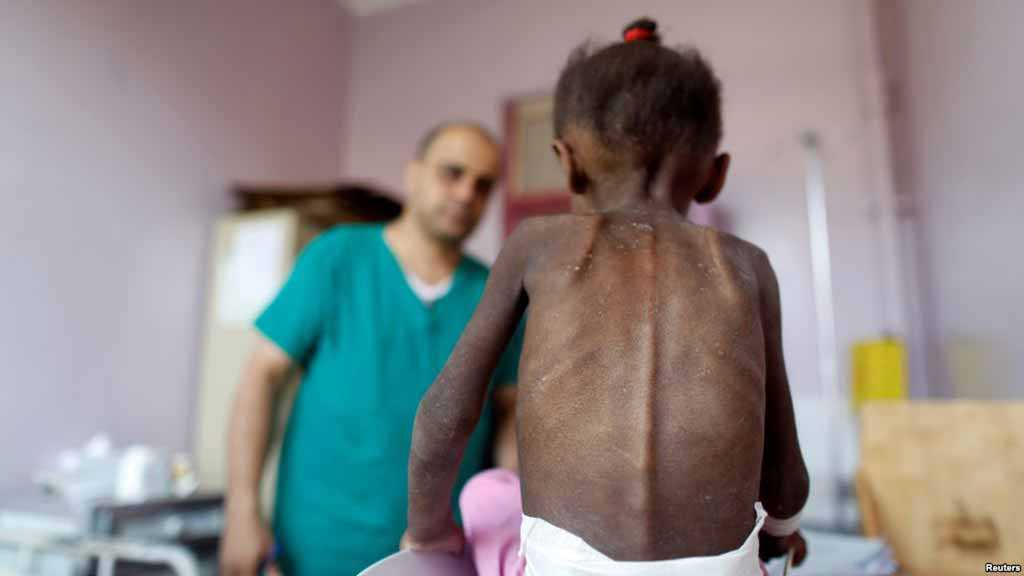
The country, which is facing a cholera epidemic, could see 60% of its diarrhea treatment centers close in the coming weeks if money is not received. UN food programs, which provide emergency food assistance to more than 9 million people every month, would also be impacted.
“Closing or scaling back such programs — at a time when we are struggling to prevent widespread famine and roll back cholera and other killer diseases — would be catastrophic,” Lowcock said.
He also warned that a potential environmental disaster is brewing off of Yemen’s Red Sea coast.
Lowcock said that an oil tanker used as a floating storage and offloading facility, and which is 8 kilometers off the coast at the Ras Isa terminal, is old and has not received any maintenance since 2015. It has about 1.1 million barrels of oil on board.
“Without maintenance, we fear that it will rupture or even explode, unleashing an environmental disaster in one of the world’s busiest shipping lanes,” Lowcock said.
A Saudi Arabian-led coalition began bombing Yemen in March 2015. Since then, the UN estimates more than 10,000 people had been martyred, mostly due to US-backed Saudi-led coalition airstrikes.
Related Videos
Related News

River to Sea Uprooted Palestinian   
The views expressed in this article are the sole responsibility of the author and do not necessarily reflect those of the Blog!

Tuesday, 2 October 2018

The Pentagon Is Planning a Three-Front ‘Long War’ Against China and Russia

Officials in Washington should be thinking hard before committing Americans to a strategy that will make this increasingly likely and could turn what is still long-war planning into an actual long war with deadly consequences.
Think of it as the most momentous military planning on Earth right now.
Who’s even paying attention, given the eternal changing of the guard at the White House, as well as the latest in tweets, sexual revelations, and investigations of every sort? And yet it increasingly looks as if, thanks to current Pentagon planning, a twenty-first-century version of the Cold War (with dangerous new twists) has begun and hardly anyone has even noticed.
In 2006, when the Department of Defense spelled out its future security role, it saw only one overriding mission: its “Long War” against international terrorism. “With its allies and partners, the United States must be prepared to wage this war in many locations simultaneously and for some years to come,” the Pentagon’s Quadrennial Defense Review explained that year.
Twelve years later, the Pentagon has officially announced that that long war is drawing to a close — even though at least seven counterinsurgency conflicts still rage across the Greater Middle East and Africa — and a new long war has begun, a permanent campaign to contain China and Russia in Eurasia.
“Great power competition, not terrorism, has emerged as the central challenge to U.S. security and prosperity,” claimed Pentagon Comptroller David Norquist while releasing the Pentagon’s $686 billion budget request in January. “It is increasingly apparent that China and Russia want to shape a world consistent with their authoritarian values and, in the process, replace the free and open order that has enabled global security and prosperity since World War II.”
Of course, just how committed President Trump is to the preservation of that “free and open order” remains questionable given his determination to scuttle international treaties and ignite a global trade war. Similarly, whether China and Russia truly seek to undermine the existing world order or simply make it less American-centric is a question that deserves close attention, just not today.
The reason is simple enough. The screaming headline you should have seen in any paper (but haven’t) is this: the U.S. military has made up its mind about the future. It has committed itself and the nation to a three-front geopolitical struggle to resist Chinese and Russian advances in Asia, Europe, and the Middle East.
Important as this strategic shift may be, you won’t hear about it from the president, a man lacking the attention span necessary for such long-range strategic thinking and one who views Russia’s Vladimir Putin and China’s Xi Jinping as “frenemies” rather than die-hard adversaries. To fully appreciate the momentous changes occurring in U.S. military planning, it’s necessary to take a deep dive into the world of Pentagon scripture: budget documents and the annual “posture statements” of regional commanders already overseeing the implementation of that just-born three-front strategy.

The New Geopolitical Chessboard

Lithuania NATO US
Abrams battle tanks from the US Army’s 4th Infantry Division on rail cars as they arrive at the Gaiziunai railway station in Lithuania as part of NATO deployment to bolster troop levels on Europe’s eastern front, Feb. 10, 2017. (AP/Mindaugas Kulbis)
This renewed emphasis on China and Russia in U.S. military planning reflects the way top military officials are now reassessing the global strategic equation, a process that began long before Donald Trump entered the White House. Although after 9/11, senior commanders fully embraced the “long war against terror” approach to the world, their enthusiasm for endless counterterror operations leading essentially nowhere in remote and sometimes strategically unimportant places began to wane in recent years as they watched China and Russia modernizing their military forces and using them to intimidate neighbors.
While the long war against terror did fuel a vast, ongoing expansion of the Pentagon’s Special Operations Forces (SOF) — now a secretive army of 70,000 nestled inside the larger military establishment — it provided surprisingly little purpose or real work for the military’s “heavy metal” units: the Army’s tank brigades, the Navy’s carrier battle groups, the Air Force’s bomber squadrons, and so forth. Yes, the Air Force in particular has played a major supporting role in recent operations in Iraq and Syria, but the regular military has largely been sidelined there and elsewhere by lightly equipped SOF forces and drones.
Planning for a “real war” against a “peer competitor” (one with forces and weaponry resembling our own) was until recently given far lower priority than the country’s never-ending conflicts across the Greater Middle East and Africa. This alarmed and even angered those in the regular military whose moment, it seems, has now finally arrived.
“Today, we are emerging from a period of strategic atrophy, aware that our competitive military advantage has been eroding,” the Pentagon’s new National Defense Strategy declares. “We are facing increased global disorder, characterized by decline in the long-standing rules-based international order” — a decline officially attributed for the first time not to al-Qaeda and ISIS, but to the aggressive behavior of China and Russia. Iran and North Korea are also identified as major threats, but of a distinctly secondary nature compared to the menace posed by the two great-power competitors.
Unsurprisingly enough, this shift will require not only greater spending on costly, high-tech military hardware but also a redrawing of the global strategic map to favor the regular military. During the long war on terror, geography and boundaries appeared less important, given that terrorist cells seemed capable of operating anyplace where order was breaking down. The U.S. military, convinced that it had to be equally agile, readied itself to deploy (often Special Operations forces) to remote battlefields across the planet, borders be damned.
On the new geopolitical map, however, America faces well-armed adversaries with every intention of protecting their borders, so U.S. forces are now being arrayed along an updated version of an older, more familiar three-front line of confrontation.
In Asia, the U.S. and its key allies (South Korea, Japan, the Philippines, and Australia) are to face China across a line extending from the Korean peninsula to the waters of the East and South China Seas and the Indian Ocean. In Europe, the U.S. and its NATO allies will do the same for Russia on a front extending from Scandinavia and the Baltic Republics south to Romania and then east across the Black Sea to the Caucasus. Between these two theaters of contention lies the ever-turbulent Greater Middle East, with the United States and its two crucial allies there, Israel and Saudi Arabia, facing a Russian foothold in Syria and an increasingly assertive Iran, itself drawing closer to China and Russia.
From the Pentagon’s perspective, this is to be the defining strategic global map for the foreseeable future. Expect most upcoming major military investments and initiatives to focus on bolstering U.S. naval, air, and ground strength on its side of these lines, as well as on targeting Sino-Russian vulnerabilities across them.
There’s no better way to appreciate the dynamics of this altered strategic outlook than to dip into the annual “posture statements” of the heads of the Pentagon’s “unified combatant commands,” or combined Army/Navy/Air Force/Marine Corps headquarters, covering the territories surrounding China and Russia: Pacific Command (PACOM), with responsibility for all U.S. forces in Asia; European Command (EUCOM), covering U.S. forces from Scandinavia to the Caucasus; and Central Command (CENTCOM), which oversees the Middle East and Central Asia, where so many of the country’s counterterror wars are still underway.
The senior commanders of these meta-organizations are the most powerful U.S. officials in their “areas of responsibility” (AORs), exercising far more clout than any American ambassador stationed in the region (and often local heads of state as well). That makes their statements and the shopping lists of weaponry that invariably go with them of real significance for anyone who wants to grasp the Pentagon’s vision of America’s global military future.

The Indo-Pacific Front

041613_ChinaUSMilitary_16x9-south-korea
South Korea and U.S. warships participate in their joint military drill Foal Eagle in South Korea’s West sea, March 17, 2013. (AP/South Korea Navy)
Commanding PACOM is Admiral Harry Harris Jr., a long-time naval aviator. In his annual posture statement, delivered to the Senate Armed Services Committee on March 15th, Harris painted a grim picture of America’s strategic position in the Asia-Pacific region.
In addition to the dangers posed by a nuclear-armed North Korea, he argued, China was emerging as a formidable threat to America’s vital interests. “The People’s Liberation Army’s rapid evolution into a modern, high-tech fighting force continues to be both impressive and concerning,” he asserted. “PLA capabilities are progressing faster than any other nation in the world, benefitting from robust resourcing and prioritization.”
Most threatening, in his view, is Chinese progress in developing intermediate-range ballistic missiles (IRBMs) and advanced warships. Such missiles, he explained, could strike U.S. bases in Japan or on the island of Guam, while the expanding Chinese navy could challenge the U.S. Navy in seas off China’s coast and someday perhaps America’s command of the western Pacific. “If this [shipbuilding] program continues,” he said, “China will surpass Russia as the world’s second largest navy by 2020, when measured in terms of submarines and frigate-class ships or larger.”
To counter such developments and contain Chinese influence requires, of course, spending yet more taxpayer dollars on advanced weapons systems, especially precision-guided missiles. Admiral Harris called for vastly increasing investment in such weaponry in order to overpower current and future Chinese capabilities and ensure U.S. military dominance of China’s air and sea space. “In order to deter potential adversaries in the Indo-Pacific,” he declared, “we must build a more lethal force by investing in critical capabilities and harnessing innovation.”
His budgetary wish list was impressive. Above all, he spoke with great enthusiasm about new generations of aircraft and missiles — what are called, in Pentagonese, “anti-access/area-denial” systems — capable of striking Chinese IRBM batteries and other weapons systems intended to keep American forces safely away from Chinese territory.
He also hinted that he wouldn’t mind having new nuclear-armed missiles for this purpose — missiles, he suggested, that could be launched from ships and planes and so would skirt the Intermediate-Range Nuclear Forces Treaty, to which the U.S. is a signatory and which bans land-based intermediate-range nuclear missiles. (To give you a feel for the arcane language of Pentagon nuclear cognoscenti, here’s how he put it: “We must continue to expand Intermediate Nuclear Force Treaty-compliant theater strike capabilities to effectively counter adversary anti-access/area-denial [A2/AD] capabilities and force preservation tactics.”)
Finally, to further strengthen the U.S. defense line in the region, Harris called for enhanced military ties with various allies and partners, including Japan, South Korea, the Philippines, and Australia. PACOM’s goal, he stated, is to “maintain a network of like-minded allies and partners to cultivate principled security networks, which reinforce the free and open international order.” Ideally, he added, this network will eventually encompass India, further extending the encirclement of China.

The European Theater

Poland US Troops
U.S. Army vehicles cross the Polish border in Olszyna, Poland, Thursday, Jan. 12, 2017 heading for their new base in Zagan. (AP/Czarek Sokolowski)
A similarly embattled future, even if populated by different actors in a different landscape, was offered by Army General Curtis Scaparrotti, commander of EUCOM, in testimony before the Senate Committee on Armed Services on March 8th.
For him, Russia is the other China. As he put it in a bone-chilling description, “Russia seeks to change the international order, fracture NATO, and undermine U.S. leadership in order to protect its regime, reassert dominance over its neighbors, and achieve greater influence around the globe… Russia has demonstrated its willingness and capability to intervene in countries along its periphery and to project power — especially in the Middle East.”
This, needless to say, is not the outlook we’re hearing from President Trump, who has long appeared reluctant to criticize Vladimir Putin or paint Russia as a full-fledged adversary. For American military and intelligence officials, however, Russia unquestionably poses the preeminent threat to U.S. security interests in Europe. It is now being spoken of in a fashion that should bring back memories of the Cold War era. “Our highest strategic priority,” Scaparrotti insisted, “is to deter Russia from engaging in further aggression and exercising malign influence over our allies and partners. [To this end,] we are… updating our operational plans to provide military response options to defend our European allies against Russian aggression.”
The cutting edge of EUCOM’s anti-Russian drive is the European Deterrence Initiative (EDI), a project President Obama initiated in 2014 following the Russian seizure of Crimea. Originally known as the European Reassurance Initiative, the EDI is intended to bolster U.S. and NATO forces deployed in the “front-line states” — Estonia, Latvia, Lithuania, and Poland — facing Russia on NATO’s “Eastern Front.” According to the Pentagon wish list submitted in February, some $6.5 billion are to be allocated to the EDI in 2019. Most of those funds will be used to stockpile munitions in the front-line states, enhance Air Force basing infrastructure, conduct increased joint military exercises with allied forces, and rotate additional U.S.-based forces into the region. In addition, some $200 million will be devoted to a Pentagon “advise, train, and equip” mission in Ukraine.
Like his counterpart in the Pacific theater, General Scaparrotti also turns out to have an expensive wish list of future weaponry, including advanced planes, missiles, and other high-tech weapons that, he claims, will counter modernizing Russian forces. In addition, recognizing Russia’s proficiency in cyberwarfare, he’s calling for a substantial investment in cyber technology and, like Admiral Harris, he cryptically hinted at the need for increased investment in nuclear forces of a sort that might be “usable” on a future European battlefield.

Between East and West: Central Command

AP_17236735827127.jpgGen. Joseph Votel, the top U.S. commander for the Middle East, right, gets a briefing on the USS Nimitz, from Lt. Cmdr. Vern Jensen, the aircraft handling officer for the ship, Aug. 24, 2017. The Nimitz is in the Persian Gulf, and fighter jets are flying off the aircraft to conduct strikes in Iraq and Syria. (AP/Lolita Baldor)
Overseeing a startling range of war-on-terror conflicts in the vast, increasingly unstable region stretching from PACOM’s western boundary to EUCOM’s eastern one is the U.S. Central Command.
For most of its modern history, CENTCOM has been focused on counterterrorism and the wars in Iraq, Syria, and Afghanistan in particular. Now, however, even as the previous long war continues, the Command is already beginning to position itself for a new Cold War-revisited version of perpetual struggle, a plan — to resurrect a dated term — to contain both China and Russia in the Greater Middle East.
In recent testimony before the Senate Armed Services Committee, CENTCOM commander Army General Joseph Votel concentrated on the status of U.S. operations against ISIS in Syria and against the Taliban in Afghanistan, but he also affirmed that the containment of China and Russia has become an integral part of CENTCOM’s future strategic mission: “The recently published National Defense Strategy rightly identifies the resurgence of great power competition as our principal national security challenge and we see the effects of that competition throughout the region.”
Through its support of the Syrian regime of Bashar al-Assad and its efforts to gain influence with other key actors in the region, Russia, Votel claimed, is playing an increasingly conspicuous role in CENTCOM’s AOR. China is also seeking to enhance its geopolitical clout both economically and through a small but growing military presence. Of particular concern, Votel asserted, is the Chinese-managed port at Gwadar in Pakistan on the Indian Ocean and a new Chinese base in Djibouti on the Red Sea, across from Yemen and Saudi Arabia. Such facilities, he claimed, contribute to China’s “military posture and force projection” in CENTCOM’s AOR and are signals of a challenging future for the U.S. military.
Under such circumstances, Votel testified, it is incumbent upon CENTCOM to join PACOM and EUCOM in resisting Chinese and Russian assertiveness. “We have to be prepared to address these threats, not just in the areas in which they reside, but the areas in which they have influence.” Without providing any details, he went on to say, “We have developed… very good plans and processes for how we will do that.”
What that means is unclear at best. But despite Donald Trump’s campaign talk about a U.S. withdrawal from Afghanistan, Iraq, and Syria once ISIS and the Taliban are defeated, it seems increasingly clear that the U.S. military is preparing to station its forces in those (and possibly other) countries across CENTCOM’s region of responsibility indefinitely — fighting terrorism, of course, but also ensuring that there will be a permanent U.S. military presence in areas that could see intensifying geopolitical competition among the major powers.

An Invitation to Disaster

Russia Victory Parade Rehearsal
Russian army soldiers drive their tanks along the Red Square during a general rehearsal for the Victory Day military parade.
In relatively swift fashion, American military leaders have followed up their claim that the U.S. is in a new long war by sketching the outlines of a containment line that would stretch from the Korean Peninsula around Asia across the Middle East into parts of the former Soviet Union in Eastern Europe and finally to the Scandinavian countries. Under their plan, American military forces — reinforced by the armies of trusted allies — should garrison every segment of this line, a grandiose scheme to block hypothetical advances of Chinese and Russian influence that, in its global reach, should stagger the imagination. Much of future history could be shaped by such an outsized effort.
Questions for the future include whether this is either a sound strategic policy or truly sustainable. Attempting to contain China and Russia in such a manner will undoubtedly provoke countermoves, some undoubtedly difficult to resist, including cyber attacks and various kinds of economic warfare.
And if you imagined that a war on terror across huge swaths of the planet represented a significant global overreach for a single power, just wait. Maintaining large and heavily-equipped forces on three extended fronts will also prove exceedingly costly and will certainly conflict with domestic spending priorities and possibly provoke a divisive debate over the reinstatement of the draft.
However, the real question — unasked in Washington at the moment — is: Why pursue such a policy in the first place? Are there not other ways to manage the rise of China and Russia’s provocative behavior? What appears particularly worrisome about this three-front strategy is its immense capacity for confrontation, miscalculation, escalation, and finally actual war rather than simply grandiose war planning.
At multiple points along this globe-spanning line — the Baltic Sea, the Black Sea, Syria, the South China Sea, and the East China Sea, to name just a few — forces from the U.S. and China or Russia are already in significant contact, often jostling for position in a potentially hostile manner. At any moment, one of these encounters could provoke a firefight leading to unintended escalation and, in the end, possibly all-out combat. From there, almost anything could happen, even the use of nuclear weapons.
Clearly, officials in Washington should be thinking hard before committing Americans to a strategy that will make this increasingly likely and could turn what is still long-war planning into an actual long war with deadly consequences.

River to Sea Uprooted Palestinian   
The views expressed in this article are the sole responsibility of the author and do not necessarily reflect those of the Blog!