Showing posts with label Indian Ocean. Show all posts

Friday, 1 October 2021

The Living Dead Pax Americana

 September 30, 2021

The Living Dead Pax Americana

Perth in Australia will be a forward base for nuclear-powered and nuclear weapon-carrying American subs.

by Pepe Escobar – posted with the author’s permission and cross-posted widely. 

Pax Americana was always a minor character in a zombie apocalypse flick.

Pax Americana is actually The Eternal Return of the Living Dead. “Pax” was never in order; War Inc. rules. The end of WWII led directly to the Cold War. The unipolar moment was an arc from the First Gulf War to the bombing of Yugoslavia. 9/11 launched the Global War on Terror (GWOT), renamed Overseas Contingency Operations (OCO) by Team Obama. We are now entering Cold War 2.0 against China.

What former CIA analyst Ray McGovern memorably describes as the MICIMATT (military-industrial-congressional-intelligence-media-academia-think tank complex) never did “Pax”. They do War, in unison, like The Knights Who Say “Ni!” – minus the comic flair.

Take this Knight for the Council on Foreign Relations (CFR), the heart of the establishment matrix. CFR specializes in Kissingerian Divide and Rule. Now that applies, in spades, to the Russia-China strategic partnership.

Knights overwhelmingly state the obvious: “Chinese power must be contained”. They sell the current, serial imperial debacle as “grand strategic moves”, in a quirky, lost in translation mixed salad of Gramsci and Lampedusa: a “new order” (engineered by the Empire) is being born via “everything must change so everything may remain the same” – privileging the Empire.

Other Knights even propose the ludicrous notion that the current POTUS, an actual zombie remote-controlled by a teleprompter, is capable of conceiving a “foreign policy for the middle class” , as if the MICIMATT would ever approve a scheme to “advance prosperity in the free world as a whole”. The “free world” has just been stunned by the “prosperity” offered to Afghanistan during 20 “bombing to democracy” years.

And then there are British Knights, who at least should have known their Monty Python by heart, carping about illiberalism and the “regimes created by Xi and Putin” , which will “crumble” and be succeeded by “anarchy and new despotisms.” Same old Anglo haughtiness mixed with piercing ignorance. Oh, those Asiatic “tyrannies” threatening the White Man’s civilizational drive.

We all live in an Aussie submarine

Now it’s all about AUKUS – actually U SUK A. Until recently, only the P5 – the five permanent UNSC members – possessed nuclear-powered submarines. India joined the club, and later rather than sooner, Australia.

Every major player knows the next American war will not be about remote Pacific islands. Taiwan, though, is a completely different ball game. U SUK A is mostly about Taiwan.

U SUK A was finalized at the G7 summit in Carbis Bay last June. That was an Anglo Boys Club affair, discussed exclusively by the Biden-BoJo-Morrison troika – and duly excluding Japan, even as Tokyo all but drew a samurai sword yelling its intent of supporting Taiwan.

The problem is there have been no leaks of the fine print contained in U SUK A. Only spin. Yet it’s already clear that U SUK A goes way beyond building Aussie nuclear subs. Canberra will also have access to Tomahawks, Hornets and even become part of American hypersonic missile research.

But then, in a slip, Australian Defense Minister Peter Dutton gave away the game: U SUK A will allow the upgrading of “the infrastructure in Perth, that will be necessary for the operation of these submarines. I expect we will see…lease arrangements or greater joint operations between our navies in the future.”

Translation: Perth will be a forward base for nuclear-powered and nuclear weapon-carrying American subs.

Why U SUK A now? Let’s go back to WWII – and the same old cartoonish geopolitics of benign Anglo maritime island powers pitted against the “evil” Eurasian heartland.

WWII was the solution to simultaneously prevent Germany from dominating the Atlantic and Japan from dominating the Asia-Pacific (by the way, that’s the correct terminology: “Indo-Pacific” is Empire-speak).

Germany-Japan was all about an alliance that would be predominant across the Eurasian heartland. Now, the Empire of Chaos is being slowly but surely expelled from the Eurasian heartland – this time by the Russia-China strategic partnership.

Those with technical knowledge across the Beltway – not, not the Knights – are aware the US is not a match for hypersonic Russia. Yet the Americans believe they can make life unbearable for Beijing. The US establishment will allow China to control the Western Pacific over their dead bodies. Enter the instrumentalization of Australia.

A big question is what will be the new role of the Five Eyes. With U SUK A, the Anglo Club has already stepped beyond mere intel sharing and spying on communications. This is a military pact between Three Eyes.

Depending on the composition of its new government, Germany could become a Sixth Eye – yet in a subordinate role. With U SUK A, NATO as a whole, fresh from its spectacular Afghan debacle, becomes little else than a semi-relevant vassal. This is all about maritime power.

U SUK A in effect is a Quad Plus, with India and Japan, the Fifth Columnist Asians, only allowed to play the role of, once again, mere vassals.

War before 2040

Not surprisingly, the first, concise technical and strategic assessment of U SUK A is Russian, written by Alexander Timokhin and published in Vzglyad, closely linked to GRU intelligence. Here, provided by John Helmer, is an essential English translation.

The key points:

– the extra subs will create a serious, additional threat; “the problem of combating enemy submarine forces will become quite acute for China.”

– Geographically, “Australia can completely block the connection between China and the Indian Ocean.”

– Australia will meet the deadlines only if it lays “more submarines a year than the Americans.”

– It is “possible to quickly make Australia a country with a submarine fleet.” These “gigantic investments and sharp political turns are not carried out just like that. The hegemony of the Anglo-Saxons in the world is seriously shaken.”

And that brings us to the inevitable conclusion: “It is worth recognizing that the world is on the verge of war.”

Even before the Vzglyad strategic assessment, I had submitted the ravings of yet another Beltway Knight – widely praised as a sage – to an old school, dissident Deep State intel analyst. His assessment was merciless.

He wrote me, “the geopolitical logic is that the China-Russia alliance was determined to be against US interests, much as the Mao-Stalin alliance. SEATO and NATO are being replicated. The treaty between England, Australia and the US is part of the Pacific rebalancing, or a new SEATO. NATO is part of the offset against Russia-China in Europe.”

On what might lie ahead, he noted that “the coup against the US, Australia, England and NATO would be a French-Russian alliance to break up NATO and isolate Germany. Russia has unsuccessfully approached Germany, and now may approach France. The loss of France would effectively end NATO.”

He sees U SUK A all dressed up with nowhere to go: “As it stands now, China is in command of the Pacific and Australia and Britain mean nothing. Russia can overrun NATO in two weeks, our adversaries’ hypersonic missiles can destroy all NATO airfields within five to ten minutes and the battle for Europe would be over.”

He’s adamant that “the US cannot project power into the Pacific. Chinese submarine missiles would finish off the US fleet in short order. The Australian submarine issue is really irrelevant; if the CIA had an organization that was worth anything they would know that our adversaries already can spot and destroy our nuclear submarines without the slightest difficulty. The entire US Navy is obsolete and defenseless against Russian missiles.”

And it gets worse – at least for the cheerleading Knights: “The F-35 is obsolete. The Air Force is largely worthless, as Russian and Chinese missiles can finish off their airfields or aircraft carriers in short order. The woke US Army is more worthless than the French Army with their Maginot Line. The Joint Chiefs of Staff are paid less than 200k a year, and are second or third rate talent. The US is a sinking ship.”

Assuming that’s really the case, the – nuclear – war against China in the Western Pacific, projected in the Beltway to happen in the second half of the 2030s, would be over even before it started. Taiwan may even be part of China by then – an offshoot of Beijing always proposing economic exchanges to all, while Washington always “proposes” war.

One thing though will never change: The Knights Who Say “Ni!” singin’ the praise of Pax Americana to the utter indifference of the unruly plebs.


River to Sea Uprooted Palestinian   
The views expressed in this article are the sole responsibility of the author and do not necessarily reflect those of the Blog!

Thursday, 12 August 2021

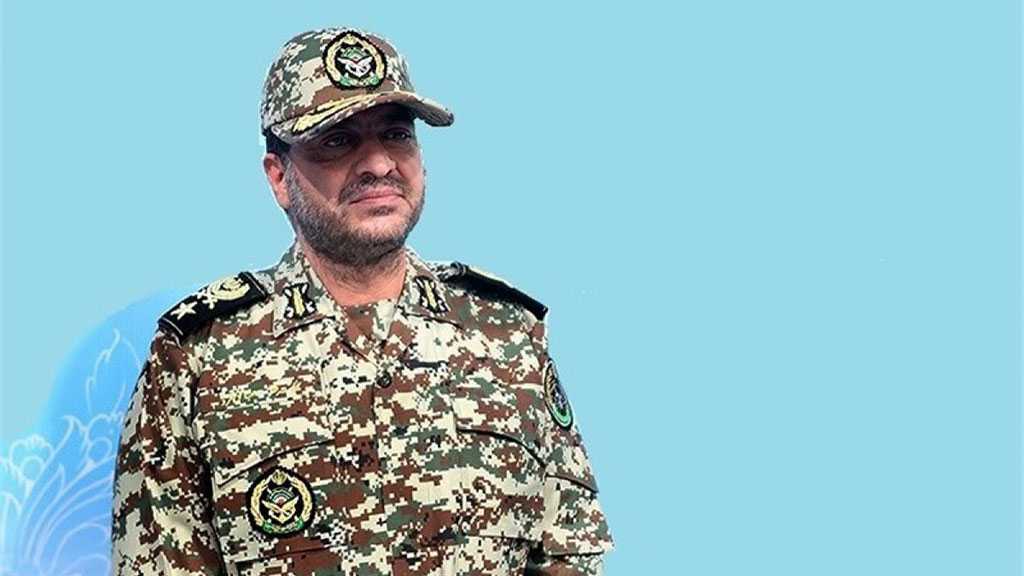
Iran’s Top Commander: Vigilant Air Defense Force Not to Allow Any Aggression

 August 12, 2021

Iran’s Top Commander: Vigilant Air Defense Force Not to Allow Any Aggression

By Staff, Agencies 

Iran’s Air Defense Forces Commander, Brigadier General Alireza Sabahi Fard, confirmed that his forces   is keeping “a watchful eye” on the country’s strategic regions and will not allow any act of aggression by the enemy to go unnoticed.

While visiting the air defense center in the southeastern port city of Chabahar on Wednesday, Fard said that committed and expert personnel of air defense defend the country with a watchful eye, stressing, “We will not allow any mistake by the enemies for the sake of our authority and dignity.”

“The units of this force, by [exercising] intelligence, vigilance and keeping a watchful eye, will not allow any aggression by outsiders,” he added.

The top commander further noted that the northern Indian Ocean and the strategic region of southeastern Iran are under full surveillance of the air defense, stressing the region enjoys complete security.

Fard said the Chabahar air defense center is in charge of monitoring the sky of a part of the country where there is a lot of air and sea transportation to the Strait of Hormuz and the Gulf, as well as to East Asia and Central Asia, adding that various types of surveillance equipment are deployed to the region to monitor any moves.

“All kinds of completely indigenous electronic interception, radar and missile systems, which are the result of round-the-clock efforts of the youth of this border and region, are deployed in this area, and the enemies know that we are very close to them in the region and we even monitor their breathing,” he added.

The senior commander reiterated that Iran’s air defense has long been capable of detecting and monitoring any flying object with any radar cross-section and uses powerful systems and weapons for tactical and defensive actions against offensive forces.


River to Sea Uprooted Palestinian   
The views expressed in this article are the sole responsibility of the author and do not necessarily reflect those of the Blog!

Tuesday, 10 August 2021

UN Security Council high-level debate on maritime security

August 09, 2021

UN Security Council high-level debate on maritime security

http://en.kremlin.ru/events/president/news/66352

The event took place at the initiative of Prime Minister of the Republic of India Narendra Modi. India holds the presidency of the UN Security Council in August 2021.

* * *

President of Russia Vladimir Putin: Mr Prime Minister, my dear friend, Mr Modi, ladies and gentlemen,

Let me thank you, Mr Prime Minister, for the fact that you, as someone who is currently holding the UN Security Council presidency, convened this Security Council meeting to discuss an important and sensitive topic, namely, modern challenges and threats in maritime security. Your initiative is in line with the constructive role that India has traditionally played in the international arena, thus contributing to the promotion of multifaceted, mutually beneficial and equitable cooperation.

The seas and oceans have always connected people and civilisations. Unfortunately, sea routes are fraught with many threats. That is why it is important that today we are reviewing substantive practical matters related to fighting “21st century piracy” meaning to establish a more effective counteraction to transnational crime and prevent the use of seas and oceans for criminal purposes.

As you, Mr Prime Minister, aptly mentioned in your remarks, for us to achieve meaningful success in this area, we must unite the efforts of all stakeholders, as well as international organisations and regional associations with the central coordinating role of the UN and the UN Security Council.

I have said it more than once and now, addressing the Security Council members, and I would like to reiterate that Russia stands for strict observance of the key norms and principles of international law enshrined in the UN Charter, such as respect for sovereignty, non-interference in internal affairs and resolution of disputes by way of dialogue.

I hope that the participants in our debates will agree that the UN principles are mandatory in the sphere of peaceful and responsible use of marine spaces, their natural resources, protection of the marine environment, and sustainable economic activity in the vast swathes of our planet covered by water.

As a leading maritime power, Russia is doing much to preserve and strengthen the international legal order as it applies to maritime security. Our country is strongly involved in activities covering the entire range of these issues both at the UN and as part of numerous regional formats, including the Contact Group on Piracy off the Coast of Somalia, the ASEAN Regional Forum and East Asian summits.

Russia is also interested in building productive cooperation with the Indian Ocean Rim Association and the Indian Ocean Commission.

And, of course, we are trying to help ensure security in the Persian Gulf zone and the Gulf of Guinea in the Atlantic, where cases of sea banditry with hostage taking have become more frequent.

The specific nature of the situation is that it is really difficult for some countries to defend themselves from international criminal syndicates, pirates and terrorists. This is why there is the matter of uniting the power potential of all the interested countries’ special services and corresponding troops under the auspices of the UN.

Russia is ready to further share its experience in antiterrorist operations as well as in preventing crime, and identifying and eliminating bandit groups, including at sea.

We believe it would be useful to regularly exchange insights and best practices in countering terrorism, armed robbery and criminal activities at sea.

In this context, it would be feasible to think about establishing a special structure within the UN that would directly address problems related to combatting maritime crime in various regions. At the same time, this body would rest on UN member states’ support and actively involve experts, representatives of civil society, researchers and even private businesses in its work. We hope that our partners would consider Russia’s proposal constructively.

In conclusion I would like to reaffirm that the Russian Federation is committed to the common task of countering crime at sea in all its forms. We are ready to further promote the development of equal international cooperation in this area.

I would like once again thank our Indian friends for this useful initiative to hold this meeting today and to wish India continued success in implementing its functions as president of the United Nations Security Council this month.

Colleagues, thank you for your attention.


River to Sea Uprooted Palestinian   
The views expressed in this article are the sole responsibility of the author and do not necessarily reflect those of the Blog!

Saturday, 22 February 2020

Russian naval presence in Indian Ocean


By Nat South for The Saker Blog
I am interested in the way that narratives that shape individual events are crafted, curated and disseminated, because ultimately there is a tendency to focus mostly on specific events and ignore the wider context. Ultimately, we end up with being presented with a series of disjointed events, not really understanding the history or the detailed framing of these events. One such example would be “Russian ships are prowling around undersea cables”, in the tenor of overstating the Russian threat. Often, the complexity and background of the issue is left completely blank and important facets are blurred. At worst, we are simply presented with a series of ‘soundbites’ such as this stark example: “Russia invaded Crimea”.
The starting point for this naval oriented briefing is the widely reported incident between a U.S. Navy destroyer and a lightly armed Russian navy intelligence reconnaissance ship somewhere in “northern Arabian Sea”. The U.S. Fifth Fleet alleged that on January 9, a Russian Navy ship ‘Ivan Khurs’ (AGI),“aggressively approached” USS Farragut, an Arleigh Burke DDG (guided missile destroyer), “conducting routine operations in the North Arabian Sea”, (in the words of the U.S. Navy press release). Subsequently, Moscow dismissed Washington’s claims.
Note the tone of stating “aggressively approached”, not really a nuanced interpretation of events. What wasn’t mentioned the likelihood that this took place not far from the carrier, ‘USS Harry S. Truman’. No context whatsoever was provided by authorities on this incident. A classic example of a specific event being framed without any further details as to why and how it happened. Nothing mentioned on what took place before the video snippets that don’t make much sense. What is the wider context to this incident? (More on this specific incident later on in this article).
Without getting into details on the well-publicised Iran / U.S. tensions and U.S. naval deployment to the region, I would like to turn to other broader aspects touching upon the Russian naval presence in the region. In January, a series of articles appeared on the geopolitical aspects of the Indian Ocean, such as this on China’s increased presence , “the Russians are coming”, and this that gives an all-round Indian focused overview. Taking an excerpt from the latter:
“During the unipolar moment from 1991 till 2010s, Washington still felt comfortable in its position; however, over the last few years, the situation has changed dramatically.”
The most recent element in the turning point that shows the dramatic change would certainly be the late December trilateral naval exercise between Russia, Iran & China. The high-profile, three-day naval exercise took place in the Indian Ocean and Gulf of Oman and Arabian Sea. Although not a major strategic exercise, the naval drills conveyed a slight political undertone, particularly with the presence of the Chinese Navy. China’s regional policy remains the same, to engage with all countries in a cautious and balanced manner. This is reflected by the fact the PLAN also held joint naval exercises with Saudi Arabia in November 2019, with the practically the same theme of enhancing maritime security.
The Pentagon’s plan for continued domination of the sea lanes of the Indian Ocean as per Mahan Doctrine in a unipolar world, is started to be eroded by the presence of the Chinese People’s Liberation Army Navy, (PLAN). On paper, the numbers involved is very small compared to the overall U.S. Navy presence in the region. Yet, Chinese encroachment into a space seen by Washington as their turf is already enough of an issue to warrant increased attention in recent years. So far, this has resulted in the creation of dedicated military structures, namely the Indo-Pacific Command, (USINDOPACOM) in 2018 and the release in June 2019 of a US military strategy report specifically on the region.
On top of all of Washington’s angst, is also the presence of the Russian Navy in the region. So, are the Russians just coming to the region now? No. The only noticeable change of recent is the taking part in multi-national exercises, (in Iran and South Africa) jointly with the Chinese.
The Russian Navy has been an occasional visitor for two decades, limited to one combat ship with two support deploying to either bilateral exercises or simply showing the flag as part of naval diplomacy. Take for example the annual bilateral exercises between Russia with India since 2003, (INDRA), with Pakistan since 2014, (Exercise Arabian Monsoon). Both of which are aimed at: “increasing inter-operability amongst the two navies, developing common understanding and procedures for maritime security operations.” Both activities clearly underline the “naval diplomacy” being used by Russia, striking a balance between two significant opposing countries.
What is changing is the nature and format of other newer joint or multilateral exercises. A glimpse of this is the Army International Games “Depth-2019”, competition in July 2017 in Iran. The Black Sea Fleet based rescue tug “Professor Nikolai Muru”, (Project 22870), made a first-ever passage to the Gulf to participate in the event. Insignificant, in the greater scheme of things, probably yes, but interesting the Russian Navy did this.
Lastly let’s not forget that the Russian Navy had infrequently participated in the Horn of Africa anti-piracy missions, probably best remembered by an epic video of the Russian Navy dealing with a pirate boat. Conversely, the PLAN has been a more consistent participant of these types of missions for almost two decades. Nevertheless, as I write this, the Baltic Fleet based ‘Yaroslav Mudry’ is out in the region having recently called in to the Omani port of Salalah. It is in the Gulf of Aden as part of the latest Russian anti-piracy deployment to the Indian Ocean.
A first in the Southern Hemisphere took place in late November 2019 in Cape Town, when Russia and China held their first trilateral naval exercise with South Africa. Exercise ‘Mosi’ was the first time that three countries belonging to BRICS exercised together. Participants included a type 054A frigate Weifang (550) and Slava-class Project 1164 cruiser Marshal Ustinov (055) and the South African Valour class frigate ‘Amatola’.
9th January 2020
Back to the 9th January incident, reminiscent of the era of the Soviet Navy, when there were numerous ‘interactions’ of this kind on and below the waves. Any naval Cold War veteran is able to attest to this. An example of maybe hundreds of incidents and accidents is when the Soviet destroyer ‘Bravyy’ on 9th November 1970, while observing a NATO exercise, collided with the British aircraft-carrier HMS Ark Royal. Other notable incidents were the Black Sea “bumping incidents”, although the context for this was slightly different, taking place in home waters, involving both the USS Caron and the ‘USS Yorktown’, under the activity of “innocent passage and freedom of navigation”. An issue that still provokes intense debate and U.S. FONOP activities, (notably in the South China Sea) as mentioned in a previous article on the Arctic. A snapshot of this rationale for carrying out freedom of navigation voyages can be found in the introduction of a paper presented here.
I had a deja-vu feeling when I heard about this incident. It seems to me practically a re-run of the ‘USS Chancellorsville’ & ‘Admiral Vinogradrov’ incident back in June 2019. I see that many instant experts on Rule 15 have suddenly popped up on social media, hence this specific commentary.  Essentially several things could have done been done to avert this close call situation. The U.S. ship could have speeded up considerably to give the Russian ship more sea room to cross astern with plenty of space. There’s a lot more to this incident than just the videos extracts released by the U.S. Navy. However, this and the June 2019 incident needed to be contrasted with the shenanigans done in 60, 70s and also the 1988 Black Sea bumping incidents. Personally, this is pretty tame stuff in comparison.
The question is why this happens in this manner, (maybe due to saving face or not backing down). The carefully selected excerpts of videos, showing a fraction of the incident in question don’t help to understand the length, context or extent of the incident. The tetchy moments on who had ‘right of way’ (the nautical version of the Road Code – known as COLREGS) regarding the ‘Ivan Khurs’ close encounter with ‘USS Farragut’ can be regarded as just a “braggadocio” event aimed at media sensationalism. Well, not quite. There’s more the story than what it first seems.
As with the June 2019 incident, the U.S. ship was on the port side of the Russian vessel, considered to be a “Constant bearing, decreasing range” (CBDR) situation. Many arguments happened over whether the Ivan Khurs was in crossing situation or overtaking one, (was it 22.5 / 30 degrees angle? Essentially that’s a redundant point given the closeness and the continued CBDR situation, running out of safe sea space). A grey area well-known to mariners, hence the need to be quite clear in intentions from the outset. The video excerpts are equally unhelpful in determining the situation since some time must have passed between the video snippets.
The question that no one asked was why did both sides act early enough to avoid such close approach in the first place. It seems to me, in general one side was blatantly ignoring the CBDR situation and the finer points of Rule 15 or 17 COLREG, while the other won’t try or consider slowing down or bearing away from US ship. Essentially, a total farce where both sides seem to wind each up until the last minute, when finally, the U.S. destroyer actually opens up a bit the throttle. Given that it is a DDG, I’m sure that the USS Farragut has a higher speed than the ‘Ivan Khurs’, so the Russian ship can cross astern safely. Seemingly, neither budged and importantly both sides were basically ignoring parts of Rule 8 which sets out good seamanship practice, well before the Rule 15/17 situation arose, as both had each other on radar and visually for many nautical miles.
The other question is why did this incident occur? Essentially, eyeing each other for intel gathering. Scenario 1: I suspect it is the U.S. ship taking a keen interest, given the ‘Ivan Khurs’ is a probable newcomer to the waters, but was this was close to the area of the U.S. carrier operations. Scenario 2: Possibility of the USS Farragut either wanting to keep the Russian ship away from the U.S. carrier or maybe possibly deploying ASW array.
Of interest to note is the ad hoc presence of Russian AGIs and intelligence reconnaissance ships in the vicinity of U.S. carrier groups. This has been the case elsewhere, in the Eastern Mediterranean particularly, but seemingly a first for the Arabian Sea, (in many decades).
Summary
The Russian Navy is not the Soviet Navy in scope or numbers. As such the remaining current cold war era CCGs & DDGs that visit the region will gradually fade away, to be replaced by a smaller fleet of FFGs & corvettes; yet it will continue to visit the Indian Ocean. Although many pundits see this as a growing Russia’s return to the Indian Ocean as being relatively recent, when in fact it isn’t. So, the muted outcry by Washington of “the Russians are coming” is rather feeble and reveals a deep level of geopolitical insecurity. To paraphrase the Chinese delegate’s question at the Munich Security Conference recently, (see here):
“Do you really think the U.S. Navy presence in the Indian Ocean is so fragile it could be threatened by the occasional visit of Russian and Chinese warships?”
Seemingly yes.
Russia has a new limited strategic presence in the Middle East and Africa and the naval visits are part of the bigger picture. Russian presence will continue given the backdrop of the U.S. public wish for an expansion of a NATO footprint into Gulf & Iraq, adding to the ongoing presence in Afghanistan since 2001.
Russia also has defence-cooperation agreements with about 15 African countries. This is somewhat reflected in the port call make by the ‘Marshal Ustinov’, (en route to South Africa, including Egypt & Algeria, Equatorial Guinea and Cape Verde.
NB:The ‘Marshal Ustinov’ also called into Greece, Cyprus, Turkey (some are NATO countries).
By looking at the Russian Navy’s timid visits, the Indian Ocean is not a high priority regarding Russian maritime presence. Nevertheless, Russia has certainly stepped up its naval diplomacy in the region in different ways, making infrequent regular yearly visits to ports in the region, such as Pakistan, India and Sri Lanka and high-level working visits by heads of navies. Russia is also attentive to maintaining special relationships that it already has with countries like India and Pakistan.
Lastly, I cannot compare the minuscule presence of Russian Navy in region with that of the PLAN which is quickly building a larger force projection capability than the Russian VMF can realistically hope for these days. Let’s be frank, the Chinese PLAN is expanding considerably each year. 2019 alone saw another: 1 aircraft carrier, 1 LDP, 1 LHD & eight 7000t & two 13000t destroyers commissioned) plus 17 corvettes in one year!) The new tonnage must eye watering hard for the West to contemplate.
Further Reading
See this detailed article below I entirely agree with the author, as a civilian ex-mariner.
Extra information on the geopolitics of the Indian Ocean:
Indian Ocean: strategic hub or zone of competition? https://uwidata.com/7211-indian-ocean-strategic-hub-or-zone-of-competition/
An visual overview of both recent Chinese and Russian naval port visits in the Indian Ocean is presented on the blog Warvspeace.org

Nat South’s sideline is occasionally commenting on maritime & naval related subjects ,with a special interest in the polar regions.

River to Sea Uprooted Palestinian   
The views expressed in this article are the sole responsibility of the author and do not necessarily reflect those of the Blog!