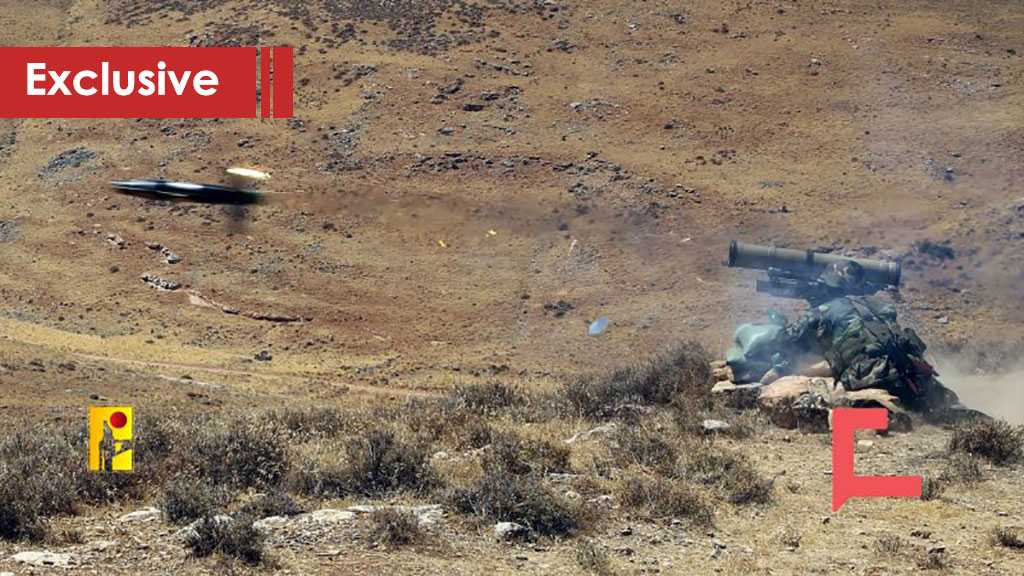
Showing posts with label Hezbollah Versus IOF. Show all posts

Friday, 12 November 2021

Sayyed Nasrallah: ‘Israel’ Holding More Military Drills for Fear of Hezbollah Invasion, Saudi Pressure on Lebanon Targets Resistance

Hezbollah Secretary General Sayyed Hasan Nasrallah stressed on Thursday that the Resistance martyrs are an immense moral, spiritual, and emotional fortune in our cities, villages, families and tribes.

Addressing Hezbollah ceremony on Martyr Day held separately in Beirut’s Dahiyeh, Southern Lebanon, Mount Lebanon and Bekaa, Sayyed Nasrallah called for reviewing the wills of the martyrs loaded with religious and moral lessons.

Sayyed Nasrallah highlighted the noble stance of the martyrs’ families who repeatedly affirm their readiness to make more sacrifices, hailing their steadfastness in this regard.

Hezbollah leader indicated that the martyrs’ blood has led to several important achievements, including the liberation of the prisoners and the occupied territories, ongoing deterrence of the Israeli aggression, prevention of the civil war in Lebanon, frustration of US schemes to control Lebanon completely, and preservation of the nation’s freedom and independence.

Sayyed Nasrallah highlighted also how the Resistance managed to defeat the takfiri war on Syria, adding that the visit of the UAE foreign minister to Damascus represents an Arab acknowledgement of defeat in the terrorist campaign which some Arab regimes paid billions of dollars to fund it.

‘Israel’ afraid of Hezbollah Infantry

His eminence maintained that, for the first time since 70 years, ‘Israel’ shows fear on Lebanon’s border, adding that the Zionist army is drilling periodically because it is concerned about Hezbollah military capabilities.

The Zionists have added the term ‘Galilee’ to the confrontation formula, according to Sayyed Nasrallah who added that the Zionists are afraid of Hezbollah invasion of Galilee settlements.

“Regardless of the liberated region’s area, the consequences of Hezbollah invasion will be strategic, according to Sayyed Nasrallah who added that the Israelis take the military preparations of the Islamic Resistance very seriously.

Sayyed Nasrallah pointed out that the Israelis are afraid of Hezbollah infantry and its ability to conquer Galilee and the entire northern area in occupied Palestine, adding that the Zionist enemy is also concerned about the Resistance precision-guided missiles.

Neither the normalization deals, nor occupation sites, nor fences, nor fortresses would be able to protect ‘Israel’ from the Resistance fighters in Lebanon, Palestine and the entire region, Sayyed Nasrallah said.

Sayyed Nasrallah cited a partial US influence in Lebanon, adding that the statesmen often obey the US orders.

Regarding the demarcation of the marine borders with the Israeli occupation entity, Sayyed Nasrallah indicated that the Lebanese state must take a sovereign decision to confront the US pressures and insist on all the national rights, regardless of all the wicked US offers (Hof Line).

Sayyed Nasrallah emphasized that Hezbollah is ready to defend every grain of sand and drop of water in order to protect the national sovereignty.

Sayyed Nasrallah maintained that there are several instances of the US domination over Lebanon in several domains, adding, however, Hezbollah looks for a sovereign state that maintains equality among its citizens.

One of the simplest forms of preserving the national sovereignty is the rejection of the foreign dictates and pressures, Sayyed Nasrallah said.

Fabricated Diplomatic Crisis with Saudi

Hezbollah stressed that the Saudi reaction to the remarks made by the information minister, George Kordahi, is extremely exaggerated, adding that the Saudis did not react at all to similar remarks made by US and UN officials.

Sayyed Nasrallah asked, “Why has not Saudi Arabia that claims to be following the Islamic ruling system and its king alleges to be the Custodian of the two Holy Mosques, react to figures, communities and governments which abused and insulted the Prophet?

“Were Kordahi’s remarks more abusive than the insults against Prophet Muhammad?”

Minister Koradahi did not use offensive terms while criticizing Saudi Arabia who stirred up the trouble in order to confront Hezbollah, according to Sayyed Nasrallah who recalled the Saudi role in inciting the Israelis against Lebanon during 2006 War.

Sayyed Nasrallah indicated that Saudi does not deal with Lebanon as a friend, citing the two instances of Iran and Syria which take positive attitudes toward Lebanon despite the involvement of some Lebanese parties in insulting them and conspiring against them.

Sayyed Nasralah stressed that Hezbollah rejects the resignation of the information minister, adding that the Saudis will pressure the Lebanese authorities to make more concessions.

Sayyed Nasrallah explained that when the former foreign minister, Charbel Wehbe, resigned under the Saudi pressures, the KSA authorities did not show any positive reaction.

The ongoing Saudi pressure on Lebanon is part of the ongoing battle with the Resistance, according to Sayyed Nasrallah who noted that Riyadh wants its allies in Lebanon to engage in a fight against Hezbollah and ignite a civil war.

Saudi War on Yemen

Hezbollah Secretary General stressed that the Iranians did not ask the Saudis during their recent negotiations to contact Hezbollah in order to end the crisis in Yemen, adding that Riyadh was advised to hold negotiations with Ansarullah Movement.

Sayyed Nasrallah reiterated that the end of the Yemeni crisis requires that Saudi halts the aggression and lift the blockade on Yemen, adding that the victories in Yemen were created by Yemeni leaders, brains, miracles and divine aids.

Sayyed Nasrallah also underscored that the Yemeni army and popular committees victory in Marib will be resounding, adding that the Saudi aggression will have completely failed after a 7-year costly war.

Hezbollah Reality in Lebanon

Sayyed Nasrallah indicated that Hezbollah is the largest political party in Lebanon, but that its influence in the Lebanese institutions is smaller than that of the other parties.

Sayyed Nasrallah refuted the claims about Hezbollah control of the Lebanese institutions by showing instances of the Party’s inability to change the official decision of the government, including the restoration of ties with Syria in order to sustain the economic cooperation in this regard, the approval of the Chinese, Russian and Iranian investments, and the recuse of the judicial investigator into Beirut Port blast as the Party sees he is politicizing the probe.

Sayyed Nasrallah also wondered how Iran, accused of occupying Lebanon, could not dock a diesel ship at a Lebanese port.

Tayouneh and Khaldeh Massacres

Regarding Tayouneh massacre, Sayyed Nasrallah stressed that its file is completely separated from that of the Beirut Port blast, denying any trade off in this context.

Sayyed Nasrallah stressed that what is required is the disclosure of truth and restoration of justice in both files, adding that Hezbollah wikll continue following up the investigations into the massacre committed deliberately by the “Lebanese Forces” till the criminal get punished.

Moreover, Sayyyed Nasrallah reaffirmed that criminals involved in Khaldeh massacre will be also punished, adding that Hezbollah will be then ready to hold any reconciliation in the town.

Source: Al-Manar English Website

Related Videos

Related Posts


River to Sea Uprooted Palestinian   
The views expressed in this article are the sole responsibility of the author and do not necessarily reflect those of the Blog!

Wednesday, 3 November 2021

As Hezbollah’s Military Might Grows, So Does ‘Israeli’ Fear

 Nov 1, 2021

As Hezbollah’s Military Might Grows, So Does ‘Israeli’ Fear

By Staff

‘Israel’ Hayom published an analysis piece by Lilach Shoval, in which she considered that ‘Israel’s’ most severe security threat in 2021 and perhaps over the next several years is Lebanon.

While the ‘Israeli’ military and Hezbollah have established mutual deterrence, officials in Tel Aviv estimate that the risk of an escalation is on the rise because tactical events could change the dynamics.

Hezbollah has its own fighters and weapons and continues to strengthen its military capabilities, Shoval wrote.

Hezbollah Secretary General His Eminence Sayyed Hassan Nasrallah has in recent years created a kind of blood-for-blood discourse, threatening to retaliate against every ‘Israeli’ attack in Lebanon. He has also vowed to retaliate if an attack attributed to the Zionist entity on Syrian soil inflicts harm to Hezbollah members in the country.

Over the past 12 months, the Zionist military has grown increasingly concerned over a possible escalation because of repeated rocket launches from Lebanon, most recently during the 11-day ‘Israeli’ war on Gaza.

The author went on to say that “Hezbollah has more than 70,000 rockets that have a variety of ranges. It also has tens of thousands of mortar shells. Some of the rockets can strike a target at an accuracy of several meters. All this is a source of great concern for the ‘Israeli’ military.”

Additionally, the ‘Israeli’ military estimates that Hezbollah has about a hundred precision-guided munitions as well as the capability to produce more on an industrial scale. Zionist officials are worried that if Hezbollah’s efforts on this front are successful, the balance of power with the ‘Israeli’ would change dramatically.

Another threat posed to the ‘Israeli’ occupation regime is Hezbollah’s drones, antitank missiles, cruise missiles, and of course, its elite Radwan Unit, which includes several thousand fighters who cut their teeth in the Syrian war, Shoval added.

This accumulated experience has led to a perpetual change within the resistance group.

In this context, the author claimed that Hezbollah is preparing for a surprise operation against the ‘Israeli’ regime, during which if a war were to break out, it would deploy its forces to infiltrate the occupied territory and take over outposts or towns close to the border, thereby disrupting the ‘Israeli’ military’s ground maneuver capabilities.

Additionally, Hezbollah’s rockets pose a major challenge to the Iron Dome.

Meanwhile, the author concluded that the Zionist military has to bolster the combat worthiness of its ground forces, which are currently, not in their best shape.


River to Sea Uprooted Palestinian   
The views expressed in this article are the sole responsibility of the author and do not necessarily reflect those of the Blog!

Monday, 25 October 2021

The ‘Israeli’ Army Assesses Scenarios for Its Next War with Hezbollah

The ‘Israeli’ Army Assesses Scenarios for Its Next War with Hezbollah

By Staff

The military correspondent at the Maariv Newspaper, Tal Lev-Ram, discussed several potential scenarios that the ‘Israeli’ army is preparing for in case of a war with Hezbollah. The ‘Israelis’ are conducting assessments and developing strategies in an upcoming military exercise.

“The army expects two incidents related to hazardous materials in the city of Haifa over a three-week period, in addition to the targeting of the port with precision missiles that can be fired from the Lebanese side,” Lev-Ram explained.

He indicated that “the home front, the police, and the various rescue services will maneuver on this basis next month.”

“Amid Hezbollah’s developing capabilities in terms of the number and accuracy of missiles, our army has prepared several assessments of the damage that will occur in the war,” he added.

“These assessments are considered to be highly likely for the next confrontation scenario. After examining the data about Hezbollah’s capabilities as well as the capabilities of the ‘defense’ systems in the ‘Israeli’ army, the latter took into account that approximately 6% of the rockets launched by the party will hit urban areas and will not be intercepted by ‘defense’ systems.”

He pointed out that “in the industrial zone adjacent to Haifa Bay, there are many facilities housing hazardous materials that are expected to be targeted and cause a very large explosion, while releasing these hazardous materials.”

According to Lev-Ram, Tel Aviv is “very seriously considering the possibility of damage and the great threat from this scenario as the area is inhabited by a number of settlers who may inhale these dangerous materials.”

“Every year, prior to the home front exercise, the authorities assess scenarios attributed to the extent of the expected damage in their cities, so that they can prepare accordingly. Among other things, the heads of the emergency services and agencies in each local authority are required to plan their activities in order to be ready to evacuate about 4% of their settlers after their homes are directly or indirectly hit.”

Lev-Ram claims that “in recent years, efforts have been made to reduce the size of the threat by fortifying facilities in Haifa Bay or reducing the quantity and type of materials stored there, but it is still considered a strategic target for Hezbollah fire, as well as the seaports in Haifa and Ashdod.”

“The qualitative difference between the situation in the Second Lebanon War in 2006 and the situation today is that Hezbollah is accumulating accurate capabilities, a given that makes this threat very significant in the upcoming confrontations with the party,” the Maariv correspondent added.

“After the end of the maneuvers, which will begin on November 10 of this year, a joint exercise will be conducted by the Home Front Command and the various rescue services in Kiryat Shmona, which will simulate a missile hitting a factory containing dangerous materials.”

Lev-Ram notes that when it comes to hazardous materials, “one war room is supposed to work for all the relevant rescue services: the home front, the fire department, the police, the Magen David Adom, and additional government agencies.”

“After a complete fortification, the forces are supposed to work together with the factory management to determine the source of the leak of hazardous materials, in return the police will block roads to prevent citizens from entering the dangerous area.”

“The Home Front soldiers will work to evacuate the residents in accordance with the standards of the leakage of hazardous materials, the severity and level of danger, and the extent of its impact on residential communities in the area,” Lev-Ram said.


River to Sea Uprooted Palestinian   
The views expressed in this article are the sole responsibility of the author and do not necessarily reflect those of the Blog!

Tuesday, 19 October 2021

Anxious “Israel” Expects 2k Rockets A Day in Any War with Hezbollah

Anxious “Israel” Expects 2k Rockets A Day in Any War with Hezbollah

By Staff, Agencies

The “Israeli” entity does not want war with Lebanon’s Hezbollah, however, in order to avoid going through the 2006 war events again, it said it is prepared to face about 2,000 rockets a day from the resistance group if conflict breaks out, a senior “Israeli” military official told AFP.

In May this year, the “Israeli” Occupation Forces [IOF] waged an 11-day war against Palestinian resistance movements in the besieged Gaza Strip, who fired around 4,400 projectiles towards the apartheid entity.

The entity said its Iron Dome system intercepted around 90 percent of the rockets.

The rate of fire surpassed that seen in the entity’s 2006 war against Hezbollah, when a similar number of rockets were launched from Lebanon – but over the course of around a month – the IOF said.

In May, cities like Tel Aviv and Ashdod experienced the “highest number of fire towards them in the history of ‘Israel’”, said Uri Gordin, chief of the IOF’s “Home Front” Command.

“We saw a pace of more than 400 rockets fired towards ‘Israel’ on a daily basis.”

He said that in the case of “conflict or a war with Hezbollah, we expect more than five times the number of rockets fired every day from Lebanon to ‘Israel’”.

“Basically we are looking between 1,500 and 2,500 rockets fired daily towards ‘Israel’,” he told AFP.

Set up in 1992 after the first Gulf War, Gordin’s Home Front Command is responsible for readying the entity in case of threat, conflict or disaster. The unit was criticized for its response to the 2006 war with Hezbollah.

That war was a “wake-up call” for the “Home Front” Command, Gordin said, adding that it had since beefed up its liaison units, which are now active across 250 “Israeli” municipalities to provide assistance in case of any attack.

The “Home Front” Command uses computer projections to predict a rocket’s trajectory after it has been launched, and advises “Israelis”, within a specific range, to head to bomb shelters.

During the Gaza conflict in May, this allowed emergency services to “go to every incident within less than five minutes”, Gordin said from the control room of the unit’s headquarters in Ramla, near Tel Aviv.

He said preparations had been made for any incidents on the border with Lebanon.


River to Sea Uprooted Palestinian   
The views expressed in this article are the sole responsibility of the author and do not necessarily reflect those of the Blog!

Monday, 18 October 2021

‘US/Israel seek Lebanese civil war to derail a Hezbollah in its prime’: Kandil

 October 18, 2021

Visual search query image

In light of the recent massacre of seven protesters and the wounding of dozens of others in a highly sensitive district of Beirut, senior political analyst Nasser Qandil argues that the US and Israel are seeking to drag Hezbollah into a new Lebanese civil war that would rob the movement from engaging in a decisive war with Israel while in its military prime.

Days ago, on the 14th of October, at least seven people were killed and 60 others injured after unknown gunmen attacked Hezbollah and Amal supporters as they passed through Beirut’s sensitive Tayyouneh district as part of an organised peaceful protest.

In a joint statement, Hezbollah and Amal said armed groups belonging to Samir Geagea’s Christian Lebanese Forces (LF) Party fired at the protesters from rooftops, aiming at their heads, in an attempt to drag Lebanon into a sectarian civil war.

The Tayyouneh district is historically an area of political and sectarian sensitivity, as a key site in the outbreak and development of Lebanon’s Civil War (1975-1990).

Source: NBN via Kalam Siyasi (YouTube)

Date: October 17, 2021

(Note: Please help us keep producing independent translations by contributing a small monthly amount here )

Transcript:

Nasser Qandil, Senior Lebanese Political Analyst:

I hear those that (say) ‘they believe Lebanon is a priority (for the US to target)’. Indeed (it is), from the very first day that a resistance (movement in Lebanon) was born, (a resistance) that defeated and humiliated Israel, Lebanon became an American priority, because Israel was – and will always remain – an American priority. (It is only if) the resistance (in Lebanon) is defeated, only then will Lebanon no longer be an American priority.
 
Back in 2007, I saw an image of (former PM) President Fouad Saniora with (former) President George W. Bush on the White House lawn, and the news said that the Prime Minister of Japan was (meanwhile) waiting in the hotel; Lebanon is not more important than Japan (for the US), and (former) President Fouad Saniora is not more important than the Prime Minister of Japan either, but the resistance (in Lebanon) is indeed more important than the US interests in Japan, because it threatens Israel’s security and poses an existential threat to Israel’s future. (Therefore,) as long as this reality (i.e. resistance being an existential threat to Israel) increases and grows, and the American concern about it grows (in light of the) idea of (a US) withdrawal from the (Middle East) region, (the US worries) how (it) will leave Israel (behind with the threat of) this reality. Consequently, (US) activity for creating security belts for Israel is accelerating.

(Yet) from whom (does the US want to protect Israel)? Iran will not start a war (against Israel) – let’s say things as they are – Syria will not start a war (on the level of) states. The spearhead that can turn any confrontation in (this) region (between it and) Israel into a war –

Host:

– (is) the resistance in Lebanon (Hezbollah) –

Qandil:

– is the resistance in Lebanon, which the Israelis say (about it) – and that’s not me saying it – the Israelis say, and the Americans (themselves) say that the surplus power that Hezbollah now has at the level of the expertise of its fighters (gained) from the Syrian war, (these fighters) who are more than 50,000 and that possess contemporary (and advanced) combat experience, and (at the level of) the kinds of weapons that it has, (this powerful position of Hezbollah) may not be seen again. (They believe that) five years later, Hezbollah may not have this readiness (for war) which they have today –


Host:

– Why (is that)?

Qandil:

Because five years later, the resistance (in Lebanon) might not possess weapons more advanced than the precision-guided missiles (it currently has), while the Americans and Israelis might possess a more developed (weapon by then), at least this (current favourable position for Hezbollah) is not guaranteed (in the future), (while) now it is guaranteed that (Hezbollah) is the superior (force today), and (their weapons) are the more powerful/effective weapons. (Hezbollah’s) elite fighters that have just came out of a war still have the same vitality, readiness, and (required) experience to enter a new war. Five years later (however, according to US calculations), this (elite force) would be out of the battlefield, and a new generation that does not have the experience of the (previous elite) would be on (front lines instead) –

Host:

– For this reason, they are working on suppressing this (generation of elites) and producing a new generation; the fifth-generation (perhaps)?

 
Qandil:

No, they consider – the Israelis consider – that Hezbollah is ready for a war (against them) now, for that, we must pass up (Hezbollah’s) opportunity of dragging us into a war which they have the legitimacy (to start). They believe that Hezbollah is on full readiness (to start) a war. I’m not adopting (these views), I’m describing the American-Israeli view; they say that the issue of (intercepting) the fuel ships (coming from Iran to Lebanon) gives Hezbollah the legitimacy to start a war if we intercept them –

Host:

– (This would) justify (starting a war against Israel).


Qandil:

–  (Hezbollah) would obtain the legitimacy (to start a war) but they –

Host:

– The (Israelis) don’t want to go to a war against (Hezbollah) because (Hezbollah) enjoys full readiness –

Qandil:

– Yes, (that’s the point), in their opinion (Hezbollah) is now (fully ready for a war) –

Host:

– five years later, will (Hezbollah) no longer be ready for a war (against Israel)?

Qandil:

That’s (the US and Israel’s) reading of the matter, that they must avoid (going to a war against Hezbollah) during the (next) five years –

Host:

– So, for the next five years, the (preferred US-Israeli war is the war –

Qandil: 

– a Lebanese civil war –

Host:

– that (seems to be) brewing today. They would distract (Hezbollah) with internal (affairs and issues) –

Qandil:

– Exactly!

Host:

– They’re betting (their hopes on Hezbollah’s loss of) this readiness five years later –

Qandil:

– Exactly! (Hezbollah, according to their perception,) will be drained and have lost the moral high ground (that it enjoys today), and that’s a very significant matter; Hezbollah (is) a pure force (i.e. committed to morals/ethics etc) no matter how hard they try to slander it –

Host:

– The balance of power will change too.

Qandil:

– (but) when (Hezbollah) takes part in the civil war ‘game’, it’ll no longer be the same (party) it was, it will turn into a local militia (fighting) with (other) local militias. Even the majesty of (Hezbollah’s) power will erode by (its very participation in) the civil war, as it is different from wars that we’re familiar with, (such as) wars against Israel and other (enemies threatening Lebanon). Consequently, (dragging Hezbollah into a civil war) is necessary for the erosion of its moral and material strength. Therefore, the American-Israeli decision, after their failure in turning the October 17 (2019 protests) into a revolution against Hezbollah (under the false pretext that it is the party) responsible for the (Lebanese) economic crisis and the prohibition of cash flow into Lebanon – after this failure – the alternative (plan) is (exploiting) the (Beirut) Port (explosion) investigation case and triggering the Christian street with militia formations to lure Hezbollah into a civil war –

Host:

–  And (Hezbollah) will not be tempted (by this incitement).

Qandil:

Until now…

Host:

Those are dangerous words! What (do you mean by) ‘until now’?

Qandil:

Let me explain to you –

Host:

Why (would they be lured into a civil war)?

Qandil:

(In) my opinion, there is always a limit to which leaderships can control the (rage) of the public, and those who know the history of wars would understand this idea; we are currently before – there are opinions that have begun to emerge among the Shias –

Host:

– ‘Why didn’t we continue (the fight in Tayyouneh), we would’ve beat them up…’

Qandil:

(Yes, and talk such as) ‘we always adopt stances of chivalry, we get slaughtered and killed, and you (leaderships) tell us (to be) patient and endure (the harm that is targeting us); they did (the same) to us in Khaldeh, and Badaro as well, and tomorrow they’ll (attack us for the) third and fourth time’ –

Host:

– And (they attacked Shias) in…I forgot what’s the name of the town, near the Lebanese borders…

Qandil:

Yes, in southern (Lebanon), in Chouaya.

Host:

Yes, (I meant) Chouaya.

Qandil:

If we reach a moment where – God forbid – the focal point that is supposed to deal with (a certain attack) is one of the (Shia) tribes (in Lebanon), and the Amal and Hezbollah leaderships fail to control them, and (if the events take place) in an area in which control is not organized (by certain political leaderships); an area in which, if a tribe was attacked, and the people respond (to the attack) – I’m giving scenarios (as an example) –

Host:

– So, the scheme to create a civil will remain (a major threat today) –

Qandil:

In 1975, Imam Musa al-Sadr (may God reveal his whereabouts), why did he go to the town of al-Qaa? Because the problem was made up there (in al-Qaa) such that the people of the (Shia) tribes would attack al-Qaa; a problem was made up (to drag Shia) tribes ( in a war against Christians), so (Imam al-Sadr) had to go and sit in the church and say ‘I would defend this church with my ‘amāmah (turban) and jubbah (gown)’, because he felt that the target (of the made up events) was to trigger a response (from Shia tribes in that region).

Okay, so Mr (Nabih) Berri would do it once (i.e. call people to control their rage and follow the orders of the leadership), his eminence Sayyed (Hassan Nasrallah) would do it too, (but) if the scheme (of dragging Lebanese people into a civil war) is ongoing, if there’s no general national climate that would react to this threat (with wisdom) and (take the necessary) steps at that level, if (we keep acting upon) the prevailing mentality in security, judiciary, and political (affairs in Lebanon) that is the mentality of ‘Abu Melhem’ (i.e. a TV character that’s referred to in Lebanese culture to denote a person who proposes reconciliation and peaceful solutions in all dispute) to (resolve issues) with courtesy, using (words like) ‘disputes’  (to describe severe problems), and (calling for) controlling a situation (whenever an issue arises) –

Host:

– (falling into a civil war) would be inevitable (in that case)? –

Qandil:

(We) will then be in (grave) danger (of falling into a civil war) – in my opinion – we will be in (grave) danger.


Related Videos

Related Articles


River to Sea Uprooted Palestinian   
The views expressed in this article are the sole responsibility of the author and do not necessarily reflect those of the Blog!

Friday, 15 October 2021

Snipers from Rooftops, Testing out a Third War قناصون من البنايات.. تجريب الحرب الثالثة

14 Oct, 2021
See related image detail

Source: AlMayadeen

Mohammad Faraj

The Third War’s main target is to incite domestic tensions by politicizing the Beirut Blast investigations and directing accusations towards one public.


Visual search query image
The third war focuses on igniting internal tension using various tools.

“Israel” and the US have experienced two wars against the Resistance in Lebanon – the first of which was a direct confrontation in July 2006. According to a study by Anthony Cordesman published by the Center for Strategic and International Studies (CSIS) in Washington, the 2006 war had 3 main goals:

The first was the total destruction of Hezbollah’s missile capabilities, in particular, its medium and long-range arsenal, in addition to extinguishing the organization’s military infrastructure in general. The second was restoring “Israel’s” reputation in the region, especially after their humiliating defeat and retreat from the South of Lebanon in 2000. The third goal is to weaken the Lebanese government, rendering the country engrossed in a waning political environment, engulfing a feeble resistance. Observing these three goals, alongside the glaring aftermaths and conditions of the war on Syria over the past ten tears, one could say that none of these goals have come close to completion.  

In fact, Hezbollah’s military arsenal has developed, “Israel’s” image has exponentially deteriorated, despite the fact that the political situation in Lebanon has been in continuous turmoil and decline.

After the Israeli failure on the battlefield, the focus was shifted to a new type of war (The Second War): It hinges on waging a “War of Ideas” – as publicized by the RAND Corporation – coupled with a “Media War”, by dedicating immense budgets to paint the Resistance and Iranian foreign policy in a sectarian light, a smearing strategy repeatedly advocated by Carnegie Endowment. 

The Second War did not achieve the strategic goals the US and “Israel” were vying for, although the rising sectarianism in the country has brazenly affected multiple arenas; this could be found in the clear-cut wedge between those who promote normalization and those who fight against imperialism. What makes this divide distinctive is that it is not restricted to intellectual and elitist circles, but has rather seeped into the population as a whole.  

“Israel’s” failed experience with the full-scale war in 2006, with its adamancy to carry on the model of the Second War, the Third War’s main target is to incite domestic tensions with a number of means. This means politicizing the August 4 Beirut Blast investigations by directing accusations towards one public, hence setting a number of officials as scapegoats in an attempt to generate chaos.  

Beginning with the sniping at a funeral in Khaldeh, to another shooting at peaceful demonstrators at Adlieh, with deaths and injuries piling after every event, one cannot detach the sequence of events from an Israeli logical framework that has, through history, employed small tools with large effects. In other words, when the Second War failed to scale up sectarian tensions into a civil war, the Israelis placed a number of snipers and armed men atop buildings: Blood will only beget blood, and disaster will loom on the horizon.

However, what happened at Adliyeh isn’t exclusive to Lebanon: The pattern could be observed across multiple grounds – what happened in Iraq is subject to the same logic and sequence. The abrasive war eventually spawned a resistance, the Popular Mobilization Forces (PMF), which compelled Biden to withdraw from Iraq before the end of the year and to tone down on his camouflaged rhetoric, forcing him to stick to advisory missions. In the midst of experiencing vicious terrorism over the years, the PMF was exposed to sectarian propaganda in Iraq – the War of Ideas – before facing the Third War where domestic tensions arose, elections were tampered with, and public fury-inducing normalization conferences were organized in the north. With its power to provoke and incite unrest, this sequence of events equates to snipers aiming their weapons from Beirut rooftops at the heads of peaceful protesters. 

Domestic tension is the upcoming theme of the season, as “Israel” grows more and more desperate. With time, “Israel” realizes that the motions of the region’s geopolitics are moving against its interests, especially as the US rolls back its withering empire. In the upcoming phase, “Israel” will display a frantic obsession with instigating internal chaos. This behavior refers back to its desire for larger “presents” from the US before further withdrawal. 

“Israel” flounders amid unprecedented regional settlements, an experience it never dealt with, even following its previous wars. 

The opinions mentioned in this article do not necessarily reflect the opinion of Al mayadeen, but rather express the opinion of its writer exclusively.

Related News

قناصون من البنايات.. تجريب الحرب الثالثة


ما جرى أمام منطقة “العدلية” في بيروت ليس حدثاً لبنانياً خالصاً، فما جرى في العراق يخضع للمنطق نفسه والتسلسل نفسه.

Visual search query image
تركّز الحرب الثالثة بشكل أساسي على تحفيز التوتير الداخلي بأدوات مختلفة، وحصة لبنان من هذه الأدوات هي تسييس مسار التحقيق.

حربان جرَّبتهما “إسرائيل” والولايات المتحدة ضد المقاومة في لبنان؛ الأولى كانت الحرب المباشرة التي تكثّفت في لحظة تموز/يوليو 2006م، والتي تكثفت أهدافها في 3 أهداف أساسية، بحسب دراسة أنتوني كوردزمان في مركز الدراسات الاستراتيجية والدولية في واشنطن، الأول تدمير القوة الصاروخية لحزب الله، وتحديداً الترسانة المتوسطة والبعيدة المدى، وتدمير بنيته التحتية العسكرية بشكل عام، والثاني إعادة الهيبة لـ”إسرائيل” بعد الانسحاب الذليل والمر من الجنوب في العام 2000م، والثالث هو العمل على تأسيس حالة سياسية تتكوَّن فيها حكومة لبنانية ضعيفة ومضطربة، تضبط مقاومة ضعيفة. 

بعد التأمل في الأهداف الثلاثة، وسحبها أيضاً على مناخات الحرب على سوريا خلال عشرية النار، يمكن القول إنها فشلت جميعاً ولم تتحقق، فالقدرة الصاروخية لحزب الله تطورت، وصورة “إسرائيل” استمرّت بالتراجع، والمناخات السياسية في لبنان عانت الأمرّين، إلا أنّ الحالة التي بحثت عنها “إسرائيل” لم تتحقّق. 

بعد الفشل الميداني الإسرائيلي، بدأ التركيز على نمط جديد من الحروب (الحرب الثانية)، وهي التركيز المسعور على حرب الأفكار (كما روّجت مؤسسة “راند” البحثية في أكثر من مناسبة)، وحرب الإعلام، وتكريس الشق الأكبر من الميزانيات والأموال لمصلحة محاولات تطييف المقاومة، ومحاولة وسمها بمقاومة طائفية، ومحاولة تطييف السياسة الخارجية لإيران بالترافق مع كل ذلك (كما روّج مركز “كارنيغي” في أكثر من مناسبة).

لم تتحقّق النجاحات الاستراتيجية المرجوّة أميركياً وإسرائيلياً من الحرب الثانية، فحالة الشحن الطائفي التي لا ينكر أحد نجاح مفاعيلها في الجولات الأولى في أكثر من ساحة، تفرّغ الحيز الأكبر منها بشكل ضمني مع الفرز الواضح بين محور التطبيع ومحور المقاومة، وميزة هذا الفرز أنه لم ينحصر في دوائر النخب والمثقفين، إنما امتدّ شعبياً، كجزء من ملاحظات المواطنين الاعتيادية.

مع عجز “إسرائيل” عن إعادة تجريب الحرب الأولى (المباشرة الشاملة)، ومع إصرارها على استكمال نموذج الحرب الثانية (حرب الأفكار)، تركّز الحرب الثالثة بشكل أساسي على تحفيز التوتير الداخلي بأدوات مختلفة، وحصة لبنان من هذه الأدوات هي تسييس مسار التحقيق، والعمل على وضع جمهور محدد في خانة الاتهام المباشر ومحاولة استفزازه.

من أحداث منطقة خلدة، وقنص أشخاص يسيرون في جنازة، إلى قنص متظاهرين سلميين أمام العدلية، وإحداث إصابات خطيرة وسقوط شهداء، كلّ ذلك يسير في فلك المنطق الإسرائيلي القائم على استخدام أدوات صغيرة قد تحدث نتائج كبيرة. 

بمعنى آخر، إن لم تنجح حرب الأفكار في إشعال نار حرب أهلية، يتمّ استخدام عدد محدد من المسلّحين والقناصين الذين يطلقون النار من أسطح البنايات، لعلّ الدم يجلب الدم، وتتدحرج كرة النار.

ما جرى أمام العدلية ليس حدثاً لبنانياً خالصاً، فما جرى في العراق يخضع للمنطق نفسه والتسلسل نفسه، فالحرب المباشرة أنتجت في نهاية المطاف مقاومة أجبرت الرئيس الأميركي جو بايدن على التصريح بالخروج قبل نهاية العام، وأجبرته كذلك على تحييد اللغة الرمادية والمموّهة (الإبقاء على مهمات استشارية).

وبعد الحرب المباشرة، وخلال تعرض العراق لموجة إرهاب عاتية، تعرّض الحشد الشعبي لدعاية التطييف ذاتها (حرب الأفكار)، وها هو اليوم يواجه الحرب الثالثة في العراق، وهي توتير الداخل من خلال التدخل في الانتخابات أو تشجيع مؤتمر تطبيعي في الشمال يستفز الجمهور العراقي. إن ذلك فعلياً مكافئ تماماً لمبدأ قناصين على أسطح بنايات في بيروت. 

توتير الداخل هو العنوان الأساسي للجولة الإسرائيلية اليائسة القادمة، التي تعرف أنَّ المسار الاستراتيجي يسير ضد مصالحها، ولا سيما مع التراجع الأميركي.

“إسرائيل” تحديداً ستكون مهووسة خلال الفترة المقبلة بمناخات التوتر. ويعود السبب في ذلك إلى أنها تريد حصد أكبر قدر ممكن من الهدايا الأميركية قبل المزيد من الانسحاب. إنه الصراخ “الإسرائيلي” في مخاض التسويات الذي لم تجربه سابقاً، حتى بعد الحروب.

إن الآراء المذكورة في هذه المقالة لا تعبّر بالضرورة عن رأي الميادين وإنما تعبّر عن رأي صاحبها حصراً


River to Sea Uprooted Palestinian   
The views expressed in this article are the sole responsibility of the author and do not necessarily reflect those of the Blog!

Sunday, 19 September 2021

Haaretz: In Countering Hezbollah, “Israel” Has a Long-term Problem!

 September 18, 2021

 Haaretz: In Countering Hezbollah, “Israel” Has a Long-term Problem!

By Staff, Haaretz

The “Israeli” entity excludes the option of a future war with the Lebanese resistance movement Hezbollah anytime soon. However, the “Israeli” daily Haaretz sees that in the longer term, the entity has a problem.

Haaretz military analyst Amos Harel says the “Israelis” are well aware that Hezbollah has gained strength and experience. The group is said to have more than 70,000 rockets, and if mortar bombs are included, the number is almost double. The rockets cover every spot in the “Israeli”-occupied Palestinian territories – and more importantly, dozens are equipped with systems allowing for precision strikes within meters of the target.

Harel further sheds light on Hezbollah’s upgrading of the Radwan commando force, an elite unit of several thousand fighters with years-long combat experience in the Syrian war. This experience has led to a change in concept. He says that Hezbollah is preparing for an operation in which, if a war breaks out, its fighters will try to seize an “Israeli” village or town near the border, or a series of outposts and key strongholds, delaying the “Israeli” Occupation Forces [IOF]’s entry into southern Lebanon.

The “Israeli” entity recognized this changing approach around 2015, the military analyst explained. The IOF has taken gradual steps to improve its military capabilities and increase surveillance of Hezbollah. Among its steps, the entity is renovating segments of the border fence [a large budget for this was recently approved] and has opened a new training ground near the border to allow the fielding of another unit on constant alert.

The Haaretz analyst believes that during the periodic exchanges of blows, the sides haven’t gone too far. Each time – in January 2015, August 2019 and last month – both sides apparently preferred to stop before igniting a clash with ground forces.

As part of the response to a possible incursion by Hezbollah, a new reserve unit is being formed in the Northern Command, Harel said. He also clarified that the unit will be under the 91st Division, which is deployed on the Lebanese border. The new unit will operate as a swift intervention force if Hezbollah attacks. On board will be several hundred combat soldiers, mostly from special units and infantry brigades, all al-Galil [Galilee] residents.

The soldiers will be deployed as reinforcements to the non-reserve force in the area, even before the IOF can mobilize additional forces, the analyst supposed. This model is based in part on the Lotar unit stationed in Eilat, which also relies on reservist fighters. This is needed because of the distance between Eilat in the far south and the center of the “Israeli” entity, Harel explained.

According to Col. Benny Meir, the special ops and regional military officer at the 91st Division, the unit, which will become operational by the end of the year, is intended “to help the army in the battle for time”, as reported by Haaretz.

 “If Hezbollah manages to introduce forces into our territory by surprise, the quick counter-organization will be crucial,” Meir says. “Such a force should be high-quality, well-trained, and above all, available. The reservists are highly responsive because people here understand the need. We also see importance in them literally defending their homes.”

Most of the personnel will be 30 to 40 years old, people who have made al-Galil [Galilee] the center of their lives, and they will include a relatively high number of officers. “Age has its advantages too,” Meir says. “You’re looking for people with patience, experience, gravitas – and a sense of perspective.”


River to Sea Uprooted Palestinian   
The views expressed in this article are the sole responsibility of the author and do not necessarily reflect those of the Blog!

Saturday, 21 August 2021

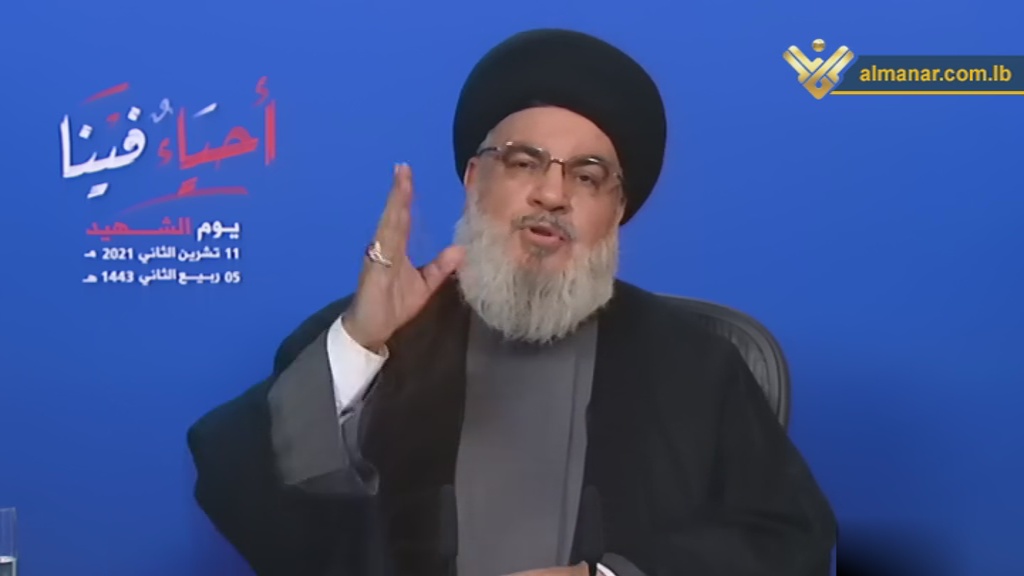
Anti-Tank Weapons: Hezbollah Merkava Hunters Will Be Watching For It in the Next War

  Source

Anti-Tank Weapons: Hezbollah Merkava Hunters Will Be Watching For It in the Next War

Al-Ahed Exclusive

A report titled “Hezbollah’s Creative Tactical Use of Anti-Tank Weaponry” by the “Jamestown Institute for Security Studies and Counter-Terrorism Affairs” concluded that “among the many aspects to be investigated is the vulnerability of ‘Israel’s’ powerful armored corps to small, hand-held, wire-guided anti-tank weapons.”

It further stated that “Hezbollah’s innovative use of anti-tank missiles was the cause of most ‘Israeli’ casualties and has given the small but powerful weapons a new importance in battlefield tactics.”

The Merkava, or God’s Chariot, as the “Israelis” call it turned into the gates of hell in July 2006 that were opened by the Islamic Resistance’s anti-tank units.

“In the ‘Israeli’ consciousness, the Merkava tank cannot be defeated by any weapon in the Arab world,” an officer in the Islamic Resistance’s anti-tank unit explains to Al-Ahed News.

In a physical or material comparison, during the occupation, there was no weapon in the Arab armies capable, with technical qualities, of piercing the Merkava tank. For example, Egypt only had Malyutka and HOT, and Syria only had Fagot and Malyutka. We saw the Merkava for the first time on Lebanese soil in 1982. It belonged to the first generation.

*The Merkava is the obsession of the southerners

From the eighties until the nineties, the Merkava played an essential role in protecting enemy soldiers and strengthening their positions in southern Lebanon; the Lahd site, which was two meters high during the first days of the occupation, is now 12 meters high. In a short period of time, the enemy had developed all of its defense systems along the border, then the Merkava tank came to protect this deployment and was able to turn into an obsession and a source of fear and anxiety even for civilians in the south.

* Alaa Bosnia leaves his mark in the first Merkava ambush

The officer in the anti-tank unit recalls when the first Merkava tank was destroyed by the resistance.

“The Merkava tank became an obsession even for some Palestinian resistance factions at that time, and we were faced with a big question: What should we do? We did not have enough knowledge or experience. We made the most of our capabilities and were able to destroy a number of Merkava tanks. The first destruction operation was in an ambush prepared by the resistance in the heart of Beit Yahoun, and the martyrs Alaa, Malak, and Ali Tohme were at a distance of 15 meters from the Merkava tank. The ambush was in one place and the tank in another. A force was supposed to attack the tank and capture it, while another force isolated it. But the roles were reversed because the two tanks passed in a different order, then the men approached the tanks and clashed. Alaa Bosnia and martyr Salah Ghandour, aka Malak, confronted the first tank.”

With a passionate smile, the officer says: “The two martyrs, Salah Ghandour [Malak] and Ali Tohme (Siraj) threw a B7 shell at the tank. At that time, Alaa Bosnia was attacking the tank, but with what weapon? With an M16. The tank attacked him, and he hid by staying low to the ground. He remained in this state for 15 minutes until the tank disappeared. His colleague called out saying: ‘The ground swallowed the tank.’ Hajj’s colleague, who said the phrase with a smile, patted Hajj Alaa on the shoulder, advising him to get some sleep [he had not slept for three days prior to the ambush], only to find out later that the tank while retreating was not swallowed by the ground but fell into Beit Yahon’s pond, and three Zionist soldiers were killed.”

* To the Islamic Republic: The Merkava is the target

The Islamic Resistance was decisive in its pursuit of a solution for facing the Merkava. The Islamic Republic was the compass. There, the resistance fighters trained with the Malyutka, the TOW, and other weapons. In 1992, the resistance had one goal – to break the Merkava tank after the enemy used it as a means to prevent resistance operations. For more than a year, “Israeli” military targets were in the crosshairs of the resistance fighters, but a decision was made to only target the Merkava.

The officer says, “In one year, the point of weakness turned into strength, and the Malyutka had a major role in securing the mujahideen during their operations and providing them freedom of action along the border strip, and that was the first headlines of victory against the Merkava tank.”

Recalling the statements of the Islamic Resistance at that time, it turns out that the first Merkava was destroyed by the fighters with a Malyutka on the Talloussa road on March 2, 1993.

The statement read:

“The Islamic Resistance targeted a mechanized enemy patrol on the Markaba-Talloussa highway, which led to the destruction of a Merkava tank and its complete burning, killing and wounding everyone on board.”

A Zionist military spokesperson admitted the operation and kept the losses discrete. However, the extent of these losses became clear through the hysterical response of the enemy and its agents, which was manifested by the targeting of liberated villages adjacent to the occupied strip with artillery. At the time, a Zionist official admitted that “Hezbollah’s use of this type of weapon would constitute a real threat to our soldiers.”

*The Malyutka

The Malyutka that insulted the Merkava in the early nineties was designed in 1953, and it is a weapon that requires high craftsmanship. It is a man-portable anti-tank guided missile and is not classified as a smart weapon.

The resistance officer memorized by heart every tank and can tell you how each of them was destroyed.

“The second Merkava that was destroyed by a Malyutka was on the Deir Seryan-Alman Shumariya Road. The tank was struck while one of the brothers was filming it along with a centurion that was transporting five soldiers, all of whom were blown out.”

From here, the actual confrontation with the Merkava began, and the war of minds began. “After striking a tank in al-Salhani, the ‘Israelis’ established a committee to develop Merkava protection, and they actually started with the idea of reactive armor. Then, they established a second investigation committee to study other measures. Most of the measures taken by the enemy on the borders were measures confronting missiles to prevent them from targeting the Merkava tank. But for us, we had to defeat consciousness. We lured them in many places, and we could hear them. One soldier told the other, ‘do not show it, we are waiting for you.’ Yes, the tank became the opportunity we were waiting for, and for the ‘Israelis’ it was like a hunter in disguise who did not dare to appear.”

Not all of the mujahideen innovators in Merkava hunting had diplomas, but they had the will and intention. In 1996, the enemy began using other techniques. It kept the Merkava tank, but introduced anti-armor weapons to some posts to confront the mujahideen. As for the Merkava, the “Israelis” restricted its use to nighttime because the resistance’s capabilities were limited at night in this field. What about hunting Merkava at night?

The officer in the anti-armor unit answers, “We had no doubt that the first Merkava tank we targeted at night was targeted by God; the means were very, very, very simple –  night vision goggles, and navigating by the stars. We depended on stars due to the lack of a means of determining directions. This is how we struck the first Merkava tank at night in Al-Dabshe, with a primitive fist and a night missile. After striking the first tank at 3:00 am, the ‘Israelis’ went crazy. At that point, we accomplished the goal of breaking the Merkava, and we moved on to the next goal, which was to kill the soldiers. We no longer shot at the tank; we targeted the patrols on the border.”

* Spirituality while facing the Merkava

According to the officer, the Merkava tank faced “the spirituality and creativity of the young men, we even touched the Merkava physically. The level of courage that our men in the resistance possessed enabled us to do so. Bilal Adshit and Alaa Bosnia were hiding in one of the operations in Al-Dabshe after they were spotted by the Merkava. They walked right beside it. The mujahideen of the Islamic Resistance managed to break the narrative that the Merkava tank is the protector. In many places, we used to see them leave the tank after a missile fell close to it. They left it and fled.”

The officer recalls a scene from Al-Khiam in July 2006: “In Al-Khiam, one of the tanks got stuck in a trench while fleeing after four others were hit. The crew jumped from it to another and fled. They did not dare to return to pull the tank until the cease-fire.”

In the third stage of development, the enemy started making technical modifications to the Merkava tank, introducing the reactive armor. The Islamic Resistance officer explains that “the reactive armor consists of explosive plates that explode when exposed to a missile, preventing penetration. Then, they made two heads for them, so what did we do? We confronted the reactive armor by either repeating the shooting at the same point or using more than one weapon at the same point, and this created a big problem for the enemy. All this was with simple weapons. Liberation came in 2000 and the Merkava came out defeated, without any confusion or discussion. The enemy brought with it the Merkava tank to protect it and to fight, but it was like a coffin for the enemy’s soldiers. After the liberation, we started planning for a broader war.”

* What about the Merkava in 2006?

According to the officer, “the enemy entered 2006 and the Merkava was the tip of the spear. I can confidently say that in 2006 the enemy reached the conclusion for the first time that it would not be relying on the Merkava in the next war. As for us, it gave us the conviction that it is the easiest weapon to deal with in the war if you developed your methods.”

The Merkava 401, or the fourth generation, was a defeated scrap of metal in 2006 and until today, the officer says, “I am responsible for my words. The enemy did not change anything in them. Every development the enemy makes, we read it as a weakness because all this ability is associated with firepower, and the soldier is hiding under it. It means nothing. This is proof that you are defeated. When you develop the missiles, planes, the radar, all this is beautiful, but in practical terms, the soldier will be the one fighting on the ground. The bottom line is the Merkava was marketed for a specific purpose, so Hezbollah struck it and canceled this purpose. Thus, the enemy must look for other options.”

* Trophy: A fake armor

Trophy is a positive defense system. The officer asks, “Why are the ‘Israelis’ developing and reconsidering the use of tanks? Is it because they are no longer valid in confronting Hezbollah? What did the enemy say in 2006? Listen carefully. In 2006, the enemy said that the use of tanks was not up to the organizers. I want the enemy to hear my words well. They said they have the best combat doctrine for the armored corps, but the soldiers and officers did not use this doctrine in the scope of the battle. So, I ask, will these soldiers use this doctrine in the next war? You planted in the minds of your soldiers that protection is by means of Trophy and its derivatives. You, the officer, when you rely on such technology and then it malfunctions on the battlefield, what will you tell your soldiers?”

“We do not count on weapons but on the mujahideen who long for this moment. They have built their spirituality on this and feel that they have shortcomings when they read Ziyarat Ashura. To them, the real place to show these shortcomings is in the battlefield. This is not just morale. This is how we are,” the officer vows with confidence.

The tank massacre that humiliated the “Israeli” army was only some of what the officer wanted to inflict on the enemy. Here, he recalls what he had previously repeated before the Secretary-General of Hezbollah His Eminence Sayyed Hassan Nasrallah.

“The 2006 war was an irreplaceable golden opportunity. I said it to His Eminence the Secretary-General. It was an irreplaceable opportunity. It was ‘haram’ for a tank to leave the south. We were facing 400 tanks, and all of them should have been destroyed. But we fought the enemy in a hurry. We deployed the Kornet 7 days after the war started. If there had been a prior deployment, we would have hit all 400 tanks.”

“In 2006, our surprise was not that the Kornet destroyed the Merkava tank. Rather, the surprise was that the Kornet destroyed the tank before it entered the range of engagement, that is, before it reached the point of danger. The surprise was in the range, and to this day, the Kornet is still a worrying weapon for the ‘Israeli’ army. And all the measures taken by the enemy are not adequate measures.”

* Bilal Adchit and his comrades

When talking about the mujahideen, their high spirits, and their firm determination, the officer elaborates on the explanation and description: “Some of the brothers who struck the Merkava in the 2006 war were among the Taabia’a. They targeted the tank and when the ‘Israelis’ tried to pull it out, they’d fire at it again. I remember them all. I remember how many missiles we fired at the enemy in 2006, and I remember every brother who fired at them, how many tanks were hit, and who fired where. I think that this is the least I can do.”

Speaking of the Merkava, it’s necessary to talk about Bilal Adchit, whose name is synonyms with the Merkava. The officer says, “Bilal is a rare case. He loved to work and did not leave until he finished what he was assigned to do. He did not know failure and could not return disappointed. By ‘Israeli’ confession, he killed 48 ‘Israeli’ soldiers. I wrote them down in every location – Bilal in Al-Aziya, Bilal in Al-Qalaa, Bilal in Al-Dabshe, Bilal in Sujud, Bilal in Al-Rayhan, etc.”

In Wadi al-Hujeir, there were feats of Bilal the officer would not forget.

“In Wadi al-Hujeir, Bilal fired the first time and the ‘Israelis’ fired at the source of the shooting. Then, Bilal moved to another place, and thus he kept toying with the ‘Israelis’ from one area to another until the ‘Israelis’ decided to limit their movement to nighttime. But Bilal was also on the lookout, like a ghost. Bilal found a creative solution, which he did not learn in workshops nor in books, nor is it found in all the regular foundations. Bilal created a fire (the fire at night disrupts heat monitoring), and he started from the side of the fire. The ‘Israelis’ did not detect it. This is creativity!”

By killing Bilal, the enemy was not able to achieve this strength. According to the officer, “Bilal left behind him many Bilals, for he was one of the most prominent. Apart from him, there were important creativities from the brothers in 2006. The brother that hit the tanks in Al-Khiam was 50 years old and had undergone open-heart surgery. He carried the launcher to a distance of about 500 to 700 meters. He put it on the ground, rested a little, then began to ram the tanks. Likewise, martyr Rabi’ Qasir, the brother of martyr Ahmed Qasir, was another symbol of courage.”

* Priority for the initiative

The officer had a great role in the war, in distribution and in leadership, and in his accurate knowledge of geography.

“In 2006, one of the brothers called me to say that they heard the ‘Israeli’ soldiers through wiretaps, saying that they would get out of this place, so I laughed. He asked me, ‘why are you laughing?’ I said, because I have been waiting for them there for seven days. We’ve been reading the ‘Israeli’ mind.”

Likewise, for individuals, the advantage was not based on age or experience, but rather on initiative.

“One of the martyrs on the Ghandouriyeh axis continued to fire at tanks until it reached his proximity. When it arrived, he sat on the attic and detonated the mine as soon as the ‘Israelis’ entered the house.”

* The capture operation

During the July 2006 war, the Anti-Armor unit had a hidden role in the success of the capture operation in Khallet Warde.

“In capturing operations, we plant a bomb and stop the vehicles. But in the operation in Khallet Warde, the strip was placed along the road where the ‘Israelis’ crossed inside the line. So, the anti-armor unit was asked to stop the vehicles. The unit sent Bilal to investigate, and the idea was … when the brothers asked for the Humvees to be stopped, we resorted to an innovative idea. The shot usually hits or misses, so does the shell. So how would we ensure that we hit the killing area? We converted every two cannons into one, and every 2 B7s into one B7, and we used two B7s in the face of one Humvee. Thus, we fired six shots, two of which hit the target during the capture operation, which stopped the Hummer. Bilal and his comrades who fought in the war took part in the capture operation.”

* In the next war: We are assured and the enemy is definitely defeated

The officer tells Al-Ahed, “Technically, it is clear that when the weapon enters any battle, it is used in the next battle based on the previous one. And this is what happened in 2006. In the next battle, the enemy considers that this weapon is the main threat, and what the enemy has done so far is that it created a positive defense system, which is an intelligent system, a radar system that senses the missile. When the missile reaches a close range to the tank, a charge explodes and the effort of the missile is dispersed. This system, for me, will be fragile, and the proof of that is that not everything that works in a clean environment can work in the field (in battle). The bottom line is that we are reassured.”

“I have confidence that the enemy is defeated because with this technology, it will rely on the tank entering the battlefield. Their dependence is on technical means, and therefore the lessons learned by the enemy in 2006 were not enough. What happened in 2006 was a victory against armors, according to the testimony of the Secretary-General. However, this is not a certificate of good conduct, but rather a religious responsibility that entails greater responsibilities on us,” the officer says with confidence.

River to Sea Uprooted Palestinian   
The views expressed in this article are the sole responsibility of the author and do not necessarily reflect those of the Blog!