Uprooted Palestinians are at the heart of the conflict in the M.E Palestinians uprooted by force of arms. Yet faced immense difficulties have survived, kept alive their history and culture, passed keys of family homes in occupied Palestine from one generation to the next.
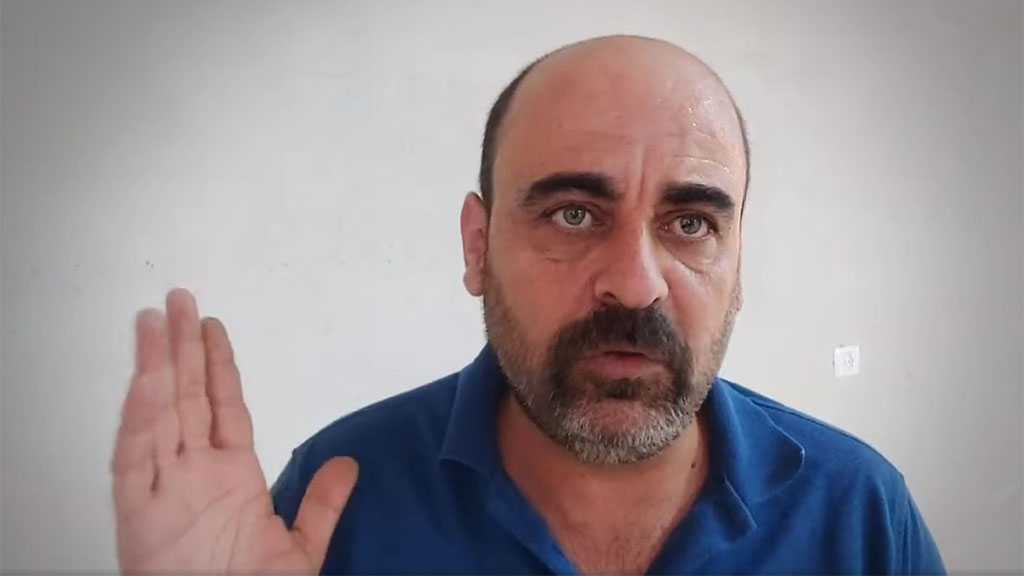
Prominent human rights lawyer Muhannad Karajah was arrested by PA police. (Photo: Video Grab)
Palestinian police arrested a lawyer and three activists Sunday morning in the West Bank amid ongoing protests against the Palestinian Authority over the death of activist Nizar Banat.
Muhannad Karajah, the head of the Lawyers for Justice group and a lawyer for the Banat family, was arrested in front of the Ramallah Court Building. He was detained alongside activists Jihad Abdo, Salem Qatash, and Izzeddine Zaoul.
“[Atty Muhannad] Karajah said Banat had been threatened with arrest before by Palestinian officials but that he was motivated to keep up his criticism, in campaigns and on social media, of a government that he saw as corrupt and ineffective….
The arrests took place before a scheduled sit-in outside the court, in protest over the arrest of activist Ghassan Al-Saadi and Muhammad Fararja, both arrested by Palestinian security services on Saturday evening.
Journalists who were at the scene to cover the sit-in were told to leave the premises within minutes by the Palestinian authorities.
Daoud Darawi, a member of the Bar Association, said the syndicate will escalate if Karajah is not released from detention. Karajah was detained without a proper arrest warrant, according to Darawi.
Ramallah – Palestinian Authority security forces detain prominent lawyer and human rights activist Muhannad Karajah. pic.twitter.com/GOv5WLQEra
— Khaled Abu Toameh (@KhaledAbuToameh) July 4, 2021
Hundreds of Palestinians in recent days have demanded the resignation of Mahmoud Abbas, president of the Palestinian Authority (PA), after the death of Banat while in custody, on June 24.
These protests have been violently suppressed by PA security forces and plainclothes officers.
Banat, 42, had registered as a candidate in Palestinian parliamentary elections that were set for May until Abbas postponed them indefinitely.
A recent protest in Ramallah, where Palestinian Authority forces have been targeting women journalists including Najlaa Zaitoun, photographed here (Supplied)
By Aziza Nofal in RamallahPublished date: 2 July 2021 14:49 UTC | Last update: 2 days 1 hour ago
For several days now, Palestinian journalist Najlaa Zaitoun has been trying to convince her children, 11-year-old Haytham and 8-year-old Zein, to leave the house.
‘A person wearing plain clothes threatened me, to my face, that he would rape me, and then defame my reputation’
– Najlaa Zaitoun, journalist
“I’m afraid the person who beat you will come and beat me,” Zein said to her, as she urged them to keep up their training at the sports club they usually go to every day.
On 26 June, the 35-year-old was assaulted by plainclothes security forces while she was covering protests called following the death of popular Palestinian activist Nizar Banat while in Palestinian Security Forces custody two days earlier.
The security forces chased Zaitoun, seized her phone, which she was using to film the protest, and violently attacked her with a truncheon. She was also threatened with rape.
“A person wearing plain clothes threatened me, to my face, that he would rape me, and then defame my reputation,” she tells Middle East Eye.
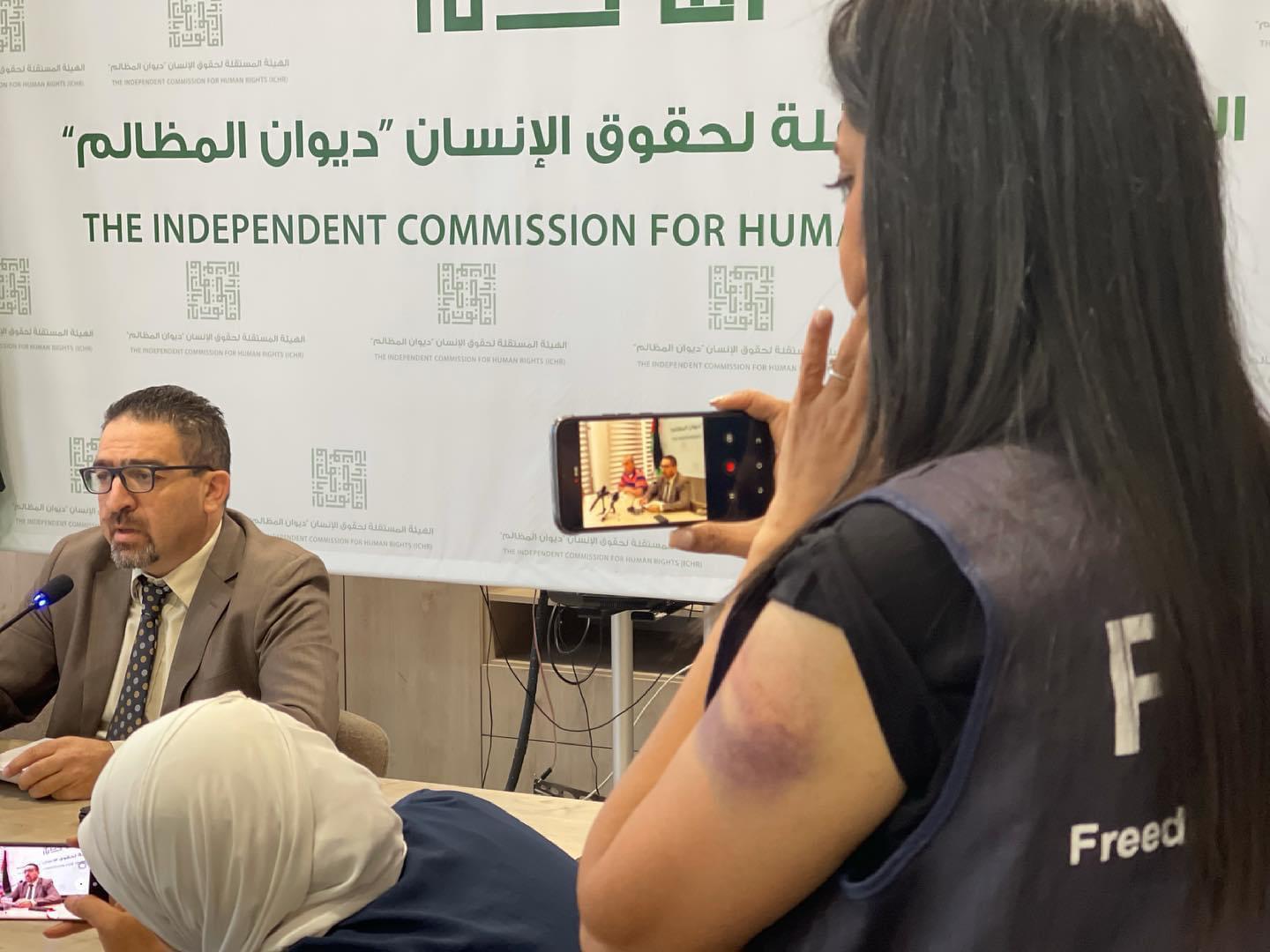
Bruises Najlaa Zaitoun sustained while covering the protests can be seen on her arm (Supplied)
Zaitoun has been living in a state of fear ever since and the violent beating she received has left visible marks on her body.
“I don’t feel safe, not even in my own home,” she says. Since the attack, Zaitoun has been staying at her parents’ house.
Meanwhile, the assault on the journalist has moved online, with a smear campaign targeting her on social media accounts affiliated with the Palestinian Authority (PA) and accusing her of being the “one who attacked the security forces.”
Targeted attacks
The attack on Zaitoun is one of several instances of violence against women journalists in the course of their work covering the protests. The incidents indicate that Palestinian security forces are specifically targeting women journalists, as reflected in the escalating levels of hostility and violence towars them compared to their male counterparts.
Attacks on women journalists have included physical violence, as was the case with Zaitoun and four others; confiscation of electronic devices used to cover the events; intimidation and harassment; chasing journalists in the street; arrest attempts and a ban on reporting.
The assaults have continued even after the protests were over, with many female journalists receiving veiled threats that they will be discredited and defamed.
Saja al-Alamy is one of those attacked while reporting on the protests. On 24 June, Alamy was subjected to several attempts by security forces to prevent her from doing her job, and had to show her Palestinian Journalists Syndicate membership card each time.
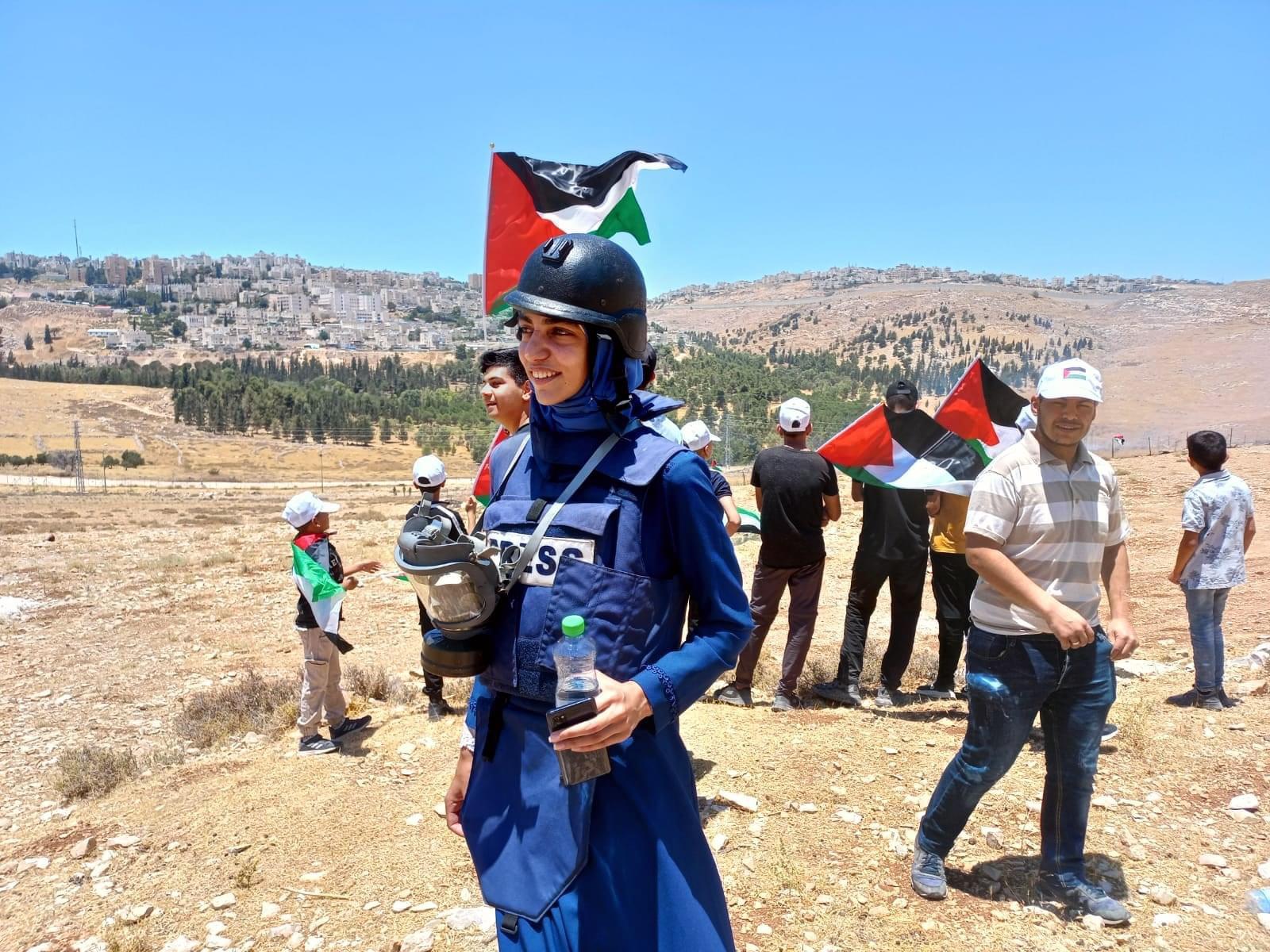
‘My press armour helped the perpetrators to identify me as a journalist, and attack me’, Saja Alamy says (Supplied)
Two days later, expecting journalist to go on being obstructed, Alamy wore her bulletproof press body armour and affixed her press card on the back of her phone, which she was using to film the events.
None of this stopped her from being attacked. Instead, she believes the measures did her more harm than good.
“My press armour helped the perpetrators to identify me as a journalist, and attack me,” she says, adding that she was only able to escape the scene after she had taken off her press vest and concealed her identity as a journalist.
“There was a direct attack on us. One of the security officers in plainclothes was pointing at my female journalist colleague and me, asking his partner to take a photo of us so that he can identify us later,” she says.
Security forces had first attacked a group of journalists, including Alamy, with tear gas, but upon noticing her filming an attack on protesters, she was directly targeted. Alamy resisted the officers’ violent attempt to confiscate her phone, and refused to hand it over. She then managed to flee the scene to a nearby building and hide in a women’s toilet.
Alamy tried for more than an hour to reach her colleagues for help, but all entrances were being watched by security officers, including those who had chased her. She was eventually able to escape, after shedding her press armour, and pretended to be out shopping.
Life threatening
MEE reporter Shatha Hammad was also among the women journalists who were targeted in the attacks of 26 June.
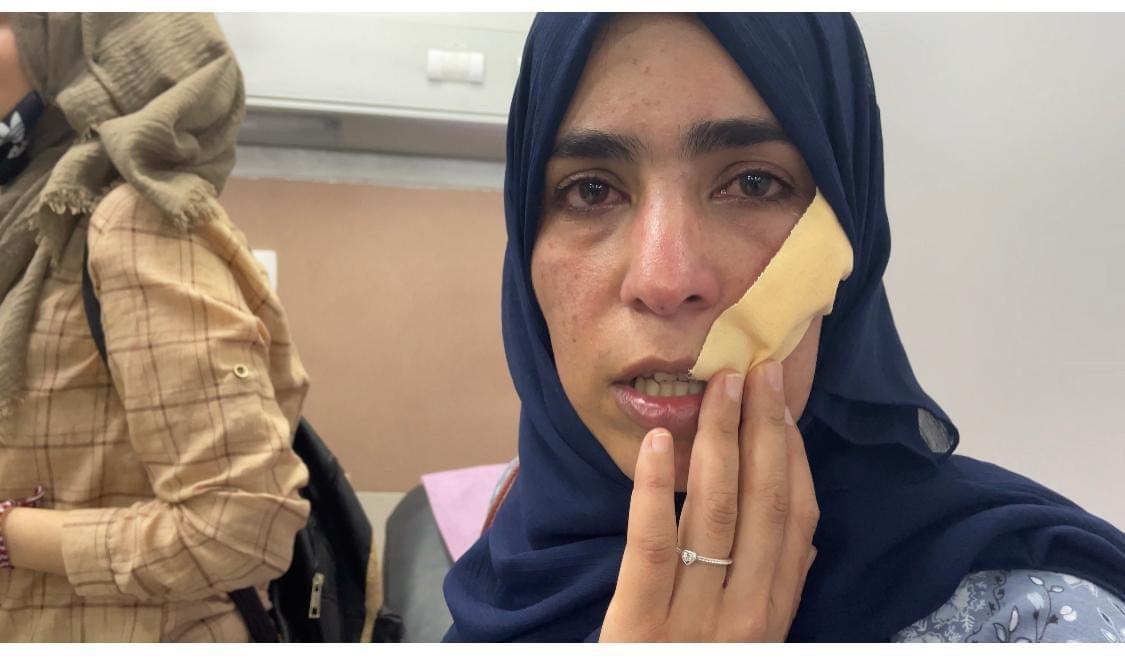
She sustained a shrapnel wound to her face from a tear gas canister that a security officer shot directly at her after failing to confiscate her phone.
Hammad says that security officers in plainclothes had focused their attention on women reporters, singling them out by pointing at them, even before the clashes erupted, which, she believes, suggests that the assault was planned and deliberate.
According to Hammad, the unprecedented violence against women journalists made her feel insecure and trapped.
“What happened is life threatening,” she says, demanding immediate action from local and international organisations to provide the necessary protection for them.
Shatha Hammad sustained wounds to face after being directly targeted with a tear gas cannister
The detailed testimonies of women journalists were shocking to many, especially the Palestinian Authority’s use of cultural norms to shame and intimidate women, exercising social pressure against them as an attempt to silence and prevent them from performing their work.
According to Ghazi Bani Odeh, head of the monitoring and documentation unit at the Palestinian Centre for Development and Media Freedoms (Mada), these exponential attacks against women journalists are unprecedented and planned.
“The assaults on female journalists have two levels. The first is the direct physical violence in the streets; then comes the online attacks designed to incite people to exert social pressure on them,” Bani Odeh tells MEE, in reference to the smear campaigns that use hate speech that could fuel violence against them.
Smear campaigns
One of the journalists targeted by a defamation campaign was Fayhaa Khanfar, who was beaten up in the street on 26 June, with her phone stolen from her as she covered the protest.
‘When I regained consciousness, I went to security officers crying and asking for help. But no one moved a muscle’
– Fayhaa Khanfar, journalist
Security officers in plain clothes had chased Khanfar to confiscate her device and knocked her to the ground, causing her to briefly lose consciousness.
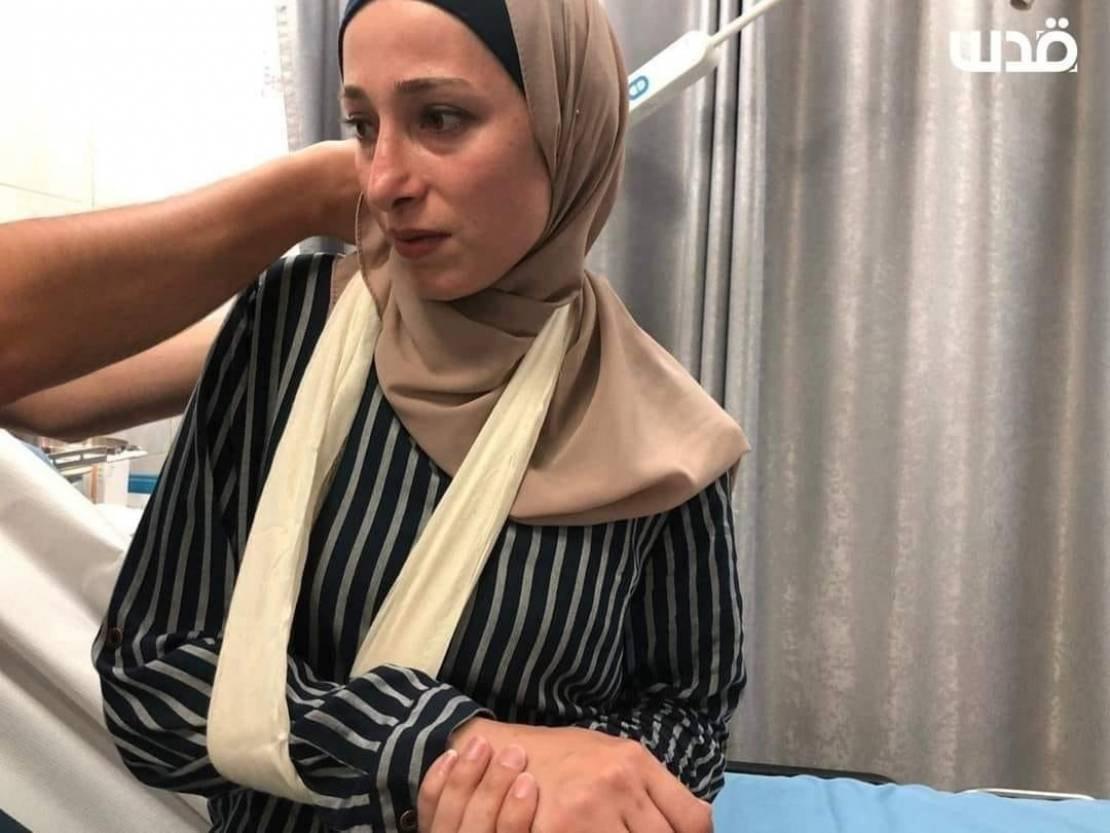
No one had intervened to help her. The attack resulted in a hairline fracture to her shoulder and bruises all over her body.
“I was attacked by security officers wearing plain clothes. They pushed me to the ground and stole my phone,” Khanfar tells MEE.
“When I regained consciousness, I went to security officers crying and asking for help. But no one moved a muscle.”
Orchestrated online attacks targeted Khanfar, who wears the hijab, aimed to discredit her in a conservative society by circulating images of a girl in beachwear, who looks very similar to Khanfar, and falsely identifying her as the journalist.
Khanfar was later summoned for interrogation at the intelligence headquarters in Ramallah, in the occupied West Bank, and told that she had to appear if she wanted to collect her phone, a move she considered an attempt to lure her in and arrest her.
Wafa Abdulrahman, the director of Filistiniat, a civil society organisation, sees the attacks on journalists as a chilling attempt to silence the women who have been spearheading the protests.
Fayhaa Khanfar suffered a hairline fracture to her shoulder and bruises all over her body (Supplied)
Abdulrahman says that the systematic targeting of women journalists is intended to first send them a threatening message, and second, to warn the society that women reporters will not be spared and that the power of the security forces is unbreakable.
As attacks on women journalists continue through online defamation campaigns and veiled threats, they find themselves living in constant danger and feeling personally insecure.
According to Majid Arori, a media freedom activist and a human rights specialist, there has to be individual and collective legal actions to deter such attacks in the future.
“The attacked women journalists must file legal complaints, providing the necessary documentation via local and international legal organisations to exert pressure on those who perpetrated the assaults,” he says, adding that these attacks are attempts to suppress critical voices and any protests against corruption.
In the international community’s narrative of illusory state-building in Palestine, the Palestinian Authority’s security services are dissociated from violence. Whether such violence is meted out according to PA Leader Mahmoud Abbas’s directives, or in terms of security coordination with Israel, the EU and the US prefer to retain a distant approach and one that is deeply rooted in the dynamics of the two-state paradigm.
Never mind that the EU and the US are directly funding and training the PA’s security services to turn against Palestinian civilians.
The killing of Nizar Banat at the hands of the PA’s security services last week ignited protests across the occupied West Bank. Simmering beneath the immediate protests is the Palestinian people’s awareness of security coordination with Israel, treacherous collaboration with Israel’s colonial violence that has targeted Palestinians with dissenting voices or involved in resistance activities.
At a time when Abbas is descending into a chaos of his own making, notably his refusal to hold democratic elections, Palestinians are protesting against the intricate web of violence which has so far sustained his “authority”.
US State Department Spokesman Ned Price’s statement is indicative of how Washington absolves itself of any role in creating the PA’s security services and their violence. “We have serious concerns about Palestinian Authority restrictions on the exercise of freedom of expression by Palestinians and harassment of civil society activists and organizations,” said Price. Anyone else for dodgeball?
However, the US exhibits no concern whatsoever that it trains the PA’s security services to commit acts that lead to the murder of Palestinian civilians. Once again, Palestinian lives are expendable in view of the international commitment, to which the US is bound by consensus, to keeping the Palestinian people tethered to the two-state compromise and protecting the occupation, apartheid state.
The EU’s statement recognized the PA’s “increasingly persistence practice” of targeting its opponents, yet it hesitated to describe Banat’s death as politically motivated. “Apparently” allows the PA to remain on the EU’s agenda, for no other reason than the two-state compromise and the humanitarian agenda forced upon the Palestinian people. In this context, how can the EU’s calls for there to be accountability for Banat’s killing have any meaning?
If scrutiny is projected onto the donors, namely the EU and the US, an additional process of accountability must be taken into consideration; one that calls into question the Oslo Accords, the two-state compromise, and the international oppression which forced Palestinians to bend under PA rule.
In November 2020, Banat was arrested for a video denouncing the PA’s resumption of security coordination with Israel, a betrayal by the PA at the news that Joe Biden had won the US presidential election. Security coordination, therefore, is the main issue. Banat’s dissent threatened what remains of the PA’s repressive power. Without security coordination, the PA risks political dissolution and accountability.
These are two truths that it tries to stave off, even as Palestinians are clearly more emboldened in their protests and less willing to fit within the parameters imposed by the international community in its quest to legitimize Abbas, despite the clear illegitimacy of his political position and absence of a mandate to govern.
– Ramona Wadi is a staff writer for Middle East Monitor, where this article was originally published. She contributed this article to the Palestine Chronicle.
Nizar Banat, a leading Palestinian activist and critic of the Palestinian Authority [PA], has died after a raid by PA security forces on his home in Dura in the al-Khalil area early on Thursday.
In a statement, the Governor of al-Khalil Jibreen al-Bakri claimed “during the arrest his health deteriorated,” however Banat’s family said he had been subjected to a beating while being detained.
The arrest took place as the PA stepped up its security crackdown on political opponents and social media users in the occupied West Bank.
Banat was well known for his criticism of the PA leadership and had been arrested several times in the past by Palestinian Authority security forces.
The Middle East Eye cited Muhannad Karajah, from Lawyers for Justice, as saying that Banat had phoned him on Wednesday and told him that he was being subjected to threats by the PA’s intelligence service, who had demanded that he stop his criticism of the authority.
Banat has for months been posting videos on Facebook on which he lambasted PA President Mahmoud Abbas and other senior PA and Fatah officials.
Ammar, a cousin of Banat and a spokesman for the family, told MEE that about 25 officers and a member of the Preventive Security and General Intelligence, stormed the house around 3.30am in the morning after detonating its doors.
He said the officers stormed the room in which Nizar was sleeping and immediately began to attack him by spraying him with gas in his mouth and nose.
The cousin said they beat Banat severely with iron and wooden batons.
He added that Nizar had been in a fainting state, so they dragged him, stripped him of his clothes, and transported him away in military vehicles.
The death has been met with anger on the streets and criticism from human rights organizations and Palestinian factions who have called for an independent investigation.
In a statement, the Popular Front for the Liberation of Palestine [PFLP] held the PA responsible for Banat’s death.
“The arrest and then the assassination of Nizar again raises questions on the nature of the role and function of the PA and its security services, and its violation of the democratic rights of citizens through the policy of silence, prosecution, arrest and murder,” said the PFLP
Additionally, Sami Abu Zuhri, a member of Hamas’ political bureau, said: “We consider that [PA] Prime Minister Mohammad Shtayyeh bears the primary responsibility for the murder of activist and parliamentary candidate Nizar Banat, and we call for the killers to be prosecuted.”
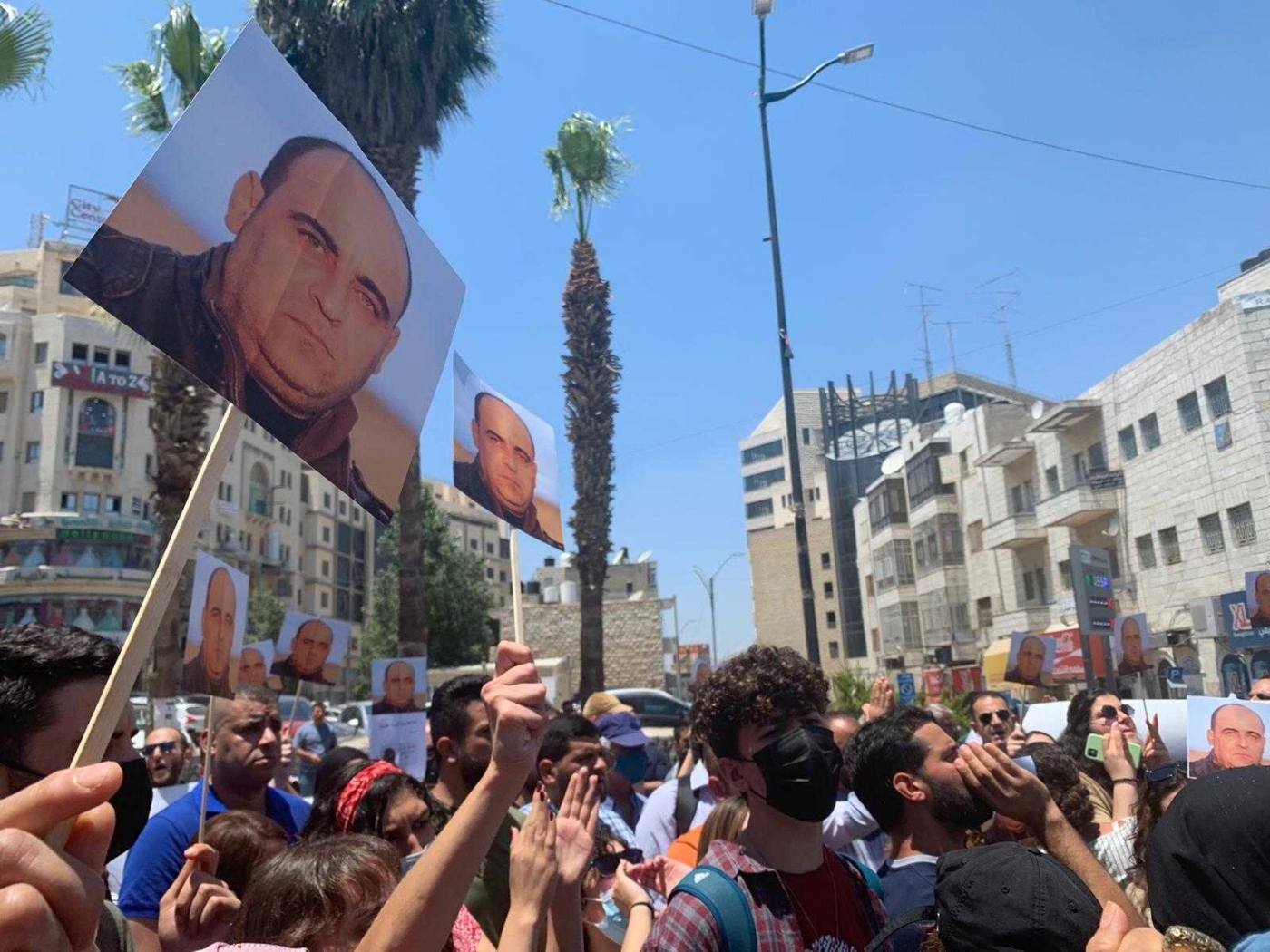
Protesters hold photos of Nizar Banat, who died in the custody of Palestinian Authority security forces, during a demonstration in the occupied West Bank city of Ramallah on 24 June 2021 (MEE/Shatha Hammad)
By Shatha Hammad in Ramallah, occupied West BankPublished date: 24 June 2021 11:40 UTC | Last update: 8 hours 33 mins ago
Protesters took to the streets in the occupied West Bank on Thursday, facing police repression following the death of prominent critic of the Palestinian Authority (PA) Nizar Banat overnight while in the custody of PA forces.
In Ramallah, the administrative centre of the PA, thousands of demonstrators chanted: “In soul, in blood, we defend you Nizar.”
Many other slogans took direct aim at the PA and President Mahmoud Abbas, with chants including: “The people want the downfall of the regime,” and “Leave, leave Abbas.”
PA forces hit demonstrators with batons and fired tear gas and stun grenades in Ramallah.
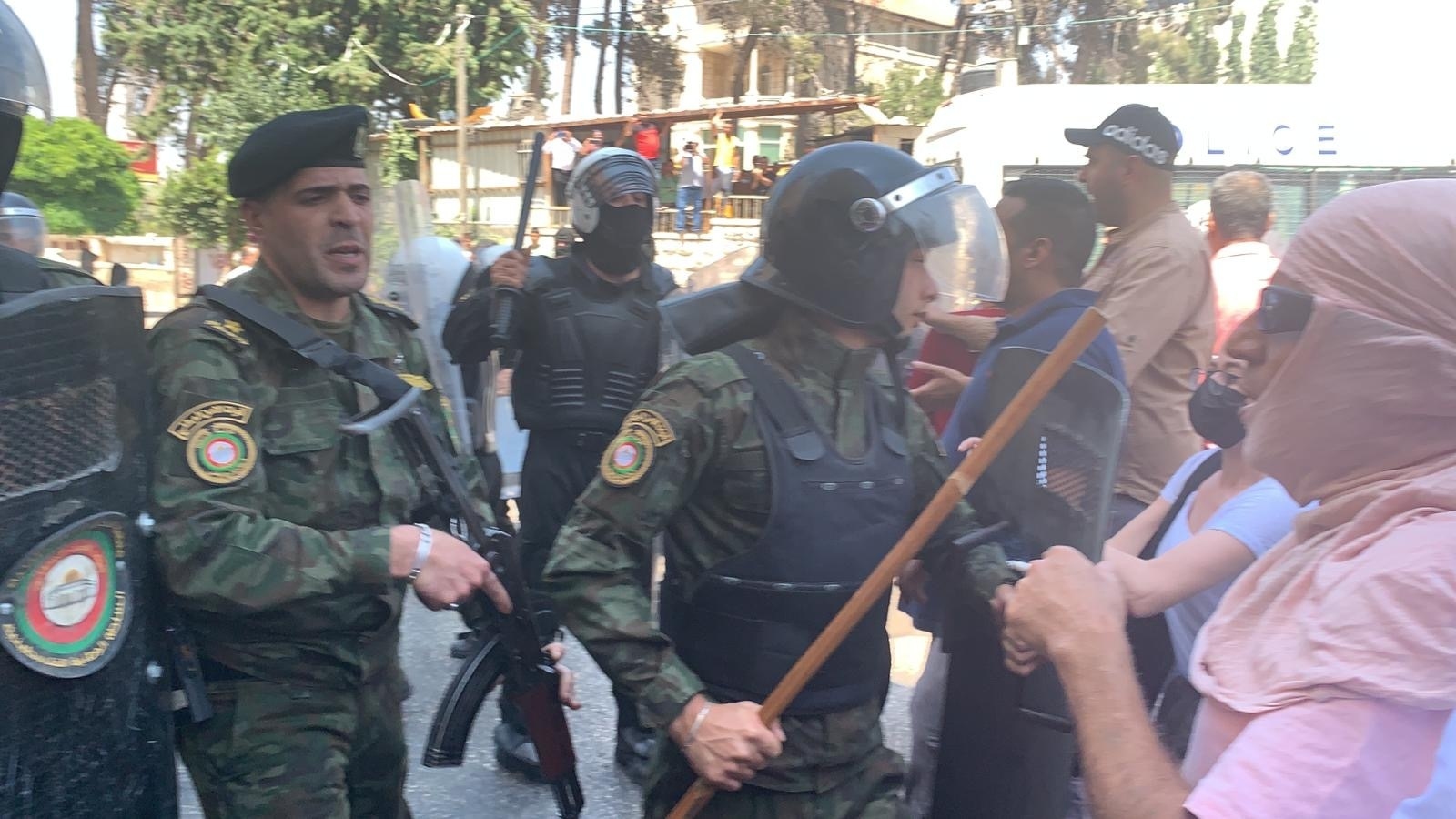
A member of Palestinian Authority forces wields a baton during the demonstration in memory of Nizar Banat in Ramallah on 24 June 2021 (MEE/Shatha Hammad)
Banat was arrested by at least 25 officers, who raided his home in the town of Dura in the southern West Bank governorate of Hebron, at 3.30am on Thursday. He was declared dead shortly afterward.
Preliminary autopsy results showed that Banat was severely beaten with several bruises and fractures showing all over his body, Samir Zaarour, a doctor who oversaw the autopsy, said on Thursday.
The Ramallah-based Independent Commission for Human Rights revealed the autopsy results at a news conference in Ramallah on Thursday.
Zaarour said Banat had injuries in the head, neck, shoulders as well as broken ribs and internal bleeding in the lungs – signs indicative of an unnatural death – stressing that the victim did not suffer from any serious medical condition that would otherwise lead to his death.
Full autopsy and toxicology reports, expected to be available within 10 days, will definitively determine the cause of death.
‘Dangerous precedent’
Ammar Al-Dwaik, the general director of the commission, described the death of Banat a “dangerous precedent” against a political dissident, calling for a criminal investigation into the incident that would refer the perpetrators of the killing to trial.
Banat was well known for his criticism of the PA leadership and had been arrested several times in the past by Palestinian security forces. He was also a candidate on the Freedom and Dignity electoral list for the Palestinian Authority parliamentary elections, which had initially been scheduled for 22 May, but were postponed by the PA.
Human rights organisations and Palestinian factions have called for an independent investigation into the circumstances surrounding Banat’s death – which, according to Mohannad Karajah, a member of the Palestinian Lawyers for Justice group, amounted to an “assassination”.
PA officials announced on Thursday afternoon that Prime Minister Mohammad Shtayyeh had ordered an investigation committee – led by Minister of Justice Mohammad Shalaldeh and including a physician appointed by the Banat family, a human rights official, and a security official – into Banat’s death.
But Omar Assaf, a member of Democratic Front for the Liberation of Palestine (DFLP) political bureau, dismissed outright the credibility of an investigation led by the PA.
“There needs to be a popular investigation committee established, not an official committee, because a popular committee will uncover the truth,” he told Middle East Eye.
He referred to the case of Majd al-Barghouthi, who died in PA custody in 2008, only for an official investigation to clear security forces of wrongdoing.
“In the case of Majd al-Barghouthi, they concluded that he was a chain smoker, when he had never smoked once in his life,” Assaf said. “These are the official investigation committees.”
‘Palestinian law protects the occupation’
Speaking at the demonstration in Ramallah, Assaf added: “This is a continuation of the Dayton [Mission] creed, which was adopted by the PA and its security apparatus, that the people are the enemy of the state. There must be the dismissal of heads of the security branches, and the criminals responsible for killing Nizar Banat should be brought to court.”
The PA was established in the wake of the 1993 Oslo Accords, and initially intended to be an interim governing body until the establishment of a fully-fledged Palestinian state.
But with a two-state solution never materialising, the PA – which exerts only limited control over Areas A and B, which make up around 40 percent of the West Bank – has long been accused by many Palestinians of being an extension of the Israeli occupation.
The PA’s security coordination with Israel is a principal target of anger. The policy, through which PA forces are in regular contact with Israeli forces, has meant PA police may withdraw from areas ahead of an Israeli army raid, or arrest Palestinians wanted by Israel.
“Palestinian law protects the occupation, but we want it to protect the Palestinian people,” Maher al-Akhras, a leader of the Islamic Jihad movement in the West Bank, told MEE from the Ramallah protest.Abbas critic Nizar Banat dies after raid on his home by PA forces
Akhras, who was released from Israeli prison in November following a 103-day hunger strike against his administrative detention, drew a parallel between Banat’s death and the killing of another prominent Palestinian activist, Basel al-Araj, in March 2017.
Araj had been one of six activists imprisoned and tortured by the PA for six months in 2016. Most of them were arrested by Israeli forces shortly after their release by the PA, while Araj went into hiding for months, only to later be killed in a standoff with Israeli forces. The PA had been widely denounced at the time as complicit in Araj’s death due to its security coordination.
The PA has also been criticised for its crackdown on political opposition and social media users in the West Bank through draconian legislation on social media posts. Abbas, meanwhile, has been in power since 2005. Though his term as president officially ended in 2009, the PA has not held presidential elections in 16 years.
In addition to legislative elections, a presidential vote initially scheduled for 31 July was postponed in April, with the voting rights of Palestinians living in occupied East Jerusalem cited as a reason. Critics of Abbas have accused the president of using Jerusalem’s right to vote as an excuse to avoid the election due to the popularity of Hamas, the main rival party to his own Fatah movement.
The US State Department said on Thursday that Washington was “disturbed” by Banat’s death.
“We urge the Palestinian Authority to conduct a thorough and transparent investigation and to ensure full accountability in this case,” spokesperson Ned Price said in a statement.
“We have serious concerns about Palestinian Authority restrictions on the exercise of freedom of expression by Palestinians and harassment of civil society activists and organizations.”
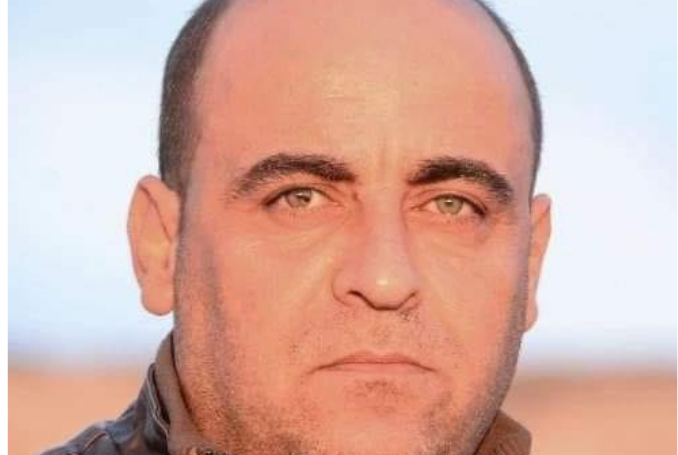
Palestinian prominent activist Nizar Banat. (Photo: via Social Media)
A prominent Palestinian political activist and outspoken critic of the Palestinian Authority died during his arrest by PA forces early Thursday.
In a brief statement, the Hebron governorate said that Banat’s “health deteriorated” when a force of the security services went to arrest him early Thursday. It added that he was taken to a hospital where he was later announced dead.
The Palestinian Authority has deliberately targeted and killed Nizar Banat in Hebron. Nizar spoke up about repression and failed policies which keep Palestinians silent, chained. Today, the PA proved that it doesn’t intend on keeping Palestinians safe and free. #nizar_banatpic.twitter.com/YPmVIGMSIr
Nizar’s cousin, Mohammad Banat, told Quds News Network that around 25 Palestinian security forces stormed the home where Nizar was staying, blowing out doors and windows.
He added that they beat Nizar with an iron bar and sprayed pepper spray in his eyes before undressing him and dragging him away to a vehicle.
Mohammad and another cousin were present during the arrest.
في السابع عشر من تشرين الأول – أكتوبر 2001 كانت فلسطين على موعد مع تنفيذ شعار ” الرأس بالرأس” الذي أطلقه القائد الفذ أحمد سعدات وكذلك رفاق الشهيد القائد الكبير أبو علي مصطفى الأمين العام للجبهة الشعبية لتحرير فلسطين، الذي اغتاله الاحتلال الصهيوني نهاية شهر آب – أغسطس في مكتبه برام الله المحتلة.يوم 17-10-2001 على باب الغرفة رقم 816 في فندق بالقدس المحتلة تلقى الوزير الصهيوني الارهابي رحبعام زئيفي خمس رصاصات في الصدر والرأس أدت الى وفاته على الفور.
في تعليقه على عملية الاغتيال قال الارهابي شارون رئيس وزراء الكيان الصهيوني آنذاك: “كل شيء تغيّر”، مع إطلاقه وابلاً من التهديدات ضد الفلسطينيين” تكللت باجتياح رام الله وحصار مكتب رئيس السلطة ياسر عرفات حيث كان يعتقل سعدات ورفاقه بعد أن غدر بهم وتم اعتقالهم بقرار شخصي من ياسر عرفات نفذه توفيق الطيراوي.
زئيفي لم يكن كأي شخص صهيوني، فقد كان من الآباء والقادة المؤسسين للكيان الصهيوني. كما كان واحداً من أكثرهم ارهابا واجراما وعنصرية.. بالاضافة لعدائه الشديد لكل الفلسطينيين والعرب. كان من أشد دعاة الترانسفير وترحيل كل الفلسطينيين من أرضهم المحتلة.
بعد اغتيال زئيفي قامت أجزهة أمن السلطة الفلسطينية المنسقة مع الاحتلال الصهيوني بالاحتيال على “سعدات” الذين كان متخفيا ومتورايا عن الأنظار، وهو الخبير في ذلك لتجربته الطويلة في هذا المجال. طلب توفيق الطيراوي عقد لقاء مع سعدات لبحث شؤون وطنية ملحة، حصل اللقاء في احد فنادق رام الله، حيث تم اعتقال سعدات ورفاقه اعضاء الخلية الجبهوية التي نفذت عملية اغتيال زئيفي.
بهذا العمل الشنيع أضافت سلطة اوسلوستان وصمة عار جديدة على الوصمات الكثيرة التي لطخت وتلطخ سيرة النضال الوطني الفلسطيني.
تعتبر عملية اغتيال وئيفي في قلب القدس المحتلة وفي فنندق للرسميين الصهاينة من أهم وأشجع العمليات الفدائية الفلسطينية على مر تاريخ الصراع مع العدو الصهيوني. فهي كانت عملية نوعية وجرئية ومميزة بكل المقاييس والمعايير.
باغتيال الارهابي زئيفي ثأر الفلسطينيون لكرامتهم الوطنية ولشهدائهم، كما سددوا ضربة موجعة ودقيقة جداً للعدو الصهيوني. وضربة مؤلمة وشخصية للارهابي شارون صديق زئيفي وللصهاينة بشكل عام، ومن خلال قدرتهم على الرد المؤلم والدقيق والسريع والمميز، كما من خلال تنفيذ الوعد والعهد، وعد “الرأس بالرأس والعين بالعين” في وقت قياسي وسريع، وفي دقة عملياتية واختيار الشخص والمكان والزمان، وعودة وانسحاب منفذي العملية بسلام.
خزي اوسلوستان لم يتوقف عند اعتقال سعدات ورفاقه .. ففي الرابع عشر من آذار – مارس 2006 اقتحمت قوات الاحتلال الصهيوني سجن أريحا التابع للسلطة الفلسطينية. حيث اعتقلت القائد المناضل أحمد سعدات صاحب ومطلق شعار ” الرأس بالرأس والعين بالعين” مع رفاقه منفذي عملية اغتيال زئيفي. بالاضافة للواء فؤاد الشوبكي وهو أحد قادة حركة فتح ومساعد لرئيسها ورئيس السلطة والمنظمة الراحل ياسر عرفات.
خرج وقائيو الأوسلة وأجزهتها الأمنية، حراس السجن من عناصر وضباط أجهزة شرطة وأمن سلطة اوسلوستان عراة وفقط بالكلاسين، مستسلمين، رافعين أيديهم فوق رؤوسهم، في مشهد مؤلم ومفجع ومخجل ومعيب ومهين للشعب العربي الفلسطيني كله صغيرا وكبيرا حياً وشهيدا وحرا وأسيرا.
مشهد لا يغيب عن أعيينا ولن يغيب مدى الحياة.
أين نحن اليوم من شعاراتنا؟أين نحن اليوم من حرية أسرانا؟
الوحدة الوطنية الفلسطينية تجسدها الأعمال والأفعال ضد الاحتلال لا الشعارات الفارغة والكاذبة ولا اللقاءات والاجتماعات والتصريحات وتقاسم السلطات والمحسوبيات. تجسدها أعمال النضال والكفاح الشعبية والمسلحة فلا نضال شعبي ولا مقاومة شعبية بدون مقاومة مسلحة، أي العمل الحقيقي في الميادين وعلى أرض المواجهات. فطريق تحرير فلسطين لا يمر من خلال الكذب على شعبنا بل من خلال تقديم الولاء والطاعة والتوبة للبعض، في بيت الشعب العربي الفلسطيني. بيت المقاومة الفلسطينية المتمسكة بثوابت شعب فلسطين. فالفصائل التي تدعي المقاومة ولا تتمسك بالثوابت لا فائدة ترجى منها ولا من مقاومتها.
Friday, 15 May 2015 JPost 15 May — A Palestinian Authority security official said Friday that the PA’s security services uncovered and arrested a Hamas cell near Hebron in the West Bank. The official told Israel Radio on Friday that the group was planning attacks meant to take place in Israel. Palestinian police were first alerted to the cell after a report was received of people preparing explosives inside an apartment. Five members of the cell were then arrested.
The report said that cell members were in the early stages of preparing the necessary materials to make an explosive device and a search of the house did not find any completed explosives.
The official said that Palestinian security forces have arrested other Hamas military cells in Hebron, Kalkilya [Qalqliliya], Nablus and Jenin since the beginning of the year.
On May 7, Netanyahu announced the most lunatic fringe coalition regime in Israel’s history. It includes racist hate-mongers, over-the-top fascists and religious fundamentalist zealots – an incendiary combination threatening regional peace and stability.
Palestinian Authority (PA) chief negotiator Saeb Erekat said “(t)he face of a new form of racist, discriminatory Israel has been revealed.”
Netanyahu is “leading the charge to bury the two-state solution and impose a perpetual apartheid regime.”
He formed a new government “of war which will be against peace and stability in our region.”
Abbas spokesman Nabil Abu Rudaineh said Netanyahu must choose between peace and a two-state solution or a “policy of aggression and arbitrary violations against our people.”
The PLO negotiations department issued a statement saying:
Netanyahu’s new “right-wing extremist government is not a partner for peace when the leaders call for the annexation of Palestinian land and the forcible transfer of the Palestinian population and the genocide against our people.”
It’s long overdue for Israel to be held accountable for “crimes and violations against our people.”
Fatah spokesman Osama Qawassmeh said the new government will increase “settlement activities and the Judaization of the West Bank, while at the same time isolating the Gaza Strip.”
He said Palestinians should respond through greater resistance – “exposing Netanyahu’s racist policies before the international community.”
Straightaway, his regime approved 900 new illegal East Jerusalem housing units on stolen Palestinian land – even before his new government is officially sworn in on May 11. It’s the most anti-Palestinian, pro-war, apartheid on steroids regime in Israel’s history.
Washington, other major Western nations and UN Secretary-General Ban Ki-moon pay lip service only against its horrific high crimes and abuses.
They yawn and do nothing to stop them. America supports all Israeli wars of aggression – longstanding rogue state partners in crime.
At the same time PA officials were denouncing Israel’s new regime, it continues enforcing its ruthlessness – collaborating against their own people for special benefits they enjoy.
On May 8, Human Rights Watch (HRW) accused PA-controlled security forces of harassing, persecuting, arresting, interrogating and mistreating West Bank Palestinian students for political views they hold and express.
HRW’s Sarah Leah Whitson called it “deeply worrying that students are being held by Palestinian forces for no apparent reason other than their (alleged) connection to Hamas or their opinions.”
“Palestinians should be able to express critical political opinions without being arrested or beaten.”
Following Birzeit and other university student council elections, Addameer prisoner rights group director Sahar Francis told HRW 25 students were detained or summoned for interrogations.
In custody, they’re beaten and otherwise abused. It’s standard PA security force practice serving Israeli interests – operating ruthlessly against their own people.
Current abuses followed numerous previous ones. Views critical of Israeli and/or PA policies aren’t tolerated.
PA security services West Bank spokesman Adnan Al-Dimiri lied saying “(w)e never arrest people for their speech or for their political affiliations.”
It happens all the time – including trumped up criminal charges justifying the unjustifiable.
HRW said PA authorities presented no credible evidence indicating arrested individuals committed any criminal activity – or advocated any.
Jihad Salim is a Birzeit University Hamas-affiliated student representative. He said around 6:00PM on April 25, PA security forces accosted him, shoved him into a civilian car, took him to a Ramallah office, and brutalized him during interrogation about earlier Palestinian elections.
Two interrogators were involved, he said. “They started cursing my mother, cursing my sisters, slapping me around.”
“Then they punched me while asking questions about how Hamas won the elections.”
He was forced to stand uncomfortably, arms and legs spread apart, from11:00PM until 10:30AM the next day. Interrogation continued until 5:00PM. No food or water was supplied.
Numerous other cases follow the same pattern – lawless PA security force arrests, followed by detentions, brutalizing interrogations, beatings and other abuses, denial of all fundamental rights, and at times concocted charges of nonexistent criminality.
HRW said it “previously documented abuses by Palestinian security forces, including credible allegations of torture and arrests of people identified as political opponents.”
US funding and training makes Washington complicit with false arrests and detentions, torture, ill treatment, and other abuses against Palestinians solely for political reasons.
PA officials critical of Israel’s new regime share guilt in its crimes – serving as lawless apartheid enforcers.
The Throne Of Saint Jewry
-
The Throne Of Saint Jewry November 12 2026
___________________________________ More Vids! +BN Vids Archive! HERE!
___________________________________ Suppo...
Cracks in the foundations of Pax Judaica
-
World Jewry is terrified of the Kushner revelations from Cole as they
attack the foundations of Pax Judaica. We already know the basic facts of
the corrupt...
Report on Beth Israel vigil 09-12-26
-
*Eat-a-Cheeseburger Day Approaches*
This year, EAC Day appears on Monday, September 21st. The date coincides
with the Jewish holiday called Yom Kippur. Cl...
-
Hello all,
It is with great sadness that I share with you the passing of our beloved
sister, Mother, and Grandmother, the individual that you all knew ...
Best Horror Podcast
-
Best Horror Podcast Introduction: Horror podcasts […]
The post Best Horror Podcast appeared first on Copper Shock Horror Podcast.
Ikhras Endorses Muntadhar Al-Zaidi
-
“Oh parties of banditry and sectarianism and corruption, we have come and
our goal is to destroy you.” Ikhras formally endorses Muntadhar al-Zaidi,
Iraqi j...
Prince Charles: Foreign Jews behind bloodshed in ME
-
In May, 2017, British Crown Prince Charles declined an invitation from
Zionist entity’s president Reuven Rivlin‘s to attend the 100th anniversary
of the no...
Palestinian Women – One for All, All for One
-
Honouring All Palestinian Women by Honouring Three: Hanin Zoabi, Ahed
Tamimi, Samah Sabawi Vacy Vlazna “Palestinian women have always stood side
by side ...
US’s Saudi Oil Deal from Win-Win to Mega-Lose
-
By F. William Engdahl Who would’ve thought it would come to this? Certainly
not the Obama Administration, and their brilliant geo-political think-tank
neo-...
-
*Mordechai Vanunu wins human rights prize of Brazilian Press Association *
* http://www.alternativenews.org/english/index.php/features/updates/7038-mordechai...
Abdul Aziz Rantissi:
"My ultimate wish, my God, is to attain martyrdom,"...God granted him his wish on April 17, 2004, at the hands of Israeli assassins.