Uprooted Palestinians are at the heart of the conflict in the M.E Palestinians uprooted by force of arms. Yet faced immense difficulties have survived, kept alive their history and culture, passed keys of family homes in occupied Palestine from one generation to the next.
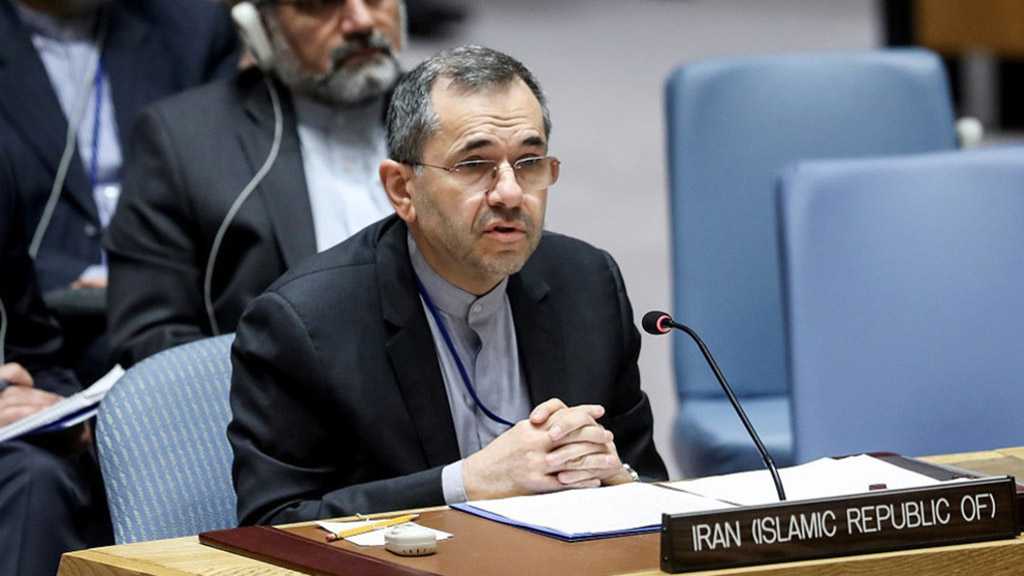
A senior Iranian diplomat has slammed the use of sanctions as “blunt and blind instruments” to exert pressure on world states, saying reforms are needed to prevent the United Nations’ Security Council [UNSC] from resorting to embargos that merely punish an entire nation but fail to contribute to international peace.
“The use of sanctions as blunt and blind instruments has raised fundamental ethical questions about whether sufferings inflicted on vulnerable groups is a legitimate means of exerting pressure on the targeted country,” Iran’s Ambassador and Permanent Representative to the United Nations Majid Takht Ravanchi said in an address to the UN General Assembly on Tuesday.
He said certain Security Council sanctions had been used in the past only to collectively punish an entire nation, without any actual positive impact on the maintenance of international peace and security, emphasizing that enforcement measures must be applied only as a last resort.
Sanctions, Takht-Ravanchi added, “must be applied very rarely, in an actually smart and targeted manner, with limited scope and duration, and only when all ‘measures not involving the use of armed force’ are exhausted and have truly ‘proven to be inadequate’ to ‘maintain or restore international peace and security’.”
The Iranian official said the Security Council’s increasing deficiencies had “resulted in its legitimacy and credibility crisis as well as its serious trust and confidence deficit, making its reform inevitable.”
“The ultimate goal of the Security Council’s reform must be to address all its current challenges and deficiencies and to evolve the Council into a truly representative, effective, transparent, accountable and above all, rules-based body,” the Iranian diplomat said.
He said the ongoing attempts focused on the Council’s enlargement, equating it with its reform and efficiency, but this cannot continue at the expense of neglecting or underestimating other issues.
Takht-Ravanchi stressed the importance of considering the Council’s enlargement as only one out of many objectives in reforming the body, saying, “Improving the Council’s working methods and accountability and ensuring that all its decisions are taken in full accordance with the purposes and principles of the United Nations and international law are in no way less important than the Council’s enlargement.”
“The Council’s reform must be considered as a comprehensive process, in which all five core issues under consideration must be treated equally, discussed thoroughly, and addressed in a package as they are interlinked and, as a whole, are greater than the sum of their parts. Therefore, any selective approach must be avoided,” the official added.
He said Iran attached great importance to ensuring “equitable representation” in an expanded council and strongly believed this could not be realized only through safeguarding “geographical representation.”
The Iranian ambassador criticized the West’s strong presence and influence in the Council, saying three members of the body have veto power, “while the main regions are poorly represented in terms of both the number as well as privileges, including veto power.”
“This means inequality ‘among the regions’… The existing inequalities must therefore be addressed both ‘among’ and ‘within’ the regions as they are both necessary and complementary,” he said.
The Iranian diplomat voiced Iran’s support for addressing historical injustice towards the developing world, particularly Africa, in ensuring equitable regional representation.
“We also fully support ensuring equal opportunities for each State within a given region, which, inter alia, can be done through limiting chances for those who have served more in the Council and, instead, provide more advantages to those who have never served in the Council or served lesser,” he said.
He said a combination of factors like population, economic power and regional position could play a role in achieving such a goal.
Takht-Ravanchi rejected as unacceptable any reform that serves the interests of only certain regions or a few states, stressing the need to seriously avoid any proposal that would “literally deepen the current imbalances or reduce the equal chance for states to become a Council member or contradict such intrinsic principles as sovereign equality and equal rights of states, transparency and accountability.”
Iran backs reforms to the Council’s working methods that would ensure that it acts “in full compliance with international law, particularly the UN Charter,” he said.
Takht-Ravanchi further pointed to the Council’s political and moral responsibility to act properly and responsibly and said its members must avoid taking decisions based on their own national interests or that of the geopolitical or geographical groups they belong to “but based on the common interests of the entire membership of the Organization.”
“The Council must never be used as a tool to pursue national political interests and agendas. The Council is responsible before the Member States on behalf of whom it acts and must therefore remain accountable to them,” the Iranian diplomat stated. “The Council shall also not consider issues which do not fall within its purview or are conferred by the Charter to other UN organs, and in particular it must stop encroaching upon the functions and powers of the General Assembly.”
He warned that making hasty decisions or setting artificial deadlines for its work will be counter-productive, saying any possible decision, procedural or substantive, at any stage must be adopted only by consensus.
“We also do not support text-based negotiations at this stage. Moreover, changing the rules or format of the process or its informal nature seems to be unconstructive and must therefore be avoided,” Takht-Ravanchi said.
Beirut – As the Syrian crisis reached the end of a devastating war, Syrian Foreign Minister Faisal Mekdad called for the withdrawal of US and Turkish troops from Syria in a speech to the UN General Assembly in New York lately, asking what the American troops have to do on the Syrian territories.
Mekdad stated that Syria will reassert the government’s control over the entirety of the country again, insisting that “This is a non-negotiable national and constitutional right”.
Moreover, the Syrian foreign minister stressed that foreign presence on Syrian soil without Syria’s approval is both illegitimate and a violation of international law and the UN Charter.
So how is the American presence shaped and formed in Syria in all?
The deployment of American troops and its international allied forces has focused in recent months on the Syrian-Jordanian-Iraqi border triangle at the Tanf border crossing near the deployment of the Syrian Army and its allied forces. The Tanf border crossing is of great importance to all local, regional and international parties involved in the Syrian conflict, in addition to Albukamal in Deir ez-Zor province.
Rmelan Airport:
It is one of the most important locations for US forces. The Ramlan base area has oil wells under the control of the Syrian Democratic Forces [SDF]. The base has been constructed by the US in November 2016 after measures to build new facilities and to expand runways. It was originally an airstrip for agricultural pesticide spraying aircraft and helicopters.
The airport, known as Abu Hajar Airport, is located southeast of the town of Rmelan, northeast of Qamishli city in al-Hasaka governorate, close to the Syrian-Turkish-Iraqi border triangle, an area known for its heavy oil production and subject to the People’s Defense Units [YPG]’s self-administration system. The airport is the first established US military presence since the beginning of the war on Syria.
Ayn al-Arab Base:
This base is located south of the city of Ayn al-Arab [Kobane] near the village of Kharab Ashiq, about 33 kilometers south of the Turkish border. It is the largest of US base and it provides support to the international coalition forces and its allies. Western newspapers published information from the analysis of satellite images showing housing units for hundreds of soldiers and a fleet of vehicles of different types as well as facilities for military transport aircraft and the defense of al-Qaeda, such as control towers.
Al-Mabrouka Base:
It is a small camp in the village of Al-Mabrouka, where small-scale US forces are located west of Qamishli city in al-Hasaka governorate within the control of the YPG.
Rubaria Airport:
Located near the northeastern city of al-Hasakah, near the border with both Iraq and Turkey, the airport was originally a small airstrip for small agricultural aircrafts before the US turned it into a helicopter runway under the supervision of its troops to provide logistics to Kurdish forces and support other international coalition forces fighting the Wahhabi Daesh [Arabic acronym for “ISIS” / “ISIL”].
Tell Beydar:
The base is located 30 kilometers northwest of al-Hasaka and is close to the Turkish border. It includes helicopter airstrips and a training camp for non-combat forces such as police, civil defense and others to meet the needs of Kurdish forces in managing the areas they control.
White Hill [Tell Abyad]:
A large number of US soldiers are deployed at the base. Some reports indicate more than 200 troops are deployed in the city, and the US flag is raised on some government buildings in the city center.
US forces are present alongside forces from the international coalition and armed opposition states at the Syrian al-Tanf base on the Syrian-Iraqi-Jordanian border triangle. The US requires the establishment of a “no-clash” zone under which no coalition forces of the government allow them to approach or enter.
Furthermore, US forces are also present in several camps in Raqqa province to support the SDF’s operations, which have been fighting to retake Raqqa from Daesh. US forces use artillery of various kinds like rocket launchers and other heavy combat equipment, in addition to various types of intelligence and armored vehicles to conduct joint patrols with the SDF.
US forces are also deployed as training advisers in at least three training camps in al-Hasaka governorate to train Kurdish fighters as well as near the city of Manbij, north of Aleppo, which has been controlled by the SDF since August 2016.
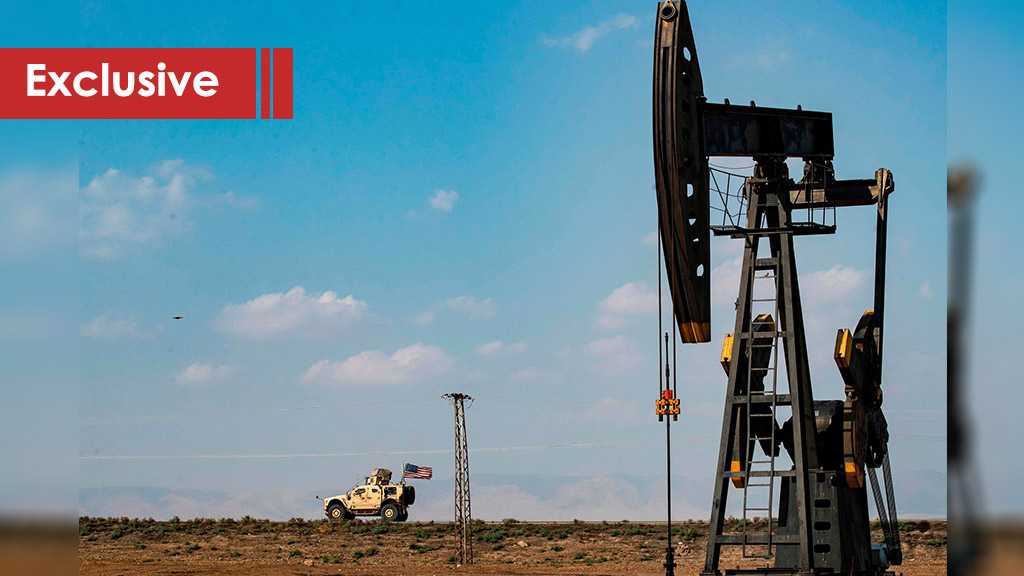
Based on the aforementioned, it’s crystal clear that the US does not have any business in Syria except what it has been doing for decades: draining Syria’s natural resources! Wherever natural resources and oil exist, American troops arrive in a jiffy and settle down.
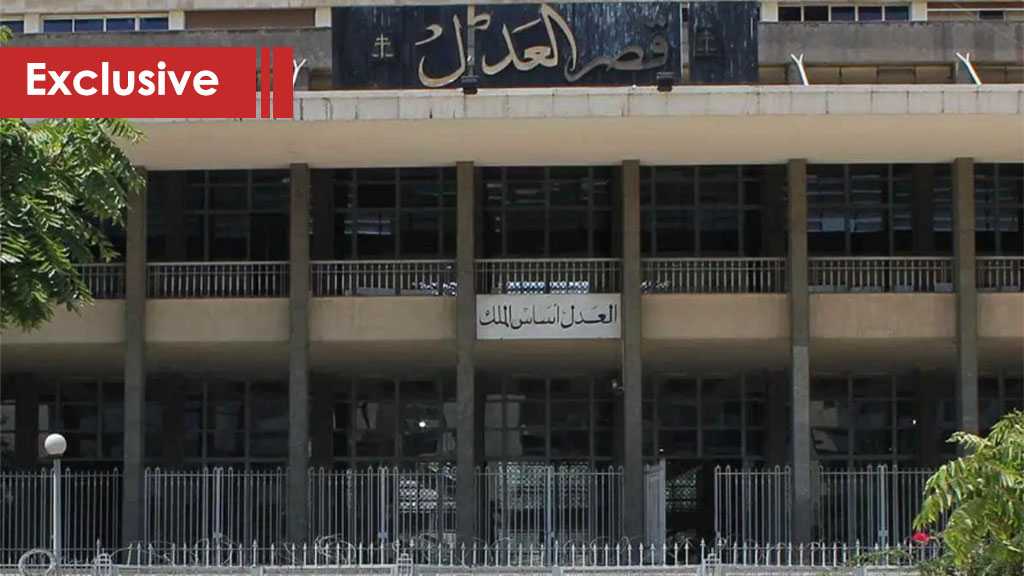
Aristotle once said that “justice is achieving equality in exchange for injustice.” Justice is not about attribution or double standards. This premise alone raises many questions about the work of judicial investigator, Judge Tarek Bitar, on the Beirut Port blast case.
There are many question marks surrounding his discretion and double standards throughout the investigation. This fueled divisions among the Lebanese public over his role.
One of the broader questions about Bitar and his work is: where is justice in this entire investigation? And why is the judge working in a way that violates the fair trial guarantees by the constitution as well as local and international laws mentioned in several international treaties. Major countries often adopt these treaties as slogans but unfortunately do not put them into practice but use them as tools to confront opponents and enemies.
There is no doubt that those accused of a crime face the machinery of the state when they appear before a judge. Therefore, the way in which he is treated when he is accused of committing a crime precisely indicates the extent to which that state respects the human rights of the individual and the rule of law. Each criminal trial testifies to the state’s commitment to respecting human rights. And according to the rank of the accused and his job, political, and social status, a discussion begins about the extent of the integrity of the judiciary and the extent to which the investigation is politicized for local, regional, or international purposes.
International treaties related to fair trials stipulate that every government has the obligation to bring those responsible for committing crimes to justice before independent, impartial, and competent courts, in a manner that respects international standards of impartiality. By extension this applies to any trial over the Beirut Port. However, whatever the crime, it does not serve justice, whether for the accused, the victims, or the public in general, when unfair practices taint such trials.
It is known internationally and locally that the principles of a fair trial are based on the rejection of arbitrary and unfair procedures that undermine the concepts of freedom and justice. International treaties have focused on guarantees of prevention of arbitrary arrest and the very slow pace of trial. The requirements for a fair trial are outlined in Articles 7, 9, 10, 11 of the Universal Declaration of Human Rights, Article 14 of the International Covenant on Civil Rights, and in regional and local laws, where all people are equal before the law and have the right to enjoy equal protection from it without any discrimination.
Rules and guidelines on the role of prosecutors, basic principles on the role of lawyers and the statutes of the International Criminal Court, the International Tribunal for Rwanda, and the International Criminal Tribunal for former Yugoslavia can be seen in Article 7 of the African Charter on Human and Peoples’ Rights, Article 8 of the American Convention on Human Rights, and Article 6 of the European Convention on Human Rights.
The Universal Declaration of Human Rights has approved several articles that emphasize fair trials and impartiality of the judiciary, most notably Article 7 which says that all people are equal before the law, they are equal in the right to enjoy the protection of the law without discrimination, and they are equal in the right to protection from any discrimination that violates this declaration and any incitement to such discrimination.
Most importantly, Article 10 of the Declaration states that everyone has the right, on full equality with others, to have his case heard by an independent and impartial court, in a fair and public manner, to adjudicate his rights and obligations and any criminal charge against him.
Therefore, the accused party in Lebanon has the right to have his accusation heard before a fair judge, especially since the case has political dimensions. Article 14 of the International Covenant on Civil and Political Rights affirms that all people are equal before the judiciary and that every person convicted of a crime has the right, in accordance with the law, to appear before a higher court in order to appeal his conviction and the sentence handed down to him.
The consistency of local professional standards related to the judiciary with relevant international standards, including the Bangalore Principles of Judicial Conduct that identify six core values of the judiciary: independence, impartiality, integrity, propriety, equality, competence, and diligence. They are intended to establish standards of ethical conduct for judges to ensure independence and accountability.
These standards are designed to be applied to all judicial systems in the world, taking into account the enormous diversity of legal procedures. They also establish the minimum guarantees that should be provided by all systems to ensure justice and respect for the rule of law and respect for the right to fair criminal prosecution. These guarantees apply to investigations and to procedures for arrest and detention, as well as to all pre-trial procedures, proceedings during trial, when sentencing and appeals are issued, and when penalties are handed down. These international fair trial standards represent an international consensus on mandatory standards for assessing the way governments treat those suspected of and charged with crimes.
The foregoing is consistent with what was adopted by the Lebanese Ministry of Justice in 2005 on the Basic Rules of Judicial Ethics (the Judicial Ethics Rules), with the approval of the High Judicial Council and the State Consultative Council (Shura Council). The rules of judicial ethics were prepared by a committee involving the first president of the Court of Cassation – the head of the High Judicial Council, the head of the State Consultative Council, the First Honorary President of the Court of Cassation, and the Honorary President of the Judicial Inspectorate.
What is happening in Judge Bitar’s dossier confirms the double standards used by the international community in applying international law and disregarding international treaties for the sake of political interests.
Judge Bitar’s order has become suspicious, especially since there is a very large group of Lebanese people who reject his work, and therefore, it is not possible to continue and insist on Bitar’s survival or on the continuation of his work. What value does it have if it leads to rulings that do not represent the people?
Just as the judicial authority does not meet the criteria outlined above, it is better for the High Judicial Council to suspend and dismiss its work so that this act does not lead to a rift among the Lebanese. What’s more, and in connection with the foregoing, the international community represented by Washington, which covers and protects Bitar, must stop applying double standards to further its political interests in this case.
طرح كلام رئيس الحكومة نجيب ميقاتي عن توصيف عبور قوافل المازوت الإيراني الذي استورده حزب الله وجلبه عبر الحدود السورية من دون الخضوع للإجراءات الحكومية، بالانتهاك للسيادة اللبنانية، سؤالاً عن مفهوم السيادة في قضية القوافل وعبورها، من الزاوية القانونية، وفقاً لمعايير القانون الدولي، لأنه ثمة ما هو معلوم من الزاوية السياسية بأن المقاومة لم تمتنع عن الالتزام بالخضوع للإجراءات الحكومية عبر الحدود، بل إن الحكومة هي التي فضلت عدم الانخراط في أي صلة بالقوافل تلافياً لإثارة أي التباس يوحي بشراكتها تفادياً لتعرضها للعقوبات الأميركية، كما هو معلوم أن كلام الرئيس ميقاتي عن انتهاك السيادة هو مقصد سياسي للقول إن الحكومة لم تكن على صلة، طلباً لذات الهدف، أي تفادي العقوبات الأميركية، ما يستدعي فحص ومعاينة المصطلح والتحقق من مدى ملاءمته للحالة التي نتحدث عنها توصيفاً واستنتاجاً.
–
السؤال الأول الذي يطرحه الموضوع هو طالما أننا لا نتحدث عن عقوبات دولية تحظر المتاجرة مع إيران أو عبر سورية، فما هو التوصيف القانوني للعقوبات الأميركية في حالة لبنان، والجواب نجده في معاهدة لاهاي التي تتحدث عن مفهوم الاحتلال، بصفته تعبيراً يتجاوز مجرد الوجود العسكري الأجنبي الذي لا يصبح احتلالاً إلا بمقدار ما يفرض مشيئته على الأرض التي توصف محتلة بذات نسبة سيطرة المشيئة الأجنبية على إجراءاتها وتدخلها في تغيير وجهة ممارسة السيادة عليها، فيصير السؤال هو، لو لم تكن هناك عقوبات أميركية، هل كان لدى الحكومة اللبنانية مشكلة في أن تتعامل بصورة سيادية مع القوافل، وهل أن الذي استولى على الصلاحيات السيادية للدولة وحل مكانها هو الأميركي الذي استولى على سلطة السماح والمنع أم المقاومة التي كانت جاهزة للخضوع للإجراءات الحكومية، وهل أن الحكومة لديها قرار سيادي يحظر الاستيراد من إيران وعبر سورية خرقته المقاومة، أم أن المقاومة خرقت قواعد الاستيلاء الأميركي على هذا البعد من القرار السيادي للحكومة؟
–
عندما نوصف السيطرة الأميركية على القرار السيادي للدولة، بالاحتلال لأنه يتولى ممارسة سلطة على أرض ليست أرضه ويفرض عليها تشريعات ليست نابعة من السلطات السيادية الشرعية، يصير السؤال القانوني هل أن الحكومة بمؤسساتها السيادية قامت بما يلزم لردع هذا الاحتلال وتحرير بلادها منه، أم أنها خضعت أو تغاضت أو استسلمت أو أعلنت عجزها، وفي كل هذه الحالات التي لحظها القانون الدولي هل يصبح الاحتلال شرعياً، ويصبح التسليم بمشيئة الاحتلال قانونياً، والجواب قاطع بالنفي في كل المداولات والمناقشات الخاصة بحالة الاحتلال التي ينتهي البحث فيها باعتبار المقاومة التي تنظمها الشعوب بوجه الاحتلال لإسقاط مشيئته هي الرد القانوني المشروع والسيادي.
–
المقاومة المسلحة هي الجواب عندما يكون الاحتلال الذي يفرض المشيئة عسكرياً، وكسر المشيئة بذاتها بالتمرد على مندرجاتها كدعوة الشعب لرفض دفع الضرائب لسلطات الاحتلال هو نوع من المقاومة المشروعة، وفي حالة الاستيلاء الأميركي على السلطة السيادية للدولة في تحديد شروط المتاجرة والعبور، يكون كسر هذه المشيئة مقاومة مشروعة لا تقبل الاجتهاد، يزيده مشروعية تلكؤ الحكومة أو استسلامها أو تغاضيها أو عجزها أو خضوعها، بما يجعل التخلي الحكومي عن ممارسة الحق السيادي وارتضاء استيلاء الأجنبي عليه إطلاقاً لحق المقاومة المشروع باسترداد هذا الحق وفرض ممارسته من الشعب الذي تمثله المقاومة، كما في حال المقاومة العسكرية للاحتلال بالقوة العسكرية.
–
وفقاً للمفهوم القانوني للسيادة، الذي ينتهك هو صاحب العقوبات الذي نصب نفسه صاحب المشيئة في فرض القوانين بدلاً من السلطات الوطنية المحلية، ليصير قوة احتلال وفقاً للتعريف القانوني، وليست المقاومة التي تمردت على الإجراءات التي فرضها الاستيلاء على القرار السيادي للدولة وتلكؤ الدولة في مواجهة هذا الاستيلاء وخضوعها للمشيئة الأجنبية، بل إن المقاومة تصبح قانونياً الممثل الشرعي للشعب في ممارسة السيادة في إسقاط الاحتلال بصفته مشيئة أجنبية تفرض تشريعاتها على الأرض الوطنية للدولة من خارج الممارسات السيادية لمؤسسات الدولة وتشريعاتها.
Russian Foreign Ministry spokeswoman Maria Zakharova divulges the US no longer holds the position of a “world leader.”
Russian Spokeswoman Maria Zakharova
The Spokeswoman for the Russian Foreign Ministry divulged that the US is no longer close to the position of a world leader, especially when it comes to democracy.
In response to Washington’s criticism of Moscow’s democratic record, Zakharova stated on a talk show broadcast on Russian Channel One, that every country and its leader must solve their internal problems.
Zakharova expressed that any country that is ideal and practices such high standards would be in a position to educate others, shedding light on the many domestic issues in the US.
The Russian Spokeswoman has previously attacked the US and its policies, stressing that before the US speaks of “law” it should hold itself accountable for what it did in Yugoslavia and Iraq.
In response to the arrest of Alexey Navalny, Zakharova advised the US National Security Adviser, Jack Sullivan, to focus on the US’s internal conflicts and respect international law.
Actually, there have been a lot of terrorist attacks on Crimea, but either they were caught, or the actual damage was minimal. So it’s not something new.
This time, the Ukie SBU hired to guys to place explosives. Everybody was caught.
Now here comes the important factoid: all these attacks were planned and coordinated by either the Ukie SBU or the Ukie military intelligence service GUR (yes, like GRU, just different order, the beautiful Ukrainian language is SO different from the ugly Moskal’ speech, right?).
Anyway, the Russians are now sitting on a big case full of evidence of state-planned Ukie terrorist attacks not only in the LDNR, which is de jure not Russian (yet), but Crimea which is Russian under Russian law. This is worth repeating: there have been quite a few Ukronazi attacks on Crimea and Crimea is as Russian as Moscow or Riazan!
So what I am saying is this: under international law, the Ukraine has launched acts of aggression launched by the top levels of the Ukie state. That means that Russia can choose to respond to these attacks in any manner she chooses from protests to sanctions, to direct attacks on the SBU/GUR facilities and/or individual commanders.
So far, neither the LDNR nor Russia has authorized cover sabotage/killing operations against the Ukraine. The reasons for this are numerous, but this might change in the future and when that happens, the Russians will have a full dossier of evidence, not just vague (and not even credible!) “official suspicions” against “terrorist countries” or “counties which harbor terrorists” like the US pretends to have before striking (remember the WMD nonsense and Powell’s small vial of laundry soap at the UNSC??).
By the way, as we speak, there is a visit by senior Congress Officials in Kiev (such terrorist attacks always happen either right before or during the visit of US dignitaries). These “Congresspeople” (they don’t deserve to be called “men”) expressed their love and support for the Ukronazi regime and promised all forms of aid.
The “oh so clever” Ukie plan is simple: become a NATO member de facto while legally speaking, only being a special ally/friend. This circumvents any and all formal obstacles and makes it possible for the US to impose this on NATO without any formal vote or big ceremonies.
Now, ain’t they smart?!
Back to reality, if NATO or the US still had relevant militaries this would be a real problem, but since Putin and the Kremlin know the real score (Kabul) and they are laughing! And when US Congresspeople promise to even install Patriot missiles that laughter gets even more hysterical.
US Money? In Afghanistan, only 10% of the trillions of dollars poured into that country reached its objective. In other words, the local “heroes” (all US servicemen are, by definition, “heroes” who need to be “thanked” for their “service”) simply stole 90% of all the money.
I am confident that the Ukies can beat that record and steal, oh, say 95% or more of any money sent. And, like in Afghanistan, the US/NATO commanders will get their cut too. The weapons will be “lost” in explosions (blamed on Putin, Petrov and Boshirov personally!) and then sold to the highest bidder (LDNR included).
As for all the threats of fire and brimstone coming out of both parties, just ignore it – been there, done that. 20 years have passed and resulted in an abject failure. If UncleShmuel wants to repeat this, by all means, the Taliban will love it (more weapons and money for them).
Speaking of the Taliban, looks like they successfully entered the Panjshir valley, but that the local forces took to the mountains and are hiding. Ahmad Shah Massoud (father) did that once with the Soviet military. Eventually, the Soviets left, but the Talibans might seriously try to stay and gradually take the place under control. Yes, unlike the US-trained huge (300k iirc) official Afghan military, the Taliban are going from success to success and have not made too many mistakes (yet?).
Anyway, Afghanistan today is tomorrow’s Kosovo and tomorrow’s Ukraine.
And then, Palestine.
As for the Ukie terrorist attacks, they will all end up in one “final bill” which shall be paid in full in the not too distant future.
As always, I am delighted to be here on September 1, and not only on this day, of course, since we hold events here at other times of the year as well. But September 1 has special importance, since this is Knowledge Day. First-year students get to feel the university spirit, and meetings like this help us streamline this experience and are sure to benefit students in their studies.
I am certain that you will not regret choosing this university. MGIMO graduates find work in a wide variety of spheres, from public service and research to business and journalism. We are proud that our alma mater has such a great reputation. MGIMO Rector, Anatoly Torkunov, has just shared some enrolment statistics. They are impressive. He said that the minister keeps a close eye on everything going on in this school. But you cannot keep track of everything, and I mean this in a good way. MGIMO University constantly improves its programmes and activity and expands its partnership networks. Today, MGIMO University will sign yet another cooperation agreement, this time with Ivannikov Institute for System Programming. This shows that we always need to be in step with the times. This is the right way to go. The quality of the education that graduates receive at this university is recognised both in Russia and around the world.
I am glad MGIMO University continues to attract international students. This is an important channel for maintaining humanitarian, educational and people-to-people ties. In today’s world these ties have special importance, since at the intergovernmental level our Western colleagues have little appetite for talking to us on equal terms. As you probably know, and I am certain that you have a keen interest in foreign policy, they persist with their demands that we change the way we behave and act the way they view as being correct. This is a dead end. We are open to a frank, constructive, mutually beneficial dialogue, taking into account each other’s interests. It is along these lines that we maintain dialogue and promote cooperation and partnerships with the overwhelming majority of countries around the world. This includes our closest allies and strategic partners – members of the CSTO, CIS, EAEU, SCO and BRICS. We have many reliable friends, almost in all continents interested in promoting mutually beneficial projects that benefit all the participants.
To counter this trend toward a multipolar world, which reflects the cultural and civilisational diversity on this planet, our Western partners seek to maintain their dominant standing in international affairs. They are acting in quite a brash manner making no secret out of the fact that their main objective is to contain their competitors, primarily Russia and China. The documents adopted at the NATO, EU, and US-EU summits over the past months are designed to consolidate the “collective West” in their efforts to counter the Russian Federation and the People’s Republic of China.
The Indo-Pacific strategies that are openly pursuing the goal (as it has been proclaimed) of containing China have gained currency in the Asia-Pacific region. They are trying to implicate another of our strategic partners, India, in these games. Everyone can see it and everyone understands what it is all about. But those who gave up their sovereignty and joined the ranks of the countries led by the United States and other Western countries are not in a position to utter a word of disagreement.
Truth be told, following the tragic events in Afghanistan and after the United States and its NATO allies had hurriedly left that country, a chorus of voices began to be heard in Europe advocating self-reliance in foreign affairs, especially in matters involving the deployment of armed forces, rather than reliance on directives issued by Washington that it can change in an instant. These are glimpses of something new in the position of the West, in this case, the Europeans.
The second notable aspect highlighted by US President Joe Biden and President of France Emmanuel Macron is as follows: both announced within one or two days of one another that it was time to give up on interfering in other countries’ internal affairs in order to impose Western-style democracy on them.
We welcome such statements. We have long been urging our Western colleagues to learn from the reckless ventures that they have got themselves into in recent decades in Iraq and Libya, and they tried to do the same in Syria. I hope (if the above statements are a true reflection of their hard-won understanding of the matter) that our planet will be a safer place in the future. But all the same, we have to “clear out the rubble” of the past policies. Hundreds of thousands of people, civilians, were impacted or killed during the invasion of Iraq and the attack on Libya. There are lots of problems stemming from the revived international terrorism in the Middle East and North Africa and huge numbers of illegal migrants. The illegal arms trade, drug smuggling and much more are on the rise. All this needs to be “cleared up” by the international community, because it affects almost everyone.
Now that the NATO troops have pulled out from Afghanistan, the most important thing for us is to ensure the security of our allies in Central Asia. First, they are our comrades, including comrades-in-arms, and second, the security of Russia’s southern borders directly depends on this.
I hope that if we act together, we will be able to agree on these external steps that will help create an environment within Afghanistan for forming a truly national leadership. We are working energetically to this end.
We are witnessing two trends in the international arena. On the one hand, it is about the formation of a multipolar and polycentric world. This trend reflects the position of most states around the world. On the other hand, efforts are being made to hold back this objective historical process and to artificially preserve control over everything that is happening in the international arena, including with the use of unscrupulous methods such as unilateral illegal sanctions, competition that is occasionally reminiscent of ultimatums, or changing the rules in the midst of an ongoing project.
The West tends to mention less often (if at all) the term “international law” and calls on everyone to maintain a “rules-based world order.” We have nothing against the rules. After all, the UN Charter is also a set of rules, but they were agreed with all states without exception. They are supported by every country that is a member of this one-of-a-kind organisation with incredible and unmatched legitimacy. The West has different rules in mind. They are creating formats of their own. For example, the US has announced that it will convene a Democracy Summit to create an Alliance of Democracies. Clearly, Washington will be the one to determine who will be invited and who is considered a democracy. By the same token, France and Germany announced an initiative to create an Alliance for Multilateralism, i.e. “multilateralists.” When asked why these issues cannot be discussed at the UN, where multilateralism is at its finest in the modern world, the answer is that the UN is home to “retrogrades” and they want to create an Alliance for Multilateralism based on “advanced” ideas. And the “leaders,” above all the EU, will set the rules for multilateralism, and the rest will have to look up to them. This is a crude description, but it conveys the essence of what they are trying to tell us in so many words.
There are initiatives to create partnerships, including in the areas that were supposed to be discussed at universal platforms long ago. Numerous initiatives appearing in the developing world are also being used for the same purpose. There are attempts to channel them to meet Western interests.
The policy of undermining international law and universal principles sealed in the UN Charter is reflected, to a certain extent, in the efforts to call into doubt the results of World War II. They are aimed at trying to equate the winners in this bloodiest war in human history with those who unleashed it and proclaimed the destruction of whole nations as their goal. These attempts are aimed at undermining our positions in the world. Similar attacks are being made on China’s positions. We cannot give up and remain indifferent on this issue.
Every year, we put forward major initiatives at the UN on the inadmissibility of glorifying Nazism, waging a war against monuments and fuelling any forms of racial discrimination and xenophobia.
The overwhelming majority of states not only support these initiatives but also become their co-authors. In most cases, our Western colleagues bashfully abstain from this. They explain that the appeal to prevent certain trends runs counter to democracy and freedom of speech. In other words, for them the neo-Nazi trends that are obvious in Europe, in part, in the Baltic states and Ukraine, do not amount to a gross violation of the Nuremberg trials verdict but merely reflect a commitment to tolerance and freedom of speech.
I do not think it is necessary to explain in detail the harmful and pernicious nature of such attempts to rewrite history and give the green light to those who want to reproduce misanthropic attitudes in the world arena. I do not believe it is necessary to speak in detail about the need to counter these attitudes with resolve and consistency.
We have a foreign policy course endorsed by President of Russia Vladimir Putin. Its main goal is to ensure the most favourable conditions for national development, security, economic growth and the improvement of the living standards of our citizens. We will consistently translate this course into reality.
We have never striven for confrontation, not to mention isolation. We are open to cooperation with the Western countries if they change their approach and stop acting like teachers who “know everything” and are “above reproach,” treating Russia like a pupil that must do its homework. It is inappropriate to talk to anyone in this manner, let alone Russia.
Our plans enjoy firm support of our people for the course towards strengthening the sovereignty of the Russian Federation and promoting good, friendly relations with our neighbours and all those who are willing to do this honestly, on an equitable basis.
Question: The question has to do with the changes in modern diplomacy under the influence of new technology. Digital diplomacy is a widespread term today. Technological development adds a fundamentally new dimension to a diplomats’ work, and also leads to a qualitative transformation of the system of international relations. How do you think new technologies will affect energy policy in particular and diplomacy in general?
Sergey Lavrov: I am asked this question every time I speak at Knowledge Day here. Apparently, this reflects the thinking of each new generation of students, about how technology will generally affect the processes concerning state-level problem solving and international relations.
Indeed, digital technologies are rapidly penetrating our lives, even faster in the context of the coronavirus pandemic. Many events, including international events, have transitioned to the online format. There is an upside to this. To a certain extent, it helps to save time, which is becoming a more sparse resource every day, given the aggravating international challenges and problems that our foreign policy tries to resolve.
When it comes to holding official meetings such as the UN Security Council or the UN General Assembly with a pre-agreed agenda where each country wants to express its point of view, such statements are prepared in advance through the efforts of a large number of specialists. The result is a policy document on a specific matter on the international agenda, which then goes through debates in one format or another. I see no problem with participating in this kind of discussion online using digital technology.
There are other international meetings, when something needs to be agreed upon as soon as possible; these meetings can also be held remotely. At least this way is better than a phone call because you can see the other person’s face, and this is very important.
But the most serious issues cannot be resolved online. All my colleagues agree with this. Maybe in the future, humanity will invent a way to convey the feeling of personal contact. But I doubt this will be possible. No machine is capable of replacing a person.
I am confident that conventional diplomacy will retain its importance as the main tool in international affairs. As soon as a serious problem arises, it is imperative to meet and try to negotiate.
Question: Will the autumn 2021 elections to the State Duma of the Federal Assembly of the Russian Federation impact Russia’s foreign policy in the international arena?
SergeyLavrov: A good question. Elections in our country actually begin in a little more than a fortnight. Even now Western colleagues make it clear that they are set to cast discredit on them. Various political scientists are publishing articles and making speeches aimed at preparing public opinion in the direction of the narrative that the elections results will be rigged.
We regularly invite international observers to our national elections. This year, around 200 observers will come to us as well, including those from international organisations. The only one of them who arrogantly declined the invitation was the OSCE Office for Democratic Institutions and Human Rights (ODIHR). We told them they could send a group of 60 observers. This is the largest group we invite from abroad. They said they wanted 500. When you are being invited to visit someone, you do not demand gifts for yourself instead of showing respect towards the hosts. OSCE does not have a rule under which ODIHR must dictate election monitoring provisions. All the countries have only one obligation there – to invite international observers to elections. It is not even written down that they should be from OSCE. They may be from anywhere you like. We do it regularly and meet our obligations in full. This is an example of how international law (and this principle is prescribed at OSCE, I mean that all issues must be solved by consensus) is being replaced by “rules.” This Office itself made up a rule, along the same lines the West operates, by demanding that its own “rules” must be obeyed.
However important international observers might be, we will also have our own observers. Their number is immense. The voting will be streamed live in full. Our Central Electoral Board provides detailed coverage of this and other innovations being introduced. We are taking steps to ensure maximum transparency of voting at our embassies and general consulates. As always, we are making arrangements so that it is possible for our citizens abroad to cast their vote and fulfil their election right.
With all the importance of international observers, it is ultimately our citizens who will take a decision on how we will live on and with which members our parliament will draft new laws. Those who are going to objectively figure out developments in the Russia Federation are always welcome. As to those who have already passed a judgement, let them bear the shame.
Question: I know that poetry and art are among your hobbies. How can we make Russian literature and cinema more effective as a soft power tool abroad?
Sergey Lavrov: There is only one way, and that is to promote these works in other countries’ markets. This policy was vigorously pursued in the Soviet Union. That was a useful experience for the international film and literary community as well. I believe we are renewing these traditions now. I do not know about literary exhibitions, I just do not think I have seen a lot of information on this, but many film festivals recognise the work of our directors, actors and producers. A number of Russian films are highly valued in Cannes and in Karlovy Vary. We must continue to do this.
Question: Does Russia have effective and proportionate methods of fighting manifestations of Russophobia, oppression of Russians, persecution against the Russian language and the Russian world in certain countries?
Sergey Lavrov: This is a difficult question, given the recent manifestations of inappropriate attitudes towards ethnic Russians in a number of countries, including some of our neighbours. This topic has several dimensions to it. The most important point is that the government of a country where our citizens are subjected to some kind of discriminatory influence must firmly oppose such manifestations and take steps to prevent them. This is important, not only because they attack Russians or our other compatriots, but also because it’s required by international conventions, the UN Charter, the Universal Declaration of Human Rights and many other documents that are universal and approved by everyone.
In Russia, too, we have seen situations recently where some migrant labourers were at odds with other labour migrants. This is also a problem because Russia needs migrant labourers. We are trying to make immigration as clear, transparent and legitimate as possible. We negotiate with the countries they come from for long-term employment (mostly the Central Asian countries) and agree on special courses for potential migrants that make sure they speak minimal Russian and are familiar with Russian customs, our laws, and that they are planning to behave in a way that is appropriate for being hired in the Russian Federation. This is important for our economy. Without migrant labourers, many Russian industries are now experiencing a significant shortage of personnel.
It is also important to keep in mind that these countries are our allies. We, as allies, must support each other; one way to do so is to ensure an appropriate environment for citizens who represent a different ethnic group.
We have a huge number of ethnic groups living in Russia. Russia is a record holder in multi-ethnicity. All this cultural and religious diversity has always made our country strong, providing the solid foundation on which we stand. We have never tried to destroy the traditions, cultures or languages of any peoples that have lived here since the Russian Empire, then the Soviet Union and now the Russian Federation. We have always supported their languages, cultures, and customs.
Another factor that must be taken into account is the basic quality of life for each and every citizen. We pursue a most open policy. We will make every effort to ensure that our neighbours or other countries where our compatriots live or work fully comply with their international obligations. The fight against discrimination must use political methods based on respect for international commitments.
Question: Do conditions exist for economic and investment cooperation with Japan on the Kuril Islands?
Sergey Lavrov: Yes, they do, of course. It is even more than that. We made a relevant proposal to our Japanese colleagues a long time ago. When, several years ago, Russian President Vladimir Putin met with the Japanese Prime Minister at the time, Shinzo Abe, we came up with an initiative to engage in joint economic activity on these islands. Our Japanese neighbours agreed to this proposal after a while, but decided to confine our cooperation to relatively unsophisticated areas, like aquaculture and waste treatment. These things are important but they are of no strategic significance. We offered them cooperation in any industry of their choice on the southern Kuril Islands and this has been stated repeatedly in the correspondence with our Japanese colleagues. However, the Japanese are seeking to secure a deal with us that would allow them to engage in economic activity and invest money [in the area], not in compliance with Russian law, but rather on the basis of an agreement that provides for another jurisdiction – not that of the Russian Federation. Under this jurisdiction, Russian and Japanese representatives in a certain administrative body would enjoy equal rights, meaning that some hybrid laws would be introduced. This cannot be done under our Constitution.
Regretfully, our Japanese friends are missing out on the opportunity to invest money with us for our mutual benefit. Nonetheless, we have good plans. Soon, new privileges will be announced for our foreign partners who agree to work with us in this part of the Russian Federation. I believe there will be practical interest in this.
Question: In one of your interviews you said (and I fully agree) that modern Western-style liberal democracies have run their course. How will nation states evolve going forward? What forms of state organisation hold the most promise? What should we be striving for?
The UN is plagued by many problems, ranging from Greta Thunberg to agreements that are not being acted upon, such as, for instance, the Paris Agreement. What can be done to turn this deplorable trend around? What laws need to be adopted? What kind of organisations must be created? What does Russia think about this?
Sergey Lavrov: I briefly touched on this matter in my opening remarks. I believe each state should be structured around its customs and traditions and be comfortable for its residents who will have children, grandchildren, etc. It appears that they have promised to stop trying to impose democracy on other countries. At least, President Biden and President Macron said this almost simultaneously. We’ll see how they deliver on their promises.
Each country should take care of its own affairs independently. Everyone now agrees that imposing a Western system on Afghanistan was a grave mistake. Afghanistan has always been a fairly decentralised country where clan-based and other bonds, as well as relations between different ethnic groups, have always played a major role. And Kabul usually balanced out these relations. Saying that tomorrow you will have elections and everyone should go and cast their vote to elect a president who will have certain powers – it was not the Afghans who came up with this idea. It was imposed on them and the ones who did it hurt themselves badly. I hope the promises not to impose democracy on anyone else will be kept.
With regard to environmental protection, the Paris Agreement can hardly be described as a treaty that is not being acted upon. It was based on the fundamental principle that included the need to reduce carbon dioxide and greenhouse gas emissions, but each country was supposed to assume commitments of its own. Preparations for another conference of the parties to the UN Framework Convention on Climate Change, which will take place in Glasgow this autumn, are underway.
As part of this process, the most important thing is to agree on variables that will meet the interests of each participant. The proposal of several Western countries to stop using coal-fired power generation starting literally today cannot be complied with by many countries, including several Western countries, simply because this would undermine their energy security. The same applies to large developing countries, including China and India. They are reluctant to stop their growth. They are making it clear to the West that the Western countries have attained their current level of development due to intensive use of natural resources, which gave rise to the greenhouse effect, and now the West wants large developing countries to skip their current phase of development and go straight to a post-carbon economy. It doesn’t work that way, they say. First, they need to complete the economic development of their respective states, which is a complex process that involves the interests of each state. An attempt to balance these interests is being undertaken in the course of preparations for the next conference of the parties to the UN Framework Convention on Climate Change.
We made a commitment that by 2030 we would have 70 percent of the 1990 level when the countdown began under the UN Climate Convention. It is unlikely that anyone would have complaints with regard to us. President Vladimir Putin has made clear more than once that we must be extremely careful with regard to everything that is happening. The fact that Russia’s Arctic zone, which is mainly permafrost, is warming up much faster than the rest of the planet is worrisome. This matter is being carefully addressed by several of our ministries, and it is a concern for all of our Government.
Question: Can environmental issues motivate the world powers tо unite against a background of general discord? What is the potential for green diplomacy?
Sergey Lavrov: Environmental protection and concern for the planet’s climate must become a motive for pooling our efforts. It is hard to say now to what extent the world powers will manage to achieve this.
Let me repeat that the developing nations are strongly inclined to use their opportunities for the current stage of their development before assuming the commitments promoted by their Western colleagues. Many interests come together here. Our global interest lies in the health of the planet and the survival of humanity. However, every country has its own national assessment of the current situation and the commitments to their people. It is a complicated matter, but there is no doubt that this is a challenge that must prompt all of us to come together. We stand for pooling our efforts.
Question: Can the Russian Federation “enforce Ukraine to peace” under the Minsk Agreements?
Sergey Lavrov: The Minsk Agreements do not envisage any enforcement. They have been voluntarily approved, signed and unanimously endorsed by the UN Security Council, thereby becoming international law. When Ukraine as a state, both under Petr Poroshenko and Vladimir Zelensky, is doing all it can to avoid fulfilling these agreements, we must point this out to those who compiled them with us. I am primarily referring to Germany, France and other Western countries that are going all-out to justify the Kiev regime. When I say that it is trying to avoid fulfilling these agreements, I am referring to many laws that actually prohibit the Russian language, the transfer of special authority to the territories that have proclaimed themselves the Donetsk and Lugansk people’s republics and the efforts to harmonise the parameters of local elections in them. These are the basics of the Minsk Agreements.
Recently, German Chancellor Angela Merkel visited Moscow. This issue was raised at her talks with President of Russia Vladimir Putin. We showed our German colleagues the legal bans that Mr Zelensky adopted himself to justify his complete inability to fulfil what is required by all states in the world. All countries without exception believe that there is no alternative to the Minsk Agreements for settling the crisis in Donbass. Our Ukrainian colleagues are true prestidigitators. At one time, they believed that Rus was the true name of Ukraine (our ministry has already replied to this, so I will not repeat it). Later they said that the conversion of Rus was a Ukrainian holiday. This is sad. Mr Zelensky claims that Russian gas is the dirtiest in the world. He is doing this not because he is particularly bright but because he wants to maintain and fuel his Russophobic rhetoric and actions to prompt the West to continue supporting Kiev.
Ukraine continues to exploit the obvious efforts of the West to unbalance and destabilise Russia, sidetrack it from resolving its vital problems and make our foreign policy less effective. The Ukrainian regime is exploiting all this. This is clear to everyone. Having placed its bets on Kiev, the West feels uncomfortable about giving up on them. But this approach has obviously failed. The realisation of this fact is coming up but has not yet been embodied in practical steps aimed at convincing or, to use your expression, “enforcing” anything. It is the West that must enforce compliance from its client.
Question: How do you see yourself as a State Duma deputy, something you may soon be? Do you have proposals or ideas to offer? Perhaps, you have specific initiatives to promote our relations with Armenia or Georgia?
Sergey Lavrov: I will not speculate on the outcome of the elections to the State Duma.
We deal with our relations with Armenia and Georgia as Foreign Ministry officials. Armenia is our ally. New Foreign Minister Ararat Mirzoyan was just in Moscow, on August 31. We had a good discussion. Our bilateral agenda is quite fulfilling and includes mutual visits, major projects and expanded economic cooperation. All of that is unfolding in a very intensive and confident manner.
There is the Nagorno-Karabakh problem, and Russia has played a decisive role in bringing a solution to it. The President of Russia, the President of Azerbaijan and the Prime Minister of Armenia signed agreements on November 9, 2020 (on ceasing hostilities and developing cooperation in this region) and on January 11. These agreements include specific actions that follow up on our leaders’ proposals to unblock all transport lines and economic ties. This is not a one-day project. It is underway, and the leaders of Russia, Armenia and Azerbaijan are closely following it. Our military personnel in the Russian peacekeeping contingent in Nagorno-Karabakh work daily on the ground to reduce tensions and build trust. The border guards are helping their Armenian allies sort out issues with their Azerbaijani neighbours.
Relations with Georgia are almost non-existent. There is a Section of Russia’s Interests in Georgia and a Section of Georgia’s Interests in Russia. There is trade, which is quite significant. Russia is one of Georgia’s leading trade partners. Our people love to go to Georgia (I myself love the country). There are no official interstate or diplomatic relations; they were severed at Tbilisi’s initiative. We have offered to resume them more than once. We planned to reciprocate to our Georgian neighbour when they introduced visa-free travel for our citizens. At first, we followed closely the developments as they were unfolding. We are not banning anyone from going to Georgia. In 2019, we were also willing to announce visa-free travel for Georgian citizens, but an unpleasant incident occurred with gross provocations against the Russian parliamentary delegation, which arrived in Tbilisi for a meeting of the Inter-Parliamentary Assembly of Orthodoxy. Our deputy was the assembly chairman. In a conference room in Georgia, the Georgian hosts offered him the chair of the chairman of the parliament themselves. Then, immediately, a group of thugs came in the room demanding that Russia stop interfering in Georgia’s internal affairs and stop “occupying” their parliament. It even came to fisticuffs. With no apologies coming our way, we held back introducing visa-free travel for Georgian citizens and put our decision to resume regular flights on hold. We were ready to go ahead with it. If Georgia really doesn’t want to “play the Russian card” in an effort to retain Western protection, but instead prefers to have good relations with us as a neighbour, we will respond at any time.
Question: What qualities do you think a diplomat’s wife might need? What rules of etiquette she should observe?
Sergey Lavrov: There are no special rules here. A wife and a husband should both understand each other. Rather than obstructing the other, they should help each other carry out the ideas they have decided to devote their lives to and also achieve self-fulfillment in their professions. There is no universal advice.
When I was a rank-and-file diplomat, I worked with some top officials, whose wives had different “styles” – this occurs sometimes. In both cases, this proved to be effective and useful in our work. If a wife has a profession, her husband should also have respect for it. When a woman, regardless of whether she is the wife of an ambassador or a diplomat in a lower position, goes to a country which her husband has been posted to but where she cannot realise her professional potential, this can be a serious problem, which has to be addressed. In this situation, each family decides on its own whether the spouses go together or each of them keeps his or her job and tries to travel as often as possible to see the other. This is life; it doesn’t necessarily fit into a particular pattern.
Question: I believe the man himself comes first – Sergey Lavrov – and only then there is the Russian Foreign Minister. I like to look at politics through the prism of humaneness. What is your favourite song, the one you listen to and feel happy?
Sergey Lavrov: There are many. I will not give examples. The list is long. I do not want to leave anyone out. These are mostly songs by singer-poets. I enjoy listening to them whenever I have the chance, say, in my car or when I meet with my friends.
Question: I have a question about Russia’s relations with the Eastern European countries, given the complexity of regulating relations in this region since World War II, not to mention after the USSR’s collapse. How will they develop in the near future?
Sergey Lavrov: If a particular country has a government concerned about national interests, projects that meet the needs of its population, economic growth, and a search for partners that will help it resolve these problems in the best way, Russia has no problems in relations with any Central or East European country or any other country in the world.
We have close ties with Hungary and it is being criticised for this. In the European Union, Hungary and Poland are reprimanded for not obeying the EU’s general standards and principles. Thus, they hold referendums calling into doubt LGBT rights. Recently, Hungary held a referendum on the same law as Russia did. This law does not prohibit anything but imposes administrative liability for promoting LGBT ideology among minors. Nothing else. I think this is the right thing to do. In addition to major economic projects (nuclear power plants, and railway carriage production for Egypt), we have many other undertakings and good humanitarian cooperation.
Together with Armenia and the Vatican in the OSCE and the UN Human Rights Council, Russia and Hungary are acting as the driver in protecting the rights of Christians, including in the Middle East where Christians are seriously harassed. Hungary is not embarrassed about its Christian roots (incidentally, nor is Poland ashamed of its past and present). When they start talking about the need to raise their voice in defence of Christians, other European countries say that this is not quite politically correct.
In the OSCE, we suggested adopting a declaration against Christianophobia and Islamophobia, because it has already passed a declaration on anti-Semitism. However, these proposals are getting nowhere. Seven years ago, the West promised to adopt them but so far the OSCE countries have failed to adopt a common position on banning both Christianophobia and Islamophobia.
Regarding other East European countries, we have good relations with Slovenia. In particular, we are both working to preserve our common memory, including the bloody events of WWI and WWII. People in Slovenia care a lot about war memorials. Recently, they established a new monument devoted to all Russian soldiers who perished in both world wars. Our economic cooperation is in good shape.
We are implementing economic projects with other Eastern European countries, for instance, with Slovakia. We have considered many ideas about projects with the Czech Republic, but in the past few months it has decided to take a more Russophobic attitude and adopt overtly discriminatory decisions, like banning Rosatom from a tender on building a new nuclear power plant unit. It justified its policy with allegations that have never been proved by anyone. It blamed us for detonating some arms depots in 2014. Even many people in the Czech Republic consider this far-fetched.
However, the allegations remain. We are used to being accused of all kinds of “sins” without any evidence. This happened during the so-called poisoning of the Skripals and Alexey Navalny, and the investigation of the Malaysia Airlines crash in Donbass in July 2014. As in many other cases, these accusations are not buttressed by anything. Our requests to present facts are ignored or qualified as “classified.” Or we are told someone has “prohibited” to transmit information or some other excuse. This position is not serious. It reflects the Western approach to fueling Russophobic tensions without grounds.
Question: Do you think that we can describe the meeting between President of Russia Vladimir Putin and US President Joe Biden in Switzerland as the beginning of a relative normalisation of relations between the two countries?
Sergey Lavrov: Holding a meeting is better than having no contact at all. No breakthroughs occurred, but there was a mutually respectful conversation, on an equal footing, without any grievances expressed to either side. The dialogue was permeated with the awareness of responsibility that the two biggest nuclear powers had for the state of affairs in the world. The presidents paid attention to the need to intensify bilateral contacts, particularly in the interests of stakeholders in the business community. But the main focus was on the international agenda.
The United States withdrew from the Treaty on Open Skies (TOS) just a few months before the meeting and from the Intermediate-Range Nuclear Forces Treaty (INF) in 2019. This has created a background for the fading of the international arms reduction and control agenda. When Joe Biden took office, he promptly responded to the proposal (which was made way back to the Trump administration but remained unanswered for a couple of years) on the need to extend the New START Treaty without any preconditions. We have managed to preserve at least this element of the arms control architecture for the next five years.
This was the context for the presidents’ meeting in Geneva. The main positive result of the meeting is that the two leaders reaffirmed the position that there can be no winners in a nuclear war and therefore it must never be unleashed. A statement to this effect was made a long time ago by the USSR and the USA. We suggested that the United States confirm this axiom. The previous administration evaded this, but Joe Biden accepted the proposal.
Within the same statement that spoke about the inadmissibility of unleashing a nuclear war, the two presidents outlined an instruction to start a dialogue on matters of strategic stability. The first tentative meeting took place in July of this year. The second one is scheduled for September. At this stage, the parties’ positions are far apart, but the fact that the dialogue is under way gives hope for the coordination of a basis for further specific talks on arms limitation. These are our short-term objectives.
They also talked in general terms about the need to establish a dialogue on cyber security. This is yet another topic on which we were unable to reach out to Washington for several years. Vladimir Putin’s official statement was dedicated to the initiatives on ensuring a transparent dialogue based on trust and facts on cyber security in Russian-American relations. Contacts of this kind are being prepared as well. There are reasons to believe that we will reduce international tension just a little in some areas. But this does not abolish the fact that the United States continues to see the containment of Russia and China as one of its main tasks, as well as the encouragement of measures that may be instrumental in having an irritating effect on us.
Voltaire, actualité internationale, n°191
-
Outre ce site internet gratuit, nous publions une lettre confidentielle en
PDF, Voltaire, actualité internationale. Chaque jeudi soir ou vendredi
matin, vo...
A Jewish One World Government
-
A Jewish One World Government October 21 2026
___________________________________ More Vids! +BN Vids Archive! HERE!
___________________________________ Su...
The United States At A Crossroad
-
The United States At A Crossroad—An Analysis (16 Sept 2026) by Lawrence
Davidson Part I—Texas vs Minnesota Back in mid-May […]
Report on Beth Israel vigil 09-12-26
-
*Eat-a-Cheeseburger Day Approaches*
This year, EAC Day appears on Monday, September 21st. The date coincides
with the Jewish holiday called Yom Kippur. Cl...
-
Hello all,
It is with great sadness that I share with you the passing of our beloved
sister, Mother, and Grandmother, the individual that you all knew ...
Best Horror Podcast
-
Best Horror Podcast Introduction: Horror podcasts […]
The post Best Horror Podcast appeared first on Copper Shock Horror Podcast.
Ikhras Endorses Muntadhar Al-Zaidi
-
“Oh parties of banditry and sectarianism and corruption, we have come and
our goal is to destroy you.” Ikhras formally endorses Muntadhar al-Zaidi,
Iraqi j...
Prince Charles: Foreign Jews behind bloodshed in ME
-
In May, 2017, British Crown Prince Charles declined an invitation from
Zionist entity’s president Reuven Rivlin‘s to attend the 100th anniversary
of the no...
Palestinian Women – One for All, All for One
-
Honouring All Palestinian Women by Honouring Three: Hanin Zoabi, Ahed
Tamimi, Samah Sabawi Vacy Vlazna “Palestinian women have always stood side
by side ...
US’s Saudi Oil Deal from Win-Win to Mega-Lose
-
By F. William Engdahl Who would’ve thought it would come to this? Certainly
not the Obama Administration, and their brilliant geo-political think-tank
neo-...
-
*Mordechai Vanunu wins human rights prize of Brazilian Press Association *
* http://www.alternativenews.org/english/index.php/features/updates/7038-mordechai...
Abdul Aziz Rantissi:
"My ultimate wish, my God, is to attain martyrdom,"...God granted him his wish on April 17, 2004, at the hands of Israeli assassins.