Uprooted Palestinians are at the heart of the conflict in the M.E Palestinians uprooted by force of arms. Yet faced immense difficulties have survived, kept alive their history and culture, passed keys of family homes in occupied Palestine from one generation to the next.
The Leader of the Yemen’s Ansarullah resistance movement Sayyed Abdul Malik Badreddine al-Houthi praised the steadfastness and resilience of the Yemenis in the face of the devastating US-Saudi aggression and crippling siege, stating that the Yemeni people personify the principle of resistance against enemies.
Sayyed al-Houthi made the remarks during the largest collective wedding event in celebration of the wedding of 7,200 bride and groom, sponsored by the General Authority for Zakat in the capital Sanaa on Thursday evening.
“Our people embody the principle of compassion, cooperation, piety and solidarity, and represent an impressive example of social cohesion,” the Yemeni resistance leader said.
“Despite immense sufferings and challenges, brutal siege and dire economic situation, the Yemeni nation continues to tread its path to progress.”
“Today, we represent the principle of steadfastness in the face of enemies. All challenges that we are grappling with at the present time are the upshot of enemies’ conspiracies,” he pointed out.
Dressing in traditional costumes, more than 7,000 grooms participated in a collective wedding in Sanaa that was held outside the al-Saleh Mosque on Thursday.
The event marked the largest collective wedding in the country’s history.
As a tradition, the brides do not make appearance in public during the ceremony.
The collective wedding, funded by local charities, is a way to help young couples to get married with an affordable and memorable ceremony.
Saudi Arabia, backed by the United States and regional allies, launched the war on Yemen in March 2015, with the goal of bringing the government of Yemen’s former president Abd Rabbuh Mansur Hadi back to power and crushing Ansarullah.
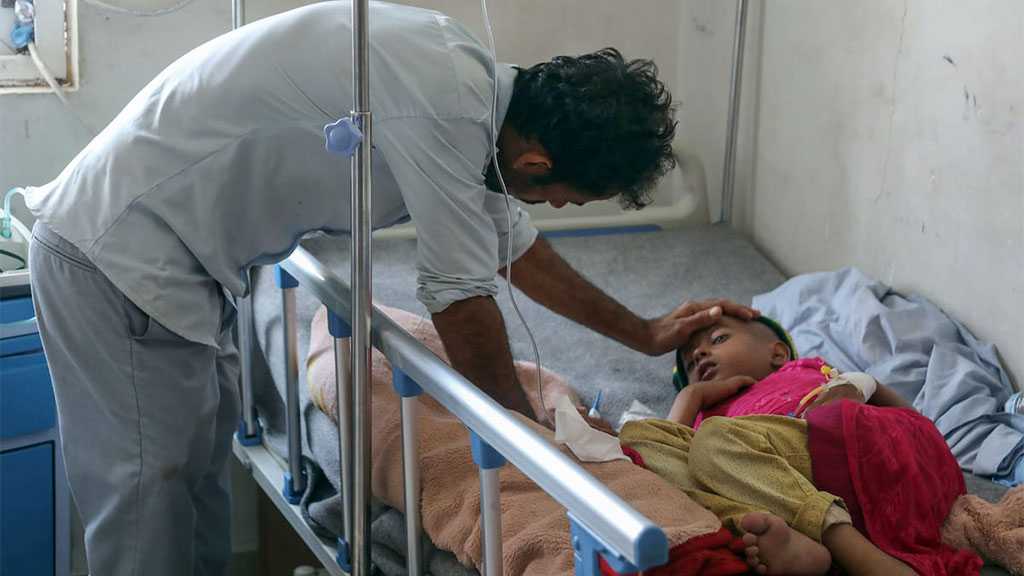
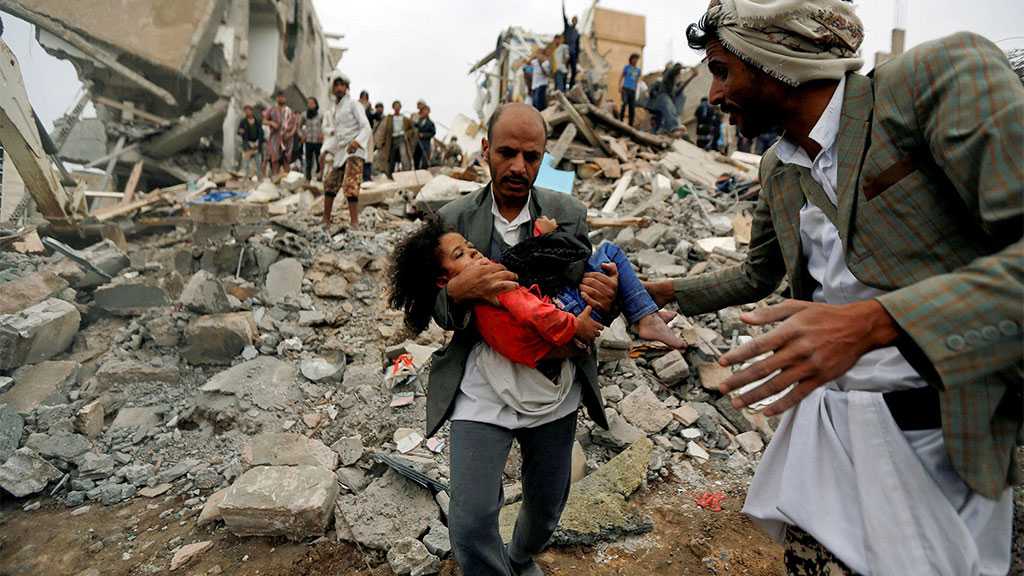
The war has left hundreds of thousands of Yemenis dead, and displaced millions more. It has also destroyed Yemen’s infrastructure and spread famine and infectious diseases there.
Despite heavily-armed Saudi Arabia’s incessant bombardment of the country, Yemeni Armed Forces and the Popular Committees have grown steadily in strength against the Saudi-led invaders and left Riyadh and its allies bogged down in the country.
Yemen’s foreign minister says Saudi Arabia’s intensified attacks on the war-wracked country show the inability of the Saudi Arabia in the face of the Sana’a government, whose forces have continued to liberate areas under the control of Saudi-backed mercenaries.
“The bombardment [of Yemen] and the repetition of what has happened since the beginning of the aggression is a manifestation of [Saudi Arabia’s] helplessness,” Hesham Sharaf told Lebanon’s al-Mayadeen television network on Sunday.
“The current escalation on several fronts comes as the Saudi coalition reached the conviction that it has failed to put pressure on Sanaa,” he added.
The Yemeni minister then emphasized that the Yemeni forces are ready to respond to any escalation.
At the same time, Sharaf expressed his country’s readiness for dialogue and reaching “a just peace,” but stressed that the Saudi-led coalition must first stop its attacks on Yemen and open the Sana’a Airport and Yemen’s ports as a gesture of goodwill.
“We extend our hand for peace, but for a just peace,” he remarked. “Open the Sana’a Airport and [Yemen’s] ports and those would be gestures of peace, but moving towards peace [talks] while bombing us and showing us [your] muscle would not help.”
The Yemeni minister explained that the Sana’a International Airport is a civilian airport and “has nothing to do” with the nearby al-Dailmi airbase.
“Bombing the Sanaa Airport means that they don’t want to normalize the situation in Yemen or move towards peace.”
Sharaf also stressed, “We do not accept guardianship, neither from Saudi Arabia, nor from the UAE, nor any other country, and therefore, we will continue our efforts despite all obstacles,” in an apparent reference to the Yemeni counter-attacks.
The Yemeni foreign minister’s remarks come as Saudi fighter jets have continued to target the Yemeni capital, Sana’a, to make up for their defeats in other areas.
According to Yemen’s al-Masirah television network, Saudi warplanes conducted three airstrikes on the Sana’a International Airport on Sunday evening.
Two Saudi airstrikes also hit the neighborhood of Dhahaban in Sanaa at dawn on Saturday.
A Yemeni security official said on Monday that at least one citizen was killed and eleven others wounded, including African migrants, when the Saudi-led coalition bombarded several border districts in Saada province, northern Yemen.
The official explained that the Saudi army attacked the highway in the border directorate of Shada with artillery shells, killing one citizen and wounding two others.
Three Yemeni citizens and five African migrants were also injured by Saudi army fire in the al-Raqaw area in the border directorate of Monabbih, Yemen Press Agency reported.
Saada’s border districts are subjected to the Saudi-led coalition’s daily air raids, which cause casualties and large damage to citizens’ homes and property.
Saudi Arabia, backed by the US and regional allies, including the UAE, launched the war on Yemen in March 2015, with the aims of bringing the government of Yemen’s former president Abd Rabbuh Mansur Hadi back to power and crushing the popular Ansarullah movement.
The war has left hundreds of thousands of Yemenis dead and displaced millions more. It has also destroyed Yemen’s infrastructure and spread famine and infectious diseases there.
Despite heavily-armed Saudi Arabia’s continuous bombardment of the impoverished country, Yemeni armed forces and the Popular Committees have grown steadily in strength against the Saudi-led invaders and left Riyadh and its allies bogged down in the country.
Marib, the ancient capital of Sheba, referred to in both the Bible and the Holy Quran as a wealthy and wise kingdom, once ruled across the entire southern Arabian peninsula.
Today, Marib has risen again, this time as the final stronghold of Yemen’s latest invaders, now in panicked retreat after a six-year battle that has depleted their coffers and exhausted their forces.
This war was announced from Washington on 26 March 2015 and led by Saudi Arabia in support of the overthrown government of Abdrabbuh Mansour Hadi, a regime that had already lost the capital city of Sanaa to Yemen’s Ansarallah (Houthis) movement a few months prior.
A coalition of 10 countries, including pack leaders Saudi Arabia and the UAE, was formed to force the return of his highly unpopular government. The name Operation Decisive Storm was chosen and the air strikes began.
Ansarallah were assessed as being weak and the operation was expected to last no more than a few weeks or months, at the most.
Instead, Ansarallah prevailed, forcing its Saudi and Emirati foes to insert ground troops into the expanding quagmire and divide their roles in Yemen.
Today, the UAE is present mainly in the country’s south controlling its strategic ports and islands, while the Saudis remain in the north, along their extensive northern border with Yemen, in the east, where the province of Marib and its rich oil and gas fields are located, and in the west, in the coastal city of Hodeidah.
For Yemenis, the importance of Marib is not limited to its oil and gas fields, but also for its ancient culture, its inclusion in the holy Quran, and its significant historical sites and water engineering feats, such as the ancient Marib dam built around the 8th century BC. A new dam, the country’s largest, was later built near the cherished ruins of the old one.
Saudi Arabia acknowledged Marib’s importance by making it the stronghold for its war operations, building military bases and bribing local tribes to fight alongside the coalition. Most of Riyadh’s military and intelligence operations – excluding air strikes – were launched from Marib against the northern Houthi-controlled Sanaa city and province.
Ansarallah endured these onslaughts for three years, then flipped the war on its adversaries in 2018 by going on the offensive. Since then, the group has expanded its territorial gains significantly, destabilized Saudi Arabia’s own borders, and exponentially advanced its military tactics and capabilities in drone and missile technology.
These startling gains forced the coalition to the negotiating table in 2018 to sign the Hodeidah Agreement. The agreement was a boon for Ansarallah from a military perspective, first and foremost. Hodeidah and its Red Sea port are west of Sanaa, and the negotiated ceasefire would help Ansarallah turn its focus on only two fronts now, the east (Marib) and the south.
But the agreement also had humanitarian benefits for a country besieged by land, sea, and air by coalition forces since the war’s onset. With goods now entering the port, fresh access to medicine, fuel and food reduced the crisis in territories controlled by Ansarallah.
In 2019, Ansarallah marched eastward, increasing their defence operations inside Saudi Arabia, and targeting the capital city of Riyadh, airports, and Aramco facilities in retaliation for Saudi airstrikes. The UAE was also threatened when drone activity caused a brief closure of Dubai airport.
The UAE’s very existence depends on the security of Abu Dhabi and Dubai. Understanding that they were one ballistic missile away from an existential disaster, the Emiratis withdrew from Marib leaving the Saudis to their own devices, and headed south. The ten-nation coalition had now dwindled to two, neither of whom were fighting alongside the other.
For Sanaa, access to oil is a higher priority than access to ports, hence Ansarallah’s decision to first push eastward, where Marib lies. Although the reverse would have been easier – at 17,000 km², Marib requires a huge military presence, while Hodeidah port and its surrounding areas are less than 1,000 km² – the Yemeni rebels chose the harder, more dangerous fight first.
Today, the complete liberation of Marib is imminent. Of its 14 districts, 13 are now back in Yemeni hands, with only Marib city and the oil fields remaining, alongside one major Saudi military base (Sahen Jin).
Marib’s liberation will be an unprecedented victory for Ansarallah that will place Sanaa back firmly on the world map. Aside from the huge morale boost for the Houthi rebels, Ansarallah will gain control of Yemen’s vital water and oil resources and bring relief for the capital’s civilians. Despite the fact that areas controlled by the group enjoy more financial stability ($1 = 600 Yemeni Rials versus 1,480 Rials in areas outside their control) the war has impoverished Sanaa.
Marib’s liberation will also mean that Ansarallah will govern around 80 percent of the Yemeni population of 30 million, secure its eastern front, and make a move on Hodeidah where remaining coalition forces are based.
After the liberation of Hodeidah and Marib, Saudi Arabia will lose its boots on the ground in Yemen, but will it retreat and accept defeat?
Will Saudi Crown Prince Mohammed Bin Salman – also his country’s minister of defense – who spearheaded the war against Yemen, accept this fait accompli? Will Saudi Arabia continue bombing Yemen for another six years?
With so many unexpected victories under its belt, Ansarallah is now in a position to direct these Saudi decisions. Already this year, the Yemeni rebels have bombed Aramco and Saudi airports in retaliation for airstrikes in Sanaa. Riyadh clearly understands the correlation – bombing Sanaa means Aramco will get hit – and so although the war is still fiercely being played out, important deterrences have been established.
In September, during the approach toward Marib, Ansarallah leader Abdul-Malik al-Houthi said: “We will liberate the entirety of our country and recover all regions occupied by the Saudi-led aggression.”
After the fall of Marib, Saudi Arabia will never be the same. Having expended all its chips and a vast fortune on bringing the Houthis to heel, Riyadh’s influence in the Arab and Muslim world are set to decline.
Through proxies and large financial donations, the Saudis have historically managed Muslim communities and dictated the policies of entire states. But in an actual direct war, led by one of the world’s wealthiest nations against one of its poorest, the Saudis lost resoundingly.
After the fall of Marib, the UAE’s position is less clear, but it will ultimately face one of two choices: either surrender to Ansarallah’s demands or face reprisals inside Dubai and Abu Dhabi.
Yemen has vast mineral reserves of zinc, silver, nickel, gold, copper and cobalt as well as oil and gas fields, resources that the Saudis have not allowed successive Yemeni rulers to exploit, develop or monetize since 1934.
Yemen was then (arguably still is) considered a Saudi backwater, and Riyadh’s policy toward its southern neighbor was entirely driven by the kingdom’s founder, Abdul Aziz Al Saud, who declared in an infamous quote:
“the honor of Saudis is in the humiliation of Yemen, and their (Saudi) humiliation is in the glory of Yemen.”
These words had monumental significance: the guiding principle for all future Saudi monarchs would be to subjugate Yemen at all cost, or the price would be existential.
With Ansarallah in charge, reverberations will be felt across West Asia – not least because Yemenis still consider the Saudi provinces of Jizan and Najran to be part of Yemen.
Yemen is often referred to as the ‘birthplace of Arabs,’ with numerous tribes stretching across the Arabian peninsula to Iraq tracing their origins back to Yemen.
At the other end of the Arabian peninsula, Ansarallah will also be controlling the strait of Bab al Mandab which leads directly to the straits of Suez. This gives them geopolitical and geoeconomic clout over Egypt, historically the ‘mother’ of the Arab world, and a country which itself has launched a failed war against Yemen.
Ansarallah controlling access to the Suez Canal will be a nightmare for the Israelis – Tel Aviv and Zionism are the mortal enemy of the Houthis, and no ship heading for Israel will be allowed to cross this strait.
China and Iran will be big winners in the ensuing geopolitical shuffle. Iran will gain its first diehard ally in the Arabian Peninsula – one that has oil, produces its own weapons, and can defend itself without costing Tehran money, manpower or resources.
Yemen’s geography is of strategic importance to China too: its southwestern part faces the east coast of Africa, and with the Bab al Mandab strait, Yemen has more than 10 major ports on the Indian ocean, and through the Red Sea to the Mediterranean.
It is the closest West Asian nation to the Horn of Africa, where China has its only overseas military base in Djibouti, and where it has built roads and railways connecting the latter to Ethiopia.
With the US, UK and western countries in general having supported the aggression against the Yemeni people, Ansarallah is more likely to choose to align with China, Iran, and other unaligned nations.
Reports indicate that Saudi Arabia spent well over $300 billion on its war on Yemen. Six years later, it is on the verge of being soundly defeated, with only Marib blocking that path. Marib is the city that will soon dictate the terms that end this war, and perhaps the end of Saudi power projection as we know it.
The views expressed in this article do not necessarily reflect those of The Cradle.Author
Yemen has warned Saudi Arabia of “serious consequences” following major escalation of deadly onslaught against Yemeni provinces, saying Riyadh and its allies conducted 65 airstrikes in the past 24 hours.
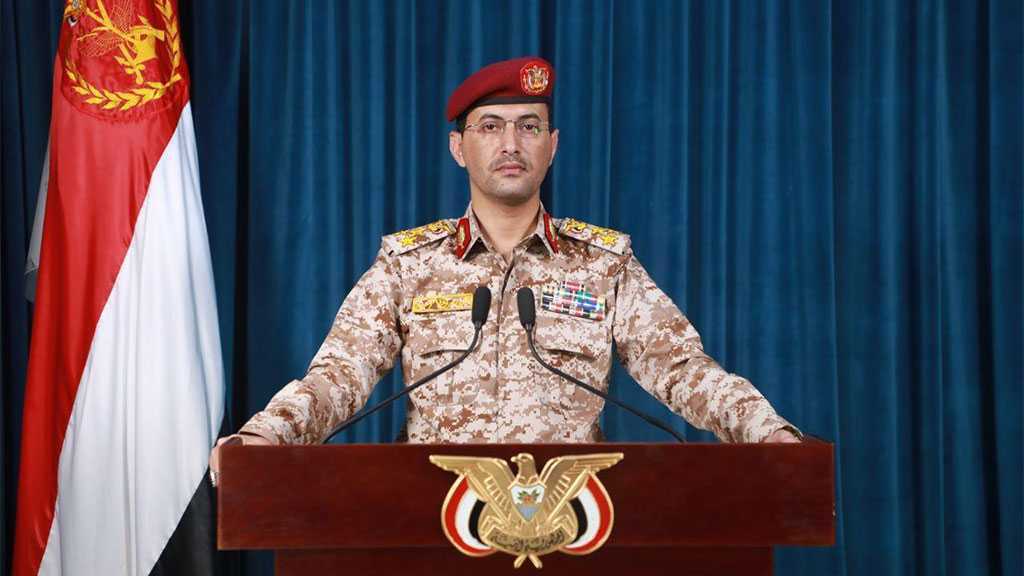
“In a major escalation, the forces of the Saudi-American aggression have launched more than 65 air raids over the past 24 hours across a number of governorates of the Republic,” spokesman of the Armed Forces Brigadier General Yahya Saree wrote in a tweet on Thursday night.
“This escalation will have serious consequences for the forces of aggression, they must bear the consequences,” he added.
The remarks came after the Saudi state TV reported that the Riyadh-led military campaign against Yemen had launched airstrikes on four provinces in Yemen.
Early on Thursday, Saudi Arabia conducted a massive operation against Sanaa, Dhamar, Saada, and al-Jawf provinces in response to what it called threats of drone and ballistic missile raids, according to the report.
The kingdom earlier said that it had destroyed an explosive-laden drone targeting the kingdom’s Abha international airport on Wednesday.
On Thursday, the Yemeni media reported that at least three civilians were injured by Saudi raids in Saada province, north of Yemen.
The Saudi army fire targeted the border district of Munabeh, which seriously wounded three citizens, a security source told Yemen Press Agency [YPA].
The attack came a day after the Saudi army’s raids left five civilians wounded, including an African immigrant, in the border districts of Munabeh and Baqim in Saada province.
Saudi warplanes also attacked the capital Sanaa, Taizz, Marib, and Hudaydah provinces on Thursday.
In Dhamar province, it launched a raid targeting a livestock farm in Mayfa’a Ans district, killing more than 200 sheep.
Enjoying the backing of key Western powers, Saudi Arabia has been leading the war on Yemen since March 2015 to reinstall the former Riyadh-backed regime of Abd Rabbuh Mansur Hadi.
However, Riyadh has failed to achieve any of its goals six years after launching the war and blockade against Yemen, leaving hundreds of thousands of Yemenis dead and spreading famine and infectious diseases there.
In recent months, Saudi Arabia has ramped up its attacks against densely-populated areas across Yemen.
Observers say the rise in attacks comes due to major advances made by the Yemeni forces in Marib province and other key areas that are being liberated from the control of Saudi mercenaries.
The kingdom is also being targeted by the Yemeni army and its allied popular forces continuously, with the Sanaa government saying that it will keep hitting targets deep inside Saudi Arabia as long as the war and siege continue.
Throughout the course of the war, the United States has supported and armed Saudi Arabia.
Despite his February promise to end “all American support for offensive operations in the war in Yemen, including relevant arms sales,” US President Joe Biden has recently approved $650 million worth of weapons sales to Saudi Arabia.
The coalition of aggression, led by the United States and Saudi Arabia, is still detaining 29k tons of diesel bound to Yemen, the Yemeni oil Ministry reported.
In the same context, the spokesman of the Yemen Petroleum Company, Essam al-Mutwakel, stated that US-Saudi aggression detained “Sea Line” ship and prevented it to arrive in al-Hudaydah Port despite having obtained permits from the United Nations.
Al-Mutawakel lashed out at the UN silence regarding maritime piracy, indicating that the arbitrary practices of the coalition of aggression on fuel ships confirm that the United Nations is a partner in the siege and suffering of the Yemeni people.
He considered these practices a flagrant violation of international humanitarian law, and a clear violation of international charters, laws and norms, and the Stockholm Agreement, which provides the right of fuel, food and medicine ships to enter and smoothly reach the port of al-Hudaydah.
Al-Mutawakel pointed to the repercussions of the continued detention of oil tankers on the life of the citizen, in addition to the economic burdens resulting from the increase in the prices of oil derivatives. The fines that are paid to the loaded ships as a result of their detention for long periods at sea, amount to more than the value of the oil in the tankers, increasing the human suffering.
The spokesman further called for the neutralization of humanitarian aspects from political and military matters, holding the US-led coalition of aggression, and the United Nations fully responsible for the continuation of the siege on the Yemeni people.
He called on human rights activists and human rights organizations to assume humanitarian responsibility and work to lift the siege and expose the American piracy on ships of oil derivatives.
The Director of Yemen’s National Center for Oncology, Dr. Abdullah Thawabeh, confirmed that cancerous tumors in Sanaa have witnessed an enormous increase since the start of the US-Saudi aggression in 2015.
In a statement to Yemeni Al-Masirah network on Thursday, Dr. Thawabeh indicated that the center’s annual statistic before the aggression was up to 4,500 cases, but after it, the annual registered cases increased to 6000, which means an increase of 30%.
It was not the first time the health sector announced such horrible news.
In 2019, the official reports of the Ministry of Health indicated that the closure of Sanaa airport to critical cases caused the death of over 43000 patients, in addition to over 28000 cases of cancer patients, due to the siege and lack of necessary medical supplies.
Meanwhile, the UN has done nothing in dealing with the humanitarian crisis in Yemen for nearly seven years, except for announcing optimistic initiatives and solutions to alleviate suffering without any tangible result on the ground.
The UN didn’t manage to create a medical bridge to transport patients and health conditions, which the coalition of aggression was forced to accept and declare in May 2018, under pressure, a catastrophic humanitarian situation, only for misleading public opinion.
On December 3, 2018, a UN plane evacuated 50 injured people, accompanied by the National Delegation, to Muscat for treatment, a step towards what they called supporting confidence-building efforts ahead of peace talks in Sweden, to be followed by humanitarian flights for incurable medical conditions.
In the face of the determination of the coalition of aggression to underestimate the suffering of the Yemenis in addition to the silence and complicity of the international community, this was the first and last flight.
Neither the UN has pushed for the medical bridge to run at a rate of two trips per month, according to the agreement, nor has it brought the wounded home. Even those who died in the course of treatment were stranded with their families and had to bury their bodies abroad.
Since then, the humanitarian crisis in Yemen has been mere figures and statistics circulated by UN organizations to solicit international sympathy and make money despite the shocking and bloody connotations that have made it the worst crisis in the world.
Al-Manar and Al-Masirah TV Channels are scheduled to launch an extensive documentation project which records all the massacres committed by the US-Saudi-led forces and mercenaries in Yemen.
An interactive map will come-to-light on the official websites of the two TV channels at 8 p.m. and reveal in an innovative way the massacres committed by the aggression with all the available data and figures.
The interactive map is aimed at preserving and perpetuating the sacrifices of the Yemeni civilians before the Saudi-led aggression.
“So as Rights Remain Preserved,” was the motto of the documentation that represents a reference for right activists, academicals, media outlets and public opinion, using photos, videos and demonstration tools.
Al-Manar English Website is also part of the project and will display the interactive map with data translated in English. Click here.
Yemen has been since March 25, 2015 under aggression by the Saudi-led coalition in a bid to restore power to fugitive president Abd Rabbu Mansour Hadi, who is Riyadh’s ally.
Tens of thousands of Yemenis have been killed or injured by US-Saudi-led airstrikes.
The Arab impoverished country has been also under harsh blockade by the coalition which includes in addition to the Kingdom, the UAE, Jordan, Bahrain, Kuwait, Egypt, Morocco and Sudan.
Massacres Map of the Saudi-American aggression on Yemen
Introduction:
This work is one of the largest documentation projects that records massacres committed since the start of the Saudi-US aggression on Yemen, on March 26, 2015, based on information released by well-known sources.
We assure, through this project, that the blood of Yemen’s oppressed martyrs and injured will persist in the conscience of the free people. This blood will also constitute a mark of disgrace for all who contributed to the bloodshed in Yemen.
Objective:
Documentation of widespread massacres perpetrated by the Saudi-US aggression across Yemen through an interactive and innovated map that can be considered a reference to rights activists, media outlets and journalists as well as to specialists and public opinion.
Definition of a Massacre:
A killing is considered a massacre in this project when at least one civilian gets martyred by Saudi-led aggression fire.
Map Characteristics:
Every dot on the map represents a massacre
Dots are classified by colors, every color refers to a year
The color of dots gets bolder as per the number of martyrs
Every massacre is recorded according to:
Date of the massacre
Place of the massacre
News summary
Link of the news story
Number of martyrs
Number of injured
Related photos and video (if available)
The map allows the search feature according to:
Place of the massacre (mainly provinces)
Date of the massacre
Keywords
Yemeni Center for Human Rights was considered the main source regarding the number of victims. Hence, there would be an overlap between the toll which appears on the map and the news summary
Areas where the massacre occurred are approximate
Characteristics of the Interactive Frontpage:
Represents statistical reference to massacres
The map is the source for figures on the frontpage
Notes:
We don’t claim that this project has covered all massacres committed by the US-Saudi aggression on Yemen. Therefore, we are glad to receive any addition, either on the level of massacres or the visual material at: yemen-map@almanar.com.lb
Anti-war groups in the United States are urging the Congress to “prevent a human catastrophe” in Yemen by ending military support for Saudi Arabia’s aggression on the war-ravaged country.
The 56 organizations called on American lawmakers in a letter to take advantage of the National ‘Defense’ Authorization Act [NDAA] to end the sale of arms to the aggressors.
“By suspending the sale of arms and ending US participation in the Saudi coalition’s war and blockade, Congress can prevent a humanitarian catastrophe from spiraling further out of control as it reasserts its constitutional authority on matters of war and peace,” the letter read.
Unless the lawmakers take such an action, Washington would remain complicit in the tragedy created by the Saudi monarchy in Yemen, they further suggested, asserting that the lawmakers have the power to “legislate an end to ongoing US complicity in the war and blockade in Yemen.”
“With the help of US logistical and maintenance support, Saudi Arabia’s blockade of Yemen has created untold suffering for tens of millions of people and contributed to hundreds of thousands of deaths,” Hassan El-Tayyab, legislative director for Middle East policy at the Friends Committee on National Legislation, one of the letter’s organizers, said in a statement.
If the lawmakers refuse to endorse an amendment to the bill filed by Rep. Ro Khanna, the US would continue abetting the Saudi kingdom and its crimes against humanity, he noted.
“It’s now critical Congress support Rep. Khanna’s amendment to the FY2022 National ‘Defense’ Authorization Act and finally terminate US participation in Saudi’s aerial operations for the sake of millions of Yemenis in desperate need,” El-Tayyab added. “Members of Congress have two choices: vote for this amendment, or vote for an active US role in crimes against humanity for millions of people, including children.”
The amendment would block funding for “logistical support in the form of maintenance or the transfer of spare parts for aircraft that enable coalition strikes,“ as well as “sharing intelligence for the purpose of enabling coalition strikes.”
It would also oblige the US military not to “command, coordinate, participate in the movement of, or accompany the regular or irregular military forces of the Saudi-led coalition forces.”
Despite the growing outrage among lawmakers and the public, the United States continues to aid and abet the cruel war on the Yemeni nation.
“Without real action, millions of lives are at risk, and the US will be complicit,” Marcus Stanley, advocacy director at the Quincy Institute for Responsible Statecraft, said in a statement. “The Khanna amendment offers an opportunity to genuinely end American support for Saudi aggression and take a crucial step to end the humanitarian crisis in Yemen. We urge a vote for this amendment. Half measures like reporting requirements or partial restrictions will not do, it is time to definitively end our support for this war.”
In February, US President Joe Biden announced that he was ending the US support for the war in Yemen, including “relevant arms sales,” touting the move as part of efforts to restore an emphasis on human rights, but that pledge is yet to materialize.
Saudi Arabia and its regional allies launched a devastating war in Yemen in 2015 to reinstall a former friendly government and crush the popular Ansarullah movement.
Related Videos
The capital Sana’a commemorates the seventh anniversary of the Revolution of 21 Sept
Watch the children’s march entitled The Revolution of September 21st in the Eyes of Yemen’s Children
A military parade of security units on the occasion of the September 21st revolution
Voltaire, actualité internationale, n°191
-
Outre ce site internet gratuit, nous publions une lettre confidentielle en
PDF, Voltaire, actualité internationale. Chaque jeudi soir ou vendredi
matin, vo...
A Jewish One World Government
-
A Jewish One World Government October 21 2026
___________________________________ More Vids! +BN Vids Archive! HERE!
___________________________________ Su...
The United States At A Crossroad
-
The United States At A Crossroad—An Analysis (16 Sept 2026) by Lawrence
Davidson Part I—Texas vs Minnesota Back in mid-May […]
Report on Beth Israel vigil 09-12-26
-
*Eat-a-Cheeseburger Day Approaches*
This year, EAC Day appears on Monday, September 21st. The date coincides
with the Jewish holiday called Yom Kippur. Cl...
-
Hello all,
It is with great sadness that I share with you the passing of our beloved
sister, Mother, and Grandmother, the individual that you all knew ...
Best Horror Podcast
-
Best Horror Podcast Introduction: Horror podcasts […]
The post Best Horror Podcast appeared first on Copper Shock Horror Podcast.
Ikhras Endorses Muntadhar Al-Zaidi
-
“Oh parties of banditry and sectarianism and corruption, we have come and
our goal is to destroy you.” Ikhras formally endorses Muntadhar al-Zaidi,
Iraqi j...
Prince Charles: Foreign Jews behind bloodshed in ME
-
In May, 2017, British Crown Prince Charles declined an invitation from
Zionist entity’s president Reuven Rivlin‘s to attend the 100th anniversary
of the no...
Palestinian Women – One for All, All for One
-
Honouring All Palestinian Women by Honouring Three: Hanin Zoabi, Ahed
Tamimi, Samah Sabawi Vacy Vlazna “Palestinian women have always stood side
by side ...
US’s Saudi Oil Deal from Win-Win to Mega-Lose
-
By F. William Engdahl Who would’ve thought it would come to this? Certainly
not the Obama Administration, and their brilliant geo-political think-tank
neo-...
-
*Mordechai Vanunu wins human rights prize of Brazilian Press Association *
* http://www.alternativenews.org/english/index.php/features/updates/7038-mordechai...
Abdul Aziz Rantissi:
"My ultimate wish, my God, is to attain martyrdom,"...God granted him his wish on April 17, 2004, at the hands of Israeli assassins.