Showing posts with label Al-akhbar. Show all posts

Tuesday, 30 November 2021

Radwan Mortada: “Joseph Aoun has made a big mistake”

 November 29 2021

Why is the Lebanese military command gunning for a lone journalist in the midst of the country’s biggest crisis since the civil war?

By Sharmine Narwani

Radwan Mortada is one of Lebanon’s leading investigative journalists, with almost two decades of experience working with the country’s biggest media outlets.

I met Radwan a decade ago while we were both working at Lebanon’s daily Al Akhbar, he for the Arabic newspaper, me on the English-language website. A veteran security journalist covering military institutions, wars, terrorism, extremism and the layers of intrigue in between, he is one of those rare reporters who can gain access to any information, and call up just about anyone, at any time.

Lebanon has more press freedoms than any country in West Asia, partly because it is politically split in two, with no one party having more power than the others. That rare balance has allowed its media to openly question and criticize all parties and individual political figures, with few of the negative consequences that occur in other states and regions where journalists are roughed up, detained and even killed in ever-rising numbers.

It isn’t often journalists here end up in the slammer for unearthing dirt on the country’s political or business elite, usually because no one person has the power to see it through.

So, when Lebanon’s military court – a body that has absolutely no legal jurisdiction over media activities – sentenced Radwan to imprisonment on 26 November for “the offense of insulting the military establishment,” without providing due notice to the defendant, and in absentia, it created a storm.

The Lebanese Press Editors Syndicate (LPES) immediately expressed its “astonishment” at the decision, and announced that it had assigned its legal advisor to review the case against Mortada with the possibility of filing an appeal.

According to the statement by the LPES, this ruling is a “violation of Article 28 of Legislative Decree No. 77/ 104, as amended by Law No. 330 of 18/1994, which abolished pre-trial detention for publication crimes and the penalty of imprisonment for journalists from most of its rulings.”

Other LPES officials say they will not allow authorities to set a precedent for the imprisonment of journalists who conduct investigative work.

And just today, Reporters sans frontières (Reporters Without Borders or RSF) tweeted:

“RSF condemns the conviction in abstentia of Radwan Mortada by the military court to more than one year in prison for “defaming the army”: an illegal pressure to silence a critical journalist, now forced to move from his home to protect himself and avoid any sentence.

Lebanese media outlets across the political spectrum have covered this story in Radwan’s favor, and the country’s Minister of Information George Kordahi weighed in by saying the ‘Publications Court’ is the only Lebanese body authorized to rule on media affairs, based on the constitution and the laws regulating freedom of opinion and expression.

So why did Lebanon’s military court take action against a leading Lebanese media figure, well outside of its legal jurisdiction? Why now, in the midst of the country’s excruciating economic collapse and with terror and strife within its borders? Was there nothing more important for Lebanon’s military court to address – than this? And who instigated these proceedings?

The Cradle went directly to the source to answer some of these questions. This is what Radwan Mortada had to say:

The Cradle: Lebanon’s military court has sentenced you to one year and one month in prison. Before getting into the details, could you please tell me why a military court is involved in sentencing a journalist? Is this even legal?

Mortada: Military courts have no authority to try journalists for verbal offenses. They cannot prosecute me, and it would be illegal to do so. But the army commander, General Joseph Aoun, uses the military court as a weapon to fights those mentioning him to suppress freedom of opinion and expression. My words about the army command’s responsibility in the Beirut port explosion greatly angered Joseph Aoun, so he decided to make his own law.

First, he decided to ban me from entering the military court without legal justification. When I confronted him by saying that he did not inherit the court from his father to control it as he wishes and break the law, he sent a military force to raid my house and besieged the TV channel where I work to arrest me by force.

The Cradle: We have heard that you were not at the hearing or the sentencing. How is it possible that you were not even allowed to defend yourself? Why was this sentence delivered in absentia?

Mortada: My trial was a sham and a show. The president of the military court, Brigadier General Munir Shehadeh, violated due process because I was not notified of the trial date. This is against the law and exposes the implicit intent to prosecute me in this martial method. Also, the president of the court is an officer under the command of the army commander who filed the complaint against me. How could he be a judge between me and my opponent? The judge is a lower rank than the commander and has to respond to his orders by saying: ‘Yes, my commander.’

There is also a legal precedent issued by the military court itself. Hanin Ghaddar had previously been sentenced in absentia to six months in prison. But the president of the court at the time, Brigadier General Hussein Abdullah, ruled that the military court had no jurisdiction to try journalists after the United States withdrew his entry visa to America.

The Cradle: What are the military court’s charges against you?

Mortada: Offending the Lebanese Army, disparaging the military institution, and harming national security and the prestige of the state.

The Cradle: You believe the ultimate responsibility of the ammonium nitrate stores in Beirut’s Port lies with Lebanon’s military establishment. In essence, the Beirut blast happened under Joseph Aoun’s watch. Why hasn’t he been held accountable by the lead investigative judge, Tarek Bitar?

Mortada: Here is the root of the problem. I was the first to announce the responsibility and negligence of the army that led to the explosion of the Port of Beirut on 4 August 2020. I said that if the army had done its duty as it should have, the explosion would not have happened. This is a fact because the law holds the army exclusively responsible for dealing with ammonium nitrates.

But the judicial investigator, Tarek Bitar, is weak before the army and the current leadership represented by Joseph Aoun, so he did not dare to summon him. The responsibility of the army exists even if there are no traceable documents or if paperwork has been destroyed. If the army says it was not aware of the presence of a time bomb weighing 2,755 tons perched in the heart of Beirut for seven years, that is an even greater catastrophe since its most basic mission is to maintain security in the country.

The Cradle: I’ve known you and worked with you for a decade. We’ve even written articles together. I know your integrity and how you work, and I personally consider you among Lebanon’s most productive and professional journalists. So when you raise questions, I know you’re onto something. Do you trust this investigation of the Beirut Port explosion? Why or why not?

Mortada: In fact, I am personally acquainted with judicial investigator Tariq Bitar, but I am suspicious of the course of the investigation because I sense discrimination in the way this case is managed. The support Bitar has from America and some of the right-wing Lebanese parties only increases my apprehension and concern. You personally know that I have seen the documents that detail the investigation into the explosion in the port of Beirut. So I know there are officials whom the judicial investigator did not approach. The biggest evidence is his decision to exclude the current army leadership from the investigation, even though Joseph Aoun has been at the head of the army since 2017 and he bears the responsibility for this neglect.

I wish Judge Bitar had dealt with this case in another way, given the sensitivity of matters in our country. He should have summoned everyone, then decided who was responsible and charged him, but the direction of the investigation created a kind of suspicion. Therefore, I declared that I did not trust the existing investigation. But in order not to prejudge its results, I am patiently awaiting the issuance of the indictment decision by Judge Bitar to announce my final position on the investigation.

The Cradle: You wrote a very courageous piece for The Cradle that identified seven Lebanese judges that must be held accountable for unloading, storing, then ignoring the ammonium nitrate stores in Beirut’s Port. Why are these judges not being held accountable either?

Mortada: This judiciary branch bears this responsibility because it serves as a protective umbrella for the judges. Judge Bitar filed complaints against a number of judges. Although the complaints came late, the delay of the Cassation prosecution in ruling against them makes it bear a great responsibility.

The Cradle: You also covered the mass shootings and killings in Tayouneh on 14 October, and were the first to point out that the Army’s statements before and after Aoun’s meeting with the US Ambassador Dorothy Shea were different. Explain that to us.

Mortada: I wrote that the negligence of the Lebanese Army caused the Tayouneh massacre, which claimed the lives of seven innocent citizens, some of whom were shot by the army. It almost erupted into a civil war, given that this took place on a contact line between areas where a Shia majority and a Christian majority live. I spoke about the army’s responsibility and its neglect in separating the demonstrators, its wrong way of dealing with the demonstration, and the shooting that erupted after the demonstration.

I also published secret investigations conducted by the army, which showed that there was an ambush prepared the night before the demonstration, which was heading to the Palace of Justice to protest the performance of the judicial investigator Bitar in the explosion of the port of Beirut. The publication of these investigations angered the army, as they were leaked from the military court.

The Cradle: Who does Joseph Aoun think he is to do this, and why is he so focused on you, one of Lebanon’s leading journalists and a veteran security correspondent with the country’s top media outlets who has broken countless stories over the years?

Mortada: I was among the very few journalists to dare to call it by its name. I was the first to talk about the army’s main responsibility for the Beirut port explosion. Many others are afraid to face them or they are on their payroll. But I’m not one of them. Nobody can buy me and nobody can intimidate me. I carried my blood in my hands and went to the front lines and covered the lives of the most radical jihadist fighters. I was arrested in Syria. I was not afraid and I will not fear anyone. In my search for the truth, there are no red lines. I only want the truth. I know that this issue frightens many. Joseph Aoun is one of them.

The Cradle: Do you think Joseph Aoun has picked the wrong battle? Lebanon’s media associations have all, without exception, come in on your side.

Mortada: Definitely. Joseph Aoun has made a big mistake by deciding to go ahead with this fight. The battle with the press to suppress freedom of opinion and expression is a losing battle. The time of the police state is long gone. We are today in the twenty-first century. If he does not know it, he must change his advisors who are leading him to the abyss.

The Cradle: We all know that Joseph Aoun has aspirations to become president of the republic. He has increasingly associated himself and the LAF with the Americans, when Lebanon is clearly divided into two different political camps. Why would someone who is changing the highly-respected neutrality of the Lebanese army be fit for this position?

Mortada: I don’t think that General Joseph Aoun’s mentality qualifies him to be president of Lebanon. An officer leading an army cannot ask a military force to raid a media outlet to arrest a journalist, while he himself is thinking of becoming the president of Lebanon. Lebanon deserves better in light of the suffering of its people. Short-sightedness, narrow-mindedness, and personalization are not characteristics of a successful leader.

You know that the World Bank announced that Lebanon is going through one of the three worst economic crises in 150 years. You know the extent of the economic collapse, hunger, and unemployment that the Lebanese suffer from. I myself feel ashamed because my case came out in public at this time with all the tragedies we are experiencing. Imagine that the army chief and the president of the military court have nothing more important on their plate than going after a journalist they want to discipline, while forgetting about all the crises our country is going through.

The Cradle: What are you going to do now to fight these charges and stay out of prison?

Mortada: I will fight to the end. There is a team of lawyers that is objecting to the military court’s ruling. I will not accept any settlement and will follow up on every detail and highlight every violation. Dozens of foreign and Lebanese journalists and human rights defenders have contacted me and denounced the unjust ruling issued against me for simply expressing my opinion.

The Cradle: Radwan, I’ve learned a lot from you over the years and continue to do so. Thank you for your frankness and your courage in reporting the things we all want to know. What will you do when your name is cleared? Will you change your voice?

Mortada: Thank you, Sharmine. I assure you, this case will make me raise my voice higher and higher. I will open my eyes more to their violations and the approach they represent. I am a well-known journalist in Lebanon, and yet they attacked me. What do you think they will do to the rest of the citizens and the extent of the injustice they inflict on those who have no voice?

This ruling alerted me that I was inattentive in some areas related to the leadership of the army and the presidency of the military court. Today, I will work hard to count their every breath to shed light on any offense they commit.


River to Sea Uprooted Palestinian   
The views expressed in this article are the sole responsibility of the author and do not necessarily reflect those of the Blog!

Monday, 29 November 2021

Kordahi: Publications Court the Only One Authorized to Deal with Media Affairs

November 28, 2021

Lebanese Information Minister George Kordahi

Lebanese Information Minister George Kordahi stressed that the Publications Court is the only one authorized to deal with media affairs.

In a statement, the Lebanese minister commented on the ruling issued by the military court against Al-Akhbar’s journalist Radwan Mortada.

“The Publications Court is the only one authorized to deal with media affairs, including what is related to the work of journalists under the constitution and the laws regulating freedom of opinion and expression,” read the statement, carried by National News Agency (NNA).

He expressed his hope that this issue would be settled under the Publications Law, while ensuring freedom of expression and the rights of institutions in accordance with regulations and laws.

Source: NNA


Related Videos


River to Sea Uprooted Palestinian   
The views expressed in this article are the sole responsibility of the author and do not necessarily reflect those of the Blog!

Saturday, 27 November 2021

Yemeni Forces Score Significant Advances on Marib’s Southern Gates

 Nov 26, 2021

By Staff, Agencies

The Yemeni forces advanced on the southern gates of the central Marib city, pushing Saudi-backed militants loyal to former president Abd Rabbuh Mansur Hadi further back.

According to a report published on Friday by Lebanese al-Akhbar daily, Saudi forces and their mercenaries failed to stop Yemeni soldiers and their allies from making rapid advances on the southern flank of the provincial capital city.

Hadi loyalists have already withdrawn from most of their positions in the eastern and central parts of the Balaqin sub-district over the past two days, despite intense airstrikes carried by Saudi warplanes in their support.

The paper, citing local military and tribal sources, said Yemeni army troops and Popular Committees fighters have made major advances on the western outskirts of Falaj area after establishing control over all heights overlooking the region.

Sources close to pro-Hadi forces said their defeats appear to have been an inside job.

Pro-Hadi Marib governor general Sultan al-Arada expressed his disappointment over the unfolding developments in the province, confirming that the al-Balaq al-Awsat district and surrounding areas in Wadi al-Zannah region had been taken over by the opposite side.

On Thursday, Saudi warplanes conducted more than a dozen air raids against al-Jubah and Sirwah districts in Marib province.

The military aircraft also launched two airstrikes against the Yemeni capital city of Sanaa late on Thursday.

Saudi Arabia, backed by the US and other key Western powers, launched the war on Yemen in March 2015, with the goal of bringing Hadi’s government back to power and crushing the popular Ansarullah resistance movement.

Having failed to reach its professed goals, the war has left hundreds of thousands of Yemenis dead and displaced millions more. It has also destroyed Yemen’s infrastructure and spread famine and infectious diseases there.

Despite heavily-armed Saudi Arabia’s continuous bombardment of the impoverished country, Yemeni armed forces and the Popular Committees have grown steadily in strength against the Saudi invaders and left Riyadh and its allies bogged down in the country.


Related Videos


Related News


River to Sea Uprooted Palestinian   
The views expressed in this article are the sole responsibility of the author and do not necessarily reflect those of the Blog!

Saturday, 13 November 2021

البرغي

البرغي - أنواع وقياسات مختلفة من البراغي
إبراهيم الأمين كما عرفته..وأعرفه! – الحوار نيوز

سياسة  ابراهيم الأمين 

لم أكن يوماً مضلَّلاً، أو تعرضت للغش ولم أكن أعرفك. بل كنتُ أرى فيك صحافياً ناجحاً، وأقبلُك كما أنت. صحافياً نمت علاقاته المهنية والشخصية كغيره في ظل هذا النظام الذي تقول اليوم إنك ضده.

لكنني أعرف، ولا ينتقص ذلك منك شيئاً، أنك لم تكن يوماً رأس حربة، لا ضد الوصاية السورية، ولا في مواجهة الاحتلال الإسرائيلي، كما لم تكن يوماً رأس حربة في مواجهة الظلم والتعسّف والدولة الأمنية اللبنانية والعربية والدولية التي حكمت لبنان باسم التحقيق في جريمة اغتيال رفيق الحريري. ولا في مواجهة الفساد الذي أطل برأسه قبل وأثناء وبعد رحيل رفيق الحريري.

ولم أكن، كغيري، لأطالبك بما لا تريده أو لا قدرة لك عليه. لم يسألك أحد، في «الأخبار»، لا قبل 17 تشرين ولا بعده، عن علاقاتك الوطيدة بكل أركان النظام، من رؤساء جمهورية وحكومات ورئيس مستمر لمجلس النواب وحاكم دائم لمصرف لبنان، ولا عن علاقاتك الوثيقة بكل نادي الوزراء والنواب وقادة الجيش ورؤساء الأجهزة الأمنية وأركان «الاقتصاد الحر»، وبكل زعماء القبائل اللبنانية، والقيادات الحزبية على اختلافها. كما لم يسألك أحد عن نفوذك القوي في قلب الدولة العميقة التي أدارت البلاد ولا تزال، والتي قرّرت أنت، في لحظة ما، الثورة ضدها.

حتى في سياق عملك المهني مع بيار الضاهر، الرجل الذي حار ودار ولم يتوقف عن القيام بكل ما يقنع أو لا يقنع، لحماية المؤسسة، كنت أنا ممن يحترمون حقّك في الحفاظ على مسافة تقيك شرّ الظلم المهني، وتمنحك عدلاً حتى في العقد المالي المجحف مع هذه المؤسسة، وما كان أحد يلومك على كل أنواع التسويات التي أبرمتها باعتبارها حقاً لك.

وعندما كتبتُ دفاعاً عنك في «الأخبار»، قبل تسع سنوات، في وجه من أراد النيل من حريتك، لم أفعل ذلك محاباة أو مراضاة، وأظنّك تعرفني جيداً، وتعرف أنني ما كنت لأقف صامتاً عندما يصيب الظلم أياً كان. أنت شخصياً، تعرف، عن قرب، موقف سعد الحريري مني شخصياً ومن الجريدة. مع ذلك، وحْدنا في «الأخبار» دافعنا عنه يوم اعتقله الدبّ الداشر، بطل العروبة الأغرّ كما تصورونه في قناتكم اليوم. فعلنا ذلك عن قناعة، بينما ران الصمت على كل المنصات، بما فيها حيث كنت تعمل، وحيث تعمل اليوم.

لكن، ثمة ما تغير فيك يا عزيزي، ومنذ ما قبل مغادرتك المؤسسة اللبنانية للإرسال. ما تغير لم يكن (فقط) تعبيراً عن طموح مهني محقّ في تطور تطمح إلى تقديمه، بل هو أنك قررت في لحظة سياسية ومهنية ومالية – وهذا خيارك الحر أيضاً – أن تنتقل إلى ضفة لها وجهها الأكثر وضوحاً في الإعلام، وفي السياسة والاقتصاد والاجتماع أيضاً. قرّرت أن تطلّ، هذه المرة، من بوابة مفتاحها في يد شاب تعرف، وأعرف، ما الذي جرّب فعله في العديد من المحطات، حتى إبان اعتقال صديقك الحريري الذي لم تنتفض يومها من أجل حريته الشخصية أو دفاعاً عن كرامة بلدك. مع ذلك، لن ألومك على عدم الإقدام على فعل لست مقتنعاً به، أو لا قدرة لك عليه.

«صار الوقت»: هدية مصرفية إلى «الديمقراطية» اللبنانية

ما حدث، يا عزيزي، أنك انضممت إلى ماكينة تعرف مسبقاً إلى أين تقود. وصدمتي أنك قبلت بأن ينتهي بك الأمر مجرد «برغي» في ماكينة صدئة لا تملك فكرة أو قولاً أو عملاً أصيلاً، وقبلت الانضواء في برنامج قاده أنطون الصحناوي الذي رتّب كل عملية انتقالك إلى محطة الـ«مر تي في». وأنت تعرف، أيضاً، أن آل المر لا يفعلون سوى بيع الهواء. ويسرقون الأفكار مما هو رائج في الغرب، كما سرقوا الإنترنت والاتصالات أيضاً بحسب التحقيقات والأحكام القضائية. وهم اليوم يعرضون منصتهم لمن يدفع أكثر. ولا مانع لدى ابن المر في أن يختار الشاري الآلية التي تناسبه للتمويل، مباشرة أو عبر رعاية إعلانية أو غيرها. فالمهم، بالنسبة إليه، هو أن يحتل الموقع الأول في عالم «التتفيه» لا «الترفيه»، على ما كان يقول الراحل رمزي نجار. لكن الرجل لم يعد يكتفي بذلك. ولو أنك قرأت تفاصيل مفاوضاته مع السعوديين لبيعهم حصصاً في قناته، لكنت عرفت، وأعتقد أنك تعرف جيداً، مع من تعمل. فالرجل اليوم مصاب بعارض أصاب كثيرين في لبنان. من المخلّص سمير جعجع الذي أرسله الله لتطهيرنا من خطيئتنا الأصلية والمستمرة فينا، مروراً بالمحقق العدلي الذي نزل عليه وحي إلهي بإنقاذ لبنان من الفاسدين والزعران، وصولاً إلى «الثائر» ميشال المر الذي لن يقبل بأقل من كتلة نيابية يقودها من أجل تحرير لبنان من الاحتلال الإيراني، بعدما قاد عملية تحرير لبنان من الاحتلال السوري… ألم يقل هو ذلك؟

لم أكن يوماً مضلّلاً حيالك. تعلم جيداً أنني أعرفك، وأعرف من أي بيت خرجت، لذلك أحزن على ما آلت إليه أمورك، وعلى أنك صرت واحداً ممن يرى فيهم الناس بومة تحرض على الفتنة. كما أحزن كيف تعطينا درساً في أصول العمل الصحافي، من دون أن تكلّف نفسك التدقيق قليلاً قبل استقبال «شاهد» مسكين أنقذه تقرير طبي من ورطة كان برنامجك مدخلاً لها.

مارسيل غانم إعلامي جريء ينتظره اللبنانيون كل خميس | صلاح تقي الدين | صحيفة  العرب

وحْدنا في «الأخبار» دافعنا بقناعة عن سعد الحريري يوم اعتقله الدبّ الداشر، بطل العروبة الأغرّ كما تصورونه في قناتكم اليوم، بينما ران الصمت على كل المنصات


ثم، هل أنت مقتنع حقاً بأن السعودية وسفارتها في بيروت ومخابراتها المتخلفة لا تقرّر كل كبيرة وصغيرة ليس في قناتك فحسب، بل في كل النادي السياسي الذي انضممت إليه من دون مقدّمات؟

ألا تعرف أنت، وتفصيلياً، عن دور السفارة الأميركية في عوكر، ومسؤولين في واشنطن من أصدقاء الصحناوي، في رعاية «إعلام التغيير»، ومنه القناة التي تعمل فيها، وتوفير التمويل، رغم أن بين الأميركيين، في بيروت وفي واشنطن، من لا يستهضم ابن المر نفسه. ومع ذلك، يساهمون في تمويل ودعم «التدريب على الديموقراطية» في الإعلام اللبناني، وفي برنامجك بالتحديد. وهل تعتقد أن الوثائق التي تكشف عمليات التمويل والتجنيد، ولو صُنّفت على أنها فائقة السرية، عصية على أن تصبح متاحة بفعل قوانين وقواعد وأعراف… وفوق ذلك بقدرة وإصرار من يريد أن يعرف أيضاً…

ألم تسأل نفسك يوماً، أو هل حاولت أن تعرف، عن مصير الداتا التي تخص كل من يريد المشاركة في البرنامج حضوراً أو مساهمة في صفوف الجماهير – عفواً الجمهور. لن أسألك عن كيفية الاختيار بينهم، لكنني أسألك إن كنت تعلم بمصير الداتا – وما هو أكثر – التي تحوي الأسماء وأرقام الهواتف وعناوين البريد الإلكتروني الخاصة بهم، والتفاصيل الخاصة بميولهم السياسية وطوائفهم ومذاهبهم وتعليمهم وأين يعيشون وماذا يعملون؟

هل فكرت من يستعمل هذه الداتا، وكيف صُرف جزء منها في حراك تشرين وما بعده في المجموعات التي نبتت كالفطر، و«صودف» أن الثائر الأممي ديفيد شينكر، ومن سبقه وخلفه، ظلوا يعملون على الاستثمار فيها؟

ألا تعرف أن كل البرنامج الأميركي عندما تقرر تفعيله في لبنان وتمت ترجمته إعلامياً عبر أشكال مختلفة في مقدمها رعاية «قنوات الفتنة»، كانت المهمة وحيدة، وعنوانها أوضح من الشمس: شيطنوا حزب الله وما يسمى المقاومة وأنصارها، واضربوا التيار الوطني الحر من ميشال عون وجبران باسيل إلى آخر نصير لهم، واصرخوا عالياً، ولو شمل سبابكم غالبية الشعب اللبناني.

لماذا يهتاجون لتحقيق هذا الهدف، وهل من مشكلة عندهم مع المقاومة غير أنها تهزم إسرائيل وتقاوم بقية الهيمنة الأميركية في بلادنا، وتتصدى لشياطينهم؟

وهل أنت مقتنع فعلاً بأن برنامجك لم يتحول منصة لشعارات وأحقاد تعيدنا إلى أيام المحافظين الجدد الذين أرادوا تغيير وجه الكون بعد 11 أيلول؟ ولا بأس لو سُمح لك، نعم لو سُمح لك، بتلوين المشهد بأصوات «الرأي الآخر»، على طريقة ما فعلته القنوات التي فتحت باب التطبيع مع العدو. أم أنك تصدق الرواية عن تدريب الشباب اللبناني على الحوار والديموقراطية، وصرت تعتقد فعلاً أنك صاحب دور استثنائي لا يقتصر دوره على صداقة الطبقة السياسية، بل على صناعة بديلها أيضاً.

اقرأ الفقرة التالية وابحث عن مصدرها – وأعتقد أنه ليس مستحيلاً عليك العثور عليه، أما بقيتها فجرّب حظك – وفيها يرد الآتي: «يأمل مارسيل غانم والـ mtv بأن نشر ثقافة المناظرة في لبنان وإثبات قدرة التلامذة على النقاش سيفسحا المجال لاستضافة أولى المناظرات في لبنان بين القيادات السياسية الوطنية قبيل الانتخابات النيابية القادمة التي يفترض أن تقام في عام 2022».

أسفي عليك كبير لأنك قبلت أن تكون «برغياً» في ماكينة صدِئة، لن تنفع أموال الدنيا في إعادتها إلى العمل. وإذا كنت لا تجيد القراءة، وهذا أمر غريب عليك، فتذكّر بأن ما أشرتُ إليه في مقالتي عن دور وليد البخاري لا صلة له بالفيديو الذي وُزّع بعد الحلقة. وأنت تعرف أنني لست بالخفة التي تجعلني أصدق كل ما يشاع من هنا أو هناك، ولديّ مثلك، أو أقل منك، خبرة في كيفية إدارة الحلقات عن قرب أو عن بعد. ويمكنك أن تسأل العزيز جورج، الذي حدثته عن الحلقة وعن الفيديو نفسه، وكررتُ على مسامعه ما قلتُه له مرات ومرات من ملاحظات كنت أشعر دوماً أنني ملزم بها من باب الحرص. وأقرّ هنا، علناً، بأنني أهملت من تسريبات «أقبية السوء» في ممالك القهر والإذلال، ما كتبه سفراؤهم أو نسبوه إلى غيرهم، قولاً وتوصيفاً وتقديرات… أهملتُ عن وعي كل ما قد يشكّل إساءة لك، وخاصة أنني أحفظ للراحلة والدتك، ولو عن بُعد، مكانتها الخاصة، كما حفظت الودّ لجورج ودوللي، ولك أيضاً.

أما وأنك تلبّستَ دور البطل القادر على هزم جيوش وتحرير البلاد وقيادة العباد إلى الصالح، وقررتَ دخول معركة تستخدم فيها ما تعتقد أنه حق لك، واستلّيت من الكلام سيوفاً أثقل من قدرتك على حملها، وشتمت وحقّرت واستخدمت ما وجدته مناسباً في القول والنبرة والاتهام… فلا مانع من المنازلة.

لكن، نصيحتي لك، احصر معركتك معي ومع «الأخبار»، ولا تقحم حزب الله في الأمر. وأنت، كما جورج، والبقية، تعرفون جيداً على أي أرض أقف أنا ورفاقي. كل ما أنصحك به هو التالي: واجهني مباشرة، وها أنا أبلغك مسبقاً بأن ليس في مقدورك اختيار المسرح والتوقيت والطريقة. وبما أننا نعمل في منصات تمثل كل أسلحتنا، فدعوتي لك بأن تكون في المرات المقبلة أقل توتراً وأكثر استعداداً!


مقالات متعلقة


River to Sea Uprooted Palestinian   
The views expressed in this article are the sole responsibility of the author and do not necessarily reflect those of the Blog!

Wednesday, 10 November 2021

Yemeni Forces Break Through Saudi-backed Militants’ Last Defense Lines in Northern Marib

 Nov 8, 2021

Yemeni Forces Break Through Saudi-backed Militants’ Last Defense Lines in Northern Marib

By Staff, Agencies

The Yemeni army and allied fighters from popular committees achieved a “key military breakthrough” in Marib, infiltrating “the last defense lines” of Saudi-backed militants in the northern part of the province.

Lebanon’s al-Akhbar news website cited informed sources as saying that the Yemeni troops launched a surprise operation from eastern al-Jawf Province, reaching the desert areas in northern Marib Province.

According to the report, the Yemeni forces penetrated the last defensive lines of militants loyal to former president Abd Rabbuh Mansur Hadi in the vast desert front, approaching the border between the provinces of Marib and Hadhramaut.

The sources said the operation, which was launched from al-Khanjar camp in al-Jawf, resulted in the recapture of vast areas in al-Rowaik, which lies 15 kilometers away from the border between Marib and Hadhramaut, east of the oil region of Safer.

The sources stressed that the Yemeni forces “achieved a significant military breakthrough that would enable them to cut the last supply lines” of the pro-Hadi militants who are present in northern Marib City.

Marib has turned into a focus of the Yemeni army’s liberation operations since last year.

The province’s recapture, towards which many advancements have been made so far, is expected to pave the way for further military victories for Yemen’s forces.

Saudi Arabia on Saturday intensified its airstrikes on the strategic province of Marib in a bid to undermine the Yemeni troops’ achievements.

Last month, Yemen’s Defense Minister Mohammad al-Atefi said the capture of Marib City is “a matter of time.” He also stated that the Saudi-led aggression on Yemen has already been defeated and that the aggressors have no choice but to admit defeat.

Saudi Arabia, backed by the US and regional allies, launched the war on Yemen in March 2015, with the goal of bringing the government of former president Abd Rabbuh Mansur Hadi back to power and crushing the Ansarullah movement.

The Saudi war has left hundreds of thousands of Yemenis dead, and displaced millions more. It has also destroyed Yemen’s infrastructure and spread famine and infectious diseases.

In the meantime, Yemeni armed forces and the popular committees have grown steadily in strength against the Saudi-led invaders and left Riyadh and its allies bogged down in the country.


MORE ON THE TOPIC:


River to Sea Uprooted Palestinian   
The views expressed in this article are the sole responsibility of the author and do not necessarily reflect those of the Blog!

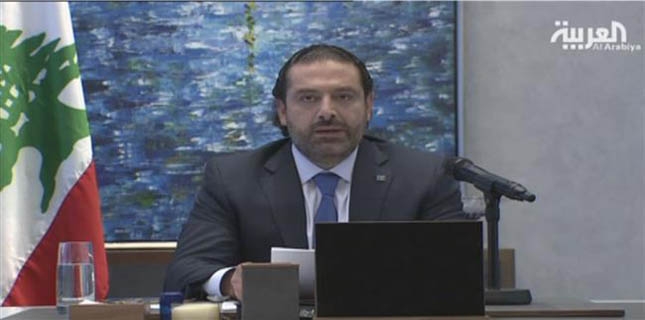
Hezbollah Media Managed to ‘Defame’ Saudi, Al-Manar Part of the Campaign: Leaks

November 9, 2021


Hariri resignation

Iran and Hezbollah media considerably managed to ‘defame’ Saudi Arabia regarding the issue of 2017 abduction of former Lebanese PM Saad Hariri, a leaked document revealed.

In an article published on Friday (November 5), Al-Akhbar Lebanese newspaper revealed a leaked document on a paper conducted by Saudi Royal Diwan’s “Decision Support Center”, which is tasked with “supporting decision-making and public policies” in the Kingdom.

The paper tackled how the Kingdom failed to deal with two major issues: abduction of Saad Hariri and the killing of Saudi journalist Jamal Kashoggi in 2018.

According to Al-Akhbar’s Hussein Ibrahim, the paper criticized the performance of the Kingdom on both political and media levels.

In the case of Saad Hariri abduction, the paper by the “Decision Support Center” attributed the Kingdom’s failure to “gaps in the Saudi Government’s communication with the internal institutions as well as the international sides.”

Even more, the paper blamed Saad Hariri for “being vague in his stances” towards those who didn’t believe that his resignation was a decision by himself, Al-Akhbar added.

“Hezbollah considerably managed to turn the case into a national one, while Hariri failed to turn the tables on Hezbollah,” the paper said as cited by the Lebanese daily.

Meanwhile, the paper acknowledged that the Kingdom’s foes had the upper hand on the level of information warfare, as it named media outlets belonging to Iran and Hezbollah.

The “Decision Support Center” also pointed to the weak coverage of the issue (Hariri abduction) by Saudi media outlets, adding that Riyadh was not well-prepared to politically deal with case, Al-Akhbar reported.

According to the paper, Riyadh’s handling of Hariri abduction issue left negative impact on the foreign media’s coverage. Among Hezbollah-affiliated media outlets which the paper said have negatively impacted the foreign media coverage, was Al-Manar.

The paper also named three journalists of Al-Manar: Marwa Haidar (an editor at Al-Manar English Website), Yusuf Fernandez and Zahraa Tawbe (editors at Al-Manar Spanish Website).

In a surprising move, Saad Hariri announced resignation from Riyadh on November 3, 2017, claiming he was doing so over assassination threats. It was revealed then, that Hariri was abducted by Saudi Crown Prince Mohammed Bin Salman, who forced him to resign in a bid to turn the tables on Hezbollah.

Source: Al-Akhbar Newspaper and Al-Manar English Website


River to Sea Uprooted Palestinian   
The views expressed in this article are the sole responsibility of the author and do not necessarily reflect those of the Blog!

Tuesday, 1 June 2021

Al-Quds Sword: A Drill for the Great Liberation War

 31/05/2021

Source

Al-Quds Sword: A Drill for the Great Liberation War

By Qassem Qassem/Al-Akhbar Newspaper

Translated by Staff

In the lead up to the latest confrontation with “Israel”, the spokesman for the Al-Qassam Brigades, Abu Obaidah, issued a stern warning to Tel Aviv. On May 10, at exactly 4:40 p.m. local time, Hamas’s military wing gave the “Israeli” enemy “until six o’clock to withdraw its soldiers from the blessed Al-Aqsa Mosque and the Sheikh Jarrah neighborhood and to release all detainees taken during the recent uprising in Al-Quds.”

Following the threat, the leadership of the resistance in Lebanon contacted their Palestinian counterparts for an assessment of the situation on the ground.

A source in the Palestinian resistance told Al-Akhbar that the assessment was that “the head of the enemy government, Benjamin Netanyahu, will not cancel the settlers’ march in Al-Quds and that the resistance will implement its threat, which involves bombing the ‘Israeli’ depth.”

The Hamas leadership also informed those concerned in Lebanon that the Palestinian resistance was expecting a violent “Israeli” response and an escalation that would last for nearly two weeks. During the conversation, two red lines were set. If crossed, they would require the intervention of the axis of resistance. The first is that the battle continues for about 50 days, as was the case during the 2014 war, and the second is the targeting of the missile stockpile of the Palestinian resistance and it being forced to economize in the process of launching missiles towards the “Israeli” entity.

At exactly six o’clock on that Monday, the Al-Qassam Brigades fired six rockets at the occupied city of Al-Quds, starting the Al-Quds Sword battle.

The reason for choosing this particular time and the equivalent number of rockets is due to the fact that most of the slogans calling for Gaza’s intervention to defend the city of Al-Quds were launched from Gate Number 6 at the Al-Aqsa Mosque compound. Before the resistance carried out its threat, “Israeli” security services had contradictory assessments regarding Hamas’s intentions and their ability to launch a rocket barrage at the center of the entity.

The army’s military intelligence Aman concluded that the head of the movement’s political bureau in Gaza, Yahya Al-Sinwar, was not interested in an escalation and that his priority was to improve the economic situation in the Strip.

The Shin Bet Internal Security Agency said that Al-Sinwar was “a religious and extremist man who sees himself as Saladin and hopes to seize on the current momentum in order to portray himself as the protector of Al-Quds.”

The Palestinian resistance believes that “Israeli” arrogance played a role in Tel Aviv’s miscalculations. They failed to take the final warning issued by the Commander in Chief of the Al-Qassam Brigades, Muhammad al-Deif (Abu Khaled), seriously in which he told the enemy that they would pay a dear price if they did not stop their attacks in the Sheikh Jarrah neighborhood.

According to sources in Hamas, “the enemy, because of its arrogance, thought that the response would be either demonstrations on the borders or launching a couple of missiles on settlements of the Gaza envelope. But it did not understand that Abu Khaled Al-Deif was the one who issued the threat, and the threat from a man of his stature could not be to launch rockets at the Gaza envelope.”

Hours before the first rockets were launched towards Al-Quds, the assessments of the Shin Bet were discussed by the security cabinet an hour before the resistance’s deadline expired.

During the session, the head of Shin Bet, Nadav Argaman, recommended a preemptive strike against Gaza, which was rejected by Prime Minister Benjamin Netanyahu and his defense minister, Benny Gantz. They wanted to wait for the first blow to appear as a victim, and then proceed with a military campaign that has American support. This is according to “Israeli” journalist, Ben Caspit, who made the revelations in Al-Monitor.

With the start of the Al-Quds Sword battle, the resistance in Lebanon raised the alert level, which was already elevated in anticipation of any “Israeli” provocations during the Chariots of Fire drills that the army intended to conduct early this month.

Despite the cancellation of the maneuver with the start of the Guardian of the Walls campaign (the name that the enemy gave to the battle), Hezbollah’s mobilization of the missile units continued.

During the battle, demonstrations rocked the northern borders of occupied Palestine. Several rockets were also launched towards the occupied territories. Most of the rockets fell into the sea, inside Lebanese territory, and in open lands in Palestine. Meanwhile, one rocket was intercepted near the city of Haifa.

Missiles and a drone were launched from Syria in conjunction with the ongoing battle in southern Palestine. The “Israelis” weren’t sure where the projectiles came from.

See the source image

This was planned, and it can be considered an exercise for a war where the fronts are united and one where the enemy will experience the war of the great liberation. The coordination that took place during this battle between the factions of the resistance axis was part of a drill for the battle to eliminate “Israel”. Last year, the head of Hamas’s political bureau, Ismail Haniyeh, visited Lebanon, where he met with the Secretary-General of Hezbollah, Sayyed Hassan Nasrallah.

At that time, the work teams of Hezbollah and the Al-Qassam Brigades met to draw up a plan for the battle oof liberation, and what the enemy entity had experienced for 11 days was part of this plan.

According to leaders in the Palestinian resistance, the northern arena was not required to do more than what it did, as the main focus was on developments within the 1948 borders, the occupied West Bank, Al-Quds, and along the Jordanian border.

However, in any future battle, the enemy must realize that it will not only face Gaza, but be forced to confront Lebanon, Syria, Iraq, and Yemen as well.

During the recent “Israeli” aggression on Gaza, Yemen’s Ansarullah movement communicated with Hamas and requested coordinates for sites it wanted to target with missiles and drones. But Hamas informed the Sana’a leadership that the field and military situation in the Strip is very good, and if the enemy crossed any of the red lines agreed upon with the axis of resistance, then Ansarullah can carry out their strike.

The intertwining of the axis and the prevention of singling out any party in it is a new equation established by the resistance forces in the last battle. It is a reality acknowledged by the United States, which is warning “Israel” against creating instability beyond Gaza.

“The level of violence is destabilizing beyond the limited area of Gaza … it is in no one’s interest to continue fighting,” Chairman of the Joint Chiefs of Staff Mark Milley warned.

This new reality was confirmed by Sayyed Nasrallah in his speech on the Resistance and Liberation Day a few days ago, when he said that “any harm to Al-Quds and the Al-Aqsa Mosque means a regional war.”

Al-Sinwar also echoed this sentiment, saying in a press conference that “a regional war will take place if there is any harm to the sanctities, and that all the forces of resistance will be together in any future battle if the holy sites call upon us.”

This is well understood by the enemy. An “Israeli” security source said the threats are credible.

“It seemed as if Nasrallah and Al-Sinwar’s speeches were coordinated,” the source stressed to Al-Monitor. “Nasrallah’s words must be taken seriously. He is the most credible of “Israel’s” enemies. He usually does not make empty threats.”

“The fact that he joined Al-Sinwar at this time and his declaration that any unilateral ‘Israeli’ move in Al-Quds will lead to a war must be treated in Al-Quds as a very serious warning.”

The prospects of confronting more than one side during the next war is something Chairman of the Foreign affairs and Defense committee in the Knesset, Zvi Hauser, also warned about.

“Perhaps this is the last time that ‘Israel’ faces Hamas alone. In the future, ‘Israel’ will face a challenge at the same time on additional fronts, such as the northern front, which makes the challenge more difficult.”

The liberation strategy developed by the two resistance groups in Lebanon and Palestine has become inevitable, and the recent war on the Gaza Strip showed some of its components. In addition, the resistance’s maneuver throughout occupied Palestine showcased positive aspects and others that need more work in the near future to improve and invest in the battle of the great liberation.

In the next stage, the resistance will also work to consolidate its equation (linking Al-Quds with Gaza), even if this leads to a new round of fighting.

Related


River to Sea Uprooted Palestinian   
The views expressed in this article are the sole responsibility of the author and do not necessarily reflect those of the Blog!