Showing posts with label Tony Blair. Show all posts

Tuesday, 7 September 2021

Afghanistan: US defeat stems from its ruinous response to 9/11 attacks

6 September 2021 10:08 UTC 

Peter Oborne

Osama bin Laden outwitted George W Bush by dragging America into its unwinnable ‘war on terror’. If the US had reacted more rationally, the world today would look very differently

US President George W Bush being informed by his chief of staff, Andrew Card, of the attacks on the World Trade Center in New York during a visit to a Florida school, 11 September 2001 (AFP)

Today George W Bush lives a comfortable life in his adoptive home state of Texas. He has reinvented himself as a painter.

Osama bin Laden was shot dead by US special forces and reportedly buried at sea.

But the two men will always be remembered for the same reason: Osama bin Laden’s attack on the United States on 11 September 2001 – and Bush’s ruinous response. The memories of these terrible events are still raw, though some of the facts remain disputed. 

Looking back with the perspective of 20 years, we can judge which man came closest to realising his objectives.

It was not George W Bush. With the Taliban back in charge in Afghanistan, the neoconservative project in ruins and the United States in headlong retreat from its global ambitions, Bush has a claim to be, by some distance, the most disastrous president in his country’s history.

Morally abject figure

Bin Laden is a morally abject figure, a preacher of death and hatred. Yet he outwitted Bush, the leader of the western world, the trustee of all its values, the beneficiary of its intellectual and scientific vitality. 

Before 9/11, bin Laden could command at most a few thousand followers: a sandal-wearing tribal militia whose most powerful military weapons were machine guns and rocket-propelled grenades. But, paradoxically, that gave it an advantage against the most powerful and well-equipped armed forces the world has ever known. Two decades since 9/11: The human toll of the ‘war on terror’

Bin Laden induced the United States to commit itself to an open-ended asymmetric war against him and any other group of terrorists America deemed to be his allies. He wanted the US to invade Muslim countries so that jihad could bleed America’s military in prolonged guerrilla warfare. Only that way could the US, like the Soviet Union before it, be defeated.

This forced the US into committing colossal military resources for limited and impermanent gains. Above all, it imposed a steady flow of US casualties in faraway countries largely unknown to the American population, with no prospect of an end that would allow their loved ones to come home. 

Those armed forces have been defeated. Not just once, but twice. First in Iraq, then in Afghanistan. They have not lost any conventional battle – but they failed, totally, to achieve their objectives.

Historians and analysts have not yet even begun to grasp the meaning and consequence of 9/11 and its aftermath. US military thinkers and their British equivalents are in open denial. 

Superficial parallel

The first important point to grasp is that bin Laden himself did not defeat them. After the destruction of the Twin Towers, the al-Qaeda leader was either in hiding or on the run. His lines of communications were broken, while by the end of 2001 his organisation could count on no more than a few dozen fighters. 

9/11 crash
A hijacked plane approaches the World Trade Center in New York, 11 September 2001 (AFP)

Meanwhile, the world was on the side of the United States, including candlelit vigils in Tehran. 

George W Bush rejected these offers, a mistake brought about by a misunderstanding of the meaning of 9/11. Bush interpreted it as an act of war equivalent to the Japanese attack on Pearl Harbor on 7 December 1941.

It was a superficial parallel. For while Pearl Harbor and 9/11 were both unforeseen by intelligence agencies and came from the air, Pearl Harbor was an act of conventional war, launched by Japan, an organised state, and as such demanded a conventional military response.

Bin Laden played the United States president with the proficiency of a highly skilled judoka, whose objective is to use the weight of his opponent to defeat him

The attack on the Twin Towers, for all its horror, was a terrorist atrocity, by what modern jargon describes as a “non-state actor”. The US president could and should have dealt with it by hunting down bin Laden and his murderous associates using counterterrorism methods – those which ultimately secured his death. 

He chose not to do so, launching instead his “war on terror”, an abstract, undefined and open-ended concept which played mightily into the hands of al-Qaeda. The “war on terror” gave an immediate boost in domestic politics for an undistinguished, underachieving presidency. Bush’s popularity ratings soared and his administration, with suspicious promptitude, was able to introduce a raft of tough security legislation, which it passed with minimal resistance. But it was a military and foreign policy disaster. 

Bush was not alone in his error. In the UK, Prime Minister Tony Blair shared his analysis (and so did the media: even the Guardian’s headline the following day read “A declaration of war”). But this formulation laid open the question: who was the US fighting against? 

Remember, no national government had supported the attack; not even the Taliban in Afghanistan supported bin Laden’s plan for international jihad. Bin Laden played the United States president with the proficiency of a highly skilled judoka, whose objective is to use the weight of his opponent to defeat him.

‘Head of the snake’

To quote Professor Fawaz Gerges, historian of al-Qaeda: “Bin Laden and his inner circle developed a strategic vision that involved forcing the United States to fight the war on bin Laden’s terms and lash out angrily against the Muslim world at large. As a small elitist vanguard, they could neither challenge American power nor survive direct confrontation with it. The only way to level the playing field lay in asymmetric warfare, one that ignited a greater clash between America and the world of Islam.”

To an astonishing extent, bin Laden caused all this to happen. His underlying objective was always to drive American forces out of Muslim countries, in particular his native Saudi Arabia, the land of the two holy places, Mecca and Medina. (That has still not been achieved, though with America exposed as an unreliable ally in headlong retreat, it is a more likely outcome than ever before.)
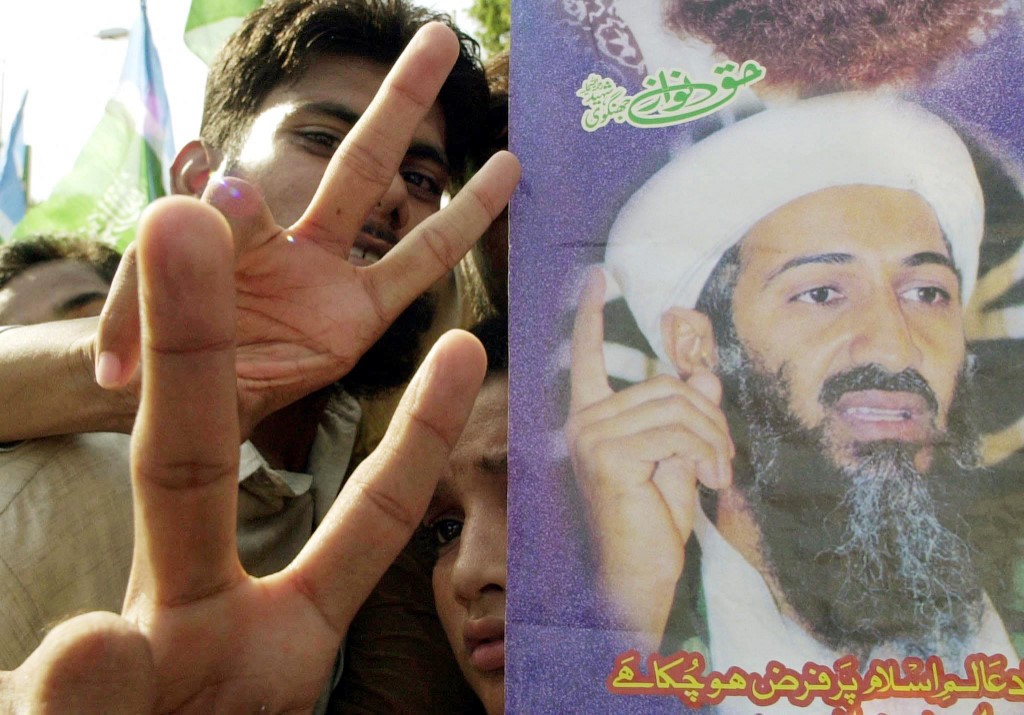
bin laden rally, Pakistan
Protesters flash victory signs during a rally in support of Osama bin Laden in Lahore, Pakistan, on 21 September 2001 (AFP)

While other jihadis wanted to fight the “near enemy” – US-sponsored client regimes across the Muslim world – bin Laden’s special insight was the strategic utility of striking “at the head of the snake” and thus provoking the United States into a violent and irrational response which would poison its relationships with Muslim states and communities and make all of his Muslim opponents look like collaborators with the enemy. 

Chaos and carnage

Bin Laden knew also that he and his followers could prevail in the struggle simply by remaining in being and forcing the US to accept more casualties and costs than its population would be ready to endure. 

The course of events suggests that bin Laden may have understood the United States rather more clearly than Bush. He induced the US president to do exactly what he wanted, plunging much of the Muslim world into a period of chaos and carnage, from which it has yet to emerge, and creating the conditions for al-Qaeda and other terror groups to prosper.

For the neocons as for al-Qaeda, there was no middle way. The world was divided into two opposing forces: Islam and the West – and only one could emerge victorious

The neoconservatives who directed Bush’s response to 9/11 and al-Qaeda mirrored each other. They were both revivalist movements at odds with what they saw as a corrupt modernity seeking inspiration in the Salaf – the ancients. They both despised due process and the rule of law. They preferred violence to diplomacy.

For the neocons as for al-Qaeda, there was no middle way. The world was divided into two opposing forces: Islam and the West – and only one could emerge victorious. Both saw themselves as the ultimate good fighting the ultimate evil. Both despised moderate Muslims as much as western liberals. 

Al-Qaeda and the neocons thus shared the false interpretation of Islam as a religion of violence and the same demented belief in an irreconcilable clash of civilisations between Muslims and the West. 

Between them, they plunged much of the world into a death spiral. Muslims have suffered far worse in terms of lives lost. But America’s reputation across the world as a force for good has been destroyed, while the country now faces military defeat and a deep moral crisis from which it may not recover.

Had George W Bush acted rationally, Osama bin Laden would be despised as another terrorist – and no more. Thanks to Bush, he became a terrorist who changed world history, and a model for other terrorists across the world.

The views expressed in this article belong to the author and do not necessarily reflect the editorial policy of Middle East Eye.Peter ObornePeter Oborne won best commentary/blogging in 2017 and was named freelancer of the year in 2016 at the Online Media Awards for articles he wrote for Middle East Eye. He was also named as British Press Awards Columnist of the Year in 2013. He resigned as chief political columnist of the Daily Telegraph in 2015. His latest book, The Assault on Truth, was published in February 2021. His previous books include The Triumph of the Political Class, The Rise of Political Lying, and Why the West is Wrong about Nuclear Iran.


River to Sea Uprooted Palestinian   
The views expressed in this article are the sole responsibility of the author and do not necessarily reflect those of the Blog!

Sunday, 8 November 2020

Suspension of Corbyn will define Starmer as Iraq defined Blair

 Source

David Hearst

2 November 2020 17:54 UTC |

David Hearst is the editor in chief of Middle East Eye. He left The Guardian as its chief foreign leader writer. In a career spanning 29 years, he covered the Brighton bomb, the miner’s strike, the loyalist backlash in the wake of the Anglo-Irish Agreement in Northern Ireland, the first conflicts in the breakup of the former Yugoslavia in Slovenia and Croatia, the end of the Soviet Union, Chechnya, and the bushfire wars that accompanied it. He charted Boris Yeltsin’s moral and physical decline and the conditions which created the rise of Putin. After Ireland, he was appointed Europe correspondent for Guardian Europe, then joined the Moscow bureau in 1992, before becoming bureau chief in 1994. He left Russia in 1997 to join the foreign desk, became European editor and then associate foreign editor. He joined The Guardian from The Scotsman, where he worked as education correspondent.

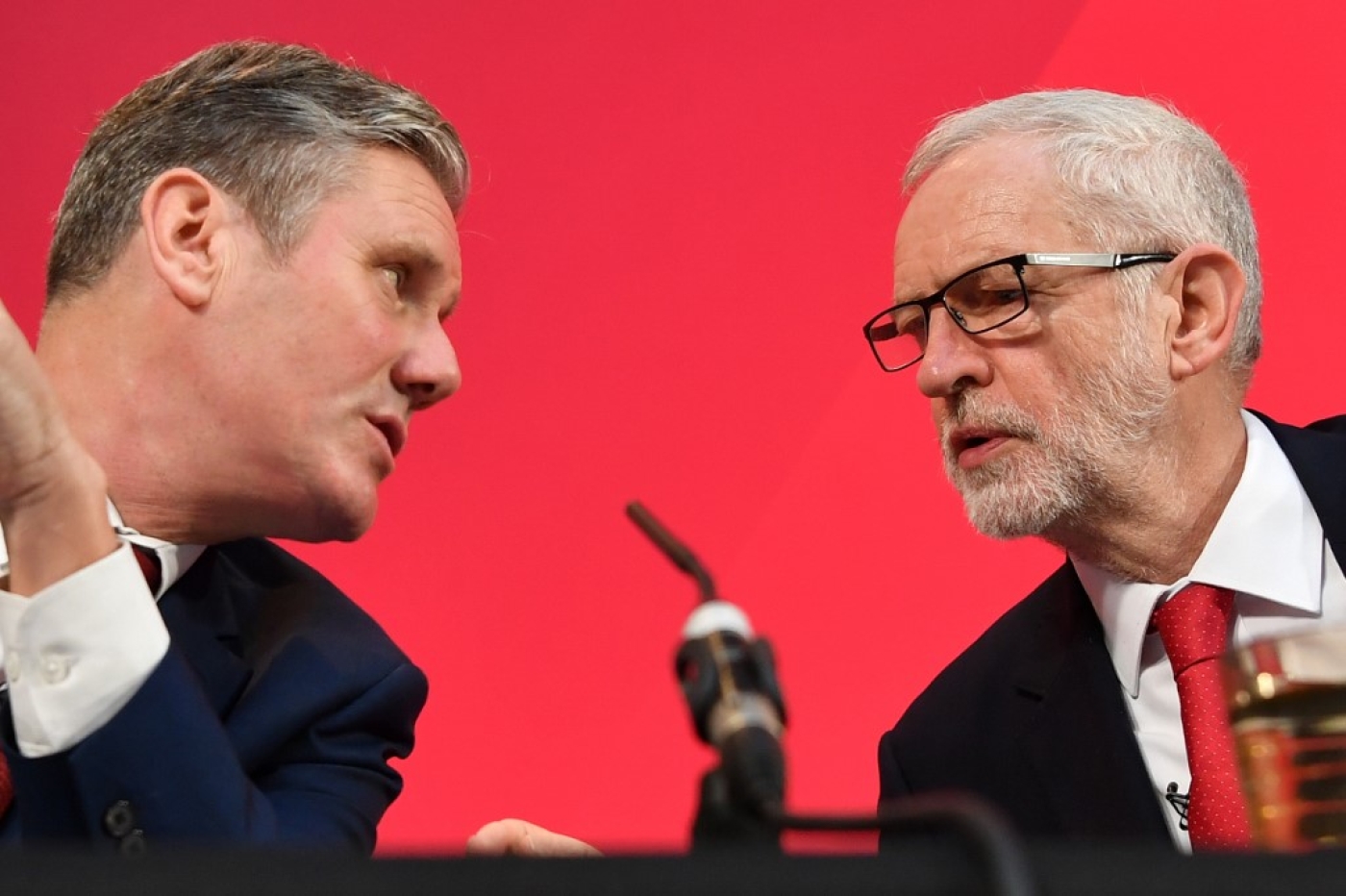
Keir Starmer’s silence on Palestine and his treatment of his predecessor have set the Labour leader on a collision course with many within his own party

Keir Starmer (L) with Jeremy Corbyn at a press conference in London in December 2019 (AFP)


One of the lesser known aspects of Keir Starmer’s assault on the left of his party since becoming Labour leader is his growing silence on Palestine.

Silencing the Palestinian lobby in Britain has always been a goal of Israel’s Ministry of Strategic Affairs, which has gone to some lengths to condition debate inside the Labour Party on Israel.

In 2017, an Al Jazeera documentary exposed the efforts of the ministry’s man in London, Shai Masot, to start a youth wing in the Labour Party. Masot was also filmed by an undercover reporter saying he wanted to “take down” government ministers and MPs considered to be causing “problems” for Israel.

Silencing the Palestinian lobby in Britain has always been a goal of Israel’s Ministry of Strategic Affairs, which has gone to some lengths to condition debate inside the Labour Party on Israel

When Masot was rumbled and expelled, a continuous feed of Jeremy Corbyn’s meetings as a backbench MP with Palestinians, dating back in some cases over a decade, was created to stoke the furore over the then-Labour leader.

This feed was doctored.

When Corbyn met three Hamas politicians whose Jerusalem IDs had been revoked and had staged a sit-in a tent in the grounds of the Red Cross (this was a cause celebre at the time and many Israelis went to show solidarity with the case), the presence of a second Labour MP, Andy Slaughter, who is not a Corbyn ally but is pro-Palestinian, was excised from British reports.

However, a picture of Slaughter appeared in Israeli news channel i24’s exclusive of “Corbyn’s secret visit” in its report in 2018, which was eight years after the MPs’ visit took place in November 2010. 

Role of Shin Bet

The precise details of Corbyn’s visit to Israel in 2010, including who was on it, who arranged it and who they met, were monitored and logged by Israel’s domestic security service, Shin Bet.

When these visits were over, Shin Bet invited Corbyn’s local fixer in for what turned out to be five hours of questioning in a police station in Haifa.

Shin Bet told her they were relaxed about her charity work for the Palestinian cause, but would not tolerate her campaigning inside the Houses of Parliament in the UK.EXCLUSIVE: Jeremy Corbyn questions impartiality of EHRC antisemitism inquiry

If she did not heed the warning, she would spend the rest of her days in prison as an enemy of the state. Her lawyer told her that such a charge could indeed be fabricated against her and that an Israeli court would send her to prison if this happened. She is an Israeli citizen.

At the very least, the warnings given to Corbyn’s fixer confirm that Israel’s security services had set their sights on the MP at least five years before he became Labour leader and long before antisemitism in Labour became a newsworthy issue.

Nobody in the Labour Party was bothered with Corbyn’s travels, which certainly were not secret. He was a backbencher on the fringes of the party. Only Shin Bet took note.

The smear campaign has been wonderfully effective. Of course, many groups joined in for different reasons, including people indifferent to the conflict in Palestine who had shown no past interest in it.

The compromising material of Corbyn’s past contacts would have had no purchase had there not been a determination within the Parliamentary Labour Party and at Labour headquarters to stop Corbyn at all costs. But taken together, it worked.

A poll conducted by Survation last year asked member of the British public who were aware of antisemitism in Labour what percentage of party members had complaints against them.

Their mean average reply was 34 percent. The real figure is a fraction of one percent. The perception of antisemitism was over 300 times the reality in Corbyn’s party.

Palestine lost

Since becoming leader, Keir Starmer has avoided contact with Palestinian leaders, either in Israel or in Britain.

Starmer has had two opportunities to engage.

On 26 June this year, 15 members of the Knesset who comprise the Joint List wrote to all party leaders in Britain to urge them to “actively oppose” attempts by Israel to annex territory unilaterally.Israel’s Joint List urges British political parties to oppose annexation

The Joint List, the main coalition representing Palestinian citizens of Israel, is the third largest group of MKs in the parliament. The letter was sent by Yousef Jabareen, the head of the Joint List’s international committee.

Prime Minister Boris Johnson instructed one of his ministers, James Cleverly, minister of state for the Middle East and North Africa, to reply.

“We continue to urge Israel not to take these steps. The prime minister has conveyed the UK’s opposition to unilateral annexation to Prime Minister Netanyahu on multiple occasions,” Cleverly wrote.

Starmer did not reply, and still has not replied. Jabareen received an automated reply from Starmer’s office, telling him that he receives hundreds of emails each day.

On 16 September, a group of leading British Palestinians, many of whom were members of Labour, but some not, wrote an open letter to the Labour Party insisting on “the right of Palestinians to accurately describe our experiences of dispossession and oppression” and rejecting Labour’s attempts to conflate anti-Zionism with antisemitism.

The letter was accompanied by emails to Starmer to set up a meeting. They were told that Starmer was too busy to meet them. They were referred to Lisa Nandy, the shadow foreign secretary, who also declined to meet them.

A ‘dressing down’

However when Stephen Kinnock, who comes from the right wing of the party and is a bitter critic of Corbyn, called in a parliamentary debate for the UK to “ban all products that originate from Israeli settlements in the occupied territories”, Nandy found the time to intervene.

Nandy told the Board of Deputies of British Jews and the Jewish Leadership Council – according to a source quoted by MailOnline – that Kinnock, a consistent and long-standing critic of Israel’s policy towards the Palestinians, had been given a “dressing down” for his remarks made during the Commons debate.

Starmer’s sole intervention in this debate occurred when he was asked by Jewish News about sanctions and he stressed the need instead to maintain a ‘strong working relationship with Israel’

“Lisa made no secret of the fact she and the leader were angry with Kinnock,” the source is quoted as saying.

“Especially after all the work that has been done to try and restore Labour’s relationship with the Jewish community.”

Starmer was said to be “infuriated”.

Nandy herself proposed a ban on the import of goods from illegal settlements in the West Bank, but only if Israel pressed ahead with annexation.

Starmer’s sole intervention in this debate occurred when he was asked by Jewish News about sanctions and he stressed the need instead to maintain a “strong working relationship with Israel”.

Starmer said: “I don’t agree with annexation and I don’t think it’s good for security in the region, and I think it’s very important that we say that.

“Whether sanctions follow is another matter but at the moment let’s resolve this in the proper way. But this is not good for security in the region. That should be a paramount consideration.

When pressed further, he added: “There needs to be a strong working relationship where we are able to exchange views frankly, as you would with an ally and on some of these issues, a frank exchange is what we most need, I think.”

Labour’s history

This Monday marks 103 years since the Balfour Declaration committed British governments to support for a Jewish homeland in Palestine.

The 1917 document predates Labour’s emergence as a political force in the years after World War One, but the party has a history of its own in the Middle East which no leader can ignore.Jeremy Corbyn suspended from Labour following antisemitism report

In 1944, when the territory of Palestine was still under British control, its national executive committee authored a motion, passed by conference, which read: “Palestine surely is a case, on human grounds and to promote a stable settlement, for transfer of population. Let the Arabs be encouraged to move out, as the Jews move in. Let them be compensated handsomely for their land and let their settlement elsewhere be carefully organised and generously financed.”

But it has history more recent than that.

The suspension of Corbyn after the Equality and Human Rights Commission (EHRC) report into antisemitism last week contrasts with Corbyn’s treatment of Tony Blair, who as a former Labour prime minister was excoriated by the 2016 Chilcot Report over his decision to invade Iraq in 2003.

John Chilcot, a former senior diplomat, eviscerated Blair, stopping short of accusing him of lying to parliament.

Chilcot said that at the time of the invasion, Saddam Hussein “posed no imminent threat” and revealed a private note that Blair sent to Bush in July 2002 which read: “I will be with you, whatever.”

In a two-hour press conference following the publication of the report, Blair was unrepentant. “I believe we made the right decision and the world is better and safer,” he declared.

He argued that he had acted in good faith, based on intelligence at the time which said that Iraq’s president had weapons of mass destruction. This “turned out to be wrong”.

Corbyn’s suspension

Corbyn offered a total apology on behalf of the party for the decision to invade Iraq.

He said: “So I now apologise sincerely on behalf of my party for the disastrous decision to go to war in Iraq in March 2003. That apology is owed first of all to the people of Iraq. Hundreds of thousands of lives have been lost and the country is still living with the devastating consequences of the war and the forces it unleashed. They have paid the greatest price for the most serious foreign policy calamity of the last 60 years.”

He went on: “The apology is also owed to the families of those soldiers who died in Iraq or who have returned home injured or incapacitated. They did their duty but it was in a conflict they should never have been sent to.”

Corbyn appeared as if he was defying the leadership, even though at the time he spoke, he had no idea what Starmer would say on a key point that defined their dispute

Blair at the time was just a member of the party, in the same situation as Corbyn was last week.

Corbyn, however, did not suspend Blair for not apologising and uttering words which went against the party line.

Instead, the opposite was happening. The “party of war” within the Parliamentary Labour Party went on the offensive against the leadership.

MPs who had backed the Iraq war, and consistently voted against inquiries into it, went after Corbyn.

Of the 71 MPs who voted no confidence in Corbyn in 2016 and who had been in parliament in 2003, 92 percent had voted in favour of the Iraq war and seven against.

In justifying his action to suspend Corbyn, Starmer said that the former leader had defied his response to the EHRC report, which condemned anyone trying to claim that antisemitism had been exaggerated for political reasons.

The night before the report was published, Starmer phoned Corbyn to say he would not be condemning him by name in his statement of reply to the EHRC report. Corbyn and his team repeatedly asked Starmer what he would say in his statement. Starmer said he would send them his lines.

Angela Rayner, the deputy leader, also promised Corbyn’s team that she would send them the lines of Starmer’s statement. Both failed to do so. The reactions of the two men were thus set on collision course.

Corbyn appeared as if he was defying the leadership, even though at the time he spoke, he had no idea what Starmer would say on a key point that defined their dispute.

Corbyn subsequently failed to back down, but one possibility is that Starmer’s team knew what Corbyn would say, while Corbyn himself was kept in the dark until it was too late.

The left bites back

Corbyn did not defend himself against allegations that he tolerated antisemitism or that he himself was an antisemite, claims that are still being made today. To the extent that he let this campaign run unchallenged in the High Court, he himself is responsible.

Quite apart from the fate of Corbyn, support for Palestine is much greater in the party than Starmer is comfortable with. Palestine, which he knows about much less than Corbyn, is his blindspot

On the day Corbyn was suspended, the Campaign Against Antisemitism, the original complainant in the EHRC investigation, wrote to Starmer and David Evans, the general secretary, demanding investigations into 32 members of the Labour Party, including Angela Rayner, Starmer’s current deputy, and 10 other MPs. 

In response, seven trade unions affiliated to the Labour Party and one which backed Starmer as candidate, published a statement expressing “serious concern” about the manner and rationale for Corbyn’s suspension, suggesting it had undermined party unity and democratic processes.

Far from being his “Clause 4” moment – the issue that Tony Blair used to define New Labour by dropping the party’s historic commitment to state ownership of key industries – the suspension of Corbyn could define Starmer’s leadership in the same way that Blair’s decision to invade Iraq has cast a shadow over everything a man elected three times as prime minister did. The ghosts of Iraq follow Blair around to this day.

Quite apart from the fate of Corbyn, support for Palestine is much greater in the party than Starmer is comfortable with. Palestine, which he knows about much less than Corbyn, is his blindspot.

Unless Corbyn is reinstated quickly, the decision to suspend him from the party could prove to be a permanent and defining stain on Starmer’s leadership.

The views expressed in this article belong to the author and do not necessarily reflect the editorial policy of Middle East Eye.


River to Sea Uprooted Palestinian   
The views expressed in this article are the sole responsibility of the author and do not necessarily reflect those of the Blog!

Wednesday, 7 October 2020

Further Betrayal of Palestinians

 By The Muslim News

Global Research, October 07, 2020

The Muslim News 25 September 2020

The old idiom says, “possession is nine-tenths of the law”, but in the case of the dispossessed Palestinians, occupation represents one hundred per cent of the law after their land was usurped due to Israel’s creation some 82 years ago. Other Arab territories have been annexed in a succession of wars that followed too.

Justice is further away than ever with the UAE and Bahrain formally becoming the latest Arab countries to sell out their Palestinian brethren by normalising relations with Israel, despite Israel’s continued illegal military occupation of Palestinian land and the expansions of illegal settlements and destruction of Palestinian homes.

Both Arab dictators proceeded to formally sign agreements to normalise relations with Israel at a ceremony hosted by President, Donald Trump, the most pro-Israel US leader since Harry Truman who presided over the recognition of Israel in 1948.

Trump has torn up so many international conventions and norms by moving the US embassy to Jerusalem, despite its special status, as well as handing over Syria’s Golan Heights that have been illegally occupied by Israel for over half a century.

Trump’s “No-Peace/Peace Plan” for Palestine. Netanyahu/Gantz Invited to White House to Discuss “Deal of the Century”

The move by the UAE and Bahrain to the Israeli camp is also a shift to realign the Middle East against Iran, described by Benjamin Netanyahu as Tel Aviv’s biggest enemy. Tehran was one of just a few countries to publicly condemn the normalisation of relations, describing it as “shameful” and a “humiliating act.”

Trump has tried to turn the rest of the world against Iran by trying to destroy the landmark nuclear deal by unilaterally withdrawing. According to Middle East Eye Editor, David Hearst, the new alliance in the Middle East could also be targeted against Turkey’s influence in the region.

The deal was brokered by Trump’s son-in-law, Jared Kushner and former British PM, Tony Blair, who called the deal “a massive and welcome opportunity to recast the politics of the region.”

The former envoy to the Middle East Quartet has spent much of his forced retirement time trying to encourage Arab countries to build cooperation with Israel based on a “shared outlook.”

He is credited with turning the accepted formula of “peace with the Palestinians before normalisation” on its head by effectively relegating their legitimate aspirations for a viable state to the back of the queue.

Perplexingly, apart from dangling the prospects of more US military sales, the UAE is reported to have received a pledge from Netanyahu that Israel will temporarily suspend its plans to annex parts of the occupied West Bank, not to carry out the usurpation of territories already illegally seized for decades.

The new alliances are a further trampling of Palestinian rights by Israel’s incessant illicit encroachments. The theft of their land is a legacy of British colonialism and placing a special responsibility on the UK to put right before might.

The latest Arab alliance, which some suspect comes ahead of Saudi Arabia following suit, is a sad day, not just a more betrayal and as such sets a precedent that there is little sense of justice left in the world.

*

Note to readers: please click the share buttons above or below. Forward this article to your email lists. Crosspost on your blog site, internet forums. etc.The original source of this article is The Muslim NewsCopyright © The Muslim News, The Muslim News, 2020


River to Sea Uprooted Palestinian   
The views expressed in this article are the sole responsibility of the author and do not necessarily reflect those of the Blog!

Tuesday, 14 August 2018

The Judgment of Jeremy Corbyn


The Judgment of Jeremy Corbyn
MARTIN SIEFF | 13.08.2018 | WORLD / EUROPE

The Judgment of Jeremy Corbyn


For a man who is assailed and accused of lacking judgment even more than US President Donald Trump, it’s amazing how often British Labour Party leader Jeremy Corbyn has already been proven courageously and presciently right.
In 1990, Corbyn opposed the most powerful and successful peace time prime minster of the 20th century, Margaret Thatcher when she tried to impose a so-called poll tax on the population of the UK. His judgment was vindicated: Thatcher’s own party rose up and threw her out of office.
At the beginning of the 21st century Corbyn was pilloried throughout the UK media for his outspoken opposition to Prime Minister Tony Blair’s support for the US invasions of both Afghanistan and Iraq. Blair was prime minister for a full decade and won three landslide general elections, yet today he is discredited and politically virtually a recluse. Corbyn‘s opposition to both wars looks wise, as well as principled and courageous.
Corbyn’s support for the revolutionary Irish Republican movement was so strong that the UK security service MI5 monitored him for two decades listing him as a potential “subversive” who might undermine parliamentary democracy. On the contrary, in the late 1990s, Prime Minister Blair engaged the Irish Republican Army and its political wing Sinn Fein in a peace process that has led to a lasting peace in Ireland. Corbyn, who supported strongly the 1998 Good Friday Agreement proved once again to be ahead of his time.
Corbyn has never been afraid of taking ferociously unpopular positions. In 2015, after shocking Islamic State terror attacks in Paris he advocated the urgent need for a political settlement to end the Syrian Civil War. His advice was ignored by every major Western government. Hundreds of thousands of people have been killed and millions more turned into destitute refugees flooding into the European Union since then.
Corbyn was also ahead of his time in seeking to engage Iran constructively. He hosted a call-in show on an Iranian TV channel for three years from 2009 to 2012 even though he knew that at the time such activities would seem to rule him out from ever being a serious contender to lead the Labour Party. But in 2015, the Conservative government of the UK, along with those of the United States, France and Germany joined in signing a far reaching nuclear agreement with Tehran.
Corbyn’s economic positions have long been despised by the Western liberal intellectual elites who have been spared the price of having their livelihoods destroyed by such policies. He strongly advocates using the power of government to encourage the rebuilding of major national industries and manufacturing power. These views are hardly radical, Robert Skidelsky, one of the most influential UK economists of the past generation has given significant support to Corbyn’s proposal of a National Investment Bank. These policies are neither Marxist nor revolutionary. But they can certainly be described as Social Democratic and humane.
Corbyn is no unprincipled careerist either. In voting his convictions and his conscience, he puts 99 percent of the UK parliamentarians of his generation to shame. Between 1997 and 2010, during the Labour governments of Blair and Gordon Brown, Corbyn voted most often against the official party line than any other member of parliament (MP) – a total of 428 times and an astonishing figure. In 2005 he was labeled the second most rebellious Labour MP of all time when his party ran the country.
One of the few areas Corbyn was clearly ambiguous on was the question of whether the UK should remain in the 28-nation European Union or leave it, and even here his ambivalence appeared honestly come by and reflected the genuine divisions in his country. Corbyn recognized the enormous differences between both extremes that have been tearing the British public apart on the EU issue.
Ironically, only Donald Trump in the United States – a figure for whom Corbyn certainly has no personal or policy sympathy whatsoever – is comparable to the degree to which he has defied the Conventional Wisdoms of the political media establishment yet done impressively well in fighting elections that were supposed to be impossible.
In fact, the record and pattern of Corbyn’s career has been very clear: His real “crime”- which he has repeated consistently – is to be years, often decades, ahead of Conventional Wisdom.
In routine, tranquil times, people like Corbyn are usually seen as troublemakers or even as dangerous lunatics. But at times of crisis when the wisdom of mediocrities is exposed as worthless, such figures prove vital to national survival.
When told that General James Wolfe, the UK’s one brilliant general of the mid-18th century, was believed to be insane, King George II replied “Mad is he? Then I wish he’d bite some of my other generals!”
The UK political establishment has sneered at Jeremy Corbyn’s bark. Perhaps it is time they need to experience his bite.

River to Sea Uprooted Palestinian   
The views expressed in this article are the sole responsibility of the author and do not necessarily reflect those of the Blog!

Tuesday, 24 July 2018

War criminal Blair advising Saudi dictatorship

Ex-PM’s group said to reach ‘not for profit’ deal earlier this year to help support Saudi’s modernisation programme
Tony Blair is advising the Saudi government under a £9m ($11.8m) deal with his “institute for global change,” the Sunday Telegraph reported.
The former UK prime minister’s group reached an agreement earlier this year to help support Saudi Crown Prince Mohammed bin Salman‘s modernisation programme under a “not for profit” arrangement, the Telegraph reported.
Saudi Arabia’s Vision 2030 is a programme of reforms intended to open up and diversify the kingdom’s oil-centric economy by selling public assets, including a stake in the world’s biggest oil producer, Aramco, and reinvesting the funds.
The deal is the first major agreement to have emerged involving the Tony Blair Institute (TBI), which Blair established in 2016 after winding down his commercial operations, the Telegraph said.
The newspaper said the institute received a $10m payment in January for the work, which is being carried out by its staff based in the Middle East.
The payment was made from Media Investment (MIL), a Guernsey-registered firm that is a subsidiary of the Saudi Research and Marketing Group, according to the Telegraph.
Sources told the newspaper that the total provided to the institute so far exceeded $12m. The funding is not mentioned on the institute’s website, in spite of a subsequent post praising Saudi Arabia and its crown prince.
Blair’s office said the institute was “under no duty to disclose donors or donations” and declined to say what discussions Blair had held with members of the Saudi royal family or government about the funding.
Asked about the deal, a spokesman confirmed to the Telegraph that TBI “has received a donation from MIL” for the “not for profit” work of the institution.
“We work to support the Saudi change programme,” the spokesman told the Telegraph, adding that the work would be included in the institute’s first annual report.
Last month in London, Blair reiterated a call for the West to ally with Russia to fight the threat of “terrorism”.
Blair said that although there would always be “disagreements” with Russia and its president, Vladimir Putin, the need to tackle militant activity made cooperation necessary.
Last July, a British court blocked an attempt by a former Iraqi general to bring a private prosecution against Blair over his government’s involvement in the Iraq war.
In 2016, Blair, who after leaving office embarked on a second career as a Middle East diplomat, was successful in hammering out a deal that saw Qatar pay $30m towards the wages of public-sector workers in Gaza, senior sources within Hamas told MEE.

Thursday, 1 June 2017

Terror In Britain: What Did The Prime Minister Know?

Global Research

The unsayable in Britain’s general election campaign is this. The causes of the Manchester atrocity, in which 22 mostly young people were murdered by a jihadist, are being suppressed to protect the secrets of British foreign policy.
Critical questions – such as why the security service MI5 maintained terrorist “assets” in Manchester and why the government did not warn the public of the threat in their midst – remain unanswered, deflected by the promise of an internal “review”.  
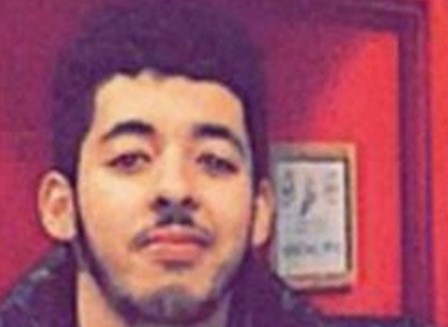
The alleged suicide bomber, Salman Abedi (image on the right), was part of an extremist group, the Libyan Islamic Fighting Group, that thrived in Manchester and was cultivated and used by MI5 for more than 20 years.
The LIFG is proscribed by Britain as a terrorist organisation which seeks a “hardline Islamic state” in Libya and “is part of the wider global Islamist extremist movement, as inspired by al-Qaida”.  
The “smoking gun” is that when Theresa May was Home Secretary, LIFG jihadists were allowed to travel unhindered across Europe and encouraged to engage in “battle”: first to remove Mu’ammar Gadaffi in Libya, then to join al-Qaida affiliated groups in Syria.
Last year, the FBI reportedly placed Abedi on a “terrorist watch list” and warned MI5 that his group was looking for a “political target” in Britain. Why wasn’t he apprehended and the network around him prevented from planning and executing the atrocity on 22 May?
These questions arise because of an FBI leak that demolished the “lone wolf” spin in the wake of the 22 May attack – thus, the panicky, uncharacteristic outrage directed at Washington from London and Donald Trump’s apology.
The Manchester atrocity lifts the rock of British foreign policy to reveal its Faustian alliance with extreme Islam, especially the sect known as Wahhabism or Salafism, whose principal custodian and banker is the oil kingdom of Saudi Arabia, Britain’s biggest weapons customer.
This imperial marriage reaches back to the Second World War and the early days of the Muslim Brotherhood in Egypt. The aim of British policy was to stop pan-Arabism: Arab states developing a modern secularism, asserting their independence from the imperial west and controlling their resources.  The creation of a rapacious Israel was meant to expedite this. Pan-Arabism has since been crushed; the goal now is division and conquest.            
LIFG (Source: Liwa Al-Umma Facebook Page )                   
In 2011, according to Middle East Eye, the LIFG in Manchester were known as the “Manchester boys”. Implacably opposed to Mu’ammar Gadaffi, they were considered high risk and a number were under Home Office control orders – house arrest – when anti-Gadaffi demonstrations broke out in Libya, a country forged from myriad tribal enmities.
Suddenly the control orders were lifted.
“I was allowed to go, no questions asked,” said one LIFG member.
MI5 returned their passports and counter-terrorism police at Heathrow airport were told to let them board their flights.
The overthrow of Gaddafi, who controlled Africa’s largest oil reserves, had been long been planned in Washington and London. According to French intelligence, the LIFG made several assassination attempts on Gadaffi in the 1990s – bank-rolled by British intelligence.  In March 2011, France, Britain and the US seized the opportunity of a “humanitarian intervention” and attacked Libya. They were joined by Nato under cover of a UN resolution to “protect civilians”.
Last September, a House of Commons Foreign Affairs Select Committee inquiry concluded that then Prime Minister David Cameron had taken the country to war against Gaddafi on a series of “erroneous assumptions” and that the attack “had led to the rise of Islamic State in North Africa”. The Commons committee quoted what it called Barack Obama’s “pithy” description of Cameron’s role in Libya as a “shit show”.
In fact, Obama was a leading actor in the “shit show”, urged on by his warmongering Secretary of State, Hillary Clinton, and a media accusing Gaddafi of planning “genocide” against his own people.
“We knew… that if we waited one more day,” said Obama, “Benghazi, a city the size of Charlotte, could suffer a massacre that would have reverberated across the region and stained the conscience of the world.”
The massacre story was fabricated by Salafist militias facing defeat by Libyan government forces. They told Reuters there would be
“a real bloodbath, a massacre like we saw in Rwanda”. The Commons committee reported, “The proposition that Mu’ammar Gaddafi would have ordered the massacre of civilians in Benghazi was not supported by the available evidence”.
Britain, France and the United States effectively destroyed Libya as a modern state. According to its own records, Nato launched 9,700 “strike sorties”, of which more than a third hit civilian targets. They included fragmentation bombs and missiles with uranium warheads. The cities of Misurata and Sirte were carpet-bombed. Unicef, the UN children’s organisation, reported a high proportion of the children killed “were under the age of ten”. 
More than “giving rise” to Islamic State — ISIS had already taken root in the ruins of Iraq following the Blair and Bush invasion in 2003 — these ultimate medievalists now had all of north Africa as a base. The attack also triggered a stampede of refugees fleeing to Europe.
Cameron was celebrated in Tripoli as a “liberator”, or imagined he was. The crowds cheering him included those  secretly supplied and trained by Britain’s SAS and inspired by Islamic State, such as the “Manchester boys”.
To the Americans and British, Gadaffi’s true crime was his iconoclastic independence and his plan to abandon the petrodollar, a pillar of American imperial power. He had audaciously planned to underwrite a common African currency backed by gold, establish an all-Africa bank and promote economic union among poor countries with prized resources. Whether or not this would have happened, the very notion was intolerable to the US as it prepared to “enter” Africa and bribe African governments with military “partnerships”.  
The fallen dictator fled for his life. A Royal Air Force plane spotted his convoy, and in the rubble of Sirte, he was sodomised with a knife by a fanatic described in the news as “a rebel”.
Having plundered Libya’s $30 billion arsenal, the “rebels” advanced south, terrorising towns and villages. Crossing into sub-Saharan Mali, they destroyed that country’s fragile stability. The ever-eager French sent planes and troops to their former colony “to fight al-Qaida”, or the menace they had helped create.
On 14 October, 2011, President Obama announced he was sending special forces troops to Uganda to join the civil war there. In the next few months, US combat troops were sent to South Sudan, Congo and the Central African Republic. With Libya secured, an American invasion of the African continent was under way, largely unreported.  
In London, one of the world’s biggest arms fairs was staged by the British government.  The buzz in the stands was the “demonstration effect in Libya”. The London Chamber of Commerce and Industry held a preview entitled “Middle East: A vast market for UK defence and security companies”. The host was the Royal Bank of Scotland, a major investor in cluster bombs, which were used extensively against civilian targets in Libya. The blurb for the bank’s arms party lauded the “unprecedented opportunities for UK defence and security companies.”
Related image
Saudi King Salman and British PM Theresa May (Source: Stringer / AFP / Getty Images)
Last month, Prime Minister Theresa May was in Saudi Arabia, selling more of the £3 billion worth of British arms which the Saudis have used against Yemen. Based in control rooms in Riyadh, British military advisers assist the Saudi bombing raids, which have killed more than 10,000 civilians. There are now clear signs of famine. A Yemeni child dies every 10 minutes from preventable disease, says Unicef.
The Manchester atrocity on 22 May was the product of such unrelenting state violence in faraway places, much of it British sponsored. The lives and names of the victims are almost never known to us.
This truth struggles to be heard, just as it struggled to be heard when the London Underground was bombed on July 7, 2005. Occasionally, a member of the public would break the silence, such as the east Londoner who walked in front of a CNN camera crew and reporter in mid-platitude.
“Iraq!” he said. “We invaded Iraq. What did we expect? Go on, say it.” 
At a large media gathering I attended, many of the important guests uttered “Iraq” and “Blair” as a kind of catharsis for that which they dared not say professionally and publicly.  
Yet, before he invaded Iraq, Blair was warned by the Joint Intelligence Committee that
“the threat from al-Qaida will increase at the onset of any military action against Iraq … The worldwide threat from other Islamist terrorist groups and individuals will increase significantly”.
Just as Blair brought home to Britain the violence of his and George W Bush‘s blood-soaked “shit show”, so David Cameron, supported by Theresa May, compounded his crime in Libya and its horrific aftermath, including those killed and maimed in Manchester Arena on 22 May.
The spin is back, not surprisingly. Salman Abedi acted alone. He was a petty criminal, no more. The extensive network revealed last week by the American leak has vanished.  But the questions have not.
Why was Abedi able to travel freely through Europe to Libya and back to Manchester only days before he committed his terrible crime? Was Theresa May told by MI5 that the FBI had tracked him as part of an Islamic cell planning to attack a “political target” in Britain?
In the current election campaign, the Labour leader Jeremy Corbyn has made a guarded reference to a “war on terror that has failed”. As he knows, it was never a war on terror but a war of conquest and subjugation. Palestine. Afghanistan. Iraq. Libya. Syria. Iran is said to be next.  Before there is another Manchester, who will have the courage to say that?

River to Sea Uprooted Palestinian   
The views expressed in this article are the sole responsibility of the author and do not necessarily reflect those of the Blog!