Uprooted Palestinians are at the heart of the conflict in the M.E Palestinians uprooted by force of arms. Yet faced immense difficulties have survived, kept alive their history and culture, passed keys of family homes in occupied Palestine from one generation to the next.
Senior Adviser to the Crown Prince of Abu Dhabi proclaims that Gazans suffer because of “Hamas” rather than “Israel,” expressing concern over Iran’s power.
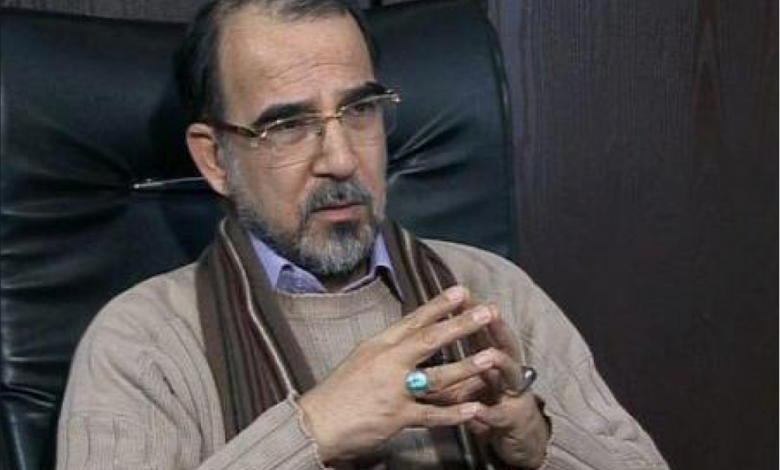
Ali Al Nuaimi, Senior Adviser to the prince of Abu Dhabi, Mohammad Bin Zayed
In an interview with an Israeli newspaper, Ali Al-Nuaimi, senior adviser to the Crown Prince of Abu Dhabi, Mohamed bin Zayed, denounced the Palestinian resistance in Gaza.
During an interview with “Israel Today“, Nuaimi expressed that “One of the biggest errors in this narrative, which I saw repeated over and over in the media, was the way they speak about [the] Gaza [Strip] as if it’s occupied by the Israelis. It’s not: It’s controlled by Hamas.”
“It is time to liberate Gaza, which was hijacked by Hamas to serve Iranian goals,” Al-Nuaimi said in an interview marking the one-year anniversary of the normalization of Emirati-Israeli relations, adding that “the Palestinian people in Gaza are suffering because of Hamas, not because of the Israelis.”
He discussed the international sentiment surrounding the crimes of the Israeli occupation during Seif Al Quds battle, which sparked worldwide outrage, with thousands demonstrating on the ground and using electronic campaigns on social media, stating that “We also have to fight the war of propaganda – one that the Israelis lost in this last round of fighting between Israel and Hamas. I saw narratives coming from not only the Middle East but the West too, which represented a shift.”
After questioning him on the harsh criticism directed at “Israel” on social media in the Emirates, Al-Nuaimi stressed that “many of us condemned Hamas”, justifying “in Israel, too, there were people who opposed the war, so that is not an indication, but rather says what some of the people in the Emirates think. It’s hard to overcome history, but we want to open people’s eyes and show them things they haven’t seen over the last 40 or 50 years.”
The Israeli publication expressed admiration for Al-Nuaimi’s responses, commenting that “these brave responses were given by a senior official in an Arab country.”
Ariel Kahana, the journalist who conducted the interview, divulged that he previously met Al-Nuaimi a year ago, as Kahana was one of the Israeli journalists accompanying the first Israeli delegations to the UAE on August 31, two weeks after former US President Donald Trump announced the UAE-“Israel” agreement to establish relations.
Al-Nuaimi: Iran wants to be a world power
Answering the question of how to treat Iran, the adviser responded by expressing concern that the international community does not speak in “one voice on Iran”, detailing that “when we speak with our European friends about the invasiveness and aggression of Iran in Arab states, we hear that they ‘understand our concerns.’ But we don’t need someone to understand our concerns, rather we need someone to act according to international law and respond to those violating other countries’ sovereignty.”
Concerning the UAE’S opinion of the US and Iran returning to a nuclear agreement, Al-Nuaimi expressed that returning to the nuclear agreement as it used to be would not solve the problems, accusing Iran that it “never honored the agreement or the commitments, in any respect.”
Al Nuaimi: There is no “going back” on UAE-Israeli relations
Bin Zayed’s adviser remarked of his country’s connection with the Israeli occupation, “the ties being forged between us are not political or just between governments. These are comprehensive ties in every respect. This is a normal relationship that is growing. “
“There is discussion and dialogue, and I know the media will paint it as a crisis. But it isn’t,” he said of the UAE’S position on Israel’s revision of the gas transfer arrangement from the Emirates to Europe via “Israel”.
He reassured the journalist that “a disagreement on one issue will degrade ties. This is not the case.”
لا تقيم إسرائيل اعتباراً فعلياً للدول الأعضاء في «نادي معجبيها»، مثل فرنسا (أ ف ب )
تأتي زيارة وزير الأمن الصهيوني، بيني غانتس، واجتماعه مع نظيرته الفرنسية فلورانس بارلي، ضمن مساعي حكومة الاحتلال إلى احتواء التداعيات السلبية لفضيحة برنامج «بيغاسوس» الذي أنتجته شركة «إن إس أو» الإسرائيلية، والذي استُخدم من قِبَل المغرب للتجسّس على هاتف الرئيس الفرنسي إيمانويل ماكرون، ورئيس وزرائه السابق إدوارد فيليب، و15 وزيراً ونائباً ومسؤولاً سياسيّاً. البيان الصادر عن وزارة الدفاع الفرنسية بعد الاجتماع، يشي برغبة في تجاوز التداعيات السلبية المذكورة، إذ يشدّد على ضرورة تقديم إسرائيل «التوضيحات التي تطلبها فرنسا، والأساسية بالنسبة إلى الثقة والاحترام المتبادل بين البلدين»، وإطلاع المسؤولين في هذا البلد «على مدى معرفة الحكومة الإسرائيلية بأنشطة زبائن إن إس أو». الارتباط العضوي بين الشركة المشار إليها والأجهزة الأمنية والعسكرية الصهيونية، لم يكن خافياً على العديد من الخبراء والصحافيين الفرنسيين، في السنوات الماضية، أي قبل «الفضيحة» الأخيرة. فهذا لوي إمبير في «لوموند»، يشير في مقالة بعنوان «برنامج بيغاسوس: مجموعة إن إس أو في قلب القوة الناعمة الإسرائيلية»، إلى أن «الشركة المنتِجة للبرنامج والحكومة الإسرائيلية تعملان يداً بيد لبناء تحالفات جديدة، وخدمة مصالحهما على المستوى الدولي». لم تكن الأجهزة الأمنية الفرنسية غافلة عن هذه الحقيقة، وطلب «توضيحات» من قِبَل رسميين فرنسيين يعكس حرصاً على الحفاظ على التعاون المتعاظم في الميادين التكنولوجية والأمنية مع الكيان الصهيوني، باعتباره مصدر إلهام في كيفية خوض «الحروب الجديدة»، الموجّهة أساساً ضدّ السكان والحركات الشعبية، نتيجة لخبراته المتراكمة في هذا المضمار في فلسطين المحتلّة ولبنان. هو «نموذج» يُحتذى بنظر قطاعات وازنة من النُّخب السياسية الفرنسية والغربية، وكذلك بالنسبة إلى زبائنه التقليديين من أنظمة فاسدة ومستبدّة في جنوب العالم، ومنه العالم العربي. لكن، وفي مقابل هذا الحرص على العلاقات مع «الدولة – النموذج»، فإن اللافت هو أن الأخيرة لا تقيم اعتباراً فعلياً للدول الأعضاء في «نادي معجبيها»، باستثناء الولايات المتحدة وروسيا والصين، كونها دولاً قادرة على ردّ الصاع صاعين في حال تجرّأت إسرائيل على استخدام منتجاتها التكنولوجية للتجسّس عليها.
حبٌّ من طرفٍ واحد
قيام إسرائيل ببيع برنامج «بيغاسوس» للمغرب لكي يستخدمه الأخير للتجسّس على المسؤولين الفرنسيين، يُعدّ تطوّراً يستحقّ التأمّل فيه، لأنه يكشف تحوّلاً في طبيعة التحالفات التي تنسجها تل أبيب وفي نظرتها الفعلية لِمَن تعتبرهم حلفاء من «الدرجة الثانية». محاولات إسرائيل للتجسّس حتى على أهمّ حلفائها، ليس بالأمر الجديد. جميعنا يذكر قضيّة الأميركي جوناثان بولارد الذي اعتُقل سنة 1985 بتهمة التجسّس على بلاده لحسابها. الجديد هو بيعها برامج تجسّس لدول أخرى تعمل على تطوير علاقاتها معها، كالمغرب مثلاً، دون التأكُّد من عدم استخدامها ضدّ حلفاء آخرين، كفرنسا مثلاً. يعزو فردريك مورو، الخبير الفرنسي في شؤون الدفاع، في مقابلة مع «لوموند»، عدم اكتراث إسرائيل لردّ الفعل الفرنسي أو الأوروبي تجاهها، إلى قناعتها بأنه سيكون في غاية الضعف. ولا شكّ في أن هذا الرأي يتضمّن الكثير من الوجاهة لأن التحوّلات البنيوية، السياسية والاجتماعية، التي شهدها الكيان الصهيوني في العقود الماضية، وطغيان التيارات الفاشية القومية والدينية على المشهد السياسي فيه، كان لها أيضاً أثر كبير على الفهم السائد للوضع الدولي وللتحالفات. العالم من منظور هذه القوى، بات غائباً أكثر من أيّ حقبة سابقة، وموازين القوى الفجّة هي التي تحكم تعامل أطرافه بعضها مع بعض، صراعاً وتقاطعاً وتحالفاً. إسرائيل لا تحترم إلّا الأقوياء، وهم في حالتنا الولايات المتحدة وروسيا والصين، وتتجنّب استفزازهم. أمّا الآخرون، فهي تتعاطى معهم، وكما أظهرت «الفضيحة»، وفقاً لأولوياتها الظرفيّة.
لم تَعُد قوّة إسرائيل «الناعمة» تستند إلى ادّعاءاتها بكونها «واحة ديمقراطية» في محيط من البرابرة
وما فعلته مع فرنسا، لن تتردّد في تكراره في المستقبل مع دول كالمغرب والإمارات والسعودية إذا اقتضت مصالحها المتغيّرة ذلك. لا تحالفات ثابتة، أو على الأقلّ تجنّباً للتأزيم، إلّا مع الأقوياء. هي لم تراعِ الاندفاعة الفرنسية غير المسبوقة حيالها في السنوات الماضية، والتي فصّلها الباحث والصحافي الفرنسي، جان ستيرن، في سلسلة مقالات على موقع «شرق 21» عن اللوبي الإسرائيلي في بلاده. فشركة «إلبيت» الإسرائيلية تساهم في إنتاج نظام «العقرب»، وهو في قلب استراتيجية القوات البرية الفرنسية في العقود القادمة، و»يسمح بتطوير قيادة رقمية واحدة تعتمد على وصلة مشتركة تسمح للجنود المنتشرين في الميدان وكذلك للأدوات العسكرية الجديدة، مثل الطائرات من دون طيار والروبوتات، بأن تكون متّصلة في وقت واحد لتستبق بالتالي ردود فعل العدو». أمّا الشركات الفرنسية العاملة في حقل التكنولوجيا الرقمية، فـ»جميعها تريد الموساد عندها»، بحسب العنوان الحرفي لإحدى مقالاته في السلسلة المشار إليها آنفاً، والتي يتحدّث فيها عن مدى إعجاب الشركات الخاصّة وصناعات الدفاع الفرنسية، بإنجازاته في المجالات التكنولوجية، خاصّة برنامج «بيغاسوس». وهذه المقالة نُشرت في 26 نيسان الماضي، أي قبل «الفضيحة»، ما يضعنا أمام هُيام من طرف واحد يقابله عدم اكتراث، إن لم يكن ازدراء من الطرف الآخر.
جاذبية نموذج السيطرة والتنكيل والقتل
لم تَعُد قوّة إسرائيل «الناعمة»، أي جاذبيتها، تستند إلى ادّعاءاتها بكونها «واحة ديمقراطية» في محيط من البرابرة و/أو الأنظمة المستبدة. فقدت هذه السردية الحدود الدنيا من الصدقيّة على نطاق الكوكب. جاذبيتها اليوم تستند إلى خبراتها ومعارفها في ميدان القوّة الخشنة، والتي اكتسبتها من خلال حربها المستمرّة على الشعب الفلسطيني وشعوب المنطقة وقواها المقاومة. وحتى كاتب صهيوني «معتدل» كيوفال هراري يعترف بذلك في مقالة كتبها بعنوان: «سنستطيع قرصنة البشر قريباً»، يعتبر فيها أن «الضفة المحتلّة هي حقل تجارب بالنسبة إلى الإسرائيليين حول كيفية بناء ديكتاتورية رقميّة. كيف نستطيع التحكُّم بـ2,5 مليون من السكان عبر استخدام الذكاء الاصطناعي والبيغ داتا والطائرات المسيّرة والكاميرات؟ إسرائيل رائدة في مجال الرقابة والسيطرة: تقوم باختبارات ميدانية، ومن ثم تصدّرها نحو بقية العالم». وعلى الغالب، فإن هذه الخبرات وما تتيحه من قدرات أمنية وعسكرية وتكنولوجية، لأطراف تعتبر الشعوب أو قطاعات معتبرة منها، مصدراً رئيساً للتهديد، هي بين أبرز الاعتبارات التي تُفسّر هيامها بالنموذج الإسرائيلي.
Dr. Andreas Krieg is an assistant professor at the Defence Studies Department of King’s College London and a strategic risk consultant working for governmental and commercial clients in the Middle East. He recently published a book called ‘Socio-political order and security in the Arab World’.
The growing divergence of interests between the two neighbours has created serious cracks in the thin veneer of their once-hailed ‘strategic entente’
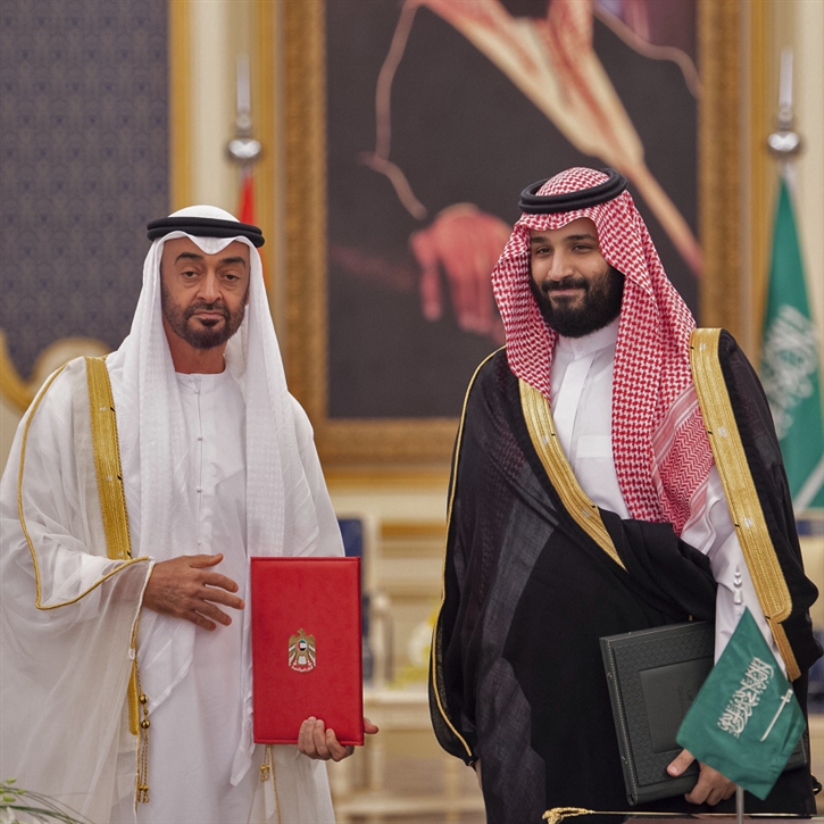
Abu Dhabi Crown Prince Mohammed bin Zayed meets Saudi Crown Prince Mohammed bin Salman in Jeddah in 2018 (Bandar al-Jaloud/Saudi Royal Palace/AFP)
They were the Gulf power couple of the Trump era: the two crown princes and de facto rulers of the UAE and Saudi Arabia shook up the region, imposing their will on their neighbours.
Ever since Abu Dhabi strongman Mohammed bin Zayed (MBZ) took Mohammed bin Salman (MBS) under his wing in 2015, the latter did not seem bothered at being framed as the former’s protege. The notion in Riyadh was that Abu Dhabi’s model of authoritarian liberalisation could be one to emulate, bringing the kingdom from the Middle Ages into the 21st century.
As MBS now sits more firmly in the driver’s seat in Riyadh, the honeymoon period between the crown princes is certainly over
But over the past two years, it has dawned on MBS’s inner circle that the assumed ally next door was not interested in creating win-win situations for both states. Rather, the UAE’s assertive zero-sum mentality – emboldened by former US President Donald Trump’s laissez-faire Middle East policy – often came at the expense of Saudi interests.
The rise of the UAE as arguably the most powerful Arab state over the past decade has only been possible because Abu Dhabi ruthlessly pursues its own interests, with little regard for Riyadh’s reputational struggle in Washington, security concerns in Yemen, urgent need for economic diversification and existential dependence on stable oil prices.
Since 2019, the growing divergence of interests between the two neighbours has created serious cracks in the thin veneer of their once-hailed “strategic entente”. The relationship between Riyadh and Abu Dhabi in recent years has been underwritten by ideological synergies over the UAE’s grand strategic counterrevolutionary narratives, including securitising political Islam, the Muslim Brotherhood and civil society more widely.
While these synergies remain, the other factor that has traditionally sustained this bilateral relationship – the personal ties between MBZ and MBS – has suffered, as the leader-to-leader relationship has noticeably cooled since the election of US President Joe Biden.
Buying political credit
While the two leaders previously cemented their “bromance” with joint hunting trips, official state visits and phone calls, according to press releases, MBS and MBZ have spoken only once since the Trump era came to an end. It became clear that under Biden, Washington would withdraw its carte blanche for Riyadh and Abu Dhabi to do as they pleased in the region. Both needed to buy credit with the new administration and the Democrats in Washington.
Instead of featuring as the bullies in the region, both MBS and MBZ needed to reframe their image as more constructive players, eager to support the Biden administration’s soft-handed regional policy of leading from behind.
When Trump got elected in 2016, MBZ personally visited the Trump team in New York, lobbying for his protege MBS as the next king. Four years later, with a Democrat elected president, the UAE is noticeably trying to create distance between itself and the Saudi leadership. Any affiliation with MBS is seen as potentially tainting Emirati efforts to turn the country’s image around.
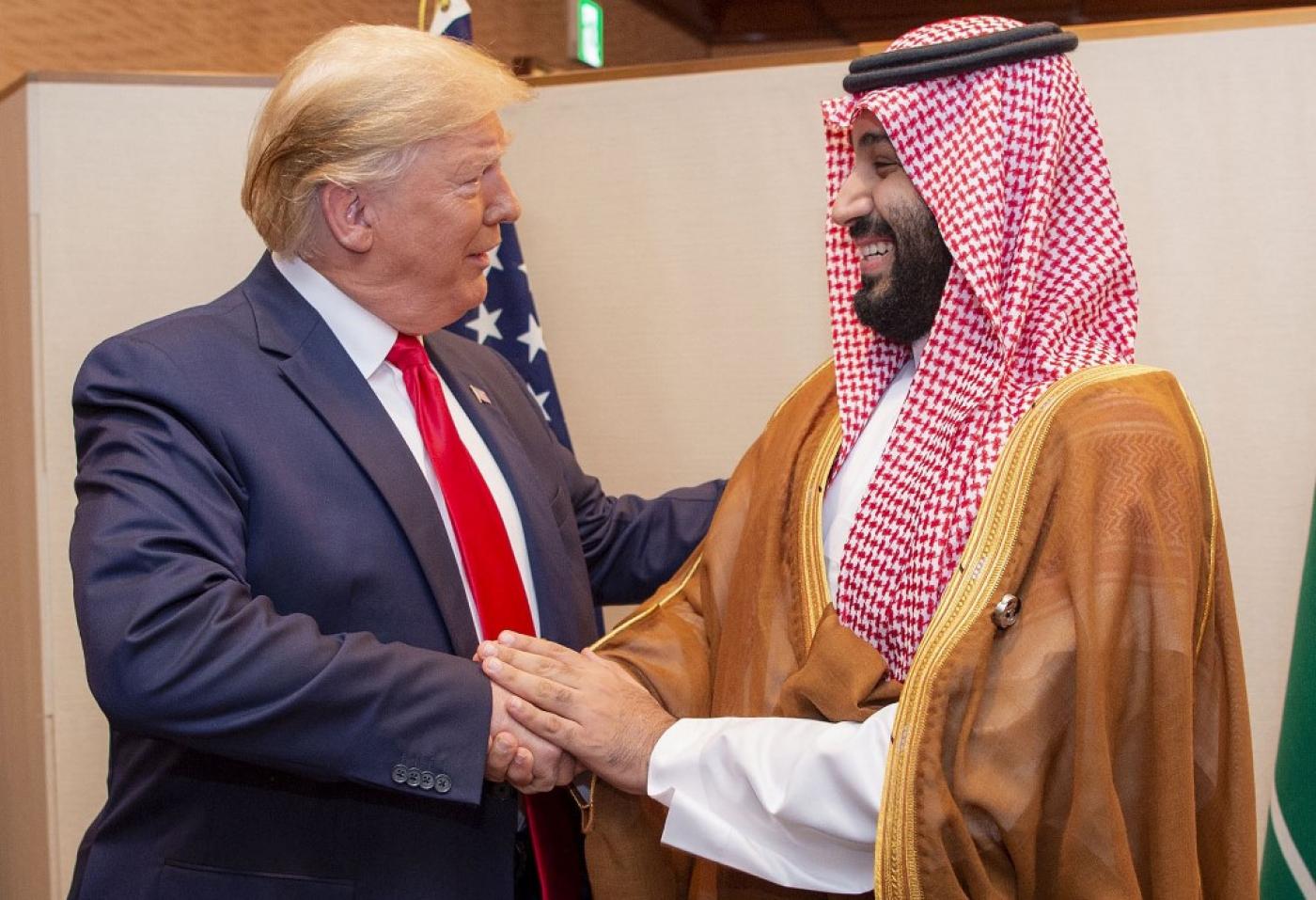
US President Donald Trump shakes hands with MBS at the 2019 G20 Summit in Osaka, Japan (Bandar al-Jaloud/Saudi Royal Palace/AFP)
Under pressure for its joint ventures with Moscow in Libya, its mercenary adventures in Yemen, and its rise as a force multiplier for China’s global information power, Abu Dhabi has demonstrated that its zero-sum mentality means it is willing to throw a “strategic ally” under the bus.
The war in Yemen, which the UAE helped to frame as “Saudi-led”, was the first arena in which the Saudi leadership learned that Emirati policy was ruthless when it came to preserving the UAE’s interests, even at the expense of Saudi Arabia.
Some in MBS’s circles have, according to sources close to the palace, raised concerns that MBZ might have pushed Saudi Arabia into risky adventures in order to create a shield behind which the UAE could consolidate its gains in Yemen’s south.
While Saudi Arabia had to bear the operational and reputational burdens of the costly war against the Houthis, Abu Dhabi secured its foothold along Yemen’s strategically important coastline via its surrogate, the Southern Transitional Council.
Left out in the cold
The UAE’s comet-like rise amid the regional power vacuum left by a disengaging US created the illusion in Abu Dhabi that, as the new middle power in the Gulf, it would not need to yield to anyone. The ongoing standoff between the UAE and Saudi Arabia within the Organization of the Petroleum Exporting Countries (OPEC) shows that Abu Dhabi is confident to stand its ground.
The UAE will not compromise on national interests, even if it comes to the detriment of Saudi Arabia, as with Abu Dhabi’s blatant ignoring of OPEC output quotas.
On the issue of the Qatar blockade, where MBZ led and MBS willingly followed, the UAE showed very little willingness to compromise. Although the reputational and political costs of the ongoing blockade continued to rise for both – especially in Washington – Abu Dhabi was willing to sustain it in the interests of its counterrevolutionary crusade.The Saudi-Emirati axis: United against Gulf unity
In the end, Saudi Arabia broke ranks and let pragmatism prevail. Ending the blockade was a first sign of Saudi leadership in the Gulf under MBS, which Riyadh viewed as a win-win opportunity for the blockading quartet and for Qatar. Abu Dhabi, on the other hand, was deeply concerned about the pace and depth of normalisation, which not only pressured the Emiratis to fall in line, but allowed MBS to reap the positive messages.
This was just the beginning. Left out in the cold time and again by its neighbour, Saudi Arabia has since embarked on its own more assertive strategy for diversification. The kingdom’s new economic policies, aiming to attract investments from multinationals based in the UAE, directly target the success story of Dubai, which has been in economic limbo since the start of the Covid-19 pandemic.
The unhealthy nature of this competition means that it becomes ever-more difficult to create win-win situations. And as MBS now sits more firmly in the driver’s seat in Riyadh, the honeymoon period between the crown princes is certainly over.
As the gloves come off, MBS is eager to show that Abu Dhabi has been punching above its weight, and that there are limits to smart power in compensating for lack of size. Nonetheless, their relations remain underwritten by ideological synergies over fears of political Islam, the Muslim Brotherhood and civil society. It remains to be seen whether this is enough to prevent another Gulf crisis.
The views expressed in this article belong to the author and do not necessarily reflect the editorial policy of Middle East Eye.
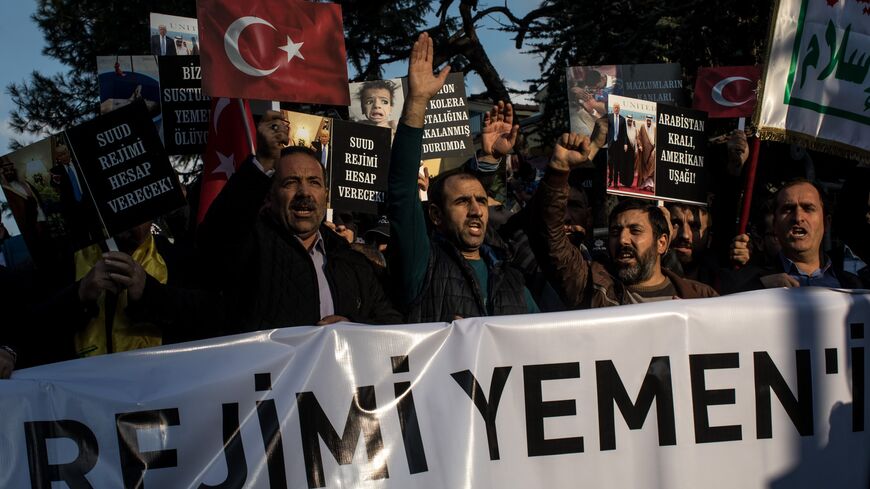
Could Turkey help out Saudi Arabia in Yemen? Just 28 months ago, as seen here on Nov. 11, 2018, Turks were chanting slogans and holding posters in protest of Saudi Arabia’s actions in Yemen outside the Saudi Consulate. The October 2018 murder of journalist and Saudi critic Jamal Khashoggi inside the consulate had helped push attention to the war in Yemen.
In part as a result of the Biden administration’s shifting policies toward Iran and Washington’s decision to temporarily freeze and review weapons sales to Saudi Arabia over the Yemeni war, Ankara is aiming to turn Saudi Arabia’s growing international isolation to Turkey’s advantage.
Some Syrian opposition sources claim Turkey might transfer Syrian fighters to Yemen to fight alongside the Saudi-led coalition against the Houthi rebels. The immediate interpretation of these claims might be that Turkey is extending an olive branch to Saudi Arabia following a yearslong frostiness in relations.
The second interpretation might be that Ankara is signaling to Tehran Turkey’s disgruntlement over Iranian military activities in Iraq and Syria. Iran believes Russia made too many concessions to Turkey on Syria and has overtly expressed its opposition against Turkish military operations in Iraq, prompting diplomatic bickering between Ankara and Tehran.
Possible Turkish involvement in the Yemeni war might provide Saudi Arabia the face-saving exit from the conflict that Riyadh has been looking for. Reportedly, Turkey’s support might also include Turkish armed drones that have been game changers in the Libyan and Azeri-Armenian conflicts.
The Yemeni Al-Islah Party — the Yemeni branch of the Muslim Brotherhood — has been asking Turkey to step into the fray. However, the United Arab Emirates has long opposed the Al-Islah Party’s cooperation in the conflict, while Saudi Arabia has only reluctantly accepted cooperation to date.
Saudi officials have reportedly been advised to improve ties with Turkey after a chilliness with the Biden administration developed as a result of the administration’s positive messages on the Iranian nuclear deal, the release of a CIA report exposing Saudi Crown Prince Mohammed bin Salman’s role in the Jamal Khashoggi murder and the decision to lift the Houthis from the US list of foreign terrorist groups. The pro-government Turkish media has also trumpeted a narrative that Riyadh “desperately needs” Turkey.
While the idea of sending Syrian fighters to Yemen may be mere speculation, there have been a number of claims about the matter. Citing a source from the Syrian armed group Sultan Suleiman Shah, the North Press Agency reported that the Syrian National Army, a rebel group backed by Turkey, “has been working for weeks to prepare dozens of militants to send to Yemen.” According to the report, fighters have been offered salaries up to $2,500 a month and were told they were going to be positioned on the Yemeni-Saudi border and not participate in the clashes. It’s worth mentioning that Syrian fighters who were sent to Azerbaijan had also been told that they did not have to participate in the fighting, only to find themselves on the front lines.
Similarly, the Violations Documentation Center in Northern Syria said Turkey’s intelligence agency assigned an opposition commander to recruit fighters to be sent to Yemen. According to the report, the fighters were offered $2,500 monthly; $100 of this amount would be deducted for document expenses, fighters would receive $400 in cash initially and the remaining $2,000 would be paid to their families after the move to Yemen.
Journalist Lindsey Snell shared a voice recording that reportedly belongs to a Sultan Murad Brigades commander in which he seeks identification documents from his fighters who “wish to go to Yemen.” Snell said in a tweet accompanying the recording, “This happened in the couple weeks before Azerbaijan, too.” This was in reference to the transfer of Syrian fighters to the Azeri-Armenian conflict. Social media is abuzz with similar claims.
Meanwhile, a Turkish armed drone was downed by Houthi rebels in al-Jawf region, further fanning claims about possible Turkish involvement in the conflict. Houthi military spokesman Col. Yahya Saree said the downed drone was a Turkish-built Vestel Karayel aircraft.
Yet Saudi Arabia acquired these drones as part of a contract worth $200 million that Vestel Defense signed with Riyadh last year. According to the Saudi General Authority for Defense Industries, Riyadh is aiming to build up to 40 armed drones in five years, with six of them planned to be built in 2021.
Despite rife speculation, there is no official confirmation that Baykar Makina, the manufacturer of the Bayraktar drones used in Libya and the northern Caucasus, will play a role in the Yemen conflict.
According to Deutsche Welle Arabic, the Al-Islah party, might have played a mediator role in the recent Saudi Arabia-Turkey rapprochement. Citing former Yemeni Transportation Minister Saleh al Yemeni’s remarks to local Yemeni media, Deutsche Welle Arabic reported that an alliance between Turkey and Saudi Arabia in Yemen was “imminent” after disagreements surfaced between UAE Crown Prince Mohammed bin Zayed Al Nahyan and Riyadh. The UAE media, meanwhile, paints these news reports as Muslim Brotherhood propaganda.
According to the London-based Al Arab newspaper, Turkey, Qatar and the Muslim Brotherhood network are relying on increasing concerns of the Saudi side following the US policy shift on the Yemeni war and Houthi rebels’ advances toward the oil- and gas-rich Marib region. The newspaper said the first call for Saudi-Turkish cooperation in Yemen came from one of the Al-Islah Party leaders who lives in Istanbul. Hamid al-Ahmar told Al Jazeera that Saudi Arabia turned to Turkey for advanced weapons after the US weapons freeze.
The UAE, like Egypt, is insisting that Turkey should cut its support to the Muslim Brotherhood to mend relations with Abu Dhabi. However, the Emiratis’ diminishing support for Khalifa Hifter in Libya and its decision to pull back from a military base in Eritrea that was key to Yemeni operations could be a manifestation of a downgrade in the UAE’s regional ambitions.
Muslim Brotherhood groups’ desire to draw Turkey into the Yemeni conflict, meanwhile, seems quite clear. Al Jazeera commentator Faisal al Kasim trumpeted that the balance of power on the ground in Yemen would change as soon as “Turkey has started to step into the Yemeni file.” Turkish-based Egyptian journalist Jamal Sultan claimed that Turkish-built Bayrak drones were spotted in Yemeni skies.
Pro-government Turkish media outlets sing a similar tune. The Yeni Safak daily, a governmental mouthpiece, claimed that Saudi Arabia was left alone in the Yemeni conflict. “Saudi Arabia has lost its fear of Turkey,” the paper wrote, “Turkey is the only country that could save Saudi Arabia from the mess it is in.”
Burhanettin Duran — a member of a foreign policy board advising the president and head of the pro-government think-tank SETA — argued that Gulf policies to restrain Iran and Turkey have failed. The Saudis “now need Turkey to fight off Iran’s expansionist policies in the region including in Yemen,” according to Duran.
The Iranian media also appears to take claims of Turkish involvement in the Yemen conflict seriously. Iran’s official news agency IRNA reported that Saudi authorities have decided to put aside differences with their Turkish counterparts to cooperate with Ankara on the Yemen file.
Although mutual Turkish Saudi interests could spell a new beginning in Ankara-Riyadh ties, the lack of any official acknowledgment is an indication of reluctance and caution on both sides. Defusing a confrontation of some seven years between Turkey and Arab countries requires comprehensive consideration as the “Arab skepticism” that was fanned by Turkey’s expansionist ambitions in the region still is in play and appears to shape Arab countries’ approach to Turkey.
يجادل الإخوان المسلمون ومصادر مقربة من الحكومة التركية بأن السعودية يمكن أن تجد مخرجاً لحفظ ماء وجهها في الصراع اليمني من خلال التعاون مع تركيا.
أتراك يحتجون أمام القنصلية السعودية في اسطنبول عام 2018
كتب الصحافي التركي فهيم تستكين مقالة في موقع “المونيتور” الأميركي قال فيها إن تركيا تسعى إلى تحويل العزلة الدولية المتزايدة للسعودية لصالحها، وذلك في أعقاب سياسات إدارة الرئيس الأميركي جو بايدن المتغيرة تجاه إيران وقرار واشنطن بتجميد ومراجعة مبيعات الأسلحة إلى السعودية مؤقتاً بسبب الحرب اليمنية.
وأضاف الكاتب أن بعض مصادر المعارضة السورية تزعم أن تركيا قد تنقل مقاتلين سوريين إلى اليمن للقتال إلى جانب التحالف الذي تقوده السعودية ضد الحوثيين. وقد يكون التفسير الفوري لهذه الادعاءات هو أن تركيا تمدّ غصن زيتون إلى السعودية بعد سنوات من الجمود في العلاقات.
أما التفسير الثاني فقد يكون أن أنقرة تشير إلى استياء تركيا من الأنشطة العسكرية الإيرانية في العراق وسوريا. وتعتقد إيران أن روسيا قدمت الكثير من التنازلات لتركيا بشأن سوريا وأعربت صراحةً عن معارضتها للعمليات العسكرية التركية في العراق، مما أثار مشاحنات دبلوماسية بين أنقرة وطهران.
ورأى الكاتب أن التورط التركي المحتمل في الحرب اليمنية للسعودية قد يوفر مخرجاً من الصراع كانت الرياض تبحث عنه ويحفظ لها ماء وجهها. وبحسب ما ورد، فقد يشمل دعم تركيا كذلك طائرات مسلحة تركية بدون طيار كانت بمثابة تغيير لقواعد اللعبة في النزاعين الليبي والأذري-الأرميني.
ويطالب حزب الإصلاح اليمني – الفرع اليمني للإخوان المسلمين – تركيا بالدخول في المعركة. ومع ذلك، لطالما عارضت الإمارات العربية المتحدة التعاون مع حزب الإصلاح في الحرب ضد “أنصار الله”، بينما قبلت السعودية على مضض التعاون معه حتى الآن.
وأضاف الكاتب أنه ورد أن المسؤولين السعوديين نُصحوا بتحسين العلاقات مع تركيا بعد أن تطورت حالة من النفور من إدارة بايدن نتيجة للرسائل الإيجابية للإدارة بشأن الاتفاق النووي الإيراني، وصدور تقرير لوكالة الاستخبارات المركزية الأميركية يفضح دور ولي العهد السعودي الأمير محمد بن سلمان في جريمة قتل جمال خاشقجي وقرار رفع “انصار الله” الحوثيين من القائمة الأميركية للجماعات الإرهابية الأجنبية. كما روجت وسائل الإعلام التركية الموالية للحكومة لرواية مفادها أن الرياض “بحاجة ماسة” إلى تركيا.
وقال الكاتب إنه في حين أن فكرة إرسال مقاتلين سوريين إلى اليمن قد تكون مجرد تكهنات، إلا أن هناك عدداً من المزاعم حول الأمر. فقد نقلت وكالة “نورث برس” عن مصدر من الجماعة المسلحة السورية التي تدعى “سلطان سليمان شاه”، أن “الجيش الوطني السوري”، وهو جماعة معارضة تدعمها تركيا، “يعمل منذ أسابيع لإعداد عشرات المسلحين لإرسالهم إلى اليمن”. وبحسب التقرير، عُرض على المقاتلين رواتب تصل إلى 2500 دولار شهرياً وقيل لهم إنهم سيتمركزون على الحدود اليمنية السعودية ولن يشاركوا في الاشتباكات. ومن الجدير بالذكر أن المقاتلين السوريين الذين تم إرسالهم إلى أذربيجان تم إخبارهم أيضاً أنه ليس عليهم المشاركة في القتال، فقط ليجدوا أنفسهم في الخطوط الأمامية.
بدوره، قال مركز توثيق الانتهاكات في شمال سوريا إن وكالة الاستخبارات التركية كلفت أحد قادة المعارضة بتجنيد مقاتلين لإرسالهم إلى اليمن. وبحسب التقرير، عرض على المقاتلين 2500 دولار شهرياً حيث سيتم خصم 100 دولار من هذا المبلغ لتغطية نفقات المستندات، وسيحصل المقاتلون على 400 دولار نقداً في البداية، وسيتم دفع مبلغ 2000 دولار المتبقي لعائلاتهم بعد الانتقال إلى اليمن.
وشاركت الصحافية ليندسي سنيل تسجيلاً صوتياً يُقال إنه يعود إلى قائد في “كتائب السلطان مراد” السورية الموالية لتركيا يسعى فيه للحصول على وثائق هوية من مقاتليه الذين “يرغبون في الذهاب إلى اليمن”. وقالت سنيل في تغريدة مصاحبة للتسجيل، “حدث هذا في الأسبوعين السابقين لأذربيجان كذلك”. كان هذا في إشارة إلى نقل مقاتلين سوريين إلى الصراع الأذري الأرمني. كما أن وسائل التواصل الاجتماعي تعج بمزاعم مماثلة.
في هذه الأثناء، أسقط اليمنيون طائرة مسيّرة مسلحة تركية في منطقة الجوف، مما زاد من تصاعد المزاعم حول احتمال تورط تركيا في الصراع. وقال المتحدث باسم الجيش اليمني العقيد يحيى سريع إن الطائرة المسيّرة كانت من طراز “فيستل كرايل” تركية الصنع.
واستحوذت السعودية على هذه الطائرات بدون طيار كجزء من عقد بقيمة 200 مليون دولار وقعته شركة “فيستل” مع الرياض العام الماضي. ووفقاً للهيئة العامة للصناعات الدفاعية السعودية، تهدف الرياض إلى تصنيع ما يصل إلى 40 طائرة مسيّرة مسلحة في غضون خمس سنوات، ومن المقرر تصنيع ست طائرات منها في عام 2021.
وعلى الرغم من التكهنات المنتشرة، لا يوجد تأكيد رسمي بأن شركة “بايكار مكينا”، الشركة المصنعة للطائرات بدون طيار المستخدمة في ليبيا وشمال القوقاز، ستلعب دوراً في الصراع اليمني.
وبحسب قناة “دويتشه فيله” الألمانية، ربما لعب حزب الإصلاح اليمني دوراً وسيطاً في التقارب السعودي التركي الأخير. ونقلاً عن تصريحات وزير النقل اليمني السابق صالح اليمني لوسائل إعلام يمنية محلية، ذكرت “دويتشه فيله” بالعربية أن تحالفاً بين تركيا والسعودية في اليمن كان “وشيكاً” بعد ظهور خلافات بين ولي العهد الإماراتي محمد بن زايد آل نهيان والرياض. في غضون ذلك، يصور الإعلام الإماراتي هذه التقارير الإخبارية على أنها دعاية للإخوان المسلمين.
وبحسب صحيفة العرب، التي تتخذ من لندن مقراً لها، تعوّل تركيا وقطر وشبكة الإخوان المسلمين على مخاوف متزايدة للسعوديين في أعقاب التحول في السياسة الأميركية بشأن الحرب اليمنية وتقدم المتمردين الحوثيين نحو منطقة مأرب الغنية بالنفط والغاز. وقالت الصحيفة إن الدعوة الأولى للتعاون السعودي التركي في اليمن جاءت من حميد الأحمر، أحد قيادات حزب الإصلاح الذي يعيش في اسطنبول إذ قال إن السعودية لجأت إلى تركيا للحصول على أسلحة متطورة بعد تجميد الأسلحة الأميركية.
ورأى الكاتب أن رغبة جماعات الإخوان المسلمين في جر تركيا إلى الصراع اليمني تبدو واضحة تماماً. وادعى الصحافي المصري جمال سلطان المقيم في تركيا بأنه تم رصد طائرات بدون طيار تركية الصنع في سماء اليمن.
وسائل الإعلام التركية الموالية للحكومة تردد نغمة مماثلة. فقد زعمت صحيفة “يني شفق”، الناطقة باسم الحكومة، أن السعودية تُركت وحيدة في الصراع اليمني. وكتبت الصحيفة: “تخلت المملكة العربية السعودية عن خوفها من تركيا، فتركيا هي الدولة الوحيدة التي يمكن أن تنقذ السعودية من الفوضى التي تعيش فيها”.
وجادل برهان الدين دوران – عضو مجلس إدارة السياسة الخارجية الذي يقدم المشورة للرئيس ورئيس مركز الفكر “سيتا” الموالي للحكومة – بأن سياسات الخليج لكبح جماح إيران وتركيا قد فشلت. وقال دوران إن السعوديين “يحتاجون الآن إلى تركيا لمحاربة سياسات إيران التوسعية في المنطقة بما في ذلك اليمن”.
ويبدو أن وسائل الإعلام الإيرانية تأخذ بدورها مزاعم تورط تركيا في الصراع اليمني على محمل الجد. فقد ذكرت وكالة الأنباء الإيرانية الرسمية (إرنا) أن السلطات السعودية قررت وضع الخلافات مع الأتراك جانباً للتعاون مع أنقرة في ملف اليمن.
وخلص الكاتب إلى أنه على الرغم من أن المصالح السعودية التركية المتبادلة يمكن أن تشكل بداية جديدة في العلاقات بين أنقرة والرياض، فإن عدم وجود أي اعتراف رسمي بذلك هو مؤشر على التردد والحذر من كلا الجانبين. إذ يتطلب نزع فتيل مواجهة دامت نحو سبع سنوات بين تركيا والدول العربية دراسة شاملة لأن “الشكوك العربية” التي أذكتها طموحات تركيا التوسعية في المنطقة لا تزال قائمة ويبدو أنها تشكل مقاربة الدول العربية تجاه تركيا.
يحرص الجانبان الإماراتي والسعودي على إخفاء التباينات بينهما حول أمور كثيرة. لكن الأمر لا يكون على هذا النحو لدى الجهات المتابعة، سواء في محيط قادة البلدين، أو لدى الدبلوماسية العربية والغربية النشطة في العاصمتين. والبارز في أن وثائق سرية تثبت ما ينقله دبلوماسيون عملوا في الجزيرة العربية عن أن في أبو ظبي من يشكو ضيق هامش المناورة بسبب طبيعة وليّ العهد السعودي محمد بن سلمان. لكن هؤلاء الدبلوماسيين قلّما تحدّثوا عن الجانب الأكثر تعقيداً في العلاقة، وهو المتصل بسعي الإمارات الدائم للقيام بدور “الوصي الرقيب” على سلوك الإدارة السعودية الجديدة. ولذلك، تهتم قيادة الإمارات بأن يعمل دبلوماسيوها في الرياض، وبعض الباحثين المتعاقدين مع وزارة الخارجية وأجهزة الأمن، على إعداد تقارير تخص الوضع السعودي.
دبلوماسي فرنسي عمل في أبو ظبي، قال لزميله اللبناني إن مشكلة أبو ظبي مع الرياض مثل مشكلة لبنان مع سوريا قبل عام 2005. حينذاك، لم يكن بمقدور القيادة اللبنانية القيام بأي خطوة ذات بعد استراتيجي من دون الحصول على موافقة دمشق. وها هي الإمارات تنتظر موافقة الرياض على أي مبادرة. ومتى تصرفت من تلقاء نفسها ارتفع الصوت في قصر اليمامة… لكن في الإمارات يتجنّبون رفع الصوت. وأكثر المتضررين هو محمد بن راشد، الذي يشعر بضيق الأمور على دبي، فهو من جهة يبدو مكبل اليدين، ويرى بأن بن سلمان يريد منافسة إمارته على وجه التحديد، وأن محمد بن زايد لا يفعل له شيئاً.
واضح أن قيادة الإمارات كانت تأمل بعلاقة مختلفة مع الرياض بعد تولّي محمد بن سلمان أمور البلاد، تصرف محمد بن زايد على أن ولي العهد السعودي سيكون شريكاً كبيراً في مشروع توسيع نفوذ دول الخليج في المنطقة والعالم. وتعامل معه على أساس أنهما يمثّلان العقل الجديد للجزيرة العربية. تحالفهما يتجاوز الإضرار بخصمهما الأول تميم بن حمد في قطر، بل يشمل تركيا أيضاً. ولذلك وضع بن زايد ثقله في تطوير العلاقة الشخصية مع بن سلمان، الى أن حصل فجأة ما غيّر الأمور.
يقول الدبلوماسي الغربي: فجأة، تغيرت الأحوال. صار بن سلمان يتصرف بطريقة مختلفة. وما إن أنجز عملية استيلائه على كامل السلطات في بلاده، ونجح في إطاحة خصومه من العائلة وخارجها، حتى صار يتصرف مع بن زايد بطريقة مختلفة.
ولفت الدبلوماسي نفسه الى أن الرياض استاءت من أداء الجانبين الإماراتي والمصري في قضية قتل جمال خاشقجي لأنها كانت تتوقع أن يقفا الى جانبها بقوة. وهو أمر تظهره وثائق سرية حصلت عليها «الأخبار». واللافت أن سلوك الدبلوماسية الإماراتية تجاوز موقع المتابع، ليركّز على تفاصيل تظهر الرغبة الدفينة بتغييرات داخل المملكة من شأنها إضعاف محمد بن سلمان وعودته الى “بيت الطاعة” كما كان عليه الأمر يوم تولّيه المسؤولية. وما تظهره الوثائق، يكشف حجم التوغل الإماراتي داخل الأوساط الحاكمة في السعودية، وقدرة فريقها على استخلاص المعلومات، ما يشير الى القدرة على بناء شبكة علاقات قوية، أو رغبة المعارضين لبن سلمان في إيصال صوتهم الى خارج أسوار الرياض، ولو عن طريق أبو ظبي. بل يظهر بوضوح “حالة التشفي” التي توازي فعل “التنمّر” من جانب فريق بن زايد على فريق بن سلمان. في هذه الحلقة، تنشر “الأخبار” بعض الوثائق الصادرة عن جهات إماراتية رفيعة المستوى، تعرض لجوانب من هذه الأزمة، وكيفية قراءتها لانعكاسات ما يجري على وليّ العهد السعودي وحكمه داخل المملكة وعلى صورته وموقعه ودوره خارج السعودية.
All Global Research articles including the E-Book can be read in 27 languages by activating the “Translate Website” drop down menu on the top banner of our home page (Desktop version).
***
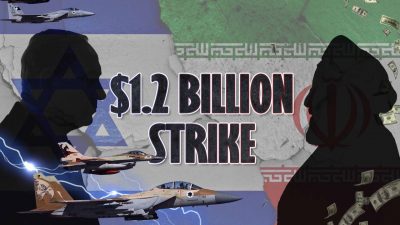
The Israeli military needs over $1 billion to fund its widely promoted strike on Iran, which Tel Aviv has threatened to carry out if the US should rejoin the nuclear deal. According to Israeli sources, the military would need these additional funds to deal with the challenges that it faces including ‘threats’ from the Iranian-led Axis of Resistance.
The interesting fact is that even the IDF Chief of Staff admits that Israel is the initiator of the escalation. However, the Israeli leadership continues to insist that the Iranian threat is growing.
“In general, none of [our enemies] want to initiate anything against us. All of their actions — almost without exception — are retaliatory to our actions, not actions that they’ve initiated. And when they decide to carry out [an attack], they experience difficulties and decide to abandon their ways of acting,” IDF Chief of Staff Aviv Kohavi said adding that military spending must be increased, despite the coronavirus crisis.
“The missiles don’t get sick, but they can be fired the moment the other side decides that’s what it wants to do,” Kohavi stated referring to the missile arsenal of Hamas, Hezbollah and Iran.
In any case, as of now there are no conditions to test Israeli readiness to really attack Tehran. Whether the Biden administration will rejoin the nuclear deal is still in question. Iran argues that it would reject any preconditions and the deal could only be considered to be restored after the lifting of all the imposed sanctions.
Meanwhile, the main side suffering are the Gulf allies of the Israeli-US bloc. The new Iranian-backed group, which claimed responsibility for the recent attack on the Saudi capital, issued a threat to the United Arab Emirates. On January 27, the Righteous Promise Brigades released a poster showing a drone attacking Burj Khalifa in the Emirate of Dubai. Rising to 829.8 meters in height, Burj Khalifa is the world’s tallest structure and building.
“The second blow will be on the dens of evil in Dubai, with the help of the Almighty, if the crimes of Bin Salman and Bin Zayed are repeated,” the statement reads. The RPB said its attack on Riyadh was a response to the January 21 bombings in the Iraqi capital. ISIS claimed responsibility for the terrorist attack. However, the Righteous Promise Brigades blamed Saudi Arabia and the UAE.
“The second blow will be on the dens of evil in Dubai, with the help of the Almighty, if the crimes of Bin Salman and Bin Zayed are repeated,” the statement reads. The RPB said its attack on Riyadh was a response to the January 21 bombings in the Iraqi capital. ISIS claimed responsibility for the terrorist attack. However, the Righteous Promise Brigades blamed Saudi Arabia and the UAE.
*
Note to readers: please click the share buttons above or below. Forward this article to your email lists. Crosspost on your blog site, internet forums. etc.
The “globalization of war” is a hegemonic project. Major military and covert intelligence operations are being undertaken simultaneously in the Middle East, Eastern Europe, sub-Saharan Africa, Central Asia and the Far East. The U.S. military agenda combines both major theater operations as well as covert actions geared towards destabilizing sovereign states.ISBN Number: 978-0-9737147-6-0Year: 2015Pages: 240 Pages
لم يعُد هناك أي مجال للشك والترديد أو الارتياب بأنّ ما كان يدّعيه الأميركيون بأنّ ديمقراطيتهم هي نهاية التاريخ كما ادّعى وزعم منظّرهم فوكوياما، باتت اليوم على شفير الهاوية وذاهبة لتأخذ أميركا الى الخراب الشامل..!
وما جرى في واشنطن قبل أيام من أحداث عنف دامية دليل وبرهان قاطع لا يقبل الدحض أو النقض..!
والذي أكد في ما أكد اشتراك شخص الرئيس الأميركي المنتهية ولايته في كلّ ما جرى من خراب…!
وفي هذا السياق فقد أكدت مصادر واسعة الاطلاع من مراكز صنع القرار الأميركي بأنّ الرئيس الأميركي دونالد ترامب قاد كلّ عمليات التظاهر والتمرّد الأخيرة في واشنطن من خلال غرفة عمليات مخصصة لهذا الغرض كانت تضمّه مع بعض من افراد عائلته وعدد من رهطه (الأمن الخاص لديه تقارير مصوّرة عن ذلك) والذي يثبت أنّ ترامب هو شخصياً كان متورّطاً بعملية قيادة الجموع المقتحمة لمجمع الكاپيتول هيل في إطار عملية انقلابية كانت تهدف الى ما يلي:
1
ـ منع الكونغرس من التصديق على انتخاب بايدن.
2
ـ حرق الكونغرس بعد العبث بكلّ محتوياته.
3
ـ أخذ رهائن من مجلسي النواب والشيوخ وتعطيل الكونغرس لفترة طويلة بهدف ضمان بقائه في البيت الأبيض. إن جهاز الشرطة التابع للكونغرس متورط بإدخال المقتحمين.
هذا وقد ثبت من خلال التحقيقات الاولية بأنّ كلاً من ابن سلمان وابن زايد متورّطين بضخ أموال لترامب وأنصاره لعمل هذه الفوضى في الكونغرس وفي الشارع الأميركي لجرّ الشعب الأميركي إلى مربع الصراع ومربع العنف.
ويبدو أنّ هذه المعلومات كانت متوفرة لدى قيادة الحزب الديمقراطي والسيدة نانسي بيلوسي بشكل خاص والتي تعتبر من الرموز المخابراتية من الوزن الثقيل.
وهذا الأمر بالذات هو الذي دفع رئيسة المجلس الى اتخاذ إجراءات سريعة كانت مأخوذة بعين الاعتبار سلفاً، حيث تمّ أخذ كافة الأعضاء في المجلسين الى قاعات آمنة ومن ثم قامت بالاتصال العاجل بالخدمة السريّة للبيت الأبيض وهي قوة تعتبر تابعة للقوة الخفيّة التي تحمي أميركا الدولة القوية وكذلك بالـ وسائر القوى المعنية فقامت بتطويق كل المربع الخاص بالكونغرس والبالغة مساحته نحو 13 هكتاراً واقتحامه وإخلاء القاعات من الرعاع والمتمردين من جماعة ترامب بمهنيّة عالية جداً وإعادة الأوضاع الى ما قبل الاقتحام في مدة لم تتجاوز 4 ساعات..!
تصاعد التوتر داخل مباني الكاپيتول وخوف الدولة العميقة من انفلات الوضع وانتقاله الى سائر الولايات، وهو ما كان يتمناه ترامب هو الذي دفع بالدولة العميقة بالعمل سريعاً لإنقاذ العاصمة واشنطن من خلال الدفع بقوات دعم أمنية وصلت إليها من فرجينيا ونيوجيرسي وميريلاند.. ولما اشتدّ الوطيس وصار الخطر اكبر دخلت قوات «الخدمة السرية» الخاصة على الخط فوراً وهي القوة التي تشكلت في العام 1865 بعد انتهاء الحرب الأهلية الأميركية والتابعة لوزارة الامن الداخلي، والمكلفة بحماية كبار الشخصيات والرؤساء، وذات المهمات الخاصة في الملمات لتطلب من ترامب التوقف فوراً عن مغامرته والقيام بتسجيل صوتي – وليس الظهور الحر على التلفزيون – لسحب جماعاته فوراً تحت طائلة التهديد بالعقاب الصارم، مجبرة إياه على القيام بالمهمة فور انتهاء خطاب الرئيس المنتخب جو بايدن من دون تأخير (والذي طلب منه ايضاً للخروج بخطابه الى الرأي العام للغرض نفسه)…!
وهكذا رضخ ترامب للأمر وقرّر التراجع مكرهاً، ففشل الانقلاب..!
هذا السيناريو الترامبي والسيناريو المضاد الذي قضى على التمرّد وأحبط الانقلاب في واشنطن العاصمة لن يمرّ بشكل عادي على الحياة السياسية الأميركية، بل انّ تداعياته خطيرة جداً وهي التي ربما ستجعل أميركا توضع على جادة إما الحرب الأهلية وإما التآكل من الداخل والانهيار رويداً رويداً…!
ما حصل ليلة الانقلاب الفاشل لم يكن ابن ليلته، بل هو تراكم فعل وفعل مضاد لفساد النظام السياسي الحاكم في الولايات المتحدة الأميركية …!
أميركا بانت على حقيقتها ديمقراطية فاشلة وهشة وكاذبة!
The man bankrupting America
-
“Go F*** Yourself, Scott: A Full Background Check on The Man Bankrupting
America, Human Skin Tag, Scott Bessent.“ (Blundell).In the same week,
different US...
Occult Utopia Of Jewish Golden Age
-
Occult Utopia Of Jewish Golden Age September 6 2026
___________________________________ More Vids! +BN Vids Archive! HERE!
________________________________...
And You Remain Impossible to Erase
-
There you are, the inspiring Imam, forever present in the conscience of the
honorable and the hearts of the loyal.
Father Dave Smith, Pray For (Mufti) Dr. Hassoun
-
Abducted by the terrorist regime in Syria in 2025, Sheikh Hassoun has been
sentenced to life in prison I spoke with Father Dave Smith, an Australian
Anglic...
Report on Beth Israel vigil 08-15-26
-
*Charlie Kirk and JFK*
John F. Kennedy was assassinated under questionable circumstances on
November 22, 1963, and Charlie Kirk fell on September 10 of la...
On The Road To International Anarchy
-
ON THE ROAD TO INTERNATIONAL ANARCHY— An Analysis (14 August 2026) by
Lawrence Davidson Part I — The Turn Toward […]
-
Hello all,
It is with great sadness that I share with you the passing of our beloved
sister, Mother, and Grandmother, the individual that you all knew ...
Best Horror Podcast
-
Best Horror Podcast Introduction: Horror podcasts […]
The post Best Horror Podcast appeared first on Copper Shock Horror Podcast.
Ikhras Endorses Muntadhar Al-Zaidi
-
“Oh parties of banditry and sectarianism and corruption, we have come and
our goal is to destroy you.” Ikhras formally endorses Muntadhar al-Zaidi,
Iraqi j...
Prince Charles: Foreign Jews behind bloodshed in ME
-
In May, 2017, British Crown Prince Charles declined an invitation from
Zionist entity’s president Reuven Rivlin‘s to attend the 100th anniversary
of the no...
Palestinian Women – One for All, All for One
-
Honouring All Palestinian Women by Honouring Three: Hanin Zoabi, Ahed
Tamimi, Samah Sabawi Vacy Vlazna “Palestinian women have always stood side
by side ...
US’s Saudi Oil Deal from Win-Win to Mega-Lose
-
By F. William Engdahl Who would’ve thought it would come to this? Certainly
not the Obama Administration, and their brilliant geo-political think-tank
neo-...
-
*Mordechai Vanunu wins human rights prize of Brazilian Press Association *
* http://www.alternativenews.org/english/index.php/features/updates/7038-mordechai...
Abdul Aziz Rantissi:
"My ultimate wish, my God, is to attain martyrdom,"...God granted him his wish on April 17, 2004, at the hands of Israeli assassins.