Showing posts with label Sharmine Narwani. Show all posts

Tuesday, 30 November 2021

Radwan Mortada: “Joseph Aoun has made a big mistake”

 November 29 2021

Why is the Lebanese military command gunning for a lone journalist in the midst of the country’s biggest crisis since the civil war?

By Sharmine Narwani

Radwan Mortada is one of Lebanon’s leading investigative journalists, with almost two decades of experience working with the country’s biggest media outlets.

I met Radwan a decade ago while we were both working at Lebanon’s daily Al Akhbar, he for the Arabic newspaper, me on the English-language website. A veteran security journalist covering military institutions, wars, terrorism, extremism and the layers of intrigue in between, he is one of those rare reporters who can gain access to any information, and call up just about anyone, at any time.

Lebanon has more press freedoms than any country in West Asia, partly because it is politically split in two, with no one party having more power than the others. That rare balance has allowed its media to openly question and criticize all parties and individual political figures, with few of the negative consequences that occur in other states and regions where journalists are roughed up, detained and even killed in ever-rising numbers.

It isn’t often journalists here end up in the slammer for unearthing dirt on the country’s political or business elite, usually because no one person has the power to see it through.

So, when Lebanon’s military court – a body that has absolutely no legal jurisdiction over media activities – sentenced Radwan to imprisonment on 26 November for “the offense of insulting the military establishment,” without providing due notice to the defendant, and in absentia, it created a storm.

The Lebanese Press Editors Syndicate (LPES) immediately expressed its “astonishment” at the decision, and announced that it had assigned its legal advisor to review the case against Mortada with the possibility of filing an appeal.

According to the statement by the LPES, this ruling is a “violation of Article 28 of Legislative Decree No. 77/ 104, as amended by Law No. 330 of 18/1994, which abolished pre-trial detention for publication crimes and the penalty of imprisonment for journalists from most of its rulings.”

Other LPES officials say they will not allow authorities to set a precedent for the imprisonment of journalists who conduct investigative work.

And just today, Reporters sans frontières (Reporters Without Borders or RSF) tweeted:

“RSF condemns the conviction in abstentia of Radwan Mortada by the military court to more than one year in prison for “defaming the army”: an illegal pressure to silence a critical journalist, now forced to move from his home to protect himself and avoid any sentence.

Lebanese media outlets across the political spectrum have covered this story in Radwan’s favor, and the country’s Minister of Information George Kordahi weighed in by saying the ‘Publications Court’ is the only Lebanese body authorized to rule on media affairs, based on the constitution and the laws regulating freedom of opinion and expression.

So why did Lebanon’s military court take action against a leading Lebanese media figure, well outside of its legal jurisdiction? Why now, in the midst of the country’s excruciating economic collapse and with terror and strife within its borders? Was there nothing more important for Lebanon’s military court to address – than this? And who instigated these proceedings?

The Cradle went directly to the source to answer some of these questions. This is what Radwan Mortada had to say:

The Cradle: Lebanon’s military court has sentenced you to one year and one month in prison. Before getting into the details, could you please tell me why a military court is involved in sentencing a journalist? Is this even legal?

Mortada: Military courts have no authority to try journalists for verbal offenses. They cannot prosecute me, and it would be illegal to do so. But the army commander, General Joseph Aoun, uses the military court as a weapon to fights those mentioning him to suppress freedom of opinion and expression. My words about the army command’s responsibility in the Beirut port explosion greatly angered Joseph Aoun, so he decided to make his own law.

First, he decided to ban me from entering the military court without legal justification. When I confronted him by saying that he did not inherit the court from his father to control it as he wishes and break the law, he sent a military force to raid my house and besieged the TV channel where I work to arrest me by force.

The Cradle: We have heard that you were not at the hearing or the sentencing. How is it possible that you were not even allowed to defend yourself? Why was this sentence delivered in absentia?

Mortada: My trial was a sham and a show. The president of the military court, Brigadier General Munir Shehadeh, violated due process because I was not notified of the trial date. This is against the law and exposes the implicit intent to prosecute me in this martial method. Also, the president of the court is an officer under the command of the army commander who filed the complaint against me. How could he be a judge between me and my opponent? The judge is a lower rank than the commander and has to respond to his orders by saying: ‘Yes, my commander.’

There is also a legal precedent issued by the military court itself. Hanin Ghaddar had previously been sentenced in absentia to six months in prison. But the president of the court at the time, Brigadier General Hussein Abdullah, ruled that the military court had no jurisdiction to try journalists after the United States withdrew his entry visa to America.

The Cradle: What are the military court’s charges against you?

Mortada: Offending the Lebanese Army, disparaging the military institution, and harming national security and the prestige of the state.

The Cradle: You believe the ultimate responsibility of the ammonium nitrate stores in Beirut’s Port lies with Lebanon’s military establishment. In essence, the Beirut blast happened under Joseph Aoun’s watch. Why hasn’t he been held accountable by the lead investigative judge, Tarek Bitar?

Mortada: Here is the root of the problem. I was the first to announce the responsibility and negligence of the army that led to the explosion of the Port of Beirut on 4 August 2020. I said that if the army had done its duty as it should have, the explosion would not have happened. This is a fact because the law holds the army exclusively responsible for dealing with ammonium nitrates.

But the judicial investigator, Tarek Bitar, is weak before the army and the current leadership represented by Joseph Aoun, so he did not dare to summon him. The responsibility of the army exists even if there are no traceable documents or if paperwork has been destroyed. If the army says it was not aware of the presence of a time bomb weighing 2,755 tons perched in the heart of Beirut for seven years, that is an even greater catastrophe since its most basic mission is to maintain security in the country.

The Cradle: I’ve known you and worked with you for a decade. We’ve even written articles together. I know your integrity and how you work, and I personally consider you among Lebanon’s most productive and professional journalists. So when you raise questions, I know you’re onto something. Do you trust this investigation of the Beirut Port explosion? Why or why not?

Mortada: In fact, I am personally acquainted with judicial investigator Tariq Bitar, but I am suspicious of the course of the investigation because I sense discrimination in the way this case is managed. The support Bitar has from America and some of the right-wing Lebanese parties only increases my apprehension and concern. You personally know that I have seen the documents that detail the investigation into the explosion in the port of Beirut. So I know there are officials whom the judicial investigator did not approach. The biggest evidence is his decision to exclude the current army leadership from the investigation, even though Joseph Aoun has been at the head of the army since 2017 and he bears the responsibility for this neglect.

I wish Judge Bitar had dealt with this case in another way, given the sensitivity of matters in our country. He should have summoned everyone, then decided who was responsible and charged him, but the direction of the investigation created a kind of suspicion. Therefore, I declared that I did not trust the existing investigation. But in order not to prejudge its results, I am patiently awaiting the issuance of the indictment decision by Judge Bitar to announce my final position on the investigation.

The Cradle: You wrote a very courageous piece for The Cradle that identified seven Lebanese judges that must be held accountable for unloading, storing, then ignoring the ammonium nitrate stores in Beirut’s Port. Why are these judges not being held accountable either?

Mortada: This judiciary branch bears this responsibility because it serves as a protective umbrella for the judges. Judge Bitar filed complaints against a number of judges. Although the complaints came late, the delay of the Cassation prosecution in ruling against them makes it bear a great responsibility.

The Cradle: You also covered the mass shootings and killings in Tayouneh on 14 October, and were the first to point out that the Army’s statements before and after Aoun’s meeting with the US Ambassador Dorothy Shea were different. Explain that to us.

Mortada: I wrote that the negligence of the Lebanese Army caused the Tayouneh massacre, which claimed the lives of seven innocent citizens, some of whom were shot by the army. It almost erupted into a civil war, given that this took place on a contact line between areas where a Shia majority and a Christian majority live. I spoke about the army’s responsibility and its neglect in separating the demonstrators, its wrong way of dealing with the demonstration, and the shooting that erupted after the demonstration.

I also published secret investigations conducted by the army, which showed that there was an ambush prepared the night before the demonstration, which was heading to the Palace of Justice to protest the performance of the judicial investigator Bitar in the explosion of the port of Beirut. The publication of these investigations angered the army, as they were leaked from the military court.

The Cradle: Who does Joseph Aoun think he is to do this, and why is he so focused on you, one of Lebanon’s leading journalists and a veteran security correspondent with the country’s top media outlets who has broken countless stories over the years?

Mortada: I was among the very few journalists to dare to call it by its name. I was the first to talk about the army’s main responsibility for the Beirut port explosion. Many others are afraid to face them or they are on their payroll. But I’m not one of them. Nobody can buy me and nobody can intimidate me. I carried my blood in my hands and went to the front lines and covered the lives of the most radical jihadist fighters. I was arrested in Syria. I was not afraid and I will not fear anyone. In my search for the truth, there are no red lines. I only want the truth. I know that this issue frightens many. Joseph Aoun is one of them.

The Cradle: Do you think Joseph Aoun has picked the wrong battle? Lebanon’s media associations have all, without exception, come in on your side.

Mortada: Definitely. Joseph Aoun has made a big mistake by deciding to go ahead with this fight. The battle with the press to suppress freedom of opinion and expression is a losing battle. The time of the police state is long gone. We are today in the twenty-first century. If he does not know it, he must change his advisors who are leading him to the abyss.

The Cradle: We all know that Joseph Aoun has aspirations to become president of the republic. He has increasingly associated himself and the LAF with the Americans, when Lebanon is clearly divided into two different political camps. Why would someone who is changing the highly-respected neutrality of the Lebanese army be fit for this position?

Mortada: I don’t think that General Joseph Aoun’s mentality qualifies him to be president of Lebanon. An officer leading an army cannot ask a military force to raid a media outlet to arrest a journalist, while he himself is thinking of becoming the president of Lebanon. Lebanon deserves better in light of the suffering of its people. Short-sightedness, narrow-mindedness, and personalization are not characteristics of a successful leader.

You know that the World Bank announced that Lebanon is going through one of the three worst economic crises in 150 years. You know the extent of the economic collapse, hunger, and unemployment that the Lebanese suffer from. I myself feel ashamed because my case came out in public at this time with all the tragedies we are experiencing. Imagine that the army chief and the president of the military court have nothing more important on their plate than going after a journalist they want to discipline, while forgetting about all the crises our country is going through.

The Cradle: What are you going to do now to fight these charges and stay out of prison?

Mortada: I will fight to the end. There is a team of lawyers that is objecting to the military court’s ruling. I will not accept any settlement and will follow up on every detail and highlight every violation. Dozens of foreign and Lebanese journalists and human rights defenders have contacted me and denounced the unjust ruling issued against me for simply expressing my opinion.

The Cradle: Radwan, I’ve learned a lot from you over the years and continue to do so. Thank you for your frankness and your courage in reporting the things we all want to know. What will you do when your name is cleared? Will you change your voice?

Mortada: Thank you, Sharmine. I assure you, this case will make me raise my voice higher and higher. I will open my eyes more to their violations and the approach they represent. I am a well-known journalist in Lebanon, and yet they attacked me. What do you think they will do to the rest of the citizens and the extent of the injustice they inflict on those who have no voice?

This ruling alerted me that I was inattentive in some areas related to the leadership of the army and the presidency of the military court. Today, I will work hard to count their every breath to shed light on any offense they commit.


River to Sea Uprooted Palestinian   
The views expressed in this article are the sole responsibility of the author and do not necessarily reflect those of the Blog!

Saturday, 6 July 2019

Voices from Syria’s Rukban Refugee Camp Belie Corporate Media Reporting


Global Research, July 05, 2019
MintPress News 4 July 2019
Eva Bartlett visited refugees in Syria escaping the horrid conditions in the Rukban Refugee Camp, a desolate outpost in the US administered deconfliction zone. What she found was very different than the ‘reality’ depicted by the Western press.
***
A little over a year ago — just after the Syrian army and its allies liberated the towns and villages around eastern Ghouta from the myriad armed jihadist groups that had waged a brutal campaign of torture and executions in the area — I interviewed a number of the civilians that had endured life under jihadist rule in Douma, Kafr Batna and the Horjilleh Center for Displaced People just south of Damascus.
A common theme emerged from the testimonies of those civilians: starvation as a result of jihadist control over aid and food supplies, and the public execution of civilians.
Their testimonies echoed those of civilians in other areas of Syria formerly occupied by armed anti-government groups, from Madaya and al-Waer to eastern Aleppo and elsewhere.
Despite those testimonies and the reality on the ground, Western politicians and media alike have placed the blame for the starvation and suffering of Syrian civilians squarely on the shoulders of Russia and Syria, ignoring the culpability of terrorist groups.
In reality, terrorist groups operating within areas of Syria that they occupy have had full control over food and aid, and ample documentation shows that they have hoarded food and medicines for themselves. Even under better circumstances, terrorist groups charged hungry civilians grotesquely inflated prices for basic foods, sometimes demanding up to 8,000 Syrian pounds (US $16) for a kilogram of salt, and 3,000 pounds (US $6) for a bag of bread.
Given the Western press’ obsessive coverage of the starvation and lack of medical care endured by Syrian civilians, its silence has been deafening in the case of Rukban — a desolate refugee camp in Syria’s southeast where conditions are appalling to such an extent that civilians have been dying as a result. Coverage has been scant of the successful evacuations of nearly 15,000 of the 40,000 to 60,000 now-former residents of Rukban (numbers vary according to source) to safe havens where they are provided food, shelter and medical care.
Silence about the civilian evacuations from Rukban is likely a result of the fact that those doing the rescuing are the governments of Syria and Russia — and the fact that they have been doing so in the face of increasing levels of opposition from the U.S. government.
A harsh, abusive environment
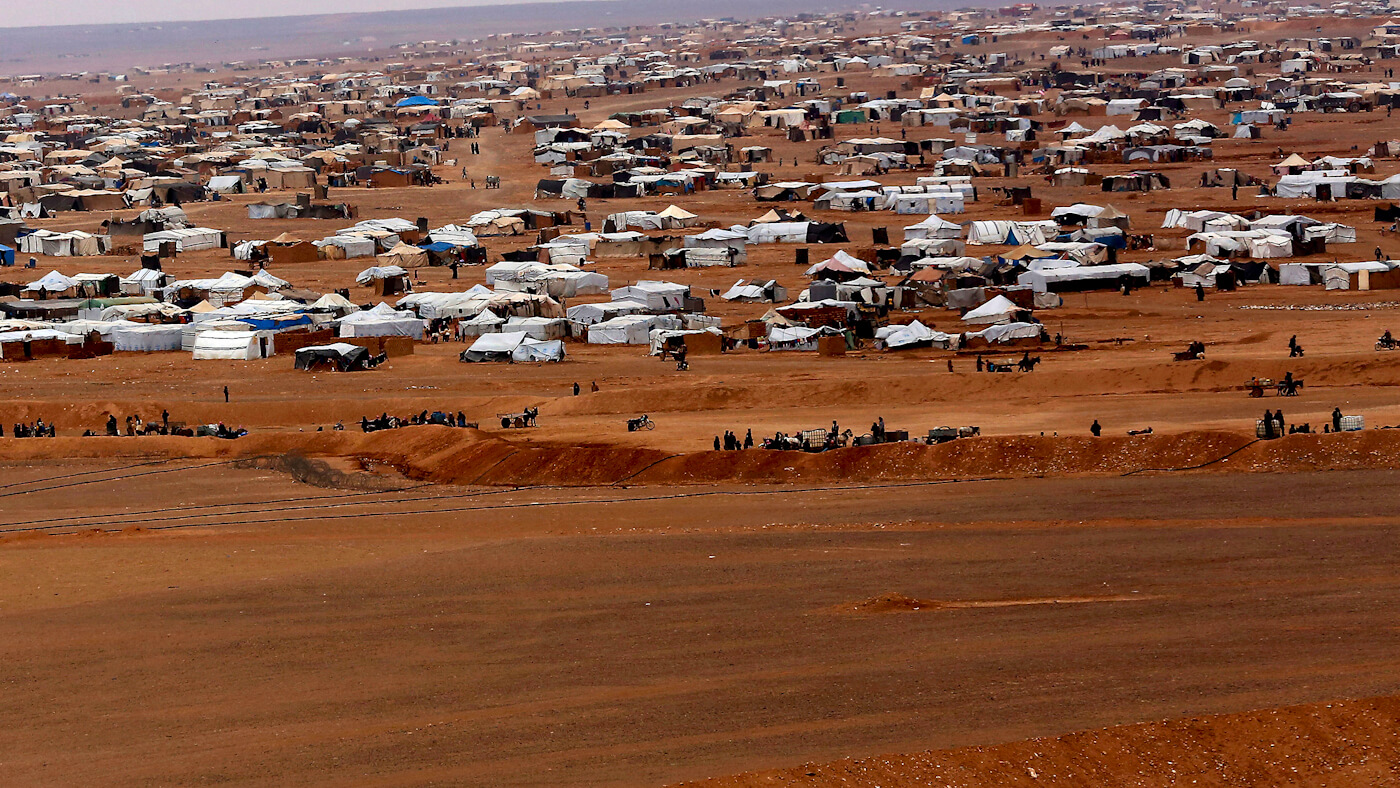
Rukban lies on Syria’s desolate desert border with Jordan, surrounded by a 55-km deconfliction zone, unilaterally established and enforced by the United States, and little else aside from the American base at al-Tanf, only 25 km away — a base whose presence is illegal under international law.
It is, by all reports, an unbearably harsh environment year-round and residents of the camp have endured abuse by terrorist groups and merchants within the camp, deprived of the very basics of life for many years now.
In February, the UNHCR reported that young girls and women in Rukban have been forced into marriage, some more than once. Their briefing noted:
Many women are terrified to leave their mud homes or tents and to be outside, as there are serious risks of sexual abuse and harassment. Our staff met mothers who keep their daughters indoors, as they are too afraid to let them go to improvised schools.”
The Jordanian government, home to 664,330 registered Syrian refugees, has adamantly refused any responsibility in providing humanitarian assistance to Rukban, arguing that it is a Syrian issue and that keeping its border with Syria closed is a matter of Jordan’s security — this after a number of terrorist attacks on the border near Rukban, some of which were attributed to ISIS and one that killed six Jordanian soldiers.
According to U.S. think-tank The Century Foundation, armed groups in Rukban have up to 4,000 men in their ranks and include:
Maghawir al-Thawra, the Free Tribes Army, the remnants of a formerly Pentagon-backed group called the Qaryatein Martyr Battalions and three factions formerly linked to the CIA’s covert war in Syria: the Army of the Eastern Lions, the Martyr Ahmed al-Abdo Forces, and the Shaam Liberation Army.”
Those armed groups, according to Russia, include several hundred ISIS and al-Qaeda recruits. Even the Atlantic Council — a NATO- and U.S. State Department-funded think-tank consistent in its anti-Syrian government stance — reported in November 2017 that the Jordanian government acknowledged an ISIS presence in Rukban.
The Century Foundation also notes the presence of ISIS in Rukban and concedes that the U.S. military “controls the area but won’t guarantee the safety of aid workers seeking access to the camp.”
Rukban
The Rukban camp, sandwiched between Jordan, Syria borders and Iraq, Feb. 14, 2017. Raad Adayleh | AP
Syria and Russia have sought out diplomatic means to resolve the issue of Rukban, arguing repeatedly at the United Nations Security Council for the need to dismantle the camp and return refugees to areas once plagued by terrorism but that have now been secured.
As I wrote recently:
The U.S. stymied aid to Rukban, and was then only willing to provide security for aid convoys to a point 10 kilometres (6.2 miles) away from the camp, according to the UN’s own Emergency Relief Coordinator, Mark Lowcock. So, by U.S. administration logic, convoys should have dropped their Rukban-specific aid in areas controlled by terrorist groups and just hoped for the best.”
The U.S., for its part, has both refused the evacuation of refugees from the camp and obstructed aid deliveries on at least two occasions. In February, Russia and Syria opened two humanitarian corridors to Rukban and began delivering much-needed aid to its residents.
Syria’s Permanent Representative to the United Nations, Ambassador Bashar al-Ja’afari, noted in May 2019 that Syria agreed to facilitate the first aid convoy to Rukban earlier this year, but the convoy was ultimately delayed by the United States for 40 days. A second convoy was then delayed for four months. Al-Ja’afari also noted that the U.S., as an occupying power in Syria, is obliged under the Geneva Conventions to provide food, medicine and humanitarian assistance to those under its occupation.
Then, in early March, the Russian Center for Reconciliation reported that U.S. authorities had refused entry to a convoy of buses intending to enter the deconfliction zone to evacuate refugees from Rukban.
According to a March 2019 article from Public Radio International:
[W]hen Syrian and Iranian forces have entered the 34-mile perimeter around the base, American warplanes have responded with strikes — effectively putting Rukban and its residents under American protection from Assad’s forces.”
Despite the abundance of obstacles they faced, Syria and Russia were ultimately able to evacuate over 14,000 of the camp’s residents to safety. In a joint statement on June 19, representatives of the two countries noted that some of the camp’s residents were forced to pay “militants” between $400 to $1000 in order to leave Rukban.
Media reports on Rukban … from abroad
While Rukban — unlike Madaya or Aleppo in 2016 — generally isn’t making headlines, there are some pro-regime-change media reporting on it, although even those reports tend to omit the fact that civilians have been evacuated to safety and provided with food and medical care.
Instead, articles relieve America and armed Jihadist groups of their role in the suffering of displaced Syrians in Rukban, reserving blame for Syria and Russia and claiming internal refugees are being forced to leave against their will only to be imprisoned by the Syrian government.
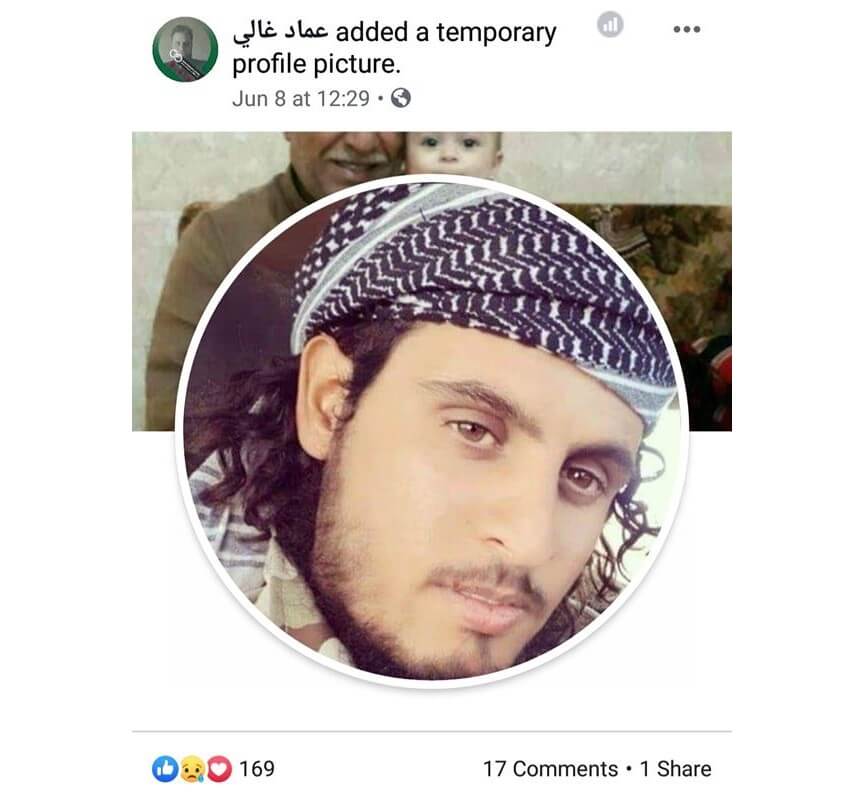
Emad Ghali, a “media activist,” has been at the center of many of these claims. Ghali has been cited as a credible source in most of the mainstream Western press’ reporting on Rukban, from the New York Times, to Al Jazeera, to the Middle East Eye. Cited since at least 2018 in media reporting on Rukban, Ghali has an allegiance to the Free Syrian Army, a fact easily gleaned by simply browsing his Facebook profile. He recently posted multiple times on Facebook mourning the passing of jihadist commander and footballer Abdul Baset al-Sarout. As it turns out, Sarout not only held extremist and sectarian views, but pledged allegiance to ISIS, among other less-than-noble acts ignored by most media reports that cite him.
Ghali ISIS
Ghali paid homage to ISIS commander Abdul Baset al-Sarout on his Facebook page
Citing Ghali as merely a “media activist” is not an unusual practice for many covering the Syrian conflict. In fact, Ghali holds the same level of extremist-minded views as the “sources” cited by the New York Times in articles that I reported on around the time Ghouta was being liberated from jihadist groups in 2018.
Four sources used in those articles had affiliations to, and/or reverence for the al-Qaeda-linked Jaysh al-Islam — including the former leader Zahran Alloush who has been known to confine civilians in cages, including women and children, for use as human shields in Ghouta — Faylaq al-Rahman, and even to al-Qaeda, not to mention the so-called Emir of al-Qaeda in Syria, the applauded Abu Muhammad Al-Julani.
Claims in a Reuters article of forced internment, being held at gunpoint in refugee centers, come from sources not named in Rukban — instead generically referred to as “residents of Rukban say”…
An article in the UAE-based The National also pushed fear-mongering over the “fate that awaits” evacuees, saying:
[T]here is talk of Syrian government guards separating women and children from men in holding centres in Homs city.There are also accusations of a shooting last month, with two men who had attempted an escape from one of the holding centres allegedly killed. The stories are unconfirmed, but they are enough to make Rukban’s men wary of taking the government’s route out.”
Yet reports from those who have actually visited the centers paint a different picture.
An April 2019 report by Russia-based Vesti News shows calm scenes of Rukban evacuees receiving medical exams by the Syrian Arab Red Crescent, who according to Vesti, have doctors there every day; and of food and clean, if not simple, rooms in a former school housing displaced refugees from Rukban. Notably, the Vesti journalist states: “There aren’t any checkpoints or barriers at the centre. The entrance and exit are free.”
The Russian Reconciliation Center reported on May 23 of the refugee centers:
In early May, these shelters were visited by officials from the respective UN agencies, in particular, the UNHCR, who could personally see that the Syrian government provided the required level of accommodation for the refugees in Homs. It is remarkable that most of the former Rukban residents have already relocated from temporary shelters in Homs to permanent residencies in government-controlled areas.”
Likewise, in the Horjilleh Center which I visited in 2018 families were living in modest but sanitary shelters, cooked food was provided, a school was running, and authorities were working to replace identity papers lost during the years under the rule of jihadist groups.
Calling on the U.S. to close the camp
David Swanson, Public Information Officer Regional Office for the Syria Crisis UN Office for the Coordination of Humanitarian Affairs based in Amman, Jordan, told me regarding claims of substandard conditions and of Syrians being forcefully held or mistreated in the centers that,
People leaving Rukban are taken to temporary collective shelters in Homs for a 24-hour stay. While there, they receive basic assistance, including shelter, blankets, mattresses, solar lamps, sleeping mats, plastic sheets, food parcels and nutrition supplies before proceeding to their areas of choice, mostly towards southern and eastern Homs, with small numbers going to rural Damascus or Deir-ez-Zor.
The United Nations has been granted access to the shelters on three occasions and has found the situation there adequate. The United Nations continues to advocate and call for safe, sustained and unimpeded humanitarian assistance and access to Rukban as well as to all those in need throughout Syria. The United Nations also seeks the support of all concerned parties in ensuring the humanitarian and voluntary character of departures from Rukban.”
Hedinn Halldorsson, the Spokesperson and Public Information Officer for the United Nations Office for the Coordination of Humanitarian Affairs (OCHA) based in Damascus, told me:
We looked into this when the rumours started, end of April, and concluded they were unfounded – and communicated that externally via press briefings in both Geneva and NY. The conditions in the shelters in Homs are also adequate and in compliance with standards; the UN has access and has done three monitoring visits so far.”
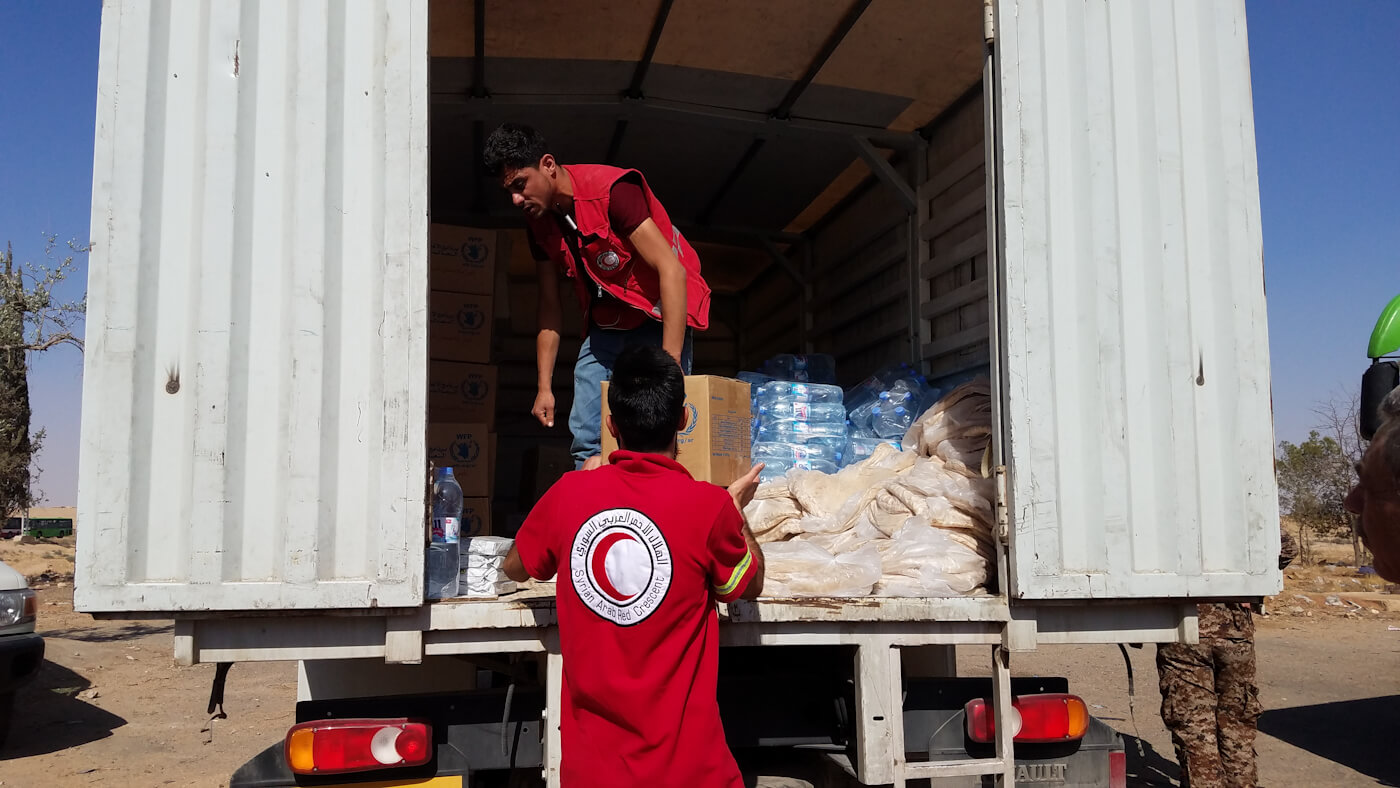
Syria Rukban
Syrian Arab Red Crescent members unload food and water for Rukban’s evacuees. Photo | Eva Bartlett
Halldorsson noted official UN statements, including:
“Alleged mistreatment of Rukban returnees
  • The United Nations is aware of media reports about people leaving Rukban having been killed or subject to mistreatment upon arrival in shelters in Homs.
  • The United Nations has not been able to confirm any of the allegations.
Regarding the issue of shelters, Halldorsson noted that as of July 1st:
  • Nearly 15,600 people have left Rukban since March – or nearly 40 per cent of the estimated total population of 41,700.
  • The United Nations has been granted access to the shelters in Homs on three occasions and found conditions in these shelters to be adequate.”
Confirming both UN officials’ statements about the Syrian government’s role in Rukban, the Syrian Mission to the United Nations in New York City told me:
The Syrian Government has spared no effort in recent years to provide every form of humanitarian assistance and support to all Syrians affected by the crisis, regardless of their locations throughout Syria. The Syrian Government has therefore collaborated and cooperated with the United Nations and other international organizations working in Syria to that end, in accordance with General Assembly resolution 46/182.
There must be an end to the suffering of tens of thousands of civilians who live in Al-Rukban, an area which is controlled by illegitimate foreign forces and armed terrorist groups affiliated with them. The continued suffering of those Syrian civilians demonstrates the indifference of the United States Administration to their suffering and disastrous situation.
We stress once again that there is a need to put an end to the suffering of these civilians and to close this camp definitively. The detained people in the camp must be allowed to leave it and return to their homes, which have been liberated by the Syrian Arab Army from terrorism. We note that the Syrian Government has taken all necessary measures to evacuate the detainees from the Rukban camp and end their suffering. What is needed today is for the American occupation forces to allow the camp to be dismantled and to ensure safe transportation in the occupied Al-Tanf area.”
Given that the United States has clearly demonstrated not only a lack of will to aid and or resettle Rukban’s residents but a callousness that flies in the face of their purported concern for Syrians in Rukban, the words of Syrian and Russian authorities on how to solve the crisis in Rukban could not ring truer.
Very little actual coverage
The sparse coverage Rukban has received has mostly revolved around accusations that the camp’s civilians fear returning to government-secured areas of Syria for fear of being imprisoned or tortured. This, in spite of the fact that areas brought back under government control over the years have seen hundreds of thousands of Syrian civilians return to live in peace and of a confirmation by the United Nations that they had “positively assessed the conditions created by the Syrian authorities for returning refugees.”
The accusations also come in spite of the fact that, for years now, millions of internally displaced Syrians have taken shelter in government areas, often housed and given medical care by Syrian authorities.
Over the years I’ve found myself waiting for well over a month for my journalist visa at the Syrian embassy in Beirut to clear. During these times I traveled around Lebanon where I’ve encountered Syrians who left their country either for work, the main reason, or because their neighborhoods were occupied by terrorist groups. All expressed a longing for Syria and a desire to return home.
In March, journalist Sharmine Narwani tweeted in part that,
the head of UNDP in Lebanon told me during an interview: ‘I have not met a single Syrian refugee who does not want to go home.’”
Of the authors who penned articles claiming that Syrians in Rukban are afraid to return to government-secured areas of Syria, few that I’m aware of actually traveled to Syria to speak with evacuees, instead reporting from Istanbul or even further abroad.
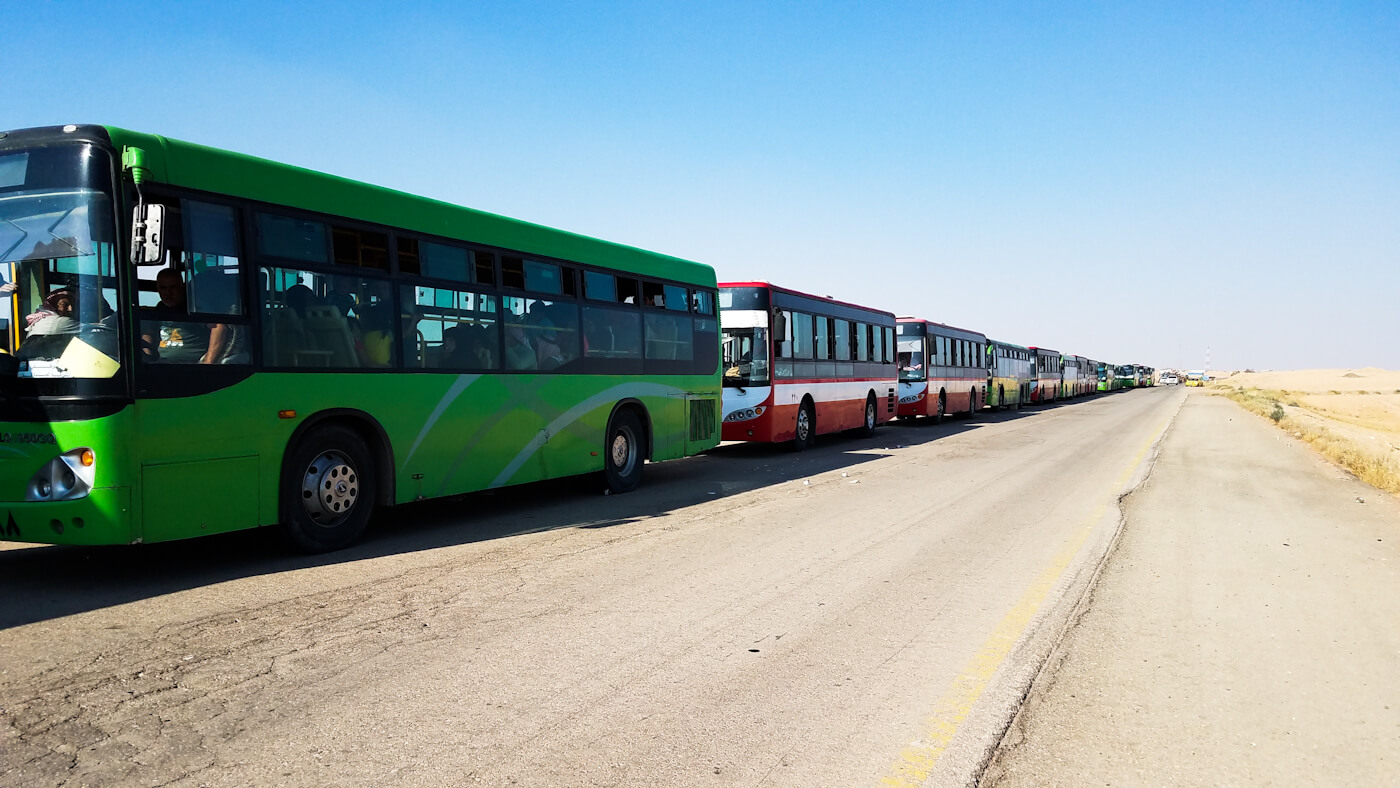
On June 12, I did just that, hiring a taxi to take me to a dusty stretch of road roughly 60 km east of ad-Dumayr, Syria, where I was able to intercept a convoy of buses ferrying exhausted refugees out of Rukban.
Merchants, armed groups and Americans
Five hundred meters from a fork in the highway connecting a road heading northeast to Tadmur (Palmyra) to another heading southeast towards Iraq — I waited at a nondescript stopping point called al-Waha, where buses stopped for water and food to be distributed to starving refugees. In Arabic, al-Waha means the oasis and, although only a makeshift Red Crescent distribution center, and compared to Rukban it might as well have been an oasis.
A convoy of 18 buses carrying nearly 900 tormented Syrians followed by a line of trucks carrying their belongings were transferred to refugee reception centers in Homs. Members of the Syrian Arab Red Crescent distributed boxes containing beans, chickpeas and canned meat — the latter a scarcity among the displaced.
Rukban evacuation
Buses transported nearly 900 refugees from Rukban Camp to temporary shelters in Homs on June 12. Photo | Eva Bartlett
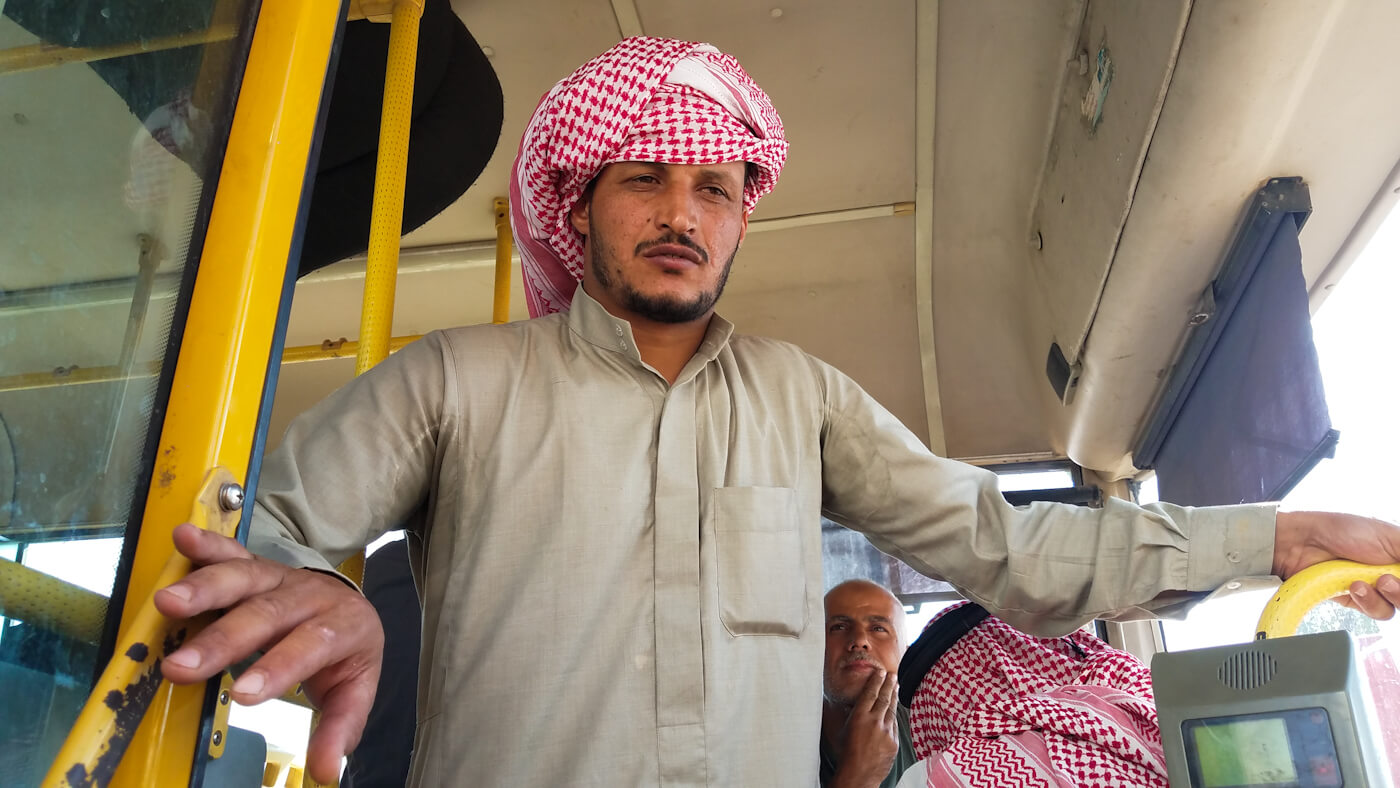
As food and water were handed out, I moved from bus to bus speaking with people who endured years-long shortages of food, medicine, clean water, work and education … the basic essentials of life. Most people I spoke to said they were starving because they couldn’t afford the hefty prices of food in the camp, which they blamed on Rukban’s merchants. Some blamed the terrorist groups operating in the camp and still others blamed the Americans. A few women I spoke to blamed the Syrian government, saying no aid had entered Rukban at all, a claim that would later be refuted by reports from both the UN and Red Crescent.
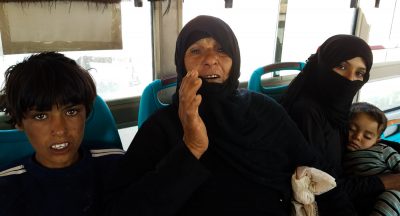
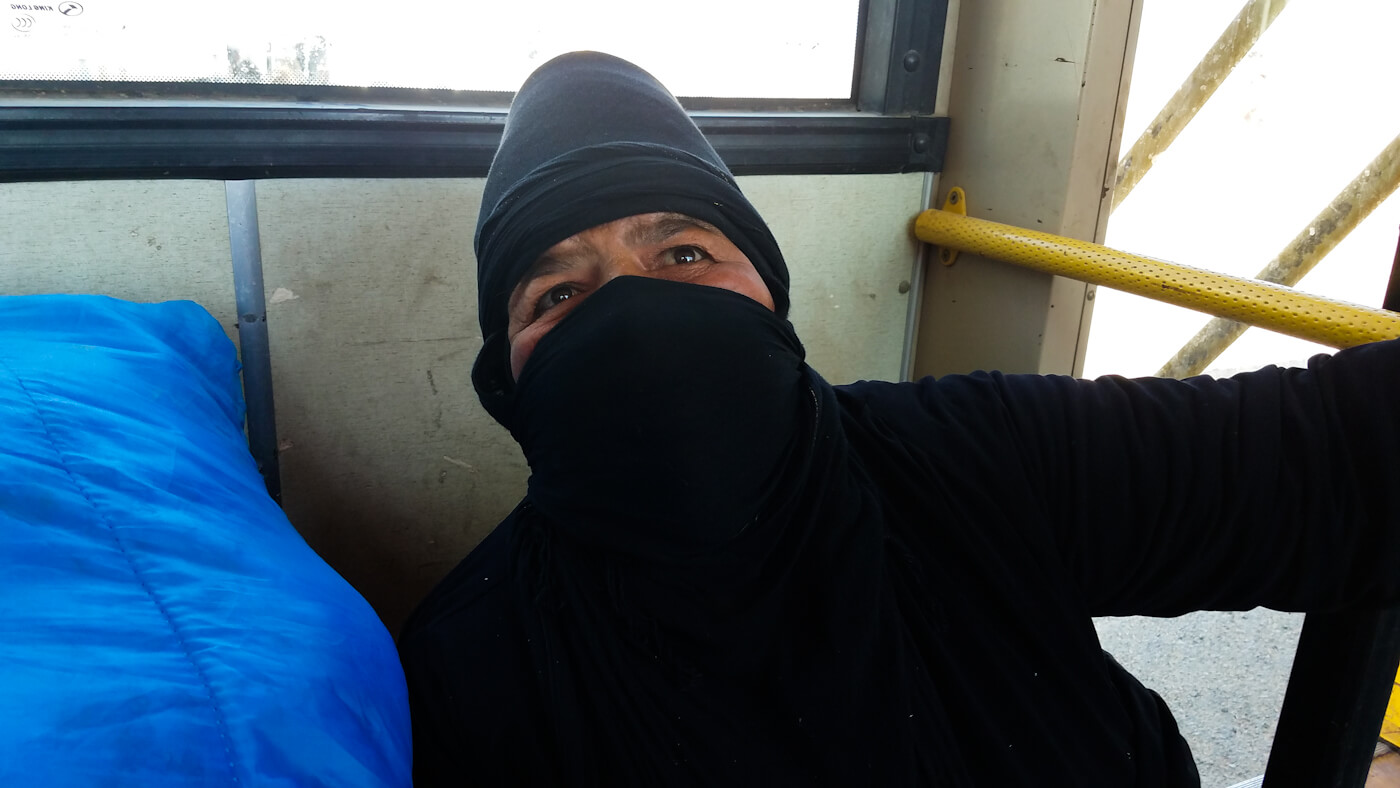
Image on the right: An elderly woman recounted enduring hunger in Rukban. Photo | Eva Bartlett
Syria Rukban
An old woman slumped on the floor of one bus recounted:
We were dying of hunger, life was hell there. Traders [merchants] sold everything at high prices, very expensive; we couldn’t afford to buy things. We tried to leave before today but we didn’t have money to pay for a car out. There were no doctors; it was horrible there.”
Aboard another bus, an older woman sat on the floor, two young women and several babies around her. She had spent four years in the camp:
“Everything was expensive, we were hungry all the time. We ate bread, za’atar, yogurt… We didn’t know meat, fruit…”
Merchants charged 1,000 Syrian pounds (US $2) for five potatoes, she said, exemplifying the absurdly high prices.
I asked whether she’d been prevented from leaving before. “Yes,” she responded.
She didn’t get a chance to elaborate as a younger woman further back on the bus shouted at her that no one had been preventing anyone from leaving. When I asked the younger woman how the armed groups had treated her, she replied, “All respect to them.”
But others that I spoke to were explicit in their blame for both the terrorist groups operating in the camp and the U.S. occupation forces in al-Tanf.
An older man from Palmyra who spent four years in the camp spoke of “armed gangs” paid in U.S. dollars being the only ones able to eat properly:
The armed gangs were living while the rest of the people were dead. No one here had fruit for several years. Those who wanted fruit have to pay in U.S. dollars. The armed groups were the only ones who could do so. They were spreading propaganda: ‘don’t go, the aid is coming.’ We do not want aid. We want to go back to our towns.”
Mahmoud Saleh, a young man from Homs, told me he’d fled home five years ago. According to Saleh, the Americans were in control of Rukban. He also put blame on the armed groups operating in the camp, especially for controlling who was permitted to leave. He said,
“There are two other convoys trying to leave but the armed groups are preventing them.”
Image below: Mahmoud Saleh from Homs said the Americans control Rukban and blamed armed groups in the camp for controlling who could leave. Photo | Eva Bartlett
Syria Rukban
A shepherd who had spent three years in Rukban blamed “terrorists” for not being able to leave. He also blamed the United States:
“Those controlling Tanf wouldn’t let us leave, the Americans wouldn’t let us leave.”
Many others I spoke to said they had wanted to leave before but were fear-mongered by terrorists into staying, told they would be “slaughtered by the regime,” a claim parroted by many in the Western press when Aleppo and other areas of Syria were being liberated from armed groups.
The testimonies I heard when speaking to Rukban evacuees radically differed from the claims made in most of the Western press’ reporting about Syria’s treatment of refugees. These testimonies are not only corroborated by Syrian and Russian authorities, but also by the United Nations itself.
*
Note to readers: please click the share buttons above or below. Forward this article to your email lists. Crosspost on your blog site, internet forums. etc.
Eva Bartlett is a Canadian independent journalist and activist. She has spent years on the ground covering conflict zones in the Middle East, especially in Syria and occupied Palestine, where she lived for nearly four years. She is a recipient of the 2017 International Journalism Award for International Reporting, granted by the Mexican Journalists’ Press Club (founded in 1951), was the first recipient of the Serena Shim Award for Uncompromised Integrity in Journalism, and was short-listed in 2017 for the Martha Gellhorn Prize for Journalism. See her extended bio on her blog In Gaza. She tweets at @EvaKBartlett
Featured image:  An elderly women evacuated from Rukban complained of hunger due to extremely high food prices. Photo | Eva Bartlett
River to Sea Uprooted Palestinian   
The views expressed in this article are the sole responsibility of the author and do not necessarily reflect those of the Blog!

Saturday, 4 November 2017

Hezbollah Is Not a Threat to America


Global Research, November 03, 2017

Featured image: Hezbollah’s supporters at Liberation Day, Bint Jbeil, Lebanon, 25 May 2014. (Source: Shutterstock/Gabirelle Pedrini)
Western-backed militants are in retreat, Bashar al-Assad remains president, Hezbollah has stretched its wings regionally, Israeli power is in decline, and Iran is on the rise. Not a pretty result for Washington’s multi-billion dollar investment in the Syrian conflict, especially if it was intended to change the map of the region to favor U.S. interests.
The Trump administration is therefore moving to hit its regional adversaries on alternative, non-military fronts—mainly, employing the sanctions tool that can cripple economies, besiege communities, and stir up public discontent.
The first step was to decertify the nuclear agreement struck between Iran and the five permanent members of the UN Security Council plus Germany (P5+1), which would open up a pathway to further U.S. sanctions against Iran.
The second step is to resuscitate the Hezbollah “threat” and isolate the organization using legal maneuvers and financial sanctions—what one pro-U.S. Lebanese Central Bank official calls “the new tools of imperialism.”
The U.S. listed Hezbollah as a “terrorist organization” 20 years ago this month. Most other states, as well as the United Nations Security Council, have not.
Two weeks ago, at a State Department briefing on the Hezbollah “threat,” National Counterterrorism Center Director Nicholas J. Rasmussen tried to paint a picture of an organization that was directing “terrorism acts worldwide” and posing a threat “to U.S. interests” including “here in the homeland.”
“Prior to September 11,” Rasmussen claimed, “I think everybody knows Hezbollah was responsible for the terrorism-related deaths of more U.S. citizens than any other foreign terrorist organization.”
This was news indeed.
A check with a State Department spokesperson confirmed that the “deaths of more U.S. citizens than any other foreign terrorist organization” claim was in reference to the following incidents:
“Hezbollah is responsible for multiple large scale terrorist attacks, including the 1983 suicide truck bombings of the U.S. Embassy and U.S. Marine barracks in Beirut; the 1984 attack on the U.S. Embassy annex in Beirut; and the 1985 hijacking of TWA flight 847, during which U.S. Navy diver Robert Stethem was murdered,” explained the spokesperson in an email.
The 1983 attack on the Beirut barracks took the lives of 241 Americans. The 1983 U.S. embassy bombing killed 17 Americans, and the 1984 attack on the relocated embassy facilities killed two Americans.
Hezbollah has officially and consistently denied involvement in these suicide bombings and was not even established as an organization until 1985. Some write off this important discrepancy by arguing that the bombings would have been conducted by one of Hezbollah’s “precursor organizations,” albeit without providing evidence to prove the point. The U.S. secretary of defense at the time of the bombings, Caspar Weinberger, told PBS almost two decades later, in 2001:
“We still do not have the actual knowledge of who did the bombing of the Marine barracks at the Beirut Airport… and we certainly didn’t then.”
What was the U.S. reaction to the Beirut bombings in 1982? Did it retaliate against this phantom Hezbollah or its “precursor” organizations? No. In what was the heaviest shore bombardment by a U.S. naval vessel since the Korean war, the Americans retreating from Lebanon launched 300 missiles inland, killing hundreds of Druze and Shia non-combatants. In their book Best Laid Plans: The Inside Story of America’s War Against TerrorismDavid C. Martin and John Walcott write about the incident:
In a nine-hour period, the U.S.S. New Jersey fired 288 16-inch rounds, each one weighing as much as a Volkswagen Beetle. In those nine-hours, the ship consumed 40 percent of the 16-inch ammunition available in the entire European theater…in one burst of wretched excess.
It wasn’t until 2003 that Hezbollah was officially fingered in the embassy bombing. In a 30-page decision that resulted from a lawsuit filed by the victims’ families, U.S. District Judge Royce C. Lamberth said Hezbollah carried out the attack at the behest of Iran and its Ministry of Information and Security. This was based in part with an alleged Hezbollah bomber who said he was directed “to go forward with attacks” in Lebanon at that time. Critics have called this a “show trial,” comparing it to the 2016 U.S. trial that blamed Iran for the September 11 terrorist attacks, despite the fact that 15 Saudis (and no Iranians) were among the hijackers and the U.S. intelligence community has identified links between Saudi officials and some of the perpetrators.
Meanwhile, the Beirut barracks bombing targeted servicemen from the U.S. and France. This was in the context of Israel’s invasion and occupation of Lebanon in 1982. The Israeli military at the time had been heavily armed and outfitted by the United States. The victims were not non-combatants—they were military forces belonging to governments that were perceived by Lebanese as aiding the aggression against sovereign Lebanon.
Whatever the case and whomever the perpetrator, you don’t get to call such an action “terrorism.” It’s an irrational American narrative that time and time again confounds the Middle East: If the U.S. kills you, you are collateral damage. But if you shoot back, you are a terrorist.
Not Hezbollah
“It’s not really Hezbollah’s modus operandi,” mused former UK Ambassador Frances Guy about the massive car bomb that killed former Lebanese Prime Minister Rafiq Hariri along Beirut’s seafront. We were discussing likely perpetrators during my visit to Beirut in 2010, and Guy told me that the Lebanese resistance group doesn’t really “do” high-octane car bombings in public spaces.
Nonetheless, four Hezbollah operatives stand accused of assassinating Hariri by the Special Tribunal for Lebanon (STL), a highly politicized UN investigative body that shifted its focus from one western political adversary to another, until finally settling on Hezbollah.
A revealing Wikileaks cable from 2008 shows the STL’s chief investigator begging the U.S. ambassador to Lebanon to provide the names of “leads” to pursue in Syria. “You are the key player,” he implores Ambassador Michele Sison, adding that the U.S. has “a big investment in the Tribunal.”
In a rare candid moment during an off-the-record meeting in 2011, another senior British official dropped this bombshell:
“The [UN] Tribunal is useful for us to keep the Iranians in line. We don’t have too many tools left to do that.”
Shortly after my meeting with Ambassador Guy in 2010, she was raked over the coals for a blog she posted on the passing of Grand Ayatollah Mohammed Hussein Fadlallah—a Lebanese Shia cleric the U.S. has consistently, and many believe incorrectly, called “Hezbollah’s spiritual leader.” She wrote:
Frances Guy
When you visited him you could be sure of a real debate, a respectful argument and you knew you would leave his presence feeling a better person…The world needs more men like him willing to reach out across faiths, acknowledging the reality of the modern world and daring to confront old constraints. May he rest in peace.
Israelis were incensed by Guy’s admiration for the Hezbollah-supporting cleric, and her blog post was scrubbed. But the UK nevertheless sent an official to pay condolences at Fadlallah’s Hassanein mosque, followed by a procession of ambassadors from France, Belgium, Poland, and Denmark. The French and Spanish ambassadors and the UN secretary general sent condolences to Hezbollah too.
Foreign Policy magazine published a piece upon Fadlallah’s death, subtitled: “How the United States got Lebanon’s leading Shiite cleric dead wrong—and missed a chance to change the Middle East forever.” That cryptic sentence refers, of course, to the monumentally misguided off-the-books assassination attempt against Ayatollah Fadlallah organized by CIA Director William Casey in the aftermath of the barracks and embassy bombings—despite the fact that the U.S., per Weinberger’s claims, had no clue who did not.
According to an interview Casey gave to the Washington Post’s Bob Woodward, the CIA chief arranged for Saudi funding for the covert operation using Lebanese militias to do the dirty work. Fadlallah escaped death, but 80 others died in the southern Beirut suburb that day, including the brother of a young Imad Mughniyeh, who went on to become a leader of Hezbollah’s security operations.
He had been only nine years old in July 1972, when the Israelis set off Beirut’s first car bomb near the southern suburb where he lived, killing Palestinian poet Ghassan Kanafani and others.
Mughniyeh, you may recall, was himself killed in a car bomb in Damascus in February 2008. In the immediate aftermath of that assassination, U.S. Director of National Intelligence Mike McConnell seemed to misdirect reporters:
“There’s some evidence that it may have been internal Hezbollah. It may have been Syria. We don’t know yet, and we’re trying to sort that out.”
No, it wasn’t Hezbollah and it wasn’t Syria. Seven years later, a series of orchestrated leaks to Newsweek and the Washington Post revealed that the Mughniyeh car bombing came courtesy of a joint operation by the CIA and Mossad.
No Threat to Americans
“Hezbollah is not plotting against us,” former U.S. Secretary of State John Kerry told a small group of anti-government Syrians on the sidelines of the UN’s General Assembly plenary session a year ago.
Kerry’s comments were caught on an audio tape acquired by the New York Times. Asked why the U.S. fights extremist Sunni groups and not Shia ones, he replied:
The reason for [airstrikes against the Sunni Extremists] is because they have basically declared war on us, and are plotting against us, and Hezbollah is not plotting against us— Hezbollah is exclusively focused on Israel, who they’re not attacking now, and on Syria, where they are attacking in support of Assad.
Now, a mere year later, Rasmussen wants us to believe:
“We in the Intelligence Community do, in fact, see continued activity on behalf of Hezbollah here inside the homeland.”
So which is it? Is Hezbollah targeting Americans or not? The evidence of this is extremely slim and is peppered with more use of qualifying terms—-“allegedly,” “reportedly,” “assessments,” “linkages”—than any objective journalist can comfortably swallow. So too are U.S. reports of Hezbollah’s “international terrorist activities.”
American investigative reporter Gareth Porter has done deep dives on various allegations of Hezbollah-linked “terrorism” in ArgentinaBulgariaWashington, DCIndiaSaudi Arabia and other places. The State Department lists many of these incidents as evidence of the “global threat” Hezbollah poses, but always, upon further scrutiny, the accusations ring hollow.
If there was compelling evidence of the Lebanese resistance group’s involvement in all these attacks, then why have so few nations clamored onto the Hezbollah-is-a-terrorist-organization bandwagon? Until the conflict in Syria kicked off, it was restricted to a smattering of western states and Israel. But relentless U.S. pressure, and the seismic battle currently underway in the Middle East between pro-U.S. states and pro-Iran states vying for hegemony, have produced a smattering few recent additions.
In early 2016, the six-member Gulf Cooperation Council (GCC) designated Hezbollah a terrorist group, followed a few days later by the 21-member Arab League, with Lebanon and Iraq voting against the measure.
Both organizations are heavily dominated by the immensely wealthy and sectarian (read: anti-Shia) Saudis, financial patrons to many Sunni leaders in the region, and a country entrenched in existential proxy battles in Syria, Yemen, Iraq, and Bahrain (against Hezbollah ally and U.S. foe, Iran).
What stands out, instead, is the European Union’s fuzzy position on Hezbollah. Despite U.S. insistence that the group in its entirely is a terrorist organization, the EU lists only Hezbollah’s “military wing” as such—and that designation was made only in 2013, when the Syrian conflict exploded and nations started taking hard sides in the Middle East. The “military wing” caveat is a critical distinction that reveals there are more layers to this onion than we see in State Department sound bites.
For Lebanon, Hezbollah is more than just the first Arab force to militarily expel the Israeli Defense Forces (IDF) from its territory permanently. In Lebanon, Hezbollah is a political party too, with members of parliament and seats in the cabinet. The group runs a remarkable array of social services across the country, from subsidized schools, hospitals and clinics, to agricultural centers and environmental programs.
Obama’s Deputy National Security Advisor for Homeland Security and Counterterrorism John Brennan introduced a more nuanced image of the group to a Washington think tank audience in 2009:
Hezbollah started out as purely a terrorist organization in the early ’80s and has evolved significantly over time. And now it has members of parliament, in the cabinet; there are lawyers, doctors, others who are part of the Hezbollah organization … And so, quite frankly, I’m pleased to see that a lot of Hezbollah individuals are in fact renouncing that type of terrorism and violence and are trying to participate in the political process in a very legitimate fashion.
Furthermore, Hezbollah’s appeal is not limited to Lebanon’s Shia community. Since 2006, Hezbollah has been in a political alliance with the country’s largest Christian-based political party, the Free Patriotic Movement (FPM), whose leader, General Michel Aoun, is currently president of Lebanon.
Aoun’s close association with Hezbollah is an irritant to Washington, and so the Trump administration is pushing to tighten the sanctions noose on Lebanon, too. In September, the U.S. House of Representatives voted to strengthen the 2015 Hezbollah International Financing Prevention Act. Congressmen claim the new measures won’t harm regular Lebanese civilians, but there is a dangerous trend underway to punish anyone who supports Hezbollah’s civic, social, and religious initiatives.
This concern by the Lebanese is fully justified if you listen to State Department Coordinator for Counterterrorism Nathan A. Sales, who insists:
Money given to a terrorist organization, even for purportedly non-terroristic purposes, ends up assisting the group’s terroristic activities. If you give money to the so-called peaceful side of an organization, money is fungible. And so that frees up resources that can then be used for malign activities that have nothing to do with charitable work or other purposes that we might regard as legitimate. And so it’s important for us to maintain that distinction as false. The distinction between political and terroristic is false.
The Lebanese resistance was formed in reaction to Israel’s illegal invasion and occupation of Lebanon. As Kerry says, that’s where Hezbollah’s real fight is—with Israel.
Washington should leave it to the two to duke it out. This is not America’s fight. Hezbollah has saved Lebanon—and much of the Levant—not once, but twice, from bloody aggressions. In fact, maybe I’ll take them out to lunch in Beirut and pay the bill. I daresay that could be regarded as a financial contribution to Hezbollah, and that would make me a “terrorist,” too.
Sharmine Narwani is a commentator and analyst of Mideast geopolitics, based in Beirut.
River to Sea Uprooted Palestinian   
The views expressed in this article are the sole responsibility of the author and do not necessarily reflect those of the Blog!