Showing posts with label Jammu Kashmir. Show all posts

Sunday, 25 October 2020

The 2020 Election: Nothing Will Change

By Robert Fantina

Global Research, October 25, 2020

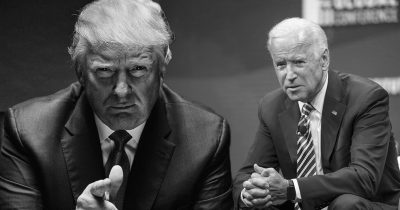
With the first of three scheduled presidential debates (aka brawl) between President Donald Trump and his opponent, former vice-president Joe Biden, now history, the pundits will fall all over themselves to determine what it all means. Who won? Did either candidate deliver a fatal blow to the election chances of the other? Did Biden disprove the Trump-encouraged rumors about his senility? Did Trump manage to sway any undecided voters?

We will not dwell here on the fact that many other, highly-qualified candidates are running for president (this writer, a U.S. citizen who moved to Canada fifteen years ago, will vote for Gloria La Riva of the Party for Socialism and Liberation for president).

No, with all the discussion about Trump and Biden, it is beneficial, this writer thinks, to consider what continues to happen in the world, that has lost the attention of the press, and therefore, the public. We will present a short, albeit incomplete, list.

Internationally:

  • Millions of people in Yemen, many of them children, risk starvation due to the U.S.-supported Saudi Arabian assault on that nation.
  • Palestinians still live under the harshest and most brutal conditions in the world, all financed and supported by the United States.
  • The U.S. war against the people of Afghanistan continues in it’s nineteenth year. A large segment of the Afghan population now has never known anything but war.
  • The people of Iran continue to struggle in many ways – economically and medically – against U.S. sanctions, imposed when the U.S., against the wishes of the other participants of the agreement and most of the world community, violated the Joint Comprehensive Plan of Action (JCPOA).
  • The people of Venezuela struggle against sanctions, also imposed by the United States, because they had the temerity to re-elect a president displeasing to the U.S. Trump and his cohorts say that Nicholas Maduro is not the legitimate president, forgetting or ignoring the fact that Trump himself did not win the majority vote in the 2016 U.S. presidential election. His odious opponent in that election, Hillary Clinton, did.
  • Migrant children continue to be caged at theS. – Mexico border.
  • The U.S. continues to maintain the most cordial relations with some of the world’s major violators of human rights, including Israel and Saudi Arabia. This should not be surprising, since the U.S. itself made the list of ’10 Global Hotspots for Major Human Rights Violations in 2017’, and things have only worsened since then.
  • As India heads towards genocide in Kashmir, the U.S. government, not wanting to annoy the Indian government, ignores it, as it ignores the Israeli genocide of the Palestinians.

Domestically Trump vs Biden: Lose/Lose for Palestine

It is, perhaps, whimsical for this writer to hope that the public will concern itself with these issues, and ponder carefully the upcoming election. Yes, another Supreme Court appointment by Trump could turn back the U.S. clock to a time of very limited consumer protections, a further reduction of environmental regulations, and greater racial inequality (even worse than it is today), and a host of other hard-won victories. Black lives will not matter; international law will continue to be held in contempt (although that is business-as-usual for the U.S.), and U.S. warmongering and war-making will continue, with all the destruction and slaughter of innocent men, women and children that that always brings.

There are some people who believe a Biden presidency will usher in change. Has hell frozen over? He has a long record in government of ‘business as usual’, so looking for change from him and the Democratic Party is an exercise in futility.

Others praise Trump as an effective leader, one who has done much to help the people of the nation.  This narrative deserves a prominent place with ‘Goldilocks and the Three Bears’, ‘Cinderella’, ‘Jack and the Bean Stalk’ and other fairy tales. It, like them, has no basis in reality and is simply a figment of the collective right-wing imagination.

The United States, from its earliest years, has a been a force for violence, destruction and death on the global stage. As its wealth and power have increased, so have its violent tendencies. It overthrows foreign governments, invades sovereign nations, issues crippling sanctions against governments and individuals that displease it, and threaten its allies if they don’t follow along.

The 2020 election will change none of this.

It is said that a sign of insanity is doing the same thing repeatedly and expecting a different result. Unless and until the public stops looking to the Democratic and Republican Parties for solutions to problems, leadership in troubled times and assistance in creating and maintaining a peaceful world, no election will alter the tragic and violent trajectory of the United States. The longer that recognition is delayed, the more people will suffer, in the U.S. and around the globe.

*

Note to readers: please click the share buttons above or below. Forward this article to your email lists. Crosspost on your blog site, internet forums. etc.

Featured image is from InfoWarsThe original source of this article is Global ResearchCopyright © Robert Fantina, Global Research, 2020


River to Sea Uprooted Palestinian   
The views expressed in this article are the sole responsibility of the author and do not necessarily reflect those of the Blog!

Sunday, 25 August 2019

Kashmir, genocide and the spirit of resistance


Kashmir, genocide and the spirit of resistance

Kashmir, genocide and the spirit of resistance

NGO Genocide Watch has issued a genocide alert on Kashmir [Getty]
Date of publication: 20 August, 2019
Genocide Watch lists Ten Stages of the genocidal process. Now, Kashmir exhibits all those stages, especially when considering India’s current horrendous onslaught on Kashmiri civil liberties, writes Farhan Mujahid Chak.
What is so revolting about tyranny that it stirs the human spirit in such a way, compelling us to resist? Instinctively, the thought of oppression pierces at the very essence of our human condition.
Film, music, art and literature all celebrate those who, with an unconquerable will, struggle against all odds and defy persecution.
Yet, victory is no easy feat.
Throughout history one will find countless substantiations that victory comes from the esprit de résistance. And, prominent English author George Orwell’s evocative short story Animal Farm applauds just that, while reprimanding despotism.
“Is it not crystal clear, then, comrades, that all the evils of this life of ours spring from the tyranny of human beings? Only get rid of Man, and the produce of our labour would be our own… What then must we do? Why, work night and day, body and soul, for the overthrow of the human race! That is my message to you, comrades: Rebellion!”For Orwell, subjugation must be resisted, since acquiescence only prolongs suffering; there can be no two-minds about it.
With that thought, consider India’s settler-colonial project and unilateral, illegal and undemocratic revocation of Kashmir’s autonomy by abrogating article 370.
Condemned worldwide, reputable NGO’s such as Amnesty International and Human Rights Watch have all strongly chastised India.
Recently, the United Nations convened an emergency Security Council meeting, the first in over 50 years, on the deteriorating situation in Kashmir calling for respect of relevant UN resolutions.
More pecifically, United Nations Secretary-General Antonio Guterres expressed concern at the ongoing human rights situation and David Haye, the UN’s special rapporteur on freedom of expression described the situation in Kashmir as ‘draconian’.
Yet, most terrifyingly, the renowned NGO Genocide Watch has issued a genocide alert on Kashmir – the first ever. This, in the backdrop of Modi, and other BJP leaders, monstrously using the grotesque term ‘Final Solution’ for Kashmir
Strictly, Genocide Watch lists Ten Stages of the genocidal process. Now, Kashmir exhibits all those stages, especially when considering India’s current horrendous onslaught on Kashmiri civil liberties, terrorising the entire population, cutting off all of their communication, flouting international law and norms, and conducting a litany of human rights abuses.First, an unforgiving binary of ‘us’ versus ‘them,’ labelled ‘classification,’ is disseminated.
In Kashmir, the Indian state translates “us” into supporters of their army/occupation forces, and ‘them’ to Kashmiri Muslims. Of course, preventative measures would include fostering universalistic institutions that transcend ethnic/racial divisions and actively promoting inclusion.
In Kashmir, the Indian state translates ‘us’ into supporters of their army/occupation forces, and ‘them’ to Kashmiri Muslims
Yet, this is precisely what the fascist Bhartiya Janata Party does not want. They need to spread the false threat of terror to rationalise their persecution.
Second, ‘symbolisation’ is the process when, combined with visceral hate, symbols are forced upon unwilling members of the purported pariah group: such as the blue scarf for people from the Eastern Zone in Khmer Rouge or Kashmiri Muslims with their distinctive language and apparel being issued ID cards designating them as Muslims.
Third, the genocidal project moves forward by clear ‘discrimination’ in which the dominant group uses law, custom, and political power to deny Kashmiri Muslims basic rights.
It is driven by an exclusionary ideology and legitimises the victimisation of Kashmiri Muslims by labels of such as ‘separatist’ ‘fanatic’ and ‘terrorist.’
Fourth, heightened levels of bias, prejudice and disempowerment lead to the ‘dehumanisation’ stage, which incapacitates the normal human revulsion against murder.
Heightened levels of bias, prejudice and disempowerment lead to the ‘dehumanisation’ stage, which incapacitates the normal human revulsion against murder
Fifth, the grotesque phenomenon of genocide is always well-planned and requires ‘organisation.’ This is done by the Indian state, that uses Hindutva militias to provide deniability of state responsibility – such as Hindu mobs led by local RSS militants, who may be disguised as the additional 38,000 India soldiers being sent to Kashmir.
Recall, that there are already nearly 700,000 heavily armed Indian Army troops and police that dominate Kashmir. Why send more?
Sixth, extremists need to enhance ‘polarisation’ – in order to drive the groups apart. Hate groups broadcast polarising propaganda. Laws may forbid intermarriage or social interaction.
Hindutva extremists target moderates – from all religions/backgrounds, intimidating and silencing the centre. Moderates from the perpetrators’ own group are most able to stop genocide. For this reason, all those who had previously been dealing with the Indian state are now under arrest, including Farooq Abdullah, Omar Abdullah and Mehbooba Mufti.
Seventh, at this ‘preparation’ stage, BJP leaders have, chillingly, spoken about the “Final Solution” which they use as euphemisms to cloak their intentions of genocide and ethnic cleansing.
Eighth, as the stages of genocide advance, ‘persecution’ is heightened. The victim group’s most basic human rights are systematically violated through extrajudicial killings, rape torture and forced displacement.
Death lists are drawn up and property is expropriated. Currently, Kashmiri Muslims are locked down, subject to arbitrary arrest, torture, rape, and murder.
The victim group’s most basic human rights are systematically violated through extrajudicial killings, rape torture and forced displacement
Ninth, ‘extermination’ begins, and quickly becomes the mass killing legally called “genocide.” At this terrifying moment, the armed forces often work with RSS militias to do the killing.
Tenth, the final stage ‘denial’ lasts throughout the entire genocidal process. It is among the surest indicators of the likelihood of genocidal massacres.
The perpetrators of genocide dig up the mass graves, burn the bodies, try to cover up the evidence and intimidate the witnesses. All the while they claim all is normal in Kashmir. In Kashmir, the denial has gone to such laughable levels that Modi and the BJP say their goals are to “bring prosperity and development” and to “end terrorism.”
Most worrisome, India is declaring to the world that they have begun to gradually ease the communications blockade. That is false.
This cowardly rhetoric of disingenuous ‘easing’ of the lockdown is used to deflect international attention. A total internet, land-line and communication ‘blackout’ is ongoing. And, ominously, foreshadows something more sinister forthcoming. That is, the real possibility of genocide in Kashmir.
Yet, amid these awful scenes of death, desolation and despair, Kashmiris have only become emboldened with the spirit of ‘rebellion’.
There is no other choice. Faced with an unruly, unforgiving adversary, all must unite.
Farhan Mujahid Chak is an Associate Professor of Political Science at Qatar 
River to Sea Uprooted Palestinian   
The views expressed in this article are the sole responsibility of the author and do not necessarily reflect those of the Blog!

Tuesday, 13 August 2019

China and Jammu and Kashmir’s new status


August 10, 2019
China and Jammu and Kashmir’s new status
Beijing has a lot of influence over Pakistan and indirectly is in a position to leverage the next moves by Islamabad
In the aftermath of the Indian government’s decision to remove “special status” for Jammu and Kashmir and split the state into two union territories, the most keenly awaited regional and international reaction – and a hugely consequential one – would be that of China, not the US or even any of the other three permanent members of the United Nations Security Council.
This is for three reasons. First, China is the only P5 member that is party to the Kashmir dispute by virtue of its Faustian deal with Pakistan in 1963 – the Sino-Pakistan Frontier Agreement and Sino-Pakistani Boundary Agreement – as well as because of Aksai Chin being a disputed territory.
Second, it is well known that China has a larger-than-life influence over Pakistan, and therefore, indirectly, is in a position to leverage the next moves by Islamabad on the J&K situation in practical or political terms.
Third, of course, China is a veto-holding P5 member. Although not involved in the making of the UN resolutions on Kashmir in 1948-1949 – which was an Anglo-American enterprise at a juncture when Indian prime minister Jawaharlal Nehru somehow deliberately refrained from seeking Soviet help to counter India’s isolation in the UNSC – nonetheless, China is a powerful protagonist today if the Kashmir file were to reopen in New York at Pakistan’s behest.
Chinese reaction
On Tuesday, the Chinese reaction to the announcement in Delhi on Monday relating to J&K has come in two parts in the nature of remarks by the Foreign Ministry spokeswoman in Beijing – a relatively low-key reaction in diplomatic terms in comparison with a full-fledged statement, as Turkey, for instance, has done. One part exclusively relates to Ladakh’s new status as union territory, while the other one relates to the “current situation” in J&K.
Both remarks are devoid of any stridency, and on the whole India can live with them, although Western media, unsurprisingly, has hyped them. In fact, neither voices any overt backing to Pakistan. And, importantly, there are no new overtones as such in the well-known Chinese stance.
The remark on the change in Ladakh’s status begins by underscoring explicitly that China is voicing its “firm and consistent position,” which “remains unchanged.” That is to say, it regards part of Ladakh to be Chinese territory and India should not unilaterally create facts on the ground through domestic laws. If India does, China will consider that unacceptable and it “will not come into force.”
The remark rounds off stating the Chinese stance that India should speak and act with prudence on the boundary question, strictly abide by relevant agreements on peace and tranquility and avoid precipitate steps.
This is exactly what China has maintained and can be expected to state. No doubt, this is also what India would expect China to observe in regard of the unresolved border dispute. The Indian stance on the China-Pakistan Economic Corridor (CPEC) is a fine example.
The gray area here is whether the administration of Ladakh as a union territory will entail administrative arrangements on the ground that tread on Chinese sensitivity. Prima facie, that is unlikely to happen, since the two militaries present in the vacant spaces observe ground rules.
On the other hand, the interesting aspect of the Chinese spokeswoman’s remark on the J&K situation is that there is no direct reference to the specific situation involving the abrogation of Article 370 of the Indian constitution. The remark is of a generic nature. It repeats that the J&K situation is a matter of serious concern, but underscores categorically that “China’s position on the Kashmir issue is clear and consistent.”
‘International consensus’
Most important, it flags that China is in sync with the “international consensus” that the Kashmir issue is a historical conundrum that India and Pakistan have to grapple with by exercising restraint and prudence. This means, however, that the two countries “should refrain from taking actions that will unilaterally change the status quo and escalate tensions.” China calls on the two countries to “peacefully resolve … [their] relevant disputes through dialogue and consultation” in the interest of regional “peace and stability.”
Indeed, the “known unknown” here is to what extent, if any, the current upheaval in Hong Kong influenced Beijing to sidestep the Indian government’s specific move to abolish Article 370 and abandon J&K’s “special status.” To be sure, a grave situation has arisen in Hong Kong, which has assumed anti-China overtones.
No analogy holds 100% in politics, but there are similarities in the public alienation in J&K and in Hong Kong that foreign powers are exploiting. In fact, China also has to contend with its equivalent of India’s Article 370 – the Sino-British Joint Declaration, which is as sacrosanct as an international bilateral treaty, signed between China and Britain on December 19, 1984, in Beijing.
Legally binding
Curiously, the Joint Declaration is also legally binding, and like Article 370, it commits China to allow Hong Kong to “enjoy a high degree of autonomy, except for foreign and defense affairs” even as the territory will be “directly under the authority” of Beijing.
Most important, the Joint Declaration affirms that the government of the Hong Kong Special Administrative Region (HKSAR) is responsible for the “maintenance of public order … Military forces sent by the Central People’s Government to be stationed in … [the HKSAR] for the purpose of defense shall not interfere in the internal affairs” in the HKSAR.
The treaty is valid for 50 years, but a crisis is looming large on the horizon, and there is much speculation that patience is wearing thin in Beijing. A top Chinese official said on Wednesday: “Hong Kong is facing the most serious situation since its return to China.”
A Beijing-datelined commentary by Xinhua on Monday titled “Bottom Line on Hong Kong brooks no challenge” was furious that “black-clad, masked protesters removed the Chinese national flag from a flagpole in Tsim Sha Tsui of Hong Kong and later flung the flag into the water Saturday, an unforgivable, lawless act that has blatantly offended the national dignity, is an insult to all Chinese people, including Hong Kong compatriots, and must be severely punished in accordance with law.”
All factors taken into account, as the saying goes, the pot cannot call the kettle black. The MEA’s response to the Chinese remarks on J&K has gently drawn attention to the reciprocity that governs inter-state relationships by underscoring that the legislation known as the Jammu and Kashmir Reorganization Bill 2019, introduced by the government in Parliament on August 5, is “an internal matter concerning the territory of India. India does not comment on the internal affairs of other countries and similarly expects other countries to do likewise.” India has scrupulously maintained silence on Hong Kong developments.
The views of individual contributors do not necessarily represent those of the Strategic Culture Foundation.

River to Sea Uprooted Palestinian   
The views expressed in this article are the sole responsibility of the author and do not necessarily reflect those of the Blog!

Friday, 19 April 2019

India Stops Buying Venezuelan Oil At US ZOG’s Request, Proving Its Status As An ‘Israeli’-American Vassal Yet Again

Search for “India” on Mouqawamah Music or Mask of Zion, read just a piece or two, and it won’t take you long to figure out just how much of a devil-regime Hindustan truly is. Especially with the likes of the Hindutvadi BJP and Narendra “Butcher of Gujarat” Modi at the helm. From its aggression against Pakistan to its ruthless occupation and oppression of Kashmir, its always-deepening relationship with the usurping Jewish entity to its brutal war on the Naxalites, all India does is prostitute itself in the name of Global Zionism. Considering this, that there are so many Indian leftists and “anti-imperialists” who think their nation is “resistant” or even “nonaligned”, is mind-boggling. India is an American-‘Israeli’ vassal and true-indeed, it has always been one. And its decisions vis-a-vis Venezuela over the last several weeks drive this point so far and so hard home, that any attempt to deny it in the slightest should lead to one being checked into the funny-farm.
Information in the media, both in the West and South Asia, was scant over the next 10 days. But then, on March 22nd, the big news came in from Oil Price, the world’s top energy news website: India and all Venezuelan-connected Indian private energy outfits were no longer taking in Venezuelan petrol.
And for the big finish, just about a week following the revelation, Elliot Abrams was back in the news, grinning ear to ear and declaring, “We are very happy to see” the “very considerable amount of cooperation” from India and Indian companies with relation to Venezuela. The Jewish supremacist war criminal was all but in an orgasmic state.
New Delhi has sold Caracas down the river. It cannot be read any other way. And noting just how much money was at stake at this critical juncture for the Venezuelan people, government and economy–tens of billions of dollars at least, perhaps upwards of $100 billion plus–we can rightly say that India is now a party to the US-EU-Zionist war on the Bolivarian Revolution. Just as India is a party to the economic war on Iran. Indeed, India can’t and won’t buy oil from the Islamic Revolution unless it gets a go-ahead from Washington.Thus, if, or better still, WHEN the American ZOG tells Hindutva to break ties with the Iranian nation completely, Modi and the rest of his BJP-RSS-VHP gang most certainly will.
Prior to closing, it must be noted that while India was allowing itself to be commanded like a show-dog is commanded by its trainer, its representatives were laying a heaping dose of praise upon the fake Jewish “state” at the AIPAC conference and inaugurating Indian-‘Israeli’ initiatives in the fields of medicine and artificial intelligence. Obeying the American wing of the Rothschild Imperium on the one hand and increasing friendship with the ‘Israeli’ crown of the Rothschild Imperium on the other. This is India. Now Venezuela, a long-time target of the Hindutvadis’ Zionist partner-in-crime, feels the betrayal that Kashmiris, Dalits, Indian Muslims, Indian Christians, Indian Sikhs, the Naxalites, Pakistanis, Palestinians, Nepalese, Sri Lankans, Bangladeshis and others have been reeling from for decades. Shameful isn’t even the word. To be honest though… What else is to really be expected from a bunch of fanatics who drink cow urine and hold festivals centered around the throwing of cow dung? Absolutely despicable.

River to Sea Uprooted Palestinian   
The views expressed in this article are the sole responsibility of the author and do not necessarily reflect those of the Blog!

Wednesday, 3 April 2019

Pakistan’s Ambassador in Damascus Condemns Israeli Occupation’s Aggressive Practices in Occupied Syrian Golan

Monday, 01 April 2019 17:05

DAMASCUS, (ST)- Pakistan’s Ambassador in Damascus Rashed Kamal has stressed that his country has supported a draft resolution recently adopted by the UN Human Rights Council condemning the Israeli occupation’s aggressive practices in the occupied Syrian Golan and called for implementing the UN resolutions on this issue.
In a press conference held at the Pakistani Embassy in Damascus, the ambadssador said his country seek proposing initiatives to solve the Kashmir conflict between Pakistan and India through dialogue and peaceful means.
He added that war doesn’t serve the interets of the peoples of the two countries, urging the international community to move as to prevent escalation which may affect other parts of the world.
Kamal reaffirmed the need to implement UN resolutions regarding Kashmir, pointing out that his country supports just causes and calls for resolving them peacefully.
During a reception held in Damascus on Sunday marking Pakistan’s 79th National Day, Kamal said in a speech that Syria and Pakistan stand in the face of terrorism, congratulating the Syrian people, army and leadership on the victories achieved everyday on terrorism.
He affirmed his country’s support to solving all the international problems through dialogue and peaceful means, and its adherence to the principles and the goals of the UN and the Organization of the Islamic Conference (OIC).
On his part, Deputy Minister of Foreign Affaris and Expatriates Fayssal Mikdad stressed the deep-rooted Syrian-Pakistani relations and cooperation in different domains.
He hailed Pakistan’s support for Arab struggle to liberate Palestine and ending the foreign hegemony and arrogance, appreciating cooperation between the two countries at the international forums.
Hamda Mustafa

River to Sea Uprooted Palestinian   
The views expressed in this article are the sole responsibility of the author and do not necessarily reflect those of the Blog!

Friday, 1 March 2019

حرب كشمير بواجهة هندية ـ باكستانية وتورّط دولي مكشوف!


مارس 1, 2019

د. وفيق ابراهيم

تَحوّلَ النزاع الهندي الباكستاني على منطقة كشمير الفاصلة بينهما مشروع حرب فعلية قد تشعل أكثر من شبه القارة الهندية.

لا شك أنّ هناك أسباباً هندية – باكستانية للصراع لم يجد أحدٌ له حلاً حتى الآن لكنه التزم بعد اندلاع حرب كبيرة بين طرفيها في 1972 بحدود الأمر الواقع في إطار هدنة مضبوطة، فما الذي استجدّ حتى يتحضّر البلدان لمواجهة واسعة؟

تصل مساحة كشمير الى 86 الف كلم مربع تقريباً تسيطر الهند على 65 في المئة منها تقريباً والباقي لباكستان كما تحتوي على غالبية إسلامية مقابل أقلية بوذية.

للتوضيح فإنّ انفصال الولايات الإسلامية في الهند بمسمّى جديد هو باكستان كان يُراد منه انفصال كامل الأقليات الإسلامية في شبه القارة الهندية، ونتيجة للبعد الجغرافي عن باكستان بقي ملايين المسلمين في أنحاء أخرى من الهند واحترب البلدان للاستحواذ على كشمير المنطقة الحدودية بينهما.

وكان التوتر السياسي يندلع على كشمير بين الفينة والأخرى لكنه لم يصل ومنذ 1972 إلى مرحلة حرب مكتفياً باشتباكات حدودية محدودة جداً تقتصر على مشاركة قليل من الجنود المنتشرين على حدود كشمير بين البلدين.

لجهة الأسباب الداخلية فإنّ جزءاً هاماً من «الإسلام المتطرف» ذي الجذر القاعدي موجود في باكستان وخصوصاً في كشمير ونما في مئات المراكز الاسلامية التي أسّستها السعودية ولا تزال تموّلها حتى تاريخه بمشاركة إماراتية ودعم من منظمة طالبان من مراكز نفوذها من أفغانستان المحاذية.

فرَفدَ هذا الاتجاه المتطرف التيارات الإسلامية في كشمير التي تعمل على تحرير القسم التي تسيطر عليه الهند فيها.

هناك فريق رابع تولى تقديم التسهيلات اللوجستية وحرية الحركة للتنظيمات الإسلامية وهي المخابرات الباكستانية التي لا يزال الغرب يتهمها حتى الآن بدعم القاعدة وطالبان في أفغانستان وتتهمها الهند حالياً بتوفير ظروف مناسبة لشنّ ضربات على القوات الهندية في كشمير وحتى داخل الهند.

لقد شكلت هذه التحالفات الغطاء الداخلي للعملية التي نفذها تشكيل إرهابي يُدعى «جيش محمد» مستهدفاً فيها كتيبة للجيش الهندي في مركز انتشاره في كشمير وأدّت الى مذبحة موصوفة.

ما أغضب نيودلهي ليست المذبحة فقط، إنما السلوك الباكستاني المتراخي الذي لم يمنح الهجوم الإرهابي الاهمية التي يستحقها.

واكتفت بشجب الهجوم والتعهّد بالتحقيق لكشف الفاعلين وهم معروفون سلفاً من أجهزتها، مشكلين جزءاً من بنية إرهابية تنتشر في معظم الجزء الباكستاني من كشمير.

لذلك حاولت الهند تنظيم ردّ عسكري يستبقُ فكرة مواصلة الهجمات على قواتها، فكانت الغارة الجوية الهندية على مواقع «جيش محمد» وتبيّن انّ باكستان كانت تتوقع مثل هذا الردّ فجابهته بشكل صارم الأمر الذي دفع بالبلدين لحشد قواتهما على حدوديهما في كشمير في حركات تصعيدية قد تتدحرج نحو حرب بين بلدين نوويين، وتعهّدت باكستان بإعادة طيار هندي أسقطت طائرته مقابل توقف الاستنفار الهندي.

تكشف هذه التفاصيل انّ أقساماً من المخابرات الباكستانية تعمل بإيحاء خارجي قابل للمضاعفة إذا كانت الهند العدو التقليدي هي المستهدف.

والسؤال هنا، لماذا يستهدفُ هذا الإيحاء الخارجي لمخابرات اسلام أباد الهند؟ وماذا فعلت؟

لم تفعل الهند ما يعادي علاقاتها الإقليمية والدولية، لكنها استمرّت بشراء النفط من إيران في حركة كسر للمقاطعة الأميركية التي تمنع العالم من علاقات اقتصادية طبيعية مع طهران، وهذا استفز الأميركيين ولم يتمكّن ولي العهد السعودي محمد بن سلمان في زيارته الأخيرة للهند من إقناع حكامها بشراء نفط سعودي بسعر تشجيعي مقابل وقف شراء النفط الإيراني.

أما السلوك الهندي الأهمّ الذي يستفزّ دوائر القرار في واشنطن فيتعلق بانفتاح الهند على روسيا والصين في مؤتمر يُهيّئ لتحالف جديد ترى فيه واشنطن «المكوّن العالمي الوحيد» الجدير بمجابهة الامبراطورية الأميركية المتراجعة.

هذا ما دفع بالبيت الأبيض إلى بناء خطة من مستويين: زعزعة الاستقرار الداخلي الهندي بواسطة الإسلام المتطرف الذي لا يصيبه في كشمير فقط، بل داخل الهند أيضاً حيث تنتشر أقليات إسلامية كبيرة.

فكانت بداية الخطة في هجوم جيش محمد في كشمير وبذلك يكسب الأميركيون على مستويين: إضعاف الهند داخلياً والاستمرار في تشويه علاقة الإسلام بالأديان الاخرى، والعالم عموماً.

من جانب آخر، يواصل الأميركيون عبثاً محاولة الحدّ من الصعود الصيني بمفاوضات تتحسّن وتسوء إلا انها لا تستطيع كبح الاندفاع الصيني نحو حلف مع الهند وروسيا يبدو ضرورياً لكسر أحادية التسلط الأميركي على العالم.

فهل يجد الأميركيون ضرورة لخلق ظروف مؤاتية لتفجير حرب كبيرة بين الهند وباكستان؟

الموضوع جدير بالانتباه لانه يندرج في إطار إشعال الأميركيين لكامل الحروب في العالم.

أليست واشنطن من احتلّ افغانستان والعراق وسورية وقسماً من أميركا اللاتينية، وتستعدّ لمغامرة عسكرية في فنزويلا، وهناك ليبيا المدمّرة وتونس المتأرجحة ومصر المتدهورة والسودان الذي يتحضّر لحروب أهلية، أليس الأميركيون من ينشر الصواريخ في شرق أوروبا؟

يتبيّن أنّ على روسيا والصين مهمة وقف مشروع الحرب الباكسانية الهندية بمفاوضات معمّقة لأنها حرب أميركية تستهدفهم أيضاً وتقع في مواجهة حدودهم السياسية وأمنهم الداخلي.

Related Videos
Related Aricles

River to Sea Uprooted Palestinian   
The views expressed in this article are the sole responsibility of the author and do not necessarily reflect those of the Blog!

Friday, 15 February 2019

Kashmir: Nothing Happens in a Vacuum

By Adam Garrie
Source
Kashmir-c.jpg
2018 was the deadliest year for Kashmiri civilians for a decade. This fact was affirmed not only by the Jammu and Kashmir Coalition of Civil Society (JKCCS)but by the Washington Post. The rising death toll among Kashmiris in 2018 was itself a culmination of an increasingly violent approach taken by the forces of Indian Occupied Kashmir (IOK) since the late 1980s, whilst the overriding problems for Kashmiris are a result of being denied their international legal right to self-determination since 1947.
In Kashmir, nothing happens in a vacuum and this fact readily applies to today’s attack on an Indian military convoy by a member of Jaish-e-Mohammed. The very fact that Indian army convoys and soldiers armed to the teeth are present in IOK in order to subdue the very people that India tells the world are merely a minority of ‘reluctant Indians’, obfuscates the more self-evident reality on the ground. The reality is that if part of a nation must be under constant military occupation in order to remain within such a nation, such a place is not part of the nation in question at all.
Kashmir’s troubles are ultimately a conflict between the Indian authorities and Kashmiris themselves. If anyone doubted this to be the case, one must consider two things. First of all, Jaish-e-Mohammed has been banned in Pakistan since 2002. Secondly,  Pakistani voices that are raised in the name of justice for Kashmir tend to hold the view that far from Pakistan doing too much on the Kashmir issue, Islamabad actually does far too little and has done far too little for quite some time.
Many in India will not want to admit the following and many in Pakistan will not want to hear the following, but the reality must be laid bear all the same: although the crisis in IOK is one between India and the Kashmiri people, Pakistan does indeed have a role to play. This role is one that requires Islamabad to amplify the plight of Kashmiris to the rest of the world for the simple reason that there is no other country in the world that is in such a position to do so. The longer Pakistani elites retreat from this issue, the worse things will get not just for Kashmiris but for the wider region as a whole. The fact that India blames everything that happens in or around IOK on Islamabad is actually quite farcical because Pakistan’s real position vis-a-vis Kashmir is one that is all too detached. As a result, innocent people suffer and a cycle of violence is perpetuated because of an Indian culture of scapegoating Pakistan and a Pakistani culture of wishing troubles away, rather than facing them head on.
Had Pakistan forcefully told the United Nations, global civil society, all three global military superpowers and bilateral partners of the grave danger that IOK’s unresolved status poses, the Indian soldiers who died today would still be alive and furthermore, the scores of thousands of Kashmiri civilians gunned down in cold blood by Indian soldiers over the decades would also still be alive. In this sense, if the UN mandated plebiscite on Kashmiri national self-determination had already been held, there would be more people alive today in the region than there presently are. Every moment wasted therefore ought to sound like a tick on south Asia’s very own doomsday clock. With every further second that is ticked away, Kashmiris and Indians are both at risk of death or injury. No rational person in any country could label such a situation as acceptable.
While for the supporters of the Indian occupation of Jammu and Kashmir, the issues surrounding the occupation are those involving unbridled jingoism and a battle that puts a quest for resources ahead of justice for civilians, for Kashmiris themselves, it is a matter of being denied their UN mandated right to national self-determination which they have been waiting for since 1947.
The pressing issue of Kashmir was one of the first major challenges presented to a young United Nations Security Council which in 1949 passed Resolution 47. This resolution called for a plebiscite to allow Kashmiris to decide on their own future according to the principles of the UN Charter and the Universal Declaration of Human Rights which was ratified in 1948.
Crucially, India continues to deny that Pakistan has followed the following clauses in the resolution:
“1. The Government of Pakistan should undertake to use its best endeavours:
(a) To secure the withdrawal from the State of Jammu and Kashmir of tribesmen and Pakistani nationals not normally resident therein who have entered the State for the purpose of fighting, and to prevent any intrusion into the State of such elements and any furnishing of material aid to those fighting in the State;
(b) To make known to all concerned that the measures indicated in this and the following paragraphs provide full freedom to all subjects of the State, regardless of creed, caste, or party, to express their views and to vote on the question of the accession of the State, and that therefore they should co-operate in the maintenance of peace and order”.
But while Pakistan has fulfilled its duties according to a precise reading of the Resolution, India maintains that Resolution 47 calls for Pakistan to abandon the civilian administration in Azad Kashmir. India has held fast to this obstructionist position in spite of the fact that the clauses in question do not make specific mention of the civilian administration in Azad Kashmir, beyond a general and reasonable call for non-native Kashmiris to vacate the territory for the specific and limited aim of holding a free and fair plebiscite based on the indigenous population as well as indigenous Kashmiris who were displayed during the war of 1947-48.
But while arguments continue to be made regarding interpretations of Resolution 47, Kashmiris continue to pay with their lives for 72 years of sustained injustice. The only solution is for the UN to take into account a reasonable interpretation of UN Security Council Resolution 47 and force the issue of the need for an immediate plebiscite throughout the entirety of Kashmir. This is absolutely necessary in order to make it so that there can be no question about the long-term status of the region.
A further matter of importance becomes clear when one realises that arguments between New Delhi and Islamabad regarding differing interpretations of the 1949 era UN Resolution do not directly take into account the feelings of Kashmiris themselves. Ultimately, the Kashmir crisis is one between the Kashmiri people and their occupier. It is only up to the Kashmiri people to define who and what is an occupier and this is why their voices must be heard by the international community without prejudice. Any nation afraid of such a plebiscite can logically be concluded to be a state afraid that its interpretation of the situation in Kashmir is one that will be exposed as incompatible with the feelings of Kashmiris.
Furthermore, as India has physically occupied much of Kashmir since 1947, there has been plenty of time for New Delhi to convince Kashmiris that they are better off in India than as an independent sovereign state or as part of Pakistan. The uptick in the intensity of the conflict within Kashmir since 1989 in particular, has demonstrated that far from using the delayed execution of the UN Resolution in order to make peace with Kashmiris, Indian forces have done everything they can to make the case for Kashmir leaving India according to the democratic will of the Kashmiri people.
Former US President John F. Kennedy famously stated:
“Those who make peaceful revolution impossible will make violent revolution inevitable”.
This quote could have been authored to describe the lingering deterioration of human rights and social cohesion in Kashmir as Kashmiris are pushing back only as much as they have been pushed. Contented populations are by definition not angry populations and likewise, no genuine uprising has ever been a result of prosperity, social harmony and a happy population. In this sense, the realities in Kashmir speak for themselves, not least because a genuinely contended population cannot be easily mobilised by external political proclamations.
The extent to which Kashmiris are suffering is therefore self-evident, in spite of the fact that the IOK authorities make it extremely difficult for international reporters to gain access to the streets where demonstrators are frequently beaten and killed for demanding a peaceful right to have the vote that the UN mandates that they must have.
Of course, there exists a strong temptation, perhaps an inevitable temptation for India’s ruling BJP to respond to today’s event by committing acts of completely unacceptable aggression against Pakistan. Yet such jingoistic appeals during an election season will only further teach the world a lesson that has long ago been handed down: violence begets violence.
If India truly wants events like that of today to become a thing of the past rather than a harbinger of a bleak future, India must work with its neighbour to give Kashmiris what the UN mandates that they have – a democratic and transparent say in their political future. This long overdue revelation itself comes at a time when the entire world, including the United States (but excluding India) has come to realise that Pakistan’s long held view of an all parties peace process in Afghanistan, is the only viable means to create stability in a country that in one way or another has been tearing itself apart since at least the 1970s. If the world has come to trust Pakistan’s peace agenda for Afghanistan, the only reason that something similar is supposedly not possible in respect of Kashmir, is due to a lack of will. Clearly, when peace lovers are silent, those who love the opposite of peace will make their voices heard.
While Mahatma Gandhi remains unpopular among the Hindtuva extremists that the BJP courts, it is wise to remember that he once said “An eye for an eye only ends up making the whole world blind“. In this case, New Delhi is blinding itself to the reality that a Kashmir under occupation will lead not only to literal blindness, maiming and death, but that the longer this cycle perpetuates, the worse things will get on all sides. Indian mothers should therefore consider why the government is sending their sons to be killed in a place that clearly wants to develop along the lines of a new political path. The Indian soldiers who have lost their lives Kashmir were not killed by Pakistan, these lives are being lost because of a policy that is one part murder and one part suicide – truly all have gone blind if they cannot see this for what it is.  If these matters are allowed to be discussed openly, then a broader dialogue on a peace process involving the UN mandated plebiscite can begin with sincerity.
Pakistan likewise must not allow itself to become scapegoated by New Delhi over the issue. Instead, Pakistan should reflect on its one area of guilt in the matter: the Pakistani state for far too long has acted as though it wished the Kashmir issue away. As such, is it any wonder that an ostrich with its head buried below the sand is a perfect target for an Indian state that needs someone to blame for a situation it has long been unable to control?
God willing, today’s attack will be the last such attack to ever happen in Kashmir, but such wishful thinking requires action steps in order for such a wish to transform itself into a strategic road map towards a sustainable peace. There is ultimately but one way to end the bloodshed and this is for Kashmir to be granted a full, free and fair plebiscite on its future. Until then, so long as Kashmir has no future, those attempting to undemocratically dictate Kashmir’s future will not be sailing through placid waters.
A commitment to peace must therefore be holistic and it must collectively rise above the constant finger pointing between politicians on all sides of all borders. India must not shy away from the fact that violence begets violence and that as such, today’s event has everything to do with the post-1947 history of Kashmir and nothing with the politics and actions of Pakistan. Likewise, Pakistan must ask itself how long will it wait before telling the world the truth about Kashmir, so that a harrowing occupation might be transformed into a new reality wherein the cries of peace ring out above the myopic cries for war.
River to Sea Uprooted Palestinian   
The views expressed in this article are the sole responsibility of the author and do not necessarily reflect those of the Blog!