Monday, 26 January 2009

"60 Minutes: 'Who Are You'?"

Source


EXCELLENT show by Bob Simon on 60 Minutes, encapsulates the manic zeal, the injustices and all the ISRAELI obstacles to Peace! Watch, here

"What he's up against are scores of Israeli settlements dominating the lowlands like crusader fortresses. Many are little cities, and none of them existed 40 years ago. The Israelis always take the high ground, sometimes the hills, and sometimes the homes. And sometimes Arabs are occupied inside their own homes.
...The commander declined to talk to 60 Minutes. "But we are talking to you now," Simon pointed out, standing outside. "Why don't you tell us what you are doing here? Have you lost your voice? Well they've closed the door now, they've closed the window so I guess if the children are going to get home now we have to leave, so that is what we will do."


Israeli Soldiers Told to Avoid Capture 'At All Costs'

Al-Manar


26/01/2009 Israeli occupation soldiers who fought in the Gaza offensive were given orders to avoid "at all costs" being captured by Palestinian resistance fighters, an Israeli military source said on Monday.

Soldiers were told to open fire on anyone trying to capture them, even if this put their own lives in danger, the source said.

A lieutenant-colonel of the elite Golani unit told his men: "You must avoid at all cost that one of you be captured alive by Hamas, even if that means blowing yourself up with your grenades."

But the army insisted in a statement there were no orders for soldiers to kill themselves in case of capture and that the words of the officer were "aimed at strengthening their fighting spirit."

Military sources said Palestinian fighters sought on several occasions to capture Israeli soldiers during the December 27 to January 18 Israeli war against the Gaza Strip but the IAF immediately launches an air raid and kills its own soldiers.

Likud: Livni Stressed As She’s About To Lose Elections

Source
Readers Number : 392


25/01/2009 Ahead of American Mideast envoy George Mitchell arrival to region Wednesday, Kadima chairwoman Tsibi Livni said that a right-wing government in Israel will cause the Jewish state to be perceived – by Washington - as 'peace refuser'. The Foreign Minister also warned Saturday night of a rift with the United States if a right-wing government is elected.

Benjamin Netanyahu’s Likud party responded to Livni saying “This is a ridiculous spin...Livni’s stressed because she knows she's about to lose elections.”
As part of promoting herself in Kadima’s electoral campaigns in ‘closed door forums’ Livni said, "Mitchell's mission is a positive thing under a government which will continue the current diplomatic policy.
When Israel supports a solution of two states for two people, the pressure won't be on Israel. If we have a government headed by myself which will advance this policy, the pressure will be exerted on Iran and its satellite countries and we'll be able to recruit the US to our war on terror...If we have an extreme right-wing government, which will reject this principle, the pressure will be directed at Israel."

The Likud responded to the remarks by saying, "Livni is stressed because she knows she will be losing the elections in 16 days, so she's shooting at all directions and spreading a ridiculous spin, reflecting Livni and Kadima's great distress.
"Netanyahu knows the United States better than any other leader, will manage the relationship well and will know how to maintain the State of Israel's vital interests in the international arena."
Kadima is considering using in its campaign spots excerpts from a book by Dennis Ross, special Middle East coordinator under former president Bill Clinton and expected to work with the administration as a special peace envoy. One excerpt from the book, "The Missing Peace," describes Netanyahu as insufferable and states that that after Ross and Clinton met with him, the U.S. president felt Netanyahu thought he was the power, and that the Americans were there to do his bidding.

During his tour Wednesday, Mitchell is expected to have talks with the Israeli government and the Palestinian Authority.
Upon his appointment as Mideast envoy, Mitchell clarified that peace in the Middle East was a security-related interest of the US and that there was no such thing as an unsolvable conflict.

ISRAELI SETTLERS NOT HAPPY WITH MITCHELL
The head of Israel’s settlements council Danny Dayan said Mitchell's appointment was "very disturbing".
"Soon we will need to get Obama's request to have children," Dayan said, alluding to Mitchell's previously voiced objection to allowing natural growth in West Bank settlements.

SAUDI ARABIA: ISRAEL CLOSE TO KILLING ‘PEACE’ PROSPECT
Meanwhile, a member of the Saudi royal family warned Obama on Friday the Middle East peace process and US-Saudi ties were at risk unless Washington changed tack on the Israeli-Palestinian question.
Israel had come close to "killing the prospect of peace" with its offensive in Gaza, Prince Turki al-Faisal wrote in an article published on the Financial Times' website.
"Unless the new US administration takes forceful steps to prevent any further suffering and slaughter of Palestinians, the peace process, the US-Saudi relationship and the stability of the region are at risk," said al-Faisal, a former Saudi intelligence chief and former ambassador to the United States and Britain.

The Bush administration had also contributed to the "slaughter of innocents" in Gaza, said the Saudi Prince.
"If the US wants to continue playing a leadership role in the Middle East and keep its strategic alliances intact -- especially its 'special relationship' with Saudi Arabia - it will have to drastically revise its policies vis-à-vis Israel and Palestine," he wrote.

Gaza zoo destroyed

Source

Monkeys and camels were among many animals killed by Israeli fire at a Gaza zoo.


Related story: Carnage in Gaza zoo

Blog: On the road to Gaza

In depth: Gaza crisis


The escaped lions are now back in their enclosure. The firstthing the Israelis did was shoot at the lions who fled.


Israeli troops shot and killed zoo animals

By Ashraf Helmi, Videographer, and Megan Hirons, Photographer
Published: January 25, 2009, 23:25

The Gaza Zoo reeks of death. But zookeeper Emad Jameel Qasim doesn't appear to react to the stench as he walks around the animals' enclosures.

Watch video of Gaza zoo carnage

A month ago, it was attracting families - he says the zoo drew up to 1,000 visitors each day. He points at the foot-long hole in the camel in one of the enclosures.

"This camel was pregnant, a missile went into her back," he tells us. "Look, look at her face. She was in pain when she died."

Around every corner, inside almost every cage are dead animals, who have been lying in their cages since the Israeli incursion.

Qasim doesn't understand why they chose to destroy his zoo. And it's difficult to disagree with him. Most of them have been shot at point blank range.

"The first thing the Israelis did was shoot at the lions - the animals ran out of their cage and into the office building. Actually they hid there."

The two lions are back in their enclosure. The female is pregnant, and lies heavily on the ground, occasionally swishing her tail. Qasim stands unusually close to them, but they don't seem bothered by his presence.

As he takes us around, he is obviously appalled at the state of the animals. The few animals that have survived appear weak and disturbed.

"The foxes ate each other because we couldn't get to them in time. We had many here." There are carcasses everywhere and the last surviving fox is quivering in the corner.

The zoo opened in late 2005, with money from local and international NGOs. There were 40 types of animals, a children's library, a playground and cultural centre housed at the facility.

Inside the main building, soldiers defaced the walls, ripped out one of the toilets and removed all of the hard drives from the office computers. We asked him why they targeted the zoo. He laughs. "I don't know. You have to go and ask the Israelis. This is a place where people come to relax and enjoy themselves. It's not a place of politics."

Israel has accused Hamas of firing rockets from civilian areas. Qasim reacts angrily when we raise the subject.

"Let me answer that with a question. We are under attack. There was not a single person in this zoo. Just the animals. We all fled before they came. What purpose does it serve to walk around shooting animals and destroying the place?"

Inside one cage lie three dead monkeys and another two in the cage beside them. Two more escaped and have yet to return. He points to a clay pot. "They tried to hide", he says of a mother and baby half-tucked inside.

Qasim says that his main two priorities at the moment are rebuilding the zoo and taking the Israeli army to court. For the first, he says he will need close to $200,000(Dh734,000) to return the zoo to its former state - and he wants the Israelis to cover the costs. "They have to pay me for all this damage."

We ask him why it's so important for Gaza to have a zoo. "During the past four years it was the most popular place for kids. They came from all over the Gaza Strip. There was nowhere else for people to go."

Has Israel gone berserk and lost all sense of reasoning? Should it be tried for war crimes at The Hague?

Sunday, 25 January 2009

Khudari: Opening crossings, ending siege only road to reconstruct Gaza

[ 26/01/2009 - 04:14 PM ]


GAZA, (PIC)-- MP Jamal Al-Khudari, the head of the popular anti siege committee, has asserted that no reconstruction of Gaza is possible without opening all crossings and ending the siege.

Khudari, during a meeting with a number of delegations from Turkey, Greece and other European countries, said that the world community should pressure Israel into opening crossings in its capacity as an inalienable Palestinian right and the only means to return life to normalcy in Gaza.

He said that the declared estimates for the cost of reconstructing Gaza were preliminary, pointing to the huge devastation that engulfed the Strip on all levels.

The MP noted that the Israeli shelling and aggression did not spare factories, infrastructure, houses, government buildings, schools, universities and agricultural lands.

Israel is still continuing its violations of all international laws and doctrines through its closure of crossings and siege, Khudari underlined.

Unseen Gaza High Quality:

UNSEEN GAZA PART 01


Mark Thomson and the Kosher BBC

Source
Oi I was so happy with the BBC (Building Bridges Corporation) reaction to the Gaza appeal so I went to check who is looking after us in this wonderful organization and I found such a lovey goy named Mark Thomson who really loves to build bridges with us. Here is what we say about him in our Wiki'le on line encyclopedia.

'In November 2005, Thomson traveled with his Jewish wife to Israel, where he held direct talks with Sharon, which were intended to let the BBC build bridges with Israel'.


This is so nice... that the BBC loves to build bridges while we destroy bridges, demolish houses and inflict genocide the the Palestinian people.

It is a shame he is not a proper Jew but he is trying hard and he is getting close. According to the Independent, sources at the BBC say 'He's a Catholic, but his wife is Jewish, and he has a far greater regard for the Israeli cause than some of his predecessors."


Why the BBC is wrong over the Gaza appeal

That the population of Gaza is experiencing a humanitarian crisis is a matter of fact, not political hypothesis. That the crisis follows directly as a result of action by the Israeli Defence Force is also hardly a matter for speculation. On what grounds then, might the BBC judge a charitable appeal on behalf of the people of Gaza to be politically partisan?

Director general Mark Thompson last week decided not to allow a broadcast by the Disasters Emergency Committee (DEC), an umbrella group of charities, calling for donations to its Gaza relief fund. His reason, supported by chief operating officer Caroline Thomson, is that such a broadcast would risk undermining public confidence in the corporation's impartiality.

That might feasibly be true if it could be shown, or even credibly argued, that the broadcast was anything other than a genuine humanitarian appeal; if there was evidence that the DEC was intent on mobilising people's charitable instincts for some covert political end. But there is no such evidence.

An alternative interpretation, and one that is ultimately much more damaging to the BBC's reputation, is that any humanitarian intervention in Gaza, by definition, expresses a political position in the long-running conflict between Israel and the Palestinians. In other words, collecting charity for Palestinians is a kind of hostility to Israel.

By that logic, there can never be victims in a war zone, even among civilians, since to designate anyone as such would offend one of the combatant sides. That is patently absurd and inhumane.

Mr Thompson's decision is also quite insulting to the BBC's audience. It implies that viewers might fail to distinguish between a charity appeal and a political message, so it is best not to broadcast the former in case it is mistaken for the latter.

Maintaining impartiality in the Middle East conflict has never been easy for the BBC. Israeli and Palestinian groups both regularly accuse the corporation of institutional bias, which is probably a crude indication that, in its journalism, the BBC gets the balance about right. But the decision over the DEC appeal was taken not by journalists, but by managers.

If the BBC now shows the appeal, as it should, it will doubtless be accused of caving in to political pressure. Thus, not for the first time, the corporation has manoeuvred itself into controversy where, whatever its next move, it cannot win. And, not for the first time, the fault lies not in bad journalism, but weak management.

Universal petition Israel must be judged at the International Criminal Court

Source


Approximately 300 among NGOs and associations ask the Prosecutor of the International Criminal Court to open an investigation on the war crimes committed by Israel in Gaza. Our support is indispensable. Sign and circulate this urgent «universal petition».

To the Prosecutor of the International Criminal Court (ICC)

Law is the distinguishing mark of human civilisation. All progress made by humanity coincides with the consolidation of rights. The challenge that Israel’s aggression against Gaza poses to us consists in affirming, when confronted with such great suffering, that the response to violence is justice.

War crimes? Only courts are able to bring about a sentence, but all of us can bear witness, because a human being only exists in his relationship with others. The circumstances show the breadth of their dimension in Article 1 of the Universal Declaration of Human Rights of 1949, «All human beings are born free and equal in dignity and rights. They are endowed with reason and conscience and should act towards one another in a spirit of brotherhood.»

The protection of populations, and not only of States, is the reason why the International Criminal Court exists. A population without a State is the most threatened of all, and before History, they are placed under the protection of international bodies. The most vulnerable populations must be the most protected. Killing Palestinian civilians, the Israeli armoured tanks have caused humanity as a whole to bleed. We have been insisting that the power of the Prosecutor be put at the service of all the victims, and this task must allow that the entire world receives a message of hope, that of the construction of international rights based on human rights. And together, one day, we can pay homage to the Palestinian people for the contribution that they have given to the defence of human freedom.

use this link to sign in the English page. But, if English isn't enough, Tlaxcala has translated it into 16 languages! One of them might be yours, so no excuse to not go there, click on your favourite language and join us in our appeal!! PLEASE LOOK ON THE MAIN LINK ABOVE FOR A TRANSLATION IN YOUR LANGUAGE.
Please sign, publish and spread !

Israel must be judged at the International Criminal Court - Universal petition
http://www.tlaxcala.es/detail_campagne.asp?lg=en&ref_campagne=10

Israël doit être jugé par la Cour pénale internationale - Pétition universelle

Israel debe ser juzgado por la Corte Penal Internacional - Petición universal

Israel muß vor dem Internationalen Strafgerichtshof verurteilt werden-universale Petition

Israel deve ser julgado pelo Tribunal Penal Internacional - Petição universal

Israele deve essere giudicato dalla CPI - Petizione universale

Israel ha de ser jutjat per la Cort Penal Internacional - Petició universal

Israel måste dömas av den internationella brottsmålsdomstolen-Universell namninsamling -

Israelul trebuie să fie judecat de către Curtea Penală Internațională - Petiție universală/:

Israël moet berecht worden voor het Internationaal Strafhof - Universele petitie

Uluslararas Ceza Mahkemesinde srail yarg lanmal d r- Evrensel mza Kampanyas

تعين أن تحاكم اسرائيل في المحكمة الجنائية الدولية – عريضة عالمية

Israel måste dömas av den internationella brottsmålsdomstolen-Universell namninsamling

اسراییل باید در دادگاه جنایی بین‌المللی محاکمه شود

Το Ισραήλ πρέπει να δικαστεί από το Διεθνές Ποίνικό Δικαστήριο - Παγκόσμια αίτηση

ИЗРАИЛЬ ДОЛЖЕН БЫТЬ СУДИМ МЕЖДУНАРОДНЫМ УГОЛОВНЫМ СУДОМ

עצומה אוניברסלית: על ישראל להישפט בפני בית המשפט הדין הבינלאומי

Israël moet berecht worden voor het Internationaal Strafhof - Universele petitie

FOR GAZA’S CHILDREN, THE WAY OF LIFE IS ACTUALLY THE WAY OF DEATH


After an unexpected winter ‘vacation’, hundreds of thousands of children in Gaza returned to school yesterday. In some cases, the buildings were gone, completely destroyed by Israeli bombs. In most cases, classmates were missing, murdered by Israeli forces.

Can any of you imagine the trauma of these children, many of whom lost close relatives, including parents, brothers or sisters? For decades, this has been a way of life for the people living in the Occupied Territories of Palestine, Gaza in particular. In other words, the way of life is the way of death. The scars inflicted on these children by those horrors will never heal…. no form of therapy or counseling will alleviate the pain felt by these children…. they will be forced to live with it their entire life.

Over 60 years after the Eastern European Jews suffered from the same atrocities the scars and pain remain. In most of those cases the German government pays a monthly allowance to the surviving victims. Who will pay that allowance to the people of Gaza? Are they not entitled to compensation as a result of their suffering and losses? Where are the demands for this to happen?
Does anyone care? Yes, the bombing stopped, Yes, the tanks pulled out, but the victims are still suffering. The mourning periods are coming to an end as I write this, but does a parent ever stop mourning the loss of a child? Does a child ever stop mourning the loss of a parent?

Yes, schools are open again, but these children have so much to learn about coping. Don’t ever forget their suffering and do what you can to help them.

Here is how you can help…….


ORGANIZATIONS SUPPORTING GAZA


ORGANIZATIONS COLLECTING DONATIONS FOR RELIEF IN GAZA


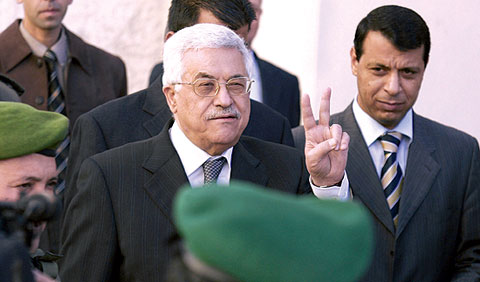
Dahlan vows to decimate Hamas

ENOUGH! TRY THEM FOR TREASON.

By Khaled Amayreh


Click to view caption

Palestinian girls cry after an explosion in the Jabalia Camp, Gaza


OFF THE RECORD, or so he thought, Fatah's former security boss in Gaza has strong words for Hamas and wavering Fatah supporters, reports Khaled Amayreh.

Former Gaza strongman Mohamed Dahlan said during a closed meeting held recently in Gaza that he would "rough up and humiliate" Fatah members or supporters who might be tempted to join the Hamas-led Palestinian government.

Speaking at the meeting held at the Gaza radio station, Al-Hurreya, Dahlan also said that, "Fatah has been 'out of order' since 1972."

"Fatah has been broken, destroyed, and is thriving only on the blood of the martyrs and suffering of the prisoners as well as personal and individual initiatives," he said.

The former chief of the Preventive Security Services in Gaza warned opponents within Fatah, saying: "The march will go on and if our brothers seek to stop it, they will be roughed up."

"Fatah is being run with the tools of failure. Okay, leave these tools as they are, but try to augment them with other tools that would conceal their blemishes and ill repute.

"You see, I learned from Abu Ammar [the late Palestinian leader Yasser Arafat] two things: if you want to delve into political action, especially in Palestine, the ability to persuade and the power to persuade. I asked Abu Ammar what he meant by the power to persuade and he said 'the rod'."

In an audiotape of the meeting made available to Al-Ahram Weekly, Dahlan is heard railing against Hamas, often using derogatory language.

"I told them [Hamas] that they would eat [expletive] if they recognised Israel and would eat [expletive] if they didn't recognise Israel. They would eat [expletive] if they recognised the Arab initiative and would eat [expletive] if they didn't."

Dahlan also tacitly admits that he has been behind much of the lawlessness and security chaos in Gaza: "I just deploy two jeeps, and people would say Gaza is on fire."

Dahlan says Hamas's victory in the elections was "a disaster", or nakba, for the movement, and yet, "Hamas is now the weakest Palestinian faction. They are whining and complaining. Well, they will have to suffer yet more until they are damned to the seventh ancestor. I will haunt them from now till the end of their term in four years. And I swear, whoever within Fatah says 'we should join the government," I will humiliate them."

Finally, Dahlan is heard telling the owner of the station that he would be willing to provide armed men to protect the station in exchange for the station adopting a sympathetic line. "I commit myself to meeting all your needs," he says.

The owner of the station, Majdi Arabeed, is also heard saying: "The station will adopt your way," with Dahlan responding " Al-Hamdulilah," or "Praise be to God."

Dahlan's office in Gaza refused to return calls requesting comment on the audiotape.

Dahlan, during a live interview with al-Jazeera TV earlier this week didn't deny the reality of the tape, when confronted with it by Hamas representative in Lebanon Muhammed Nazzal, saying rather laconically that he had nothing to apologise for.

Source

Scenes from Gaza

Source

Palestinian Rawan Abu Taber, 4, wounded during the Israeli military ...

Palestinian Rawan Abu Taber, 4, wounded during the Israeli military ...

"Palestinian Rawan Abu Taber, 4, wounded during the Israeli military operations, screams in pain as doctors change bandages to her severe burns, at the Shifa hospital in Gaza City, Wednesday Jan. 21, 2009. Doctors had to amputate her thumb because it kept on burning. A vast majority of over 4,000 Palestinians wounded in Israel's operations in the Gaza Strip are treated at Shifa, Gaza's largest hospital."
(AP)

A Palestinian girl cries as she sits next to a puddle on a street ...

"A Palestinian girl cries as she sits next to a puddle on a street in Gaza city, January 23, 2009."(Reuters)


A Palestinian man and his son sit on the wreckage of their destroyed ...


"A Palestinian man and his son sit on the wreckage of their destroyed home in Jabalya refugee camp in Gaza January 23, 2009."
(REUTERS)


Palestinian sisters Dunia, 10, and Dana, 5, discover their school ...


"Palestinian sisters Dunia, 10, and Dana, 5, discover their school books admid the rubble of their destroyed home in the southern part of Gaza City. Some 200,000 Gaza children have returned to school for the first time since Israel's offensive, many having lost family members, their home and their sense of security."
(AFP)


Palestinian boy Mohammed Kutkut, 14, right, covers his face ...


"Palestinian boy Mohammed Kutkut, 14, right, covers his face as he sits next to the name sign of his killed friend Ahed Qaddas in the Fakhoura boys school in Jebaliya, northern Gaza strip, Saturday, Jan. 24, 2009. Three friends of his class where killed when the Israeli army shelled Jebaliya in the past weeks. Tens of thousands of children have flocked back to schools throughout the Gaza Strip, days after Israel ended its fierce military operation against the territory's rulers."
(AP Photo)


A Palestinian boy carries rescued cats inside a birdcage, on ...


"A Palestinian boy carries rescued cats inside a birdcage, on a stroller on a street in Gaza City in the Gaza strip, Friday, Jan. 23, 2009."
(AP Photo)


Members of the Palestinian Khadr family gather around a fire ...


"Members of the Palestinian Khadr family gather around a fire next to a tent in the rubble of their house destroyed in the recent Israeli military operation in the devastated area of east Jebaliya, in the northern Gaza Strip, Saturday, Jan. 24, 2009."
(AP Photo)

Amazing! Israeli spokesman claims that Hamas used phosphorus weapons

Watch this amazing interview of Israeli spokesman Mark Regev by Channel Four:


Clearly - Mr. Regev has no idea of the damage his efforts are doing to the reputation of his country. But then, there is no such thing as an intelligent racist, and since most Israelis are racists....

Carbohydrates, tea and sugar keep Gaza running

Source

A Palestinian man has breakfast on the rubble of his partly wrecked house in Gaza City on Thursday (Reuters photo by Jerry Lampen) A Palestinian man has breakfast on the rubble of his partly wrecked house in Gaza City on Thursday (Reuters photo by Jerry Lampen)


By Douglas Hamilton
Reuters

GAZA - Blood ran freely over a cobbled Gaza street at dawn on Thursday, the fifth day of a ceasefire between Israel and Hamas fighters.

But it was a welcome sight. Family butcher Husam Nasr was fleshing a freshly slaughtered, 150kg (330 pound) heifer.

"The meat will sell for 60 shekels a kilo ($7 per pound)," he said. "That's nearly three times what it was before the war." Nasr said he would have been able to sell the meat of four cows each day before Israel's 22-day war to end rocket attacks on its southern towns by Hamas Islamists who control the Gaza Strip.

"But it will probably take two or three days to sell this. Not many people in Gaza can afford it now," he said, making rapid, expert cuts to open the abdominal cavity and drop the steaming guts, intact, onto the pavement.

Half of Gaza's 1.5 million people rely on food aid. They receive carbohydrates, fat and sugar but little fresh protein.

Gaza is a fertile place, where fruit and vegetables grow well. There are chicken farms and flocks of sheep and goats, but no cattle-raising operations in the enclave. Its 90,000 acres (36,420 hectares) is smaller than some ranches in Texas or Montana.


Underground cattle

"This cow came from Egypt, a year ago," said the butcher. That may not seem so unusual, given that south Gaza borders on the Egyptian Sinai. But the border is closed to trade.

So calves are smuggled in via tunnels under the border. They are dragged, bawling, into the light of Gaza from 20-metre-deep shafts, then duly fattened. But Israel bombed many of the tunnels, which weaken its chokehold on the Gaza Strip.

Another tempting but for now unreachable source of protein lies just to the west of Gaza in the Mediterranean Sea. There are lots of fish out there, but no fresh catch has landed on the dock at Gaza for at least three weeks.

Every morning this week, an Israeli gunboat offshore has let off several rounds of cannon and bursts of heavy machine-gun fire, to warn Gaza fishermen not to try sailing out to sea.

"Don't eat the fish" is advice whispered in restaurants.

Clients note that electricity for freezers has been either non-existent or highly intermittent during the conflict.

The people of Gaza are going to need plenty of energy for the big cleanup and reconstruction job they now face.

Men with shovels were clearing city streets on Thursday of the rubble of Israeli bombing, shelling and demolition, while farmers stacked concrete breeze blocks and tin sheeting to make huts against the cold in places where their houses once stood.

Many people get by on flat bread and sweet tea.

Chicken is the most common meat, easy to raise, keep and kill. But its price too has doubled due to the disruption of normal life, trade and delivery from farms and smallholdings.

Import of livestock feed is controlled by Israel and amounts allowed in recently are not sufficient, say Gaza Palestinians.

So for many, the chickpea paste of traditional Middle East hummus is the cheapest, most reliable source of protein. Eggs are a little luxury, and lamb or mutton is very scarce.

In the early morning light of Thursday, two boys, one mounted on a sleepy-eyed donkey, one with a little dog, drove their herd of sheep up the hill through the flattened rubble of Gaza's Jabaliya suburb, to graze them over the ridge.

But this land is now an enormous ploughed field of earth and broken concrete, where Israel massed its tanks and troops above the city. There is hardly a blade of grass left.

A little way east, the slopes looked enticingly green and succulent. But that grazing was in Israel.


23 January 2009

Amnesty International Calls on Israel to Urgently Disclose Weapons and Munitions Used in Gaza

Dr Mengele, I presume

Doctors Are Having Difficulty Treating Wounded with Unexplained Charred and Severed Limbs

01.22.2009 AmnestyUSA.org
Contact: Suzanne Trimel, 212-633-4150, strimel@aiusa.org

Amnesty International Press Release

FOR IMMEDIATE RELEASE:


15 year-old Ayman al-Najar at the Al-Nasser Hospital in Khan Younis. He has severe injuries, including chemical burns, after Israeli bombing in the village of Khoza'a, Gaza

(New York) -- Saying doctors are finding new and unexplained patterns of injury among the wounded in Gaza, Amnesty International today called on the Israeli authorities to urgently disclose all weapons and munitions their forces used during military operations to prevent the loss of more lives.

"It is vital and urgent that the Israeli authorities disclose all relevant information including what weapons and munitions they used," said Donatella Rovera, who is leading Amnesty International's investigations team in Gaza. "More lives must not be lost because doctors do not know what caused their patients' injuries and what medical complications may occur. They have to be fully informed so that they can provide life-saving care."

Rovera said doctors are telling Amnesty International they are encountering new and unexplained patterns of injury among some of the Palestinians injured. "Some victims of Israeli air strikes were brought in with charred and sharply severed limbs and doctors treating them need to know what weapons were used," she said.

Dr. Subhi Skeik, head of the Surgical Department at al-Shifa Hospital, told Amnesty International delegates: “We have many cases of amputations and vascular reconstructions where patients would be expected to recover in the normal way. But to our surprise many of them died an hour or two after operation. It is dramatic.”

Rovera said the human rights organization has irrefutable evidence of the use of white phosphorous munitions in civilian areas, although the Israeli authorities previously denied using this munition.

Israel's earlier refusal to confirm that its troops had used white phosphorus meant that doctors were unable to provide correct treatment. White phosphorous particles embedded in the flesh can continue to burn, causing intense pain as the burns grow wider and deeper, and can result in irreparable damage to internal organs. It can contaminate other parts of the patient's body or even those treating the injuries.

“We noticed burns different from anything we had ever dealt with before,” one burns specialist at Gaza's al-Shifa Hospital told Amnesty International. “After some hours the burns became wider and deeper, gave off an offensive odor and then they began to smoke.”

The condition of people with burns caused by white phosphorus can deteriorate rapidly. Even those with burns that cover a relatively small area of the body – ten to fifteen percent – who would normally survive, can deteriorate and die. Only after a number of foreign doctors arrived in the Gaza Strip, days after they had seen the first casualties of white phosphorus, did local doctors learn what had caused the wounds and how to treat them.

A 16-year-old girl, Samia Salman Al-Manay'a, was asleep in her home in the Jabalia refugee camp, north of Gaza City, when a phosphorous shell landed on the first floor of the house on Jan. 10. Ten days later, from her hospital bed, she told Amnesty International that she was still experiencing intense pain due to the burns to her face and legs. “The pain is piercing. It's as though a fire is burning in my body. It's too much for me to bear. In spite of all the medicine they are giving me the pain is still so strong.”

Without knowing what they were, Palestinians whose houses were hit by phosphorous shells or burning debris from them, mistakenly threw water on the flames, only for the fire to intensify. When doctors, seemingly unaware, tried to wash patients' wounds with saline solutions, they screamed in pain. And when they changed the dressings on patients' burns they were shocked to see smoke rise from the wound. When they conducted investigative operations, they extracted small pieces of felt which started to burn immediately when they were exposed to the air.

“There can be no excuse for continuing to withhold information vital to effective treatment of people wounded in Israeli attacks. Lack of cooperation by Israel is leading to needless deaths and unnecessary suffering," said Rovera. "The Israeli authorities should fulfil their obligation to ensure prompt and adequate care for the wounded by making a full disclosure of the weapons and munitions they used in Gaza and provide any other relevant information that may help medical teams."

Background

Some 1,300 Palestinians were killed between Dec. 27, 2008 and the ceasefire declared by Israel on Jan. 18, 2009, including more than 400 children and over 100 women. More than 5,300 Palestinians were injured; many will be disabled for the rest of their lives. In the same period, 13 Israelis were killed in attacks by Hamas and other Palestinian armed groups, including three civilians.

Amnesty International is a Nobel Peace Prize-winning grassroots activist organization with more than 2.2 million supporters, activists and volunteers in more than 150 countries campaigning for human rights worldwide. The organization investigates and exposes abuses, educates and mobilizes the public, and works to protect people wherever justice, freedom, truth and dignity are denied.

# # #

For more information, please visit: www.amnestyusa.org.
Photos from ISM

01.19.2009 Flickr.com
By ISM Palestine

15 year-old Ayman al-Najar at the Al-Nasser Hospital in Khan Younis. He has severe injuries, including chemical burns, after Israeli bombing in the village of Khoza'a, Gaza


SHARE THIS POST:

Eyewitness in Gaza: Yesterday and Tomorrow


Source


'Whatever they do to us, we are still here and we will still be here.'

By Ewa Jasiewicz – Gaza

We're like trees, we have our roots and they allow us to grow, little by little, we grow up and then they cut us down. But, whatever they throw at us, whatever they do to us, we are still here and we will still be here – Om Bassim, Jabaliya Camp, January 2009.


'Our Home'

At the beginning of this war, when the bombs first started falling intensively, I remember lying on a mattress, late at night, I don’t remember where, maybe in Beit Hanoun hospital, maybe in Beit Lahiya. As I slipped into sleep, I could hear explosions, thuds, one after the other, some near, some distant, some to our east, to our west, again and again. In my semi-consciousness I felt they were all going off in my house, in my home, that the bombs were exploding in different rooms, upstairs, downstairs, next door, under me, over me. I didn't feel fear, I felt a closeness, a holding together. Maybe it was a consequence of Gaza being an incarcerated space, a walled camp, so small and close-knit, a prison, but also, a house, a home, with families in every part, every corner, every room, a community of relatives from north to south, every explosion and massacre felt acutely, felt intimately as if it had happened to ones own family, in the home, this home.

The war was felt and heard in every home, it invaded some homes, soldiers occupied and destroyed peoples homes, tank shells, burning white phosphorous and bulldozers smashed homes, some people were buried under their homes, some are still entombed in their homes. Where is this home now? 50,000 people are homless according to the UN. Living in tents, classrooms, crowded rooms in the homes of relatives, under tarpaulin stretched over roofless rooms on family land, still standing. If the bombing resumes, and the attacks resume, this will still be a home to the people of Gaza, each bomb, and each hit, acutely felt, shuddered and shouldered by each community and family. My friend Om Bassem, mother of nine, living in Jabaliya explained calmly yesterday, 'They besiege us and take away our electricity, ok, we carry it, they take away our gas, our flour, our food, ok, take it, we can take it, they take away our drinking water, take it. And our children, a mother grows her son until adulthood, focusing on nothing but bringing up her children, and then he is taken away, and we take it. We spend our whole lives working, saving, building, our homes for us and our children and our children's children, and then they destroy it, bomb it to the ground, and we take it. We're like trees, we have our roots and they allow us to grow, little by little, we grow up and then they cut us down. But, whatever they throw at us, whatever they do to us, we are still here and we will still be here, we can take anything they do to us. God is big, God is bigger. And thanks be to God for all of this. We are steadfast'. And she smiles.


To the Dead Zone

We got the call early Sunday morning. We finally had 'co-ordination' to get into the closed military zones that Israeli forces had been occupying for the past three weeks. These were the 'closed military zones' in which ambulance staff, the Red Cross and UN had been fired upon and rescuers killed trying to enter.

These 'closed areas', these blind spots and dead zones, are Towam, Zaiytoun, Atatra, Ezbit Abed Rubbu, Toffah. These are communities, neighbourhoods, with schools and shops and homes that people would sit out in front of, on plastic chairs drinking tea, fingering prayer beads, staring at the sparkling blue sea, communities with farmland, orange orchards and strawberry fields. All locked down. The medics from the Red Crescent would come back by turns stunned and weary eyed. An old man with a gunshot wound to his head clasping a white flag from Atatra, bodies trameled by tanks – unidentifiable – and the girl, the famous, red, half eaten girl, Shahed Abu Halim, aged one and a half according to paramedics, left to die and half eaten by dogs, her body a beacon of horror for everyone who saw her being brought in to Kamal Odwan hospital in Jabaliya.

So many times, our ambulances skimmed the edges of these dead zones, where families were imprisoned, snipers holding them effectively hostage, the dead lying in the street unclaimed, witnessed daily by neighbours and loved ones. On occasion we managed to grab bodies on the periphery, mangled by missiles shot from surveillance drones. With the Ministry of Health ambulances, we rode to Karama – Dignity – where two men were reportedly found dead by rescue workers having bled to an undignified death from treatable injuries. Unreachable.

These were the areas that civilians had been shot dead trying to exit, some gunned down whilst holding white flags such as Ibtisam Ahmad Kanoon, 40, from Atatrah, who lay dying from 11.30am until 2pm the next day until relatives could carry her out. Her husband, son and mother all walking with her – her son Mohammad Bassam Mohammad al Kanoora, 23, injured by shrapnel to the head and Zahiye Mohammad Ahmad al Kanoora, 60, injured in the back.

Like the family of Musbah Ayoub, 64, from Izbet Abed Rubbu, who bled to death from shrapnel injuries to his legs, as relatives frantically called the Red Crescent and Red Cross for three days.

Like Wael Yusef Abu Jerahd, 21, from Zeitoun who was hit by tank shell shrapnel as he went to get a drink of water in his home. He lay dying for four hours, his family calling for help and appealing to Israeli occupation soldiers to enable his evacuation. Instead Israeli forces killed two paramedics traveling in a Libyan Red Crescent jeep attempting to get to him, and occupied the family's home, imprisoning the family, 12 people, in a small kitchen along with their dead son, for three days. When the family were finally allowed to leave, they had two members to carry for over a kilometer over broken ground and trashed industrial sites; their son Wael, and his 64-year old mother, who couldn’t walk because of her diabetic condition and fresh nervous break-down over the killing of her son and her days and nights by his dead side, as Israeli occupation soldiers shot from her house.

The stories of those who bled to death because Israeli forces would not allow ambulance access to collect them, and the families who had to witness their demise and live with their bodies, run the length and breadth of the Gaza Strip. When ambulances could finally enter some areas, they were stoned by desperate and abandoned relatives. It is a war crime, under the Geneva Conventions, to prevent the passage of or target emergency staff who are trying to collect the injured.


The Walking Living

We made out at the break of dawn, red lights rotating into action, speeding towards Towam, close to Atatrah. Drizzle mixed with a haze of white phosphoric smoke, like a thin grey gauze over our eyes. Above us, surprisingly, and awesomely, soared a rainbow, high, wide and perfect, arching over the grey broken streets of Jabaliya and the freshly bombed Taha mosque with its' insides spilled over the road, the knocked down houses like knocked out teeth, downed power lines, blown out and blackened apartment blocks, grey all around us, but if we looked up, a beautiful technicolour arch.

The first body was that of a young man, face down and crumpled outside the doors of the Noor Al Hooda mosque, his navy jumper singed from shrapnel injuries.

Behind us was a wasteland. Where houses had been, just days earlier, there were jagged edges of crushed walls, mangled with clothes, glass, books, furniture; houses turned into a lumpy sea of lost belongings, bombed and bulldozed into the ground. Amidst all this, was the crumpled body of Miriam Abdul Rahman Shaker Abu Daher, aged 87. It was her arm that we saw first, sticking out of a dusty blanket, trapped under rubble. We managed to hoist her onto a stretcher, paramedics took her away and I was left standing next to a man. 'That was my mother' he said to me. He explained what happened: 'We left three days ago (15th January) with our children and we came back for her, but we couldn’t get to her, we called the Red Cross, they couldn’t help. They bulldozed everything here, maybe more than 20 houses. We thought we could return, we didn’t think they would do all this We couldn’t come back for three days so we don't know how she died, maybe she died of the cold? After a few hours we had come back and planes were shooting at us, we were just meters away from our house, but the shooting was too much. We thought if the soldiers came they wouldn’t harm her because she's so old, we thought maybe they would give her food or look after her. We didn’t expect them to bulldoze the whole area', explained Awad Abdullah Mustapha Abu Daher, 45 years old. We took four dead into our ambulance. The Red Crescent would take another 32 before the day was over.

A column of people was walking slowly, some with donkey carts, some rumbling over the clod ground on motorbikes. All making their way home, for the first time, to Atatrah. Atatrah, with its new blasted out school, holes big enough to drive through, a crippled mosque, and burnt houses smoked above us, sloped up on a hill, with rolling strawberry fields and palm trees and the beach behind it, such a beautiful place to live, lush and alive and green. Now, according to locals, its almost unidentifiable, residents are disorientated by the missing houses, confused between the lost streets and new 'streets' – tracts bulldozed between houses, gaping holes in half buildings and land churned into sand. I followed the column. Walking behind it was reminiscent of so many funeral processions that have trod the streets of Gaza and Palestine as a whole. A slow column, a long walk, an intergenerational walk, a thousand backs in front of us, for the dead, for the living, for the jailed, a return after eviction, a return after each invasion, The Walk, after being released from every imprisonment in every temporary prison by Israeli soldiers, the Beit Lahiya High School, a neighbour's home, The Walk back all the time and through time, to overcome grief, dispossession, humiliation, a collective walk. I wanted to accompany that walk.

Climbing up the main road, pulverized and impassable by car, a group of 10 men come walking towards us carrying their heavy dead wrapped in blankets, struggling to find their footing on their descent. We spend the rest of the day searching for the dead, along with everybody else, another collective walk, a collective search, 'Where are the martyrs? Are there martyrs here?' and to everyone, the Arabic Islamic expressions of condolences and goodwill, 'Thanks be to God for your peace', 'God will give', 'God protect you'. We are following the scent of rotting corpses, the scent sometimes of already decayed flesh, or decaying animals – a donkey, a goat, dogs, a horse. One man we bring from Toam, Moayan Abu Hussain, 37, is brought to us by donkey cart, his badly decomposed and bloated body wrapped in two blankets. He fills the white zip up heavy plastic body bag.

The following day, again, in the morning, bodies are being brought out of the ground, from crushed homes, and from tunnels. At the top of Ezbet Abed-Rubbu, early in the morning, we ride to retrieve three bodies, three men, fighters, from the Sobuh family. Locals say they were trapped in their tunnel when collaborators told the Israeli army they were there and the tunnel was collapsed from both ends, starving them of oxygen and entombing them in a slow death. What does resistance mean when sea, air and land are controlled by the occupier? Going underground is literal. The walk now is becoming a crawl. F16s soar low above our heads, and continue to in the intervening days, a reminder of who dominates here. As local men dig up their dead, the stench overwhelming, spitting out death as they work, digging, the men finally surface, to be wrapped immediately in blankets, in front of an audience, the perpetual witnesses here to every crime, every death, every aftermath.

The crowd of perhaps one hundred, strives to pack into the ambulance along with their loved ones, crying, keening, clamoring at the white plastic bags. A boy of maybe 8, with a face etched older with trauma, shouts in a voice of a man, 'Hasby Allah wa Naeme al Wakee!'' – 'God will judge them!' But who will judge the Israeli occupation forces and their leaders, political and military, who have perpetrated war crime after war crime here in Gaza? It has to be us. We need to take up our consciences and humanity and translate judgment into action.

Yesterday was a fast-forward blur of destruction, mass pain, broken bodies, lifeless beings, terror on the streets, in homes, in mosques, in ambulances, in hospitals. Yesterday, people were being physically dismembered and today remain so, many still recovering on intensive care units in France, Egypt, Israel. The same states that stayed silent and complicit in this massacre, now take the broken into their bellies and return them patched up, back into a killing zone, a prison where the guards can shoot back in, plough back in and break them all over again at any given moment.


Torture and Relief

Under the dictatorship of Saddam Hussein in Iraq, people were tortured underneath hospitals, burnt, fractured, torn up, and then taken upstairs to be repaired, in the full knowledge, that one they were whole again, skin growing back together again, the same awaited them, they would be taken back down, to be tortured again, the healing a mocking, a thwarted, negated process in itself because of the looming knowledge that it was only to be followed by a repetition of the breaking. This type of collective torture is being practiced here and the complicit are those who allow it to happen, and that do not create the conditions to stop this cycle of devastation. People keep being recycled through this trauma, generation after generation, through fresh weapons, new chemicals, new prisons and new ways of the international community maintaining silence, complicity and support for Israeli occupation.

Families are familiar now with the trawling delegations and caseworkers, notebooks in hand, I include myself in this walk, the walk of the hundreds of journalists, human rights workers, Red Crescent, Red Cross, United Nations workers, asking the same questions, noting the same details, preparing families for temporary shelters, giving out plastic sheeting for broken windows and replacement doors, blankets, emergency food packages, tents, cooking stoves, everyone expects them and expects us; the same donor agencies and charities, rolling up their sleaves to issue fresh appeals and re-build the same community centers, police stations, hospitals, that were rebuilt after the last annihilation; a rewound and fast-forwarded cycle of destruction and reconstruction, yesterday and tomorrow being blurred together into a circle of a collectively expected return to ruins and a slow rebuilding, again and again. It is no wonder that 'human rights' workers and the notes and testimonies frantically taken down with shock and condolence, time after time, year after year are met with replies of 'Its all empty, write it down but what will it change? It's all empty'. There is no post-traumatic stress disorder here because there is no real 'post' to the traumatic stress. Traumatic events keep on happening again and again, relief un-processed, grief unprocessed, as people watch and wait and brace themselves for the next attack.


Pieces

People are left with snippets, fragments, of their loved ones, literally and in memory. Nuggets of film shot on mobile phones pass through multiple hands, of the last of their loved ones, wrapped in white sheets, with hands and tears pouring over them, screaming and screaming, to be shown and shared with fresh tears in real time, again. Like the five from the Abu Sultan, Abbas and Soosa families, demolished by a tank shell shot into their home as they were drinking morning tea on their doorstep in Shaimaa, Beit Lahiya. Paramedics could not reach them for half an hour as they lay bleeding in pieces outside their home. Asma Abu Sultan, 22, watched her father, brother and uncle bleed to death, 'It was 10.30am and we were drinking tea together in our home when we heard this gigantic bang, I saw my uncle at the door, injured, we went inside, I saw they had no chests, no hand, one was still breathing, I said 'get up my brother' I was telling him please, get up, please don’t die, he started to bear witness to God, then he said your father has died. He was draining of life, the blood draining from his face, but he was still alive, and then we couldn’t get an ambulance because they kept getting bombed, we kept asking everyone to help us, after half an hour he died from shrapnel wounds to the heart'.

Pieces. One afternoon, in the yesterdays of this war, we were called out to respond to a car bombing in Gaza City. We arrived on the scene, in bright light, to Palestine square, close to the Ahly al Arabi Hospital. Two injured had already been taken away. The car was a mangled sliced heap. Somehow there was no burning. We picked up a large, headless, man, still bleeding. Nobody wanted to touch him, they were terrified of him. Before we left the scene, someone put a small plastic ID card in my hand, Arabic script and his head, his face, bearded, in his late 30s, taken alive, he looked strong. I couldn’t let go of it, as the ambulance bounced along the broken streets, he behind us, handless, legs torn open, on a rickety stretcher, I held it in both hands, and couldn’t let go of it, keeping it in my hand wrapped round one end of the stretcher, pressed together, trying to keep it together somehow, close to his body.

A few nights ago, I sat by candlelight with my friend and his 9-year-old son Abed, in Beit Lahiya. I had bought him stickers depicting the human body, the brain, illustrated piece by piece, the human intestinal system, muscular network, the insides of the human eye, the heart, its valves and arteries. Abed fingered them, spread out over the kitchen table in the candlelight, these pieces, pieces Id seen outside bodies, spilled onto the streets of Gaza. Here they were in his hands, on the table in front of us, in one dimensional colour. He began to sing, 'We're steadfast, steadfast we remain, during this siege, and we remain steadfast'. He sang the words over and over again, fingering the stickers flickering in the candlelight until he sang himself into drowsiness. 'Get up and go to sleep', his father said and we kissed him and he left.

Everyone is trying to pick up the pieces of their invaded lives here, yesterday's attacks and the severing of families from one another, will take years to reconnect, and rebuild, bring together again.

Yesterday can happen again. People expect a tomorrow when Israel will escalate its attacks and go further, casting more lead. Some believe this was a rehearsal for a deeper war, a litmus test that Israel won, because in 21 days of attacks, the international community kept shining a green light for Israel to continue to bomb and kill without restraint. The endgame being a pacified, acquiescent Gaza, with a weak Palestinian Authority, under the control of Israel or, if unrealized, an evicted Gaza, realized through provocations from Israel, extra judicial killings and surprise incursions, eventually responded to with rocket fire from the resistance and then a massive attack and push southward of the population into the Sinai and an Egyptian protectorate, new camps, and a new redrawing of a map already redrawn so many times through exile and empire.

Yesterday can happen again, a tomorrow that people here have been struggling for over sixty years, still dim, still distant, still carried but harder to imagine in the midst of the grief endured under siege here. The difference we can make is to seize today. The difference between yesterday and the horror, and dispossession and shock all here are still reeling from, and the tomorrow that could bring more of the same, reproducing, re-cycling, the same terrorization and cutting down of people as they pray, walk, sit, stand, heal, fight, the difference between yesterday and tomorrow is our today.


Today

I told many people, friends, taxi drivers, doctors, policemen, about the peoples' strike on EDO-MBM Technologies in Brighton, UK this month. EDO manufactures the bomb release mechanism for F16s. Activists filmed themselves explaining to camera that they were decommissioning the facility in protest at the company's complicity in the war on the Palestinian people, and specifically the killing of the people of Gaza. Over a quarter of a million pounds worth of damage was caused as activists threw computers out of windows and smashed equipment. They had taken their resistance out of the powerful but symbolic realm of the streets and into the offices of those responsible for arming Israel, physically imobilising their business. Three remain on remand in prison.

When I recounted this action to people, I saw an expression come over their faces that I hadn’t encountered before when talking about international solidarity. It was a kind of respect, a dawning smile, a sense of surprised pride, a tiny move towards a leveling between the blood sacrifices and living hell of so many here, and sacrifices made by people on comparative comfort zones on the other side of the world - for them. What would the parents of the children blown up by F16s here do if they could? What would we do if our children were being cut down by war planes and we knew where these weapons were being manufactured and we could confront these arms dealers and stop them arming those responsible for killing our children? Would we not stop them, would we not make the move from the streets to the factories, offices and facilities where these deaths, tomorrow's deaths are in the making, and disarm them, save lives at the physical root of the production of the means of killing? Save lives there so that exhausted and besieged doctors here do not have to try to, under appalling conditions and against all odds; enforce international law outside ourselves, because noone else will do it for us. People here are expecting solidarity activism to go further, and needing it to go much much further.

A friend here, a well-respected intellectual and activist, run ragged through the war participating in interview after interview, writing piece after piece, pieces of resistance writing, expressed his sense of failure last night, that he didn’t do enough. That the resistance was dying for all of us, sacrificing for all of us, paying the ultimate price, and what was he doing? Sitting in his comfort zone, his writing a relief, for himself, to himself, making him feel better and stronger but where were his words going? What was the relationship between the words he was writing and speaking and stopping the death, stopping the invading occupation forces? Look at the completeness of Che Guevara, a doctor, a writer, a fighter, a complete man, and what was he, a writer, an academic, activist, but unable to pick up a gun or a body? Crucially, what was 'enough' and when have we done 'enough'?

Our Lines and 'Enough'

'Enough' is relative, and 'enough' is subjective and incredibly personal, but, a tentative attempt to unpick the crushing pressure of guilt - guilt on all our backs, all over the world, of an impotence and a sense of failure to influence, and a struggle build the means and the movements, to influence change – I think a tentative definition of enough could be, to transgress, to cross our own lines of possibility.

Our own lines of what we believe we can and cannot do have been authored by others and adopted by ourselves. Lines drawn by authorities, re-inscribed with violence and drawn thick with the threat of detention, imprisonment, the denial of everything that makes life worth living; contact with loved ones, freedom of movement, a natural stimulation of our senses through interaction with our natural environment, our sense of identity, all radically curtailed and undermined through incarceration. And death, the final line, the full stop imposed by absolute power onto the living bodies of those daring to resist, armed or unarmed, lives slammed shut by surveillance plane missiles zapped them into the ground. F16s exploding houses full of people. Ended. All ended. A line drawn under their lives. But where are our lines? 'Enough' will be an ever extending horizon, the edge always ahead of us, but we will never get close to where we need to be as a critical mass to effect change unless we cross our own lines of fear.

'Enough' is when you know you can do more, and you know you can take a step forward into a space of activism that you have never entered before and you do it. 'Enough' is when you know, you have pushed yourself, when you took risks and made sacrifices that you knew would be painful, knew could weigh heavy, could change your life forever, but you did it. When you knew the potential consequences of your actions but you confronted your fears and took the step forward, stepping over your own line. From stepping out into the streets for the first time to demonstrate, to picking up a chair and barricading yourself into your university, to telling the world you're going to decommission an arms factory or war plane or settlement produce facility and doing it, we need to cross our own lines of fear, hesitation, and apprehension. We can push our movements forward, person by person, group by group, party by party, network by network, by crossing our lines and making sacrifices, small compared to the intensive blood letting, loss and devastation here.

Direct action, strike action, popular occupations, tactics used by Palestinians in the first intifada, and smashed by Israeli counter-tactics of siege, intensified occupation and massive military onslaught, all legitimized by our international governments. The counter-onslaught shows no signs of abatement.

We need to redraw our own battle lines and go further, to do the 'enough' we want to do and be the 'enough' we want to be. Our consciences and history demands this. It's not enough and it will be too late for a new history, authored by others, to judge us, we have to make our own. It is not God that will judge us, it will be our brothers and sisters here in Palestine and in our international community, the widows, the orphans, the childless parents, the living left behind after the dead.

We can't afford yesterday to repeat itself. We cannot wait until tomorrow happens to us. Between yesterday and tomorrow is today and we need to build our intifada today. Our intifada of solidarity needs to grow beyond demonstrations, and to put Boycott, Divestment and Sanctions (BDS) politics into practice through direct action. The BDS campaign was initiated and called for by over 135 Palestinian grassroots organizations in 2005, a call that needs to be amplified and spread internationally, targeting the corporations and institutions enabling Israel to keep violating international law and destroying peoples lives. Through direct action, popular disarmament of Israel, and a real grassroots democracy movement, we can collectively come into our 'enough'. We can affect that which hasn't happened yet, we can change what happens tomorrow. This is our intifada, this is our today.

- Ewa Jasiewicz is an experienced journalist, community and union organizer, and solidarity worker. She is currently Gaza Project Co-coordinator for the Free Gaza Movement (www.FreeGaza.org).