Sunday, 7 May 2017

Brexit Britain on the Brink

With the formal beginning of the UK General Election with the dissolution of Parliament, the British Prime Minister, Theresa May stood on the steps of 10 Downing Street and started milking the nationalistic fervour of Brexit for all it was worth. Mrs. May declared that Brussels was attempting to “interfere” with the British General Election. The day before she crudely stated the President of the European Commission, Jean-Claude Juncker would soon find out what a “bloody difficult woman” she was, taking that label first pinned to her by her fellow Tory colleague the wonderful Ken Clarke (who would make a fantastic Prime Minister).
According to an account of a working dinner recently held in Downing Street between Mrs. May and President Juncker the food was awful and Mrs. May was living in another “galaxy”. At the close of the dinner President Juncker said he was “10 times more skeptical” about the chances of a successful deal than he was before. As his brilliant Chief of Staff Martin Selmayr reflected Brexit cannot and will not be a success, it is a “sad and sorry event” that must be at best managed and contained. It would seem reality still has not sunk in with Mrs. May, her party, their followers and at least half the population in Britain.
The first piece of reality to bite was when the President of the European Council Donald Tusk ruled out striking a UK-EU Free Trade Agreement within the two year divorce proceedings. Mr. Tusk, backed up by the European Council, European Commission and all 27 loyal members of the European Union made it quite clear before any talks could even begin on the subject of a future UK-EU Free Trade Agreement the issues of “people, money and Ireland” would have to be sorted out. The divorce bill for Britain to leave the EU and honour it’s budgetary and contractual obligations has risen sharply and now Brussels is calculating it could be anywhere between 80-100 billion Euros.
I think this will be the sticking point at which no deal is reached given the slippery nature of the British State in honouring its financial commitments. Amazingly, back in October Bloomberg News released a report which showed the pound sterling became the world’s worst performing currency in October 2016 against the dollar, even below the Romanian and Colombian currencies and it has not much improved since then. One wonders by the time Brexit takes effect if there will be a pound sterling left? The cliff that the pound has fallen off is already putting severe pressure on prices back in the UK.
Related image
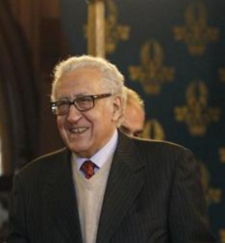
President of the European Commission, Jean-Claude Juncker
The UK is already one of the most extortionate places in the developed Western world for prices. The cost of living in the United States, once one strips out the cost of university and healthcare, is actually much cheaper than Britain. This is due to the United States having a moderate sales tax of 9%. In Britain, it is an eye watering, unbelievable 20%. It could go even higher if the Tories are returned.
Mrs. May has pledged not to increase it before 2022 but her word is meaningless. She was for Remain and now is for a Hard Brexit. She was against holding an early General Election but broke that pledge too. May and her ghastly Chancellor Hammond attempted to raise National Insurance contributions for the self-employed only a few weeks ago even though the Tories manifesto at the last General Election promised not to do so. A pattern is developing which is you simply cannot trust a word the Tory Party and Mrs. May say.
One of the immediate effects of Brexit and the collapse of the pound is that prices have already risen sharply. There was the infamous Unilever spat with Tescos back in the autumn and that was just a taste of things to come. Whether it be food, energy, transport, water rates, rents, services etc. the cost of living in the UK is through the roof while the quality of the goods and services one gets is not equal to the price one pays and customer service is appalling. The UK is one of the most places in the developed, Western World for value for money and good customer service.
The UK supermarket Morrisons has had to hike the price of marmite by a staggering 12.5%. Meanwhile the National Institute for Economic and Social Research warned correctly that inflation in the UK would start rising fast in 2017. Indeed it jumped from 1.8% in January to 2.3% in February, quite an increase between one month and could go as high as 4% or more with the increase of import costs inevitably feeding through to the high street. As I said, the UK is already an egregiously and peculiarly overpriced place to live in, whether it is prices in the supermarket or on the high street, or the overinflated housing market and out of control rental sector. If prices are this expensive with an inflation rate currently at some where just over 2%, it will not be fun to see what prices stand at this time next year with an inflation rate of 4%.
Here I think about hard working and hard pressed people like a taxi driver in Cambridge I spoke with recently. He told me he works all the hours God sends him, seven days a week. And he still is only making ends meet and has no money left over at the end of the month to put aside for saving for a mortgage. Yet, according to Mrs. May Britain is such a great country to live in. So great, it has to spell it out by inserting the Great into its formal title. If someone has to tell you how great they are, you can bet your bottom dollar, they aren’t.
Then there is the issue of the Single Market. Britain’s main export market is the European Union. Indeed, the UK does more trade with Ireland than with China. As the German Chancellor Angela Merkel stated on the morning of the referendum result:
“The British people have made it clear. They do not want to be part of the European Union. They do not want to be part of its Single Market”.
Mrs. May confirmed this with her dreadful, contradictory and incoherent “Global Britain” speech back in January. So, with no prospects of a quick and easy UK-EU trade agreement the years ahead for the UK, quite possibly crashing out of the EU and it’s Single Market on to World Trade Organisation tariffs will be very painful for British businesses and customers. This is why the reassurances that the British Government have given Nissan regarding tariff free access for the UK motor industry and its pronouncements that there will be no change in the border arrangement between Northern and Southern Ireland are worthless. It is not going to be up to the UK Government whether or not the motor industry will be free from EU tariffs or whether or not the island of Ireland is going to be subjected to an EU border.
Image result for uk eu trade
Brussels holds all the cards on these matters and it will be down to Brussels to decide if the UK motor industry is not subject to EU tariffs and whether border controls and customs checks should be introduced between the Irish Republic and Northern Ireland. Britain perhaps has some leverage on these matters but it does not have the final control over them. Ultimately, the UK will have to dependent upon the good will and good graces of the EU with regards to the final outcome on these matters.
This is why Mrs. May is playing a very dangerous and counter-productive game now with stirring up even more anti-European xenophobia for short-term, petty political gain as if the monstrous UK Referendum was not bad enough with the current British Foreign Secretary coming out with statements likening the project of the European Union to Hitler’s vision for Europe. By being so hostile and aggressive with comments such as her “bloody difficult woman” statement and her vulgar declaration on the steps of Downing Street that Brussels was scheming and plotting to undermine British democracy, she is not building the bridges of good will and constructive relationships Britain will need to get a good deal from the European Union.
Last weekend the 27 EU leaders – Theresa May was not present – approved within a minute or so the guidelines for the EU’s negotiation of Brexit first issued on 31 March by President of the European Council Donald Tusk. EU officials said leaders burst into applause as the negotiating stance was waved through. The EU’s chief negotiator, Michel Barnier, said:
“We are ready… we are together”.
As outgoing French President Francois Hollande said there would inevitably be
“a price and a cost for the UK – it’s the choice that was made”.
This is after all, what the British people voted for, so let them have it. I suspect there will be no deal at the end of the two year talks due to my belief that I can not envisage the UK honouring its financial contractual commitments. Thus, the UK will come crashing out without any deal.
If the EU chooses to subject the UK motor industry to tariffs and decides to institute an EU border between Northern and Southern Ireland, there will be nothing the UK can do to stop it. If the EU decides to make life difficult for the millions of British people who holiday on the glorious European continent each year to escape the miserable British weather and sour, passive-aggressive behaviour of their countrymen, there is nothing the UK will be able to do to stop it. There could be huge queues of cars at Dover and a plethora of customs checks. This is why the Leave campaign was such a fantasy, telling people that the UK could vote to leave the EU and still enjoy access to the Single Market.
This was one of the biggest lies told by Leave, just as big as their pledge to spend the extra money saved from EU budget contributions on the NHS. That pledge has quickly evaporated because it was based on lies and I doubt very much once the UK finally exits the EU in 2019 there will be any new money available to spend on the NHS. Indeed, it will be interesting to see what happens to the NHS which is staffed heavily with EU nationals and internationals because of the UK’s inability to train and retain home grown talent. As Matthew Norman writing in The Independent recently said:
“Those who disdain free movement of workers from inside and outside the EU (until they find themselves in hospital, or the washing machine breaks down)”.
Of all the EU Heads of Government, it has been the German Chancellor who has been the most moderate in her pronouncements on the consequences for Britain of leaving the EU. Now however even Angela Merkel’s patience with the foot dragging and flights of fantasy of the British Government is wearing thin. The Chancellor recently spoke of the “illusions” that some in the British Government still harboured regarding how difficult Brexit and it’s negotiations were going to be. Previously the Chancellor had said that:
“It is going to be rough going I think. It will not be that easy”.
This goes to nub of the predicament that the UK has placed itself in.
When it comes to Brexit it is the EU which holds all the cards. That is why perhaps it would have been wiser and in the national interest not to have appointed the “three Brexiters” of Johnson, Fox and Davis to the key posts that will oversee the massive amount of work involved over the coming years in disentangling the UK from the EU. Those appointments hardly sent a conciliatory and emollient message to EU capitals. In fact, it raised the hackles of many in Paris, Berlin et al and Mrs. May bangs on and on like a robot about how she is the only leader in Britain best placed to handle the Brexit negotiations. I think from her performance so far and that of her Government Ministers who brought about this crisis for Britain, it is clear she is the last person well suited to the task ahead.
It is not just an economic and financial storm which is on the horizon for the UK, but a constitutional crisis which could see the breakup of the United Kingdom itself. While the country as a whole voted by 52% to 48% to leave, a more complex and nuanced picture emerges when one examines the breakdown of the regional voting. Scotland overwhelmingly voted to remain. As did Northern Ireland. The Scottish Nationalist First Minister Nicola Sturgeon has been quite right to demand another Scottish Independence Referendum. The Scottish Referendum was held when the UK was still a part of the EU and Scotland was voting to remain part of a UK inside the EU. It would have made more sense to have held the Scottish Referendum after the EU Referendum, not the other way around.
But then, this is Britain after all where there is such poor planning and design with very little though and rigour ever put into anything whether it be the management and running of public services or the design and layout of public buildings. If it gets to such a vote, Scotland could well opt for independence this time as a means to re-enter the EU and gain access to the Single Market, a market place far bigger and far more important for Scotland than remaining in a union with England.
Meanwhile, in Northern Ireland, the decision to leave the EU could very well achieve what thirty plus years of the bombs and bullets of the Provisional IRA failed to do – force a British Exit – with the North reunified with the South within the European Union. For the first time ever in the recent local Northern Ireland Assembly elections the unionists lost their majority for the first time ever and Sinn Fein is now only one seat behind the largest of the unionist parties.
As General de Gaulle said in his statement when he vetoed the UK’s first application for EEC membership in 1962: “England is insular”. It is not just England. Many parts of the UK are insular and brutally provincial, totally un-cosmopolitan and un-globalised. Many British people barely know the correct facts about the composition of their own country, let alone about the rest of Europe and the world.
No one in England (outside of the political, media, diplomatic and business elites) rarely calls the country by its formal title – the United Kingdom or even Britain – it is simply England for many people and most describe themselves as English rather than British. So one side effect of Brexit will probably be the end of the artificial construct known to only a few as the United Kingdom of Great Britain and Northern Ireland. Britain is well and truly on the Brink and .

River to Sea Uprooted Palestinian   
The views expressed in this article are the sole responsibility of the author and do not necessarily reflect those of the Blog!

SAA REPORTS: Syrian Arab Army successfully advancing in Al-Shomriya Mountains in Eastern Homs countryside

The Syrian Arab Army (SAA) and Syrian Hezbollah captured the Rajm al-Aali heights in the northern Al-Shomriya mountains in the eastern Homs countryside.
The operation’s goal is to secure the area northwest of the T4 military airport in order to prevent ISIS from carrying out any future attack in this area after the SAA would launch its large attack to break the Daesh (ISIS, ISIL) siege on Deir Ezzor.
From its side, Daesh shelled SAA positions in the area east of Palmyra with mortars.The Daesh-linked news agency Amaq also published photos of weapons seized by Daesh mercenary-terrorists during the clashes in the mountains of Al-Shomriya yesterday.
Separately, Syrian air force warplanes targeted Daesh positions in Al-Habra al-Sharkia village in the eastern Homs countryside and destroyed an ammunition depot belonging to Daesh.
Since yesterday, the Russian Aerospace Forces have been conducting an iintense bombing campaign against Daesh terrorists in eastern Palmyra.
According to reports, Russian forces have moved four TOS-1A multiple rocket launchers to the area of Palmyra, where these systems will provide a fire support for the advancing government forces.
River to Sea Uprooted Palestinian   
The views expressed in this article are the sole responsibility of the author and do not necessarily reflect those of the Blog!

Syria’s Conflict: Russia Scores Big Foreign Policy Win

Syria’s Conflict: Russia Scores Big Foreign Policy Win
ANDREI AKULOV | 05.05.2017 | WORLD

Syria’s Conflict: Russia Scores Big Foreign Policy Win

What seemed to be unbelievable has finally happened! A pipe dream has come true! For the first time in six years since the Syrian conflict sparked, light is seen at the end of the tunnel. In a major foreign policy breakthrough, Moscow has received major international support of its conflict management initiative. On May 4, Russia, Turkey, and Iran signed a memorandum calling for the establishment of safe zones in Syria during peace talks in Astana, Kazakhstan.
The document was signed by the heads of the delegations. The issue will top the UN-brokered Geneva talks on Syria to be resumed this month. The proposal has been endorsed by US President Donald Trump, the Syrian government in Damascus and a vast segment of the armed opposition. The Astana talks are proximity talks, with Syrian government representatives and the rebels separately meeting with Russian officials and other representatives.
It’s important to note that Acting Assistant Secretary for Near Eastern Affairs Stuart Jones represented the US at the Astana talks on Syria – the first time a senior US official joined the negotiation process. Prior to that, Washington had been represented by the ambassador to Kazakhstan who sat in as an observer.
It also strikes an eye that right after the Trump-Putin phone conversation focused on Syria, President Donald Trump’s spokesman Sean Spicer distanced the administration from the claims by FBI director James Comey who told Congress on the same day that Russia presented «the greatest threat of any nation on Earth» to US democracy. Spicer said it was «the view of the FBI», not the administration. Also on May 3, Russia Defense Minister Sergei Shoigu said Russia and the United States would continue their contacts on Syria at the working level. The analysis of the events helps see which way the wind blows. We witness major changes on the way to alter the Syria’s landscape.
It leads to a very important conclusion – despite all the snags on the way, Russia and US diplomats and military have been working behind the scenes to make the accord possible. This is a very positive turn of events. If Russia and America cooperate on Syria, they can do it in other areas of the relationship. The US and Turkey are NATO members. One way or another, NATO will be involved in the implementation of the safe zones concept. Russia and the alliance will join together carrying out the same mission. The past experience of join exercises and contacts will come in handy for the militaries to be involved in the effort.
The proposal foresees establishment of four «de-escalation zones» in Syria where the warring sides would be separated by «security lines». The four include areas in the provinces of Idlib and Homs, the eastern Ghouta suburbs outside Damascus, and an area in the south of the country. The borders will be agreed on by the guarantor states till May 22. They will be patrolled by Russian, Turkish, Iranian and other militaries. The areas would be surrounded by checkpoints manned by rebels and government troops. Foreign troops could also be deployed in observer roles. Russian and Syrian government jets would halt flights over the specified zones if all sides respect the cease-fire. The zones would be monitored by international observers and allow for the voluntary return of refugees.
According to the Turkish president, if the idea of creating «safe zones is implemented, then 50 percent of the Syrian issue can be solved». The implementation of the plan requires diplomatic skills of all the parties involved, especially Russia. It is the only actor able to play the key role of an intermediary between Turkey, the Kurds and Syria’s government. Moscow is also the only party able to effectively mediate between Washington, Jordan and other American allies on one side and Damascus, Tehran and their allies on the other.
Much has been said about the hurdles on the way to any arrangement in Syria and the things that divide the pertinent actors. But there has also been experience of acting together to carry out certain missions. In December, Russia warplanes supported the offensive launched by Turkish troops to retake the Syrian town of al-Bab from Islamic State militants. In March, Russia and US troops operated in the same Syrian city of Manbij, acting as a buffer between rival Kurdish and Turkish-backed militias.
The operation endorsed by the Syrian government will be legal under international law, still nothing prevents it from getting approval from the UN Security Council. After all, all major parties involved endorse Russia’s initiative. Once the operation becomes an international effort, many more countries would join. It’ll be much easier to solve the issue of expenditure. The Arab states of the Persian Gulf, Algeria, Egypt, the United Arab Emirates, the members of BRICS and the CSTO (the Collective Security Treaty Organization) could contribute in one way or another to make the operation succeed.
It’s too early to assess the chances to succeed. The endeavor will not be plain sailing. Nothing is clear about what contingents will be involved and which countries besides Russia, Turkey and Iran, will participate militarily and otherwise. Clearly, the sovereignty of Syria must be guaranteed. The creation of these zones might be a temporary measure and should not substitute the broader political process. The emergence of the protected areas will not put an end to hostilities in other parts of the country. There is a bumpy road ahead. The agreement achieved is just a start but also a huge step forward. The Syria conflict’s final settlement does not appear to be hope against hope anymore. Nobody thought was possible but Russia did it.
River to Sea Uprooted Palestinian   
The views expressed in this article are the sole responsibility of the author and do not necessarily reflect those of the Blog!

Heavy casualties as ISIS suicide bomber hits Kurdish convoy north of Raqqa

DAMASCUS, SYRIA (11:00 P.M.) – On Saturday, an Islamic State suicide bomber blew up amid a gathering of Kurdish militants, inflicting heavy casualties on the Syrian Democratic Forces (SDF) in the northern Raqqa countryside.
According to Amaq Agency, some 20 Kurdish fighters of the US-backed SDF were killed and an additional 10 wounded. The SVBIED snuck up on a SDF convoy west of Hazemah town and hit four vehicles, setting them alight in the process.
Kurdish forces are currently gearing up for the decisive offensive on Raqqa city, ultimately looking to dislodge ISIS militants from their very own capital.
Earlier this week, the SDF imposed full control over Tabqa, thus expelling jihadist forces from a former ISIS bastion in the western Raqqa countryside.

River to Sea Uprooted Palestinian   
The views expressed in this article are the sole responsibility of the author and do not necessarily reflect those of the Blog!

Haniya Elected New Head of Hamas – Islamic Jihad Rejects Palestine State within 1967 Borders

Global Research, May 06, 2017
Inside Syria Media Center
According to the director of the Kazakh MFA Department for Asia and Africa Aidarbek Tumatov, the Astana process of signing a new memorandum on tensions de-escalation zones will allow to stop bloodshed in Syria and initiate a new political dialogue.
The main points
According to the document at our disposal, 4 zones of the escalation of tensions are to be created in Idlib governorate, to the north of Homs, Eastern Ghouta and in the south part of Syria. The exact coordinates of the zones will be determined by guarantor states May 22. The working group will be created within five days.
It is expected that the usage of arms will be prohibited inside the zones and the humanitarian organizations will be provided with all the necessary assistance. The measures on restoring urban infrastructure, water supply and other life support systems will be also taken.
Along the de-escalation zones borders it is planned to create lines of demarcation to prevent ceasefire violations. There also should be checkpoints for civilians, delivery of goods and humanitarian aid.
It was also said that Iran, Russia and Turkey act as a guarantor of peace and security in the region and at the same time support the territorial integrity and independence of Syria.
Opposition’s view
Inside Syria Media Center tried to find out opposition’s point of view on this issue.
Qadri Jamil
The head of the Syrian opposition’s Moscow Group Qadri Jamil said, that all sides support the idea of creation such zones and their presence can actually stop bloodshed and create favorable conditions for political settlement in Syria.
Mahmoud al-Hamza
Mahmoud al-Hamza, a member of the Syria National Council also stated that he welcomes any steps aimed at reducing violence as the Syrians are tired of war and yearn for peace. He stressed that such an initiative should be implemented.
Along with this, some analysts express their concern regarding that it’s not clear which foreign troops may be placed in Syria to provide security for the four-zone perimeter in the country. Some observers call upon strengthening the security for civilians not only inside the safe zones.
Analogies
Not so long ago the U.S. put up an initiative to create “no-fly zones” and “safe zones” in Syria while Turkey offered to set up refugee zones along the Syrian-Turkish border. However, there were concerns that Washington and Ankara may support the Syrian opposition under the pretext of a humanitarian operation. According to CNNDonald Trump is ready to discuss and even adopt the initiative.

The two previous scenarios of informal zones of influence according to ISMC and XAirForces
Conclusion
To sum up, such zones is a decisive step towards the settlement of the conflict. It’s important that their creation goes side by side with the political dialogue. Meanwhile, a lot will depend on how scrupulously the parties will comply with the memorandum.
Sophie Mangal is a special investigative correspondent and co-editor at Inside Syria Media Center.
River to Sea Uprooted Palestinian   
The views expressed in this article are the sole responsibility of the author and do not necessarily reflect those of the Blog!

Briefing of the Ministry of Defense on the principles of the creation of de-escalation zones on the territory of Syria (Important, Subtitled in English)

Please press the “cc” button on the lower right to see the English language subtitles


River to Sea Uprooted Palestinian   

The views expressed in this article are the sole responsibility of the author and do not necessarily reflect those of the Blog!

Liwa al-Quds: From Formation To Liberation Of Aleppo City


Liwa Al-Quds (or the Al-Quds Brigade) is a Sunni Palestinian pro-government group formed in mid-2013 by Mohammad “Engineer” al-Sa’eed.  The group appeared after Jabhat al-Nusra (the Syrian branch of al-Qaeda), also known as Hayat Tahrir al-Sham and Jabhat Fatah al-Sham, had captured of the Handarat Camp north of Aleppo city and started oppressing its residents.
Mohammad al-Sa’eed established the force with the goal of recapturing the camp and supporting the Syrian Arab Army in its operations inside the city Aleppo and its countryside where government forces were in a very complicated situation at that moment.
Another prominent group member, Colonel Mohammed “Godfather” Rafi, was the Liwa Al-Quds operations commander. Mohammed Rafi was one of the natives of the Handarat Camp and was killed in action during the final stages of the battle for Aleppo in 2016.
Liwa Al-Quds numbers over 9,000 fighters, according to its statements. [Some skeptical sources say that the number is about 4,000-4,500] All of them are volunteers. A majority of the force is Palestinians from Aleppo city and its countryside. The command center of Al-Quds Brigade is currently located in the Handarat Camp. The force is mostly financed by donations from Palestinian businessmen. Nonetheless, some money come from the Palestinian Liberation Army and the Syrian government. The group is composed of three main battalions: Lions of al-Quds Battalion, the Deterrence Battalion and the Lions of al-Shahba’ Battalion.
Since its formation, Liwa Al-Quds have been deeply involved in clashes from the key Syrian city of Aleppo.
In mid-2013, Aleppo was on the verge of fall to Jabhat Al-Nusra and its allies. However, the steadfastness of the Syrian Arab Army, Liwa al-Quds and other pro-government factions allowed the Syrian government to remain in control of a part of the city. Liwa Al-Quds is responsible for repelling numerous jihadist attacks in western and northern Aleppo, including the assaults on the Air Force Intelligence HQ in the district of Zahra’.
Liwa Al-Quds’s participated in a major offensive operation for the first time in the end of 2013 when they cooperated with the Tiger Forces during the Operation Canopus Star. As a result, government forces advanced in northeastern Aleppo capturing the strategic Sheikh Najjar Industrial district and lifting the siege from civilians and service members in the infamous Aleppo central prison.
Liwa al-Quds also participated in the Operation Rainbow in 2014 when its members supported the Tiger Forces’ offensive in western Aleppo. This time, pro-government fighters liberated Bashkuy, Al-Manasher, and Al-Mallah cutting a majority of the rebel supply lines inside Aleppo city.
In 2015, Liwa al-Quds units contributed in the southern Aleppo offensive when government forces seized dozens of villages and hills south of Aleppo city and forced militants to take a defensive posture in the area.
Liwa al-Quds also played an important role in a series of military operations in 2016 that led to the full liberation of the Aleppo city. The Palestinian militia, the Republican Guard, the Tiger Forces, the Desert Hawks and Hezbollah were a core of the government force involved in the effort.
In June-July 2016, Liwa al-Quds and the Tiger Forces took control over the Mallah Farms area and the Castello Road cutting off the only remaining supply line to the rebel-held eastern Aleppo districts.
Liwa al-Quds fighters played an instrumental role repelling the Jabhat al-Nusra-led attack in the Mallah Farms in northwestern Aleppo obliterating most of the militant assault force.
When Jabhat al-Nusra (in that moment, the terrorist group used the brand of Jabhat Fatah al-Sham) managed to temporarily broke the Aleppo pocket capturing a part of the Mallah farms area, Liwa al-Quds members repelled the militant advance and secured the area. This allowed government forces to continue their operations in southern Aleppo without worrying about their rear in Mallah.
Following this, Liwa al-Quds foiled an attack on near the Handarat Camp launched by the besieged insurgents. In September, the militia stormed the Handarat Camp and the nearby Kindi hospital forcing militants to withdraw deeper into the Aleppo city. These operations were an important part of the broader effort aimed at liberating the militant-held districts of Aleppo.
Liwa Al-Quds continued its military operations supporting the Tiger Forces and the Syrian Arab Army in securing the eastern countryside of Aleppo. Liwa Al-Quds fighters played an active role in protecting the northern chunk of the Khanasser Highway, the only government supply route to the city.
In July-August 2016, the force was actively involved in operations in western Aleppo, especially in Ramoseh, Rashideen and Zahra’ areas. After Jabhat al-Nusra and its allied militant groups captured the Ramouseh Artillery Base complex and opened a new supply line to the militant-held part of Aleppo, members of Liwa al-Quds and the Tiger Forces broke militant defenses in the area and re-imposed the encirclement.
Liwa al-Quds took part in the further government advance inside Aleppo and this strategic city was fully liberated from militant groups in December 2016. This was one of the biggest victories of the Syrian government in the ongoing war.
During the Aleppo operation, Liwa al-Quds brigade as well as other pro-government factions was closely cooperating with the Russian military, including Russian military advisers deployed to the area.
In June 2016, men in Russian uniforms appeared in a photograph of Liwa al-Quds fighters. In August of the same year, Mohammed Rafi received a medal “For Strengthening of Battle Brotherhood” from Russian Lieutenant General Aleksandr Zhuravlev. In October, more photographs appeared showing another Russian military officer bestowing medals to Mohammad al-Sa’eed and Mohammad Rafi.
In November 27, Mohammad Rafi was killed during the Liwa al-Quds operation in northeastern Aleppo. He was leading Liwa al-Quds fighters advancing in the direction of the Bayaddin district.
Liwa Al-Quds is one of the largest and most powerful pro-government auxiliary force operating in Aleppo. Its fighters are known for their vast experience in urban warfare. Their armament is pretty light as the brigade only owns a small number of T-55 tanks and BMP-1 armored vehicles which were granted to it by the Palestinian Liberation Army. The brigade’s ammunition is supplied by the Russian, Syrian, and Iranian militaries.
Liwa al-Quds will likely be an integral part of the widely expected government operation aimed at liberating of the southwestern Aleppo countryside. In this area, government forces have two main options:
  1. The first is to advance along the road linking Aleppo and Azaz and to retake the villages of Anadan, Hayyan, Harithan and Kafr Hamrah and the nearby area.
  2. The second is to push in the direction of Khan Touman, recapturing this important logistical near the M5 Highway as well as Khirbat Khirs and the al-Rashidin area.
However, this operation has been delayed because while the Syrian government is solving problems that are now more important: liberating pockets near Damascus and dealing with Jabhat al-Nusra and its allies in northern Hama.

River to Sea Uprooted Palestinian   
The views expressed in this article are the sole responsibility of the author and do not necessarily reflect those of the Blog!
Haniya Elected New Head of Hamas – Islamic Jihad Rejects Palestine State within 1967 Borders

Ismail Haniya Elected New Head of Hamas


May 6, 2017
Hamas said its former chief in Gaza, Ismail Haniya, was elected overall head of the Palestinian resistance group on Saturday, succeeding Khaled Meshaal.
Haniya is expected to remain in the Gaza Strip, the Palestinian enclave run by Hamas since 2007, unlike Meshaal who lives in exile in Doha and has completed the maximum two terms in office.
“The Hamas Shura Council on Saturday elected Ismail Haniya as head of the movement’s political bureau,” the group’s official website announced.
He beat contenders Moussa Abu Marzuk and Mohamed Nazzal in a videoconference vote of the ruling council’s members in Gaza, the West Bank and outside the Palestinian territories.
On Monday, Hamas unveiled a new policy document, announcing it accepts the creation of a Palestinian state in the West Bank, east Al-Quds (Jerusalem) and Gaza, the territories occupied by the Zionist entity in the Six-Day War of 1967.
It also says its struggle is not against Jews because of their religion but against the Zionist entity as an occupier.
The original 1988 charter will not be dropped, just supplemented, the movement said.
Hamas officials said the revised document in no way amounts to recognition of the Zionist entity as a state.
Source: AFP

Islamic Jihad Rejects Palestine State within 1967 Borders

Islamic Jihad's deputy leader, Ziad al-Nakhala
Palestinian resistance group Islamic Jihad reiterated its stance on a Palestinian state limited to the 1967 borders.
The announcement comes few days after other Palestinian resistance movement, Hamas unveiled a new policy document, announcing it accepts the creation of a Palestinian state in the West Bank, east Al-Quds (Jerusalem) and Gaza, the territories occupied by the Zionist entity in the Six-Day War of 1967.
Islamic Jihad’s deputy leader, Ziad al-Nakhala said his movement rejects what he described as Hamas’s new policy of easing its stand on the Zionist entity.
“As partners with our Hamas brothers in the struggle for liberation, we feel concern over the document” which the main Islamist movement that rules Gaza adopted on Monday, said Islamic Jihad’s deputy leader, Ziad al-Nakhala.
“We are opposed to Hamas’s acceptance of a state within the 1967 borders and we think this is a concession which damages our aims,” he said on Islamic Jihad’s website.
Nakhala said the new Hamas policy formally accepting the idea of a state in the territories occupied by the Zionist entity in the 1967 Six-Day War would “lead to deadlock and can only produce half-solutions”.

Related Articles

River to Sea Uprooted Palestinian   
The views expressed in this article are the sole responsibility of the author and do not necessarily reflect those of the Blog!