Sunday, 9 September 2018

Might a Beleaguered Trump Go to War…Against Iran? He’s Crazy Enough and it is what israel wants

Evan El-Amin via ShutterstockEvan El-Amin via Shutterstock
by Jim Lobe
Let’s assume for a minute—and it’s a perfectly reasonable assumption under the circumstances—that President Trump’s political problems and popularity only get worse over the next months, both before and after the elections. What with anonymous “senior officials,” new revelations from “crazytown” provoked by Bob Woodward’s latest book, new indictments and/or plea bargains flowing out of the Mueller investigation, let alone little to no likelihood of a real breakthrough on North Korea or anywhere else., it’s difficult to see how Trump’s and the GOP’s current downward trajectory will be easily reversed.
So, faced with these prospects, what might a politically beleaguered president do to rally the public behind him or stave off the worst? Of course, it’s a cliché that leaders in trouble, both authoritarian and democratically elected, are often tempted to invent or exploit or manipulate a foreign crisis—including even war—against a convenient “enemy” in order to at least distract attention, if not reverse their fortunes. History is replete with examples.
Would Trump be so tempted?
Judging from all we have learned about him, you bet.
And what “enemy” would likely be the target?
Again, judging from all we know, Iran must rank at the top.
And how can we be so certain?
Because of Trump’s tweets when he thought that President Obama found himself in political trouble or on the defensive.
Trump Attacks Obama
So, Trump clearly believes that war, or at least military action of some kind against a perceived enemy—specifically, Iran—is a good recipe for reversing the political fortunes of weak or failing presidencies. In fact, it seems to be his first impulse. The association between political problems and taking them out militarily on Iran appears virtually automatic in his mind.
These assessments by Trump took place when he wasn’t even a presidential candidate, let alone president. It was a time when Bibi Netanyahu and Sheldon Adelson and the other billionaire donors from the Republican Jewish Coalition who are backing him financially and have already gotten more than their money’s worth on Israel-Palestinian issues—let alone Saudi Crown Prince Mohammed bin Salman (MbS) and his partner and mentor in war crime, UAE Crown Prince Mohammed bin Zayed (MbZ)—weren’t bending his ear about the evils of the Islamic Republic. Nor was it a time when anti-Iran super-hawks John Bolton and Rudy Giuliani (both recipients of the MEK’s largesse) or Secretary of State Mike Pompeo were among his principal “national security” advisers.
My own guess is that military action against Iran—absent some very clear and dramatic provocation—would prove politically counter-productive because all but the most diehard Trumpists would see the cynical motives that provoked it. But perhaps that perception would not be immediate. In the absence of U.S. casualties—say, a good, “clean” series of air strikes long advocated by Bolton and others against nuclear facilities and command-and-control and training centers—it might indeed rally much of the country behind him, at least temporarily.
Adults in the Room?
But that scenario assumes that Trump would carry out an unprovoked attack, a possible but unlikely development that, for example, Pentagon chief James Mattis, despite his long-held hostility toward Iran, and the Joint Chiefs are almost certain to oppose, and quite vehemently. Even Pompeo, despite his past advocacy of preemptive bombing of Iran’s nuclear sites, would very probably balk at such an action given his position of trying to persuade Washington’s traditional allies that the Trump administration is not out to obliterate the Western-led post-World War II global order. Perhaps the “adults in the room” and the anonymous “senior official(s)” who insist that Trump can be controlled and that his worst most reckless instincts will not prevail will indeed have the authority and the will to prevent such an eventuality. One can presumably take heart from the fact that the three military operations that Trump reportedly urged on his top officials in the last 18 months—against Syria, Venezuela, and North Korea—never happened.
That said, however, what of the possibility that Israel, the Saudis, or the Emiratis—or some permutation of those three—is able to stage a provocation or themselves initiate an attack of some kind that could quickly escalate out of control and involve U.S. forces? This site has not infrequently over the past year and a half published posts that raise this possibility in any number of hotspots throughout the Middle East, from Syria and the Golan Heights to the Bab-el-Mandeb off Yemen to just about anywhere in the Persian Gulf itself.
Consider further that, given the likelihood that Trump’s political position may be in terminal decline and that the Republicans will lose control of at least the House of Representatives, Netanyahu, MbS, and MbZ—either individually or collectively—may believe that the period between now and the installation of a new Congress that might seriously constrain Trump’s (or Pence’s) freedom of action may be the optimal window for initiating a conflict with Iran. This is not a prediction, of course, but it’s a possibility that, given Trump’s past tweets about the political desirability of war with Iran, should be taken seriously

River to Sea Uprooted Palestinian   
The views expressed in this article are the sole responsibility of the author and do not necessarily reflect those of the Blog!

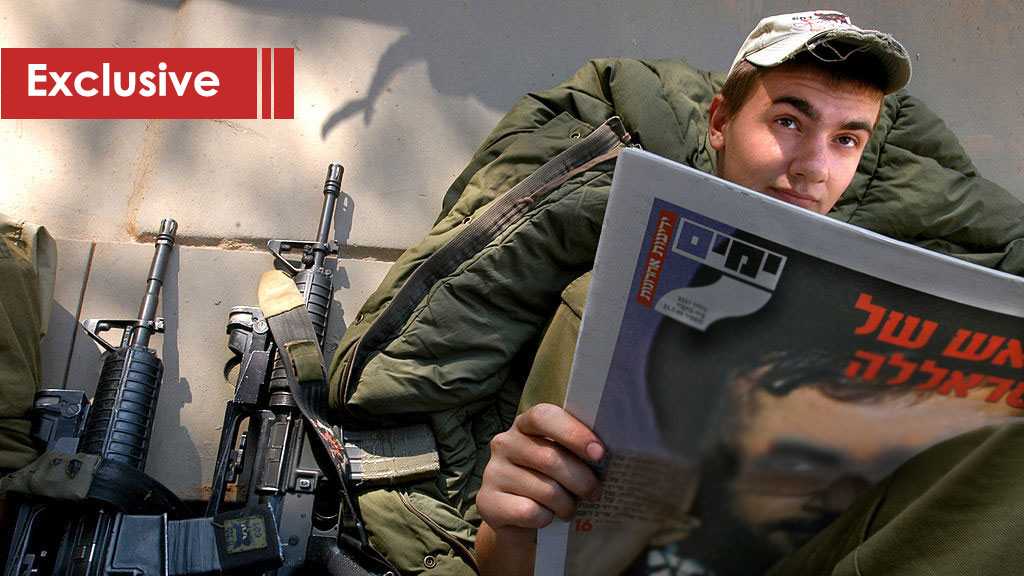
When Sayyed Nasrallah Deeply Impacts The “Israeli” Consciousness


“The warrior should be wakeful because if he sleeps the enemy does not sleep.” This is advice from Imam Ali (PBUH) gave. Hezbollah’s secretary general memorized it well. He uses it to advise others and repeats it during every Zionist threat to Lebanon.
The “Israeli” media knows exactly what these words mean. It knows that Sayyed is a meticulous follower of the Zionist entity’s news. From time to time, it acknowledges Sayyed’s superiority in terms of the media and psychological warfare that stems from facts rather than illusions. On more than one occasion, the Israeli media recognized the accuracy and quality of the follow-up and translation of the resistance’s media of everything that is published in the usurping entity in an attempt to expose it to the public.
A week ago, Amos Harel wrote in Haaretz, in a piece titled Nasrallah’s Propaganda that
“in a speech at the end of last week (the liberation of the Jroud speech), Nasrallah quoted Brick’s criticism of the “Israeli” army’s performance. He also mentioned Yaniv Kuovich’s ’s article which he published here regarding a 40 percent increase in the percentage of soldiers visiting psychiatric clinics in the army.”
Harel refers back to Sayyed Nasrallah’s famous “Spider Web” speech on the entity and its media when he delivered it in Bent Jbeil in 2000. It still resonates until today.
“Nasrallah’s firm hypothesis is based on the most famous speech, the ‘Spider Web’ speech in Bint Jbeil immediately after the end of the “Israeli” army’s withdrawal from southern Lebanon in May 2000: the “Israeli” society is weak and pressured. If the Arabs knew how to act against “Israel” with determination and strength, they would be able to demand more concessions.”
We continue with the enemy’s media and “Sayyed’s” impact on it. Channel 10 remarked that “Nasrallah is a brilliant and very clever speaker who did not make a lot of mistakes in analyzing the weaknesses of the “Israeli” society.”
In an interview with the Arab affairs correspondent, Zvi Yehezkeli, the presenter said (while analyzing the second liberation anniversary speech):
“If Nasrallah were not on the side of the ‘bad guys’, we would have said that he was a brilliant speaker and a very intelligent man. In a speech he delivered yesterday, he analyzed the weaknesses of the “Israeli” army and did not made a mistake.”
Yehezkeli replied,
“I agree that Nasrallah is a brilliant speaker in the Arab world. But regarding the content, I see it a bit differently. Nasrallah’s speech reminds us of the speech of the ‘Spider Web’.”
Take note of the choice of the Bint Jbeil speech. Some compared him to Gamal Abdel Nasser for his brilliance in speechmaking. He spoke about the weak society or what he called in 2006 prior to the war as the “Espresso Society”. This description was still present in Yehezkeli’s mind after 12 years. He said that the “Espresso Society” will not go to war for the two captured soldiers. He also said this in a press conference on the day of their capture. The “Espresso Society” went to war. It did not go the way it was planned. It was an implicit recognition of defeat. Once again he says this while speaking about defeatism. I agree with him on this angle at least when he enumerates “Israel’s” failures by saying, “the invincible army may not be the only description for “Israel”.” Then came the recognition that the army is not fit to represent the defeated entity.
“What impressed me is his very modern knowledge of the “Israeli” press. There is someone who reads things to him very carefully, analyzes them very intelligently and never makes mistakes when he points out the weaknesses in “Israeli” society,” the presenter added.
Yehezkeli: There are those who say that the “Israeli” office in Hezbollah is Nasrallah himself. He does not allow others to read it. He sits and reads. In an interview he spoke about how long it takes him to read the “Israeli” press and the “Israeli” society. He is a person whose goal is to analyze things in society that have not been analyzed before. He also has intelligence capabilities. However, he still reads the press, quoting newspapers such as Haaretz, Yedioth Ahronoth as well as opinion polls, analyses, analysts and experts. But he does not know Hebrew.
This was recognition of Sayyed familiarity with the nature of the Zionist society and its weaknesses. It also praised the monitoring and the Hebrew-to-Arabic translation team. This is not the first time that the enemy’s media deals with the quality, experience and accuracy of the abilities of the resistance’s media to keep track of the Zionist entity. A few years ago before the Zionist withdrawal and the humiliating defeat of the “invincible” army, a media specialist conducted a comparative study between the resistance’s media and the enemy’s one. In it they looked at details including the quality of the paper used by the resistance’s media and the nature of the technical production and covers designs. It concluded that the resistance’s media excelled past that of the enemy. We continue with the presenter when he asks about the fear of death complex gripping the families of the occupation soldiers:
“When he said in this speech that the “Israeli” elite wanted to send their children to the 8200 [cyber warfare] unit and less to the front. He recognized something … (signs of admiration and astonishment on the face of the presenter).”
Here, we pause at the surprise that occurred in the war on Syria, where the number of participants among the ranks of the resistance doubled. Reports were made by families who were insisting to send their children to the battlefronts. Here, we discover the reason behind the admiration and astonishment of the presenter. The resistance’s society does not fear death, especially when martyrdom is one of two choices, victory being the first. This was in contrary to the enemy’s society where the fear of death makes families want to send their son to work behind a desk.
Attempting to create a fabricated picture of the truth Yehezkeli concludes:
“Certainly, I think what he said is part of psychological warfare that shows distress ahead of the next confrontation.”
“But nevertheless, he certainly brought something painful to our stomachs.”
He ends the interview with a passage from Sayyed Nasrallah’s speech about the soldiers seeing psychiatrists.
The speech on the anniversary of the Second Liberation Day opened a deep wound. It was painful for the enemy. It reopened an old wound, which is the May 25, 2000 [“Israeli”] withdrawal from Lebanon.
Related Videos
River to Sea Uprooted Palestinian   
The views expressed in this article are the sole responsibility of the author and do not necessarily reflect those of the Blog!

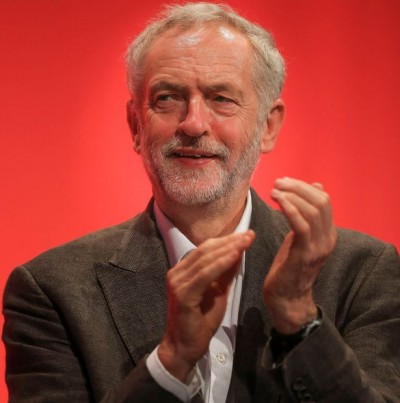
The Hysteria in the Conservative Press Indicates That There Will Now be a Labour Government in Britain

Global Research, September 08, 2018

The question is when?
1. There is now apparently a majority in the country who are increasingly anxious for both the railway system and public utilities to be brought under state control and operation, with sensible pricing of services and reliable, dependable timetables for commuters.
2. The days of banking bonuses for those city hedge-fund managers who play with our money in order to enrich themselves, are numbered. And, as a result, there will be a surplus of multi-million pound, bijou residences on the market as the bond dealers sell-up and downsize from Hampstead and Canary Wharf.
3. But the real benefit will be to those millions of ordinary households up and down the country who have been paying through the nose to the foreign owners of our national water, electricity and gas supplies who have ripped off the British consumer ever since the Conservative privatisation of these essential services.
4. When a Labour government takes power, there will be genuine state aid for the disabled and a NHS that actually works – from the large London teaching hospitals down to the provincial medical centres and clinics around the country.
5. The tax system will be overhauled to ensure that everyone and every company pays a proportionate amount of tax commensurate with income. Tax avoidance schemes will be made illegal.
6. Compulsory building of affordable housing by all local authorities will be a mandatory duty as will be the care and maintenance of such property. There will never be another Grenfell Tower atrocity whereby a fire-safe building was deliberately clad in a fire- accelerant material that was known to be lethally toxic in case of fire, merely to maximise profit for the property owners.
7. Foreign aid will be cancelled to India and elsewhere where corruption is rife and the monies diverted to our own communities/ regions who require assistance.
8. Immigration will be properly supervised by the state and numbers restricted to those who have suitable skills and/or job offers. Our borders will be policed in order that criminal elements are denied entry whilst genuine refugees who are at risk in their own countries will be eligible for political asylum.
9. There will be a fairer society in which reward for failure will be just a memory from the Tory past. On the other hand, reward for success will be encouraged.
10. First of all we need a General Election to clear out Theresa May, Boris Johnson and the rest of the failures. Britain has work to do and a vibrant, energetic, reforming Labour government is now ready, willing and able to meet the challenge.
*
Hans Stehling (pen name) is an analyst based in the UK. He is a frequent contributor to Global Research.

River to Sea Uprooted Palestinian   
The views expressed in this article are the sole responsibility of the author and do not necessarily reflect those of the Blog!
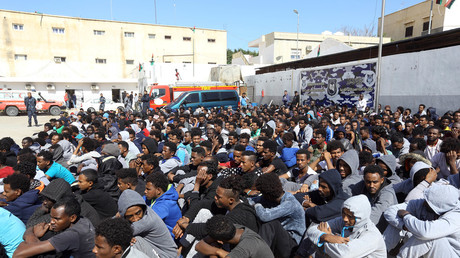
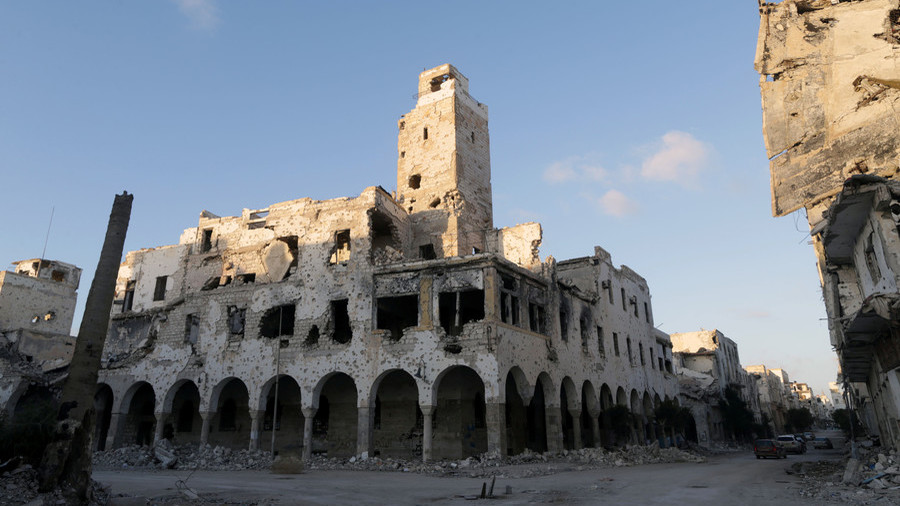
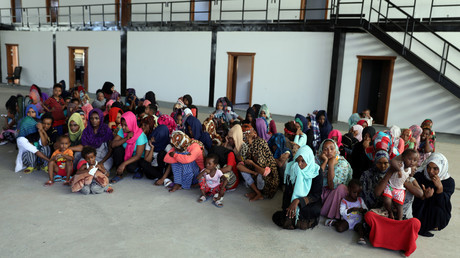
Libya goes from the most prosperous country in Africa to a haven for terrorists in just 7 years, thanks to the USA’s NATO

Libya in chaos seven years after NATO’s ‘liberation’, but who cares?


Libya in chaos seven years after NATO's 'liberation', but who cares?

River to Sea Uprooted Palestinian   
The views expressed in this article are the sole responsibility of the author and do not necessarily reflect those of the Blog!
The war on Palestine’s food supplies: israeli (Terrorist) forces open fire at Gaza fishermen, farmers again


GAZA CITY (Ma’an) — Israeli war boats opened fire at Palestinian fishermen off the coast of Beit Lahiya in the northern besieged Gaza Strip, on Saturday morning.
Witnesses told a Ma’an reporter that the Israeli navy opened fire at Palestinian fishermen working inside the allowed fishing zone.
No injuries or detentions were reported.
Meanwhile, Israeli forces deployed at military towers in the Khuzaa village of eastern Khan Younis, in the southern Gaza Strip, opened fire at Palestinian farmers working in their lands in the area.
Farmers were forced to leave their lands in fear for their lives.
The Israeli army regularly detains and opens fire on unarmed Palestinian fishermen, shepherds and farmers along the border areas if they approach the unilaterally declared buffer zone.
As part of Israel’s blockade of the coastal enclave since 2007, the Israeli army, citing security concerns, requires Palestinian fishermen to work within a limited “designated fishing zone,” the exact limits of which are decided by the Israeli authorities and have historically fluctuated.

River to Sea Uprooted Palestinian   
The views expressed in this article are the sole responsibility of the author and do not necessarily reflect those of the Blog!
Inside Israel’s Secret Program to Back Syrian Rebels

By Elizabeth Tsurkov
Israeli soldiers near the Syrian border in the Israel-occupied Golan Heights on May 10. (Menahem Kahana/AFP/Getty Images)
Israel secretly armed and funded at least 12 rebel groups in southern Syria that helped prevent Iran-backed fighters and militants of the Islamic State from taking up positions near the Israeli border in recent years, according to more than two dozen commanders and rank-and-file members of these groups.
The military transfers, which ended in July of this year, included assault rifles, machine guns, mortar launchers and transport vehicles. Israeli security agencies delivered the weapons through three gates connecting the Israeli-occupied Golan Heights to Syria—the same crossings Israel used to deliver humanitarian aid to residents of southern Syria suffering from years of civil war.
Israel also provided salaries to rebel fighters, paying each one about $75 a month, and supplied additional money the groups used to buy arms on the Syrian black market, according to the rebels and local journalists.
The payments, along with the service Israel was getting in return, created an expectation among the rebels that Israel would intercede if troops loyal to President Bashar al-Assad tried to advance on southern Syria.
When regime forces backed by Russian air power did precisely that this past summer, Israel did not intervene, leaving the rebel groups feeling betrayed.
“This is a lesson we will not forget about Israel. It does not care about … the people. It does not care about humanity. All it cares about it its own interests,” said Y., a fighter from one of the groups, Forsan al-Jolan.
Israel has tried to keep its relationship with the groups a secret. Though some publications have reported on it, the interviews Foreign Policy conducted with militia members for this story provide the most detailed account yet of Israel’s support for the groups. All the fighters spoke on the condition that their names and factions not be revealed.
The quantity of arms and money Israel transferred to the groups—comprising thousands of fighters—is small compared to the amounts provided by other countries involved in the 7-year-old civil war, including Qatar, Saudi Arabia, Turkey, and the United States. Even at the height of the Israeli assistance program earlier this year, rebel commanders complained that it was insufficient.
But the assistance is significant for several reasons. It marks one more way Israel has been trying to prevent Iran from entrenching its position in Syria—alongside airstrikes on Iranian encampments and political pressure Israel brought to bear via Russia, the main power broker in Syria.
It also raises questions about the balance of power in Syria as the civil war there finally winds down. With the Iranian forces that helped Assad defeat the rebels showing no inclination to withdraw from Syria, the potential for the country to become a flash point between Israel and Iran looms large.
A spokesman for the Israeli Embassy in Washington declined to comment for this story.
Israel began arming rebel groups aligned with the Free Syrian Army in 2013, including factions in Quneitra, Daraa, and the southern areas of the Damascus countryside. The arms transferred at the time were mostly U.S.-manufactured M16 assault rifles. Later, Israel switched to providing the rebels with mostly non-American weapons—apparently to conceal the source of the assistance—including guns and ammunition originating in an Iranian shipment to the Lebanese Hezbollah group that Israel had seized in 2009.
The assistance to these groups remained steady for some time, but it expanded significantly last year. Israel went from supporting hundreds of fighters to reaching groups comprising thousands of rebels. The increase in assistance coincided with a broader shift in Israel’s policies in Syria. After appeals to the U.S. administration and the Kremlin failed to secure a deal that would ensure that Iranian-backed militias would be kept away from southern Syria, Israel adopted a more aggressive policy.
Its Air Force began striking deeper inside Syrian territory, targeting not just individual weapons shipments from Iran to Hezbollah but also Iranian bases across the country.
Two of the groups Israel supported have been publicly identified—Forsan al-Jolan (the Golan Knights), a faction based in the border town of Jubata al-Khashab in Quneitra, and Liwaa Omar bin al-Khattab, based in Beit Jinn, a town bordering Mount Hermon.
Unlike other foreign supporters of the Syrian opposition, Israel made little effort to organize and consolidate its aid program. Instead, it apparently relied on relationships it developed with individual commanders, funneling assistance directly to them.
According to rebels in southern Syria, these commanders would communicate with Israeli officials by phone and occasionally meet them face to face in the Israeli-occupied Golan. When commanders switched groups and locations, Israeli assistance followed them. On the other hand, when commanders were killed or removed from their position due to internal power struggles, Israeli assistance to their former factions was halted.
Forsan al-Jolan was Israel’s preferred group. Last year, it added several hundred fighters to its ranks due to an increase in Israeli financing, according to members of the faction. It also served as a distributor of weaponry supplied from Israel to other groups. This allowed the group to have an outsized influence both in Quneitra and the nearby Daraa governorate.
Israel also provided fire support to rebel factions fighting the local Islamic State affiliate in the Yarmouk Basin. According to local rebels, journalists, and residents, Israel carried out drone strikes targeting Islamic State commanders and precision-missile strikesagainst the group’s personnel, fortifications, and vehicles during battles with the rebels. Israel did not extend similar fire support for rebel assaults on regime forces.
As a result of Israel’s humanitarian and military assistance many residents of southern Syria came to perceive it as an ally. Israeli publicized its “Good Neighbor” program in Arabic, including humanitarian operations in southern Syria and treatment of some Syrians in Israeli hospitals.
Y., the Forsan al-Jolan fighter, told me a few months ago: “Israel is the only one with interests in the region and a little bit of humanity and [provides] assistance to civilians.”
But as troops loyal to Assad, aided by Russian and Iranian forces, reasserted control over more and more areas of Syria, Israel sought other ways to guarantee its interests along the border.
In July of this year, Israeli officials apparently reached an understanding with Russia that allowed for the return of regime forces to western Daraa and Quneitra, the areas adjacent to the Golan Heights. In exchange, Russia reportedly promised to keep Iran-backed militias 80 kilometers (about 50 miles) from the Golan Heights and not to start hindering Israeli strikes on Iranian targets across Syria.
Even after Assad’s offensive on southern Syria commenced, many Syrians in the area clung to hope that Israel would at least prevent the regime from recapturing the adjacent Quneitra governorate.
Even after Assad’s offensive on southern Syria commenced, many Syrians in the area clung to hope that Israel would at least prevent the regime from recapturing the adjacent Quneitra governorate. Thousands of people fled to the area abutting the Golan Heights, but Israel did not intervene to protect them. Even after Assad’s offensive on southern Syria commenced, many Syrians in the area clung to hope that Israel would at least prevent the regime from recapturing the adjacent Quneitra governorate.
One local community leader from western Daraa who agreed to be identified only as Abu Khaled said he soon realized that relying on Israel had been a mistake.
“Trust me, Israel will regret its silence over what had happened in southern Syria. We in our town and neighboring towns grudgingly reconciled with the regime, but this reconciliation will affect Israel in the near future,” he said.
As the regime was closing in, some of the rebels reached out to their Israeli contacts and asked for asylum, fearing retribution from Assad’s forces. Israeli officials responded by allowing a small number of rebel commanders and their immediate family members to enter Israel on the night of July 22. Others were turned away.
The whereabouts of these commanders and their relatives remains unclear. According to people in Syria, some are rumored to be in Israel, others in Jordan. One former commander informed his subordinates that he had arrived in Turkey.
As for the rank-and-file fighters, most chose to remain in their homes and surrender to the regime rather than flee to Idlib, the last remaining enclave of the rebel forces. Some have been arrested, apparently for working with Israel, while others joined pro-regime militias or the Syrian Army itself as a way to avoid persecution by the regime.
This article was originally published by “FP“ –

River to Sea Uprooted Palestinian   
The views expressed in this article are the sole responsibility of the author and do not necessarily reflect those of the Blog!
Donald Trump to the Rescue of the Same Al Qaeda “Freedom Fighters” Who Attacked America on 9/11?

Global Research, September 08, 2018
“President Bashar al-Assad of Syria must not recklessly attack Idlib Province,
The Russians and Iranians  would be  making a grave humanitarian mistake …
Hundreds of thousands of people could be killed,…
Don’t let that happen!” (Donald Trump)
“Humanitarian mistake”?  Since when has Trump expressed concern for saving lives?


Both the media and the US government are accusing Bashar al Assad of attacking a region which encompasses three million people. That’s more than the population of Damascus.   The latest figures, from Russian sources (acknowledged by the UN) is that the Al Nusrah group has 16,000 militants. All in all there are between 40-45 armed groups representing some 50,000 rebels (according to the Russian Ambassador to the UN Vassily Nebenzia (AFP, September 7, 2008)
The unspoken truth is that the Syrian government is intent upon liberating a region of the country where civilians are being held hostage by Al Qaeda affiliated terrorists supported by the US and its allies.
Trump’s special envoy, Brett McGurk, admits that Idlib  has become “the largest al Qaeda safe haven since 9/11.” What he fails to mention is that these “jihadist” mercenaries entered Syria with the support of US-NATO-Israel-Turkey, not to mention the Gulf States.  Until recently we called them “moderate rebels”.
Idlib is Al Qaeda’s de facto capital in Syria. According to Tony Cartalucci,  “Idlib remains one of the last remaining strongholds of Al Qaeda in Syria”.
Western Special Forces in Idlib within Al Qaeda Ranks?
The Al Qaeda rebels are the foot-soldiers of the Western military alliance (with US and allied special forces, intelligence, weapons and logistics experts within their ranks). With an estimated 50,000 rebels, the number of embedded (covert) Western paramilitary (Arab speaking) mercenary forces is significant (e.g. from private security companies in liaison with US-NATO-Israel-Turkey).
While there are no reliable figures regarding the number of US-allied sponsored mercenary special forces in the Idlib Region working with Al Qaeda rebel groups,  earlier reports confirm the presence of Western special forces, covert intelligence agents including British SAS, French Parachutistes, CIA, MI6  and Mossad embedded within rebel ranks. “Their activities are not limited to training. They are routinely involved in overseeing the conduct of terrorist operations on the ground together with thousands of mercenaries recruited from Muslim countries”.
From the outset of the insurgency in 2011, Al Qaeda affiliated rebel forces including al Nusrah were “infiltrated” by Western military and intelligence  operatives.
“MI6 and the CIA are in Syria to infiltrate and get at the truth,” said the well-placed source. “We have SAS and SBS not far away who want to know what is happening … ” (Syria will be bloodiest yet, Daily Star, January 2012). (emphasis added)
Screenshot of a 2012 report
With covert intel operatives, special forces and mercenaries (on contract to the Pentagon-NATO) within Al Qaeda ranks, the Idlib terrorist stronghold is therefore of strategic importance to the US.  It constitutes a means to maintaining US and allied military presence in Northern Syria.
And that is precisely why the US and its allies (including France, Britain, Israel) are planning to intervene militarily in liaison with their covert special forces and intel. operatives embedded within Al Qaeda.
But they need a pretext and justification: And that is where the False Flag Chemical Weapons Attack scenario comes in: i.e. with a view to providing a pretext for military intervention on “humanitarian grounds”, “coming to the rescue” of 3 million Syrian civilians who are allegedly threatened by President Assad and Syrian government forces.
While many Al Qaeda fighters have surrendered and have left Syria via the “humanitarian corridors”,  there are indications that the jihadist fighters are being threatened not to abandon combat:
“[they] would never lay down their weapons or surrender. By Allah, we have taken a vow about this, and we shall crucify anyone who surrenders his weapon.” (Testimony of a foreign Al Qaeda mercenary).
Recent reports suggest that 13,000 rebels of the Al Nusra group (out of a total of 16,000) are prepared to negotiate a truce. (AFP, September 7, 2018, quoting Russia’s Ambassador to the UN).
The target of military intervention on the part of Syrian and Russian forces would be limited to the hardcore jihadist fighters, who have taken over Idlib city and the Idlib “De-escalation Zones” and who refuse to engage in truce and reconciliation.
What is at stake is an intricate and complex counterterrorism operation directed against Al Qaeda fighters. And these are the Al Qaeda “freedom fighters” who just so happen to be supported by Donald Trump. 
Needless to say the US-NATO objective is to sabotage the Liberation of Idlib
“Lethal Aid”: Weapons and Ammo to the Terrorists
“The Americans are on Our side”, says rebel Al Nusra commander in an interview with the Koelner Stadt Anzeiger (September 26, 2016).
Jabhat al-Nusra unit commander Abu Al Ezz confirmed that the US is sending weapons to Al Nusrah through “third countries”. 
“Yes, the US supports the opposition [in Syria], but not directly. They support the countries that support us. But we are not yet satisfied with this support,”
The above statement pertains to weapons deliveries by America’s allies including Saudi Arabia, Israel, Qatar and Turkey.
Shipments of Weapons to Al Qaeda 
There is a vast literature which documents covert support to Al Qaeda as well the shipment of weapons and ammo to rebel forces in Syria.
One example: according to Jane’s Defence Weekly, quoting documents released by the U.S. Government’s Federal Business Opportunities (FBO), the US –as part of its “counterterrorism campaign”– has provided Syrian rebels [aka moderate Al Qaeda] with large amounts of weapons and ammunition.
US military aid to the rebels channeled (unofficially) through the illicit market, is routine and ongoing. In December 2015, a major US sponsored shipment of a staggering 995 tons of weapons was conducted in blatant violation of the ceasefire. According to Jane’s Defence Weekly, the U.S.   “is providing [the weapons] to Syrian rebel groups as part of a programme that continues despite the widely respected ceasefire in that country [in December 2015].” (Michel Chossudovsky, Global Research, May 27, 2017)
Aid and Financial Support Channelled to Al Qaeda in Idlib
According to a study by the Century Foundation (quoted by Cartalucci) Al Qaeda has established a network of services and local institutions which are funded by the US, UK, and European Union: 

Screenshot of Century Foundation report
What Relationship to September 11, 2001? 
The Trump administration’s (unofficial) objective is ultimately to protect Al Qaeda and sabotage the Syrian government’s anti-terrorism campaign, which consists in dismantling the Al Qaeda terror stronghold and restoring civilian  government. 
America’s continued support of Al Qaeda is the fundamental issue. 
If that support (which includes supplies from Turkey and military logistics in support of the terrorists) were to cease and US-NATO were to recall its jihadist foot-soldiers, the conflict would be over.
In a bitter irony and unknown to the broader public, the Trump Administration is supporting in Syria the same network of Al Qaeda fighters which allegedly attacked America on September 11, 2001.
Sounds contradictory?
You cannot wage “a war on terrorism” and at the same time “come to the rescue of the terrorists”. Or can you?
In fact, that is what the US has being doing since the onslaught of the Soviet-Afgan war in 1979.
Image right: Al Nusra Brigade in Syria
As we might recall,  on the evening of September 11, 2001, President Bush in a televised address to the Nation said that he would:
“make no distinction between the terrorists who committed these acts and those who harbor them”.
How does that relate to Donald Trump and Washington’s role in Syria?
Al Qaeda in Syria has been “harbored” by the US government (and its allies) since the outset of the war in March 2011. That’s the forbidden truth.
Applying GWB’s 9/11 concept: America is the State Sponsor of Terrorism.  Q.E.D.

Revisions and updates on September 8, 2018
River to Sea Uprooted Palestinian   
The views expressed in this article are the sole responsibility of the author and do not necessarily reflect those of the Blog!