Sunday, 3 March 2019

With Oil, Water and Iran as Targets, US on Brink of Recognizing Israeli Sovereignty over Golan Heights


With Oil, Water and Iran as Targets, US on Brink of Recognizing Israeli Sovereignty over Golan Heights
EDITOR’S CHOICE | 01.03.2019

With Oil, Water and Iran as Targets, US on Brink of Recognizing Israeli Sovereignty over Golan Heights


A new bill recently introduced in the Senate, along with its companion bill in the House, would result in the United States government recognizing Israel’s sovereignty over Syria’s Golan Heights, which has been occupied by Israel since 1967. The territory was later annexed in 1981, but the international community — including the United States — has not recognized Israel’s claim to the Syrian territory.
In addition, the bill would also promote the U.S. conducting “joint projects” with Israel in the Golan, including “industrial research and development.” This is sure to result in joint U.S.-Israeli efforts to extract the large oil reserves recently discovered in the Golan Heights, as the rights to extract that oil were granted to the joint U.S.-Israeli venture Genie Energy soon after its discovery was made public.
The move to introduce legislation regarding the contested territory has been hinted at for months by top Israeli officials, especially following the decision of the Trump administration to unilaterally recognize the city of Jerusalem as belonging exclusively to Israel and as being that country’s capital.
Working the Iran angle
Last May, Israeli Intelligence Minister Israel Katz told Reuters that Washington’s endorsement of Israel’s control of the Golan Heights was now “topping the agenda” in bilateral diplomatic talks between the two countries, and that such a move would likely come within a matter of months, though it apparently took longer than Katz had originally anticipated.
Katz also had stated that U.S. recognition of the Golan was being peddled to the Trump administration as a way to further counter Iran, the goal that has now become the guiding force behind President Donald Trump’s Middle East policy. In addition, Katz had stated that bilateral discussions regarding U.S. recognition of the Golan had vastly expanded to involve various levels of the U.S. administration as well as several Congressmen.
The effort to which Katz alluded last year appears to have paid off in the form of the recently introduced bills in both the House and the Senate. The Senate bill was introduced by Sen. Ted Cruz (R-TX), who is the top Republican recipient of pro-Israel lobby contributions in the U.S. Senate, and Sen. Tom Cotton (R-AR), who is also heavily funded by the pro-Israel lobby. Indeed, Cotton received over $700,000 from the Emergency Committee for Israel in 2014 and nearly $1 million from that same group a year later.
Just as Katz had stated, the new bill frames U.S. recognition of the Golan as a means of countering Iran, stating directly that the U.S. must recognize Israeli sovereignty over the area “in light of new realities on the ground, including Iran’s presence in Syria.” It also notably states that it is in the “national security interest” of the United States that Israel consolidate its control over the territory, and further states that the push to recognize the Golan Heights as belonging to Israel is a “diplomatic and geopolitical” consequence of the Syrian government’s alleged use of “weapons of mass destruction,” alleged “ethnic cleansing of Arab Sunnis,” and its killing of civilians.
This basis for punishing Syria by weakening its claim to the Golan is dubious at best. Indeed, the Syrian government’s alleged use of “weapons of mass destruction,” apparently a reference to chemical weapons, is a contested matter given the fact that many, if not all, of those alleged chemical weapons attacks were either staged or involved chemical weapons instead used by rebel groups backed by the United States and its regional allies, including Israel. The United States has also repeatedly and illegally used a chemical weapon, white phosphorus, in its military operations in Syria.
In addition, the bill fails to note that the U.S. has killed scores of Syrian civilians in its military operations in Syria — including in Raqqa, where civilian bodies are still being uncovered nearly two years after the U.S.-led “liberation” of that city. Apparently, only the Syrian government’s civilian death toll has “diplomatic and geopolitical consequences.”
Furthermore, the latter point of Syria’s alleged ethnic cleansing of “Arab Sunnis” is sharply ironic given Israel’s ethnic cleansing of Palestine, most of whose inhabitants are also “Arab Sunnis,” as well as the fact that U.S.-backed rebel groups ethnically cleansed large parts of Syria from religious minority groups such as Christians and Yazidis.
Thus, the justification for giving the Golan to Israel as a means of punishing Syria is just window dressing for the Israeli government push to consolidate its control over the territory with the help of its allies in the U.S. government. Despite that, the bill has a good chance of passing the Senate, given that chamber’s recent and overwhelming bipartisan approval of the so-called “anti-BDS” bill that had been pushed by the pro-Israel lobby as a means of countering nonviolent efforts to protest Israel’s inhumane occupation of Palestine.
Cover for the oil
Despite Israel’s eagerness to consolidate control over the territory, any U.S. recognition of Israeli sovereignty over the Golan would likely generate backlash from the majority of the international community and would likely heighten tensions between Israel and Syria. This is largely because international law still refuses to recognize the area as part of Israel, even though Israel has sent over 20,000 Jewish settlers to live there in order to permanently change the area’s ethnic-demographic composition, turning the native Druze population into a minority.
Many of the Druze living in the occupied Golan have long complained of being routinely discriminated against under Israeli rule, and continue to support the Syrian government. In addition, the UN has accused Israel of “forcing citizenship” onto the group in a bid to increase its claim to sovereignty over the region. Israel hopes to add an additional 100,000 Jewish settlers to the area by 2020 in order to strengthen this claim.
Golan Heights | Israel | Syria
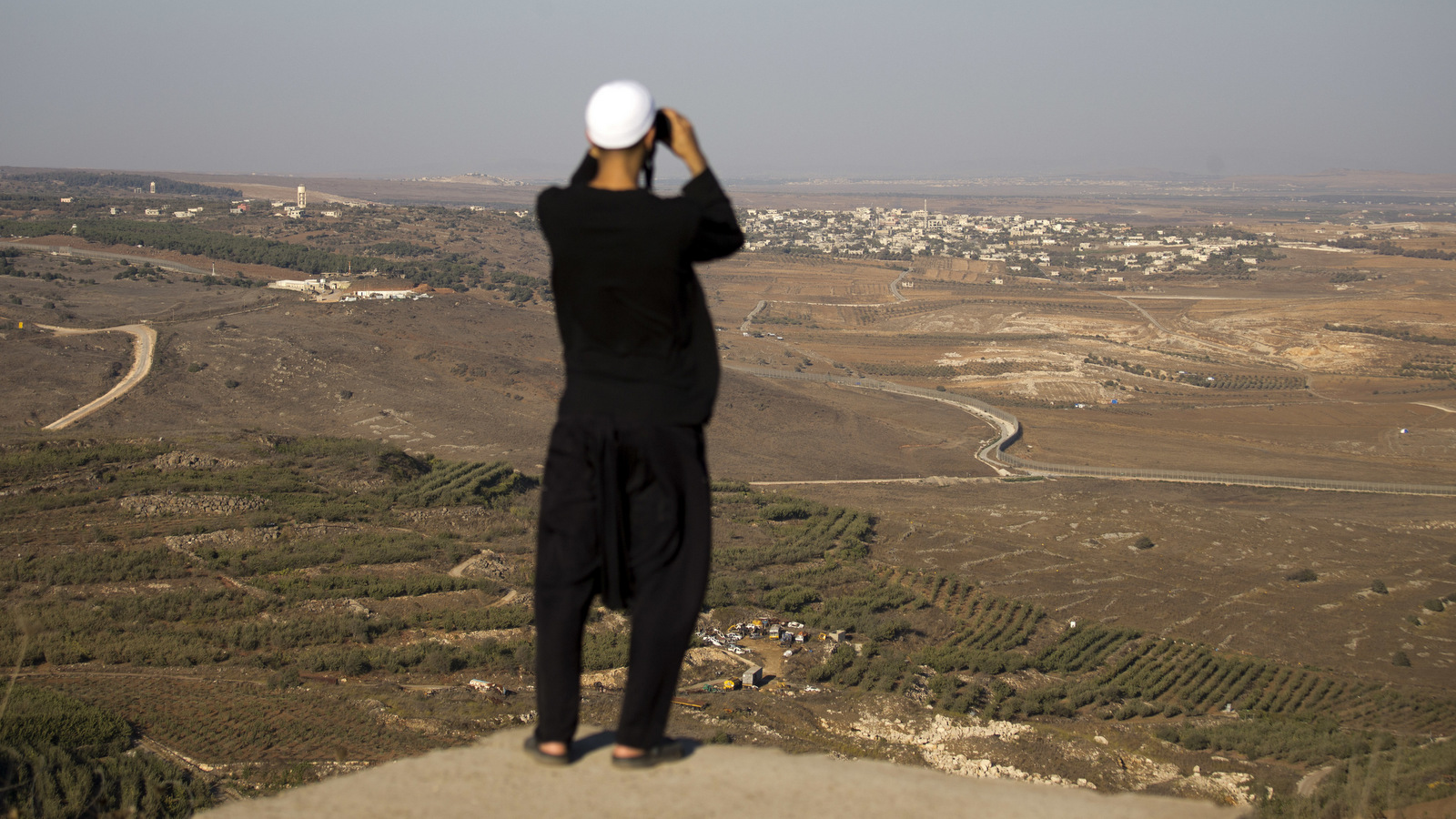
A Druze man watches fighting between Syrian troops and rebels in the village of Jubata al-Khashab, as seen from the Israeli-occupied Golan Heights, on, Sept. 11, 2016. Ariel Schalit | AP
While any such measure is unlikely to gain much traction internationally, it is important to note that the goal of a U.S. measure to recognize Israeli sovereignty over the Golan is not to secure international support but to provide enough diplomatic cover for the joint U.S.-Israeli extraction and use of the area’s strategic resources, namely oil. Indeed, in 2015, a massive oil reserve was discovered in the Golan Heights and is estimated to contain “billions of barrels” of crude oil that could turn Israel – which currently imports the vast majority of its fuel – into a net oil exporter.
Soon after that discovery, the Israeli government granted exclusive drilling rights to Afek, an Israeli subsidiary of New Jersey-based energy company Genie Energy, Ltd. As MintPress has previously reported, Genie Energy is backed by powerful interests in the U.S., such as former Treasury Secretary Larry Summers, former Vice President and Halliburton executive Dick Cheney, and former CIA Director James Woolsey. Powerful Zionist billionaires, such as Australian-born media mogul Rupert Murdoch and England’s Jacob Rothschild, are also connected to the company. Its Israeli subsidiary, Afek, is run by a close friend of Israeli Prime Minister Benjamin Netanyahu.
MintPress has previously reported that Genie Energy’s investments in the Golan are likely the strongest factor guiding the U.S. towards the recognition of Israeli sovereignty over the occupied territory. Indeed, without a U.S. move recognizing Israel’s control over the region, Genie’s Israeli subsidiary is unable to sell any oil it extracts from the occupied territory on the international oil market.
This argument is strongly supported by the text of the current bill, which specifically calls for joint U.S.-Israeli projects in the Golan that include projects in “basic and applied scientific fields” and “industrial research and development.”
Oil and water do mix
In addition to oil, the Golan Heights contains important freshwater resources, as it is one of three sources of freshwater available to the Israeli state. It is the largest in size and most abundant, as it includes the mountain streams that feed Lake Kinneret (the Sea of Galilee) and the headwaters of the Jordan River. As MintPress has noted in the past, the water resources of the Golan Heights are essential not only to Israel’s existence but also to its expansionist ambitions, a fact that explains Israel’s role in creating a plan in 2006 to engineer a “civil war” in Syria. Yet, the discovery of oil and creation of Genie Energy have dramatically strengthened Israel’s resolve, as well as the resolve of powerful figures in the U.S. and the U.K., to consolidate control over the Golan.
However, the current text of this new bill suggests that the use of this water will also come into play in the joint U.S.-Israeli project it calls for in “strategic and applied research of agricultural problems.”
Originally, Israel had planned to use a “buffer zone” of extremist militants it was funding in southern Syria in order to push for international recognition of the Golan, particularly in the event that the Syrian conflict resulted in regime change in Damascus. However, as South Front noted late last year, the Syrian military’s defeat of those groups has dealt “a huge blow to Tel Aviv’s plans to make the international community recognize the annexation of the Golan Heights” and led then-Israeli Defense Minister Avigdor Lieberman to worry that the Syrian military’s success could soon threaten Israel’s hold on the Syrian territory.
Thus, Israel is now pushing for the U.S. to recognize its sovereignty over the Golan for fear of losing it completely, even though such recognition could result in an all-out war between Israel and Syria, as well as with Syrian allies such as Iran and Lebanon’s Hezbollah. Given that Israel has been preparing for such a war for well over a year and that Israel has been given the authority to bring U.S. troops into that conflict if and when it occurs, the likely consequences of the passage of this bill should be treated with the gravity they deserve.

River to Sea Uprooted Palestinian   
The views expressed in this article are the sole responsibility of the author and do not necessarily reflect those of the Blog!

French anti-semitism: Macron's tool to silence Palestinian solidarity


Malia Bouattia is an activist, the former President of the National Union of Students, co-founder of the Students not Suspects/Educators not Informants Network and presenter/panelist on British Muslim TV’s Women Like Us.
By conflating anti-Zionism with anti-semitism, Macron is attempting to shield the government from criticism over its active participation in other forms of racism
People hold up Palestinian flags at a rally in Paris on 16 May 2018 (AFP)


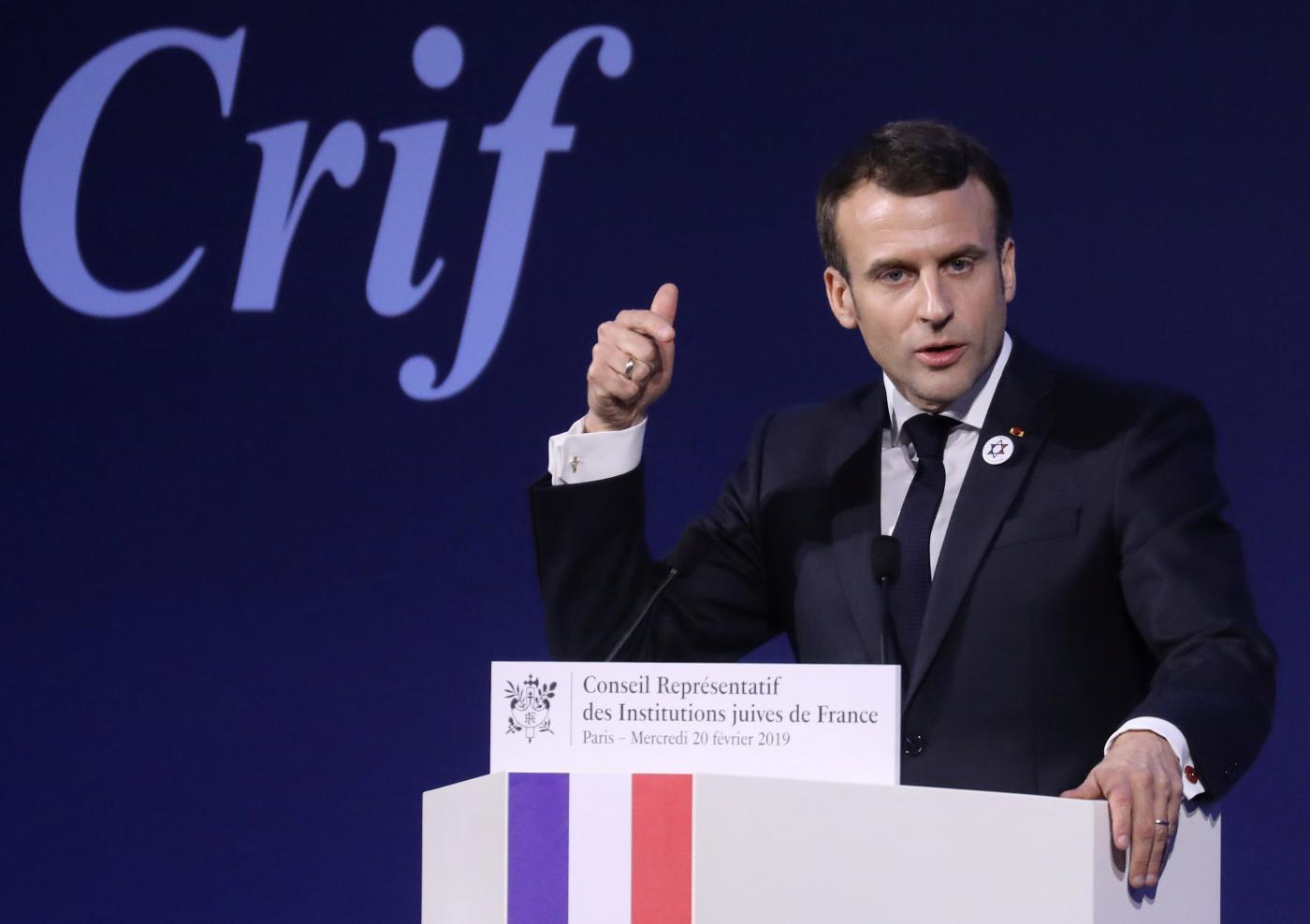
French President Emmanuel Macron has committed himself to making anti-Zionism illegal, by making it – legally – equivalent to anti-semitism, and therefore a hate crime.
This announcement follows a verbal attack against French pro-Israeli writer Alain Finkielkraut during a Gilets Jaunes protest, where one demonstrator hurled the words “dirty Zionist”. The confrontation was described as anti-semitic by the president and numerous commentators.
A Jewish cemetery was also vandalised this month with Nazi swastikas, with around 80 graves targeted in the eastern French village of Quatzenheim, while a portrait of French Holocaust survivor Simone Veil was defaced with Nazi imagery.

Targeting political movements

The alarming rise of anti-semitism has plagued not just France, but the whole continent, with far-right groups gaining ground electorally and on the streets. In France alone, anti-Jewish attacks have risen by 74 percent over the last year.
But the problem with the French state’s response – which is not dissimilar to that of other governments, including the UK and US – is that it targets legitimate political movements, rather than dealing with a form of oppression woven into the fabric of French institutions.
It is striking that it is not the far-right and its numerous splinter groups that are being targeted by the president, nor is it the growing normalisation of racist rhetoric, including by the French leader himself.
Racism and fascism are structural forms of oppression that only manifest themselves on the streets because they have been normalised through state institutions
Instead, it is solidarity with the Palestinian people and opposition to Zionism – the ideology that justifies their dispossession – that is made to bear the responsibility.
Macron is showing us exactly what not to do in the face of rising fascism. He is effectively co-opting the rise in anti-semitism to target political dissent in the vein of pro-Palestine, anti-Zionist efforts.
Racism and fascism are structural forms of oppression that only manifest themselves on the streets because they have been legitimised, defused and normalised through state institutions.
Macron is surely aware that in World War Two, anti-semitism, and the consequent dehumanisation of entire peoples, became so widespread only because the Nazi party’s rhetoric gained influence within political institutions.

White-washing history

It is especially rich that Macron is attempting to equate anti-Zionism and anti-semitism when, just a few months ago, he came under fire for defending plans to pay tribute to Nazi collaborator Philippe Petain. Indeed, he claimed it to be legitimate because Petain was a marshal who led the French army to victory a century ago.
While heading the Vichy government, however, Petain and his administration facilitated the deportation to death camps of thousands of Jews. Much of this was later white-washed, with those involved integrated into the postwar administration of the republic.


French President Emmanuel Macron is overseeing the "normalisation of racist rhetoric" (Reuters)
French President Emmanuel Macron is overseeing the “normalisation of racist rhetoric” (Reuters)

The state’s targeting of the entire Gilets Jaunes movement over an isolated incident also discredits efforts to fight racism. The movement, which is non-hierarchical and has been described as leaderless, also includes far-right protesters – a point of much internal political debate in recent months. Anti-racist groups have expressed the need to fight for an inclusive and intersectional space, which is only likely to happen if they are part of the political events, protests and rallies.
There is a recognition at the grassroots level that in a society plagued by racism, it is only normal that even in anti-austerity efforts and among left-wing organisations, reactionary and conservative ideas exist. The difference is that there is a willingness to partake in a process of consciousness-raising, to set the direction of the movement and roll back the growing dominance of racism across French society.
The juxtaposition couldn’t be starker. Anti-racists in France are participating in a mass movement against austerity and taking on reactionary ideas, while the president, who himself has a poor track record on racism, is attempting to capitalise on it to launch a broader assault on solidarity with the Palestinian people.

Cosying up to the far-right

Communities are fearful for their safety. To provide the false illusion that Macron and his counterparts in the UK and US are legislating a fight back is despicable. They are targeting groups with a long-standing history of anti-racism, because they’re also likely to support the anti-imperialist struggle against Israel’s occupation of Palestine.
At the same time, these very same politicians are cosying up to the anti-semitic Hungarian government, the far-right, and individuals such as former White House strategist Steve Bannon. They are putting Jewish communities at risk, while instrumentalising them to justify their attacks on the left and communities of colour, and their foreign policies in the Middle East.

The ‘gilet jaunes’ are uniting France in a rage against Macron’s regime
In Britain, we have witnessed the targeting of pro-Palestine efforts through counter-terrorism strategies, including Prevent. This has led to the cancellation of events, the questioning and demonisation of young activists, and threats to make the boycott, divestment and sanctions (BDS) movement illegal.
In the US, there’s a continued targeting of activists and public figures by groups such as the Canary Mission. The recent swearing-in of Congress representatives Ilhan Omar and Rashida Tlaib was followed by a media onslaught over their support for Palestinian liberation – not to mention the Middle East security bill voted through the US Senate in order to criminalise BDS.

The need to resist

The international pattern is clear. Around the world, the rich and powerful are stoking racism to divert anger about growing inequality and injustice, including the normalisation of far-right groups, individuals and governments. In this process, anti-semitism is re-emerging, including among the very people who are close to power.
Today, the struggle against anti-Zionism is justified by a false conflation with anti-semitism
Yet, it is the left – the pro-Palestine movement and communities of colour – who are being accused by those very same governments around the world.
Today, the struggle against anti-Zionism, justified by a false conflation with anti-semitism, has a triple purpose: to weaken the left at home, shield the government from criticism over its active participation in the rise of anti-semitism and other forms of racism, and hide its geopolitical support for Israel behind a supposed protection for Jewish communities, endangering them in the process. All three aspects should be resisted ferociously.
The views expressed in this article belong to the author and do not necessarily reflect the editorial policy of Middle East Eye.

River to Sea Uprooted Palestinian   
The views expressed in this article are the sole responsibility of the author and do not necessarily reflect those of the Blog!

US Army Takes 50 Tons of Stolen Gold From Syria in Alleged Deal With ISIS

(TMU) — As the remaining pockets of ISIS fighters faced imminent defeat in northeast Syria, the United States allegedly gave them an offer they couldn’t refuse: give us your massive caches of gold — or die.
According to reports by Syrian state news agency SANA, U.S. forces struck a deal with ISIS whereby the terrorist group would give up 50 tons of gold across eastern Syria’s Deir el-Zour province in exchange for safe passage.
The precious metal, worth about $2.13 billion, was plundered by the self-designated “caliphate” as its reign of terror spread across Syria and Iraq between 2015 and 2017.
Turkish newspaper Daily Sabah reports that local sources claim U.S. Army helicopters have already transferred the gold from the U.S. forces’ base in Kobani, the Kurdish-controlled city that lies close to Syria’s northern border with Syria. A portion of the gold was also distributed to the Kurdish People’s Protection Units (YPG), which dominates the U.S.-allied Syrian Democratic Forces (SDF).
The news comes after SANA claimed that locals witnessed U.S. helicopters airlifting large cases of gold amounting to about 40 tons from the al-Dashisha area in Hasaka’s southern countryside earlier this month. The gold was purportedly looted by ISIS from Mosul in Iraq and other parts of Syria.
The Syrian state media outlet claimed that ISIS leaders were on-hand to guide the U.S. helicopters to the places where the gold was stashed, “closing a deal by which Washington spared hundreds of the terror organization’s field leaders and experts.”
The claims by the Syrian government outlet coincide with reports by U.K.-based war monitor, the Syrian Observatory of Human Rights (SOHR), which alleged that the U.S. and its Kurdish allies had been sparing ISIS fighters in hopes of acquiring the group’s war spoils.
The SOHR said:
“The U.S.-led coalition forces and the Syrian Democratic Forces (SDF) deliberately do not target the areas under the control of the ISIL terrorists and commanders in Eastern Euphrates in Deir el-Zour as they are trying to locate this treasure by forcing the ISIL militants to speak about its location after surrendering.”
Syrian and Russian media alike have long alleged that, contrary to Washington’s claims, it is waging a war on the extremist group. U.S. forces are instead collaborating with them in myriad ways.
During the destruction of ISIS-controlled Raqqa in Syria by the U.S.-led coalition, a secret deal was struck with the group that granted members safe passage as it evacuated the area. The deal, uncovered by the BBC, ensured the survival and freedom of many top ISIS leaders and a number of foreign fighters.
The U.S. still maintains its base in al-Tanf at the Syrian-Jordanian border in contravention of international law and against the wishes of the Syrian government on the pretext of combating ISIS. Moscow has repeatedly accused the United States of forming new armed groups from the remains of ISIS, where they are allegedly given free rein and pop up “like a jack-in-the-box” to ambush Syrian troops before fading back into the U.S.-controlled region.
By  / Republished with permission / The Mind Unleashed 

River to Sea Uprooted Palestinian   
The views expressed in this article are the sole responsibility of the author and do not necessarily reflect those of the Blog!

Who are the “Brutal Dictators”?

Global Research, February 28, 2019
Elected Presidents Assad and Maduro are not the brutal dictators.  We are.
Assad
We are the ones imposing economic warfare, and regime change wars on non-belligerent countries.  We are the ones supporting terrorists who impose the death penalty on hundreds of thousands with our weapons, our command and control, our mercenaries, our air support and our terror bombings.
We are dictating our will by destroying these and other countries, by changing “regimes”, by setting up non-democracies throughout the world.[1]
President Assad was elected, democratically[2], by his own people. None of the invading Western-supported terrorists were elected by Syrians.  In fact, when terrorists occupy areas, elections are forbidden. Likewise, the uninvited terrorists, including the Western militaries, are the ones murdering and bombing and gassing Syrian citizens.  Assad and legitimate associated armed forces are protecting Syria’s sovereignty and territorial integrity not destroying it, as Western Newspeak would have us believe.
President Maduro, too, was democratically[3] elected.  The Western-supported aspiring puppet dictator Guaido, on the other hand, appointed himself interim President, with Washington’s blessing.  He didn’t even run for the office of President. Government and media messaging that suggests that he is a legitimate alternative to President Maduro amounts to war propaganda, and is part of a conspiracy to destroy Venezuela and impose the death sentence on countless Venezuelans (should an invasion occur), just as the Regime Change war against Syria has imposed death and disaster upon countless innocent Syrians.

Humberto Da Silva, Toronto, ON., February 23, 2019.
When Regime Change dictators “win”, puppet dictators, vassals to international diktats, also win, and terrorism wins. International law, sustainable political economies, and democracy, all lose.
*
Note to readers: please click the share buttons above. Forward this article to your email lists. Crosspost on your blog site, internet forums. etc.
Mark Taliano is a Research Associate of the Centre for Research on Globalization (CRG) and the author of Voices from Syria, Global Research Publishers, 2017.
Notes
[1] Nicolas J.S. Davies, “America’s Coup Machine: Destroying Democracy Since 1953.” AlterNet, 8 April, 2014. (https://www.alternet.org/2014/04/americas-coup-machine-destroying-democracy-1953/?fbclid=IwAR0Immo0i3WH0TurBbFti15yrBiRYXA3SLSnILL3IyGm0kiOdTrZaZxQV6k#.XHWtzDuMujA.facebook)Accessed 27 February, 2019.
[2] Steven MacMillan, “Bashar al-Assad: The Democratically Elected President of Syria.” NEO New Eastern Outlook, 20 December, 2015.( https://journal-neo.org/2015/12/20/bashar-al-assad-the-democratically-elected-president-of-syria/) Accessed 27 February, 2019.
[3] Mark Taliano, “Venezuela, and Canada’s Duplicitous Criminality.” Global Research, 29 January, 2019. (https://www.globalresearch.ca/venezuela-canadas-duplicitous-criminality/5666689) Accessed 27 February, 2019.

Order Mark Taliano’s Book “Voices from Syria” directly from Global Research.
Mark Taliano combines years of research with on-the-ground observations to present an informed and well-documented analysis that refutes  the mainstream media narratives on Syria. 

Voices from Syria 

ISBN: 978-0-9879389-1-6
Author: Mark Taliano
Year: 2017
Pages: 128 (Expanded edition: 1 new chapter)
List Price: $17.95
Special Price: $9.95 

Click to order


River to Sea Uprooted Palestinian   
The views expressed in this article are the sole responsibility of the author and do not necessarily reflect those of the Blog!

What Can Modi’s Fanaticism Unleash and Why?


Two South Asian nuclear powers with 71 year history of high-strung relations seemingly stand at the brink of war.  The recent stand off now seems to point towards a strong possibility of an intensified conflict beyond the extent of routine skirmishes along the Line of Control (LOC) or the Working Boundary – unless and until back door diplomacy bears fruit and other deterrents such as a degree of political and public pressure within India come to check Modi’s fanatic drive for war.
Following the provocative one-sided military action taken by the Indian Air Force (IAF) on February 26 during which India claimed to have targeted a JeM training camp killing 300 terrorists near the city of Balakot in Pakistan, more action was witnessed on February 27.
As I indicated in an earlier op-ed on the current tension in the region, Pakistan’s official verbal response to India’s unlawful act seemed to indicate Pak may not sit quiet.  And that is exactly what transpired during the course of February 27 morning.  Pak decided to send a strong message to Delhi thereby categorically reminding Modi he no more enjoyed the clandestine support of a CIA puppet regime enthroned in Islamabad as was the case during the last ten years of dark democratic rule and he should therefore understand Pakistan will not sit put rather act unanimously and effectively if he did not hold his horses back.
Unlike what Ms. Ayres, a senior fellow at the Council of Foreign Relations prefers to believe, the truth is perhaps there never has been a greater sense of coherence between the military command and the civilian government in the history of Pakistan than under Khan’s premiership – Khan shall not ‘feel the need to push back on the military’ whether or not he has ‘a political base of his own’ for one simple reason – and that is the civilian and military leadership is single-mindedly serving one agenda only – the security and national interest of Pakistan.  Looks like the ‘senior’ fellows at CFR will take much longer to realise they are no longer dealing with the treacherous soul-selling breed of politicians of the likes of Nawaz and Zardari and that the entire dynamics of a country, Washington thought it could successfully enslave, has more than significantly altered – a process that is on-going and shall not come to a halt.
Coming back to February 27, 2019 – the Pakistani nation witnessed its armed forces and its civilian leadership acting in unison – from the looks of it the decision had been made in principle on the same day as the IAF attempted attack on Balakot city i.e. February 26.  Hence with prior warning and in broad daylight Pakistan reportedly engaged six targets across the LOC to strike – the intention was singularly clear:  ‘We have the ability to strike, and the capability for self defence.  We do not wish to escalate the matter but if we are drawn into that paradigm, we will act accordingly’.  India as usual contested the claim and insisted “Pak attempt was foiled successfully, PAF presence was detected, and IAF responded instantly”.
Amidst a plethora of statements and counter statements, admissions and denials, that have continued to pour out since the one thing that is categorically clear is that Pak did shoot down one IAF MiG 21 and captured one pilot.  The Pak claim of having shot down another IAF aircraft that fell in Indian Occupied Kashmir has been denied by Indian officials – they insist that aircraft came down due to an ‘unrelated reason – technical fault’.  The Indian claim of having shot down a PAF F-16 (that fell on the Pak side of LOC according to India) has been denied by Pak indicating the dog fight occurred between a Combat Air Partol (CAP) JF-17 Thunder Block 2 that hit down the MiG-21 – F-16s were not involved.
Quite evidently military information is never released as it is, one can only attempt to piece official and leaked information together to paint a picture that makes sense however at this point in time, judging from the reaction shaping within India, it does appear Modi has fallen into the trap he had set out for Pak – to a considerable extent.  From a strictly military point of view Pak has come out on top.  Yet war will only open all doors to hell in the region, hence not a sane option for either Pakistan or India.  Pak has categorically and repeatedly sent out message of peace inviting India to talk – albeit the likes of Ms. Ayres tend to doubt the sincerity of this intention in an evidently vile attempt to malign Pakistan after all!
On February 28, during the full tri-service press conference, India’s chiefs of armed forces failed to provide evidence of the ‘successful surgical strike on a JeM terrorist camp in Balakot city’ and evaded the question indicating ‘evidence’ will be made public upon the discretion of Modi’s administration.  May be that is the ‘evidence’ contained in the dossier handed over to Pak on February 27, however sharing such a dossier after having invaded Pakistan’s sovereign air space for an attempted surgical strike, only tends to cast more doubts on Delhi’s intent.  During the press conference the Indian army chiefs also put on exhibit a piece of metal they claimed came off the AIM-120 AMRAM missile fired by the PAF F-16 which according to India’s claim was later downed by IAF.  It appears they were not aware the said missile can in fact be used by the JF-17 Thunder as well – it would have made them sound more credible if they had also pieced together any other available bits of information/evidence to substantiate their claim in this regard even if the F-16 had rather ‘conveniently’ fallen on the Pak side of the LOC.
The truth of the matter is with highly advanced strategic partners of the likes of the United States, if there had been any JeM training facility that was destroyed and 300 terrorists that were killed, both Delhi and Washington would have jubilantly pounced upon the proof and marketed it around the globe faster than the speed of light, not to forget threaten Pakistan of dire consequences with great conviction.  And as for the events of February 27, from the looks of it India continues to cook up patches to shape her own story around the obvious facts in order to mitigate the reaction upon IAF aircraft going down and a pilot in Pak custody (now handed back) – after all Indian mass public has been known to not forgive even its own cricket stars following a defeat at the hands of Pakistan.
As it later turned out instead of allowing the escalation to cool down Modi in fact resolved to continue with an exhibition of his insanity into the night of February 27 – he intended to target 6-7 Pak sites, however these missile attacks would have been carried out from Indian soil without endangering IAF.  On this side of the border a similar plan of action was in place based on the information that leaked out of Delhi, however with an understanding that nothing shall be fired unless and until India took the lead.  Fortunately, from the looks of it diplomatic intervention on part of China and America managed to convince Modi to suspend his plans for the night.  The hope is, combined with the recently voiced Russian offer of mediation, diplomatic efforts of various nations may in fact be able to diffuse the current tension in the region – at least for some time to come.
Irrespective of Delhi’s proclaimed narrative, fact is this chain of events was anything but a spontaneous occurring – starting from February 13 attack on IRGC personnel in Sistan-Iran and ending on February 27 with Pak striking back as an act of self-assertion – it now seems hard to believe planning was not carried out mutually between Delhi and Washington – and the target was Pakistan.
Tehran’s imprudent outburst was essentially directed at reiterating to the world Pakistan permits mercenary terrorist groups to use its territory in order to conduct cross border terrorism.  The very next day it was Delhi’s turn.  And a similar narrative was religiously adopted – the world was apprised as to how Pakistan facilitates terrorism.  Perhaps if Tehran had not acted as unwisely as she did, the impact of Indian accusations would not have been as grave – however two neighbours crying wolf in chorus did tend to furnish the world community with more reason to trust what they heard.  Despite no evidence India received a pat on the back from Macron and Pompeo.  And as expected Pompeo asked Pakistan to exercise restraint while he and Macron both applauded the Indian resolve to fight cross-border terrorism.  It is also believed on February 26, Washington actually asked Pak to allow India ‘room for face-saving’ following the failed surgical strike carried out that involved a breach of Pak’s sovereignty – albeit this ‘request’ was quite categorically turned down by Islamabad unlike past times otherwise nothing would have transpired during the course of the morning on February 27.
Perhaps the ‘real exhaustion and fatigue with Pakistan’ that Ms. Ayres of CFR claims is ‘felt by India and other nations of the world’ vis-à-vis Pak’s alleged support of ‘Islamist terrorism’ required fresh ‘evidence’ – after all has not Pak been made a scapegoat for sins committed by Islamist terrorists anywhere since 9/11 whether or not there was any evidence to prove an affiliation?
Unquestionably the success of this anti-Pak campaign has much to do with the fact Pak has not been able to fight her case at the diplomatic level since 9/11 – especially so during the ten years of puppet regimes in Islamabad albeit by 2007-8 it had become clear Pak had in fact dug her own grave by siding with the United States in its fake ‘War on Terror’.  Had Pakistan been able to effectively explain to the world how her role in the Afghan war against the ex-USSR during the 1980s left it socio-politically vulnerable for decades to come; how Washington simply chose to walk away from war torn Afghanistan once Soviet Union was pushed out; why it was necessary for Pak to recognise the Taliban rule in Kabul; how the Af-Pak region was left exposed to the perils of geopolitical and economic instability thereafter until Americans’ opium supply almost dried out and CIA’s future plans necessitated a return only to make things worse; how the religious passion of the ‘freedom fighters’ of yesteryears, the key to the defeat of ex-USSR, was progressively recycled into the extremist Islamist mindset of today; and how her army has resiliently fought a very long and successful battle to root out the menace of religious extremism from its territory – if at all a narrative had been formed around facts and disseminated avidly perhaps the global community would not have been confined to a one-sided storyline whether it came from Delhi or Washington or any other power centre playing its dirty power game and Ms. Ayres would not have been able to refer to ‘other nations of the world’ as emphatically.
The bottom line is clear – very clear – Modi’s ardent desire for Hindutva to dominate South Asia will be employed by the American Empire to isolate and destabilise Pak in a desperate effort to Balkanize the country and denuclearize the only nuclear Muslim nation – the ‘mapped dream’ of Pentagon envisioned to have manifested in 2015.  There is no question the fault does not lie entirely with external powers that have held stakes in Pakistan’s geopolitics for decades and have tended to exploit Pak’s security concerns vis-à-vis the ever present Indian threat in a bid to achieve their own ulterior motives – Pak’s military and civilian institutions have also erred in gauging the long-term repercussions of the difficult choices made since the fall of Dhaka in 1971 especially so during the long years of Soviet invasion of Afghanistan – and from one viewpoint Pak’s continued battle against extremism within her borders can be termed as an act of chastisement, however facts on the ground indicate America will not permit Pak to stabilise politically or economically and it shall not allow her armed forces any respite from active engagement – Khan’s rise to power has been a nightmare for Washington – Pak has quite obviously resolved to distance herself from Washington in a bid to align foreign policy goals with the emerging multipolar world order – hence the CIA mission that was hitherto accomplished through sellouts has to be completed one way or the other – what better than engaging Pakistan in a war like scenario at her Eastern and Western borders simultaneously, divert her focus from internal security, wreak havoc upon her through terrorism, and put an end to her dream of standing on her own feet?
That was why even after all the recent acts of madness, while speaking at a conference in India, Modi referred to the current military escalation as a ‘pilot project’ intended as ‘practice’ – may be this was just a political gimmick and may be he in fact intends to unleash darkness of war upon the people of South Asia – but if that comes to pass, it would be a mistake to think it shall be contained between these two nations alone.  That scenario will have the potential to alter global geopolitics more significantly than many may presume.

River to Sea Uprooted Palestinian   
The views expressed in this article are the sole responsibility of the author and do not necessarily reflect those of the Blog!
Al-Ahed Re-Publishes Secret File: Gerstein’s Last Moments – Episode 1


Al-Ahed News Website reveals secret chapters of one of the Islamic Resistance’s great achievements, which has remained concealed for years.
The story of the final moments of the commander of the Zionist forces in Lebanon, Erez Gerstein, who was executed by the Islamic Resistance in a qualitative operation on February 28, 1999, is told by those who lived it minute by minute.
The Al-Ahed newspaper unveiled one of the chapters of the secret war that took place during the Zionist occupation of Lebanon. The following is the first episode. The other episodes will follow in the coming days.
Erez Gerstein: Identification Card
Brigadier General Erez Gerstein was one of the most prominent Zionist military commanders “and one of the best commanders in the field”, specializing in topography. He was the top “Israeli” military official in Lebanon.
He participated in many acts of aggression against Lebanon. In 1982, he was the assistant to the then War Minister Ariel Sharon. He believed that the naval commandos were not a sufficient challenge for him.
Related image
Ariel Sharon, right, and Menachem Begin, center, at Beaufort after its capture
He repeatedly raided Nabatiyeh and the Beaufort Castle [Arnoun Castle]. He took part in the Battle of Beaufort, in addition to his raids on the tunnels of Naameh.
Related image
He rose through the ranks. He was the commander of “Sirt Golani” that is the Special Forces and then commander of the Golani Brigade. In March 1998, he was appointed successor to Brigadier General Eli Amitai in heading the Southern Command of the Armed Forces (the commander of the liaison unit).
Two months after assuming the post of commander of the Golani Brigade, his brigade suffered a severe blow. Seven soldiers were killed at the Aishiyeh site. At the end of his service at this post, five of his soldiers were also killed in Wadi Saluki.
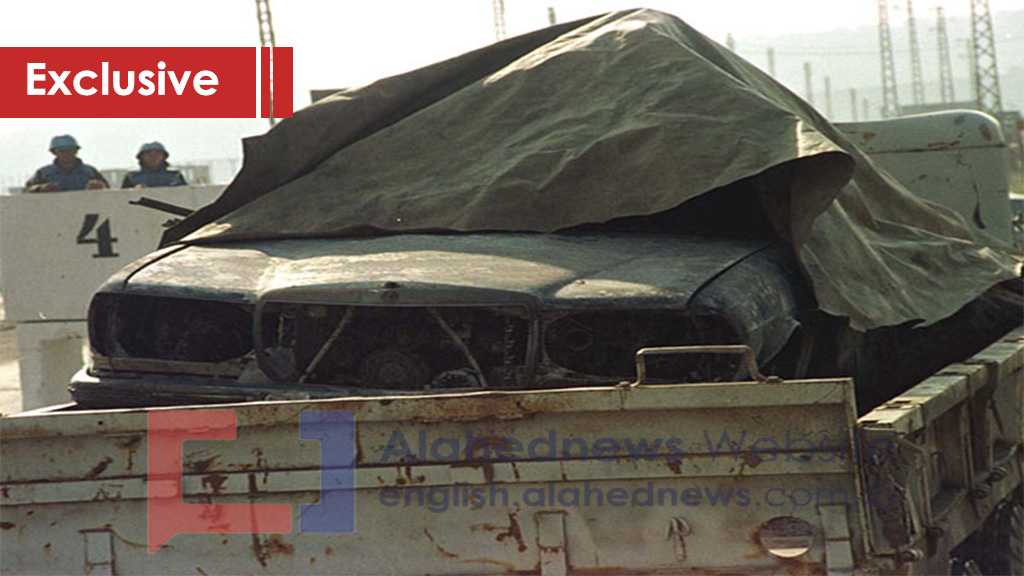
His car was hit by an improvised explosive device near the village of Al-Rihan. He miraculously survived. But on Sunday evening, 28 February 1999, he did not survive a larger explosion that blew up his armored vehicle. Three others, including an ‘Israeli’ radio reporter were also killed. The Islamic Resistance prepared the explosive device at the al-Khan-Kawkab junction.
““Israel’s” hand is long. We will bring any fugitive back wherever he is. And we will behead him sooner or later. Soon, we will carry the heads of the traitors with our hands. We are a state that does not abandon its vengeance even years later.”
These were the final words of Erez Gerstein, the commander of the liaison unit in Lebanon and the top military man of the “Israeli” forces occupying southern Lebanon, who was speaking to a group of “Israeli”-affiliated militias in the town of Shebaa.
– End of Introduction –
This happened on the last day of the cold month of February. It was a warm morning unlike regular winter mornings. News of his arrival was widely disseminated moments before his convoy of three civilian bulletproofed armored vehicles equipped with heavy machine guns entered the town. The motorcade emerged from the heart of the dust storm. The sun was setting when the general got out of his dark-curtained car and entered a neighboring building to pay his respects to the wife of a fallen militia security agent and pay the price for his death. The widow was paid USD 50,000 within less than five minutes.
The general left the dead agent’s house and waited in the middle of the road.
“I carefully observed him after everyone was in my line of vision. His facial features shone under the shy winter sunlight. He was rudely moving amidst the soldiers, as if he had something he wanted to say quickly,” Malik sighs as he tells the story of his last meeting with Erez Gerstein.
“I sank a little bit into the noise under my balcony. And I began observing him carefully. I saw him chase a flying insect with the corner of his eye and stomp the dirt with his shoe to search for another one crawling. He did not want to miss out on anything. Then, he turned his head. His eyes ran across the hills of Kfar Shuba and Shebaa, as if he was redrawing the map of the deployment of the “Israeli” forces in that region. The region was the other side of the occupied Syrian Golan Heights. He was doing so as the top “Israeli” army topographer in Lebanon. This is aside from his passion for insects.”
“With the corner of his other eye, I saw him looking down on my superior in the 504 “Israeli” intelligence unit, who in turn had his head down. It was in contrast to the picture that led me to accompany him in his work, where he would meet senior “Israeli” officers and take instructions from them directly without humiliation. They trusted him. They were so concerned about him that they insisted on getting to know me since I was his personal bodyguard. This coincided with Erez Gerstein taking up his new post in Lebanon. The eyes of my superior did not meet the general’s. Boredom was obvious on his face. And he seemed to stand there for too long when compared to his constant movement on the field. He was only used to standing in the battlefields in the face of elements of the Palestinian and Lebanese resistance. He participated in the invasion of Beirut when he helped Sharon in 1982. He took part in besieging the city of Beirut. He used to watch the fire raging during the night from atop the overlooking hills. He also took part in the Battle of Beaufort. He used to boast that he entered the town despite the forces that defended the castle until the last breath. He raided Nabatiyeh and Arnoun, etc. While I was going through these pictures in my head, the loud voice of a security officer of the agents’ militia Riyad al-Hamra brought me back to where I was standing: ‘Malik, the general wants to speak to the men. It is unreasonable for him to stay on the street. Open your house for us for just five minutes.’”
“The blood in my veins froze due to the shock that came over me. ‘In my house, me, what blind trust.’ I said to myself, I could not say a single word. The whole group walked toward the stairs while I was taking my little family, my wife and child, upstairs to where my parents lived. I opened the doors widely for the arrivals, including twenty military personnel working in the “Israeli” intelligence and security officers with stars on their shoulders, which I’ve come accustomed to seeing recently. I looked for Doron’s face among the crowd. He was the first “Israeli” intelligence officer I met in the Metula settlement before handing over his post to his successor, Abu al-Nimr. Doron was not among those who entered my small house. Gerstein did not forgive those with even a single security failure. The issue of double agent Raja Ward fleeing the occupation’s authority has not been closed yet! I have never seen a fat person like Abu Nimr, an “Israeli” officer whose eloquence in Arabic and broad memory of Arab proverbs I will never forget. The leaders that passed before me were not higher than the general’s rank. His body touched mine. He did not pay attention to my surprised and confused breathing. He trusted me. He threw his pouch indifferently at my porch as proof of his confidence in the security measures as well as being in my house.”
Malik, who is recalling the details of the last 30 minutes in the life of Erez Gerstein, added: “He entered and sat here on this chair. Next to him was Rafiq al-Saeed, the Zionist general who was responsible for the so-called civil administration in the eastern sector. On his other side was “Israel’s” radio reporter and military spokesperson in the region Ilan Roeh. He was preparing the recorder for him [Gerstein] on this table as if he was documenting the history of this senior officer who was qualified to hold very high-ranking positions in the “Israeli” army.” Here (gesturing with his hand) sat Munir al-Shawfi, the operations officer of the 30th Regiment.”
“Before the rest of the crowd rested from the tour, Nadeem Abu Rafie, the commander of the Hasbaya district of the 30th Brigade, sent Mohammed Zein, the officer of the agents’ militia in the region, to buy refreshments. The agents were in a state of tension as a result of the blows dealt by the Islamic Resistance. The blows shook the agents’ army structure and infiltrated its security apparatus. The agents needed some juice to be refreshed and a morale boost to strengthen their determination. The general started boosting their morale, taking advantage of the intermittent time as usual. He enjoyed talking about his achievements against Hezbollah even if it was about the Kfour explosive device that lead to the martyrdom of five resistance fighters. He seemed boastful with his great achievement, which would contribute as he put it to the dismantling of Hezbollah!”
“He said, ‘the safety of the “Israeli” Defense Force and the Northern Command was based on striking Hezbollah everywhere.’ Then he continued sarcastically, ‘This is what happened to them in this operation – the Kfour Operation. We certainly hit them. We see that we have an intelligence capability to reach them. The use of the explosive devices is aimed at helping launch local strikes at Hezbollah whenever we want. I repeat what I said before, we meant to hit those responsible for the “subversive operations” in Hezbollah, which was sometimes portrayed in the country as a large organization. There are many fighters in it, and this is no secret when you succeed in striking them.’”
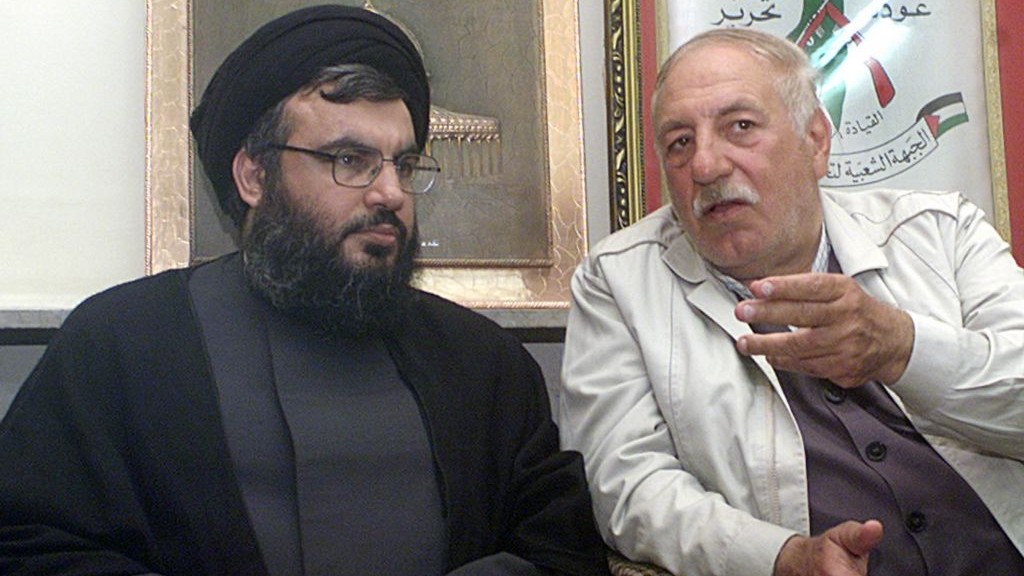
“Erez Gerstein was accustomed to recounting his military achievements. He presented himself as a hero in his wars against the resistance. He did not hesitate in his private conversations with his fellow officers to reveal his role in the attack of the Special Forces on the military headquarters of the Popular Front for the Liberation of Palestine – the General Command in the Naameh-Damour area to assassinate Ahmed Jibril. Back then he was the commander of the Golani Brigade and the spearhead.
Related image
The operation began with dropping elite elements with booby-trapped dogs trained to enter tunnels. “Israeli” military intelligence officers, including Erez, believed that the assassination of Ahmed Jibril in this way would be a great achievement for them. But the pictures of the dead dogs on the pages of Beirut’s newspapers issued the following day proved without doubt the failure of the smart operation.”
“He said: ‘The more chaos, the more complaints from the military police. This is good.’ The leaders patted his shoulder and he always got the highest applause when he stated his position.”
“He strongly criticized what he called self-restraint in Lebanon, saying: ‘The soldiers’ blood is no less red than the blood of the civilians.’
“‘All eyes on him’  … He carried a cup filled with soda and sipped the acid nitrate, and then with his other hand he threw the pieces of nuts into his mouth and began to crack pistachios and the white pumpkin seeds with his shiny teeth. Everyone was looking at him in silence, observing the details of the forty-year old man’s facial features, which were drone by the ranks he occupied. He rose from the commander of the Special Forces to the commander of the Golani Brigade. In March 1998, he was appointed successor to Brigadier General Eli Amitai who was dismissed from office following his security failure and the confirmation by the leadership in the “Israeli” army that the Islamic Resistance was able to breach all his security measures and get to agents and recruit them. The command of the Armed Forces in the south was handed over to Gerstein, who outperformed his trainers with his vast experiences against what they called subversive operations. He was classified as one of the best field officers and most senior commander of the “Israeli” army in Lebanon. He had every Zionist’s trust as the commander of the liaison unit.”
No Peace!
Malik was tirelessly narrating what had happened at his home shortly before the death explosive device planted by the resistance on the road to Kawkaba killed Erez. Unlike his family, he never mentioned the word peace once. “I remember when we used to go to Eilat, Taba, Haifa, Naqab and Safad every year to attend secret security meetings and the distribution of tasks or receive training under the auspices of Uri Lubrani, who used to meet us once a year to deliver his “peace” speech. He entered with an olive branch in his hand saying: “You are the ambassadors of peace and mediators between us and the Lebanese state.”
“The general adjusted his seating position and puffed his chest out, which was filled with threats and mixed with kindness for the remains of the agents that were the only ones left behind from the many that deserted. His words were harsh. Rafiq Al Saeed noticed the relatives of the agents that deserted. So he whispered to Gerstein and asked him to smooth things over and avoid stirring sensitivity and tension among the remaining agents. However, Erez stuck to his stance as usual. When he spoke during meetings, silence befell the brigade commanders and officers, in anticipation of what he had in store for them. He never disappointed the enemy. His public statements in internal deliberations were headlines. He was the one who did not take into account the feelings of the mothers when he attacked the Four Mothers organization in May of last year because “it negatively affects the battlefield and posed a threat to the soldier and his life as a commander.” How would he take into account the feelings of his agents! This was what affected the siblings of the agents present there and pushed them to flee later and follow their fugitive brothers.”
Malik takes a puff of his cigarette and adds: “After more than half an hour, the general left my house with his entourage. The phone was on my side. I had a strange feeling of responsibility and fear of what was coming at once. My anticipation for certain news included a mixture of fear and challenge. I even wished for a moment that he would die after one or two days.
My heart was beating with every tick of the clock, which indicated ten past 11. Then my brother, who lived above my house, called me to turn on the television and shouted: “Look at what happened to the people who were at your house.” I tried to stop breathing to hear the news broadcast by one of the Arab satellite channels: “General Erez Gerstein, the “Israeli” liaison officer in southern Lebanon, was killed in southern Lebanon on the Marjayoun-Hasbayya road after an explosive device was detonated by Hezbollah fighters. Gerstein was the highest-ranking military officer killed by Hezbollah … Three of his companions, including an ‘Israeli’ radio correspondent were killed with him.”
“I was shocked and silent. I flipped channels hoping to hear something that refutes the news. I might be dreaming. Could all these resonating speeches evaporate and go in vain without a farewell!”
“After hearing the news of his death, dozens of Zionist settlers protested angrily in front of the headquarters of the so-called Minister of War. They burned rubber tires and raised banners saying: ‘Stop the foolish occupation’, ‘It’s stupid to stay in Lebanon’, and ‘It’s Lebanon, you idiots.’”
“Then I remembered the last thing he said before he left my house for Marjayoun: ‘Hezbollah is dying.’” The moment of my meditation was interrupted by a call. On the other side of the line was a voice I got used to confidently cheering: ‘Congratulations.’”
They Know Everything
One of the Zionist analysts said during a live broadcast in an interview with the enemy’s television: “that he had to say that because of everything that happened, this was a pre-planned ‘attack’ on Brigadier General Erez Gerstein. It was not a coincidence. He was the intended target and they were doing research on him. This is because they broadcast his biography all the time. Since the first broadcast on Al-Manar TV in the afternoon, they spoke about Gerstein’s life in an archival documentary for 20 minutes. Of course, this is not an easy job to do in a day. It is related to different events and tours he made during his work for a year since he took up his post, including material they record from “Israeli” television and based on Hezbollah’s information. What is more important is that the operation was carried out inside the “security zone” under “Israeli” control, and we know that Hezbollah has intelligence and informants inside this area. The elements collect and transfer this intelligence information to Hezbollah leaders in southern Lebanon. Accordingly, they plan to carry out their operations.
In the next episode: Who is the Malik al-Saeedi?
How did he infiltrate the agents’ militia and gained the confidence of the Zionist officers?
Information published for the first time
The first lie detector was used in police circles in 1924. It is a traditional device known as the polygraph or multiple scripts. It is illustrated by a number of wavy lines on a sheet of paper. It monitors the “physiological” indicators, such as respiration, skin conductivity and pulse. It also requires the use of highly qualified experts.
How to use a lie detector: The person being questioned sits on a chair. Two rubber belts are tied around his chest and stomach to measure the pattern of his breathing. A blood pressure monitor is also placed on his arm. His fingers are connected to a metal piece to measure the activity of the sweat glands. The test begins with asking simple questions to gain a standard for the indicators recorded on the polygraph. Then the subject is asked real questions to which he has to answer with Yes or No. This, while all his body indicators are drawn on a piece of moving paper.
Before and after the test, charts can be seen on the moving sheet to see if there is a sudden and significant change in the indicators, such as a rapid heartbeat, increase in blood pressure, increased sweating, or others when answering a particular question.
Researcher and director of the Federation of American Scientists Project, Steven Aftergood, said that the lie detector is a trick. It can easily be tricked by moving the feet or shoulders while giving any misleading answers to the interrogator’s questions as well as the constant thinking about disturbing matters that cause the subject to feel sad or upset during the session. Hence, the device can no longer distinguish between his worries and his misleading answers.
Related videos
Hundreds of Israelis have attended the funeral of a reporter killed in a car bomb attack in Southern Lebanon. Elan Roe was in a four-car convoy which was blown up by two bombs near the Israeli/Lebanese border at noon on Sunday. Brigadier-General Erez Gerstein and two other Israelis in the convoy were also killed.

River to Sea Uprooted Palestinian   
The views expressed in this article are the sole responsibility of the author and do not necessarily reflect those of the Blog!