Tuesday, 19 March 2019

The resistance, the country of farms …. And the confrontation strategy المقاومة ودولة المزارع… واستراتيجية المواجهة

The resistance, the country of farms …. And the confrontation strategy

مارس 18, 2019
Written by Nasser Kandil,

The similarity of words and their meanings alone are not what put the resistance in front of the challenges of wining in the battle of fighting corruption. The similarity is in form and content between the battle of the resistance in liberating Shebaa Farms which has not ended yet and deterring the occupation from aggression, and the battle of liberating the farms of corruption inside the country and re-regulating the expenditure of the public money and the rehabilitation of the country in which its citizens will not feel that they are under the mercy of a country that protects devil traders protected by corruption.
The obstacles in the battle of liberating Shebaa Farms are the absence of a real national will that considers liberation as a priority, the absence of the national consensus to offer a political cover to the liberation process which requires an indispensable role by the resistance, and a structural change in arming the Lebanese army, and thus in the international relations of Lebanon. In the liberation of the farms of corruption, we found the same obstacles; the absence of the real national will, the absence of the national consensus to offer a political cover to the liberation process which requires a structural change in the form of the political regime which is based on favoritism, and the sectarian distribution of spoils and gains which are called obligations.
In the two battles the issue is the same, it is a naivety to believe that it is an outcome of different interpretations or the absence of the awareness of facts or that the issue is depending on the objective and national considerations or expresses urgent national need or higher national interest. Those who oppose the decision of liberation Shebaa Farms are partners in an international regional alliance against the resistance, and the leaders of this alliance are partners with Israel in its confrontation of the axis of resistance, they depend on confronting the resistance in other issues, and delay in putting a national strategy to liberate Shebaa Farms putting futile means to liberate them diplomatically, exactly as those who oppose the decision of liberating the farms of corruption, they are partners in an external and internal political economic alliance that is the source of the growth of corruption, depending on the philosophy of dept, borrowing and benefits and the philosophy of privatization and the sectarian organization of the country and delay in putting an national strategy to fight the corruption.
In the issue of liberating Shebaa Farms, the resistance was forced to adopt a methodology to achieve a consensus on their Lebanese origin and their being under occupation after denial. Then it made many attempts to remind of them then it entered the stage of the qualitative operations. Now it suggests a dialogue on a strategy of the national defense to liberate them. While in the liberation of the farms of corruption, the resistance succeeded in achieving the consensus on the existence of corruption and the degree of its danger after a state of denial. Therefore, will it resort to the attempts of reminding of them and the qualitative operations as in the issues of telecommunications and the mobile companies and their budgets, in preparation to ask for a national strategy to liberate them or will it find itself obliged to resort to an open major confrontation as shown by the Lebanese regime, which one part of it will fight defending the sectarian organization and its quotas, and one part will fight defending the debt and the banking sector and benefits, and one will defend the privatization and the state of turning the country into a failed trader and where everything is overlapped with each other.
The issue of the political and economic regime is present. The resistance is concerned while it leads the two battles to be aware that its issue needs a radical change in a run-down regime that it no longer produces but more disasters while it pretends the reform.
Translated by Lina Shehadeh,

المقاومة ودولة المزارع… واستراتيجية المواجهة 

فبراير 16, 2019

ناصر قنديل

– ليست قضية تشابه الكلمات ومعانيها وحدها ما يجعل المقاومة أمام تحديات الفوز بمعركة مكافحة الفساد تواجه امتحاناً وطنياً صعباً، حيث التشابه في الشكل والمضمون بين معركة المقاومة التي لم تبلغ أهدافها بعد في تحرير مزارع شبعا، ولا تزال واقفة عند حدود ما تحرّر من الأرض، وردع الاحتلال عن العدوان، وبالمقابل معركة تريد أن تبلغ أهدافها بتحرير مزارع الفساد داخل الدولة وإعادة الانتظام لإنفاق المال العام، ورد الاعتبار لدولة الرعاية التي لا يشعر مواطنوها أنهم زبائن تحت رحمة تاجر وحش اسمه الدولة يرعى تجاراً وحوشاً يحميهم الفساد.

– التشابه في الشكل بين معركتي تحرير مزارع شبعا ومزارع الفساد، مطابق للتشابه في المضمون، حيث العقبة دون معركة تحرير مزارع شبعا غياب إرادة وطنية حقيقية باعتبار التحرير أولوية، وغياب الإجماع الوطني على الاستعداد لتقديم الغطاء السياسي لعملية التحرير التي تستدعي دوراً لا غنى عنه للمقاومة، وتعديلاً بنيوياً في تسليح الجيش اللبناني وبالتالي بالعلاقات الدولية للبنان، وفي معركة تحرير مزارع الفساد تظهر العقبات ذاتها، بغياب الإرادة الوطنية الحقيقية باعتبار تحرير مزارع الفساد أولوية، وبغياب الإجماع الوطني على الاستعداد لتقديم الغطاء السياسي اللازم للعملية، التي تستدعي تغييراً هيكلياً في نمط النظام السياسي القائم على المحسوبية والتوزيع الطائفي للمغانم والمكاسب المسماة تلزيمات وتوظيف.

– القضية في المعركتين واحدة، وساذج من يعتقد أنها ناجمة عن اجتهادات مخالفة، أو غياب الإدراك للحقائق، فمخطئ من يتوهم أن القضية وقف على كمية التسلسل المنطقي والاعتبارات الموضوعية والوطنية التي تساق لتظهير أولوية كل من المعركتين وتعبيرهما عن حاجة وطنية ملحّة ومصلحة وطنية عليا، فالمختلفون مع خيار تحرير مزارع شبعا رغم أنهم لا يجاهرون، لكنهم بكامل وعيهم شركاء في حلف إقليمي دولي معادٍ للمقاومة، وأسياد هذا الحلف في الخارج شركاء لـ»إسرائيل» في معارك المواجهة مع محور المقاومة، وكذلك هم المختلفون مع خيار تحرير مزارع الفساد، لا يجاهرون، لكنهم بكامل وعيهم شركاء في حلف سياسي اقتصادي داخلي وخارجي يشكل مصدر نمو الفساد وتناسله، عبر فلسفة الاستدانة وخدمة الدين والفوائد، وفلسفة الخصخصة، والتنظيم الطائفي للدولة، وتماماً كما هم المختلفون مع خيار تحرير مزارع شبعا لا يجاهرون بل يتناولون المقاومة ويواجهونها في ملفات أخرى ويستأخرون بتقادم الأمر الواقع قضية وضع استراتيجية وطنية لتحرير مزارع شبعا، ويقدمون وسائل غير مجدية لتحريرها بالطرق الدبلوماسية. لا يجاهر معارضو تحرير مزارع الفساد بموقفهم، بل يواجهون كل محاولة للمساس بفلسفة الاستدانة والفوائد والخصخصة والتنظيم الطائفي للدولة، ويستأخرون بتقادم الأمر الواقع كل محاولة لوضع استراتيجية وطنية لمكافحة الفساد.

في قضية تحرير مزارع شبعا، اضطرت المقاومة لاعتماد منهجية بدأت بالسعي لتحقيق إجماع على الاعتراف بلبنانيتها وبكونها تحت الاحتلال، بعد زمن من التنكر لهذه الحقيقة، ونجحت المقاومة بذلك. ثم دخلت مرحلة العمليات التذكيرية بها، ثم مرحلة العمليات النوعية فيها، وهي الآن مع طرح الحوار حول استراتيجية للدفاع الوطني تستعد للتحرك نحو المطالبة باستراتيجية وطنية لتحرير المزارع، وفي تحرير مزارع الفساد نجحت المقاومة بانتزاع اعتراف بالإجماع بوجود الفساد ودرجة خطره بعد زمن من الإنكار، فهل ستلجأ إلى منهج العمليات التذكيرية والعمليات النوعية، كما هو الحال بملفات وزارة الاتصالات وشركات الخلوي وموازناتها، تمهيداً للمطالبة باستراتيجية وطنية لتحريرها، أم أنها ستجد نفسها وجهاً لوجه أمام الحاجة للقفز فوراً إلى المعركة الكبرى المفتوحة كما تقول وقائع النظام السياسي اللبناني، حيث سيقاتل بعضه دفاعاً عن التنظيم الطائفي وما تمثله المحاصصة فيه، وبعضه دفاعاً عن الاستدانة وقطاع المصارف والقصد هو نظام فوائد الدين، وبعضه دفاعاً عن الخصخصة وتحويل الدولة تاجراً مع المواطن في ظل نظرية أنها تاجر فاشل حيث تحقق الأرباح، ويتداخل هذا البعض بذاك بين حليف وصديق وخصم؟

قضية النظام السياسي والاقتصادي على الطاولة، ولا فوز بربح معركتي تحرير مزارع شبعا كما مزارع الفساد دون دخولها من الباب حيث الشبابيك متاهات تعيدك إلى الخارج، والمقاومة معنية وهي تخوض وتقود المعركتين أن تبقي عينها مفتوحة أن قضيتها تقع هنا: في الحاجة لتغيير جذري في نظام متهالك لم يعد ينتج إلا المزيد من الكوارث وهو يتظاهر بالسعي لإصلاح بعضها.

Related Videos
Related Articles

River to Sea Uprooted Palestinian   
The views expressed in this article are the sole responsibility of the author and do not necessarily reflect those of the Blog!

Netanyahu in Moscow: the selection of words نتنياهو في موسكو: انتقاء الكلمات

 Netanyahu in Moscow: the selection of words

مارس 18, 2019
Written by Nasser Kandil,

It is normal that the Turkish President Recep Erdogan and the Prime Minister Benjamin Netanyahu are the last ones who want to recognize the Syrian victory, as it is normal that the maneuver in the battlefields and the prevarication in the commitment are the titles of their policy. The main beneficiary from the war on Syria, its destruction, and its fragmentation as a central pillar in the growing resistance axis is the occupation entity. And the aspiring party to dominate on the Arab and Islamic worlds to overthrow the heart of Arabism represented by Syria is the Justice and Development Party led by Recep Erdogan who combined his leaderships to form the Muslim Brotherhood along with his sticking to the capacities of Turkey the most important country in the region and his belonging to the NATO to form the main base for the aggression on Syria while he was dreaming of the new Ottoman.
The scrutiny of the Turkish and Israeli policies and movements must not be based on the expectation of the final recognition of the complete failure and loss, rather on the limitedness of their movement. It seems that the Russian presence in Syria is the title of the new equation on which the Turkish and Israeli considerations depend. In the same way, that the dropping of the Russian plane by Turkey in late 2015 was a gateway for a new equation drawn by Russia that made it draw the rules of engagement in Syria against Turkey, the dropping of the Russian plane by the occupation entity in late 2018 formed a similar event. And as the Turkish prevarication continued but under the ceiling of non –collision with Russia again, the occupation entity is doing the same. And as Erdogan remained talking about the Syrian threat on the security of Turkey, and undertakes to continue the military action, Netanyahu will remain talking about the threat on the security of the occupation entity and undertakes to continue the military action too.
Turkey does not offer anything positive for interpreting its pledges to Astana path, but at the same time it does not dare to do neither of these two things: a passive action that leads it to collision with the Syrian army and its allies. Second, the obstruction of any military action by the Syrian army and its allies against the armed groups. Turkey which remained talking about a safe zone which it wants to form by extracting a part of the Syrian geography by the force of occupation has become choosing its words. Therefore, the concept of the safe zone moved from the direct Turkish military control to the refusal of any domination, then to the refusal of any control is not trusted by Turkey just in order to meet the concept of Moscow to apply Adana Agreement and the preparation to be a partner in a border area in which the Russian military is deployed.
The occupation entity which will not abide by any positive commitment towards respecting the concept of the Syrian sovereignty has abided by two things; not to approach the Syrian airspace after the dropping of an Israeli aircraft by the Syrian air defense. Second, not to target vital locations of the Syrian army and governmental and civil figures of the Syrian sovereignty. The occupation entity which was talking about its intention to target the Iranian presence since the deployment of S-300 missiles in Syria has become choosing its words. After Netanyahu had talked that he would continue his raids, he talked before his visit to Moscow about an action against the Iranian presence without using military words, and now in Moscow he is using different words, that he will continue his work to prevent Iran from achieving its goals in Syria.
The decision of the leadership of the resistance axis resulting from the meeting which brought together the Syrian President Bashar Al-Assad and Imam Ali Al Khamenaei on the eve of Netanyahu’s visit to Moscow is to repel any Israeli aggression accordingly. Moscow knew this decision notified to Netanyahu, so it advised to pay attention to the threat of a serious embroilment in an uncontrolled confrontation. Therefore Netanyahu chose his words so eloquently.
 Translated by Lina Shehadeh,

نتنياهو في موسكو: انتقاء الكلمات

فبراير 28, 2019

ناصر قنديل

– من الطبيعي أن يكون الرئيس التركي رجب أردوغان ورئيس حكومة بنيامين نتنياهو آخر من يسلّم بالنصر السوري، وبسيادة غير منقوصة للدولة السورية. ومن الطبيعي أن تكون المناورة في الميدان والمراوغة في الالتزام هما عنوان سياسة كل منهما. فإذا كان من مستفيد رئيسي من الحرب على سورية لتدميرها وتفتيتها كقلعة مركزية في محور المقاومة وتنامي وتعاظم قوته في ظل القلق الوجودي من تعاظم وتنامي قوة هذا المحور، فهو كيان الاحتلال، وإذا كان من طامح للهيمنة على العالمين العربي والإسلامي من بوابة إسقاط قلب العروبة النابض الذي تمثله سورية، فهو حزب العدالة والتنمية بزعامة رجب أردوغان الذي جمع قيادته لتنظيم الأخوان المسلمين مع إمساكه بمقدرات تركيا الدولة الأهم في المنطقة، مع انتمائه لحلف الأطلسي، ليشكل القاعدة الرئيسية للعدوان على سورية وهو يعيش أحلام العثمانية الجديدة.

– المراقبة للسياسات والتحركات التركية والإسرائيلية، لا يجب أن تتم على خلفية وهم التوقع بلحظة تموضع نهائي عنوانه التسليم بالفشل الكامل والخسارة الكاملة، بل لاستكشاف درجة الضيق التي تعيشها هوامش الحركة المتاحة أمام كل منهما، وفي هذا المجال يبدو الحضور الروسي في سورية عنوان المعادلة الجديدة التي تتموضع عندها الحسابات التركية والإسرائيلية، وبمثل ما شكل إسقاط تركيا للطائرة الروسية نهاية العام 2015 مدخل رسم روسيا لمعادلة جديدة فتحت مسار تحكّم روسيا برسم قواعد الاشتباك في سورية بالنسبة لتركيا، شكل إسقاط جيش الاحتلال للطائرة الروسية في نهاية العام 2018 حدثاً مشابهاً، ومثلما استمرّت المراوغة التركية لكن تحت سقف عدم التصادم مجدداً مع روسيا، يسير كيان الاحتلال في الطريق ذاتها. ومثلما بقي أردوغان يتحدّث عن خطر على أمن تركيا من سورية ويتعهّد بمواصلة العمل عسكرياً ضده، سيبقى يتحدث نتنياهو عن خطر على أمن كيان الاحتلال ويتعهد بمواصلة العمل ضده.

– تركيا لم تُقدم على أي فعل إيجابي في ترجمة تعهداتها وفقاً لمسار أستانة، لكنها لم تجرؤ على أي من الأمرين التاليين، الأول هو فعل سلبي يوصلها إلى التصادم مع الجيش السوري وحلفائه، والثاني إعاقة عمل عسكري للجيش السوري وحلفائه بوجه الجماعات المسلحة، وتركيا التي بقيت تتحدّث عن المنطقة الآمنة التي تريد إقامتها باقتطاع جزء من الجغرافيا السورية بقوة الاحتلال، صارت تنتقي الكلمات فيتحرّك مفهوم المنطقة الآمنة من السيطرة العسكرية التركية المباشرة، إلى رفض أي سيطرة أخرى، إلى رفض أن تكون المنطقة بعهدة من لا تثق بهم تركيا، تمهيداً لملاقاة مفهوم موسكو لتطبيق اتفاق أضنة والاستعداد للدخول كشريك ضامن فيه ضمن منطقة حدودية تنتشر فيها الشرطة العسكرية الروسية.

– كبان الاحتلال الذي لن يقوم بتقديم أي التزام إيجابي نحو احترام مفهوم السيادة السورية، التزم بأمرين، الأول عدم التقرّب من الأجواء السورية منذ إسقاط الدفاعات الجوية السورية لطائرة إسرائيلية، والثاني الالتزام بعدم استهداف مواقع حيوية للجيش السوري ورموز حكومية ومدنية للسيادة السورية، وكيان الاحتلال الذي بقي بعد الإعلان عن نشر شبكة صواريخ الأس 300 في سورية، يتحدث عن نيته مواجهة واستهداف ما يصفه بالوجود الإيراني، صار ينتقي الكلمات في الحديث عن مضمون الاستهداف، فبعدما كان يقول نتنياهو إنه سيواصل غاراته، صار يتحدّث قبل زيارة موسكو عن العمل ضد الوجود الإيراني دون استخدام المفردات العسكرية. وهو في موسكو يستعمل كلمات أخرى، فيقول إنه سيواصل العمل لمنع إيران من تحقيق أهدافها في سورية.

– قرار قيادة محور المقاومة التي كان لقاء القمة للرئيس السوري بشار الأسد والإمام علي الخامنئي، منصتها الحاضرة عشية زيارة نتنياهو إلى موسكو، هو الردّ على كل عدوان إسرائيلي بما يتناسب معه كماً ونوعاً، وموسكو كانت بصورة هذا القرار الذي تبلّغه نتنياهو، مع نصيحة بالانتباه لمخاطر انزلاق جدي إلى مواجهة تخرج من تحت السيطرة، فجاءت البلاغة إلى لغة نتنياهو في انتقاء الكلمات.

Related Videos
Related Articles


River to Sea Uprooted Palestinian   
The views expressed in this article are the sole responsibility of the author and do not necessarily reflect those of the Blog!

The shame of it! UK’s failure to back UN investigation into israel’s shoot-to-kill-or-cripple policy in Gaza


Israeli use of butterfly bullets on Gaza civilians
By Stuart Littlewood
The UK failed to back a UN investigation into Israel’s shoot-to-kill-or-cripple policy against Gaza’s caged civilians. Will the Foreign Office also fail to adopt its findings?

Open letter to Alister Jack, MP for Dumfries and Galloway

cc: Jeremy Hunt MP, Secretary of State for Foreign and Commonwealth Affairs
Dear Alister,
Here’s something to take your mind off Brexit.
You’ll have heard of Dr Swee Ang. She is the first female Orthopaedic Consultant appointed to St Bartholomew (‘Barts’) and the Royal London Hospitals.
In the 1980s and 1990s Dr Swee worked as trauma and orthopaedics consultant in the refugee camps of Lebanon and later for the United Nations in Gaza, and the World Health Organisation in the West Bank and Gaza. She is Founder and Patron of the British charity Medical Aid for Palestinians (MAP).
She also treated the victims of the Pakistan (Kashmir) earthquake, and as consultant trauma and orthopaedic surgeon operated on and looked after the victims of the 7 July 2005 suicide bombing at the Royal London Hospital.
Dr Swee is co-author of War Surgery and Acute Care of the War Wounded; she also wrote From Beirut to Jerusalem documenting her experience in the Palestinian refugee camps in Lebanon and Gaza.
Last summer she was aboard the ship Al-Awdasailing to Gaza with urgently needed medical supplies when the vessel was violently assaulted and hijacked in international waters by our so-called friend and ally which, we’re repeatedly told, shares our values and whose enemies are our enemies. The Al-Awdawas dragged to an Israeli port and her passengers and crew were roughed up (some seriously injured) and abused, thrown in an Israeli jail and had their possessions and money stolen. The precious cargo, as far as we can ascertain, never reached the desperate wounded.
Dr Swee has just emailed:
The UN Commission for Human Rights will be concluding its investigation on the shooting of thousands of Palestinian civilians demonstrating within the borders of Gaza. At least 189 were killed (more now) and thousands shot with live ammunitions – with loss of limbs and still needing multiple surgeries if they were to keep their legs and arms. It is estimated that with conventional limb salvaging surgeries at least £39 million has to be found to prevent further amputations (figures put out by MAP).
Last year the UK abstained from supporting the UN conducting such an investigation. However, it went ahead and I was fortunate enough to attend the meeting at Amnesty International two days ago to hear the personal testimonies of Dr Tarek Loubani who was shot on 14 May 2018, and Dr Mahmoud Matar the head of the Limb Reconstruction Service in Gaza. They will be testifying to the UN Commissioner coming Monday in Geneva. There is an urgent request for us to write to Jeremy Hunt [UK foreign secretary] with copy to our local MP asking the UK government to adopt the findings and recommendations of the UN Commissioner for Human Rights. In fact the concern is that UK might vote against it since last year we abstained.
Please do so urgently. This is something we all can do. Email for Jeremy Hunt is:
Even if you are not a UK national but are Palestinians you have the right to email him on behalf of your people. Please also ask your friends to support the UN Commissioner for Human Rights.
Thank you all and God bless, Swee.

Wounds “the size of a fist” causing lifelong disability

According to Medecins Sans Frontieres(MSF), which operates in Gaza, the Israelis have been using “dum-dum”- type rounds that cause wounds of “unusual severity”. This sort of ammunition is understood to be outlawed in warfare. Last year MSF surgeons in Gaza reported “devastating gunshot wounds” among hundreds of people injured during the protests, the huge majority – mainly young men, but also some women and children – having unusually severe wounds to the lower extremities.
MSF medical teams note the injuries include an extreme level of destruction to bones and soft tissue, and large exit wounds that can be the size of a fist. “Half of the more than 500 patients we have admitted in our clinics have injuries where the bullet has literally destroyed tissue after having pulverized the bone,” said Marie-Elisabeth Ingres, Head of Mission of MSF in Palestine. “These patients will need to have very complex surgical operations and most of them will have disabilities for life.”
She hadn’t seen these kind of injuries before. The wounds appeared to be caused by ammunition with an expanding “butterfly” effect. “Mass lifelong disability is now the prospect for young Gazans who merely gathered in unarmed protest”
Writing in the BMJ (British Medical Journal) the head of plastic and reconstructive surgery in Gaza, Dr Nafiz Abu-Shaban, said that the hundreds of high energy compound tibial fractures from Israeli live fire are the most difficult of all open fractures to treat. They may require between five and seven surgical procedures, each operation taking three to six hours. “Even with state-of-the-art reconstruction, healing takes one to two years. Most of these patients will develop osteomyelitis. A steadily increasing toll of secondary amputations is inevitable. They will also need intensive rehabilitation, but the only rehabilitation hospital in Gaza was destroyed by Israeli bombing in 2014…”

UK favours “whitewash toolkit” instead

The UN Human Rights Council (UNHRC ) in Geneva adopted a resolution to set up an independent, international commission of inquiry to investigate all violations of humanitarian and international human rights law in the occupied Palestinian territory, with particular focus on recent events in Gaza. The resolution was passed with only two states opposing (the USA and another of Israel’s poodles, Australia), 29 in favour and 14 abstentions. The UK was among the abstainers.
Trying to explain its pathetic stance, the UK Mission in Geneva called the resolution “partial and unhelpfully unbalanced” for not explicitly demanding an investigation into the action of non-state actors such as Hamas. But why should it? Hamas is not the invader, illegal occupier, aggressor and blockader. It governs the besieged Gaza Strip as best it can after being democratically elected in 2006. The UK government then called on Israel to “make clear its intentions and carry out what must be a transparent inquiry into the IDF’s [Israel Defence Forces – a misnomer for the Israeli army] conduct at the border fence and to demonstrate how this will achieve a sufficient level of independence.” In other words, investigate itself.
However, Israeli human rights organisation B’Tselem condemned the already-announced internal Israeli military probe as “part of the whitewashing toolkit”. The British government was criticised in parliament for its limp-wristed attitude and reminded of Israel’s self-exoneration over the killing of four boys playing on a beach during its 2014 military offensive on Gaza.
The preamble to the UNHRC resolution states the reasons for a proper investigation brilliantly. It’s worth repeating here:
  • Convinced that the lack of accountability for violations of international law reinforces a culture of impunity, leading to a recurrence of violations and seriously endangering international peace,
  • Noting the systematic failure by Israel to carry out genuine investigations in an impartial, independent, prompt and effective way, as required by international law, into the violence and offences against Palestinians by the occupying forces, and to establish judicial accountability for its actions in the occupied Palestinian territory, including East Jerusalem,
  • Emphasising the obligations of Israel as the occupying power to ensure the safety, well-being and protection of the Palestinian civilian population under its occupation in the occupied Palestinian territory, including East Jerusalem,
  • Emphasising also that the intentional targeting of civilians and other protected persons in situations of armed conflict, including foreign occupation, constitutes a grave breach of international humanitarian law and international human rights law, and poses a threat to international peace and security,
  • Recognising the importance of the right to life and the right to freedom of peaceful assembly and association to the full enjoyment of all human rights…<<
Despite all that, Theresa May and Boris Johnson (foreign secretary at the time) still couldn’t bring themselves to back the UN resolution.
In recent years this country has so abandoned it moral compass that failing to support a perfectly legitimate investigation into the Israeli military’s brutal behaviour towards the Palestinians they have robbed and abused and murdered for 70 years – a scenario we engineered — is unsurprising.
But many see no difference between the racist thugs who command the Israeli army and the degenerate responsible for the New Zealand mosque massacre. Let us hope Her Majesty’s Government eventually discovers its backbone and adopts the report and findings of the UN Human Rights Council lest we all die of shame.
Kindest regards,
Your constituent Stuart Littlewood

River to Sea Uprooted Palestinian   
The views expressed in this article are the sole responsibility of the author and do not necessarily reflect those of the Blog!

Trump Supporters in Denial over New Zealand Massacre


Trump Supporters in Denial over New Zealand Massacre
FINIAN CUNNINGHAM | 17.03.2019 | WORLD / AMERICAS

Trump Supporters in Denial over New Zealand Massacre


US President Donald Trump condemned the New Zealand massacre of 50 people by a self-declared white fascist as “horrible”. In an ambiguous choice of words, Trump said he sent his “warmest [sic] sympathies” to the victims of the mass shooting at two mosques in Christchurch. He also seemed to downplay white supremacy violence as a problem.
With several surviving victims still in a critical condition, the death toll could rise in coming days.
Of course, Trump would be obliged to join in the international outpouring of condemnation over the barbaric cold-blooded act of mass murder. How could he not, given the shocking horror and depravity of the crime?
But his repeated nationalistic and nativist rhetoric as well as the ideologues whom he associates with make it very hard for Trump and his supporters to deny that there is a link between the White House occupant and the terrorist attack on Muslims in New Zealand, or white supremacist violence generally.
Supporters of Trump have scoffed at media claims made against Trump following the massacre insinuating the president is associated with “white nationalism” and thereby linked to the violence.
Admittedly, anti-Trump media in the US, such as CNN and MSNBC, will always seek every opportunity to undermine Trump. Nevertheless, on the point of Trump’s dalliance with extremist rightwing groups and their ideological memes there is a valid criticism to be made.
The alleged shooter in the New Zealand attack Friday was named as Brenton Tarrant, a 28-year-old Australian citizen. He openly declared himself to be a fascist, avowing white supremacist ideology. In a so-called manifesto, the suspect refers to Trump as a “symbol of renewed white identity”.
More significantly, the themes the alleged murderer espouses are central to the Alt Right movement and numerous other white nationalist groups in the US and Europe, issues which Trump has also promoted for political gain.
The themes of Islamophobia, anti-Semitism, white genocide by “invasion” or “replacement” by brown-skinned foreigners are run-of-the-mill talking points for far-right nationalist movements, which Trump has at times endorsed or given credence to.
Only days before the New Zealand massacre, Trump gave an exclusive interview with Breitbart News. The publication is a proponent of many of the themes surrounding fears of the “white race” being over-run by hordes of foreigners, and especially Muslim foreigners.
In his latest interview for Breitbart, Trump appeared to be inciting street violence by imploring his followers in the police and military to “get tough”. He tweeted a link to the publication. But following the horror in Christchurch, Trump deleted his tweet. That move suggests the president is fully aware of the toxic association with Breitbart at such a politically sensitive moment.
Trump and his supporters may try to play the innocent card, decrying what they would call are scurrilous attempt by the “liberal media” to bracket him with the violence of the far-right.
However, what else is one to conclude about Trump when he has personally amplified the touchstone causes of numerous fascist, white nationalist groups?
This week, Trump has pushed on with his border wall project. He has repeatedly sought to justify that project in sensationalist, scaremongering terms of preventing an “invasion” into the US from Mexico. The actual figures of migration over the southern border do not merit such high priority given by Trump to the “problem”. The proposed expenditure of $8-9 billion and declared state of emergency are “dog-whistling” techniques by Trump to mobilize far-right nationalist support.
Look at the people who associate with Trump. He may claim that their association is not reciprocated.
White neo-Nazi groups like Proud Boys and Alt Right have been hosted at Trump rallies. Alt Right leader Richard Spencer is partial to giving Nazi salutes at conferences and declaring “Hail Trump!”
David Duke, the grandmaster of the Klu Klux Klan, has publicly endorsed Trump.
Steve Bannon, Trump’s former political strategist in the White House, is a big proponent of the “replacement theory” whereby it is claimed that Muslim, African and other immigrants are “invading” the US and Europe to obliterate traditional white Christian communities. This was a prime motive for the alleged shooter in the New Zealand massacre. It was also a motive for the mass murder in 2011 by Norwegian neo-Nazi Anders Breivik.
Trump has taken up the cause of white South African farmers who claim that they are being expelled from colonial lands by the ruling ANC black government. This theme has also been taken up in Zimbabwe, and is a major touchstone issue for white supremacist, fascist groups around the world. For Trump to dally with the issue is an unmistakable sign of his witting – albeit tacit – support to such ideology, even though he may publicly try to distance himself at times, such as in the aftermath of the Christchurch atrocity.
Typically with Trump there are abundant contradictions. His son-in-law and special advisor Jared Kushner is Jewish. Yet Trump was accused of giving support to a “Unite the Right Rally” in Charlottesville, Virginia, in 2017, where the torch-bearing marchers chanted slogans about not being replaced by Jews.
There seems little room for denial by Trump or his supporters about his links to the rise of extreme rightwing, white nationalist, fascist groups. His blanket ban on asylum-seekers from Muslim countries, his unhinged rhetoric about “invasion” by foreigners, and Trump’s association with racist, fascistic ideologues all put this president in the dock for incitement. The reckless rhetoric of Trump’s demagoguery is manifest in depraved actions such as the mass murder of 49 Muslims in New Zealand.
Trump can’t wash his hands after cynically dabbling in the cesspool of fascist ideology.

River to Sea Uprooted Palestinian   
The views expressed in this article are the sole responsibility of the author and do not necessarily reflect those of the Blog!

Art of Resistance – an interview with Oliver Weindling


Once again elements within Labour and Corbyn’s closest political ring have been caught performing vile authoritarian symptoms trying to interfere with the arts and freedom of expression. In the last two weeks Momentum, Jewdas and Guardian Journalist Owen Jones joined forces in an attempt to intimidate a London jazz club. Not only did they fail, their campaign backfired on a humongous scale. In this video I interview Oliver Weindling, Vortex Club’s director. I asked Oli about his family background and about his take on the recent assault on British artists and elementary freedoms.
I urge you to log in to All About Jazz https://www.allaboutjazz.com/ and give your vote to the Vortex (and also support other British jazz clubs: 606, Ronnies, Pizza Express, The Bear Inn and many others).

River to Sea Uprooted Palestinian   
The views expressed in this article are the sole responsibility of the author and do not necessarily reflect those of the Blog!

Monday, 18 March 2019

Ariel Operation Updates: 3 Israelis Killed

Capture
The Zionist elite troops on Sunday stormed Burqin village near Ariel settlement, trading gunfire with a number of Palestinian gunmen (alleged to be behind today’s attack).
The Israeli occupation forces found a car (allegedly used by the attackers) and combed Burqin for fear of further operations, according to the media reports.
One Zionist soldier was killed in a stab attack in Ariel settlement in northern Salfit, according to Israeli media outlets which also reported that the attacker seized the soldier’s gun and shot dead one other soldier and a settler.
Other settlers, including a rabbi, were also seriously wounded, according to Israeli reports.
March 17, 2019
Capture
One Zionist soldier was killed in a stab attack in Ariel settlement in northern Salfit, according to Israeli media outlets which also reported that the attacker seized the soldier’s gun and shot injured one other soldier and two settlers.
The Israeli occupation forces rushed to the scene and cordoned off the area, according to the reports.

River to Sea Uprooted Palestinian   
The views expressed in this article are the sole responsibility of the author and do not necessarily reflect those of the Blog!

CLASHES ERUPT IN EASTERN YEMEN AS LOCAL TRIBES BLOCK SAUDI INFLUX OF MILITARY EQUIPMENT

Written by Ahmed Abdulkareem; Originally appeared at Mint Press
The latest incident came amidst a precipitous rise in tensions in eastern Yemen, where local residents have been grappling with an increasingly brazen military buildup by Saudi Arabia and the United Arab Emirates (UAE).
Clashes Erupt in Eastern Yemen as Local Tribes Block Saudi Influx of Military EquipmentMercenaries allied with the Saudi-led coalition are pictured at the port of Aden in Aden, Yemen, Dec. 12, 2018. Jon Gambrell | AP
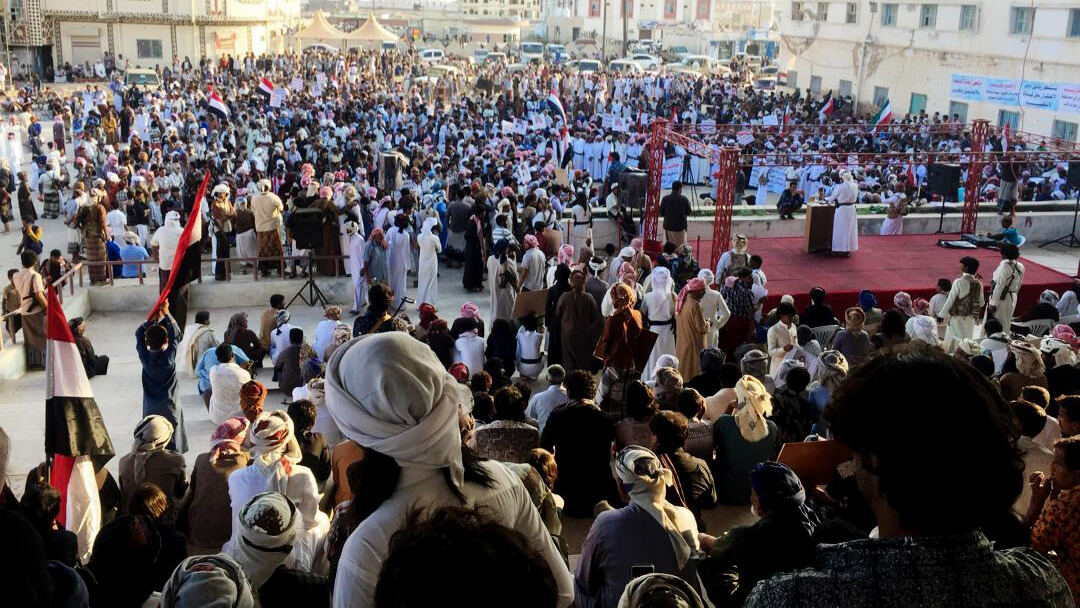
Fierce clashes have erupted between local tribes and Saudi forces supported by local mercenary groups in the Haat district of Yemen’s eastern Mahrah province. The clashes were sparked when local tribal members prevented Saudi shipping containers containing military equipment and household appliances from entering the country via al-Shihan border crossings with Oman, where Saudi Arabia plans to build a new military base.
Witnesses told MintPress News that the tribal groups stopped the trucks and checked them, then forced them to return. In the wake of this incident, fierce clashes erupted leaving Saudi mercenaries injured. Saudi warplanes could also be seen circling the skies above the area.
The latest incident came amidst a precipitous rise in tensions in eastern Yemen, where local residents have been grappling with an increasingly brazen military buildup by Saudi Arabia and the United Arab Emirates (UAE). Just last week, Saudi troops, tanks, and artillery arrived at the coastal area of Eienah, east of al-Gaydah, without coordinating with local authorities, a Yemeni official who spoke on condition of anonymity, told MintPress.
The attack has dangerous connotations for the region and comes less than six months after three protesters were killed by Saudi forces during a sit-in opposing the Saudi Coalition’s military buildup in eastern Yemen. Following the attack on the peaceful protest, local tribes in al-Mahrah vowed to take up arms against Saudi-led forces in order to prevent the construction of more checkpoints and military bases in their country.Al-Mahrah residents see the build-up of Saudi troops in the district as part of a pattern of malign and colonial Saudi policies in their country. Riyadh has deployed its forces in al-Mahrah under the guise of reconstruction and counter-smuggling operations. But Saudi forces have taken control of an increasingly long list of local government facilities, including the al-Ghaydah Airport, the Nishtun port, Sarfit, and the Shehn border crossing, as well as a number of coastal areas.Last week, Ali bin Salem al-Huraizy, al-Mahrah’s former deputy governor said: “The Saudis are determined to militarize the sea and land. They [Saudis] try to build a Saudi camp [base] every ten kilos.” He called on the people of al-Mahrah province to prepare to defend their sovereignty against Saudi Arabia by force of arms if necessary.The Deputy Chairman of the Organizing Committee for the peaceful sit-in, Aboud Qamasit, said that Saudi Arabia and its local allies have not shown any goodwill — quite the contrary, they increasingly build military bases in the province. He promised that al-Mahrah’s residents will continue to hold sit-ins and protests.The sit-in committee, which was formed by al-Mahrah residents, said in a statement on March 12 that Saudi Arabian forces kidnapped two civilians, taking them to al-Ghaydah Airport prison, a Saudi secret prison in the region, where dozens of detainees are subjected to serious abuses and assaults according to the sit-in committee.Ahmed Belhaf, a leader in the protest movement, said in a statement on March 2, that “there are an estimated 24 Saudi camps in the Ghaydah Airport operating under the supervision of the airport commander and training hundreds of extremist and terrorist militias.”Saudi Arabia launched a brutal military campaign in late 2017 against al-Mahrah, which borders Oman and has remained largely immune to the broader war in Yemen, as both the Houthis and other armed groups have little presence in the province. Saudi Arabia claims that arms smuggling operations by the Houthis are being carried out from Oman into Yemen via the al-Mahrah border crossing, though the Saudis have provided no evidence to back their claim, which Oman has repeatedly denied.

Saudi meddling in Mahrah politics

Clashes Erupt in Eastern Yemen as Local Tribes Block Saudi Influx of Military EquipmentProtesters in al-Ghaydah demand the expulsion of Saudi forces from the province. Photo | Ahmed AbdulKareem
A local Yemeni official who spoke on condition of anonymity said that Saudi Arabia has begun implementing a plan to eliminate Oman’s allies in the province, including the Mahri General Council, the largest opposition party to Saudi policies and plans in al-Mahrah, which is comprised of political and tribal forces and led by Sultan Abdullah bin Isa Al Afar, a key ally of Oman.In an effort to undermine local opposition to its military expansion in the region, Saudi Arabia plans to establish a new tribal council, replacing the Mahri General Council, which is to be led by Rajeh Said Bakrit. Bakrit was appointed by the Coalition as a governor of al Mahrah on November 27, 2017, to replace Mohammed Abdullah Kuddah after Kuddah spoke out against Saudi Arabia’s presence. The first phase of that plan includes monthly payoffs of 30,000 Saudi riyals ($8000) to 60 tribal elders and influential figures.Many strategic analysts see the Saudi plan as a way to apply pressure on Oman, which enjoys long borders and solid relations with the residents of al-Mahrah. Much to the dismay of Saudi Arabia and the UAE, Oman also enjoys cordial relations with Saudi rival Iran, a relationship that the Coalition is eager to undermine.In an effort to stem Saudi influence in the region, residents of al-Hawf, which lies east of al-Mahrah, announced the formation of a General Forum to bring area management back into the hands of local Mahrahi residents and organize civil projects in the area. The General Forum is being supported by the government of Oman and the effort is expected to spread to nearby districts.Saudi forces in eastern Yemen have recently been accused of planting monitoring devices into local communications networks — developed by a foreign engineering team and supported by Bakrit, according to a local official who spoke on condition of anonymity. The official said that the devices would allow Saudi forces to monitor and spy on residents and leaders who oppose the Saudi occupation and undermine the local opposition identifying and then assassinating or arresting its leaders.

Infiltration, assassination

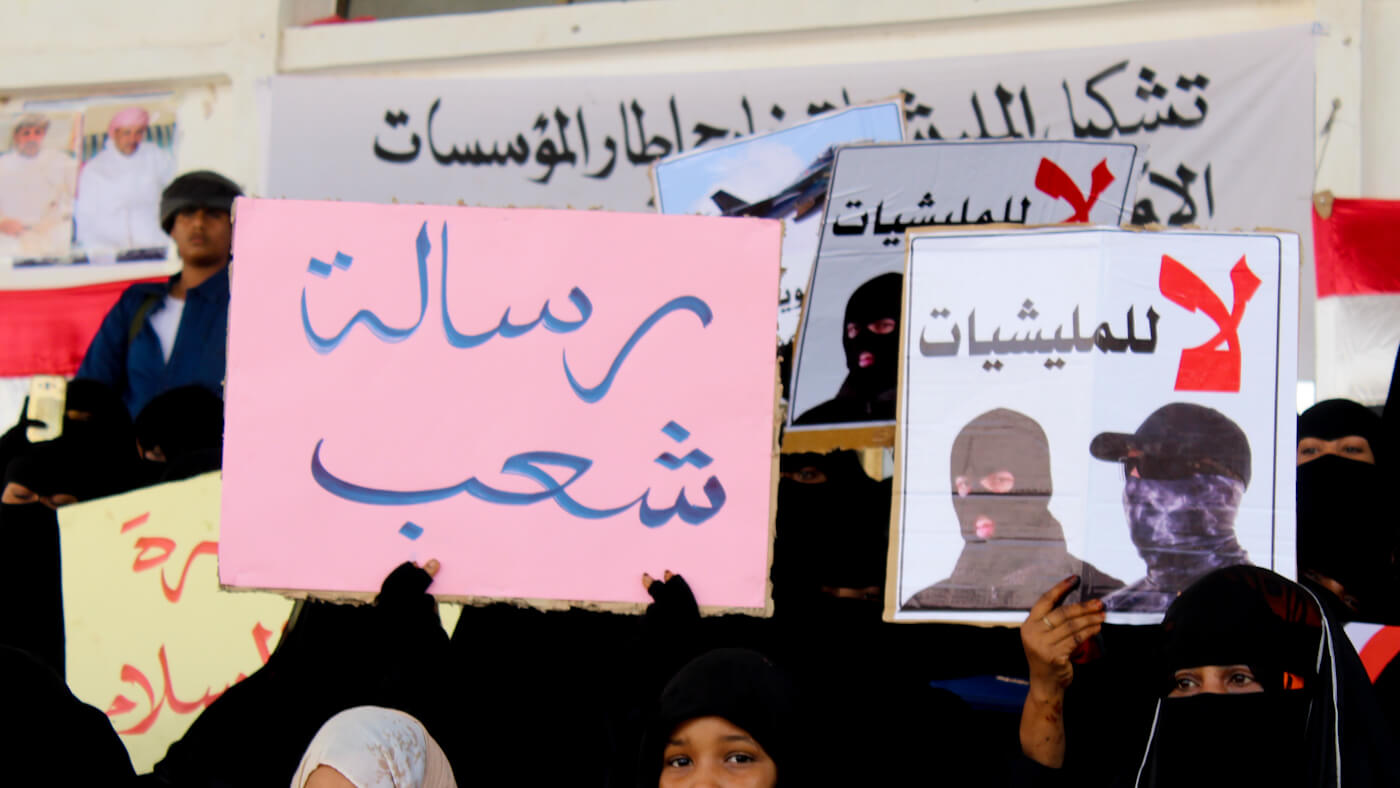
Clashes Erupt in Eastern Yemen as Local Tribes Block Saudi Influx of Military Equipmental-Mahrah residents in the Hwaf district carry slogans rejecting the militarization of the province, the presence of militias, and Saudi intervention, Jan, 2019. Photo | Ahmed AbdulKareem
A Saudi military commander in al-Mahrah allegedly asked Bakrit to reveal the names of the most prominent leaders who oppose the Saudi presence in the province, threatening to ‘physically liquidate’ them. On Wednesday, members of a UAE assassination squad arrived in al-Ghaydah. The same squad is thought to be responsible for the assassination of 27 religious leaders in Yemen who opposed the Saudi-led occupation.Saudi Arabia has also launched a campaign to recruit hundreds of al-Mahrah’s young for a local security force, called the “Mahri Elite Forces” and modeled around other Coalition-backed mercenary forces operating in Yemen, including the Hadhrami Elite Forces in Hadhramaut province, the Shabwani Elite Forces in Shabwa, and the Pioneer Security Belt Forces (al-Hizam) brigades in Aden.The campaign has sparked dismay amongst al-Mahrah’s tribes, who held a meeting and issued a subsequent statement on Monday saying: “Trying to copy the bad experience of the security belts in Aden and transfer them to al-Mahrah would open the way for armed conflicts and undermine local authorities.” The tribes called on the young Mahrahis to refuse to join the Saudi forces, saying the creation of the paramilitary group would create a combustible environment that threatens to upset the local balance.Like many paramilitary forces created by the Saudi-led Coalition in Yemen, the Mahri Elite Force was formed by recruiting members from specific tribes, not on the basis of one national army for the country as a whole. The predictable impact has been to exacerbate tribal differences, revive the desire for revenge among tribes, and create the desire for separate states.Al-Huraizy said in a statement:
The UAE seeks through its armed formations to create a new situation that will enable the UAE to dominate Yemen, control its ports and capabilities, and rob the national decision, violate its sovereignty and bring the country into chaos.”
Saudi Arabia’s policies in eastern Yemen lack a realistic reading of dangers and consequences, according to Abaad Studies and Research Center, a Yemeni research center closely aligned with Saudi Coalition allies in the country. As Saudi Arabia dismantles traditional social structures, ideological systems, and political parties, militia alternatives have predictably emerged.Ahmed AbdulKareem is a Yemeni journalist. He covers the war in Yemen for MintPress News as well as local Yemeni media.
Related Videos

River to Sea Uprooted Palestinian   
The views expressed in this article are the sole responsibility of the author and do not necessarily reflect those of the Blog!
Written by Elijah J. Magnier – @ejmalrai; Originally appeared at his blog
Iranian President Hassan Rouhani is visiting Iraq for three days, leading a large political and business delegation to deepen the relationship between the two countries. Rouhani met with the Iraqi President, Prime Minister, and Speaker of Parliament. The Iranian President visited Karbalaa this afternoon, is spending the night in Najaf and will be visiting on Wednesday the highest religious authority (Marjaiya) in the city the Grand Ayatollah Sayyed Ali al-Sistani, Sayyed Mohamad Saeed al-Hakeem, Sheikh Ishaq al-Fayyad and Sheikh Bashir al-Najafi. Rouhani’s public visit contrasts starkly with Trump’s recent covert visit to Iraq. Moreover, the projected economic and commercial cooperation between Iraq and Iran will not only mitigate US unilateral sanctions but will likely contribute to their failure. The bottom line question now arises: will Trump accept his loss to Iran or will he choose to lose Iraq as well by imposing sanctions on Mesopotamia?
Elijah J. Magnier: "Iran upstages the US in Iraq"
During the last week of 2018, President Trump’s plane turned off its lights to land safely in the US part of Ayn al-Assad base in Anbar province. Trump’s visit was kept secret and the Iraqi Prime Minister was informed on the same morning. Trump refused to land on the Iraqi side of the same base (Iraq and the US share the same military base with US forces holding full sovereignty over their area). For this reason, Prime Minister Adel Abdel Mahdi, the Speaker Mohamad al-Halbousi and the President Barham Saleh refused to meet Trump, who stuck to his schedule and landed at night.
Trump concluded his visit in three hours and left under darkness of the night. He is reported to have murmured that it was not right that, for security reasons, the US president was forced to visit in secrecy in the middle of the night a country where the US has invested hundreds of billions of dollars in its stability.
On the other hand, Rouhani informed the Iraqi presidency of his visit a week in advance; the visit was publicly announced at the same time. Iraqi officials coordinated the schedule of the Iranian President’s trip with their Iranian counterparts. Rouhani is due to remain in Iraq for three days to conclude important economic-commercial deals, raising the level of commerce between the two countries to 20 billion dollars.


Elijah J. Magnier: "Iran upstages the US in Iraq"

The conclusion:
  1. Iran has prevailed over the US because the Iraqi officials have rejected any unilateral sanctions on Iran, insisting on commercial exchange, including energy supply and selling.
  2. Major General Qassem Soleimani achieved Iran’s goal of developing a friendly relationship with Iraq, where officials are ready to suspend relations with the US if Trump insists on imposing sanctions on any country dealing with Tehran. This achievement (and others) earned Soleimani Iran’s most prestigious medal of honour, “the order of Zulfiqar” awarded by Sayed Ali Khamenei. Foreign Minister Jawad Zarif was the first to congratulate Soleimani, describing him as “the man who made the Middle East a safer place”. It is Soleimani’s second medal; the first was “the order of Fath” received in 1989 from the same Khamenei.
  3. Iran will sell electricity to Iraq and will use dollars and the local currency in its exchange. The Islamic Republic has found new ways to counter the US sanctions by building industry infrastructure and railways, and by establishing large commercial exchanges with Iraq. This will bring more dollars to Iran and will, simultaneously, help the country rely less on US dollars by doing business in the local currency.
Trump’s foreign policy and sanctions around the world are forcing countries to find alternatives to the US monetary system and trade. Although so far with little impact, Europe is introducing a special purpose vehicle (SPV) to support trade with Iran as an alternative to the US Swift global financial messaging service. China, Russia, India and many other countries dealing with Iran have agreed to carry on their exchanges mainly but not exclusively in local currency to bypass US sanctions.
Iraq today is divided between a large faction of politicians calling for the total withdrawal of US forces from the country, and another which wants to maintain a reduced US force in charge of training and intelligence exchange. Both factions want to see most US forces leave the country, and can likely reach an agreement on accepting a small specialised force on the ground. The Iraqi government would like to strike a balance and maintain both a fair relationship with the US and excellent ties with Iran.
Trump has two choices. He could choose to cut his relationship with Iraq, which would amount to shooting himself in the foot. The presence of US forces in Iraq is essential to US objectives and hegemony in the Middle East. Moreover, it is unclear for how long US forces will be able to occupy Syria. The alternative would be for Trump to accept the fact that his sanctions against Iran will fail as Iranian-Iraqi energy and commercial deals develop. In this case, the US President would be accepting the failure of his sanctions and his plan to change the Iranian regime “in a few months”.
Whatever he decides, Trump has lost: the US establishment failed in its attempt to damage Iran and either change its ruling system or bring the country to its knees. All Trump has accomplished is to put stress on the Iranian economy, bringing hardship to the population while forcing local officials to find new solutions, with the help of Iraq’s new leadership. The US failure to impose its proxies as rulers of Iraq helped Soleimani win his medal of honour.
Proof-read by: C.B.

River to Sea Uprooted Palestinian   
The views expressed in this article are the sole responsibility of the author and do not necessarily reflect those of the Blog!