Wednesday, 10 April 2019

Foreign backed terrorism in Iran: Part one -US/Israeli backed Salafists in Iran

April 07, 2019
By Aram Mirzaei for the Saker blog
While terrorism is a phenomenon most of us have come in touch with during our lifetime, much of the coverage is shadowed by terrorism in the Middle East, especially in Syria and Iraq, where US backed terrorist groups have wreaked havoc in devastating the wars that have plagued these countries.
Nonetheless, terrorism is widespread across the region, even in Iran. Due to Iran’s relatively strong internal stability, terrorist groups have been unable to catch major headlines in the Islamic Republic as terrorist groups often conduct hit and run attacks or the occasional kidnappings of young drafted border guards and soldiers near the Pakistan/Afghanistan border areas as well as across Iran’s western borders towards Iraq. Some groups are motivated by separatist goals, while others are driven by religious extremism. In this first part I will cover terrorism across Iran’s eastern borders, one that is driven by the Salafist ideology.
Iran has been familiar with terrorism for many decades through the Saddam Hussein-backed “People’s Mujahideen”, a strange group of “Marxist-Islamists” who waged war on their own country in an attempt to grab power, shortly after the Islamic Revolution. During Saddam’s 8 year war on Iran they were backed and armed by Iraqi security forces, often resorting to terrorist attacks, killing many innocent people in the process. While this group was effectively defeated, it has nonetheless survived as it was sheltered by the Saddam regime and recently have found refuge in Albania. I will come back to this group later.
Since the 9/11 attacks when Al-Qaeda became a household name, Takfiri groups have become increasingly widespread in the Middle East and central Asia. Many Takfiri groups have found their haven in neighbouring Pakistan which they use as a home base to launch cross border attacks on Afghanistan and Iran. Pakistan’s government and security apparatus are known to support Takfiri groups across the region, at the behest of Washington, a fact that former Pakistani president Pervez Musharraf admitted to.
Pakistan is home to multiple Saudi funded so called Madrasas, terrorist recruitment centres focused on brainwashing young men into joining militant groups with similar ideologies such as the Taliban and Al-Qaeda. For decades, since the days of the Soviet-Afghan war, Islamabad has used terrorism as a tool for its foreign policy towards its neighbours. But it is important to understand that Islamabad and Pakistan’s security services are working for Washington’s interests, because had they had their own interests at heart, they wouldn’t allow the Waziristan province to turn into a terrorist controlled region in the country, endangering the lives of Pakistanis across the country. These Takfiri groups have committed heinous crimes against Pakistanis as well, such as the notorious Peshawar school shootings of 2014 where 132 schoolchildren were murdered.
Since 2003, Iran has been plagued by Takfiri terrorism that has penetrated through Iran’s south-eastern borders into the Sistan and Baluchistan province. One of the more active groups in the region was the Jundallah terrorist group, made up of the predominantly Sunni Muslim Baluchis (a people living in southeastern Iran and southwestern Pakistan). Jundallah claimed to be fighting for Baluchi rights in Iran while also espousing the formation of a Sunni Baluchi state. From their bases in Pakistan, over the course of 8 years, Jundallah conducted multiple terrorist attacks in Iran, such as the 2007 Zahedan bombings where 18 members of the IRGC were killed.
The following investigation pointed towards external backing by the U.S and Israel, as Mossad agents posing as CIA officers met with and recruited members of Jundallah in cities such as London to carry out attacks against Iran. In late 2008, in an interview with the Saudi Al-Arabiyah TV, Jundallah leader Abdolmalek Rigi said that his group had been “given 2000 men as well as military and ideological training”, indicating that external support to his group was indeed an ongoing process. In the following two years more attacks were carried out in the Sistan and Baluchistan province as Jundallah stepped up their operations. Despite Pakistan’s official policy of cooperating with Iran on the matter of cross border terrorism in this region, some Iranian officials have directly accused Pakistan of playing a double game. It has been claimed that Jundallah can not operate with at least some degree of support from within Pakistan and that elements from within Pakistani security establishment, particularly ISI with financial support of Saudi Arabia and its supplementation through the largest opium black market in the world have created a network of drug smugglers and terrorists in the region.
In 2007, ABC News cited US. and Pakistani intelligence sources as saying American officials had been secretly advising and encouraging Jundullah militants to carry out attacks against targets inside Iran. The following year, in 2008, Seymour Hersh’s New Yorker investigation revealed that the Bush administration had been funding covert operations inside Iran designed to destabilize the country’s leadership since 2005. According to Hersh, these covert activities included support for Baluchi groups such as Jundullah. That same year, Pakistan’s former army chief, General Mirza Aslam Baig, claimed to have first-hand knowledge that the US was providing training facilities to Jundallah militants in Pakistan and southeastern Iran, specifically to sow unrest between the two neighbouring countries.
The final piece of evidence was uncovered when Abdolmalek Rigi was captured in 2010. In a televised interview with Iranian officials before his execution, Rigi confessed that the Americans “promised to help us and they said that they would co-operate with us, free our prisoners, and would give us military equipment, bombs, machine guns, and they would give us a base.” Rigi added that “The Americans said Iran was going its own way and they said our problem at the present is Iran… not al-Qaeda and not the Taliban, but the main problem is Iran. We don’t have a military plan against Iran. Attacking Iran is very difficult for us (the US).”
Rigi’s arrest and subsequent execution weakened and ultimately dissolved Jundallah as members broke off to form new terrorist groups such as Harakat Ansar Iran and the more notorious Jaish ul Adl. Like Jundallah, Jaish ul-Adl is operating in Iran’s southeastern province of Sistan-Baluchestan, as well as Pakistan’s Balochistan Province. The group has carried out numerous attacks against Iranian government institutions, including one infamous incident in March 2014 in which five Iranian border guards were kidnapped, with one being executed later. The latest attack was carried out just two months ago, when a suicide bomber targeted a bus carrying IRGC personnel in the city of Zahedan (Sistan and Baluchistan).
Aside from carrying on Jundallah’s previous goals of creating a jihadist Baluchi state in southeastern Iran, Jaish ul-Adl is also opposed to the government’s active support of the Syrian President Bashar al-Assad, which they regard as an attack on Sunni Muslims. This is where the Syrian war again is connected to the rise of salafist groups across the region, and shows us how these groups are indeed the same as the US backed terrorist groups in Syria. Takfiri extremist organizations such as Jaish al-Adl see their war against Iran as an extension of the war against Syrian President Bashar al-Assad, itself part of the broader jihad against Shia Islam.
In the next part of this series, I will cover the much broader and frequent support for Kurdish nationalist and separatist groups in Western Iran, as well as the recent rise of Arab separatism in southwestern Iran.

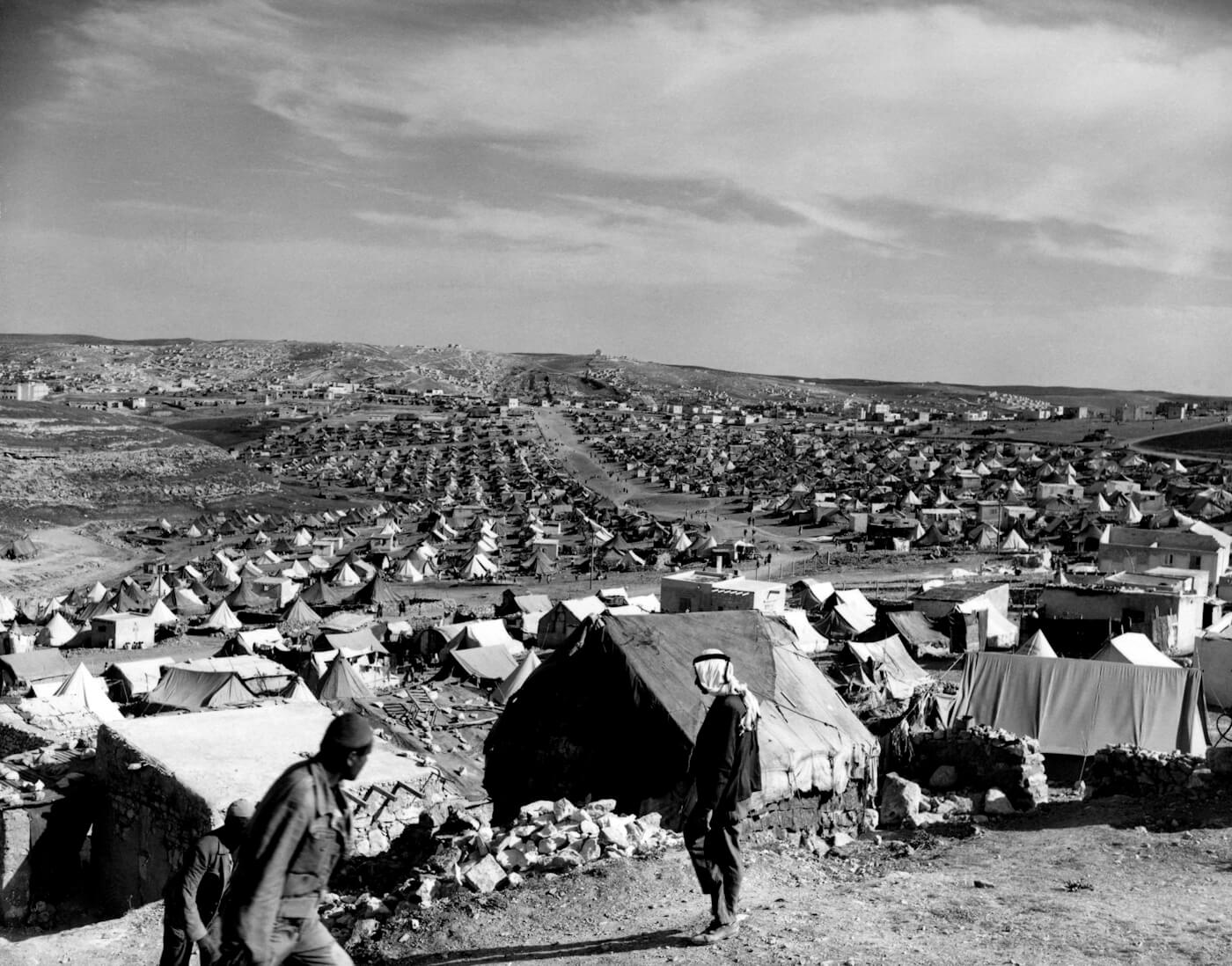
River to Sea Uprooted Palestinian   
The views expressed in this article are the sole responsibility of the author and do not necessarily reflect those of the Blog!

Happy Arabia is Sad again: Saudi Massacre Kills 13 Yemeni Civilians Including Schoolchildren


As if all the massacres that had engulfed Yemen are still not enough to draw the world’s attention to the Saudi brutality personified there.
As if Yemen is a country from a different planet and the people of Earth are biased enough to have no emotions towards the daily sufferings happening there.
In yet another crime against humanity, more than a dozen civilians, most of them schoolchildren, were martyred in the most recent –until the moment- airstrike by Saudi warplanes targeting residential areas in Yemen.
The strike hit the country’s west-central province of Sana’a and the southwestern province of Ta’izz.
In further details, Youssef al-Hazzari, a spokesman for the Yemeni Ministry of Public Health and Population, said at least 13 people lost their lives and 92 others sustained injuries after Saudi warplanes launched aerial assaults against an area in the Sa’wan district of Sana’a on Sunday evening. He said most of the victims were schoolchildren.
Hazzari also condemned the incident as a war crime, saying, “On the World Health Day, April 7, which carries the slogan ‘Health for All’, the Saudi-led coalition of aggression marked the event in its well-known manner.”
He called on the international community to shoulder its responsibility for the crimes being committed by Saudi Arabia and its regional allies against Yemeni people.
Meanwhile, Yemeni Health Minister Taha al-Mutawakel said the massacre points to the Saudi-led coalition’s total disregard for international and humanitarian treaties and laws.
Mutawakel reiterated that the failure of the international community to impose sanctions on the perpetrators of such crimes has emboldened them to continue targeting Yemeni people.
The official called on international humanitarian organizations to condemn the carnage, not to remain silent about the crimes being committed against the Yemeni nation, and exert pressure aimed at stopping the Saudi-led aggression.
The Yemeni health minister further stressed the importance of effective measures to hold the perpetrators of these crimes accountable at international courts.
Earlier in the day, a woman was martyred and two others were injured when Saudi military aircraft struck a house in the Dimnat Khadir district of Ta’izz.
Saudi Arabia and a number of its regional allies launched the devastating campaign against Yemen in March 2015.
According to a report by the Armed Conflict Location and Event Data Project [ACLED], the Saudi-led war has so far claimed the lives of about 56,000 Yemenis.
The war has also taken a heavy toll on the country’s infrastructure, destroying hospitals, schools, and factories. The UN has already said that a record 22.2 million Yemenis are in dire need of food, including 8.4 million threatened by severe hunger. According to the world body, Yemen is suffering from the most severe famine in more than 100 years.

River to Sea Uprooted Palestinian   
The views expressed in this article are the sole responsibility of the author and do not necessarily reflect those of the Blog!

Zarif Warns Blacklisting of IRGC to Drag US into Quagmire


Iranian Foreign Minister Mohammad Javad Zarif
Iranian Foreign Minister Mohammad Javad Zarif warned the US of the consequences of its possible move to designate the Islamic Revolution Guards Corps (IRGC) as a terrorist group, saying the move would “drag the US into a quagmire”.
“#NetanyahuFirsters who have long agitated for FTO (foreign terrorist organization) designation of the IRGC fully understand its consequences for US forces in the region. In fact, they seek to drag US into a quagmire on his behalf,” Zarif said on his Twitter account on Sunday night.
“@realDonaldTrump should know better than to be conned into another US disaster,” he added in his tweet, referring to President Donald Trump.
The administration of Trump is expected to designate the IRGC as a foreign terrorist organization as early as next week, according to a US official.
The designation decision, formally under the State Department’s purview, has been made as part of the White House’s increasingly aggressive strategy towards Iran.
The US has already blacklisted dozens of entities and individuals affiliated with the IRGC, but not the entire force.
The IRGC, which has roughly 125,000 military personnel and enjoys growing public support, is also actively cooperating in construction, infrastructure and relief projects.
Source: Iranian media

One of Iran’s Top Military Establishments: The IRGC’s Branches, Chiefs and Roles

One of the world’s top military establishments that are expected to be blacklisted by the United States, the IRGC was found by late Imam Ruhollah Khomeini and established on May, 5, 1979.
Related Videos
Related News

River to Sea Uprooted Palestinian   
The views expressed in this article are the sole responsibility of the author and do not necessarily reflect those of the Blog!

Monday, 8 April 2019

رفات الجندي الإسرائيلي بدل حرب؟


أبريل 6, 2019

روزانا رمّال

تبدو القوات المسلحة الروسية العاملة في سورية على أهبة الاستعداد من اجل تنفيذ أجندة واضحة يرى الكرملين فيها مصلحة عليا بمعزل عن أي محاولة للإيحاء بشراكات تفرضها عليه طبيعة وجوده على الأرض السورية، أكان لجهة مشاركة الإيرانيين في بعض وجهات النظر او المعارك او لجهة المشاركة جنباً واحداً مع السوريين ذلك لان الساحة السورية فرضت روسيا فيها لاعباً أساسياً وفتحت حساباً منعزلاً عن باقي الملفات، خصوصاً بعد تضرّر قواتها الجوية والبرية من مواجهات عدة مع الأتراك والإسرائيليين. وعلى هذا الأساس صار يمكن الحديث على اعتبارات روسية صرفة، لكن ومع كل هذا الحساب لا يمكن اعتبار ما يتعلق بـ»إسرائيل» جزءاً لا ينسجم مع طبيعة المصلحة السورية او المحور بشكل عام، الا ان هذا لا يعني ان تعتبر سورية جزءاً ضمن عملية البيع والشراء. والحديث هنا عن نقل رفات جندي إسرائيلي يدعى زخاريا باومل قتل مع عدد من الجنود الإسرائيليين في معركة السلطان يعقوب بعد أسبوع من الاجتياح الإسرائيلي للبنان عام 1982.

نقل الرفات اليوم يشبه نقل الدبابة الإسرائيلية وبالطريقة نفسها بالأمس. والحديث عن هدية قدمها بوتين لنتنياهو بالحالتين. وبالمقارنة لم يؤدّ تسليم الدبابة تلك الى تنازل روسيا عن معركتها في دعم الدولة السورية الممثلة بالرئيس بشار الأسد ولا سجلت أي تراجع محوري في عملية التقدم السياسي او العسكري على مختلف الجبهات. وبالتالي صارت المسألة لا تتعدى المعنويات الإسرائيلية التي يحتاجها أي مرشح إسرائيلي غالباً ليتخلص من كابوس الخسارة، فكيف بالحال عندما يتعلق الأمر ببنيامين نتنياهو «آخر» صقور «إسرائيل».

آخر الصقور هذا لا يبدو حسب المشاريع الموعودة قادراً على تحقيقها بما يتعلق بصفقة القرن التي تجمّدت بقرار فلسطيني أولاً. الأمر الذي يجعل أي شريك عربي فيها مكشوف حكماً لتتوالى سلسلة الردود العربية الرافضة شكلاً، ولو كانت مؤيدة ضمناً.

من الطبيعي أن يشكل نقل رفات الجندي خضة في الشارع السوري والعربي بين من يتهم فيها سورية بالتغاضي عن القرار الروسي من جهة، ومن يعتبر روسيا أنها تصرّفت من تلقاء نفسها بدون استشارة سورية. وفي هذا ما يكفي من الفوقية والاستهتار بسورية وحساباتها. وفي الحالتين الامر مرفوض حكماً. لتبقى العودة الى موقف الرئيس الروسي فلاديمير بوتين نقطة العبور الأبرز نحو المرحلة التي ترغب فيها روسيا تقديمها للمنطقة و»إسرائيل» تحديداً.

نقل الرفات بجهود روسية، كما قال بوتين، هو دعم روسي واضح لنتنياهو قبيل ساعات من الانتخابات الإسرائيلية الحساسة، لكنها تؤكد أيضاً أن روسيا صارت لاعباً بنتائج الانتخابات الإسرائيلية بعد ان صارت لاعباً بنتائج الانتخابات الأميركية وهي التهمة التي لم يتخلّص من ذيولها ترامب حتى الساعة. وبهذا الموقف يقدم بوتين مساعدة مباشرة محسوبة النتائج، لكنها لا تنسف شيئاً من حساب الربح والخسارة في معركة استراتيجية كبرى، لكنها بكل تأكيد تفرض روسيا «وسيطاً» موثوقاً لدى «إسرائيل» في المرحلة المقبلة لجهة التنقيب عن النفط في المنطقة ولجهة التوسط في حل سياسي شامل فيها. وكل هذا يحتاج الى وسيط تأتمن له «إسرائيل» ويمكنه في الوقت نفسه أن يكون جهة موثوقة عند السوريين والإيرانيين.

لم تدّعِ روسيا يوماً عداوة لـ»إسرائيل»، بل أن زيارات نتنياهو لها في الفترة الاخيرة هي الأكثر على الإطلاق من مرحلة ما قبل عام 2011 لمسؤول إسرائيلي. الامر الذي يؤكد اعتماد «إسرائيل» بشكل كبير على موسكو كمرجعية حل وربط في الأزمة السورية تحديداً لا يمكن تخطيها. ويمكن الجزم أنه لولا الأزمة السورية لما كبر موقع روسيا الدولي ولا تنامى.

لكن الدفاع عن نظام يسهل ويمرّر شريان حياة لمنظمات مسلحة تقاتل «إسرائيل» مثل حزب الله من قبل روسيا ليس أمراً مبرراً عند «إسرائيل». وبأي حال من الاحوال اعتراف روسيا بهذه القوى وإطلاق تسمية «المقاومة» عليها بحسب دبلوماسي روسي رفيع لـ»البناء» يتكفّل بنسف الثقة بين «إسرائيل» وروسيا، والمحطات كثيرة التي احبطت فيها روسيا مخططات إسرائيلية وأكبرها منع إسقاط الرئيس السوري بشار الاسد سياسياً في معركة كبرى خاضتها الدبلوماسية الروسية في مجلس الأمن، وعسكرياً بعد استقدام الجيش الروسي اي ان التموضع الروسي الى جانب السماح لاستمرار معادلة المقاومة، لا بل اعتبار عناصر حزب الله شركاء الدم بالقتال على الأرض السورية وهذا يبقى أكبر من أي شيء في هذه المعادلة ولا يمكن لتسليم رفات جندي توضع في خانة رفع معنويات نتنياهو المضطربة جراء انتخابات مقلقة أن تنسف الموقف الروسي. ولا يمكن ايضاً الذهاب بعيداً باعتباره موفقاً لا يتماشى إلا مع المصلحة السورية الصرفة. فلروسيا حساباتها في كل المشهد قبل كل شيء.

يخوض نتنياهو الانتخابات وفي يده إنجازان يحملهما للداخل الإسرائيلي من أجل اعتباره جواز مرور امام الخصوم على أساس انه قادر على ادارة المرحلة المقبلة ومتابعة الأحلام الكبرى وأهمها صفقة القرن أكثر من غيره لأنه يحظى برضى قوتين دوليتين بحجم الولايات المتحدة وروسيا الإنجاز الأول الإعلان الأميركي للجولان إسرائيلية والثاني تسلم رفات الجندي الإسرائيلي.

الأهم من كل ذلك هو الاحتمالات المفتوحة جميعها والتي بدأت في غزة عبر معركة عسكرية أو حرب كادت تتوسع يحتاجها نتنياهو للانتخابات أيضاً. الامر الذي يجعل من الرفات نقطة لجم وكبح لجماحه يقدمها له الروس تغطية لحرب عاجز عن شنها أكان بوجه الفلسطينيين أو السوريين او مع حزب الله قطعاً.


River to Sea Uprooted Palestinian   
The views expressed in this article are the sole responsibility of the author and do not necessarily reflect those of the Blog!

الغدة السرطانية تعالج بالكيّ لا بالتدليك ولا بالأسبيرين


أبريل 6, 2019

محمد صادق الحسيني

ما فعلته القيادة الروسية في موضوع «تقدير» و»تكريم» ومن ثم تسليم ما يزعم أنه رفات لجندي صهيوني شارك في غزو لبنان وقتل من قتل من الفلسطينيين واللبنانيين ومن الجيش السوري، أمر مسيء وجارح لكرامة السوريين والعرب فضلاً عن أحرار العالم، ولا يمكن ان يلقى قبولاً في محور المقاومة كله لا من قريب ولا من بعيد!

وهو في السياق العام الذي تتحرك فيه الوقائع والأحداث المتعلقة بملف انتخابات الأحزاب الصهيونية والانتخابات الأميركية القادمة يأتي مكمّلاً لصفقة الانجليين الصهاينة الأميركان مع رئيس العصابة الصهيونية في تل ابيب لصالح فوز ترامب في انتخابات 2020 مقابل ثمن مفترض هو التقليل او التخفيف للعقوبات الأميركية على روسيا، وهو عملياً يصب في إنجاح صفقة القرن أيضاً، وهو استلحاقاً يعني إعادة تطويب نتن ياهو ومنع فوز جنرالات تل أبيب عليه، أي بني غانيتس واشكنازي ويعالون المتزعّمين لحزب «أزرق أبيض» الصهيوني، والذين يختلفون مع نتن ياهو حول هذا الموضوع بالتحديد، إذ يعتقدون بضرورة العودة إلى العمل باتفاق أوسلو واحياء زمن بيريتس ومنهج أوباما في تصفية القضية الفلسطينية، أو ما يسمّونه بالتصفية التدريجية لفصائل المقاومة…!

لكن هذا العمل الشائن قد يكون أمراً عادياً لدى القيادة الروسية خاصة إذا ما برّرته بأنه لن يغيّر كثيراً من تفاهماتها مع حلف محور المقاومة في مقاومة الإرهاب وتطهير سورية منه واستمرار العمل سوياً ضدّ الأحادية الأميركية والدفاع عن قضايانا العادلة على المستوى الدولي…!

لكنه ان دلّ على شيء فإنما يدلّ على أمرين مهمّين جداً في هذه اللحظة التاريخية الحساسة والدقيقة وهما:

1 ـ اننا دخلنا مرحلة انتقالية حذرة جداً قد تدفعنا لدفع أثمان ضعف «جبهتنا الداخلية» العربية والإسلامية وعدم تماسكها رغم قوة محور المقاومة وانتصاراته العظيمة ويده العليا في الميدان وقدرته على الإمساك بزمام المبادرة الاستراتيجية.

2 ـ اننا دخلنا في مرحلة شدّ وجذب عظيمين مع أصدقائنا الدوليين وفي مقدّمهم موسكو وبكين حول طبيعة الغدة السرطانية المسمّاة «إسرائيل»، إذ غالباً ما يعتبرها أصدقاؤنا الدوليون في محور مكافحة الإرهاب والأحادية الأميركية ورماً حميداً يمكن معالجته واحتواء تداعياته، فيما نعتبره نحن ورماً خبيثاً بالمطلق لا يمكن الشفاء منه إلا بالقطع والعمل الجراحي وإزالته نهائياً من الوجود، استعادة لسلامة وصحة ليس فقط الجزء الأهمّ والمركزي من جسم أمتنا أيّ فلسطين، بل وسلامة وصحة وحيوية كلّ الجسم العربي والإسلامي انْ لم يكن كلّ أجسام ممالك وأمم وشعوب العالم أجمع…!

نحن نحضر ليوم القيامة الفلسطينية العربية الاسلامية العالمية الحرة والمستقلة، فيما هم منشغلون بصفقات بقرون وبغير قرون تفوح منها رائحة الدسم لدى البعض لكن هذا الدسم محشوّ بالسمّ الزعاف الذي لا خلاص منه إلا بخيار عملية جراحة يوم القيامة!

بعدنا طيّبين قولوا الله…


River to Sea Uprooted Palestinian   
The views expressed in this article are the sole responsibility of the author and do not necessarily reflect those of the Blog!

Trump’s “Deal of the Century” To Hand Palestine to Israel Along with Whole Set of New Problems

By Miko Peled
Source
As Benjamin Netanyahu returns from Washington to Jerusalem determined to keep his seat as Israel’s prime minister, it is clear that the Final Status issues — those pesky issues between Israel and the Palestinians that Israel never wants to discuss –  are being eliminated one by one in a regional scheme that is titled Deal of the Century. This so-called “Deal” will be the final undoing of Palestinian hopes for justice, self-determination and return.
From the reckless declaration by President Donald Trump that the United States recognizes Jerusalem as the capital city of Israel, to his more recent proclamation that the United States recognized Israeli sovereignty over the Syrian Golan Heights, it is becoming clear what the Deal of the Century will entail: disregard of the Palestinians and recognition of Israeli rights to all of Palestine.
The purpose of the declaration recognizing Israeli sovereignty over the Golan Heights at this particular moment is twofold: It is an enormous contribution to Netanyahu’s campaign for re-election on April 9, a clear signal that Trump favors Netanyahu; and, what is even more troubling, it is a precursor to what we may soon see happen with Judea and Samaria, also known as the West Bank.

Four elements

Four elements are likely to dominate the Deal of the Century: Palestinian self-determination; refugees; Jerusalem; and the future of what was formerly known as the West Bank and has been named by Israel Judea and Samaria. We have already been given a  preview of what is to come with the first three:
  • Jerusalem, with the Trump declaration of December 6, 2017 recognizing the city as the capital of Israel;
  • Recognition of Palestinian right to self-determination was de-facto reversed when in September 2018, on the 25th anniversary of the Oslo Accords, the Trump administration closed down the PLO mission in Washington;
  • The refugee issue received an almost fatal blow when in August of 2018 the State Department announced that it will no longer provide funds for UNRWA , the United Nations agency created to take care of Palestinian refugees. Even more than financial significance, the $350 million cut to the UNRWA budget was a blow to the very existence of refugee issue. Trump, serving Netanyahu’s agenda, is attempting to eliminate the refugee issue altogether by questioning the right of the Palestinians to aid and by questioning the right of the descendants of the 1948 refugees to refugee status.

The refugees must cease to exist

The Deal of the Century is likely to include an attempt to eliminate the Palestinian refugee issue. In a statement he made in Hebrew to the Israeli cabinet, in July 2018, Netanyahu called the Palestinian refugee issue “fictitious.” He claimed that the sole purpose of UNRWA was to keep the Palestinian refugee issue alive forever and thus to threaten the state of Israel by perpetuating the notion of a right of return. Trump, for his part, is currently claiming that only the people who had actually lived in Mandatory Palestine before the 1948 ethnic cleansing — people who are now 70 years old or older — can be considered refugees; their descendants cannot.
Netanyahu’s problem is that when you ask Palestinians in the diaspora where they are from, they say Yaffa, Haifa, Ramle, and so on. When you ask Israelis where they are from, they say, Poland, Russia, Morocco, Yemen, and so on.
Palestine | Refugees
When you ask Jews around the world they say the same thing Israelis do. So, while the grandchildren of the 1948 refugees can tell you the name of the town or village from which their family came, even though the village has been destroyed, no Israelis — or Jewish people, for that matter — can trace their roots back to the ancient kingdom of Judea.
It is important to note and remind both Trump and Netanyahu that, according to international law, even refugees who were not born in Palestine but in the diaspora are refugees and have a right to return. This is because, under international human rights law, neither local integration nor resettlement forecloses the possibility of refugee return to their country of origin. Furthermore, after a large-scale displacement, such as the one that took place in Palestine in 1948, restitution may cover both public and private property.

Not only people

It is not only the return of the people, but it is also the rightful claim to restitution, which will surely be made, that Israel dreads.
The extent of abandoned property that Israel has taken over as a result of the 1948 ethnic cleansing of Palestine is enormous. Palestinians were expelled from entire cities including Jaffa, Ramleh, Haifa and all of west Jerusalem. In addition to that, there are vast tracts of agricultural land that were taken. After the population was expelled, profit-making orchards of citrus, olive and other agricultural products were handed over by the newly established state to Jewish agricultural settlements.
Netanyahu and the entire Zionist establishment are aware of all this and they fear the day when they will be held accountable for this theft of property. Restitution of Palestinian property has received little discussion, largely because of Israel’s refusal to engage and pressure by Zionist groups to keep this subject off the table. The Deal of the Century is likely to try to make it disappear for good.

Judea and Samaria is next

Israeli annexation of the West Bank used to be a far-fetched idea. That is no longer the case. The West Bank is now, and has been for many years, “Judea and Samaria.” It has cities and counties; it includes industry and a bureaucracy with its own police force. There is a highway system in place and shopping centers — all built exclusively for Jews. Official annexation of the area to Israel today — much like recognizing Jerusalem as the capital city of Israel and Israeli sovereignty over the Golan Heights — would be merely a formality, albeit one that contravenes international law.
Palestinian protesters carry national flags and plant olive trees facing the Israeli settlement of Beitar Illit during a protest marking Land Day, in the village of Wadi Fukin, near the West Bank city of Bethlehem, March 30, 2015.
It is realistic to expect that, as part of the Deal of the Century, the U.S. will, before long, recognize Israeli sovereignty over Judea and Samaria. This will mean officially creating one state over all of Palestine with exclusive rights for the minority Israeli Jews. While this may seem like a win for Israel, it will also give rise to serious problems for the Zionist state.
Israel controls the lives of 2 million Palestinians who hold Israeli citizenship, 2.2 million Palestinians locked up in the Gaza Strip and about 3 million Palestinians in what used to be the West Bank. That is a total of 7 million Palestinians living without rights in a state where about 6 million Israeli Jews have exclusive rights.

Careful what you wish for

Today, perhaps more than ever, U.S. foreign policy in the Middle East is being dictated by Israel and specifically by Benjamin Netanyahu. It is executed by Jared Kushner through his father-in-law, the president of the United States. Though the Deal of the Century will try to eliminate the Palestinian issue for good, what the architects of the “Deal” in their arrogance fail to see is that this so-called “Deal” is nothing more than an irresponsible, impractical and precarious plan that will fall just as soon as it is raised.

River to Sea Uprooted Palestinian   
The views expressed in this article are the sole responsibility of the author and do not necessarily reflect those of the Blog!

The story of a martyr FOR, and not BY, China’s Cultural Revolution (2/8)


by Ramin Mazaheri for The Saker Blog
The story of a martyr FOR, and not BY, China’s Cultural Revolution (2/8)
Actually talk to rural people in China and you can certainly learn of martyrs FOR the Cultural Revolution; talk to disgraced party elites, abusive factory bosses, tyrannical schoolteachers, smug technocrats, pagan witch doctors or parasitic monks, and you get stories of those martyred BY the Cultural Revolution.
Welcome back to the first day of journalism school! “One person’s ‘terrorist’ is another person’s ‘freedom-fighter’”. I am not spouting nonsense such as “all truth is relative”, but simply pointing out that perspective shapes opinion (it does not control fact).
The fact is that you have likely never heard a story of a Chinese person who died in order to support their Cultural Revolution (CR).
Nor have you ever heard of the CR’s beneficiaries – indeed, you likely imagine there were none, except for a power-mad Mao Zedong.
If you have heard anything on the CR – and many have not – you only heard stories from the CR’s victims. The reason for that is: if you are reading this in the West, your media has an informal ban on any pro-socialist story. Anyone who believes that unwritten censorship exists has never worked in the media. (And a pro-socialist story would, after all, empower the leftists in the West and they certainly can’t have that.)
The informal ban is separate from, but compounded by, an informal promotion of anti-socialist notions: for example, the 2015 winner for best novel at the Hugo Awards (given to the best in science fiction), was The Three-Body Problem by Chinese author Liu Cixin. The book was even promoted by Barack Obama, and it should be obvious why: the first 25 pages are a rehashing of the same old “the CR was an unholy terror” perspective. Considering the book is about scientists, perhaps such a perspective is somewhat accurate… but China is not full of 1 billion scientists. Democracy means there are losers in policies – socialist democracy ensures those losers are the 1%.
(Overall, I found the book to be rather boring “video gamer” escapism, as well as effective (and totally unsubtle) anti-socialist propaganda. Unsurprisingly, Amazon is spending $1 billion on a TV adaptation. For me, the only truly interesting passage described Euler’s three body problem in physics and astronomical theory –now there was something to meditate upon, finally. My point is: if the book was 400 pages of gamer escapism and 25 pages of pro-CR historical analysis…Obama ain’t pluggin’ yer book.)
Similarly, no one is plugging Dongping Han’s truly revolutionary and eminently readable book, The Unknown Cultural Revolution: Life and Change in a Chinese Village. The key word there is “village” – not too many top scientists working there, perhaps, but there are a lot of people who greatly benefitted from the CR decade (1966-76). I gave a brief overview and a few knockout punch data sets in Part 1, and this 8-part series is dedicated to popularizing Han’s book and his undeniably confirmed thesis: the CR’s educational reform, which became approved following changes to political culture, produced an explosion in rural economic development and rural human capital, and thus China’s economic boom actually came before Deng’s reforms in 1978. This series is also a roundabout way to popularize my new book, I’ll Ruin Everything You Are: Ending Western Propaganda on Red China, to which Han graciously contributed the forward.
Yes, if one was a Chinese science nerd who insisted that they were infinitely smarter than a villager/peasant and thus deserving to rule oppressively in a technocracy… then one likely had a tough time during the CR. This is an old, already told, and often retold story – and I am sympathetic – but it’s time for a new story, for balance and accuracy.
Revolution is bloody, but not as bloody as what leads up to a revolution
Han relates a CR story and an analysis which you have most likely never heard. I will retell it briefly:
Yu Jiushu was a villager in Jimo County (the source of Han’s scholarly investigative work, as well as the place of his youth and formative years). During the Great Leap Forward Yu was recruited as a factory worker. The factory failed, causing him to lose his job and forcing his return home. The leaders of his village, during this era of shortage, refused to give him his grain ration on the grounds that he had forgotten his grain ration papers. Yu was forced to share his ration with his mother. Yu’s mother committed suicide to avoid the starvation of both her and her son.
The average Westerner would stop right there and say, “Isn’t this terrible?” Yes, of course it is.
A Western capitalist and Liberal Democrat would likely continue: “See how socialism only causes problems and deaths?”
Han disagrees: He gives a surprising, tough, 100% necessary analysis which shows why Widow Yu was a martyr FOR, and not a martyr OF, the Cultural Revolution.
“No doubt the village party leaders’ behavior was outrageous, and should be condemned. But should not Yu Jiushu be partly responsible for what happened? He and his mother did not have to put themselves through such suffering in the first place. They could have fought for their legal rights, but their ignorance of the law and their culture of submissiveness failed them.”
Han is showing us that a lack of rural education and a culturally-fostered fear towards officialdom is what doomed Widow Yu; it was not the inherent tyrannies of “socialism” or “big government”. Instead, Han shows, and in a clear rejection of political nihilism, that there WAS an obvious solution and vaccine to such ills: rural empowerment and education.
The Cultural Revolution cannot and will never be understood, much less appreciated and learned from, without grasping that rural empowerment was its absolute priority and goal – this really cannot be stressed enough.
How can anyone effectively fight for their rights when they have no schooling, precarious work and precarious social status? One can either provide the Western capitalist answer – have the brains and nerve of the elite 1% (or their connections) – or one can revamp the system in favor of the illiterate and poor, which is the socialist solution (and the CR’s solution).
How do you improve an unequal society? You drastically change it
In Jimo County Han shows that in 1956 only 66% of Jimo children were enrolled in school. That was up from 48% a year after China’s liberation in 1950. Good, but hardly a socialist miracle. The reason it wasn’t higher was because after 1949 economic resources were prioritized for urban educational needs, and not places like historically impoverished Jimo County.
But, by prioritising rural empowerment, during the CR decade that figure soared to 99%. By the end of the CR decade (1966-76) poor and rural Jimo County had more than 30 times more schools and more than 10 times more teachers (see part 1). Yes, urban colleges were temporarily shuttered during the CR, but it was largely in order to devote resources to rural areas, finally. It can’t be repeated enough, because it is contrary to modern Western nations: China’s rural population was 82% of the overall population in 1964, therefore this new rural focus was perfectly in keeping with democratic ideals.
But education is not enough – the political system must explicitly promote and defend the involvement of the 99%.
Chinese peasants were not historically apolitical – there are too many cases of uprisings to say that, even though this is exactly what many Western academics lazily claim about China – but the CR was undoubtedly the very first time they were ever empowered politically. “The fact that Mao and other Cultural Revolution leaders saw the need to involve common villagers, most of whom were illiterate and were considered ignorant by the educated elite, was in itself revolutionary and democratic.” It is precisely this refusal to involve common villagers which betrays one as a fake-leftist in the West.
Education and political support is still not enough – cultural changes must be forced through despite guaranteed resistance from those sectors which have refused to accept the People’s revolution.
“The major theme of the campaign was to criticize the elitist mentality in Chinese culture. It promoted Mao’s idea that the masses are the motive force of history and that the elite are sometimes stupid while working people are intelligent. These were not empty words. Villagers toiled all year round, supplying the elite with grain, meat and vegetables, but they were made to feel stupid in front of the elite. They did not know how to talk with the elite, and accepted the stigma of stupidity the elite gave to them.”
This elitist idea combated by Mao and his supporters – that rural Trash are stupid – is something which simply must be remedied in the West… or else Western society can never be whole, nor peaceful, nor empowered, nor efficient. Indeed, this series is an effort to show that Deplorables – or Gilets Jaunes, in French – must be empowered in Western nations along the same lines as Chinese Trash was during the CR.
Truly, at the heart of the CR is an idea of humility: our culture has become bad, and needs major changes. Western capitalist-imperialist nations simply do not permit such a trait: try telling such a thing to a typical jingoistic Frenchman, American, Britisher, Spaniard, etc. Yet everyone knows these countries (neo-imperialists) are arrogantly telling other countries what to do. Iranians use “arrogance” and “imperialism” synonymously for this obvious reason.
Because of the West’s (self-interested, leftist-repressing) laser-focus on the tragic, emotional, sensational aspects of these types of CR stories Han related – by failing to progress to Han’s more useful analysis of what can be done to prevent the reoccurrences of these types of negative and deadly social experiences – the Western analysis of the CR will always remain ultimately reactionary because it implicitly rejects the need for social changes; it thus preserves a status quo which is so very unequal for the 99% but especially rural dwellers.
Keeping capitalism-imperialism and condemning socialism is not the answer; reforming and improving socialism is. Socialism can be improved, despite its detractors – the CR stands as proof of this.
Han’s analysis likely seems cold to many Westerners, just as the West’s paralysis by over-emotional/nihilistic analysis may seem too hot to Han.
But Han’s view appears in keeping with the Chinese worldview, which emphasizes personal responsibility far more than in the Western or the Islamic worlds. The Chinese worldview is not Abrahamic, after all – there is no God pulling the strings: YOU are responsible, and shame is your portion when YOU fail. I note that their most sacred book, the I Ching, is essentially a book of social conduct in which only YOU are responsible for failing to cope with or failing to predict the inevitable vicissitudes of life. Embracing personal shame is all over the I Ching, LOL! Quite sorry to report that to the many Western lapsed Christians who dream of some sort of shame-free society/never-ending bacchanalia….
Socialism is thus very much in concordance with this ancient Chinese world view, as it stresses that YOU are responsible for changing our world for the better. (There is no logical reason why socialism and theism cannot be combined with the exact same goal of social and personal empowerment, like in, for example, Iranian Islamic Socialism, but that is another subject.)
How many more widows would have committed suicide to feed their children without the Cultural Revolution?
“In the final analysis, officials abused their power in part because the abused let them get away with it time and time again.”
Changing this reality of official over-empowerment in China truly necessitated a Cultural Revolution, and the CR worked expressly towards this socialist democratic goal.
Over-empowerment of government officials – from kings to French President/Jupiter Emmanuel Macron to Barry Dronebama – is exactly what socialism fights against, yet capitalist-imperialist propaganda accuses socialism of that which their system is far more guilty! Just 39 delegates signed the US Constitution; Nearly 75% of Cuba’s entire population helped draft their new constitution. Macron is going to write major new unemployment system reforms entirely on his own, ending 30+ years of union involvement, just as he’s done in other areas since taking office. The list goes on and on.
In the 1960s the Chinese left and center, as well as their youth, united behind implementing this idea of worker/citizen cultural empowerment expressly against the prevailing official empowerment. This same combination of forces, however, failed across the West despite having similar goals: No Western systems were drastically altered during the 1960s.
“Of course, the existence of such a legal system is important. But legal codes alone cannot solve any problem if the political culture and mentality of the ordinary people remains unchanged. Here, education to empower the ordinary rural residents is key.” Han is stressing that socialism is a way of life, a mentality, a worldview – capitalism is the same; one can change the law, but what good is it when the law is not enforced or the can be bought around in the courts, as in Liberal Democracies?
And this leads us to the next part of this series: Why was a Cultural Revolution needed in already-Red China? Short answer: in order to change China’s culture but NOT their socialist democratic legal code & system, which were established in 1949.
To finish with the story: All remember Shahida Widow Yu.
She was not Muslim but she certainly was a martyr against injustice. Han sensibly does not foolishly ignore the reasons of her death in order to leap to emotionalism and sensationalism, as a Western capitalist-imperialist journalists and academics would, but honors and elevates her to show exactly why the Cultural Revolution was necessary – to prevent such inhuman damage, more rural Chinese martyrs, and a cultural system which kept the entire Yu family disempowered, hungry and filled with tragedy.
The idea that China’s Cultural Revolution was some sort of bloody warmongering resulting from Mao’s political power struggles is what the West wants us to believe, and that’s because such a view inherently glorifies capitalism and denies any positive attributes or outcomes to socialist ideas in any nation, including their own.
The reality of the Cultural Revolution – as demonstrated by Han’s book and seconded in this series – was actually unprecedented development and success in the rural areas. It was the creation of this human capital (that most valuable capital) as well as economic capital which set the stage for the post 1980s economic boom in China.
The story of Widow Yu is a story of rural oppression and marginalization, and it is no different from the capitalist debt-provoked suicide of a French farmer which occurs every two days.
Their demises were caused by systems which were/are insufficiently socialist, and thus incredibly disempowering and unequal for rural citizens in both feudalism and Liberal Democratic/West European systems.
***********************************
This is the 2nd article in an 8-part series which examines Dongping Han’s book The Unknown Cultural Revolution: Life and Change in a Chinese Village in order to drastically redefine a decade which has proven to be not just the basis of China’s current success, but also a beacon of hope for developing countries worldwide. Here is the list of articles slated to be published, and I hope you will find them useful in your leftist struggle!
Part 1 – A much-needed revolution in discussing China’s Cultural Revolution: an 8-part series
Part 2 – The story of a martyr FOR, and not BY, China’s Cultural Revolution
Part 3 – Why was a Cultural Revolution needed in already-Red China?
Part 4 – How the Little Red Book created a cult ‘of socialism’ and not ‘of Mao’
Part 5 – Red Guards ain’t all red: Who fought whom in China’s Cultural Revolution?
Part 6 – How the socioeconomic gains of China’s Cultural Revolution fuelled their 1980s boom
Part 7 – Ending a Cultural Revolution can only be counter-revolutionary
Part 8 – What the West can learn: Yellow Vests are demanding a Cultural Revolution
Ramin Mazaheri is the chief correspondent in Paris for Press TV and has lived in France since 2009. He has been a daily newspaper reporter in the US, and has reported from Iran, Cuba, Egypt, Tunisia, South Korea and elsewhere. He is the author of I’ll Ruin Everything You Are: Ending Western Propaganda on Red China. His work has appeared in various journals, magazines and websites, as well as on radio and television. He can be reached on Facebook.

River to Sea Uprooted Palestinian   
The views expressed in this article are the sole responsibility of the author and do not necessarily reflect those of the Blog!

What Monroe Doctrine?


What Monroe Doctrine?

What Monroe Doctrine?


Because there is a presidential election coming up next year, the Donald Trump Administration appears to be looking for a country that it can attack and destroy in order to prove its toughness and willingness to go all the way in support of alleged American interests. It is a version of the old neocon doctrine attributed to Michael Ledeen, the belief that every once in a while, it is necessary to pick out some crappy little country and throw it against the wall just to demonstrate that the United States means business.
“Meaning business” is a tactic whereby the adversary surrenders immediately in fear of the possible consequences, but there are a couple of problems with that thinking. The first is that an opponent who can resist will sometimes balk and create a continuing problem for the United States, which has a demonstrated inability to start and end wars in any coherent fashion.
This tendency to get caught in a quagmire in a situation that might have been resolved through diplomacy has been exacerbated by the current White House’s negotiating style, which is to both demand and expect submission on all points even before discussions begin. That was clearly the perception with North Korea, where National Security Advisor John Bolton insisted that Pyongyang had agreed to American demands over its nuclear program even though it hadn’t and would have been foolish to do so for fear of being treated down the road like Libya, which denuclearized but then was attacked and destroyed seven years later. The Bolton mis-perception, which was apparently bought into by Trump, led to a complete unraveling of what might actually have been accomplished if the negotiations had been serious and open to reasonable compromise right from the beginning.
Trump’s written demand that Kim Jong Un immediately hand over his nuclear weapons and all bomb making material was a non-starter based on White House misunderstandings rooted in its disdain for compromise. The summit meeting with Trump, held in Hanoi at the end of February, was abruptly canceled by Kim and Pyongyang subsequently accused Bolton and Secretary of State Mike Pompeo of making “gangster-like” demands.
The second problem is that there are only a few actual casus belli situations under international law that permit a country to attack another preemptively, and they are usually limited to actual imminent threats. The current situation with Venezuela is similar to that with North Korea in that Washington is operating on the presumption that it has a right to intervene and bring about regime change, using military force if necessary, because of its presumed leadership role in global security, not because Caracas or even Pyongyang necessarily is threatening anyone. That presumption that American “exceptionalism” provides authorization to intervene in other countries using economic weapons backed up by a military option that is “on the table” is a viewpoint that is not accepted by the rest of the world.
In the case of Venezuela, where Trump has dangerously demanded that Russia withdraw the hundred or so advisors that it sent to help stabilize the country, the supposition that the United States has exclusive extra-territorial rights is largely based on nineteenth and early twentieth century unilaterally declared “doctrines.” The Monroe Doctrine of 1823 and the Roosevelt Corollary of 1904 de facto established the United States as the hegemon-presumptive for the entire Western Hemisphere, stretching from the Arctic Circle in the north to Patagonia in the south.
John Bolton has been the leader in promoting the Monroe Doctrine as justification for Washington’s interference in Venezuela’s politics, apparently only dimly aware that the Doctrine, which opposed any attempts by European powers to establish new colonies in the Western Hemisphere, was only in effect for twenty-two years when the United States itself annexed Texas and then went to war with Mexico in the following year. The Mexican war led to the annexation of territory that subsequently became the states of California, New Mexico, Nevada, Utah, Arizona and Colorado. In the same year, the United States threatened war with Britain over the Oregon Territory, eventually accepting a border settlement running along the 49th parallel.
Meanwhile the march westward across the plains continued, forcing the Indian tribes back into ever smaller spaces of open land. The US government in the nineteenth century recognized some Indian tribes as “nations” but it apparently did not believe that they enjoyed any explicit “Monroe Doctrine” rights to continue to exist outside reservations when confronted by the “manifest destiny” proponents who were hell bent on creating a United States that would run from the Atlantic to the Pacific Ocean.
The Roosevelt Corollary of 1904 amended the Monroe Doctrine, making it clear that the United States believed it had a right to interfere in any country in the western Hemisphere to maintain good order, which inevitably led to exploitation of Latin American nations by US business conglomerates that could count on a little help from US Marines if their trade agreements were threatened. In 1898, Washington became explicitly imperialist when it defeated Spain and acquired effective control over Cuba, a number of Caribbean Islands and the Philippines. This led to a series of more than thirty interventions by the US military in the Caribbean and Central America between 1898 and 1934. Other states in the region that were not directly controlled by Washington were frequently managed through arrangements with local autocrats, who were often themselves generals.
Make no mistake, citing the Monroe Doctrine is little more than a plausible excuse to get rid of the Venezuelan government, which is legitimate, like it or not. The recent electrical blackouts in the country are only the visible signs of an aggressive campaign to destroy the Venezuelan economy. The United States is engaging in economic warfare against Caracas, just as it is doing against Tehran, and it is past time that it should be challenged by the international community over its behavior. Guns may not be firing but covert cyberwarfare is total warfare nevertheless, intended to starve people and increase their suffering in order to bring about economic collapse and take down a government to change it into something more amenable to American interests.

River to Sea Uprooted Palestinian   
The views expressed in this article are the sole responsibility of the author and do not necessarily reflect those of the Blog!