Uprooted Palestinians are at the heart of the conflict in the M.E Palestinians uprooted by force of arms. Yet faced immense difficulties have survived, kept alive their history and culture, passed keys of family homes in occupied Palestine from one generation to the next.
I have taken the opportunity to look at the recent incident involving two outbound tankers in the Gulf of Oman. I have got some questions or two, (or three) about certain parts of the incident, from a civilian mariner’s perspective mostly.
There are various conflating aspects to the event, and questions need to be asked, yet journalists do not seemingly wish to ask the awkward but necessary questions these days.
Background
The two tankers identified as the ‘Front Altair’, a Marshall Islands flagged vessel and the ‘Kokuka Courageous’, a Panama-flagged vessel.
Front Altair
Kokuka Courageous
Managed by Frontline, (Norway – Bermuda)
Managed by Bernhard Schulte Shipmanagement (Singapore/ Japan)
23 crew(11 Russian, 11 Philippine, 1 Georgian)
21 crew (Philippine)
Aframax – 86% loaded
Handy – fully loaded
75,000 MT of Naphtha
25,000 MT Methanol
Ruwais, UAE
Qatar & KSA
Taiwan
Singapore
Hyundai Dubai rescued crew
Coastal Ace rescued crew
Transferred by SAR boat to Iranian port
Transferred to USS Bainbridge
Radio message: “torpedo attack”
Japanese CEO: “flying objects”
Hit on starboard amidships – “in fire’
Hit on starboard Twice over 3-hour period – engine room fire
Stopped at 02:47GMT
Stopped at 06:20GMT
Both tankers were outbound (south east) of the Strait of Hormuz. Both suffered from explosion on the starboard side, (the side facing international waters). Past AIS tracks of both vessels shown here. The U.S. Navy reported receiving distress messages at 06:12am and 07:00am.
The activity of the vessels was captured in this past AIS track video. It shows the vessels that went to the tankers, to help the crew of the tankers. The assisting vessels are: Hyundai Dubai, tug ‘E-Two’, the Coastal Ace & ‘Naji 10’.
Contradictions and questions
The US military released a video claiming to show an Iranian naval boat removing an unexploded limpet mine from the hull of the ‘Kokuka Courageous’ in an apparent attempt to recover evidence of its participation. I will comment more about the video later on, but we have already the ludicrous situation where the information provided by the US contradicts the statement made by the Japanese ship management company, who did not believe the ship was damaged by a mine, but by flying objects. The president of Kokuka Sangyo Marine, (shipowners), Yutaka Katada, said “there is no possibility of mine attack as the attack is well above the waterline.”
Questions, questions: then there is the question of timing of an attack of a Japanese owned tanker at a time when the Japanese PM was in Iran for talks.
To add to the confusion, there were reports that the Dutch crew of the ‘Coastal Ace’ who first noted a suspicious object on the hull of the tanker. This then morphed into reports that the USS Bainbridge seeing a suspect device, as shown in the timeline provided by the US Navy.
Regarding the other tanker, ‘Front Altair’, the ‘Hyundai Dubai’ was the first ship on scene who responded to the distress message and rescued the crew. Subsequently, it seems the master of this vessel gave a report on VHF: video & audio (unconfirmed).
The audio is rather telling & factual (it is a Russian speaker apparently), as he relays information from the ‘Front Altair’, ‘torpedo attack” is mentioned. (I am assuming is it is pan, pan or urgency message; it is not a distress message).
The U.S. by releasing a grainy black & white video segment, accused Iran of removing a mine from the other tanker, ‘Kokuka Courageous’, as apparent evidence of its involvement in the attacks of the two tankers. The video raises more questions than provides answers.
If both the civilian crew of the ‘Coastal Ace’ and the ‘USS Bainbridge’ both saw the ‘mine’, late morning, then why leave the important evidence in place on the hull of the tanker for several hours? For the Iranians to pick it up later?
“USS Bainbridge (DDG 96) was operating in the vicinity and provided immediate assistance to the M/V Kokuka Courageous.”
Immediate? Note that assistance didn’t extend to making safe a suspicious device ‘immediately’.
“At 11:05 a.m. local time USS Bainbridge approaches the Dutch tug Coastal Ace, which had rescued the crew of twenty-one sailors from the M/T Kokuka Courageous who had abandoned their ship after discovering a probable unexploded limpet mine on their hull following an initial explosion.”
“At 4:10 p.m. local time an IRGC Gashti Class patrol boat approached the M/T Kokuka Courageous and was observed and recorded removing the unexploded limpet mine from the M/T Kokuka Courageous.”
Timings put in bold for emphasis by author.
The poor quality of the video, apparently taken from a P-8 US navy aircraft, is astounding, given that it took place at 16:00, on a sunlit day. Compare the quality and availability of the metrics between what happened during the encounter between the ‘Admiral Vinogradov’ and the ‘USS Chancellorsville, last week:
I know that optical quality is downgraded for security reasons, but this is beyond a joke in the days of HD and high-quality images on mobile phones.
Not exactly covert, to retrieve a ‘mine’ right under the noses of the US Navy? Especially when you can see in the video people on the Iranian boat looking towards a ship (?) and quite possibly the US aircraft as well. Anyway, does it take 10 people all crowded on the bow to remove a ‘mine’? Unusual EOD method there.
Does it occur to anyone that it might be a person releasing something so that the boat can leave the tanker’s side, a mooring line attachment, a magnetic device? There is no proof to suggest it was a limpet mine removed from the tanker.
The other thing that really bugs me as someone with maritime experience, is the fact that the US Navy was quite relaxed about a fully loaded tanker with methanol with an apparent explosive device attached to the hull amidships.
I personally wouldn’t be calm, due to the implication of having a toxic, polluting and highly flammable cargo, possibly seconds from being ignited. I’d be getting an EOD team over quickly to ID it, to make it safe and hand it over as a crucial piece of evidence. Yet, I cannot ascertain that any of that actually happened while the USS Bainbridge was in the vicinity of the tanker. I guess it was better to wait a few hours and let the Iranians do it. Surreal.
Instead, it seems that the US Navy stood by idly for hours, watched and let the Iranians approach the tanker, so as to gather ‘evidence’.
Another thing, this PowerPoint from the US is rather remarkable:
I guess using a telephoto lens wasn’t appropriate, to get a close-up of the darned ‘mine’ thing. Again, compare this with the US naval person on the ‘USS Chancellorsville’, merrily snapping away at the ‘Admiral Vinogradov’.
Just on this point, I like the witticism on social media:
“the Pentagon should start using Huawei cameras for better video quality”.
This a good ‘un too:
“Breaking: The US Navy has confirmed that there has been a reported attack on US tankers in the Gulf of Oman.” Posted by SkyNews at 12:37 am 13 June
Credibility has gone down the drain, as the tweet is still live as I write this a day later.
I know it seems little silly observations, but some of these observations could have been made by journalists when presented with official statements. Yet the most obvious question is:
“Why would Iran attack two tankers near to the Strait of Hormuz, in the vicinity of US naval forces”? Some comments provided by this Military Times article. I’ll leave that for others to comment and analyze.
The Eurasian future that President Putin articulated during his keynote speech at the SCO is made possible by Pakistan’s leading role in this vision.
President Putin’s keynote speech at the SCO was brief but concise, laying out Russia’s envisioned future for Eurasia during its new year-long presidency of the organization. His address comprised two main parts, with the first one emphasizing that “the fight against terrorism and extremism remains among our top priorities” while the second spoke strongly about the need for enhancing economic ties between the bloc’s members. Putin made it a point to say that “the developments in Afghanistan require special attention”, while also reiterating what he said at the Belt & Road Forum in April concerning the “promising potential in integrating the Eurasian Economic Union with China’s Belt and Road project with a future aim of building a larger Eurasian partnership”. The specific manner in which the interconnected issues of security and development complement one another in Putin’s Eurasian vision is made possible by Pakistan’s integral role in the articulated paradigm.
The Russian-Pakistani Strategic Partnership has seen both countries conduct joint anti-terrorist exercises in order to prepare for tackling any adverse scenarios that might arise from Daesh’s presence in Afghanistan, which has reassured decision makers in both countries after their militaries shared their crucial experiences fighting against this unconventional threat in Syria and the tribal areas respectively. In addition, it was through Pakistan’s behind-the-scenes diplomatic facilitation that the Taliban unprecedentedly agreed to travel to the capital of their predecessors’ former Russian foes in a bid to revive the stalled Afghan peace process, with these two outcomes serving to satisfy the security half of Putin’s Eurasian vision. As for the developmental one of integrating the Eurasian Union with BRI, the latter’s flagship project of CPEC greatly contributed to Pakistan becoming the global pivot state and therefore being indispensable to the success of Putin’s plans.
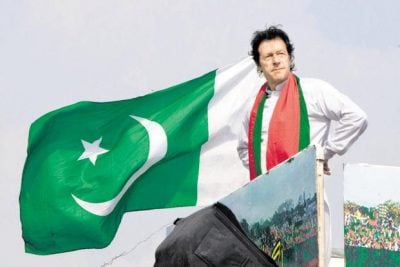
This geostrategic fact obviously wasn’t lost on Putin, who chummed it up with his Pakistani counterpart all throughout the summit, with both leaders seen chatting and laughing together the entire time. Putin and Khan have a common interest in sports, too, which helped them bond much quicker than usual. In addition, the Russian leader is known to understand English and even be able to speak it pretty well too, only using an interpreter for formal occasions in order to ensure that he doesn’t accidentally miss anything important, which made it easier for him to exchange casual impromptu comments with PM Khan. The visible friendship between these two heads of state that was proudly on display during the SCO Summit will go a long way towards strengthening the Russian-Pakistani Strategic Partnership in the future, which in turn will enable Putin to actualize his Eurasian vision and accelerate the emergence of the Multipolar World Order.
*
Note to readers: please click the share buttons above or below. Forward this article to your email lists. Crosspost on your blog site, internet forums. etc.
This article was originally published on Eurasia Future.
Andrew Korybko is an American Moscow-based political analyst specializing in the relationship between the US strategy in Afro-Eurasia, China’s One Belt One Road global vision of New Silk Road connectivity, and Hybrid Warfare. He is a frequent contributor to Global Research.
The original source of this article is Global Research
– تؤكد حال اللاحرب واللاتفاهم التي تسود ويرجّح أن تسود العلاقات الأميركية الإيرانية أن واشنطن لا تملك خريطة طريق لما بعد الانسحاب من التفاهم النووي سوى الرهان على الفوز ببلوغ مرحلة تختنق فيها إيران اقتصادياً وتضعف داخلياً، فتضطر لوقف برنامجها النووي وبرنامجها الصاروخي وتوقف دعم حركات المقاومة، لحاجتها للإنفاق بالأولوية على حاجات المجتمع الإيراني، وينشأ ميزان قوى جديد سيكون الأفضل معه لطهران القبول بالتفاوض من موقع مختلف للوصول إلى تفاهمات جديدة، بشأن دورها الإقليمي وبرنامجها النووي وقدرتها الصاروخية، وهي الشروط الأميركية للتفاوض.
– كثيرة هي مراكز الدراسات الأميركية والأوروبية التي تجزم بأن الطريق مسدود أمام الرهان الأميركي، حيث تعيش إيران الاكتفاء الذاتي الزراعي والصناعي في كل المواد الاستهلاكية الأساسية لمواطنيها، بمواد أولية محلية ويد عاملة محلية، ولذلك لا يشكل النفط أكثر من 20 من الناتج المحلي الإيراني. وتقول التقارير الدولية إن إيران التي تملك حدوداً برية بآلاف الكليومترات مع سبع دول وحدوداً مائية مع أكثر من عشر دول تربطها بأغلبها علاقات تجارية تبادلية لا تحتاج المرور بالأقنية المصرفية التي تتحكم بها واشنطن، هي دولة عصية على الحصار، وقد بقيت تتاجر بنفطها في الثمانينيات خلال الحرب مع العراق عندما كان الحصار عليها عسكرياً وليس مالياً فقط.
– تقارير أخرى تتناول المدى الزمني اللازم لنضوج اللحظة الحرجة في كل من الخطتين الأميركية والإيرانية، فتصل إلى استنتاج أن خطة إيران التي يشكل الانسحاب من الاتفاق النووي أحد مفرداتها، وما يعنيه من العودة إلى التخصيب المرتفع لليورانيوم وتخزين الكميات المخصبة يعني بلوغ إيران لحظة امتلاك ما يكفي لإنتاج قنبلة نووية في غضون مدة تتراوح بين ثلاثة شهور وستة شهور، وهي مهلة تبدأ بالسريان من مطلع تموز مع نهاية مهلة الستين يوماً التي أعلنتها إيران مطلع أيار الماضي. وبالتوازي فإن إيران أعدّت نفسها لتحمل العقوبات لما بعد الانتخابات الرئاسية الأميركية خريف العام المقبل، بينما خطة واشنطن لخنق إيران لا تطمح ببلوغ نتائجها قبل سنوات، تكون معها اللحظة الحرجة التي مثيلتها امتلاك إيران ما يكفي لإنتاج اول قنبلة نووية قد فات عليها الكثير ولحق بها الكثير من لحظات حرجة أخرى لا تستطيع واشنطن الوقوف مكتوفة الأيدي أمامها، بينما هي لا تملك جواباً على ما يجب فعله ولا ما تستطيع فعله. وما يجري على الجبهة السعودية اليمنية، مثال على المسار التصاعديّ الذي تسلكه أوضاع الخليج في ظل الوجود الأميركي الذي وعدت واشنطن بأنه مخصّص لجعل إيران تدفع ثمن أي استهداف لحلفائها من أي من حلفاء طهران.
– بعض التقارير الأخرى طرحت السؤال، ماذا لو نجحت واشنطن بخنق طهران وإضعافها، لتصل إلى استنتاج مفاده أن بلوغ إيران وحلفائها نصف الطريق الذي يشكل الاختناق نهايته، لن يكون في صالح واشنطن وحلفائها، فالذي سيحدث هو معاكس للتوقعات الأميركية الافتراضية، وأولى النتائج ستكون ضعف قبضة إيران وحلفائها في سورية والعراق بوجه تنظيم داعش الذي يملك من الخلايا النائمة ما يكفي لإعادة امتلاك بنية تحتية وقاعدة ارتكاز للتوسع في الجغرافيا الصحراوية بين سورية والعراق، واستئناف الهجمات في الدول الغربية. والنتيجة الثانية ستكون أن الاحتكاكات ستتصاعد بين زوارق الحرس الثوري والسفن الأميركية ومثلها سيتصاعد الوضع بين السعودية واليمن وبين المقاومة في لبنان وغزة مع «إسرائيل»، وستصل السخونة حد الغليان حيث سيكون على واشنطن أن تختار بين التقدم خطوة إلى الأمام نحو الحرب أو التراجع.
– واشنطن عالقة في نصف البئر الذي ذهبت إليه مختارة، لسبب واحد، لأنها وضعت مصالح «إسرائيل» والحصول على ضمانات لأمنها، فوق المصالح الأميركية، والوساطات التي تجري ما كانت لتتم لو كانت أميركا مرتاحة ومطمئنة إلى أوضاعها، وها هم الوسطاء الكبار يأتون بالمصادفة، بعد لقاءات تجمعهم بكبار المسؤولين الأميركيين.
Tensions are on the rise around the Persian Gulf after a series of suspicious attacks on oil tankers in the region.
On May 12, a supposed sabotage attack targeted very large crude carrier Amjad, crude tanker Al Marzoqah [both owned by Saudi shipping firm Bahri], UAE-flagged fuel bunker barge A Michel and Norwegian-registered oil products tanker MT AndreA Victory off UAE’s Fujairah. the attack did not cause any casualties or an oil spill.
Intitially, Thome Ship Management said that its MT Andrew Victory was “struck by an unknown object”. Jaber Al Lamki, an executive director at the UAE’s National Media Council, claimed that the attack was “aimed at undermining global oil supplies and maritime security.”
Mainstream media outlets came with variuos speculations providing contradictory claims of ‘anonymous soources’ on the incident. Most of these speculations were focusing on the supposed Iranian involvement in the situation.
“It’s clear that Iran is behind the Fujairah attack. Who else would you think would be doing it? Someone from Nepal?” he told journalists at a US embassy briefing.
“There is no doubt in anybody’s minds in Washington, we know who did this and it’s important Iran knows we know,” he added.
In own turn, Iran stated that it played no part in the attacks and said that it was a false flag fabricated by the US. Foreign Minister Javad Zarif stressed that Iran expected “suspicious sabotage acts.”
“In this meeting, concern about suspicious actions and sabotage in the region was talked about, and we said that we had previously predicted that such actions would occur to create tensions in the region,” said Iranian Foreign Minister Mohammad Javad Zarif following talks with his Indian counterpart Sushma Swaraj in New Delhi on May 14th.
On June 12, a fire that broke out on an Iranian oil platform of the South Pars gas field in the Persian Gulf and was subsequently contained and no fatalities were reported. Iran’s Students News Agency ISNA said the fire had been contained. State TV said the cause of the fire was under investigation and there were no reports of disruptions to operations at the field.
On June 13, another suspicious incident took place in the Gulf of Oman. Marshall Islands-flagged Front Altair and Panama-flagged Kokuka Courageous oil tankers were rocked by explosions. This development also appeared to be surrounded by multiple speculations immidiately after first reports about the situation. The initial versions were varrying from a torpedo attack to naval mines with the aforementioned tendency regarding the supposed Iranian involvement.
The incident happened during a visit of Japanese Prime Minister Shinzo Abe to Iran. The Kokuka Courageous is owned by Japanese company Kokuka Sangyo Ltd.
Image source: AFP
AP Photo / ISNA
Both Iran and the US released contradictory statements claiming that their naval forces had rescued crew members of the tankers. Nonetheless, once again no casualties were reported in the supposed attack.
Later on the same day, State Secretary Mike Pompeo blamed Iran for the attack. He claimed that Iran wants to end “successful maximum pressure campaign” of the US sanctions.
“This is only the latest in the series of attacks instigated by the Republic of Iran and its surrogates against American allies and interests. They should be understood in the context of four years of unprovoked aggression against freedom-loving nations,” he said.
#Incident Reports of vessel MT Front Altair being on fire & adrift at position 2527N 05722E are being investigated. No cause has been positively confirmed. Latest information will be communicated when available. Contact our team via http://www.dryadglobal.com#Fujairah#UAE#attack
Iran once again denied its involvement in such developments. Foreign Minister Javad Zarif labeled the incident as “suspicious” hinting that this may have been a provocation.
Javad Zarif
@JZarif
Reported attacks on Japan-related tankers occurred while PM @AbeShinzowas meeting with Ayatollah @khamenei_ir for extensive and friendly talks.
Suspicious doesn’t begin to describe what likely transpired this morning.
Iran’s proposed Regional Dialogue Forum is imperative.
On June 14, Washington claimed that it has evidence confirming the Iranian involvement in the June 13 incident. According to a statement by US Central Command, Iranian forces were spotted removing “a probable unexploded limpet mine” from Kokuka Courageous.
The video released by Central Command shows a boat coming up to the side of the tanker. An individual stands up on the bow of the boat and removes some object from the tanker’s hull.
“U.S. Naval Forces in the region received two separate distress calls at 6:12 a.m. local time from the motor tanker (M/T) Altair and a second one at 7a.m. local time from the M/T Kokuka Courageous.
Both vessels were in international waters in the Gulf of Oman approximately 10 nautical miles apart at the time of the distress calls. USS Bainbridge was approximately 40 nautical miles away from the M/T Altair at the time of the attack, and immediately began closing the distance.
At 8:09 a.m. local time a U.S. aircraft observed an IRGC Hendijan class patrol boat and multiple IRGC fast attack craft/fast inshore attack craft (FAC/FIAC) in the vicinity of the M/T Altair.
At 9:12 a.m. local time a U.S. aircraft observes the FAC/FIAC pull a raft from the M/T Altair from the water.
At 9:26 a.m. local time the Iranians requested that the motor vessel Hyundai Dubai, which had rescued the sailors from the M/T Altair, to turn the crew over to the Iranian FIACs. The motor vessel Hyundai Dubai complied with the request and transferred the crew of the M/T Altair to the Iranian FIACs.
At 11:05 a.m. local time USS Bainbridge approaches the Dutch tug Coastal Ace, which had rescued the crew of twenty-one sailors from the M/T Kokuka Courageous who had abandoned their ship after discovering a probable unexploded limpet mine on their hull following an initial explosion.
While the Hendijan patrol boat appeared to attempt to get to the tug Coastal Ace before USS Bainbridge, the mariners were rescued by USS Bainbridge at the request of the master of the M/T Kokuka Courageous. The rescued sailors are currently aboard USS Bainbridge.
At 4:10 p.m. local time an IRGC Gashti Class patrol boat approached the M/T Kokuka Courageous and was observed and recorded removing the unexploded limpet mine from the M/T Kokuka Courageous.
The U.S. and our partners in the region will take all necessary measures to defend ourselves and our interests. Today’s attacks are a clear threat to international freedom of navigation and freedom of commerce.
The U.S. and the international community, stand ready to defend our interests, including the freedom of navigation.
The United States has no interest in engaging in a new conflict in the Middle East. However, we will defend our interests.
– attributable to Capt. Bill Urban, Lead Spokesman for U.S. Central Command”
Nonetheless, this version faced a serious scepticism among more or less independent media outlets, and even the owner and operator of the Kokuka Courageous and European allies of the US.
“The video is not enough. We can understand what is being shown, sure, but to make a final assessment, this is not enough for me,” German Foreign Minister Heiko Maas said.
Nathalie Tocci, a senior adviser to European foreign policy chief Federica Mogherini also avoided to blame Iran for the situation directly.
“Before we blame someone, we need credible evidence,” the official said.
“A mine doesn’t damage a ship above sea level,” he said “We aren’t sure exactly what hit, but it was something flying towards the ship.”
He added that sailors on board the ship saw “flying objects” just before Kokuka Courageous was hit. This is another evidence suggesting the vessel wasn’t damaged by mines, but by objects that could have been fired from a distance.
“In the hours before the attack on the two tankers in the Gulf of Oman on Thursday, the Iranians spotted a US drone flying overhead and launched a surface-to-air missile at the unmanned aircraft, a US official told CNN.
The missile missed the drone and fell into the water, the official said.
Prior to taking fire, the American MQ-9 Reaper drone observed Iranian vessels closing in on the tankers, the official added, though the source did not say whether the unmanned aircraft saw the boats conducting an actual attack.
Still, it is the first claim that the US has information of Iranian movements prior to the attack.”
It’s expected that soon the English-speaking audience will get more “revelations” and “details” regarding the incident form anonymous sources of MSM outlets. These reports would be a logical continuation of the previous series of media hysteria on supposed Iranian preparations to attack US forces and infrastructure in the Middle East fueled by the Washington establishment and MSM.
The “Iran is readying for an attack” propaganda campaign was used by the US to justify its ongoing military buildup in the region.
On May 25, President Donald Trump declared that the US is sending 1,500 troops, 12 fighter jets, manned and unmanned surveillance aircraft, and a number of military engineers to counter Iran. Trump also approved an $8 billion sale of precision guided missiles and other military support to Saudi Arabia.
The Abraham Lincoln carrier strike group and the USS Arlington amphibious transport dock, which carries marines, amphibious vehicles, and rotary aircraft, as well as the Patriot missiles, were deployed near the Persian Gulf.
A strategic bomber task force was deployed at the US airbase Al Udeid in Qatar.
Taking into account the military and political situation established in the region, and the obvious loopholes in Washington’s version of the June 13 ‘attack’, it’s quite possible it was a pre-planned provocation. Furthermore, the main side interested in this development is the US. It allows it to pursue several important goals:
The growing tensions in the Persian Gulf region allows the Trump administration to continue exploiting the “Iranian threat” to justify its internal and foreign policies. Inside the US, it will allow Washinton to increase spending on military-industrial complex even further. In terms of the foreign policy, the US got an additional justification to continue its hard-core anti-Iranian and pro-Israeli policy as well as to boost military and diplomatic presence in the Middle East.
The geoeconomic goal of this provocation is to create tensions in the Persian Gulf region and near it (the western part of Indian Ocean). The growing threat to maritime security would increase the coast of logistical costs for key oil consumers. DHT Holdings and Heidmar, two of the biggest oil tankers operators in the world, have suspended new bookings to the Middle East and the Persian Gulf. The oil price gew. Insurance rates for logistical operations in the region are also expected to grow. This situation directly impacts China, one of the key oil consumers, and European states with a large industrial potential, like Germany. The pressure on possible economic competitors through economic (tariffs and sanctions), military and diplomatic means are the consistent policy of the Trump administration.
Iran has strongly denied its involvement in the attack. Nonetheless, it also played a role in the current tensions through its allies in Yemen. Over the past months, Ansar Allah (the Houthis) has drastically increased the number of missile and drone attacks on key infrastructure objects in Saudi Arabia.
The Iranian leadership would also use the threat of an aggressive and artful enemy (the US-Israeli alliance) to justify its policies and boost influence on Shia armed groups and movements across the Greater Middle East, first of all in Yemen and Iraq.
Ansar Allah, supported by Iran, will likely continue strident and painful attacks on Saudi Arabia. In the event of the further escalation of the regional situation, Teheran may even use some of its allied groups for attacks on US forces or infrastructure objects.
Strategically, Iran will focus on developing asymmetric means and measures, including tactical missile forces and a mosquito-craft fleet. The chosen asymmetric responses will be in level with Iran’s economic capabilities and capable of delivering a blow to the US in the event of a hot conflict.
دان الاتحاد العام التونسي للشغل ما أسماه «استباحة أرض تونس من قبل الصهاينة وبتواطؤ من جهات سياسية وأخرى تعمل في مجال السياح»، وذلك على خلفية ما بثته قناة اسرائيلية عن زيارة «إسرائيليين» لمنزل الشهيد الفلسطيني أبو جهاد في تونس، وظهورهم وهم يهتفون باسم الكيان الصهيوني وجيش الاحتلال.
كما دان اتحاد الشغل في بيان له التصريحات الإعلامية لوزير السياحة و»محاولته التغطية على ما حدث ويحدث في مجال التطبيع السياحي بالتهرّب ومغالطة الرأي العام»، مؤكداً رفضه تبرير التطبيع بتبرير الأزمة الاقتصادية وحاجة البلاد إلى تنمية سياحتها.
وجدّد مطالبته بالتحقيق في أنشطة إحدى الشركات السياحية التي تقوم برحلات إلى الأراضي الفسطينية المحتلة بالتنسيق مع جيش الاحتلال الصهيوني، محملاً الحكومة مسؤوليتها في اتخاذ الإجراءات القانونية لمنع كل أشكال التطبيع ومحاسبة القائمين عليه مهما كان موقعهم ومكانتهم.
وعبر عن تجنّده مع المجتمع المدني والقوى الوطنية من أجل مقاومة التطبيع بشتى أشكاله ومن أجل فرض قانون يجرّم التطبيع، داعياً كافة القوى الوطنية إلى استعمال كافة النضالات السلمية لوقف «هرولة البعض إلى التطبيع».
وأكد الأمين العام المساعد بالاتحاد العام التونسي للشغل محمد علي البوغديري رفض الاتحاد بشكل قاطع التطبيع مع الكيان الصهيوني، مشدداً على أن ما جرى عار على الحكومة.
وقال إنه قد تبيّن أن «هناك تطبيعاً من قبل الحكومة مع الكيان الصهيوني للأسف، والتونسيون لن يقبلوا ذلك، معتبراً أن ما جرى يُعدّ استفزازاً».
في حين أكد عضو المكتب السياسي بحركة النضال الوطني أحمد الكحلاوي أن تقرير القناة الصهيونية عرض مشاهد من أمام منزل الشهيد محمد الزواري، معتبراً أن الهدف هو تدريج عملية التطبيع مع الكيان الصهيوني.
وكان وزير الخارجية التونسي خميس الجهيناوي نفى علمه بكامل المعطيات المتعلقة بالتقارير الإعلامية حول زيارة صهاينة إلى تونس.
من جهته، اعتبر سالم الأبيض عضو مجلس نواب الشعب عن حركة الشعب أن مرافقة رئيس الحكومة للوفد الصهيوني في تونس هو وصمة عار، مضيفاً في كلمة له في البرلمان أن الحكومة التونسية تقف صامتة أمام ما يحدث من ارتباطات لتونسيين بالكيان الصهيوني.
The Throne Of Saint Jewry
-
The Throne Of Saint Jewry November 12 2026
___________________________________ More Vids! +BN Vids Archive! HERE!
___________________________________ Suppo...
Cracks in the foundations of Pax Judaica
-
World Jewry is terrified of the Kushner revelations from Cole as they
attack the foundations of Pax Judaica. We already know the basic facts of
the corrupt...
Report on Beth Israel vigil 09-12-26
-
*Eat-a-Cheeseburger Day Approaches*
This year, EAC Day appears on Monday, September 21st. The date coincides
with the Jewish holiday called Yom Kippur. Cl...
-
Hello all,
It is with great sadness that I share with you the passing of our beloved
sister, Mother, and Grandmother, the individual that you all knew ...
Best Horror Podcast
-
Best Horror Podcast Introduction: Horror podcasts […]
The post Best Horror Podcast appeared first on Copper Shock Horror Podcast.
Ikhras Endorses Muntadhar Al-Zaidi
-
“Oh parties of banditry and sectarianism and corruption, we have come and
our goal is to destroy you.” Ikhras formally endorses Muntadhar al-Zaidi,
Iraqi j...
Prince Charles: Foreign Jews behind bloodshed in ME
-
In May, 2017, British Crown Prince Charles declined an invitation from
Zionist entity’s president Reuven Rivlin‘s to attend the 100th anniversary
of the no...
Palestinian Women – One for All, All for One
-
Honouring All Palestinian Women by Honouring Three: Hanin Zoabi, Ahed
Tamimi, Samah Sabawi Vacy Vlazna “Palestinian women have always stood side
by side ...
US’s Saudi Oil Deal from Win-Win to Mega-Lose
-
By F. William Engdahl Who would’ve thought it would come to this? Certainly
not the Obama Administration, and their brilliant geo-political think-tank
neo-...
-
*Mordechai Vanunu wins human rights prize of Brazilian Press Association *
* http://www.alternativenews.org/english/index.php/features/updates/7038-mordechai...
Abdul Aziz Rantissi:
"My ultimate wish, my God, is to attain martyrdom,"...God granted him his wish on April 17, 2004, at the hands of Israeli assassins.