Uprooted Palestinians are at the heart of the conflict in the M.E Palestinians uprooted by force of arms. Yet faced immense difficulties have survived, kept alive their history and culture, passed keys of family homes in occupied Palestine from one generation to the next.
In what is a very timely admission taking into account the topic of my last article – 21st century international relations and decision-making, the head of Russia’s Foreign Intelligence Service (Служба внешней разведки Российской Федерации), Sergey Naryshkin, pointed to a low risk method of “hybrid” warfare and named a specific example where it is being implemented. RT reported the following on June 18th (emphasis my own):
“Western secret services are perfecting clandestine tools which are designed to weaken countries like viruses weaken bodies, the Russian foreign intelligence chief has said. This kind of warfare is currently used in Venezuela.
The criticism came from Sergey Naryshkin, who heads Russia’s foreign intelligence agency SVR. He said spies are constantly improving the tool used to dispose of governments that the West does not like.
‘We are talking about creating a universal algorithm for conducting clandestine influence operations in a continuous manner and on a global scale,’ he said. According to the official, this clandestine work ‘never stops and targets not only enemies, but also friends and neutral powers in the times of peace, crisis and war.’
‘It can be compared to the action of a virus; it can spend decades destroying a human organism without symptoms, and once diagnosed, often it’s too late to treat it.’
The methods used to influence and destabilize other nations include creating network-oriented structures that can operate on a premise of public activism, art, science, religion or extremism, the Russian official said. After collecting data on the fault lines in a targeted society, those structures are used to attack those weak points in a synchronized assault, overwhelming the nation’s capability to respond to crises.
Simultaneously the perpetrators push a narrative through local and global media and social networks that claims that the only way to resolve problems is to replace the government of the victim nation with another one, possibly with a direct foreign support.
‘We can observe this scenario being implemented in Venezuela,’ Naryshkin said.
The US is currently trying to replace Venezuela’s elected President Nicolas Maduro with another person, Juan Guaido, whom Washington recognized as the legitimate head of the South American nation.
Among others, the US backs his bid with economic sanctions against Venezuela and a massive diplomatic and media campaign in support of the pretender. Guaido’s attempts to actually seize power in Caracas have been futile, so far.
The Russian intelligence chief was speaking at an international security forum in Ufa, Russia, which is hosted by the Russian National Security Council. The event is meant for officials directly involved in policy making on security issues. Almost 120 nations are participating in this year’s gathering.”
I will start by saying that Naryshkin could reveal a lot more if he wanted to, but for obvious reasons is limited to presenting an abstract thesis – which RT “coincidently” relayed – as a sort of signal to Western intelligence agencies that Russia’s room to manoeuvre in the information space isn’t limited to just publishing “news”.
On the surface it might seem like he is just describing a banal coup d’état, where one state interferes in the internal affairs of another state for the purpose of overthrowing the government and bringing to power a political circle that is friendlier. If one prefers simplistic and digestible takeaways, then one can stop reading here – nothing new under the sun!
However, what the head of Russia’s Foreign Intelligence Service is alluding to is a far more complex and dense matter. As history has shown, the traditional coup d’état, akin to what has been seen in the MENA and South America for decades now, is not the same as the coup d’état that was rolled out in, for example, Ukraine in 2014. Why?
The precursor to the “colour revolution”
The main reason is that the West has been working on occupying MENA’s lands and raw materials for decades. If the countries of MENA can be said to be tribalistic in terms of structure and aims (more about daily survival than paying bills at the end of the month), then post-WW2 Europe is at first glance much more “developed” and “civilised”. I put these words in quotation marks because they are the generic phrases that organisations like the UN use when describing how MENA should aspire to become “more democratic” and “progressive” in order to “combat poverty” and become “prosperous”. In other words, MENA in general is not as technologically advanced as modern nation states with liberal “democracies”. This is not an insult to MENA; it is simply an observable fact based on the consequences of colonisation. Thus, the scheme for conquering MENA territory is more straightforward than it would be for conquering, for example, Eastern Europe. There is a leader, there is a small circle of wealthy elites, there is an army (armed loyalists), and there are farmers/manual labour workers. Anglo-Saxon colonisers managed to conquer the lands long before the victim nation is able to climb the ladder of scientific research and thus obtain more and more effective ways of defending themselves.
In the example of the Native Indians, the British already had basic guns, thus the former’s bows and arrows were inferior. In the case of Africa, notorious colonisers (which includes the British) arrived with the same guns and were faced with only spears and other relatively primitive weapons. Hence why almost the entire African continent was subjugated so easily. The difference between just general colonisation and a coup d’état can be seen most visibly after the CIA is formed: overthrowing a “dictator” becomes as simple as literally buying off the army (like how the UK pioneered the use of pirates), which allows the capitalist West to take care of business and use its media resources to report another “peaceful” and “successful” “democratisation” project. As soon as a leader manages to come to power and aims to challenge this subjugation (Gaddafi being the most recent MENA example, but there is also Patrice Lumumba and Thomas Sankara), they experience the same problem – they are simply overpowered by the more technologically advanced coloniser.
When it comes to coup d’états in the post-Soviet space, the game is different. For over 60 years the USSR had succeeded to repel the influence of the “free” (capitalist) Anglo-Saxons – thanks to a focus on scientific research and thus nuclear technologies – and create a tightly knit Union based on common history and culture. In the West the governments told their citizens that “on that side of the curtain they are ‘totalitarian’”, whilst in reality America & Co struggled to influence Soviet society and didn’t want their own citizens to see that in the Soviet system of governance everybody had something, as opposed to some people having everything (capitalism). In other words, the USSR was able to defend itself against the traditional coup d’état method.
Due to the fact that the USSR was a developed territory and had much more complex political structures than those of the average African country, it wasn’t as simple as just sending Thomas Lawrence or Sidney Reilly and duping local kingpins into signing agreements that essentially renounce raw material ownership rights. And it is also important to bear in mind that the Soviet intelligence agencies were doing battle with the CIA long before 1991. The changing of times simply obliged the West to update the coup d’état playbook before the target country progressed along the line of scientific development and establishes a defence mechanism that is technologically 20 years ahead of the US’ subversive tools.
Not being physically able to intimidate the USSR enough into submitting to its will since the latter had nuclear weapons, Uncle Sam realised that it was much more wiser and safer to blow it up from the inside. In this article I don’t want to digress too much from the central topic, thus I will not present a mass of details of how America managed to penetrate the USSR and inject it’s liberal ideas throughout society, but a good brief example I can give is the shipping of American clothes/fashion to Soviet ports, such as Odessa. Today this might be called “soft power”, but at the time in question such things served to convince people that individualism could give a more fruitful life than collectivism.
The 2014 coup d’état in Ukraine utilised an upgraded blueprint that was based on the one used to dismantle the Soviet Union (and spark the 1993 constitutional crisis). When the USSR collapsed in 1991, Ukraine found itself in the position of being the wealthiest inheritor of the Soviet legacy: its infrastructure, medicine, education, military, etc was the best in the region. Things started to go pear-shaped around 2004, when America’s interference started to reach new heights at the time of the “multi-vectoral” Kuchma, but the Ukraine of 2014 under Yanukovych was relatively-speaking above the water and swimming comfortably. In an attempt to oust Putin before Russia comes even closer to China, strengthens, and forms the backbone of the emerging Eurasian bloc, America planned to disrupt the equilibrium in Ukraine and violently tear it away from the Russian nation. But the problem for America was “how to make this process look organic? After all, to simply invade Ukraine with the US Army would result in the liquidation of the United States of America itself.”
I will not use precious article space recounting what happened in 2013/2014 in Ukraine, since I have created an archive dedicated to it, but I think the video below – John Tefft in 2013 preparing the terrain in Donetsk for what was about to happen – encapsulates the essence of it very well: US NGOs brainwashed society into flirting with liberalism and its noxious “democracy”, similar to that virus Sergey Naryshkin spoke about; local Galician militant formations are formed (main example: “Right Sector”) and capture administration buildings in Western Ukraine, before eventually being transported to Kiev for the February “revolution”.
“Colour revolution 2.0”
What I really want to focus on is the coup d’état model that is being deployed by America & Co in 2019. So far we can say that there are 3 versions of the coup d’état technology (I am being deliberately simplistic, and I use provisional names and descriptions, since I am still researching this topic):
Traditional coup d’état – a simple smash and grab, effective against the so-called “third world” (examples: Laos, Guatemala, Zaire);
“Colour revolution” – temporarily hijacking “civil society”, effective against more technologically sophisticated states but not superpowers (examples: Egypt, Syria, “independent” Ukraine);
Algorithmic probing (can be thought of as “colour revolution 2.0”) – seizing control over the nation from the ground-up, effective against allies of nuclear superpowers post-2015, when the Minsk Agreements were signed and Russian jets touched down at Hmeymim airbase in Syria (examples: Venezuela, Hong Kong, Russia, Serbia).
Before starting to elaborate on version No. 3, which concerns the post-Syrian-war (I stress, Russia ended the war in 2015 – everything that happened afterwards is just behind the curtain negotiations concerning the next 50+ years of global order) world, it is necessary to present some of the reasons why version No. 2 no longer works:
Social media hashtag campaigns like those seen during the Egyptian Muslim Brotherhood “revolution” no longer have the same effect due to the exponentially increasing mobilisation of anti-coup (“pro-Russia”/“pro-Assad”/“pro-Maduro”/“pro-Nasrallah”) social media users;
It became too difficult to keep the aesthetics of the operation consistently clean – the “White Helmets” may do something that discredits their alleged authenticity, the speaker of the Rada may state that “Hitler was a great leader”, a senior Qatari figure may admit live on TV that Qatar funded militant groups in order to remove Assad, Bana might botch a tweet, a video may emerge showing a “FSA” leader reading a script in front of an American producer, etc;
The popularity of mainstream media is becoming less and less (not to mention the effect of Trump’s “fake news” PR campaign), and the popularity of both non-Western state media (RT, Sputnik, Press TV, Telesur, etc) and independent (or apparently independent) media is exponentially growing;
Alternative social media websites/apps have since become popular amongst English speakers (VKontakte, Telegram, Instagram, Gab, Snapchat, etc);
Eurasia was able to study the past behaviour of the both West’s traditional resources and social media users, allowing to refine its existing resources and to even create new, specialised ones;
The existence of independent and anti-coup journalists who are prepared to travel between different theatres (for example, Syria and Venezuela) and expose the pattern of the West’s “regime change” methods.
The weakening of the effect of smearing expressions like “anti-Semitism” due to the accumulation effect of reports about Israeli crimes in Gaza and the West Bank;
The general strengthening of Eurasia and the decline of the liberal West (and the opportunities it has to violate international law as a result), thus the citizens of the former don’t have a reason to believe that the latter is the paradise it pretends it is;
etc.
In other words, the geopolitical reality we have today is not at all the same as the one that we saw before Russia’s involvement in Syria – the highest stakes chessboard in the grand game. Lessons were learnt from the past and enough time has passed for changes to be calculated and implemented. Today, superpowers are obliged to invest exponentially more resources in technologies (hence why Russia wants to invest heavily in the AI sector), since understanding the enemy’s technologies is the difference between them successfully or unsuccessfully penetrating society. And it’s not a coincidence that Naryshkin starts to use terms like “virus”. But what does he really mean? What are the design differences between a regular “colour revolution” and what we are seeing today in, for example, Venezuela?
Firstly, a “colour revolution” is designed to hijack “civil society” over a period of several months (less than 6 months), obtain the support of the elites, and aims to put the target leader in front of two bad choices – a trap: to quell protests means to be depicted by the West’s NGO’s as a “dictator”, and thus the West doesn’t risk receiving a information blow to its rear (if Western society doesn’t agree with something the government is doing, an adversary can exploit it and disrupt the socio-economic situation of a western country or of many western countries); to not quell the protests means to simply hand over power. This explains what happened to Viktor Yanukovych – he did not give the order to Berkut to disperse Maidan for fear of being permanently stained in the Western media, so Joe Biden and his band of merry putschists, after a bit of sniper theatrics to keep the protests alive, took the Rada. Lose-lose. In this scenario Russia could do nothing since a) Ukrainians and their elites are ultimately to blame for flirting with the West, and b) Yanukovych chose the passive option, and thus the only thing Moscow could do was to quickly forecast the consequences and move several step ahead of the US (hence the supercomputers that know about the Yugoslavia war). The result? The Minsk Agreements and the driving of the US’ “anti-Russia” project into a dead end.
Secondly, a “colour revolution” hijacks momentary social discontent in relation to a particular issue, inflates it, and then unleashes it in a very focused manner. The discontent needs to be fed financially and thus can be left to extinguish if plans change. It should be noted here that the target society must already show signs of fragmentation: the work to gradually tear Ukraine away from the bosom of Russia (since the collapse of the USSR) has been ongoing for decades, and over time Kiev succumbed to the West’s Banderist poison, thus the 2014 coup simply brought to the surface what had been boiling below since the times of the NKVD’s battle with OUN-UPA. Syria is very similar –Wahhabism had been nibbling away at the Levant for decades. Of course, the ties between Hafez/Bashar al-Assad and the Russia/USSR have existed for over 30 years, but it cannot be said that the two countries have had a relationship based more on pragmatism.
Thirdly, a “colour revolution” involves the creation of an informational hologram that proverbially floats above the target territory, creating a parallel timeline (example: the green/black/white French mandate flag as the actual Syrian flag, and the Higher Negotiations Committee as the actual UN recognised government of Syria – both of which are of course frauds but allow NATO members to bomb Syria without any indignation from the Western general public), but starts to fade as soon as the balance of forces in the war on the ground tips in the target’s favour (not even the US media machine can sell the narrative that East Aleppo still hasn’t been recaptured by Assad).
Fourthly, a “colour revolution” does not aim to reprogram all the layers of non-elite society in all regions of the country – it only aims to introduce liberal ideas and maintain the support of both those who are already brainwashed and those who succumb to the inculcation. Those who were anti-liberal before will remain anti-liberal post-coup, and thus pose a threat to the puppet regime. Ukraine here is an excellent example of this, where the profoundness of the historical Novorossiya vs Galicia line of divide could be overcome with a few cookies and $5 billion in NGO money.
Version No. 3 of the coup d’état, which in this article I refer to as “algorithmic probing”, is thus designed to: take place over a longer period of time; be fed at the expense of the target government and link together various sources of social discontent; be able to work in conditions where there is no existing ground-based warfare and the likelihood of there being any in the future is low; reprogram the national consciousness and hook all layers of society as geographically far and as wide as possible; make steps towards success even if the elites remain loyal to the target leader.
In situations where the target’s security apparatus is the same, if not better, than the belligerent’s; where society’s average level of trust in the leader is the same, if not higher than the belligerent’s; and where the target’s defence capabilities match, if not overpower, the belligerent’s offensive capabilities; it becomes far too risky for the belligerent to try the “colour revolution” scheme, since failure can compromise any future coup d’état attempts – the coup leader can be detained and may spill the beans concerning who gave him orders and what they were, as well as any valuable intelligence information. The failed coup in Turkey in 2016 was the warning signal to Washington that the habitual “colour revolution” technology will not work in the “multipolar” Eurasian space (hint: Turkey received coup-thwarting intel from allies).
In Venezuela the US is revising its coup d’état technology in real time. There are signs of the “colour revolution” technology: a puppet opposition leader who calls for protests in the street; the expression “the Maduro regime”; imposition of sanctions to give the illusion that the Venezuelan government is starving its own people; even statements like “all options are on the table”, which is PR-friendly way of saying there are no options. There are also some faint signs of “algorithmic probing”: the transferal of assets in the US belonging to the Venezuelan state to the hands of Juan Guaido; the dragging out of the coup d’état (it’s been going on for much longer than 6 months); there is no civil war in the country and it’s unlikely there will be any in the near future, despite the presence of US NGOs in the country.
However, the initial “colour revolution” attempt failed because Russia and China – nuclear superpowers – helped Caracas to weather the storm and keep society together. Later the Venezuela’s state oil company PDVSA moved its assets to Moscow, Russia sent polite green men to calm down the US, and Moscow and China both sent humanitarian aid (as well as “humanitarian aid”) for the sanctioned people of the country, and Juan Guaido was exposed so much so that even his rich boyfriend Richard Branson was obliged to throw him under the bus:
But in this example, like vis-à-vis the Syrian war, Russia doesn’t have to do much informational work in order to justify its involvement, simply because ties between Caracas and Moscow already existed before the Bolton-Pompeo tandem came to power, and Russia would be acting within international law anyway. I.e., the door was slammed shut in the face of the CIA, and in order to re-open it America’s only option is to either remove Russia’s nuclear weapons (and in order to do this the S-400 must be removed from the equation) or to overhaul Venezuelan society at the grass roots level.
The “colour revolution” version of the coup d’état even more so does not work in Putin’s Russia. He has succeeded to build a system that leaves no holes for CIA mice (e.g. successors of Gorbachev, Yeltsin, or other notorious liberal saboteurs) to scurry though. Some might call it “authoritarian”; others might call it coup d’état-resistant.
The CIA-orchestrated Boris Nemtsov assassination served as a test balloon, to learn if the Ukrainian scheme can be repeated (death[s] from gunfire -> protests and clashes with law enforcement -> target president flees). The aim was to gather enough people in Moscow for a “march in memory of Nemtsov” and to replicate what happened on Independent Square in Kiev, but this time outside of the Kremlin (how convenient for propagandist photographers – he was killed on the bridge next to the Kremlin!).
Not enough people came, and the security agencies succeeded to block the path to the Kremlin. Russian senator Evgeny Federov did a fantastic job of explaining this in more detail:
The next experiment was the Navalny card in the run-up to the 2018 presidential election. I recommended to delve into the material found here for more details about this. In brief, the CIA tried to use the image of children being arrested by OMON during unsanctioned protests in order to shake Russian society. The result? Putin outlawed it, and of course, Western propagandists were howling “repression”. Putin won the election anyway, in the presence of international observers too.
Fast forward to the most recent (at the time of writing) provocation – the case of Ivan Golunov, who works for the liberal propagandist agency “Meduza” – and we see familiar things: a fifth-columnist is used as a battering ram designed to shake society and remove the evil “dictator”. An unsanctioned “Golunov is a hero” march took place on June 12th, and analysis of the footage shows that it has nothing to do with journalism and everything about putting Putin in a bad light. The crowd even chants “Russia without Putin”, and one hired clown in particular gave the message a visual aspect.
Evgeny Federov noted that the Golunov club refused the government’s offer to hold a sanctioned rally on June 16th, since the US needs images of “innocent journalists and activists” being detained by “evil” OMON. Federov’s statement in full:
“There is no doubt that it is an attempt to interfere. Both the US State Department and Brussels made official statements on this issue. They have included their forces, and we know them well, many of the participants in the illegal demonstration are well known to us. From the photos in the police vans, you may remember that these forces repeatedly came out before. Personally, I saw them on Pushkin Square, when Navalny took them there.
These are obvious foreign forces, the fifth column on the territory of Russia, they became active on June 12th. For them, they just need a reason, but the reason has already disappeared, Golunov was released, but they don’t care. The team arrived, the money was received, and they need to put it to use. The actions of the protesters are connected to the general system of shaking the situation that is practiced in the West, primarily in the US. It is enough to see how events were prepared in Ukraine, in Georgia, in Moldova, how they were prepared in hundreds of other countries through foreign intervention using the orange technology method.
Everything happens in the same way everywhere. Firstly, a sacred victim is selected, and then proven groups who don’t care about the cause are used. The main thing for them is that the performance is against Russia and in support of foreign handlers. Completely the same scheme works in Russia concerning garbage collection and in Ekaterinburg. No matter what the reason, the most important thing is to continue to shake the situation. And I stress that the Americans managed to do this many times. At the second echelon, they usually involve separatists, and this is also being prepared in Russia.”
Thus, instead of holding a sanctioned march on June 16th, a “support Golunov” event took place. The turnout for this rally was pathetic. As Federov says, Putin neutralised the Golunov bomb by releasing the “journalist” and sacrificing some police generals. Of course, the social media attacks followed the same script as with Navalny’s unsanctioned protests and arrests (there is no indignation vis-à-vis Kirill Vyshinsky’s detention, naturally):
The fifth column media in Russia in unison started to promote the “I/We are Golunov” NGO campaign. UK newspapers presented the situation as Putin “backing down” and claimed that the “independent press is harassed, which in reality means that the FSB doesn’t let the fifth column breathe. There were also attempts (example) to stretch the Golunov template over other “unlawful arrests”. And the cherry on the cake is that it turns out that the clown Navalny was present at the unsanctioned Golunov march:
There are of course other examples of US-instigated agitation in Russian society – ranging from churches in Ekaterinburg to pension reform – but they all show the same traits of a “colour revolution” and encounter the same problem: Putin is one step ahead of them.
Long story short, America’s post-Syrian war application of its “colour revolution” technology is inadequate when it comes to toppling either the leaders of nuclear superpowers or the leaders of their ally countries (and it’s not just Eurasia that is the target of these attacks – Trump also attacks the EU [example and example], the individual states of which qualify, if to use Naryshkin’s expression, as “friends and neutral powers in the times of peace, crisis and war”). And taking into account the activity of both Russia and China in Africa today, this inadequacy can mean that the “third world” countries that previously were bulldozed by the most basic method of capturing state power may start to escape from the net of colonisation and enjoy the protection offered by Russia’s “algorithmic counter-probing”. After all, that’s what Venezuela is basically doing, and it’s the only reason Maduro, like Assad, is still in power.
Why do I use the word “algorithmic”?
If we recall, in my previous article I introduced the idea that the foreign policy decision-making of nuclear superpowers is being assisted by supercomputers, simply because the way in which we communicate and send/receive data is becoming exponentially quicker, and the human brain is not able to process such data at such speed. Because of this rapidity of communication, it has meant that one state can encroach on the sovereignty of another state (both digitally and physically), deal a blow, and withdraw to relative safety before the target has the time to adequately respond. Thus, the deployment of the S-400 allowed Russia to establish certain rules in international relations that a) take pressure off Russia’s nuclear weapons – the deterrent of all deterrents, and b) exert pressure on America in such a way that Washington currently – and probably not for the next 25 years at least – has no way of countering it.
So we understand from the description directly above that, like in any system, there can be latency/lag when it comes to responding. I have mentioned in the past how Russia was caught off balance with the first “White Helmets” false flag (Ghouta in 2013, which was designed by buy the jihadists time), since it used a media technology that has not been seen before. The second false flag – Khan Shaykhun – was much less sucessful since Russia had already deployed its jets, was able to learn from the previous false flag, and thus adjusted its algorithm (see my previous article, especially the section about media disinformation with complex equations) and deploy a counter media campaign. The third false flag – Douma – was even more of a failure.
The aim of the adversary is to outmanoeuvre the rival in the global information space via a coordinated media and ground campaign (coined by some as “fourth generation warfare”). The “White Helmets” have to film the false flag, and the agencies have to spread the fake footage in parallel, coordinating it with the general daily topics in such a way that the consumer feels that their regular “trustworthy” news service is the same as it’s always been – because of course, the last thing a neoliberal government wants is its subjects starting to entertain the idea that one’s government is sponsoring Al Qaeda. In other words, the higher the geopolitical stakes, the more technologically sophisticated the methods used in the information space.
In this affair it’s not just about the speed of a “hybrid” attack, but also about its composition. One can have the most rapid “input->process->output” informational algorithm, but it is useless if it cannot provide multiple angles of attack.
Here is a very abstract (rushed) diagram I made just to illustrate this point. The black circle represents a designated point in time, when all media resources will parrot “Assad gassed his own people” in sync. The objective of America is to coordinate as many “chemical attack reports” as possible, thus making it look “credible”. The red arrows represent Russia’s counter attack, which will prevent the black circle from growing (the West employing more media resources/NGOs to disseminate the disinformation) or moving forward (the West using the same amount of resources, but reporting “updates” later along the timeline). This is how the attempt to execute a fourth false flag was negated – see here, here, here, and here for examples. As I mentioned in another article, this same preventative tactic was used in Donbass a lot to stop the US’ aggressive exertion of pressure. Of course, the map is not the territory, and the diagram below is not supposed to literally depict how the Russian Ministry of Defence’s supercomputer works.
The reader may be thinking “You said that Syria was an example of a ‘colour revolution’, not of ‘algorithmic probing’, so why use it as an example?” The answer is: Syria is not a nuclear superpower, and thus “colour revolution” technology (albeit incrementally improved over the many years of the war) worked. In the case of Russia, “colour revolution” technology doesn’t work, period. So the US’ only option is to try to inject this “virus”, as Naryshkin calls it. Thus, America’s aim is to encroach on the Russian information space without the Russian authorities having the time to repel attacks. When viewed from a gestalt perspective, America would thus have a permanent presence in the Russian information space, since by the time Russia has plugged one hole, another blow will have been landed from another angle.
Navalny, Golunov, the Yeltsin Center, RBK, Kommersant, Novaya Gazeta, Meduza, Roizman, Kasparov, Kasyanov, Gorbachev, Solzhenitsyn – America sure has a lot of assets at its disposal, but they all suffer from the same problem: they are designed to make Western people hate the Russian world (I doubt Russians care what rats like Jeremy Hunt thinks), but they do not noticeably shake the internal situation in Russia. And after all, it is the Russian people themselves who determine the legitimacy of the Russian government, not Joe Blogs in Coventry. As a result, America’s only hope in relation to paralyzing Putin’s legacy is to create a phantom Russian identity that can spark a civil war. This is a topic for another article, but the Russia-friendly reader mustn’t immediately start losing sleep, since I am talking about processes that need 10-20 more years before we can start to judge whether or not America’s coup d’état technology has adapted to the CIA’s needs.
One thing is for sure: as long as the Russian state is viable and self-sufficient, social unrest will remain for Washington only a wet dream, not a reality. And it’s not excluded that the socio-economic situation inside America and/or the EU will buckle before any Yankee algorithms start to poison the roots of the Russian state. After all, America has a rear, Russia also has information-disseminating resources, and the S-400 isn’t going anywhere. And what sort of technology does China have? Imagine if Russian and Chinese supercomputers are interconnected? Actually don’t, because I don’t want to give the reader a headache!
With the dogs of war on full alert, something extraordinary happened at the 19th summit of the Shanghai Cooperation Organization (SCO) late last week in Bishkek, Kyrgyzstan.
Virtually unknown across the West, the SCO is the foremost Eurasian political, economic and security alliance. It’s not a Eurasian NATO. It’s not planning any humanitarian imperialist adventures. A single picture in Bishkek tells a quite significant story, as we see China’s Xi, Russia’s Putin, India’s Modi and Pakistan’s Imran Khan aligned with the leaders of four Central Asian “stans”.
Russian President Vladimir Putin, Chinese President Xi Jinping and Iran’s President Hassan Rouhani walk as they attend a meeting of the Shanghai Cooperation Organization (SCO) Council of Heads of State in Bishkek on June 14, 2019. Photo: AFP / Vyacheslav Oseledko
These leaders represent the current eight members of the SCO. Then there are four observer states – Afghanistan, Belarus, Mongolia and, crucially, Iran – plus six dialogue partners: Armenia, Azerbaijan, Cambodia, Nepal, Sri Lanka and, crucially, Turkey.
The SCO is bound to significantly expand by 2020, with possible full membership for both Turkey and Iran. It will then feature all major players of Eurasia integration. Considering the current incandescence in the geopolitical chessboard, it’s hardly an accident a crucial protagonist in Bishkek was the ‘observer’ state Iran.
Iranian President Hassan Rouhani played his cards masterfully. Rouhani speaking directly to Putin, Xi, Modi and Imran, at the same table, is something to be taken very seriously. He blasted the US under Trump as “a serious risk to stability in the region and the world”. Then he diplomatically offered preferential treatment for all companies and entrepreneurs from SCO member nations committed to investing in the Iranian market.
The Trump administration has claimed – without any hard evidence – that the Islamic Revolutionary Guard Corps (IRGC), which Washington brands as a “terrorist organization” – was behind the attacks on two tankers in the Gulf of Oman last week. As the SCO summit developed, the narrative had already collapsed, as Yutaka Katada, president of Japanese cargo company Kokuka Sangyo, owner of one of the tankers, said: “The crew is saying that it was hit by a flying object.”
Iranian Foreign Minister Javad Zarif had accused the White House of “sabotage diplomacy” but that did not derail Rouhani’s actual diplomacy in Bishkek.
Xi was adamant; Beijing will keep developing ties with Tehran “no matter how the situation changes”. Iran is a key node of the New Silk Roads, or Belt and Road Initiative (BRI). It’s clear for the leadership in Tehran that the way forward is full integration into the vast, Eurasia-wide economic ecosystem. European nations that signed the nuclear deal with Tehran – France, Britain and Germany – can’t save Iran economically.
Indian Prime Minister Narendra Modi meets with Kyrgyz President Sooronbay Jeenbekov, right, in Bishkek at the SCO summit on June 14. Photo: Nezir Aliyev / Anadolu / AFP
The Indian hedge
But then Modi canceled a bilateral with Rouhani at the last minute, with the lame excuse of “scheduling issues”.
That’s not exactly a clever diplomatic gambit. India was Iran’s second largest oil customer before the Trump administration dumped the nuclear deal, known as the Joint Comprehensive Plan of Action, over a year ago. Modi and Rouhani have discussed the possibility of India paying for Iranian oil in rupees, bypassing the US dollar and US sanctions.
Yet unlike Beijing and Moscow, New Delhi refuses to unconditionally support Tehran in its do-or-die fight against the Trump administration’s economic war and de facto blockade.
Modi faces a stark existential choice. He’s tempted to channel his visceral anti-Belt-and-Road stance into the siren call of a fuzzy, US-concocted Indo-Pacific alliance – a de facto containment mechanism against “China, China, China” as the Pentagon leadership openly admits it.
Or he could dig deeper into a SCO/RIC (Russia-India-China) alliance focused on Eurasia integration and multipolarity.
Aware of the high stakes, a concerted charm offensive by the leading BRICS and SCO duo is in effect. Putin invited Modi to be the main guest of the Eastern Economic Forum in Vladivostok in early September. And Xi Jinping told Modi in their bilateral get together he’s aiming at a “closer partnership”, from investment and industrial capacity to pick up speed on the stalled Bangladesh-China-India-Myanmar (BCIM) Economic Corridor, another BRI stalwart.
Imran Khan, for his part, seems to be very much aware how Pakistan may profit from becoming the ultimate Eurasia pivot – as Islamabad offers a privileged gateway to the Arabian Sea, side by side with SCO observer Iran. Gwadar port in the Arabian Sea is the key hub of the China-Pakistan Economic Corridor (CPEC), much better positioned than Chabahar in Iran, which is being developed as the key hub of India’s mini-New Silk Road version to Afghanistan and Central Asia.
On the Russian front, a charm offensive on Pakistan is paying dividends, with Imran openly acknowledging Pakistan is moving “closer” to Russia in a “changing” world, and has expressed keen interest in buying Sukhoi Su-35 fighter jets and Mi-35M attack helicopters.
Iran is at the heart of the BRI-SCO-EAEU integration road map – the nuts and bolts of Eurasian integration. Russia and China cannot allow Iran to be strangled. Iran boasts fabulous energy reserves, a huge internal market, and is a frontline state fighting complex networks of opium, weapons and jihadi smuggling – all key concerns for SCO member states.
There’s no question that in southwest Asia, Russia and Iran have interests that clash. What matters most for Moscow is to prevent jihadis from migrating to the Caucasus and Central Asia to plot attacks against the Russian Federation; to keep their navy and air force bases in Syria; and to keep oil and gas trading in full flow.
Tehran, for its part, cannot possibly support the sort of informal agreement Moscow established with Tel Aviv in Syria – where alleged Hezbollah and IRGC targets are bombed by Israel, but never Russian assets.
Iran’s President Hassan Rouhani attends a meeting with his Russian counterpart on the sidelines of the Shanghai Cooperation Organisation (SCO) summit in Bishkek on June 14, 2019. (Photo by Alexey DRUZHININ / SPUTNIK / AFP)
But still, there are margins of maneuver for bilateral diplomacy, even if they now seem not that wide. Supreme Leader Ayatollah Khamenei has issued the new rules of the game; reduce imports to a minimum; aim for less reliance on oil and gas exports; ease domestic political pressure (after all everyone agrees Iranians must unite to face a mortal threat); and stick to the notion that Iran has no established all-weather friends, even Russia and China.
St Petersburg, Bishkek, Dushanbe
Iran is under a state of siege. Internal regimentation must be the priority. But that does not preclude abandoning the drive towards Eurasian integration.
Bishkek and Dushanbe expanded what had already been extensively discussed at the St Petersburg forum, as I previously reported. Putin himself stressed that all vectors should be integrated: BRI, EAEU, SCO, CICA and ASEAN.
The Bishkek Declaration, adopted by SCO members, may not have been a headline-grabbing document, but it emphasized the security guarantees of the Central Asian Nuclear-Weapons-Free Zone Treaty, the “unacceptability of attempts to ensure one country’s security at the expense of other countries’ security, and condemning “the unilateral and unlimited buildup of missile defense systems by certain countries or groups of states”.
Yet the document is a faithful product of the drive towards a multilateral, multipolar world.
Among 21 signed agreements, the SCO also advanced a road map for the crucial SCO-Afghanistan Contact Group, driving deeper the Russia-China strategic partnership’s imperative that the Afghan drama must be decided by Eurasian powers.
And what Putin, Xi and Modi discussed in detail, in private in Bishkek will be developed by their mini-BRICS gathering, the RIC (Russia-India-China) in the upcoming G20 summit in Osaka in late June.
Meanwhile, the US industrial-military-security complex will continue to be obsessed with Russia as a “revitalized malign actor” (in Pentagonese) alongside the all-encompassing China “threat”.
The US Navy is obsessed with the asymmetrical know-how of “our Russian, Chinese and Iranian rivals” in “contested waterways” from the South China Sea to the Persian Gulf.
With US conservatives ratcheting up “maximum pressure” trying to frame the alleged weak node of Eurasia integration, which is already under total economic war because, among other issues, is bypassing the US dollar, no one can predict how the chessboard will look like when the 2020 SCO and BRICS summits take place in Russia.
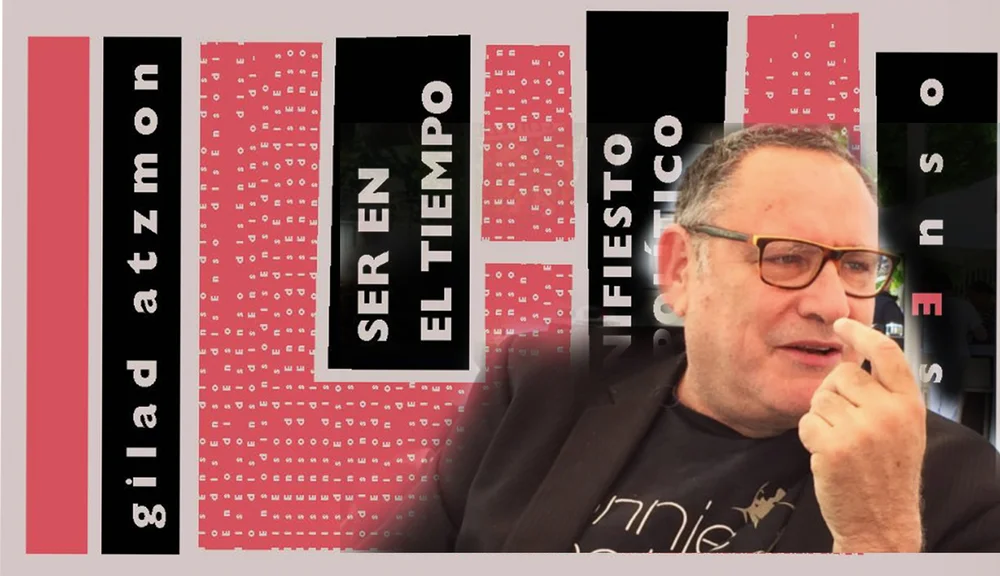
Gilad Atzmon speaks in a torrent of words during our conversation on a sunny terrace in Madrid. He expresses himself passionately, neatly, but never runs over; he seeks to hit the nail and throws phrases like darts that aim to cross, penetrate and reach the other side, rather than hitting a target. I think he asks to be understood, and he makes an effort for it. It is likely because he feels or knows he is ‘misunderstood’.
Gilad Atzmon was born in Israel into a secular but actively Zionist family. He left the country in the early nineties, when he was thirty years old. He says it was the invasion of Lebanon in 1982 that opened his eyes to what Israel is, although it took him a while to leave the country where he was born and raised.
“It was not an easy decision. I left because I understood that I was dwelling in a land that belonged to others. Israel is Palestine. I have never returned, nor will I come back. “
To say that he is a controversial author is to fall short. Gilad Atzmon is provocative, very politically incorrect and has the gift of bothering right and left, that is, from the right and from the left. He defines himself as a philosopher of politics.
In his last book Being in Time, a Post-political Manifesto, published by Ediciones de Oriente and the Mediterranean and recently presented in Madrid, he attacks identity politics and what he describes as the tyranny of correctness, both phenomena that according to him are linked and feed each other “in the progressive circles that are so politically correct. People are encouraged to identify as a woman, as a gay, as a black, as a Jew or vegan, but not as a Muslim or White. This policy of exalting particular identities is very problematic and a serious danger, especially for the left, if you can still talk about the left … “
The question of identity has been the central theme of Atzmon’s work and perhaps his vital and intellectual adventures as well. After all, he is a Jew who grew up in a Zionist family … and is accused by some of anti-Semitism.
“In the past, anti-Semites were people who hated Jews, nowadays people who oppose Israel are labelled anti-Semitic. I’m in the same club as Bernie Sanders, George Galloway, Richard Falk or Roger Waters: the humanists of our time. They call us anti-Semites because we are against what Israel does and what has happened in Iraq and Syria, and the power of the Neocons and AIPAC in Washington … I have never criticized Jews for being Jewish, I am Jewish (GA: this is a mistranslation, I do not identify as Jewish), my wife is Jewish and … – he explodes in a laugh-, my mistress too. I want to be able to criticize Jewishness, the ideology that drives Jewish tribalism, the idea of a chosen people, as any intellectual criticizes Catholicism or as Weber criticized Protestantism, even though I know I’d pay a price for it. The essence of Jewish power is the power to silence all criticism of Jewish power. To say what I want to say, I had to renounce working in the academic world, although I fulfil all the requirements and have all the qualifications. I chose to live as a jazz musician, which is more difficult from an economic standpoint, but it allows me to speak freely.”
Many of his opinions irritate me, for example his contemptuous and ironic look towards the international brigades:
“most were revolutionary Jews who travelled to Spain because they wanted to give their lives in the name of the ‘international working class, but the real workers did not go to Spain, they stayed at home. Real working class people go to work in the morning the feel the urge to identify ‘as working class’).”
Nevertheless, understanding truth as what one believes is true, I recognize an authentic passion for the truth in what he writes and inquires.
Someone said (I think it was Kant) that more important than having the right answers is asking the right questions. In the writings of Gilad Atzmon it is not easy to find answers, but we always find new questions that worry, surprise, challenge the political consensus.
Gilad Atzmon does not accept taboos or the notion of sacred territory, where it is better not to enter. He refuses to let what the rest of us regard as unthinkable stay untouched. Sometimes, his opinions turn out to be impertinent, but their impertinence has to do with their boldness, undoubtedly a form of value.
Before saying goodbye, I ask him if he sees any way out of the drama of Palestine. He remains silent for a moment, searching for the precise words.
“I am not an activist, I do not like to tell people what they should or should not do. But I think the key is a matter of percentages and demographics. It is all about facts on the ground, when the Palestinian population reaches 70% of the total population in Israel, everything will start to change. To win, the Palestinians have to survive.”
My battle for truth and freedom involves some expensive legal and security services. I hope that you will consider committing to a monthly donation in whatever amount you can give. Regular contributions will enable me to avoid being pushed against a wall and to stay on top of the endless harassment by Zionist operators attempting to silence me and others.
– حقيقتان بارزتان تتوقّف أمامهما مراكز الدراسات المعنية بالشؤون الاستراتيجية والدبلوماسية في العالم. الأولى صعود الدور الإيراني بالتزامن مع ما بدا أنه حرب عليها بالوكالة من بوابة سورية، كانتقام منها ومن سورية لدورهما في دعم قوى المقاومة، وما نتج عنه من تراجع إسرائيلي بدأ عام 2000 بالانسحاب من جنوب لبنان وتواصل عام 2005 بالانسحاب من غزة وتوّج بالفشل العسكري في حرب تموز 2006 على لبنان وحرب 2008 على غزة، والثانية أن النظر إلى هذا الصعود لا يجوز أن يرتبط بالتنبؤات حول الاتجاه الذي ستسلكه التوترات الناجمة عن الانسحاب الأميركي من التفاهم على الملف النووي الإيراني والعودة لنظام العقوبات ضد إيران، سواء انتهت بتصادم مباشر إيراني أميركي أو بتسوية او بتهدئة. فالقضية هي أن اللاعب الإقليمي الأقوى بات إيران على حساب تراجع كل من تركيا ومصر والسعودية و إسرائيل .
– الحديث يجري عن نجاح إيراني بتوظيف التموضعات التركية الهادفة لتخفيف الخسائر من الفشل في الحرب على سورية، بتعزيز المكانة الإيرانية عبر الفراغ الناتج عن خروج تركيا من المحور الخليجي الإسرائيلي وعجزها عن تشكيل محورها الخاص، وعن نجاح موازٍ بتوظيف تراجع مكانة السعودية في الخليج أمام اليمنيين لتصير إيران وسيطاً ضرورياً لأي استقرار في الخليج. وبالتوازي نجاح إيران بإدارتها ملفها النووي دبلوماسياً بوضع روسيا والصين في مكانة دولية متقدّمة يستدعي الدفاع عنها دعماً متزايداً لإيران، باعتبار التفاهم أول إنجاز متعدّد الأطراف يكسر الأحادية الأميركية التي تشكل العودة إليها هاجس الرئيس الأميركي دونالد ترامب، ويشكل دعم إيران الطريق الوحيد لتحويلها نموذجاً قابلاً للتعميم، وبالمقابل فإن أوروبا التي اعتادت السير وراء أميركا وجدت نفسها مع التفاهم النووي الإيراني ونتائج الحرب على سورية مدعوّة لقراءة أمنها القومي المهدّد بالقرب الجغرافي من المنطقة، بعيون غير أميركيّة، خصوصاً في قضايا الإرهاب والصواريخ والنازحين، ولو عجزت عن ترجمة التمايز بالتمرّد على المشيئة الأميركية، فيكفي إيران أن تجد واشنطن عزلة دولية في مبادراتها مقابل مكانة مرموقة لإيران في الحياة السياسية والدبلوماسية الدوليّة.
– تقدم القضية الفلسطينية نموذجاً كافياً لقراءة المسارين الدبلوماسيين لكل من واشنطن وطهران، فأميركا الراعي الدائم والوحيد لمشاريع التسوية للقضية الفلسطينية، تطلق مبادرتها لما سُمّي بصفقة القرن وتكاد لا تجد أكثر من عشر دول في العالم، تجاهر بتأييدها، مقابل معارضة واسعة تشترك فيها الدول الكبرى، وإيران التي كانت بنظر العالم مسؤولة عن محاولات تخريب مساعي التسوية، تقف اليوم في قلب صف دولي عريض يعترض على المبادرة الأميركية، والفلسطينيين الذين كانت أغلبيتهم السياسية تراعي الحسابات الأميركية بصفتها المرجعية الوحيدة القادرة على صناعة التسوية يتوحّدون اليوم بالقرب من إيران في مواجهة السياسات الأميركية.
– خرجت واشنطن من الاتفاق النووي لتضع إيران بعيداً عن المكاسب الموعودة وفي اعتقادها أنها نهاية المطاف، تبقى إيران مقيدة نووياً ومعاقبة مالياً، فصبرت إيران سنة كاملة وهي تخاطب الشركاء في التفاهم النووي مطالبة بالتصرف، لتقف بعد سنة وتعلن عزمها الخروج من الاتفاق، ويكون الحصاد بخروجها أنها عادت إلى ما كان الوضع عليه عشية توقيع التفاهم، لكن دون فرص عقوبات أممية عليها في ظل فيتو روسي صيني مؤكد، ودون قطيعة مع أوروبا. بينما واشنطن تعود إلى عشية توقيع التفاهم وقد خسرت الفرصة بعقوبات أممية على إيران وخسرت دعم أوروبا.
– مؤتمر المنامة مقابل يوم القدس العالمي، معادلة تكفي لمقارنة حجم النجاح الإيراني وحجم الفشل الأميركي.
I have learned this morning that that the documentary film Gilad And All That Jazz – by Golriz Kolahi was removed from Youtube. It apparently ‘violates’ the company’s “guidelines.” Youtube writes that “content glorifying or inciting violence against another person or group of people is not allowed on YouTube.” None of the above can be found in the award winning documentary. “We also don’t allow any content that encourages hatred of another person or group of people based on their membership in a protected group.” Again none of that could be found in the film.
Kolahi’s film was broadcasted on TV around the world. It was screened in film festivals and won prices. The film indeed gave air to my views but it also featured the entire list of my detractors from Tony Greenstein to David Aaronovitch. It aimed at impartiality!
Youtube were kind enough to point out that “this removal has not resulted in a Community Guidelines strike or penalty on your account.” I guess that Youtube’s management knows very well that the film didn’t violate a single company’s guideline.
The film is still on the net and will remain on the net forever. Book burning and censorship is yet to suppress a single idea. It reveals instead what the oppressor is desperate to conceal.
Watch Gilad and All That Jazz:
My battle for truth and freedom involves some expensive legal and security services. I hope that you will consider committing to a monthly donation in whatever amount you can give. Regular contributions will enable me to avoid being pushed against a wall and to stay on top of the endless harassment by Zionist operators attempting to silence me and others.
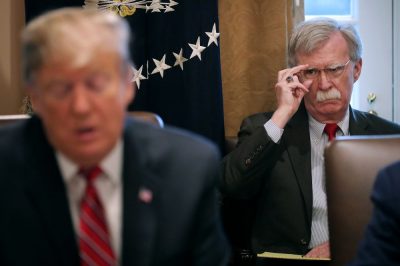
Ukraine is important for the US only in the context of their relationship with Russia, and blocks the path to their improvement. The latest statement of the national security adviser to the US President John Bolton became yet more proof of this. On the eve of Putin and Trump’s meeting in Osaka, Kiev ought to prepare for the US playing the Ukrainian card without paying attention to the interests of the Kiev authorities.
Washington tries to defreeze American-Russian relations – but in such a way that it does not look a concession made by the US. Donald Trump is not constrained by the case of “Russian ties” any more, however the Ukrainian crisis remains the main problem for his dialogue with Putin.
It arose during Barack Obama’s reign and is in many respects connected with the objective process of returning to Russia the status of a major world power. The events of 2014 became the most convenient reason for the US to transition to an active phase of “deterring Russia”. The policy of sanctions and attempts to isolate Russia on the world scene not only failed – their results were opposite to American expectations.
Having sustained pressure and not having changed course, Russia strengthened its reputation in the world. Everyone perceives it as the main geopolitical opponent to America’s attempts to hold onto world hegemony.
Trump’s election gave a chance to revise America’s tactics and even strategy. The new president was inclined to reorienting the US from the useless and losing policy of global domination to a policy of strengthening the US via strengthening the economic power of the superpower. The resistance that was shown to Trump by American globalists showed how the fate of the US as a national state is not important for them. But they managed to block the possibility of forming relations between Trump and Putin.
The “Russian case” regularly served this for more than two years. But now Trump received the opportunity to act much more freely. Now, in order to establish cooperation with Putin (and this is necessary for the American president in order to create a new configuration of US foreign policy), Trump “only” needs to deal with the Ukrainian crisis. I.e., remove the Ukrainian stone from the road of American-Russian relations. How can he do this?
Of course, the US is not going to “give” Ukraine back to Russia: the tearing of Ukraine off the Russian world remains the important aim of any American strategist. But the question of the speed and price of this process has principal importance. If the “hawks” consider that Ukraine must be Europeanised and Atlanticised as fast as possible – i.e., included not only in the sphere of influence, but also in the structure of the “western zone of responsibility”, then the “realists” point out that Russia will never agree with the “kidnapping of Ukraine”, and that the haste of the West will only provoke Moscow into solving the problem by force – a campaign to Kiev.
That’s why they consider the neutralisation of Ukraine as the optimum scheme, transferring it into a condition of a no man’s zone, a buffer state that is not used to put pressure on Russia. And after all, it is precisely this that is considered to be favourable by those “hawks” who, without trusting in the possibility of the Atlanticisation of Ukraine, support its use as a constant irritant against Moscow.
Such a neutral Ukraine would be more in the zone of influence of the West than in Russia’s. And although everyone understands that it is a temporary and suspended option, for the US it would be an undoubted success (even to suspend the situation for 20-30 years – it is all the same to deprive Russia of its historical cradle, to stop the reintegration of the Russian world, the Russian revanche). And the most important thing – this option would remove the Ukrainian topic from the agenda of relations between the US and Russia, allowing the US to count on searching for mutual understanding with Moscow in other international problems.
How to achieve this? To portray peace and progress in the Ukrainian settlement. Because in reality it is currently impossible to solve the Ukrainian crisis.
Implementing the Minsk Agreements, i.e., to return Donbass to the structure of Ukraine, is impossible as long as the Ukrainian elite continues to not realise that the road to Europe is closed and does not start to restore relations with Russia. This is a process for the next decade. And even in the event of its acceleration, returning Donbass to Ukraine is possible only after a full turn of Kiev towards Moscow and the inclusion of Ukraine in the structure of the Eurasian Union.
That’s why all that’s left to do is to give the illusion that there is a settlement process. Kiev will opt to really stop firefights on the border and to withdraw troops under the pressure of the West; to really adopt laws on amnesty in Ukraine as one more point of the implementation of the Agreements. And the most important thing – to really do it so that the topic of repulsing “Russian aggression”, as well as the topic of “returning Donbass”, in fact, leaves Ukrainian domestic politics, remaining a prerogative of the opposition.
Zelensky’s election is a step in precisely this direction. The cynical and cunning Ukrainian elite best of all understands that there won’t be any return. And all the game of Poroshenko on the topic “Ukraine is an outpost of the West in deterring Russian Aggression” was built on the conviction that the West waits for precisely this from Ukraine.
But the matter is that the West hasn’t wanted anything as such from Kiev for a long time. Europe very much groans from the need to play the “Ukrainian game”, which prevents it from doing business with Russia. And the US under Trump also does not want to raise the stakes in the “Ukrainian game”, or to in general pay much attention to it. The West needs Ukraine to know its place, i.e., to become imperceptible and silent, giving the illusion of a “road to peace”; to not get in the way of the big boys; to not go back to Russia, but also to not sit at the table with the real players.
It is precisely for this reason that Kiev will be shown its place. This will happen during the next month when Zelensky will go to see Trump in Washington. It will be done tenderly, but insistently: through coercion to negotiations with Russia and with Donbass, to reduce aggressive rhetoric (it has already subsided). But the most important thing – through an explanation of the expectations: “progress in the peace process”, allowing the US to remove the Ukrainian topic to a place more fitting for it – a place that does not prevent the establishment of American-Russian dialogue.
As a matter of fact, the national security adviser to the US President John Bolton wrote about precisely this on Thursday:
“[US] Ambassador [Kurt] Volker and I met today to discuss Ukraine negotiations and agreed that President Zelensky’s election creates new opportunity to push for peace in Donbass – a key step to improving US-Russia relations – but it’s critical that Russia do its part and engage seriously”.
Peace in Donbass is a key step for the improvement of relations between the US and Russia. Simply put, they want to hear from Ukraine that its relations with Donbass are if not very good, then they at least gradually improve. And there is no doubt that they will hear this – Kiev has nowhere to disappear to, simply.
[False flag operations:] “The powers-that-be understand that to create the appropriate atmosphere for war, it’s necessary to create within the general populace a hatred, fear or mistrust of others regardless of whether those others belong to a certain group of people or to a religion or a nation.” James Morcan (1978- ), New Zealander-born Australian writer.
[Definition: A ‘false flag operation’ is a horrific, staged event—blamed on a political enemy—and used as pretext to start a war or to enact draconian laws in the name of national security].
“Almost all wars begin with false flag operations.” Larry Chin (d. of b. unknown), North American author, (in ‘False Flagging the World towards War. The CIA Weaponizes Hollywood’, Dec. 27, 2014).
“Definition of reverse projection: attributing to others what you are doing yourself as the reason for attacking them.” John McMurtry (1939- ), Canadian philosopher, (in ‘The Moral Decoding of 9-11: Beyond the U.S. Criminal State’, Journal of 9/11 Studies, Feb.2013).
“That there are men in all countries who get their living by war, and by keeping up the quarrels of nations, is as shocking as it is true; but when those who are concerned in the government of a country, make it their study to sow discord, and cultivate prejudices between nations, it becomes the more unpardonable.” Thomas Paine (1737-1809), American Founding father, pamphleteer, (in ‘The Rights of Man’, c. 1792).
“I was the CIA director. We lied, we cheated, and we stole. It was like — we had entire training courses. It reminds you of the glory of the American experiment.”Mike Pompeo (1963- ), former CIA director and now Secretary of State in the Trump administration, (in April 2019, while speaking at Texas A&M University.)
***
History repeats itself. Indeed, those who live by war are at it again. Their crime: starting illegal wars by committing false flag attacksand blaming other countries for their own criminal acts. On this, the Donald Trump-John Bolton duo is just like the George W. Bush-Dick Cheney duo. It is amazing that in an era of 24-hour news, this could still going on.
We recall that in 2002-2003, the latter duo, with the help of U.K.’s Tony Blair, lied their way into a war of aggression against Iraq, by pretending that Saddam Hussein had a massive stockpile of “weapons of mass destruction”and that he was ready to attack the United States proper. On October 6, 2002, George W. Bush scared Americans with his big Mushroom Cloud analogy. —It was all bogus. —It was a pure fabrication that the gullible (!) U.S. Congress, the corporate media, and most of the American public, swallowed hook, line and sinker.
Now, in 2019, a short sixteen years later, the same stratagem seems to being used to start another illegal war of aggression, this time against the country of Iran. The masters of deception are at it again. Their secret agents and those of their Israeli and Saudi allies, in the Middle East, seem to have just launched an unprovoked attack, in international waters, against a Japanese tanker, and they have rushed to the cameras to accuse Iran. They claim that the latter country used mines to attack the tanker.
This time, they were unlucky. —The owner of the Japanese tanker, the Kokuka Courageous, immediately rebuked that “official” version. Yutaka Katada, president of the Kokuka Sangyo shipping company, declared that the attack came from a bombing from above the water. Indeed, Mr. Katada told reporters:
“The crew are saying it was hit with a flying object. They say something came flying toward them, then there was an explosion, then there was a hole in the vessel.”
His company issued a statement saying that “the hull (of the ship) has been breached above the waterline on the starboard side”, and it was not hit by a mine below the waterline, as the Trump administration has insinuated. —[N. B.: There was also a less serious attack on a Norwegian ship, the Front Altair.]
Thus, this time the false flag makers have not succeeded. But, you can be sure that they will be back at it, sooner or later, just as they, and their well financed al-Qaeda allies, launched a few false flag “chemical” attacksin Syria, and blamed them on the Syrian Assad government.
Donald Trump has too much to gain personally from a nice little war to distract the media and the public from the Mueller reportand from all his mounting political problems. In his case, he surely would benefit from a “wag-the-dog” scenariothat John Bolton and his friends in the Middle East could easily invent. As a matter of fact, two weeks ago, warmonger John Bolton was coincidently in the Middle East, in the United Arab Emirates, just before the attacks!
Besides the Japanese ship owner’s denial, it is important to point out that at the moment of the attack on the Japanese tanker, the Japanese Prime Minister, Mr. Shinzo Abe, was in Iran, having talks with the Iranian government about economic cooperation between the two countries about oil shipments. Since Iran is the victim of unilateral U. S. economic sanctions, to derail such an economic cooperation between Japan and Iran could have been the triggered motivation to launch a false flag operation. It did not work. But you can be sure that the responsible party will not be prosecuted.
Conclusion
We live in an era when people with low morals, sponsored by people with tons of money, can gain power and do a lot of damage. How our democracies can survive in such a context remains an open question.
*
Note to readers: please click the share buttons below. Forward this article to your email lists. Crosspost on your blog site, internet forums. etc.
This article was originally published on the author’s blog site: Dr. Rodrigue Tremblay.
Iranian President Hassan Rouhani reaffirmed that Iran does not seek war with any state, but stresses that the Iranian nation will be the ultimate winner of any warfare against the Islamic Republic.
“We will not wage war with any nation, those facing us are a group of politicians with little experience,” said Rouhani, addressing an inauguration ceremony at the Imam Khomeini International Airport [IKIA] in southern Tehran on Tuesday.
Rouhani’s comment came a day after acting US War Secretary Patrick Shanahan announced the deployment of about 1,000 more troops to the Middle East amid escalating tensions with Iran.
Tehran has time and again said that it does not seek military confrontations with the United States, yet stands ready to defend its interests in the region.
Rouhani further slammed attempts by enemies to pile up economic pressure against the Iranian nation to create despair among the people.
He said the ill-wishers have launched a “war of hope and wills” against the Iranian nation, adding that the enemies are attempting to create despair among the Iranian nation through malicious schemes.
Iranians are, however, determined to defeats such plots and keep their hope alive, Rouhani said, stressing that the Iranian people “will be the ultimate winner of this war and pressure.”
Iran has been witnessing new economic and social progress despite all the enemy pressure, he added.
“Despite all of the Americans’ attempts in the region and their intention to cut off our ties with the entire world and their desire to isolate Iran, they have been unsuccessful,” Rouhani stressed.
The world community, he added, praises Iran’s stance in its face-off with America.
“Iran has been loyal to its signature, Iran has been loyal to international agreements, and the one standing against us today is the one that has trampled all pacts, agreements and international accords,” he noted, referring to Washington’s withdrawal from a 2015 multilateral nuclear deal with Tehran.
The Throne Of Saint Jewry
-
The Throne Of Saint Jewry November 12 2026
___________________________________ More Vids! +BN Vids Archive! HERE!
___________________________________ Suppo...
Cracks in the foundations of Pax Judaica
-
World Jewry is terrified of the Kushner revelations from Cole as they
attack the foundations of Pax Judaica. We already know the basic facts of
the corrupt...
Report on Beth Israel vigil 09-12-26
-
*Eat-a-Cheeseburger Day Approaches*
This year, EAC Day appears on Monday, September 21st. The date coincides
with the Jewish holiday called Yom Kippur. Cl...
-
Hello all,
It is with great sadness that I share with you the passing of our beloved
sister, Mother, and Grandmother, the individual that you all knew ...
Best Horror Podcast
-
Best Horror Podcast Introduction: Horror podcasts […]
The post Best Horror Podcast appeared first on Copper Shock Horror Podcast.
Ikhras Endorses Muntadhar Al-Zaidi
-
“Oh parties of banditry and sectarianism and corruption, we have come and
our goal is to destroy you.” Ikhras formally endorses Muntadhar al-Zaidi,
Iraqi j...
Prince Charles: Foreign Jews behind bloodshed in ME
-
In May, 2017, British Crown Prince Charles declined an invitation from
Zionist entity’s president Reuven Rivlin‘s to attend the 100th anniversary
of the no...
Palestinian Women – One for All, All for One
-
Honouring All Palestinian Women by Honouring Three: Hanin Zoabi, Ahed
Tamimi, Samah Sabawi Vacy Vlazna “Palestinian women have always stood side
by side ...
US’s Saudi Oil Deal from Win-Win to Mega-Lose
-
By F. William Engdahl Who would’ve thought it would come to this? Certainly
not the Obama Administration, and their brilliant geo-political think-tank
neo-...
-
*Mordechai Vanunu wins human rights prize of Brazilian Press Association *
* http://www.alternativenews.org/english/index.php/features/updates/7038-mordechai...
Abdul Aziz Rantissi:
"My ultimate wish, my God, is to attain martyrdom,"...God granted him his wish on April 17, 2004, at the hands of Israeli assassins.